A Nitzan Tel Aviv University ELECTRON TRANSFER AND


- Slides: 37
A. Nitzan, Tel Aviv University ELECTRON TRANSFER AND TRANSMISSION IN MOLECULES AND MOLECULAR JUNCTIONS AEC, Grenoble, Sept 2005 Lecture 2
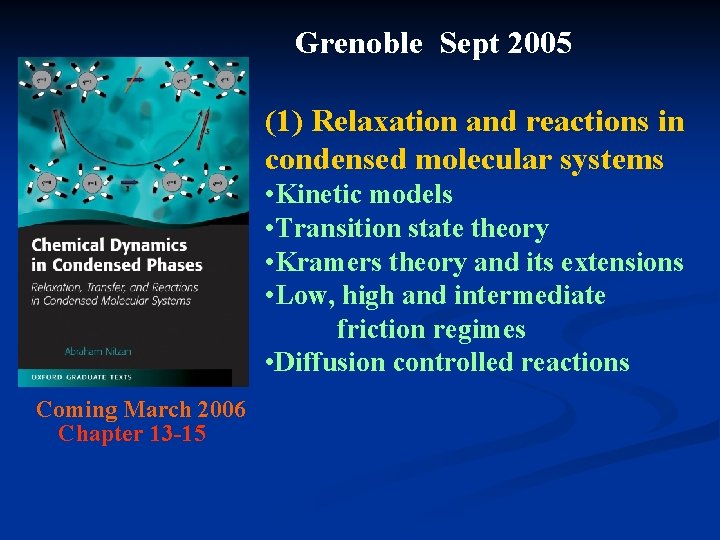
Grenoble Sept 2005 (1) Relaxation and reactions in condensed molecular systems • Kinetic models • Transition state theory • Kramers theory and its extensions • Low, high and intermediate friction regimes • Diffusion controlled reactions Coming March 2006 Chapter 13 -15
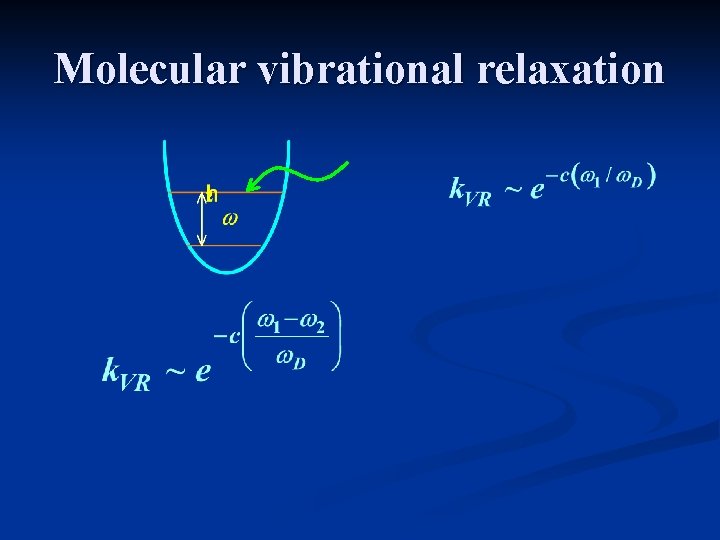
Molecular vibrational relaxation
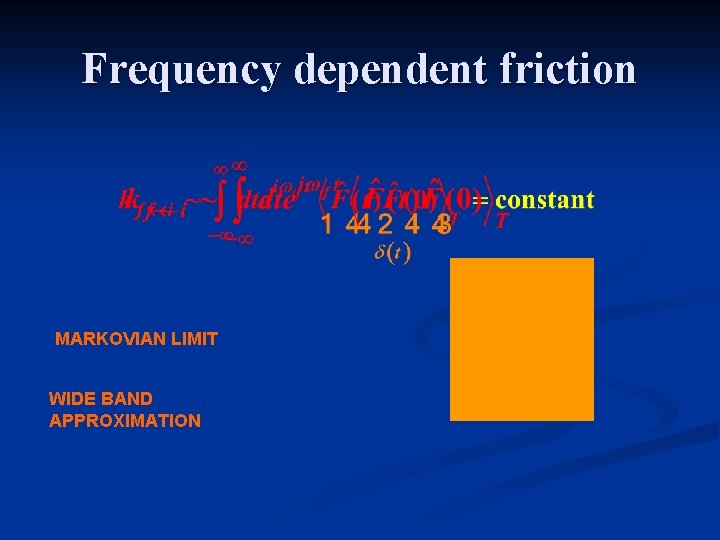
Frequency dependent friction MARKOVIAN LIMIT WIDE BAND APPROXIMATION
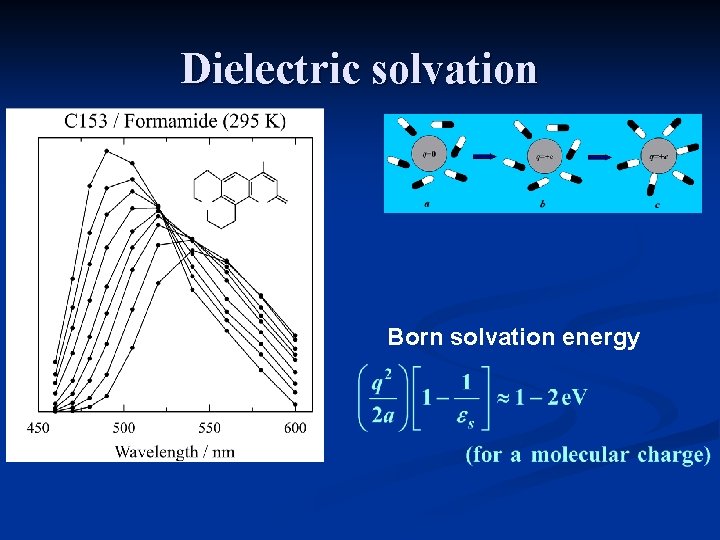
Dielectric solvation Born solvation energy
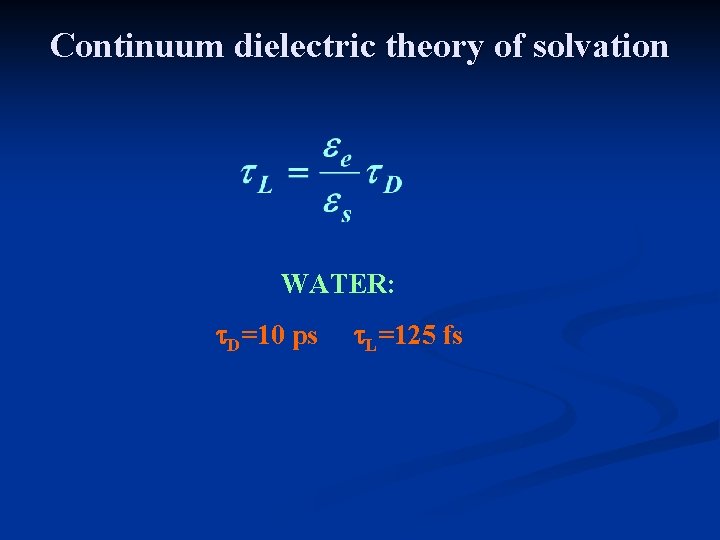
Continuum dielectric theory of solvation WATER: t. D=10 ps t. L=125 fs
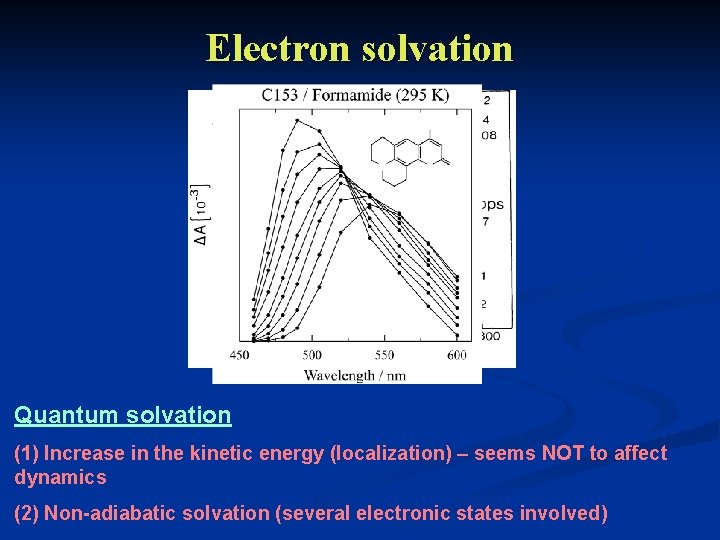
Electron solvation Quantum solvation (1) Increase in the kinetic energy (localization) – seems NOT to affect dynamics (2) Non-adiabatic solvation (several electronic states involved)
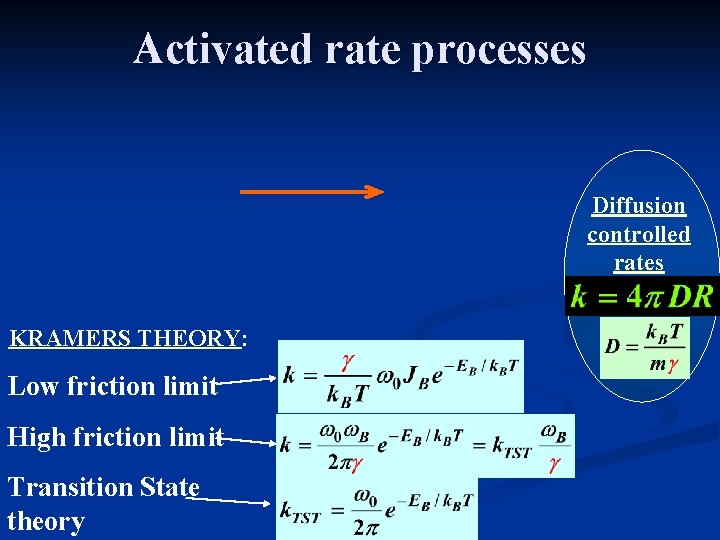
Activated rate processes Diffusion controlled rates KRAMERS THEORY: Low friction limit High friction limit Transition State theory
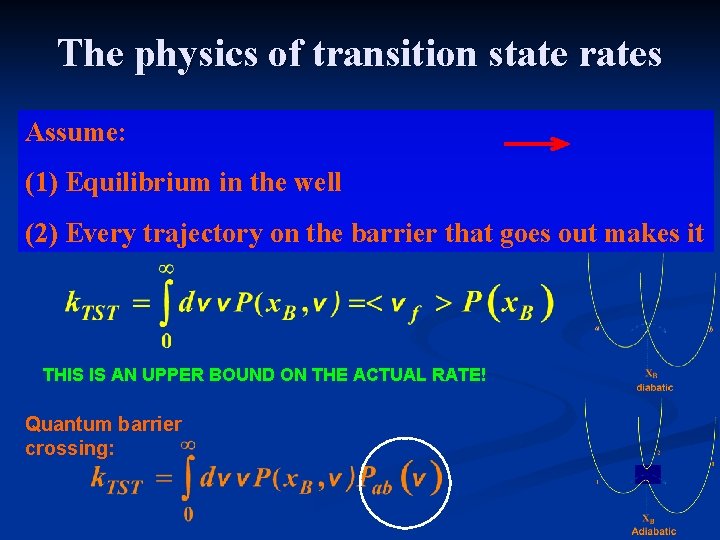
The physics of transition state rates Assume: (1) Equilibrium in the well (2) Every trajectory on the barrier that goes out makes it THIS IS AN UPPER BOUND ON THE ACTUAL RATE! Quantum barrier crossing:
PART B Electron transfer
Grenoble Sept 2005 (2) Electron transfer processes • Simple models • Marcus theory • The reorganization energy • Adiabatic and non-adiabatic limits • Solvent controlled reactions • Bridge assisted electron transfer Coming March 2006 • Coherent and incoherent transfer Chapter 16 • Electrode processes
Theory of Electron Transfer n n n Activation energy Transition probability Rate – Transition state theory Transition rate § Rate – Solvent controlled NOTE: “solvent controlled” is the term used in this field for the Kramers low friction limit.
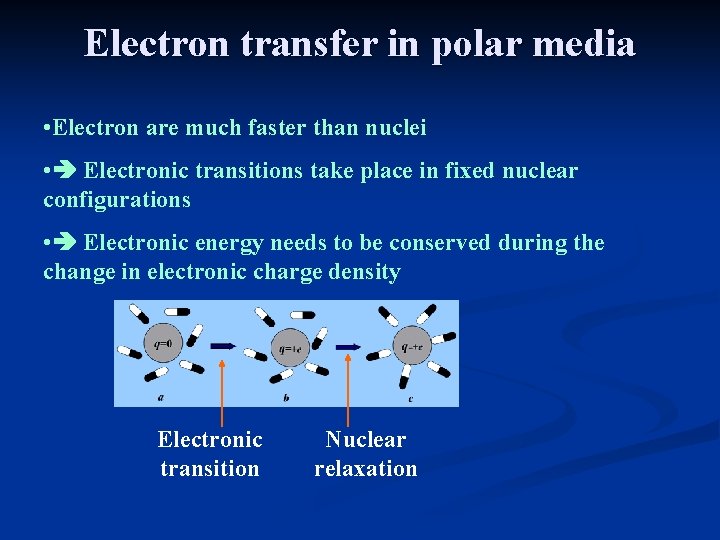
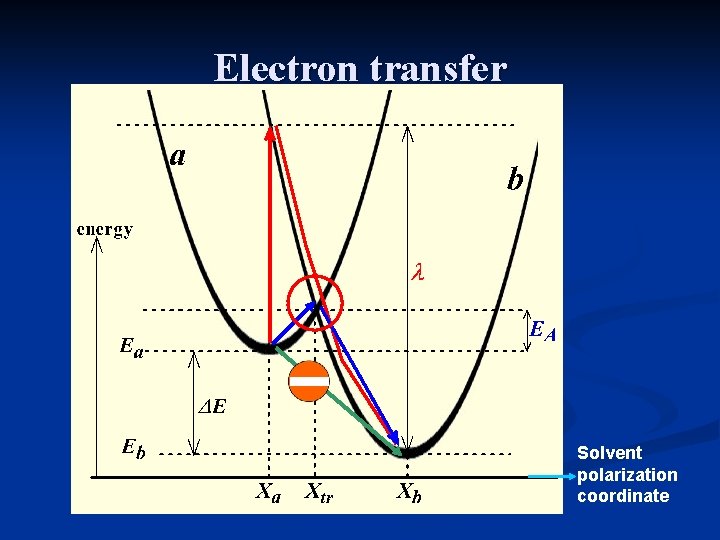
Electron transfer in polar media • Electron are much faster than nuclei • Electronic transitions take place in fixed nuclear configurations • Electronic energy needs to be conserved during the change in electronic charge density Electronic transition Nuclear relaxation
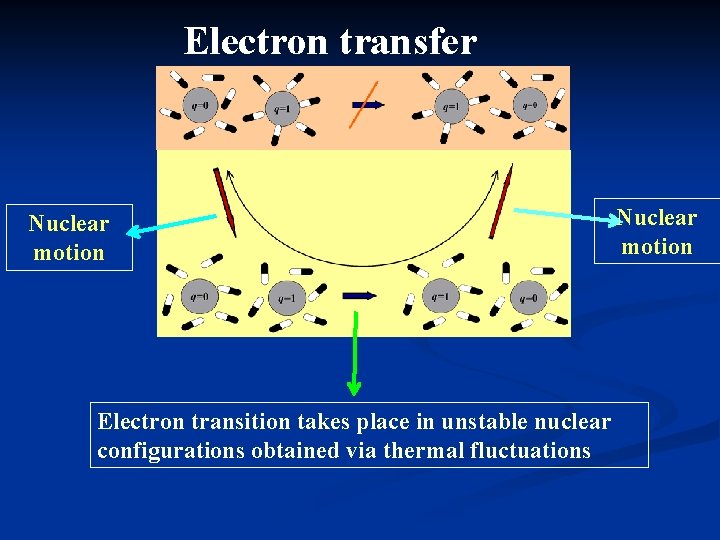
Electron transfer Nuclear motion Electron transition takes place in unstable nuclear configurations obtained via thermal fluctuations Nuclear motion
Electron transfer Solvent polarization coordinate
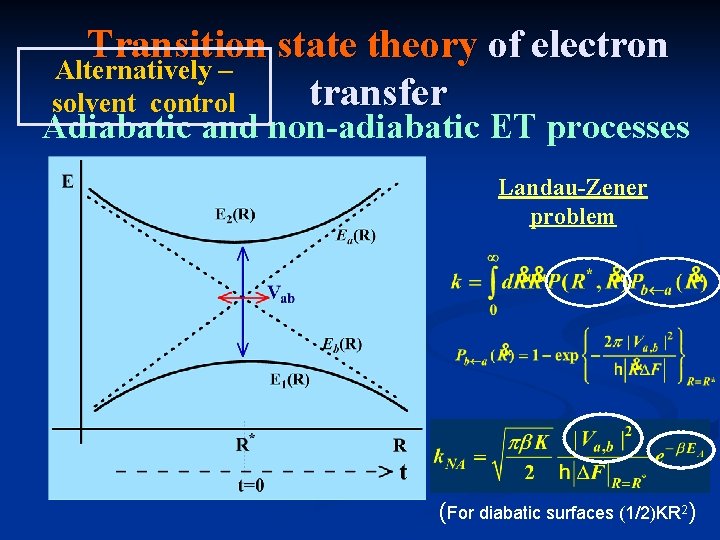
Transition state theory of electron Alternatively – transfer solvent control Adiabatic and non-adiabatic ET processes Landau-Zener problem (For diabatic surfaces (1/2)KR 2)
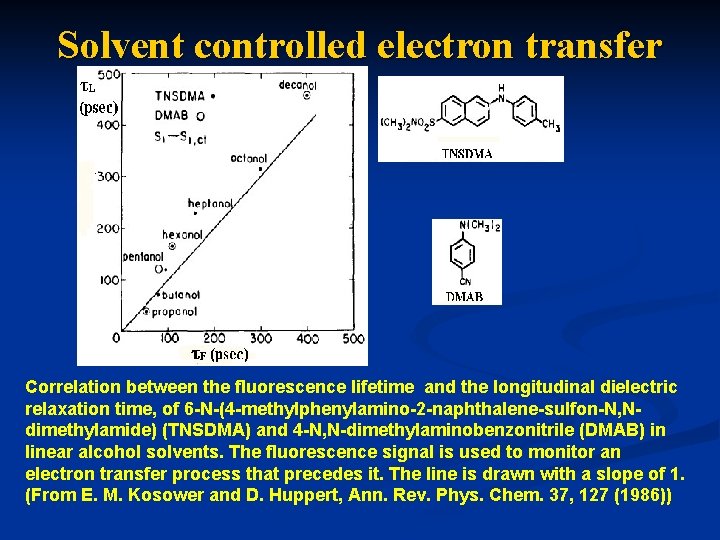
Solvent controlled electron transfer Correlation between the fluorescence lifetime and the longitudinal dielectric relaxation time, of 6 -N-(4 -methylphenylamino-2 -naphthalene-sulfon-N, Ndimethylamide) (TNSDMA) and 4 -N, N-dimethylaminobenzonitrile (DMAB) in linear alcohol solvents. The fluorescence signal is used to monitor an electron transfer process that precedes it. The line is drawn with a slope of 1. (From E. M. Kosower and D. Huppert, Ann. Rev. Phys. Chem. 37, 127 (1986))
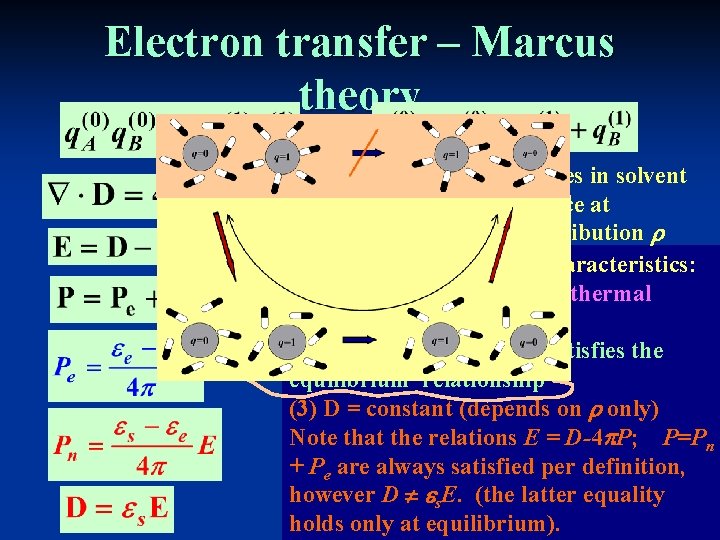
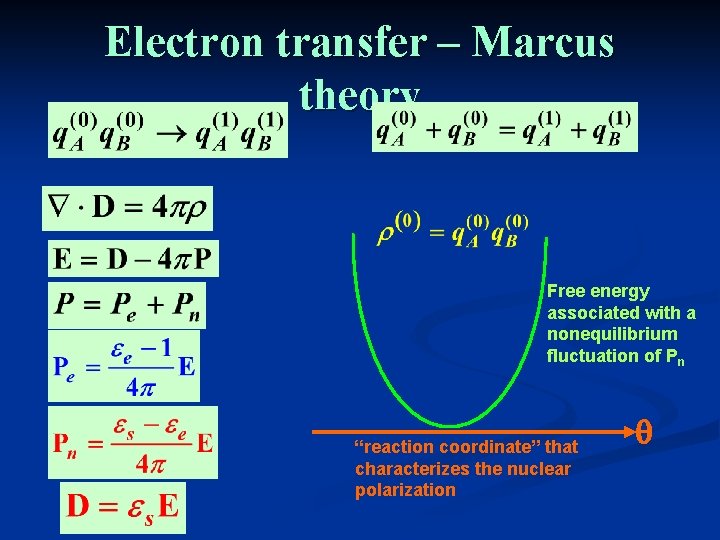
Electron transfer – Marcus theory We are interested in changes in solvent configuration that take place at constant solute charge distribution They have the following characteristics: (1) Pn fluctuates because of thermal motion of solvent nuclei. (2) Pe , as a fast variable, satisfies the equilibrium relationship (3) D = constant (depends on only) Note that the relations E = D-4 P; P=Pn + Pe are always satisfied per definition, however D s. E. (the latter equality holds only at equilibrium).
Electron transfer – Marcus theory Free energy associated with a nonequilibrium fluctuation of Pn “reaction coordinate” that characterizes the nuclear polarization q
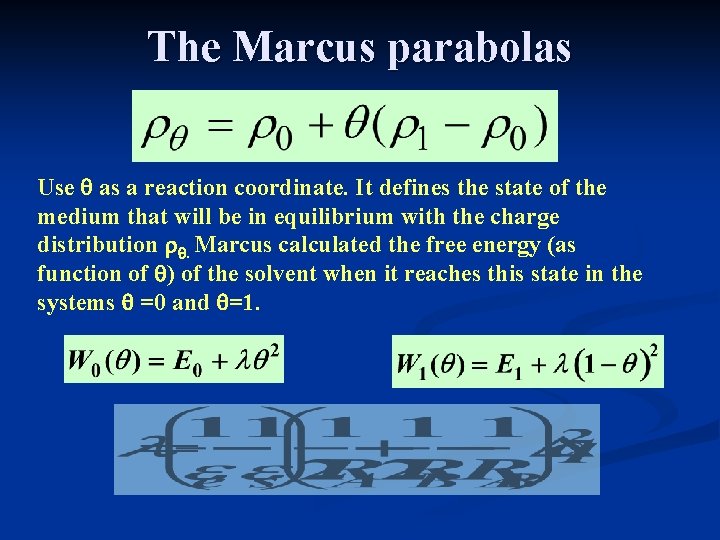
The Marcus parabolas Use q as a reaction coordinate. It defines the state of the medium that will be in equilibrium with the charge distribution rq. Marcus calculated the free energy (as function of q) of the solvent when it reaches this state in the systems q =0 and q=1.
Electron transfer: Activation energy Reorganization energy Activation energy
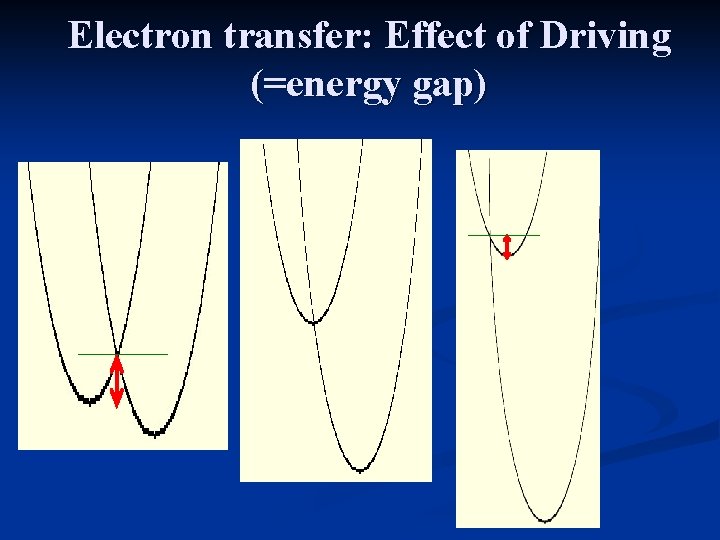
Electron transfer: Effect of Driving (=energy gap)
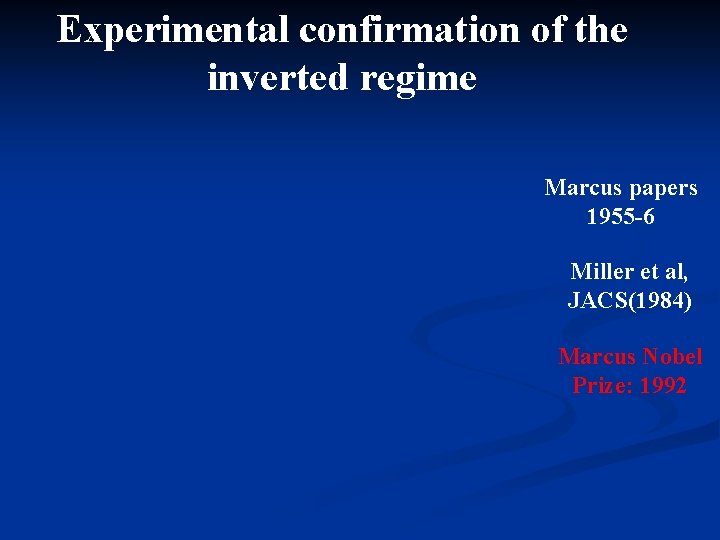
Experimental confirmation of the inverted regime Marcus papers 1955 -6 Miller et al, JACS(1984) Marcus Nobel Prize: 1992
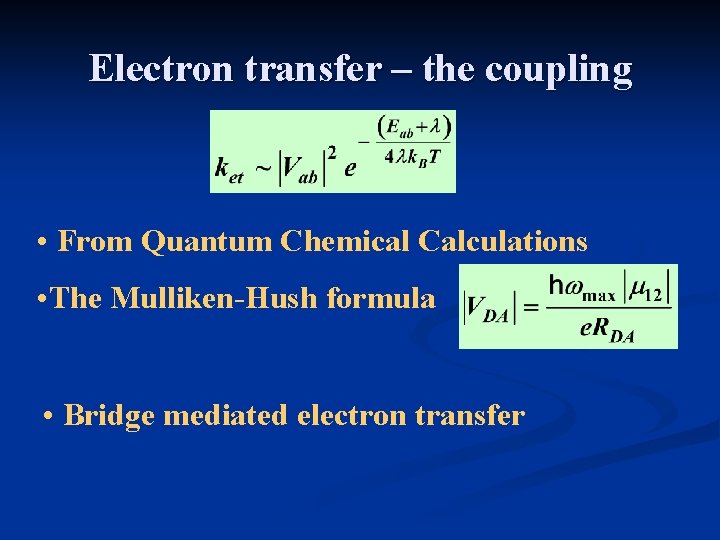
Electron transfer – the coupling • From Quantum Chemical Calculations • The Mulliken-Hush formula • Bridge mediated electron transfer
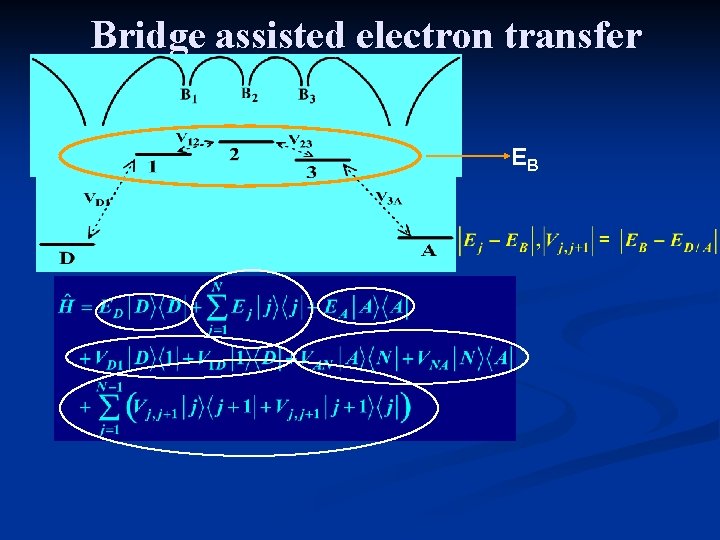
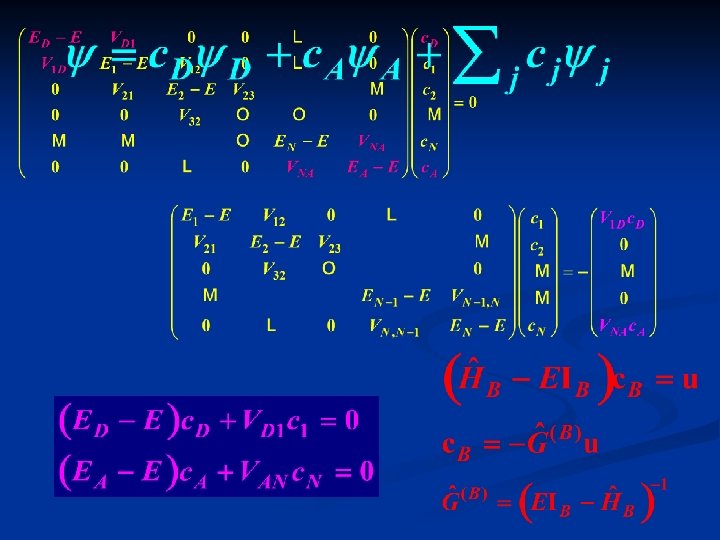
Bridge assisted electron transfer EB
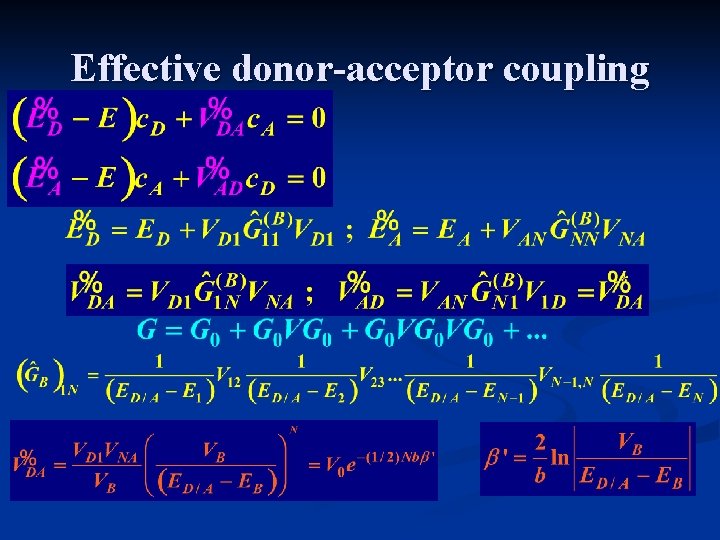
Effective donor-acceptor coupling
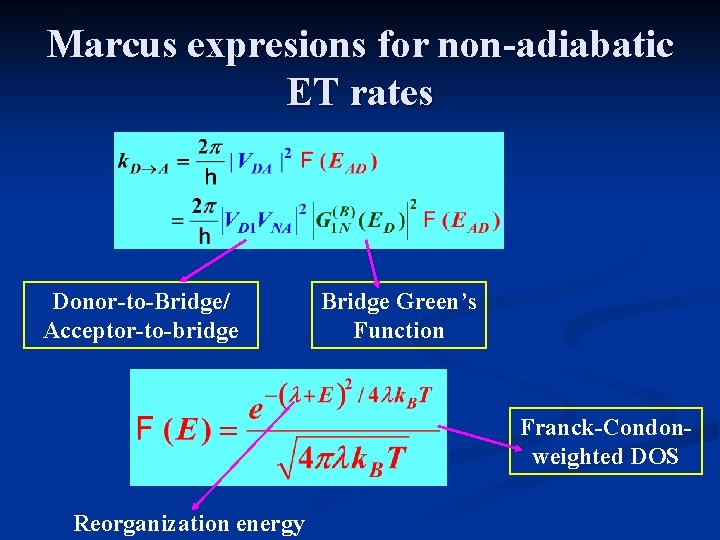
Marcus expresions for non-adiabatic ET rates Donor-to-Bridge/ Acceptor-to-bridge Bridge Green’s Function Franck-Condonweighted DOS Reorganization energy
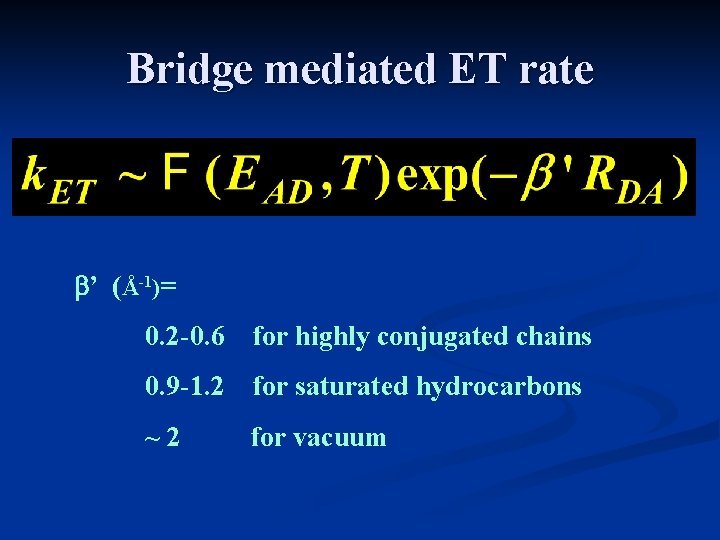
Bridge mediated ET rate b’ (Å-1)= 0. 2 -0. 6 for highly conjugated chains 0. 9 -1. 2 for saturated hydrocarbons ~2 for vacuum
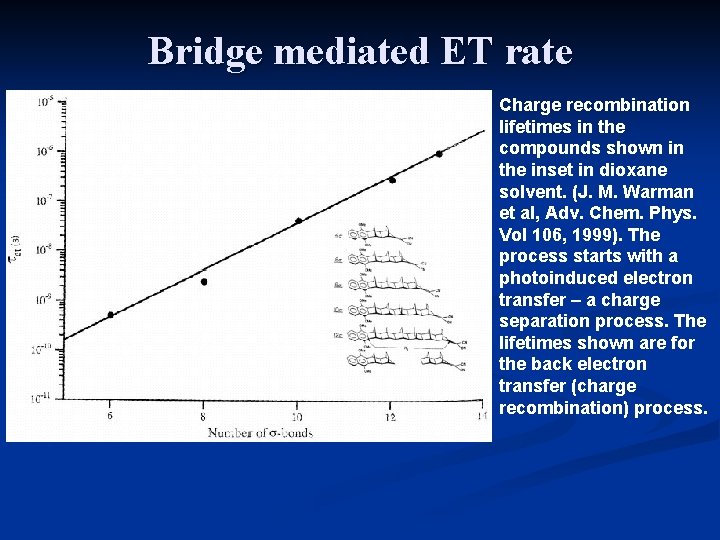
Bridge mediated ET rate Charge recombination lifetimes in the compounds shown in the inset in dioxane solvent. (J. M. Warman et al, Adv. Chem. Phys. Vol 106, 1999). The process starts with a photoinduced electron transfer – a charge separation process. The lifetimes shown are for the back electron transfer (charge recombination) process.
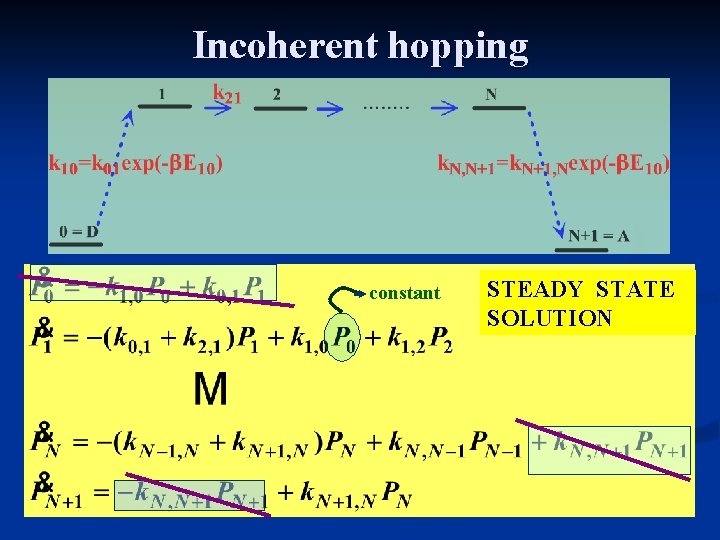
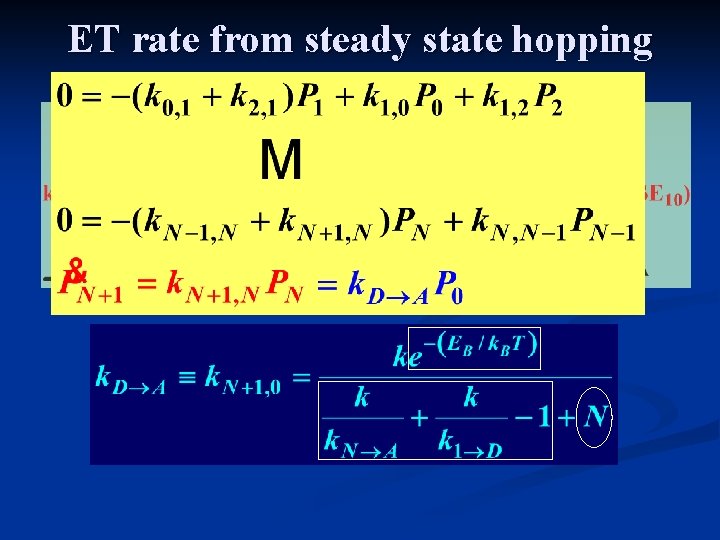
Incoherent hopping constant STEADY STATE SOLUTION
ET rate from steady state hopping
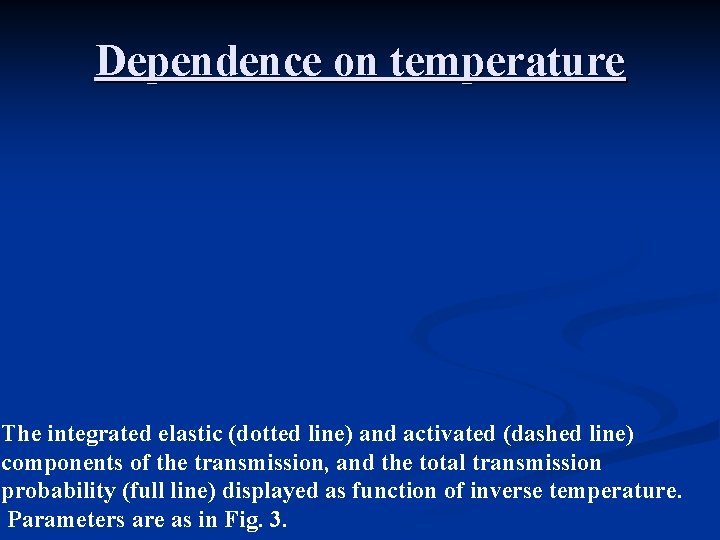
Dependence on temperature The integrated elastic (dotted line) and activated (dashed line) components of the transmission, and the total transmission probability (full line) displayed as function of inverse temperature. Parameters are as in Fig. 3.
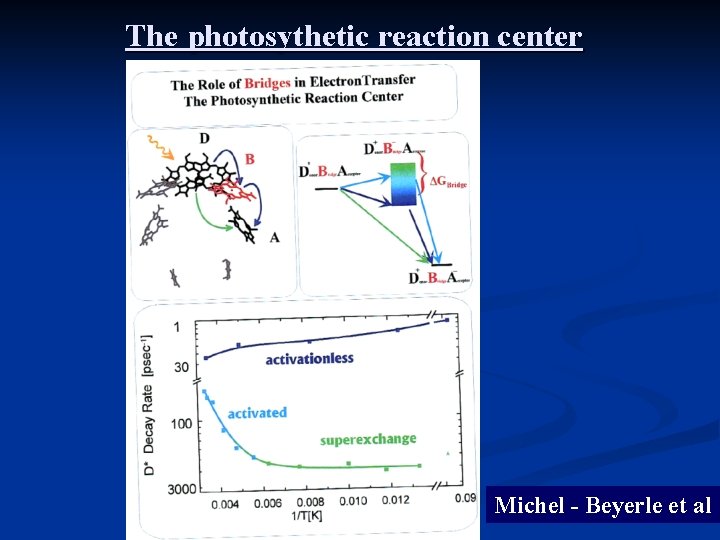
The photosythetic reaction center Michel - Beyerle et al
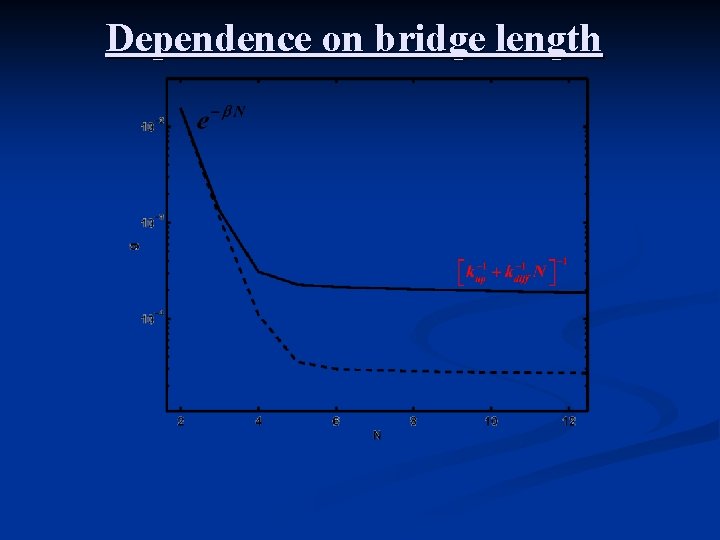
Dependence on bridge length
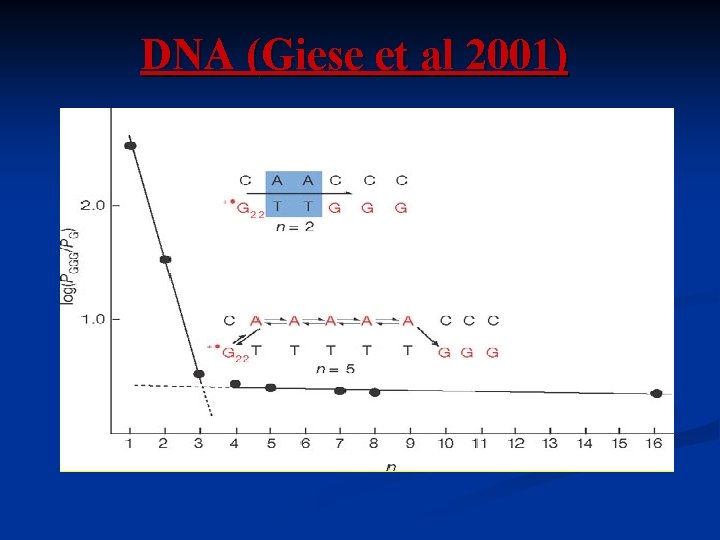
DNA (Giese et al 2001)
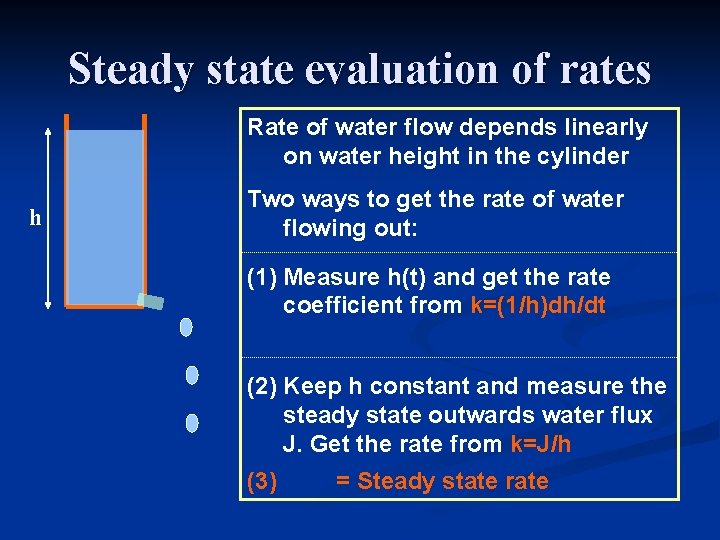
Steady state evaluation of rates Rate of water flow depends linearly on water height in the cylinder h Two ways to get the rate of water flowing out: (1) Measure h(t) and get the rate coefficient from k=(1/h)dh/dt (2) Keep h constant and measure the steady state outwards water flux J. Get the rate from k=J/h (3) = Steady state rate