3 1 2 Theories of Corporate Strategy A


- Slides: 71
3. 1. 2 Theories of Corporate Strategy A Level Edexcel New Specification 2015 Business
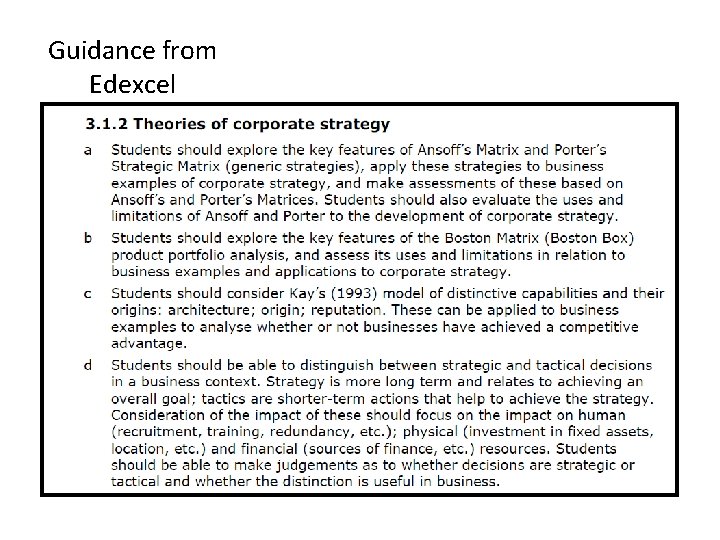
Guidance from Edexcel
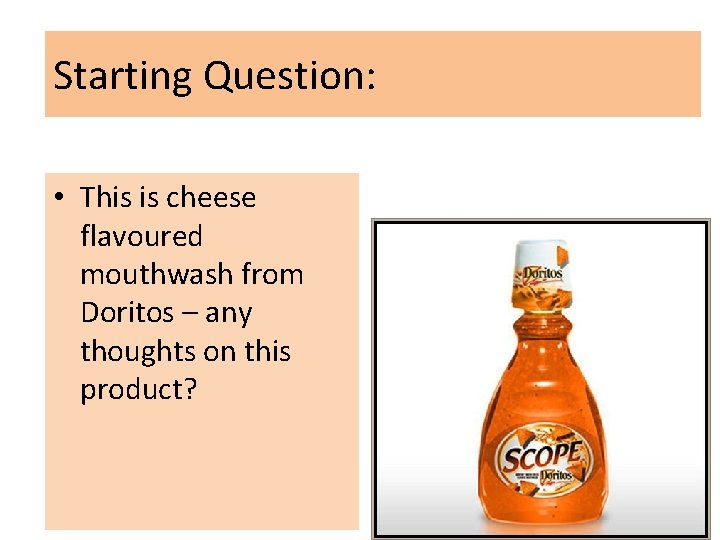
Starting Question: • This is cheese flavoured mouthwash from Doritos – any thoughts on this product?
From the specification a) Development of corporate strategy: Ansoff’s Matrix Porter’s Strategic Matrix b) Aim of portfolio analysis c) Achieving competitive advantage through distinctive capabilities d) Effect of strategic and tactical decisions on human, physical, and financial resources
DEVELOPMENT OF CORPORATE STRATEGY • A corporate strategy is a medium to long term plan for achieving corporate objectives. • Strategic decisions are large in scale and hard to reverse
DEVELOPMENT OF CORPORATE STRATEGY • The best strategies consider: Firms Strengths Firms Environment
CREATE A STRATEGY Considering your job prospects consider answer the following: What are your strengths? What is your environment? What strategy are you taking your life? Firms Strengths Firms Environment
CREATE A STRATEGY Consider Nokia Phones What are their strengths? What is their business environment? What corporate strategy should they take? Firms Strengths Firms Environment
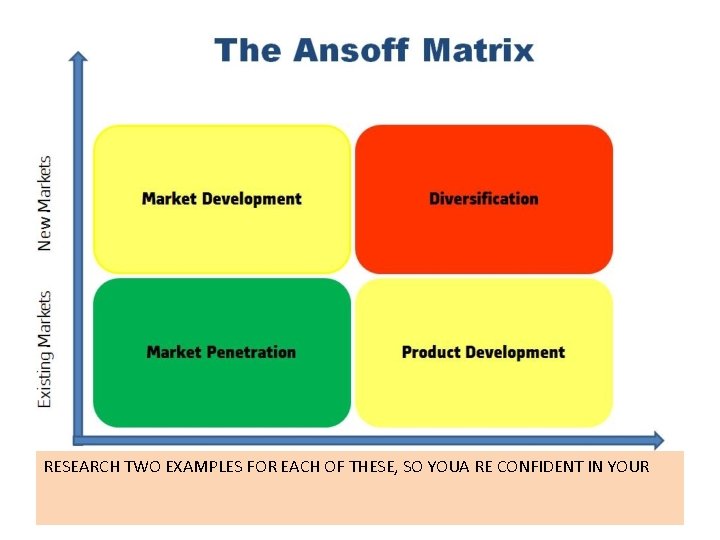
RESEARCH TWO EXAMPLES FOR EACH OF THESE, SO YOUA RE CONFIDENT IN YOUR
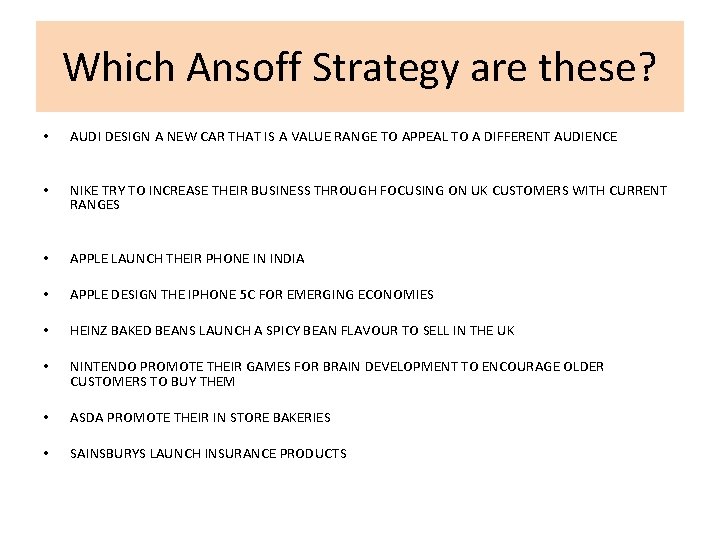
Which Ansoff Strategy are these? • AUDI DESIGN A NEW CAR THAT IS A VALUE RANGE TO APPEAL TO A DIFFERENT AUDIENCE • NIKE TRY TO INCREASE THEIR BUSINESS THROUGH FOCUSING ON UK CUSTOMERS WITH CURRENT RANGES • APPLE LAUNCH THEIR PHONE IN INDIA • APPLE DESIGN THE IPHONE 5 C FOR EMERGING ECONOMIES • HEINZ BAKED BEANS LAUNCH A SPICY BEAN FLAVOUR TO SELL IN THE UK • NINTENDO PROMOTE THEIR GAMES FOR BRAIN DEVELOPMENT TO ENCOURAGE OLDER CUSTOMERS TO BUY THEM • ASDA PROMOTE THEIR IN STORE BAKERIES • SAINSBURYS LAUNCH INSURANCE PRODUCTS
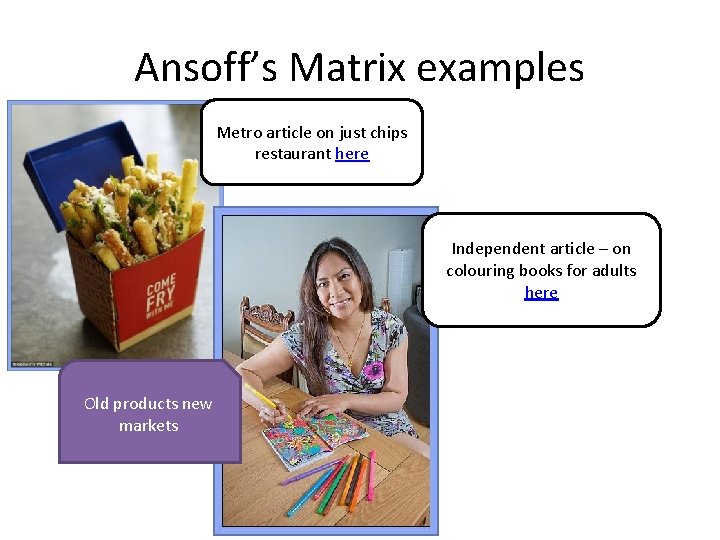
Ansoff’s Matrix examples Metro article on just chips restaurant here Independent article – on colouring books for adults here Old products new markets
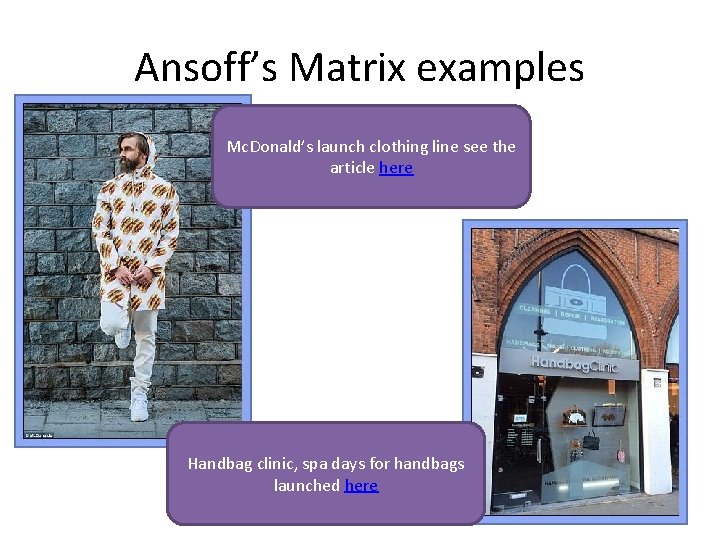
Ansoff’s Matrix examples Mc. Donald’s launch clothing line see the article here Handbag clinic, spa days for handbags launched here
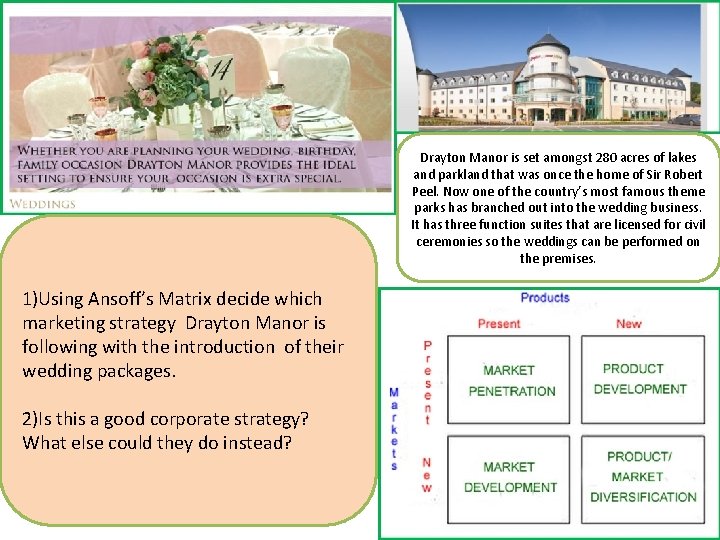
Drayton Manor is set amongst 280 acres of lakes and parkland that was once the home of Sir Robert Peel. Now one of the country’s most famous theme parks has branched out into the wedding business. It has three function suites that are licensed for civil ceremonies so the weddings can be performed on the premises. 1)Using Ansoff’s Matrix decide which marketing strategy Drayton Manor is following with the introduction of their wedding packages. 2)Is this a good corporate strategy? What else could they do instead?
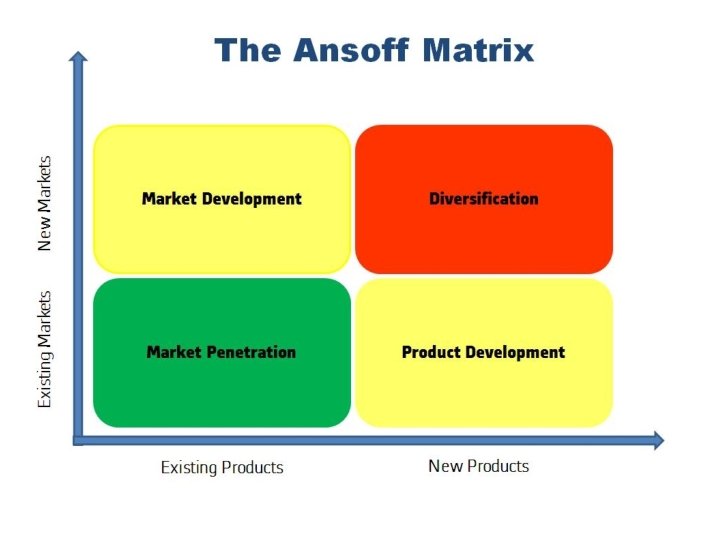
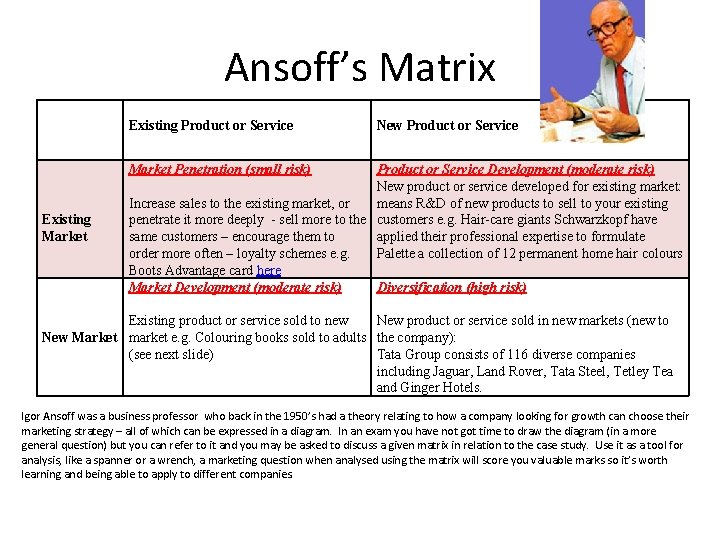
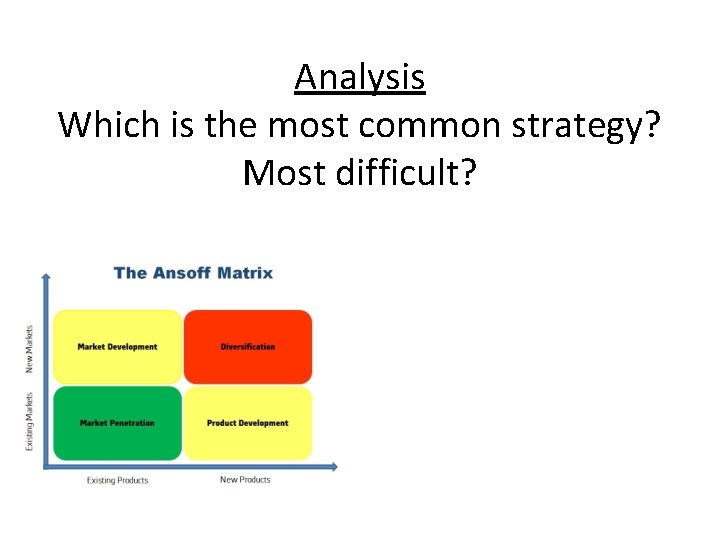
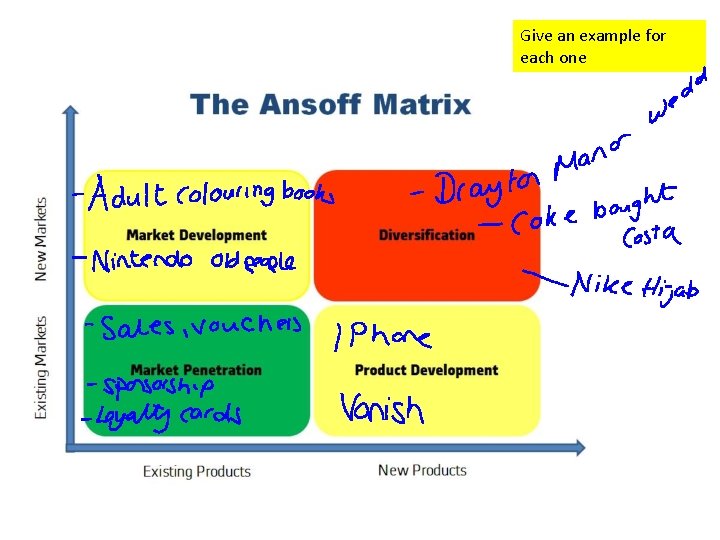
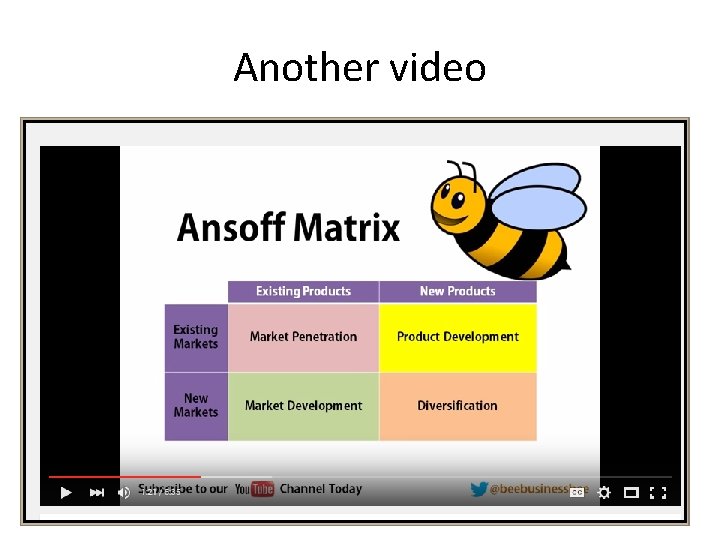
Ansoff’s Matrix Existing Product or Service Market Penetration (small risk) Increase sales to the existing market, or Existing penetrate it more deeply - sell more to the Market same customers – encourage them to order more often – loyalty schemes e. g. Boots Advantage card here Market Development (moderate risk) Existing product or service sold to new New Market market e. g. Colouring books sold to adults (see next slide) New Product or Service Development (moderate risk) New product or service developed for existing market: means R&D of new products to sell to your existing customers e. g. Hair-care giants Schwarzkopf have applied their professional expertise to formulate Palette a collection of 12 permanent home hair colours Diversification (high risk) New product or service sold in new markets (new to the company): Tata Group consists of 116 diverse companies including Jaguar, Land Rover, Tata Steel, Tetley Tea and Ginger Hotels. Igor Ansoff was a business professor who back in the 1950’s had a theory relating to how a company looking for growth can choose their marketing strategy – all of which can be expressed in a diagram. In an exam you have not got time to draw the diagram (in a more general question) but you can refer to it and you may be asked to discuss a given matrix in relation to the case study. Use it as a tool for analysis, like a spanner or a wrench, a marketing question when analysed using the matrix will score you valuable marks so it’s worth learning and being able to apply to different companies.
Uses and limitations of using Ansoff’s Matrix in developing a corporate strategy • How to use the Matrix; Identify all your current products or services and their markets, then consider your future options for expansion using the matrix shown, considering opportunities, associated costs, benefits and risks. Limitations; • It only shows part of the picture and in its purest form is very simplistic. • Large PLCs will need much more analysis than a simple matrix and there may be thousands of sub options for strategies. • Any organisation using Ansoff’ s matrix as an analysis tool to help decide on a company strategy should also conduct a SWOT and a PESTLE analysis to get a better idea of the whole picture, to see the issues from more than one angle.
Analysis Which is the most common strategy? Most difficult?
DEVELOPMENT OF CORPORATE STRATEGY • A corporate strategy is a medium to long term plan for achieving corporate objectives. • Strategic decisions are large in scale and hard to reverse
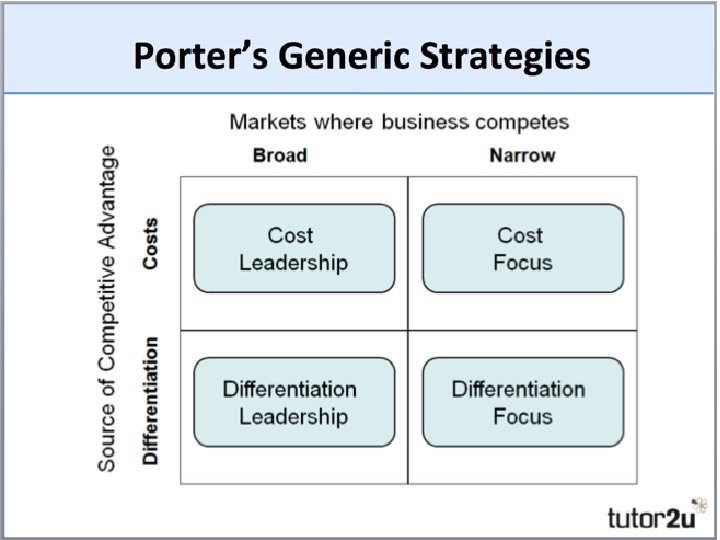
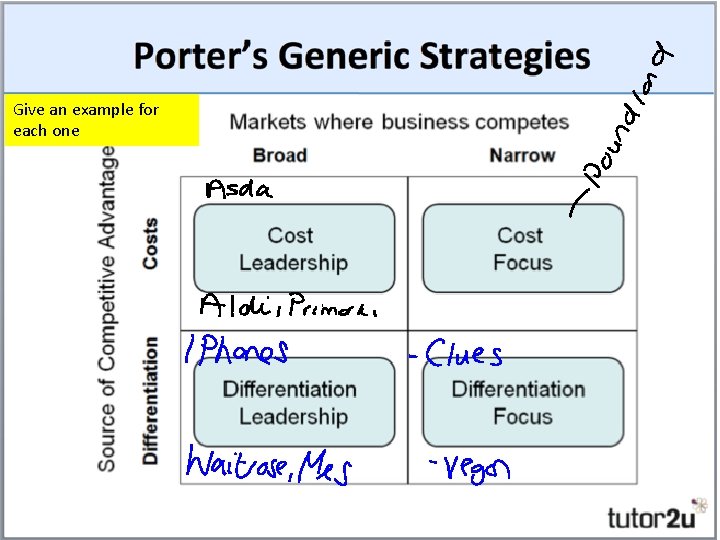
Porter’s strategic mix • 1979 Michael Porter suggested that there were 3 generic business strategies that would get competitive advantage. • Cost leadership; making products at the lowest cost, may include outsourcing, lean management, standard no frills low cost products • Differentiation; the product or service is unique and the USP adds value to the product • Focus; the product or service will serve a very small specific niche, high costs are passed on to customers, no close substitutes • He also said that if a business failed to select one of these strategies that they would be in danger and “stuck in the middle”
Cost Leadership • With this strategy, the objective is to become the lowest-cost producer in the industry. • The traditional method to achieve this objective is to produce on a large scale which enables the business to exploit economies of scale. • This strategy is usually associated with large-scale businesses offering "standard" products with relatively little differentiation that are readily acceptable to the majority of customers. • Occasionally, a low-cost leader will also discount its product to maximise sales, particularly if it has a significant cost advantage over the competition and, in doing so, it can further increase its market share. • • • A strategy of cost leadership requires close cooperation between all the functional areas of a business. To be the lowest-cost producer, a firm is likely to achieve or use several of the following: • High levels of productivity • High capacity utilisation • Use of bargaining power to negotiate the lowest prices for production inputs • Lean production methods (e. g. JIT) • Effective use of technology in the production process • Access to the most effective distribution channels
Cost Focus • Here a business seeks a lower-cost advantage in just one or a small number of market segments. • The product will be basic - perhaps a similar product to the higher-priced and featured market leader, but acceptable to sufficient consumers. Such products are often called "me-too's".
Differentiation Leadership • The business targets much larger markets and aims to achieve competitive advantage through differentiation across the whole of an industry. • This strategy involves selecting one or more criteria used by buyers in a market - and then positioning the business uniquely to meet those criteria. This strategy is usually associated with charging a premium price for the product - often to reflect the higher production costs and extra value-added features provided for the consumer. • Differentiation is about charging a premium price that more than covers the additional production costs, and about giving customers clear reasons to prefer the product over other, less differentiated products. • There are several ways in which this can be achieved, though it is not easy and it requires substantial and sustained marketing investment. The methods include: • • Superior product quality (features, benefits, durability, reliability) • Branding (strong customer recognition & desire; brand loyalty) • Industry-wide distribution across all major channels (i. e. the product or brand is an essential item to be stocked by retailers) • Consistent promotional support – often dominated by advertising, sponsorship etc • • Great examples of a differentiation leadership include global brands like Nike and Mercedes. These brands achieve significant economies of scale, but they do not rely on a cost leadership strategy to compete. Their business and brands are built on persuading customers to become brand loyal and paying a premium for their products.
Differentiation Focus • In the differentiation focus strategy, a business aims to differentiate within just one or a small number of target market segments. • The special customer needs of the segment mean that there are opportunities to provide products that are clearly different from competitors who may be targeting a broader group of customers. • The important issue for any business adopting this strategy is to ensure that customers really do have different needs and wants - in other words that there is a valid basis for differentiation - and that existing competitor products are not meeting those needs and wants. • Differentiation focus is the classic niche marketing strategy. Many small businesses are able to establish themselves in a niche market segment using this strategy, achieving higher prices than un-differentiated products through specialist expertise or other ways to add value for customers. • There are many successful examples of differentiation focus. A good one is Tyrrells Crisps which focused on the smaller hand-fried, premium segment of the crisps industry.
AIM OF PORTFOLIO ANALYSIS
Task • What are the uses and limitations of the Boston Matrix when making Corporate Strategy for a business like Sainsbury’s? Requirements: • What is Boston Matrix • How do businesses use it in corporate strategy? • Link the limitations and uses directly to Sainsbury’s
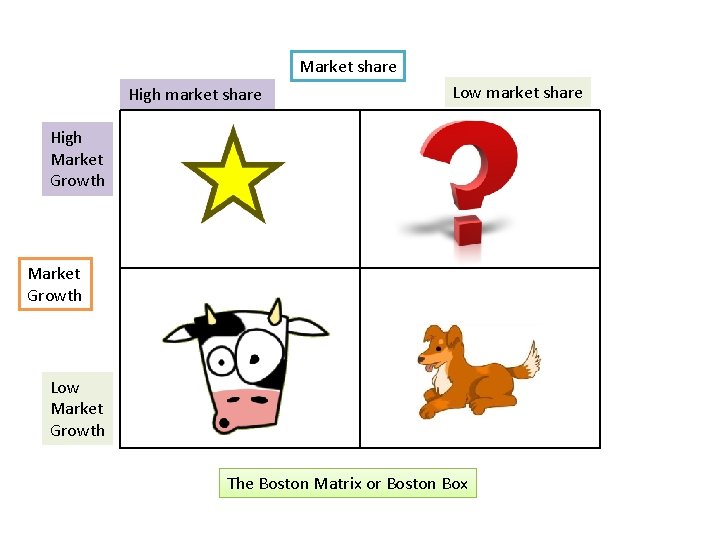
BCG / Boston box / Matrix • The BCG is a matrix with a marketing planning tool which helps managers to plan for a balanced product portfolio • It looks at two dimensions, market share and market growth, in order to assess new and existing products in terms of their market potential • A business would place each individual product in its product portfolio (or product range) onto one of the quadrants of the Boston matrix
Market share High market share Low market share High Market Growth Low Market Growth The Boston Matrix or Boston Box
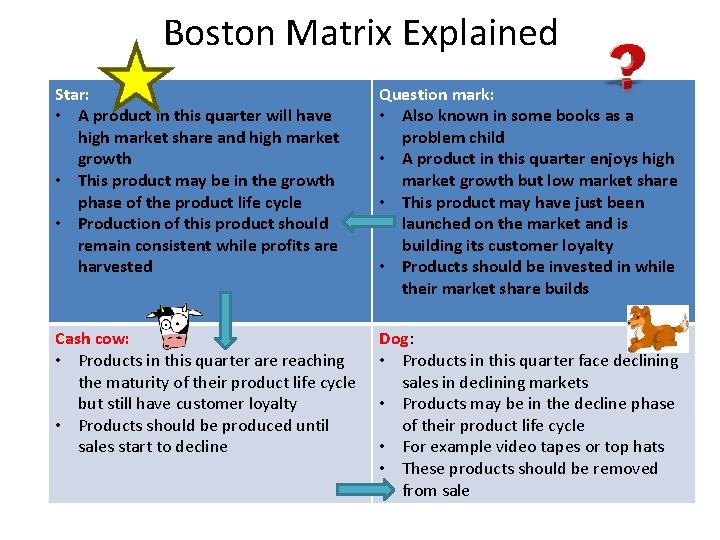
Boston Matrix Explained Star: • A product in this quarter will have high market share and high market growth • This product may be in the growth phase of the product life cycle • Production of this product should remain consistent while profits are harvested Question mark: • Also known in some books as a problem child • A product in this quarter enjoys high market growth but low market share • This product may have just been launched on the market and is building its customer loyalty • Products should be invested in while their market share builds Cash cow: • Products in this quarter are reaching the maturity of their product life cycle but still have customer loyalty • Products should be produced until sales start to decline Dog: • Products in this quarter face declining sales in declining markets • Products may be in the decline phase of their product life cycle • For example video tapes or top hats • These products should be removed from sale
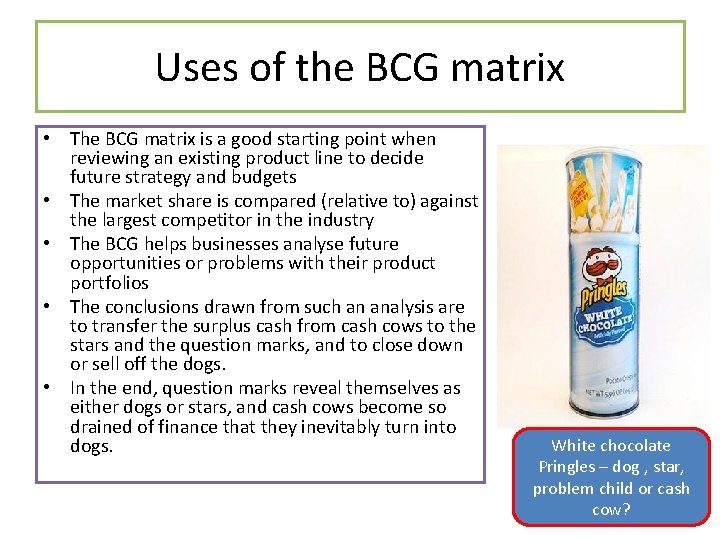
Uses of the BCG matrix • The BCG matrix is a good starting point when reviewing an existing product line to decide future strategy and budgets • The market share is compared (relative to) against the largest competitor in the industry • The BCG helps businesses analyse future opportunities or problems with their product portfolios • The conclusions drawn from such an analysis are to transfer the surplus cash from cash cows to the stars and the question marks, and to close down or sell off the dogs. • In the end, question marks reveal themselves as either dogs or stars, and cash cows become so drained of finance that they inevitably turn into dogs. White chocolate Pringles – dog , star, problem child or cash cow?
limitations of using BCG Matrix in developing a corporate strategy • BCG matrix classifies businesses as low and high, but generally businesses can be medium also. Thus, the true nature of business may not be reflected. • The market is not clearly defined in this model. • High market share does not always leads to high profits. There are high costs also involved with high market share. • Growth rate and relative market share not the only indicators of profitability. This model ignores and overlooks other indicators of profitability. • This four-celled approach is considered as to be too simplistic. • See an interactive BCG matrix demo here Try a BCG matrix quiz here Trump the game – dog or star?
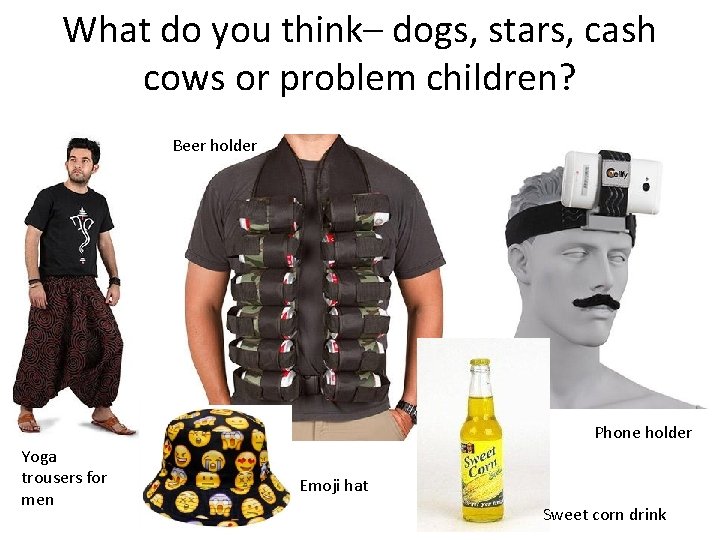
What do you think– dogs, stars, cash cows or problem children? Beer holder Phone holder Yoga trousers for men Emoji hat Sweet corn drink
ACHIEVING COMPETITIVE ADVANTAGE THROUGH DISTINCTIVE CAPABILITIES
Kay’s Distinctive capabilities • John Kay in 1993 argued that some outstanding businesses got their strength from their relationships with their employees / customers / suppliers • Key to success was the continuity and stability of relationships with these three groups
Kay’s Distinctive capabilities • He also argued that there were 3 distinctive capabilities (DC) that could create added value and give a business competitive advantage. These were: Architecture – relationships with employees, suppliers, customers Reputation – through the customer experience Innovation – bringing inventions to market
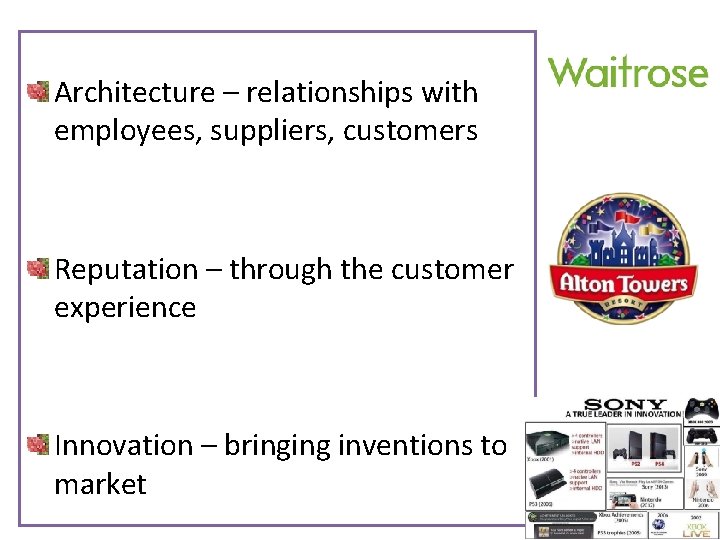
Architecture – relationships with employees, suppliers, customers Reputation – through the customer experience Innovation – bringing inventions to market
Research Task • Architecture, Reputation and Innovation • Find a business that has created competitive advantage through these: • Find a business that has lost the Architecture, reputation and innovation • (6 examples expected and explained)
EFFECT OF STRATEGIC AND TACTICAL DECISIONS ON HUMAN, PHYSICAL, AND FINANCIAL RESOURCES
LQ: WHAT IS THE EFFECT OF STRATEGIC AND TACTICAL DECISIONS? WHO MADE THE SIXTH-FORM CENTRE MOVE DECISION? WHAT WERE THE REASONS? GOOD IDEA?
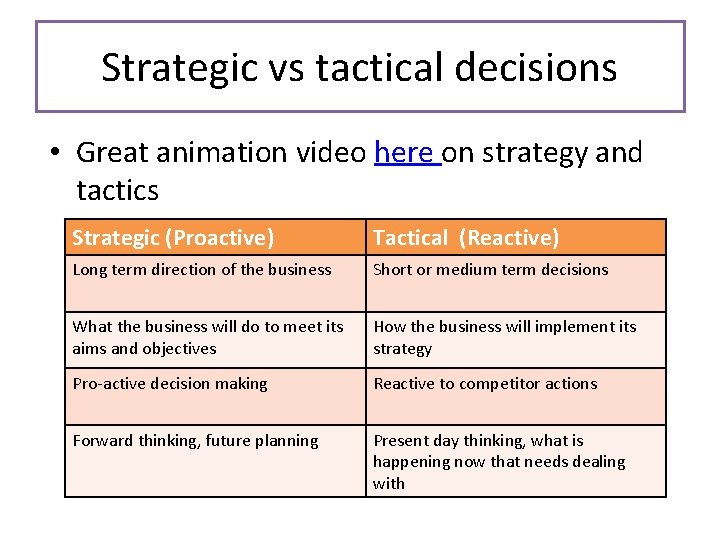
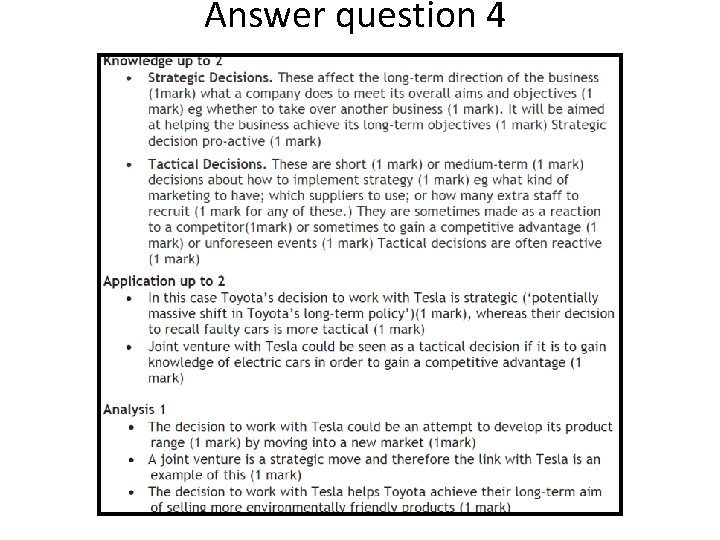
Strategic vs tactical decisions • Use the video to list the main features of strategic vs and tactics (here ) Strategic Tactical Long term direction of the business Short or medium term decisions What the business will do to meet its aims and objectives How the business will implement its strategy Pro-active decision making Reactive to competitor actions Forward thinking, future planning Present day thinking, what is happening now that needs dealing with
Strategic vs tactical decisions • Great animation video here on strategy and tactics Strategic (Proactive) Tactical (Reactive) Long term direction of the business Short or medium term decisions What the business will do to meet its aims and objectives How the business will implement its strategy Pro-active decision making Reactive to competitor actions Forward thinking, future planning Present day thinking, what is happening now that needs dealing with
Is this strategic or tactical? Take-over of another business • For example in Feb 2015 BT bought EE • Telecoms group BT has paid £ 12. 5 bn to buy mobile operator EE. • The takeover creates a communications giant covering fixed-line phones, broadband, mobile and TV. • Why? • BT says that within four years, the deal will be saving it £ 360 m a year in terms of operating costs and capital investment. • It added that by combining the two businesses, it should be able to generate an extra £ 1. 6 bn a year in sales. Full BBC article here
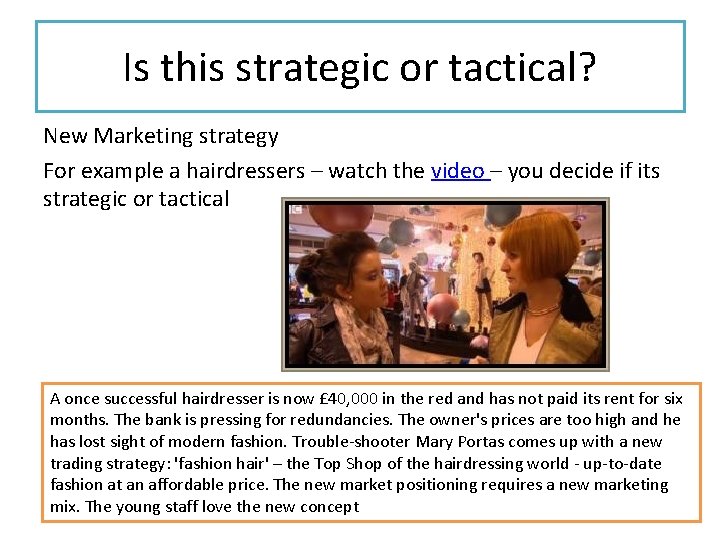
Is this strategic or tactical? New Marketing strategy For example a hairdressers – watch the video – you decide if its strategic or tactical A once successful hairdresser is now £ 40, 000 in the red and has not paid its rent for six months. The bank is pressing for redundancies. The owner's prices are too high and he has lost sight of modern fashion. Trouble-shooter Mary Portas comes up with a new trading strategy: 'fashion hair' – the Top Shop of the hairdressing world - up-to-date fashion at an affordable price. The new market positioning requires a new marketing mix. The young staff love the new concept
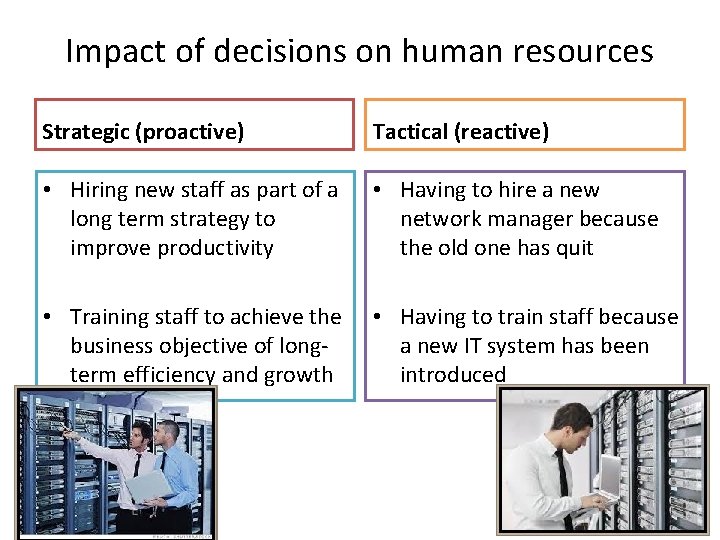
Impact of decisions on human resources Strategic (proactive) Tactical (reactive) • Hiring new staff as part of a long term strategy to improve productivity • Having to hire a new network manager because the old one has quit • Training staff to achieve the business objective of longterm efficiency and growth • Having to train staff because a new IT system has been introduced
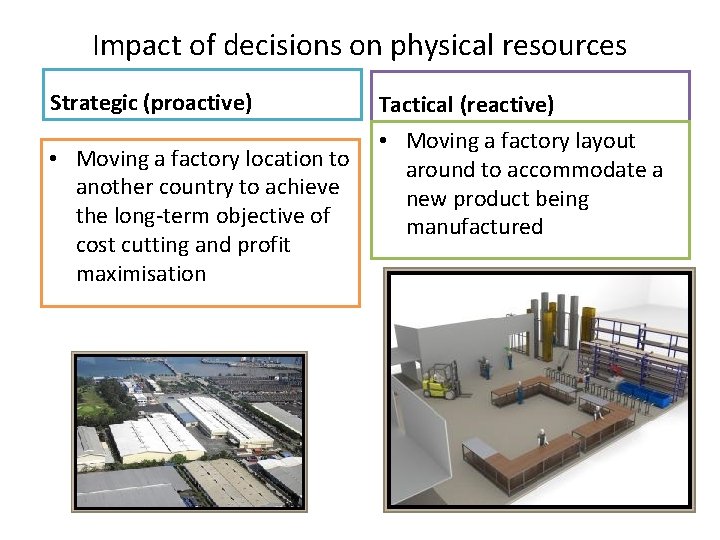
Impact of decisions on physical resources Strategic (proactive) Tactical (reactive) • Moving a factory layout • Moving a factory location to around to accommodate a another country to achieve new product being the long-term objective of manufactured cost cutting and profit maximisation
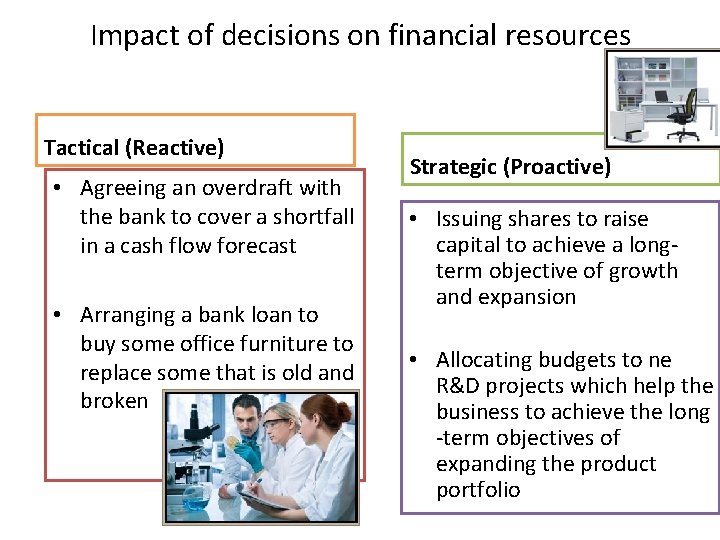
Impact of decisions on financial resources Tactical (Reactive) • Agreeing an overdraft with the bank to cover a shortfall in a cash flow forecast • Arranging a bank loan to buy some office furniture to replace some that is old and broken Strategic (Proactive) • Issuing shares to raise capital to achieve a longterm objective of growth and expansion • Allocating budgets to ne R&D projects which help the business to achieve the long -term objectives of expanding the product portfolio
3. 1. 2 Theories of Corporate Strategy Review
DEVELOPMENT OF CORPORATE STRATEGY • A corporate strategy is a medium to long term plan for achieving corporate objectives. • Strategic decisions are large in scale and hard to reverse
Give an example for each one
Give an example for each one
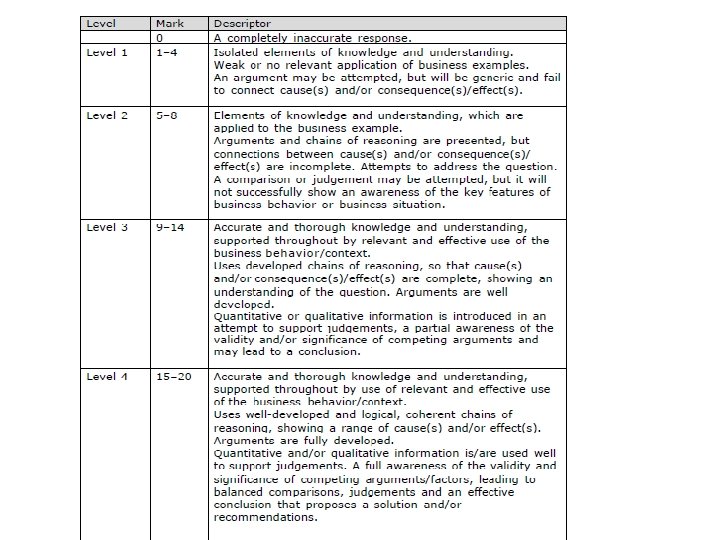
Students to be given mark scheme to try and develop answer
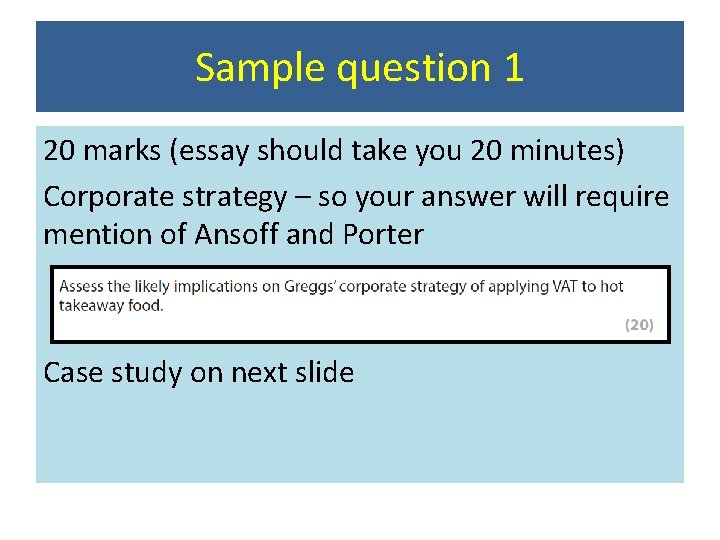
Sample question 1 20 marks (essay should take you 20 minutes) Corporate strategy – so your answer will require mention of Ansoff and Porter Case study on next slide
Move to PESTLE
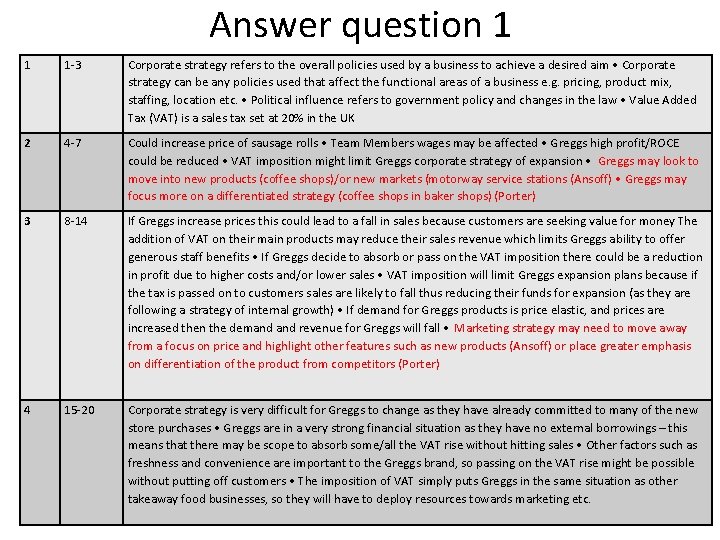
Answer question 1 1 1 -3 Corporate strategy refers to the overall policies used by a business to achieve a desired aim • Corporate strategy can be any policies used that affect the functional areas of a business e. g. pricing, product mix, staffing, location etc. • Political influence refers to government policy and changes in the law • Value Added Tax (VAT) is a sales tax set at 20% in the UK 2 4 -7 Could increase price of sausage rolls • Team Members wages may be affected • Greggs high profit/ROCE could be reduced • VAT imposition might limit Greggs corporate strategy of expansion • Greggs may look to move into new products (coffee shops)/or new markets (motorway service stations (Ansoff) • Greggs may focus more on a differentiated strategy (coffee shops in baker shops) (Porter) 3 8 -14 If Greggs increase prices this could lead to a fall in sales because customers are seeking value for money The addition of VAT on their main products may reduce their sales revenue which limits Greggs ability to offer generous staff benefits • If Greggs decide to absorb or pass on the VAT imposition there could be a reduction in profit due to higher costs and/or lower sales • VAT imposition will limit Greggs expansion plans because if the tax is passed on to customers sales are likely to fall thus reducing their funds for expansion (as they are following a strategy of internal growth) • If demand for Greggs products is price elastic, and prices are increased then the demand revenue for Greggs will fall • Marketing strategy may need to move away from a focus on price and highlight other features such as new products (Ansoff) or place greater emphasis on differentiation of the product from competitors (Porter) 4 15 -20 Corporate strategy is very difficult for Greggs to change as they have already committed to many of the new store purchases • Greggs are in a very strong financial situation as they have no external borrowings – this means that there may be scope to absorb some/all the VAT rise without hitting sales • Other factors such as freshness and convenience are important to the Greggs brand, so passing on the VAT rise might be possible without putting off customers • The imposition of VAT simply puts Greggs in the same situation as other takeaway food businesses, so they will have to deploy resources towards marketing etc.
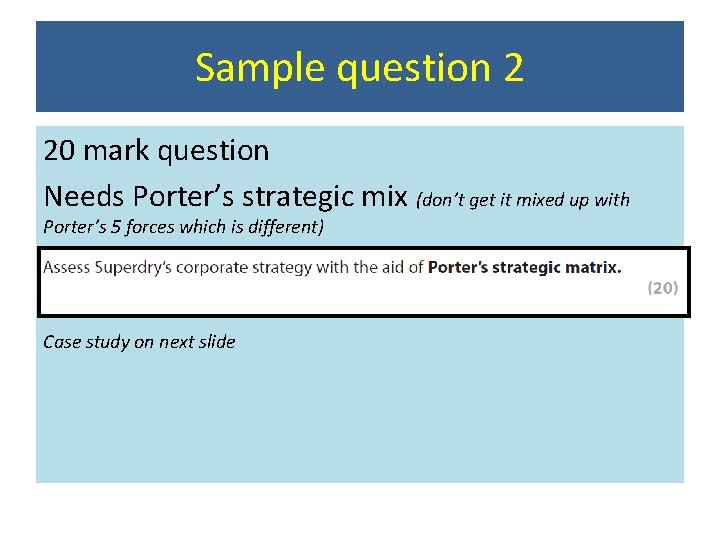
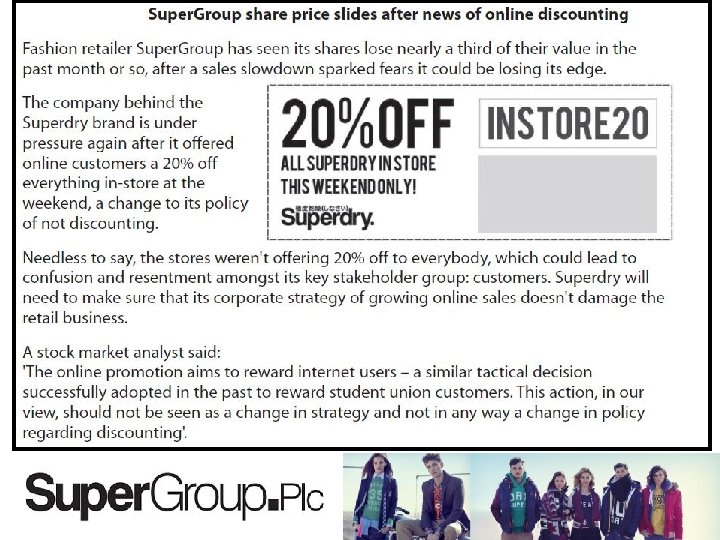
Sample question 2 20 mark question Needs Porter’s strategic mix (don’t get it mixed up with Porter’s 5 forces which is different) Case study on next slide
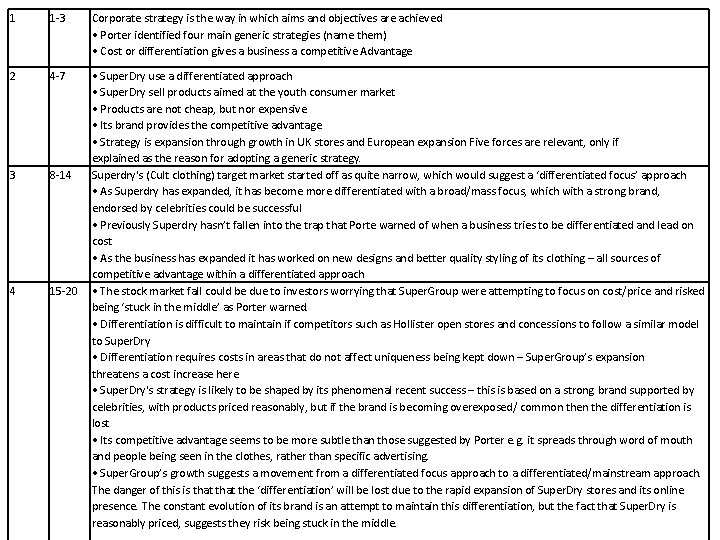
1 1 -3 Corporate strategy is the way in which aims and objectives are achieved • Porter identified four main generic strategies (name them) • Cost or differentiation gives a business a competitive Advantage 2 4 -7 3 8 -14 4 15 -20 • Super. Dry use a differentiated approach • Super. Dry sell products aimed at the youth consumer market • Products are not cheap, but nor expensive • Its brand provides the competitive advantage • Strategy is expansion through growth in UK stores and European expansion Five forces are relevant, only if explained as the reason for adopting a generic strategy. Superdry's (Cult clothing) target market started off as quite narrow, which would suggest a ‘differentiated focus’ approach • As Superdry has expanded, it has become more differentiated with a broad/mass focus, which with a strong brand, endorsed by celebrities could be successful • Previously Superdry hasn’t fallen into the trap that Porte warned of when a business tries to be differentiated and lead on cost • As the business has expanded it has worked on new designs and better quality styling of its clothing – all sources of competitive advantage within a differentiated approach • The stock market fall could be due to investors worrying that Super. Group were attempting to focus on cost/price and risked being ‘stuck in the middle’ as Porter warned. • Differentiation is difficult to maintain if competitors such as Hollister open stores and concessions to follow a similar model to Super. Dry • Differentiation requires costs in areas that do not affect uniqueness being kept down – Super. Group’s expansion threatens a cost increase here • Super. Dry's strategy is likely to be shaped by its phenomenal recent success – this is based on a strong brand supported by celebrities, with products priced reasonably, but if the brand is becoming overexposed/ common the differentiation is lost • Its competitive advantage seems to be more subtle than those suggested by Porter e. g. it spreads through word of mouth and people being seen in the clothes, rather than specific advertising. • Super. Group’s growth suggests a movement from a differentiated focus approach to a differentiated/mainstream approach. The danger of this is that the ‘differentiation’ will be lost due to the rapid expansion of Super. Dry stores and its online presence. The constant evolution of its brand is an attempt to maintain this differentiation, but the fact that Super. Dry is reasonably priced, suggests they risk being stuck in the middle.
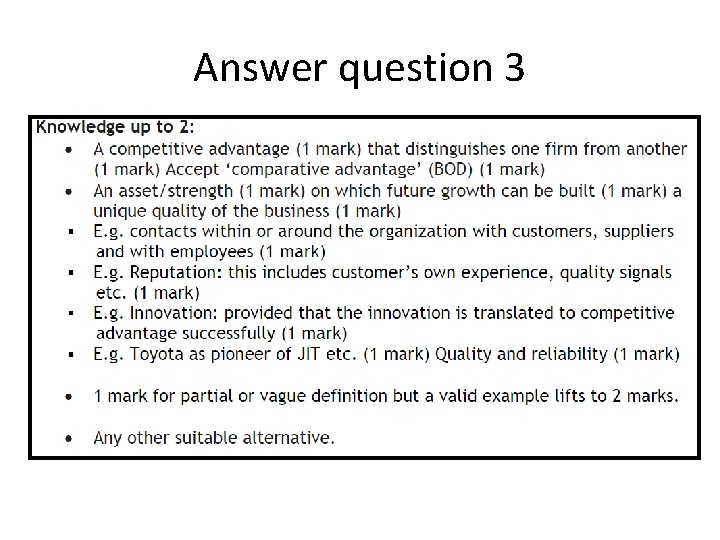
Sample question 3 2 marks No context needed
Answer question 3
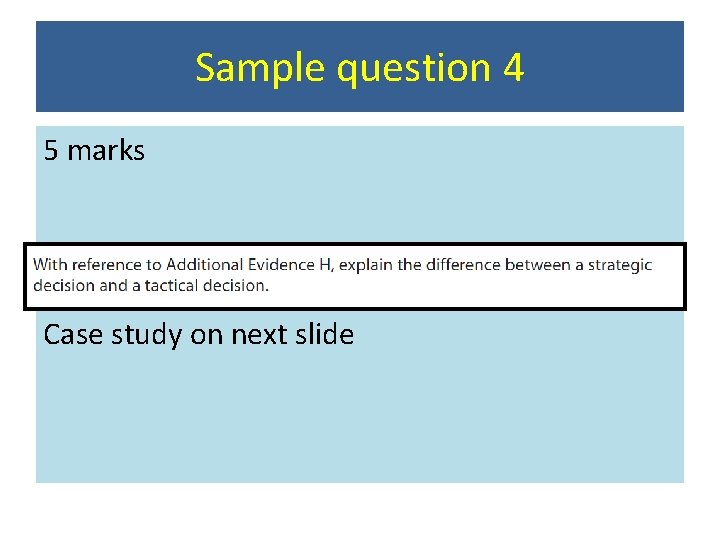
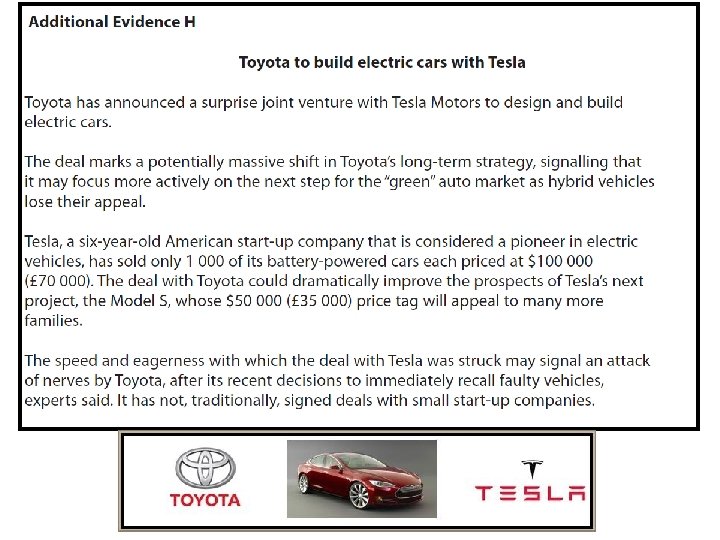
Sample question 4 5 marks Case study on next slide
Answer question 4
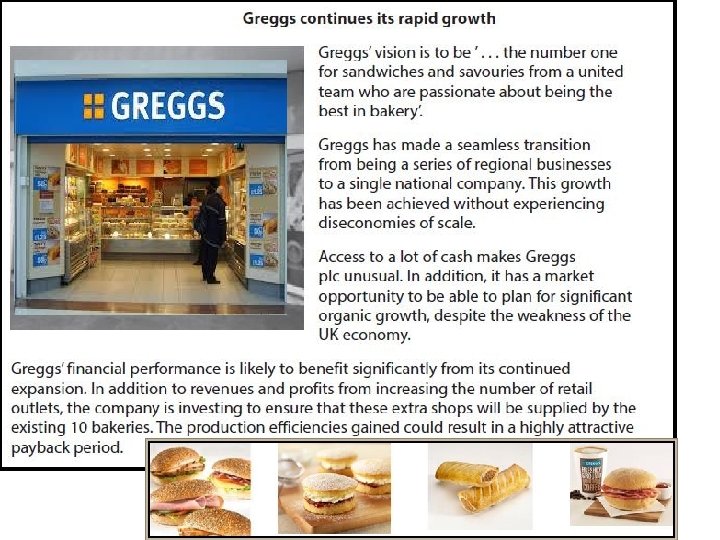
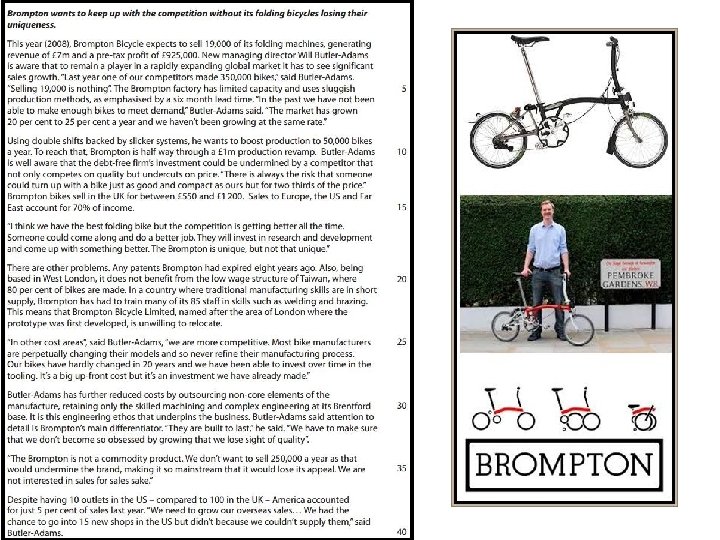
Sample question 5 • 5 marks • Case study on next slide
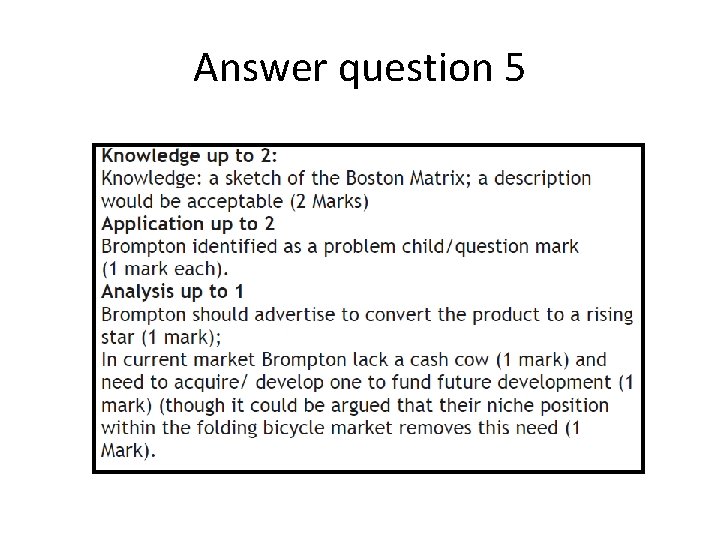
Answer question 5
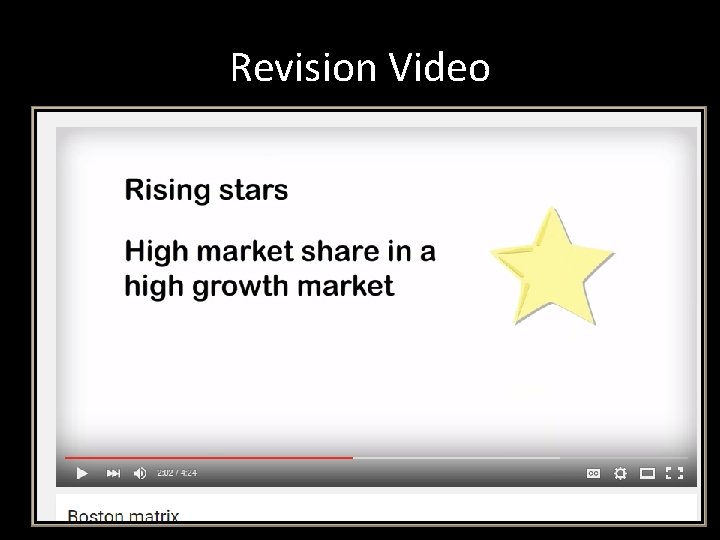
Revision Video
Another video
Glossary • Ansoff’s matrix; The Ansoff Matrix is a marketing planning tool which usually aids a business in determining its product and market growth by focusing on whether the products are new or existing and whether the market is new or existing • Boston Box; Created by the Boston Consulting Group, the BCG matrix aims to identify high-growth products by categorising the company's product portfolio according to growth rate and market share • Kay’s Distinctive Capabilities; This is a business strategy concept where a successful company achieves a competitive advantage over other businesses. There are 3 ways this can be achieved (3 distinctive capabilities); - Architecture, Innovation and Reputation • Product portfolio; All the products that a company produces or sells