17 5 Reactions of Aldehydes and Ketones A
- Slides: 21
17. 5 Reactions of Aldehydes and Ketones: A Review and a Preview
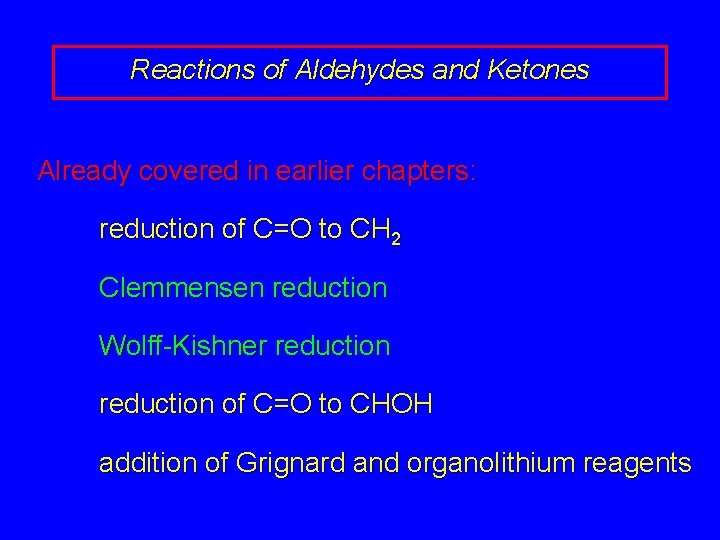
Reactions of Aldehydes and Ketones Already covered in earlier chapters: reduction of C=O to CH 2 Clemmensen reduction Wolff-Kishner reduction of C=O to CHOH addition of Grignard and organolithium reagents
17. 6 Principles of Nucleophilic Addition to Carbonyl Groups: Hydration of Aldehydes and Ketones
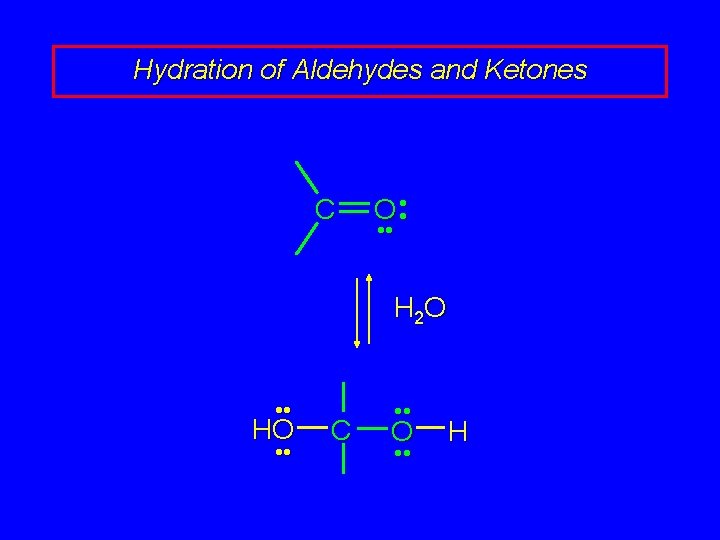
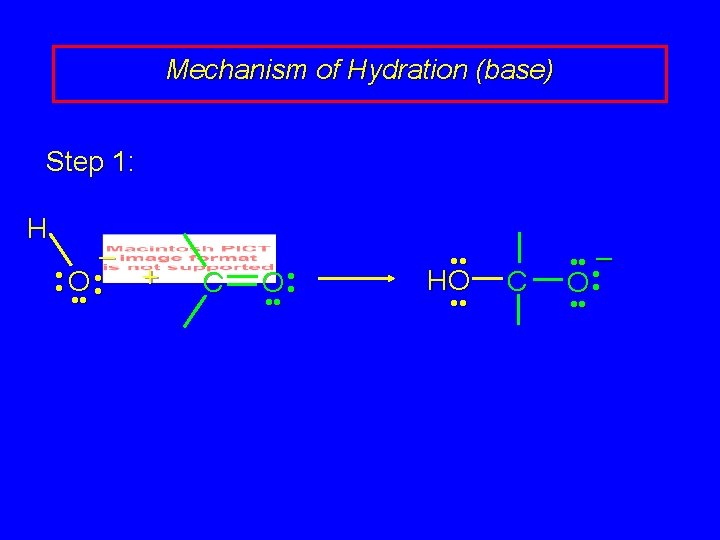
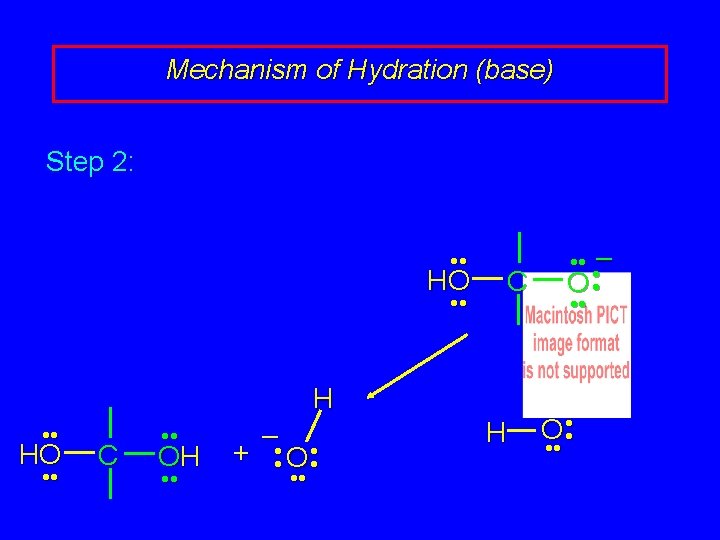
Hydration of Aldehydes and Ketones C O • • H 2 O • • HO • • C • • O • • H
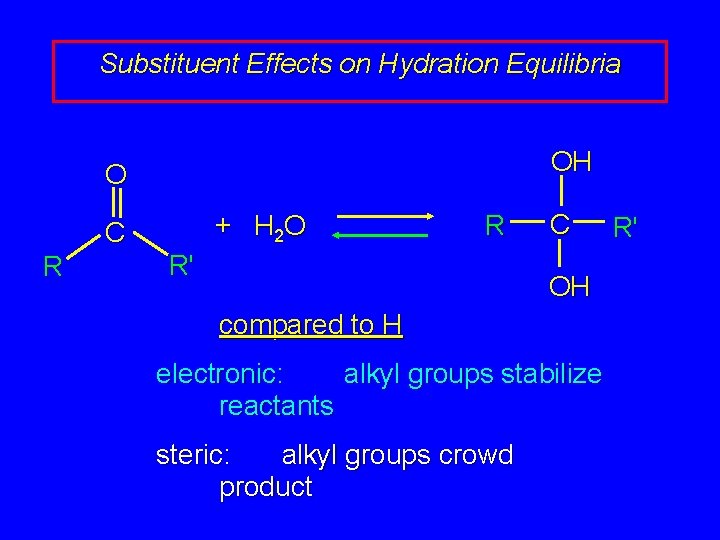
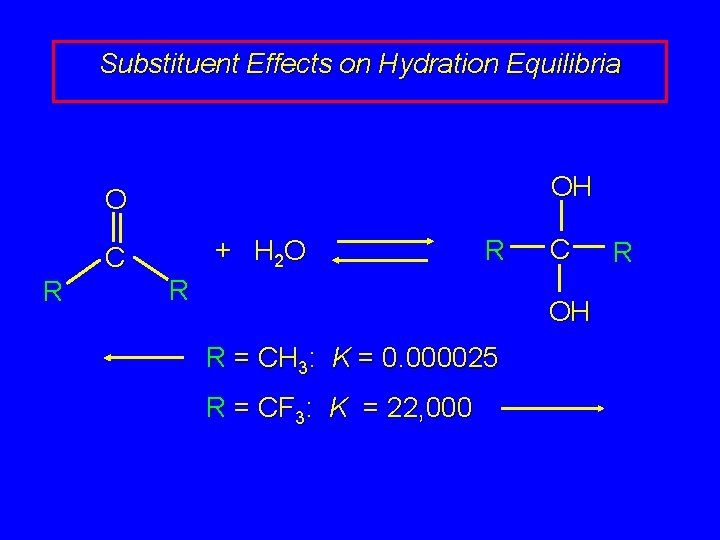
Substituent Effects on Hydration Equilibria OH O + H 2 O C R R R' C OH compared to H electronic: alkyl groups stabilize reactants steric: alkyl groups crowd product R'
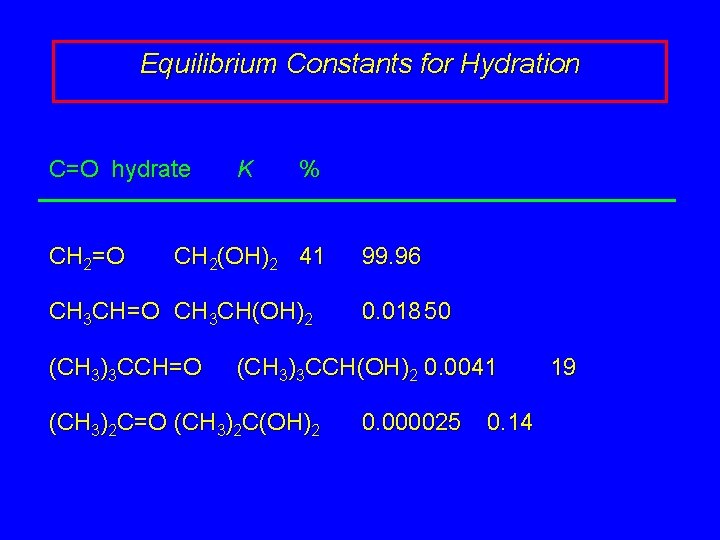
Equilibrium Constants for Hydration C=O hydrate CH 2=O K % CH 2(OH)2 41 CH 3 CH=O CH 3 CH(OH)2 (CH 3)3 CCH=O 99. 96 0. 018 50 (CH 3)3 CCH(OH)2 0. 0041 (CH 3)2 C=O (CH 3)2 C(OH)2 0. 000025 0. 14 19
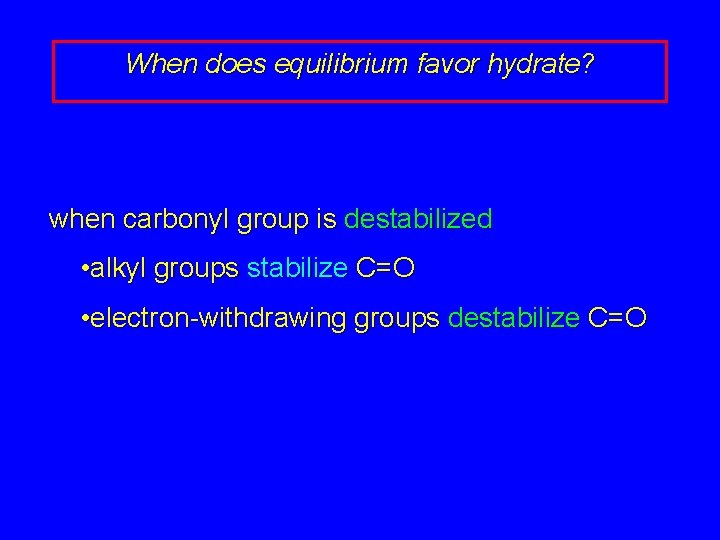
When does equilibrium favor hydrate? when carbonyl group is destabilized • alkyl groups stabilize C=O • electron-withdrawing groups destabilize C=O
Substituent Effects on Hydration Equilibria OH O + H 2 O C R R R C OH R = CH 3: K = 0. 000025 R = CF 3: K = 22, 000 R
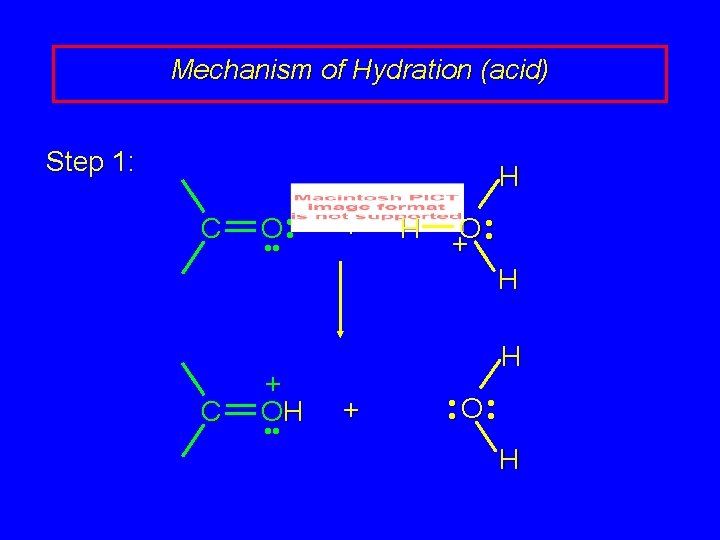
Mechanism of Hydration (acid) Step 1: H C O • • + H O • • + H C + OH • • H + • O • • • H
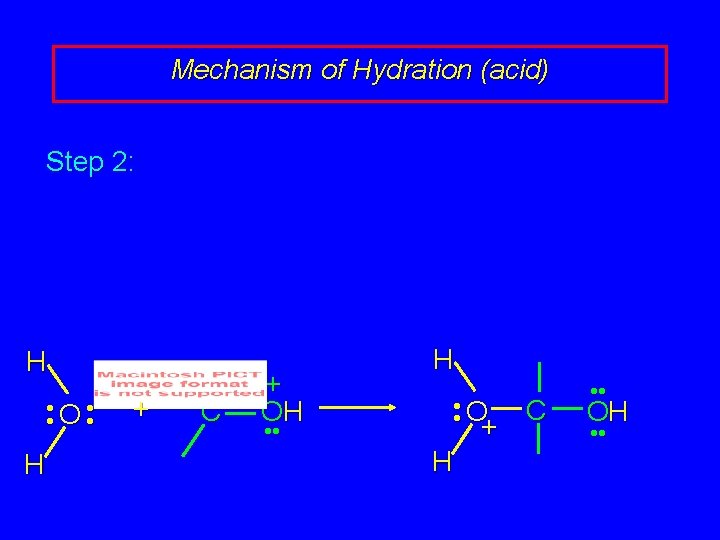
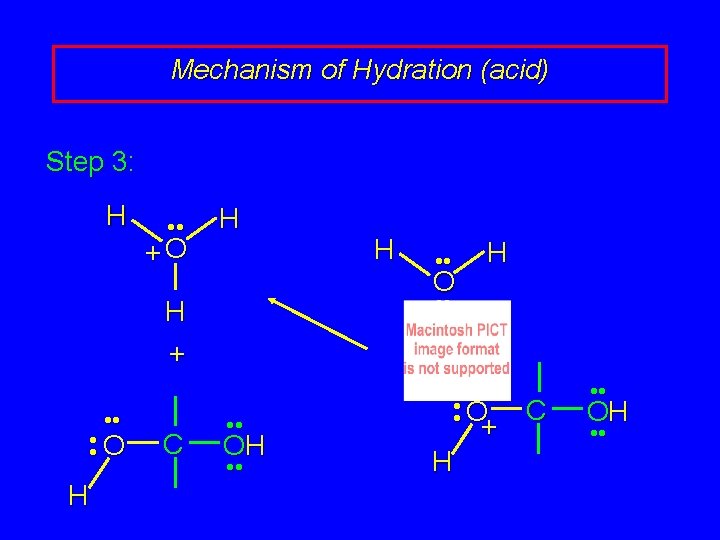
Mechanism of Hydration (acid) Step 2: H • O • • • H + C + OH • • H • O • + H C • • OH • •
17. 7 Cyanohydrin Formation
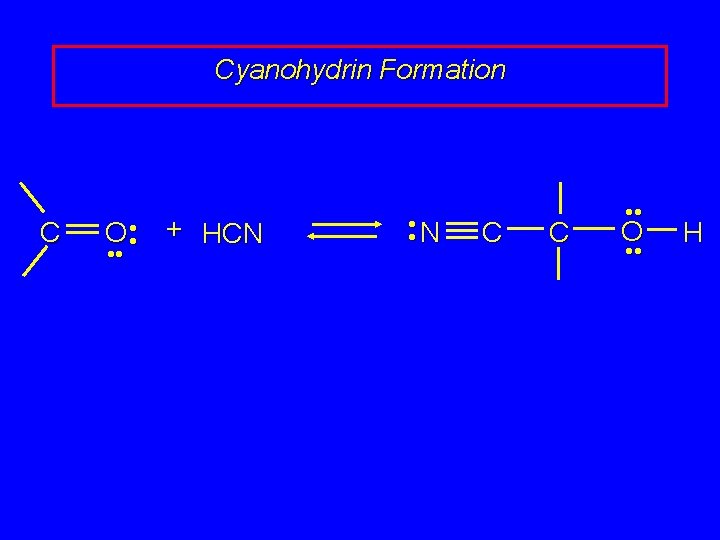
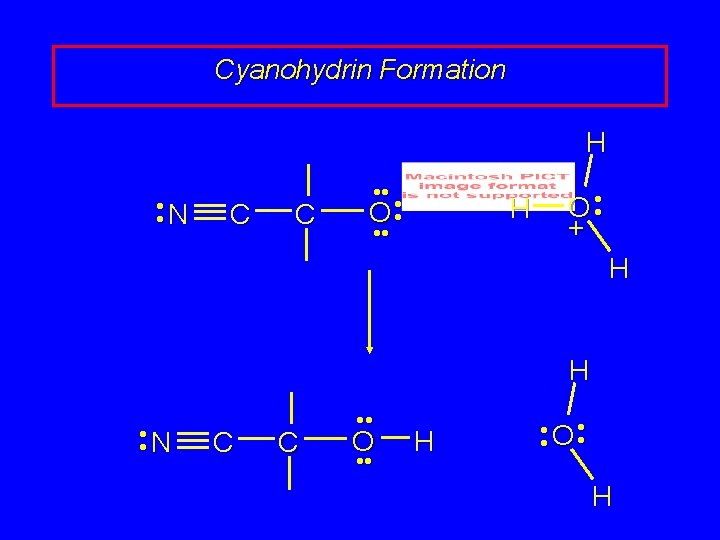
Cyanohydrin Formation C O • • + HCN • • • N • C C • • O • • H
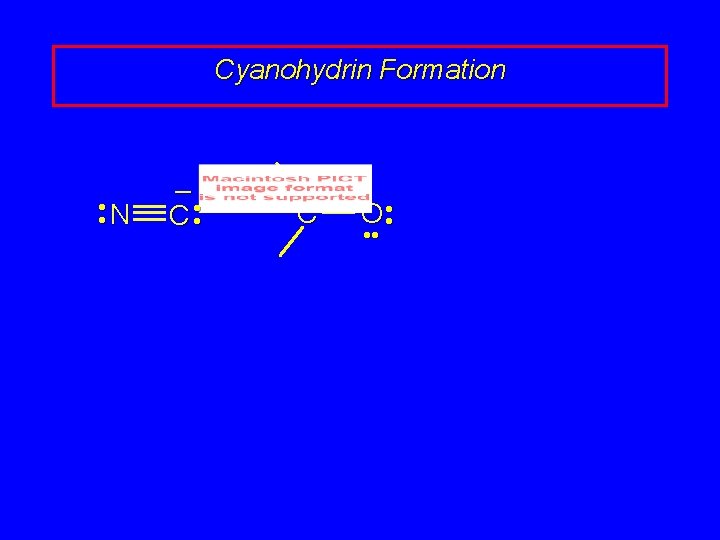
Cyanohydrin Formation • N • – C • • C O • •
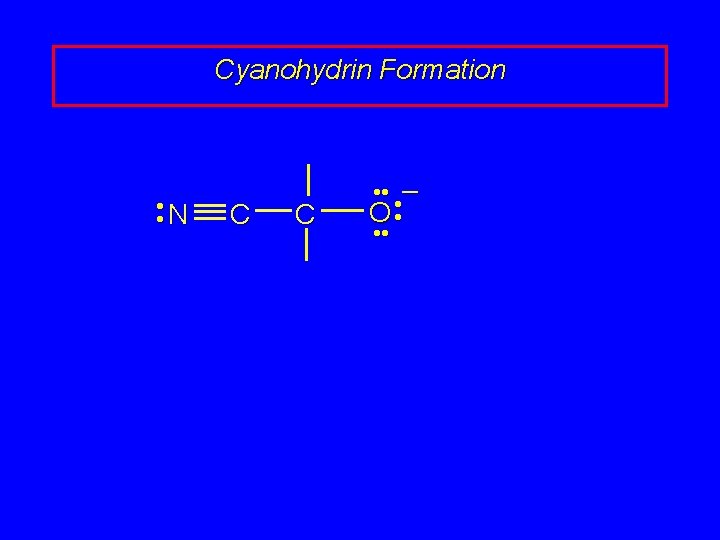
Cyanohydrin Formation • N • C C • • – O • •
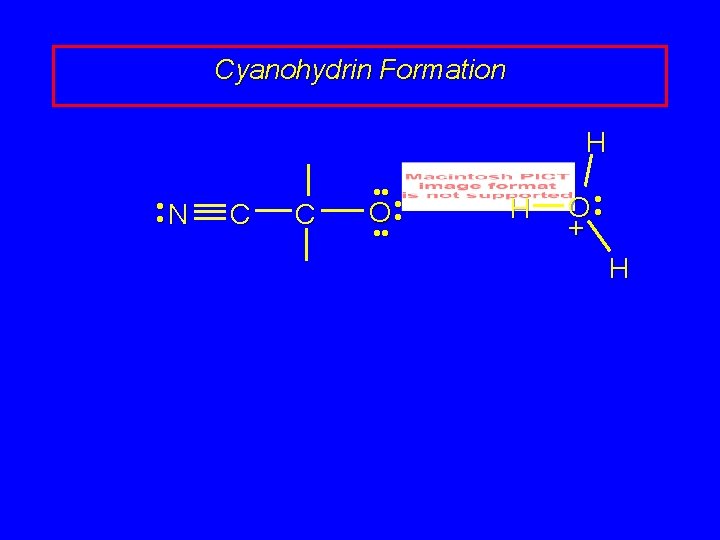
Cyanohydrin Formation H • N • C C • • – O • • H O • • + H
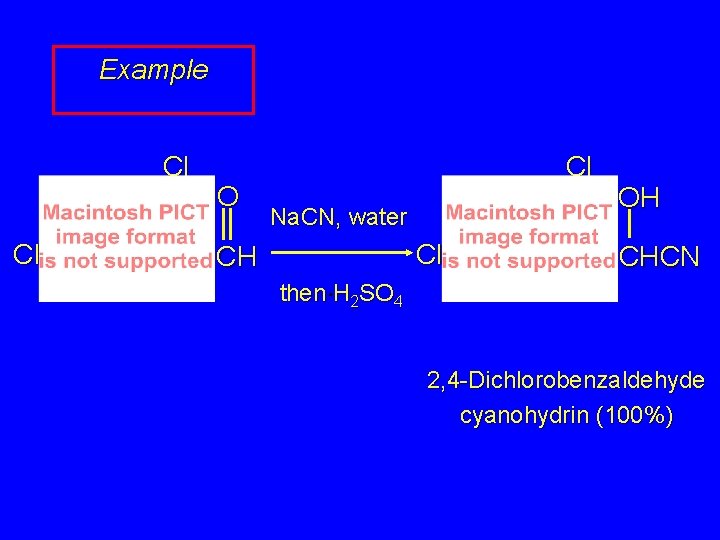
Example Cl Cl O Cl Na. CN, water Cl CH OH CHCN then H 2 SO 4 2, 4 -Dichlorobenzaldehyde cyanohydrin (100%)
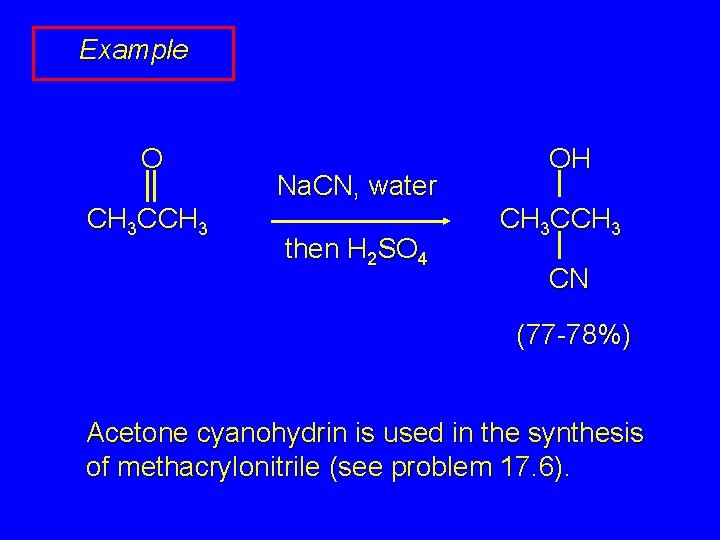
Example O CH 3 CCH 3 Na. CN, water then H 2 SO 4 OH CH 3 CCH 3 CN (77 -78%) Acetone cyanohydrin is used in the synthesis of methacrylonitrile (see problem 17. 6).