
Carbohydrates Carbohydrates are polyhydroxy aldehydes or ketones Classification

Carbohydrates: Carbohydrates are poly-hydroxy aldehydes or ketones. Classification: There are three major classes of carbohydrates: 1) Monosaccharides (simple sugars) -consist of a single polyhydroxy aldehyde or ketone unit. -The most abundant monosaccharide in nature is the six carbon sugar D-glucose.

2) Oligosaccharides -consist of short chains of monosaccharide units joined by characteristic linkages called glycosidic bonds. -The most abundant are the disaccharides (consist of two monosaccharide units). (e. g sucrose, lactose, maltose) 3) Polysaccharides: are sugar polymers containing many monosaccharides units (e. g starch, glycogen, cellulose)

Monosaccharides ü ü Ø The simplest of the carbohydrates. are either aldehydes or ketones with two or more hydroxyl groups. The backbones of common monosaccharides are unbranched carbon chains in which all the carbon atoms are linked by single bonds. In the open –chain form, one of the carbon atoms is double-bonded to an oxygen atom to form a carbonyl group; each of the other carbon atoms has a hydroxyl group. ü
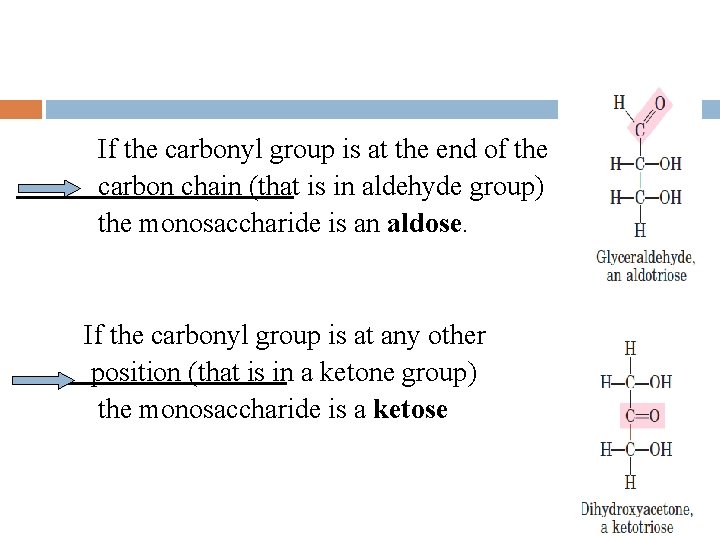
If the carbonyl group is at the end of the carbon chain (that is in aldehyde group) the monosaccharide is an aldose. If the carbonyl group is at any other position (that is in a ketone group) the monosaccharide is a ketose

Examples of monosaccharides: - glyceraldehyde, dihydroxyacetone - Ribose - Glucose, Fructose

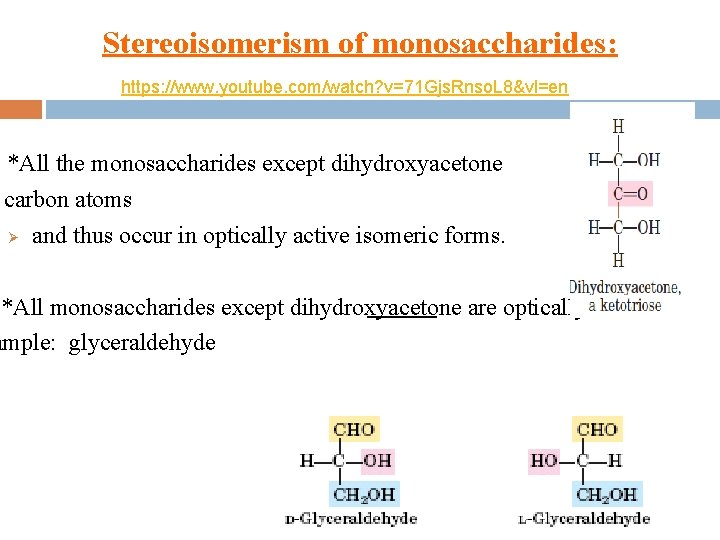
Stereoisomerism of monosaccharides: https: //www. youtube. com/watch? v=71 Gjs. Rnso. L 8&vl=en *All the monosaccharides except dihydroxyacetone carbon atoms Ø and thus occur in optically active isomeric forms. *All monosaccharides except dihydroxyacetone are optically active. ample: glyceraldehyde -
ü ü For sugars having two or more asymmetric carbon atoms D and L refer to the asymmetric carbon atom The majority of the sugars in humans are Dsugars.
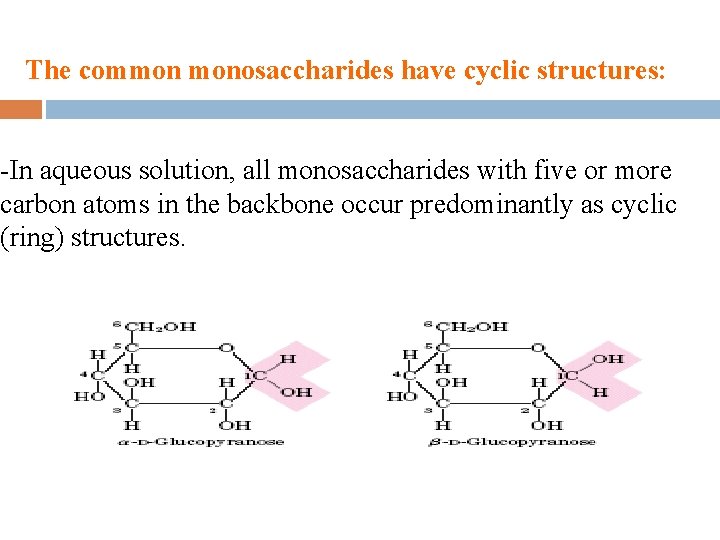
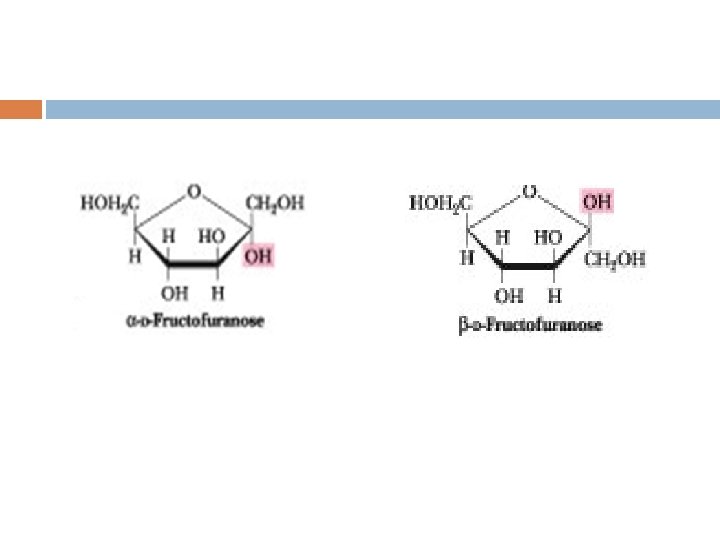
The common monosaccharides have cyclic structures: -In aqueous solution, all monosaccharides with five or more carbon atoms in the backbone occur predominantly as cyclic (ring) structures.
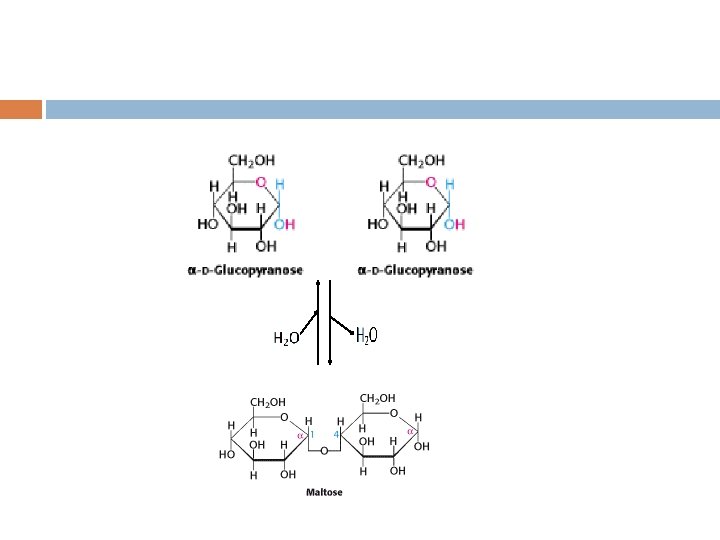
2) Oligosaccharides: a) Disaccharides: -Disaccharides are molecules composed of two monosaccharides that are linked by O-glycosidic bond. e. g. maltose, lactose, sucrose

3) Polysaccharides: (glycans) -Polysaccharides are composed of large numbers of monosaccharide units connected by glycosidic linkages. -Larger glycans may contain from hundreds to thousands of sugar units. -These molecules may have a linear structure or they may have branched shapes. -Most carbohydrates found in nature occur as polysaccharides of high molecular weight. -On complete hydrolysis with acid or specific enzymes, these polysaccharides give monosaccharides and/ or simple monosaccharide derivatives.
D-glucose is the most prevalent monosaccharide unit in polysaccharides, but polysaccharides of D-mannose, D-fructose, D-galactose are also common. Polysaccharides differ from each other in the: 1) identity of their structure monosaccharide units. 2) length of their chains. 3) types of bonds linking the units. 4) degree of branching.
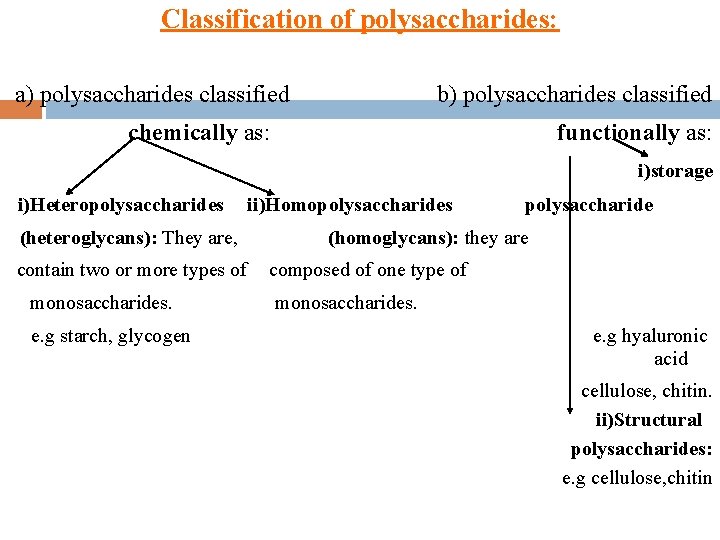
Classification of polysaccharides: a) polysaccharides classified b) polysaccharides classified chemically as: functionally as: i)storage i)Heteropolysaccharides (heteroglycans): They are, contain two or more types of monosaccharides. e. g starch, glycogen ii)Homopolysaccharides polysaccharide (homoglycans): they are composed of one type of monosaccharides. e. g hyaluronic acid cellulose, chitin. ii)Structural polysaccharides: e. g cellulose, chitin
Storage polysaccharides: (e. g starch, glycogen) -The most important storage polysaccharides are starch in plant cells and glycogen in animal cells. Both polysaccharides occur intracellularly as large clusters or granules. - Starch and glycogen molecules are heavily hydrated. - a) Starch: Starch is storage polysaccharides in plant cells. It contains two types of glucose polymer: i) Amylose and ii)Amylopectin
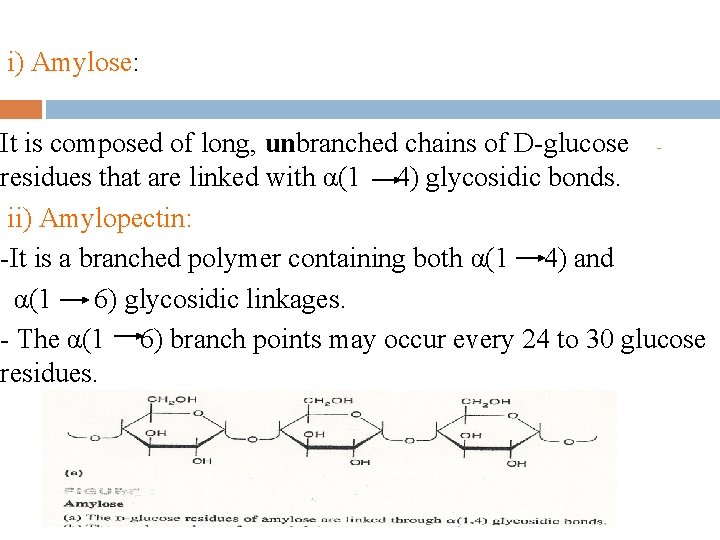
i) Amylose: It is composed of long, unbranched chains of D-glucose residues that are linked with α(1 4) glycosidic bonds. ii) Amylopectin: -It is a branched polymer containing both α(1 4) and α(1 6) glycosidic linkages. - The α(1 6) branch points may occur every 24 to 30 glucose residues.

b) Glycogen: It is the storage polysaccharides in vertebrate. It is found in greatest abundance in liver and muscle cells. Like amylopectin, glycogen is a polymer of α (1 4) linked subunits of glucose, with α (1 6) linked branches, but glycogen is more extensively branched (every 8 to 12 residues). - -
Lipids
Lipids: -Lipids are water – insoluble cellular components, of diverse structures, that can be extracted by non- polar solvents. v Function of lipids ●Structural components in the cell membrane. e. g phospholipids, sphingolipids. ●Storage form of energy. e. g triacylglycerols ●Some lipid molecules that occur in the outer surfaces of various organisms have protective or waterproofing functions. ●chemical signals, vitamins (lipid- soluble vitamins), or pigments.
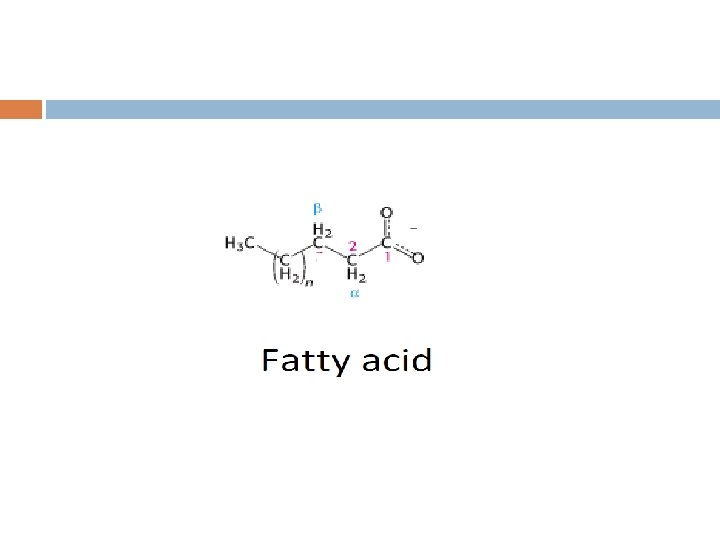
The fats and oils used almost universally as stored forms of energy in living organisms are derivatives of fatty acids. Fatty acids: -Fatty acids consist of a long chain hydrocarbon covalently bonded to a carboxylate group. -The hydrocarbon chains are variable in their length. -Most naturally occuring fatty acids have an even number of arbon atoms that form an unbranched chain. -
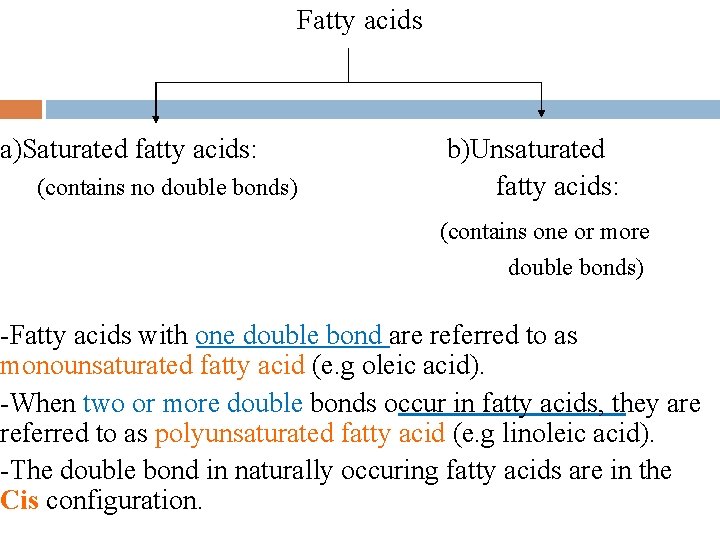
Fatty acids a)Saturated fatty acids: (contains no double bonds) b)Unsaturated fatty acids: (contains one or more double bonds) -Fatty acids with one double bond are referred to as monounsaturated fatty acid (e. g oleic acid). -When two or more double bonds occur in fatty acids, they are referred to as polyunsaturated fatty acid (e. g linoleic acid). -The double bond in naturally occuring fatty acids are in the Cis configuration.
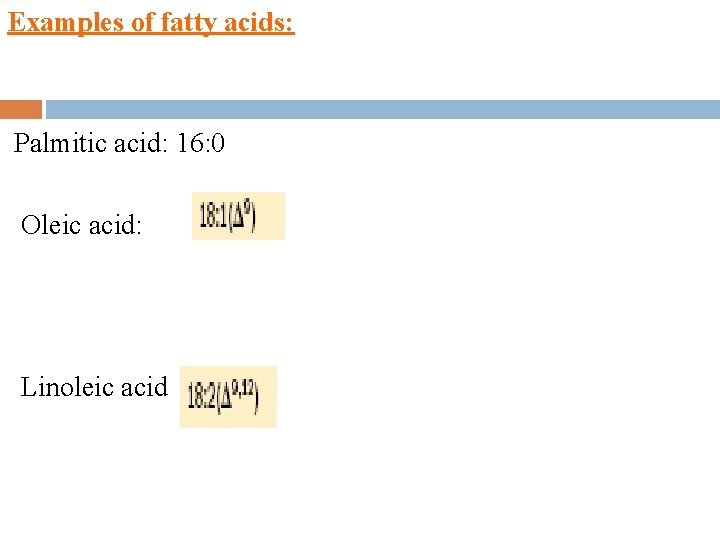
Examples of fatty acids: Palmitic acid: 16: 0 Oleic acid: Linoleic acid
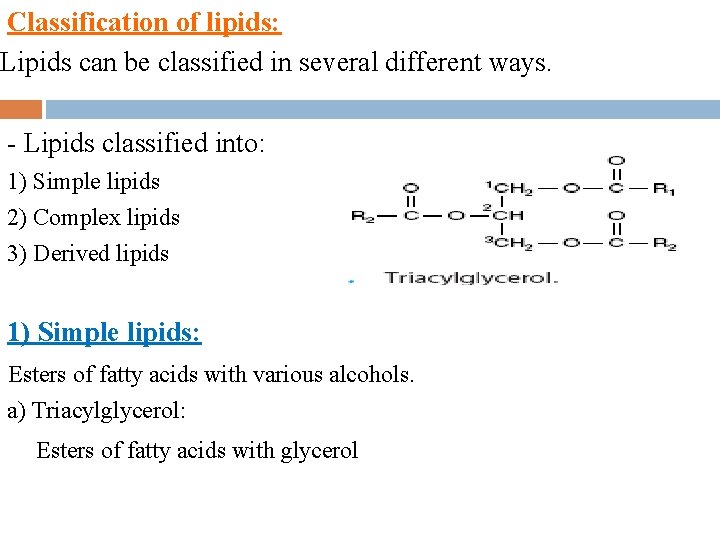
Classification of lipids: Lipids can be classified in several different ways. - Lipids classified into: 1) Simple lipids 2) Complex lipids 3) Derived lipids 1) Simple lipids: Esters of fatty acids with various alcohols. a) Triacylglycerol: Esters of fatty acids with glycerol
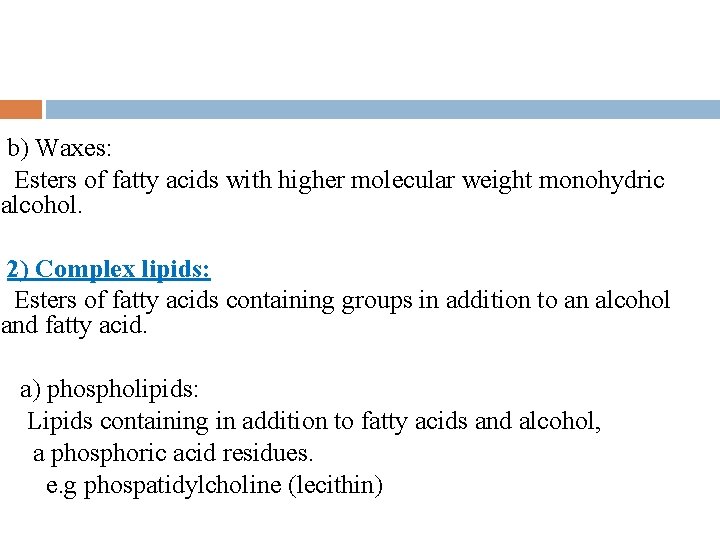
b) Waxes: Esters of fatty acids with higher molecular weight monohydric alcohol. 2) Complex lipids: Esters of fatty acids containing groups in addition to an alcohol and fatty acid. a) phospholipids: Lipids containing in addition to fatty acids and alcohol, a phosphoric acid residues. e. g phospatidylcholine (lecithin)

phospatidylcholine (lecithin) b) Glycolipids (glycosphingolipids): Lipids containing a fatty acid, sphingosine, and carbohydrates. e. g Cerebrosides 3) Derived lipids: e. g steroids (e. g cholesterol)
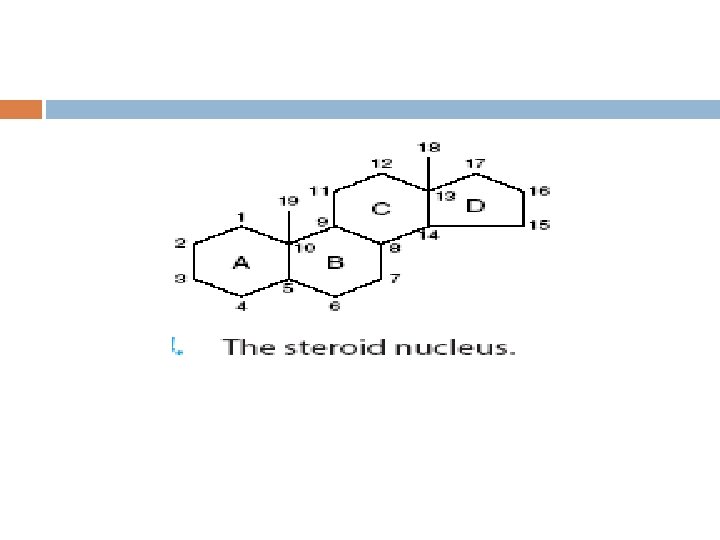
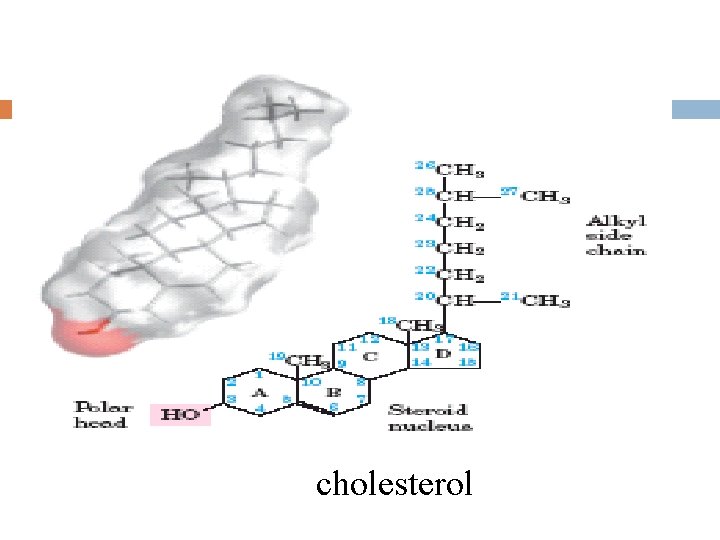
cholesterol
Nucleotides and nucleic acids: Nucleotides are building block of nucleic acids (DNA, RNA). Nucleotide structure: -nucleotides have three characterestic components: 1) Nitrogen base 2) Pentose sugar 3) phosphate group
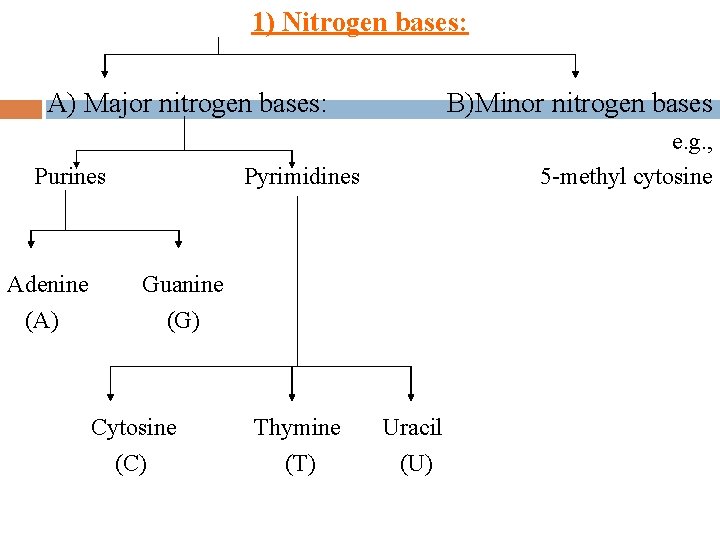
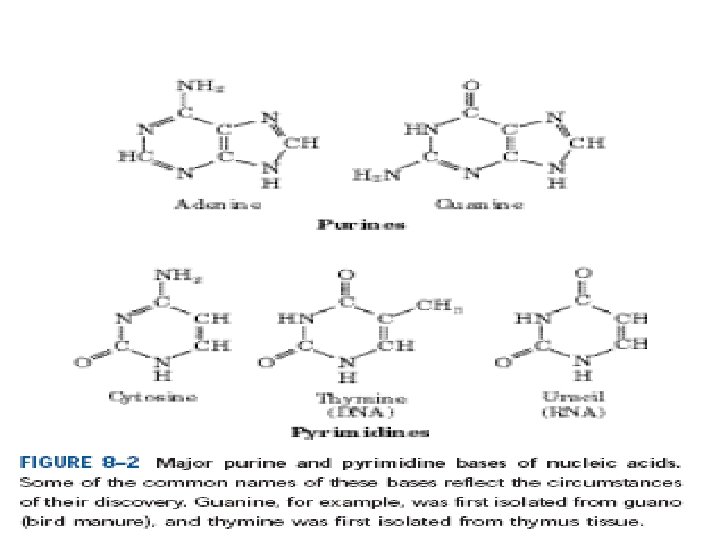
1) Nitrogen bases: A) Major nitrogen bases: Purines Adenine (A) B)Minor nitrogen bases e. g. , 5 -methyl cytosine Pyrimidines Guanine (G) Cytosine (C) Thymine (T) Uracil (U)

2) Pentose sugar: Deoxy ribose Ribose pentose sugars are present in β-furanose form. -
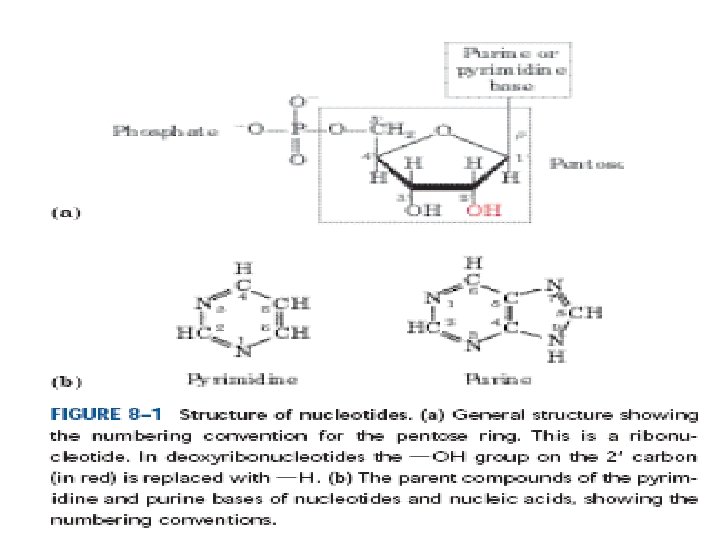
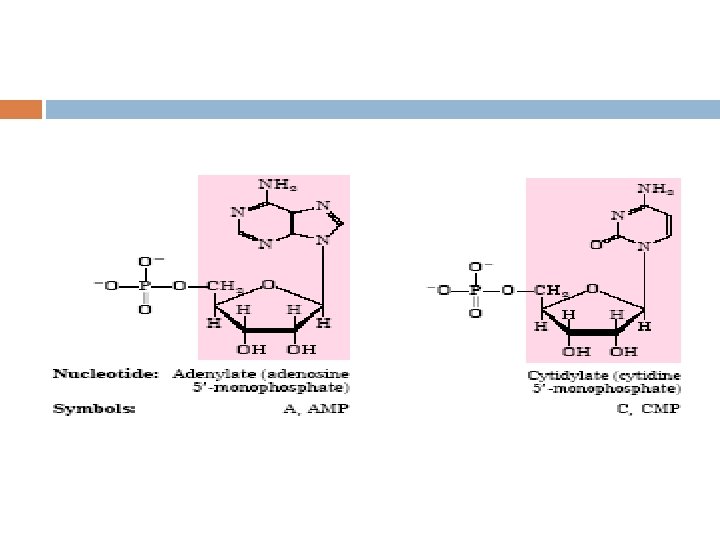
-The base of a nucleotide is joined covalently (at N-1 of pyrimidines and N-9 of purines) in an N-β-glycosyl bond to the C-1` of the pentose sugar, and the phosphate is esterified to the 5`carbon.
Nucleosides: -nucleoside composed of nitrogen base (purine or pyrimidine) and pentose sugar (ribose or deoxy ribose). Nucleotides: -Nucleotides are mono-, di-, or triphosphate esters of nucleosides. -The phosphate group is attached by an ester linkage to the 5`-OH of the pentose.
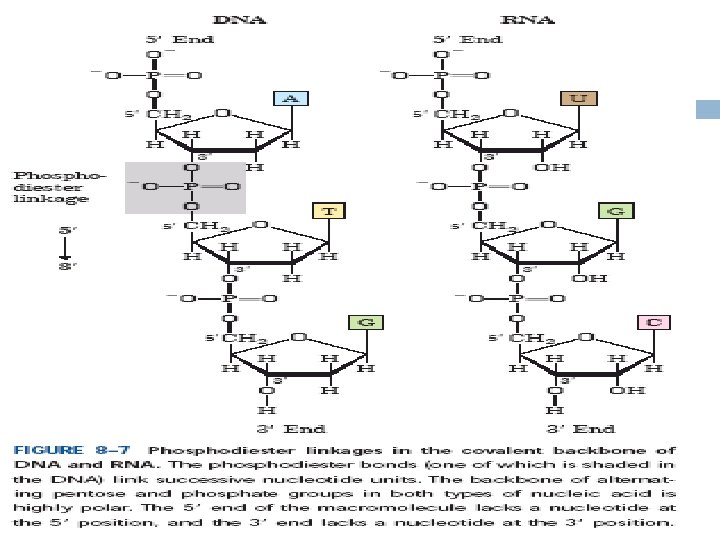
Phosphodiester bonds link successive nucleotides in nucleic acid: -The successive nucleotides of both DNA and RNA are covalently linked through phosphate-group bridges, in which the 5`phosphate group of one nucleotide unit is joined to the 3`hydroxyl group of the next nucleotide, creating a phosphodiester linkage. -The covalent backbones of nucleic acids consist of alternating phosphate and pentose residues, and the nitrogenous bases may be regarded as side groups joined to the backbone at regular intervals.
Nucleic acids
Nucleic acids: There are two types of nucleic acids: 1) Deoxyribonucleic acid (DNA) 2) Ribonucleic acid (RNA)
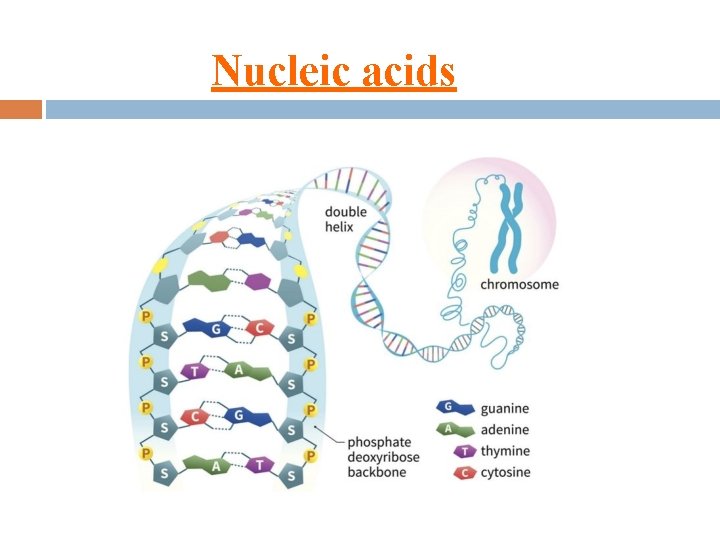
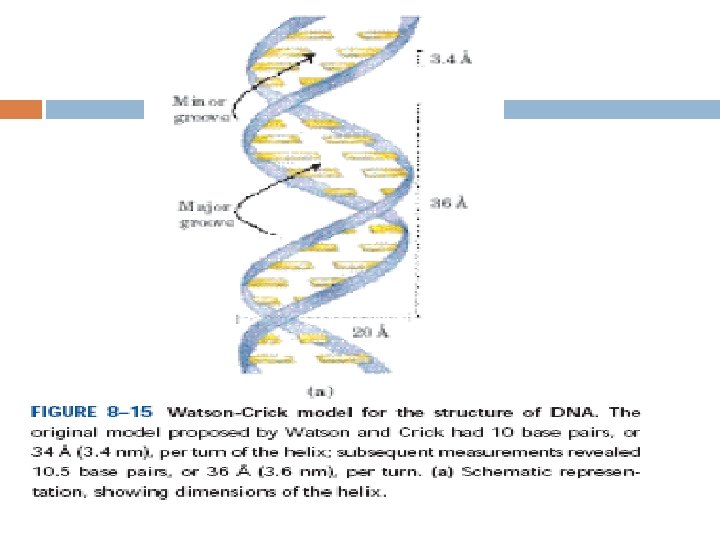
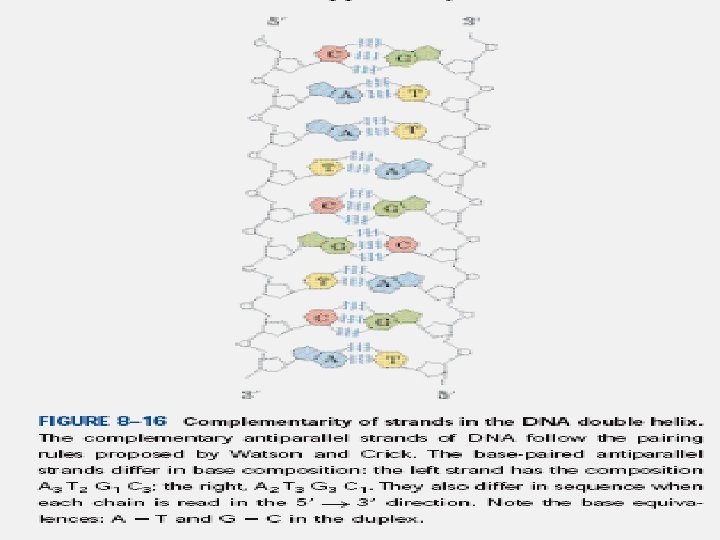
1) Deoxyribonucleic acid (DNA): -A polynucleotide with a specific sequence of deoxyribonucleotide units covalently joined through 3`, 5`-phosphodiester bonds. -Serves as the carrier of genetic information. -It consists of two helical chains wound around the same axis to form a right-handed double helix. -The hydrophilic backbones of alternating deoxyribose and phosphate groups are on the outside of the double helix, facing the surrounding water. -The purine and pyrimidine bases of both strands are stacked inside the double helix.
2) Ribonucleic acid (RNA) -RNA is a polyribonucleotides linked together covalently by 3`, 5`phosphodiester bond. -RNA is single strand. -The sugar in RNA is ribose. -The nitrogen bases in RNA: A, G, C, U q Function: protein synthesis Ø -Main classes (types) of RNA: 1) Messenger RNA (m. RNA). 2) Transfer RNA (t. RNA) 3) Ribosomal RNA (r. RNA) q
- Slides: 46