1 HVTTO CHAPTER 3 3 Climate Paragraph 3
- Slides: 37
1 HV-TTO CHAPTER 3 3 Climate Paragraph 3. 1 - 3. 4 Paragraph 3. 1 Climates around the world © Noordhoff Uitgevers 2017
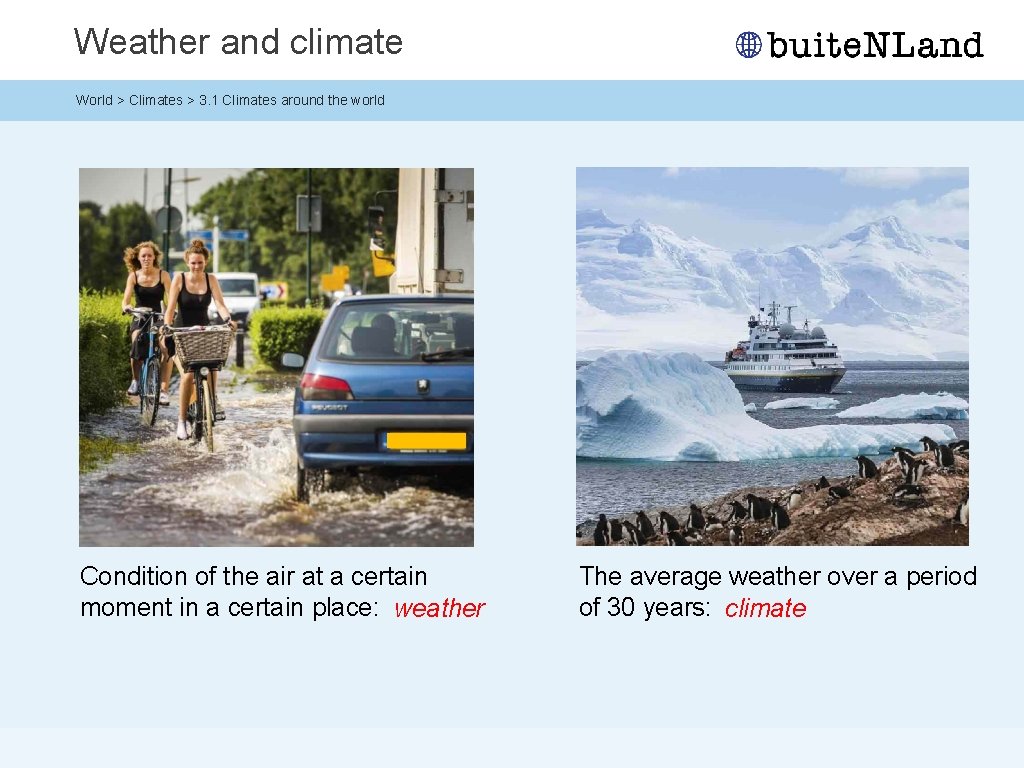
Weather and climate World > Climates > 3. 1 Climates around the world Condition of the air at a certain moment in a certain place: weather The average weather over a period of 30 years: climate
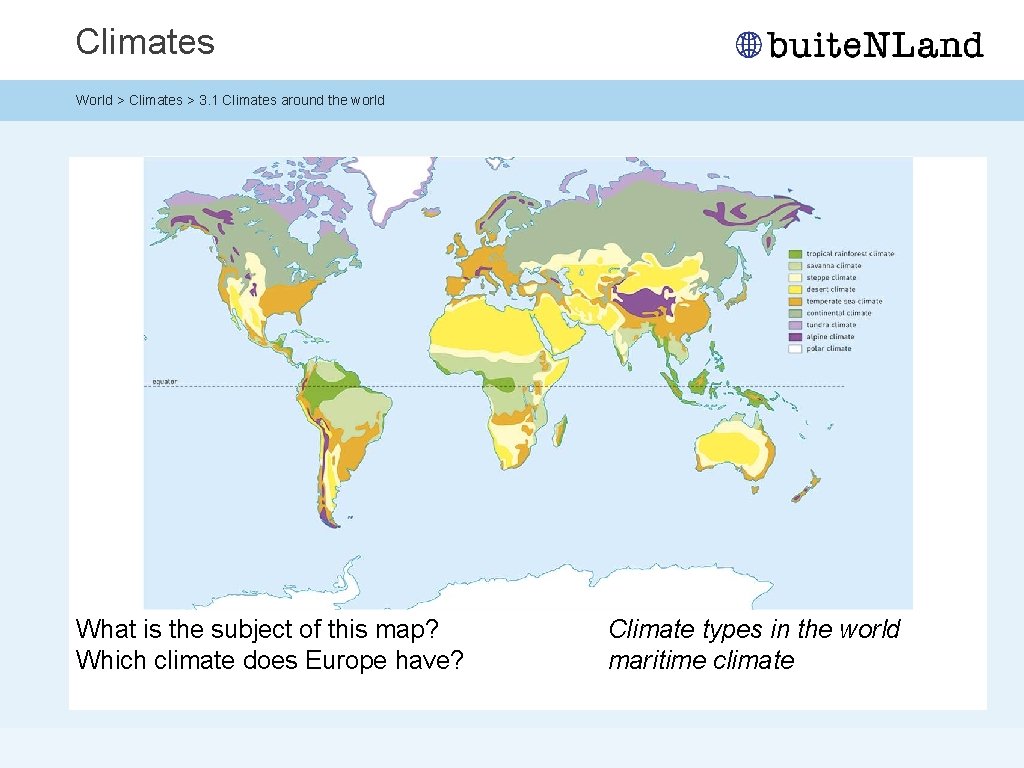
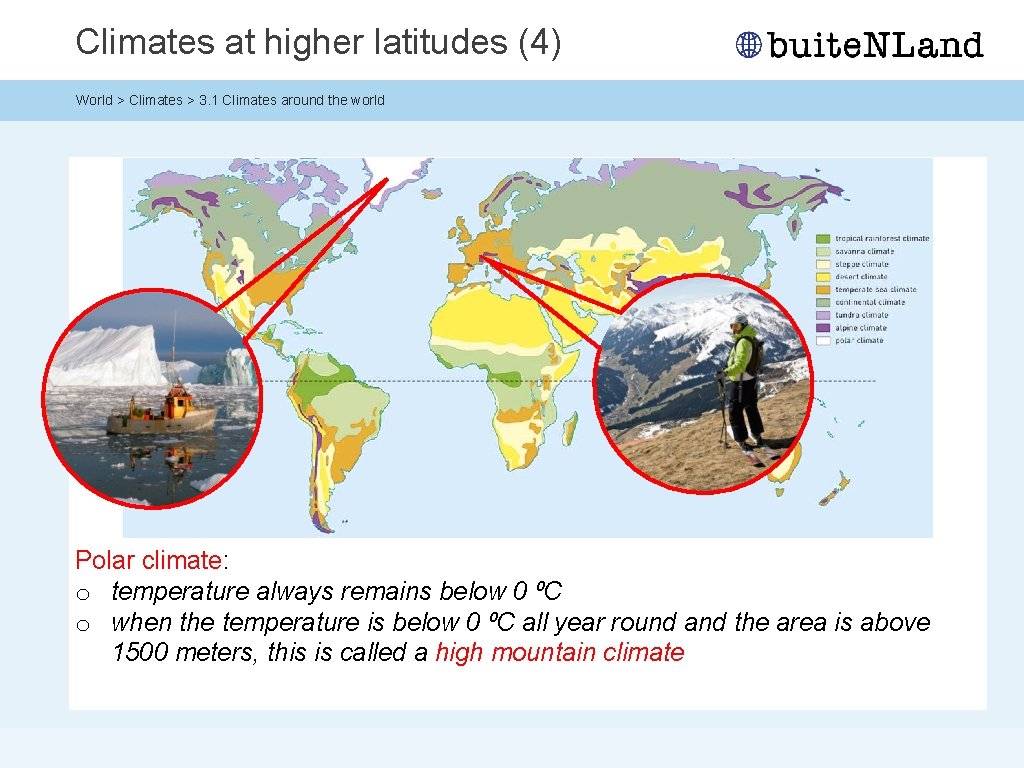
Climates World > Climates > 3. 1 Climates around the world What is the subject of this map? Which climate does Europe have? Climate types in the world maritime climate
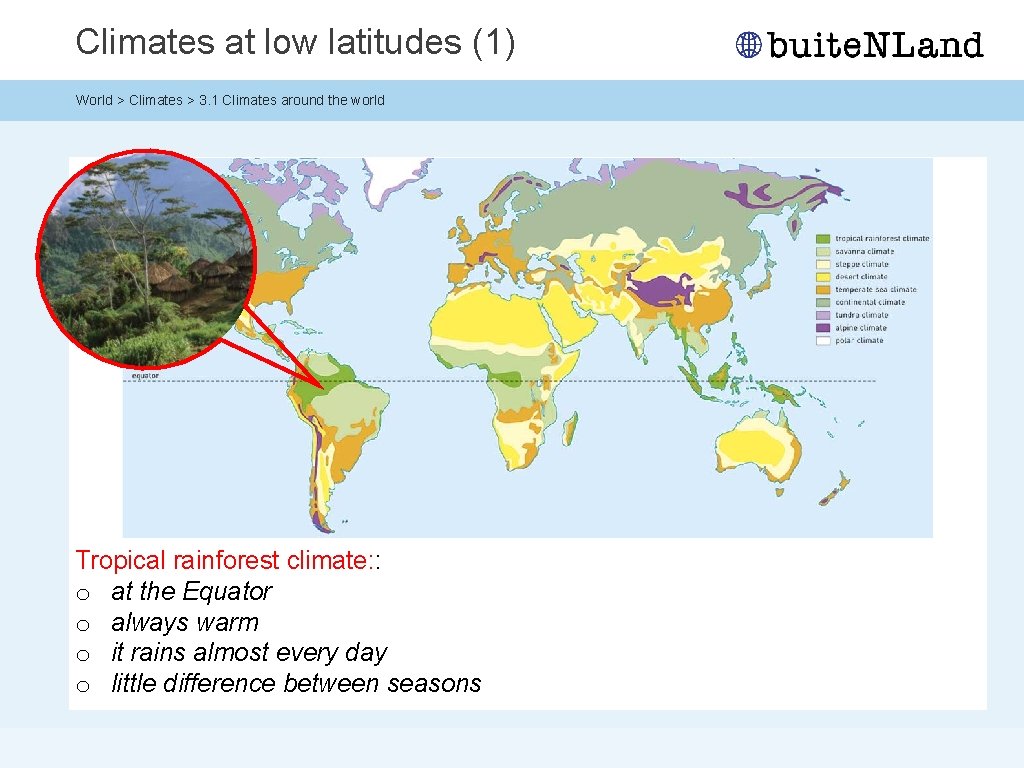
Climates at low latitudes (1) World > Climates > 3. 1 Climates around the world Tropical rainforest climate: : o at the Equator o always warm o it rains almost every day o little difference between seasons
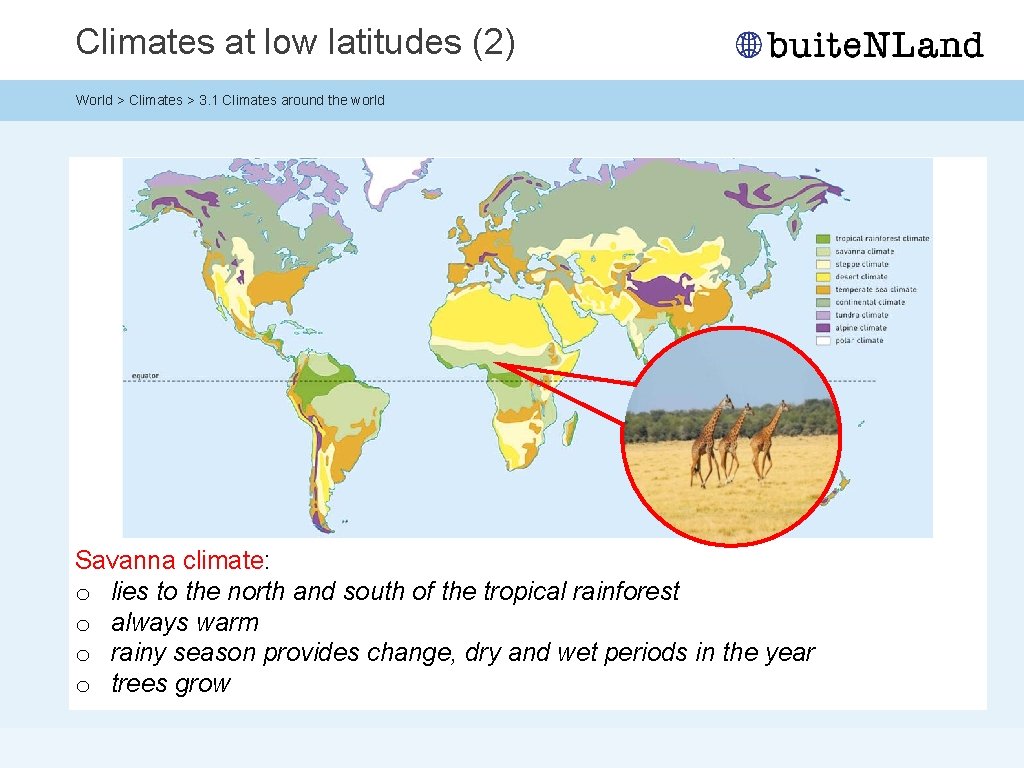
Climates at low latitudes (2) World > Climates > 3. 1 Climates around the world Savanna climate: o lies to the north and south of the tropical rainforest o always warm o rainy season provides change, dry and wet periods in the year o trees grow
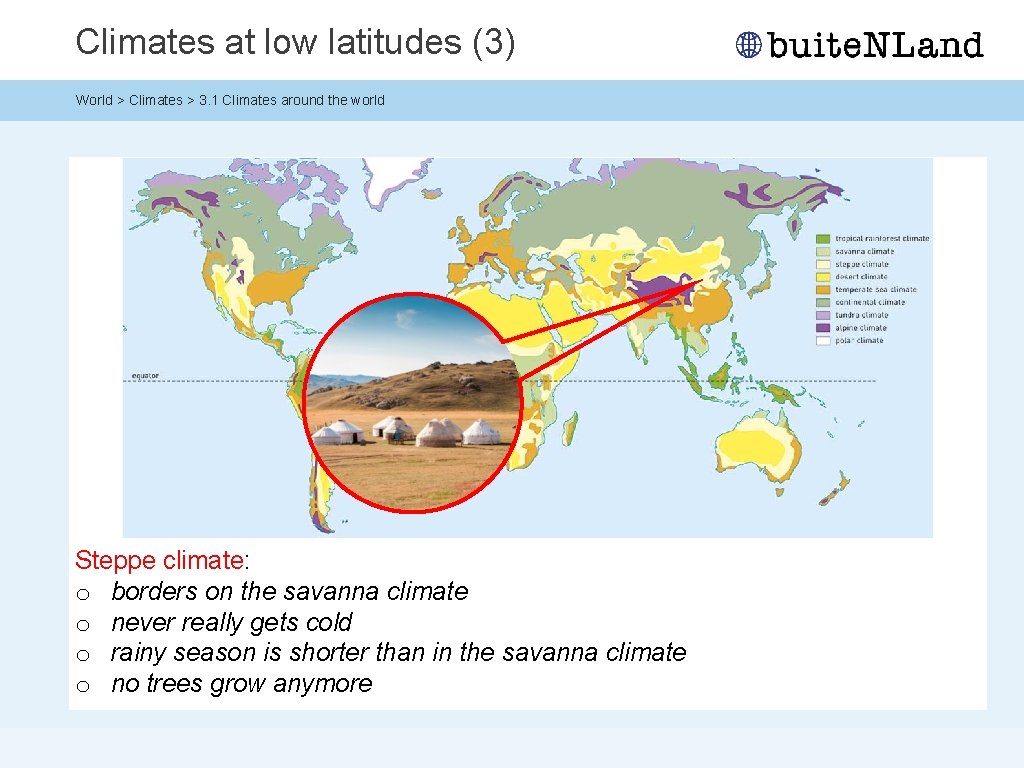
Climates at low latitudes (3) World > Climates > 3. 1 Climates around the world Steppe climate: o borders on the savanna climate o never really gets cold o rainy season is shorter than in the savanna climate o no trees grow anymore
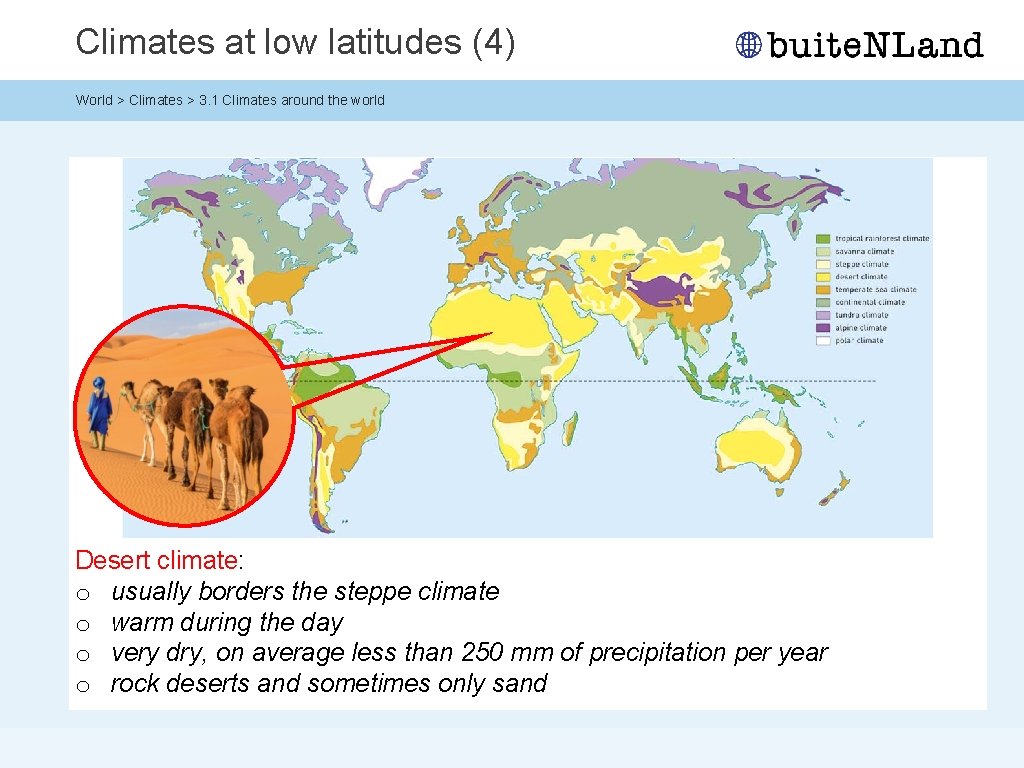
Climates at low latitudes (4) World > Climates > 3. 1 Climates around the world Desert climate: o usually borders the steppe climate o warm during the day o very dry, on average less than 250 mm of precipitation per year o rock deserts and sometimes only sand
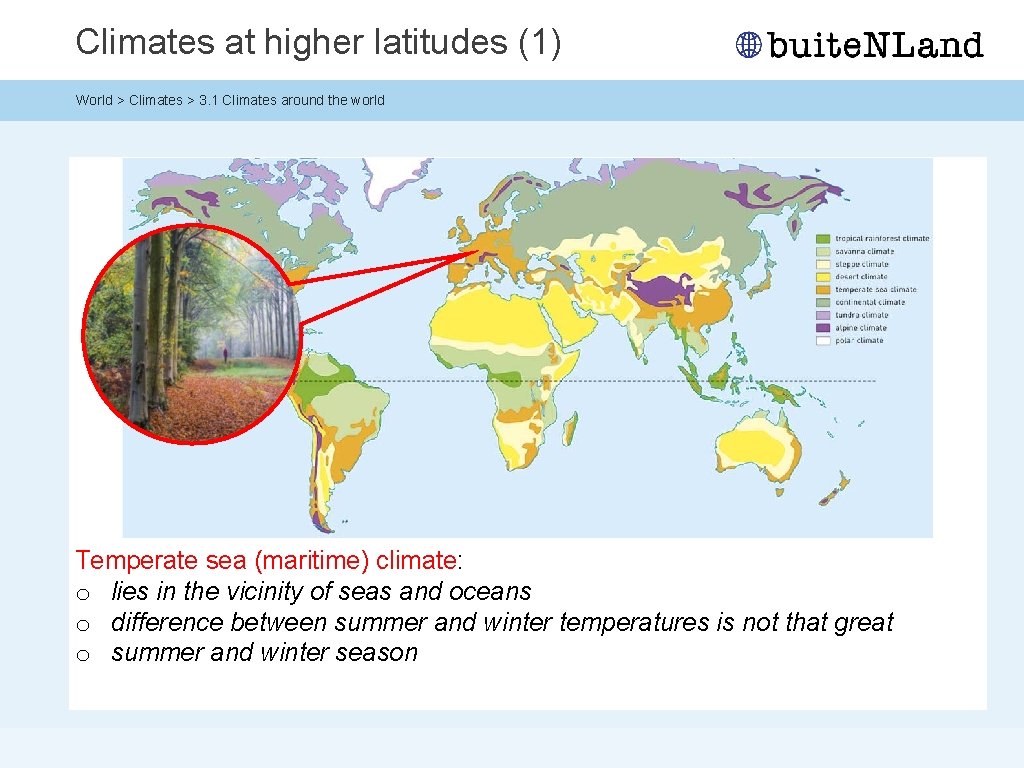
Climates at higher latitudes (1) World > Climates > 3. 1 Climates around the world Temperate sea (maritime) climate: o lies in the vicinity of seas and oceans o difference between summer and winter temperatures is not that great o summer and winter season
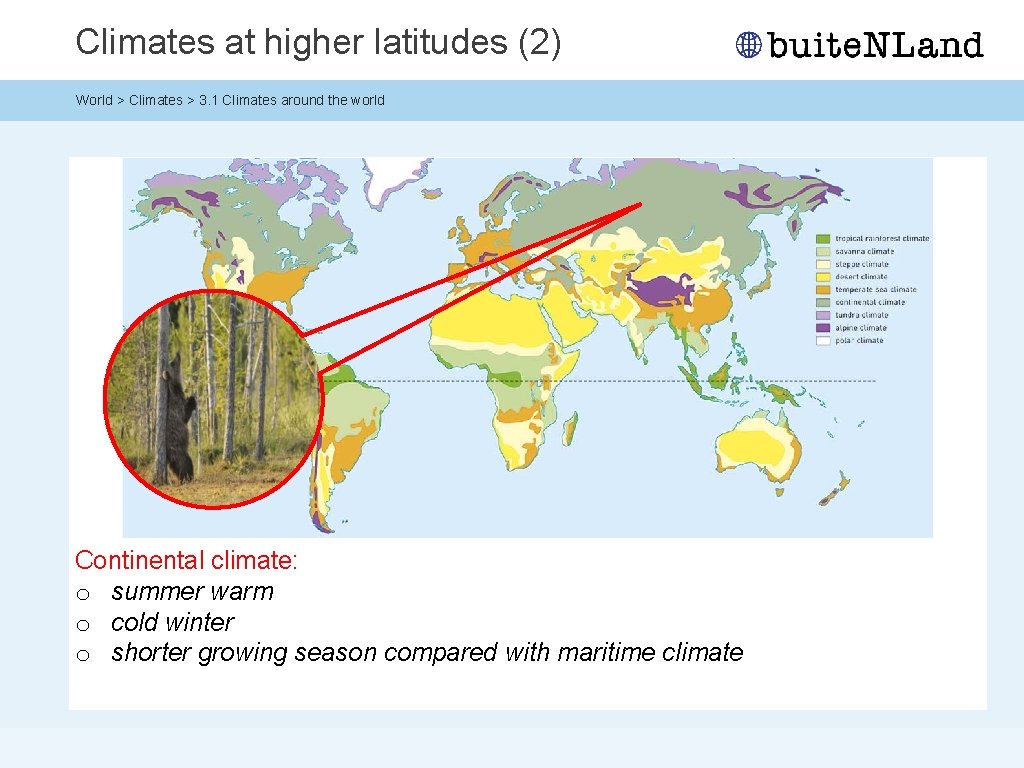
Climates at higher latitudes (2) World > Climates > 3. 1 Climates around the world Continental climate: o summer warm o cold winter o shorter growing season compared with maritime climate
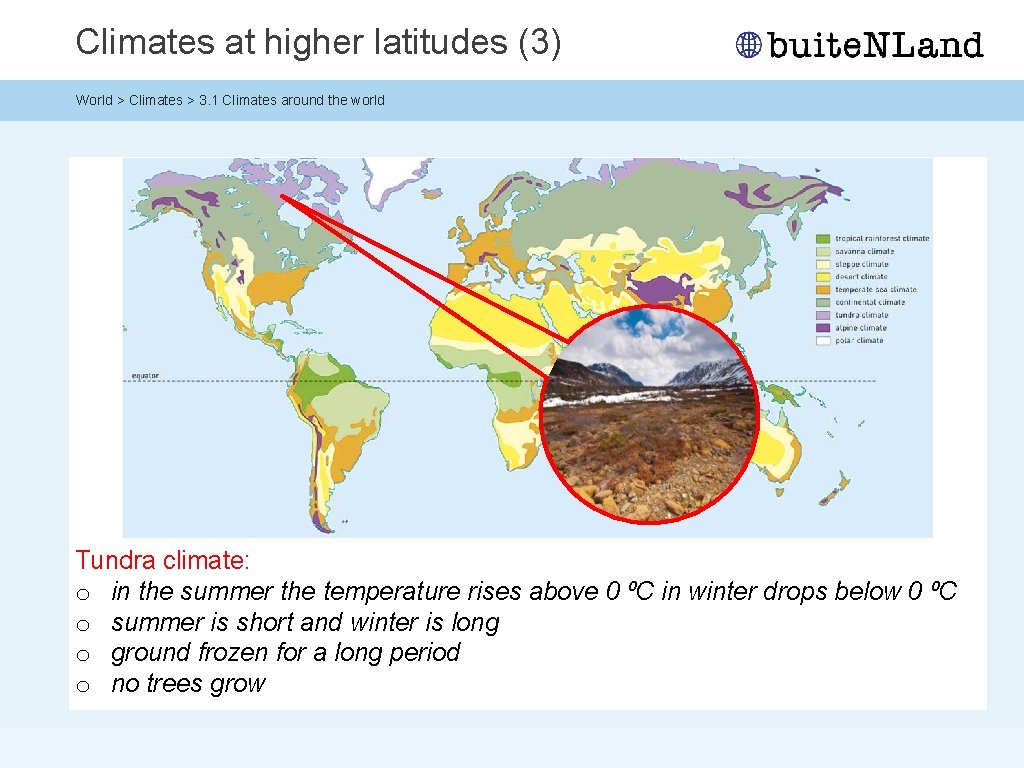
Climates at higher latitudes (3) World > Climates > 3. 1 Climates around the world Tundra climate: o in the summer the temperature rises above 0 ⁰C in winter drops below 0 ⁰C o summer is short and winter is long o ground frozen for a long period o no trees grow
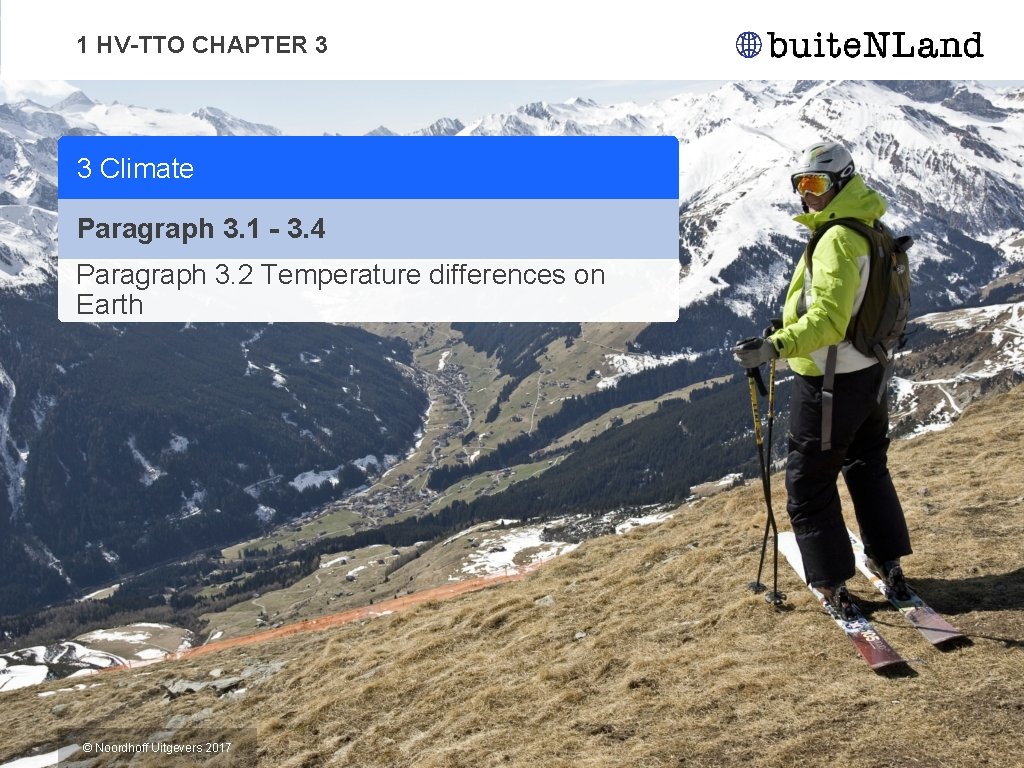
Climates at higher latitudes (4) World > Climates > 3. 1 Climates around the world Polar climate: o temperature always remains below 0 ⁰C o when the temperature is below 0 ⁰C all year round and the area is above 1500 meters, this is called a high mountain climate
1 HV-TTO CHAPTER 3 3 Climate Paragraph 3. 1 - 3. 4 Paragraph 3. 2 Temperature differences on Earth © Noordhoff Uitgevers 2017
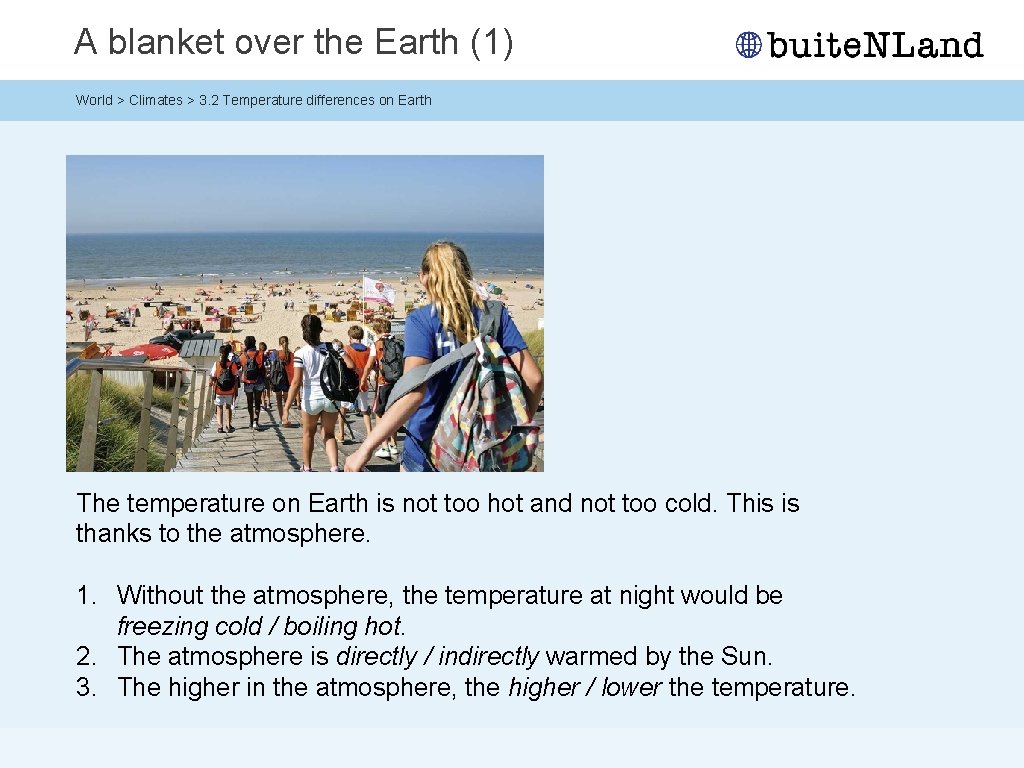
A blanket over the Earth (1) World > Climates > 3. 2 Temperature differences on Earth The temperature on Earth is not too hot and not too cold. This is thanks to the atmosphere. 1. Without the atmosphere, the temperature at night would be freezing cold / boiling hot. 2. The atmosphere is directly / indirectly warmed by the Sun. 3. The higher in the atmosphere, the higher / lower the temperature.
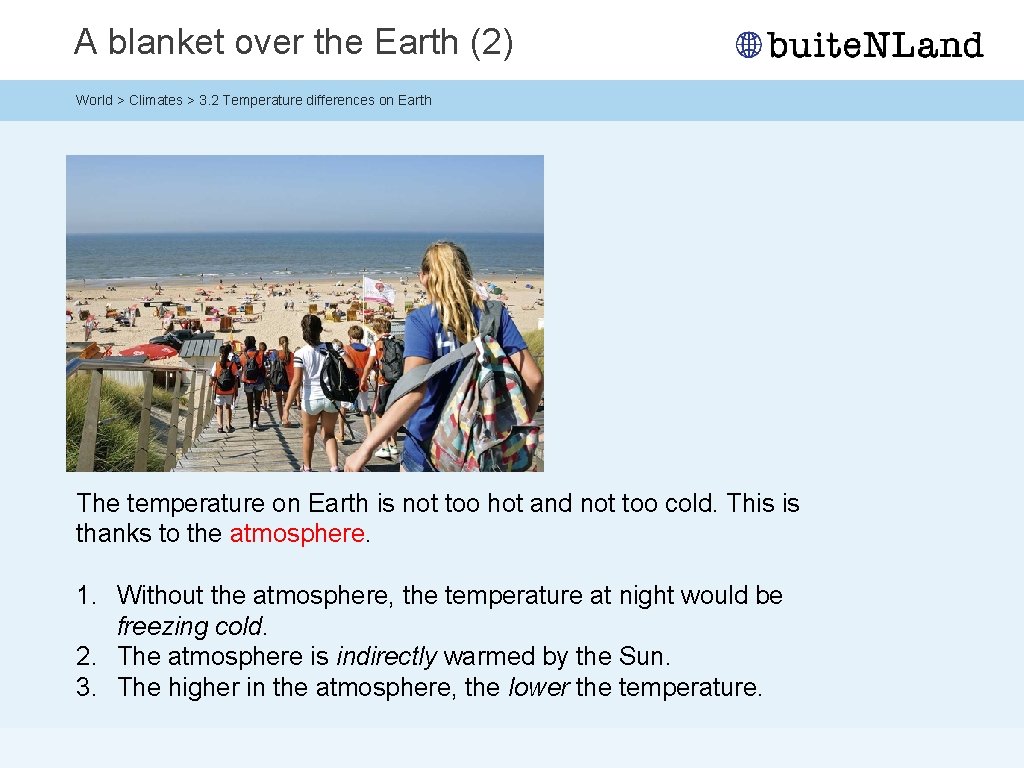
A blanket over the Earth (2) World > Climates > 3. 2 Temperature differences on Earth The temperature on Earth is not too hot and not too cold. This is thanks to the atmosphere. 1. Without the atmosphere, the temperature at night would be freezing cold. 2. The atmosphere is indirectly warmed by the Sun. 3. The higher in the atmosphere, the lower the temperature.
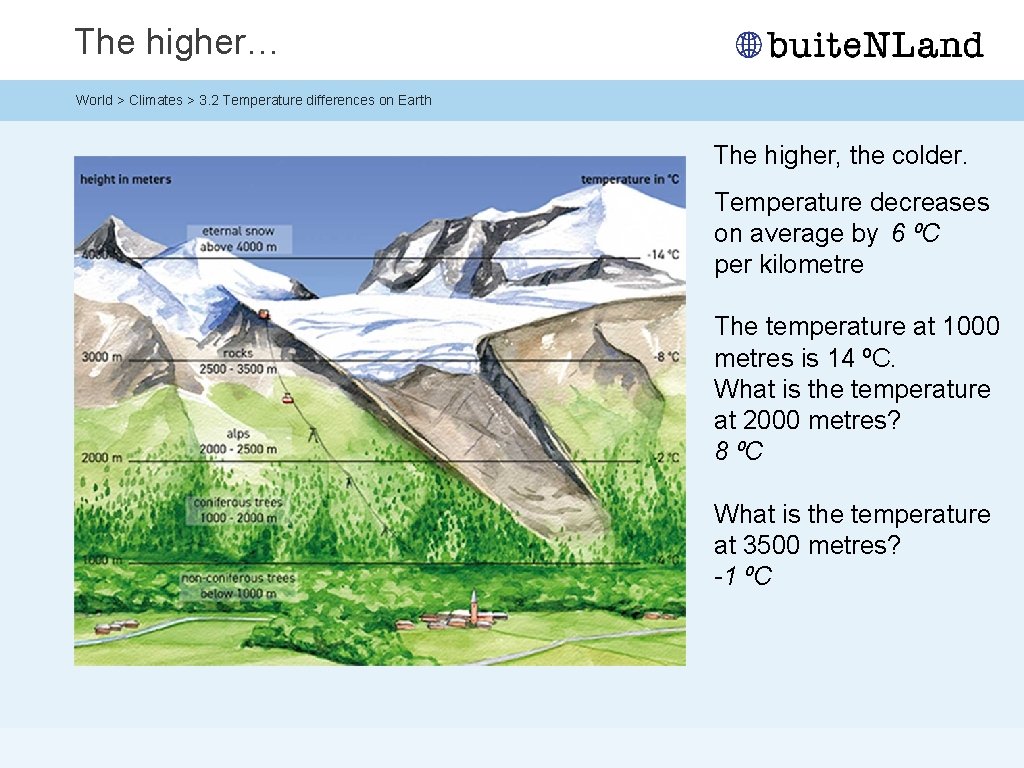
The higher… World > Climates > 3. 2 Temperature differences on Earth The higher, the colder. Temperature decreases on average by 6 ⁰C per kilometre The temperature at 1000 metres is 14 ⁰C. What is the temperature at 2000 metres? 8 ⁰C What is the temperature at 3500 metres? -1 ⁰C
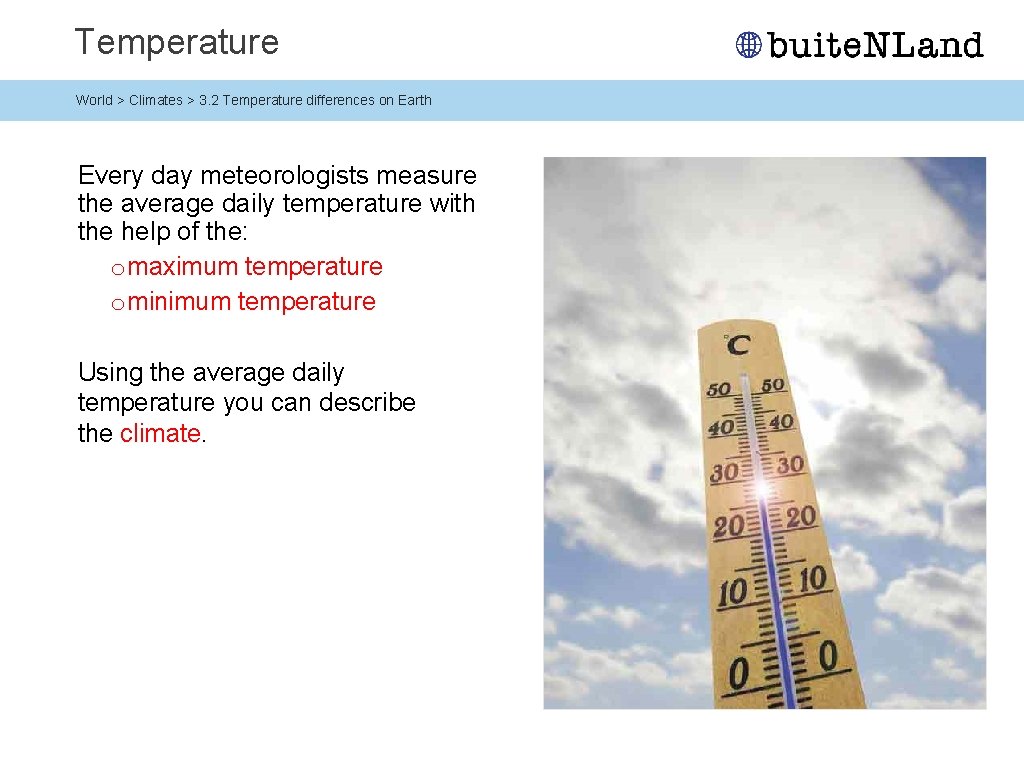
Temperature World > Climates > 3. 2 Temperature differences on Earth Every day meteorologists measure the average daily temperature with the help of the: o maximum temperature o minimum temperature Using the average daily temperature you can describe the climate.
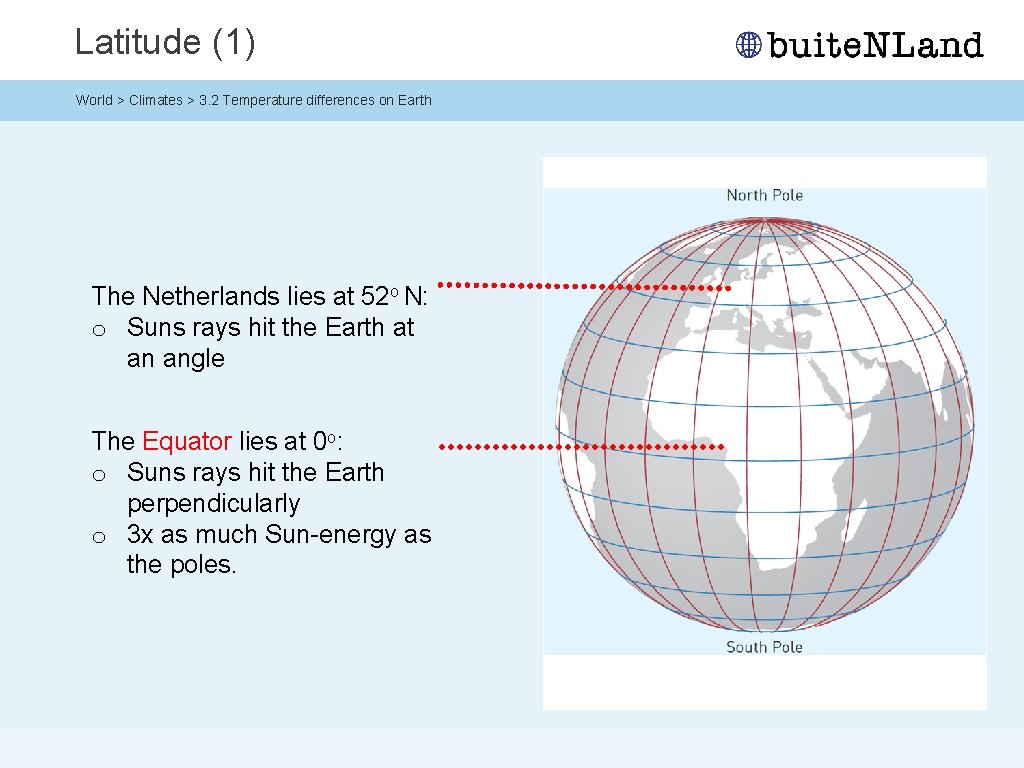
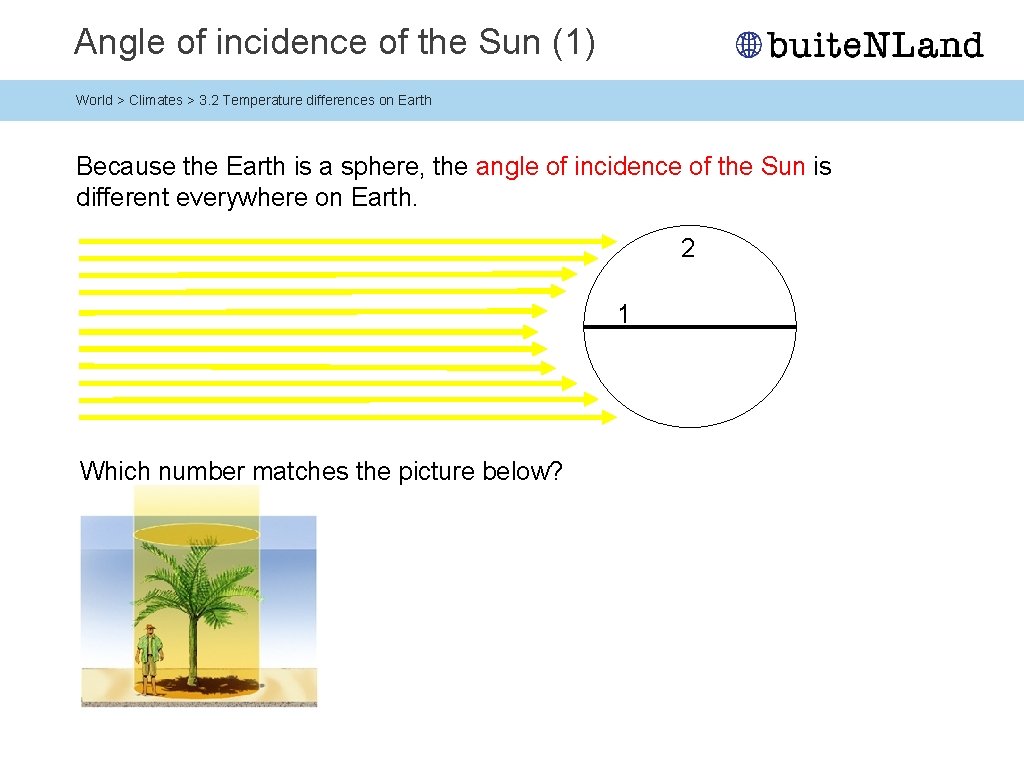
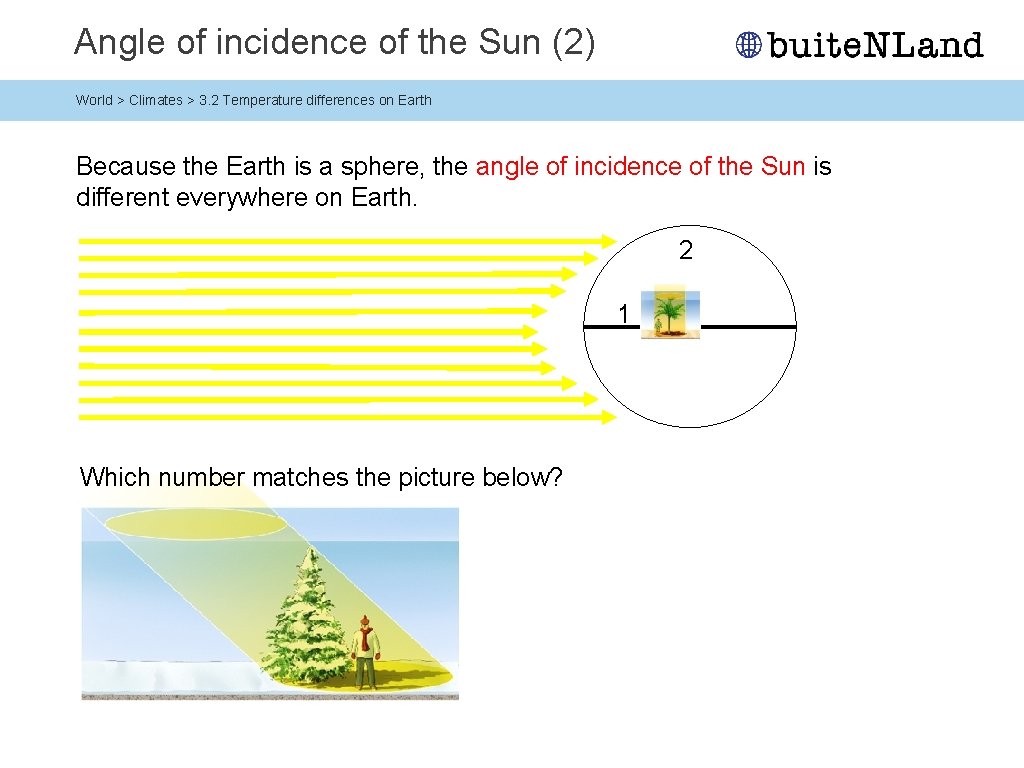
Latitude (1) World > Climates > 3. 2 Temperature differences on Earth The Netherlands lies at 52 o N: o Suns rays hit the Earth at an angle The Equator lies at 0 o: o Suns rays hit the Earth perpendicularly o 3 x as much Sun-energy as the poles.
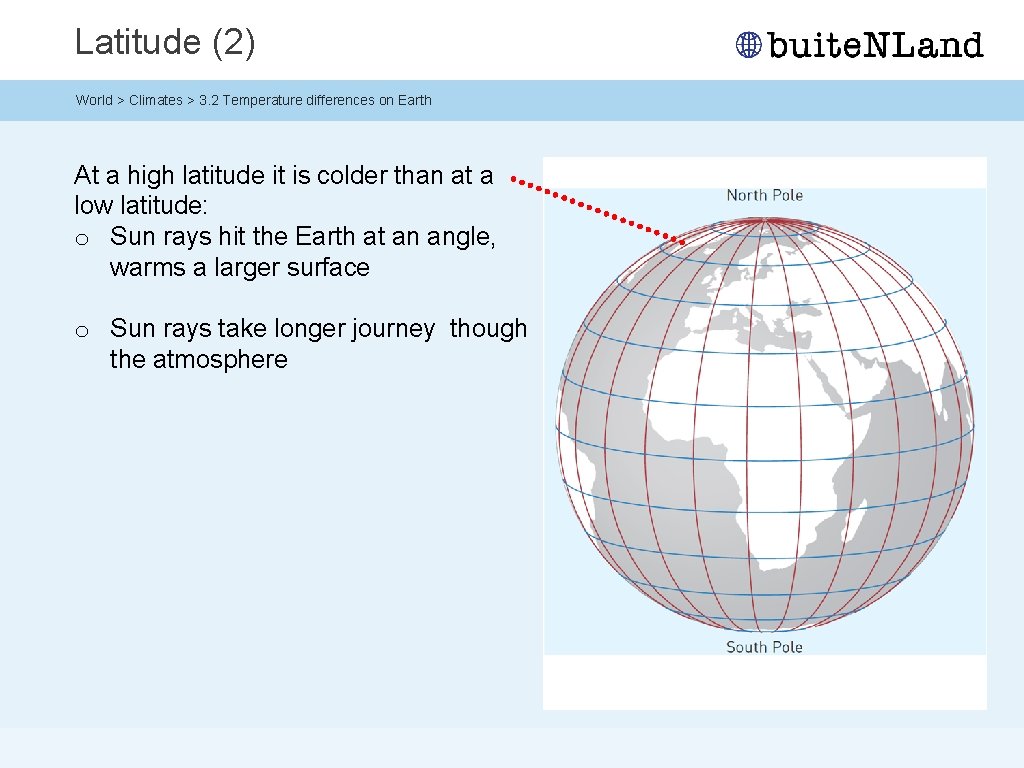
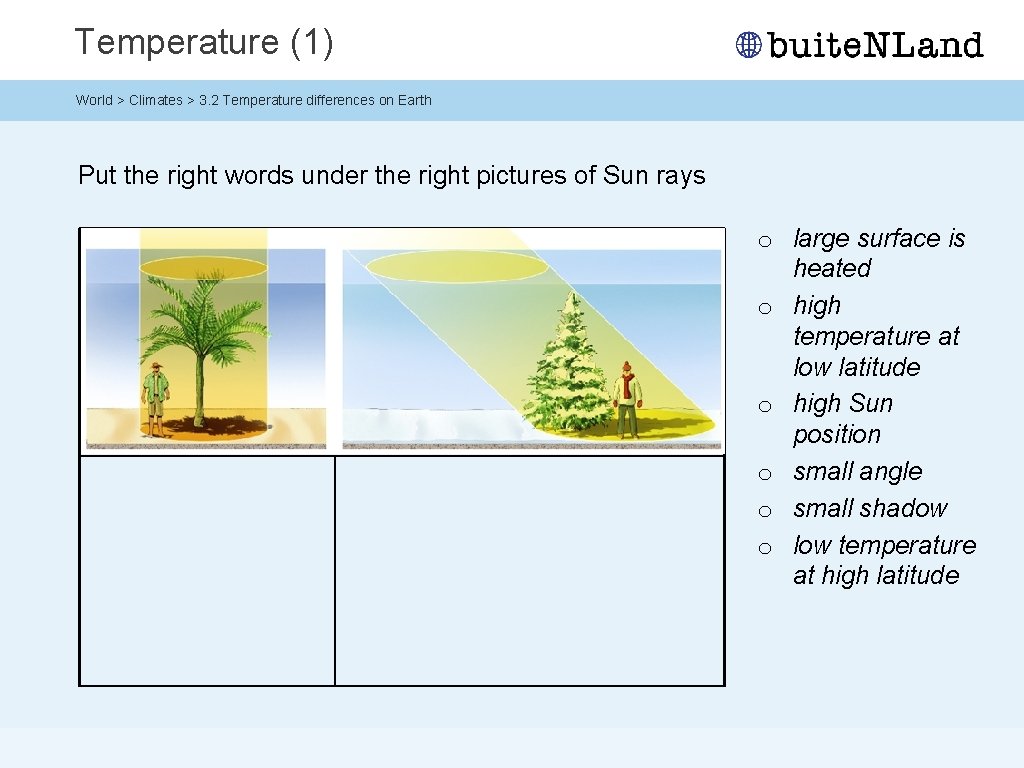
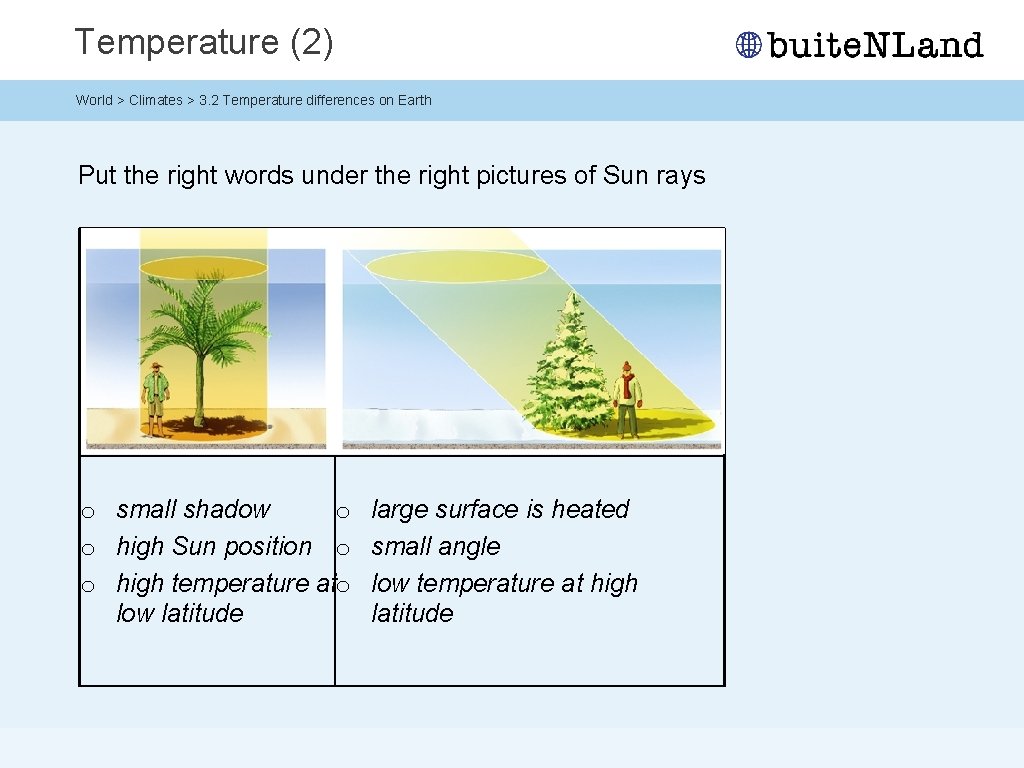
Latitude (2) World > Climates > 3. 2 Temperature differences on Earth At a high latitude it is colder than at a low latitude: o Sun rays hit the Earth at an angle, warms a larger surface o Sun rays take longer journey though the atmosphere
Angle of incidence of the Sun (1) World > Climates > 3. 2 Temperature differences on Earth Because the Earth is a sphere, the angle of incidence of the Sun is different everywhere on Earth. 2 1 Which number matches the picture below?
Angle of incidence of the Sun (2) World > Climates > 3. 2 Temperature differences on Earth Because the Earth is a sphere, the angle of incidence of the Sun is different everywhere on Earth. 2 1 Which number matches the picture below?
Temperature (1) World > Climates > 3. 2 Temperature differences on Earth Put the right words under the right pictures of Sun rays o large surface is heated o high temperature at low latitude o high Sun position o small angle o small shadow o low temperature at high latitude
Temperature (2) World > Climates > 3. 2 Temperature differences on Earth Put the right words under the right pictures of Sun rays o small shadow o o high Sun position o o high temperature ato low latitude large surface is heated small angle low temperature at high latitude
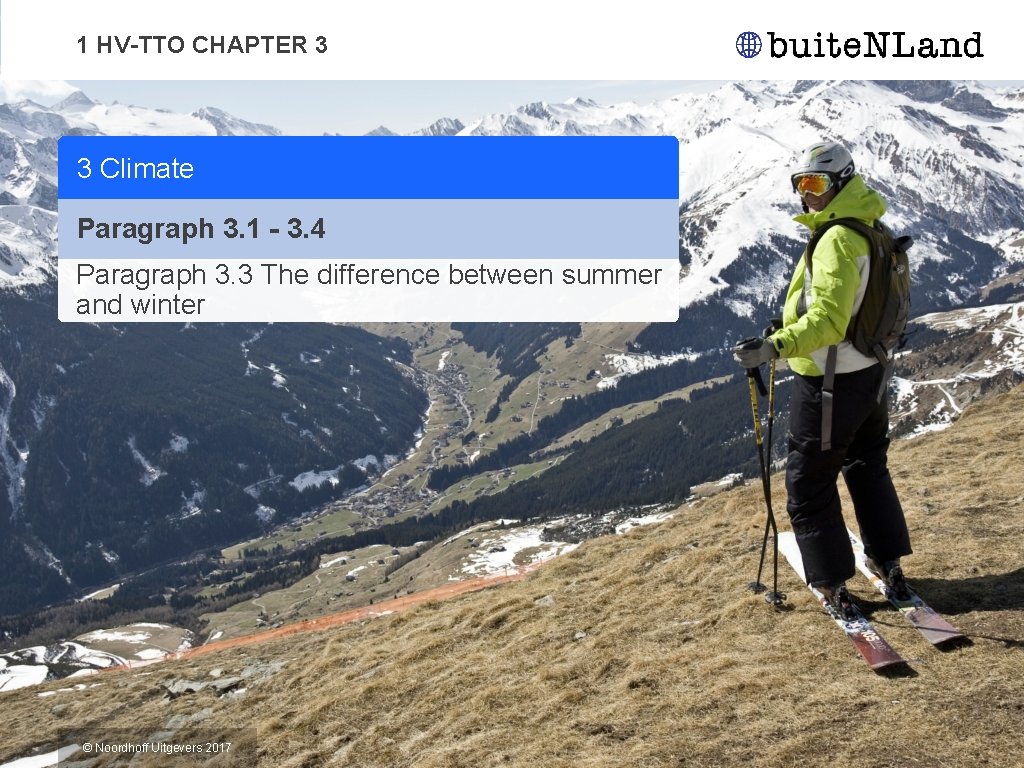
1 HV-TTO CHAPTER 3 3 Climate Paragraph 3. 1 - 3. 4 Paragraph 3. 3 The difference between summer and winter © Noordhoff Uitgevers 2017
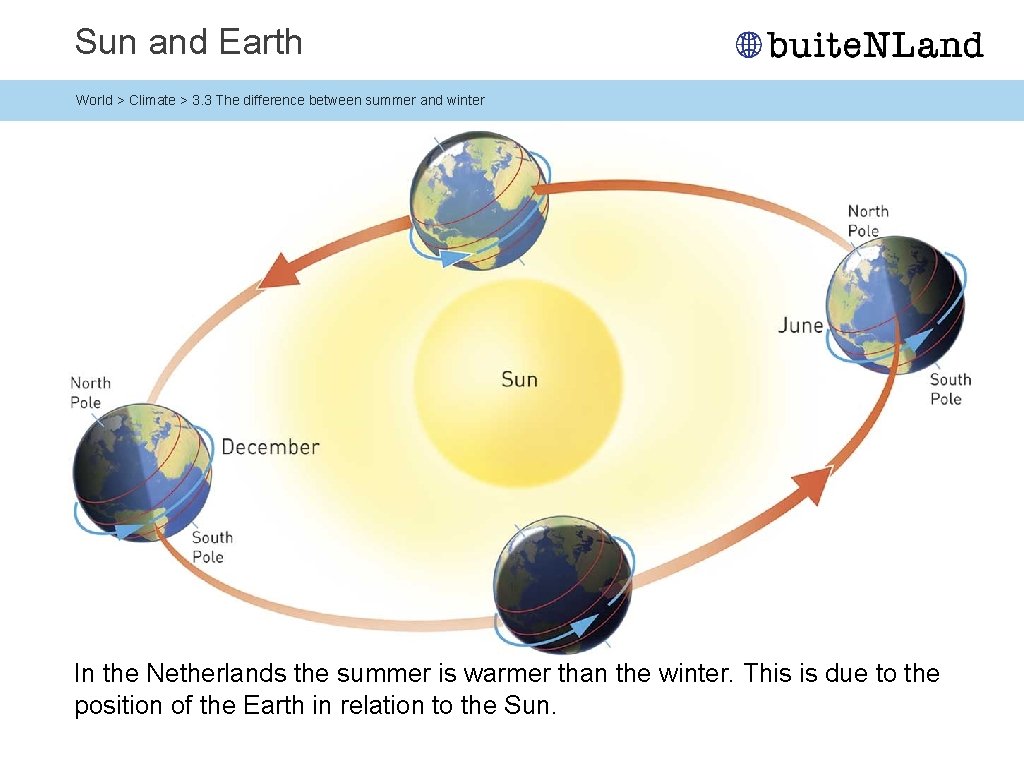
Sun and Earth World > Climate > 3. 3 The difference between summer and winter In the Netherlands the summer is warmer than the winter. This is due to the position of the Earth in relation to the Sun.
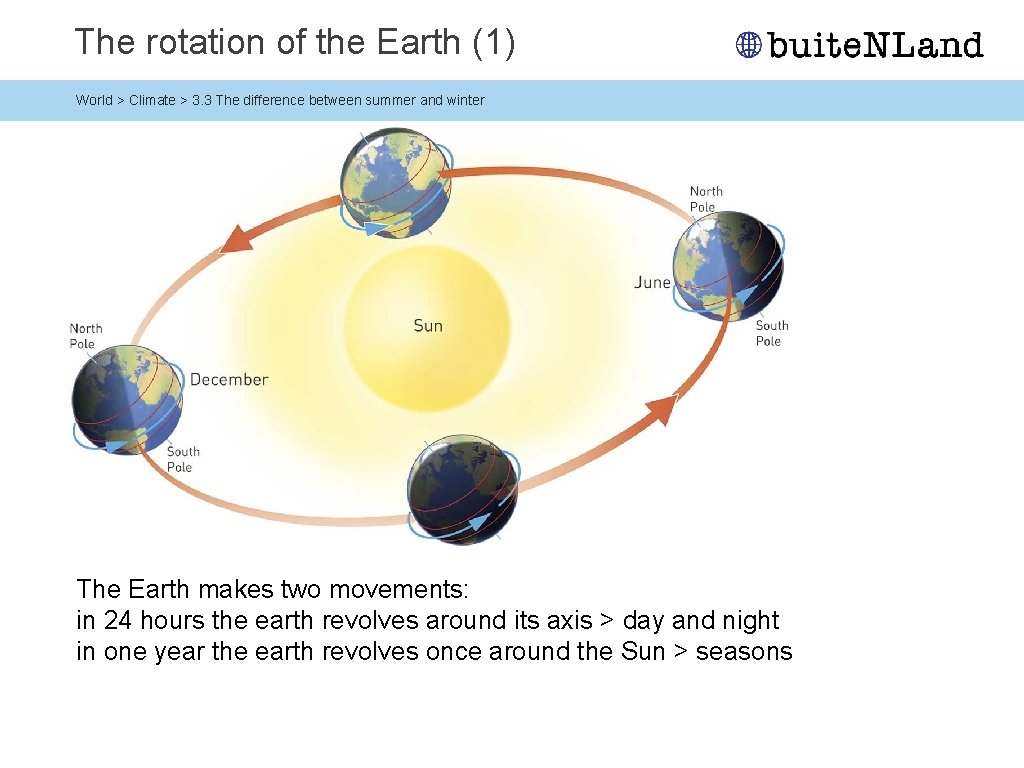
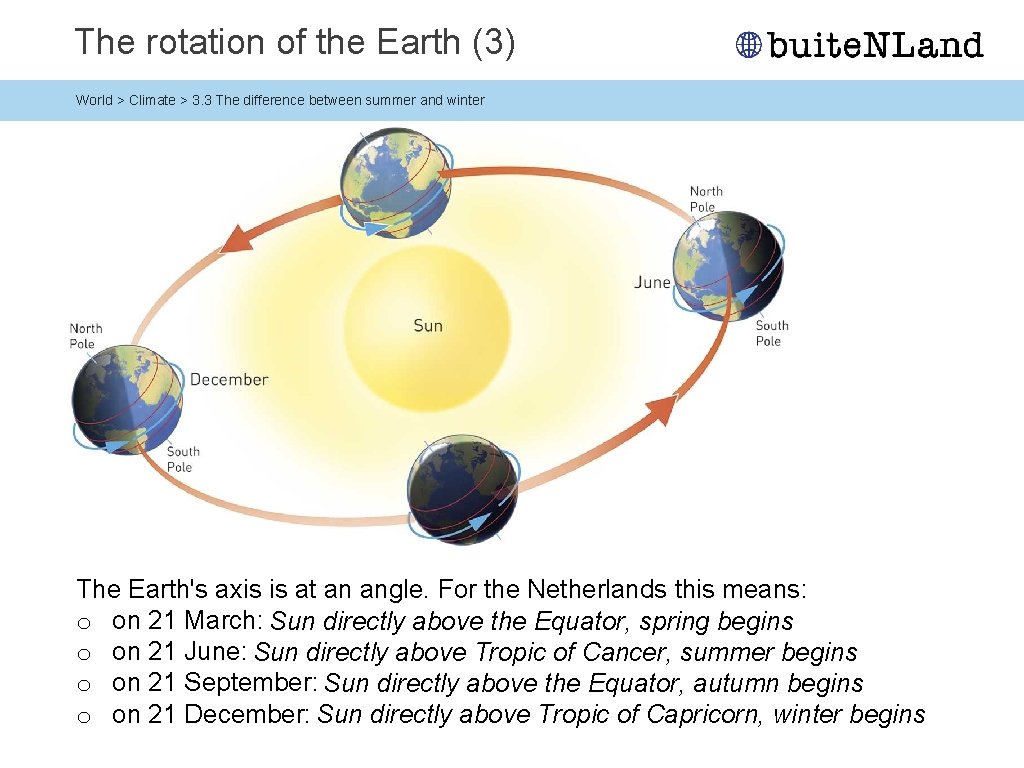
The rotation of the Earth (1) World > Climate > 3. 3 The difference between summer and winter The Earth makes two movements: in 24 hours the earth revolves around its axis > day and night in one year the earth revolves once around the Sun > seasons
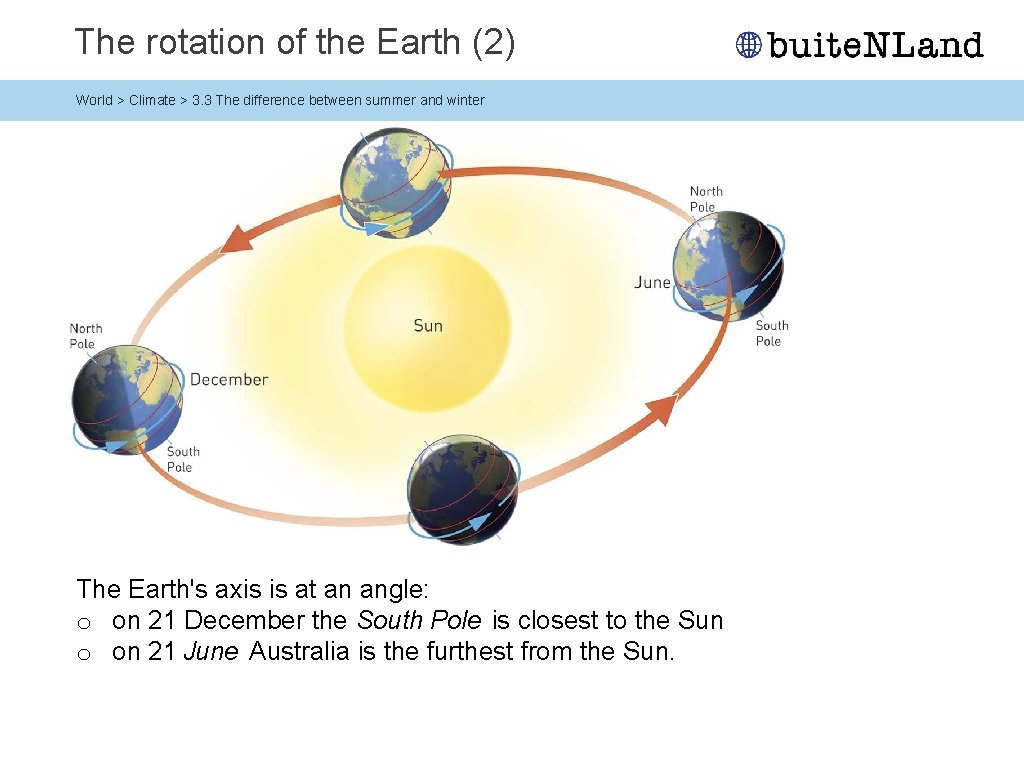
The rotation of the Earth (2) World > Climate > 3. 3 The difference between summer and winter The Earth's axis is at an angle: o on 21 December the South Pole is closest to the Sun o on 21 June Australia is the furthest from the Sun.
The rotation of the Earth (3) World > Climate > 3. 3 The difference between summer and winter The Earth's axis is at an angle. For the Netherlands this means: o on 21 March: Sun directly above the Equator, spring begins o on 21 June: Sun directly above Tropic of Cancer, summer begins o on 21 September: Sun directly above the Equator, autumn begins o on 21 December: Sun directly above Tropic of Capricorn, winter begins
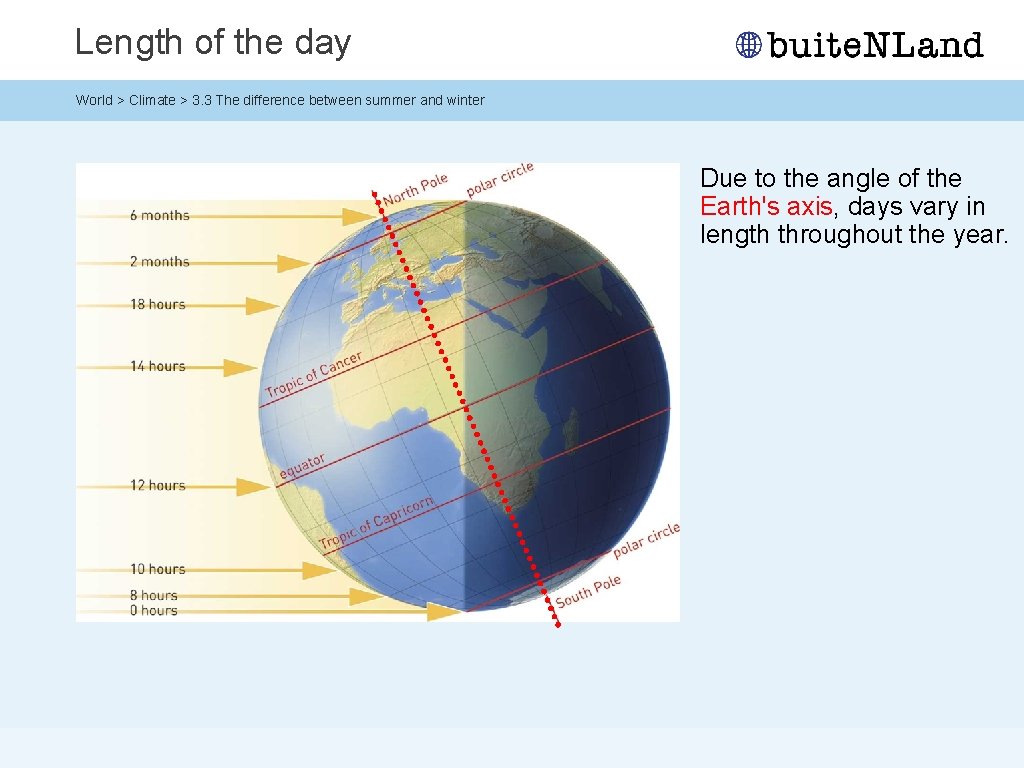
Length of the day World > Climate > 3. 3 The difference between summer and winter Due to the angle of the Earth's axis, days vary in length throughout the year.
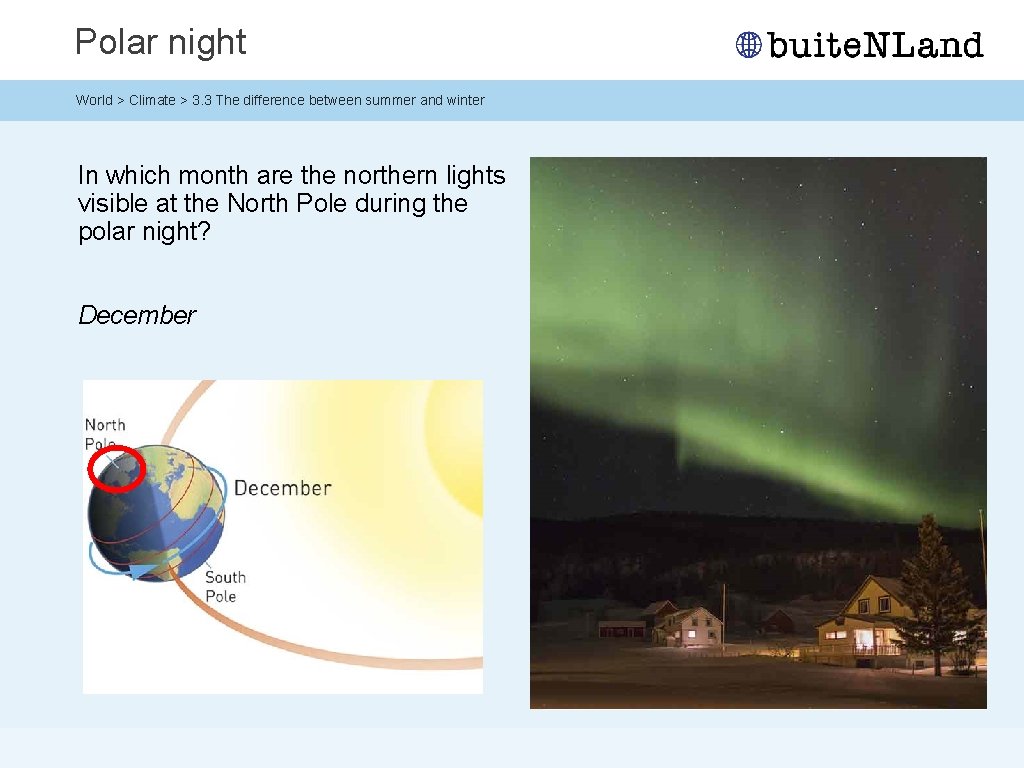
Polar night World > Climate > 3. 3 The difference between summer and winter In which month are the northern lights visible at the North Pole during the polar night? December
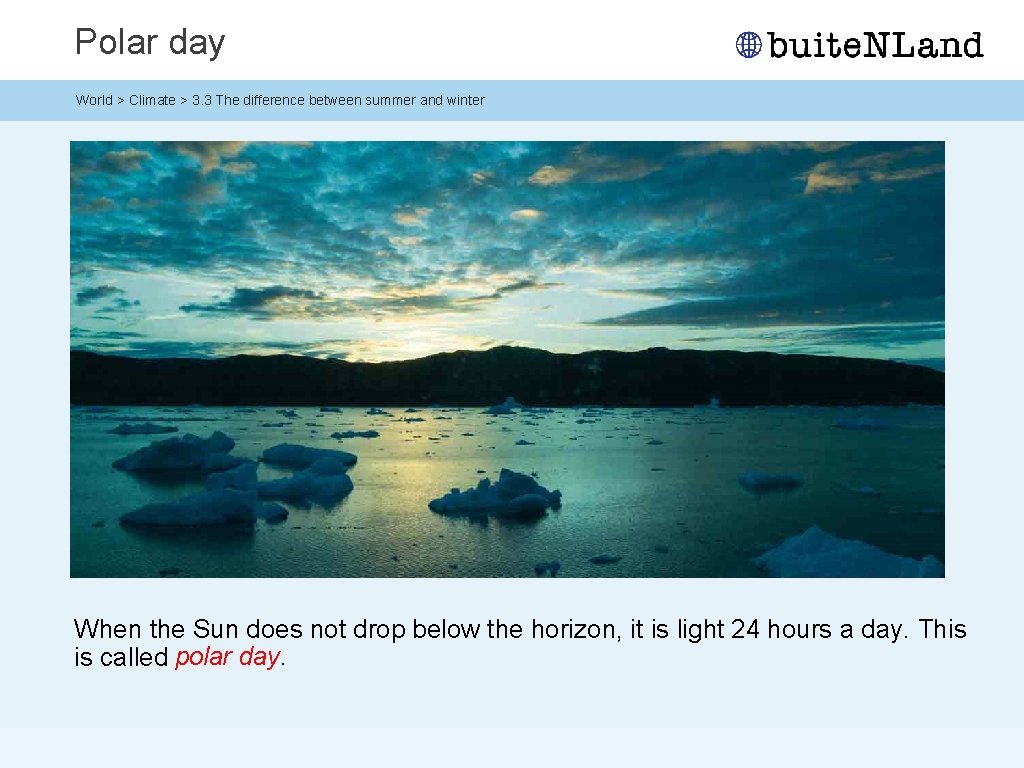
Polar day World > Climate > 3. 3 The difference between summer and winter When the Sun does not drop below the horizon, it is light 24 hours a day. This is called polar day.
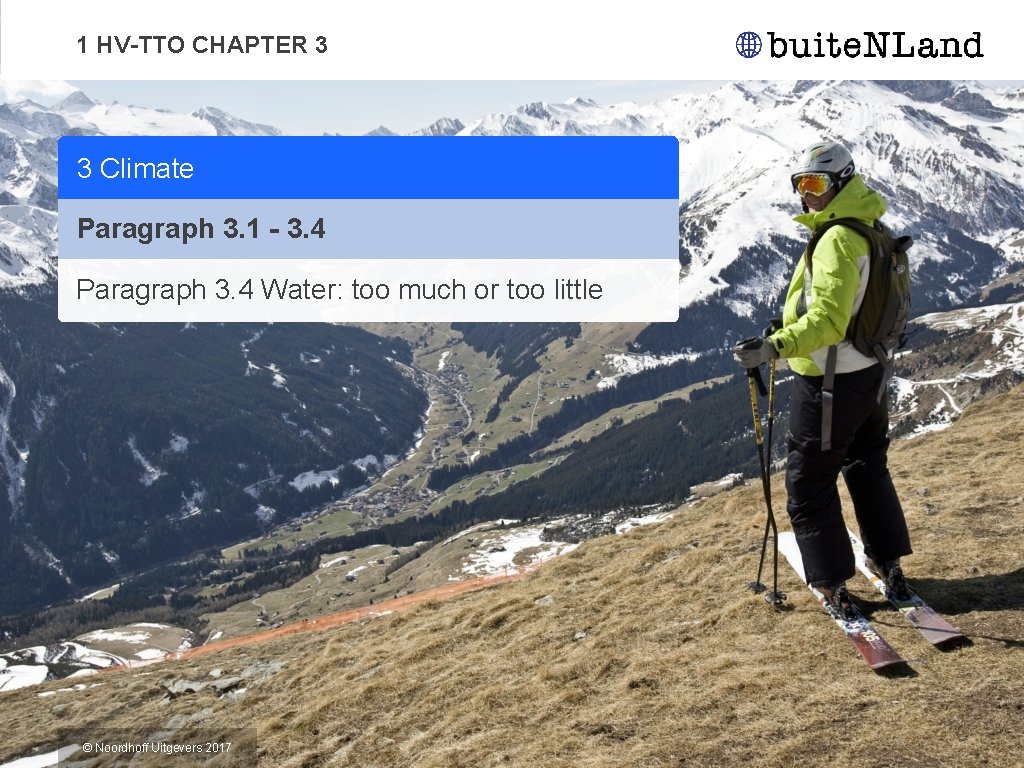
1 HV-TTO CHAPTER 3 3 Climate Paragraph 3. 1 - 3. 4 Paragraph 3. 4 Water: too much or too little © Noordhoff Uitgevers 2017
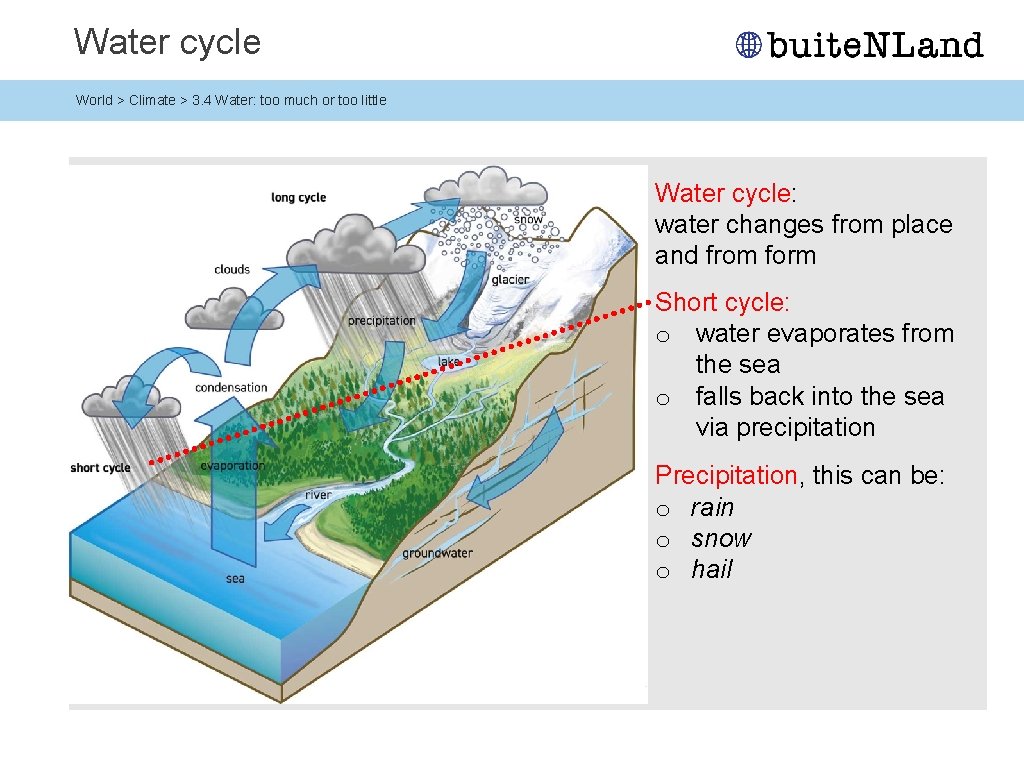
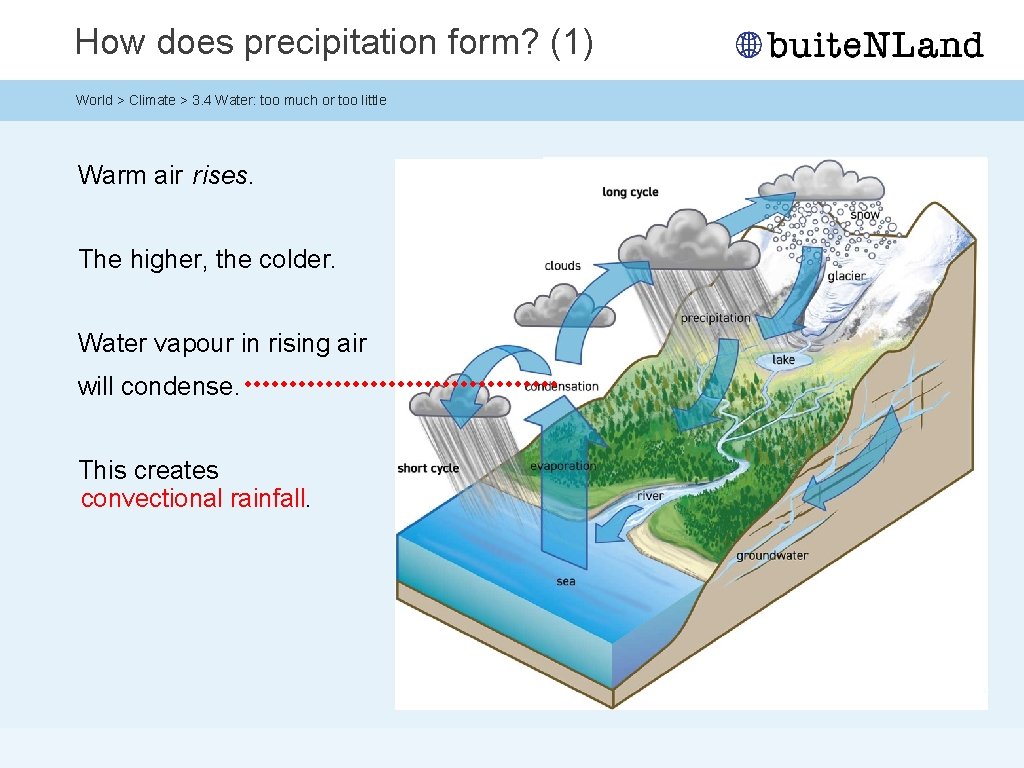
Water cycle World > Climate > 3. 4 Water: too much or too little Water cycle: water changes from place and from form Short cycle: o water evaporates from the sea o falls back into the sea via precipitation Precipitation, this can be: o rain o snow o hail
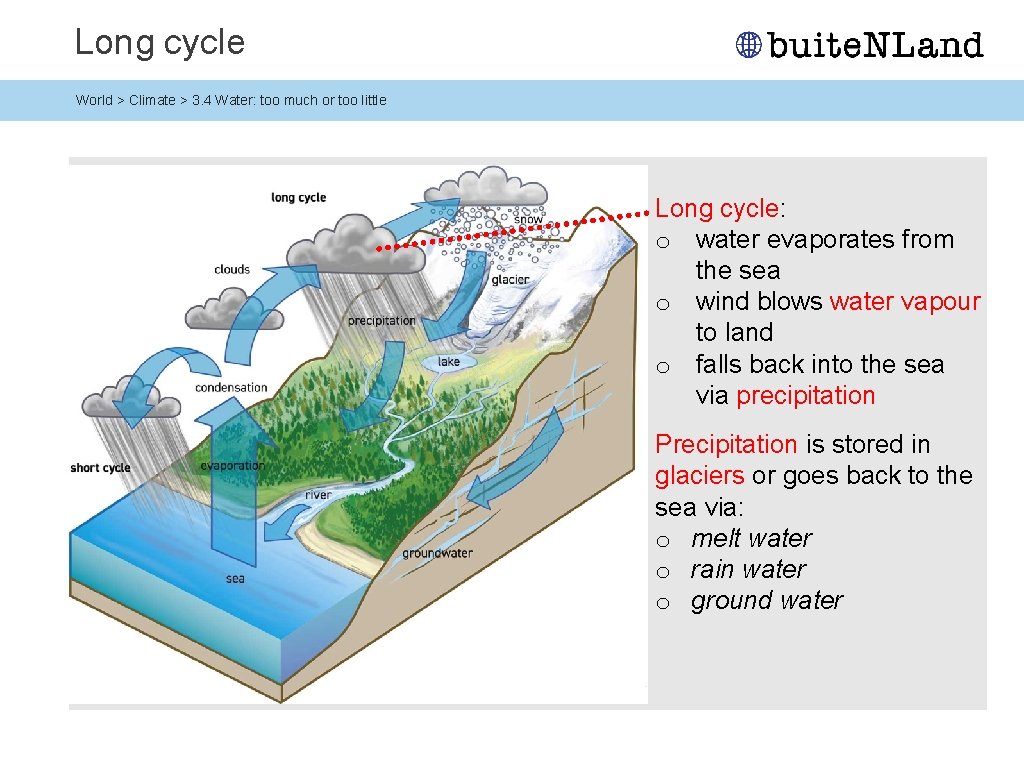
Long cycle World > Climate > 3. 4 Water: too much or too little Long cycle: o water evaporates from the sea o wind blows water vapour to land o falls back into the sea via precipitation Precipitation is stored in glaciers or goes back to the sea via: o melt water o rain water o ground water
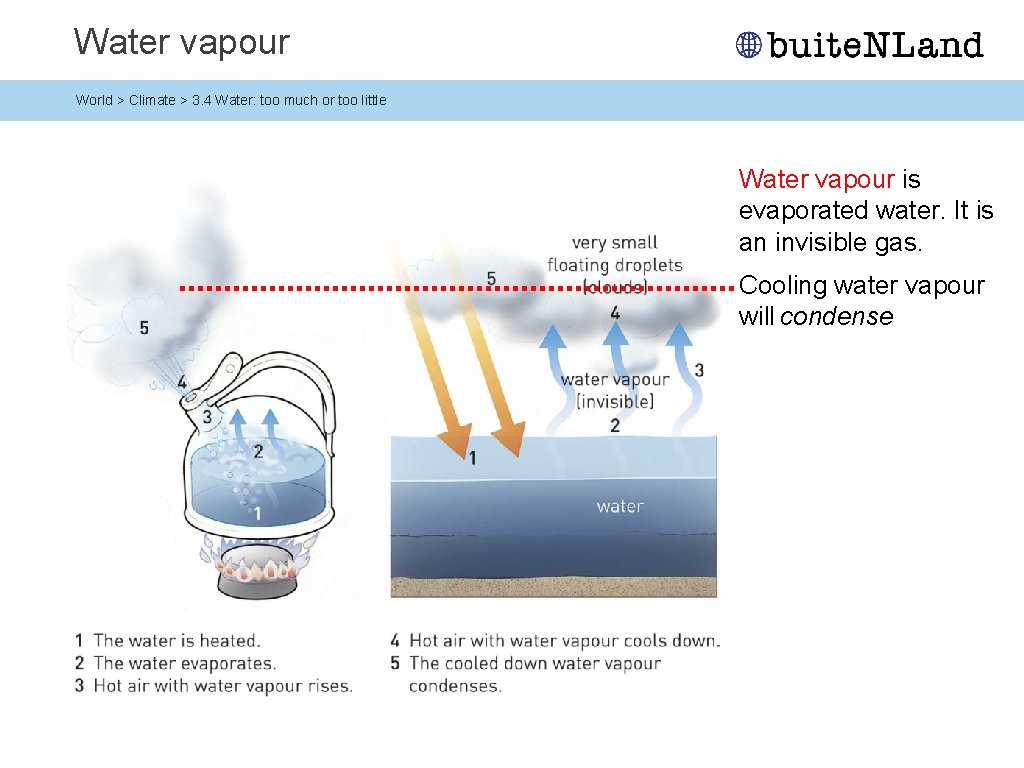
Water vapour World > Climate > 3. 4 Water: too much or too little Water vapour is evaporated water. It is an invisible gas. Cooling water vapour will condense
How does precipitation form? (1) World > Climate > 3. 4 Water: too much or too little Warm air rises. The higher, the colder. Water vapour in rising air will condense. This creates convectional rainfall.
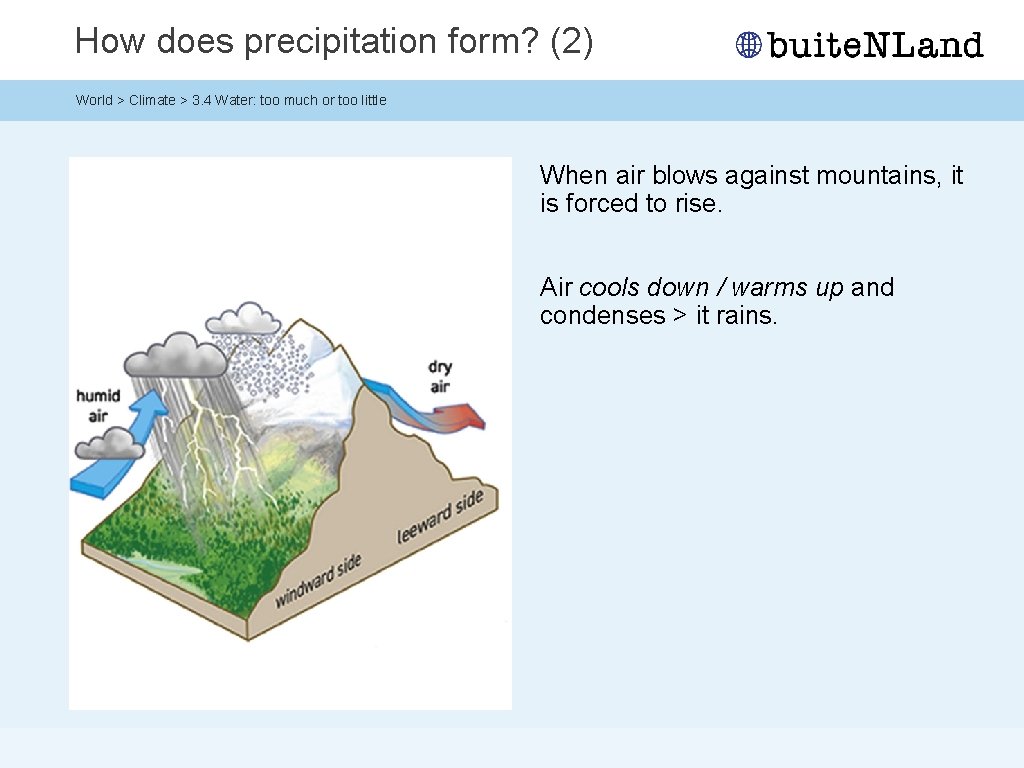
How does precipitation form? (2) World > Climate > 3. 4 Water: too much or too little When air blows against mountains, it is forced to rise. Air cools down / warms up and condenses > it rains.
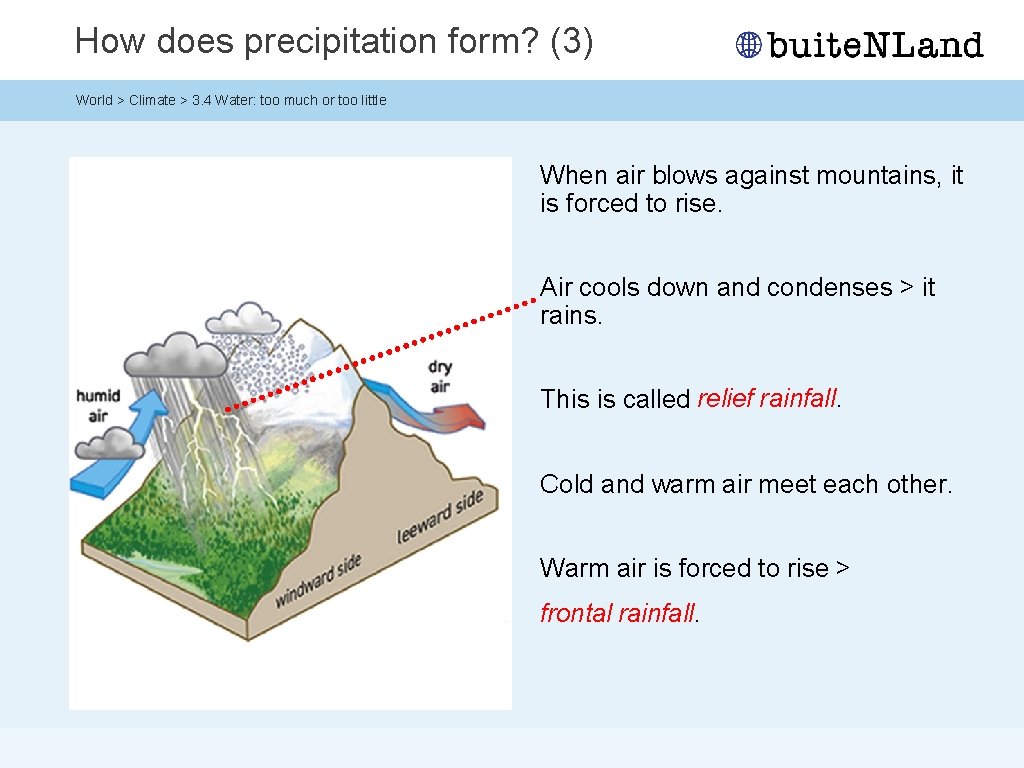
How does precipitation form? (3) World > Climate > 3. 4 Water: too much or too little When air blows against mountains, it is forced to rise. Air cools down and condenses > it rains. This is called relief rainfall. Cold and warm air meet each other. Warm air is forced to rise > frontal rainfall.