Chapter 5 Section 2 Climate and Vegetation Main


- Slides: 8
Chapter 5 Section 2: Climate and Vegetation
Main Idea What is the main idea? IN YOUR OWN WORDS!! The US and Canada are so large that almost every climate is found in North America. Canada has a cold climate because of its latitude.
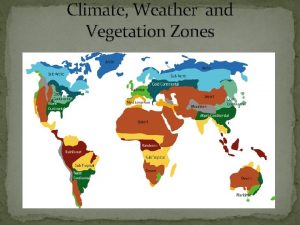
I. Shared Climates and Vegetation A. Canada and U. S. share cold winter temperatures, and also climates around the border 1. U. S. is more moderate: mid-latitude 2. Canada is colder: higher latitudes B. Colder Climates 1. 2. 3. Arctic coast – tundra climate and vegetation (permafrost) Short summers – not very warm Rockies and Pacific ranges – highlands: cold with little vegetation 4. Lands west of the mountains are rainy and in the east it is dry
I. Shared Climates and Vegetation C. Moderate Climates 1. North central US/southern Canada – humid continental (winters are cold, summers warm – GREAT for agriculture and livestock) 2. Northern California to Alaska – marine west coast climate affected by the ocean, the mountains, and the prevailing westerlies (summers are warm, winters are mild with rain/fog) 3. Washington has a rainforest!
II. Differences in Climate and Vegetation A. Milder, dry, and tropical climates are found 40°N; Canada does not have these climates B. Milder Climates 1. Southern states: summers are hot/muggy with high temps; winters are mild, cool, and rainy so they have a long growing season (citrus, peanuts, cotton) 2. California: Mediterranean climate with dry, sunny summers and mild winters; long growing season WITH IRRIGATION
II. Differences in Climate and Vegetation B. Dry Climates 1. Great Plains and Great Basin: semi-arid with dry weather and very little rainfall 2. Southwestern states: desert (hot and dry) – Mojave and Sonoran are the largest C. Tropical Climates 1. Hawaii: rainforests and usually around 70°F – very rainy (Mt. Waialeale is the rainiest place on earth!) 2. Southern Florida – tropical wet and dry; the Everglades are a swampy area here
III. Effects of Extreme Weather A. There are some cases of dangerous and extreme weather B. Warm air from Gulf of Mexico meets with cold Canadian air = thunderstorms, tornadoes, and blizzards (Tornado Alley – Great Plains) C. Heavy rainfall, especially around major rivers, causes flooding (Mississippi) D. Too much heat and dryness = drought and wildfire
Main Idea Questions In which regions would you find the dry climates? In which climate type would you find the Everglades? Which climates are found in the U. S. and not in Canada?