Xavier Lachazette Le Mans Universit France An introduction

- Slides: 46
Xavier Lachazette, Le Mans Université (France) An introduction to Charles Dickens (1812 -70) >> Power. Point presentation designed to accompany six 1 -hour conferences for L 2 students (sophomores).
Xavier Lachazette, Le Mans Université (France) An introduction to Charles Dickens (1812 -70)
A) General information on Charles Dickens A 1) A few pictures A 2) His production A 3) His relevance today
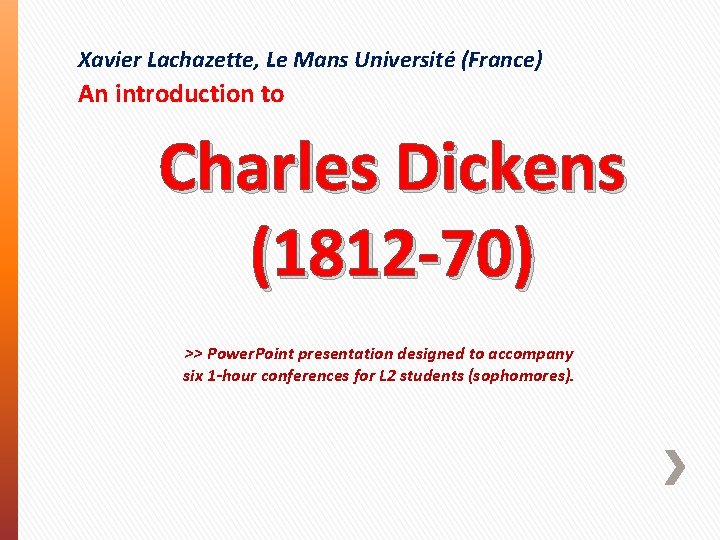
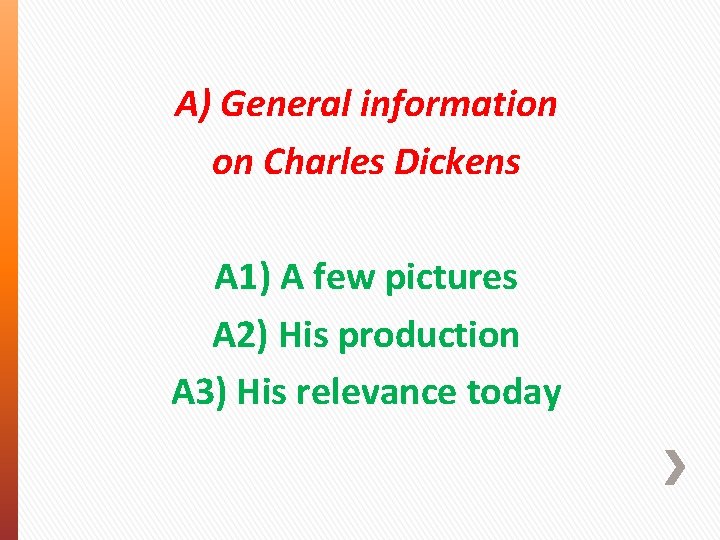
A 1) A few pictures 1830 s / 1842 (Boston)
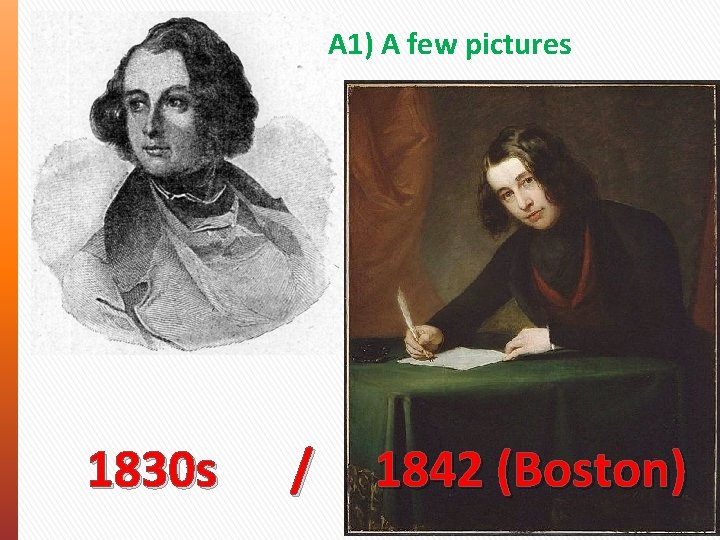
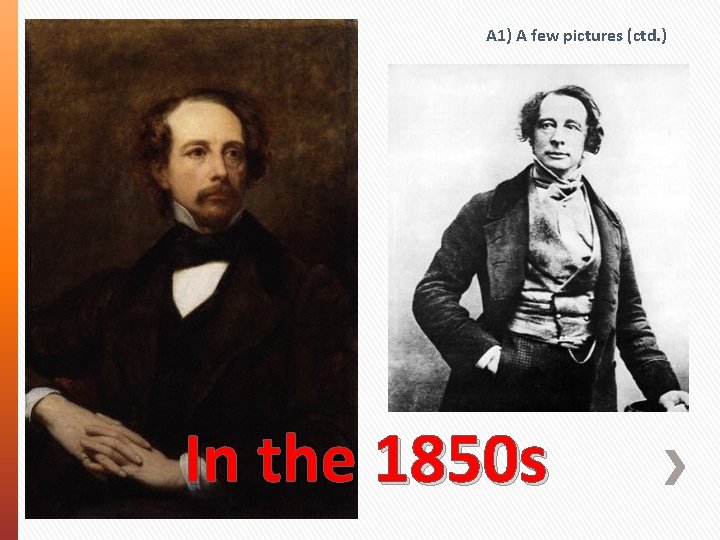
A 1) A few pictures (ctd. ) In the 1850 s
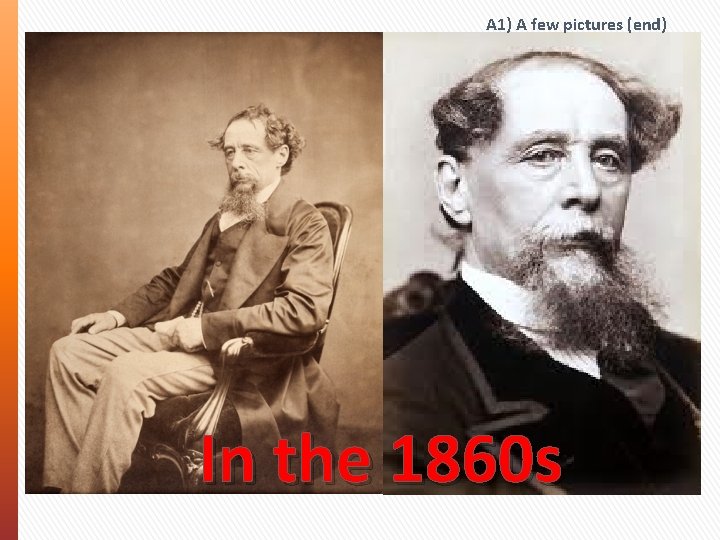
A 1) A few pictures (end) In the 1860 s
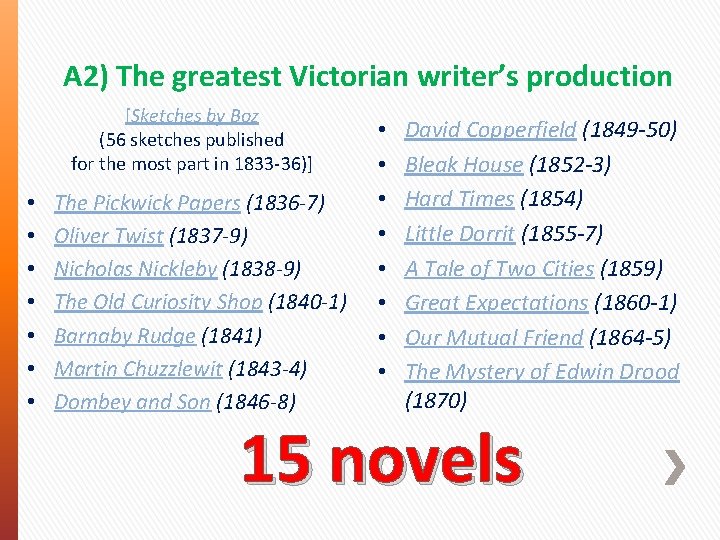
A 2) The greatest Victorian writer’s production [Sketches by Boz (56 sketches published for the most part in 1833 -36)] • • The Pickwick Papers (1836 -7) Oliver Twist (1837 -9) Nicholas Nickleby (1838 -9) The Old Curiosity Shop (1840 -1) Barnaby Rudge (1841) Martin Chuzzlewit (1843 -4) Dombey and Son (1846 -8) • • David Copperfield (1849 -50) Bleak House (1852 -3) Hard Times (1854) Little Dorrit (1855 -7) A Tale of Two Cities (1859) Great Expectations (1860 -1) Our Mutual Friend (1864 -5) The Mystery of Edwin Drood (1870) 15 novels
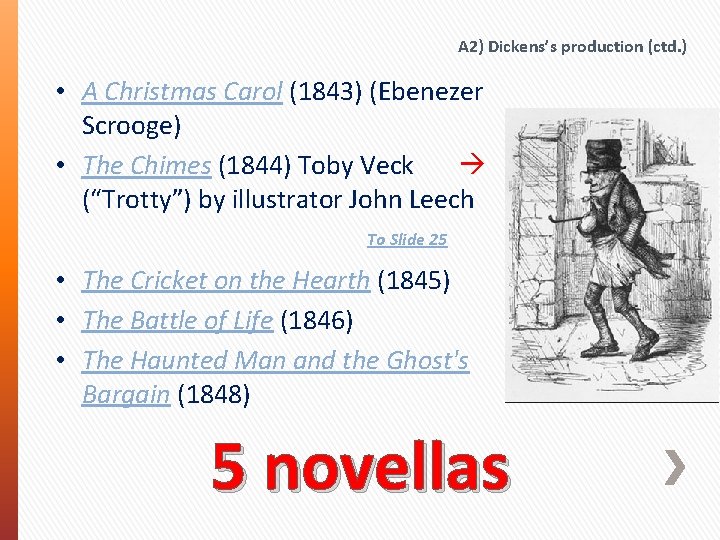
A 2) Dickens’s production (ctd. ) • A Christmas Carol (1843) (Ebenezer Scrooge) • The Chimes (1844) Toby Veck (“Trotty”) by illustrator John Leech To Slide 25 • The Cricket on the Hearth (1845) • The Battle of Life (1846) • The Haunted Man and the Ghost's Bargain (1848) 5 novellas
A 2) Dickens’s production (end) » Play: The Frozen Deep (1856) cowritten by Wilkie Collins (collaboration) ‘Richard Wardour’ (Dickens) / ‘Frank Aldersley’ (Collins) » • • • Journals edited by Dickens: Bentley’s Miscellany: 1836 -39 (contributor) Master Humphrey’s Clock: 1840 -41 (written entirely) The Daily News: 1846 (edited 17 issues only) Household Words: 1850 -59 (his own paper, contributor) All the Year Round: 1859 -70 (his own paper, contributor; A Tale of Two Cities; edited by his son Charley until 1888; ceased altogether in 1893) Plays and journals
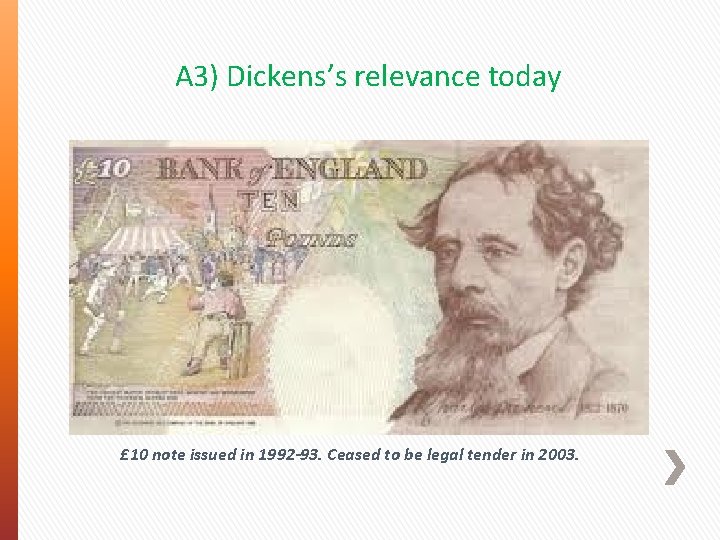
A 3) Dickens’s relevance today £ 10 note issued in 1992 -93. Ceased to be legal tender in 2003.
A 3) Dickens’s relevance today (ctd. ) » Yearly Dickens festivals in the US & in England • Myrtle Beach, SC: Xmas Show & Festivals [Nov. ]) • Port Jefferson, NY: Dickens Festival [December]) • Rochester (Kent, SE of England) festivities like summertime readings and Christmas-time parades (list of Dickensian characters)
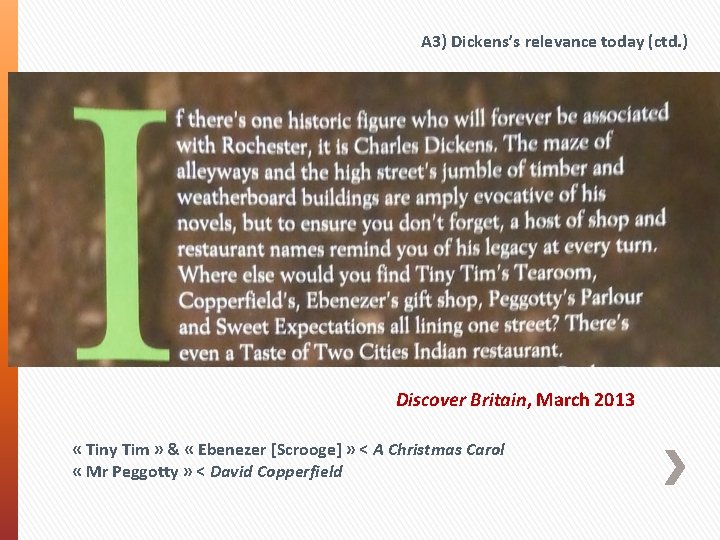
A 3) Dickens’s relevance today (ctd. ) Discover Britain, March 2013 « Tiny Tim » & « Ebenezer [Scrooge] » < A Christmas Carol « Mr Peggotty » < David Copperfield
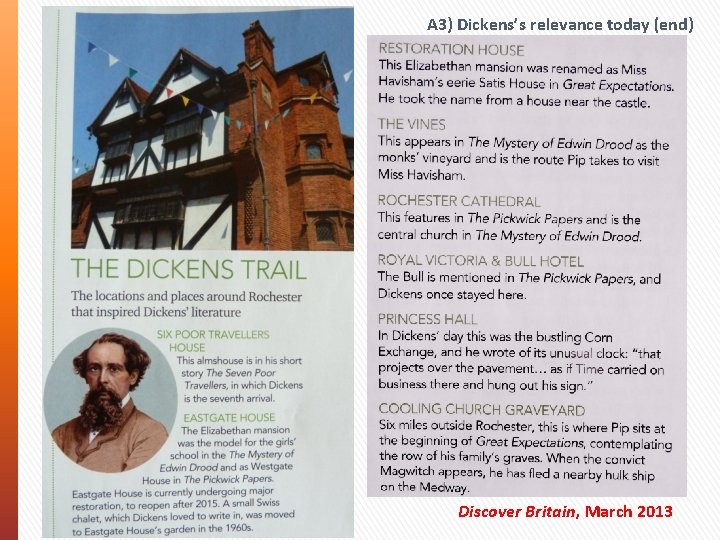
A 3) Dickens’s relevance today (end) Discover Britain, March 2013
B) Dickens’s Life and Works B 1) Difficult beginnings B 2) First successes B 3) Formative trips abroad B 4) Years of success and prosperity B 5) Years of personal crisis
Biographical information B 1) Difficult beginnings (1824 -33) • Parents: John (Naval Pay Office) & Elizabeth Dickens > “Mr. Micawber” (in David Copperfield) = John > “Mrs. Nickleby” (in Nicholas Nickleby) = Elizabeth • the Marshalsea (= debtors’ prison) / Warren’s Blacking Factory • Dickens affected by it > John Forster (friend) • Office boy + studies shorthand free-lance law reporter Parliamentary reporter (Mirror of Parliament) reporter for two newspapers (True Sun / Morning Chronicle) • Maria Beadnell = love at first sight! (1830 -1833) > 2 opposite portraits (flattering/unflattering)
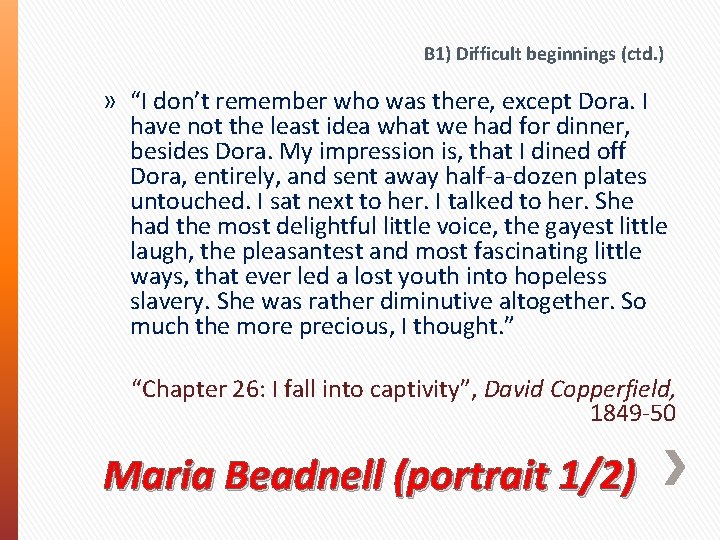
B 1) Difficult beginnings (ctd. ) » “I don’t remember who was there, except Dora. I have not the least idea what we had for dinner, besides Dora. My impression is, that I dined off Dora, entirely, and sent away half-a-dozen plates untouched. I sat next to her. I talked to her. She had the most delightful little voice, the gayest little laugh, the pleasantest and most fascinating little ways, that ever led a lost youth into hopeless slavery. She was rather diminutive altogether. So much the more precious, I thought. ” “Chapter 26: I fall into captivity”, David Copperfield, 1849 -50 Maria Beadnell (portrait 1/2)
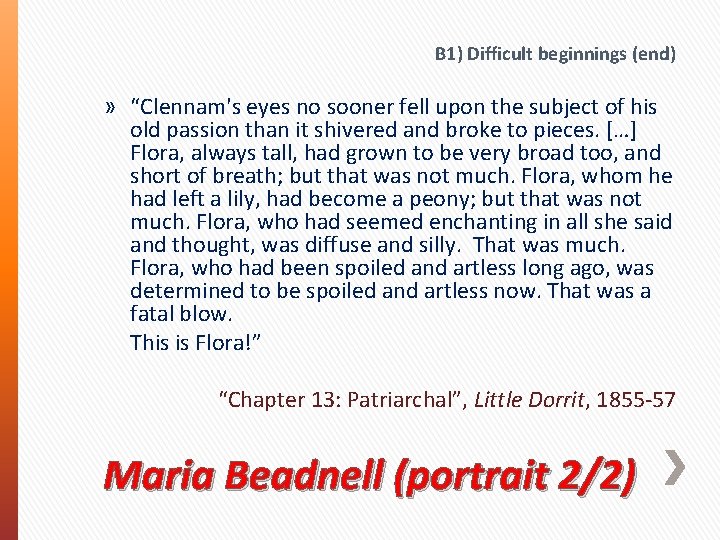
B 1) Difficult beginnings (end) » “Clennam's eyes no sooner fell upon the subject of his old passion than it shivered and broke to pieces. […] Flora, always tall, had grown to be very broad too, and short of breath; but that was not much. Flora, whom he had left a lily, had become a peony; but that was not much. Flora, who had seemed enchanting in all she said and thought, was diffuse and silly. That was much. Flora, who had been spoiled and artless long ago, was determined to be spoiled and artless now. That was a fatal blow. This is Flora!” “Chapter 13: Patriarchal”, Little Dorrit, 1855 -57 Maria Beadnell (portrait 2/2)
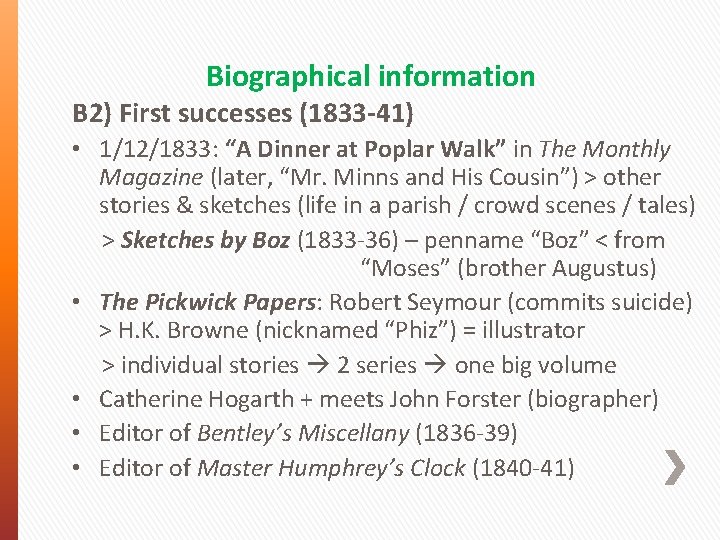
Biographical information B 2) First successes (1833 -41) • 1/12/1833: “A Dinner at Poplar Walk” in The Monthly Magazine (later, “Mr. Minns and His Cousin”) > other stories & sketches (life in a parish / crowd scenes / tales) > Sketches by Boz (1833 -36) – penname “Boz” < from “Moses” (brother Augustus) • The Pickwick Papers: Robert Seymour (commits suicide) > H. K. Browne (nicknamed “Phiz”) = illustrator > individual stories 2 series one big volume • Catherine Hogarth + meets John Forster (biographer) • Editor of Bentley’s Miscellany (1836 -39) • Editor of Master Humphrey’s Clock (1840 -41)
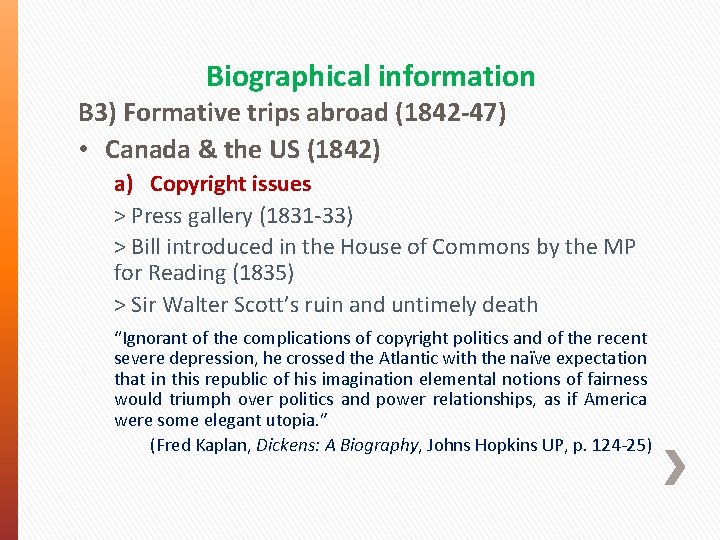
Biographical information B 3) Formative trips abroad (1842 -47) • Canada & the US (1842) a) Copyright issues > Press gallery (1831 -33) > Bill introduced in the House of Commons by the MP for Reading (1835) > Sir Walter Scott’s ruin and untimely death “Ignorant of the complications of copyright politics and of the recent severe depression, he crossed the Atlantic with the naïve expectation that in this republic of his imagination elemental notions of fairness would triumph over politics and power relationships, as if America were some elegant utopia. ” (Fred Kaplan, Dickens: A Biography, Johns Hopkins UP, p. 124 -25)
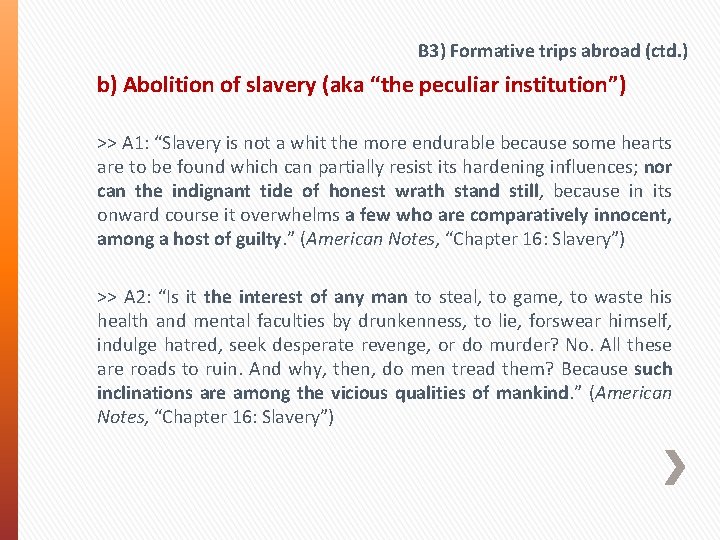
B 3) Formative trips abroad (ctd. ) b) Abolition of slavery (aka “the peculiar institution”) >> A 1: “Slavery is not a whit the more endurable because some hearts are to be found which can partially resist its hardening influences; nor can the indignant tide of honest wrath stand still, because in its onward course it overwhelms a few who are comparatively innocent, among a host of guilty. ” (American Notes, “Chapter 16: Slavery”) >> A 2: “Is it the interest of any man to steal, to game, to waste his health and mental faculties by drunkenness, to lie, forswear himself, indulge hatred, seek desperate revenge, or do murder? No. All these are roads to ruin. And why, then, do men tread them? Because such inclinations are among the vicious qualities of mankind. ” (American Notes, “Chapter 16: Slavery”)
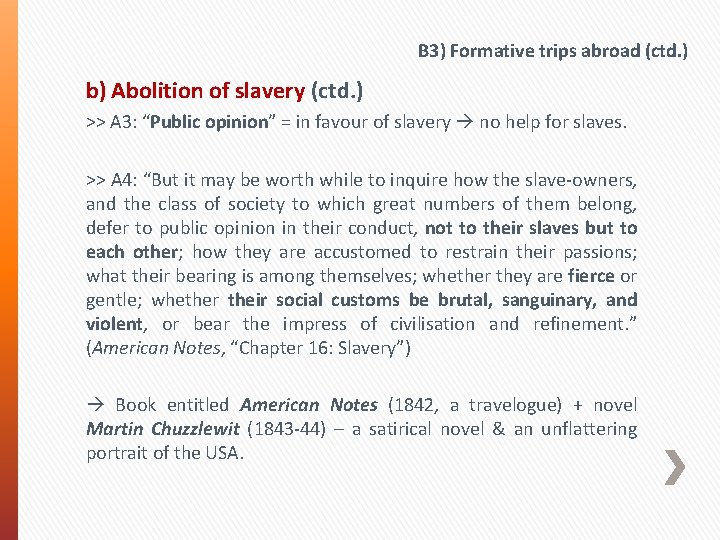
B 3) Formative trips abroad (ctd. ) b) Abolition of slavery (ctd. ) >> A 3: “Public opinion” = in favour of slavery no help for slaves. >> A 4: “But it may be worth while to inquire how the slave-owners, and the class of society to which great numbers of them belong, defer to public opinion in their conduct, not to their slaves but to each other; how they are accustomed to restrain their passions; what their bearing is among themselves; whether they are fierce or gentle; whether their social customs be brutal, sanguinary, and violent, or bear the impress of civilisation and refinement. ” (American Notes, “Chapter 16: Slavery”) Book entitled American Notes (1842, a travelogue) + novel Martin Chuzzlewit (1843 -44) – a satirical novel & an unflattering portrait of the USA.
B 3) Formative trips abroad (ctd. ) c) Penitentiaries (Pennsylvania, “solitary confinement”) hatred visible in A Tale of Two Cities or Pictures from Italy. i. “I believe that very few men are capable of estimating the immense amount of torture and agony which this dreadful punishment, prolonged for years, inflicts upon the sufferers; and in guessing at it myself, and in reasoning from what I have seen written upon their faces, and what to my certain knowledge they feel within, I am only the more convinced that there is a depth of terrible endurance in it which none but the sufferers themselves can fathom, and which no man has a right to inflict upon his fellow-creature. I hold this slow and daily tampering with the mysteries of the brain, to be immeasurably worse than any torture of the body […]” American Notes (1842) – on ‘solitary confinement’ (1 of 3)
B 3) Formative trips abroad (ctd. ) ii. “Standing at the central point, and looking down these dreary passages, the dull repose and quiet that prevails, is awful. Occasionally, there is a drowsy sound from some lone weaver’s shuttle, or shoemaker’s last, but it is stifled by the thick walls and heavy dungeon-door, and only serves to make the general stillness more profound. […] He is a man buried alive; to be dug out in the slow round of years; and in the mean time dead to everything but torturing anxieties and horrible despair. His name, and crime, and term of suffering, are unknown, even to the officer who delivers him his daily food. There is a number over his cell-door, and in a book of which the governor of the prison has one copy, and the moral instructor another: this is the index of history. ” American Notes (1842) – on ‘solitary confinement’ (2 of 3)
B 3) Formative trips abroad (ctd. ) iii. ‘And are [you] a better man, you think? ’ ‘Well, I hope so: I’m sure I hope I may be. ’ ‘And time goes pretty quickly? ’ ‘Time is very long, gentlemen, within these four walls!’ He gazed about him—Heaven only knows how wearily!—as he said these words; and in the act of doing so, fell into a strange stare as if he had forgotten something. A moment afterwards he sighed heavily, put on his spectacles, and went about his work again. iv. “My firm conviction is that, independent of the mental anguish it occasions—an anguish so acute and so tremendous, that all imagination of it must fall far short of the reality—it wears the mind into a morbid state, which renders it unfit for the rough contact and busy action of the world. It is my fixed opinion that those who have undergone this punishment, must pass into society again morally unhealthy and diseased. ” American Notes (1842) – on ‘solitary confinement’ (3 of 3)
B 3) Formative trips abroad (ctd. ) • Italy, Switzerland, & France (1844 -47) • Christmas Carols: *they frame this period of Dickens’s life *financial gain AND sincerity. Cf. letter to Pr. Felton: "Charles Dickens wept and laughed, and wept again, and excited himself in a most extraordinary manner in the composition; and thinking whereof he walked about the black streets of London fifteen and twenty miles many a night when all sober folks had gone to bed. " (letter of 2 January 1844) *focus on “The Chimes” : summary of the story + what Trotty learns (the working classes/progress) + a more virulent story? “I like more and more my notion of making, in this little book, a great blow for the poor. Something powerful, I think I can do, but I want to be tender too, and cheerful; as like the Carol in that respect as may be, and as unlike it as such a thing can be […] and if my design be anything at all, it has a grip upon the very throat of the time. ” (letter to John Forster, 8 Oct. 1844)
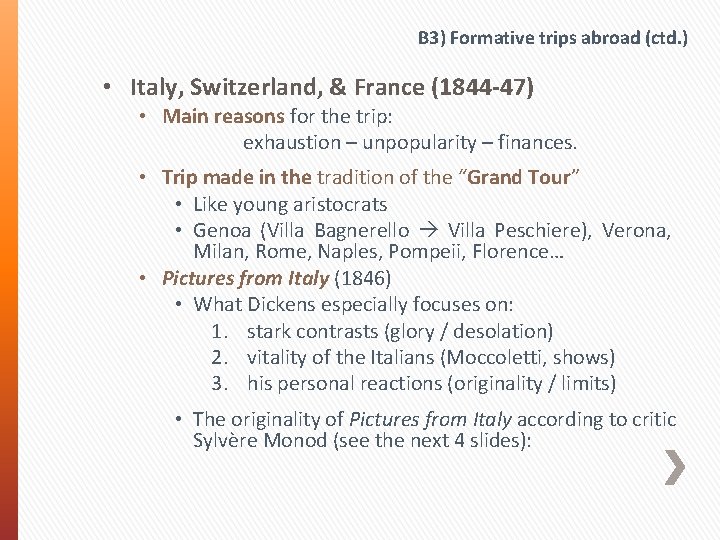
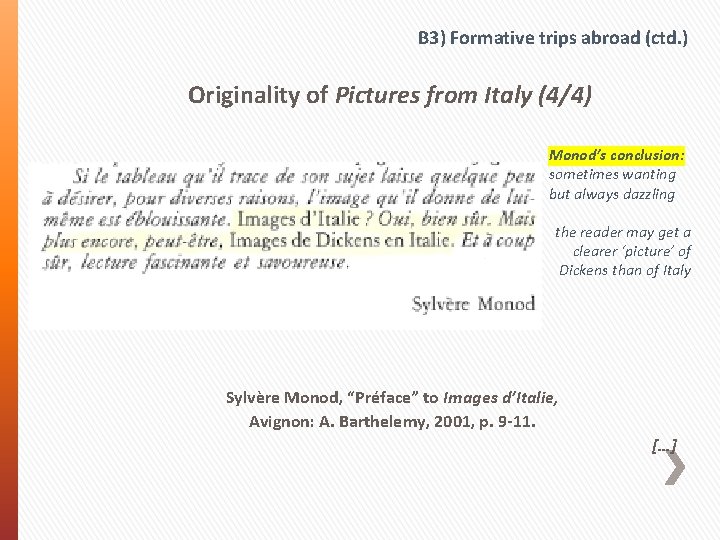
B 3) Formative trips abroad (ctd. ) • Italy, Switzerland, & France (1844 -47) • Main reasons for the trip: exhaustion – unpopularity – finances. • Trip made in the tradition of the “Grand Tour” • Like young aristocrats • Genoa (Villa Bagnerello Villa Peschiere), Verona, Milan, Rome, Naples, Pompeii, Florence… • Pictures from Italy (1846) • What Dickens especially focuses on: 1. stark contrasts (glory / desolation) 2. vitality of the Italians (Moccoletti, shows) 3. his personal reactions (originality / limits) • The originality of Pictures from Italy according to critic Sylvère Monod (see the next 4 slides):
B 3) Formative trips abroad (ctd. ) Originality of Pictures from Italy (1/4) His limitations: a very British traveller shocked by dirt / the omnipresence of Catholicism English references mostly a Victorian moralist not any traveller! not a professional guide stress on ‘impressionism, ’ not statistics or hard facts not an art critic: art should represent nature faithfully, according to him. . . …/…
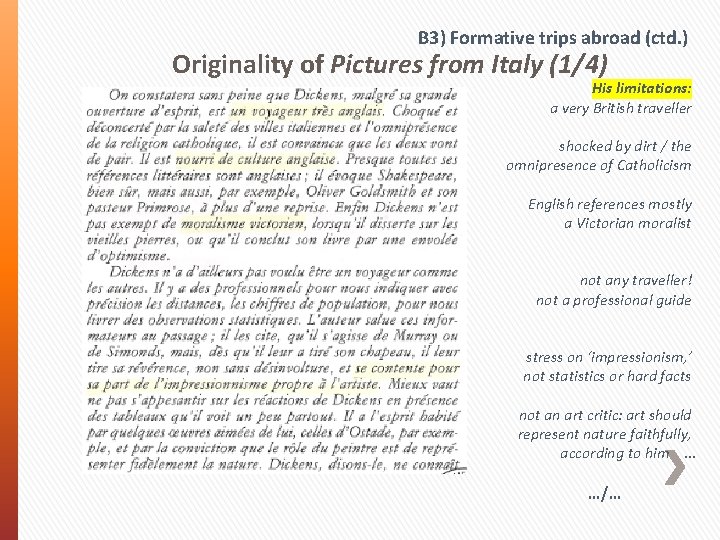
B 3) Formative trips abroad (ctd. ) Originality of Pictures from Italy (2/4) his take on paintings are rudimentary His strong points: *curious but not necessarily in depth *catches momentary images *remembers details and gives them life again *esp. comic /picturesque *no attempt at generalizations *authenticity & memorable descriptions Sylvère Monod, “Préface” to Images d’Italie, Avignon: A. Barthelemy, 2001, p. 9 -11. …/…
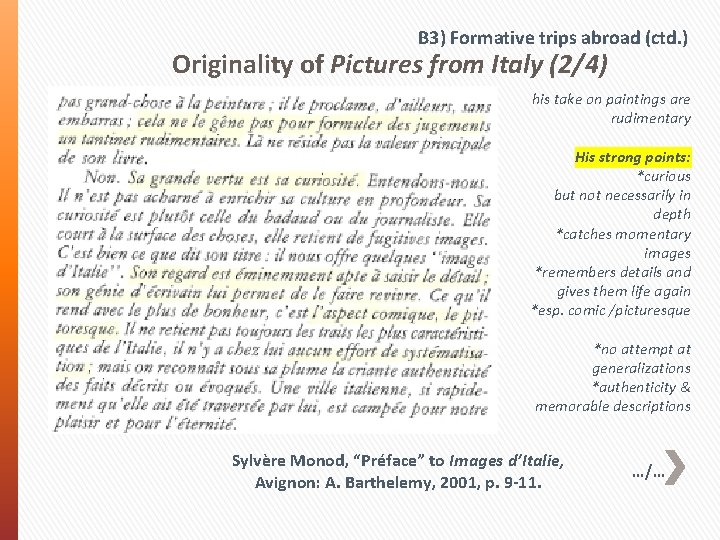
B 3) Formative trips abroad (ctd. ) Originality of Pictures from Italy (3/4) His favourites: *the spectacular, the anecdotal, news items *fun, comedy * sensational or shocking happenings *surprising stress on futile things […] Sylvère Monod, “Préface” to Images d’Italie, Avignon: A. Barthelemy, 2001, p. 9 -11.
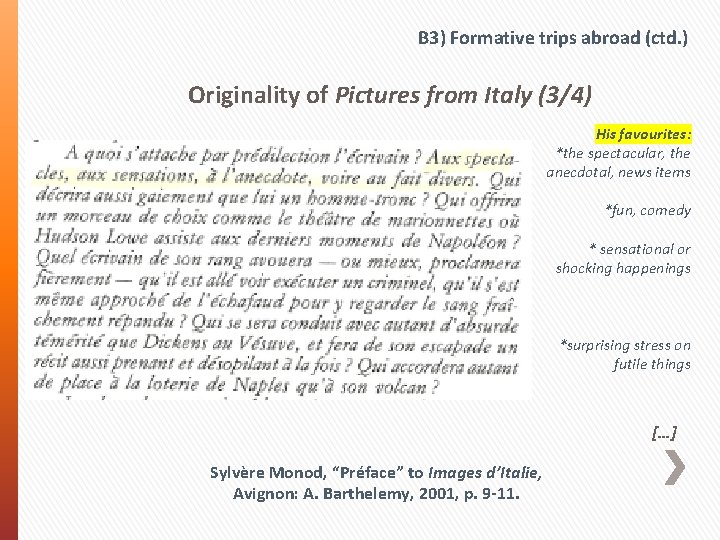
B 3) Formative trips abroad (ctd. ) Originality of Pictures from Italy (4/4) Monod’s conclusion: sometimes wanting but always dazzling the reader may get a clearer ‘picture’ of Dickens than of Italy Sylvère Monod, “Préface” to Images d’Italie, Avignon: A. Barthelemy, 2001, p. 9 -11. […]
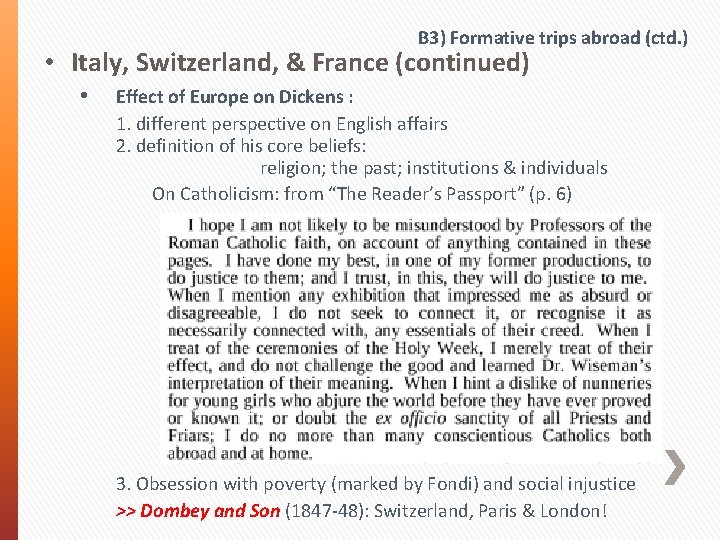
B 3) Formative trips abroad (ctd. ) • Italy, Switzerland, & France (continued) • Effect of Europe on Dickens : 1. different perspective on English affairs 2. definition of his core beliefs: religion; the past; institutions & individuals On Catholicism: from “The Reader’s Passport” (p. 6) 3. Obsession with poverty (marked by Fondi) and social injustice >> Dombey and Son (1847 -48): Switzerland, Paris & London!
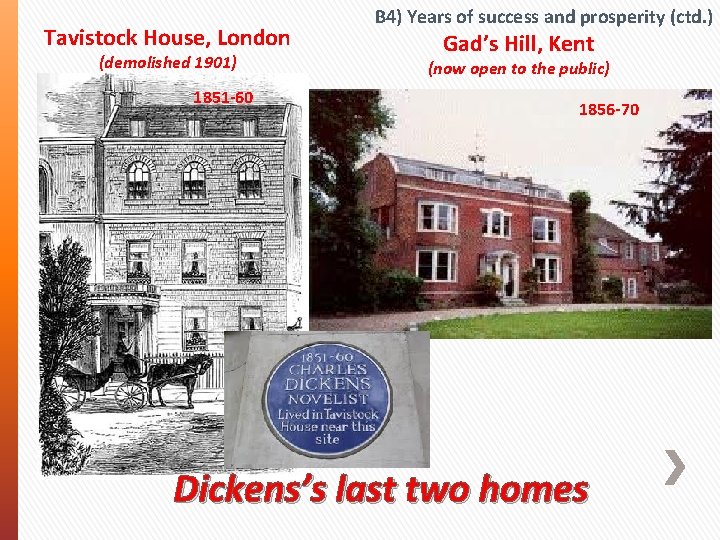
Biographical information B 4) Years of success and prosperity a) Dickens & the performing arts • His amateur theatrical company (1845) Ben Jonson’s 1598 play Every Man in His Humour. • Accomplished magician Tavistock House entertainments (his London home, 185160) his last home: Gad’s Hill in Kent (bought 1856, moved in 1857) • Does public readings Birmingham (1853). Powerful episode: murder of Nancy by Bill Sikes in Oliver Twist. “As well as being our greatest novelist, Dickens developed a new, composite art form in his stage performances, acting out specially adapted passages from his own works and varying his expressions and speech patterns, so that it seemed as if he were becoming possessed by the characters he created. His reading tours won him huge popular acclaim on both sides of the Atlantic. ” Matt Shinn in The Guardian (Saturday 31 January 2004) .
Tavistock House, London (demolished 1901) 1851 -60 B 4) Years of success and prosperity (ctd. ) Gad’s Hill, Kent (now open to the public) 1856 -70 Dickens’s last two homes
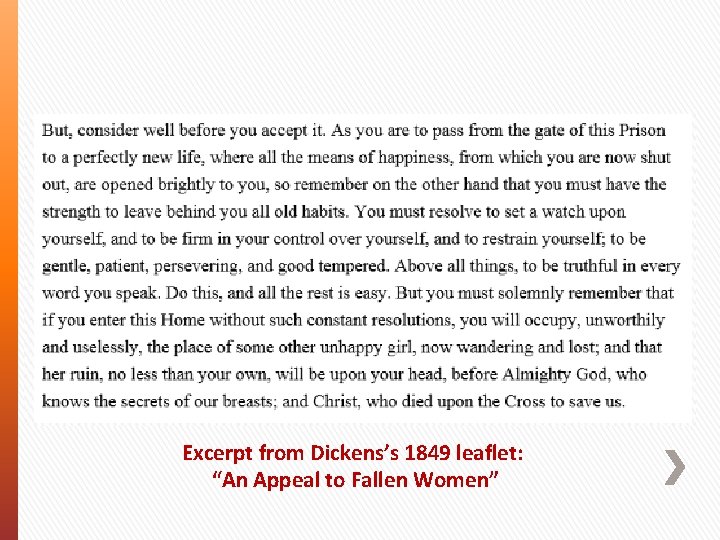
b) Dickens and charities B 4) Years of success and prosperity (ctd. ) 1. 1844: “Ragged Schools Union”. Dickens visits Field Lane Ragged School in 1843 and advises the famous heiress Miss Angela Burdett. Coutts (see picture on slide 36). Also writes 2 articles: in Daily News (4/2/1846) and Household Words (13/3/1852). 2. From 1846 -7: “Urania Cottage” = a home for “fallen women” in West London (Shepherd’s Bush) – quite different from societies like “The Magdalen Society. “ > letter to Burdett-Coutts, 23 May 1846: “[S]he is degraded and fallen, but not lost, having the shelter; and that the means of Return to Happiness. ” > 1849 leaflet: “An Appeal to Fallen Women” excerpt on next page.
Excerpt from Dickens’s 1849 leaflet: “An Appeal to Fallen Women”
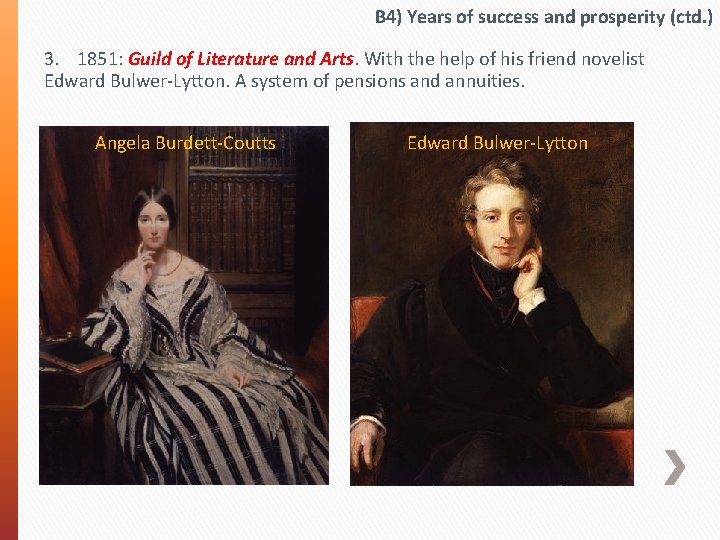
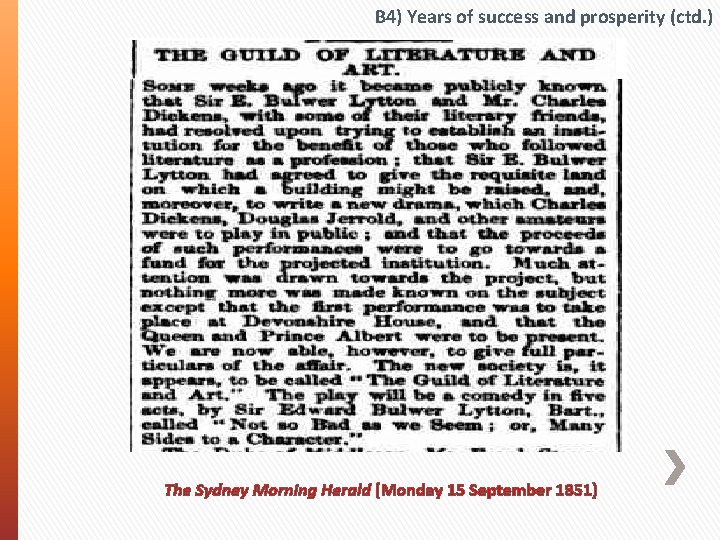
B 4) Years of success and prosperity (ctd. ) 3. 1851: Guild of Literature and Arts. With the help of his friend novelist Edward Bulwer-Lytton. A system of pensions and annuities. Angela Burdett-Coutts Edward Bulwer-Lytton
B 4) Years of success and prosperity (ctd. ) The Sydney Morning Herald (Monday 15 September 1851)
B 4) Years of success and prosperity (ctd. ) § § § c) Dickens’s greatest novels & journalism Dombey and Son (1846 -8) David Copperfield (1849 -50) Charlotte Brontë’s Jane Eyre (1847) A new weekly: Household Words (from 30 March 1850) 1 Master Humphrey’s Clock ( † 1841), Daily News (1846) 2 Platform for social reform. Influence of Thomas Carlyle (Chartism, 1840 or Past and Present, 1843) issues like slum clearance, prison administration, educational systems, sanitary measures, etc. 3 A modern magazine “It was to be a weekly miscellany of general literature; and its stated objects were to be, to contribute to the entertainment and instruction of all classes of readers, and to help in the discussion of the more important social questions of the time. It was to comprise short stories by others as well as himself; matters of passing interest in the liveliest form that could be given to them; subjects suggested by books that might most be attracting attention; and poetry in every number if possible, but in any case something of romantic fancy. This was to be a cardinal point. There was to be no mere utilitarian spirit; with all familiar things, but especially those repellent on the surface, something was to be connected that should be fanciful or kindly; and the hardest workers were to be taught that their lot is not necessarily excluded from the sympathies and graces of imagination. ” John Forster, The Life of Charles Dickens, “Book Six: At the Summit (1847 -52)”
B 4) Years of success and prosperity (end) c) Dickens’s greatest novels & journalism (end) Lord Northcliffe (founded The Daily Mail, then owned The Times) called Dickens: “the greatest magazine editor either of this or of any other age”. Importance of Household Words: Ø Dickens’s evolution Ø His later ‘dark’ novels in embryonic form • • • Bleak House: from March 1852 slowness of the judicial system Hard Times: published in Household Words from April 1854 education Little Dorrit: from December 1855 debtor’s prison, inefficient governments
Biographical information B 5) Years of personal crisis • Problematic relationships • 1858: separation from his wife Catherine Ellen Lawless Ternan in The Frozen Deep mistress “Estella” in Great Expectations, “Bella Wilfer” in Our Mutual Friend, “Helena Landless” in The Mystery of Edwin Drood • William Makepeace Thackeray, his ‘friend’ & literary rival * The Luck of Barry Lyndon (1844) or Vanity Fair (1847 -48) * Daughters Annie & Minnie (Thackeray) friends with Mamie & Katey (Dickens) * “A fatal story for our trade” (of Dickens’s separation, behaviour to his wife & “Personal Statement” in The Times) • Bradbury & Evans Chapman & Hall (publishers) All the Year Round (1859) A Tale of Two Cities (from April)
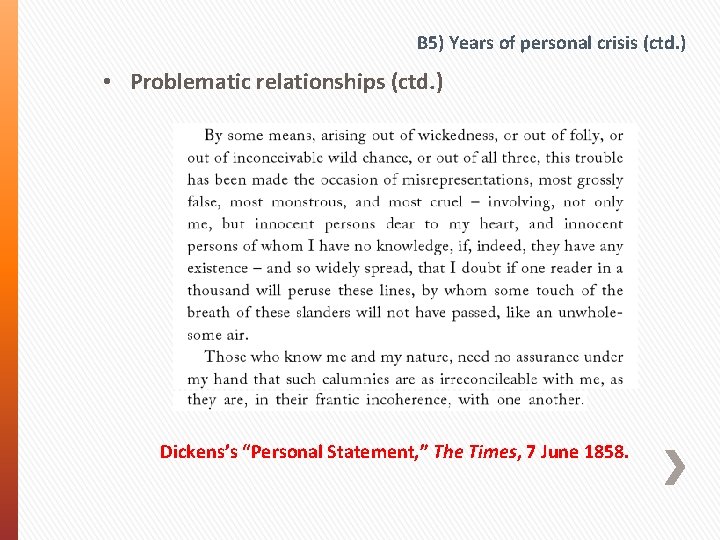
B 5) Years of personal crisis (ctd. ) • Problematic relationships (ctd. ) Dickens’s “Personal Statement, ” The Times, 7 June 1858.
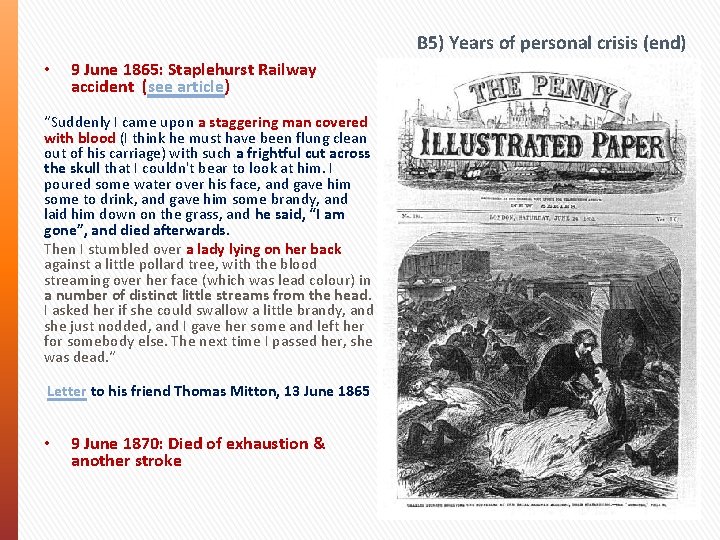
B 5) Years of personal crisis (end) • 9 June 1865: Staplehurst Railway accident (see article) “Suddenly I came upon a staggering man covered with blood (I think he must have been flung clean out of his carriage) with such a frightful cut across the skull that I couldn't bear to look at him. I poured some water over his face, and gave him some to drink, and gave him some brandy, and laid him down on the grass, and he said, “I am gone”, and died afterwards. Then I stumbled over a lady lying on her back against a little pollard tree, with the blood streaming over her face (which was lead colour) in a number of distinct little streams from the head. I asked her if she could swallow a little brandy, and she just nodded, and I gave her some and left her for somebody else. The next time I passed her, she was dead. “ Letter to his friend Thomas Mitton, 13 June 1865 • 9 June 1870: Died of exhaustion & another stroke
C) Further Reading C 1) Recommended biographies C 2) Recommended book of facsimiles
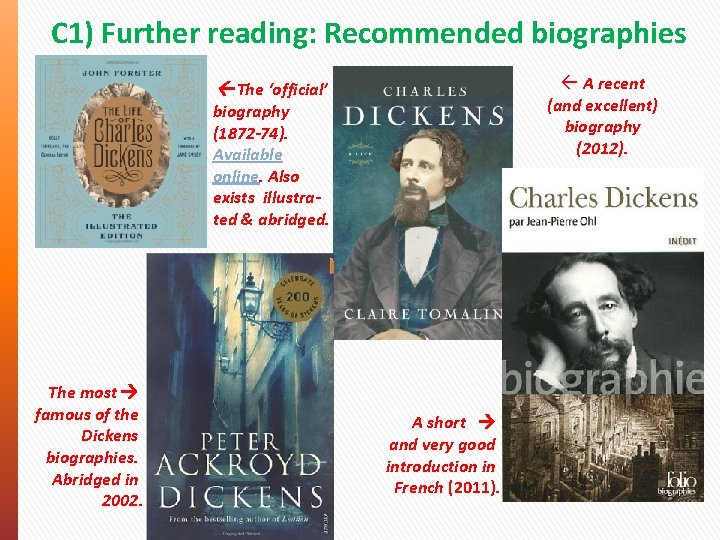
C 1) Further reading: Recommended biographies A recent (and excellent) biography (2012). The ‘official’ biography (1872 -74). Available online. Also exists illustrated & abridged. The most famous of the Dickens biographies. Abridged in 2002. A short and very good introduction in French (2011).
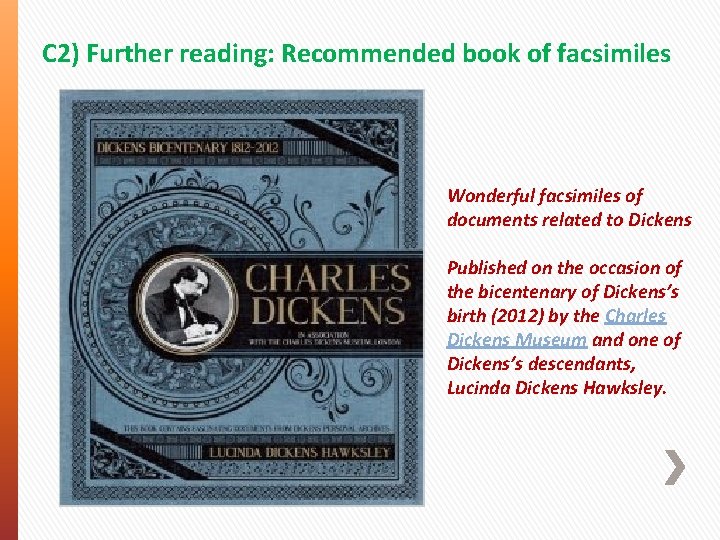
C 2) Further reading: Recommended book of facsimiles Wonderful facsimiles of documents related to Dickens Published on the occasion of the bicentenary of Dickens’s birth (2012) by the Charles Dickens Museum and one of Dickens’s descendants, Lucinda Dickens Hawksley.
F I N I S