WINDS Dr Hooda 6 th Science Land Sea
- Slides: 37
WINDS Dr. Hooda 6 th Science Land Sea Breezes
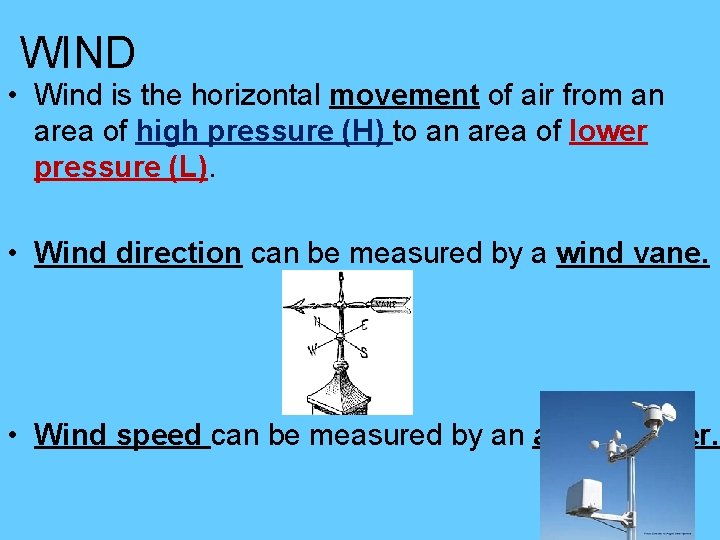
WIND • Wind is the horizontal movement of air from an area of high pressure (H) to an area of lower pressure (L). • Wind direction can be measured by a wind vane. • Wind speed can be measured by an anemometer.
WIND • It is caused by: – 1. Differences in temperature. – 2. Differences in pressure.
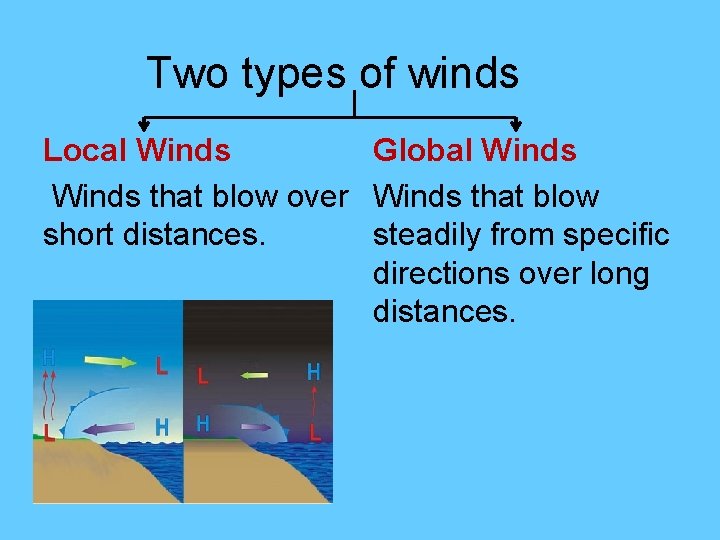
Two types of winds Local Winds Global Winds that blow over Winds that blow short distances. steadily from specific directions over long distances.
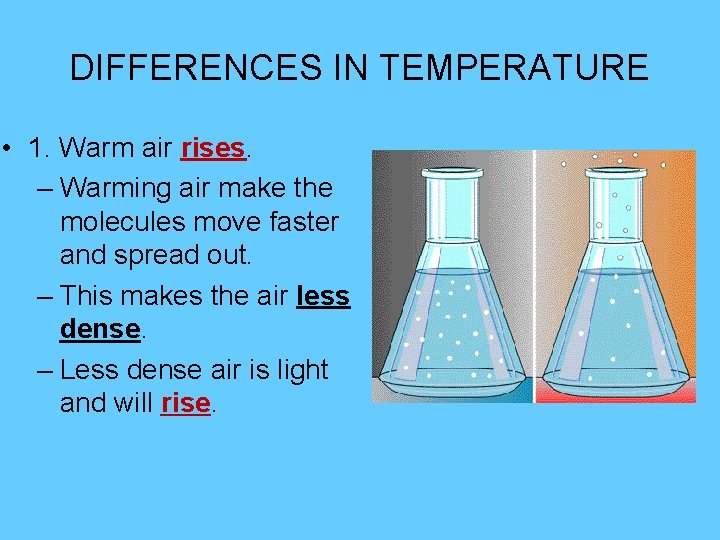
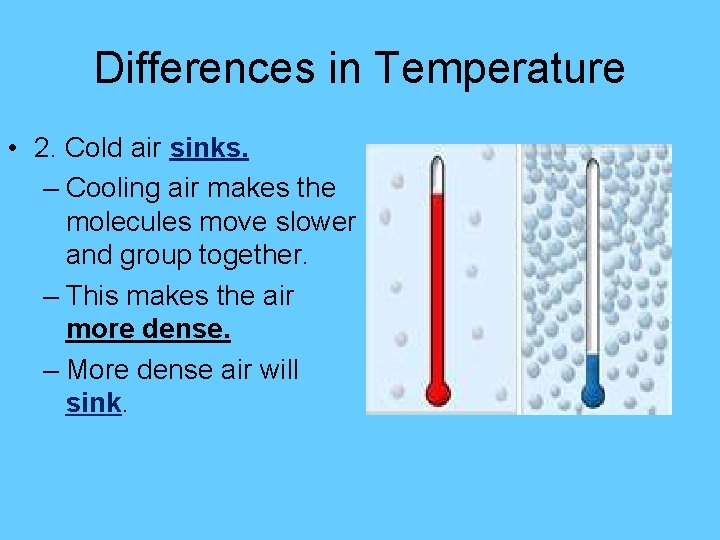
DIFFERENCES IN TEMPERATURE • 1. Warm air rises. – Warming air make the molecules move faster and spread out. – This makes the air less dense. – Less dense air is light and will rise.
Differences in Temperature • 2. Cold air sinks. – Cooling air makes the molecules move slower and group together. – This makes the air more dense. – More dense air will sink.
DIFFERENCES IN PRESSURE • 1. Rising air creates Low pressure. – If air is lifted up, that means there is Less air pushing down on Earth. • 2. Sinking air creates High pressure. – If air is sinking, then air is pushing down on the surface of Earth with a High amount of pressure.
The Creation of Wind • 1. Differences in temperature cause air to rise and sink all over Earth’s surface. • 2. Rising and sinking air creates high and low pressure. • 3. The atmosphere does NOT like UNBALANCED PRESSURE SOOOO… • IT TRIES TO EQUAL OUT PRESSURE BY MOVING AIR FROM HIGH TO LOW PRESSURE.
Winds are created by … • 1. Heating the air, decreases pressure (warm air rises creating a low pressure area). • 2. Cool air rushes in to replace the warm air (cooler, denser, air produces high pressure). • 3. As air goes from high pressure to low pressure, winds form. • 4. Wind is a horizontal movement of air.
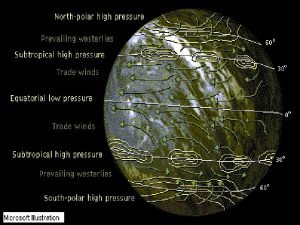
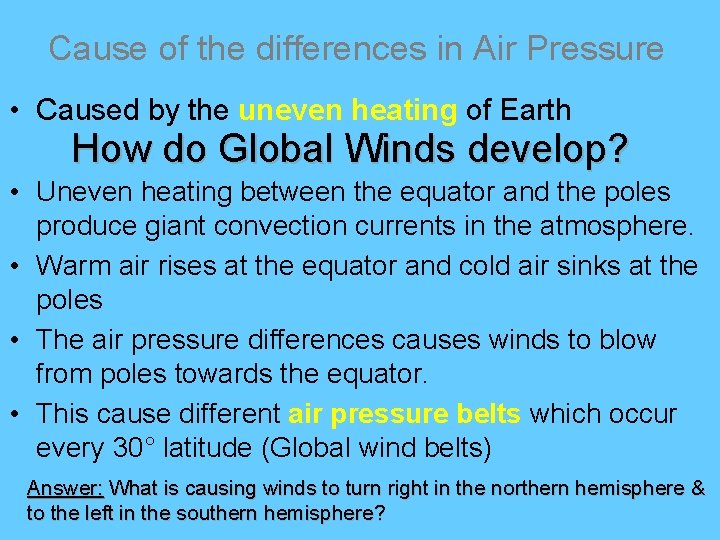
Cause of the differences in Air Pressure • Caused by the uneven heating of Earth How do Global Winds develop? • Uneven heating between the equator and the poles produce giant convection currents in the atmosphere. • Warm air rises at the equator and cold air sinks at the poles • The air pressure differences causes winds to blow from poles towards the equator. • This cause different air pressure belts which occur every 30° latitude (Global wind belts) Answer: What is causing winds to turn right in the northern hemisphere & to the left in the southern hemisphere?
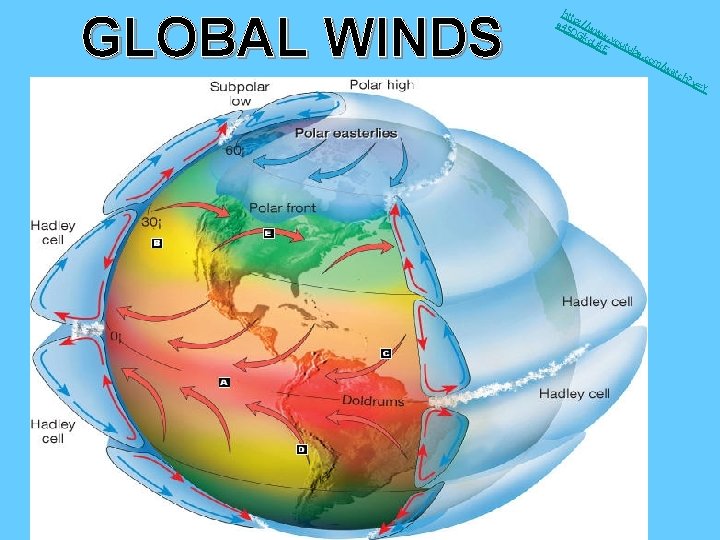
GLOBAL WINDS htt e 4 p: //w 5 D Gk ww. y q. U k. E outub e . co m/ wa tch ? v= Y
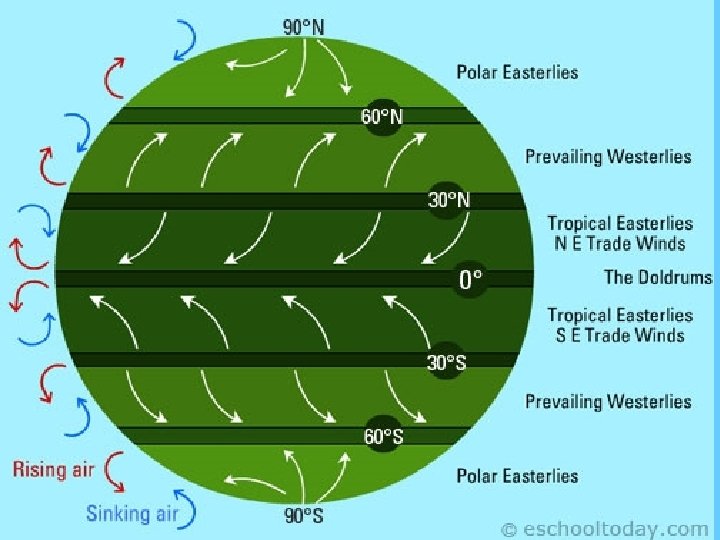
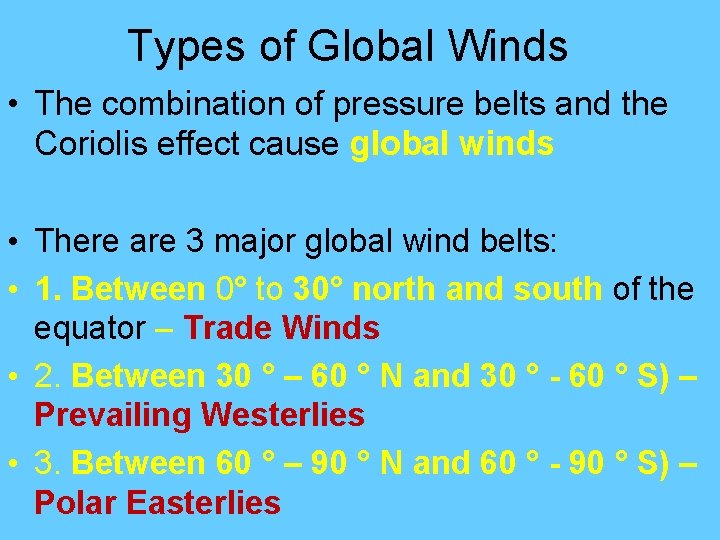
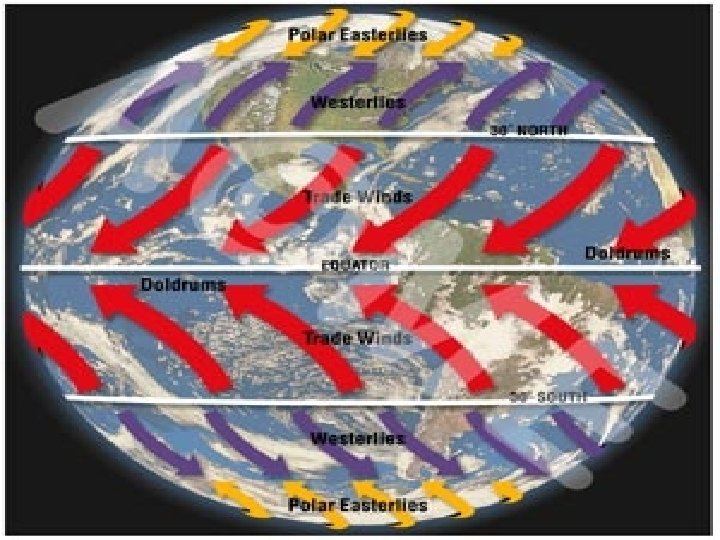
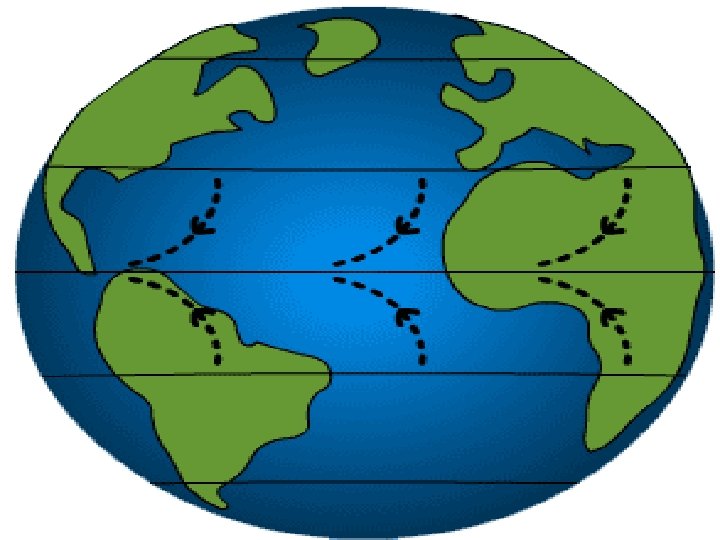
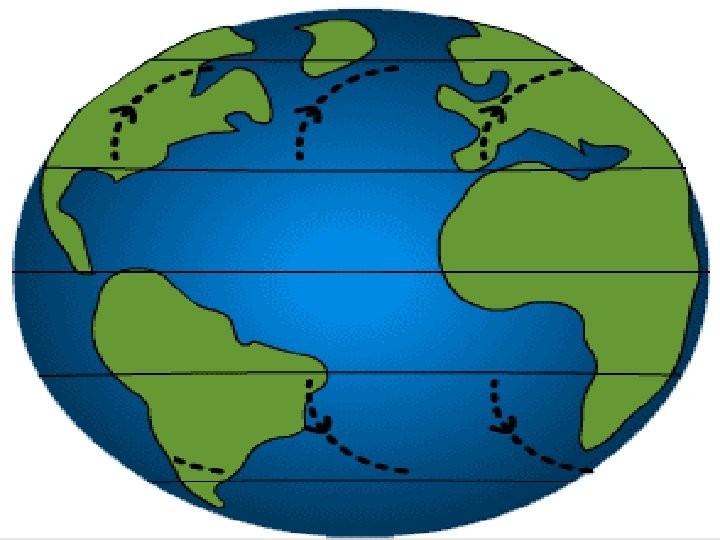
Types of Global Winds • The combination of pressure belts and the Coriolis effect cause global winds • There are 3 major global wind belts: • 1. Between 0° to 30° north and south of the equator – Trade Winds • 2. Between 30 ° – 60 ° N and 30 ° - 60 ° S) – Prevailing Westerlies • 3. Between 60 ° – 90 ° N and 60 ° - 90 ° S) – Polar Easterlies
Doldrums ( At the equator 0 ° ) • Located along the equator where no winds blow because the warm rising air creates an area of low pressure • An equatorial region of Atlantic ocean with calms, sudden storms, and light or no winds.
Horse Latitudes • Occur at about 30° north and south of the equator where the winds stops moving toward the poles and sinks • Winds are very weak or calm • Hundreds of years ago, sailors stranded in these waters & ran out of water & food, therefore, had to throw the horses overboard.
Trade Winds (0 ° N – 30 ° N and 0 ° S - 30 ° S) • Winds that blow from 30° almost to the equator • A wind blowing steadily toward the equator from the northeast in the northern hemisphere or the southeast in the southern hemisphere, especially at sea. • Called the trade winds because of their use by early sailors who relied on these winds to move ships varying valuable cargoes from Europe to the West Indies & South America.
Prevailing Westerlies (30 ° – 60 ° N and 30 ° - 60 ° S) • The belt of prevailing westerly winds in the mid-latitudes (30° and 60° latitude) of the northern and southern hemispheres. • Flow towards the poles from west to east • Brings weather carrying moist air over the United States.
Polar Easterlies (60 ° – 90 ° N and 60 ° - 90 ° S) • Wind belts that extend from the poles to 60° latitude • Formed from cold sinking air moving from the poles creating cold temperatures towards 60° latitude • The mixing of warm & cold air along the polar front has a major effect in United States.
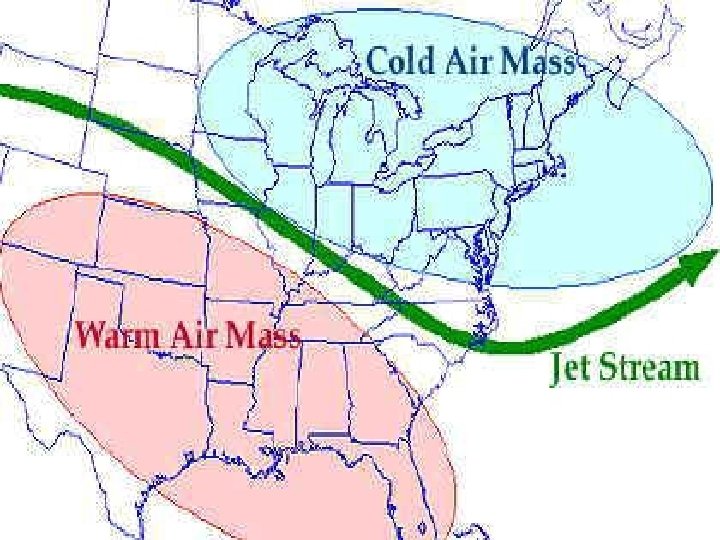
Jet Stream • The jet streams are bands of high-speed winds about 10 kilometers above Earth’s surface. • Separates warm air from cold air
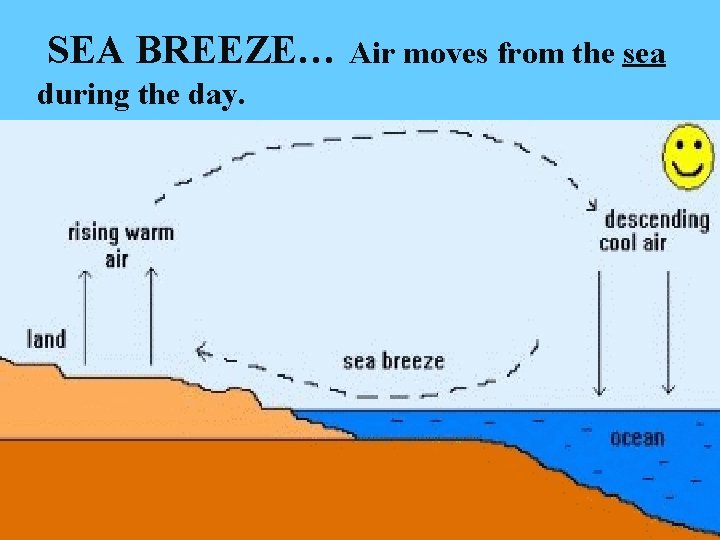
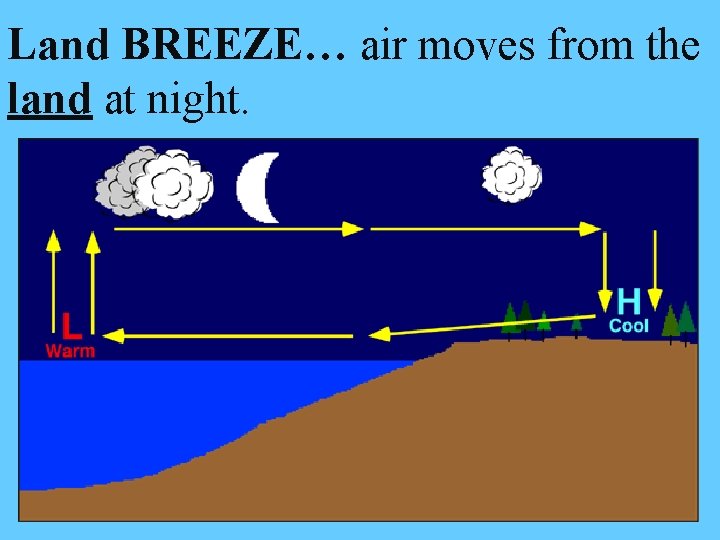
Local Winds • Winds cover short distances • Blow from any direction • 2 Types of Local Winds 1. Sea Breezes- from sea to land 2. Land Breezes – from land to sea
SEA BREEZE… during the day. Air moves from the sea
Land BREEZE… air moves from the land at night.
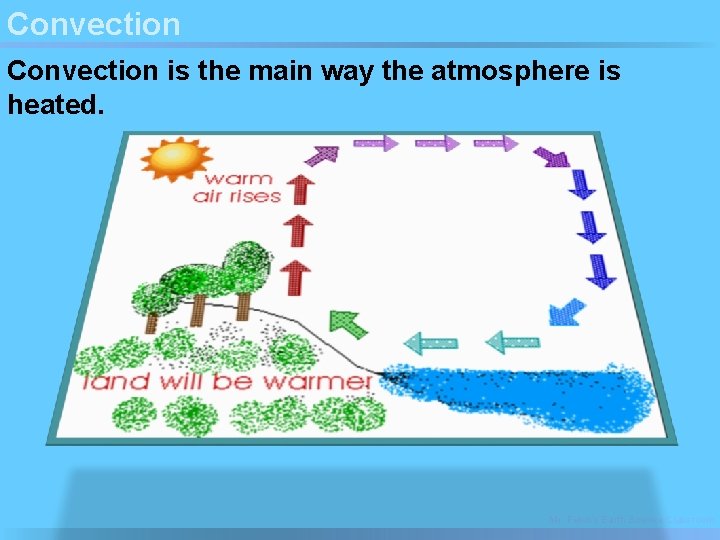
Convection is the main way the atmosphere is heated. Mr. Fetch’s Earth Science Classroom
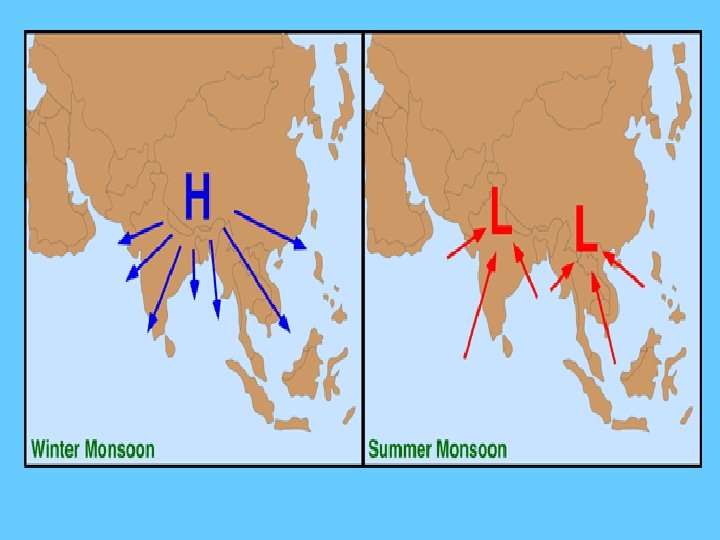
Seasonal Winds - Monsoons • Similar to sea or land breezes, but occurs over wider area. • Monsoons are type of seasonal winds. • Monsoons: Sea or land breeze over a large region that changes direction with the seasons. – Thailand part of India get most of the rain from the summer monsoons. – The winter monsoons winds brings very little rain to same regions.
Land & Sea Breezes u-tube • http: //www. authorstream. com/Presentation /griffinv 3 -269366 -land-sea-breezes-earthheating-20 and-20 sea-20 breezes-jheducation-ppt-powerpoint/
Question 1 • What causes winds?
Answer • Winds are caused by the uneven heating of Earth’s surface, which causes pressure differences
Question 2 • What are three types of global winds belts?
Answer • Polar Easterlies • Prevailing Westerlies • Trade Winds
Question 3 • What is the difference between a land breeze and a sea breeze?
Answer • Sea breezes occur during the day when the land is warmer than water and a land breeze occurs at night when the water is warmer than land