
Unequal Heating Air Pressure and Winds Atmosphere Atmosphere





- Slides: 52
Unequal Heating, Air Pressure and Winds
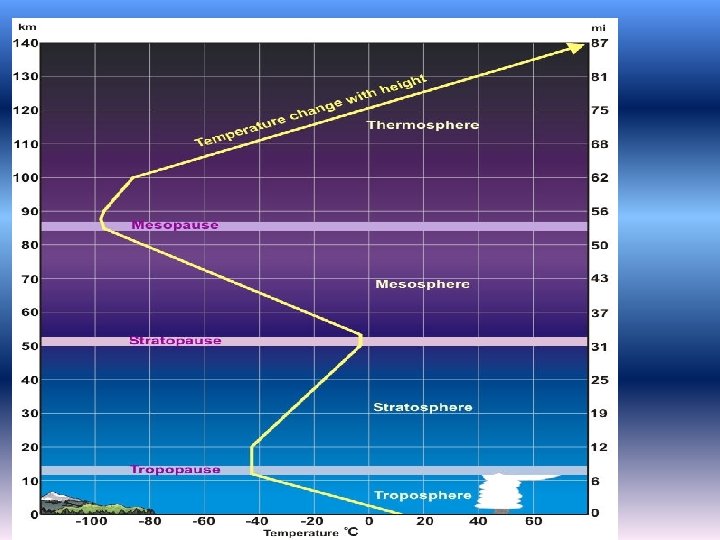
Atmosphere • Atmosphere: a mixture of gases that surrounds Earth: acts like a blanket – Contains oxygen – Protects from sun – Keeps heat in – Protects from meteors
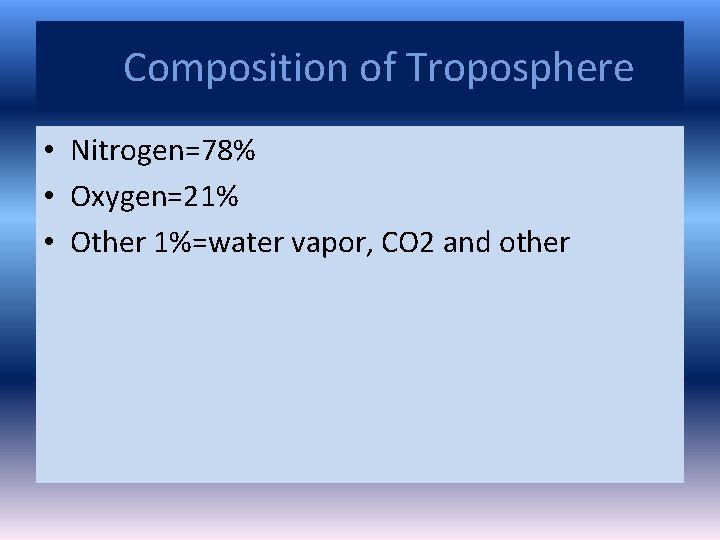
Composition of Troposphere • Nitrogen=78% • Oxygen=21% • Other 1%=water vapor, CO 2 and other
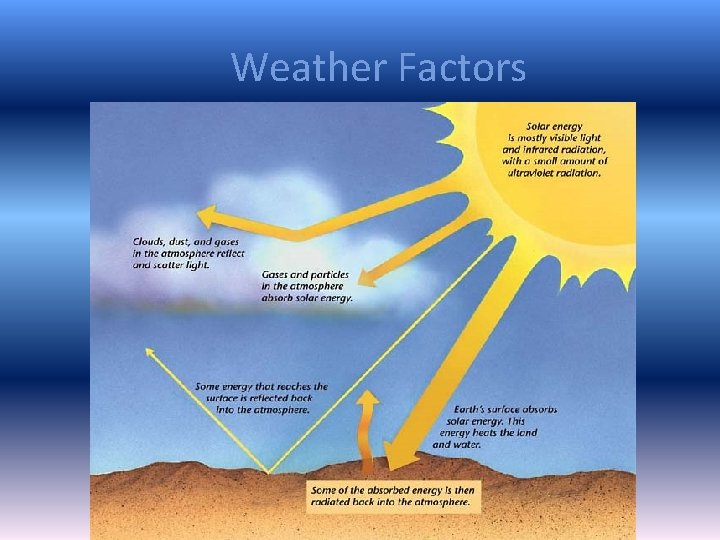
Weather Factors
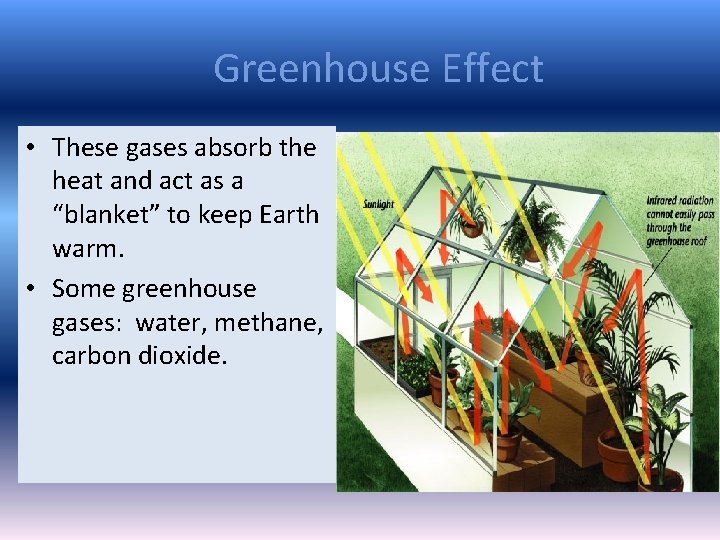
Greenhouse Effect • These gases absorb the heat and act as a “blanket” to keep Earth warm. • Some greenhouse gases: water, methane, carbon dioxide.
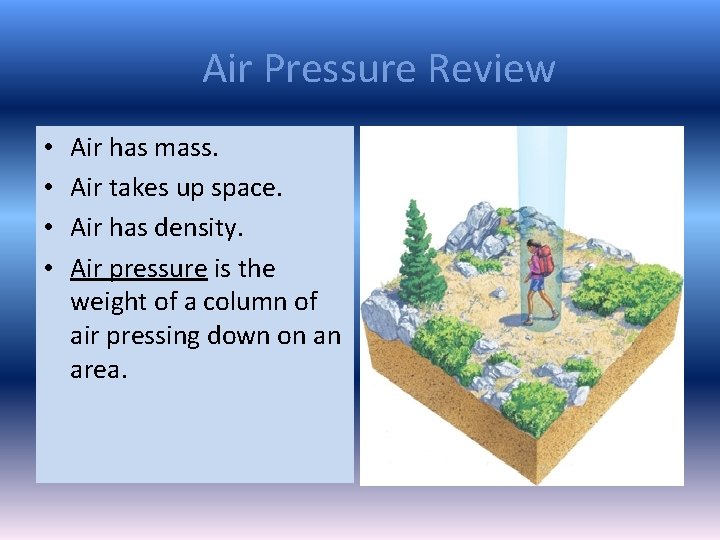
Air Pressure Review • • Air has mass. Air takes up space. Air has density. Air pressure is the weight of a column of air pressing down on an area.
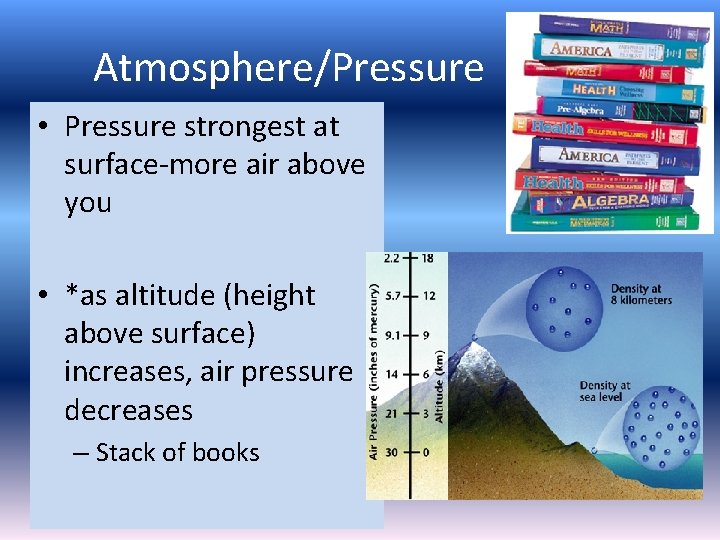
Atmosphere/Pressure • Pressure strongest at surface-more air above you • *as altitude (height above surface) increases, air pressure decreases – Stack of books
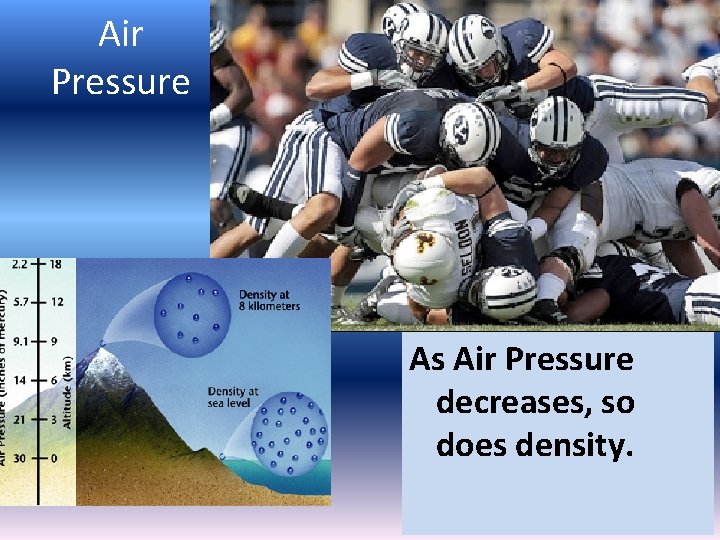
Air Pressure As Air Pressure decreases, so does density.
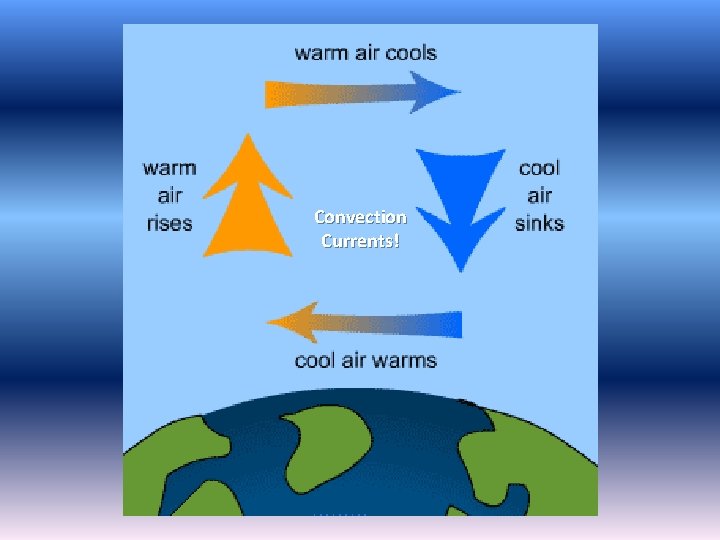
Convection Currents!
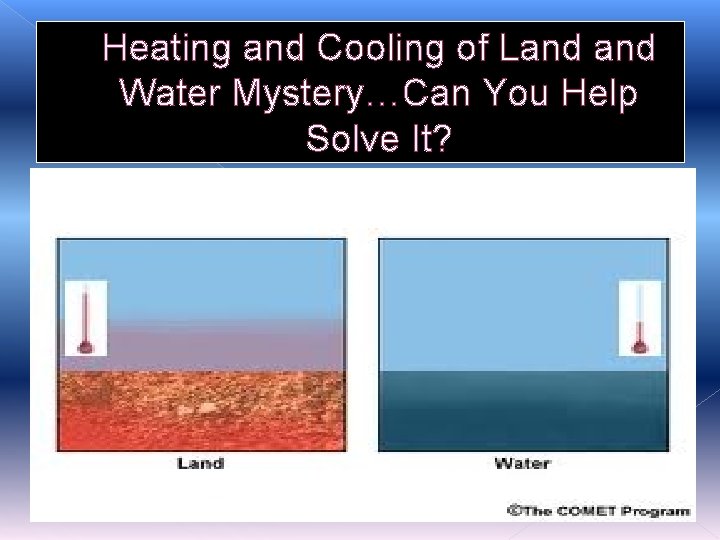
Heating and Cooling of Land Water Mystery…Can You Help Solve It?
The Teacher Has Performed An Experiment and Asks That YOU Help Make Some Conclusions About the Data or Information Gathered.
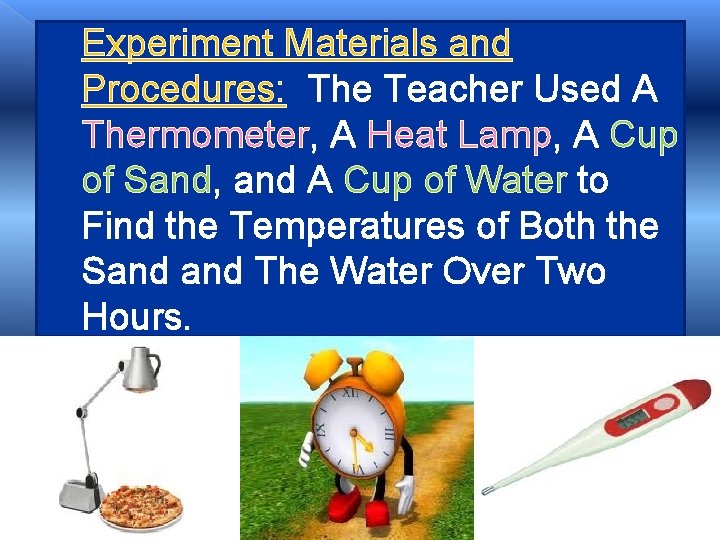
Experiment Materials and Procedures: The Teacher Used A Thermometer, A Heat Lamp, A Cup of Sand, and A Cup of Water to Find the Temperatures of Both the Sand The Water Over Two Hours.
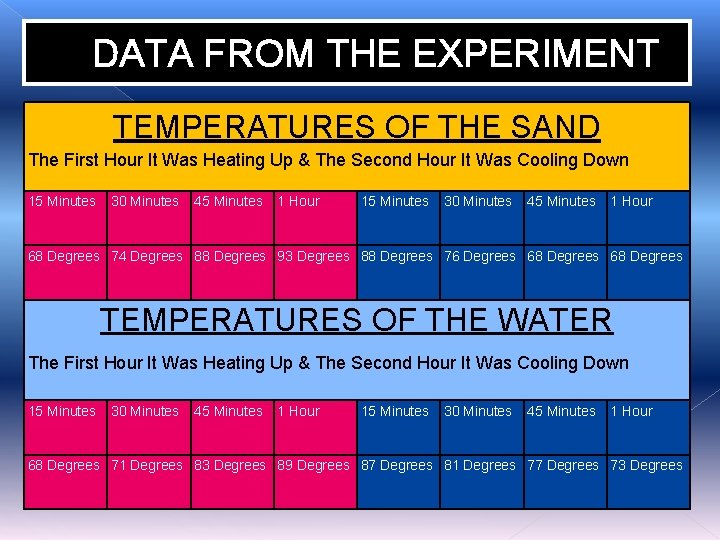
DATA FROM THE EXPERIMENT TEMPERATURES OF THE SAND The First Hour It Was Heating Up & The Second Hour It Was Cooling Down 15 Minutes 30 Minutes 45 Minutes 1 Hour 68 Degrees 74 Degrees 88 Degrees 93 Degrees 88 Degrees 76 Degrees 68 Degrees TEMPERATURES OF THE WATER The First Hour It Was Heating Up & The Second Hour It Was Cooling Down 15 Minutes 30 Minutes 45 Minutes 1 Hour 68 Degrees 71 Degrees 83 Degrees 89 Degrees 87 Degrees 81 Degrees 77 Degrees 73 Degrees
TURN AND TALK! Answer the Questions Cooperatively.
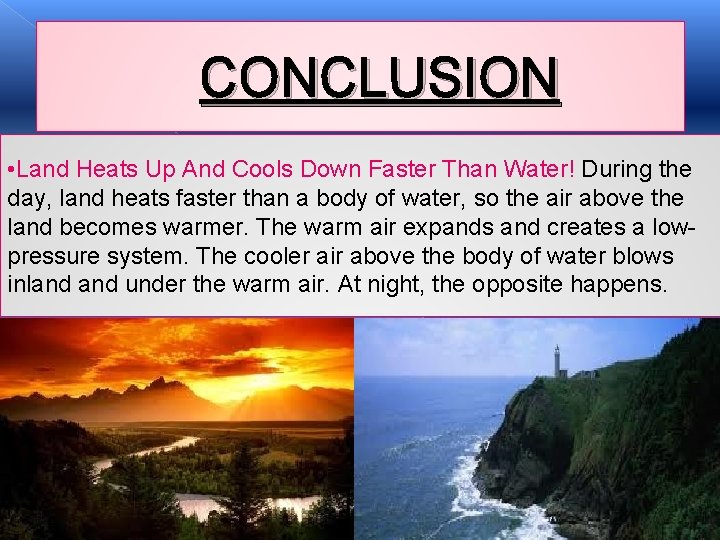
CONCLUSION • Land Heats Up And Cools Down Faster Than Water! During the day, land heats faster than a body of water, so the air above the land becomes warmer. The warm air expands and creates a lowpressure system. The cooler air above the body of water blows inland under the warm air. At night, the opposite happens.
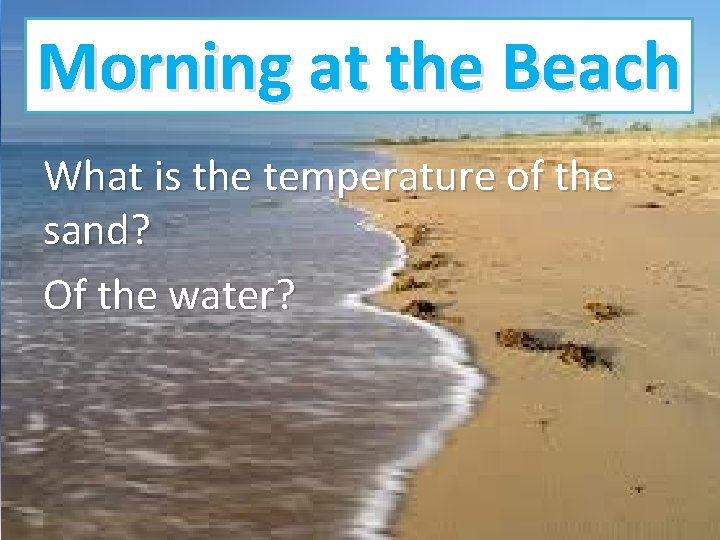
Morning at the Beach What is the temperature of the sand? Of the water?
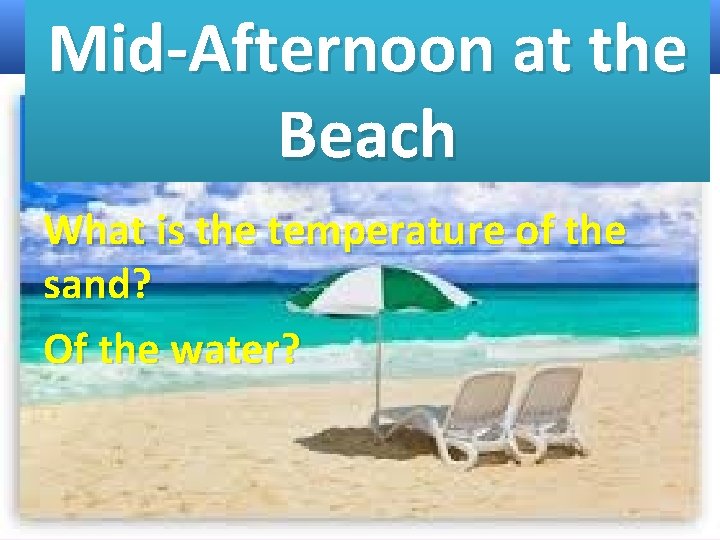
Mid-Afternoon at the Beach What is the temperature of the sand? Of the water?
Evening at the Beach What is the temperature of the sand? Of the water?
Unequal Heating What heats up quicker? What heats up slower? At night, which cools down quicker? Which cool down slower?
Unequal Heating Land heats up and cools down quickly. Water heats up and cools down slowly.
Unequal Heating Warm air rises and creates a low pressure system. Cold air sinks and creates a high pressure system.
Do You Remember How Convection Works?
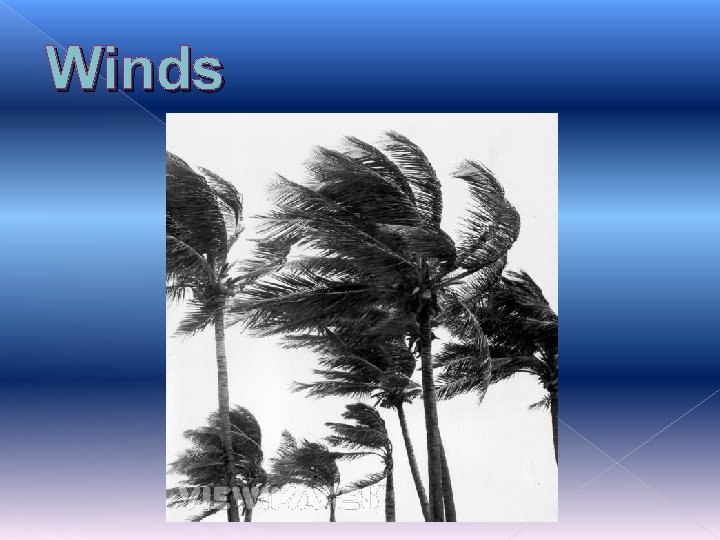
Winds
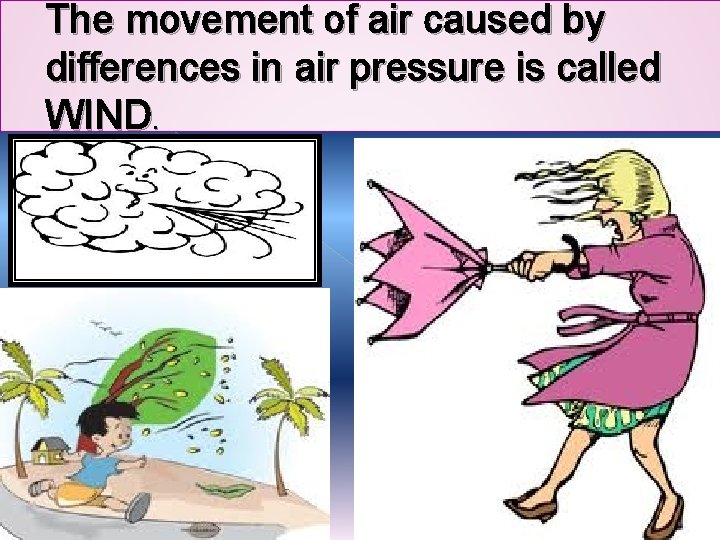
The movement of air caused by differences in air pressure is called WIND.
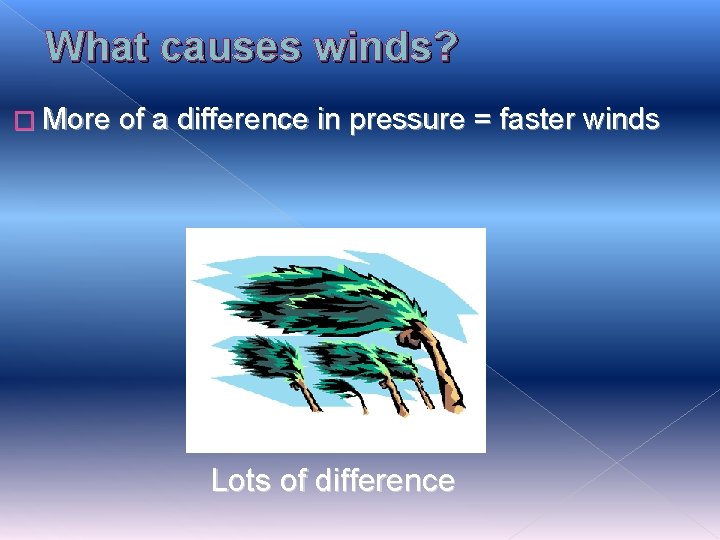
What causes winds? � More of a difference in pressure = faster winds Lots of difference
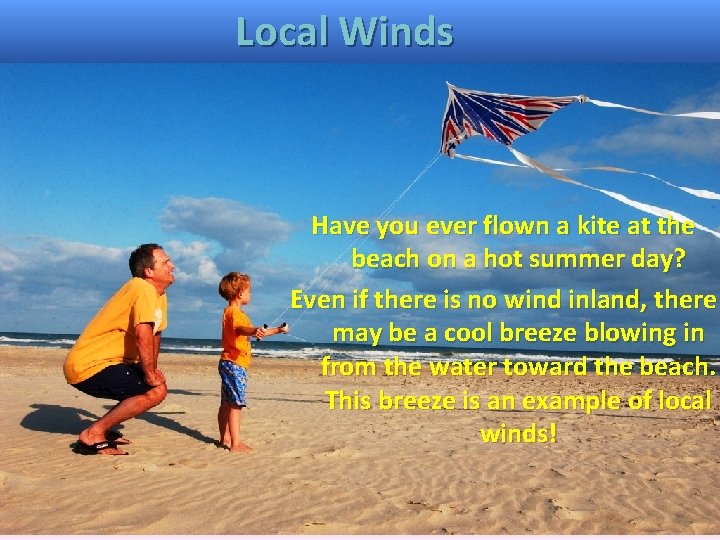
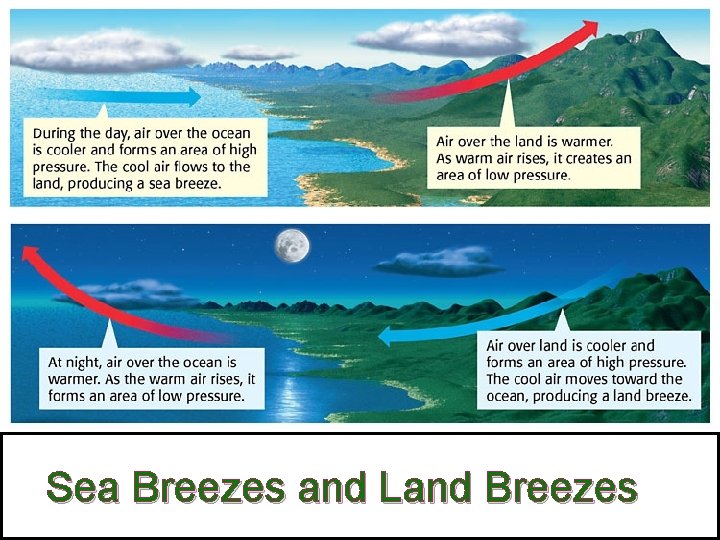
Local Winds Have you ever flown a kite at the beach on a hot summer day? Even if there is no wind inland, there may be a cool breeze blowing in from the water toward the beach. This breeze is an example of local winds!
Local Winds �Local winds are winds that blow over short distances. �They are caused by unequal heating of Earth’s surface within a small area. � 4 types › sea breezes and land breezes › Mountain breeze and valley breeze
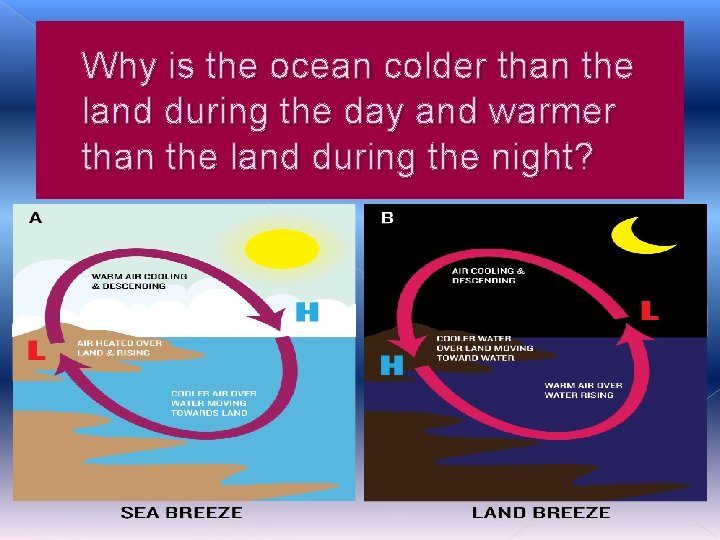
Why is the ocean colder than the land during the day and warmer than the land during the night?
Sea Breezes and Land Breezes
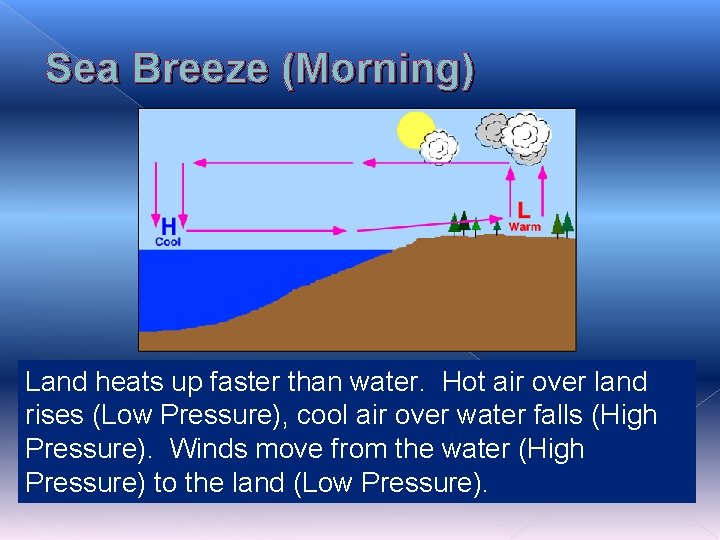
Sea Breeze (Morning) Land heats up faster than water. Hot air over land rises (Low Pressure), cool air over water falls (High Pressure). Winds move from the water (High Pressure) to the land (Low Pressure).
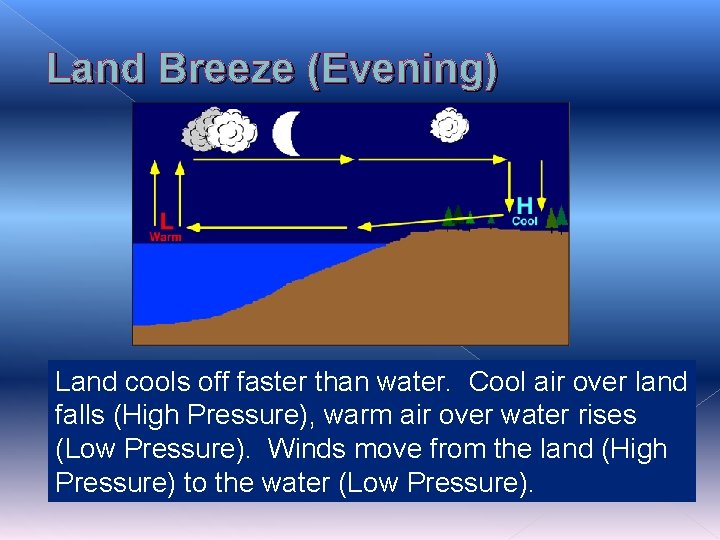
Land Breeze (Evening) Land cools off faster than water. Cool air over land falls (High Pressure), warm air over water rises (Low Pressure). Winds move from the land (High Pressure) to the water (Low Pressure).
Let’s Draw Land Sea Breezes…
Let’s Draw Land Sea Breezes…
Animation of Sea Breeze & Land Breeze • http: //www. classzone. com/books/earth_scie nce/terc/content/visualizations/es 1903/es 190 3 page 01. cfm? chapter_no=visualization
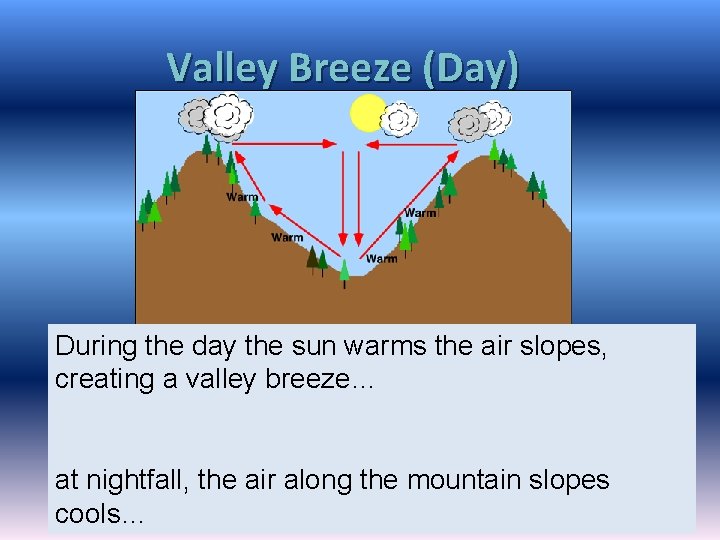
Valley Breeze (Day) During the day the sun warms the air slopes, creating a valley breeze… at nightfall, the air along the mountain slopes cools…
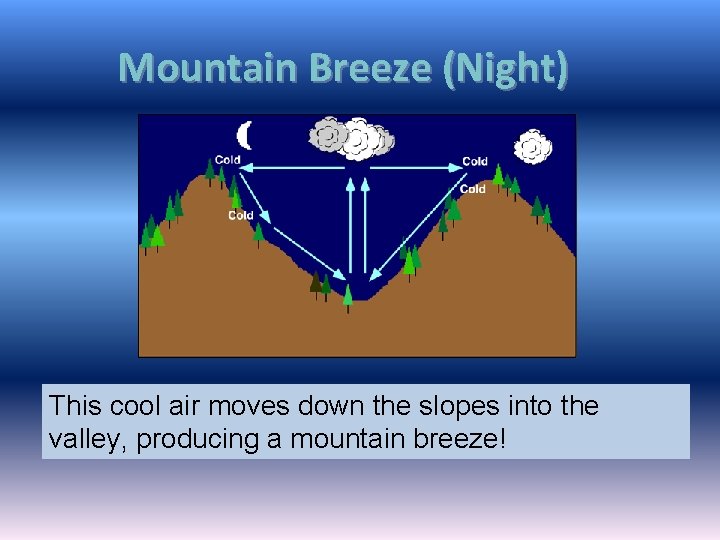
Mountain Breeze (Night) This cool air moves down the slopes into the valley, producing a mountain breeze!
Let’s Draw Mountain and Valley Breezes
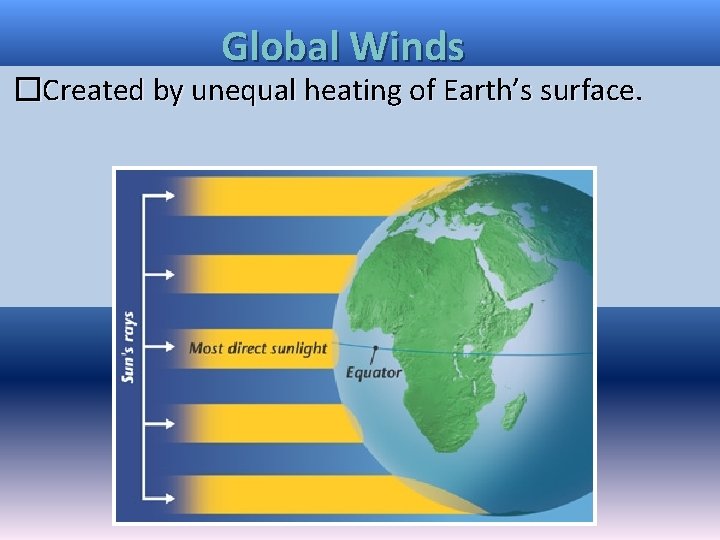
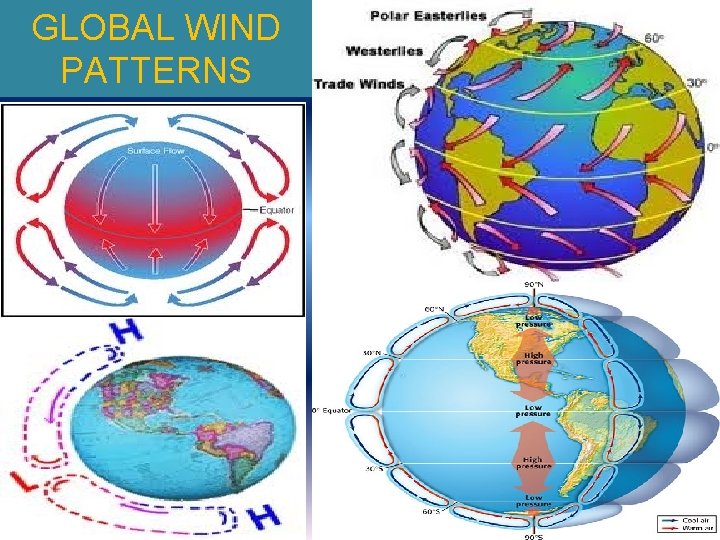
Global Winds �Created by unequal heating of Earth’s surface.
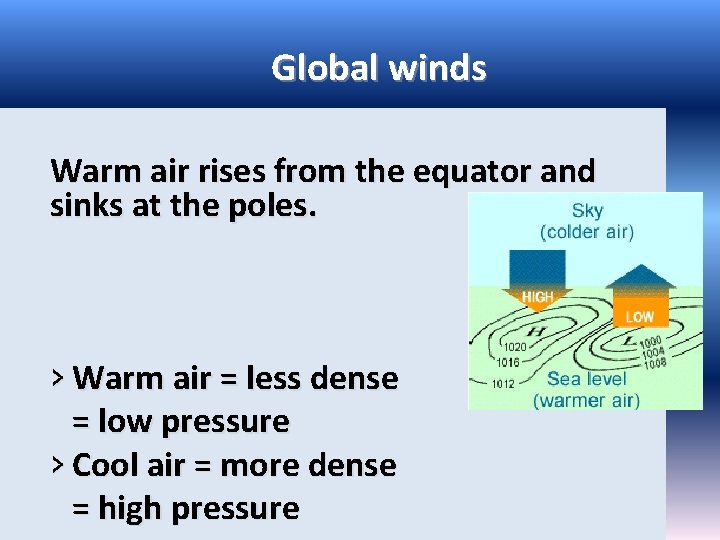
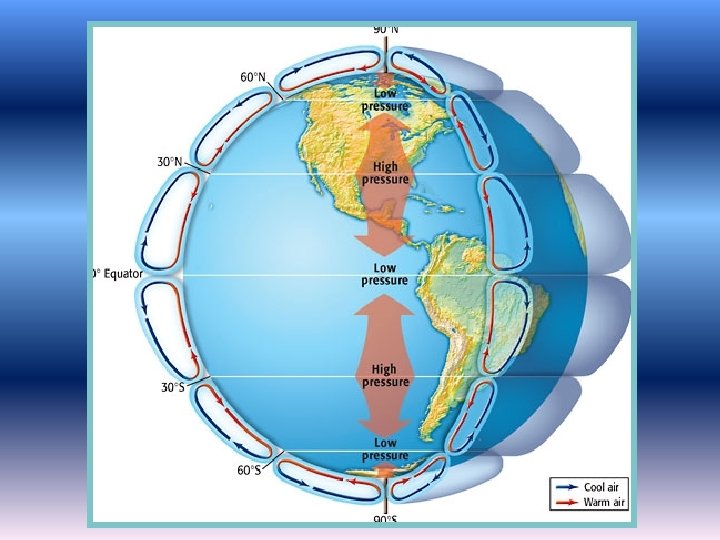
Global winds Warm air rises from the equator and sinks at the poles. › Warm air = less dense = low pressure › Cool air = more dense = high pressure
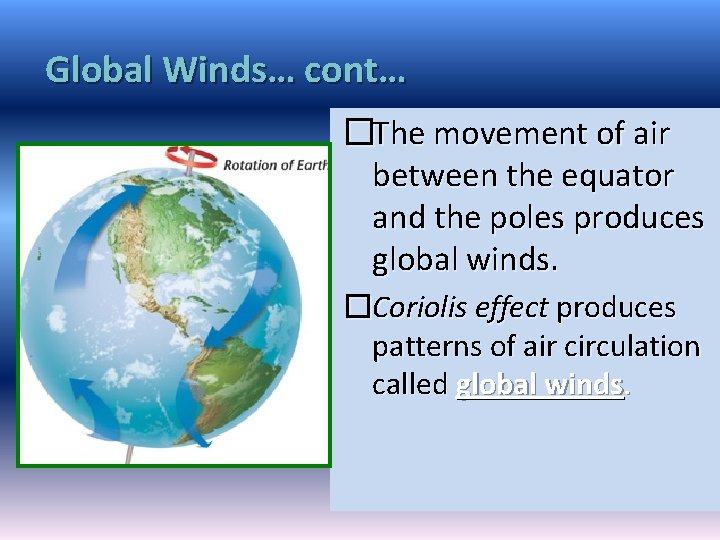
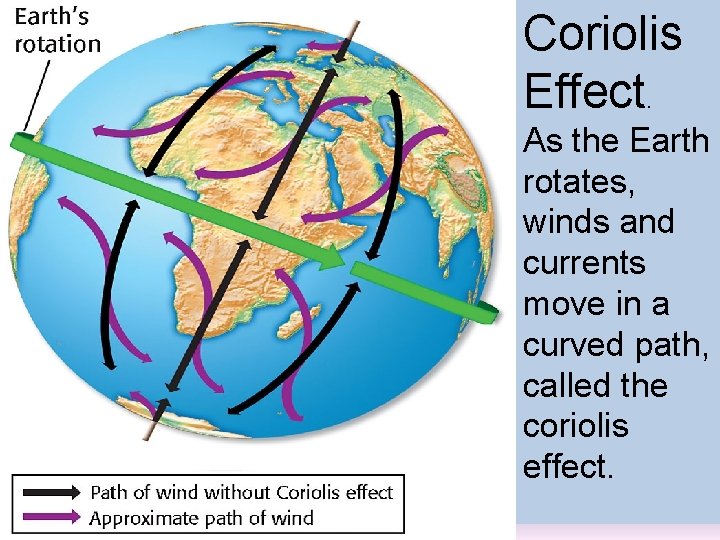
Global Winds… cont… �The movement of air between the equator and the poles produces global winds. �Coriolis effect produces patterns of air circulation called global winds.
GLOBAL WIND PATTERNS
Coriolis Effect. As the Earth rotates, winds and currents move in a curved path, called the coriolis effect.
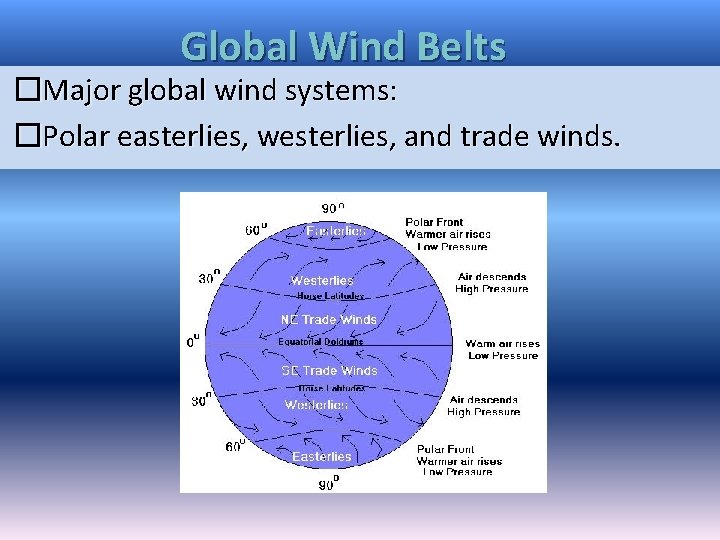
Global Wind Belts �Major global wind systems: �Polar easterlies, westerlies, and trade winds.
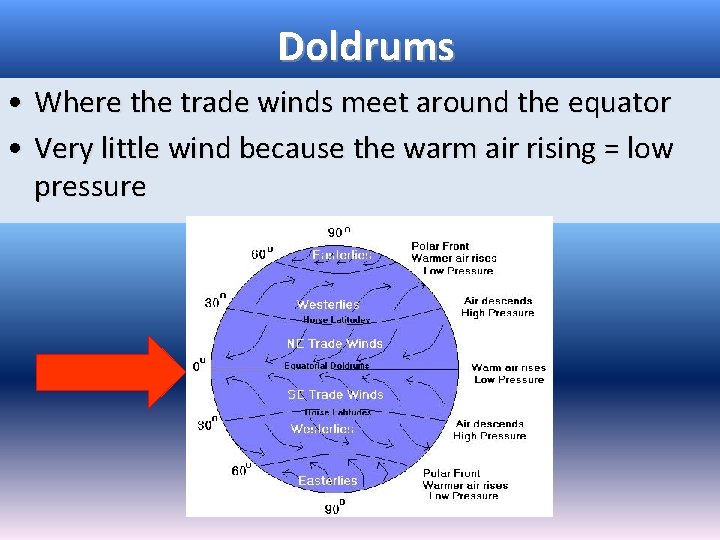
Doldrums • Where the trade winds meet around the equator • Very little wind because the warm air rising = low pressure
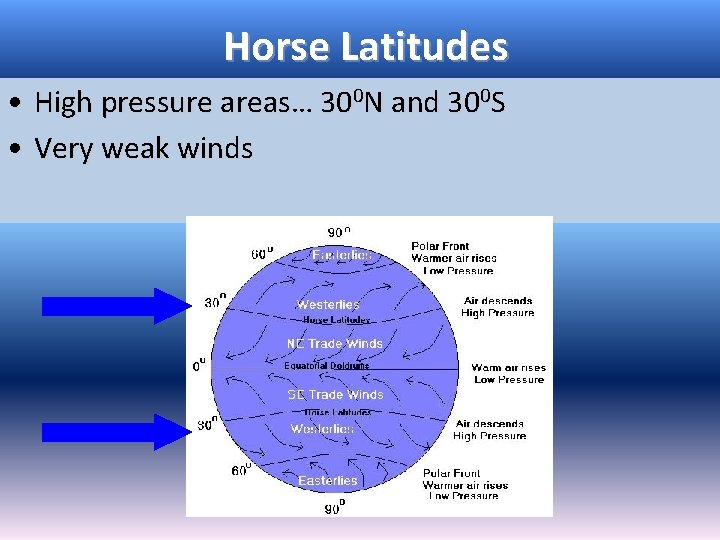
Horse Latitudes • High pressure areas… 300 N and 300 S • Very weak winds
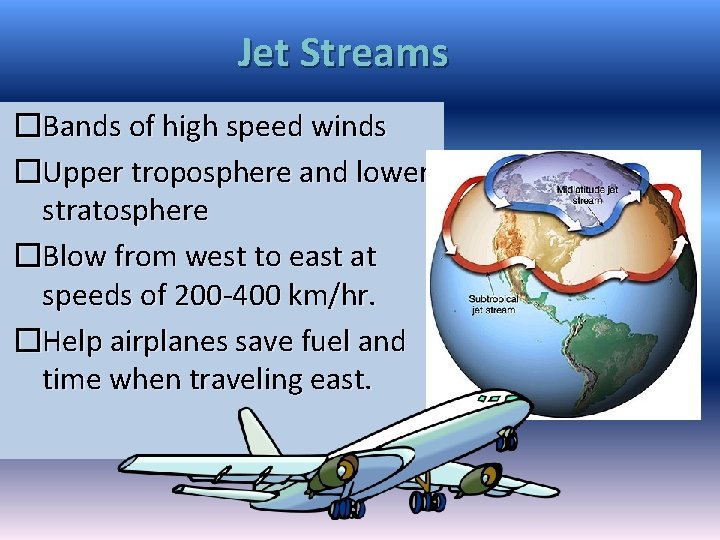
Jet Streams �Bands of high speed winds �Upper troposphere and lower stratosphere �Blow from west to east at speeds of 200 -400 km/hr. �Help airplanes save fuel and time when traveling east.
Atmosphere
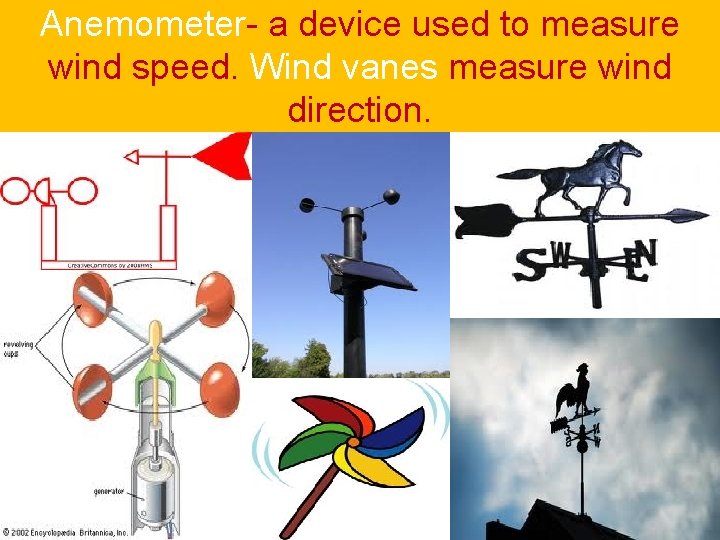
Anemometer- a device used to measure wind speed. Wind vanes measure wind direction.
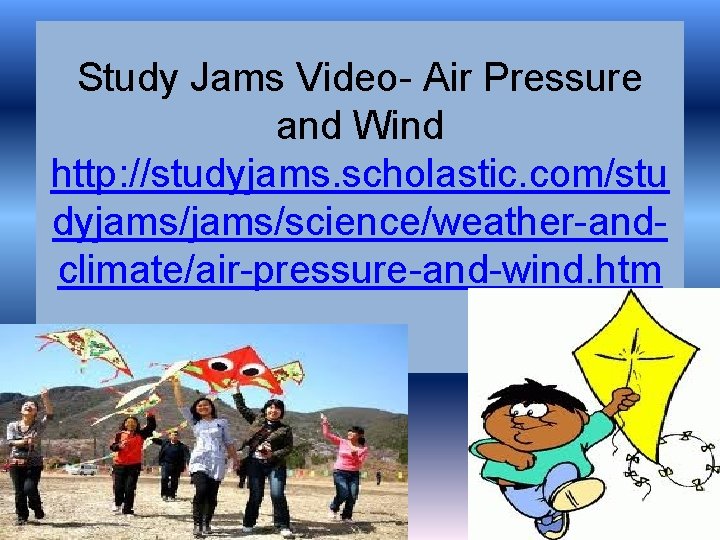
Study Jams Video- Air Pressure and Wind http: //studyjams. scholastic. com/stu dyjams/science/weather-andclimate/air-pressure-and-wind. htm
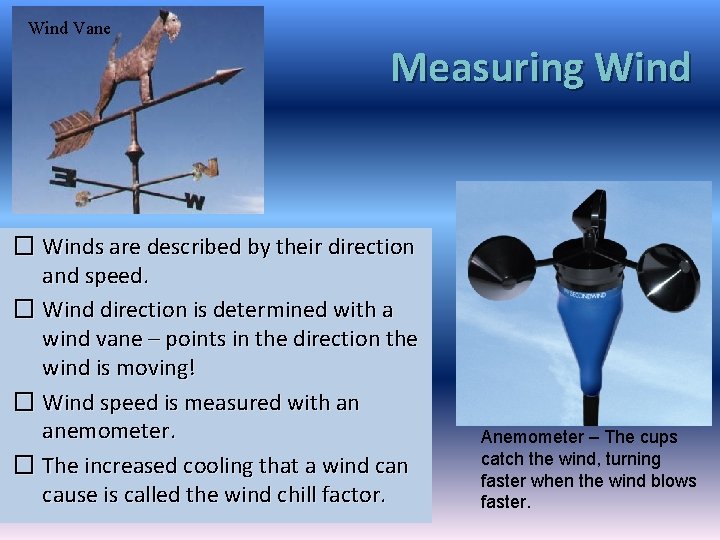
Wind Vane Measuring Wind � Winds are described by their direction and speed. � Wind direction is determined with a wind vane – points in the direction the wind is moving! � Wind speed is measured with an anemometer. � The increased cooling that a wind can cause is called the wind chill factor. Anemometer – The cups catch the wind, turning faster when the wind blows faster.