What factors influence the prevalence of IUC use


- Slides: 37
What factors influence the prevalence of IUC use? Series 2. 1 Health system and HCP barriers
INTRA group: Intrauterine co. Ntraception: Translating Research into Action § A panel of independent physicians with expert interest in intrauterine contraception – Formation of the INTRA group and its ongoing work is supported by Bayer Pharma § Purpose: – To encourage more widespread use of IUC methods in a broad range of women through medical education
Core Slide Kit: Terms of use § If any adjustments are made to the originals, neither Bayer Pharma nor the INTRA Group can accept responsibility whatsoever for their content. – If you make changes you should not use the INTRA slide template. § When using any of these slides, even if you modify them in some way, please acknowledge to your audience that the original slides were provided by the INTRA Group: – “The global INTRA group is a panel of independent physicians with expert interest in intrauterine contraception. Formation of the INTRA group and its ongoing work is supported by Bayer Pharma”. § You may select any combination of slides to present on to others; however, the context of the slides should be maintained wherever possible. § Please be aware that recommendations and regulations around communications on contraception as well as product labels vary globally, and ensure that the content and recommendations included in the slides are aligned to the local regulations and product labels of the country where you are presenting.
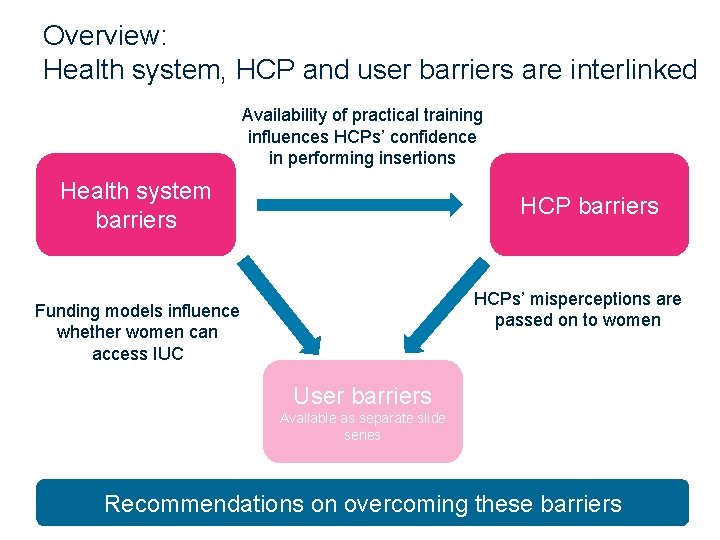
Overview: Health system, HCP and user barriers are interlinked Availability of practical training influences HCPs’ confidence in performing insertions Health system barriers HCPs’ misperceptions are passed on to women Funding models influence whether women can access IUC User barriers Available as separate slide series Recommendations on overcoming these barriers
HEALTH SYSTEM LEVEL Factors influencing IUC use
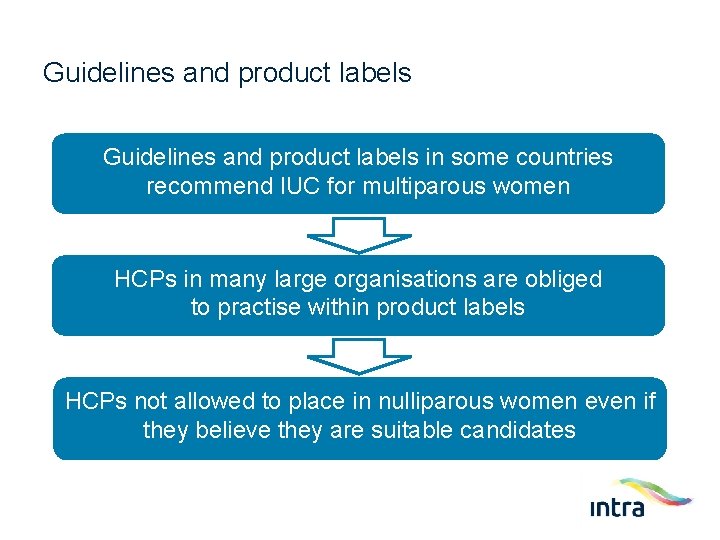
Guidelines and product labels in some countries recommend IUC for multiparous women HCPs in many large organisations are obliged to practise within product labels HCPs not allowed to place in nulliparous women even if they believe they are suitable candidates
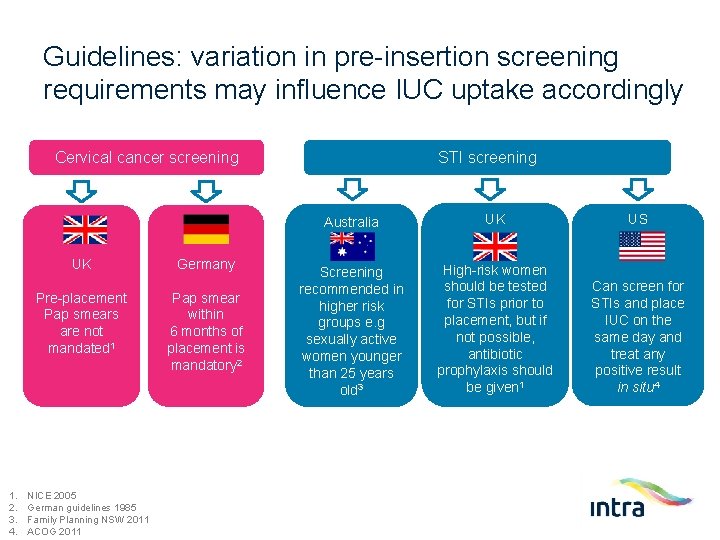
Guidelines: variation in pre-insertion screening requirements may influence IUC uptake accordingly Cervical cancer screening UK Germany Pre-placement Pap smears are not mandated 1 Pap smear within 6 months of placement is mandatory 2 STI screening Australia UK US Screening recommended in higher risk groups e. g sexually active women younger than 25 years old 3 High-risk women should be tested for STIs prior to placement, but if not possible, antibiotic prophylaxis should be given 1 Can screen for STIs and place IUC on the same day and treat any positive result in situ 4 1. 2. 3. 4. NICE 2005 German guidelines 1985 Family Planning NSW 2011 ACOG 2011
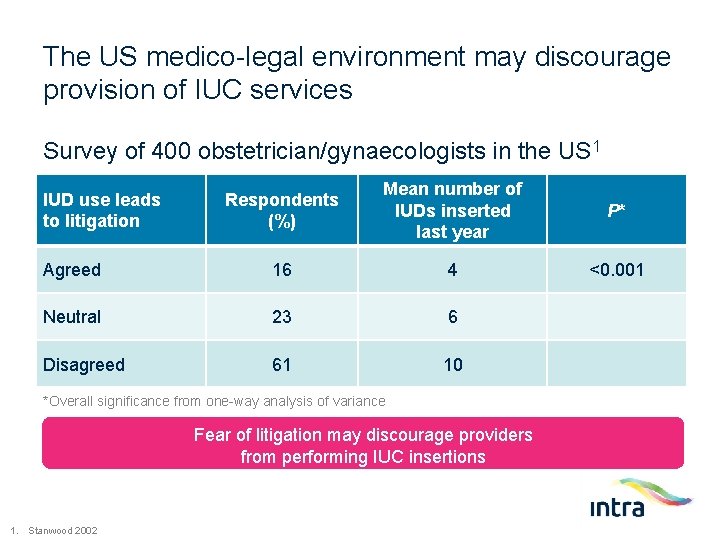
The US medico-legal environment may discourage provision of IUC services Survey of 400 obstetrician/gynaecologists in the US 1 Respondents (%) Mean number of IUDs inserted last year P* Agreed 16 4 <0. 001 Neutral 23 6 Disagreed 61 10 IUD use leads to litigation *Overall significance from one-way analysis of variance Fear of litigation may discourage providers from performing IUC insertions 1. Stanwood 2002
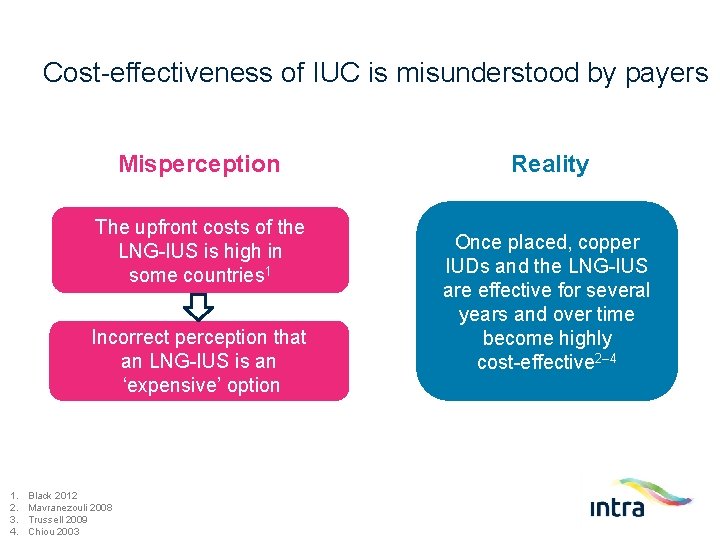
Cost-effectiveness of IUC is misunderstood by payers Misperception The upfront costs of the LNG-IUS is high in some countries 1 Incorrect perception that an LNG-IUS is an ‘expensive’ option 1. 2. 3. 4. Black 2012 Mavranezouli 2008 Trussell 2009 Chiou 2003 Reality Once placed, copper IUDs and the LNG-IUS are effective for several years and over time become highly cost-effective 2– 4
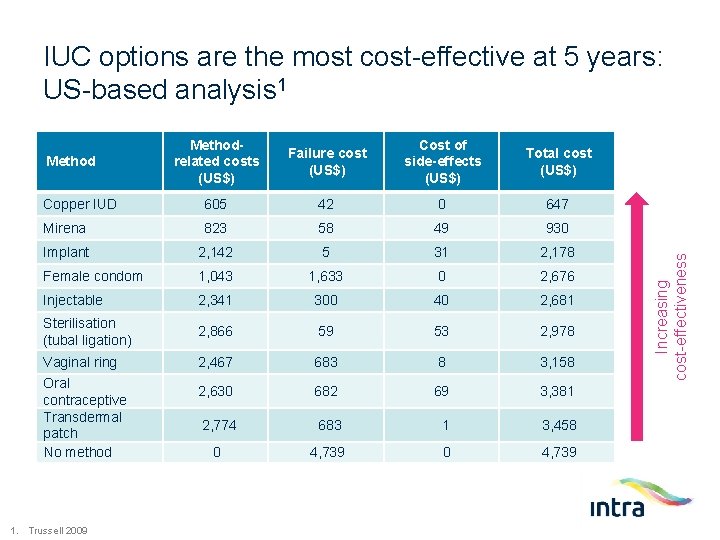
Methodrelated costs (US$) Failure cost (US$) Cost of side-effects (US$) Total cost (US$) Copper IUD 605 42 0 647 Mirena 823 58 49 930 Implant 2, 142 5 31 2, 178 Female condom 1, 043 1, 633 0 2, 676 Injectable 2, 341 300 40 2, 681 Sterilisation (tubal ligation) 2, 866 59 53 2, 978 2, 467 683 8 3, 158 2, 630 682 69 3, 381 2, 774 683 1 3, 458 0 4, 739 Method Vaginal ring Oral contraceptive Transdermal patch No method 1. Trussell 2009 Increasing cost-effectiveness IUC options are the most cost-effective at 5 years: US-based analysis 1
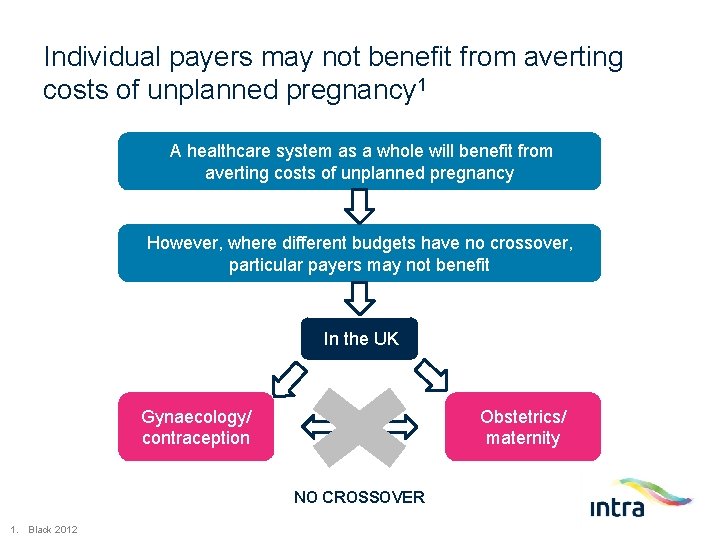
Individual payers may not benefit from averting costs of unplanned pregnancy 1 A healthcare system as a whole will benefit from averting costs of unplanned pregnancy However, where different budgets have no crossover, particular payers may not benefit In the UK Gynaecology/ contraception Obstetrics/ maternity NO CROSSOVER 1. Black 2012
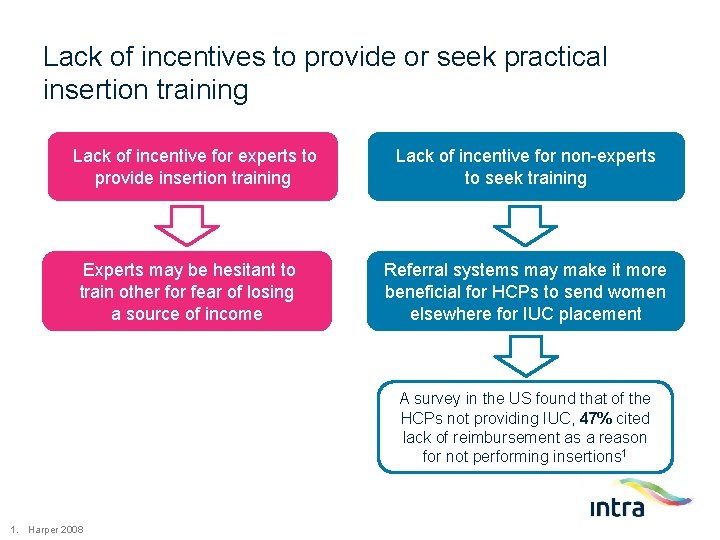
Lack of incentives to provide or seek practical insertion training Lack of incentive for experts to provide insertion training Experts may be hesitant to train other for fear of losing a source of income Lack of incentive for non-experts to seek training Referral systems may make it more beneficial for HCPs to send women elsewhere for IUC placement A survey in the US found that of the HCPs not providing IUC, 47% cited lack of reimbursement as a reason for not performing insertions 1 1. Harper 2008
HCP LEVEL Factors influencing IUC use
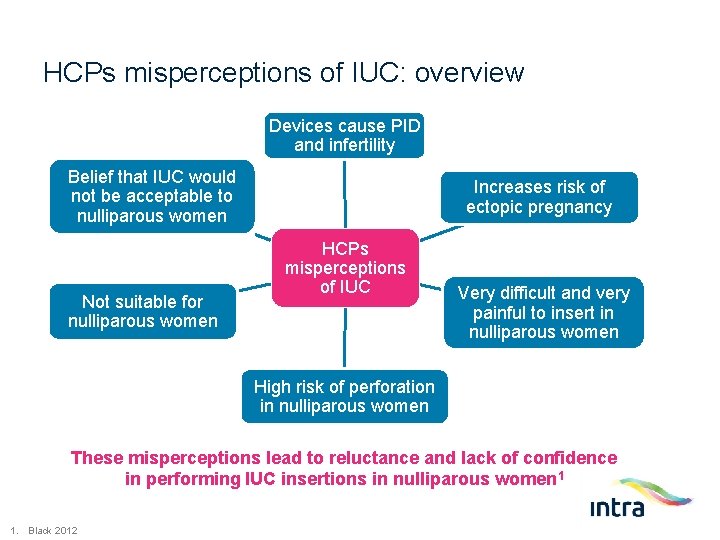
HCPs misperceptions of IUC: overview Devices cause PID and infertility Belief that IUC would not be acceptable to nulliparous women Not suitable for nulliparous women Increases risk of ectopic pregnancy HCPs misperceptions of IUC Very difficult and very painful to insert in nulliparous women High risk of perforation in nulliparous women These misperceptions lead to reluctance and lack of confidence in performing IUC insertions in nulliparous women 1 1. Black 2012
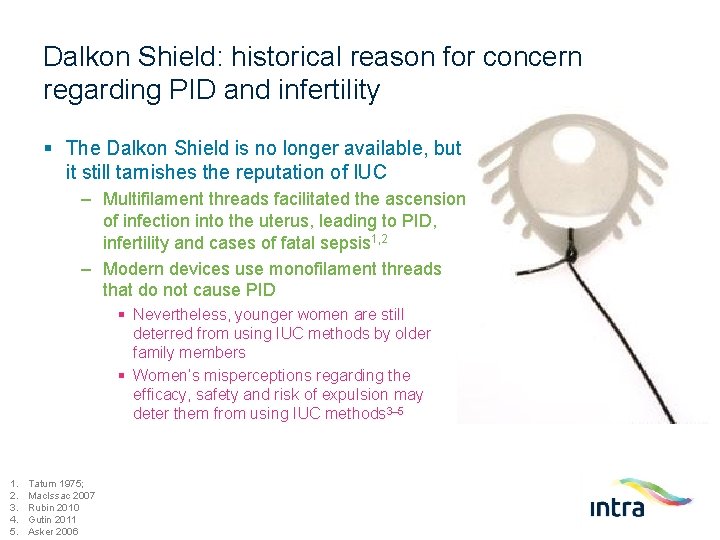
Dalkon Shield: historical reason for concern regarding PID and infertility § The Dalkon Shield is no longer available, but it still tarnishes the reputation of IUC – Multifilament threads facilitated the ascension of infection into the uterus, leading to PID, infertility and cases of fatal sepsis 1, 2 – Modern devices use monofilament threads that do not cause PID § Nevertheless, younger women are still deterred from using IUC methods by older family members § Women’s misperceptions regarding the efficacy, safety and risk of expulsion may deter them from using IUC methods 3– 5 1. 2. 3. 4. 5. Tatum 1975; Mac. Issac 2007 Rubin 2010 Gutin 2011 Asker 2006
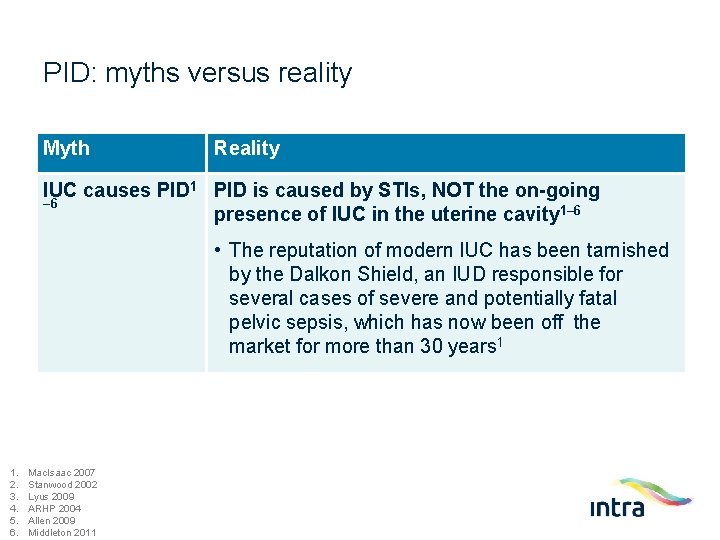
PID: myths versus reality Myth Reality IUC causes PID 1 PID is caused by STIs, NOT the on-going – 6 presence of IUC in the uterine cavity 1– 6 • The reputation of modern IUC has been tarnished by the Dalkon Shield, an IUD responsible for several cases of severe and potentially fatal pelvic sepsis, which has now been off the market for more than 30 years 1 1. 2. 3. 4. 5. 6. Mac. Isaac 2007 Stanwood 2002 Lyus 2009 ARHP 2004 Allen 2009 Middleton 2011
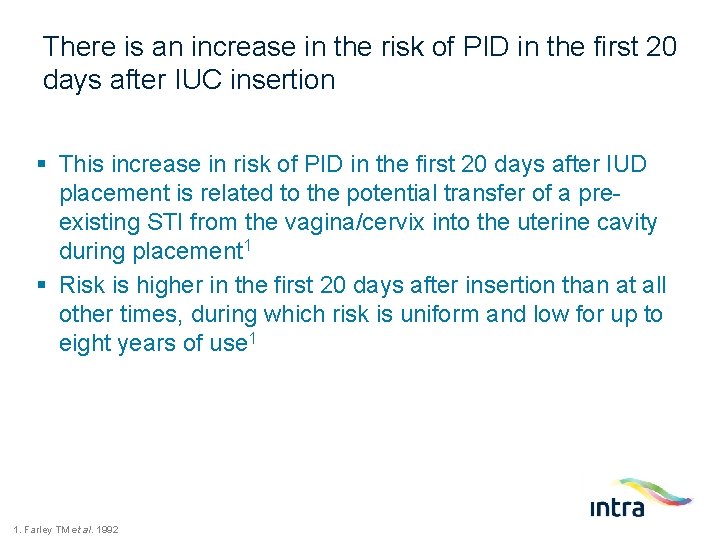
There is an increase in the risk of PID in the first 20 days after IUC insertion § This increase in risk of PID in the first 20 days after IUD placement is related to the potential transfer of a preexisting STI from the vagina/cervix into the uterine cavity during placement 1 § Risk is higher in the first 20 days after insertion than at all other times, during which risk is uniform and low for up to eight years of use 1 1. Farley TM et al. 1992
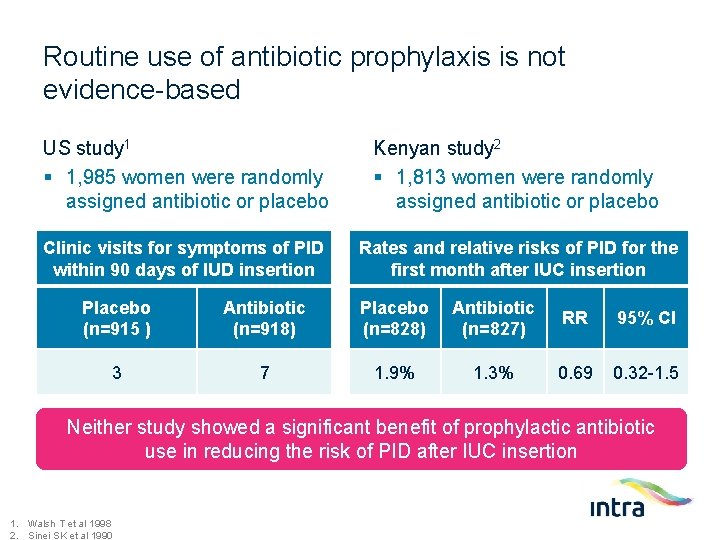
Routine use of antibiotic prophylaxis is not evidence-based US study 1 § 1, 985 women were randomly assigned antibiotic or placebo Kenyan study 2 § 1, 813 women were randomly assigned antibiotic or placebo Clinic visits for symptoms of PID within 90 days of IUD insertion Rates and relative risks of PID for the first month after IUC insertion Placebo (n=915 ) Antibiotic (n=918) Placebo (n=828) Antibiotic (n=827) RR 95% CI 3 7 1. 9% 1. 3% 0. 69 0. 32 -1. 5 Neither study showed a significant benefit of prophylactic antibiotic use in reducing the risk of PID after IUC insertion 1. Walsh T et al 1998 2. Sinei SK et al 1990
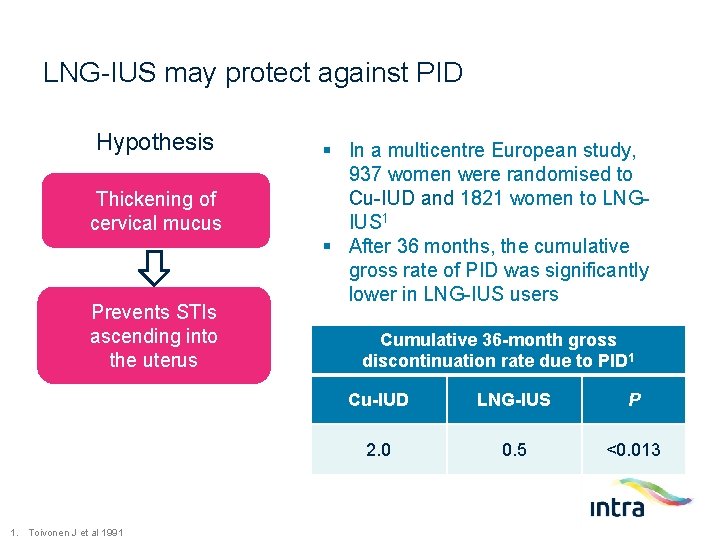
LNG-IUS may protect against PID Hypothesis Thickening of cervical mucus Prevents STIs ascending into the uterus 1. Toivonen J et al 1991 § In a multicentre European study, 937 women were randomised to Cu-IUD and 1821 women to LNGIUS 1 § After 36 months, the cumulative gross rate of PID was significantly lower in LNG-IUS users Cumulative 36 -month gross discontinuation rate due to PID 1 Cu-IUD LNG-IUS P 2. 0 0. 5 <0. 013
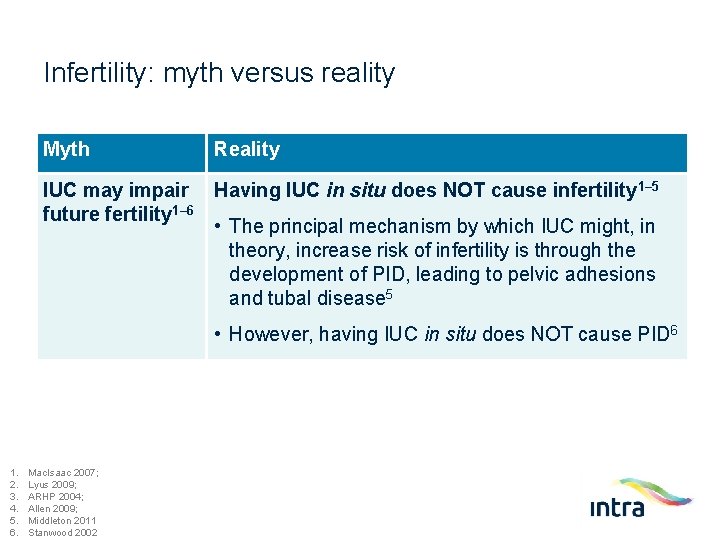
Infertility: myth versus reality Myth Reality IUC may impair Having IUC in situ does NOT cause infertility 1– 5 future fertility 1– 6 • The principal mechanism by which IUC might, in theory, increase risk of infertility is through the development of PID, leading to pelvic adhesions and tubal disease 5 • However, having IUC in situ does NOT cause PID 6 1. 2. 3. 4. 5. 6. Mac. Isaac 2007; Lyus 2009; ARHP 2004; Allen 2009; Middleton 2011 Stanwood 2002
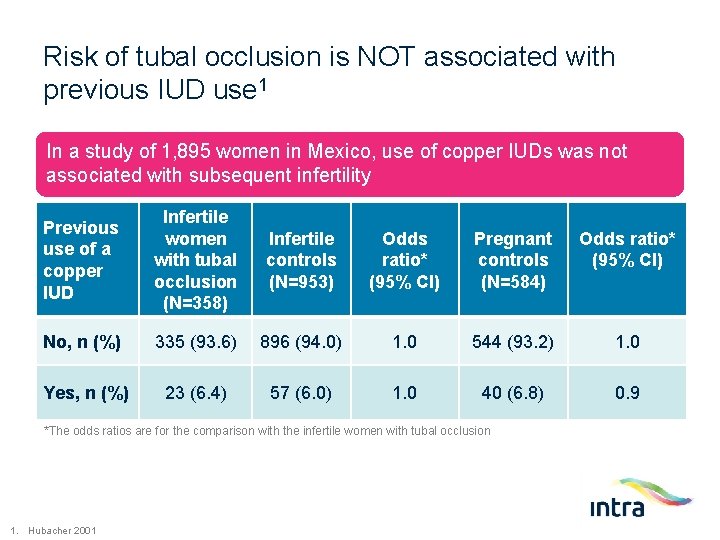
Risk of tubal occlusion is NOT associated with previous IUD use 1 In a study of 1, 895 women in Mexico, use of copper IUDs was not associated with subsequent infertility Previous use of a copper IUD Infertile women with tubal occlusion (N=358) Infertile controls (N=953) Odds ratio* (95% CI) Pregnant controls (N=584) Odds ratio* (95% CI) No, n (%) 335 (93. 6) 896 (94. 0) 1. 0 544 (93. 2) 1. 0 Yes, n (%) 23 (6. 4) 57 (6. 0) 1. 0 40 (6. 8) 0. 9 *The odds ratios are for the comparison with the infertile women with tubal occlusion 1. Hubacher 2001
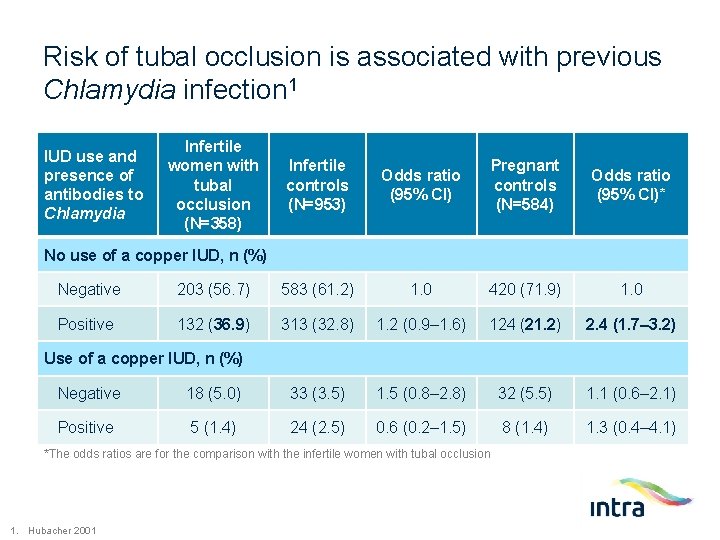
Risk of tubal occlusion is associated with previous Chlamydia infection 1 IUD use and presence of antibodies to Chlamydia Infertile women with tubal occlusion (N=358) Infertile controls (N=953) Odds ratio (95% CI) Pregnant controls (N=584) Odds ratio (95% CI)* No use of a copper IUD, n (%) Negative 203 (56. 7) 583 (61. 2) 1. 0 420 (71. 9) 1. 0 Positive 132 (36. 9) 313 (32. 8) 1. 2 (0. 9– 1. 6) 124 (21. 2) 2. 4 (1. 7– 3. 2) Use of a copper IUD, n (%) Negative 18 (5. 0) 33 (3. 5) 1. 5 (0. 8– 2. 8) 32 (5. 5) 1. 1 (0. 6– 2. 1) Positive 5 (1. 4) 24 (2. 5) 0. 6 (0. 2– 1. 5) 8 (1. 4) 1. 3 (0. 4– 4. 1) *The odds ratios are for the comparison with the infertile women with tubal occlusion 1. Hubacher 2001
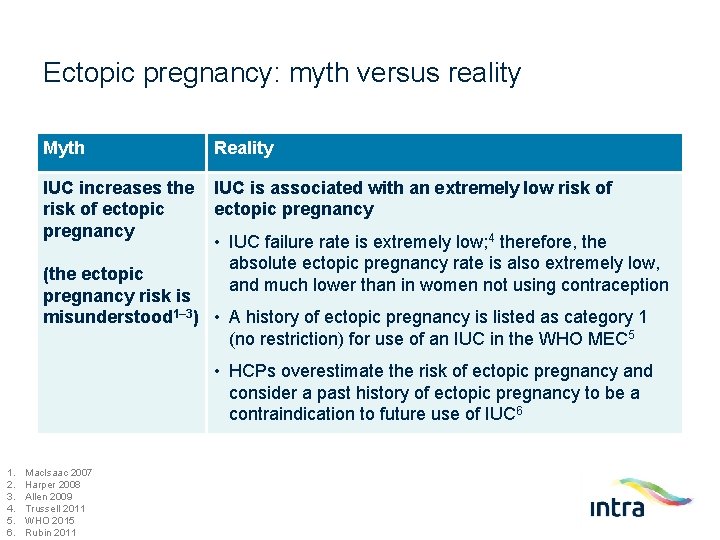
Ectopic pregnancy: myth versus reality Myth Reality IUC increases the IUC is associated with an extremely low risk of ectopic pregnancy • IUC failure rate is extremely low; 4 therefore, the absolute ectopic pregnancy rate is also extremely low, (the ectopic and much lower than in women not using contraception pregnancy risk is misunderstood 1– 3) • A history of ectopic pregnancy is listed as category 1 (no restriction) for use of an IUC in the WHO MEC 5 • HCPs overestimate the risk of ectopic pregnancy and consider a past history of ectopic pregnancy to be a contraindication to future use of IUC 6 1. 2. 3. 4. 5. 6. Mac. Isaac 2007 Harper 2008 Allen 2009 Trussell 2011 WHO 2015 Rubin 2011
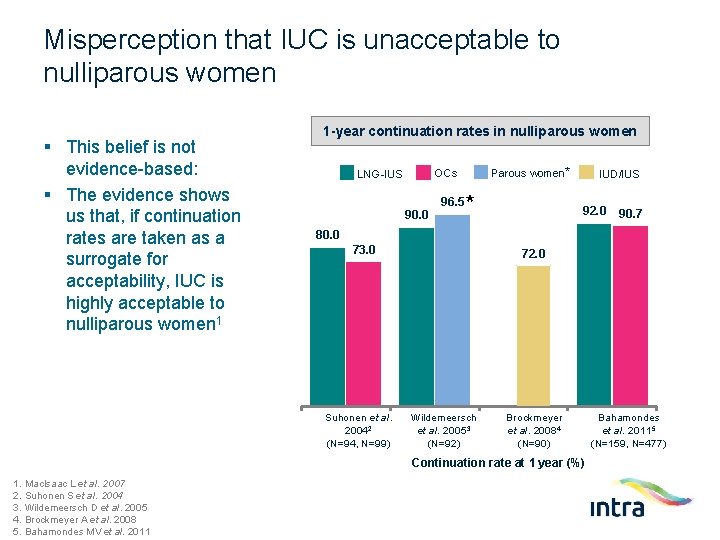
Misperception that IUC is unacceptable to nulliparous women § This belief is not evidence-based: § The evidence shows us that, if continuation rates are taken as a surrogate for acceptability, IUC is highly acceptable to nulliparous women 1 1 -year continuation rates in nulliparous women Parous women* OCs LNG-IUS 90. 0 96. 5 * IUD/IUS 92. 0 80. 0 73. 0 Suhonen et al. 20042 (N=94, N=99) 72. 0 Wildemeersch et al. 20053 (N=92) Brockmeyer et al. 20084 (N=90) Continuation rate at 1 year (%) 1. Mac. Isaac L et al. 2007 2. Suhonen S et al. 2004 3. Wildemeersch D et al. 2005 4. Brockmeyer A et al. 2008 5. Bahamondes MV et al. 2011 90. 7 Bahamondes et al. 20115 (N=159, N=477)
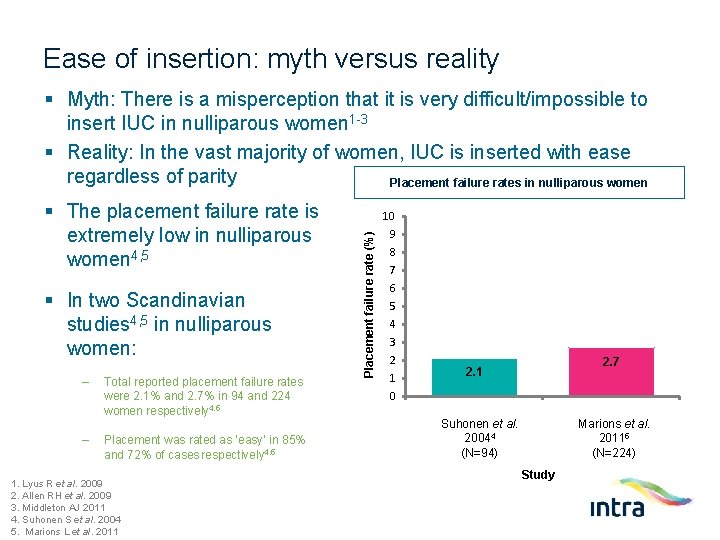
Ease of insertion: myth versus reality § Myth: There is a misperception that it is very difficult/impossible to insert IUC in nulliparous women 1 -3 § Reality: In the vast majority of women, IUC is inserted with ease regardless of parity Placement failure rates in nulliparous women § In two Scandinavian studies 4, 5 in nulliparous women: – – Total reported placement failure rates were 2. 1% and 2. 7% in 94 and 224 women respectively 4, 5 Placement was rated as ‘easy’ in 85% and 72% of cases respectively 4, 5 1. Lyus R et al. 2009 2. Allen RH et al. 2009 3. Middleton AJ 2011 4. Suhonen S et al. 2004 5. Marions L et al. 2011 10 Placement failure rate (%) § The placement failure rate is extremely low in nulliparous women 4, 5 9 8 7 6 5 4 3 2 1 2. 7 2. 1 0 Suhonen et al. 20044 (N=94) Marions et al. 20115 (N=224) Study
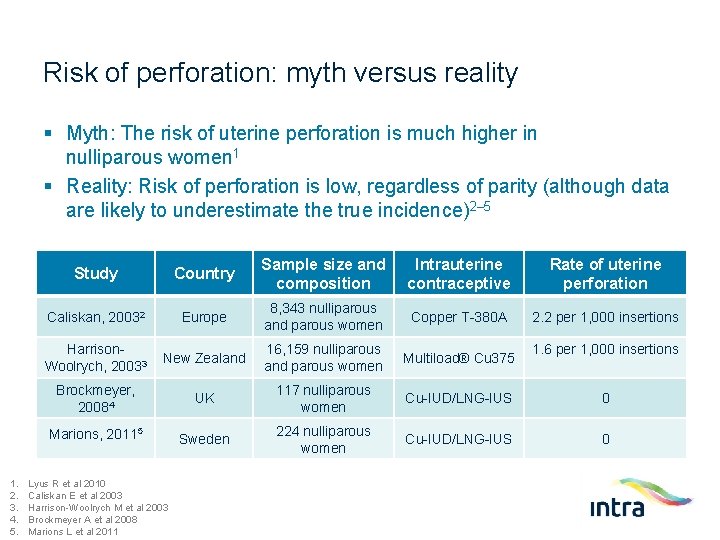
Risk of perforation: myth versus reality § Myth: The risk of uterine perforation is much higher in nulliparous women 1 § Reality: Risk of perforation is low, regardless of parity (although data are likely to underestimate the true incidence)2– 5 1. 2. 3. 4. 5. Study Country Sample size and composition Intrauterine contraceptive Rate of uterine perforation Caliskan, 20032 Europe 8, 343 nulliparous and parous women Copper T-380 A 2. 2 per 1, 000 insertions Harrison. Woolrych, 20033 New Zealand 16, 159 nulliparous and parous women Multiload® Cu 375 Brockmeyer, 20084 UK 117 nulliparous women Cu-IUD/LNG-IUS 0 Marions, 20115 Sweden 224 nulliparous women Cu-IUD/LNG-IUS 0 Lyus R et al 2010 Caliskan E et al 2003 Harrison-Woolrych M et al 2003 Brockmeyer A et al 2008 Marions L et al 2011 1. 6 per 1, 000 insertions
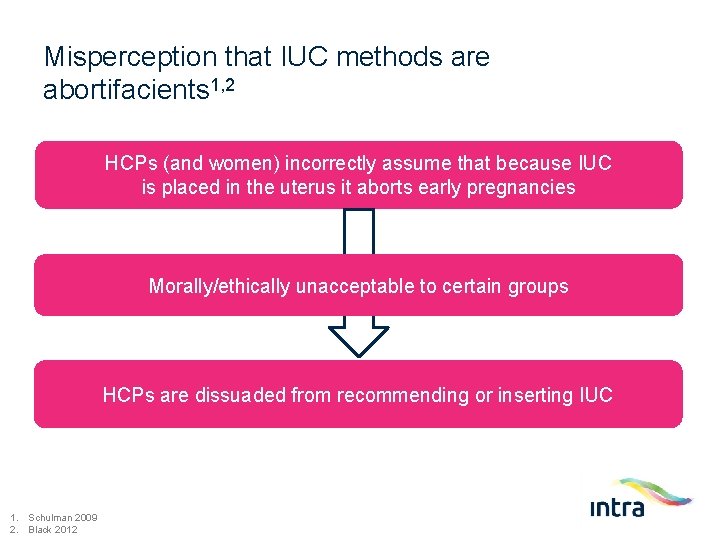
Misperception that IUC methods are abortifacients 1, 2 HCPs (and women) incorrectly assume that because IUC is placed in the uterus it aborts early pregnancies Morally/ethically unacceptable to certain groups HCPs are dissuaded from recommending or inserting IUC 1. Schulman 2009 2. Black 2012
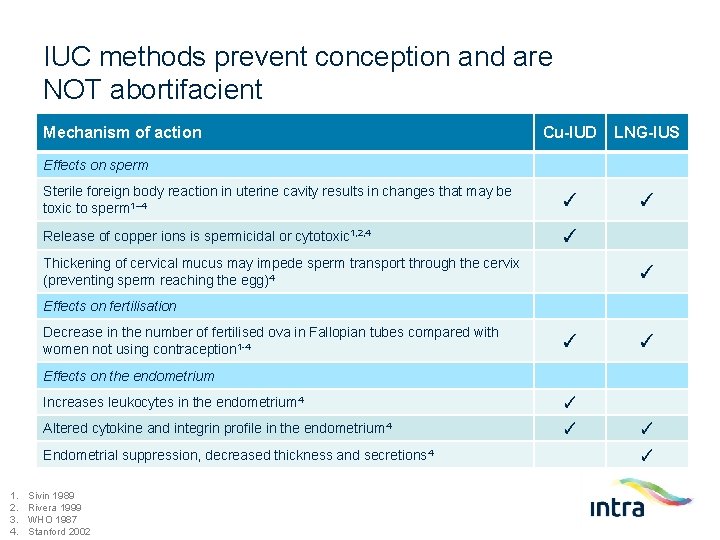
IUC methods prevent conception and are NOT abortifacient Mechanism of action Cu-IUD LNG-IUS Sterile foreign body reaction in uterine cavity results in changes that may be toxic to sperm 1– 4 ✓ ✓ Release of copper ions is spermicidal or cytotoxic 1, 2, 4 ✓ Effects on sperm Thickening of cervical mucus may impede sperm transport through the cervix (preventing sperm reaching the egg)4 ✓ Effects on fertilisation Decrease in the number of fertilised ova in Fallopian tubes compared with women not using contraception 1 -4 ✓ ✓ Effects on the endometrium Increases leukocytes in the endometrium 4 ✓ Altered cytokine and integrin profile in the endometrium 4 ✓ Endometrial suppression, decreased thickness and secretions 4 1. 2. 3. 4. Sivin 1989 Rivera 1999 WHO 1987 Stanford 2002 ✓ ✓
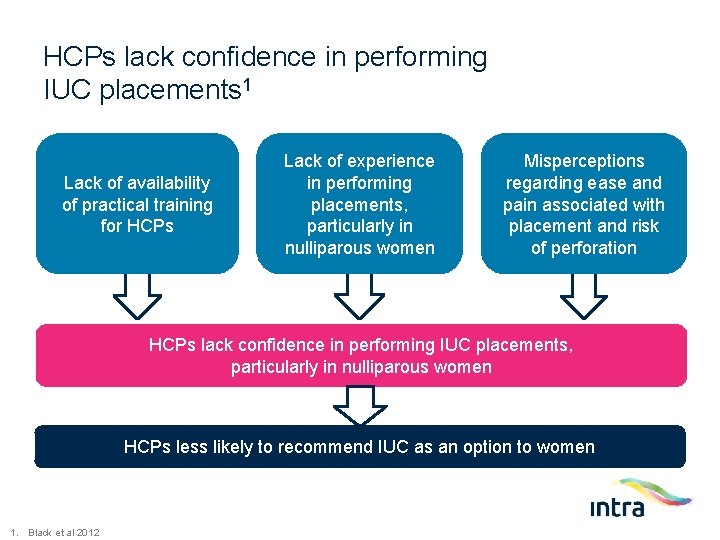
HCPs lack confidence in performing IUC placements 1 Lack of availability of practical training for HCPs Lack of experience in performing placements, particularly in nulliparous women Misperceptions regarding ease and pain associated with placement and risk of perforation HCPs lack confidence in performing IUC placements, particularly in nulliparous women HCPs less likely to recommend IUC as an option to women 1. Black et al 2012
OVERCOMING THE OBSTACLES
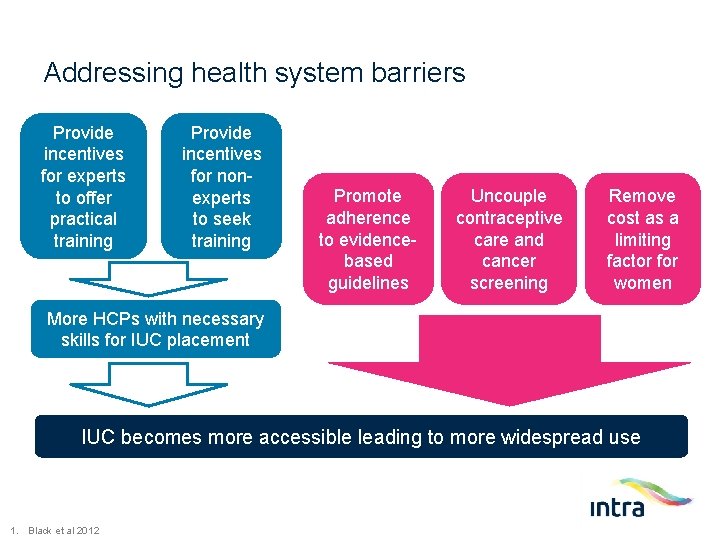
Addressing health system barriers Provide incentives for experts to offer practical training Provide incentives for nonexperts to seek training Promote adherence to evidencebased guidelines Uncouple contraceptive care and cancer screening Remove cost as a limiting factor for women More HCPs with necessary skills for IUC placement IUC becomes more accessible leading to more widespread use 1. Black et al 2012
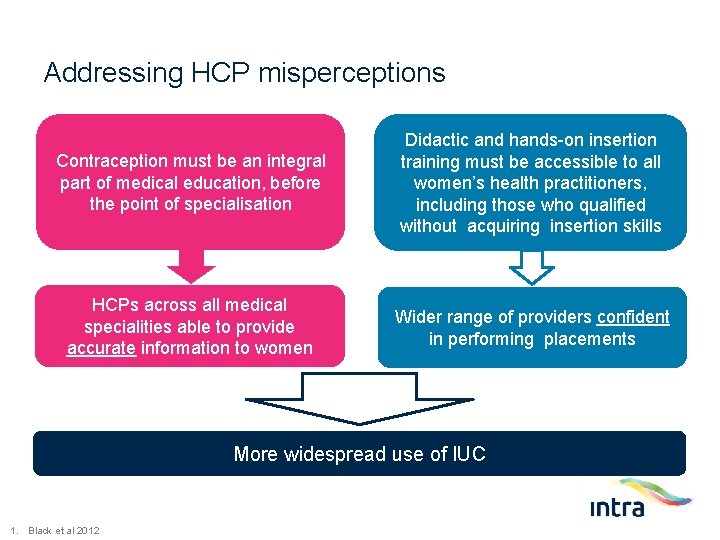
Addressing HCP misperceptions Contraception must be an integral part of medical education, before the point of specialisation Didactic and hands-on insertion training must be accessible to all women’s health practitioners, including those who qualified without acquiring insertion skills HCPs across all medical specialities able to provide accurate information to women Wider range of providers confident in performing placements More widespread use of IUC 1. Black et al 2012
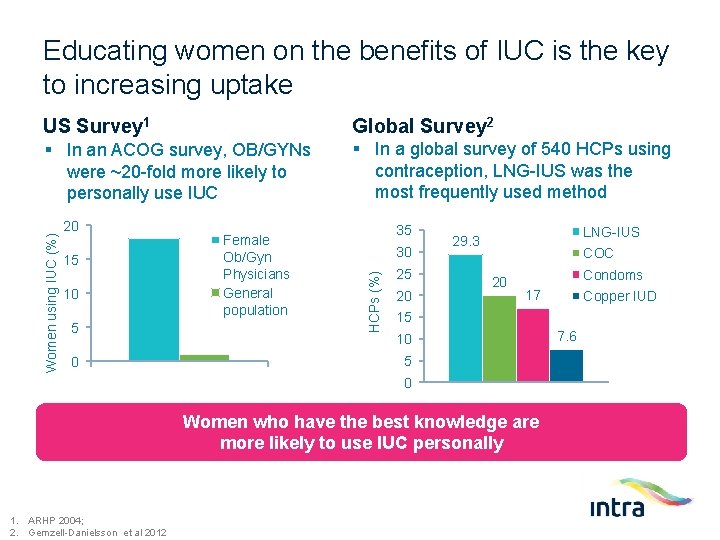
Educating women on the benefits of IUC is the key to increasing uptake Global Survey 2 § In an ACOG survey, OB/GYNs were ~20 -fold more likely to personally use IUC § In a global survey of 540 HCPs using contraception, LNG-IUS was the most frequently used method 20 15 10 5 0 Female Ob/Gyn Physicians General population 35 30 HCPs (%) Women using IUC (%) US Survey 1 25 20 LNG-IUS 29. 3 COC 20 Condoms 17 15 10 5 0 Women who have the best knowledge are more likely to use IUC personally 1. ARHP 2004; 2. Gemzell-Danielsson et al 2012 Copper IUD 7. 6
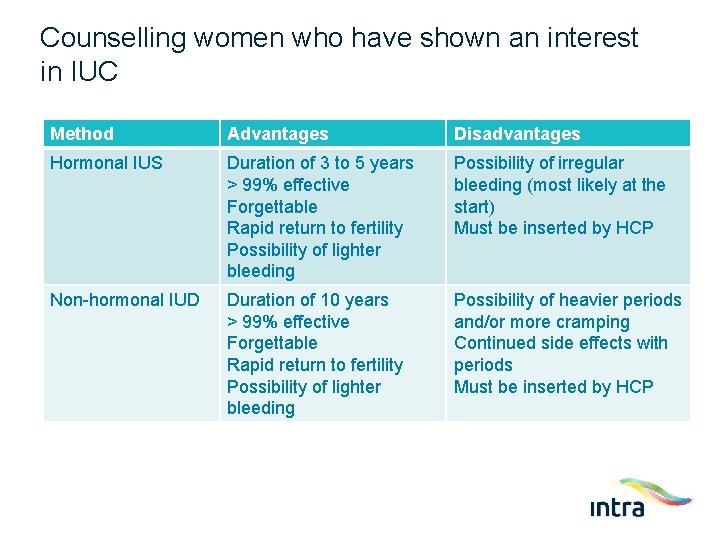
Counselling women who have shown an interest in IUC Method Advantages Disadvantages Hormonal IUS Duration of 3 to 5 years > 99% effective Forgettable Rapid return to fertility Possibility of lighter bleeding Possibility of irregular bleeding (most likely at the start) Must be inserted by HCP Non-hormonal IUD Duration of 10 years > 99% effective Forgettable Rapid return to fertility Possibility of lighter bleeding Possibility of heavier periods and/or more cramping Continued side effects with periods Must be inserted by HCP
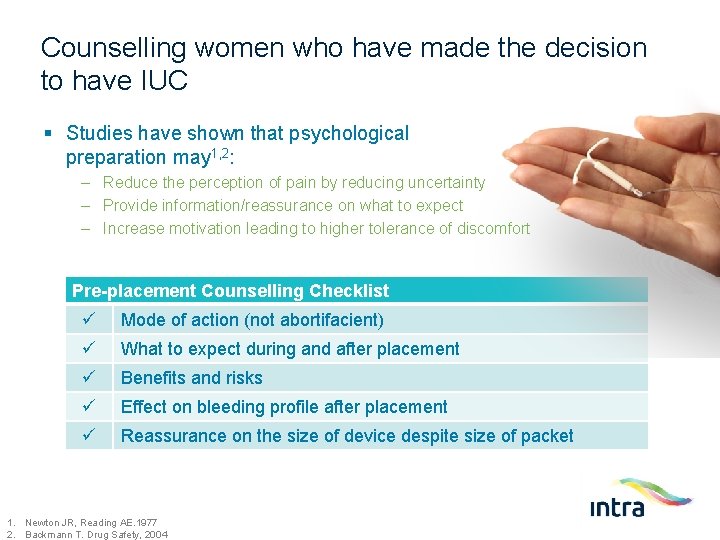
Counselling women who have made the decision to have IUC § Studies have shown that psychological preparation may 1, 2: – Reduce the perception of pain by reducing uncertainty – Provide information/reassurance on what to expect – Increase motivation leading to higher tolerance of discomfort Pre-placement Counselling Checklist Mode of action (not abortifacient) What to expect during and after placement Benefits and risks Effect on bleeding profile after placement Reassurance on the size of device despite size of packet 1. Newton JR, Reading AE. 1977 2. Backmann T. Drug Safety, 2004
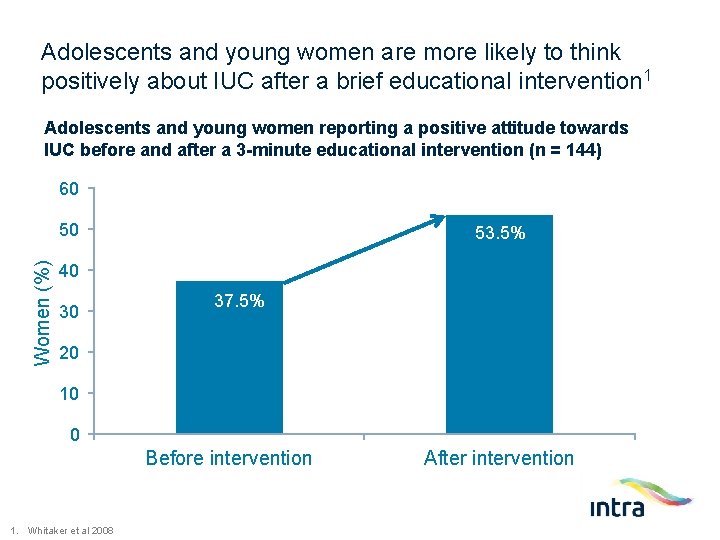
Adolescents and young women are more likely to think positively about IUC after a brief educational intervention 1 Adolescents and young women reporting a positive attitude towards IUC before and after a 3 -minute educational intervention (n = 144) 60 Women (%) 50 53. 5% 40 30 37. 5% 20 10 0 Before intervention 1. Whitaker et al 2008 After intervention
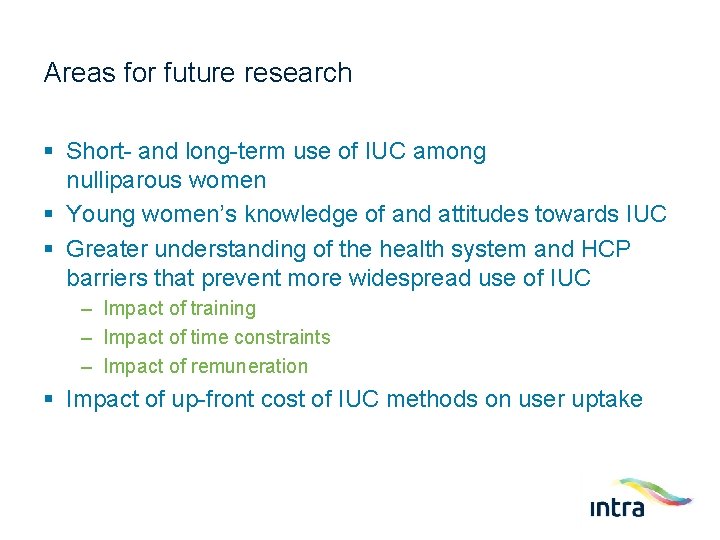
Areas for future research § Short- and long-term use of IUC among nulliparous women § Young women’s knowledge of and attitudes towards IUC § Greater understanding of the health system and HCP barriers that prevent more widespread use of IUC – Impact of training – Impact of time constraints – Impact of remuneration § Impact of up-front cost of IUC methods on user uptake