VOLUME OF LIQUIDS REGULAR AND IRREGULAR SOLIDS Liquid






- Slides: 29
VOLUME OF LIQUIDS, REGULAR AND IRREGULAR SOLIDS
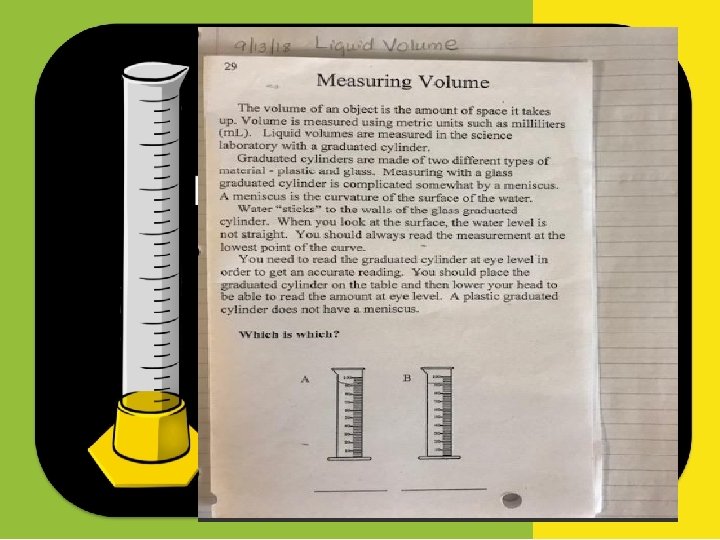
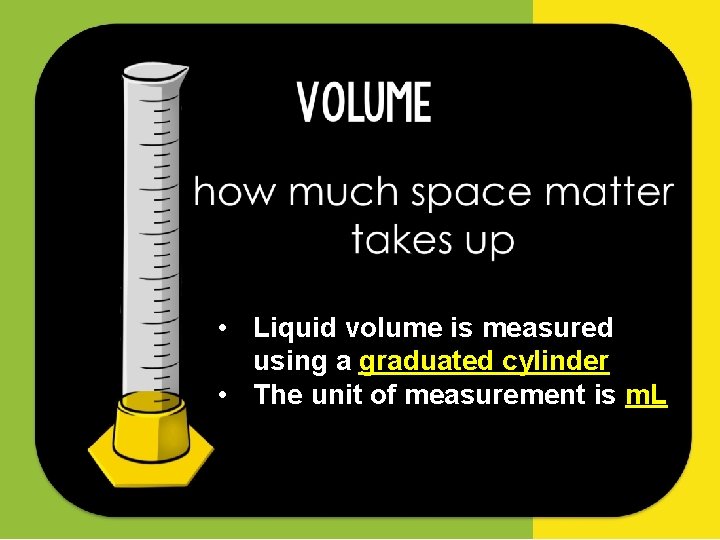
• Liquid volume is measured using a graduated cylinder • The unit of measurement is m. L
• Liquid volume is measured using a graduated cylinder • The unit of measurement is m. L
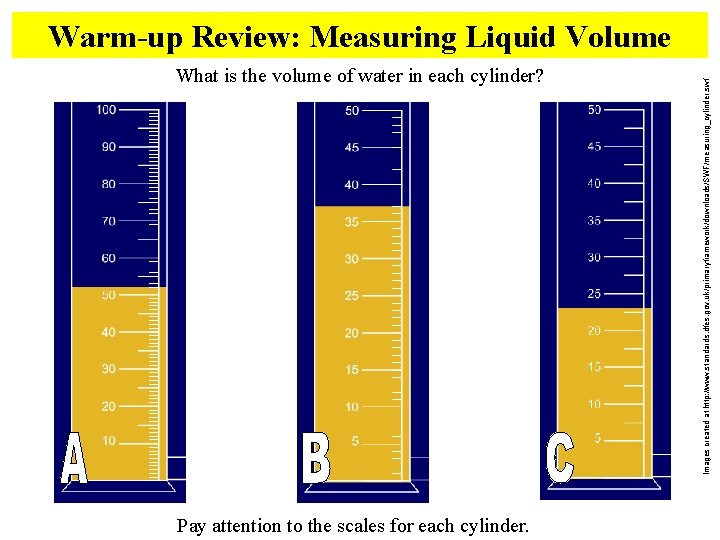
What is the volume of water in each cylinder? Pay attention to the scales for each cylinder. Images created at http: //www. standards. dfes. gov. uk/primaryframework/downloads/SWF/measuring_cylinder. swf Warm-up Review: Measuring Liquid Volume
• Make sure to take turns reading and then measuring each precise volume of water. • Clean up any spill immediately and replace the paper towels when you use them • Take your time and work carefully. • If you & your partner both have a question, raise both of your hands
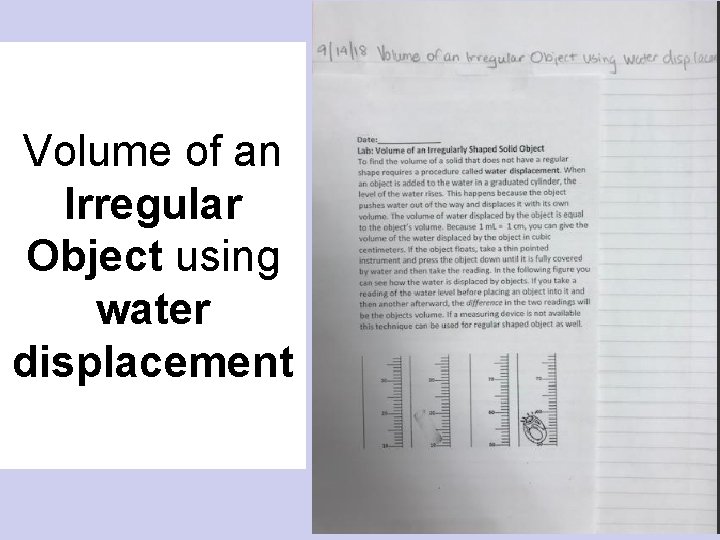
Volume of an Irregular Object using water displacement
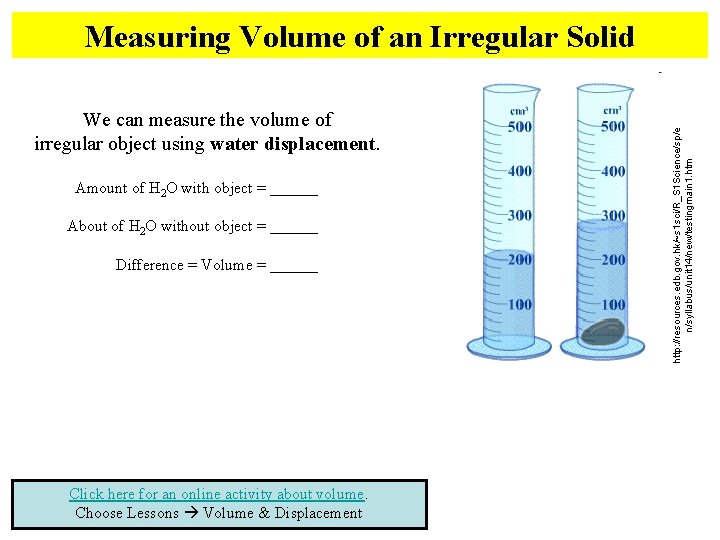
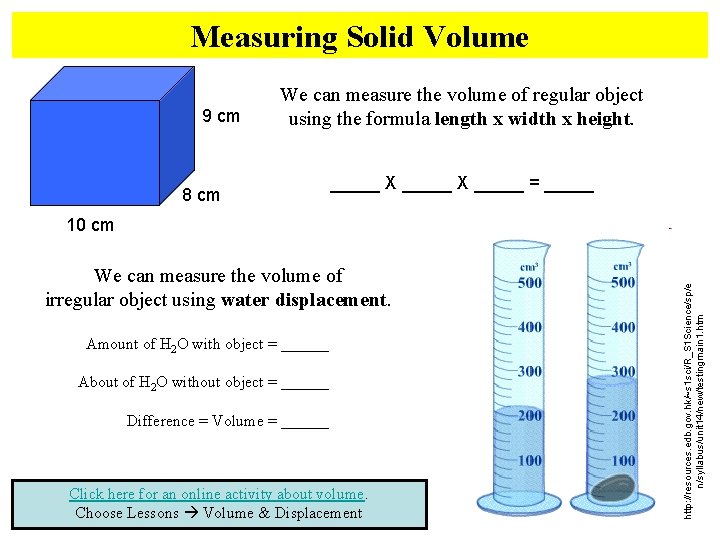
We can measure the volume of irregular object using water displacement. Amount of H 2 O with object = ______ About of H 2 O without object = ______ Difference = Volume = ______ Click here for an online activity about volume. Choose Lessons Volume & Displacement http: //resources. edb. gov. hk/~s 1 sci/R_S 1 Science/sp/e n/syllabus/unit 14/new/testingmain 1. htm Measuring Volume of an Irregular Solid
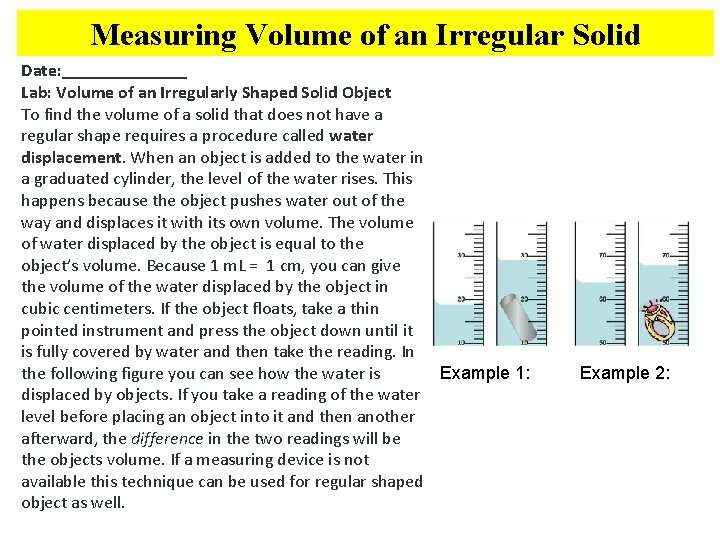
Measuring Volume of an Irregular Solid Date: _______ Lab: Volume of an Irregularly Shaped Solid Object To find the volume of a solid that does not have a regular shape requires a procedure called water displacement. When an object is added to the water in a graduated cylinder, the level of the water rises. This happens because the object pushes water out of the way and displaces it with its own volume. The volume of water displaced by the object is equal to the object’s volume. Because 1 m. L = 1 cm, you can give the volume of the water displaced by the object in cubic centimeters. If the object floats, take a thin pointed instrument and press the object down until it is fully covered by water and then take the reading. In the following figure you can see how the water is Example 1: displaced by objects. If you take a reading of the water level before placing an object into it and then another afterward, the difference in the two readings will be the objects volume. If a measuring device is not available this technique can be used for regular shaped object as well. Example 2:
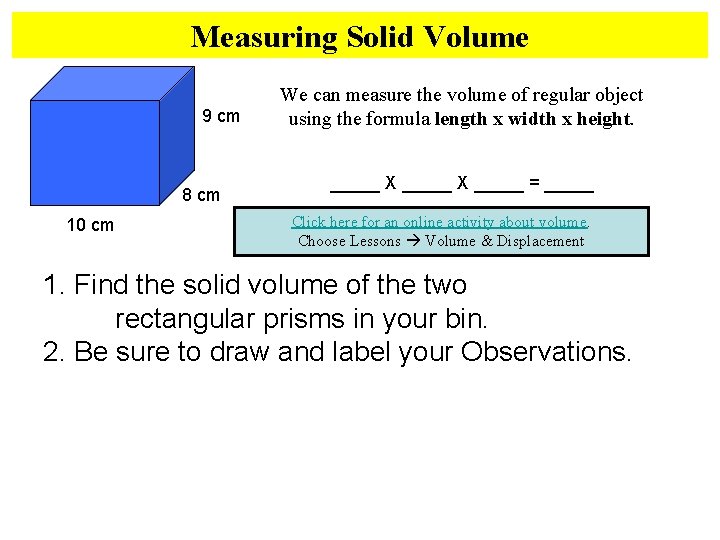
Measuring Solid Volume 9 cm We can measure the volume of regular object using the formula length x width x height. 8 cm _____ X _____ = _____ We can measure the volume of irregular object using water displacement. Amount of H 2 O with object = ______ About of H 2 O without object = ______ Difference = Volume = ______ Click here for an online activity about volume. Choose Lessons Volume & Displacement http: //resources. edb. gov. hk/~s 1 sci/R_S 1 Science/sp/e n/syllabus/unit 14/new/testingmain 1. htm 10 cm
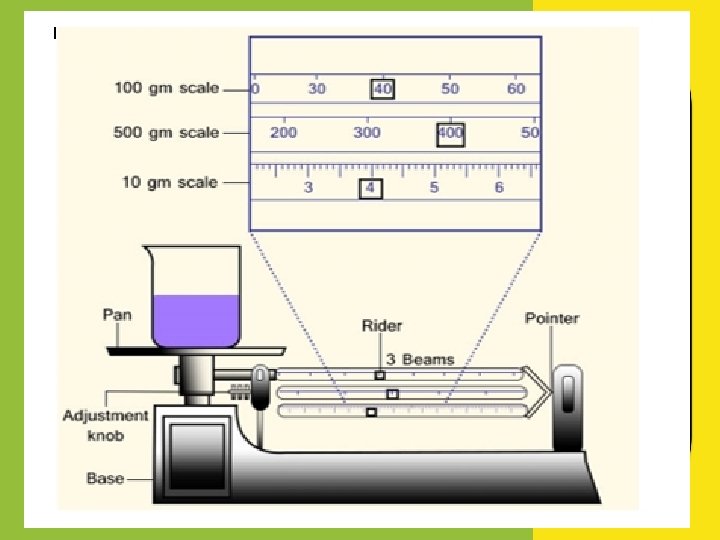
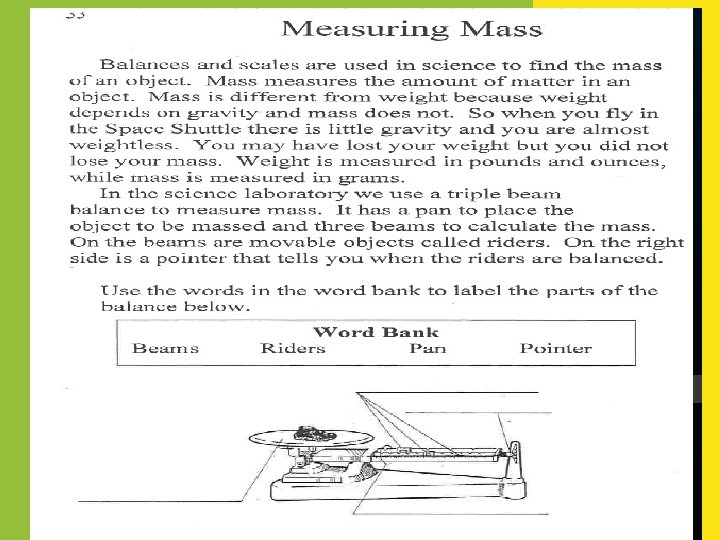
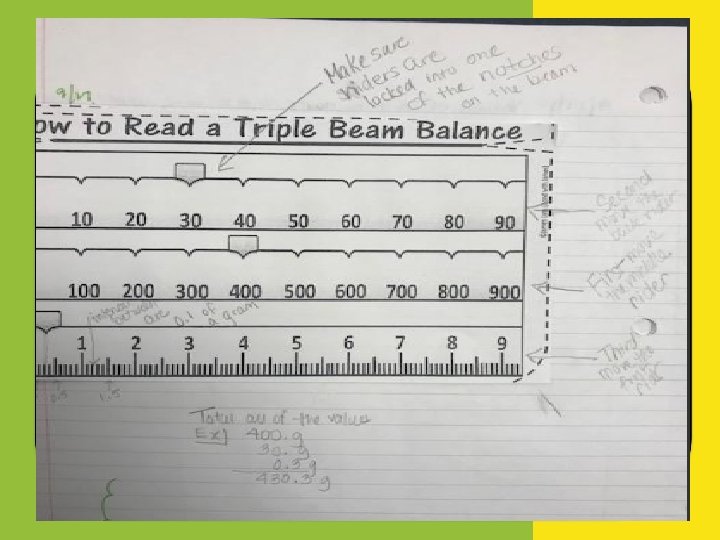
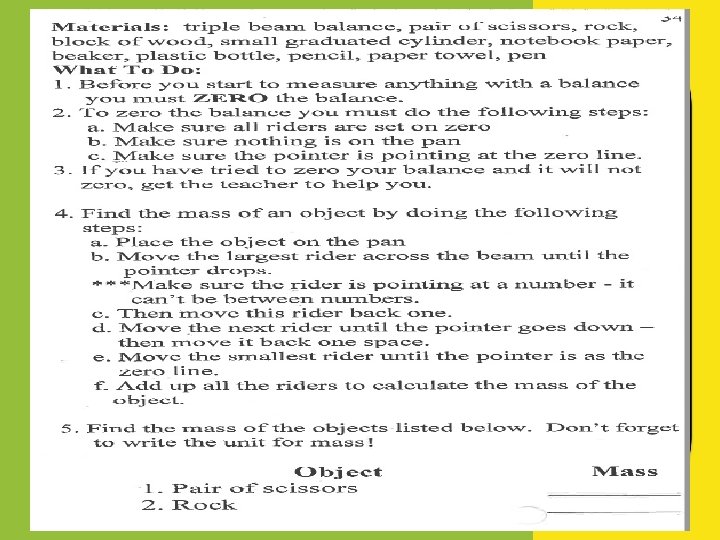
Triple Beam Balance
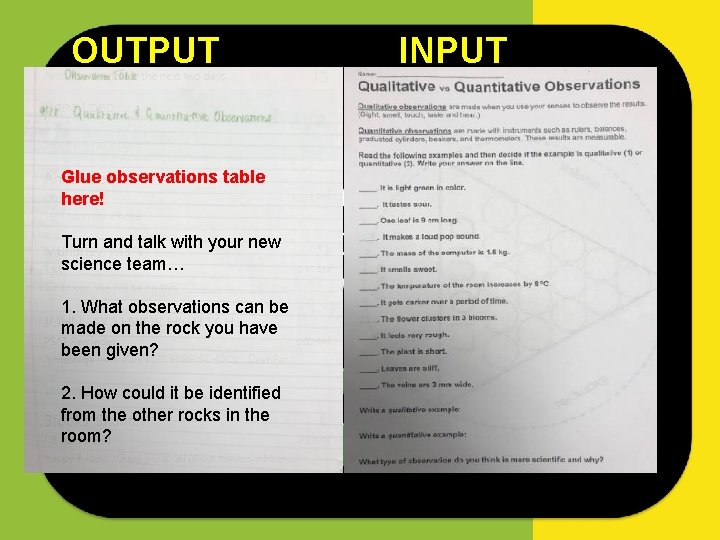
OUTPUT Glue observations table here! Turn and talk with your new science team… 1. What observations can be made on the rock you have been given? 2. How could it be identified from the other rocks in the room? INPUT
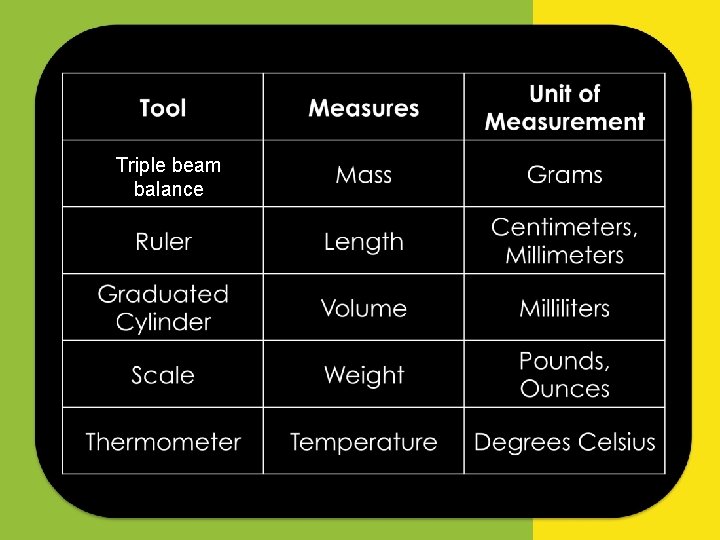
Triple beam balance
Let’s recap & review vocabulary
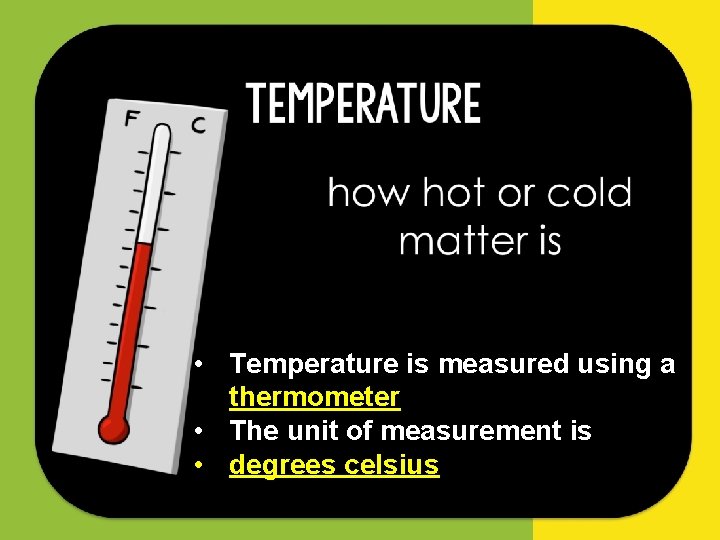
• Temperature is measured using a thermometer • The unit of measurement is • degrees celsius
• Liquid volume is measured using a graduated cylinder • The unit of measurement is m. L
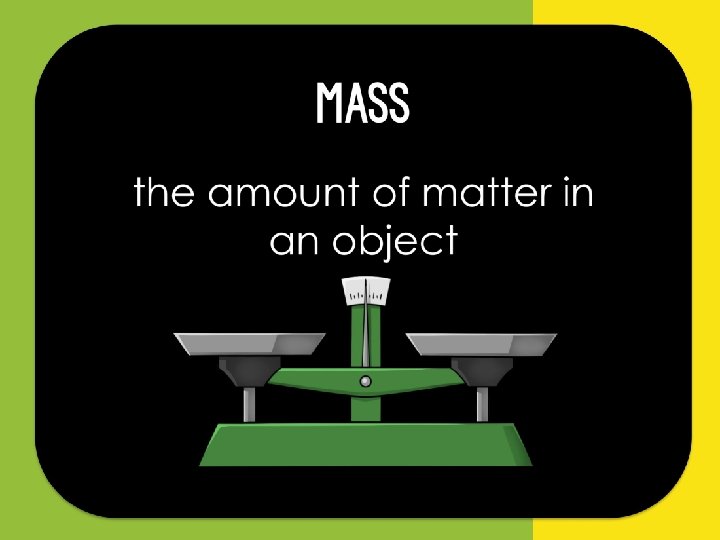
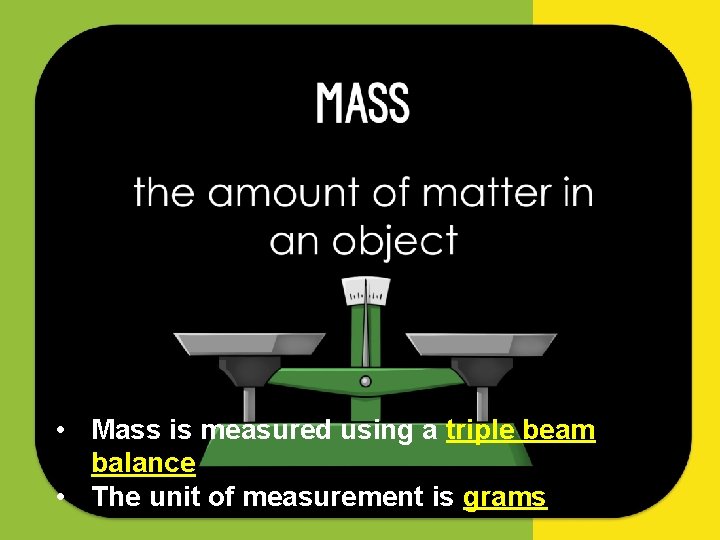
• Mass is measured using a triple beam balance • The unit of measurement is grams
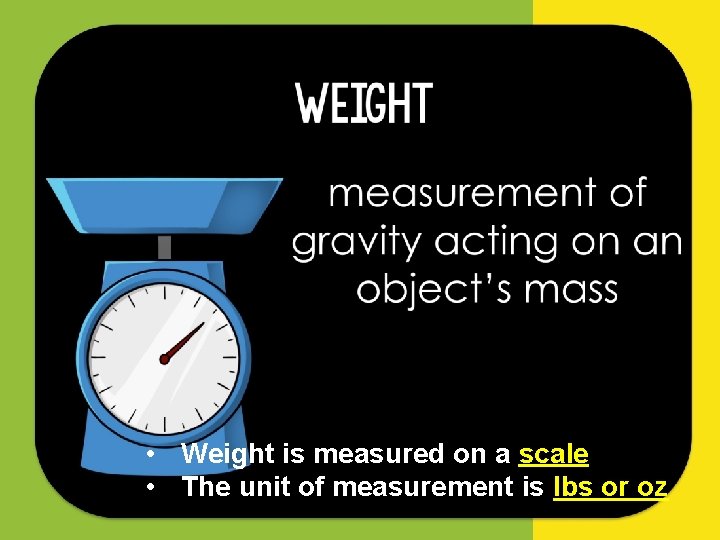
• Weight is measured on a scale • The unit of measurement is lbs or oz
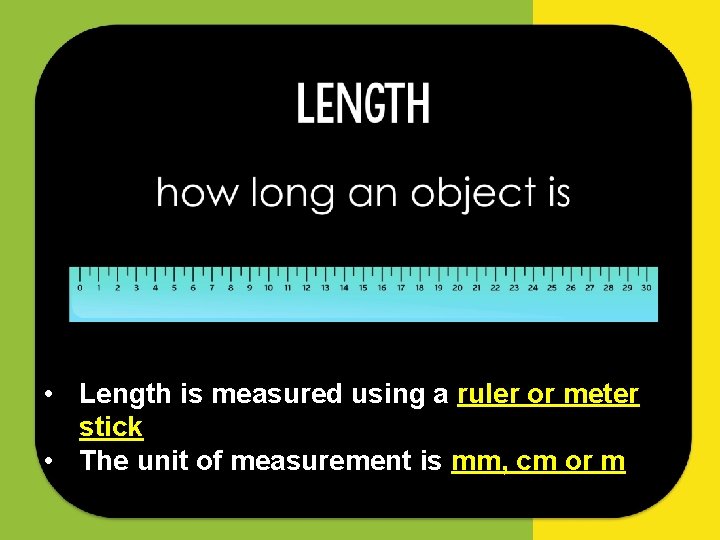
• Length is measured using a ruler or meter stick • The unit of measurement is mm, cm or m
Measuring Solid Volume 9 cm 8 cm 10 cm We can measure the volume of regular object using the formula length x width x height. _____ X _____ = _____ Click here for an online activity about volume. Choose Lessons Volume & Displacement 1. Find the solid volume of the two rectangular prisms in your bin. 2. Be sure to draw and label your Observations.
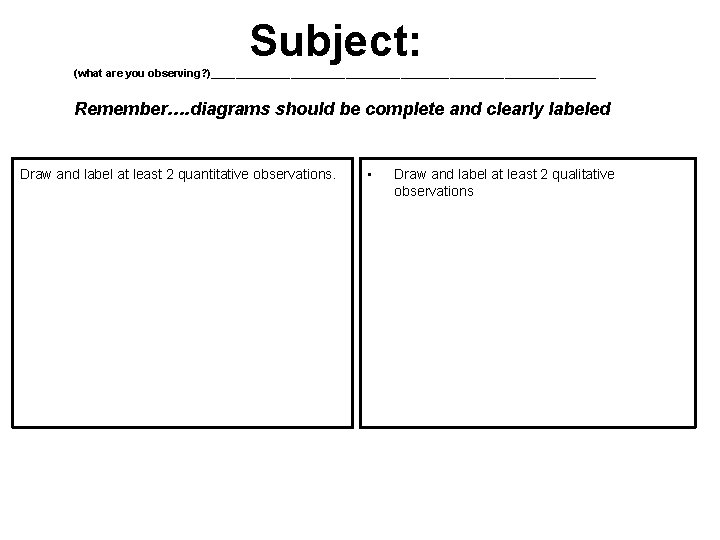
Subject: (what are you observing? )________________________________ Remember…. diagrams should be complete and clearly labeled Draw and label at least 2 quantitative observations. • Draw and label at least 2 qualitative observations