Vaccine Hesitancy Stanley A Plotkin Russia 4 9
- Slides: 26
Vaccine Hesitancy Stanley A. Plotkin Russia 4 -9 2015 12/4/2020 4: 51 1 AM
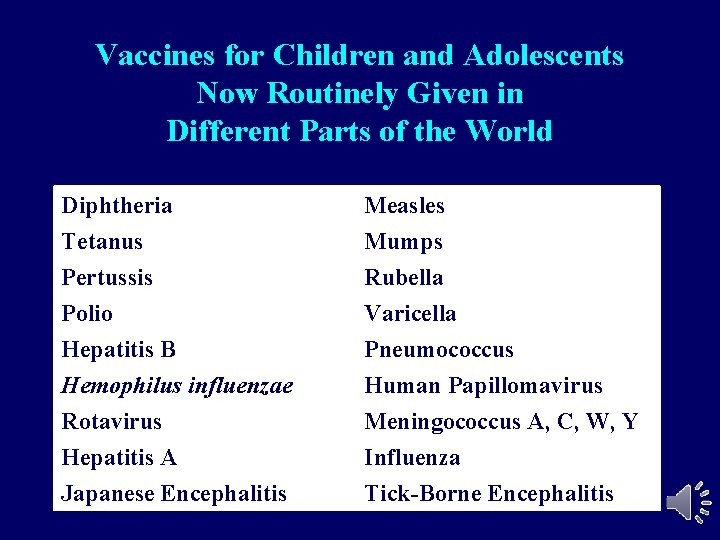
Vaccines for Children and Adolescents Now Routinely Given in Different Parts of the World Diphtheria Tetanus Pertussis Polio Measles Mumps Rubella Varicella Hepatitis B Hemophilus influenzae Rotavirus Hepatitis A Japanese Encephalitis Pneumococcus Human Papillomavirus Meningococcus A, C, W, Y Influenza Tick-Borne Encephalitis 2
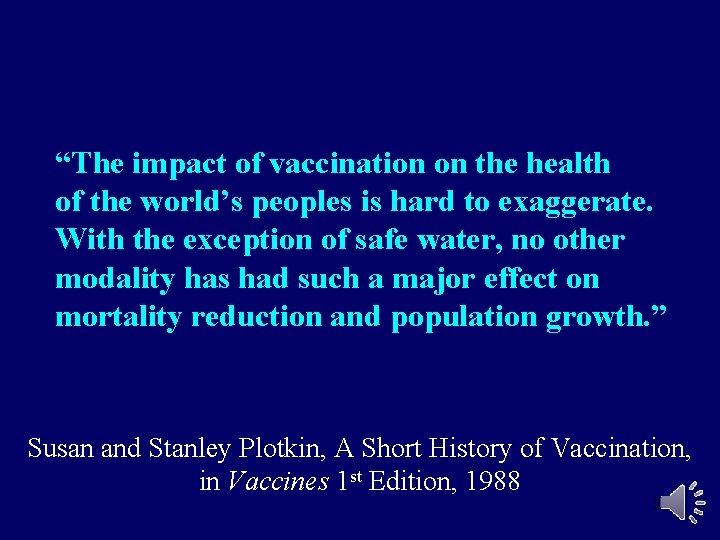
“The impact of vaccination on the health of the world’s peoples is hard to exaggerate. With the exception of safe water, no other modality has had such a major effect on mortality reduction and population growth. ” Susan and Stanley Plotkin, A Short History of Vaccination, in Vaccines 1 st Edition, 1988 3
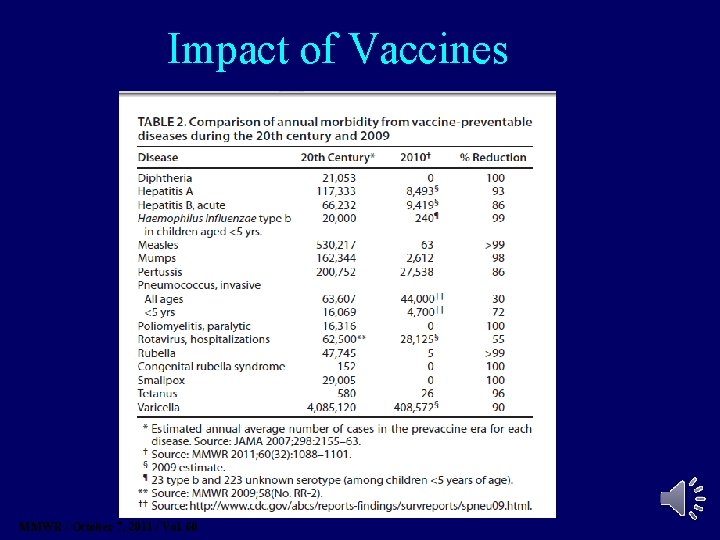
Impact of Vaccines MMWR / October 7, 2011 / Vol. 60
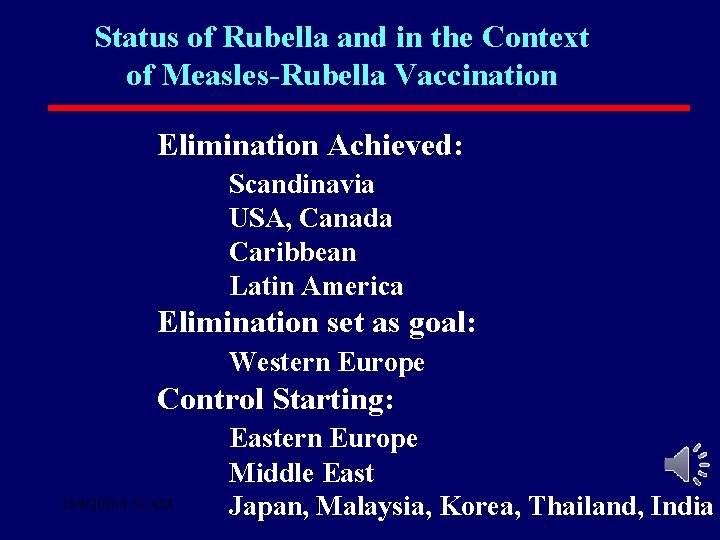
Status of Rubella and in the Context of Measles-Rubella Vaccination Elimination Achieved: Scandinavia USA, Canada Caribbean Latin America Elimination set as goal: Western Europe Control Starting: 12/4/2020 4: 51 AM Eastern Europe Middle East 5 Japan, Malaysia, Korea, Thailand, India
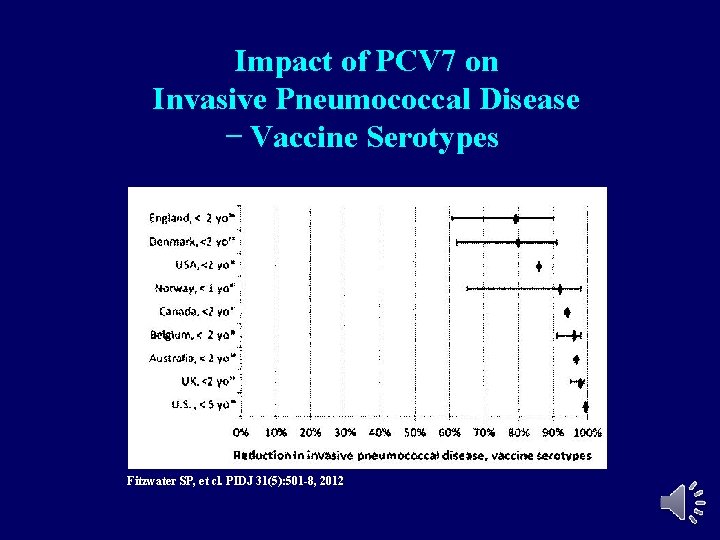
Impact of PCV 7 on Invasive Pneumococcal Disease Vaccine Serotypes Fitzwater SP, et cl. PIDJ 31(5): 501 -8, 2012
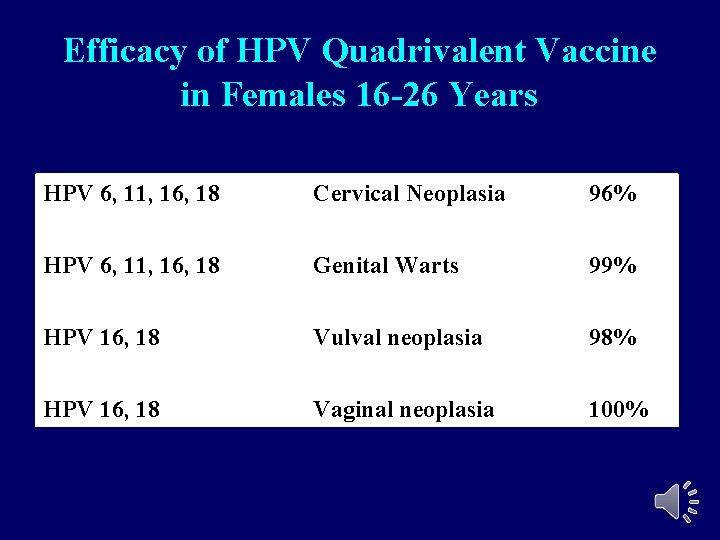
Efficacy of HPV Quadrivalent Vaccine in Females 16 -26 Years HPV 6, 11, 16, 18 Cervical Neoplasia 96% HPV 6, 11, 16, 18 Genital Warts 99% HPV 16, 18 Vulval neoplasia 98% HPV 16, 18 Vaginal neoplasia 100% 7
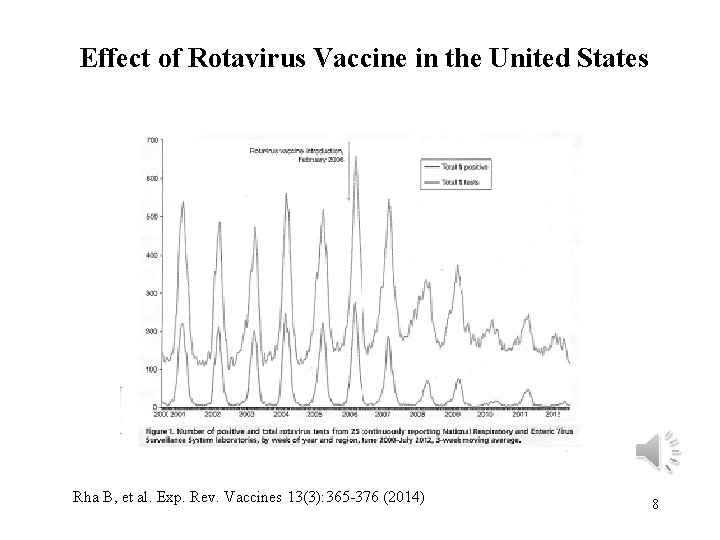
Effect of Rotavirus Vaccine in the United States Rha B, et al. Exp. Rev. Vaccines 13(3): 365 -376 (2014) 8
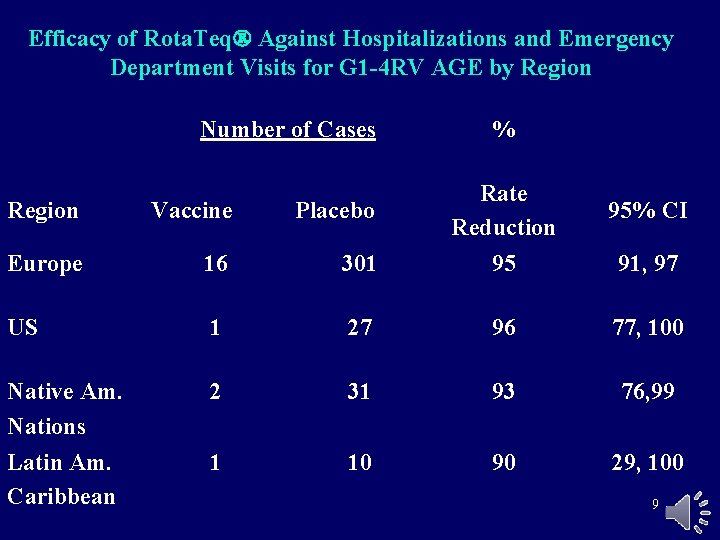
Efficacy of Rota. Teq Against Hospitalizations and Emergency Department Visits for G 1 -4 RV AGE by Region Number of Cases % Rate Reduction 95% CI Region Vaccine Placebo Europe 16 301 95 91, 97 US 1 27 96 77, 100 Native Am. Nations Latin Am. Caribbean 2 31 93 76, 99 1 10 90 29, 100 9
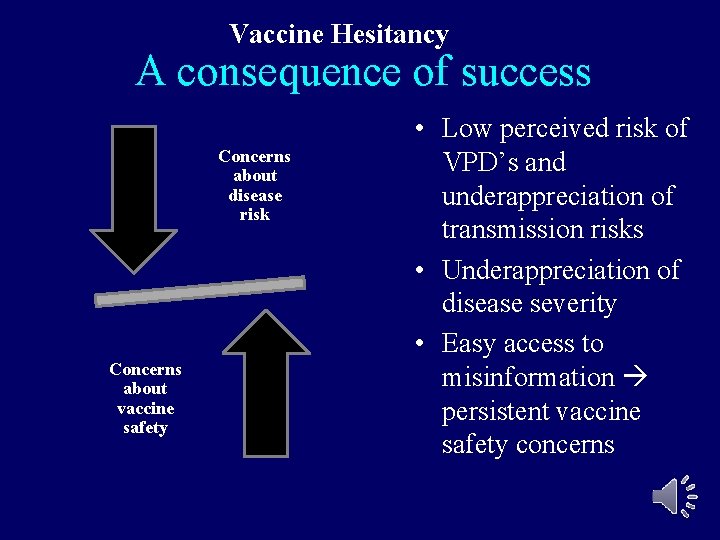
Vaccine Hesitancy A consequence of success Concerns about disease risk Concerns about vaccine safety • Low perceived risk of VPD’s and underappreciation of transmission risks • Underappreciation of disease severity • Easy access to misinformation persistent vaccine safety concerns
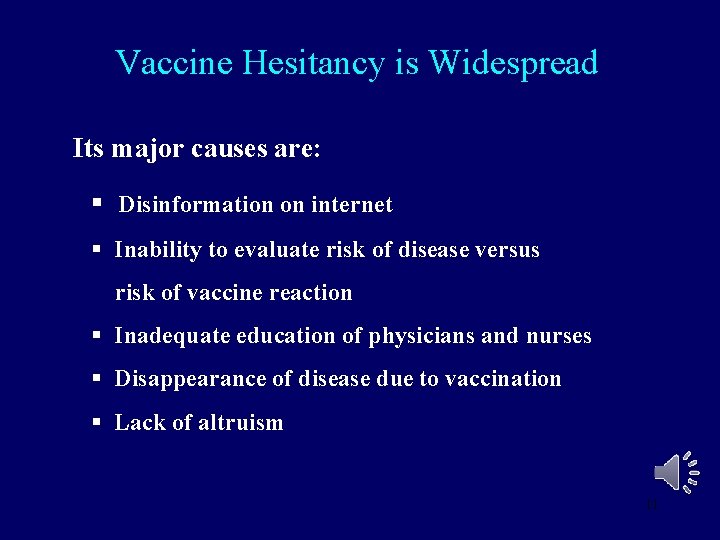
Vaccine Hesitancy is Widespread Its major causes are: § Disinformation on internet § Inability to evaluate risk of disease versus risk of vaccine reaction § Inadequate education of physicians and nurses § Disappearance of disease due to vaccination § Lack of altruism 11
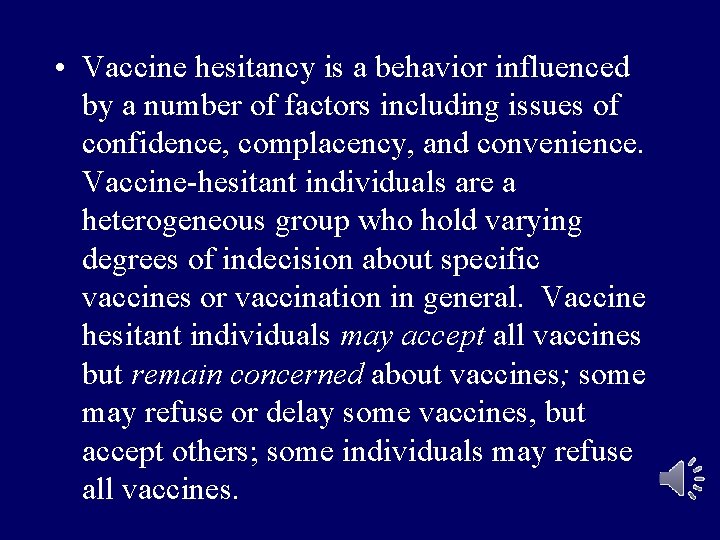
• Vaccine hesitancy is a behavior influenced by a number of factors including issues of confidence, complacency, and convenience. Vaccine-hesitant individuals are a heterogeneous group who hold varying degrees of indecision about specific vaccines or vaccination in general. Vaccine hesitant individuals may accept all vaccines but remain concerned about vaccines; some may refuse or delay some vaccines, but accept others; some individuals may refuse all vaccines.
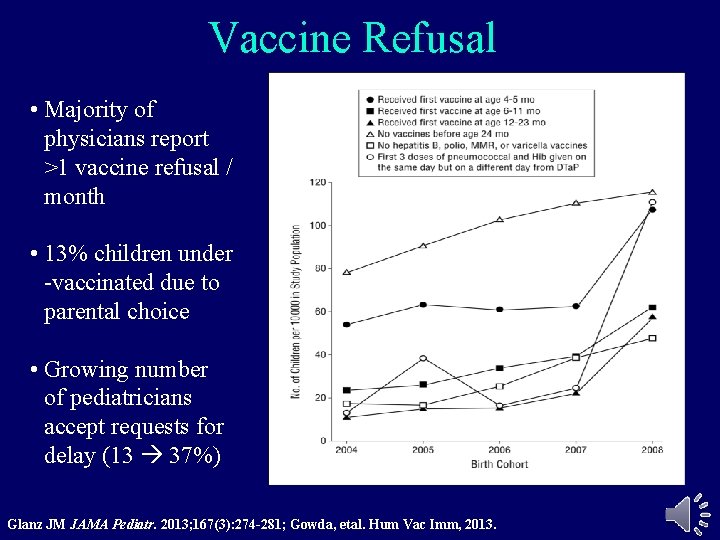
Vaccine Refusal • Majority of physicians report >1 vaccine refusal / month • 13% children under -vaccinated due to parental choice • Growing number of pediatricians accept requests for delay (13 37%) Glanz JM JAMA Pediatr. 2013; 167(3): 274 -281; Gowda, etal. Hum Vac Imm, 2013.
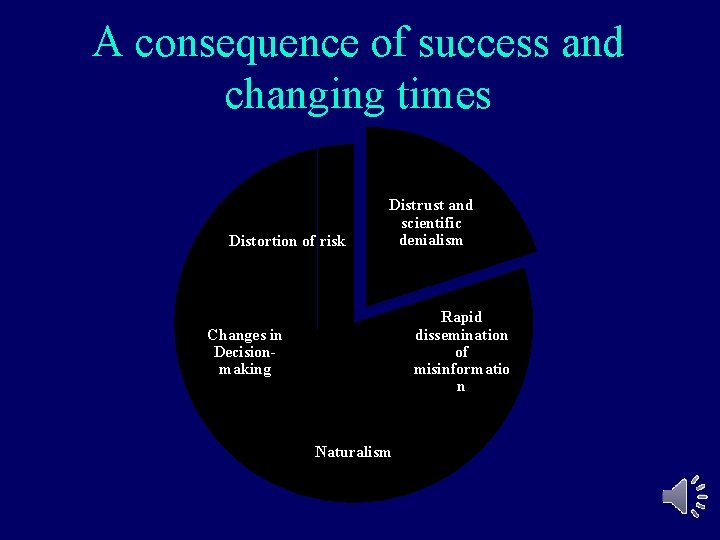
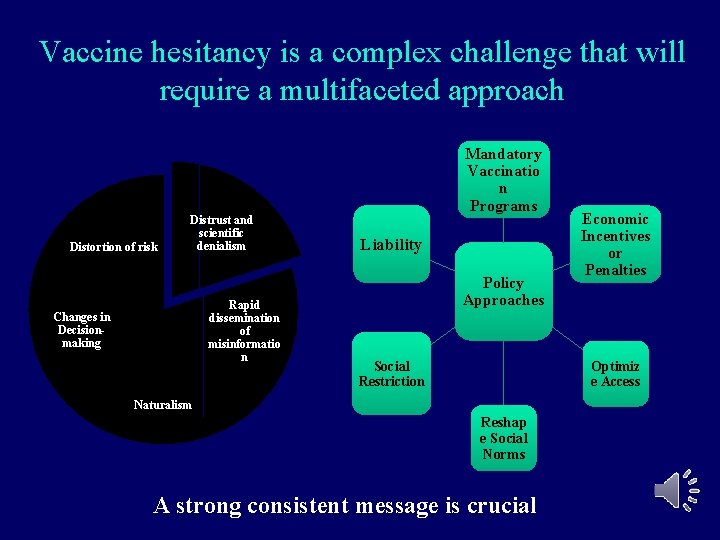
A consequence of success and changing times Distortion of risk Distrust and scientific denialism Rapid dissemination of misinformatio n Changes in Decisionmaking Naturalism
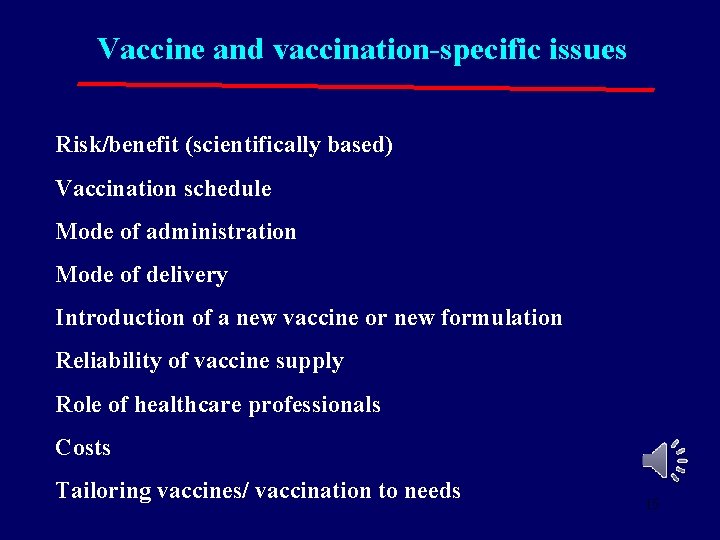
Vaccine and vaccination-specific issues Risk/benefit (scientifically based) Vaccination schedule Mode of administration Mode of delivery Introduction of a new vaccine or new formulation Reliability of vaccine supply Role of healthcare professionals Costs Tailoring vaccines/ vaccination to needs 15
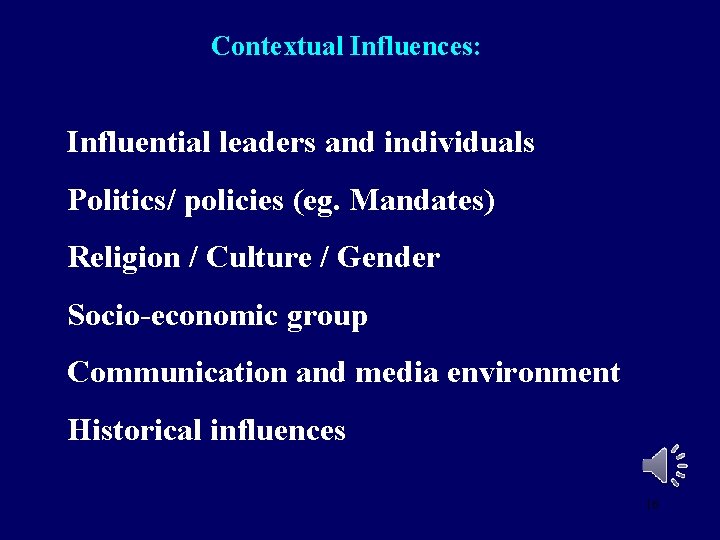
Contextual Influences: Influential leaders and individuals Politics/ policies (eg. Mandates) Religion / Culture / Gender Socio-economic group Communication and media environment Historical influences 16
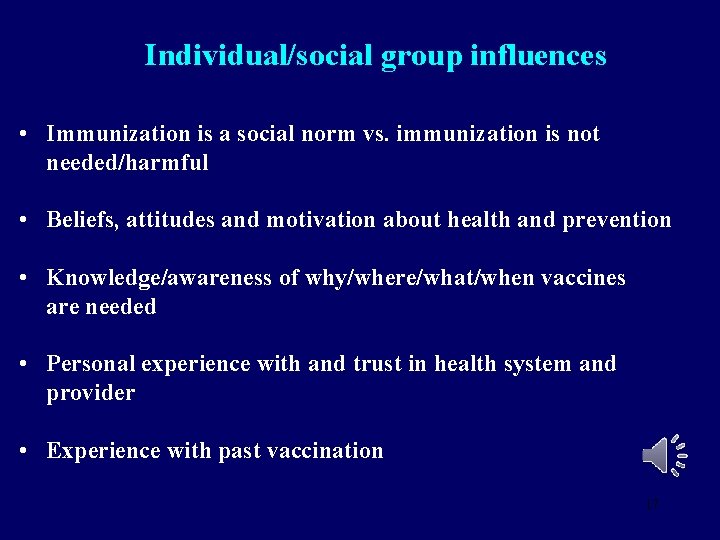
Individual/social group influences • Immunization is a social norm vs. immunization is not needed/harmful • Beliefs, attitudes and motivation about health and prevention • Knowledge/awareness of why/where/what/when vaccines are needed • Personal experience with and trust in health system and provider • Experience with past vaccination 17
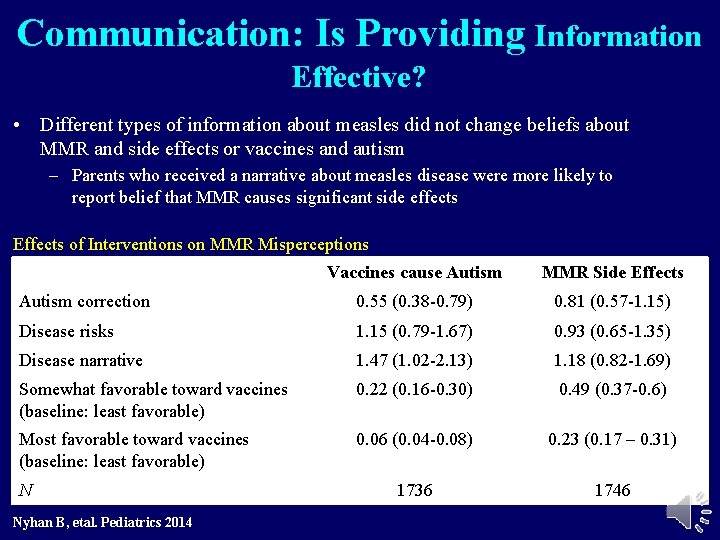
Communication: Is Providing Information Effective? • Different types of information about measles did not change beliefs about MMR and side effects or vaccines and autism – Parents who received a narrative about measles disease were more likely to report belief that MMR causes significant side effects Effects of Interventions on MMR Misperceptions Vaccines cause Autism MMR Side Effects Autism correction 0. 55 (0. 38 -0. 79) 0. 81 (0. 57 -1. 15) Disease risks 1. 15 (0. 79 -1. 67) 0. 93 (0. 65 -1. 35) Disease narrative 1. 47 (1. 02 -2. 13) 1. 18 (0. 82 -1. 69) Somewhat favorable toward vaccines (baseline: least favorable) 0. 22 (0. 16 -0. 30) 0. 49 (0. 37 -0. 6) Most favorable toward vaccines (baseline: least favorable) 0. 06 (0. 04 -0. 08) 0. 23 (0. 17 – 0. 31) 1736 1746 N Nyhan B, etal. Pediatrics 2014
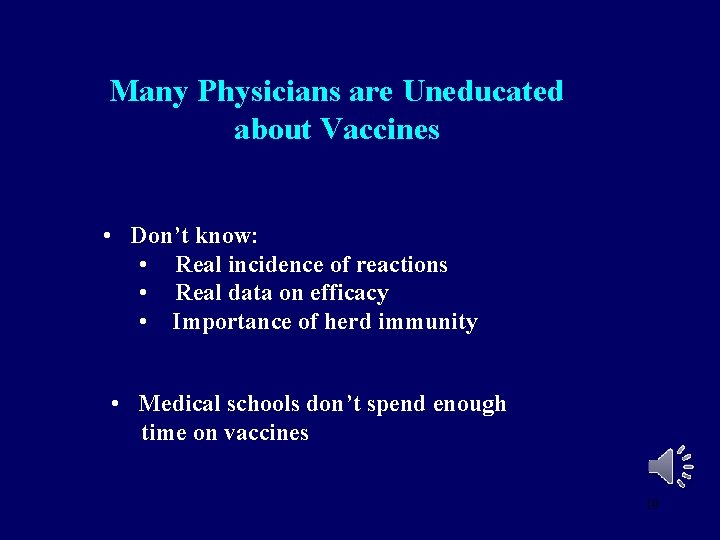
Many Physicians are Uneducated about Vaccines • Don’t know: • Real incidence of reactions • Real data on efficacy • Importance of herd immunity • Medical schools don’t spend enough time on vaccines 19
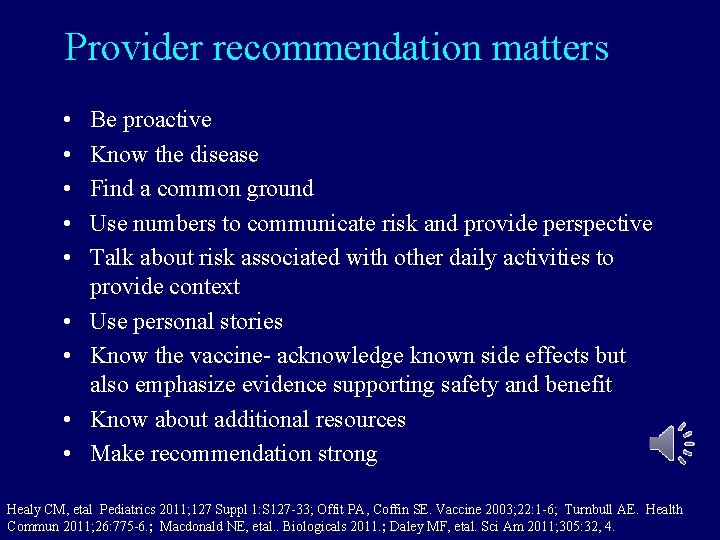
Provider recommendation matters • • • Be proactive Know the disease Find a common ground Use numbers to communicate risk and provide perspective Talk about risk associated with other daily activities to provide context Use personal stories Know the vaccine- acknowledge known side effects but also emphasize evidence supporting safety and benefit Know about additional resources Make recommendation strong Healy CM, etal Pediatrics 2011; 127 Suppl 1: S 127 -33; Offit PA, Coffin SE. Vaccine 2003; 22: 1 -6; Turnbull AE. Health Commun 2011; 26: 775 -6. ; Macdonald NE, etal. . Biologicals 2011. ; Daley MF, etal. Sci Am 2011; 305: 32, 4.
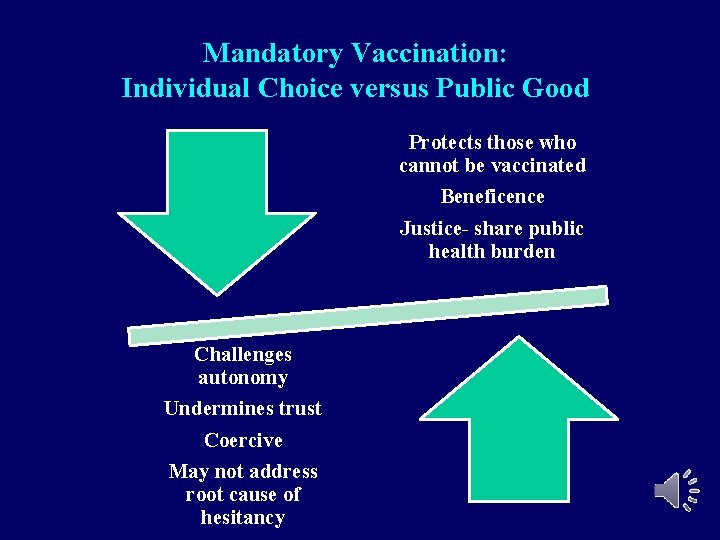
Mandatory Vaccination: Individual Choice versus Public Good Protects those who cannot be vaccinated Beneficence Justice- share public health burden Challenges autonomy Undermines trust Coercive May not address root cause of hesitancy
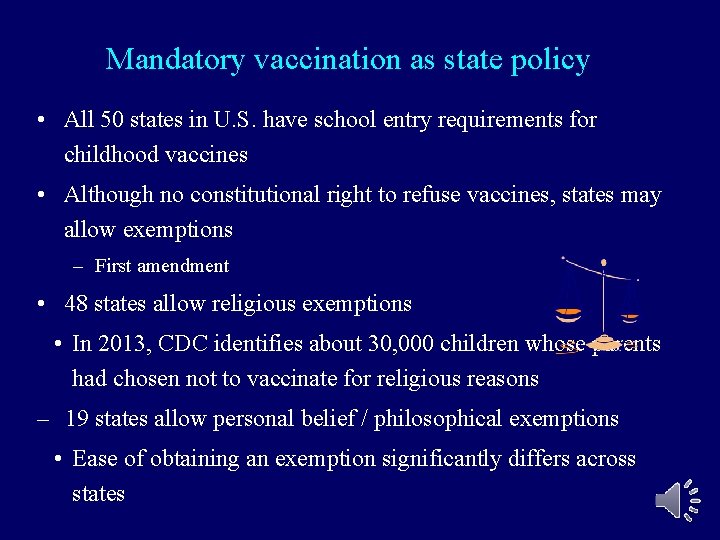
Mandatory vaccination as state policy • All 50 states in U. S. have school entry requirements for childhood vaccines • Although no constitutional right to refuse vaccines, states may allow exemptions – First amendment • 48 states allow religious exemptions • In 2013, CDC identifies about 30, 000 children whose parents had chosen not to vaccinate for religious reasons – 19 states allow personal belief / philosophical exemptions • Ease of obtaining an exemption significantly differs across states
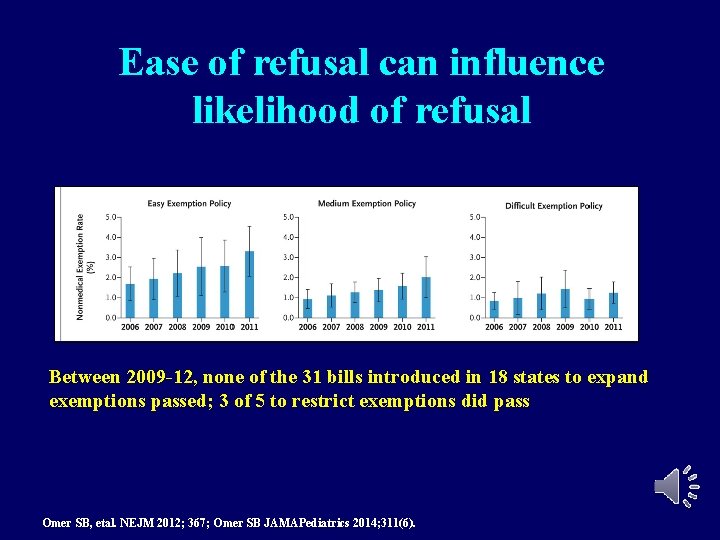
Ease of refusal can influence likelihood of refusal Between 2009 -12, none of the 31 bills introduced in 18 states to expand exemptions passed; 3 of 5 to restrict exemptions did pass Omer SB, etal. NEJM 2012; 367; Omer SB JAMAPediatrics 2014; 311(6).
Vaccine hesitancy is a complex challenge that will require a multifaceted approach Distortion of risk Distrust and scientific denialism Rapid dissemination of misinformatio n Changes in Decisionmaking Mandatory Vaccinatio n Programs Liability Policy Approaches Social Restriction Economic Incentives or Penalties Optimiz e Access Naturalism Reshap e Social Norms A strong consistent message is crucial
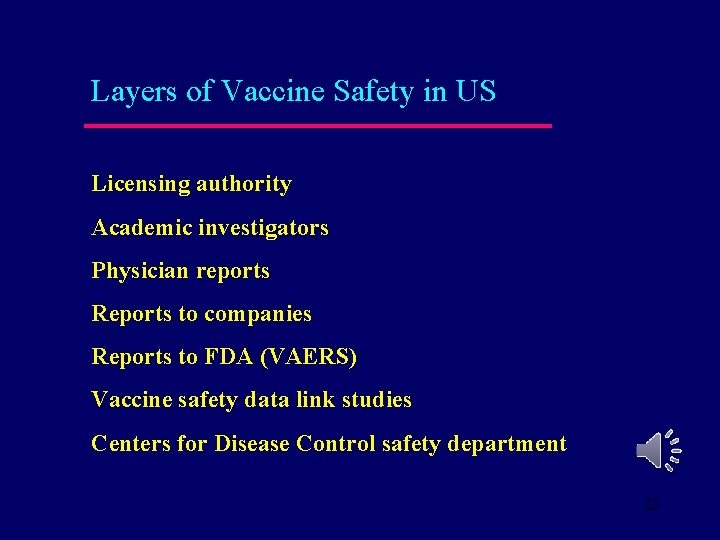
Layers of Vaccine Safety in US Licensing authority Academic investigators Physician reports Reports to companies Reports to FDA (VAERS) Vaccine safety data link studies Centers for Disease Control safety department 25
Summary Vaccine hesitancy is a worldwide problem owing to the success of vaccines And increasing independence of patients However, it can be controlled by a variety of measures if physicians and nurses are educated. 26 12/4/2020