
Importance of Bovine Leukosis Bovine Leukemia Virus Antibody

Importance of Bovine Leukosis (Bovine Leukemia Virus) • Antibody presence is considered evidence of infection • Infection is usually inapparent and persistent Fatal Adult Lymphosarcoma Most common tumor of cattle Tumors in: • Lymph nodes • Spleen • Spinal chord • Intestines • Heart • Abomasum • Kidney • Tissue behind the eye • Uterus
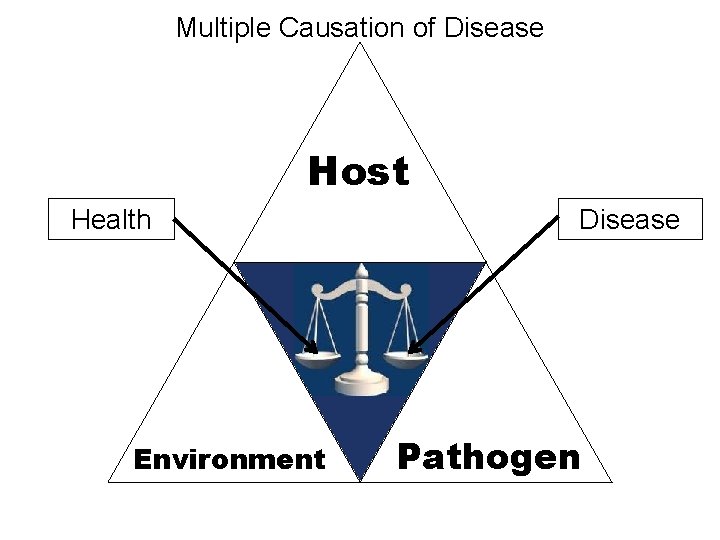
Multiple Causation of Disease Host Health Environment Disease Pathogen
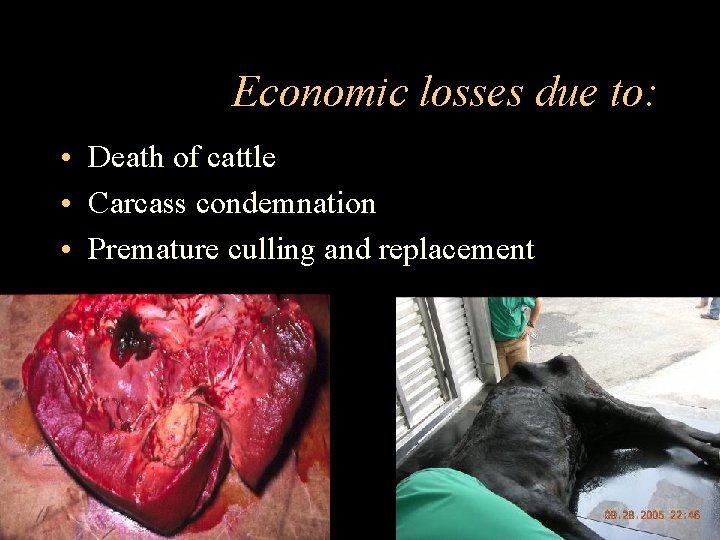
Economic losses due to: • Death of cattle • Carcass condemnation • Premature culling and replacement
Control of BLV? 1 Understand that transmission is possible through blood contamination via: • Insects • Blood transfusions • Common needles or surgical instruments • Contaminated palpation sleeves
Control of BLV? 1 Understand that transmission is possible through blood contamination 2 Understand that transmission from dam to offspring can happen
Control of BLV? 1 Understand that transmission is possible through blood contamination 2 Understand that transmission from dam to offspring can happen 3 Segregate seropositive (infected) animals from seronegative (uninfected) animals with at least 1 fence (10 feet preferred).
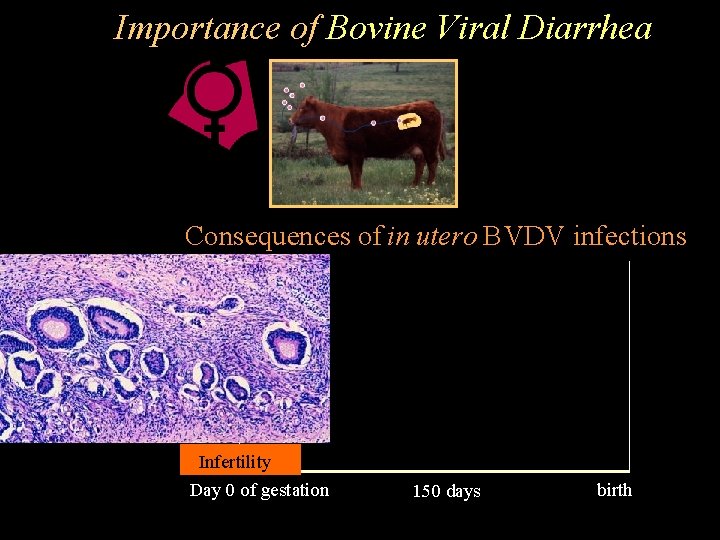
Importance of Bovine Viral Diarrhea Consequences of in utero BVDV infections Infertility Day 0 of gestation 150 days birth
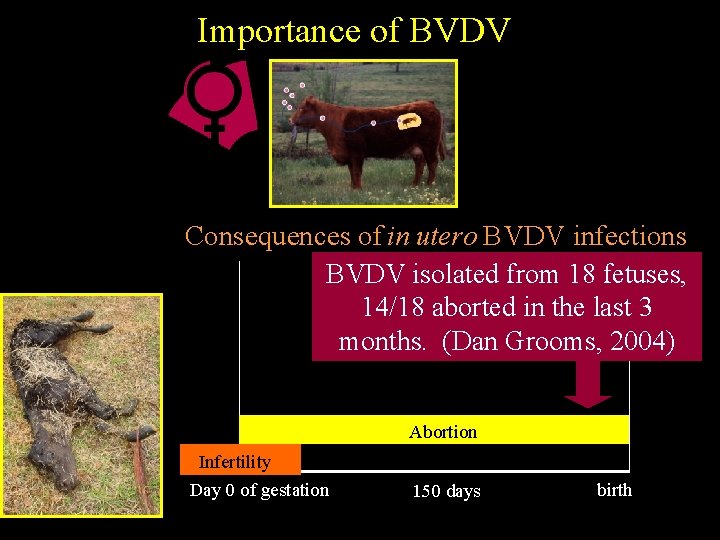
Importance of BVDV Consequences of in utero BVDV infections BVDV isolated from 18 fetuses, 14/18 aborted in the last 3 months. (Dan Grooms, 2004) Abortion Infertility Day 0 of gestation 150 days birth
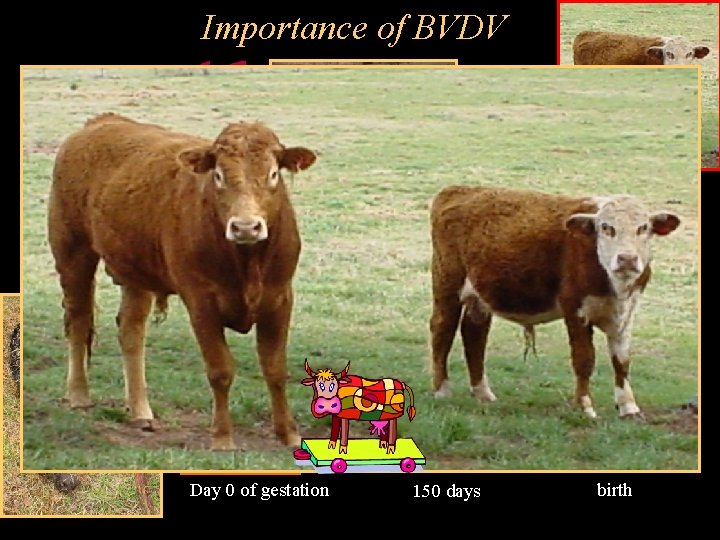
Importance of BVDV Consequences of in utero BVDV infections Noncytopathic BVDV Persistent infection Abortion Infertility Day 0 of gestation 150 days birth
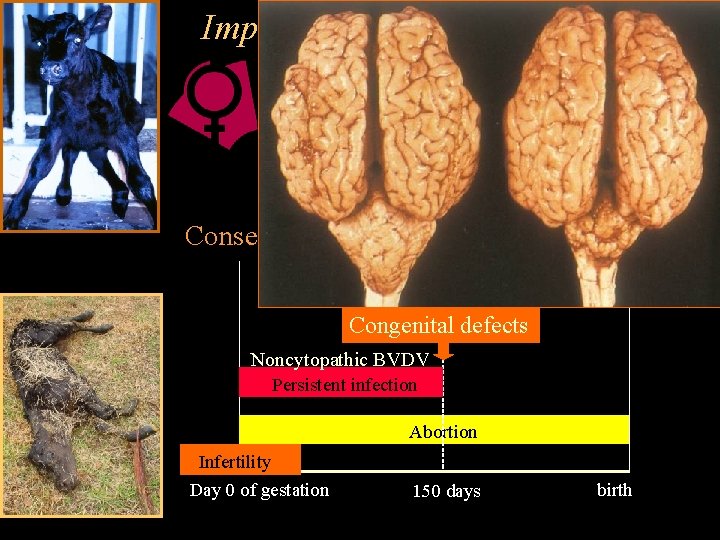
Importance of BVDV Consequences of in utero BVDV infections Congenital defects Noncytopathic BVDV Persistent infection Abortion Infertility Day 0 of gestation 150 days birth
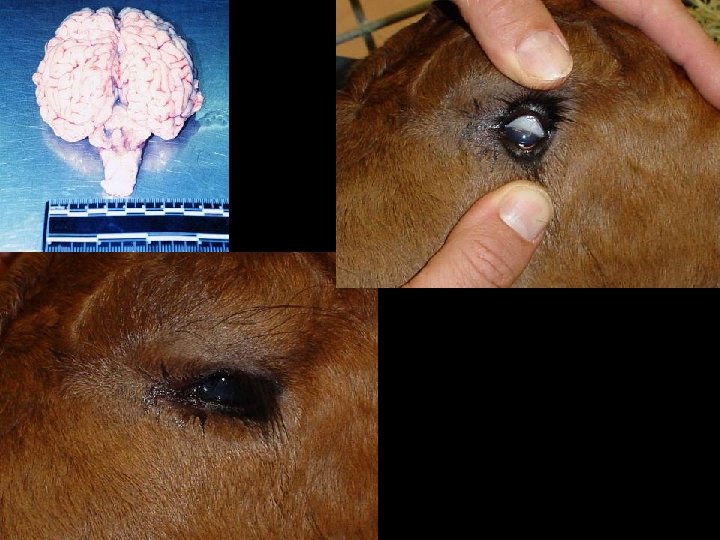

Importance of BVDV Consequences of in utero BVDV infections Acute infection Congenital defects Noncytopathic BVDV Persistent infection Abortion Infertility Day 0 of gestation 150 days birth
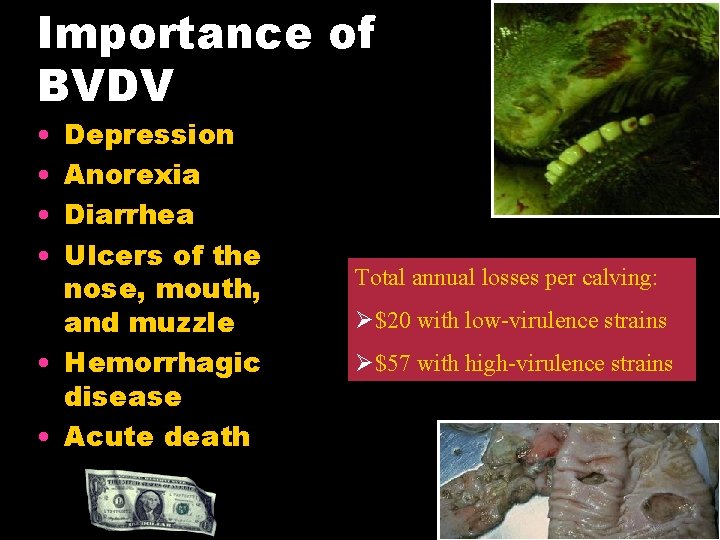
Importance of BVDV • • Depression Anorexia Diarrhea Ulcers of the nose, mouth, and muzzle • Hemorrhagic disease • Acute death Total annual losses per calving: Ø$20 with low-virulence strains Ø$57 with high-virulence strains
BVDV 1 Surveillance to detect ØHow? ? ?
Surveillance Ø High Risk • Ear notch on all calves • Test all cows without calves • (VI on serum) • Test bulls and heifers • (VI on serum)
Surveillance Ø Low risk (choose your plan) #1. #2. #3. #4. Monitor production & health Serology of herd sub-set PCR on pooled serum (entire calf crop) Ear notch test (entire calf crop)
A Complete Focus on BVDV 1 Surveillance to detect 2 Vaccination to keep in check

Bovine Viral Diarrhea Virus Genome A single large open reading frame (11, 694 nt) nonstructural gene pro 385 nt N 5’NTR structural genes C Erns E 1 E 2 nonstructural genes ? NS 2 -3 NS 4 A NS 4 B NS 5 A NS 5 B 226 nt 3’NTR
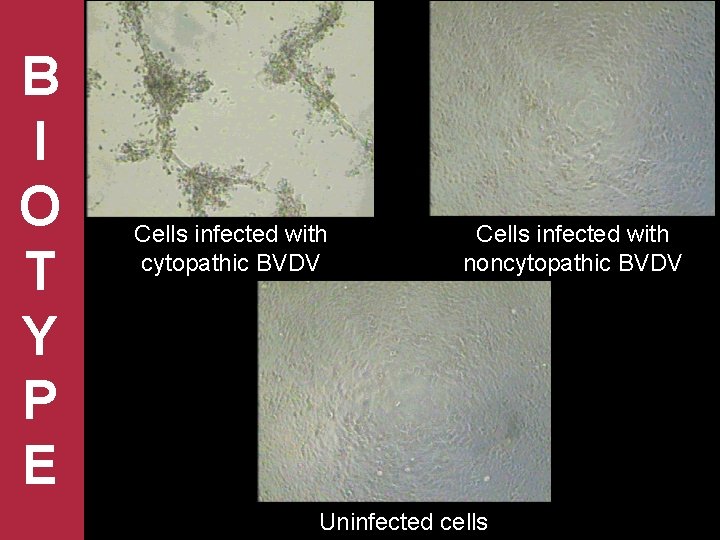
B I O T Y P E Cells infected with cytopathic BVDV Cells infected with noncytopathic BVDV Uninfected cells

Vaccination will not provide complete protection in any situation.

Vaccination and fetal protection % persistent infections Modified-Live Vaccination Experimental challenge at 75 days of gestation Vaccination will not provide complete protection in any situation.
BVDV vaccination protocol Heifers at 4 to 6 months administer MLV revaccinate with MLV 30 days later Revaccinate heifers and cows prior to breeding Vaccination will not provide complete protection in any situation.

A Complete Focus on BVDV 1 Surveillance to detect 2 Vaccination to keep in check 3 Biosecurity to protect
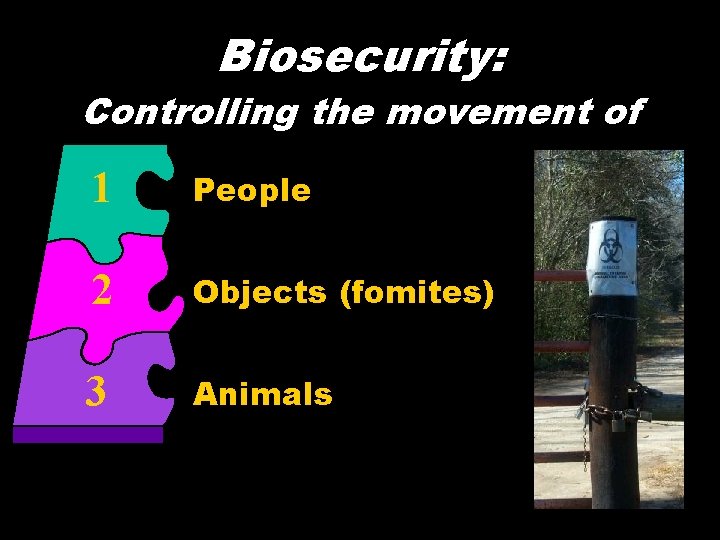
Biosecurity: Controlling the movement of 1 People 2 Objects (fomites) 3 Animals
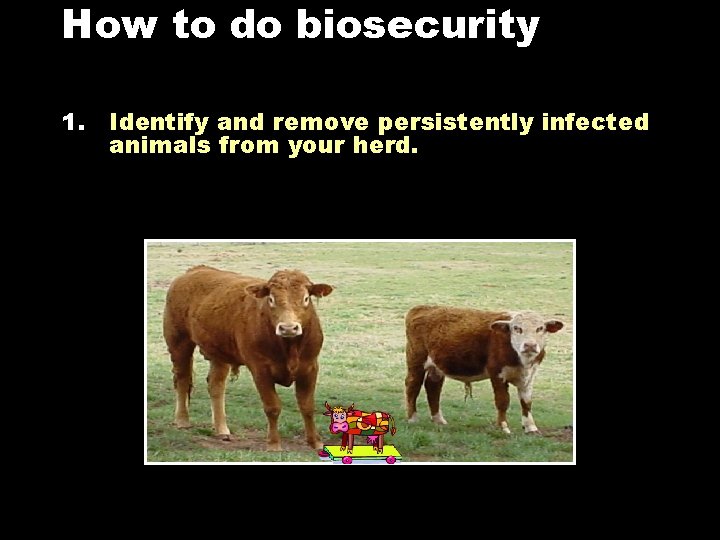
How to do biosecurity 1. Identify and remove persistently infected animals from your herd.
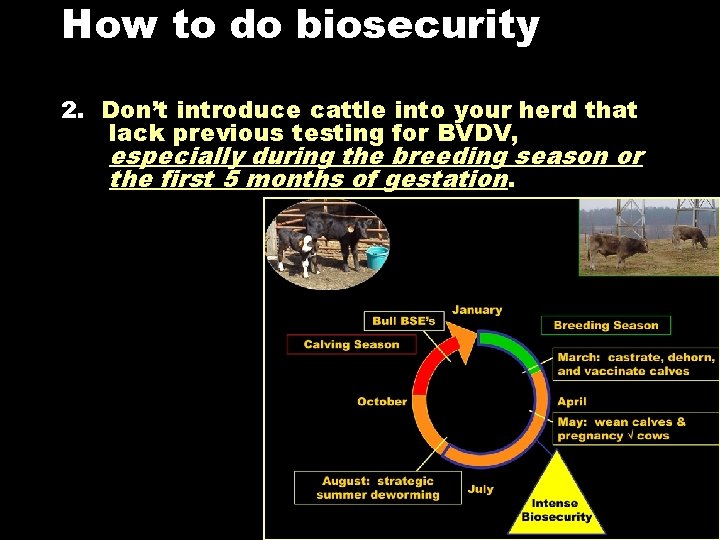
How to do biosecurity 2. Don’t introduce cattle into your herd that lack previous testing for BVDV, especially during the breeding season or the first 5 months of gestation.
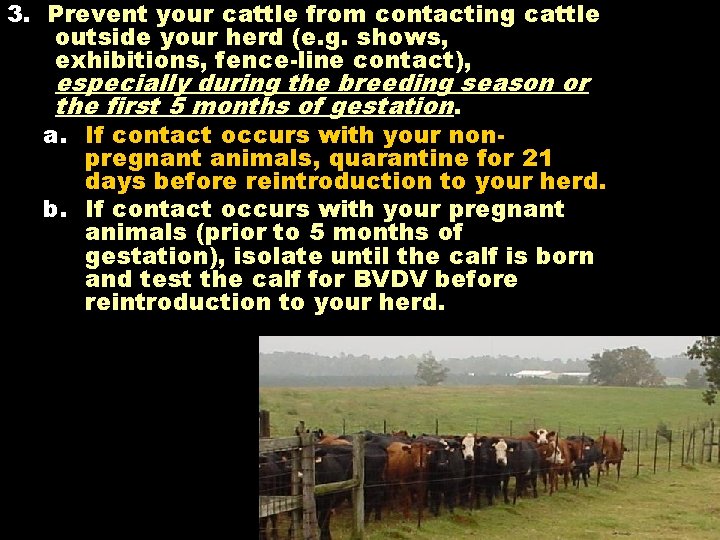
3. Prevent your cattle from contacting cattle outside your herd (e. g. shows, exhibitions, fence-line contact), especially during the breeding season or the first 5 months of gestation. a. If contact occurs with your non- pregnant animals, quarantine for 21 days before reintroduction to your herd. b. If contact occurs with your pregnant animals (prior to 5 months of gestation), isolate until the calf is born and test the calf for BVDV before reintroduction to your herd.
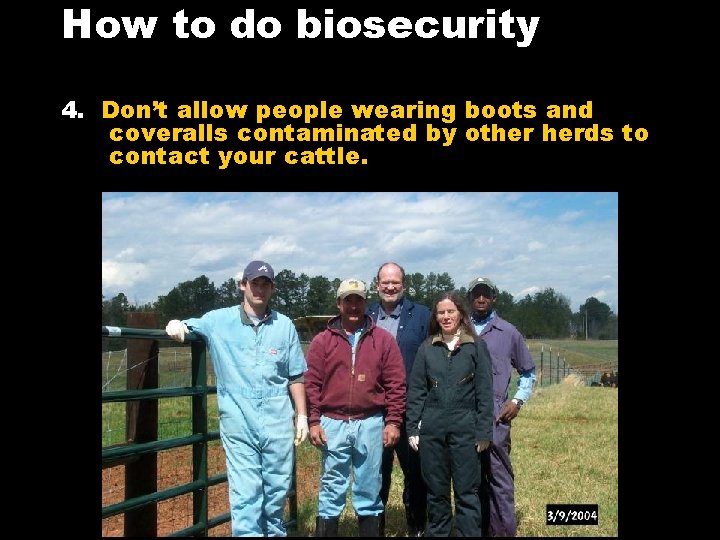
How to do biosecurity 4. Don’t allow people wearing boots and coveralls contaminated by other herds to contact your cattle.
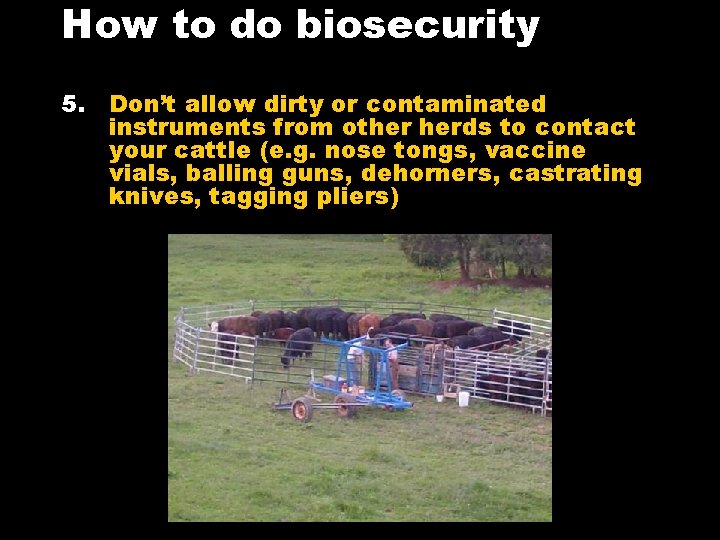
How to do biosecurity 5. Don’t allow dirty or contaminated instruments from other herds to contact your cattle (e. g. nose tongs, vaccine vials, balling guns, dehorners, castrating knives, tagging pliers)
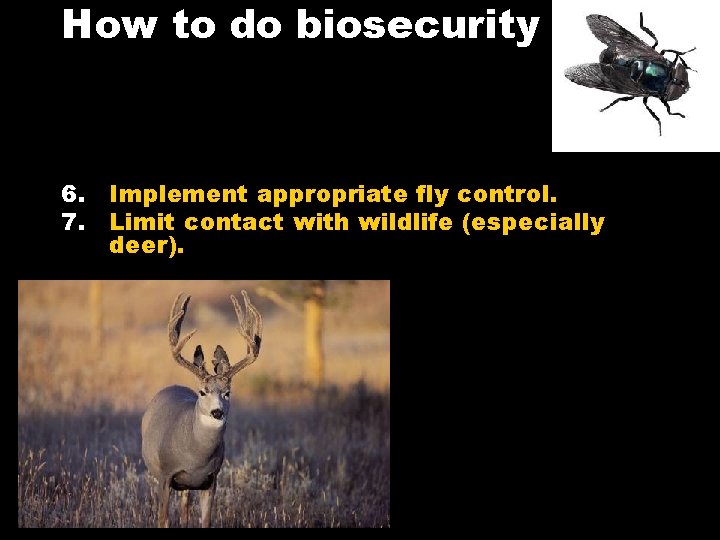
How to do biosecurity 6. Implement appropriate fly control. 7. Limit contact with wildlife (especially deer).
Don’t forget biosecurity for semen & embryos • Semen CSS certified • Embryos from BVD free donor or washed according to International Embryo Transfer Society (IETS) Protocol
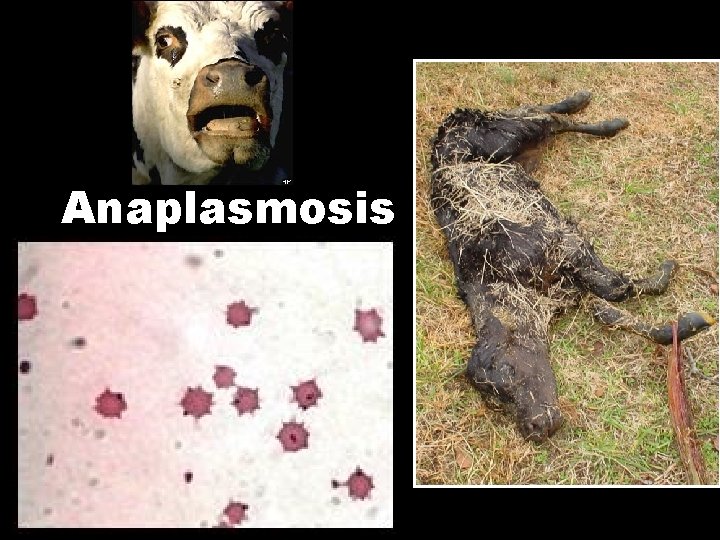
Anaplasmosis
Signs of Anaplasmosis Usually no clinical signs in calves! • • • Acute aggression Weakness and ataxia Fever Off feed Constipation with dark brown feces • Abortion
Control of Anaplasmosis 1 Understand that transmission is possible through blood contamination via: • Insects- ticks and horse flies • Blood transfusions • Common needles or surgical instruments • Contaminated palpation sleeves
Control of Anaplasmosis 1 Understand that transmission is possible through blood contamination 2 Understand that some cattle can be persistent, asymptomatic carriers but infect insects
Control of Anaplasmosis 1 Understand that transmission is possible through blood contamination 2 Understand that some cattle can be persistent, asymptomatic carriers but infect insects 3 To obtain complete clearance, treat with long acting tetracycline every 3 days for 4 successive treatments & confirm clearance
- Slides: 38