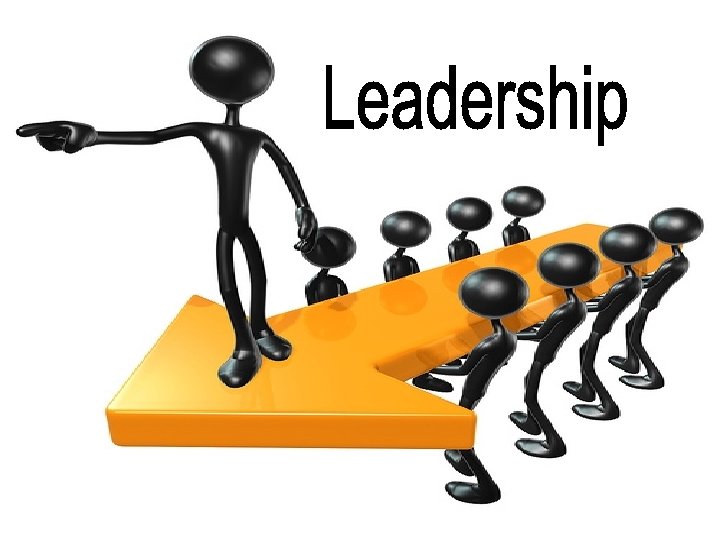
Topics related to leadership are as follows n




- Slides: 63
Topics related to leadership are as follows: n n n Concept of leadership. Features of leadership. Types of leadership. Difference between formal and informal Leadership. Importance of Leadership. How to be a good Leader?
Topics related to leadership are as follows: n n n Theories of Leadership. The risks and Challenges of Leadership. Growing as a Leader.
Concept of leadership: n n n Leaders are made not born. If you have the desire and willpower, you can become an effective leader. Good leaders develop through a never ending process of self-study, education, training, and experience. This guide will help you through that process. Leaders carry out this process by applying their leadership attributes, such as beliefs, values, ethics, character, knowledge, and skills. “Leadership is the process of influencing the behaviour of other to work willingly and enthusiastically for achieving predetermined goals. ”
Features of leadership: n Proactive vs. Reactive : The exceptional leader is always thinking three steps ahead. Working to master his/her own environment with the goal of avoiding problems before they arise. n Flexible/Adaptable : How do you handle yourself in unexpected or uncomfortable situations? An effective leader will adapt to new surroundings and situations, doing his/her best to adjust.
Features of Leadership: n n n A Good Communicator : As a leader, one must listen. . . a lot! You must be willing to work to understand the needs and desires of others. A good leader asks many questions, considers all options, and leads in the right direction. Respectful : Treating others with respect will ultimately earn respect. Quiet Confidence : Be sure of yourself with humble intentions.
Features of leadership: n Enthusiastic : Excitement is contagious. When a n Open-Minded : Work to consider all options when n Resourceful : Utilize the resources available to you. leader is motivated and excited about the cause people will be more inclined to follow. making decisions. A strong leader will evaluate the input from all interested parties and work for the betterment of the whole. If you don't know the answer to something find out by asking questions. A leader must create access to information.
Features of leadership: n Rewarding : An exceptional leader will recognize the efforts of others and reinforce those actions. We all enjoy being recognized for our actions! n Well Educated : Knowledge is power. Work to be well educated on community policies, procedures, organizational norms, etc. Further, your knowledge of issues and information will only increase your success in leading others.
Features of Leadership: n Open to Change : A leader will take into account all points of view and will be willing to change a policy, program, cultural tradition that is out-dated, or no longer beneficial to the group as a whole. n Interested in Feedback : How do people feel about your leadership skill set? How can you improve? These are important questions that a leader needs to constantly ask the chapter. View feedback as a gift to improve.
Types Of Leadership: n There are two types of leadership, they are Formal and Informal Leadership. n Formal Leaders: A formal leader is a member of organization who has given authority by virtue of his position to influence other members of organization to achieve organizational goals. Formal leaders are given leadership based on their position with a group. They are actually assigned to be leaders as part of their role in the group. Examples of formal leaders would be the teacher in a classroom or the manager within a company.
Types Of Leadership: n Informal Leaders: When someone is a leader but they don’t have the formal power.
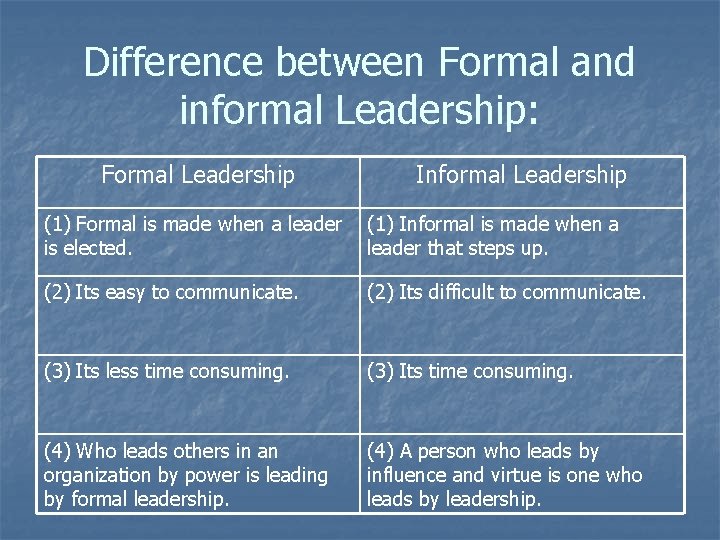
Difference between Formal and informal Leadership: Formal Leadership Informal Leadership (1) Formal is made when a leader (1) Informal is made when a is elected. leader that steps up. (2) Its easy to communicate. (2) Its difficult to communicate. (3) Its less time consuming. (3) Its time consuming. (4) Who leads others in an organization by power is leading by formal leadership. (4) A person who leads by influence and virtue is one who leads by leadership.
Importance of Leadership: n n Leadership is an important factor for making any type of organisations successful. Without a good leader, organisation can’t function efficiently and effectively. Direction of activities can be affected by the leader. The importance of good leadership can be discussed in How to be a good Leader?
How to be a good Leader? n Leadership in a Business Environment: • Be a good role model: • • • Discuss your experience. Without showing off. Act professionally. You should still be cordial to all of your employees. Communicating with employees in a professional manner. Meeting at time.
How to be a good Leader? • Be clear about your rules and expectation: • • • Have a code of conduct or a rule book you can point to that shows employees how to act. If you’re working on a project, your goal and expectations should be clear from the beginning so your employees are motivated, not confused. Don’t change your instructions in the middle of a project.
How to be a good Leader? • Leave room for input: • • • Ask for feedback , After you’ve wrapped up a project, set up guidelines during a meeting, or have thrown a charity event. Ask for opinions in a face to face situation. At the end of the meeting, you can casually ask if people have any questions or opinions.
How to be a good Leader? • Reward employees for good behavior: • • • You need to maintain high team morale, and to motivate employees to achieve their goals in a timely. Have a monthly team dinner to celebrate a completed goal. Reward your hard workers with prize.
How to be a good Leader? • Be liked: • • If you made a mistake than admit it. Of course, you can avoid always admitting that you’ve made a mistake, because you want to look like you know what the heck you’re doing. Share the occasional person story. You don’t have to be best fiends with your employees, but talking about your family, or your background, can make them open up to you and see you as a person.
How to be a good Leader? • • Be consistent in your interactions. If you’re very friendly during group meetings, but chilly when you pass an employee in the hall, your workers may get mixed signals and may not like you very much. It’s important to be cordial at all times – not just during the important ones. Avoid romantic relationships in the workplace. This almost always ends badly and can lead you to lose everyone’s respect, not to mention your job.
How to be a good Leader? n Leadership in the classroom: • Show your expertise in the subject matter: • • When you introduce yourself, tell them how many years you’ve been working in your field and what have achieved there. Then they’ll know your stuff. Tell them how you've been teaching your course. So they have a sense that you’ve created the best course possible.
How to be a good Leader? • Establish your rules on day one: • • • Once the introductions are out of the way, it’s important to let your employees understand your expectations so they can meet them. Have a well-organized syllabus that shows them exactly what to expect from every day of the production. Answer any questions they after you go over it, so you can clear up any confusion.
How to be a good Leader? • Be creative: • • To be a good leader, you have to find new ways to work in the organization. So that employee will not get bored and distracted. Allow your employee to give new ways or ideas which make benefits to organization. And you can also teaches old concept in a new ways.
How to be a good Leader? • Show your employee you care: • • To be a good leader, you have to prove that you care about your employees success. Give motivation to your employees to its work. If you get achieve your decided goal, give treat to your employees who so ever was evolved to achieving that goal. Whenever employee makes mistake than don't shout, give instruction in a positive way.
How to be a good Leader? • Establish yourself as an authority figure: • • • Make it clear that you are the boss of your department. Tell your employee to treat you with respect. Give stick action, Whenever any employee misbehave.
Theories Of Leadership: n There are four types of theories: Charismatic Leadership Theory. Ø Trait Theory. Ø Behavioral Theory. Ø Situational Theory. Ø
Charismatic Leadership Theory.
Charismatic Leadership Theory: n Definition: A leadership theory which states that followers make attributions of heroic or extraordinary leadership abilities when they observe certain behaviors.
Charismatic Leadership Theory: n n There are many different ways to be a leader, but charismatic leaders guide by using charm and self-confidence. Their personality attracts attention and gains admirers. Charismatic leaders use others people’s admiration tot influence them to follow. Charismatic leaders with good ethics and intentions have the power to inspire and transform the people they lead.
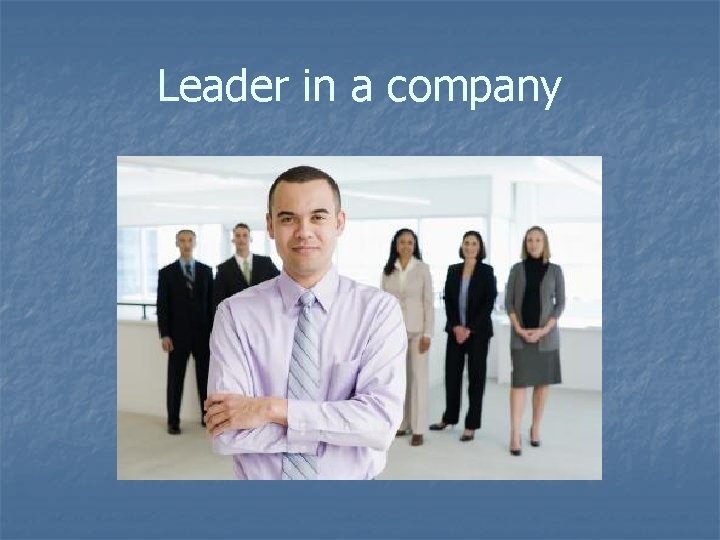
Leader in a company
Charismatic Leadership Theory: n Identification: Charismatic leaders have a clear vision of where they want to go and how to get there - and they are fantastic at articulating that vision to others. Ø They are sensitive to their surroundings and to the needs of their followers and potential followers. Ø
Charismatic Leadership Theory: Charismatic leaders are often risk-takers who do things that others are afraid to do, which engenders admiration. Ø Their unconventional behavior often attracts others to them. Ø
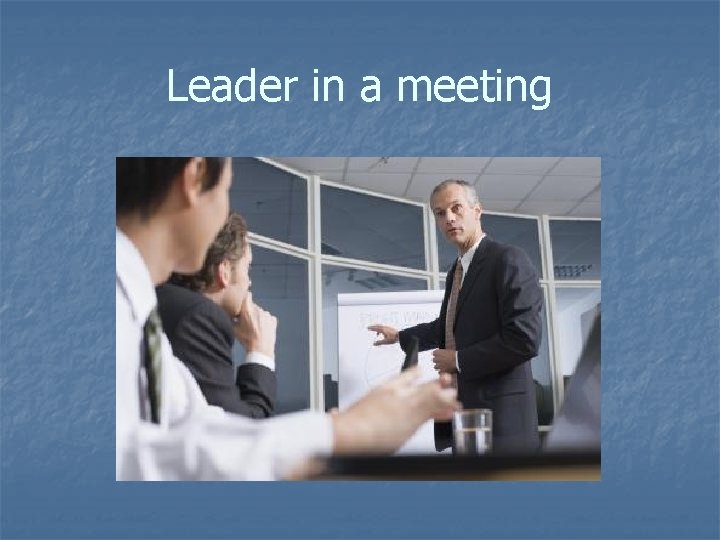
Leader in a meeting
Charismatic Leadership Theory: n Features: Ø Ø Charismatic leaders are great at observing others and discerning their emotional needs. You can identify a charismatic leader by how he interacts with other people. He pays great attention to people during on-on-one conversation. Charismatic leaders may change their attitude and presentation to suit the needs of whomever they interact with.
Charismatic Leadership Theory: n They will use both subtle (such as body language) and overt (such as speeches) tactics to convert others to their point of view.
Charismatic Leadership Theory: n Effects: The charismatic leader’s social skills and personal appeal gains the followers. Ø Once the leader has followers, she will take pains to make her group distinct from other groups. Ø The leader may instill confidence in her group and challenge group members to meet her expectations. Ø
Charismatic Leadership Theory: The leader may also raise her group above the status of other groups, if only in the mind of the leader and her followers. Ø This makes the leader’s group a strong and unified force. Ø
Social skills in business are essential.
Charismatic Leadership Theory: n Considerations Ø Ø Ø Leaders who are not naturally charismatic my spend a lot of time perfecting their strength of character. People tend to trust charismatic leaders because they visibly take risks and sacrifice in the name of their beliefs. Charismatic leaders may be theatrical, telling stories and using metaphors to get their point across to potential followers.
Charisma is a natural trail.
History Book.
Charismatic Leadership Theory: n History: History has numerous examples of charismatic leaders who produce both negative and positive results. Ø Adolph Hitler is an example of the destructive power of charismatic leadership. Ø He was able to use speeches to connect to followers and persuade them to commit genocide. Ø
Charismatic Leadership Theory: On the other hand, Mahatma Gandhi used his charisma to inspire his people to protest nonviolently. Ø Gandhi fasted to show self-sacrifice and commitment to his beliefs. Ø His charismatic leadership helped him gain followers and enough attention to aid in peacefully ending British rule of India. Ø
Trait theory.
Trait Theory: n Definition: The measurement of consistent patterns of habit in an individual’s behaviour, thoughts, and emotions. The theory is based on the stability of traits over time, how they differ from other individuals, and how the will influence human behaviour.
Trait Theory: n The various traits can be classified into innate and acquirable traits on the basis of their source.
Innate Qualities: n n Innate Qualities are those which are processed by various individual since their birth. On the basic of such qualities, it is said that ‘leaders are born and not made’
Innate Qualities: The following are the major innate qualities in a successful leader. n • Physical Features: Ø Ø Physical features of a man are determined by heredity factors. Physical characteristic and rate of maturation determined the personality formation which is an important factor in determining leadership success.
Innate Qualities: Ø • To some extent, height, weight, physique, health and appearance are important for leadership. Intelligence: For leadership, higher level of intelligence is required. Ø Intelligence is generally expressed in terms of mental ability. Ø
Innate Qualities: Ø The composition of brain is a natural factor though many psychologists claim that the level of intelligence in an individual can be increase through various training methods.
Acquirable quality: n n Acquirable qualities of leadership are those which can be acquired and increased though various processes. Such Behavioral patterns are developed among a child as various traits over a period of time.
Acquirable quality: n Many of this traits can be increased through training programs following are the major qualities essential for leadership: Emotional stability. Ø Human relations Ø Empathy. Ø
Acquirable quality: Objectivity. Ø Motivating skills. Ø Technical skills. Ø Communicative skills. Ø Social skills. Ø
Behavioral Theory.
Behavioral theory: n n n Behavioral theory of leadership emphasizes that strong leadership is the result of effective role behavior. Leadership is shown by a person acts more than by his traits. Task-related functions or problem-solving functions, relate to proving solution to the problems faced by the groups in performing jobs and activities.
Behavioral theory: n n Group maintenance functions, or social functions, relate to actions of mediating disputes and ensuring that individual feel valued by the groups. These two roles may required to different sets of behavior from the leader, known as leadership styles.
Behavioral theory: n n n Leadership behavior may be viewed in two ways: functional and dysfunctional. Functional behavior influences followers positively and include such functions as setting clear goals, motivating employees for achieving goals, rising the level of moral, building team sprites, etc. Dysfunctional behavior is unfavorable to the followers and denotes ineffective leadership.
Situational theory:
Situational theory: n n n Situational approach was applied, for the first time, in 1920 in the armed forces of Germany with the objective to get good generals under different situations. The prime attention in situational theory of leadership is given to the situation in which leadership is exercise. Therefore effectiveness of leadership will be affected by the factors associated with the leader and factors associated with the situation.
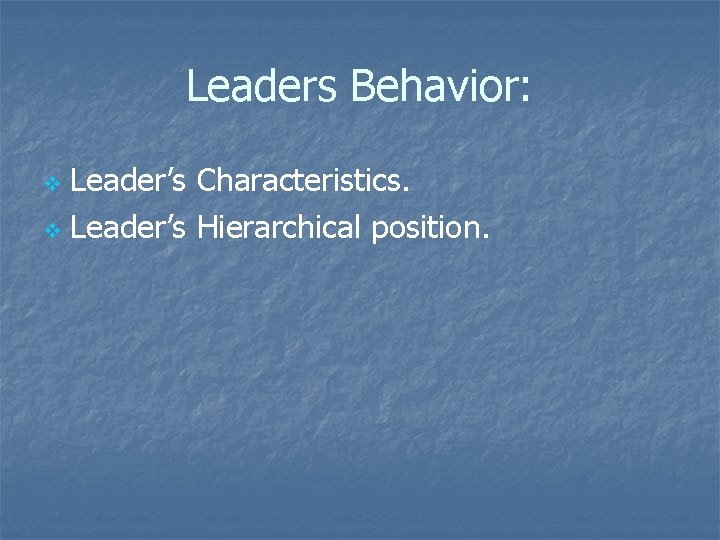
Leaders Behavior: Leader’s Characteristics. v Leader’s Hierarchical position. v
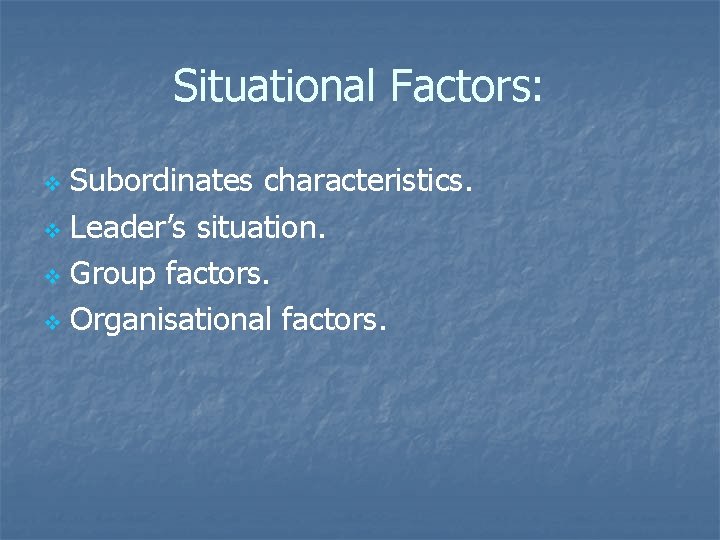
Situational Factors: Subordinates characteristics. v Leader’s situation. v Group factors. v Organisational factors. v
The risk and challenges of Leadership: n n n You may be attacked, dismissed, or silenced. You may risk your job, your reputation, and your future. Attempts may be made to discredit you based on gender, race, culture background, social standing, economic status, perceived lack of expertise/experience, age, education, etc.
Growing as a Leader: Ø Ø Keep the vision front and center. You will make mistakes. The reactions you experience from others often come from fear and misunderstanding. Learn to use the Balcony and take time for yourself.
Thank you Created By: Maheshwari Kahar.