the Teen Medical Academy A Family Medicine Residency






- Slides: 28
the Teen Medical Academy A Family Medicine Residency Program Increases Access to Medical Careers Manuel Angel Oscós-Sánchez MD Sandra K. Burge Ph. D Dolores Oscós-Flores BSEd Youth Development Program Family & Community Medicine The University of Texas HSC at San Antonio Research Funding: Texas Higher Education Coordinating Board
THANKS !!! to our Collaborators and Sponsors San Antonio ISD Health Professions High School at Edison Texas Higher Education Coordinating Board: Eisenhower Grant UTHSCSA Family and Community Medicine National Network of Latin American Medical Students Student National Medical Association Family Medicine Interest Group Trinity University Pre-Medical Students UTHSCSA John M. Smith Jr. Professorship Grant Teen Medical Academy Peer Facilitators American Indians in Texas at the Spanish Colonial Missions Texas Higher Education Coordinating Board: Minority Health Research and Education Grant South Central Texas Area Health Education Center
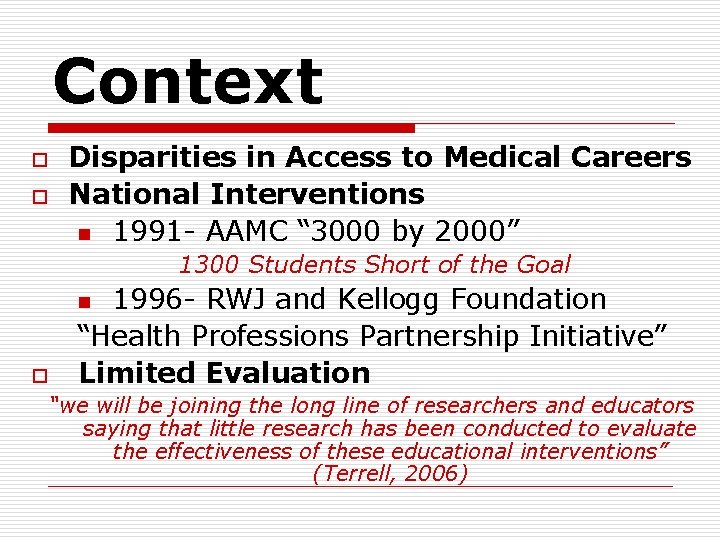
Context o o Disparities in Access to Medical Careers National Interventions n 1991 - AAMC “ 3000 by 2000” 1300 Students Short of the Goal 1996 - RWJ and Kellogg Foundation “Health Professions Partnership Initiative” Limited Evaluation n o “we will be joining the long line of researchers and educators saying that little research has been conducted to evaluate the effectiveness of these educational interventions” (Terrell, 2006)
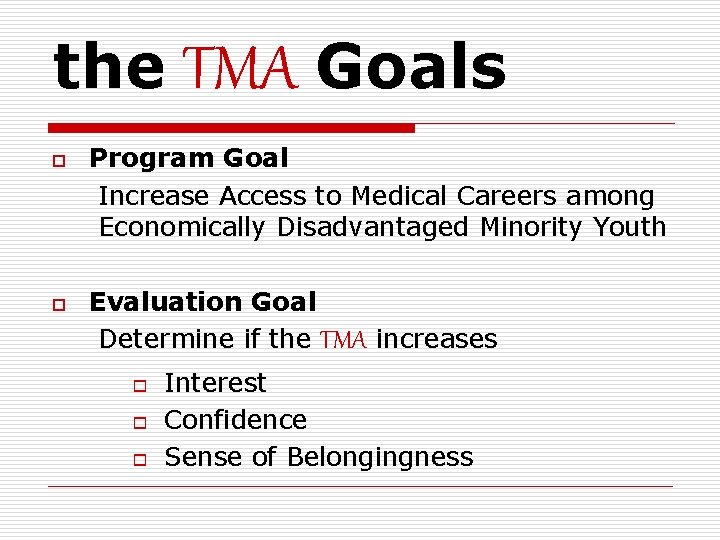
the TMA Goals o o Program Goal Increase Access to Medical Careers among Economically Disadvantaged Minority Youth Evaluation Goal Determine if the TMA increases o o o Interest Confidence Sense of Belongingness
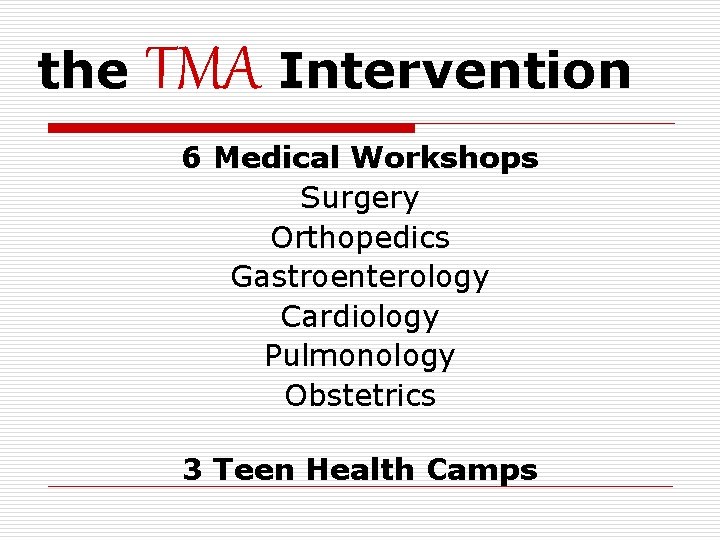
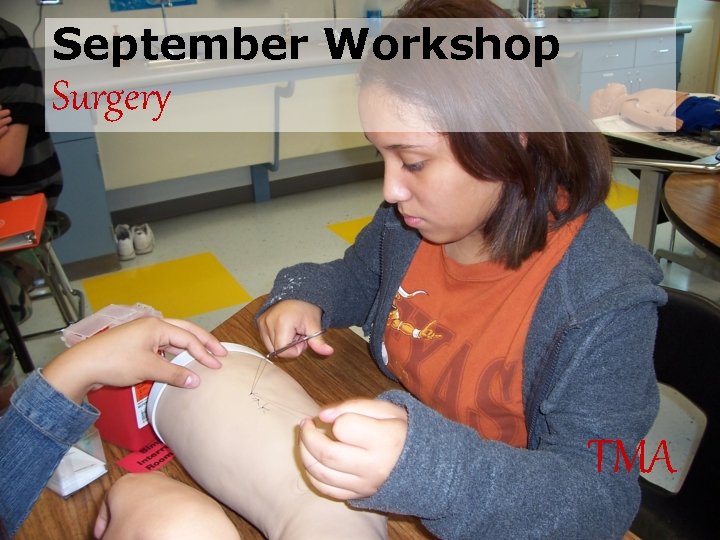
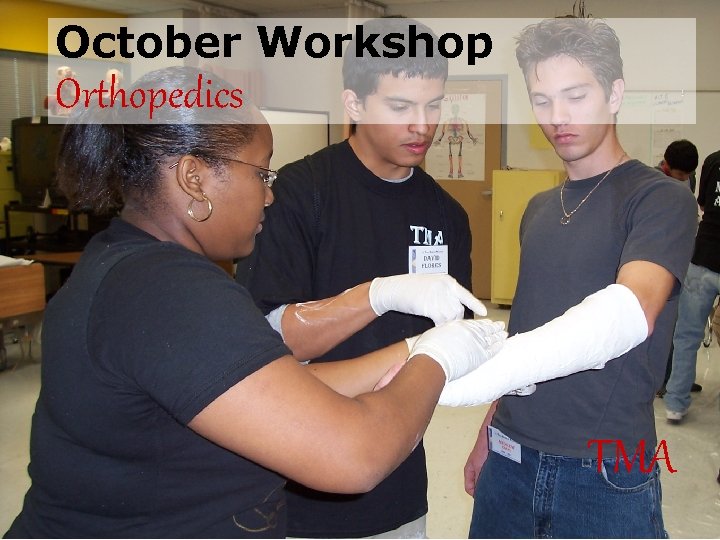
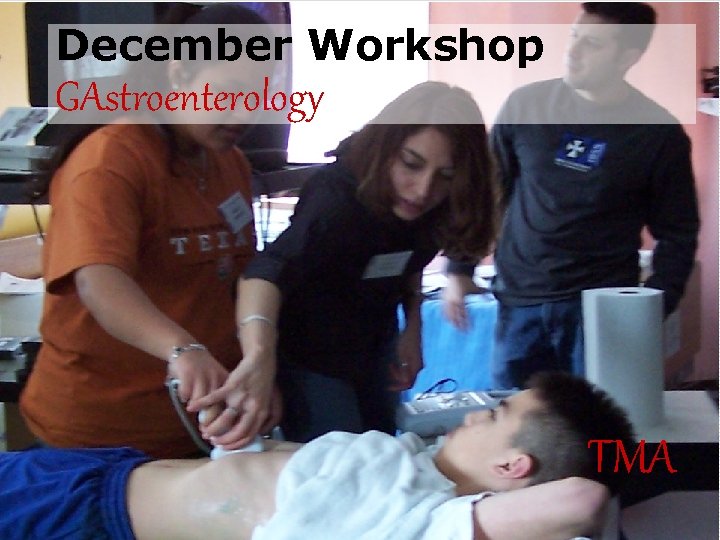
the TMA Intervention 6 Medical Workshops Surgery Orthopedics Gastroenterology Cardiology Pulmonology Obstetrics 3 Teen Health Camps
the TMA Intervention Instructors Family Medicine Residents and Faculty UTHSCSA Medical Students Trinity University Pre-Medical Students TMA Peer Facilitators Structure Monthly on Saturday Mornings Rotate through 30 minute sessions
September Workshop Surgery TMA
October Workshop Orthopedics TMA
December Workshop GAstroenterology TMA
January Workshop cardiology TMA
March Workshop Pulmonology TMA
April Workshop OBSTETRICS TMA
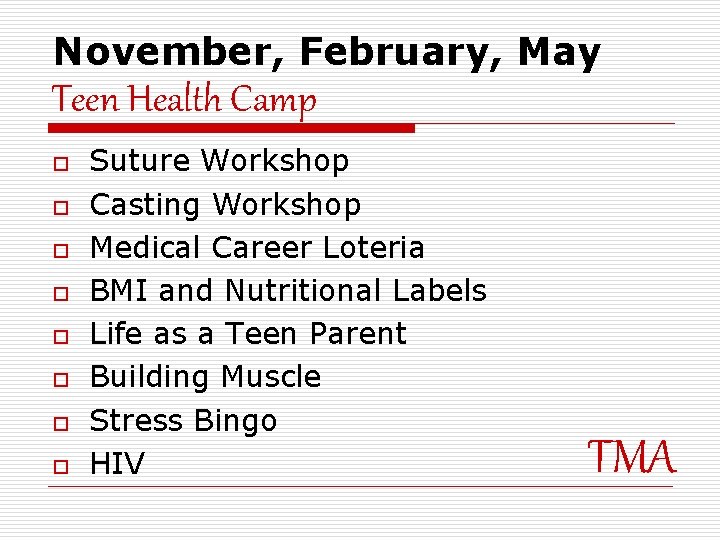
November, February, May Teen Health Camp o o o o Suture Workshop Casting Workshop Medical Career Loteria BMI and Nutritional Labels Life as a Teen Parent Building Muscle Stress Bingo HIV TMA
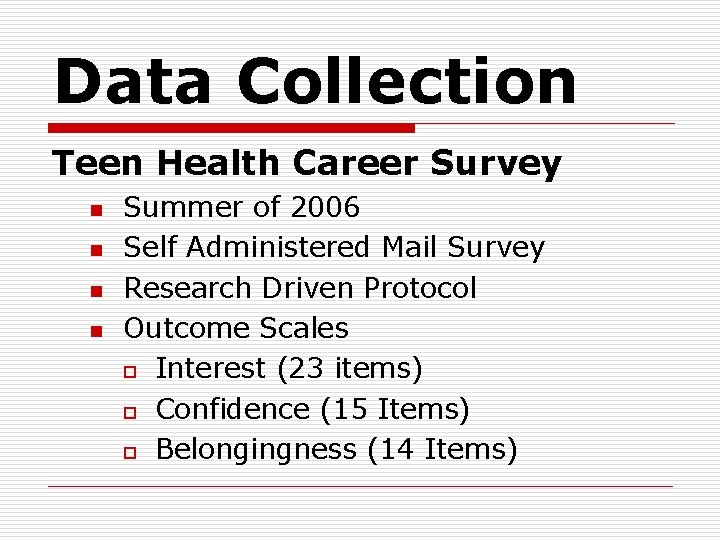
Data Collection Teen Health Career Survey n n Summer of 2006 Self Administered Mail Survey Research Driven Protocol Outcome Scales o Interest (23 items) o Confidence (15 Items) o Belongingness (14 Items)
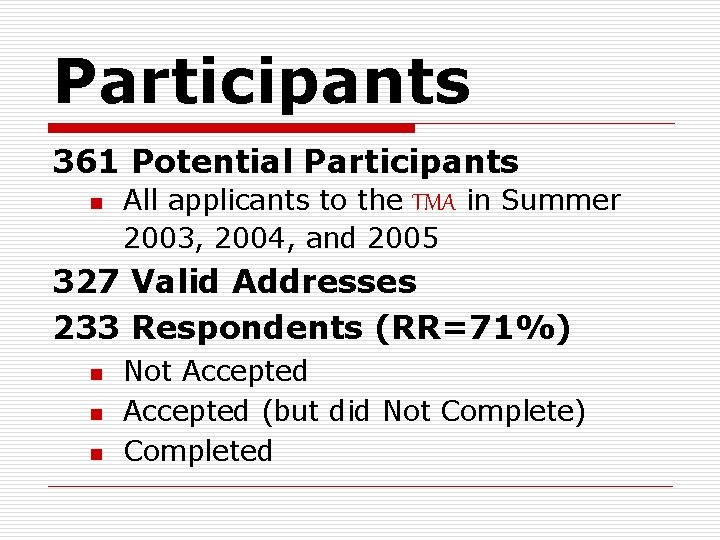
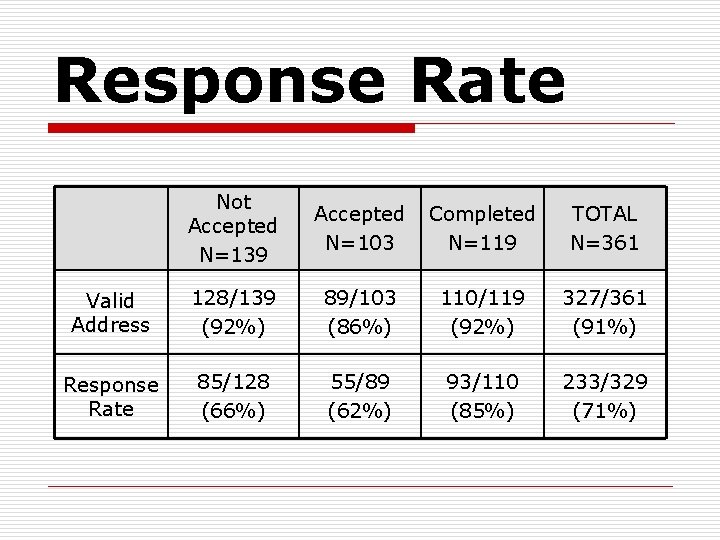
Participants 361 Potential Participants n All applicants to the TMA in Summer 2003, 2004, and 2005 327 Valid Addresses 233 Respondents (RR=71%) n n n Not Accepted (but did Not Complete) Completed
Results
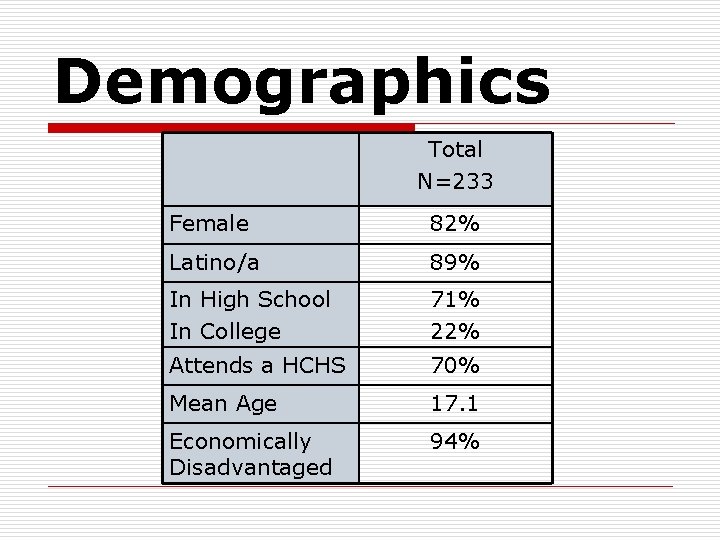
Demographics Total N=233 Female 82% Latino/a 89% In High School In College 71% 22% Attends a HCHS 70% Mean Age 17. 1 Economically Disadvantaged 94%
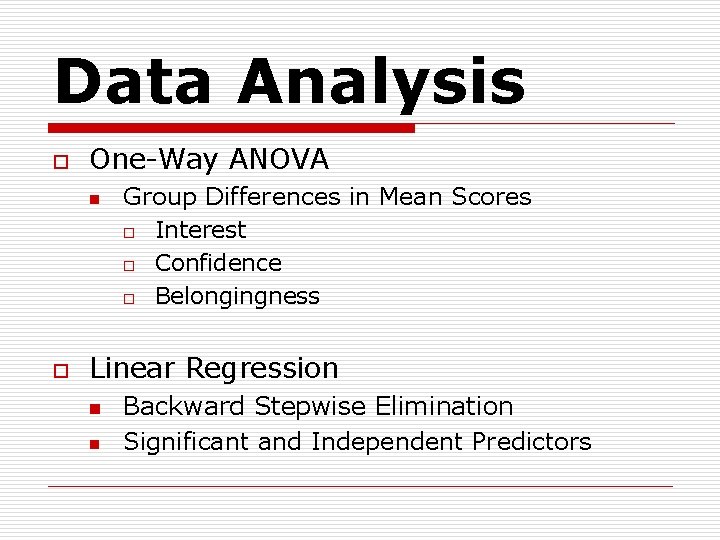
Data Analysis o One-Way ANOVA n o Group Differences in Mean Scores o Interest o Confidence o Belongingness Linear Regression n n Backward Stepwise Elimination Significant and Independent Predictors
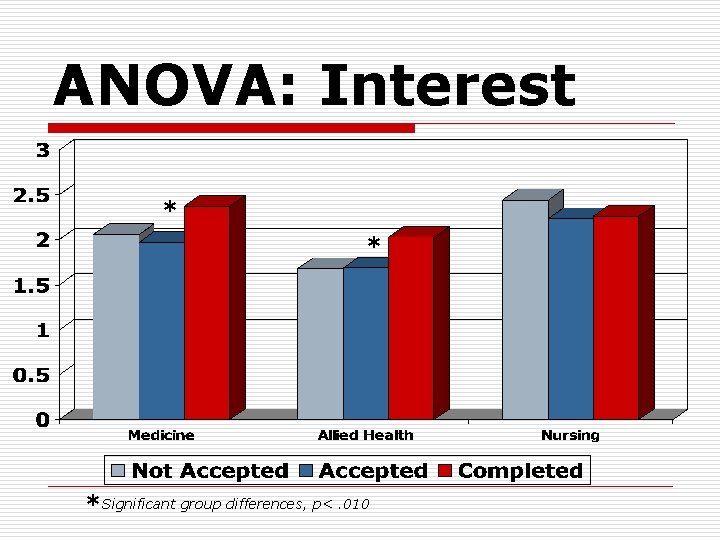
ANOVA: Interest * * *Significant group differences, p<. 010
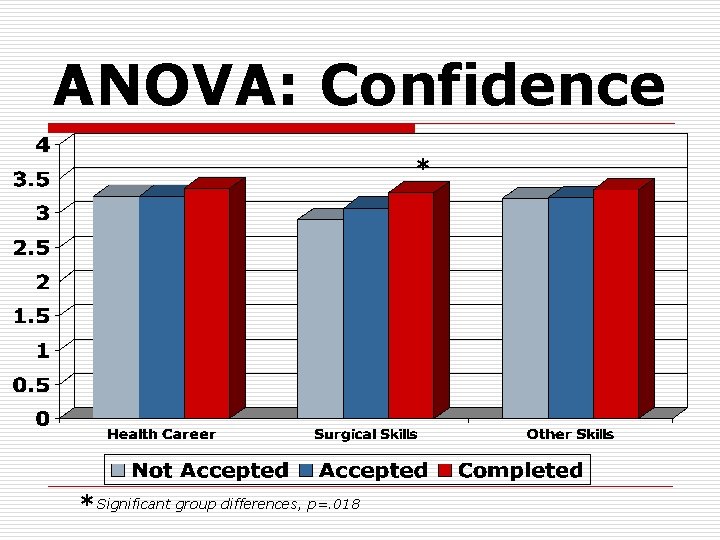
ANOVA: Confidence * * Significant group differences, p=. 018
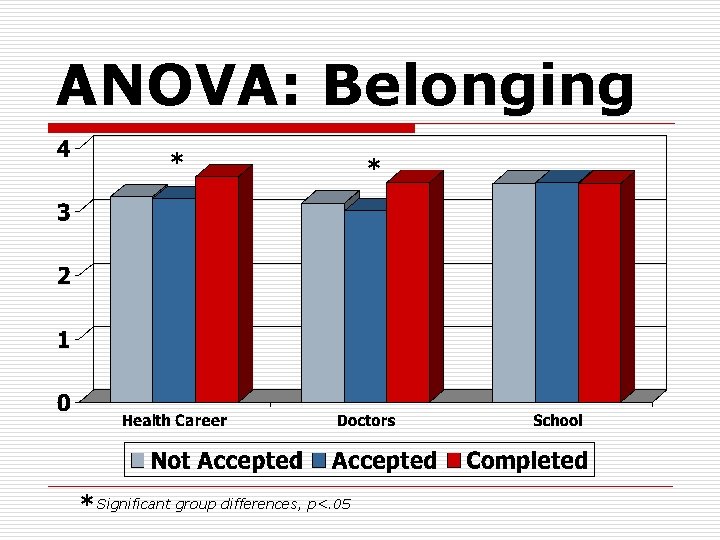
ANOVA: Belonging * * Significant group differences, p<. 05 *
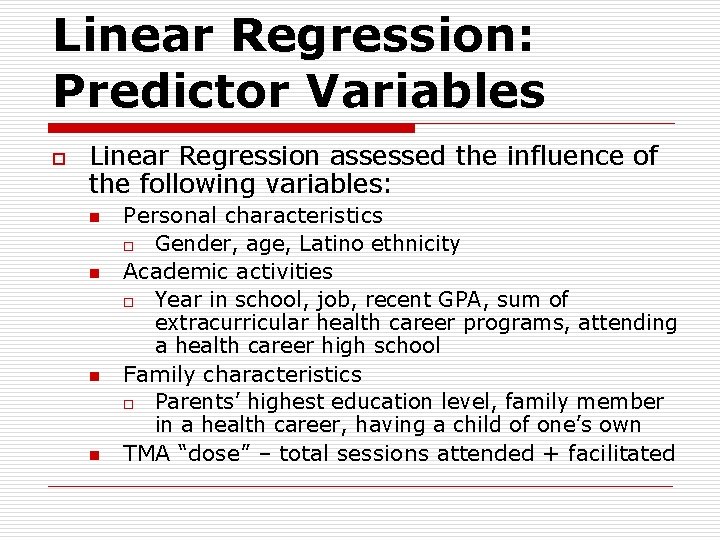
Linear Regression: Predictor Variables o Linear Regression assessed the influence of the following variables: n n Personal characteristics o Gender, age, Latino ethnicity Academic activities o Year in school, job, recent GPA, sum of extracurricular health career programs, attending a health career high school Family characteristics o Parents’ highest education level, family member in a health career, having a child of one’s own TMA “dose” – total sessions attended + facilitated
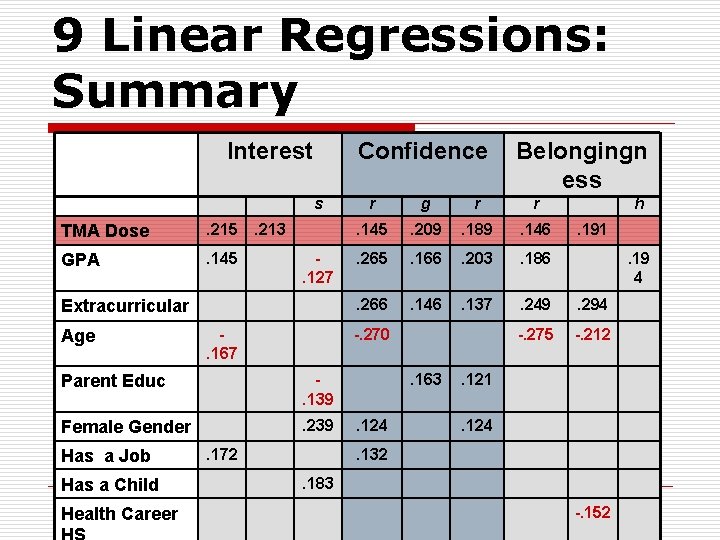
9 Linear Regressions: Summary Interest Med TMA Dose . 215 GPA . 145 AH Nur s . 213. 127 Extracurricular Age . 167. 139 Female Gender . 239 Has a Child Health Career . 172 Belongingn Caree ess Med Sc Caree r Sur g Othe r . 145 . 209 . 189 . 146 . 265 . 166 . 203 . 186 . 266 . 146 . 137 . 249 . 294 -. 275 -. 212 -. 270 Parent Educ Has a Job Confidence . 163. 124 r h. 191. 19 4 . 121. 124 . 132. 183 -. 152
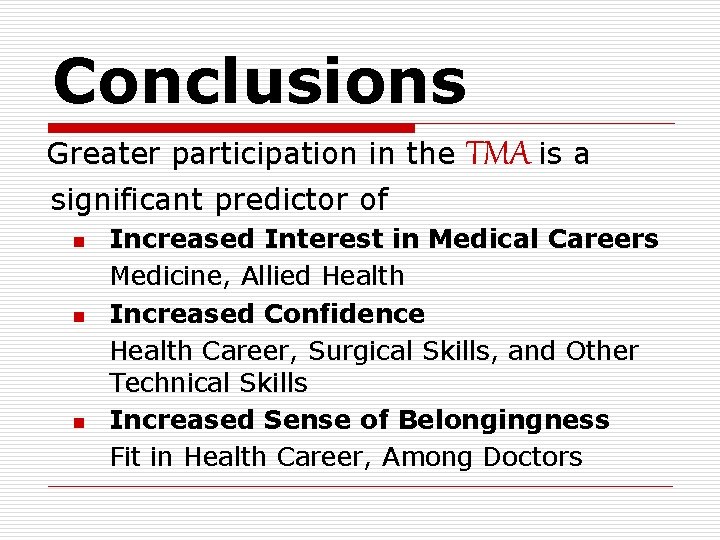
Conclusions Greater participation in the TMA is a significant predictor of n n n Increased Interest in Medical Careers Medicine, Allied Health Increased Confidence Health Career, Surgical Skills, and Other Technical Skills Increased Sense of Belongingness Fit in Health Career, Among Doctors
Limitations o o Intermediate Outcomes Response Rate
Response Rate Not Accepted N=139 Accepted N=103 Completed N=119 TOTAL N=361 Valid Address 128/139 (92%) 89/103 (86%) 110/119 (92%) 327/361 (91%) Response Rate 85/128 (66%) 55/89 (62%) 93/110 (85%) 233/329 (71%)
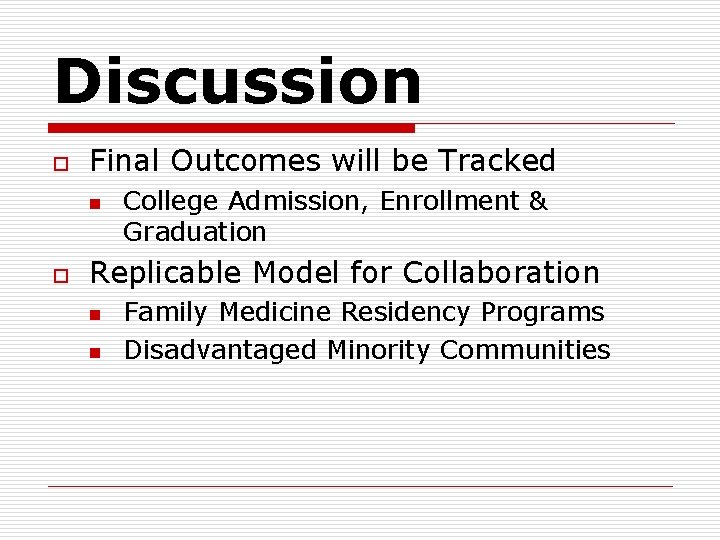
Discussion o Final Outcomes will be Tracked n o College Admission, Enrollment & Graduation Replicable Model for Collaboration n n Family Medicine Residency Programs Disadvantaged Minority Communities
Thank You !!! TMA