University of Minnesota St Cloud Family Medicine Residency

- Slides: 6
University of Minnesota- St. Cloud Family Medicine Residency Joe Blonski, MD Program Director
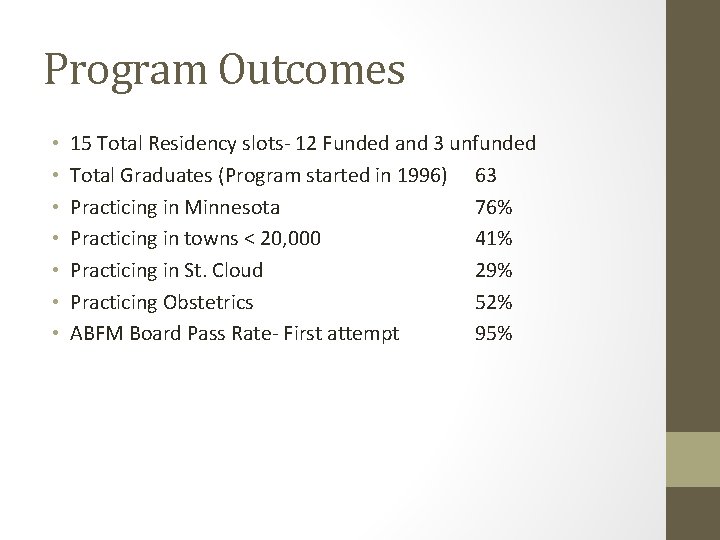
Program Outcomes • • 15 Total Residency slots- 12 Funded and 3 unfunded Total Graduates (Program started in 1996) 63 Practicing in Minnesota 76% Practicing in towns < 20, 000 41% Practicing in St. Cloud 29% Practicing Obstetrics 52% ABFM Board Pass Rate- First attempt 95%
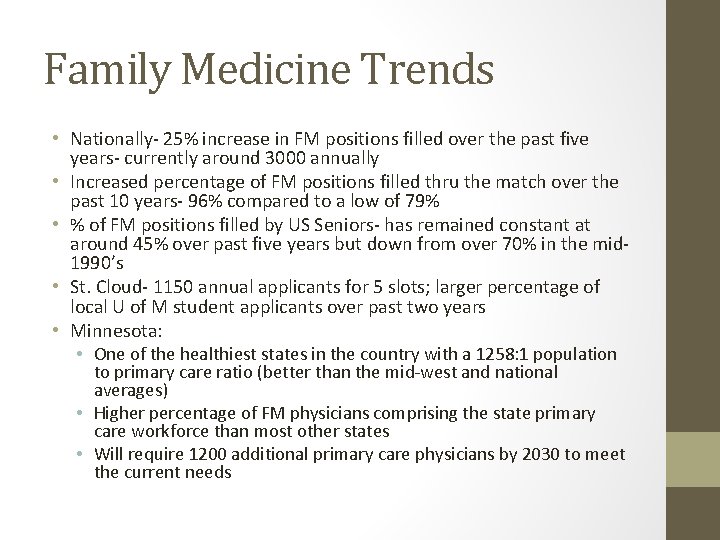
Family Medicine Trends • Nationally- 25% increase in FM positions filled over the past five years- currently around 3000 annually • Increased percentage of FM positions filled thru the match over the past 10 years- 96% compared to a low of 79% • % of FM positions filled by US Seniors- has remained constant at around 45% over past five years but down from over 70% in the mid 1990’s • St. Cloud- 1150 annual applicants for 5 slots; larger percentage of local U of M student applicants over past two years • Minnesota: • One of the healthiest states in the country with a 1258: 1 population to primary care ratio (better than the mid-west and national averages) • Higher percentage of FM physicians comprising the state primary care workforce than most other states • Will require 1200 additional primary care physicians by 2030 to meet the current needs
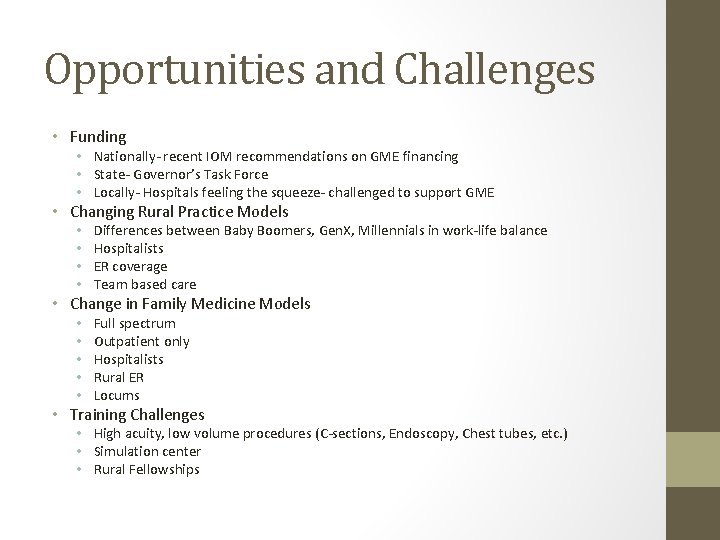
Opportunities and Challenges • Funding • Nationally- recent IOM recommendations on GME financing • State- Governor’s Task Force • Locally- Hospitals feeling the squeeze- challenged to support GME • Changing Rural Practice Models • • Differences between Baby Boomers, Gen. X, Millennials in work-life balance Hospitalists ER coverage Team based care • Change in Family Medicine Models • • • Full spectrum Outpatient only Hospitalists Rural ER Locums • Training Challenges • High acuity, low volume procedures (C-sections, Endoscopy, Chest tubes, etc. ) • Simulation center • Rural Fellowships
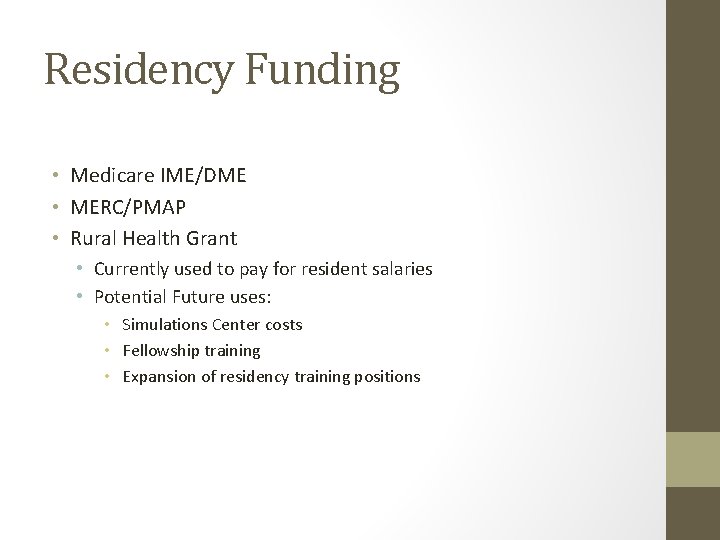
Residency Funding • Medicare IME/DME • MERC/PMAP • Rural Health Grant • Currently used to pay for resident salaries • Potential Future uses: • Simulations Center costs • Fellowship training • Expansion of residency training positions
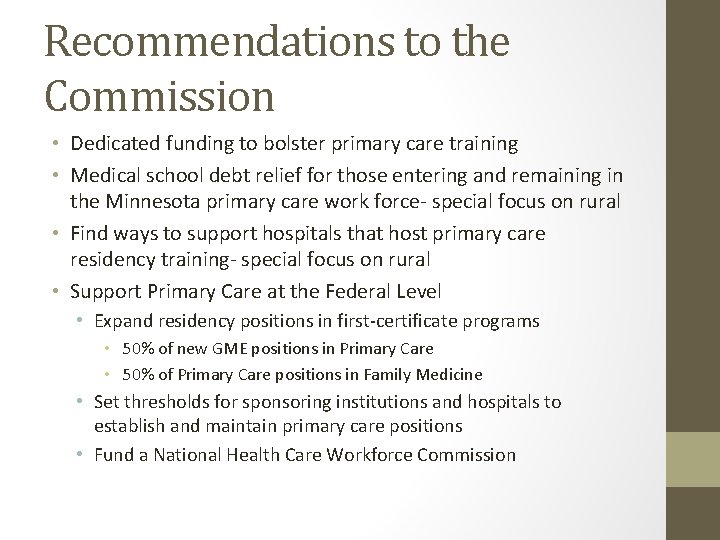
Recommendations to the Commission • Dedicated funding to bolster primary care training • Medical school debt relief for those entering and remaining in the Minnesota primary care work force- special focus on rural • Find ways to support hospitals that host primary care residency training- special focus on rural • Support Primary Care at the Federal Level • Expand residency positions in first-certificate programs • 50% of new GME positions in Primary Care • 50% of Primary Care positions in Family Medicine • Set thresholds for sponsoring institutions and hospitals to establish and maintain primary care positions • Fund a National Health Care Workforce Commission