The Settlement of the Chesapeake Virginia Maryland SSUSH

- Slides: 50
The Settlement of the Chesapeake Virginia & Maryland
SSUSH 1 The student will describe European settlement in North America during the 17 th century. • a. Explain Virginia’s development; include the Virginia Company, tobacco cultivation, relationships with Native Americans such as Powhatan, development of the House of Burgesses, Bacon’s Rebellion, and the development of slavery.
Virginia • Virginia was the first permanent English colony in North America. • Founded by the Virginia Company – the Virginia Company was an English firm that planned to make money by sending people to America to find gold & other valuable resources – They would then ship the resources back to England. • MERCANTILISM!!!
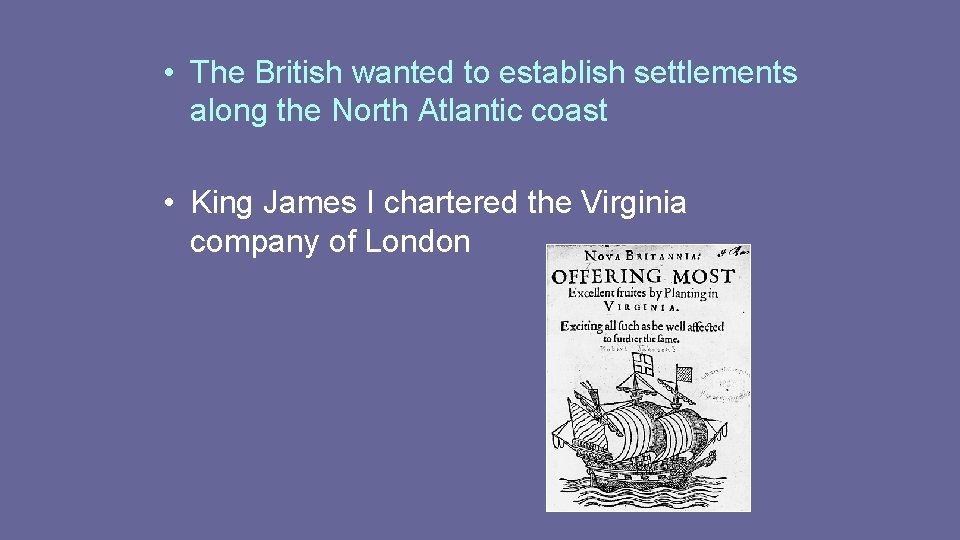
• The British wanted to establish settlements along the North Atlantic coast • King James I chartered the Virginia company of London
England Plants the Jamestown “Seedling” • Late 1606 – VA Co. sends out 3 ships • Spring 1607 – land at mouth of Chesapeake Bay – Attacked by Indians and move on • May 24, 1607 – about 100 colonists (all men) land at Jamestown, along the banks of the James River – Easily defended, but swarming with disease-causing mosquitoes
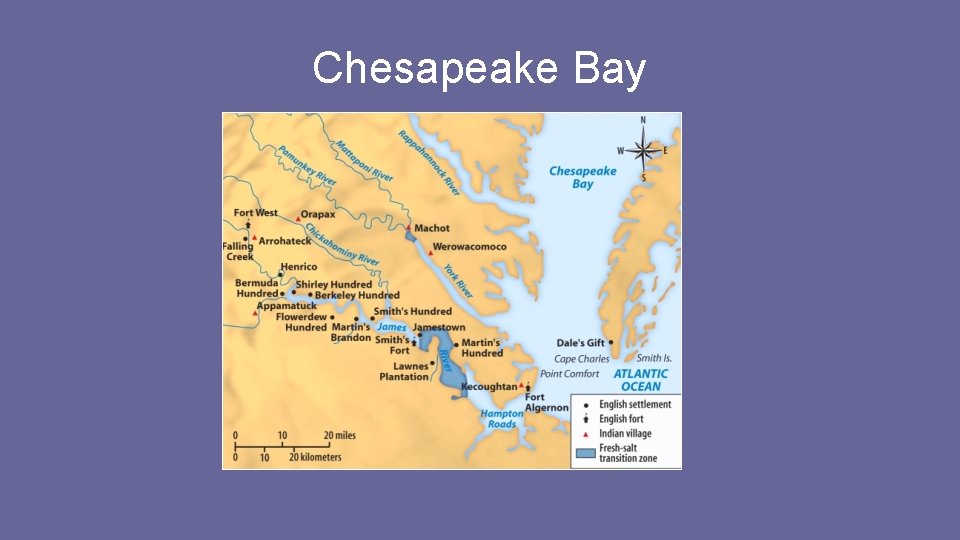
Chesapeake Bay
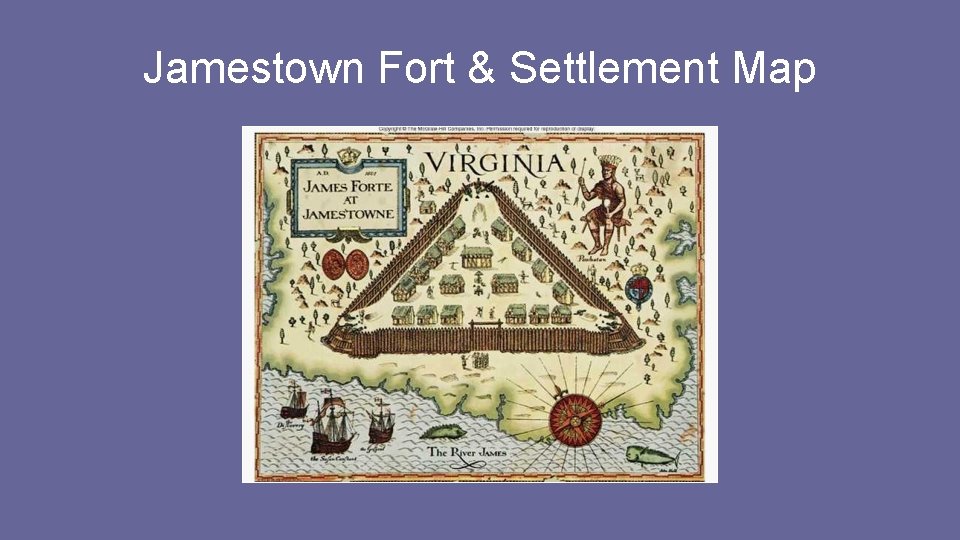
Jamestown Fort & Settlement Map
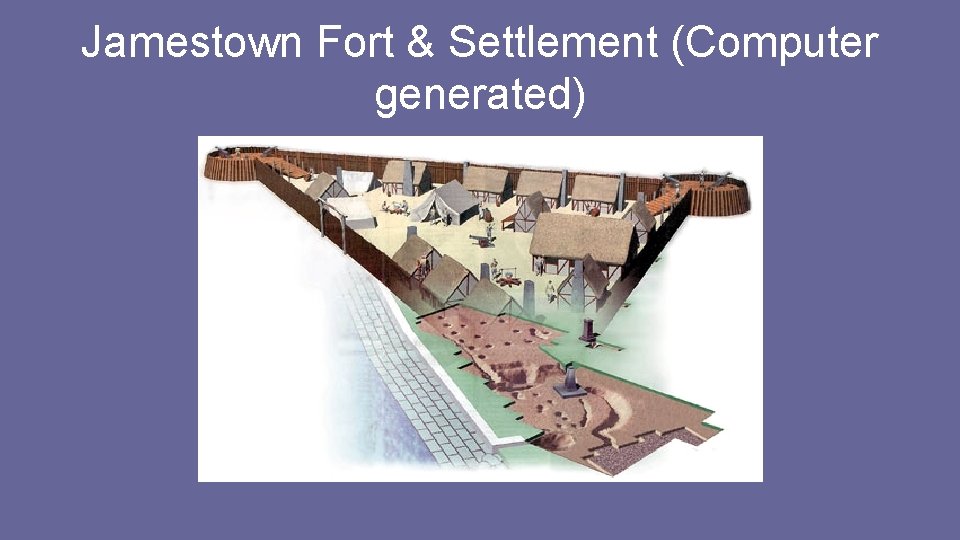
Jamestown Fort & Settlement (Computer generated)
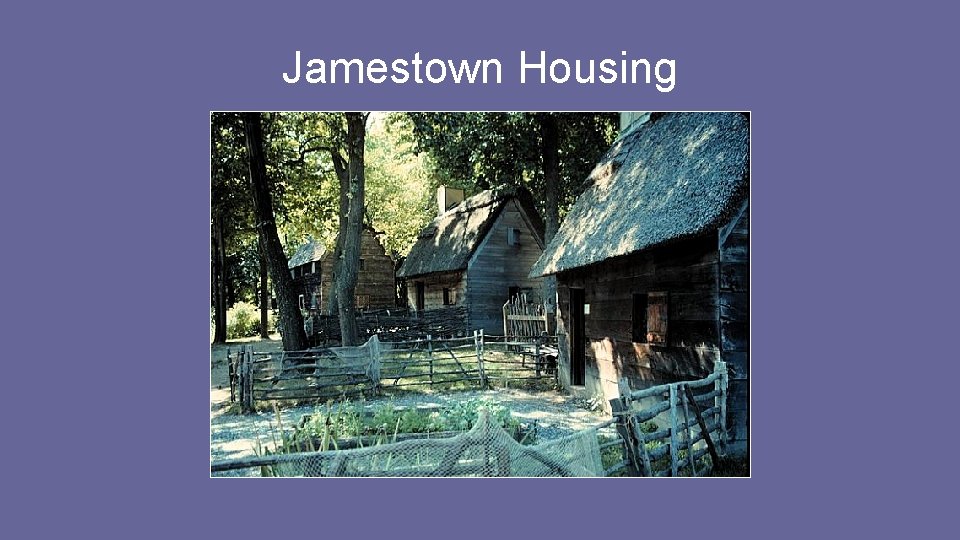
Jamestown Housing
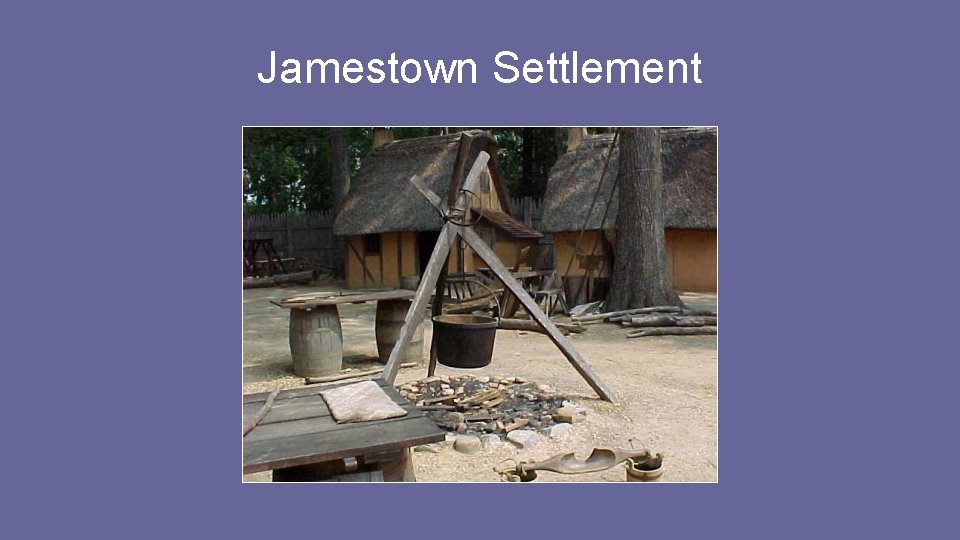
Jamestown Settlement
Jamestown Uncovered • Primary Source Activity
The Jamestown Nightmare • 1606 -1607 40 people died on the voyage to the New World. • 1609 another ship from England lost its leaders and supplies in a shipwreck off Bermuda. • Settlers died by the dozens! Disease and starvation! • “Gentlemen” colonists would not work themselves. • Game in forests & fish in river uncaught. • Settlers wasted time looking for gold instead of hunting or farming.
• Which Virginia Company instructions were the colonists able to carry out? Which instructions were they not able to follow? Explain. • What challenges did the Jamestown colonists face? • How did those challenges affect the colonists’ ability to meet the Virginia Company’s expectations? • Based on what you now know about the first years of the Jamestown settlement, what do you think everyday life was like?
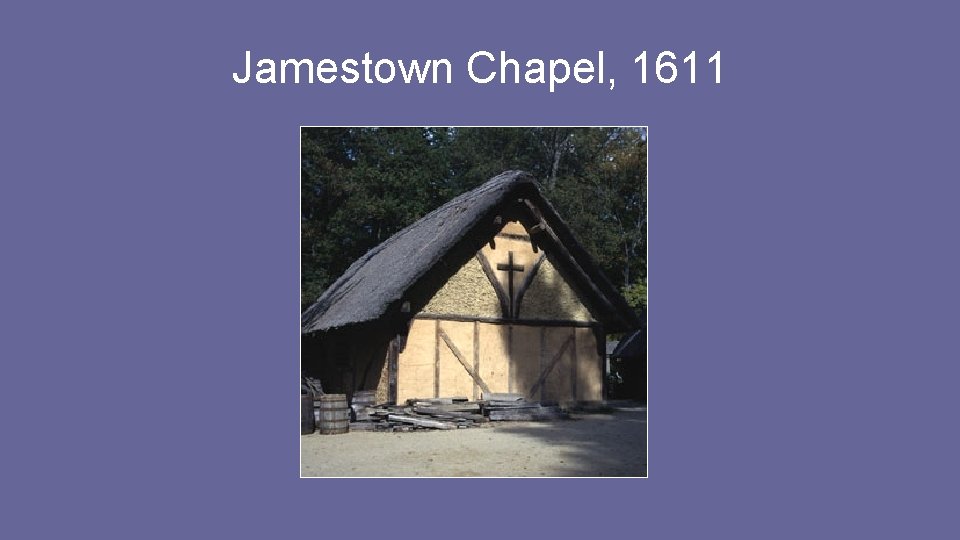
Jamestown Chapel, 1611
The Starving time – 1607: 104 colonists – By spring, 1608: 38 survived – 1609: 300 more immigrants – By spring, 1610: 60 survived – 1610 – 1624: 10, 000 immigrants – 1624 population: 1, 200 – Adult life expectancy: 40 years – Death of children before age 5: 80%
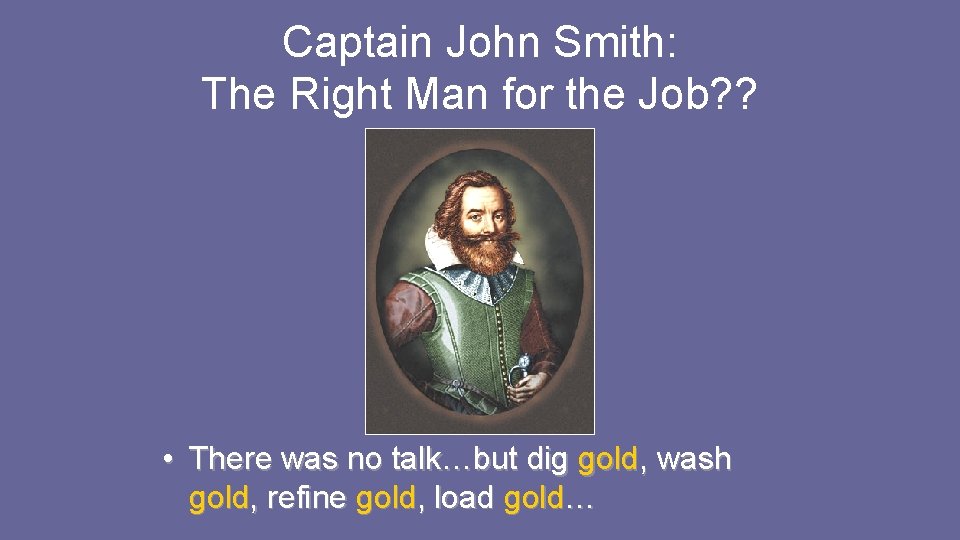
Captain John Smith: The Right Man for the Job? ? • There was no talk…but dig gold, wash gold, refine gold, load gold…
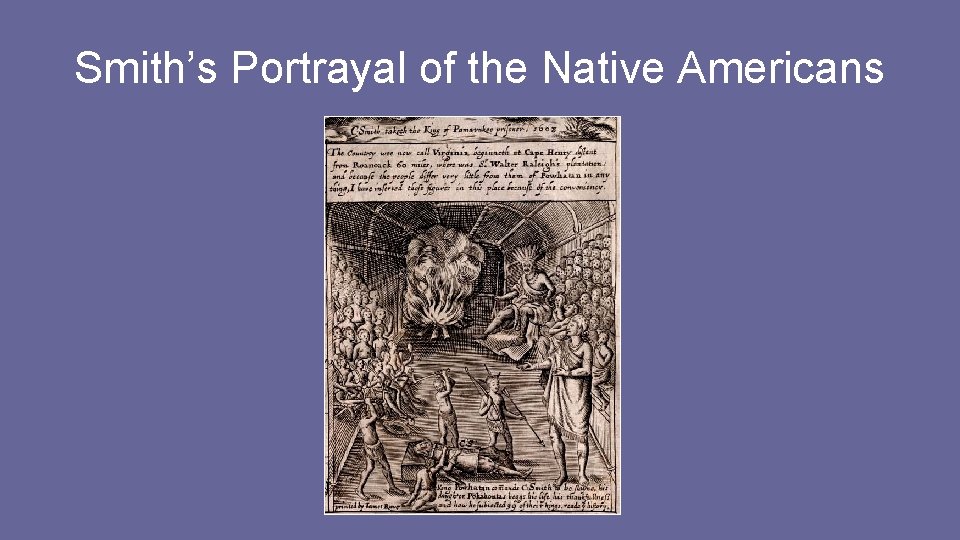
Smith’s Portrayal of the Native Americans
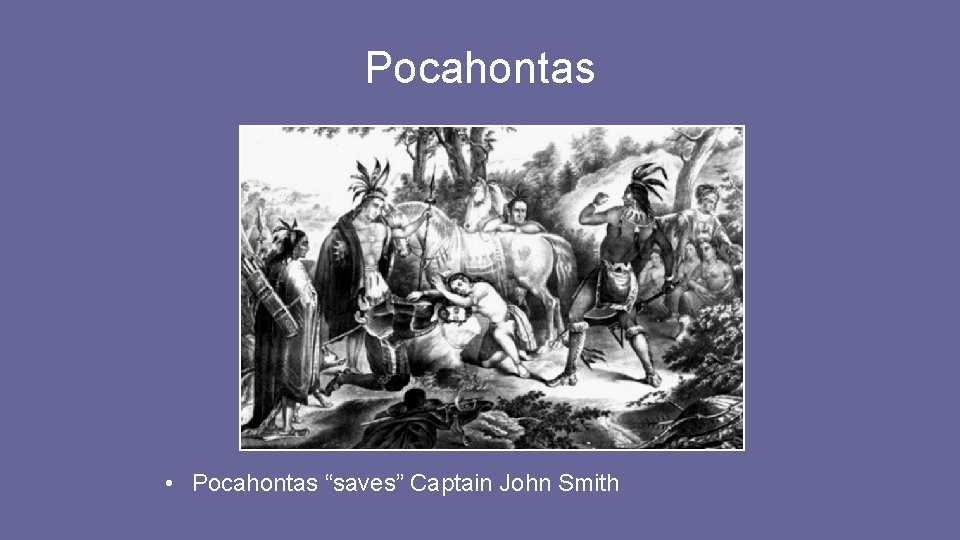
Pocahontas • Pocahontas “saves” Captain John Smith
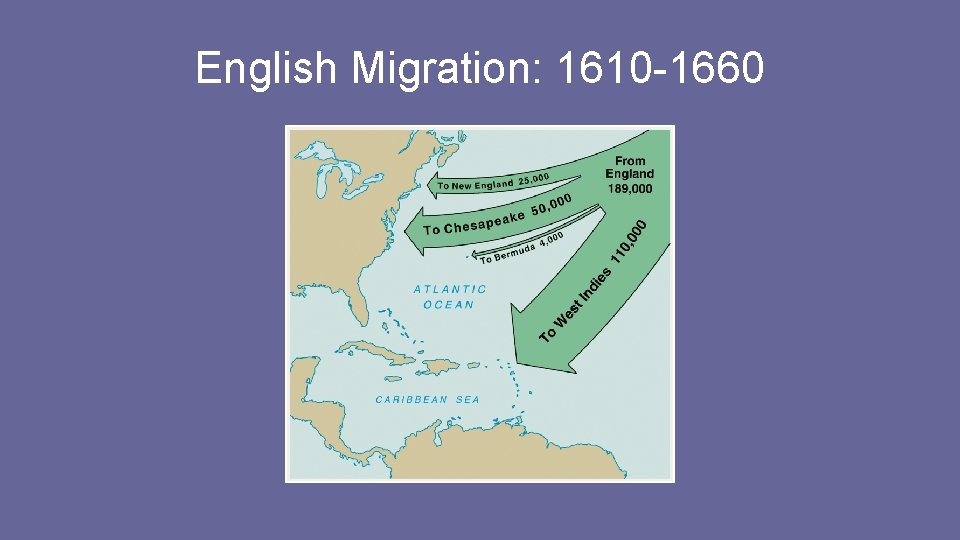
English Migration: 1610 -1660
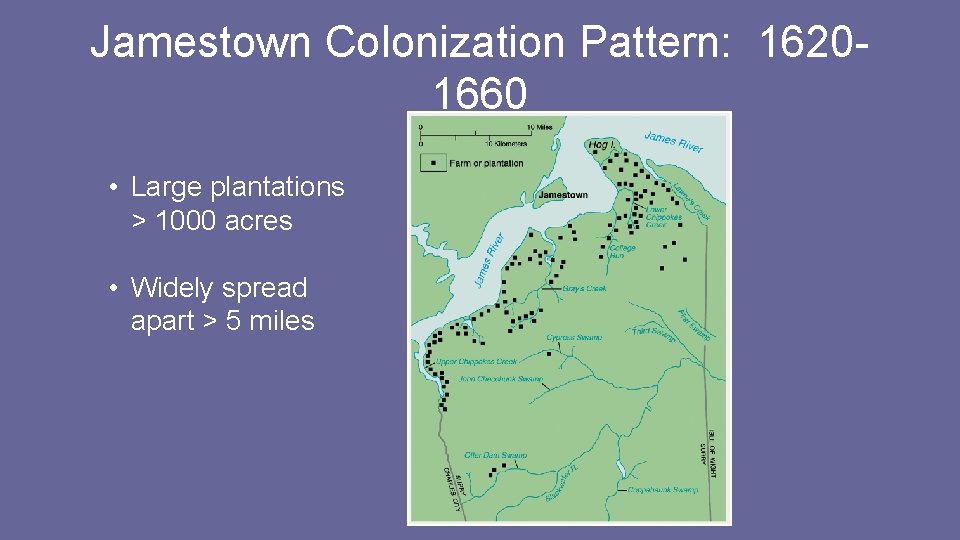
Jamestown Colonization Pattern: 16201660 • Large plantations > 1000 acres • Widely spread apart > 5 miles
Native Americans - Powhatan • When settlers first arrived from England, they knew they would have to make peace with the Native Americans if they were to survive. • Though there were conflicts between the groups, there were also periods of peace. • But British settlements kept growing and outpaced the growth of the Powhatan. • Fearing they would soon be outnumbered, the Powhatan attacked first hoping to scare the British away. • But the British responded by nearly destroying the Powhatan culture.
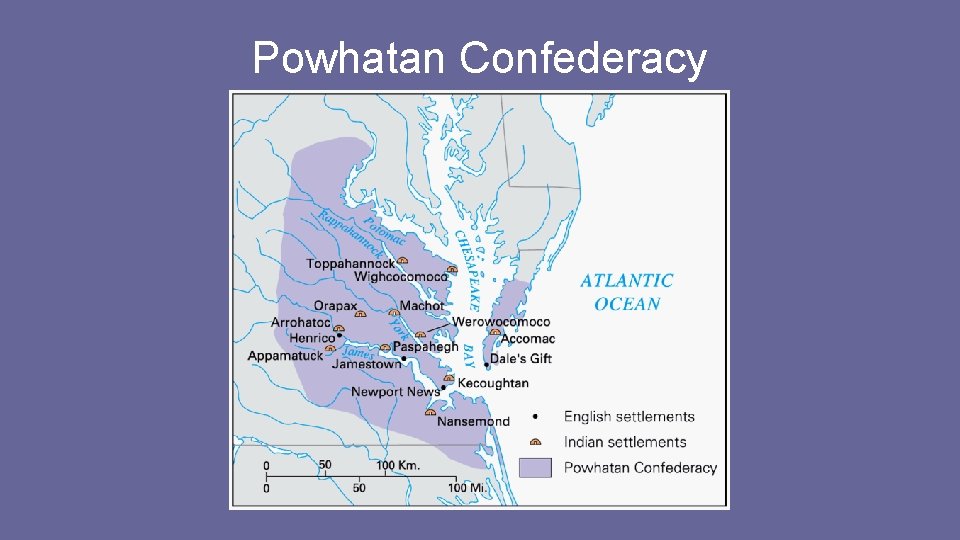
Powhatan Confederacy
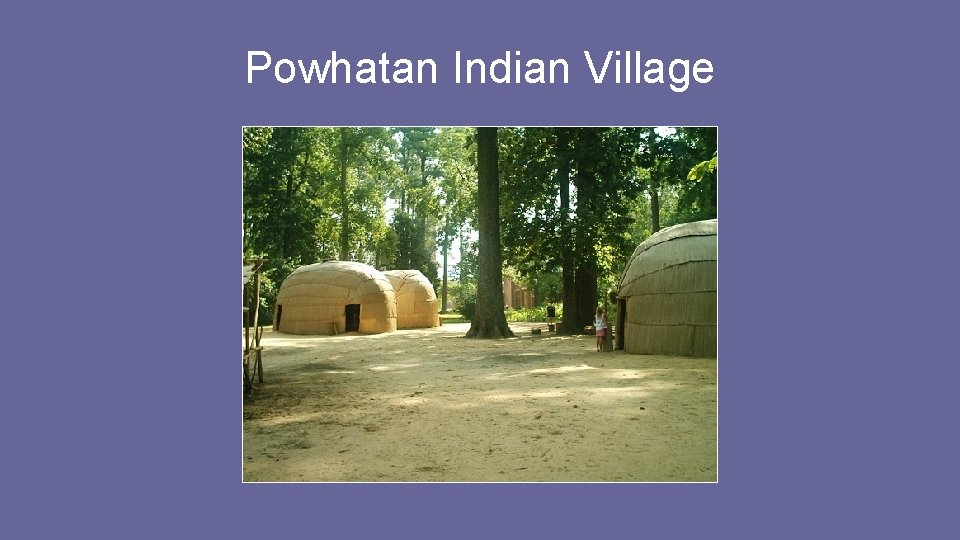
Powhatan Indian Village
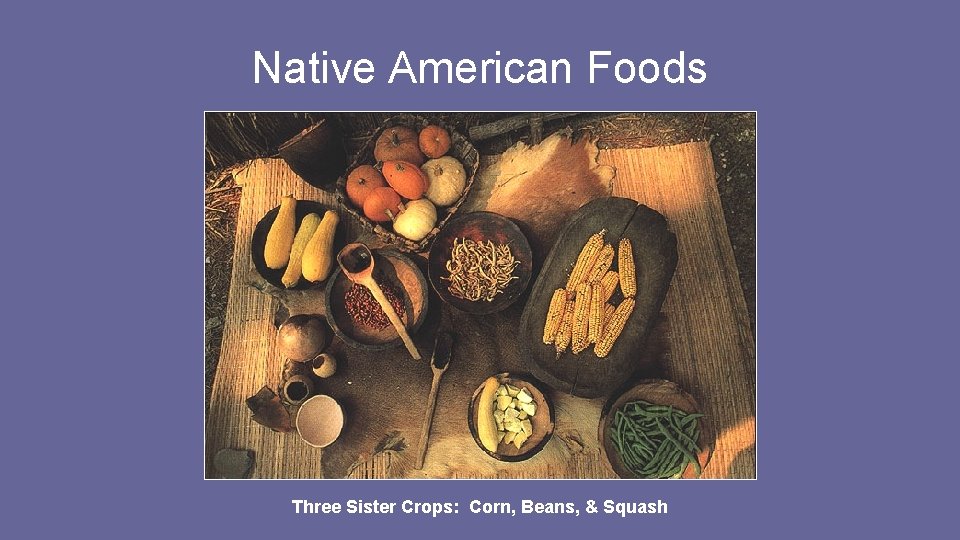
Native American Foods Three Sister Crops: Corn, Beans, & Squash
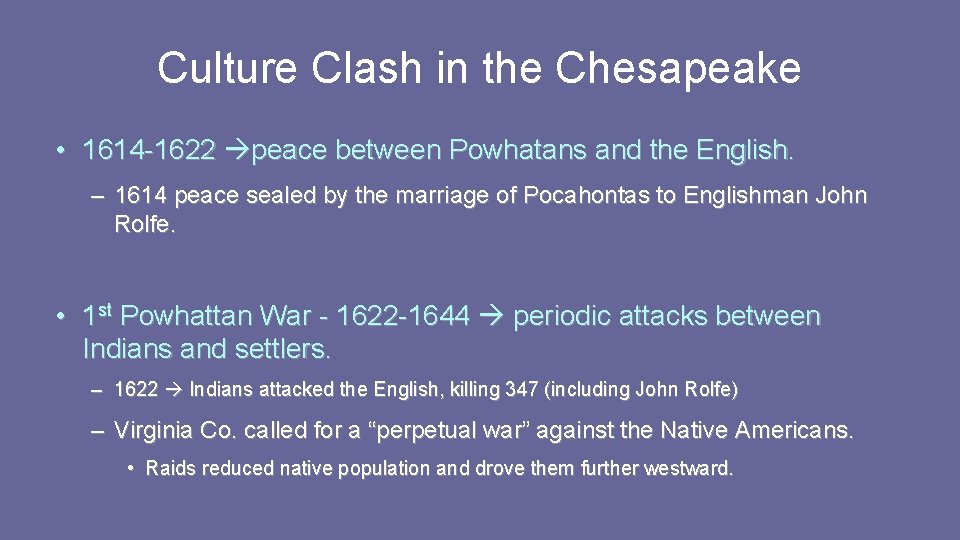
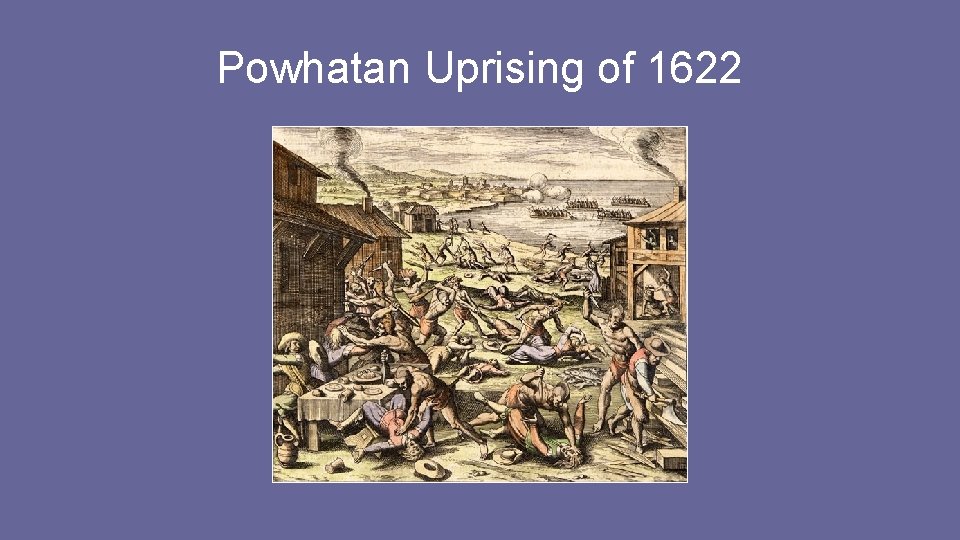
Culture Clash in the Chesapeake • 1614 -1622 peace between Powhatans and the English. – 1614 peace sealed by the marriage of Pocahontas to Englishman John Rolfe. • 1 st Powhattan War - 1622 -1644 periodic attacks between Indians and settlers. – 1622 Indians attacked the English, killing 347 (including John Rolfe) – Virginia Co. called for a “perpetual war” against the Native Americans. • Raids reduced native population and drove them further westward.
Powhatan Uprising of 1622
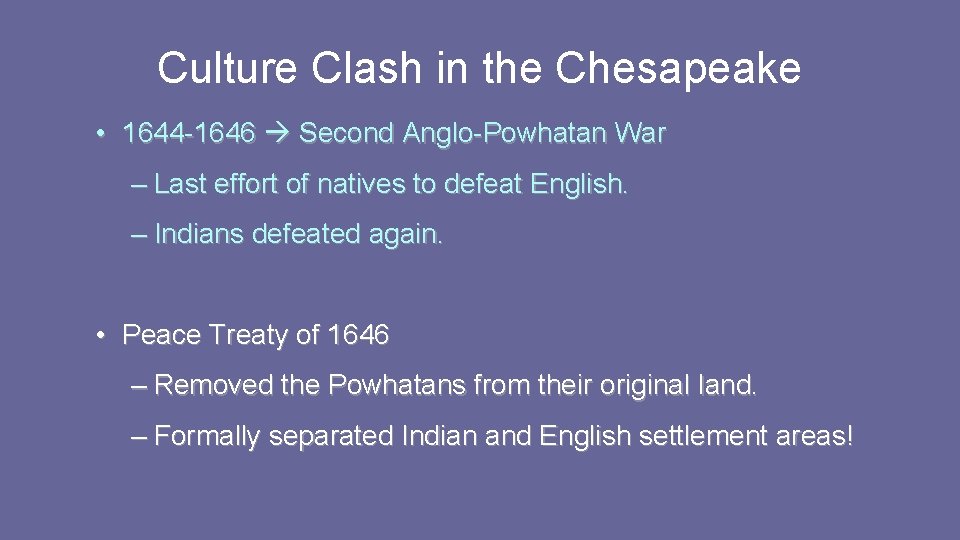
Culture Clash in the Chesapeake • 1644 -1646 Second Anglo-Powhatan War – Last effort of natives to defeat English. – Indians defeated again. • Peace Treaty of 1646 – Removed the Powhatans from their original land. – Formally separated Indian and English settlement areas!
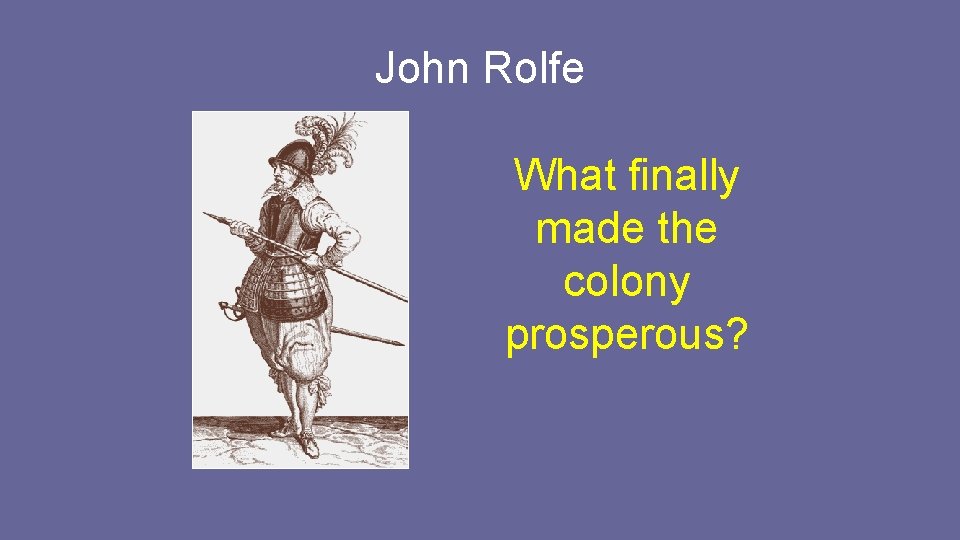
John Rolfe What finally made the colony prosperous?
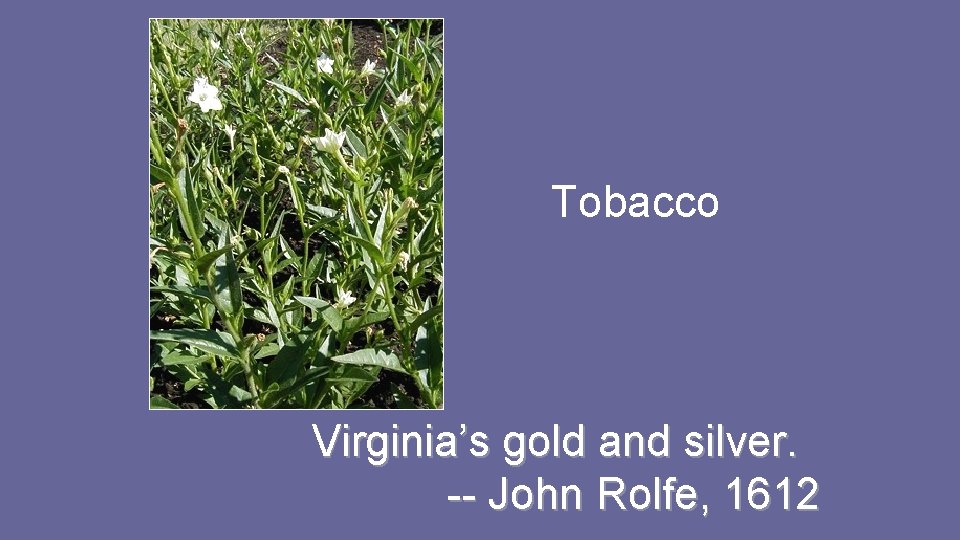
Tobacco Virginia’s gold and silver. -- John Rolfe, 1612
Tobacco Cultivation • Virginia's soil and climate is very good for tobacco production. • Europeans did not like Virginia's type of tobacco, so sweeter varieties were brought in from the Caribbean. • Tobacco became the most important export for the Virginia Company and helped Great Britain balance its trade deficit with Spain.
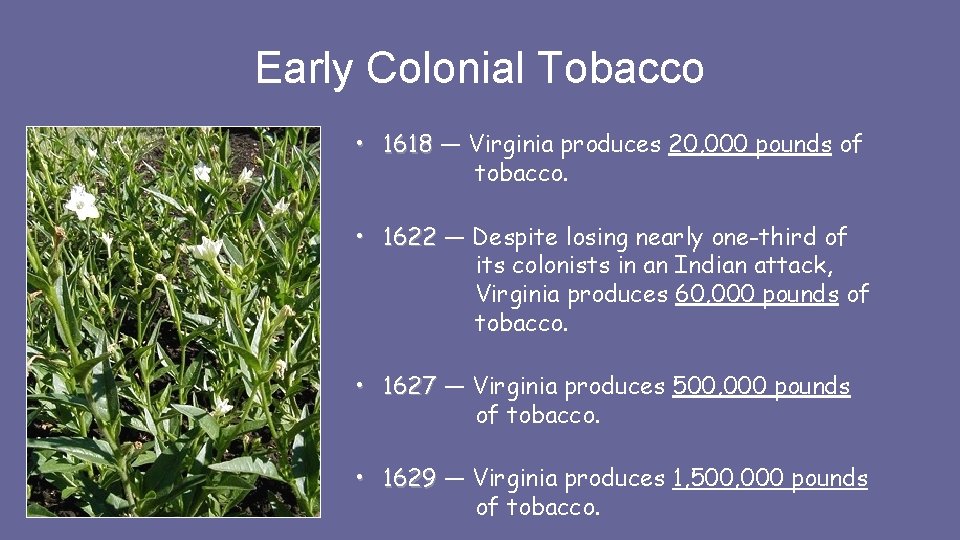
Early Colonial Tobacco • 1618 — Virginia produces 20, 000 pounds of tobacco. • 1622 — Despite losing nearly one-third of its colonists in an Indian attack, Virginia produces 60, 000 pounds of tobacco. • 1627 — Virginia produces 500, 000 pounds of tobacco. • 1629 — Virginia produces 1, 500, 000 pounds of tobacco.
Virginia: “Child of Tobacco” • Tobacco’s effect on Virginia’s economy: – Vital role in putting VA on a firm economic footing. – Ruinous to soil when continuously planted. – Chained VA’s economy to a single cash crop. • Tobacco promoted the use of the plantation system. – Need for cheap, abundant labor
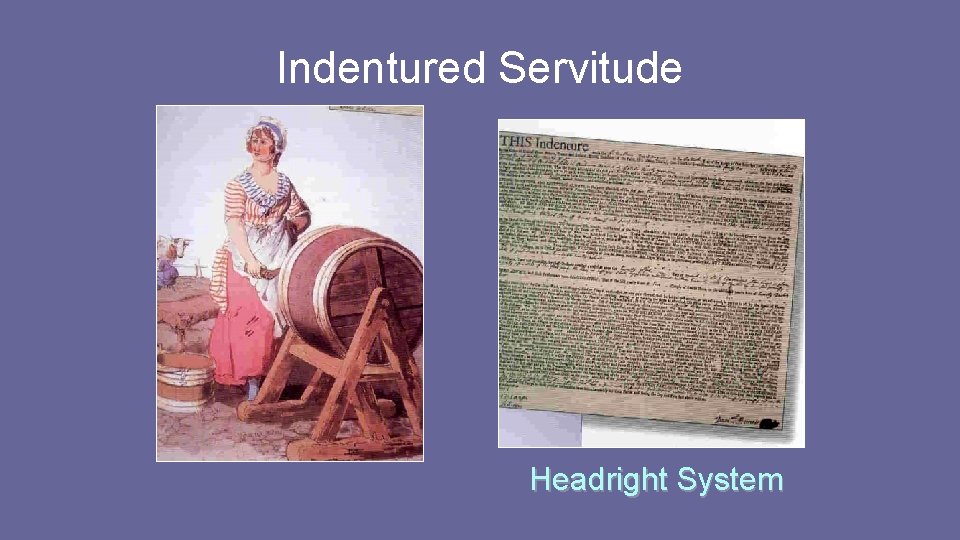
Indentured Servitude Headright System
Indentured Servitude • Headright system: –Each Virginian got 50 acres for each person whose passage they paid to the colony –Also existed in Maryland –Virginia & Maryland are known as the
Indentured Servitude • Work for nothing in exchange for passage to colonies • Indenture Contract: – 5 -7 years – Promised “freedom dues” when contract is up • Few barrels of corn • Suit of clothing • Small piece of land – Forbidden to marry – 1610 -1614: only 1 in 10 outlived their indentured contracts!
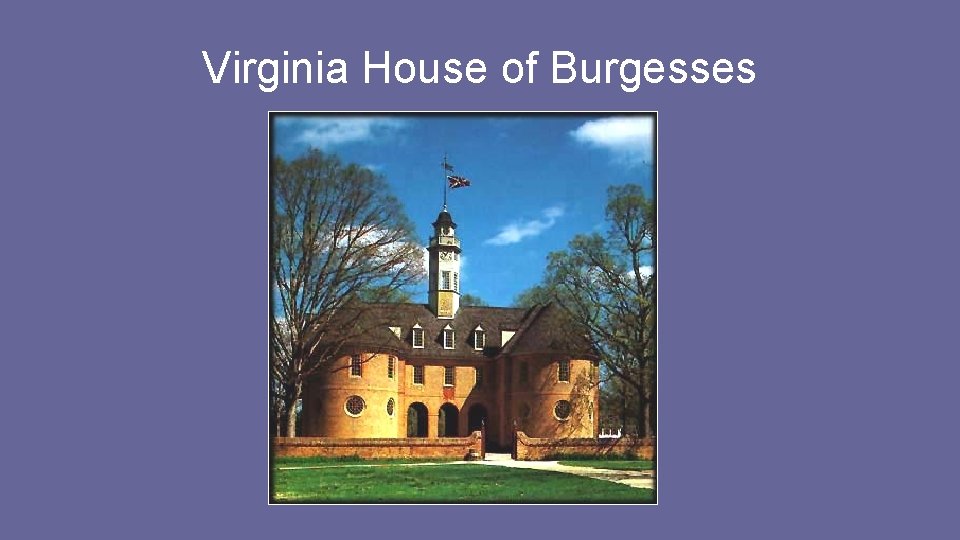
Virginia House of Burgesses
House of Burgesses • The first legislative body in the colonies • The House of Burgesses was made up of men elected by landowners to represent the cities and plantations of Virginia. • Though the governor, the council, or the directors could override its decisions, the House of Burgesses enacted laws and provided a voice in government for landowning Virginian men.
Bacon’s Rebellion • Poor Freemen felt neglected & staged an uprising – Frustrated • No land, no women – Moved west ( to the backcountry) – Denied the right to vote by VA assembly • While living in the backcountry they are attacked by Native Americans & they want the House of Burgesses to take action.
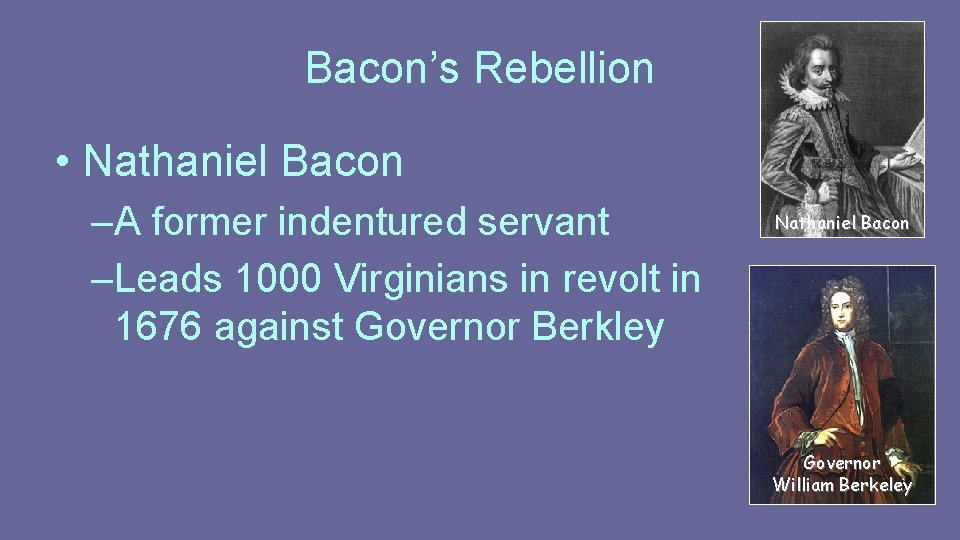
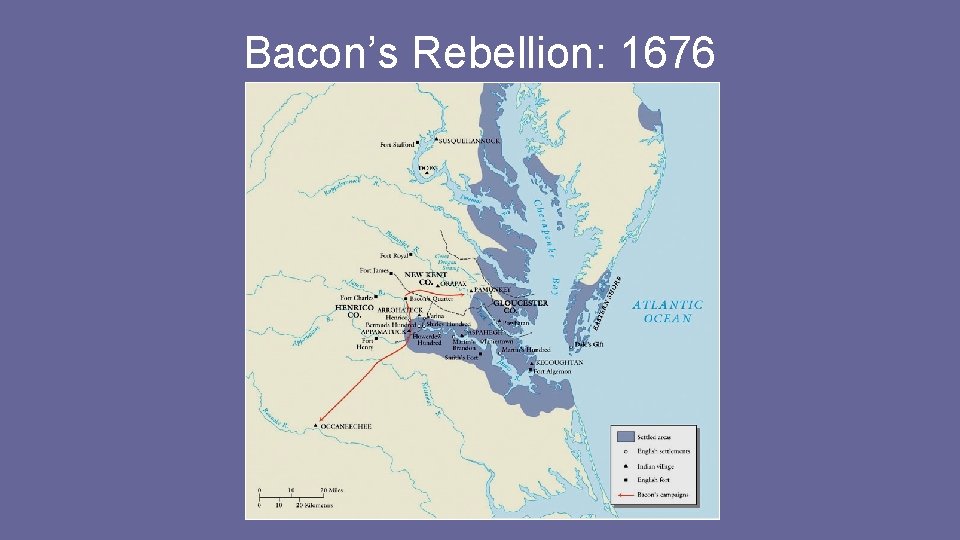
Bacon’s Rebellion • Nathaniel Bacon –A former indentured servant –Leads 1000 Virginians in revolt in 1676 against Governor Berkley Nathaniel Bacon Governor William Berkeley
Bacon’s Rebellion: 1676
Bacon’s Rebellion • William Berkeley – governor of VA – Refuses to stop Indian attacks in west • Has monopoly on fur trade with Indians • They attack the Natives, whether they are friendly or not.
Bacon’s Rebellion • Governor Berkley is driven from Jamestown. • Jamestown captured and burned • Bacon dies of disease – Revolt ends
Consequences of Rebellion • Underscores growing class conflict in colonies – Poor farmers vs. plantation owners • Access to land becomes more readily available • Indentured servitude dies – Freed servants are dangerous – Wages rising in England • English poor less willing to risk life in America • Who will replace them as labor?
Virginia Becomes a Royal Colony • James I grew hostile to Virginia – He hated tobacco – He distrusted the House of Burgesses which he called a seminary of sedition. • 1624 – He revoked the charter of the bankrupt VA Company. – Virginia became a royal colony under the kings direct control.
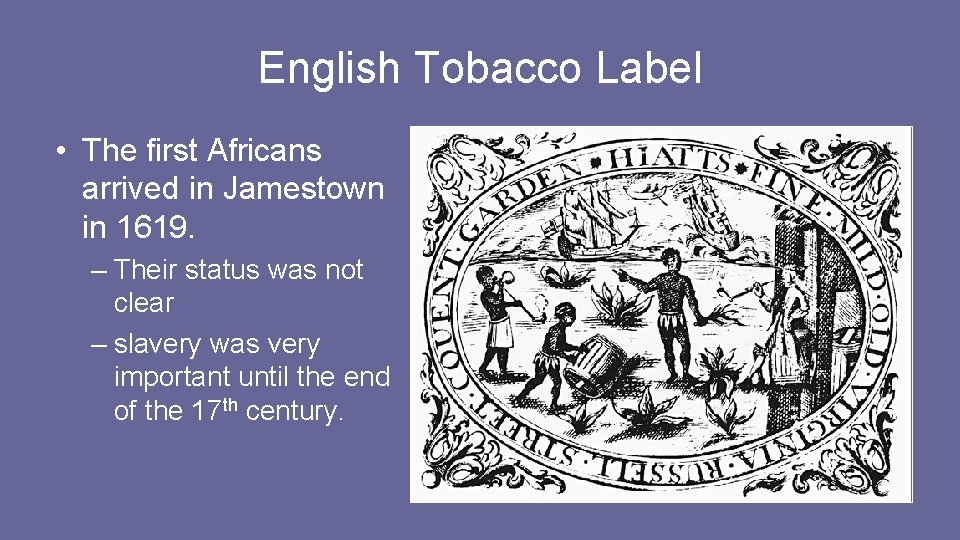
English Tobacco Label • The first Africans arrived in Jamestown in 1619. – Their status was not clear – slavery was very important until the end of the 17 th century.
17 th century Population in the Chesapeake Why is there a large increase in the black population?
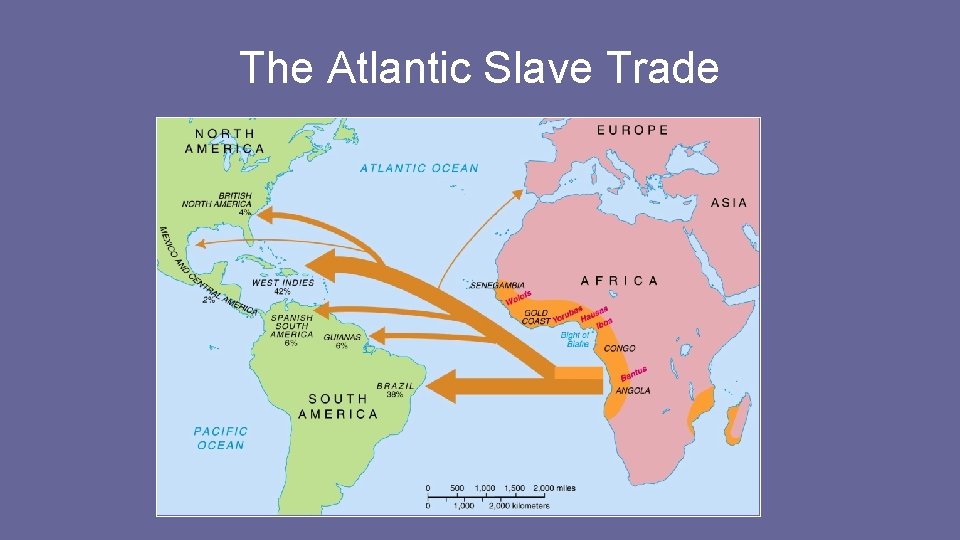
The Atlantic Slave Trade
Maryland: A Catholic Safe Haven • In England, Catholics were being persecuted. • Lord Baltimore wanted to create a colony where Catholics could practice their religion freely. • The King granted Lord Baltimore land North of VA. He named it Maryland. • Since he owned the land, Lord Baltimore was a proprietor & had full authority over the colony.
Maryland: A Catholic Safe Haven • Lord Baltimore hoped to create a Catholic safe haven where Catholics could freely practice their religion. • The Maryland Toleration Act was passed saying that all Christians would be accepted in Maryland. – It also stated that denying Jesus was a crime punishable by death.
Maryland • Colonists only willing to come to Maryland if they received land • Colonists who did come received modest farms dispersed around the Chesapeake are – Catholic land barons surrounded mostly by Protestant small farmers – Conflict between barons and farmers led to Baltimore losing proprietary rights at the end of the 17 th Century. – In the late 1600’s, black slaves began to be imported.