
CHAPTER 2 THE RELIGIOUS REVOLUTION IN ENGLAND I
- Slides: 12
CHAPTER 2: THE RELIGIOUS REVOLUTION IN ENGLAND I THE REFORMATION AND THE FORMATION OF ANGLICANISM 1. The Catholic Church in Medieval Europe: a powerful institution A° An economic power B° A political power C° An Intellectual power 2. The Protestant Reformation: Luther and Calvin A° Martin Luther and Lutheranism His 95 theses His doctrine The struggle with the Pope B° John Calvin and Calvinism 3. The establishment of the Church of England A° Henry VIII's Reformation: a political or religious revolution? The religious situation before 1534 The Schism: reasons and events. The Reformation: a reinforcement of Henry VIII's power The economic effects of the Reformation Impact on worship and religious practice B° Edward VI (1547 -1553) and Mary (1553 -1558): ups and downs of Protestantism C° Elizabeth (1558 -1603) and the Invention of Anglicanism II. PURITANISM IN ENGLAND III. PROTESTANTISM IN AMERICA _____________________________
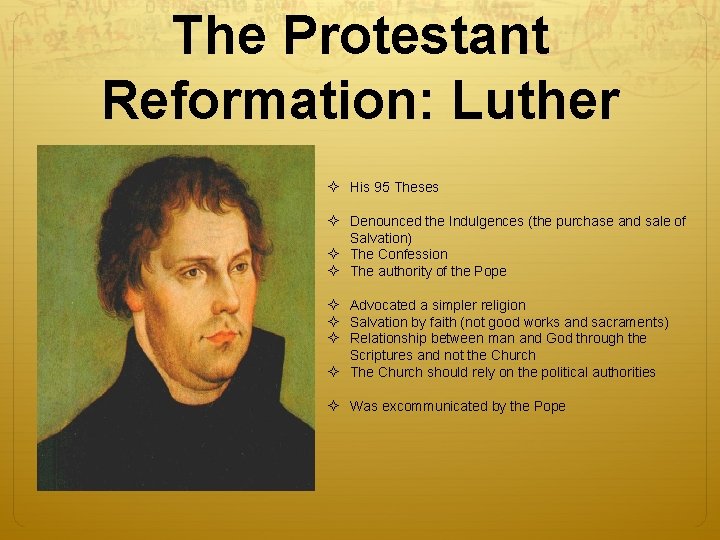
The Protestant Reformation: Luther ² His 95 Theses ² Denounced the Indulgences (the purchase and sale of Salvation) ² The Confession ² The authority of the Pope ² Advocated a simpler religion ² Salvation by faith (not good works and sacraments) ² Relationship between man and God through the Scriptures and not the Church ² The Church should rely on the political authorities ² Was excommunicated by the Pope
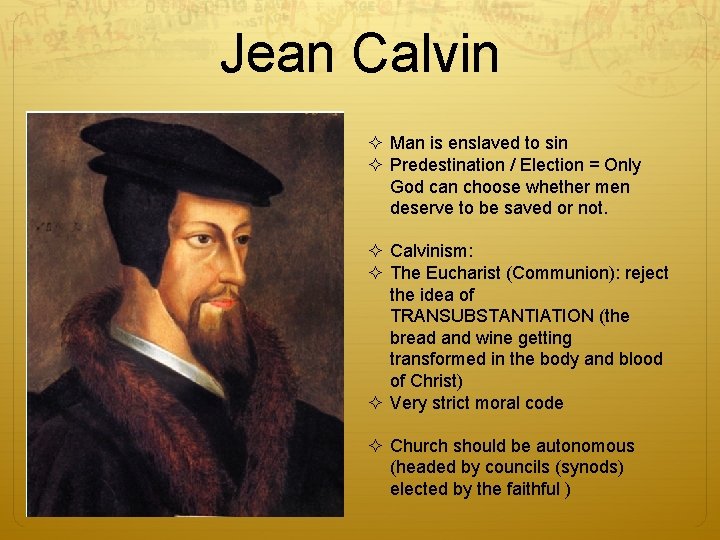
Jean Calvin ² Man is enslaved to sin ² Predestination / Election = Only God can choose whether men deserve to be saved or not. ² Calvinism: ² The Eucharist (Communion): reject the idea of TRANSUBSTANTIATION (the bread and wine getting transformed in the body and blood of Christ) ² Very strict moral code ² Church should be autonomous (headed by councils (synods) elected by the faithful )
The Reformation before 1534 The Lollards with John Wycliffe (end of 14 th century) Growth of anticlericalism among the aristocracy 1498 Invention of printing by Gutenberg Need to reform and regenerate the church 1521: Protestant ideas were censored Henry VIII wrote a response to Luther's criticism of the sacraments in Assertio Septem Sacramentorum for which he was awarded the title of Defensor Fidei by the Pope.
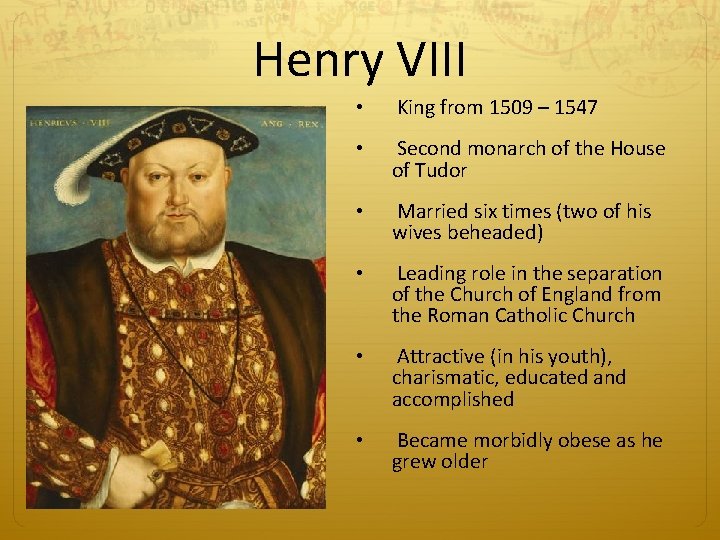
Henry VIII • King from 1509 – 1547 • Second monarch of the House of Tudor • Married six times (two of his wives beheaded) • Leading role in the separation of the Church of England from the Roman Catholic Church • Attractive (in his youth), charismatic, educated and accomplished • Became morbidly obese as he grew older
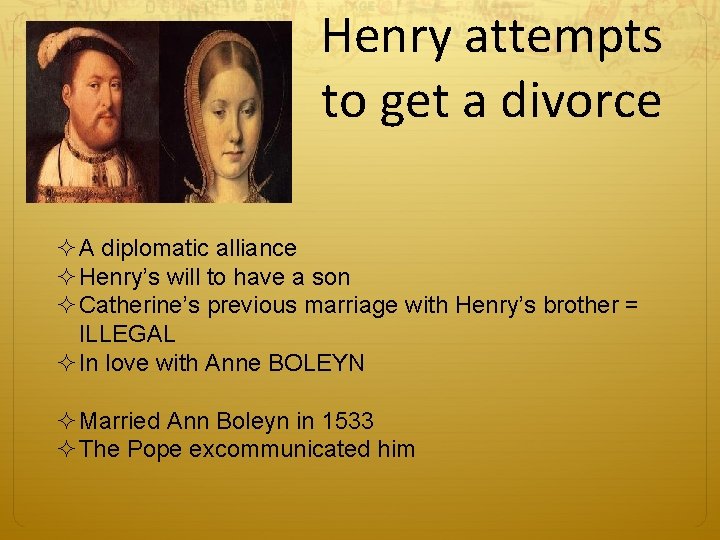
Henry attempts to get a divorce ²A diplomatic alliance ²Henry’s will to have a son ²Catherine’s previous marriage with Henry’s brother = ILLEGAL ²In love with Anne BOLEYN ²Married Ann Boleyn in 1533 ²The Pope excommunicated him
The Act of Supremacy ²Passed by Parliament in 1534 ² Made the King the supreme head of the Church of England ² Act of Succession (1534) vested succession in the children of Henry and Anne (Elizabeth), disinheriting Mary (child of Catherine of Aragon). Also demanded oath recognising King’s supremacy over the Church. ² Thomas More beheaded
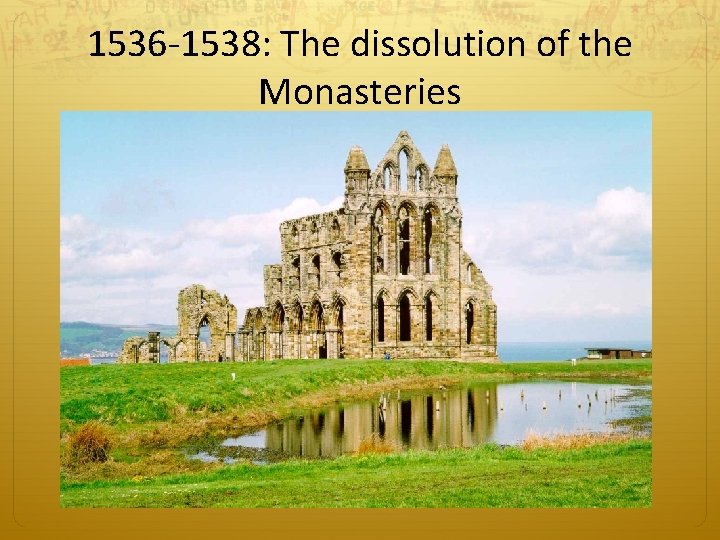
1536 -1538: The dissolution of the Monasteries
1536, the Archbishop of Canterbury, Thomas Cranmer’s 10 articles on the Reformation ²Kept a deep Catholic tone: ²Emphasized the binding authority of the Bible + in English (Tyndale and Coverdale’s versions) ²Assessed 3 sacraments: baptism, Eucharist and penance ²Affirmed the principle of transubstantiation in the Eucharist ²Authorized the use of images in churches as well as The honoring of saints and the Virgin Mary ²Authorized the observance of various rites and ceremonies such as clerical vestments, sprinkling of holy water, bearing of candles… ²Refusal to see priests getting married ²Believed in the confession
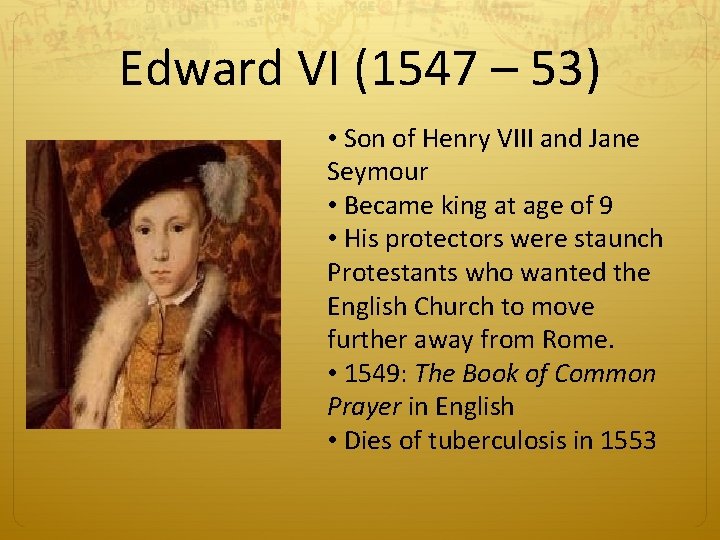
Edward VI (1547 – 53) • Son of Henry VIII and Jane Seymour • Became king at age of 9 • His protectors were staunch Protestants who wanted the English Church to move further away from Rome. • 1549: The Book of Common Prayer in English • Dies of tuberculosis in 1553
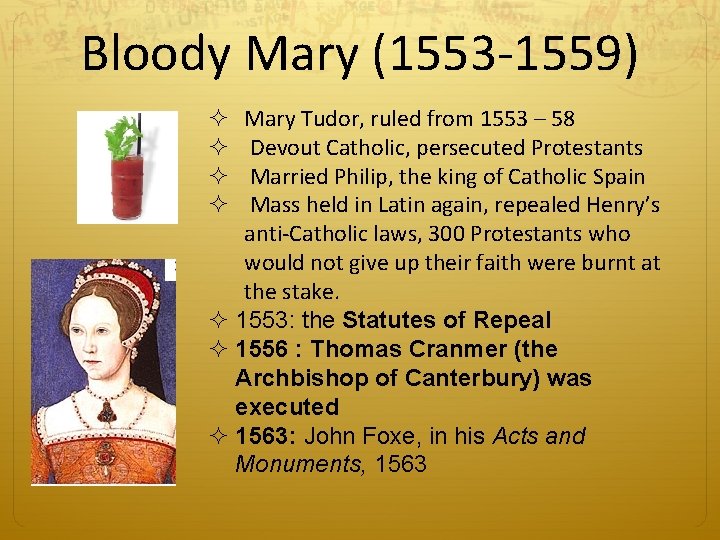
Bloody Mary (1553 -1559) Mary Tudor, ruled from 1553 – 58 Devout Catholic, persecuted Protestants Married Philip, the king of Catholic Spain Mass held in Latin again, repealed Henry’s anti-Catholic laws, 300 Protestants who would not give up their faith were burnt at the stake. ² 1553: the Statutes of Repeal ² 1556 : Thomas Cranmer (the Archbishop of Canterbury) was executed ² 1563: John Foxe, in his Acts and Monuments, 1563 ² ²
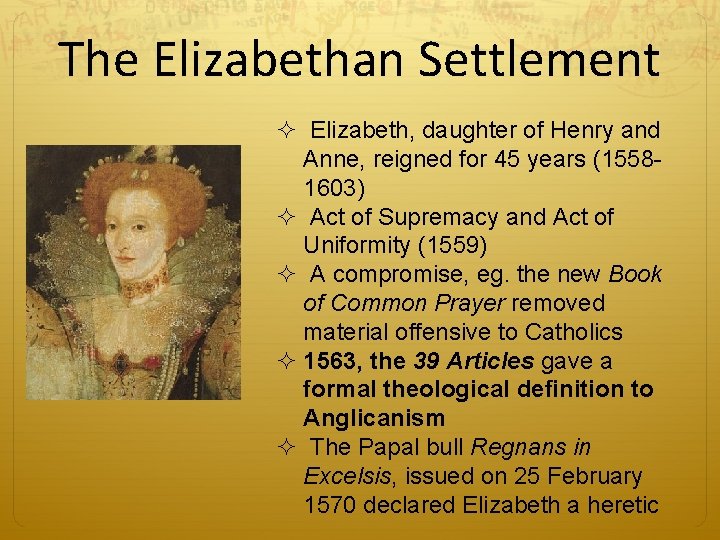
The Elizabethan Settlement ² Elizabeth, daughter of Henry and Anne, reigned for 45 years (15581603) ² Act of Supremacy and Act of Uniformity (1559) ² A compromise, eg. the new Book of Common Prayer removed material offensive to Catholics ² 1563, the 39 Articles gave a formal theological definition to Anglicanism ² The Papal bull Regnans in Excelsis, issued on 25 February 1570 declared Elizabeth a heretic