
Vietnam War SSUSH 20 D DESCRIBE THE VIETNAM
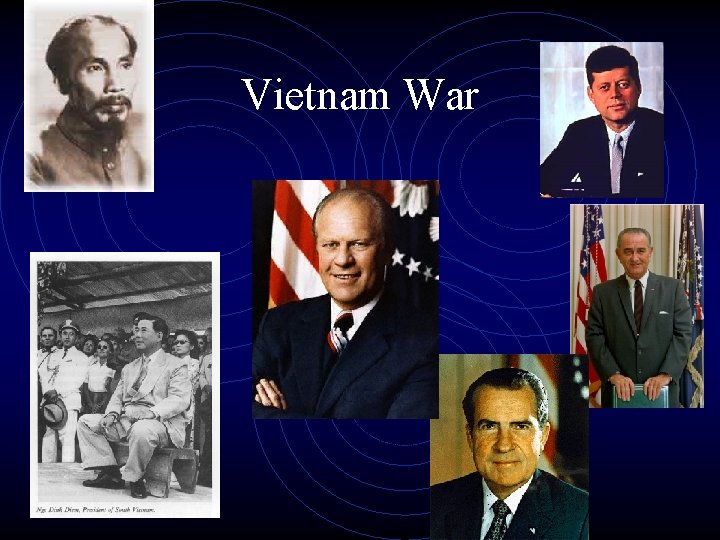
Vietnam War

SSUSH 20. D DESCRIBE THE VIETNAM WAR, THE TET OFFENSIVE, AND GROWING OPPOSITION TO THE WAR. SSUSH 20. E EXPLAIN THE ROLE OF GEOGRAPHY OF THE U. S. CONTAINMENT POLICY, THE KOREAN WAR, THE BAY OF PIGS, THE CUBAN MISSILE CRISIS, AND THE VIETNAM WAR. USH 24. C ANALYZE THE ANTI-VIETNAM WAR MOVEMENT. Why are we there?
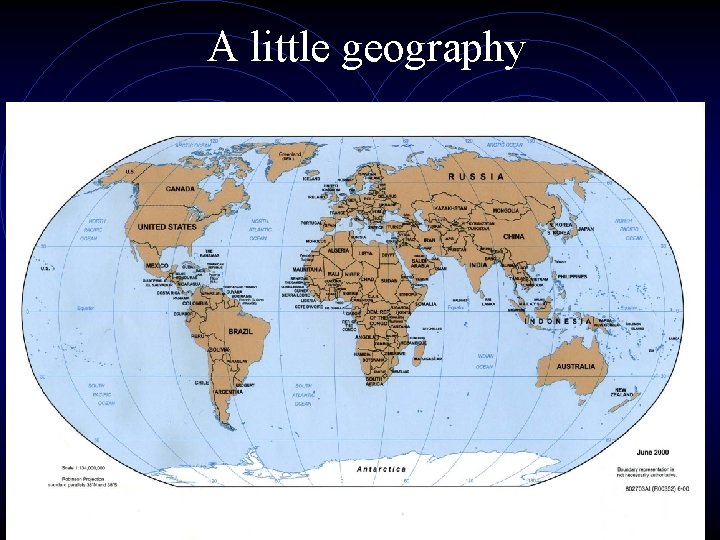
A little geography
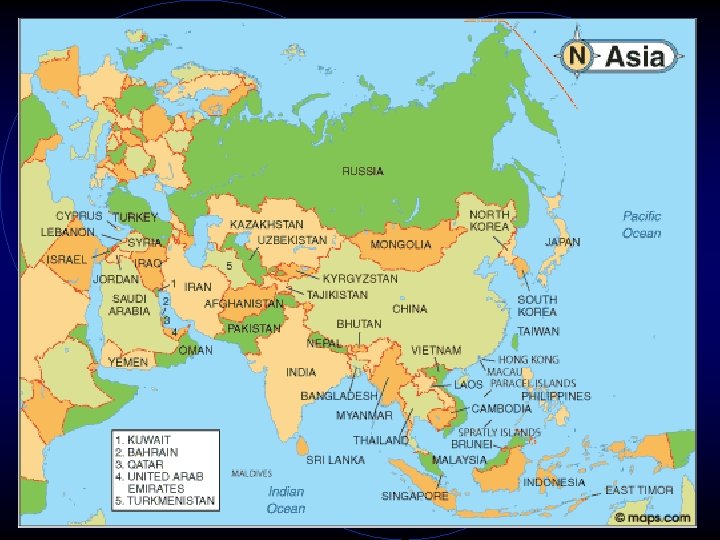
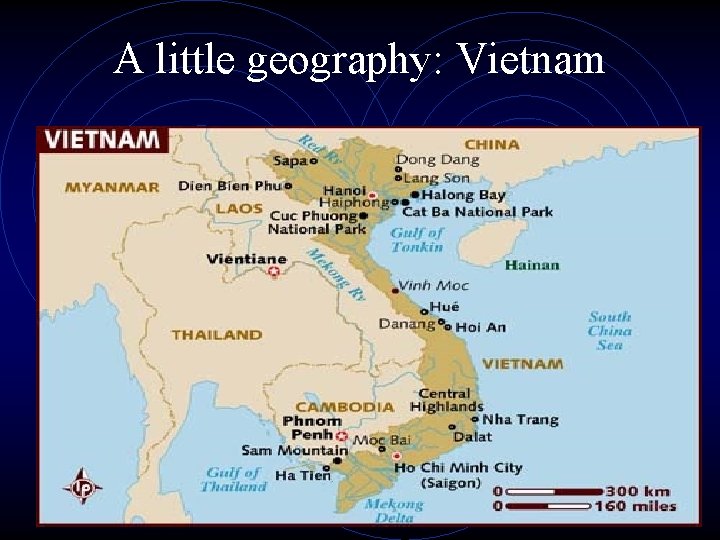
A little geography: Vietnam
In a nutshell…. • What war are we • Eisenhower continued this • Give France $$, Truman currently in? Doctrine & domino theory • What does America • 1954 - France lost, leaves want to fight against? Vietnam • Ho Chi Minh rebels • Country divided in two @ against French rule, 17 th parallel embraces communism. • N Vietnam – communist, Ho • Truman wanted France Chi Minh as a friend so…. • South Vietnam – anticommunist, Ngo Dinh Diem
Cold War : Vietnam • May 5, 1961 • Pres Kennedy: it may be necessary to send U. S. troops to Vietnam. • His inaugural address - Americans will be ready to ". . . bear any burden, meet any hardship, support any friend, oppose any foe to assure the survival and the success of liberty. “ • 1961 - 800 U. S. advisers in Vietnam • 1963 - 16, 700.
December 8, 1961 U. S. State Department publishes a “white paper” claiming that South Vietnam is threatened by “clear and present danger” of Communist aggression.
February 7, 1962 • Two U. S. Army air support companies arrive in Saigon • Total of U. S. troops in South Vietnam now 4, 000.
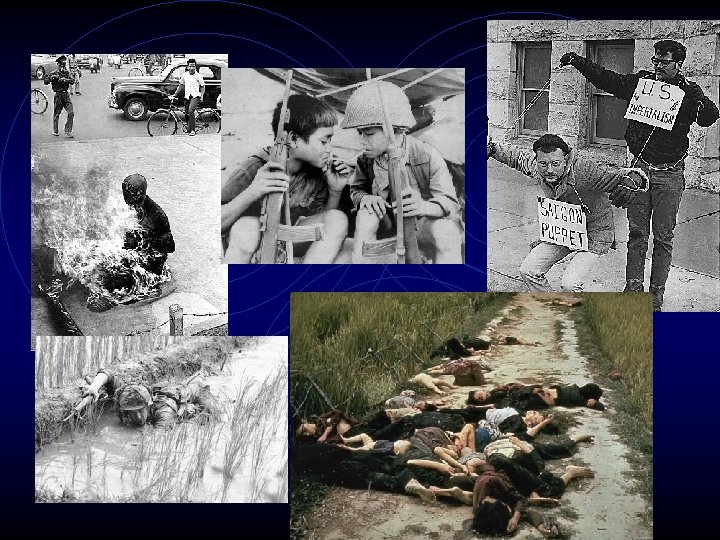
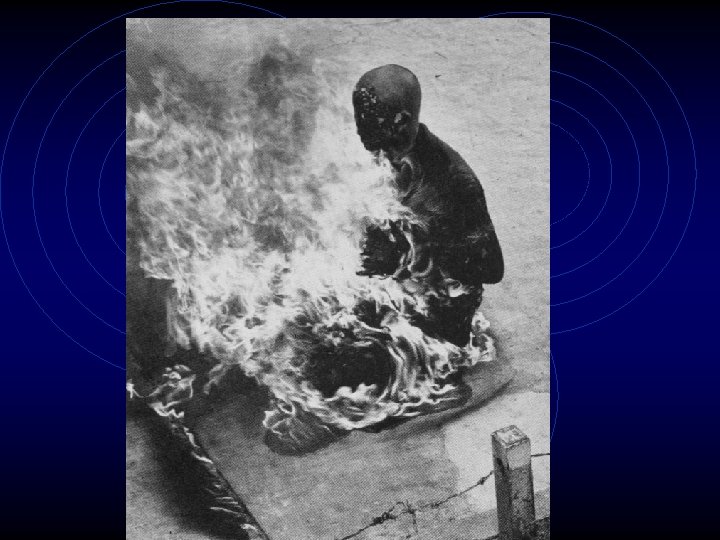
May 1, 1963 • Buddhists gather in city of Hue to protest a decree • • prohibiting them from flying their flag. Several months of rioting break out. Tensions between Buddhists and the Diem government are further strained Diem, a Catholic, removes Buddhists from key gov positions and replaces them with Catholics. Buddhist monks protest Diem's intolerance for other religions and the measures he takes to silence them. In a show of protest, Buddhist monks start setting themselves on fire in public places.
May 8, 1963 Diem’s troops fire on 20, 000 Buddhists gathered in the city of Hue to celebrate Buddha’s birthday, killing 8 children and 1 woman.
• August 24, 1963 Washington cables Saigon embassy, recommending that Diem be removed.

• November 1, 1963 With approval from the United States, operatives in the South Vietnamese military overthrow Diem. He and his brother Nhu are shot and killed in the aftermath. Diem is replaced by Vice President Nguyen Ngoc Tho and General Duong Van Minh.
• November 22, 1963 John F. Kennedy is assassinated. Kennedy's death meant that the problem of how to proceed in Vietnam fell squarely into the lap of his vice president, Lyndon Johnson.
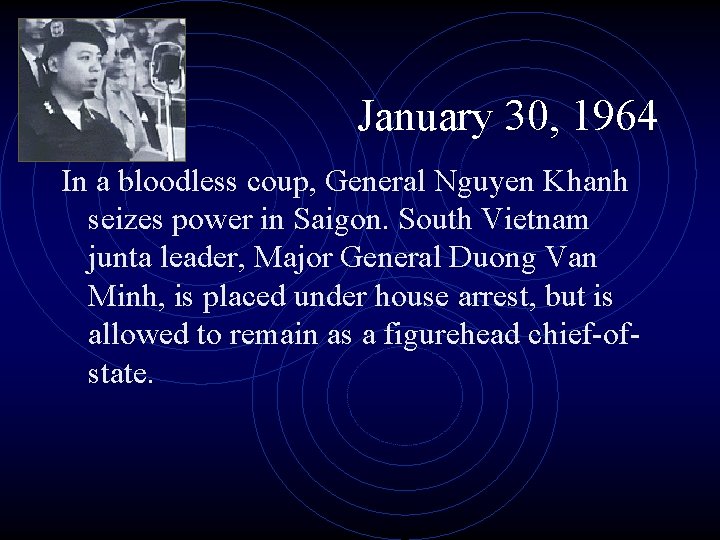
January 30, 1964 In a bloodless coup, General Nguyen Khanh seizes power in Saigon. South Vietnam junta leader, Major General Duong Van Minh, is placed under house arrest, but is allowed to remain as a figurehead chief-ofstate.
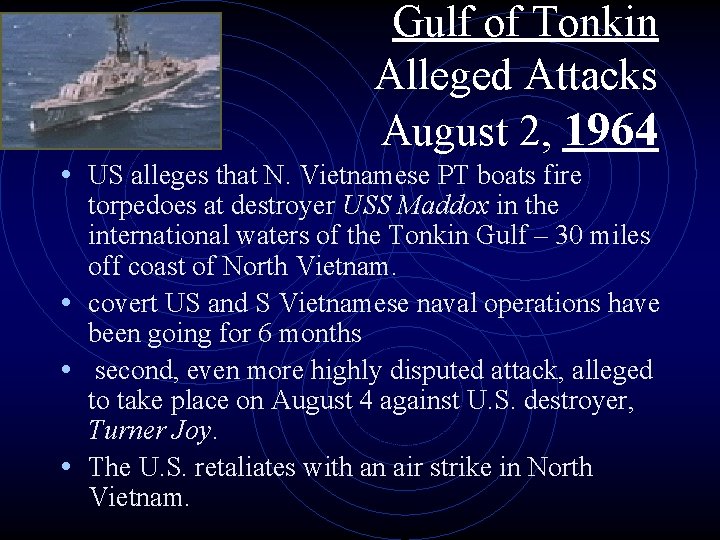
Gulf of Tonkin Alleged Attacks August 2, 1964 • US alleges that N. Vietnamese PT boats fire torpedoes at destroyer USS Maddox in the international waters of the Tonkin Gulf – 30 miles off coast of North Vietnam. • covert US and S Vietnamese naval operations have been going for 6 months • second, even more highly disputed attack, alleged to take place on August 4 against U. S. destroyer, Turner Joy. • The U. S. retaliates with an air strike in North Vietnam.
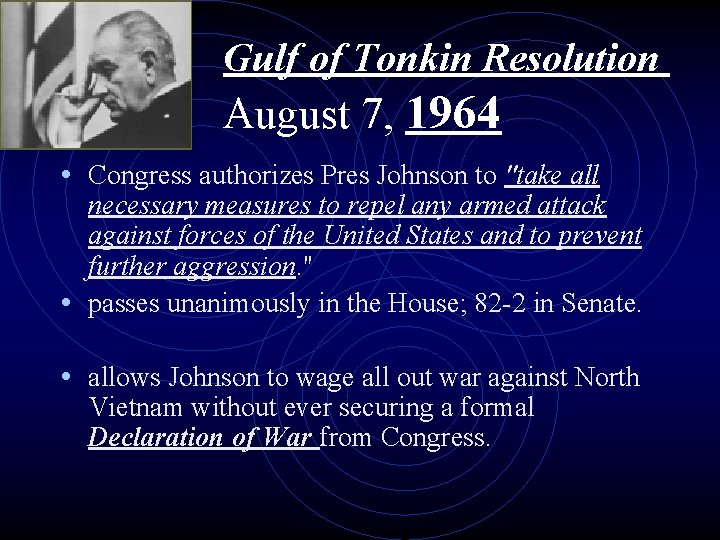
Gulf of Tonkin Resolution August 7, 1964 • Congress authorizes Pres Johnson to "take all necessary measures to repel any armed attack against forces of the United States and to prevent further aggression. " • passes unanimously in the House; 82 -2 in Senate. • allows Johnson to wage all out war against North Vietnam without ever securing a formal Declaration of War from Congress.
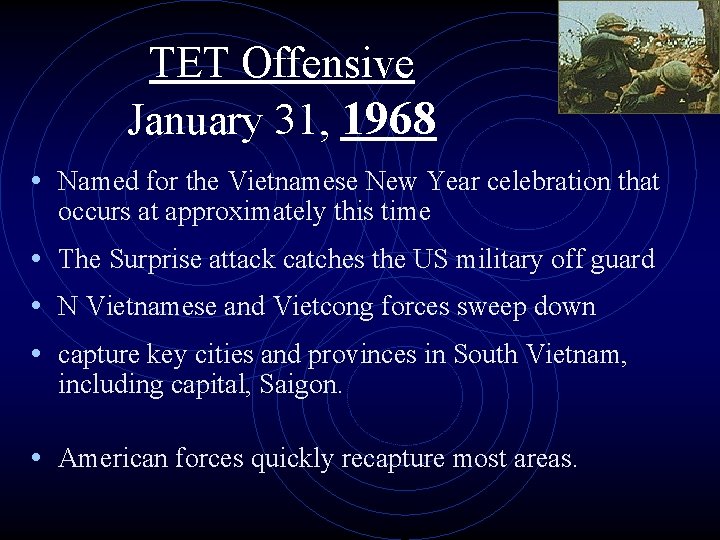
TET Offensive January 31, 1968 • Named for the Vietnamese New Year celebration that occurs at approximately this time • The Surprise attack catches the US military off guard • N Vietnamese and Vietcong forces sweep down • capture key cities and provinces in South Vietnam, including capital, Saigon. • American forces quickly recapture most areas.
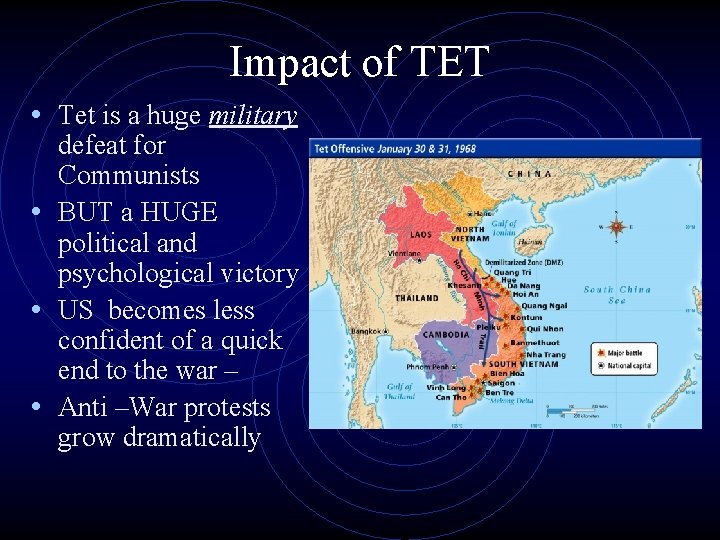
Impact of TET • Tet is a huge military defeat for Communists • BUT a HUGE political and psychological victory • US becomes less confident of a quick end to the war – • Anti –War protests grow dramatically
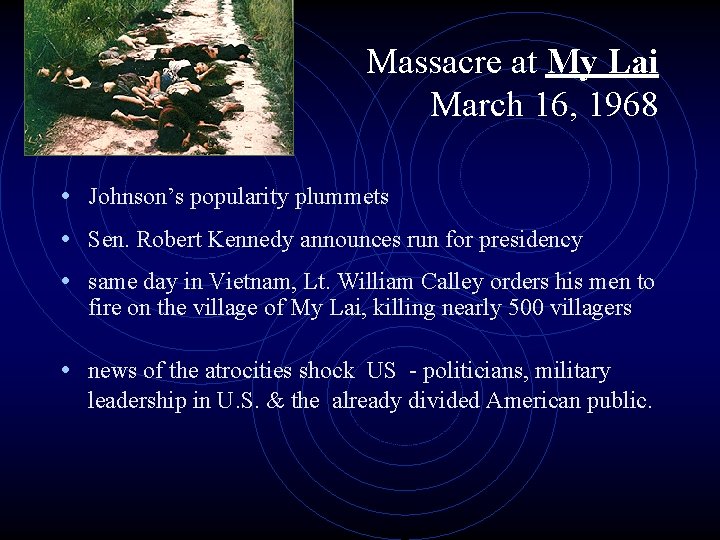
Massacre at My Lai March 16, 1968 • Johnson’s popularity plummets • Sen. Robert Kennedy announces run for presidency • same day in Vietnam, Lt. William Calley orders his men to fire on the village of My Lai, killing nearly 500 villagers • news of the atrocities shock US - politicians, military leadership in U. S. & the already divided American public.
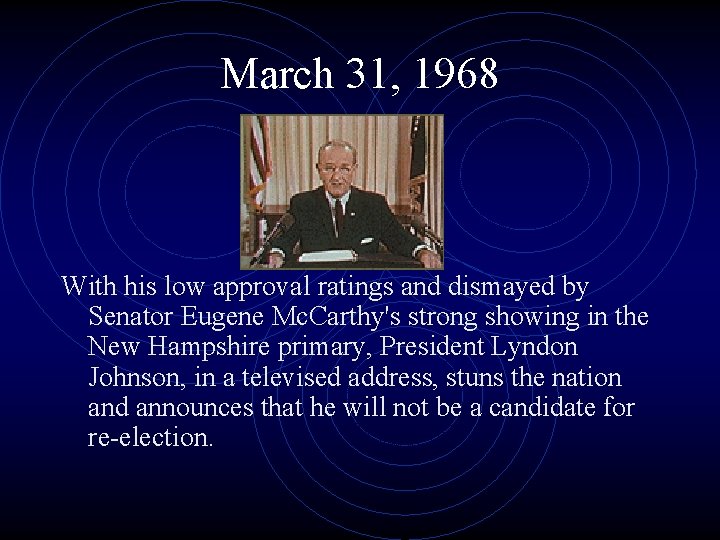
March 31, 1968 With his low approval ratings and dismayed by Senator Eugene Mc. Carthy's strong showing in the New Hampshire primary, President Lyndon Johnson, in a televised address, stuns the nation and announces that he will not be a candidate for re-election.

October 31, 1968 Johnson halts bombing of North Vietnam. Seven days later Richard Nixon, running on a platform of "law and order, " defeats Hubert H. Humphrey to become U. S. president.
March 15, 1969 In an effort to destroy Communist supply routes and base camps in Cambodia, President Nixon gives the go-ahead to "Operation Breakfast. " The covert bombing of Viet Cong sanctuaries in Cambodia, conducted without the knowledge of Congress or the American public, will continue for fourteen months.
June 8, 1969 Nixon announces first U. S. troop withdrawal of 25, 000 soldiers.
July 25, 1969 The president announces the “Nixon Doctrine. ” He calls for sending more economic and military aid to South Vietnam to strengthen the South Vietnam military. Secretary of Defense Melvin Laird described the policy of "Vietnamization" when discussing a diminishing role for the US military in Vietnam. The objective of the policy was to shift the burden of defeating the Communists onto the South Vietnamese Army and away from the United States.
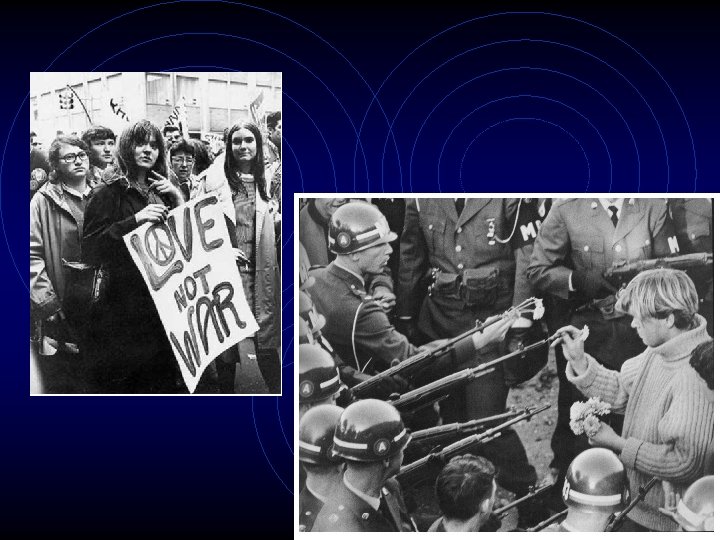
October 15, 1969 Thousands of Americans participate in demonstrations against the war. Two weeks later, Nixon appeals to what he calls the “silent majority, ” Americans who support the war, claiming that total withdrawal from Vietnam would harm U. S. interests.
April 29, 1970 U. S. forces invade Cambodia to attack North Vietnamese and Viet Cong sanctuaries.

June 13, 1971 A legacy of deception concerning US policy in Vietnam on the part of the military and the executive branch is revealed as the New York Times begins publication of leaked portions of the Pentagon Papers. The Nixon administration, eager to stop leaks of what they consider sensitive information, appeals to the Supreme Court to halt the publication. The Court decides in favor the Times and allows continued publication.
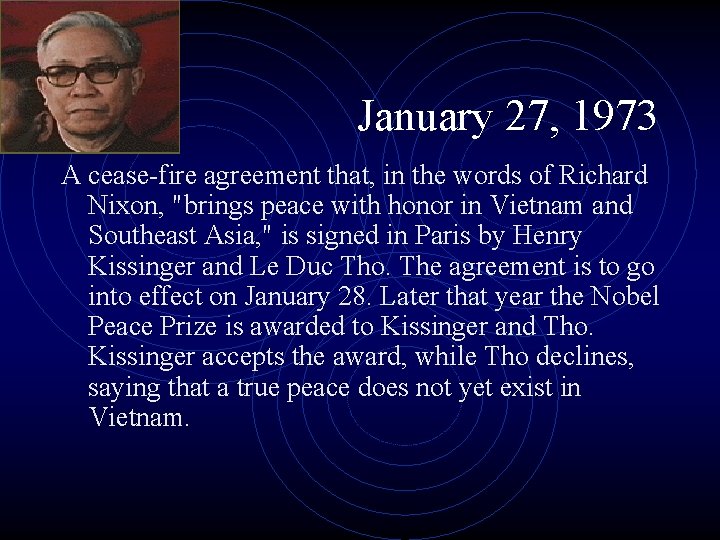
January 27, 1973 A cease-fire agreement that, in the words of Richard Nixon, "brings peace with honor in Vietnam and Southeast Asia, " is signed in Paris by Henry Kissinger and Le Duc Tho. The agreement is to go into effect on January 28. Later that year the Nobel Peace Prize is awarded to Kissinger and Tho. Kissinger accepts the award, while Tho declines, saying that a true peace does not yet exist in Vietnam.
March 29, 1973 North Vietnam releases 60 American prisoners of war, who leave Vietnam along with the last remaining U. S. forces.
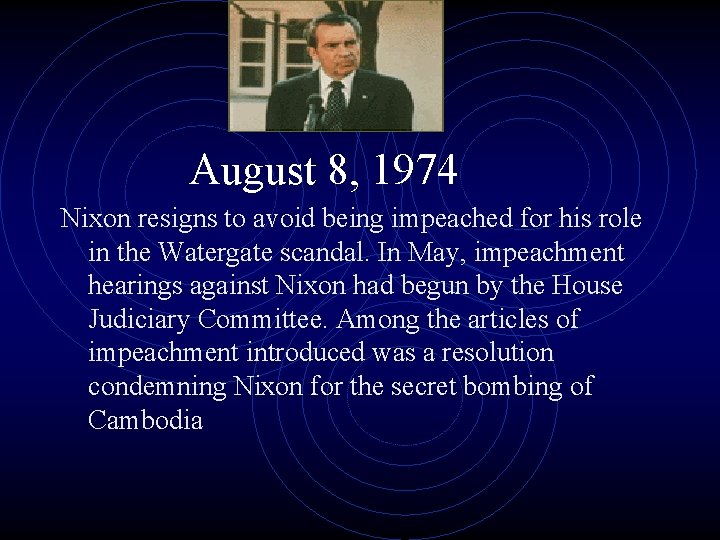
August 8, 1974 Nixon resigns to avoid being impeached for his role in the Watergate scandal. In May, impeachment hearings against Nixon had begun by the House Judiciary Committee. Among the articles of impeachment introduced was a resolution condemning Nixon for the secret bombing of Cambodia
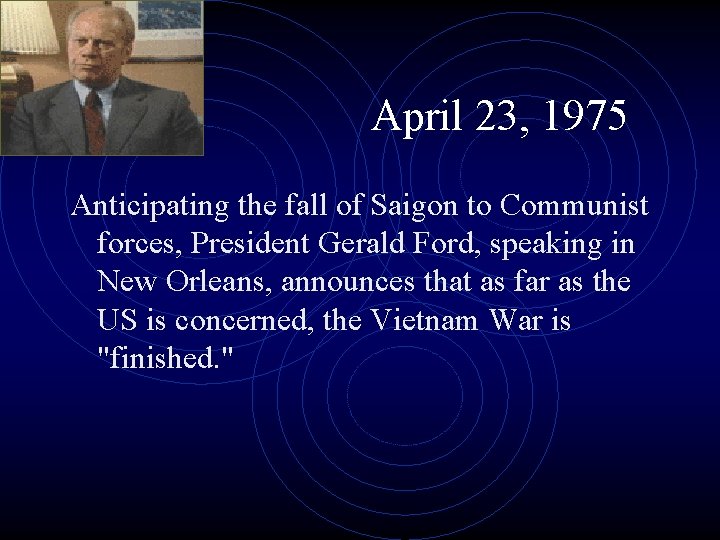
April 23, 1975 Anticipating the fall of Saigon to Communist forces, President Gerald Ford, speaking in New Orleans, announces that as far as the US is concerned, the Vietnam War is "finished. "
April 30, 1975 South Vietnamese President Duong Van Minh delivers an unconditional surrender to the Communists in the early hours. North Vietnamese Colonel Bui Tin accepts the surrender and assures Minh that, ". . . Only the Americans have been beaten. If you are patriots, consider this a moment of joy. " As the few remaining Americans evacuate Saigon from the roof of the U. S. embassy, the last two US servicemen to die in Vietnam are killed when their helicopter crashes.
1975 – Operation Babylift: Vietnamese orphans transported by airplanes to America.
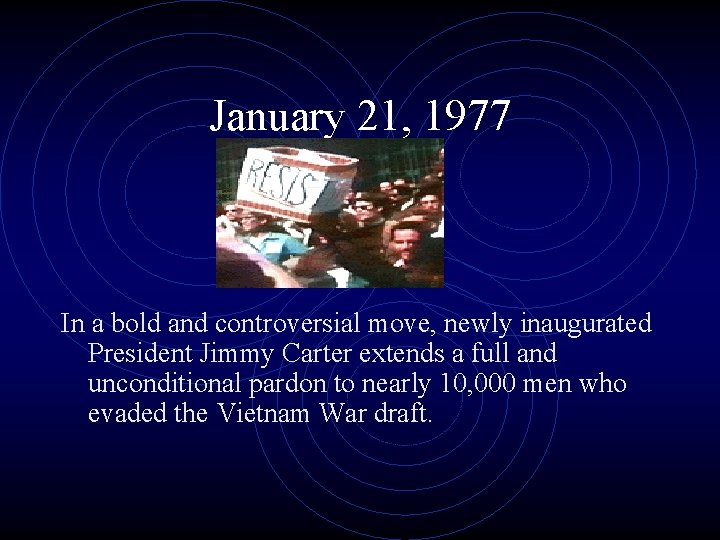
January 21, 1977 In a bold and controversial move, newly inaugurated President Jimmy Carter extends a full and unconditional pardon to nearly 10, 000 men who evaded the Vietnam War draft.
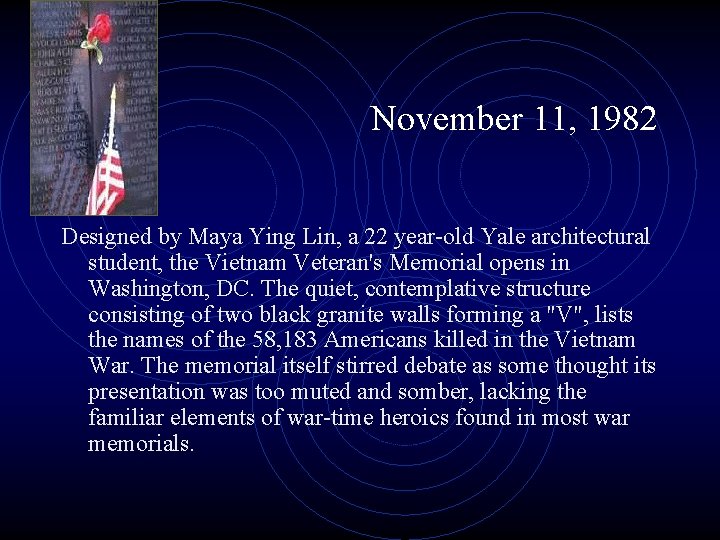
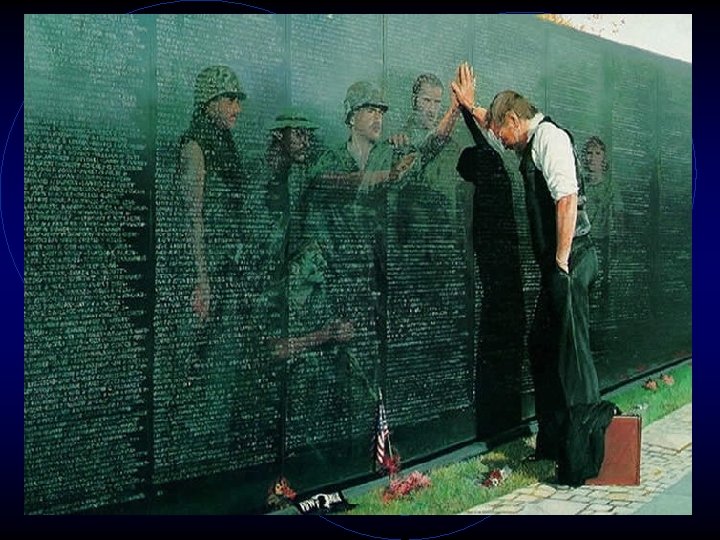
November 11, 1982 Designed by Maya Ying Lin, a 22 year-old Yale architectural student, the Vietnam Veteran's Memorial opens in Washington, DC. The quiet, contemplative structure consisting of two black granite walls forming a "V", lists the names of the 58, 183 Americans killed in the Vietnam War. The memorial itself stirred debate as some thought its presentation was too muted and somber, lacking the familiar elements of war-time heroics found in most war memorials.
Extra credit opp. • Research John Mc. Cain’s POW journey. • Write me 5 original sentences (no copying and pasting). • Turn it in tomorrow for a bonus card.
What else is going on? ? ?
• SSUSH 24. b • Describe the National Organization of Women and the origins and goals of the modern women's movement. • SSUSH 24. d • Analyze Cesar Chavez and the United Farm Workers movement. • SSUSH 24. e • Explain Rachel Carson and Silent Spring, Earth Day, the creation of the EPA, and the modern environmentalist movement.
• SSUSH 25. a • Describe President Richard M. Nixon's opening of China, his resignation due to the Watergate scandal, changing attitudes toward government, and the Presidency of Gerald Ford. • SSUSH 25. b • Explain the impact of Supreme Court decisions on ideas about civil liberties and civil rights including such decisions as Roe v. Wade (1973 and the Bakke decision on affirmative action).
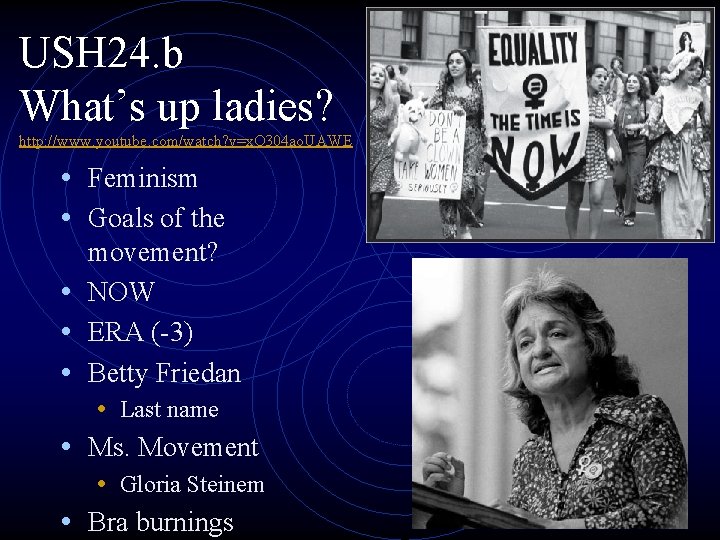
USH 24. b What’s up ladies? http: //www. youtube. com/watch? v=x. O 304 ao. UAWE • Feminism • Goals of the • • • movement? NOW ERA (-3) Betty Friedan • Last name Ms. Movement • Gloria Steinem Bra burnings
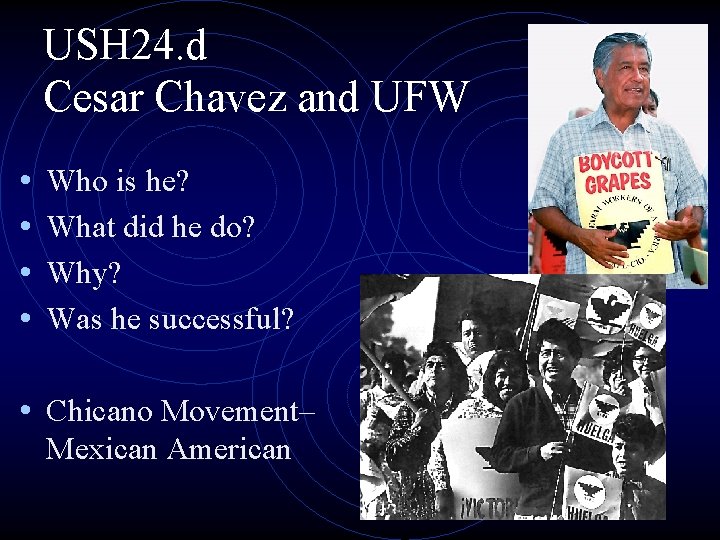
USH 24. d Cesar Chavez and UFW • • Who is he? What did he do? Why? Was he successful? • Chicano Movement– Mexican American
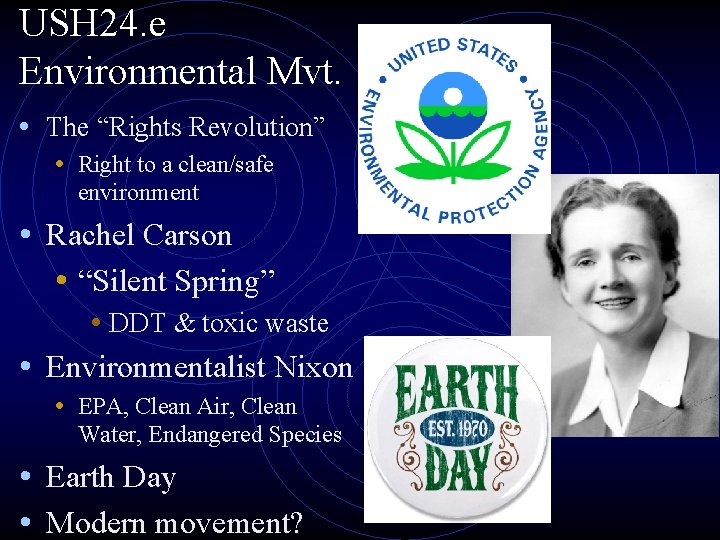
USH 24. e Environmental Mvt. • The “Rights Revolution” • Right to a clean/safe environment • Rachel Carson • “Silent Spring” • DDT & toxic waste • Environmentalist Nixon • EPA, Clean Air, Clean Water, Endangered Species • Earth Day • Modern movement?
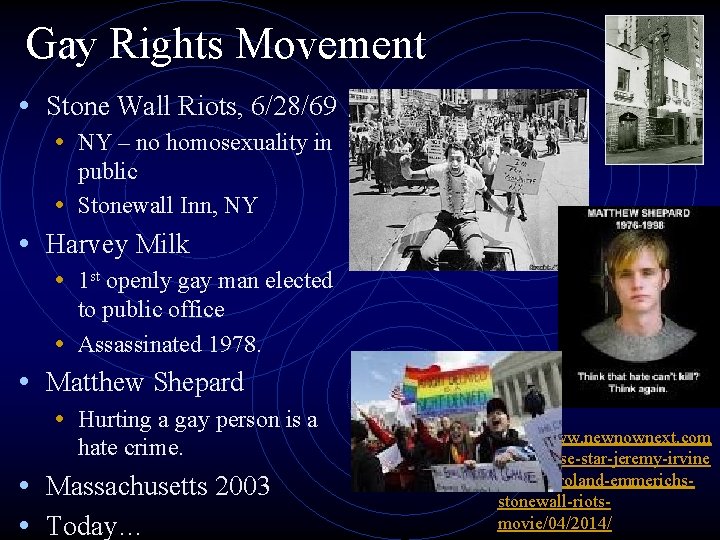
Gay Rights Movement • Stone Wall Riots, 6/28/69 • NY – no homosexuality in public • Stonewall Inn, NY • Harvey Milk • 1 st openly gay man elected to public office • Assassinated 1978. • Matthew Shepard • Hurting a gay person is a hate crime. • Massachusetts 2003 • Today… http: //www. newnownext. com /war-horse-star-jeremy-irvine -cast-in-roland-emmerichsstonewall-riotsmovie/04/2014/
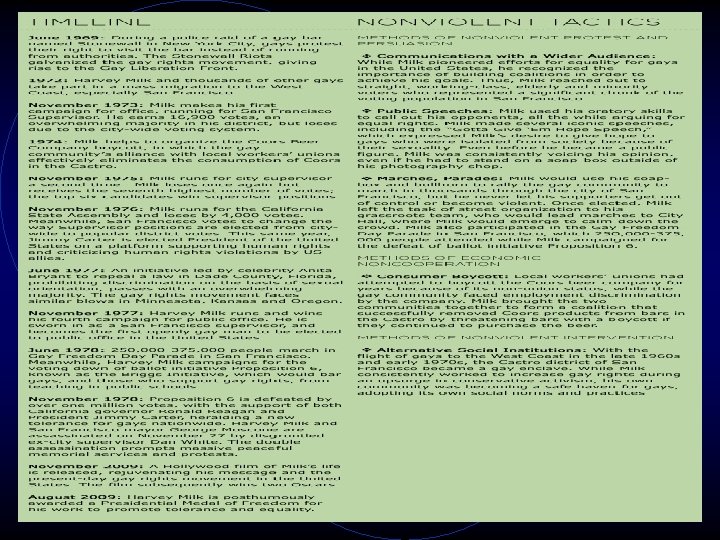
• Gay brothers and sisters, … You must come out. Come out… to your parents… I know that it is hard and will hurt them but think about how they will hurt you in the voting booth! Come out to your relatives… come out to your friends… if indeed they are your friends. Come out to your neighbors… to your fellow workers… to the people who work where you eat and shop… come out only to the people you know, and who know you. Not to anyone else. But once and for all, break down the myths, destroy the lies and distortions. For your sake. For their sake. For the sake of the youngsters who are becoming scared by the votes from Dade to Eugene.
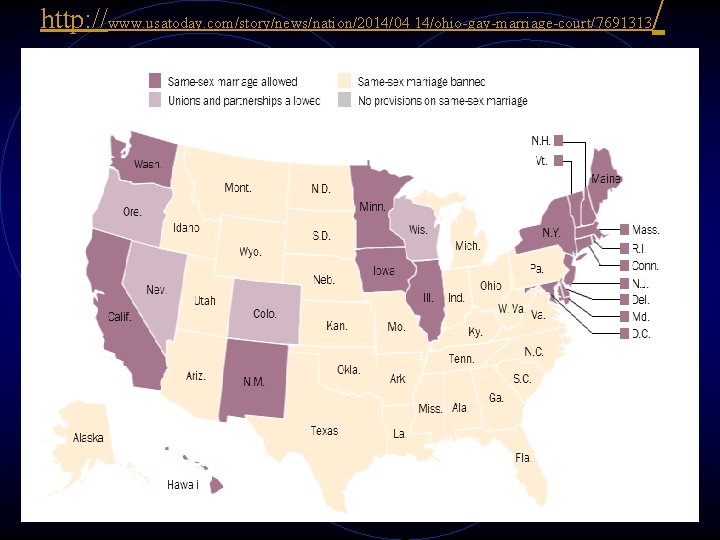
http: //www. usatoday. com/story/news/nation/2014/04 14/ohio-gay-marriage-court/7691313/
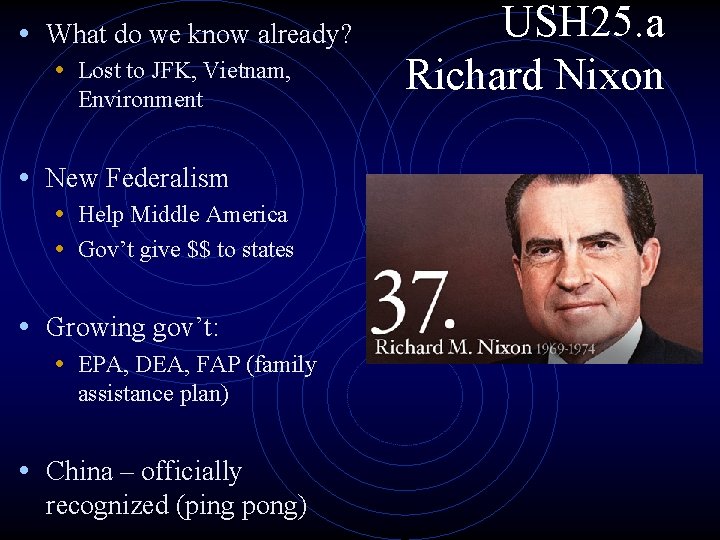
• What do we know already? • Lost to JFK, Vietnam, Environment • New Federalism • Help Middle America • Gov’t give $$ to states • Growing gov’t: • EPA, DEA, FAP (family assistance plan) • China – officially recognized (ping pong) USH 25. a Richard Nixon
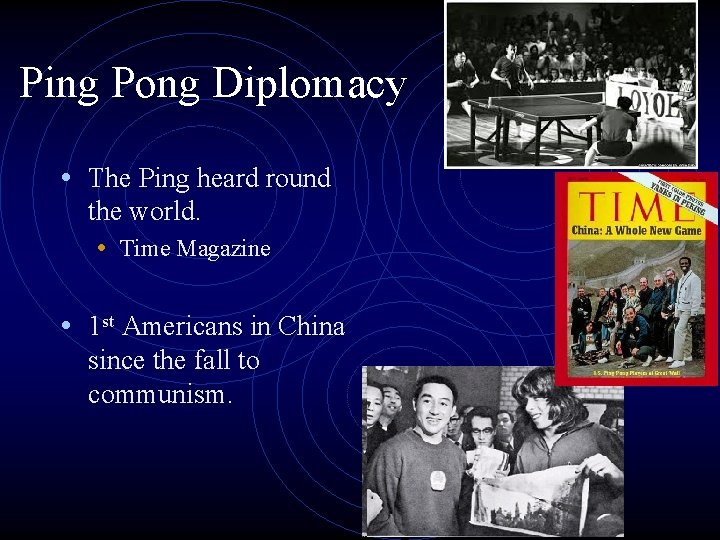
Ping Pong Diplomacy • The Ping heard round the world. • Time Magazine • 1 st Americans in China since the fall to communism.
President Nixon trying to use chopsticks while visiting China in 1972.
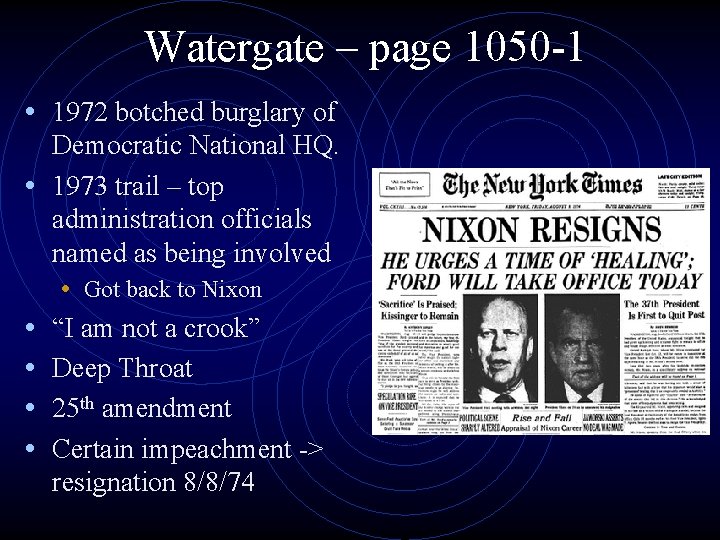
Watergate – page 1050 -1 • 1972 botched burglary of • • • Democratic National HQ. 1973 trail – top administration officials named as being involved • Got back to Nixon “I am not a crook” Deep Throat 25 th amendment Certain impeachment -> resignation 8/8/74

5 minute clip on Watergate https: //www. youtube. com/watch? v=I Hnmriy. XYeg
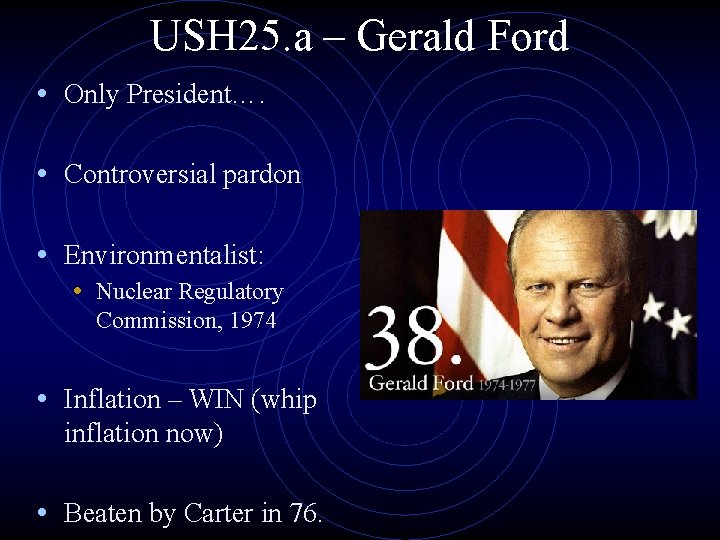
USH 25. a – Gerald Ford • Only President…. • Controversial pardon • Environmentalist: • Nuclear Regulatory Commission, 1974 • Inflation – WIN (whip inflation now) • Beaten by Carter in 76.
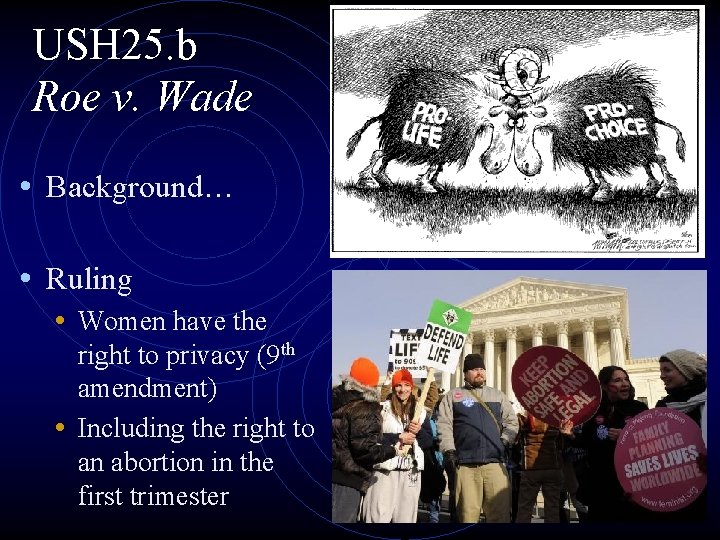
USH 25. b Roe v. Wade • Background… • Ruling • Women have the right to privacy (9 th amendment) • Including the right to an abortion in the first trimester
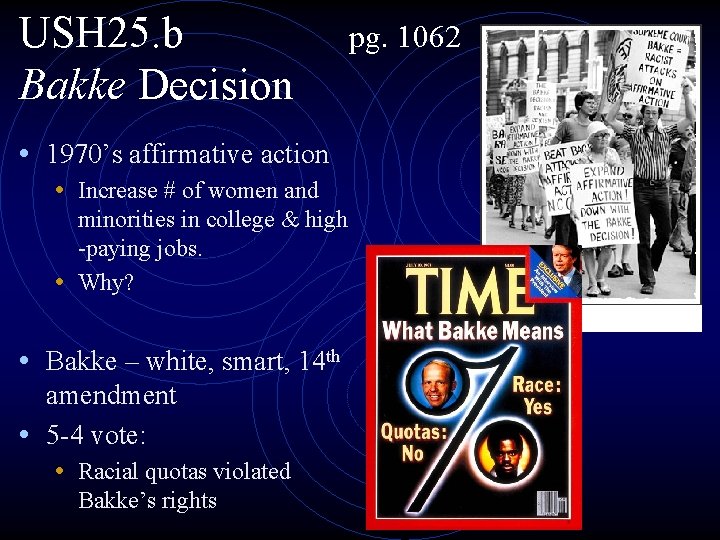
USH 25. b Bakke Decision • 1970’s affirmative action • Increase # of women and minorities in college & high -paying jobs. • Why? • Bakke – white, smart, 14 th amendment • 5 -4 vote: • Racial quotas violated Bakke’s rights pg. 1062
- Slides: 60