The North Chapter 12 Industrial Revolution in America







- Slides: 39
The North Chapter 12
Industrial Revolution in America Chapter 12 Section 1 P 384 -389
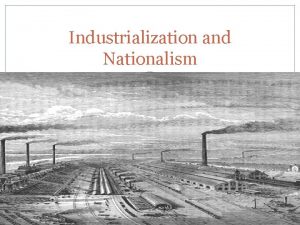
New Machines lead to the Industrial Revolution n Most people at the beginning of the 1700 s were farmers, who made most of what they needed by hand. n Skilled workers, such as blacksmiths, carpenters, and shoemakers, made goods by hand in the towns. n People began using machines to make the manufacturing process more efficient. n The Industrial Revolution, a period of rapid growth using machines to make goods, arose in Great Britain in the mid-1700 s.
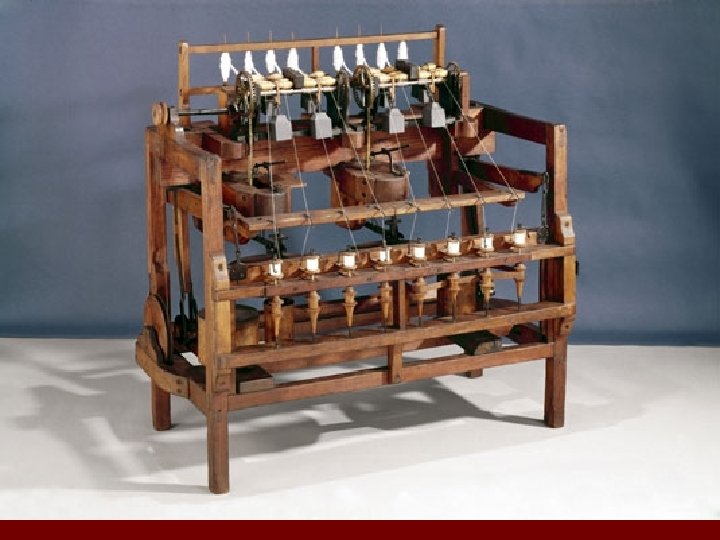
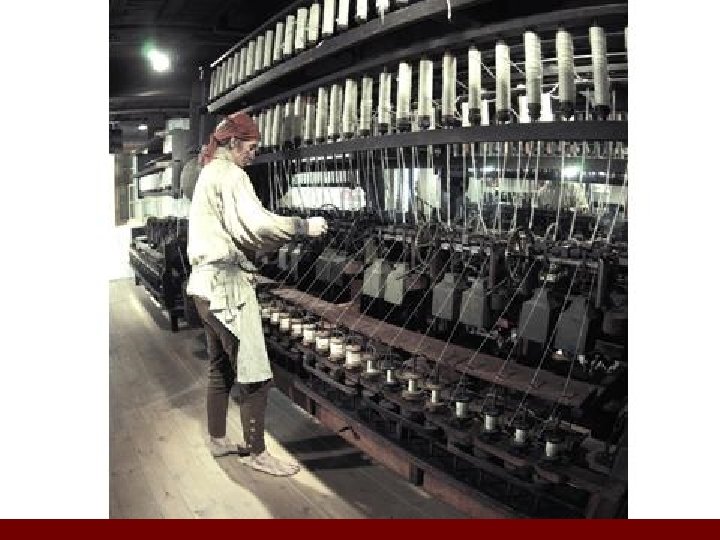
Textile Industry n The first breakthrough in the Industrial Revolution was in how textiles, or cloth goods, were made. n Richard Arkwright, an Englishman, invented a spinning machine in 1769 called the water frame, which replaced hand spinning. n The water frame used flowing water as a source of power. – Could produce dozens of cotton threads at the same time – Lowered the cost of cotton production and increased the speed of textile production
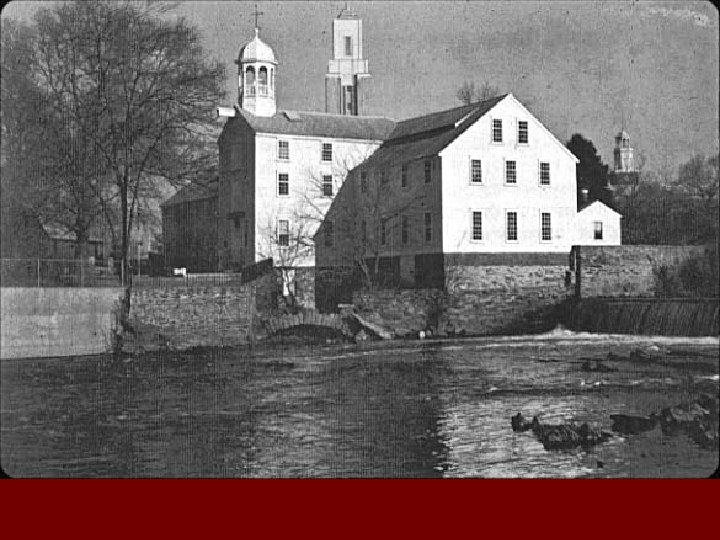
n Merchants streams. built textile mills near rivers and n Great Britain soon built the world’s most productive textile manufacturing industry. n Samuel Slater brought the secrets of textile mill manufacturing from Great Britain to the United States. n The textile industry arose in the Northeast, introducing the Industrial Revolution to the United States.
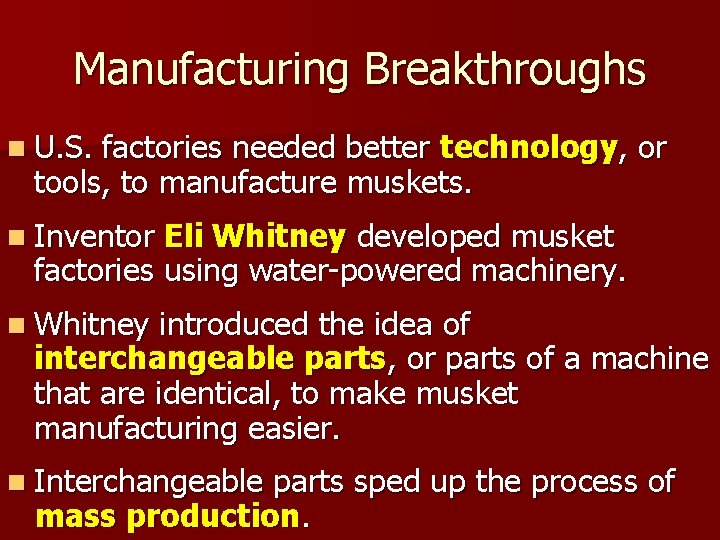
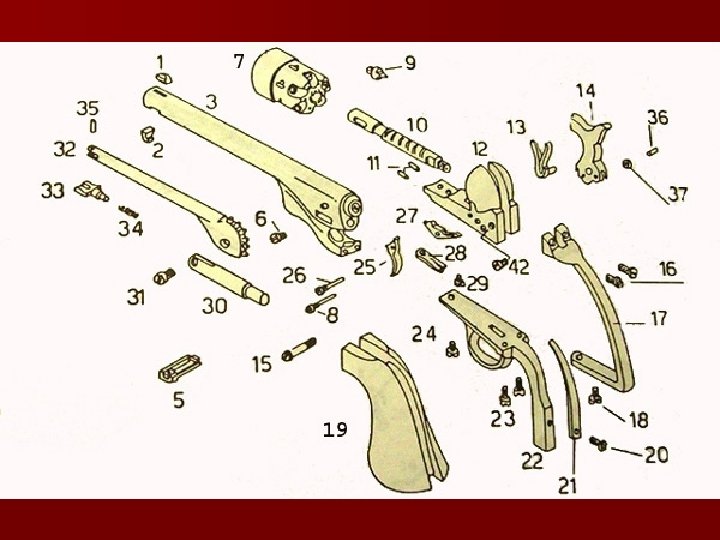
Manufacturing Breakthroughs n U. S. factories needed better technology, or tools, to manufacture muskets. n Inventor Eli Whitney developed musket factories using water-powered machinery. n Whitney introduced the idea of interchangeable parts, or parts of a machine that are identical, to make musket manufacturing easier. n Interchangeable parts sped up the process of mass production.
Improvements during War of 1812 n Lower British prices on manufactured goods made it difficult for American manufacturing to grow. n American manufacturing was limited to cotton goods, flour milling, weapons, and iron products. n The War of 1812 cut off trade with Great Britain, allowing manufacturing in the United States to prosper and expand. n Americans realized that the United States had been relying too heavily on foreign goods.
Changes in Working Life Chapter 12 Section 2 P 390 -395
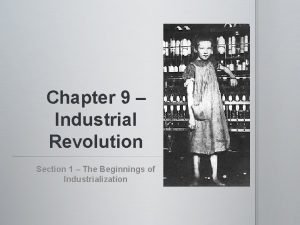
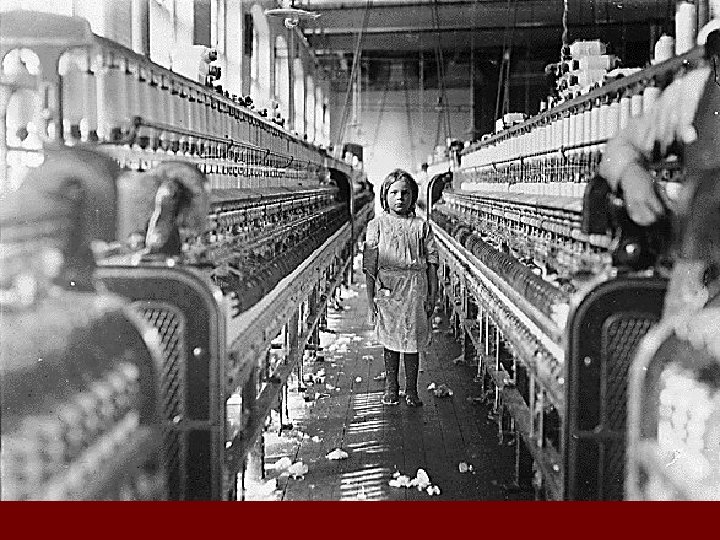
Mills Change Workers’ Lives n Factory jobs usually involved simple, repetitive tasks done for low pay. – Could not find workers because of the simple work and the fact that other jobs were available n The mill industry filled jobs by hiring whole families, and paying children low wages. – Built housing for workers and provided a company store n Samuel Slater’s strategy of hiring families and dividing factory work into simple tasks was called the Rhode Island system.
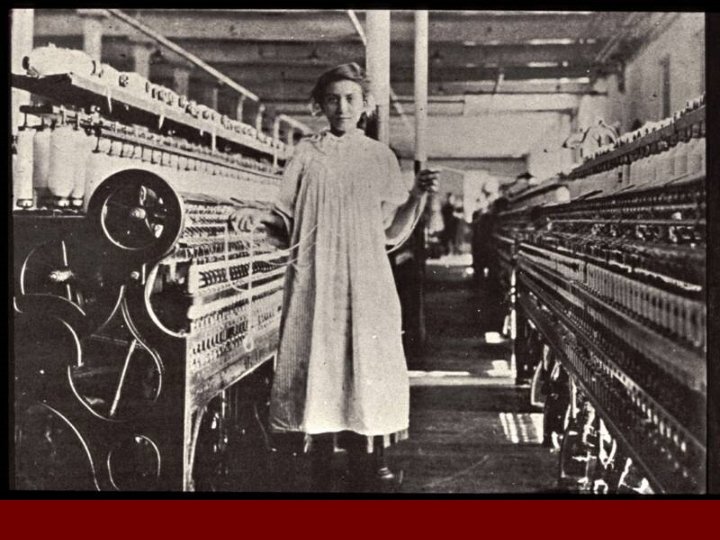
Lowell System n Francis Cabot Lowell created a new system of mill manufacturing in 1814, called the Lowell system. n The Lowell system involved – Employing young, unmarried women, who were housed in boardinghouses – Providing clean factories and free-time activities for its employees – Having mills that included both spinning thread and weaving in the same plant
Workers Organize to Reform Working Conditions Deteriorating Working Conditions n Employees worked 12 -to 14 hour days in unhealthy conditions. n Craftsmen’s wages dropped in competition against cheap manufactured goods. n Wages of factory workers dropped as they competed for jobs. Trade Unions Formed n Craftsmen formed trade unions to gain higher wages and better working conditions. n Factory workers also formed trade unions. n Labor unions staged protests called strikes, refusing to work until employers met their demands.
Labor Reform Efforts n Millworker Sarah G. Bagley helped lead the union movement in Massachusetts. n Bagley’s union campaigned to reduce the 12 -to 14 -hour workday to a 10 -hour workday. n Union workers won some victories, as several states passed 10 -hour workday laws. n In other states the workday remained long and child labor prevailed.
The Transportation Revolution Chapter 12 Section 3 P 396 -401
The Transportation Revolution Affects Trade and Daily Life n The 1800 s gave rise to Transportation Revolution: period of rapid growth in new means of transportation n Transportation Revolution created boom in business by reducing shipping costs and time n Two new forms of transportation were steamboat and steam-powered trains – Goods, people, and information were able to travel rapidly and efficiently across the United States.
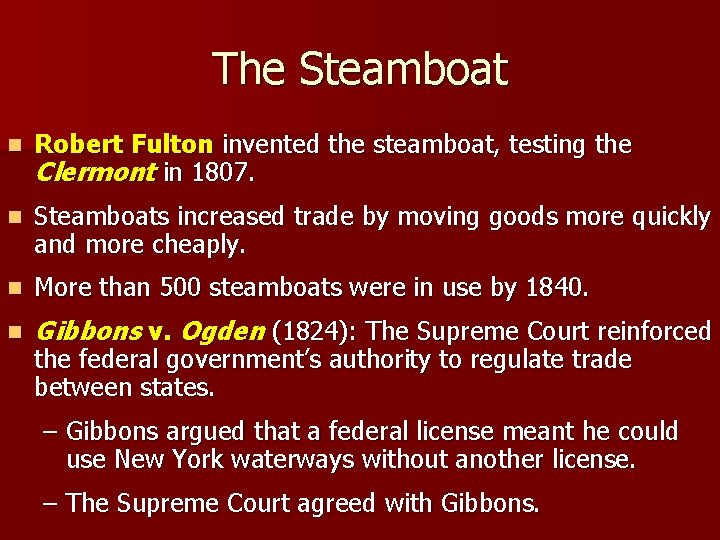
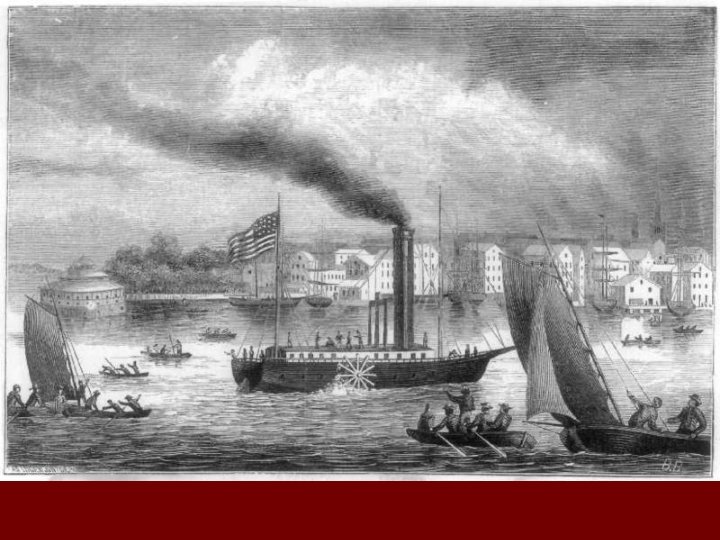
The Steamboat n Robert Fulton invented the steamboat, testing the Clermont in 1807. n Steamboats increased trade by moving goods more quickly and more cheaply. n More than 500 steamboats were in use by 1840. n Gibbons v. Ogden (1824): The Supreme Court reinforced the federal government’s authority to regulate trade between states. – Gibbons argued that a federal license meant he could use New York waterways without another license. – The Supreme Court agreed with Gibbons.
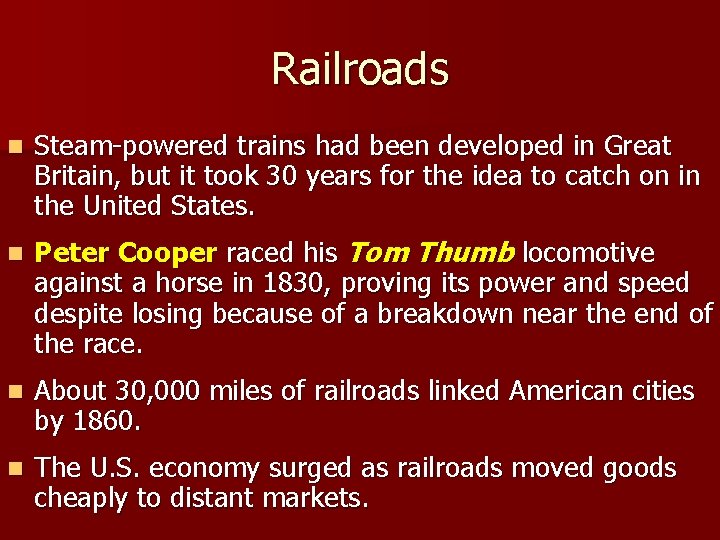
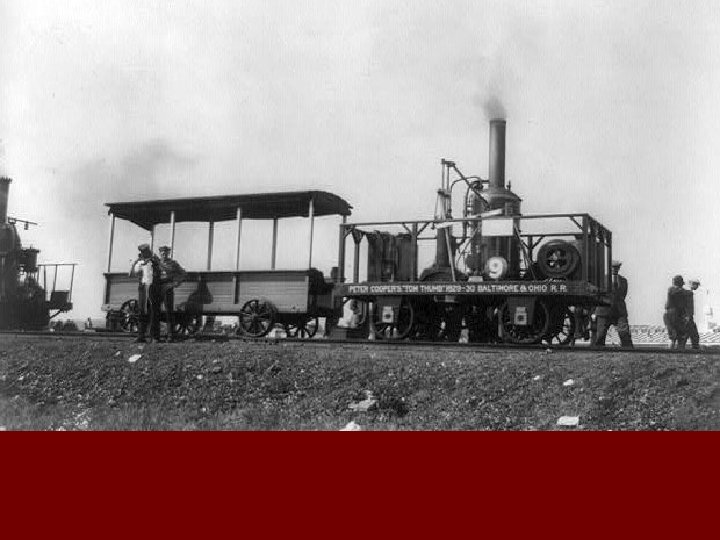
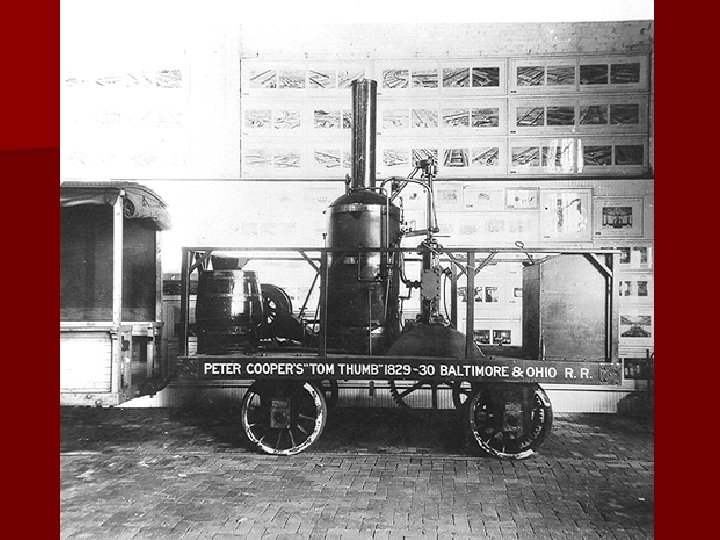
Railroads n Steam-powered trains had been developed in Great Britain, but it took 30 years for the idea to catch on in the United States. n Peter Cooper raced his Tom Thumb locomotive against a horse in 1830, proving its power and speed despite losing because of a breakdown near the end of the race. n About 30, 000 miles of railroads linked American cities by 1860. n The U. S. economy surged as railroads moved goods cheaply to distant markets.
Transportation Revolution Brings Changes to Life and Industry n People in all areas of the nation had access to products made and grown far away. n Railroads contributed to the expansion of the nation’s borders. n Cities and towns grew up along railroad tracks.
Impact of Railroads n Coal replaced wood as a source of fuel as trains grew bigger. n Railroads helped create the coal industry. n Coal, shipped cheaply on trains, became the main fuel in homes and in the emerging steel industry. n Railroads helped the lumber industry grow, leading to large-scale deforestation. n Railroads caused cities to grow, including Chicago, which became a transportation hub.
More Technological Advances Chapter 12 Section 4 P 402 -405
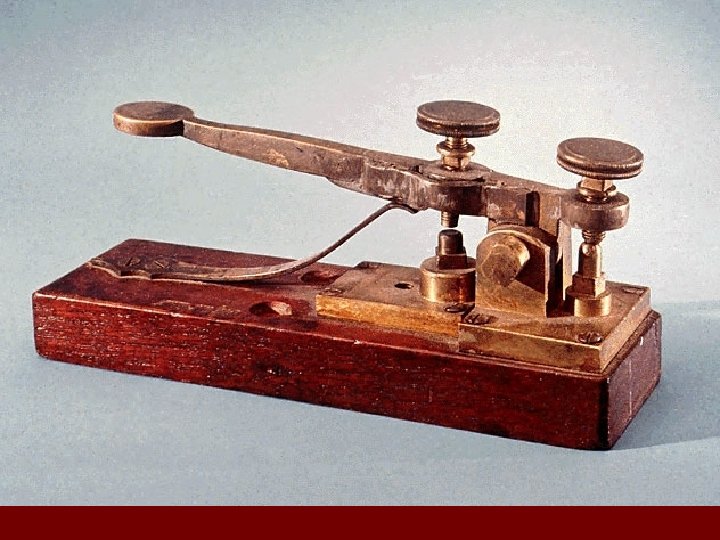
The Telegraph In 1832, Samuel F. B. Morse perfected the telegraph—a device that could send information over wires. – The device did not catch on until the 1844 Democratic National Convention, when the nomination was telegraphed to Washington. n A Morse associate created Morse code to communicate messages over the wires. – Morse code turned pulses of electric current into long and short clicks. – Clicks, also called dots and dashes, were arranged in patterns representing letters of the alphabet. n The telegraph grew with the railroad; the first transcontinental railroad line was completed in 1861. n
Shift to Steam Power n The shift from water power to steam power allowed owners to build factories anywhere. n Factories were shifted closer to cities and transportation centers. n Cities became centers of industrial growth.
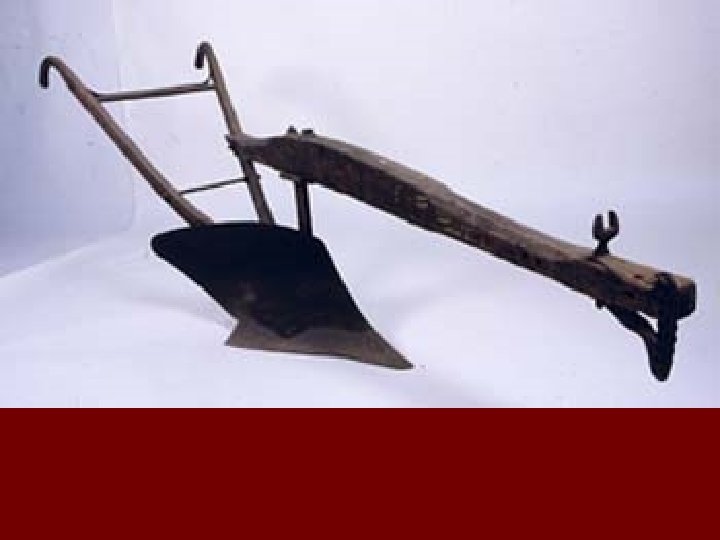
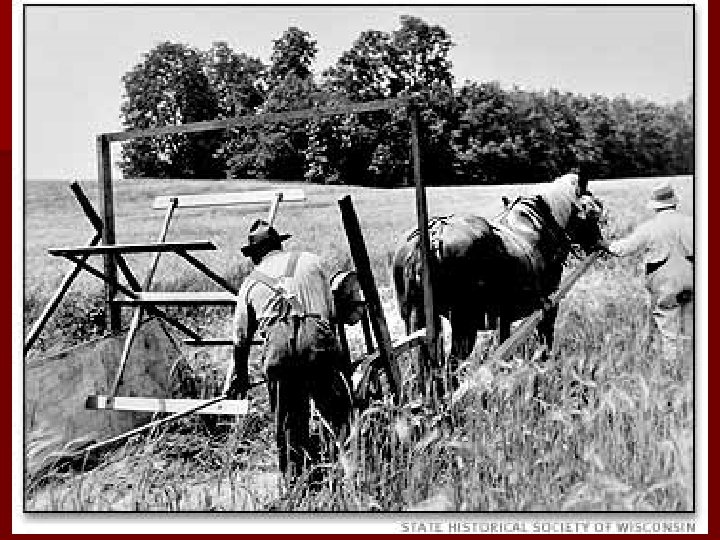
Other Devices Make Life Easier n John Deere designed a steel plow in 1837 that replaced the less efficient iron plow. n Cyrus Mc. Cormick developed a mechanical reaper in 1831, which quickly and efficiently harvested wheat. – Mc. Cormick used a new method to encourage sales, advertising. – He also allowed people to buy on credit and provided repairs and spare parts for his machines. n These inventions allowed farmers to plant and harvest huge crop fields, helping the country prosper.
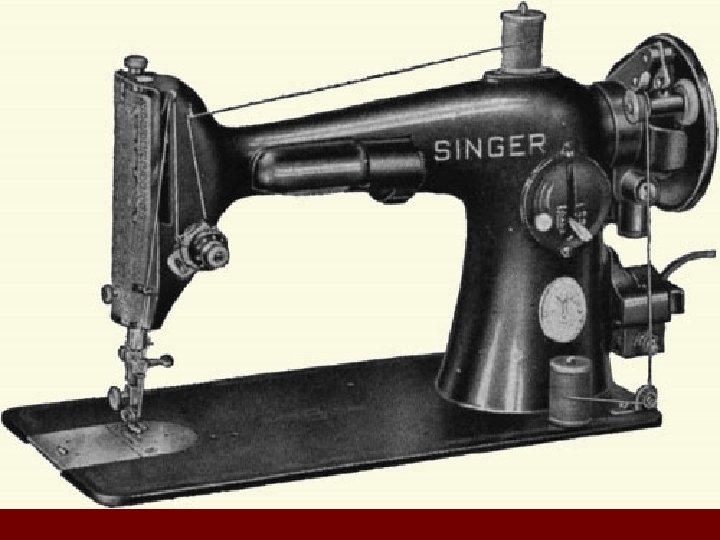
New Inventions in American Homes n The sewing machine, invented by Elias Howe and improved by Isaac Singer, made home sewing easier. n Ice boxes and iron cookstoves improved household storage and preparation of food. n Mass-produced goods, such as clocks, matches, and safety pins, added convenience to households.