The Kigali Amendment to the Montreal Protocol Presentation


- Slides: 39
The Kigali Amendment to the Montreal Protocol Presentation by Ozone Secretariat Thematic Meeting on HCFC Phase-out Management Plans and HFCs Phase-down Initiatives 24 -26 October 2017, Tbilisi, Georgia Sophia Mylona
Presentation content u Montreal Protocol (MP) achievements to date u Status of ratification u Expected benefits of the Kigali Amendment (KA) u Main elements of the KA and key accompanying decisions u Reasons to ratify and support the KA u The KA ratification process
Montreal Protocol achievements to date § 99% of ozone-depleting substances (ODSs) phased-out § Controlled uses replaced with safer alternatives for ozone layer. § All controlled uses of CFCs phased out globally, with the phase-out of CFCs used in metered-dose inhalers (MDIs) in 2016. § As a result, key ODSs in the atmosphere have been reduced with scientific projections showing that the ozone layer will be returning to its 1980 levels by 2060
Montreal Protocol achievements to date § Up to 2 million cases of skin cancer can be prevented each year by 2030 § The Montreal Protocol has also led to technology transfer with the Multilateral Fund contributing more than 3. 6 billion USD from 1991 till today to all developing countries § 460 billion USD may be saved during the period 1987 to 2060 from damages avoided to agriculture, fisheries and material alone
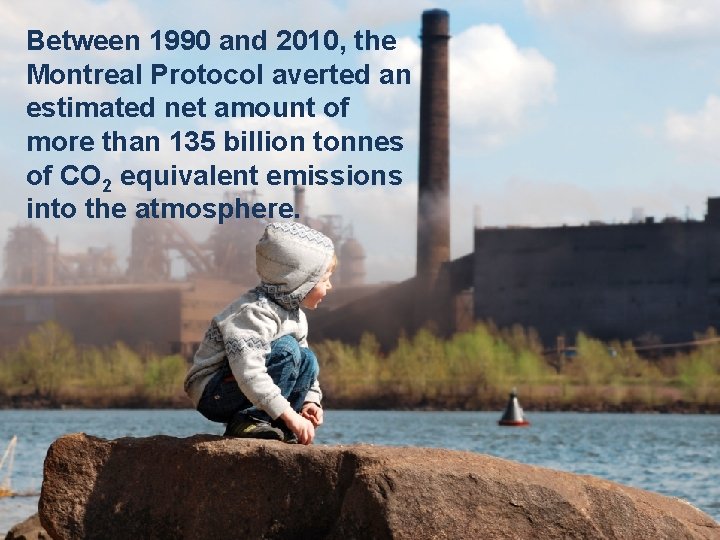
Between 1990 and 2010, the Montreal Protocol averted an estimated net amount of more than 135 billion tonnes of CO 2 equivalent emissions into the atmosphere.
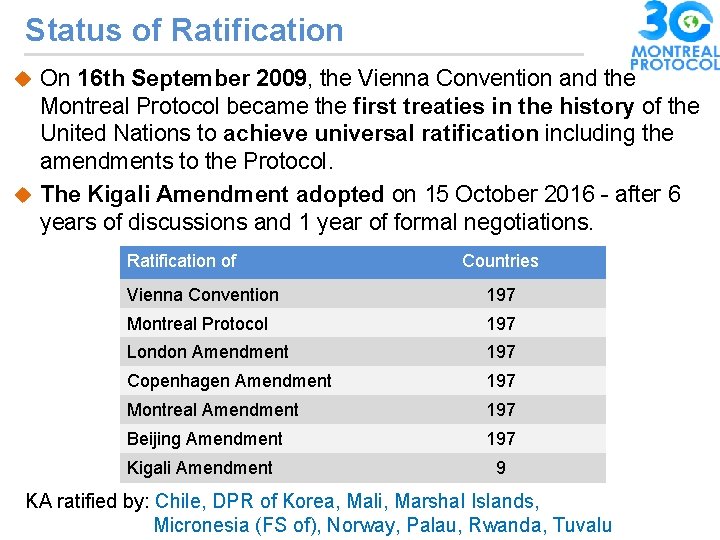
Status of Ratification On 16 th September 2009, the Vienna Convention and the Montreal Protocol became the first treaties in the history of the United Nations to achieve universal ratification including the amendments to the Protocol. u The Kigali Amendment adopted on 15 October 2016 - after 6 years of discussions and 1 year of formal negotiations. u Ratification of Countries Vienna Convention 197 Montreal Protocol 197 London Amendment 197 Copenhagen Amendment 197 Montreal Amendment 197 Beijing Amendment 197 Kigali Amendment 9 KA ratified by: Chile, DPR of Korea, Mali, Marshal Islands, Micronesia (FS of), Norway, Palau, Rwanda, Tuvalu
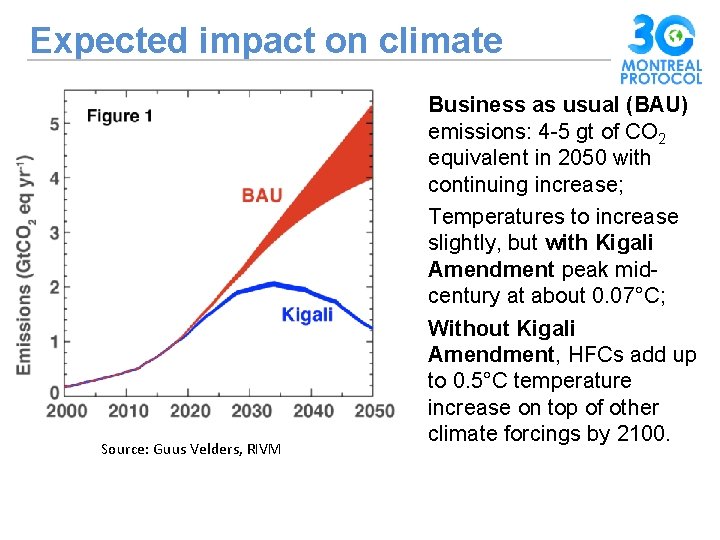
Expected impact on climate Source: Guus Velders, RIVM Business as usual (BAU) emissions: 4 -5 gt of CO 2 equivalent in 2050 with continuing increase; Temperatures to increase slightly, but with Kigali Amendment peak midcentury at about 0. 07°C; Without Kigali Amendment, HFCs add up to 0. 5°C temperature increase on top of other climate forcings by 2100.
What is the Kigali Amendment?
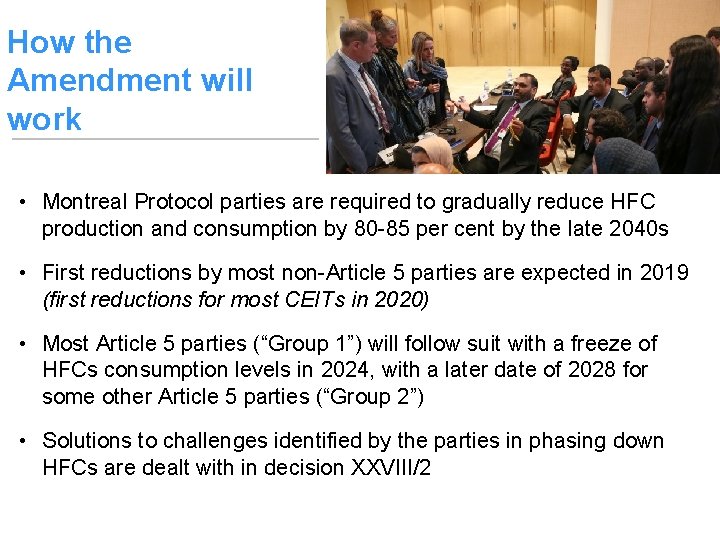
How the Amendment will work • Montreal Protocol parties are required to gradually reduce HFC production and consumption by 80 -85 per cent by the late 2040 s • First reductions by most non-Article 5 parties are expected in 2019 (first reductions for most CEITs in 2020) • Most Article 5 parties (“Group 1”) will follow suit with a freeze of HFCs consumption levels in 2024, with a later date of 2028 for some other Article 5 parties (“Group 2”) • Solutions to challenges identified by the parties in phasing down HFCs are dealt with in decision XXVIII/2
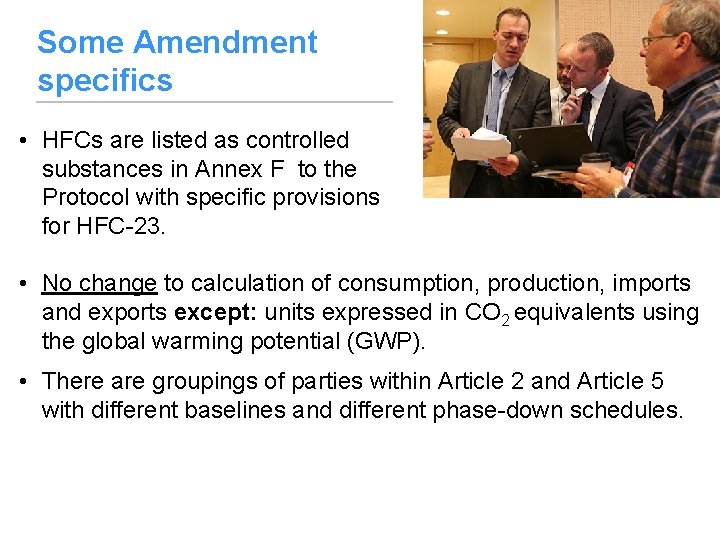
Some Amendment specifics • HFCs are listed as controlled substances in Annex F to the Protocol with specific provisions for HFC-23. • No change to calculation of consumption, production, imports and exports except: units expressed in CO 2 equivalents using the global warming potential (GWP). • There are groupings of parties within Article 2 and Article 5 with different baselines and different phase-down schedules.
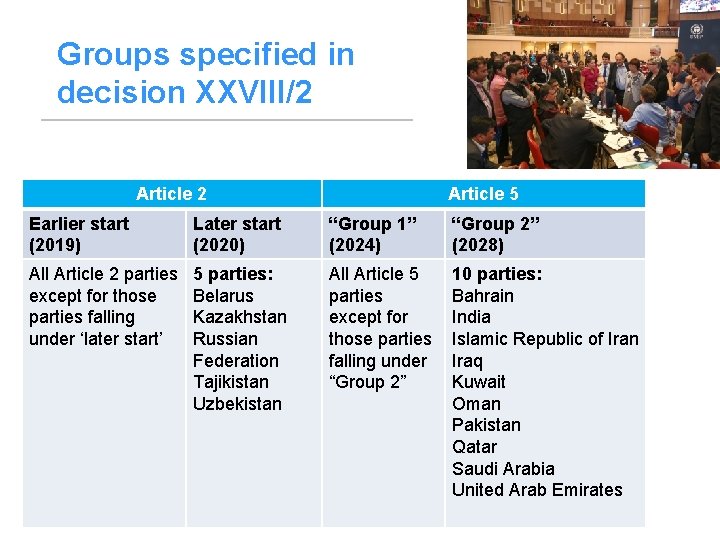
Groups specified in decision XXVIII/2 Article 5 Earlier start (2019) Later start (2020) “Group 1” (2024) “Group 2” (2028) All Article 2 parties except for those parties falling under ‘later start’ 5 parties: Belarus Kazakhstan Russian Federation Tajikistan Uzbekistan All Article 5 parties except for those parties falling under “Group 2” 10 parties: Bahrain India Islamic Republic of Iran Iraq Kuwait Oman Pakistan Qatar Saudi Arabia United Arab Emirates
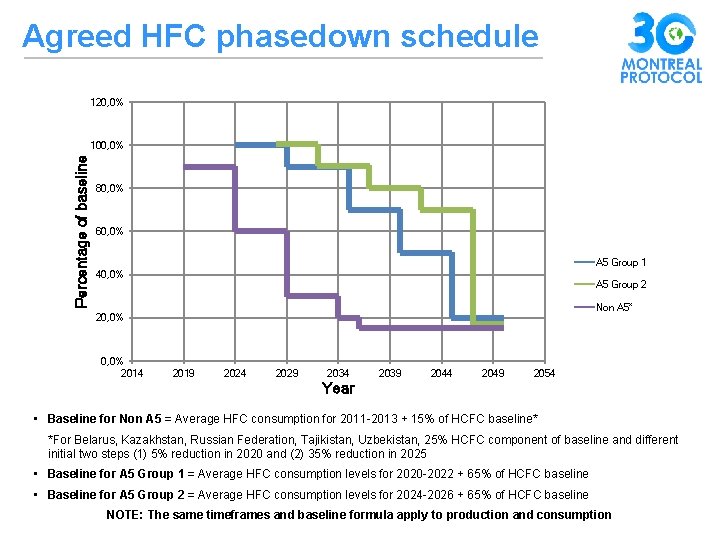
Agreed HFC phasedown schedule 120, 0% Percentage of baseline 100, 0% 80, 0% 60, 0% A 5 Group 1 40, 0% A 5 Group 2 Non A 5* 20, 0% 2014 2019 2024 2029 2034 2039 2044 2049 2054 Year • Baseline for Non A 5 = Average HFC consumption for 2011 -2013 + 15% of HCFC baseline* *For Belarus, Kazakhstan, Russian Federation, Tajikistan, Uzbekistan, 25% HCFC component of baseline and different initial two steps (1) 5% reduction in 2020 and (2) 35% reduction in 2025 • Baseline for A 5 Group 1 = Average HFC consumption levels for 2020 -2022 + 65% of HCFC baseline • Baseline for A 5 Group 2 = Average HFC consumption levels for 2024 -2026 + 65% of HCFC baseline NOTE: The same timeframes and baseline formula apply to production and consumption
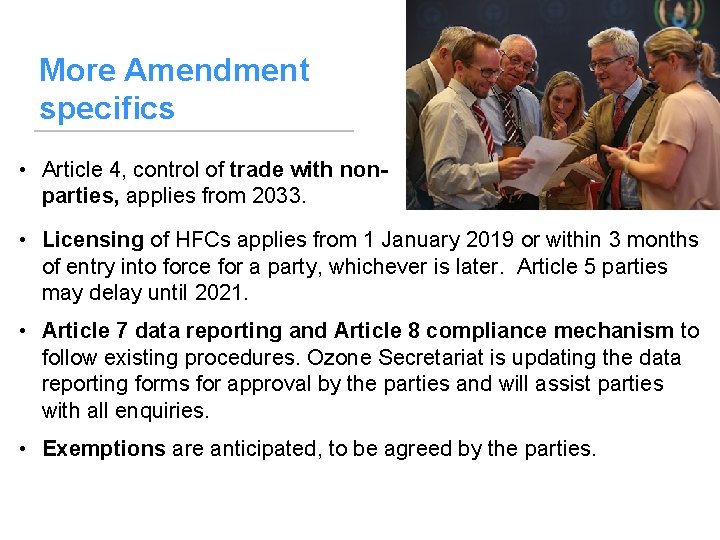
More Amendment specifics • Article 4, control of trade with nonparties, applies from 2033. • Licensing of HFCs applies from 1 January 2019 or within 3 months of entry into force for a party, whichever is later. Article 5 parties may delay until 2021. • Article 7 data reporting and Article 8 compliance mechanism to follow existing procedures. Ozone Secretariat is updating the data reporting forms for approval by the parties and will assist parties with all enquiries. • Exemptions are anticipated, to be agreed by the parties.
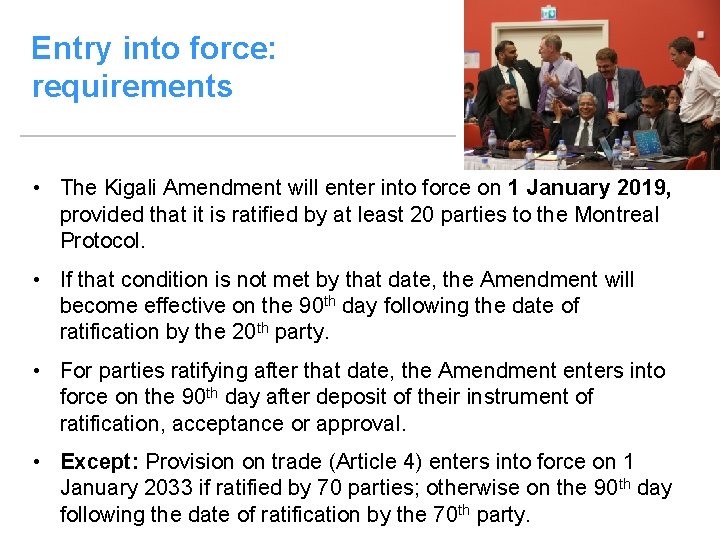
Entry into force: requirements • The Kigali Amendment will enter into force on 1 January 2019, provided that it is ratified by at least 20 parties to the Montreal Protocol. • If that condition is not met by that date, the Amendment will become effective on the 90 th day following the date of ratification by the 20 th party. • For parties ratifying after that date, the Amendment enters into force on the 90 th day after deposit of their instrument of ratification, acceptance or approval. • Except: Provision on trade (Article 4) enters into force on 1 January 2033 if ratified by 70 parties; otherwise on the 90 th day following the date of ratification by the 70 th party.
Decision XXVIII/2 related to the Kigali Amendment
Decision XXVIII/2: Key issues • International safety standards: Recognises importance of timely updating international safety standards; supports promoting actions that allow safe market introduction. • Relationship with HCFC phase-out: Acknowledges the link between HFC and HCFC reduction schedules relevant to sectors, preference to avoid transitions from HCFC to high-GWP HFCs. • Country-driven approach: Parties have flexibility to prioritise HFCs, define sectors, select technologies and alternatives.
Decision XXVIII/2: Funding issues • Amendment maintains MLF financial mechanism. • Sufficient additional resources to be provided to cover incremental costs related to HFC phasedown. • The Executive Committee of the Multilateral Fund (Ex. Com) to develop guidelines for financing HFC phase-down and to revise the rules of procedure with a view to build in more flexibility for Article 5 parties. • Includes guidance to Ex. Com and requests inclusion in the cost calculation of categories of eligible costs for the consumption manufacturing, production and servicing sectors. Guidance to Ex. Com includes cut-off dates, second and third conversions, enabling activities, institutional strengthening, energy efficiency, disposal
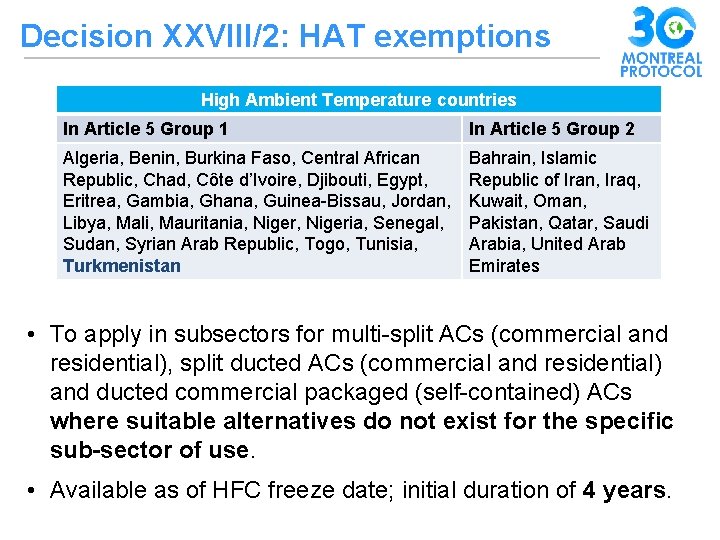
Decision XXVIII/2: HAT exemptions High Ambient Temperature countries In Article 5 Group 1 In Article 5 Group 2 Algeria, Benin, Burkina Faso, Central African Republic, Chad, Côte d’Ivoire, Djibouti, Egypt, Eritrea, Gambia, Ghana, Guinea-Bissau, Jordan, Libya, Mali, Mauritania, Nigeria, Senegal, Sudan, Syrian Arab Republic, Togo, Tunisia, Turkmenistan Bahrain, Islamic Republic of Iran, Iraq, Kuwait, Oman, Pakistan, Qatar, Saudi Arabia, United Arab Emirates • To apply in subsectors for multi-split ACs (commercial and residential), split ducted ACs (commercial and residential) and ducted commercial packaged (self-contained) ACs where suitable alternatives do not exist for the specific sub-sector of use. • Available as of HFC freeze date; initial duration of 4 years.
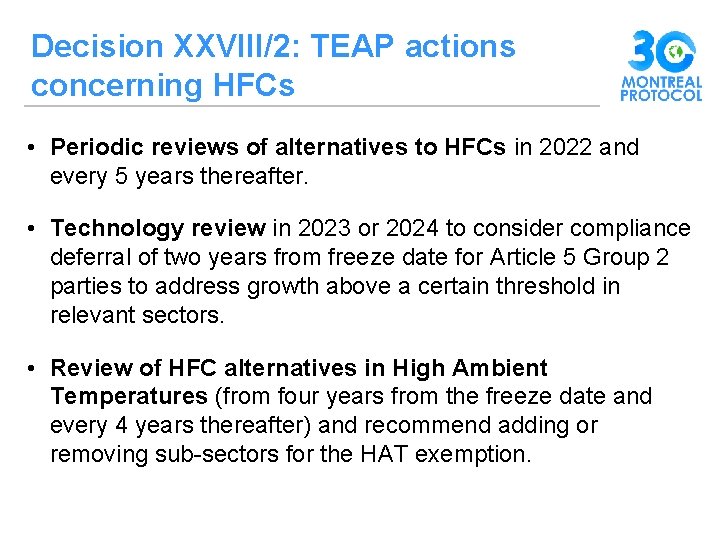
Decision XXVIII/2: TEAP actions concerning HFCs • Periodic reviews of alternatives to HFCs in 2022 and every 5 years thereafter. • Technology review in 2023 or 2024 to consider compliance deferral of two years from freeze date for Article 5 Group 2 parties to address growth above a certain threshold in relevant sectors. • Review of HFC alternatives in High Ambient Temperatures (from four years from the freeze date and every 4 years thereafter) and recommend adding or removing sub-sectors for the HAT exemption.
Decision XXVIII/3 on energy efficiency Decision XXVIII/4 on safety standards
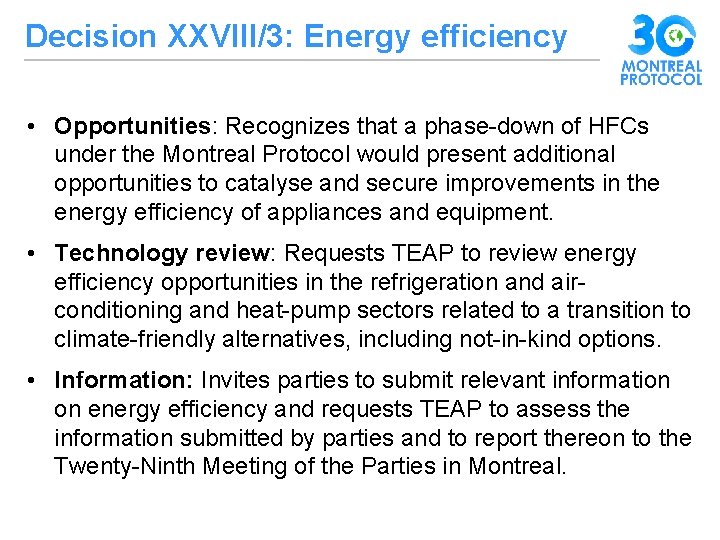
Decision XXVIII/3: Energy efficiency • Opportunities: Recognizes that a phase-down of HFCs under the Montreal Protocol would present additional opportunities to catalyse and secure improvements in the energy efficiency of appliances and equipment. • Technology review: Requests TEAP to review energy efficiency opportunities in the refrigeration and airconditioning and heat-pump sectors related to a transition to climate-friendly alternatives, including not-in-kind options. • Information: Invites parties to submit relevant information on energy efficiency and requests TEAP to assess the information submitted by parties and to report thereon to the Twenty-Ninth Meeting of the Parties in Montreal.
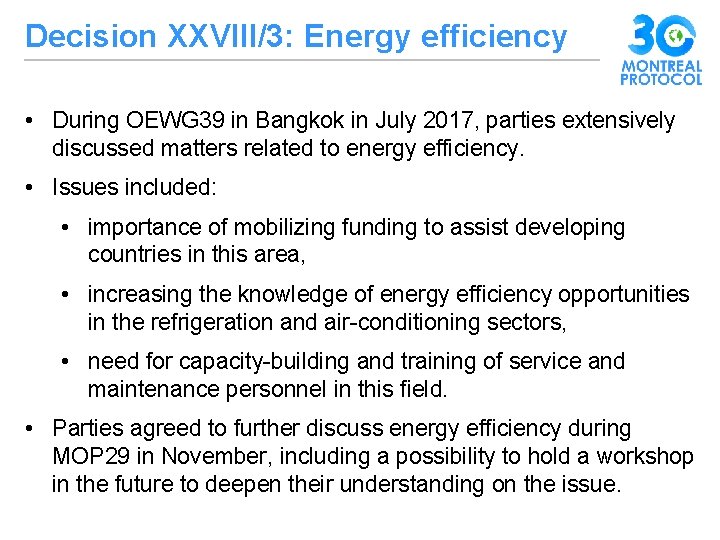
Decision XXVIII/3: Energy efficiency • During OEWG 39 in Bangkok in July 2017, parties extensively discussed matters related to energy efficiency. • Issues included: • importance of mobilizing funding to assist developing countries in this area, • increasing the knowledge of energy efficiency opportunities in the refrigeration and air-conditioning sectors, • need for capacity-building and training of service and maintenance personnel in this field. • Parties agreed to further discuss energy efficiency during MOP 29 in November, including a possibility to hold a workshop in the future to deepen their understanding on the issue.
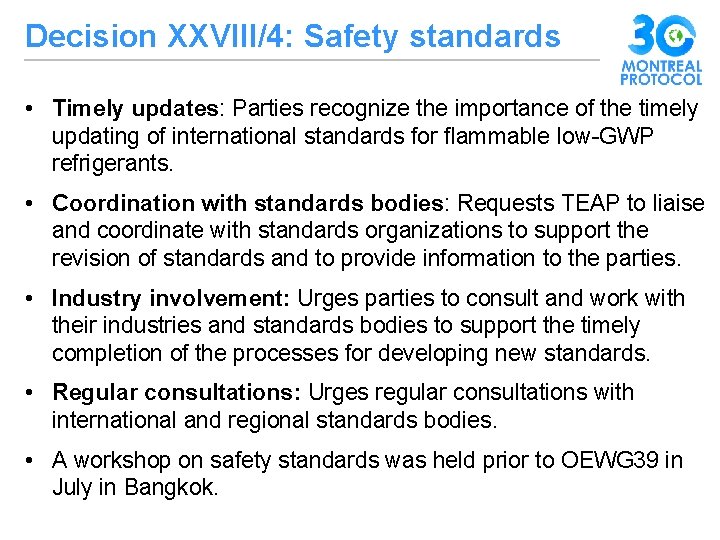
Decision XXVIII/4: Safety standards • Timely updates: Parties recognize the importance of the timely updating of international standards for flammable low-GWP refrigerants. • Coordination with standards bodies: Requests TEAP to liaise and coordinate with standards organizations to support the revision of standards and to provide information to the parties. • Industry involvement: Urges parties to consult and work with their industries and standards bodies to support the timely completion of the processes for developing new standards. • Regular consultations: Urges regular consultations with international and regional standards bodies. • A workshop on safety standards was held prior to OEWG 39 in July in Bangkok.
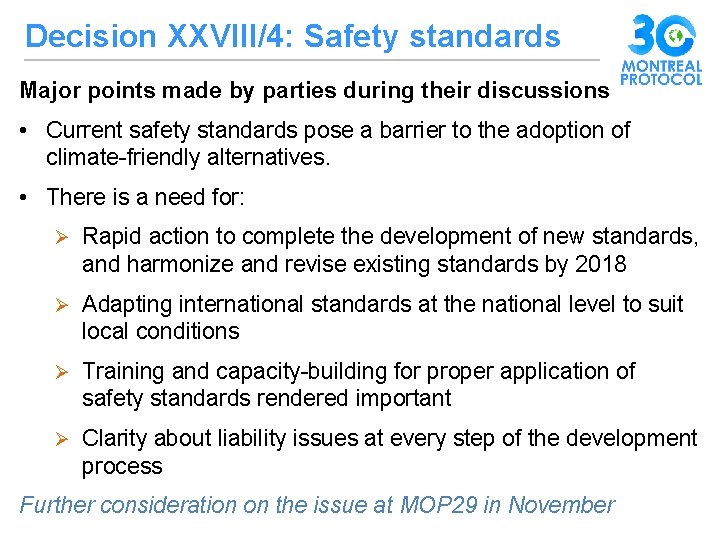
Decision XXVIII/4: Safety standards Major points made by parties during their discussions • Current safety standards pose a barrier to the adoption of climate-friendly alternatives. • There is a need for: Ø Rapid action to complete the development of new standards, and harmonize and revise existing standards by 2018 Ø Adapting international standards at the national level to suit local conditions Ø Training and capacity-building for proper application of safety standards rendered important Ø Clarity about liability issues at every step of the development process Further consideration on the issue at MOP 29 in November
Ratification: reasons to ratify and support
Reasons to ratify • Ratification of the Kigali Amendment will contribute to the protection of the global climate – avoiding up to 0. 5 degree Celsius of global temperature rise by 2100. • “Leaving no one behind” in following the 2030 Agenda for Sustainable Development. • All amendments and adjustments to the Montreal Protocol have universal support. • States ratifying early play a leading role in a trend the rest of the world is likely to follow. • Article 5 parties to the Kigali Amendment will have access to financial and technical support provided under the Protocol.
Support to Article 5 parties • The financial mechanism: Multilateral Fund (MLF) will meet the agreed incremental costs of Article 5 parties arising from HFC phasedown; working on guidelines for financing this. • Flexibility to prioritize HFCs, define sectors, select technologies and alternatives and elaborate and implement strategies to meet agreed HFC obligations, based on specific needs and national circumstances, following a country-driven approach. • Enterprises to be eligible for funding for second and third conversions for HFC phasedown (those which already converted to HFCs to phase out ODSs under the Protocol).
Support to Article 5 parties • Support to be provided for enabling activities including capacity building, institutional strengthening, import and export licencing, Article 7 reporting, demonstration projects and the development of national strategies for phasing down HFCs. • Possibility for high-ambient-temperature exemption and other exemptions, such as for essential uses and critical uses. • Implementation Committee operates in a facilitative manner to support parties’ compliance with access to further assistance. Article 5 parties’ compliance is dependent on the financial mechanism and transfer of technology.
More benefits of ratification • Avoidance of trade controls: Kigali Amendment will restrict trade in HFCs between parties and non-parties from 2033. • Leaving behind obsolete technologies: A Kigali Amendment non-party may use technologies that are becoming obsolete, placing it at an economic disadvantage. • Phase-down not phase-out: recognition that in some circumstances HFC use will be appropriate. • Participation at minimal extra cost: Kigali Amendment is part of Montreal Protocol family. States will not incur significant international meeting costs since they already participate in Montreal Protocol MOPs, OEWGs. • Continuation of the institutions of the MP as is the case with the National Ozone Officers, building on their experience and hoping that your example could be replicated in other policy areas.
Implications of ratifying • Administrative costs may include: § Adapting existing laws or introducing new ones to achieve the HFC phase-down; § Extending the import & export licensing system to cover HFCs; § Arrangements for customs officers to assume extra responsibilities concerning HFCs in some countries; § Surveying existing HFC consumption and production currently funded by the MLF; § Expanding the resources to report data under the Amendment; § Developing strategy and framework for the HFC phase-down including monitoring and enforcement. • Phase-down of HFCs may be challenging across the economy – but Article 5 parties will have support from the MLF. • Non-Article 5 parties to continue replenishing the MLF, based on the adjusted scale of the UN assessments.
Ratification Process
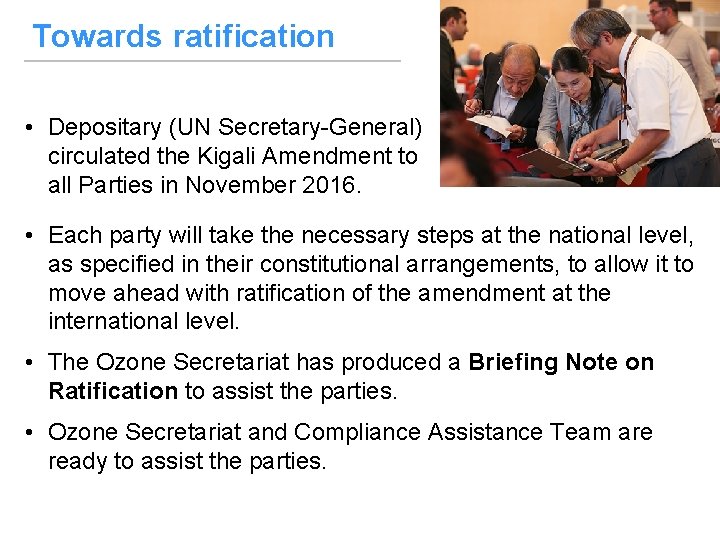
Towards ratification • Depositary (UN Secretary-General) circulated the Kigali Amendment to all Parties in November 2016. • Each party will take the necessary steps at the national level, as specified in their constitutional arrangements, to allow it to move ahead with ratification of the amendment at the international level. • The Ozone Secretariat has produced a Briefing Note on Ratification to assist the parties. • Ozone Secretariat and Compliance Assistance Team are ready to assist the parties.
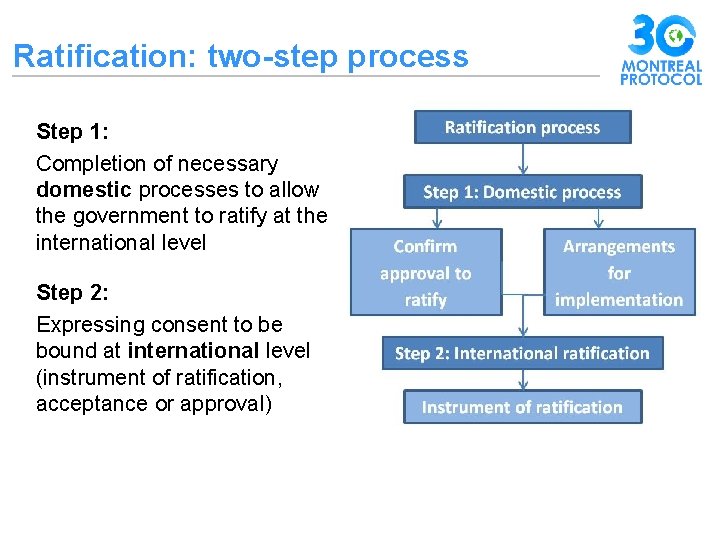
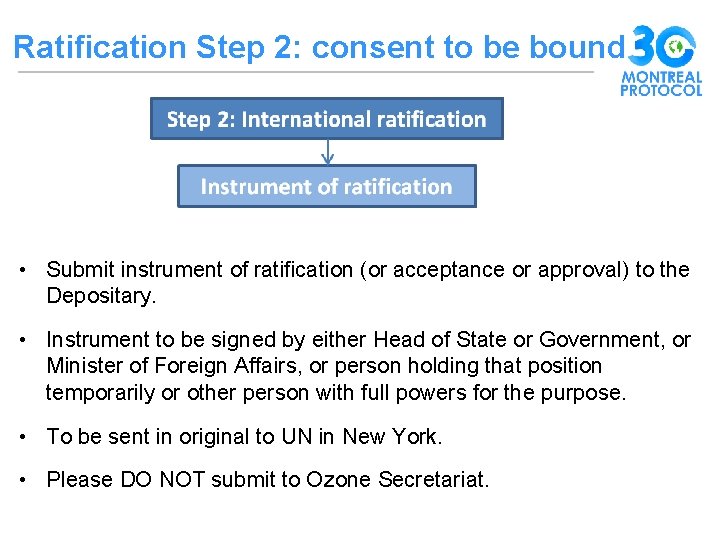
Ratification: two-step process Step 1: Completion of necessary domestic processes to allow the government to ratify at the international level Step 2: Expressing consent to be bound at international level (instrument of ratification, acceptance or approval)
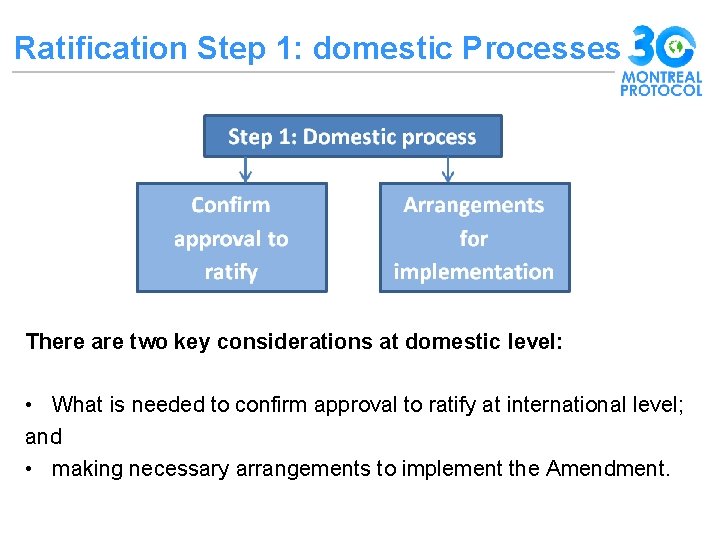
Ratification Step 1: domestic Processes There are two key considerations at domestic level: • What is needed to confirm approval to ratify at international level; and • making necessary arrangements to implement the Amendment.
Confirming approval to ratify • Driven by domestic law (e. g. constitution, legislation, legal practice). • Identify the lead ministry(ies) or department(s) responsible for the Montreal Protocol. • Identify who has the authority to ratify e. g. Head of state, parliament and work with them. • Identify necessary steps to obtain approval to ratify: – legislation if needed; – review by judiciary to confirm the Amendment is in line with the Constitution; – consult with lower levels of Government if needed e. g. states, in a federal arrangement. Once approval is given, the party has authority to move ahead to ratify at the international level.
Making arrangements to implement the Kigali Amendment • How to make it legally binding at the national level (e. g. prepare and pass necessary laws or regulations); • How to put the framework in place for implementation (e. g. define and assign responsibility for various aspects such as reporting, licensing, enforcement, etc. ).
Ratification Step 2: consent to be bound • Submit instrument of ratification (or acceptance or approval) to the Depositary. • Instrument to be signed by either Head of State or Government, or Minister of Foreign Affairs, or person holding that position temporarily or other person with full powers for the purpose. • To be sent in original to UN in New York. • Please DO NOT submit to Ozone Secretariat.
Ratification Process For further information: - See Ozone Secretariat Briefing Note on Ratification. - Further queries on the ratification process can be directed to Gilbert. Bankobeza@unep. org
Thank you sophia. mylona@unep. org ozone. unep. org