The Intersection of GI Disorders PsychiatryA Way Forward

- Slides: 18
The Intersection of GI Disorders & Psychiatry—A Way Forward Theodore A. Stern, MD Chief Emeritus, Avery D. Weisman, MD Consultation Service, Director, Office for Clinical Careers, Massachusetts General Hospital; Ned H. Cassem Professor of Psychiatry in the field of Psychosomatic Medicine/Consultation, Harvard Medical School; Editor-in-Chief, Psychosomatics www. mghcme. org
Disclosures “Neither I nor my spouse/partner has a relevant financial relationship with a commercial interest to disclose. ” www. mghcme. org
Introduction • There is a close relationship between the gut & the brain • Physical and psychological distress caused by GI disorders leads to: – High utilization of care – Lower quality of life – loss of productivity • Functional & structural GI syndromes are linked with higher rates of psychiatry illness • Behavioral and pharmacologic treatments can help www. mghcme. org
Gastrointestinal Disorders • Psychiatric disorders and stress are prevalent in both structural and functional disorders • Gut-brain axis – Close ties – Shared neurotransmitters • Emerging data on the role of the microbiome www. mghcme. org
Functional GI Disorders • Lack clear structural etiology • Defined by their symptoms • Functional is not the same as “psychiatric” – Pathophysiology is not completely understood • Gut-brain axis – Bidirectional communication involving autonomic nervous system & HPA axis www. mghcme. org
Functional GI Disorders • Gut-brain axis helps explain how psychosocial factors, personality styles, and co-morbid psychiatric issues influence GI disorders • Predisposing factors – Trauma (particularly physical and sexual abuse) – Maladaptive coping – Emotional hypersensitivity www. mghcme. org
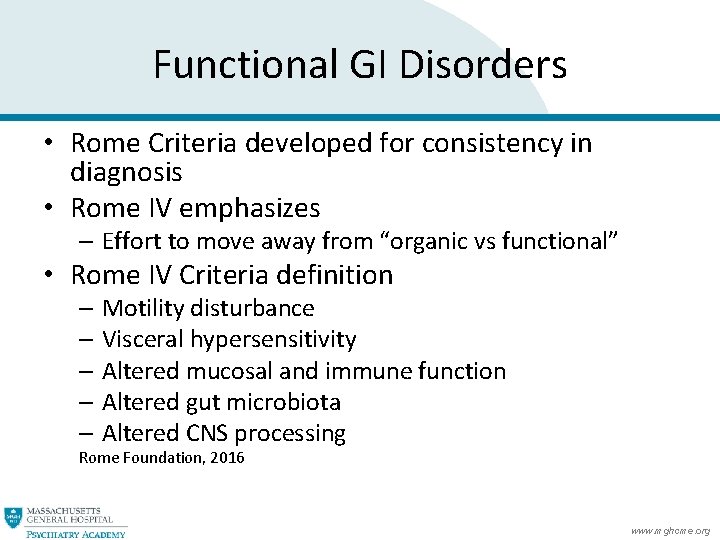
Functional GI Disorders • Rome Criteria developed for consistency in diagnosis • Rome IV emphasizes – Effort to move away from “organic vs functional” • Rome IV Criteria definition – Motility disturbance – Visceral hypersensitivity – Altered mucosal and immune function – Altered gut microbiota – Altered CNS processing Rome Foundation, 2016 www. mghcme. org
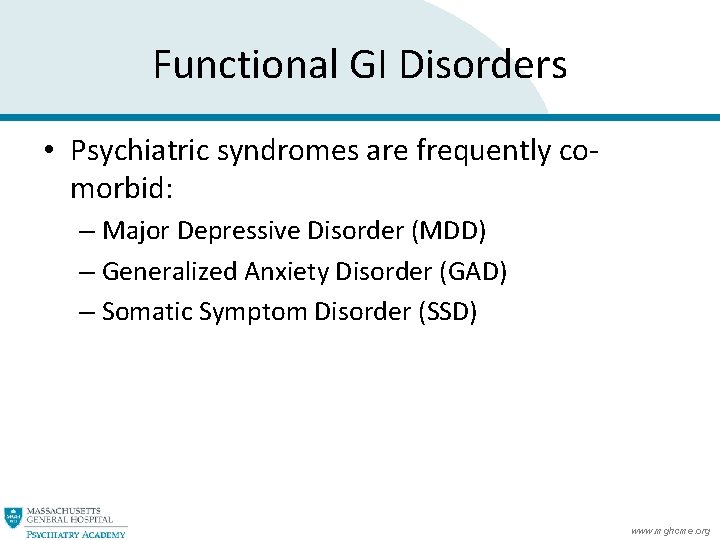
Functional GI Disorders • Psychiatric syndromes are frequently comorbid: – Major Depressive Disorder (MDD) – Generalized Anxiety Disorder (GAD) – Somatic Symptom Disorder (SSD) www. mghcme. org
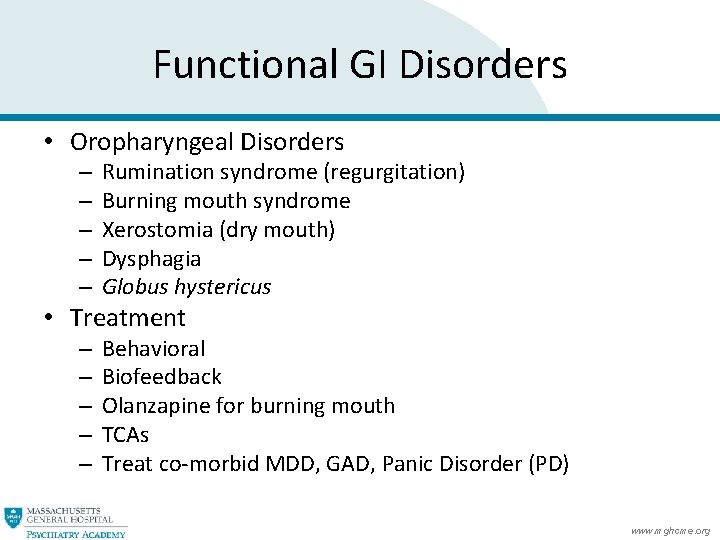
Functional GI Disorders • Oropharyngeal Disorders – – – Rumination syndrome (regurgitation) Burning mouth syndrome Xerostomia (dry mouth) Dysphagia Globus hystericus • Treatment – – – Behavioral Biofeedback Olanzapine for burning mouth TCAs Treat co-morbid MDD, GAD, Panic Disorder (PD) www. mghcme. org
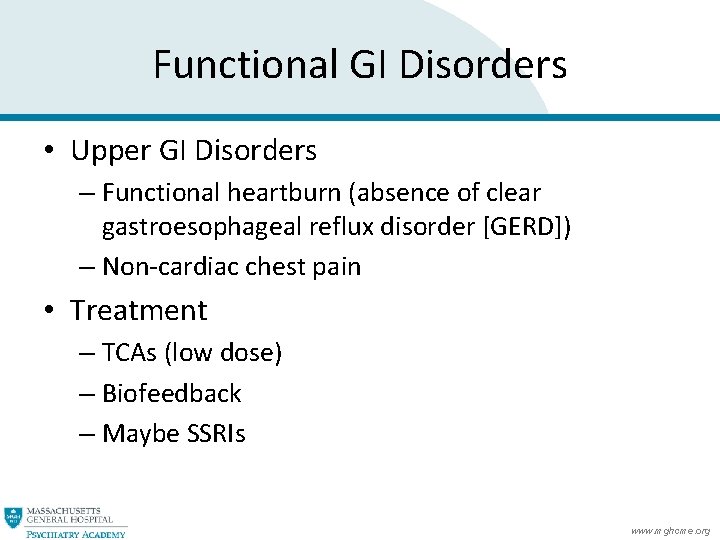
Functional GI Disorders • Upper GI Disorders – Functional heartburn (absence of clear gastroesophageal reflux disorder [GERD]) – Non-cardiac chest pain • Treatment – TCAs (low dose) – Biofeedback – Maybe SSRIs www. mghcme. org
Functional GI Disorders • Nausea and vomiting – Cyclic • Cannabis-induced – Hyperemesis gravidarum – Anticipatory – Functional • Treatments – – – Vary depending on etiology/severity 5 -HT 3 antagonists Benzodiazepines for anticipatory and cyclic Steroids for extreme cases (gravidarum) Hypnosis, acupuncture, relaxation therapy TCAs for cyclic vomiting syndrome www. mghcme. org
Functional GI Disorders • Lower GI Disorders • Inflammatory bowel disease – Structural but often worsens with stress/anxiety/depression* – Crohn’s & Ulcerative Colitis • Significant decrement in quality of life (QOL) • Coping style influences QOL • Important to treat co-morbid anxiety, stress, and depression – Watch for medication side effects • Behavioral therapies that focus on coping strategies www. mghcme. org
Functional GI Disorders: Irritable Bowel Syndrome (IBS) • Characterized by abdominal pain relieved by defecation • Accompanied by changes in stool appearance or frequency • May include bloating, flatulence, urgency or straining • Co-morbid medical conditions are common: • • GERD Functional dyspepsia Chronic pelvic pain Interstitial cystitis Fibromyalgia Headache Sleep disturbance www. mghcme. org
Functional GI Disorders: Irritable Bowel Syndrome (IBS) • Pathophysiology • • • Abnormal GI motility Gut microbiome disruption Altered stress response Changes in serotonin signaling Inflammation Psychological dysfunction • QOL is worse than in the general population • Prevalence of Axis I disorders: 40 -94% • Major depression is the most common • Anxiety and Somatic Symptom Disorders are also common www. mghcme. org
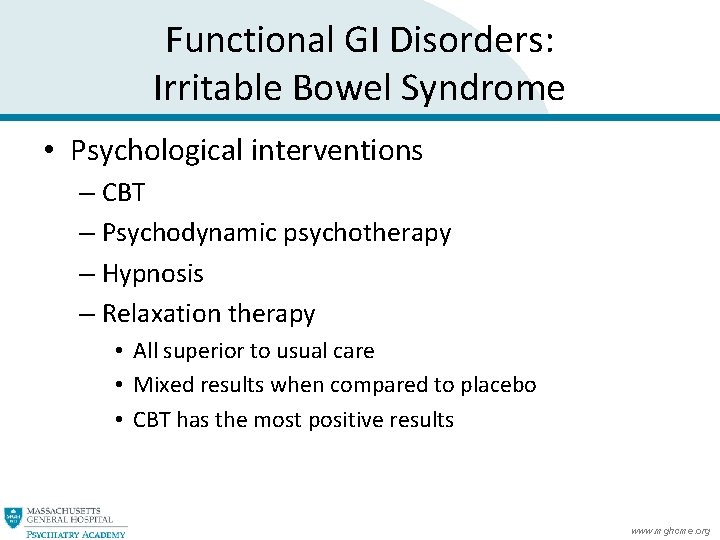
Functional GI Disorders: Irritable Bowel Syndrome • Psychological interventions – CBT – Psychodynamic psychotherapy – Hypnosis – Relaxation therapy • All superior to usual care • Mixed results when compared to placebo • CBT has the most positive results www. mghcme. org
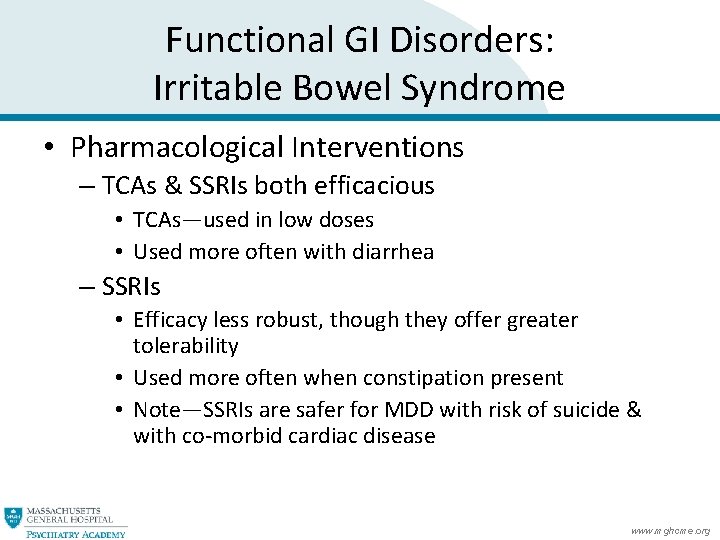
Functional GI Disorders: Irritable Bowel Syndrome • Pharmacological Interventions – TCAs & SSRIs both efficacious • TCAs—used in low doses • Used more often with diarrhea – SSRIs • Efficacy less robust, though they offer greater tolerability • Used more often when constipation present • Note—SSRIs are safer for MDD with risk of suicide & with co-morbid cardiac disease www. mghcme. org
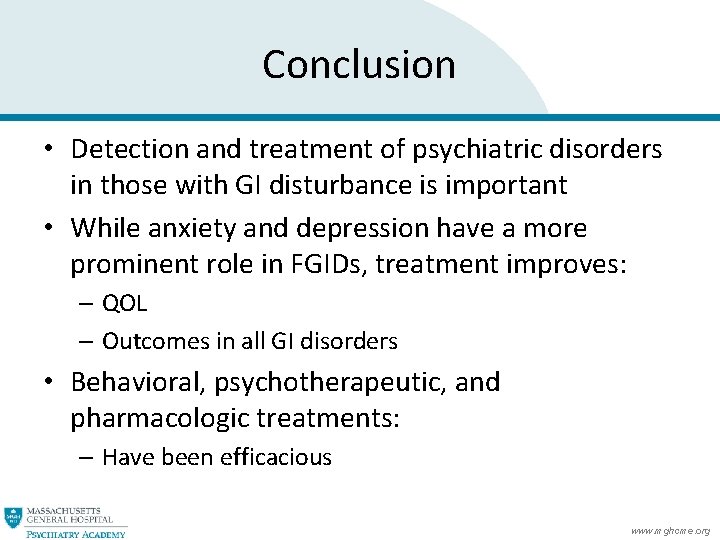
Conclusion • Detection and treatment of psychiatric disorders in those with GI disturbance is important • While anxiety and depression have a more prominent role in FGIDs, treatment improves: – QOL – Outcomes in all GI disorders • Behavioral, psychotherapeutic, and pharmacologic treatments: – Have been efficacious www. mghcme. org
Reference • Glass SP: Patients with gastrointestinal disease. In: Stern TA, Freudenreich O, Smith FA, et al, editors. Massachusetts General Hospital Handbook of General Hospital Psychiatry, ed 7, MGH Psychiatry Academy, Boston, MA, 2018: pp. 313 -326. www. mghcme. org