THE HIGH COST OF FREE PARKING Donald Shoup
- Slides: 27
THE HIGH COST OF FREE PARKING Donald Shoup
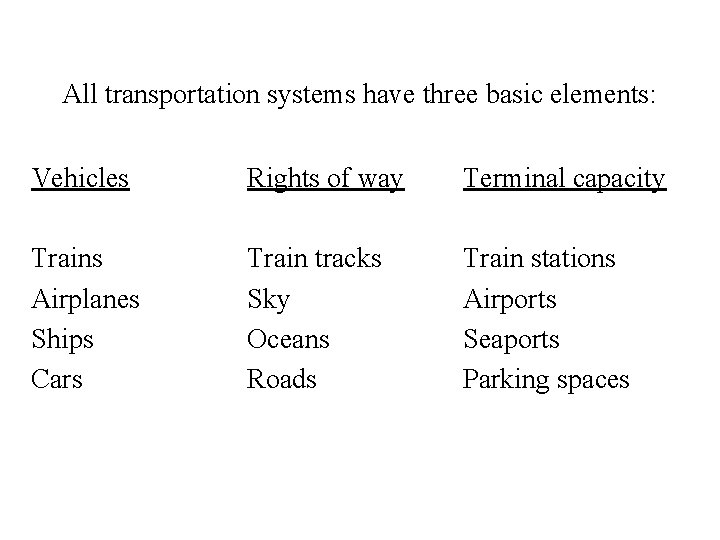
All transportation systems have three basic elements: Vehicles Rights of way Terminal capacity Trains Airplanes Ships Cars Train tracks Sky Oceans Roads Train stations Airports Seaports Parking spaces
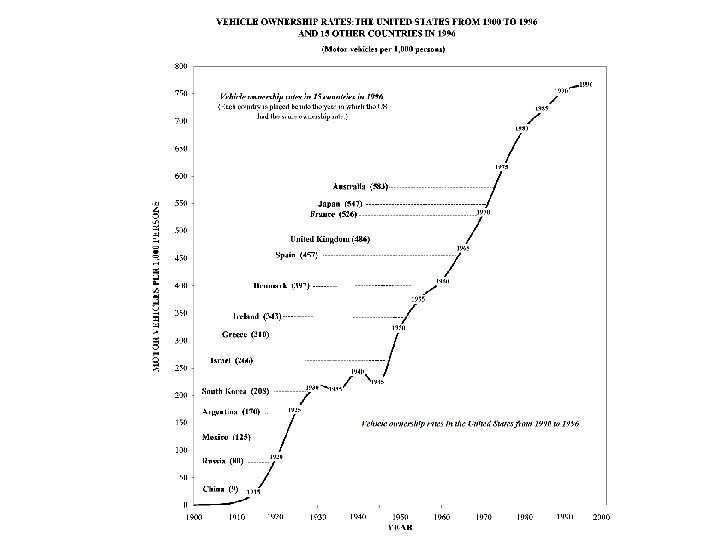
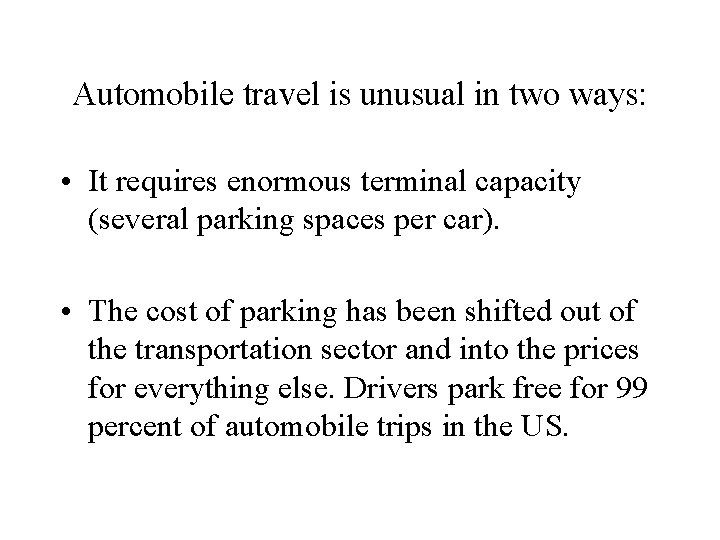
Automobile travel is unusual in two ways: • It requires enormous terminal capacity (several parking spaces per car). • The cost of parking has been shifted out of the transportation sector and into the prices for everything else. Drivers park free for 99 percent of automobile trips in the US.
Who pays for free parking? Everyone but the motorist.
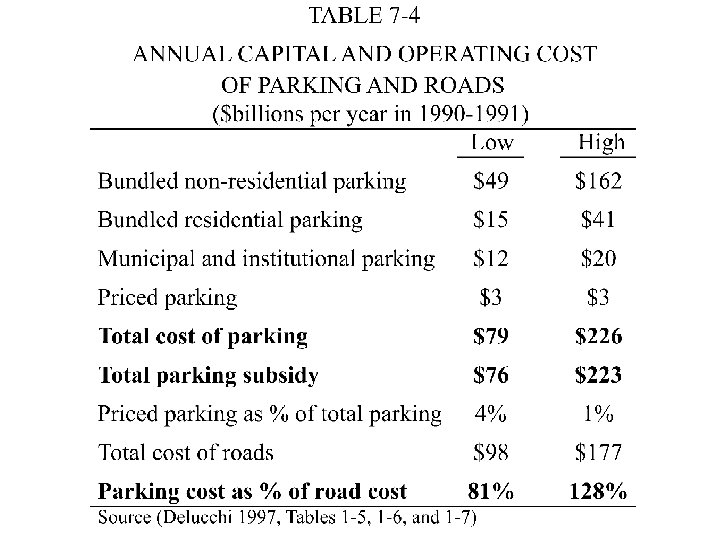
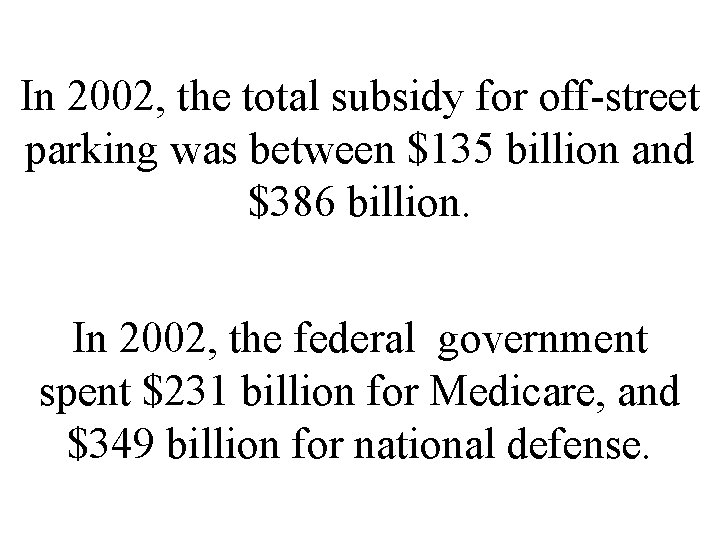
In 2002, the total subsidy for off-street parking was between $135 billion and $386 billion. In 2002, the federal government spent $231 billion for Medicare, and $349 billion for national defense.
Results of changing the price of off-street parking
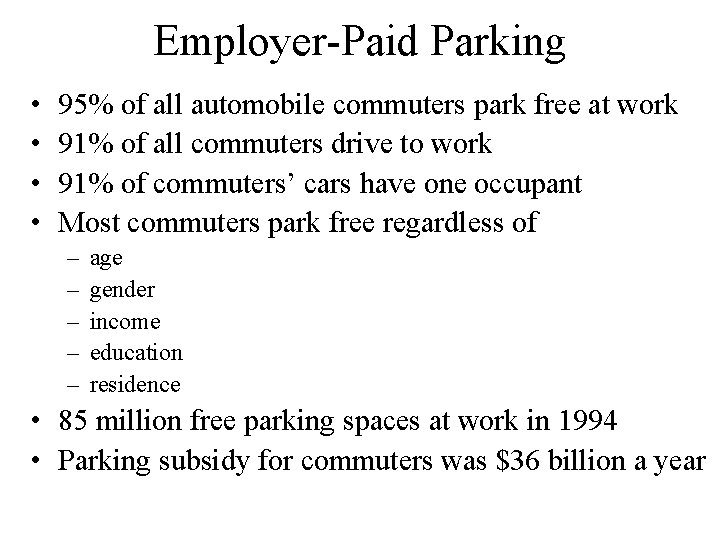
Employer-Paid Parking • • 95% of all automobile commuters park free at work 91% of all commuters drive to work 91% of commuters’ cars have one occupant Most commuters park free regardless of – – – age gender income education residence • 85 million free parking spaces at work in 1994 • Parking subsidy for commuters was $36 billion a year
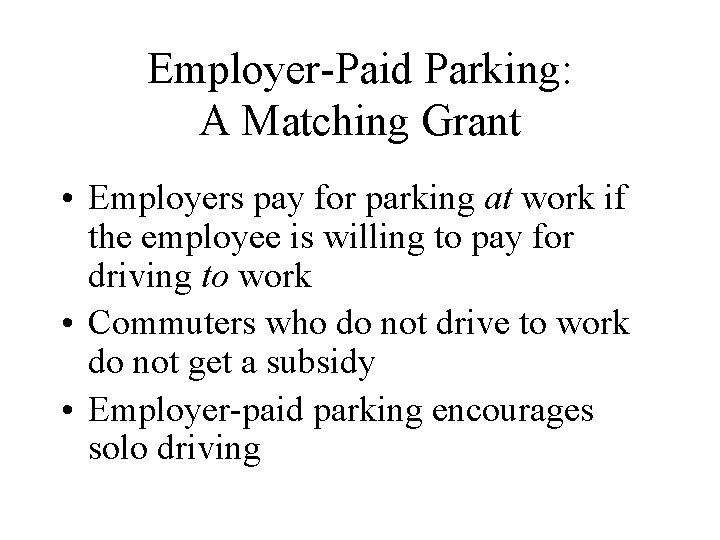
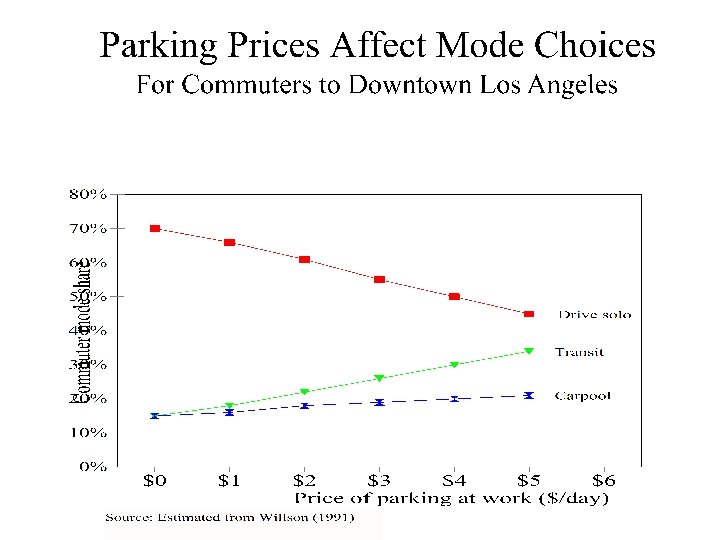
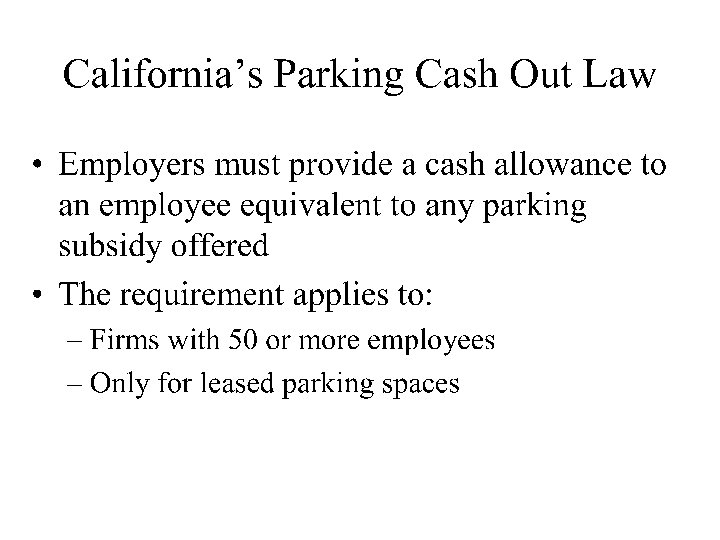
Employer-Paid Parking: A Matching Grant • Employers pay for parking at work if the employee is willing to pay for driving to work • Commuters who do not drive to work do not get a subsidy • Employer-paid parking encourages solo driving
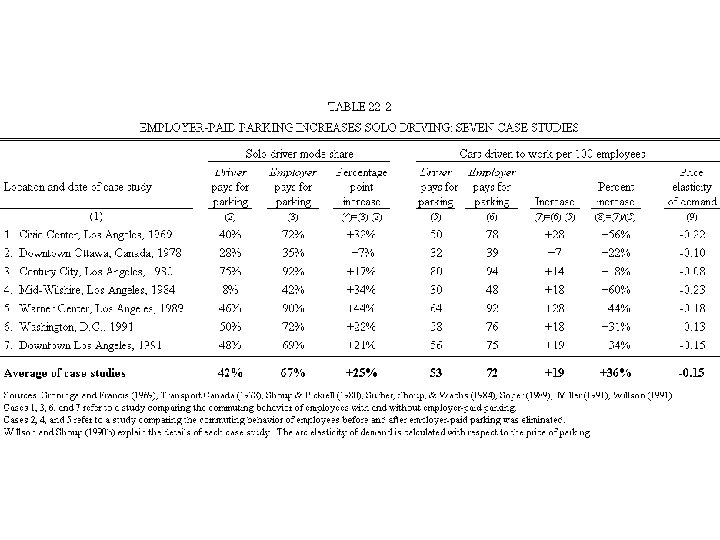
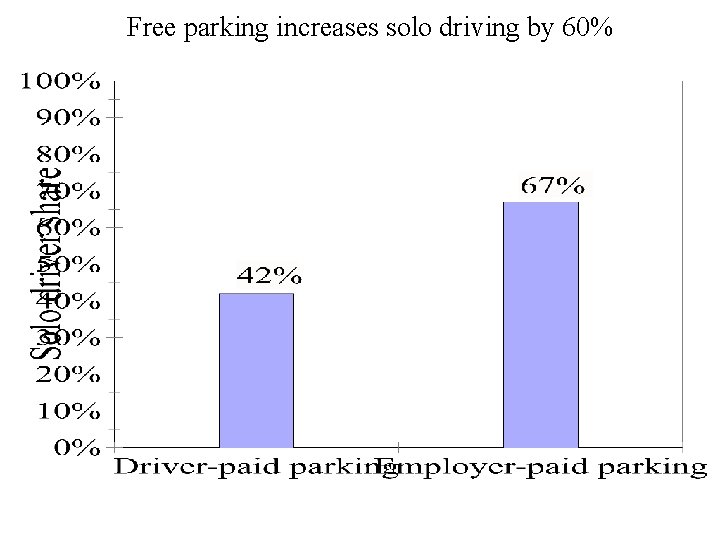
Free parking increases solo driving by 60%
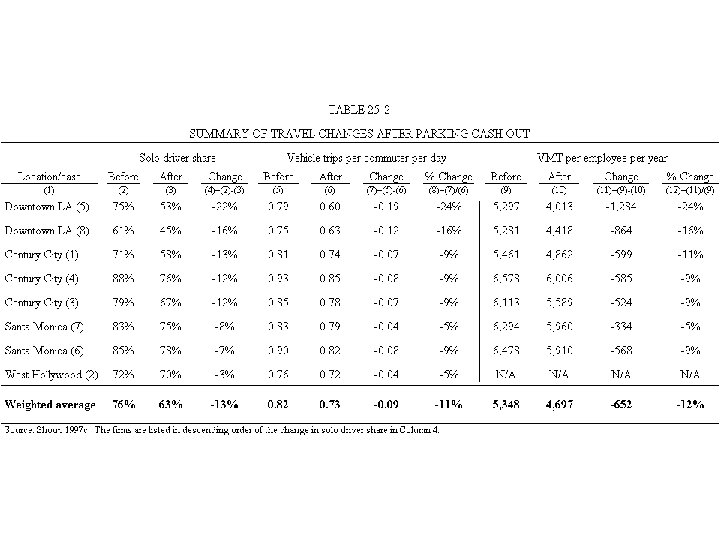
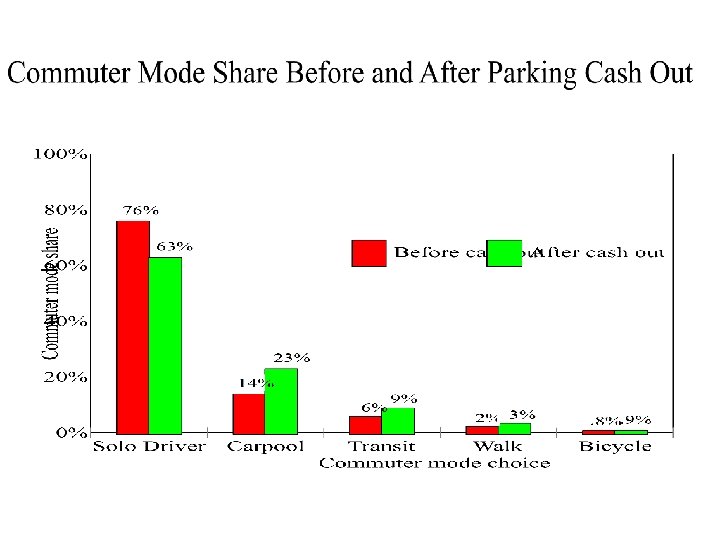
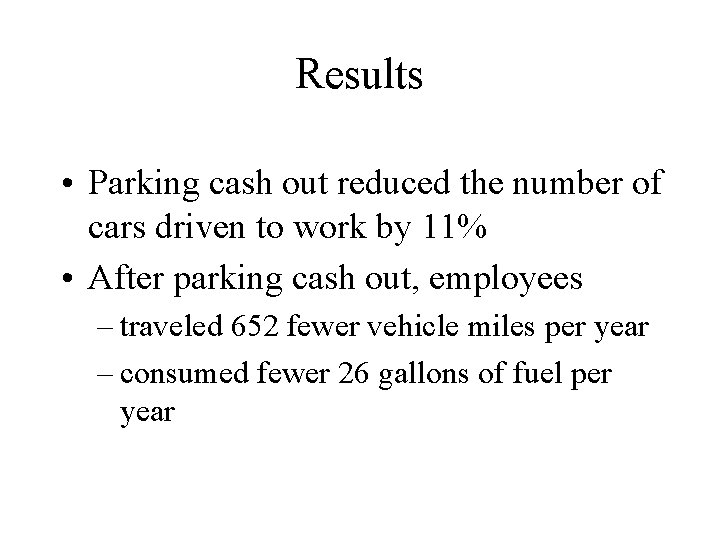
Results • Parking cash out reduced the number of cars driven to work by 11% • After parking cash out, employees – traveled 652 fewer vehicle miles per year – consumed fewer 26 gallons of fuel per year
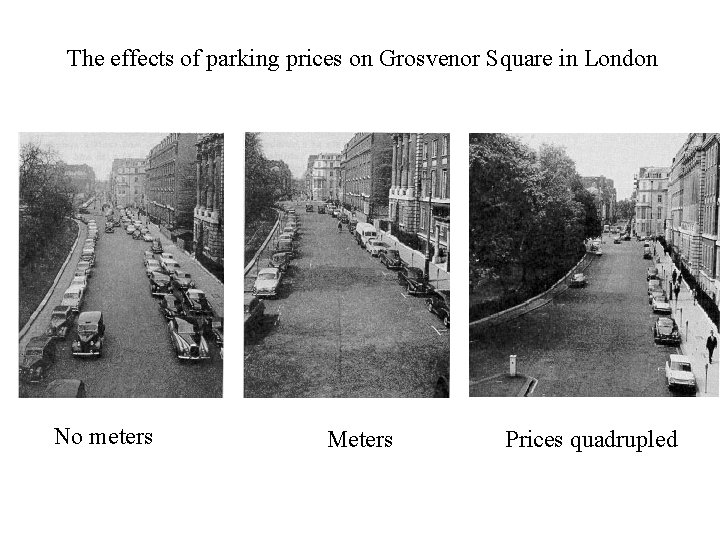
Results of increasing the price of curb parking
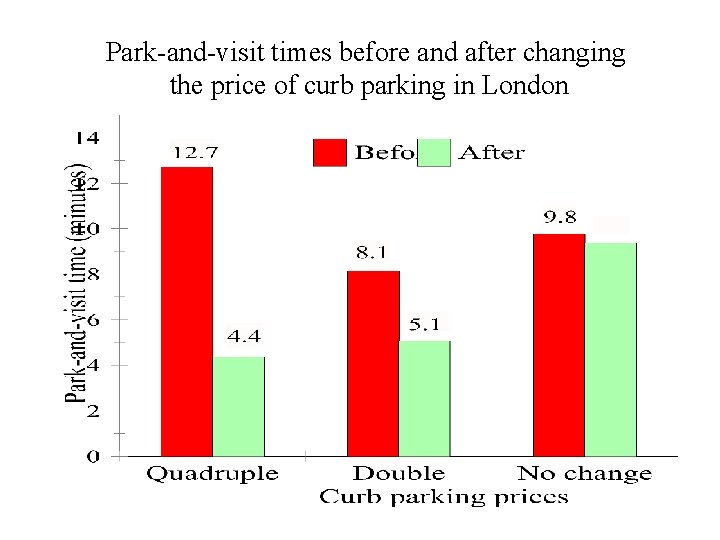
Park-and-visit times before and after changing the price of curb parking in London
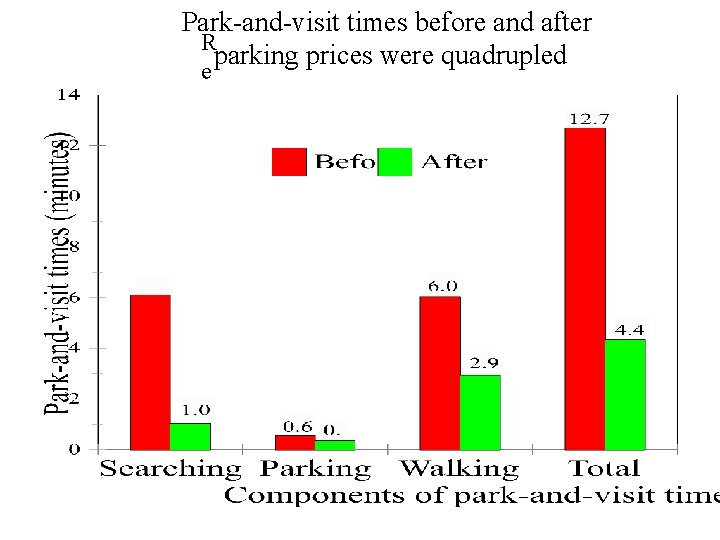
Park-and-visit times before and after R parking prices were quadrupled e
The effects of parking prices on Grosvenor Square in London No meters Meters Prices quadrupled
Conclusion • Parking is heavily subsidized. The annual subsidy for off-street parking may be about the size of the budget for national defense. • Parking prices have a profound effect on travel choices. Parking subsidies substantially increase vehicle travel.