TEST 1 PREVIOUS CLASS MEETING 26 Mar 19
- Slides: 34
TEST # 1 • PREVIOUS CLASS MEETING (26 Mar 19) • Covered Chapters 6 &10 • If you are entitled to a make-up (see syllabus), contact me ASAP via email to request testing • Meanwhile…. Grading underway, will be done as quickly as possible – patience, please
LISTENING QUIZ # 1 • TUESDAY, 2 April 2019 (next class) (beginning of class period – starts 9: 05 am) • Covers items related to Chapters 6 (India) and 10 (Middle East) [either set] • Things to know: - which culture? - which instruments used? - improvised or pre-composed? - kind of piece (genre)? (from style, events) - evidence of influences?
TEST EXAMPLE • Q 1 : What Country / Culture created this music? • Q 2 : What instrument(s) do you hear? • Q 3 : Is this example improvised or not? • • Other possible questions Q : What kind of music (genre) is this example? Q : What non-musical event uses this sort of music? Q : What important musical event happened during this example? • Q : What is the texture of this music?
Titon – Chapter 7 Asia / Indonesia (cont’d)
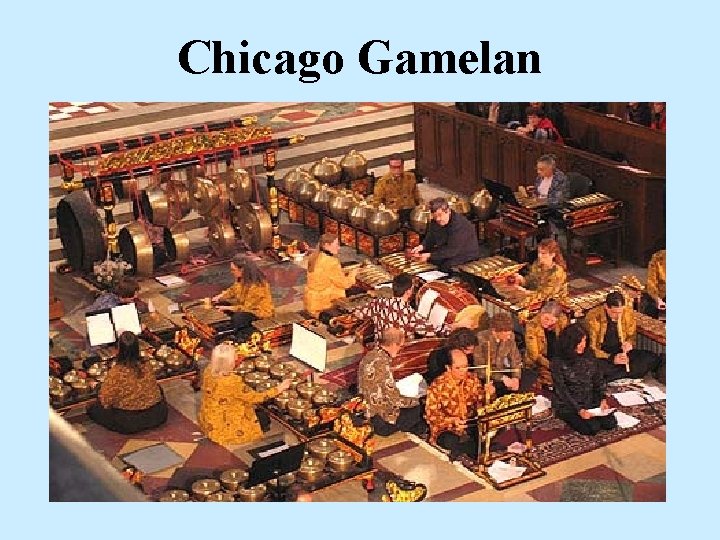
Chicago Gamelan
Indonesian Music Examples • • Example 1 Example 2 Example 3 Example 4 Example 5 Example 6 Example 7 Example 8 What do you hear? Instruments? Musical Events? Organization?
Gamelan Instruments • Struck Idiophones (majority / most important) - gongs - metalophones - xylophones • Membranophone • Chordophone • Aerophone • See Gamelan for some images and explanations, and Gamelan Instruments for brief sounding examples
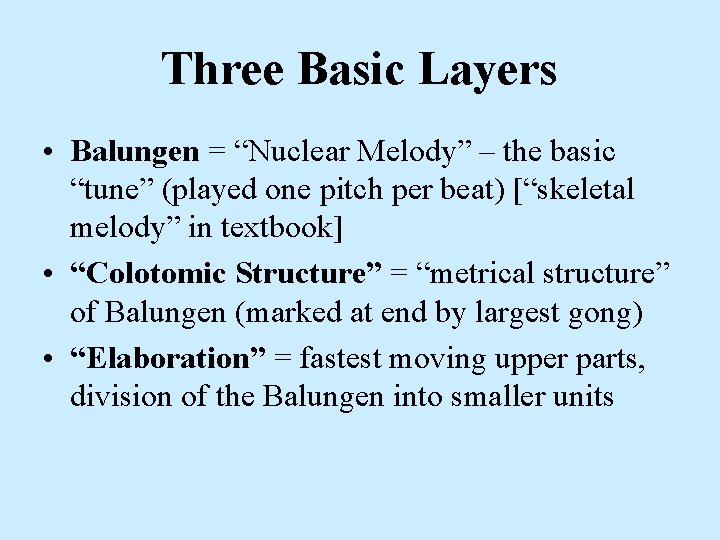
Three Basic Layers • Balungen = “Nuclear Melody” – the basic “tune” (played one pitch per beat) [“skeletal melody” in textbook] • “Colotomic Structure” = “metrical structure” of Balungen (marked at end by largest gong) • “Elaboration” = fastest moving upper parts, division of the Balungen into smaller units
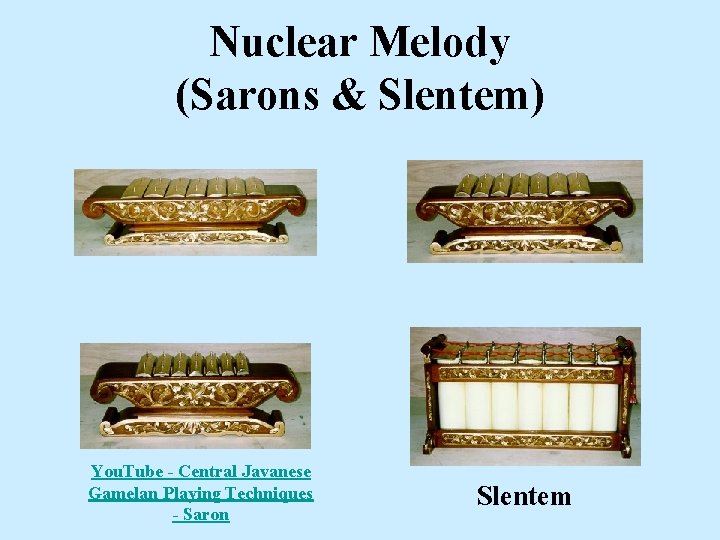
Nuclear Melody (Sarons & Slentem) You. Tube - Central Javanese Gamelan Playing Techniques - Saron Slentem
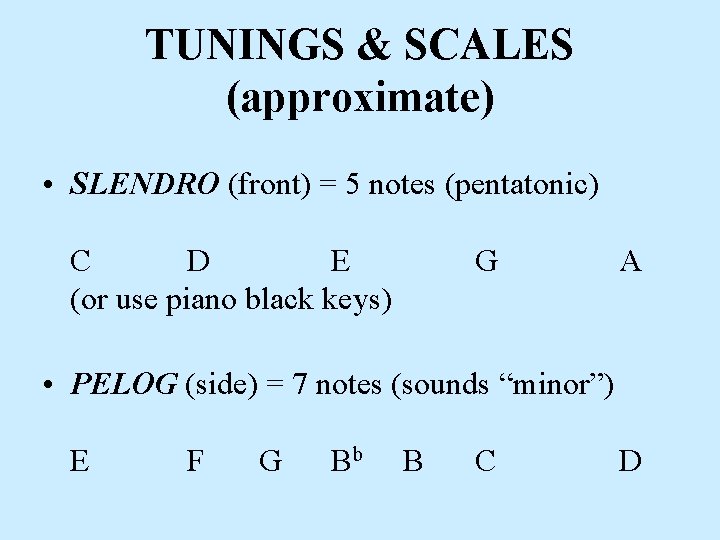
TUNINGS & SCALES (approximate) • SLENDRO (front) = 5 notes (pentatonic) C D E (or use piano black keys) G A • PELOG (side) = 7 notes (sounds “minor”) E F G Bb B C D
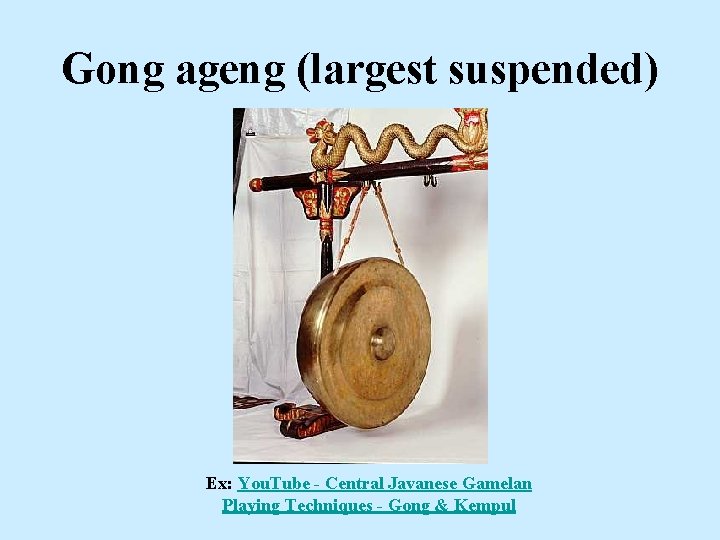
Gong ageng (largest suspended) Ex: You. Tube - Central Javanese Gamelan Playing Techniques - Gong & Kempul
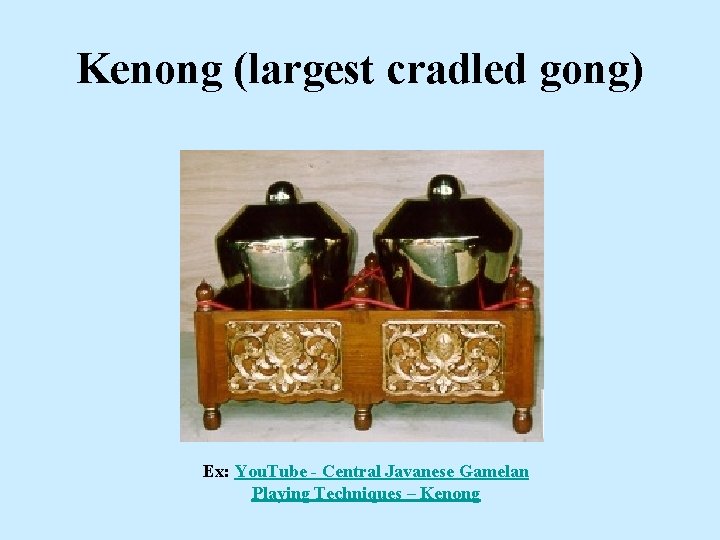
Kenong (largest cradled gong) Ex: You. Tube - Central Javanese Gamelan Playing Techniques – Kenong
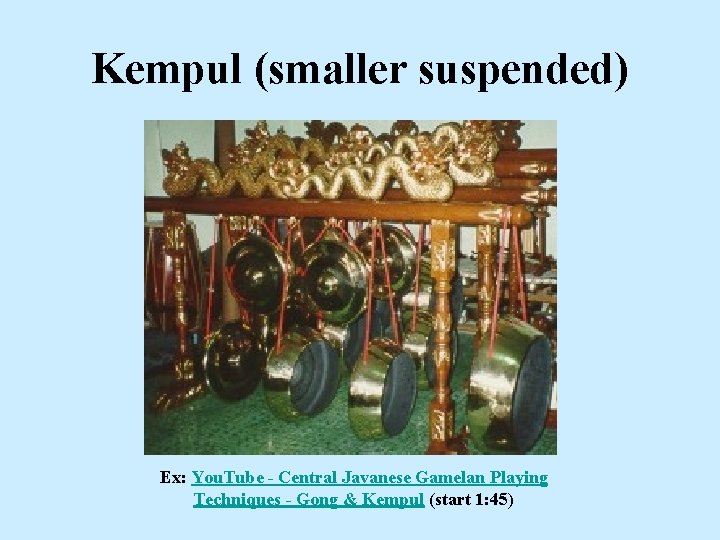
Kempul (smaller suspended) Ex: You. Tube - Central Javanese Gamelan Playing Techniques - Gong & Kempul (start 1: 45)
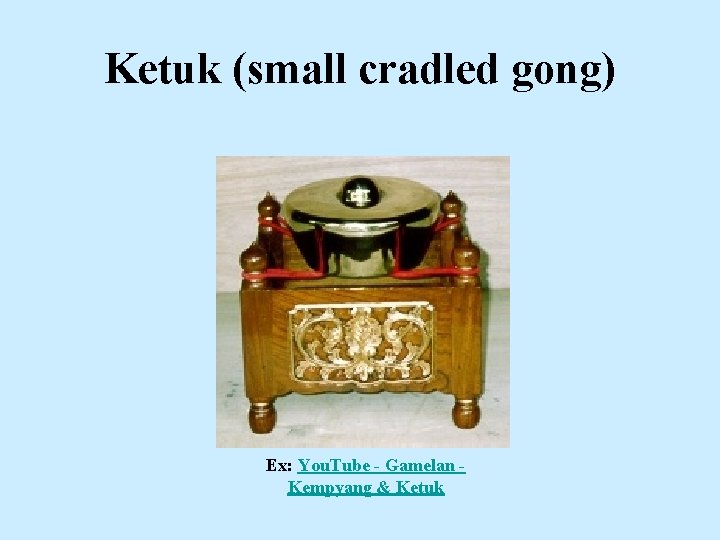
Ketuk (small cradled gong) Ex: You. Tube - Gamelan Kempyang & Ketuk
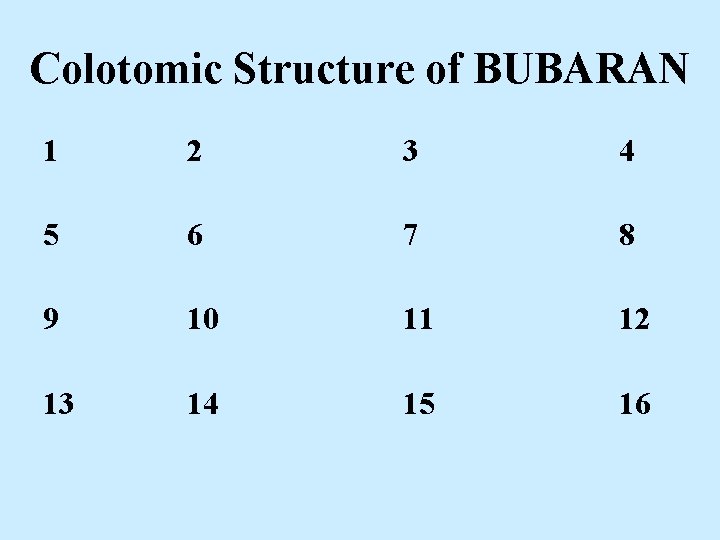
Colotomic Structure of BUBARAN 1 2 3 4 5 6 7 8 9 10 11 12 13 14 15 16
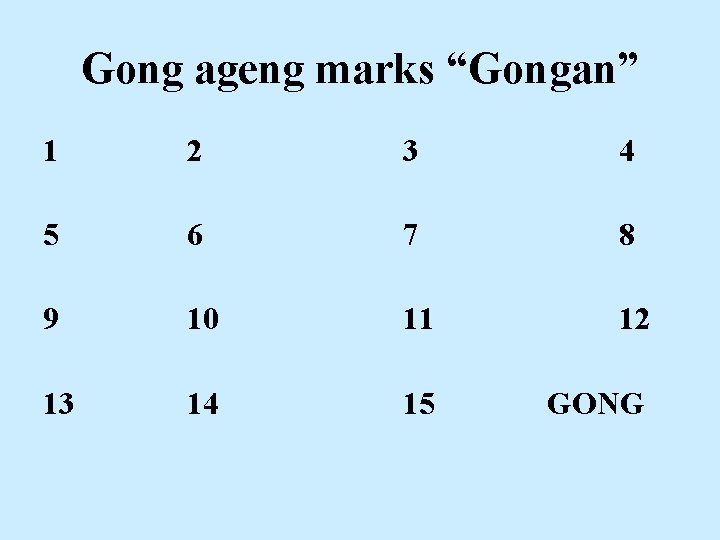
Gong ageng marks “Gongan” 1 2 3 4 5 6 7 8 9 10 11 12 13 14 15 GONG
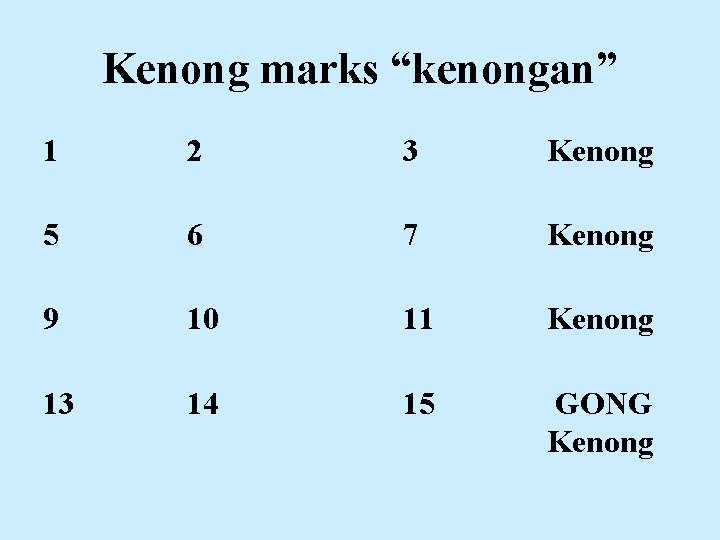
Kenong marks “kenongan” 1 2 3 Kenong 5 6 7 Kenong 9 10 11 Kenong 13 14 15 GONG Kenong
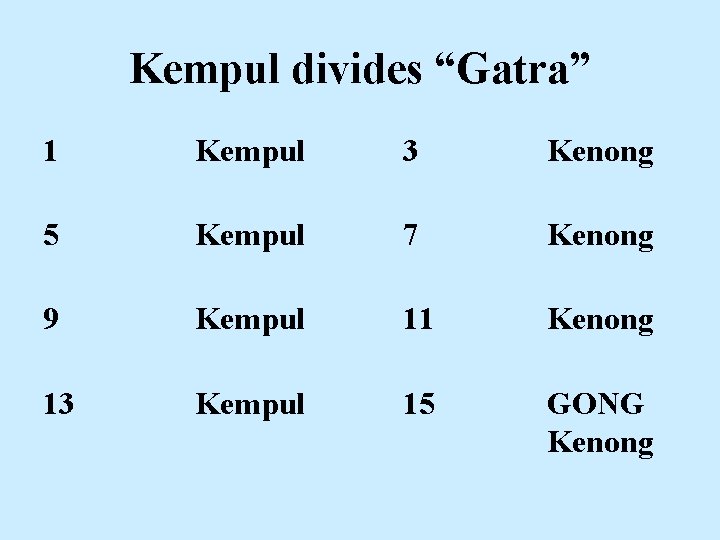
Kempul divides “Gatra” 1 Kempul 3 Kenong 5 Kempul 7 Kenong 9 Kempul 11 Kenong 13 Kempul 15 GONG Kenong
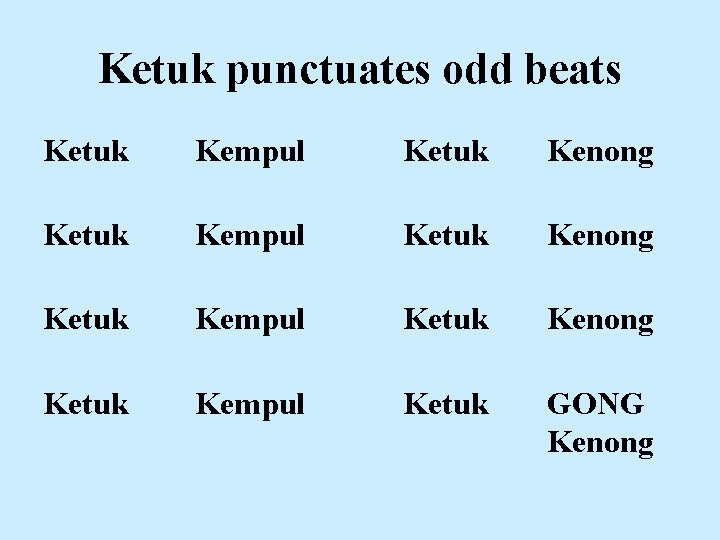
Ketuk punctuates odd beats Ketuk Kempul Ketuk Kenong Ketuk Kempul Ketuk GONG Kenong
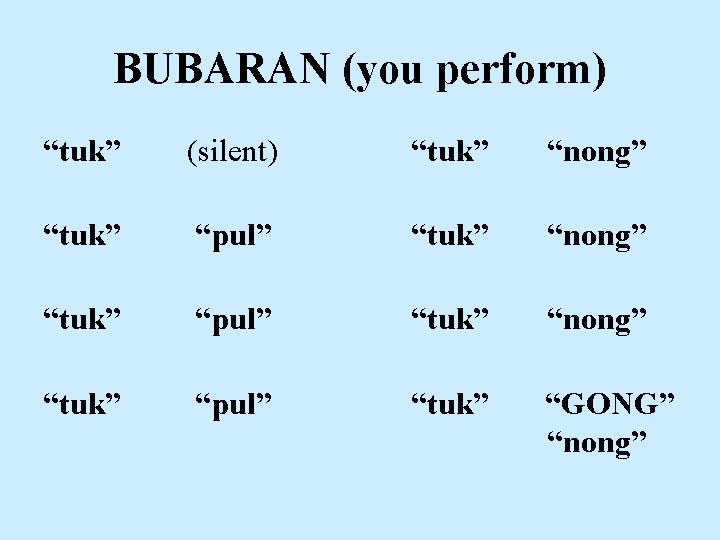
BUBARAN (you perform) “tuk” (silent) “tuk” “nong” “tuk” “pul” “tuk” “GONG” “nong”
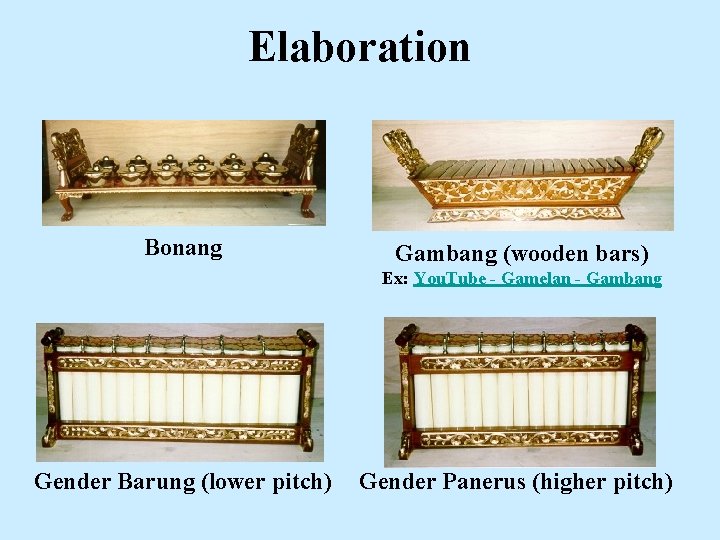
Elaboration Bonang Gambang (wooden bars) Ex: You. Tube - Gamelan - Gambang Gender Barung (lower pitch) Gender Panerus (higher pitch)
Udan Mas • Smith Gamelan Ensemble & Friends - 12/4/2013 - Bubaran HUDAN MAS (Golden Rain) Pelog Barang – You. Tube • Bubaran Udan Mas. with Cardiff and Bristol Gamelan Players. – You. Tube • Bubaran Udan Mas, laras pélog pathet barang – You. Tube • University of Pittsburgh Gamelan- Bubaran Udan Mas – You. Tube • Warren Wilson College Gamelan - Udan Mas (Golden Rain) – You. Tube • Hujan Mas - UWaterloo Balinese Gamelan Winter 2017
Interlocking Parts • Hudjan Mas / Golden Rain (played by Professionals) • EXAMPLES of “Interlocking” • Interlocking Madness #1 - Lengker • interlocking madness #2 • Interlocking drum madness • gamelan gong kebyar
Gamelan Background & Examples • Gamelan Tuning Systems - Slendro & Pelog – You. Tube • Gamelan structure (incl. colotomic & heterophonic) – You. Tube • Indonesian gamelan medley from Java, Sunda and Bali – You. Tube (elaboration layer 8: 33)
“Gong Culture” in SE Asia • Bronze (metal) as exceptional, powerful stuff - e. g. weaponry, tools, etc. • Ore (raw elements) processed at great risk - miners disturb the earth diety • Natural forces = volcanic forces - whole world formed by fire • Only kings entitled to products of such work
Gongs and “Sakti” (power) • Universe filled with cosmic energy (power) • Power needs balance (opposing forces) - male balanced by female • Female – older, more primal • Gamelans and balance - largest gongs – male/female pair (marks ends of largest musical sections) - instruments in pairs (reflect Slendro and Pelog tunings) • Each Gamelan has a unique identity (spirit) - set is whole, complete and inviolate (can’t break up) - tuning of gamelan is unique (can’t trade instruments) - “shimmer” from differences between instruments
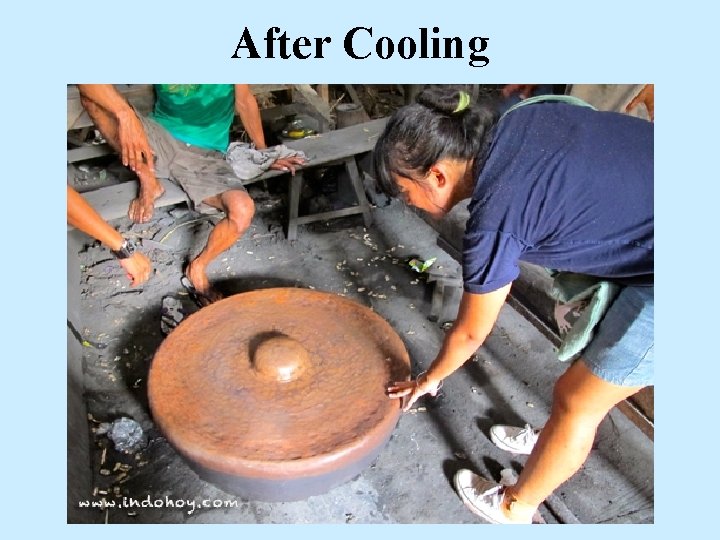
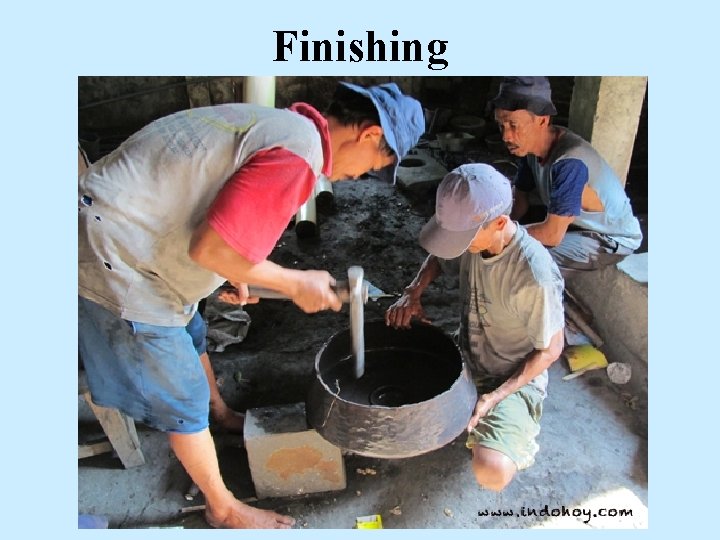
The Making of Gongs • Labor intensive and dangerous • Bronze (copper & tin alloy) - know since c. 3, 000 BCE • Blacksmiths given special status (c. 1, 000 BCE) • Ore (under the ground) – controlled by a Diety - Miners must be “purified” • Blacksmiths accelerate natural forces - risk own spirituality in smithing - but require help of the gods to do so
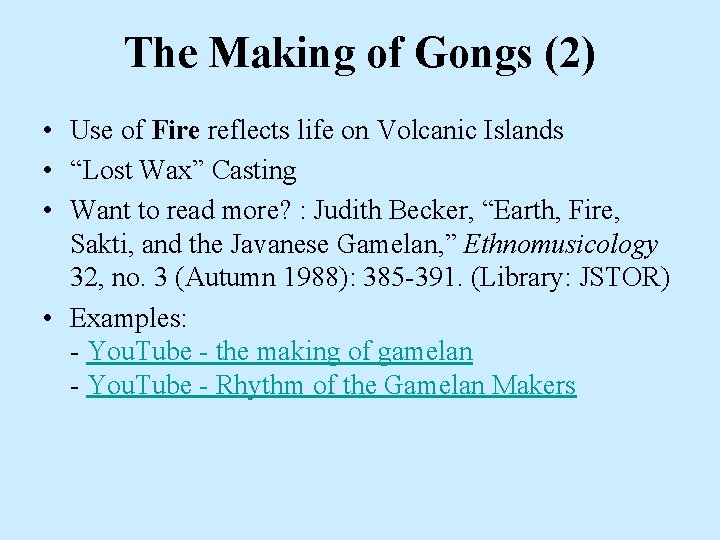
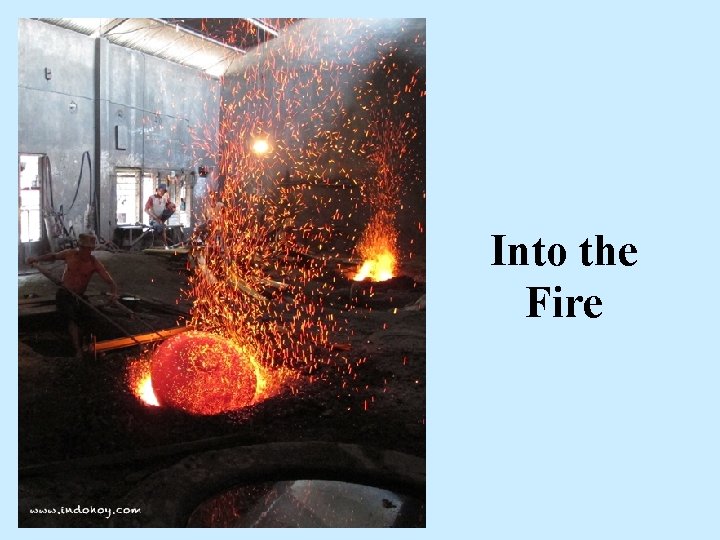
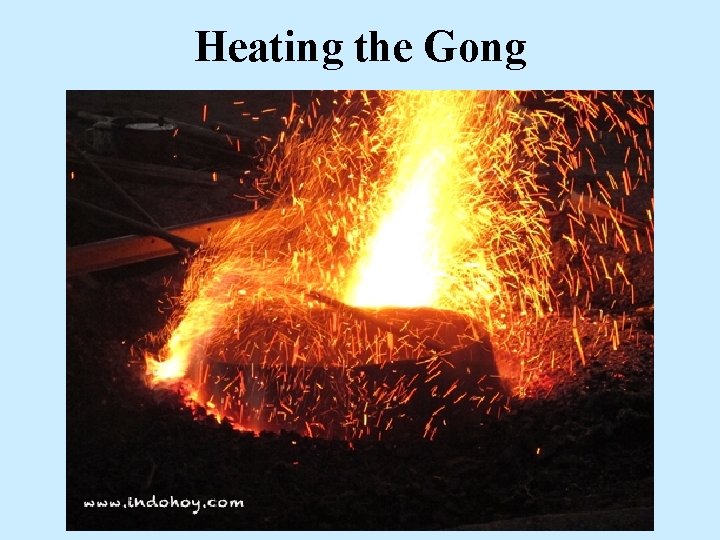
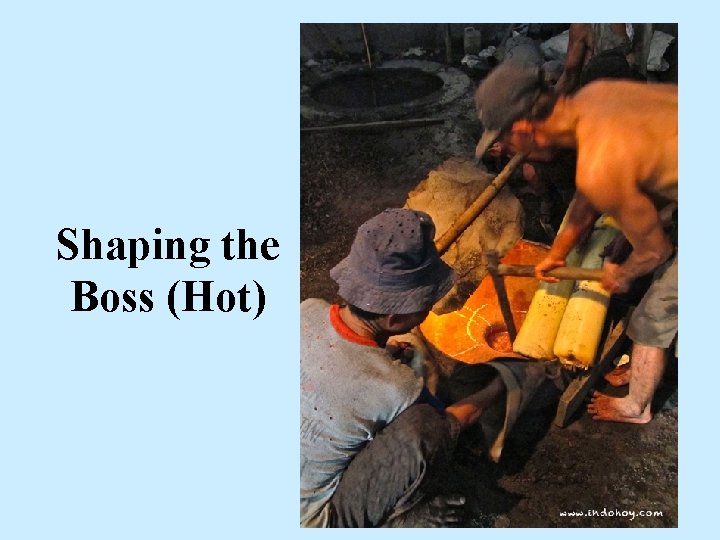
The Making of Gongs (2) • Use of Fire reflects life on Volcanic Islands • “Lost Wax” Casting • Want to read more? : Judith Becker, “Earth, Fire, Sakti, and the Javanese Gamelan, ” Ethnomusicology 32, no. 3 (Autumn 1988): 385 -391. (Library: JSTOR) • Examples: - You. Tube - the making of gamelan - You. Tube - Rhythm of the Gamelan Makers
Into the Fire
Heating the Gong
Shaping the Boss (Hot)
After Cooling
Finishing
Manufacture of the Gamelan • • Making Gamelan Rhythm of Gamelan Makers Making Gamelan Keys Medium Rated Putting on Gamelan Keys Drilling in the Y-Supports (H) Drilling in the Y-Supports (M) Putting on Gamelan Keys