Supercellmesocyclone tornado environments Supercell tornadoes Craig Setzer and
- Slides: 42
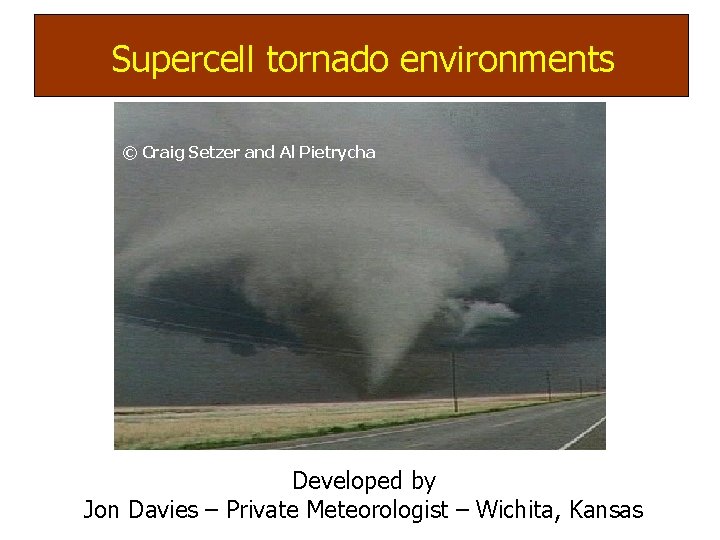
Supercell(mesocyclone) tornado environments Supercell tornadoes: © Craig Setzer and Al Pietrycha Developed by Jon Davies – Private Meteorologist – Wichita, Kansas
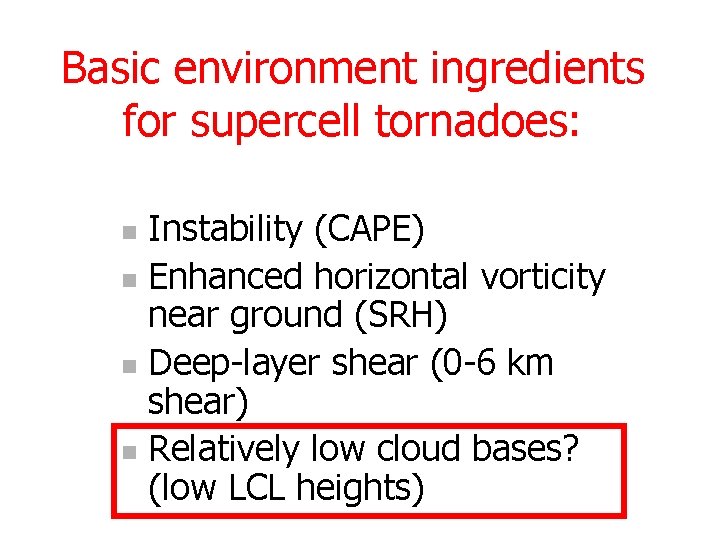
Basic for Basic environmentingredients for supercelltornadoes: (from accepted research over the last 15 years) Instability (CAPE) n Enhanced horizontal vorticity near ground (SRH) (0 -1 km) n Deep-layer shear (0 -6 km shear) n Relatively low cloud bases? (low LCL heights) n
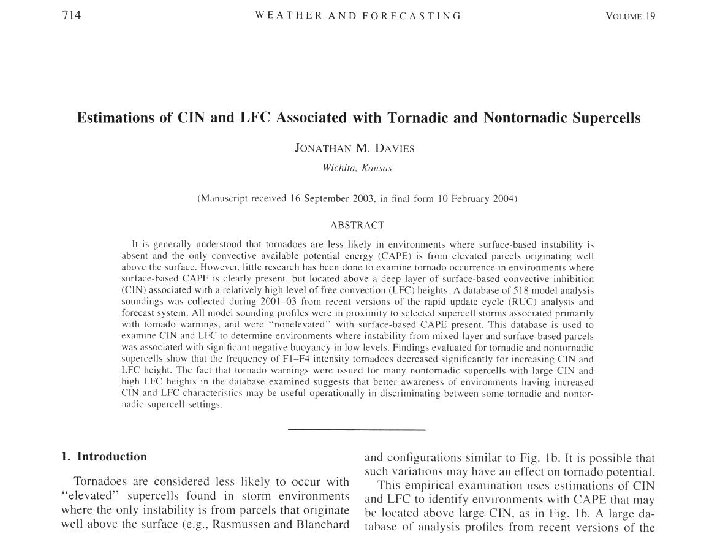
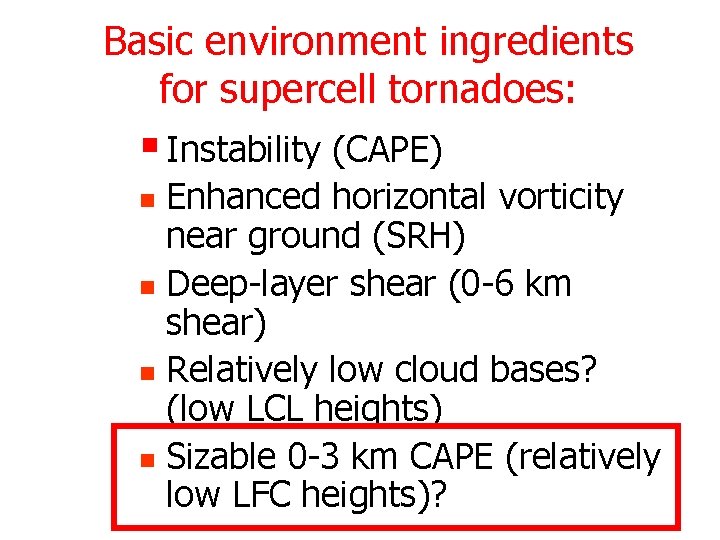
Basic environment ingredients for supercell tornadoes: § Instability (CAPE) § Enhanced horizontal vorticity near ground (SRH) (0 -1 km) § Deep-layer shear (0 -6 km shear) § Relatively low cloud bases? (low LCL heights) § Sizable 0 -3 km CAPE (relatively low LFC heights)? (Davies 2003)
Basic environment ingredients for supercell tornadoes: Instability (CAPE) n Enhanced horizontal vorticity near ground (SRH) (0 -1 km) n Deep-layer shear (0 -6 km shear) n Relatively low cloud bases? (low LCL heights) n
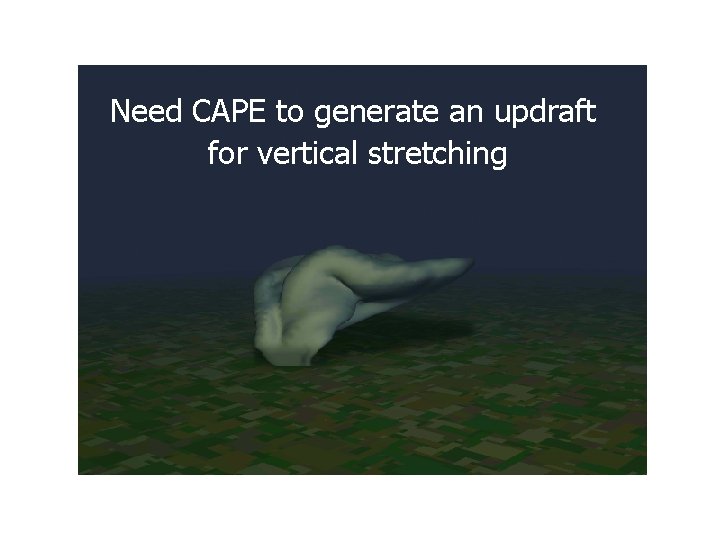
Need CAPE to generate an updraft for vertical stretching
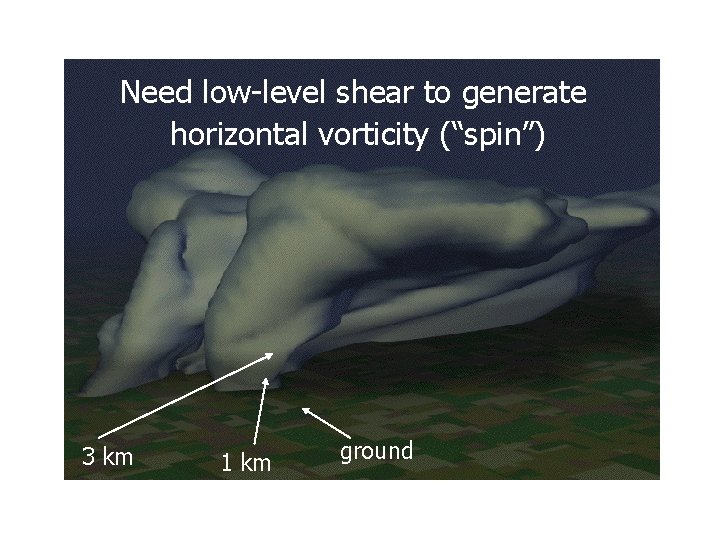
Need low-level shear to generate horizontal vorticity (“spin”) 3 km 1 km ground
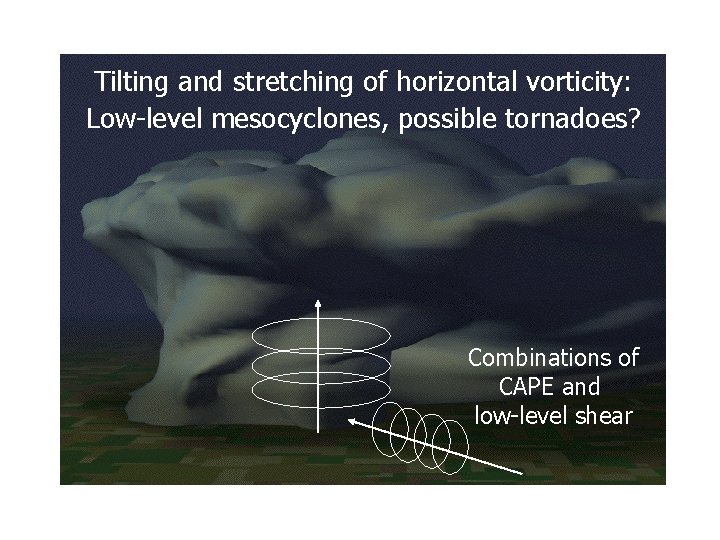
Tilting and stretching of horizontal vorticity: Low-level mesocyclones, possible tornadoes? Combinations of CAPE and low-level shear
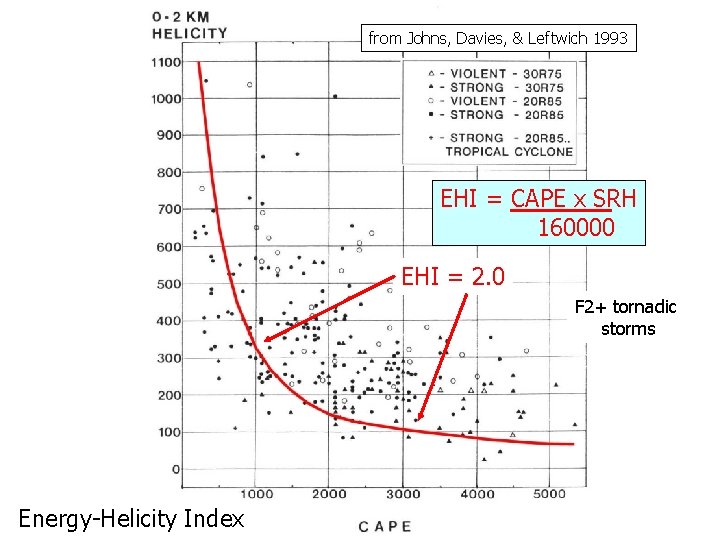
from Johns, Davies, & Leftwich 1993 EHI = CAPE x SRH 160000 EHI = 2. 0 F 2+ tornadic storms Energy-Helicity Index
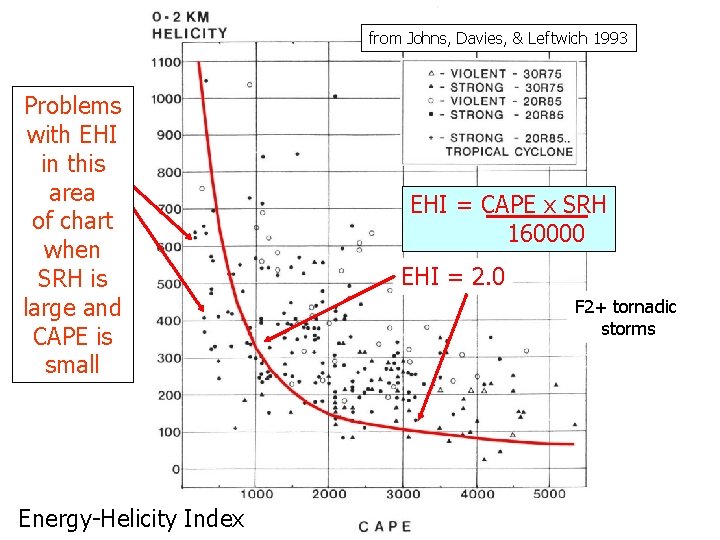
from Johns, Davies, & Leftwich 1993 Problems with EHI in this area of chart when SRH is large and CAPE is small Energy-Helicity Index EHI = CAPE x SRH 160000 EHI = 2. 0 F 2+ tornadic storms
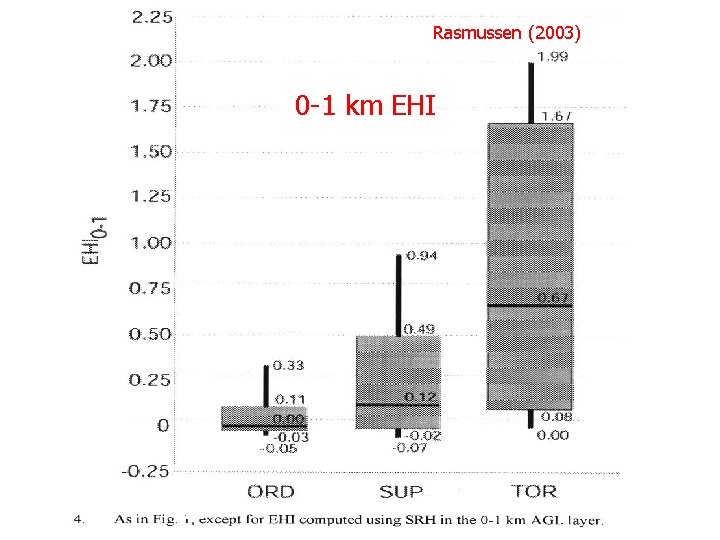
Rasmussen (2003) 0 -1 km EHI
CAPE-SRH combinations often don’t work well in these situations: Small CAPE – large SRH (many cool season cases) n Cold core tornado situations (500 mb closed lows) n Nonsupercell/nonmesocyclone tornadoes n
Basic environment ingredients for supercell tornadoes: Instability (CAPE) n Enhanced horizontal vorticity near ground (SRH) n Deep-layer shear (0 -6 km shear) n Relatively low cloud bases? (low LCL heights) n
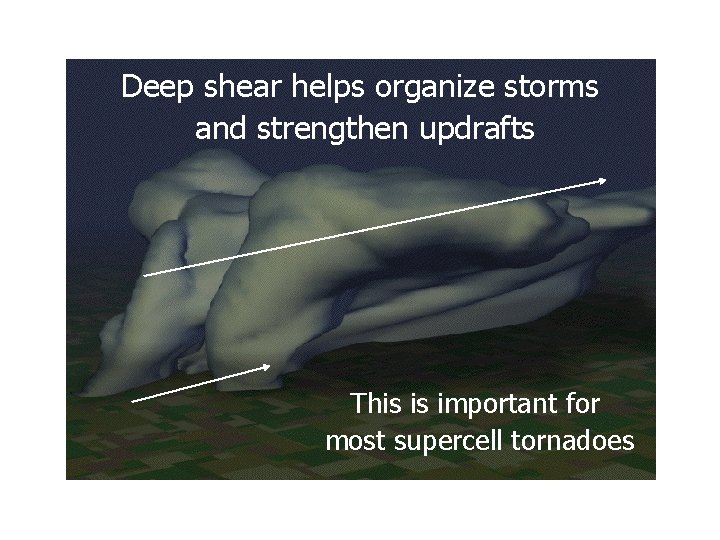
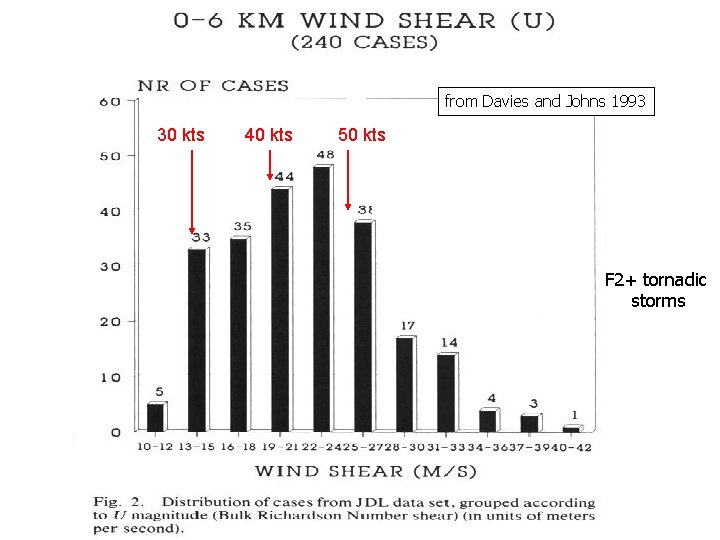
Deep shear helps organize storms and strengthen updrafts This is important for most supercell tornadoes
from Davies and Johns 1993 30 kts 40 kts 50 kts F 2+ tornadic storms
Basic environment ingredients for supercell tornadoes: Instability (CAPE) n Enhanced horizontal vorticity near ground (SRH) n Deep-layer shear (0 -6 km shear) n Relatively low cloud bases? (low LCL heights) n
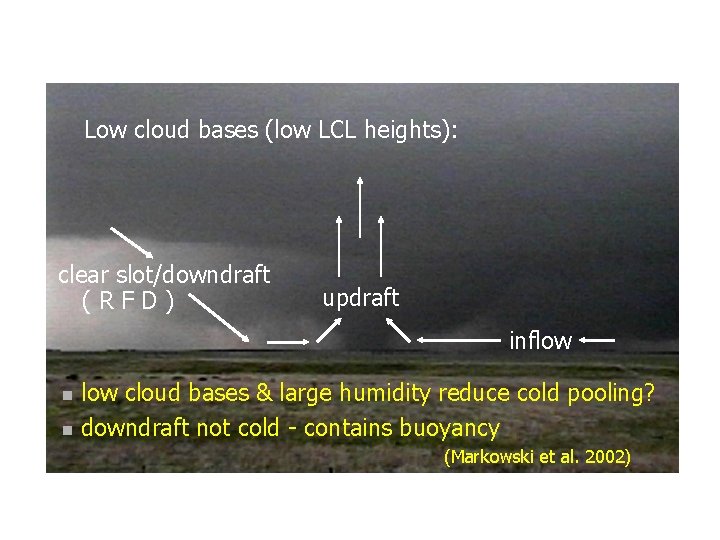
Low cloud bases (low LCL heights): clear slot/downdraft (RFD) updraft inflow n n low cloud bases & large humidity reduce cold pooling? downdraft not cold - contains buoyancy (Markowski et al. 2002)
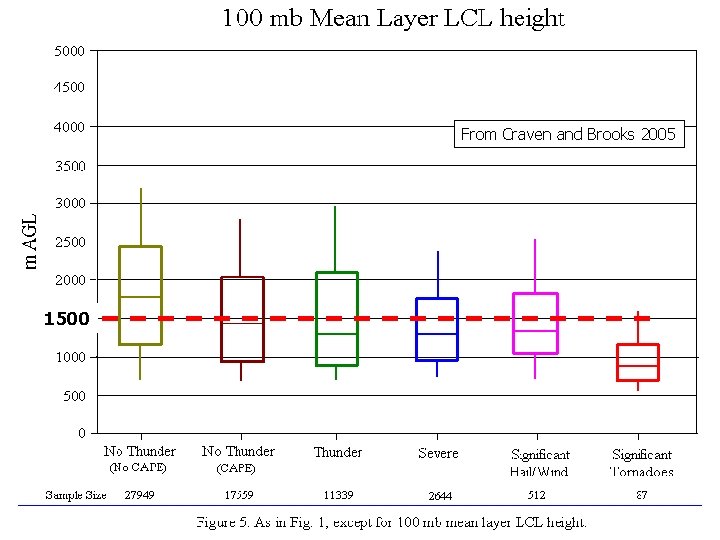
From Craven and Brooks 2005 1500
Other environment characteristics that may have some relevance to tornadoes: Relatively low LFC heights? n Sizable CAPE in low-levels (below 3 km)? n (less work for low-level parcels of air to move upward and “stretch” in updrafts? )
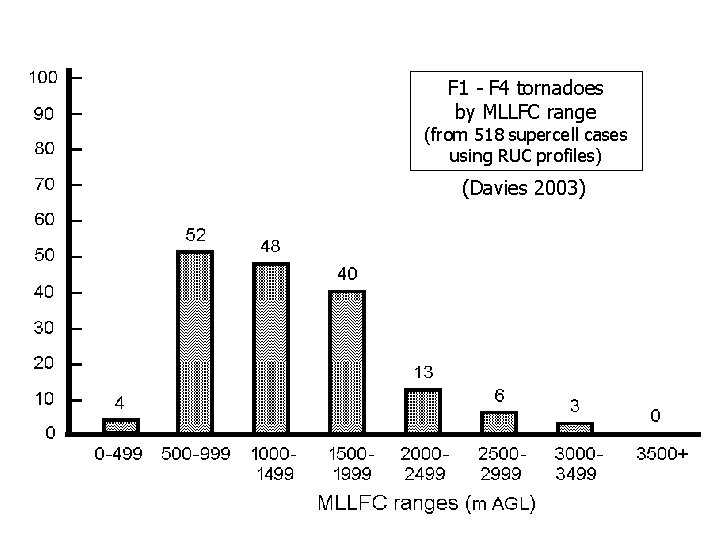
F 1 - F 4 tornadoes by MLLFC range (from 518 supercell cases using RUC profiles) (Davies 2003)
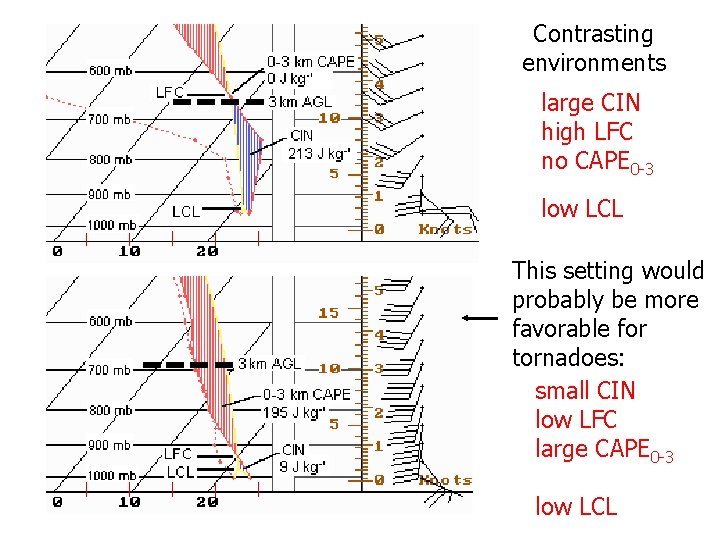
Contrasting environments large CIN high LFC no CAPE 0 -3 low LCL This setting would probably be more favorable for tornadoes: small CIN low LFC large CAPE 0 -3 low LCL
Basic environment ingredients for supercell tornadoes: § Instability (CAPE) Enhanced horizontal vorticity near ground (SRH) n Deep-layer shear (0 -6 km shear) n Relatively low cloud bases? (low LCL heights) n Sizable 0 -3 km CAPE (relatively low LFC heights)? n
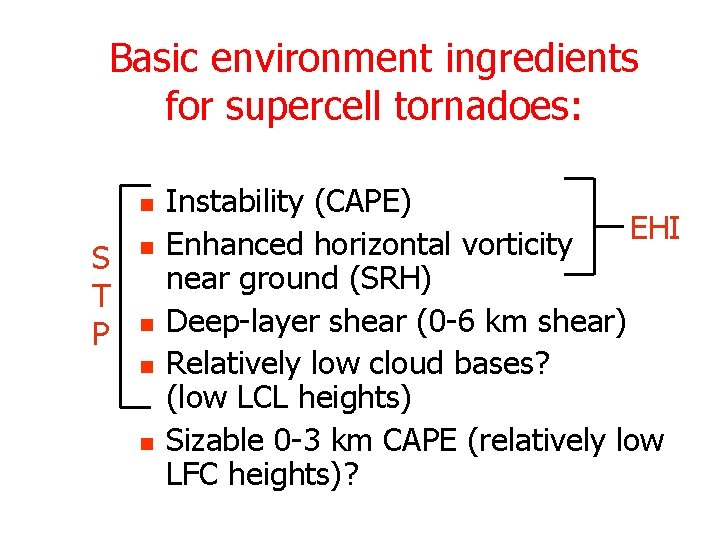
Basic environment ingredients for supercell tornadoes: n S T P n n Instability (CAPE) EHI Enhanced horizontal vorticity near ground (SRH) Deep-layer shear (0 -6 km shear) Relatively low cloud bases? (low LCL heights) Sizable 0 -3 km CAPE (relatively low LFC heights)?
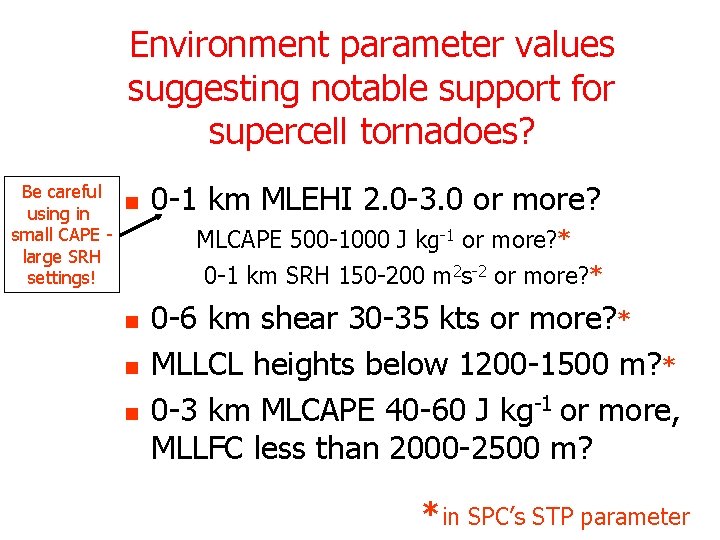
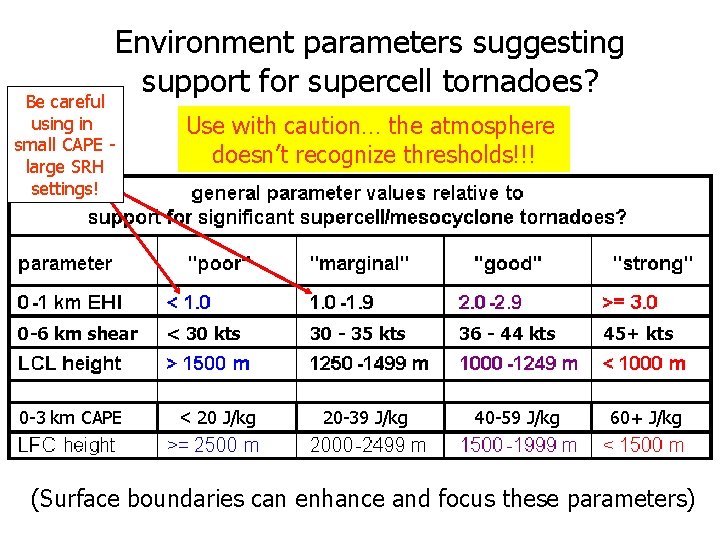
Environment parameter values suggesting notable support for supercell tornadoes? Be careful n using in small CAPE large SRH settings! n n n 0 -1 km MLEHI 2. 0 -3. 0 or more? MLCAPE 500 -1000 J kg-1 or more? * 0 -1 km SRH 150 -200 m 2 s-2 or more? * 0 -6 km shear 30 -35 kts or more? * MLLCL heights below 1200 -1500 m? * 0 -3 km MLCAPE 40 -60 J kg-1 or more, MLLFC less than 2000 -2500 m? *in SPC’s STP parameter
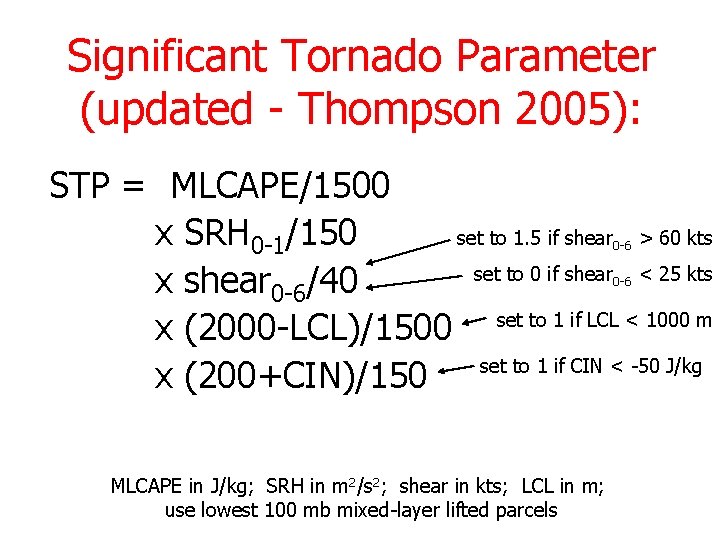
Significant Tornado Parameter (updated - Thompson 2005): STP = MLCAPE/1500 x SRH 0 -1/150 set to 1. 5 if shear > 60 kts set to 0 if shear < 25 kts x shear 0 -6/40 set to 1 if LCL < 1000 m x (2000 -LCL)/1500 x (200+CIN)/150 set to 1 if CIN < -50 J/kg 0 -6 MLCAPE in J/kg; SRH in m 2/s 2; shear in kts; LCL in m; use lowest 100 mb mixed-layer lifted parcels
Environment parameters suggesting support for supercell tornadoes? Be careful using in small CAPE large SRH settings! 0 -6 km shear 0 -3 km CAPE Use with caution… the atmosphere doesn’t recognize thresholds!!! < 30 kts < 20 J/kg 30 - 35 kts 36 - 44 kts 20 -39 J/kg 40 -59 J/kg 45+ kts 60+ J/kg (Surface boundaries can enhance and focus these parameters)
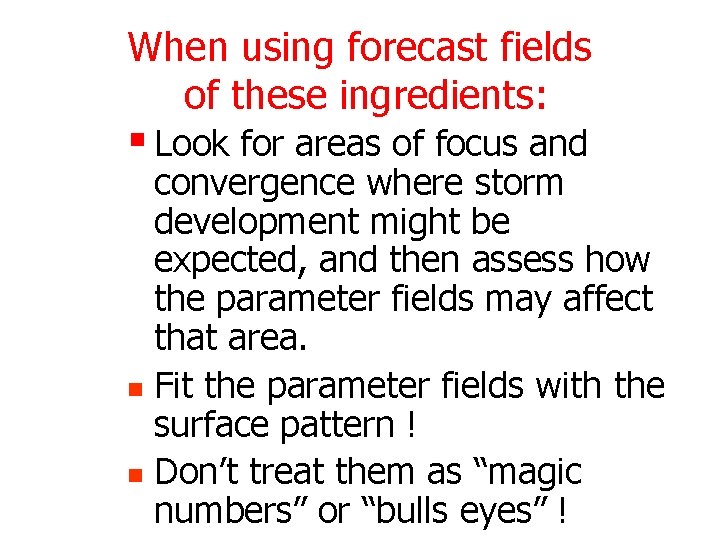
When using forecast fields of these ingredients: § Look for areas of focus and convergence where storm development might be expected, and then assess how the parameter fields may affect that area. n Fit the parameter fields with the surface pattern ! n Don’t treat them as “magic numbers” or “bulls eyes” !
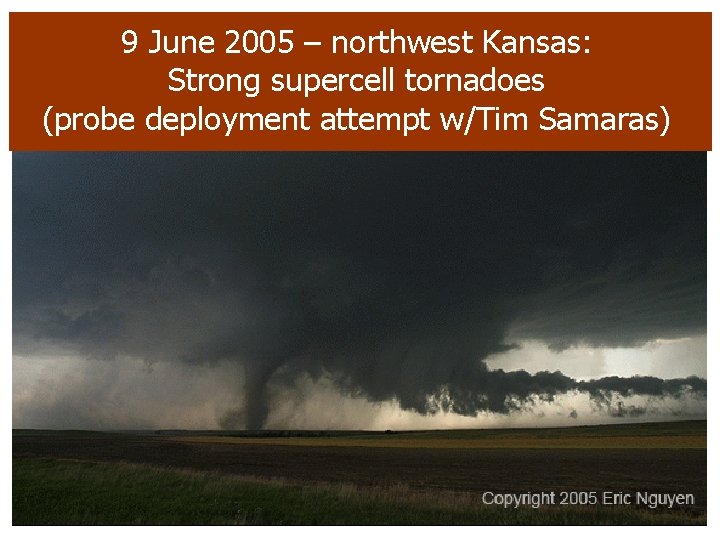
9 June 92005 Graham KS tornado. Kansas: (w/Tim Samaras) June 2005 County – northwest 8 May 2005 – central Kansas: Strong supercell tornadoes nonsupercell/nonmesocyclone tornado (probe deployment attempt w/Tim Samaras)
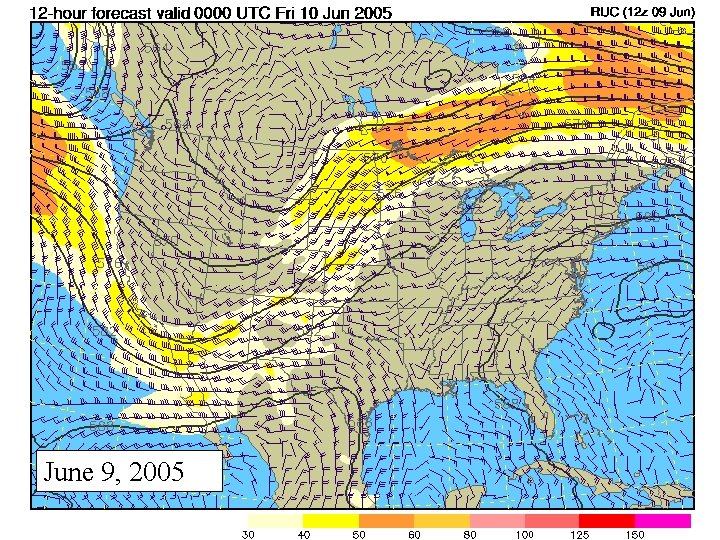
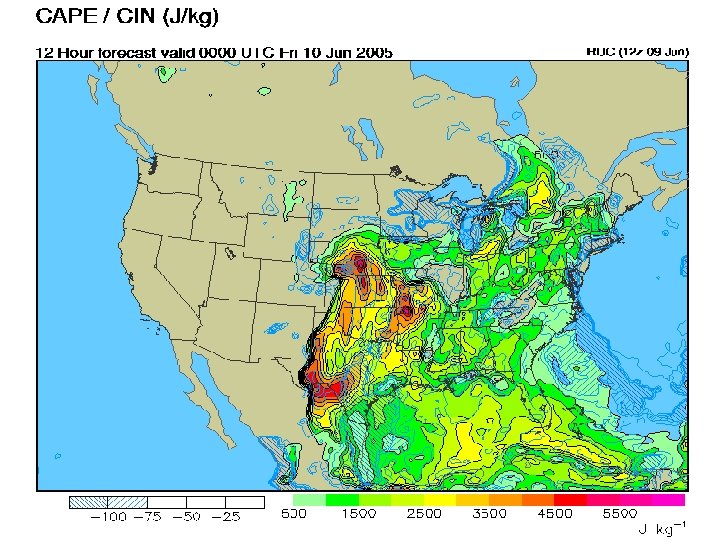
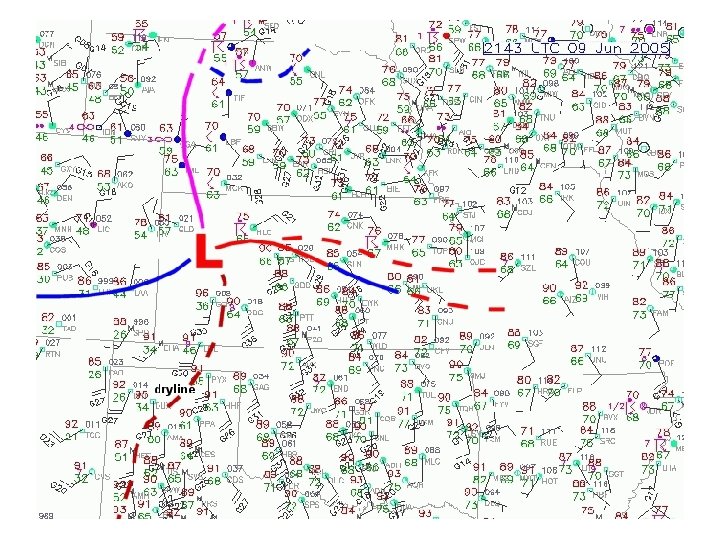
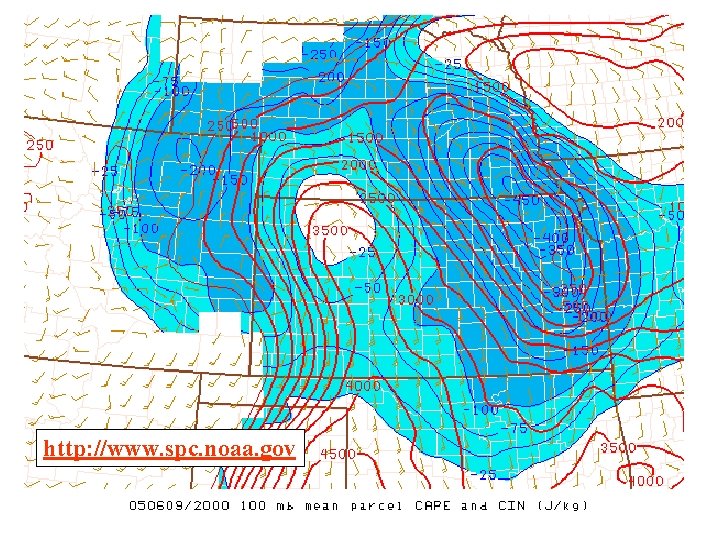
June 9, 2005
http: //www. spc. noaa. gov
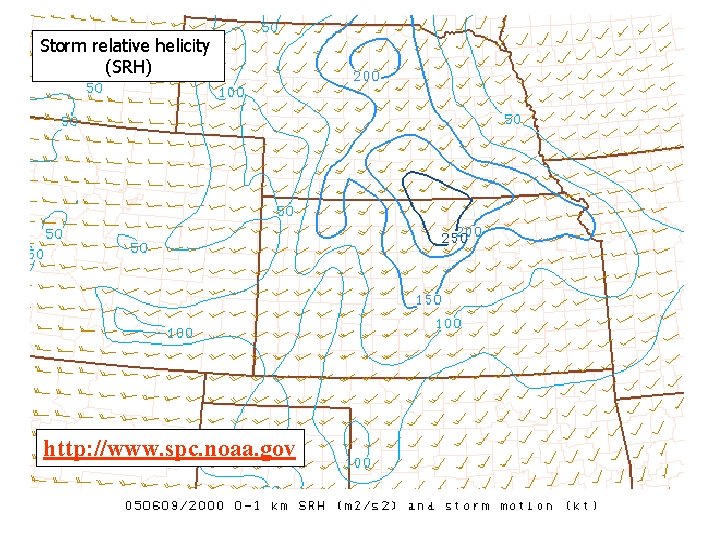
Storm relative helicity (SRH) http: //www. spc. noaa. gov
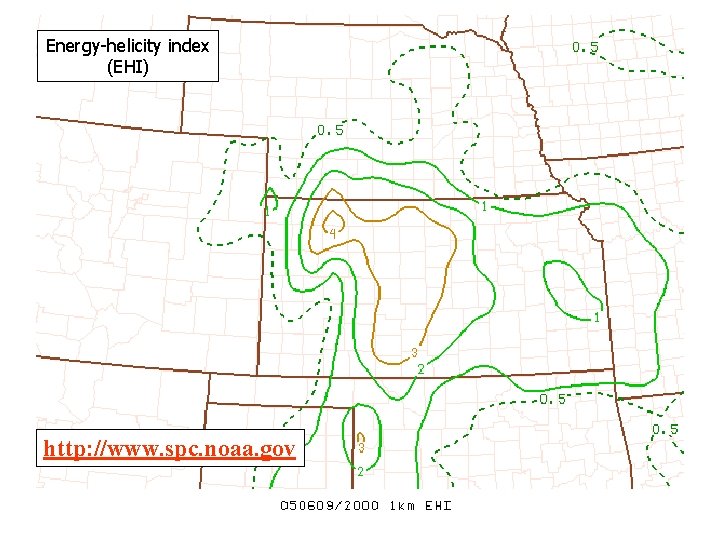
Energy-helicity index (EHI) http: //www. spc. noaa. gov
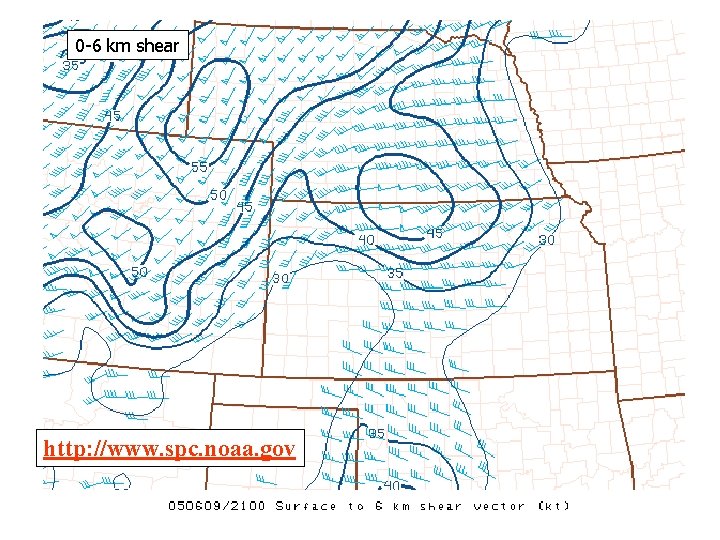
0 -6 km shear http: //www. spc. noaa. gov
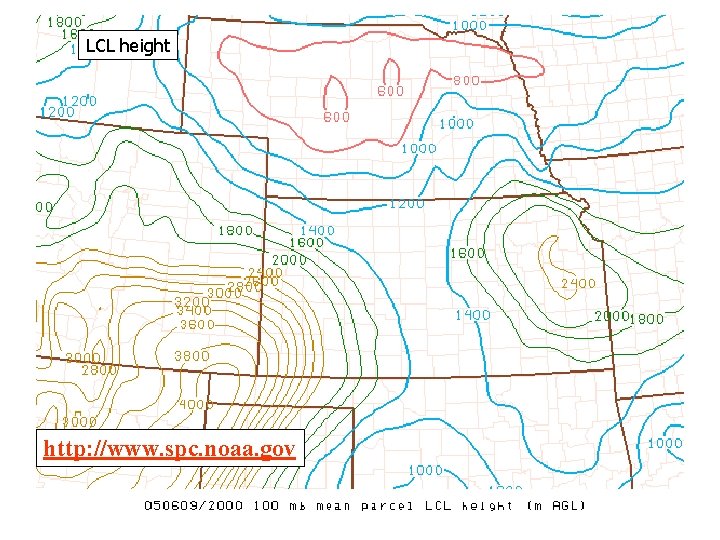
LCL height http: //www. spc. noaa. gov
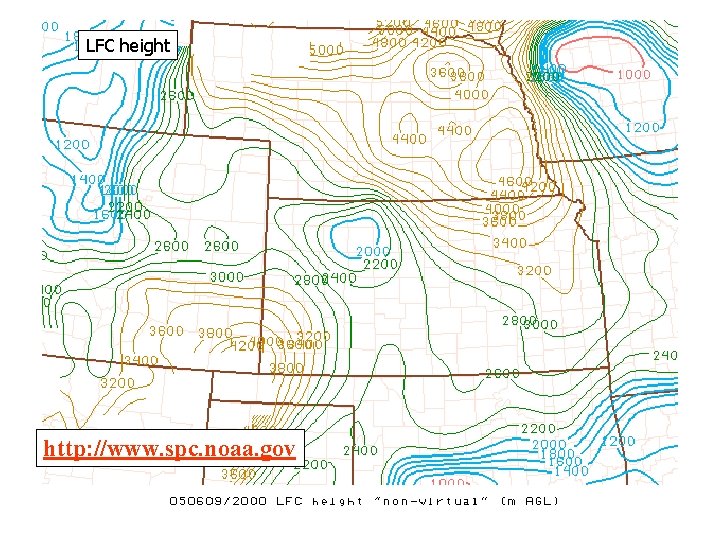
LFC height http: //www. spc. noaa. gov
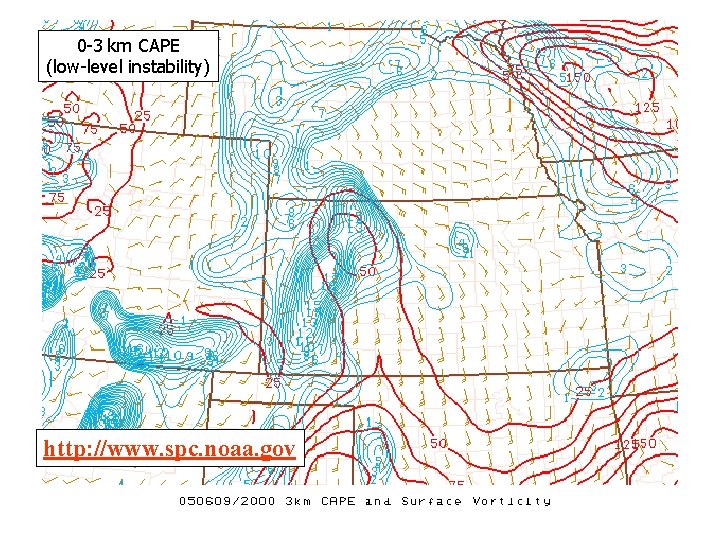
0 -3 km CAPE (low-level instability) http: //www. spc. noaa. gov
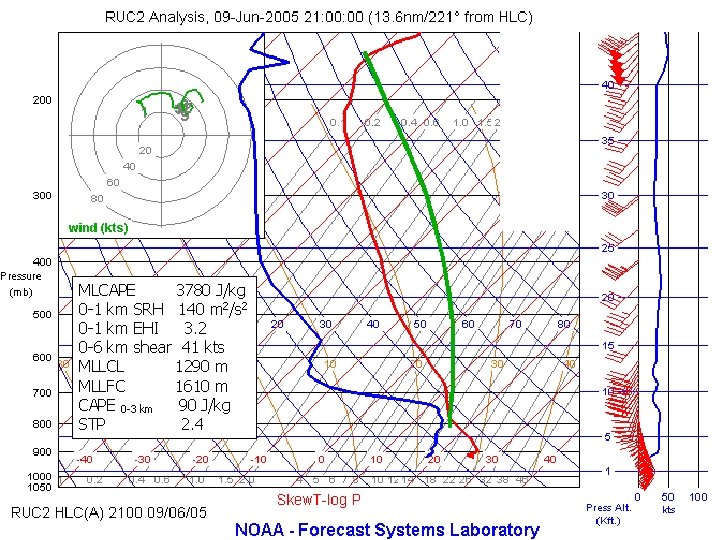
MLCAPE 3780 J/kg 0 -1 km SRH 140 m 2/s 2 0 -1 km EHI 3. 2 0 -6 km shear 41 kts MLLCL 1290 m MLLFC 1610 m CAPE 0 -3 km 90 J/kg STP 2. 4
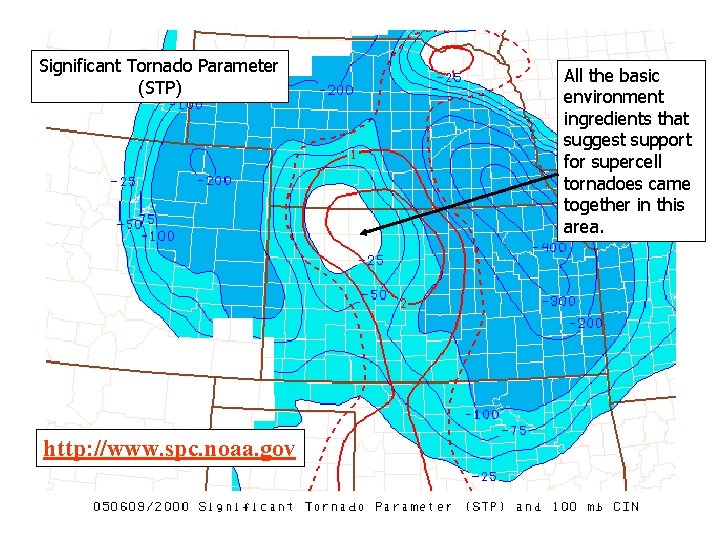
Significant Tornado Parameter (STP) http: //www. spc. noaa. gov All the basic environment ingredients that suggest support for supercell tornadoes came together in this area.
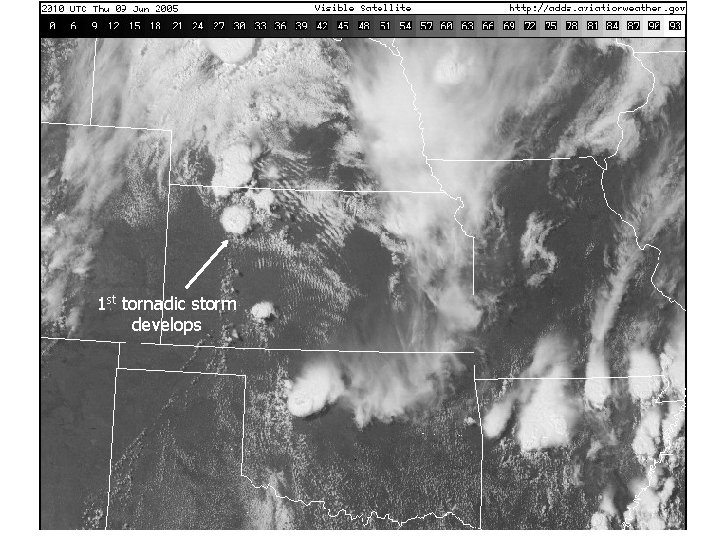
1 st tornadic storm develops
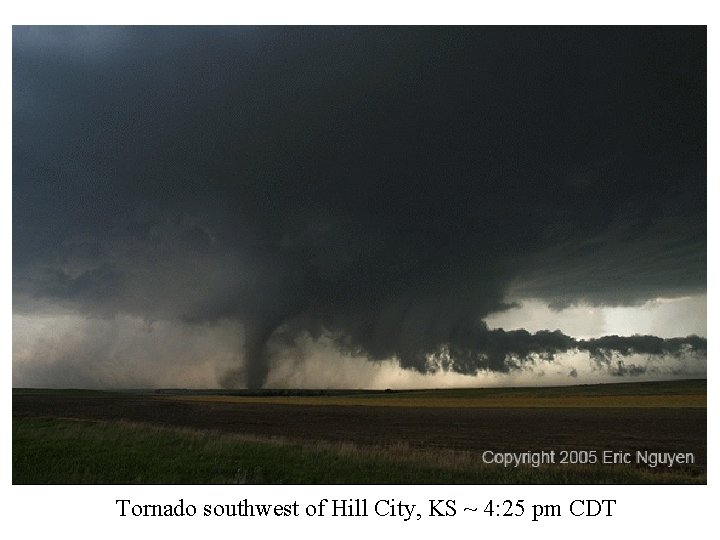
Tornado southwest of Hill City, KS ~ 4: 25 pm CDT