CHAPTER 13 Natural Environments of Europe Section 1
- Slides: 8
CHAPTER 13 Natural Environments of Europe Section 1: Physical Features Section 2: Climates and Biomes Section 3: Natural Resources
SECTION 1 Physical Features Question: What are the major bodies of water in Europe?
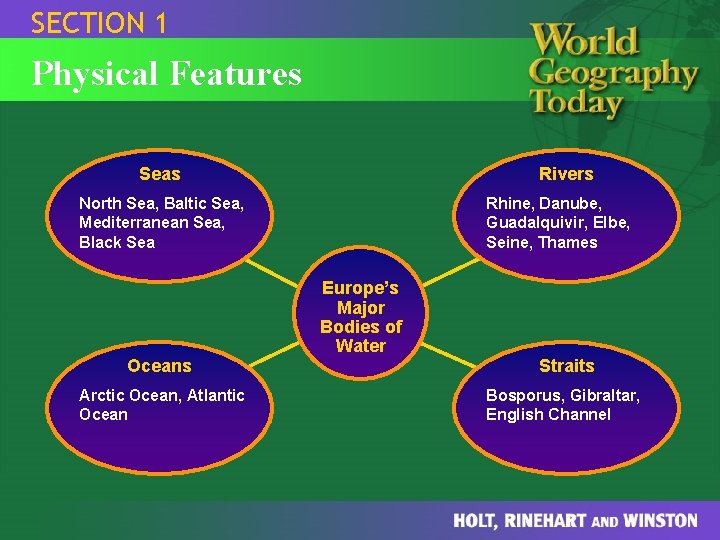
SECTION 1 Physical Features Seas Rivers North Sea, Baltic Sea, Mediterranean Sea, Black Sea Oceans Arctic Ocean, Atlantic Ocean Rhine, Danube, Guadalquivir, Elbe, Seine, Thames Europe’s Major Bodies of Water Straits Bosporus, Gibraltar, English Channel
SECTION 2 Climates and Biomes Question: What are the locations, plants, and animals of Europe’s biomes?
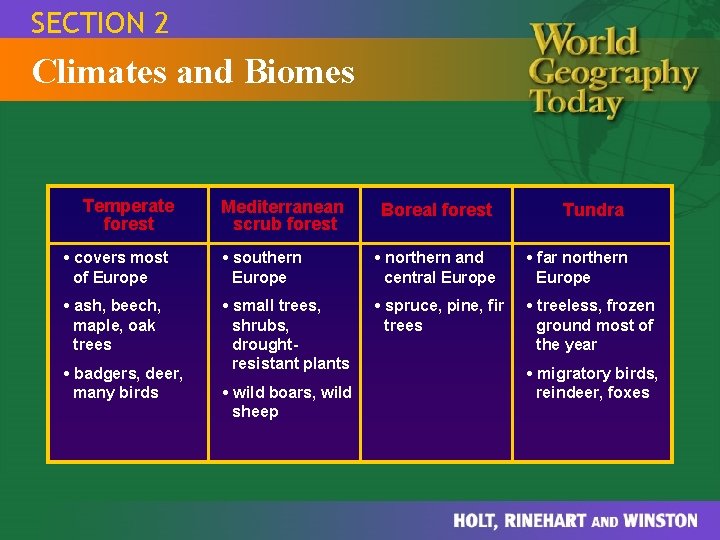
SECTION 2 Climates and Biomes Temperate forest Mediterranean scrub forest Boreal forest Tundra • covers most of Europe • southern Europe • northern and central Europe • far northern Europe • ash, beech, maple, oak trees • small trees, shrubs, droughtresistant plants • spruce, pine, fir trees • treeless, frozen ground most of the year • badgers, deer, many birds • wild boars, wild sheep • migratory birds, reindeer, foxes
SECTION 3 Natural Resources Question: What resources are found in each of Europe’s physical regions?
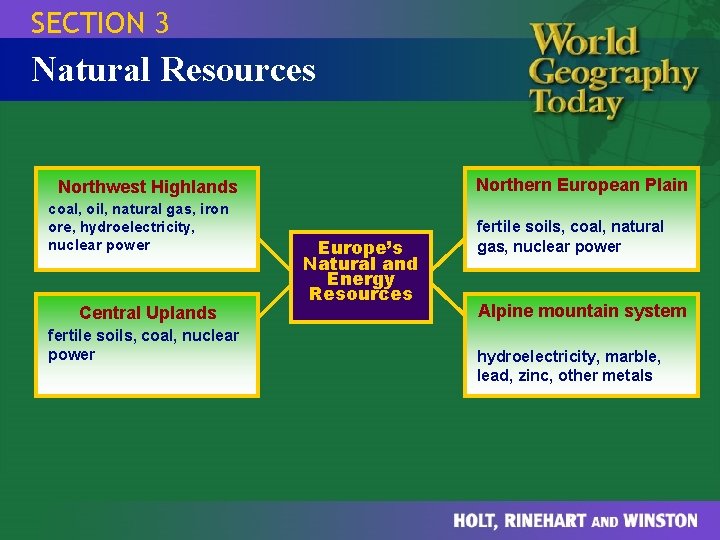
SECTION 3 Natural Resources Northern European Plain Northwest Highlands coal, oil, natural gas, iron ore, hydroelectricity, nuclear power Central Uplands fertile soils, coal, nuclear power Europe’s Natural and Energy Resources fertile soils, coal, natural gas, nuclear power Alpine mountain system hydroelectricity, marble, lead, zinc, other metals
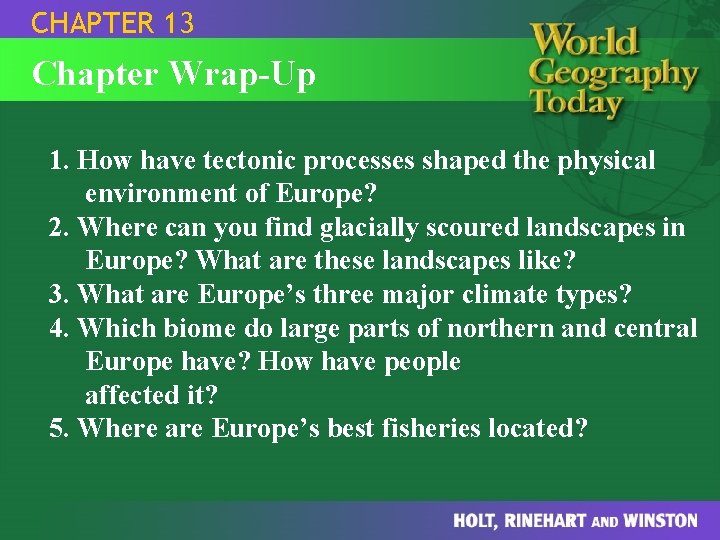
CHAPTER 13 Chapter Wrap-Up 1. How have tectonic processes shaped the physical environment of Europe? 2. Where can you find glacially scoured landscapes in Europe? What are these landscapes like? 3. What are Europe’s three major climate types? 4. Which biome do large parts of northern and central Europe have? How have people affected it? 5. Where are Europe’s best fisheries located?