The Enlightenment in Europe Chapter 6 Section 2

- Slides: 14
The Enlightenment in Europe Chapter 6 Section 2
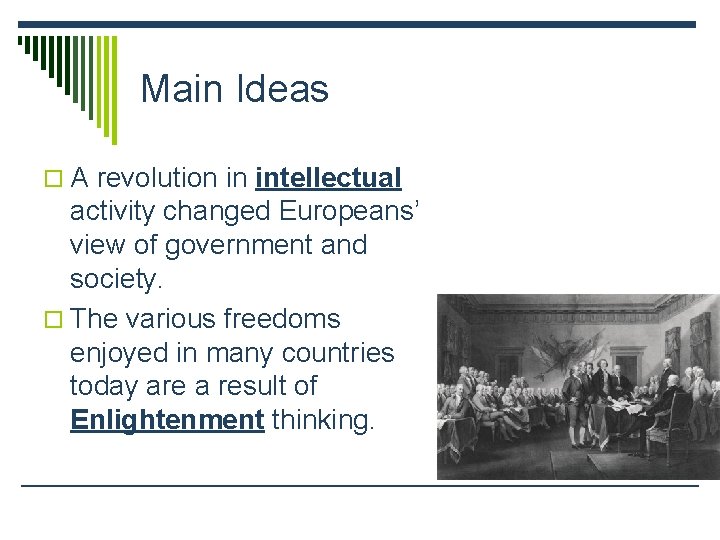
Main Ideas o A revolution in intellectual activity changed Europeans’ view of government and society. o The various freedoms enjoyed in many countries today are a result of Enlightenment thinking.
Introduction o New ways of thinking reevaluating old notions o New insight into underlying beliefs regarding: n n Government Religion Economics Education
Enlightenment o Enlightenment – intellectual movement that stressed reason and thought and the power of individuals to solve problems. o a/k/a Age of Reason o Reached its height in the mid 1700 s. o Changed many aspects of Western civilization
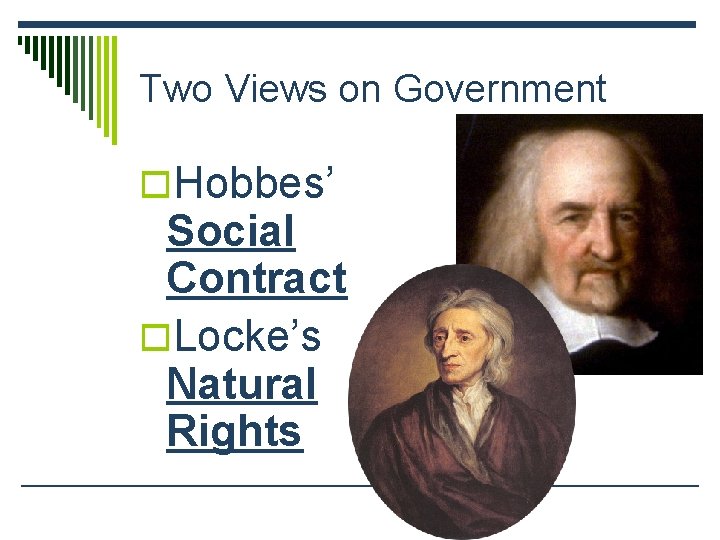
Two Views on Government o. Hobbes’ Social Contract o. Locke’s Natural Rights
Hobbes’ Social Contract o Horrors of the English Civil War convinced him that all humans were naturally: n Selfish & Wicked o Governments keep order n Without it constant war o People needed to hand over rights to a strong ruler (absolute monarch). n They gained law & order, in exchange. n Known as social contract.
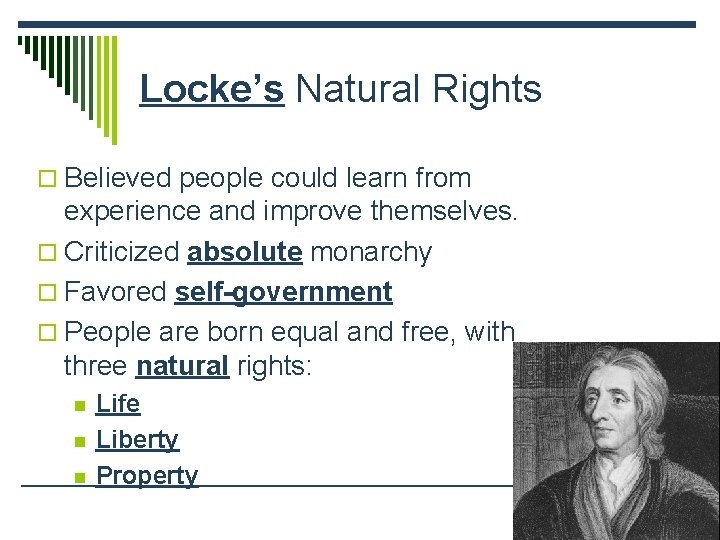
Locke’s Natural Rights o Believed people could learn from experience and improve themselves. o Criticized absolute monarchy o Favored self-government o People are born equal and free, with three natural rights: n n n Life Liberty Property
Natural Rights & Government o Purpose of government n Protect the people’s rights o If government doesn’t do so… n Citizens will overthrow it o Belief that government comes from people is the foundation of modern democracy.
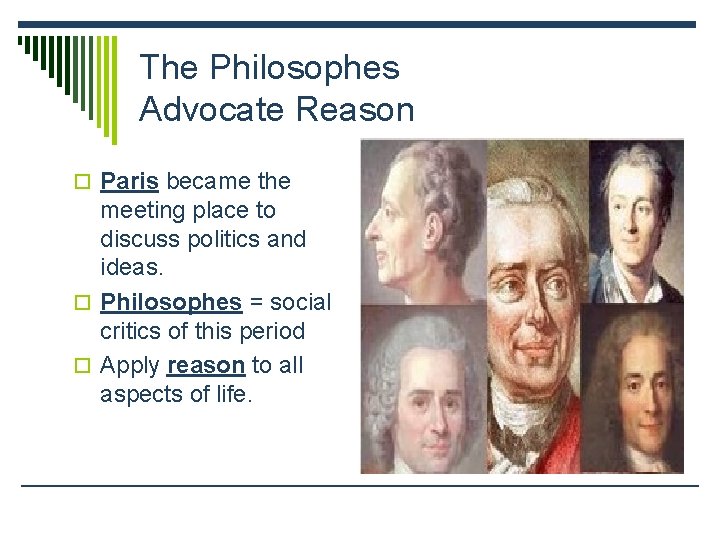
The Philosophes Advocate Reason o Paris became the meeting place to discuss politics and ideas. o Philosophes = social critics of this period o Apply reason to all aspects of life.
Philosophes’ Five Concepts o Five concepts formed the core of their o o o beliefs: Reason – Truth could be discovered through reason or logical thinking Nature – Natural was good and reasonable Happiness – Seek well-being on earth Progress – Society could be perfected Liberty – Society can be set free
Voltaire Combats Intolerance o Used satire against the clergy, aristocrats & government. n Using irony & sarcasm o Fought for tolerance, reason, freedom of religious belief and freedom of speech o “I do not agree with a word you say but will defend to the death your right to say it. ”
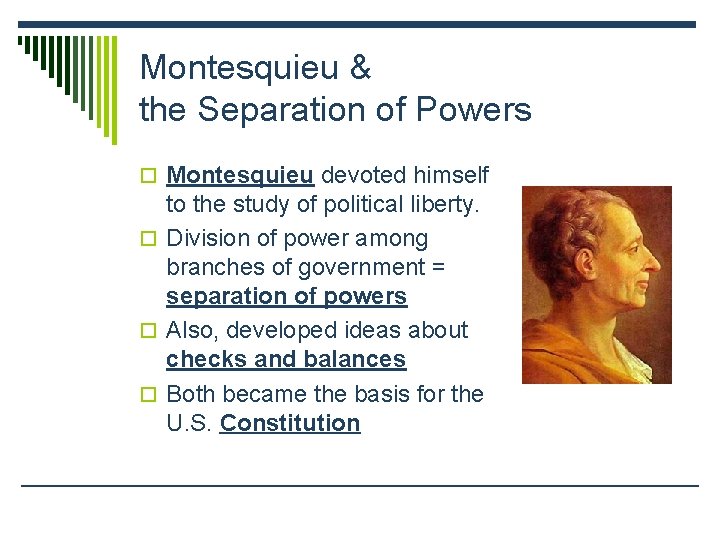
Montesquieu & the Separation of Powers o Montesquieu devoted himself to the study of political liberty. o Division of power among branches of government = separation of powers o Also, developed ideas about checks and balances o Both became the basis for the U. S. Constitution
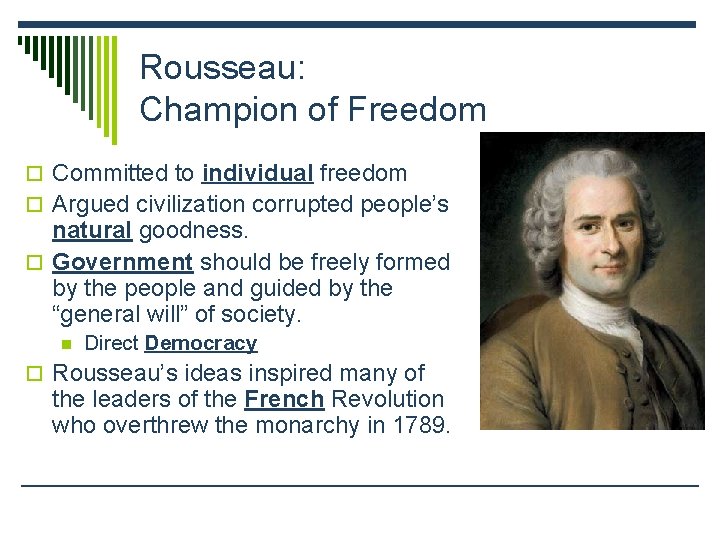
Rousseau: Champion of Freedom o Committed to individual freedom o Argued civilization corrupted people’s natural goodness. o Government should be freely formed by the people and guided by the “general will” of society. n Direct Democracy o Rousseau’s ideas inspired many of the leaders of the French Revolution who overthrew the monarchy in 1789.
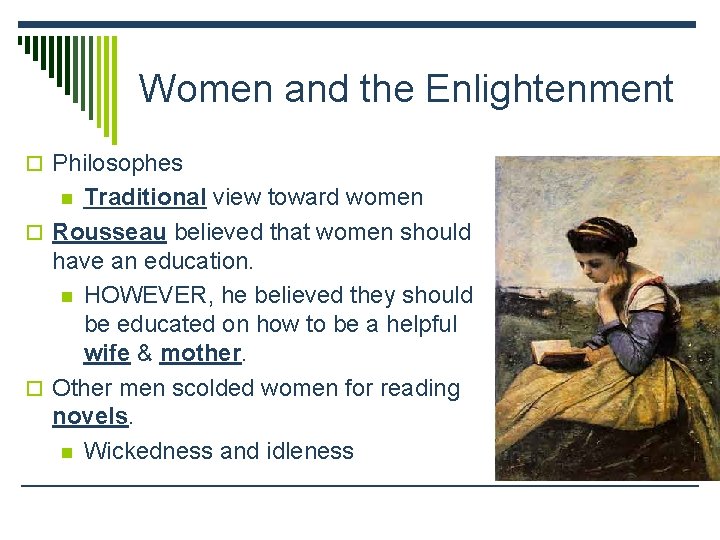
Women and the Enlightenment o Philosophes Traditional view toward women o Rousseau believed that women should have an education. n HOWEVER, he believed they should be educated on how to be a helpful wife & mother. o Other men scolded women for reading novels. n Wickedness and idleness n