Europe Plunges Into War Chapter 13 Section 2

- Slides: 16
Europe Plunges Into War Chapter 13, Section 2
Introduction Austria-Hungary’s declaration of war against Serbia set off a chain reaction within the alliance system. n Allied countries followed through on their pledges to support one another. n Nearly all of Europe soon joined in n Countries outside Europe joined too n
The Great War Begins n n July 31, 1914: Russia announces full mobilization of its armed forces. August 1, 1914: Germany, taking Russia’s mobilization as a defacto declaration of war, declares war on Russia. August 3, 1914: Germany declares war on France. August 4, 1914: Germany declares war on neutral Belgium and invades in a right flanking move designed to defeat France quickly. As a result of this invasion, Britain declares war on Germany.
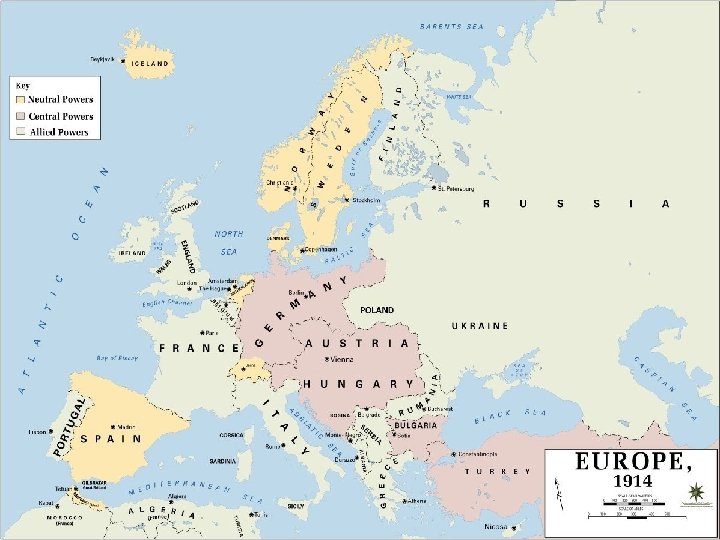
The Great War Begins n Nations Take Sides ¨ By mid-August 1914, there are two sides at war throughout Europe: Central Powers—Germany, Austria-Hungary; later joined by Bulgaria and the Ottoman Empire n Allies—Great Britain, France, Russia; later joined by Japan, Italy (once a member of the Triple Alliance, but switched sides because Italians believed the war was unjustly started) n
A Bloody Stalemate The war turned into a long and bloody stalemate, or deadlock n This deadlocked region in northern France became known as the Western Front. n
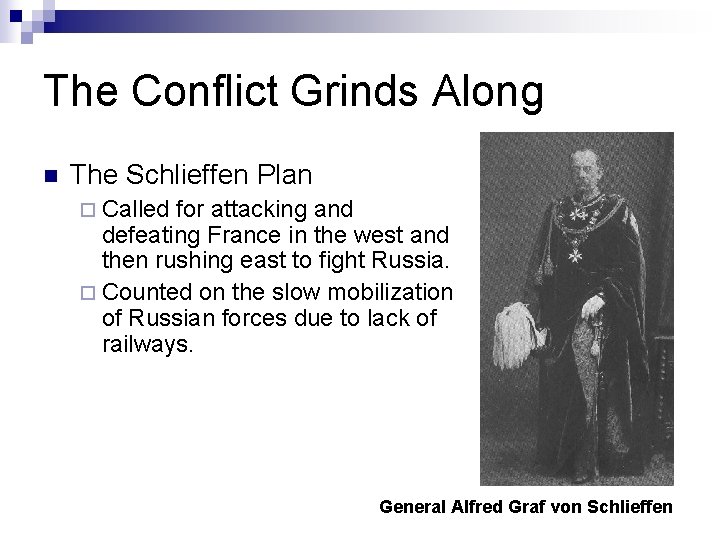
The Conflict Grinds Along n The Schlieffen Plan ¨ Called for attacking and defeating France in the west and then rushing east to fight Russia. ¨ Counted on the slow mobilization of Russian forces due to lack of railways. General Alfred Graf von Schlieffen
The Conflict Grinds Along (continued) By early September Germany had swept into France and reached the outskirts of Paris n September 5, 1914—At the First Battle of the Marne, Germany is forced to retreat. n Schlieffen Plan failed n Germany forced to fight a two front war. n
War in the Trenches Conflict descends into trench warfare— armies fighting from trenches. n Many deaths and very small land gains. n Life in trenches is miserable, difficult, unsanitary. n New weapons only lead to more deaths. n
New Weapons of the War n poison Gas chlorine and phosgene—both toxic substances that caused suffocation ¨ mustard gas—a blistering agent that caused severe burns and blisters on the skin and stripped severely damaged the lungs. It sometimes took five weeks to die from mustard gas exposure. ¨ n n machine gun tank submarine airplanes
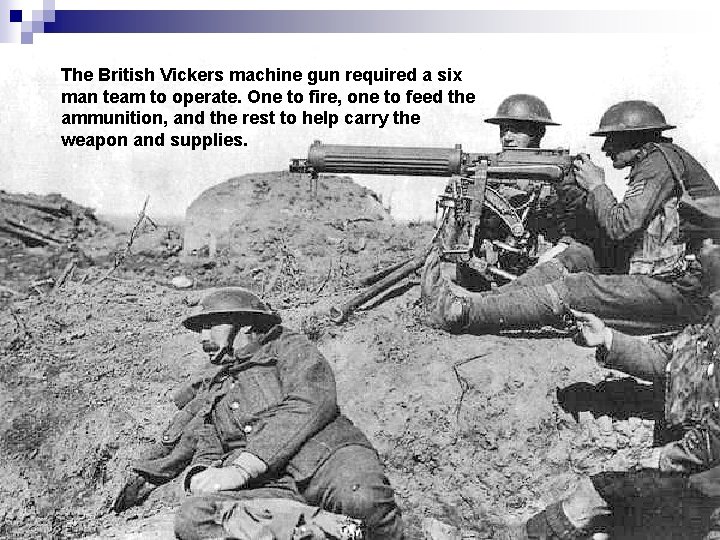
The British Vickers machine gun required a six man team to operate. One to fire, one to feed the ammunition, and the rest to help carry the weapon and supplies.
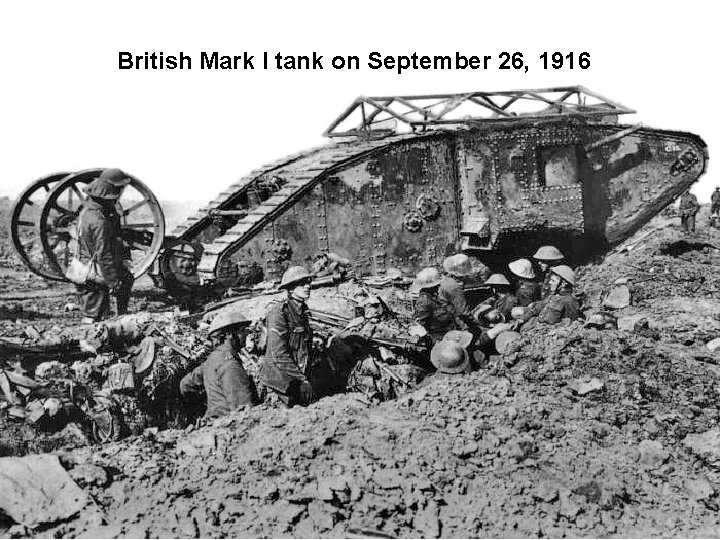
British Mark I tank on September 26, 1916
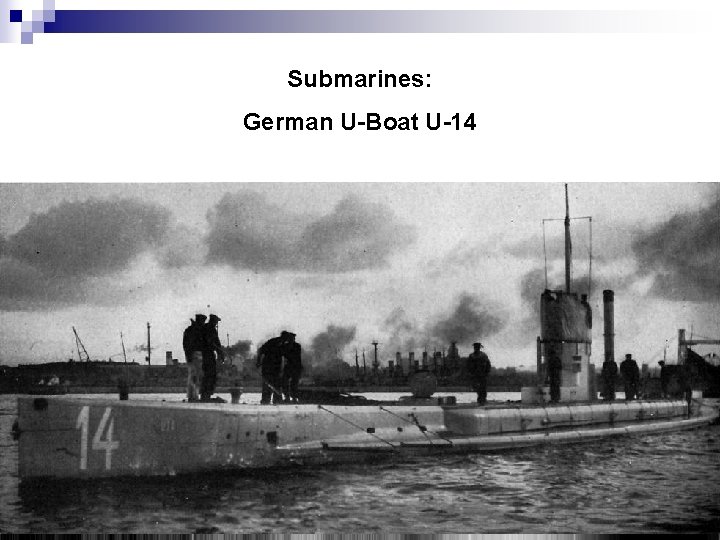
Submarines: German U-Boat U-14
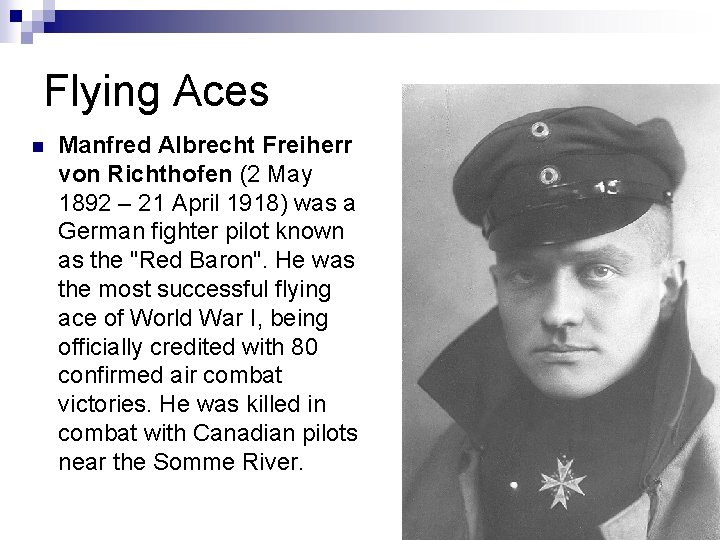
Flying Aces n Manfred Albrecht Freiherr von Richthofen (2 May 1892 – 21 April 1918) was a German fighter pilot known as the "Red Baron". He was the most successful flying ace of World War I, being officially credited with 80 confirmed air combat victories. He was killed in combat with Canadian pilots near the Somme River.
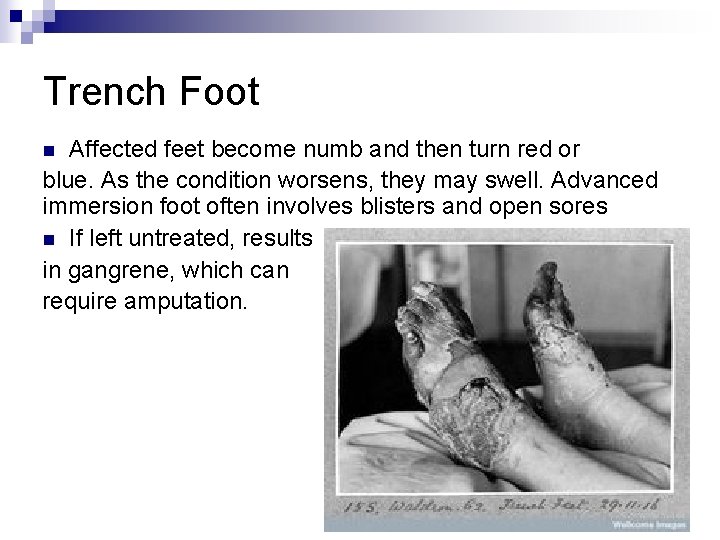
Trench Foot Affected feet become numb and then turn red or blue. As the condition worsens, they may swell. Advanced immersion foot often involves blisters and open sores n If left untreated, results in gangrene, which can require amputation. n
The Battle on the Eastern Front n Early Fighting ¨ Eastern Front—site of main fighting along the German -Russian border. ¨ Russians push into Austria and Germany, but soon forced to retreat. n Russia Struggles ¨ Russia’s war effort was suffering by 1916; many casualties and few supplies. ¨ Lack of industry is to blame; allies supplies blocked ¨ The huge size of Russian army keeps them in the fight but at the cost of many lives