Strategic Workforce Planning with Diversity in Mind PRESENTED






- Slides: 57
Strategic Workforce Planning with Diversity in Mind PRESENTED BY: Jeralyn Woodall
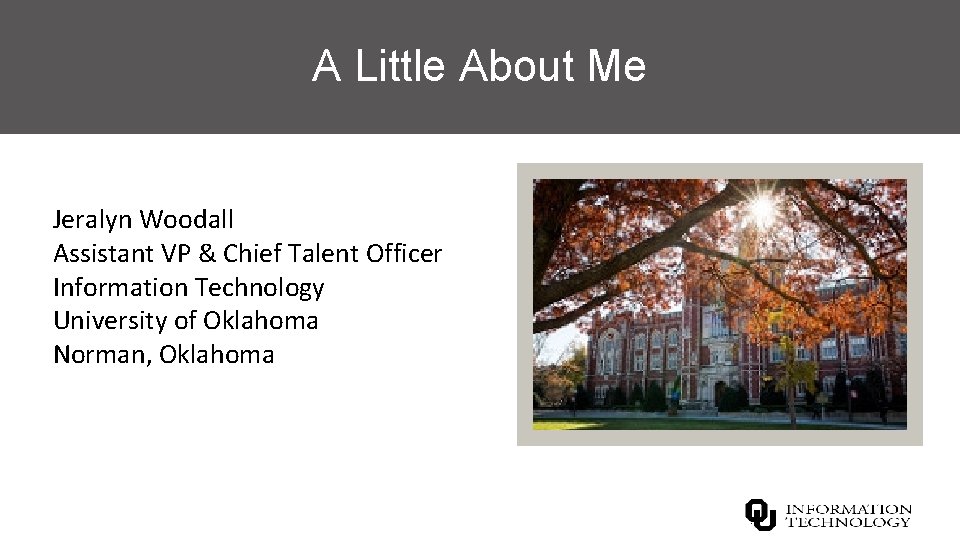
A Little About Me Jeralyn Woodall Assistant VP & Chief Talent Officer Information Technology University of Oklahoma Norman, Oklahoma
A Little About You • • Your name Your University Current role & tenure What are your expectations for the session today and what workforce question would you like answered?
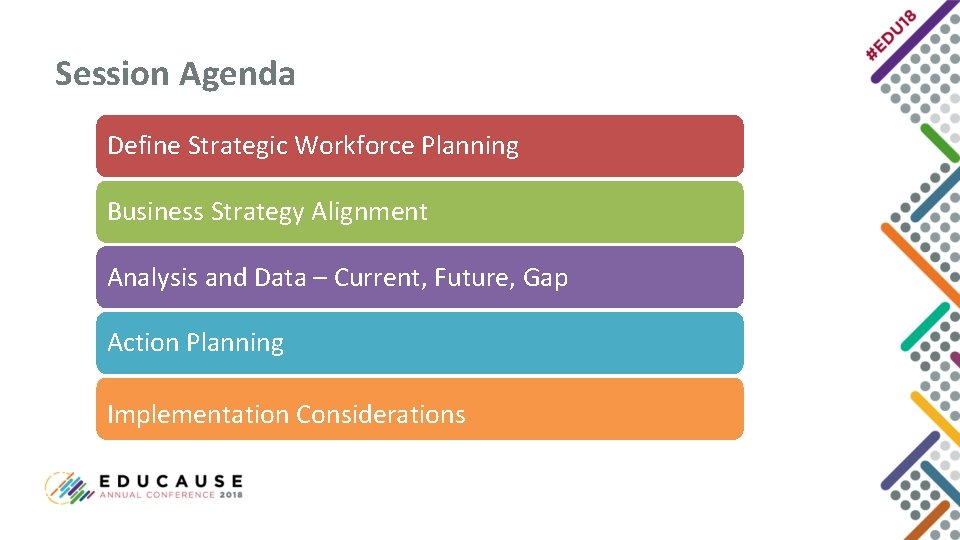
Session Agenda Define Strategic Workforce Planning Business Strategy Alignment Analysis and Data – Current, Future, Gap Action Planning Implementation Considerations
What is Strategic Workforce Planning?
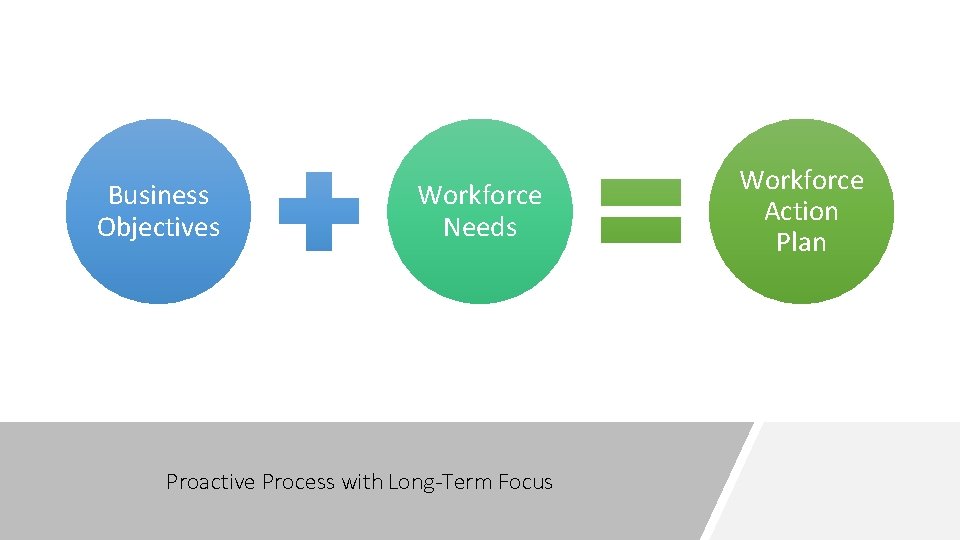
Business Objectives Workforce Needs Proactive Process with Long-Term Focus Workforce Action Plan
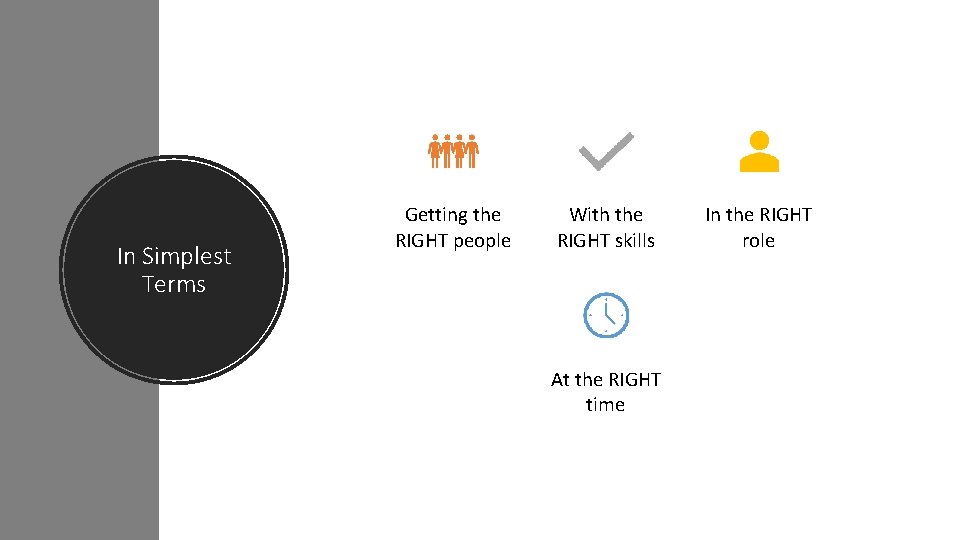
In Simplest Terms Getting the RIGHT people With the RIGHT skills At the RIGHT time In the RIGHT role
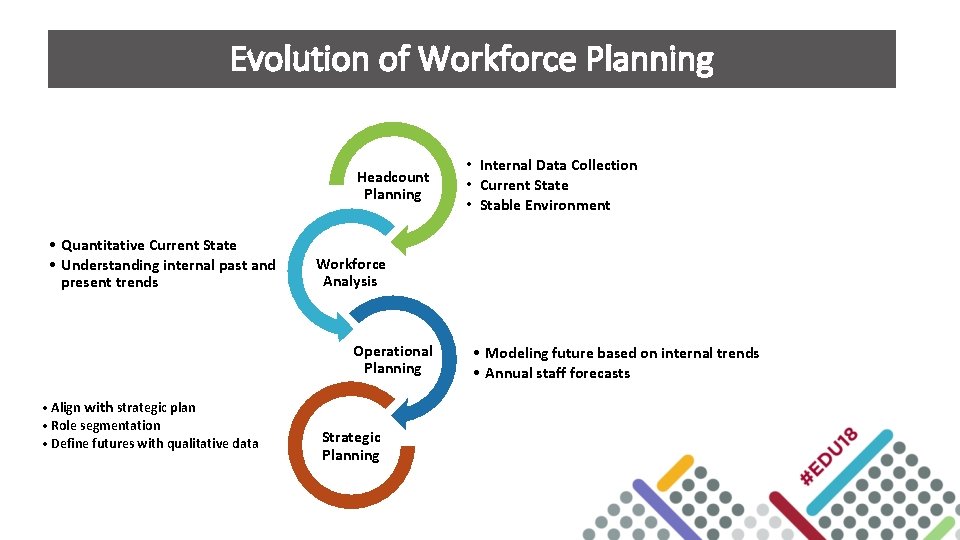
Evolution of Workforce Planning Headcount Planning • Quantitative Current State • Understanding internal past and present trends Workforce Analysis Operational Planning • Align with strategic plan • Role segmentation • Define futures with qualitative data • Internal Data Collection • Current State • Stable Environment Strategic Planning • Modeling future based on internal trends • Annual staff forecasts
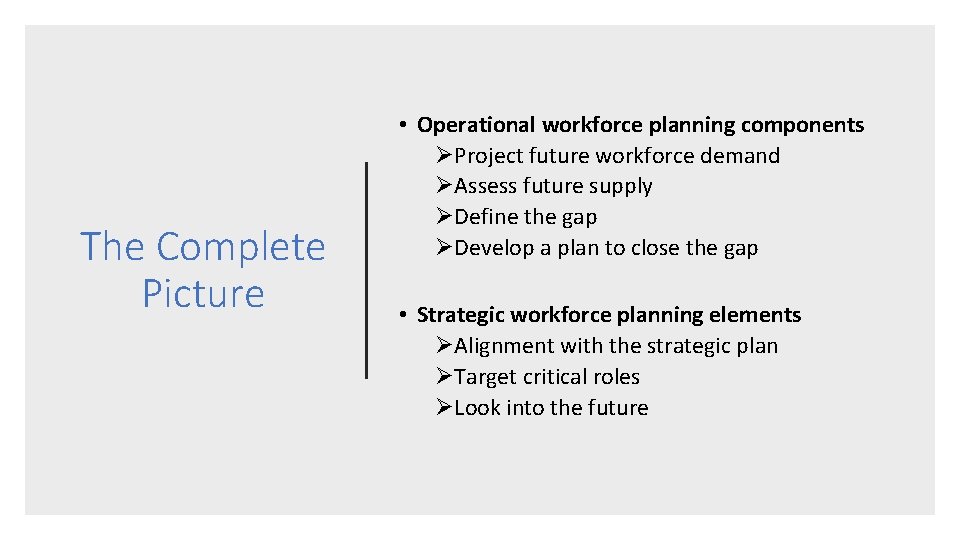
The Complete Picture • Operational workforce planning components ØProject future workforce demand ØAssess future supply ØDefine the gap ØDevelop a plan to close the gap • Strategic workforce planning elements ØAlignment with the strategic plan ØTarget critical roles ØLook into the future
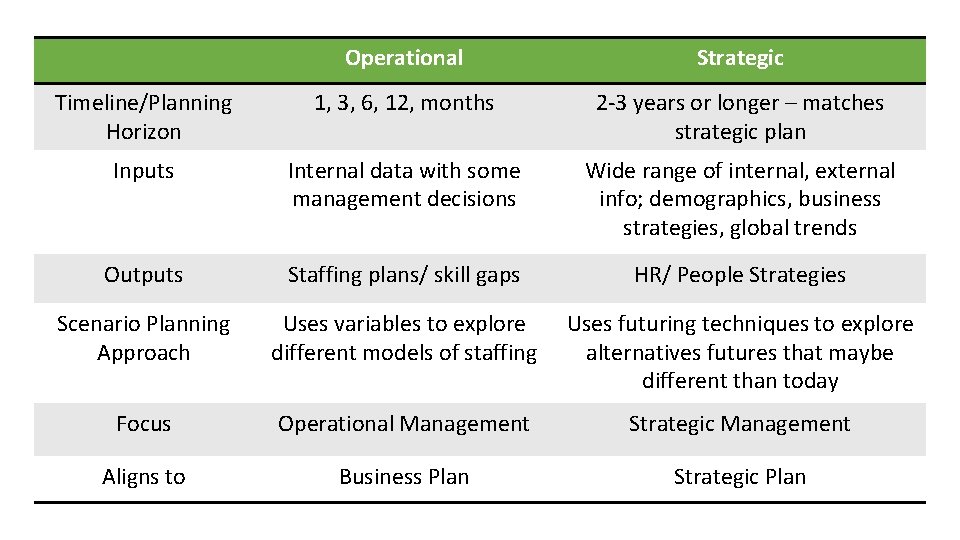
Operational Strategic Timeline/Planning Horizon 1, 3, 6, 12, months 2 -3 years or longer – matches strategic plan Inputs Internal data with some management decisions Wide range of internal, external info; demographics, business strategies, global trends Outputs Staffing plans/ skill gaps HR/ People Strategies Scenario Planning Approach Uses variables to explore different models of staffing Uses futuring techniques to explore alternatives futures that maybe different than today Focus Operational Management Strategic Management Aligns to Business Plan Strategic Plan
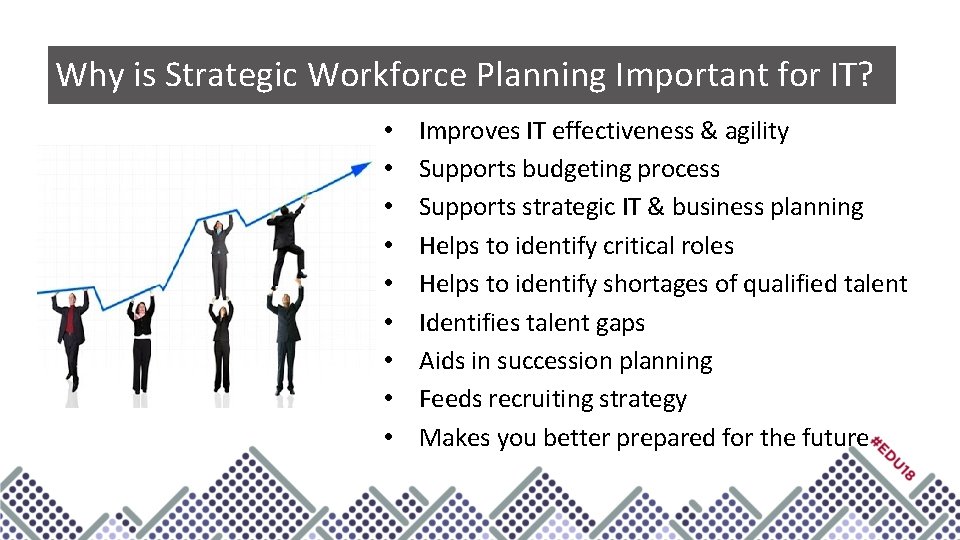
Why is Strategic Workforce Planning Important for IT? • • • Improves IT effectiveness & agility Supports budgeting process Supports strategic IT & business planning Helps to identify critical roles Helps to identify shortages of qualified talent Identifies talent gaps Aids in succession planning Feeds recruiting strategy Makes you better prepared for the future
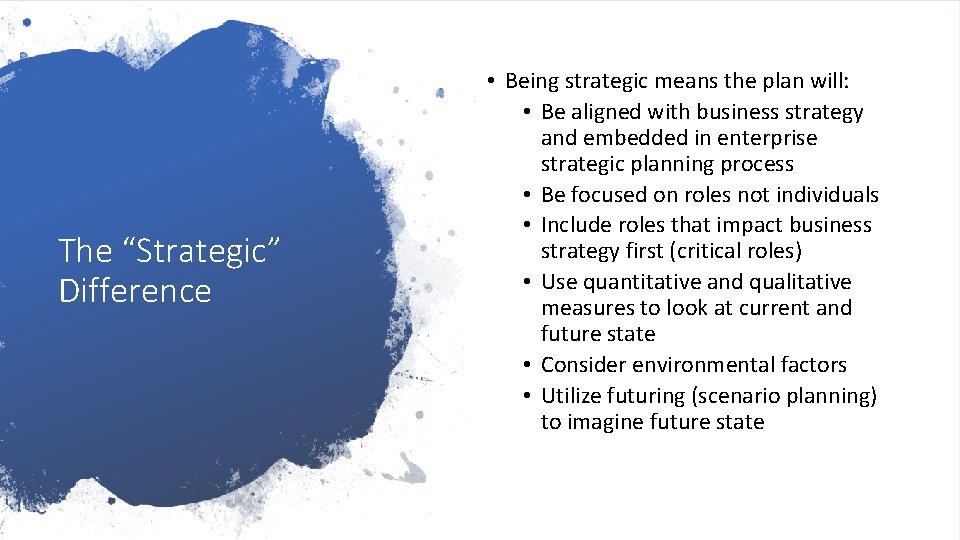
The “Strategic” Difference • Being strategic means the plan will: • Be aligned with business strategy and embedded in enterprise strategic planning process • Be focused on roles not individuals • Include roles that impact business strategy first (critical roles) • Use quantitative and qualitative measures to look at current and future state • Consider environmental factors • Utilize futuring (scenario planning) to imagine future state
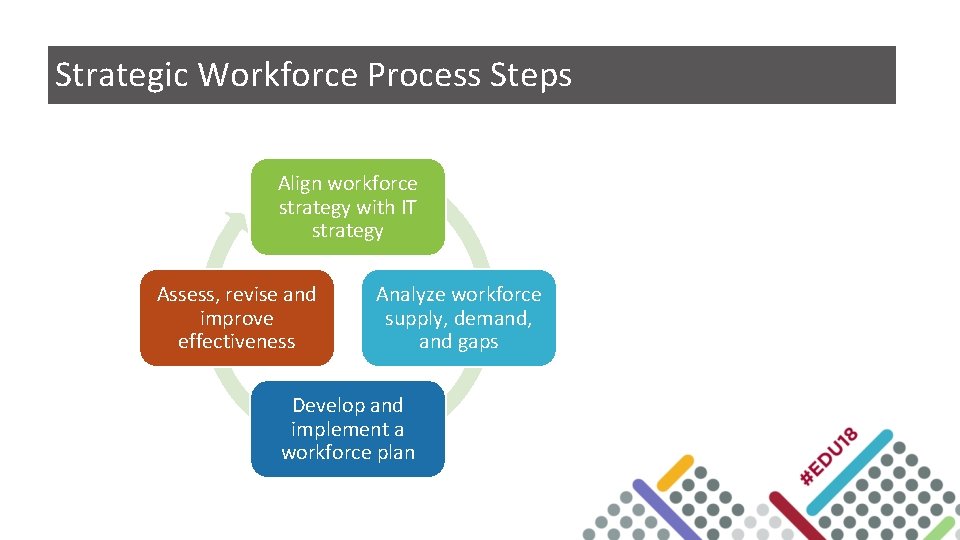
Strategic Workforce Process Steps Align workforce strategy with IT strategy Assess, revise and improve effectiveness Analyze workforce supply, demand, and gaps Develop and implement a workforce plan
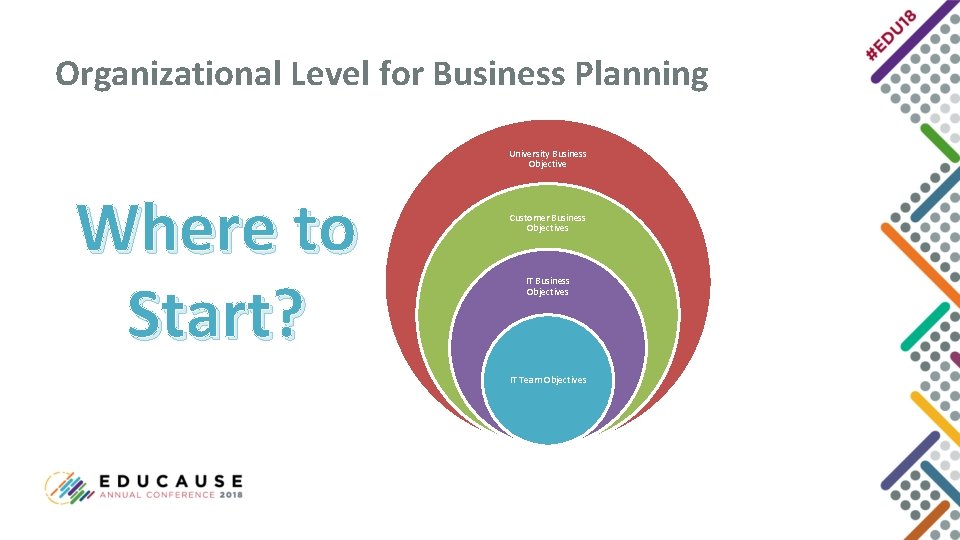
Organizational Level for Business Planning University Business Objective Where to Start? Customer Business Objectives IT Team Objectives
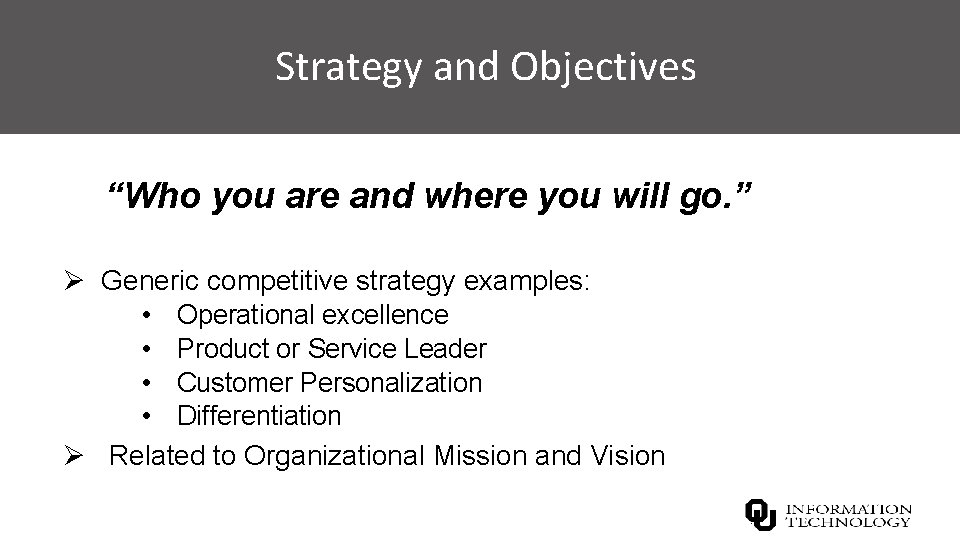
Strategy and Objectives “Who you are and where you will go. ” Ø Generic competitive strategy examples: • Operational excellence • Product or Service Leader • Customer Personalization • Differentiation Ø Related to Organizational Mission and Vision
We are one OU IT – an outstanding organization of IT Professionals who serve as trusted advisors that put OU’s students and Oklahoma’s citizens first, deliver an excellent experience through collaboration and community engagement, and contribute to the growth and success of our future global citizens and leaders.
Organizational Objectives/ Goals • Embrace our “People First” philosophy through cultivating a caring, creative, and agile organization that can advance innovative, relevant, sustainable technology solutions that directly support the University’s mission and the President’s goals. • Deliver an excellent customer experience through campus relationships, knowledge sharing, proactive consultations, and consistent, transparent communications, with a focus on removing the barriers to the innovative, effective use of technology. • Build strategic community partnerships including leading industry solution providers to drive innovation and advance the academic, research, and economic development goals of the university.
Identify core competencies needed for plan execution • Use mission, vision, goals, and objectives • Observe top performers Align Workforce Plan with IT Business Strategy
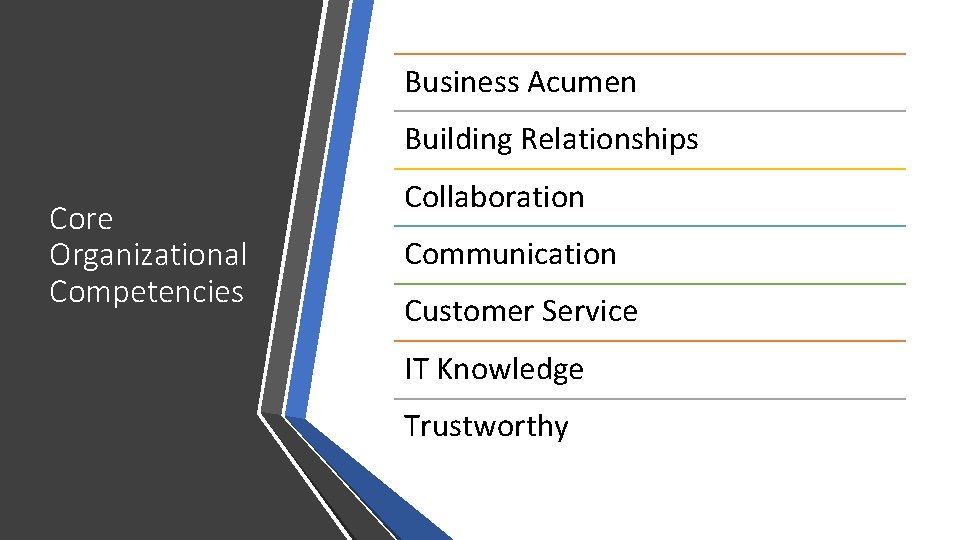
Business Acumen Building Relationships Core Organizational Competencies Collaboration Communication Customer Service IT Knowledge Trustworthy
Business Strategy Exercise 15 minutes plus break
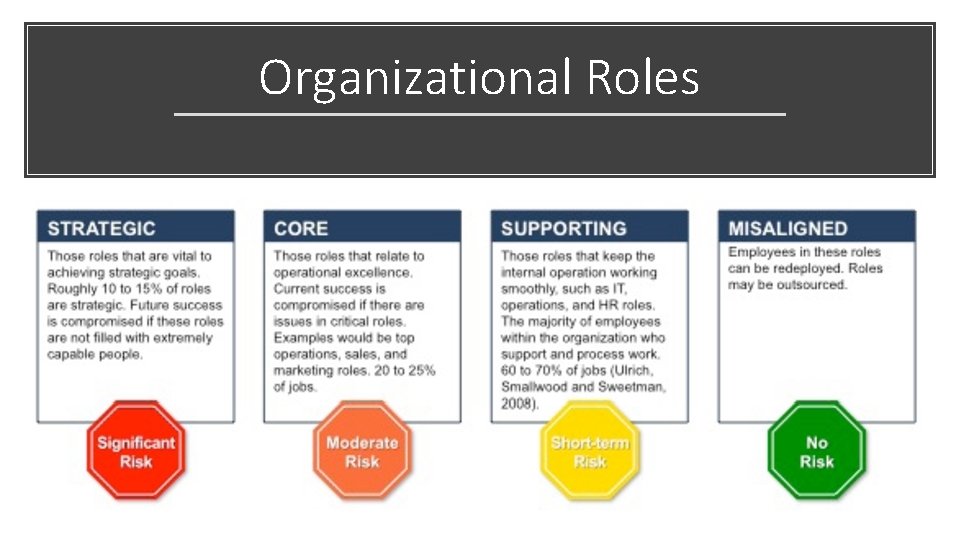
Organizational Roles
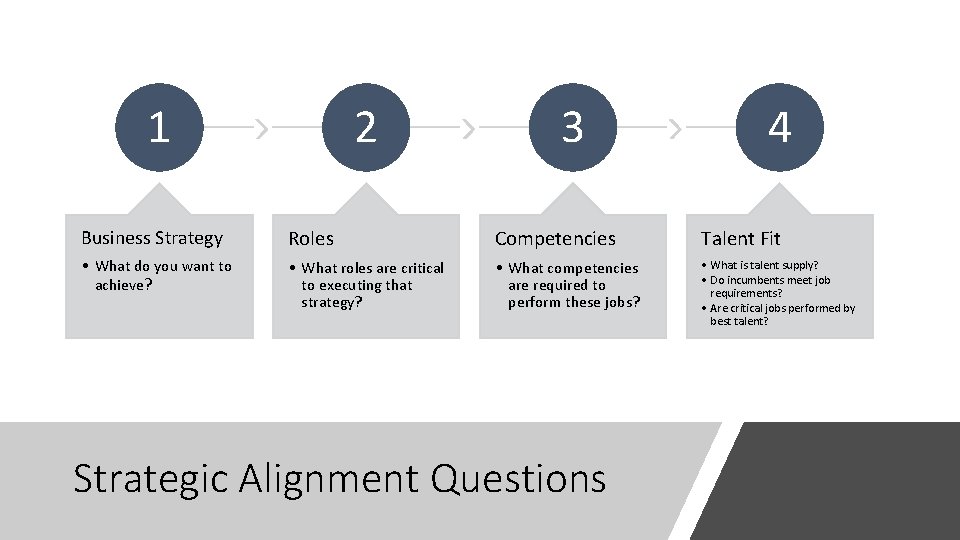
2 1 3 4 Business Strategy Roles Competencies Talent Fit • What do you want to achieve? • What roles are critical to executing that strategy? • What competencies are required to perform these jobs? • What is talent supply? • Do incumbents meet job requirements? • Are critical jobs performed by best talent? Strategic Alignment Questions
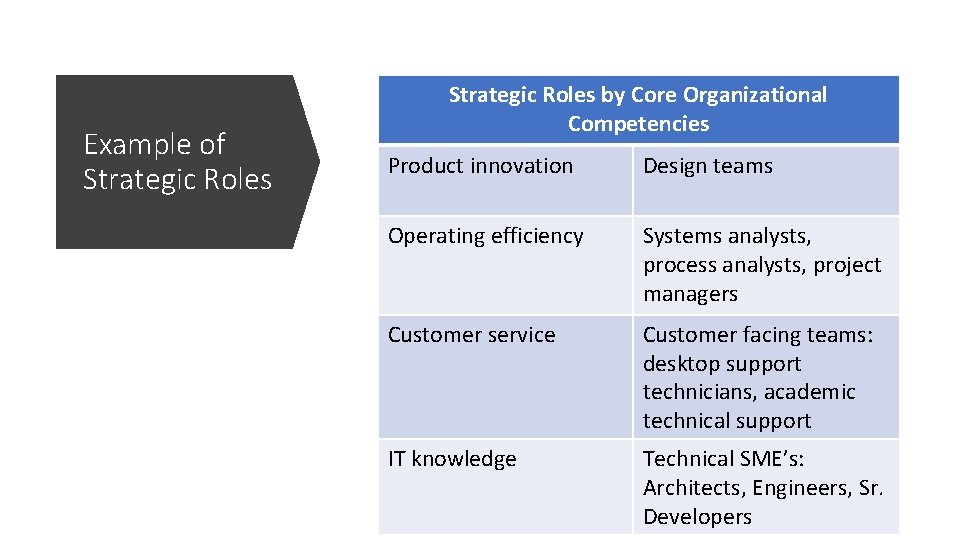
Example of Strategic Roles by Core Organizational Competencies Product innovation Design teams Operating efficiency Systems analysts, process analysts, project managers Customer service Customer facing teams: desktop support technicians, academic technical support IT knowledge Technical SME’s: Architects, Engineers, Sr. Developers
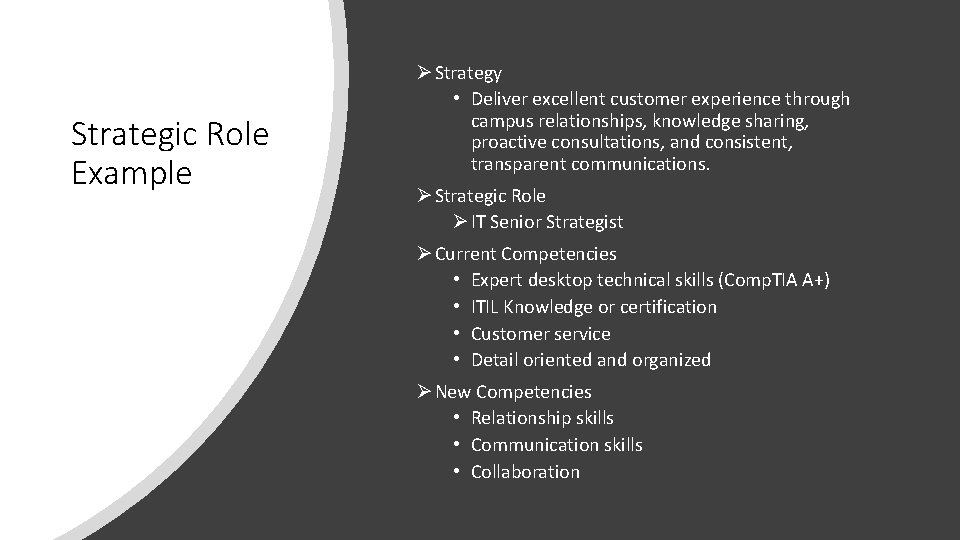
Strategic Role Example Ø Strategy • Deliver excellent customer experience through campus relationships, knowledge sharing, proactive consultations, and consistent, transparent communications. Ø Strategic Role Ø IT Senior Strategist Ø Current Competencies • Expert desktop technical skills (Comp. TIA A+) • ITIL Knowledge or certification • Customer service • Detail oriented and organized Ø New Competencies • Relationship skills • Communication skills • Collaboration
Role Segmentation Exercise
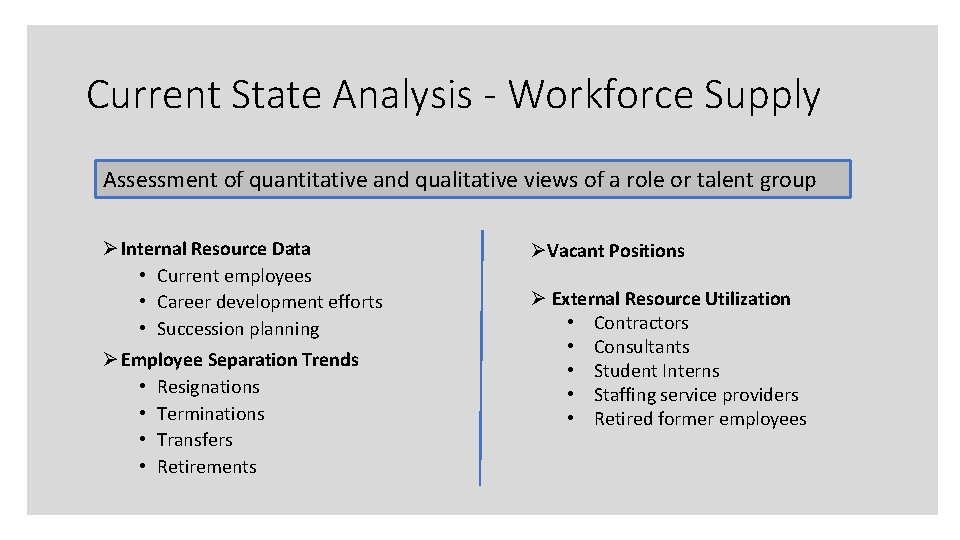
Current State Analysis - Workforce Supply Assessment of quantitative and qualitative views of a role or talent group Ø Internal Resource Data • Current employees • Career development efforts • Succession planning Ø Employee Separation Trends • Resignations • Terminations • Transfers • Retirements ØVacant Positions Ø External Resource Utilization • Contractors • Consultants • Student Interns • Staffing service providers • Retired former employees
Data and Metrics LEVERAGE EXISTING DATA SOURCES PARTNER WITH HR, FINANCE, AND TALENT MANAGEMENT FOCUS ON PROFILE AND TREND DATA LOOK FOR PATTERNS, TRENDS, AND INSIGHTS
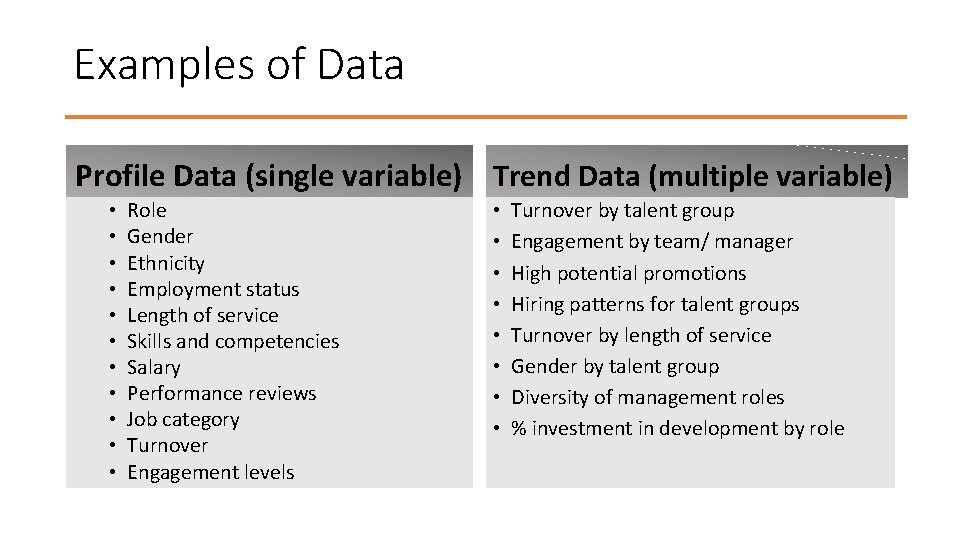
Examples of Data Profile Data (single variable) Trend Data (multiple variable) • • • Role Gender Ethnicity Employment status Length of service Skills and competencies Salary Performance reviews Job category Turnover Engagement levels • • Turnover by talent group Engagement by team/ manager High potential promotions Hiring patterns for talent groups Turnover by length of service Gender by talent group Diversity of management roles % investment in development by role
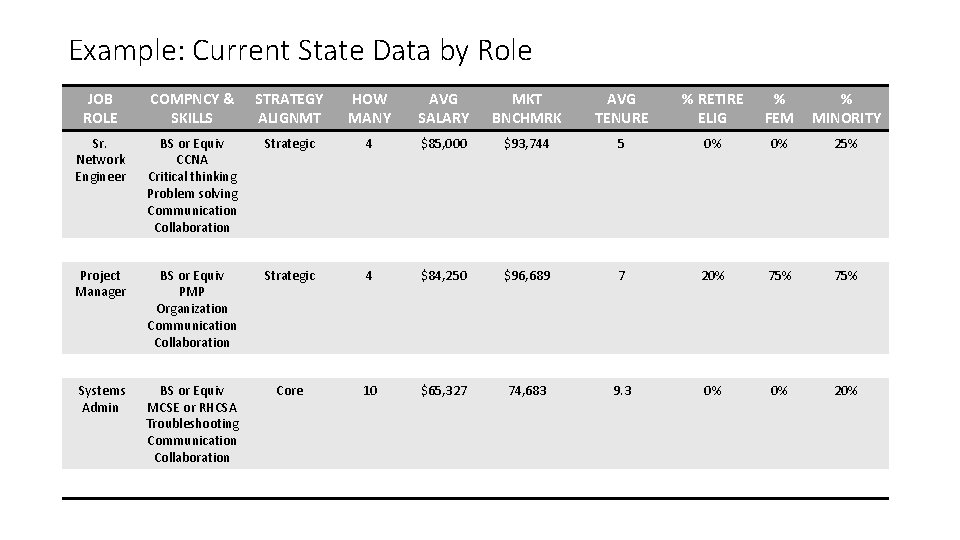
Example: Current State Data by Role JOB ROLE COMPNCY & SKILLS STRATEGY ALIGNMT HOW MANY AVG SALARY MKT BNCHMRK AVG TENURE % RETIRE ELIG % FEM % MINORITY Sr. Network Engineer BS or Equiv CCNA Critical thinking Problem solving Communication Collaboration Strategic 4 $85, 000 $93, 744 5 0% 0% 25% Project Manager BS or Equiv PMP Organization Communication Collaboration Strategic 4 $84, 250 $96, 689 7 20% 75% Systems Admin BS or Equiv MCSE or RHCSA Troubleshooting Communication Collaboration Core 10 $65, 327 74, 683 9. 3 0% 0% 20%
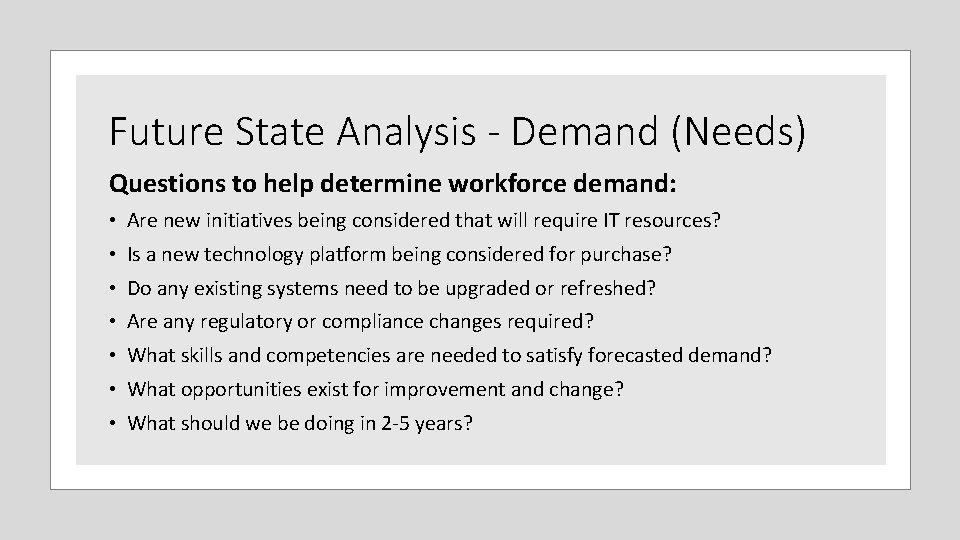
Future State Analysis - Demand (Needs) Questions to help determine workforce demand: • Are new initiatives being considered that will require IT resources? • Is a new technology platform being considered for purchase? • Do any existing systems need to be upgraded or refreshed? • Are any regulatory or compliance changes required? • What skills and competencies are needed to satisfy forecasted demand? • What opportunities exist for improvement and change? • What should we be doing in 2 -5 years?
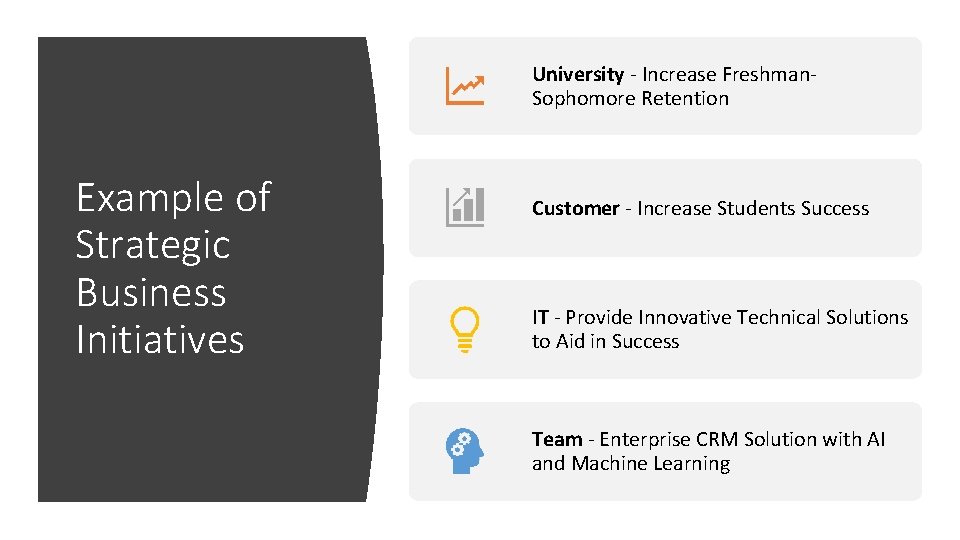
University - Increase Freshman. Sophomore Retention Example of Strategic Business Initiatives Customer - Increase Students Success IT - Provide Innovative Technical Solutions to Aid in Success Team - Enterprise CRM Solution with AI and Machine Learning
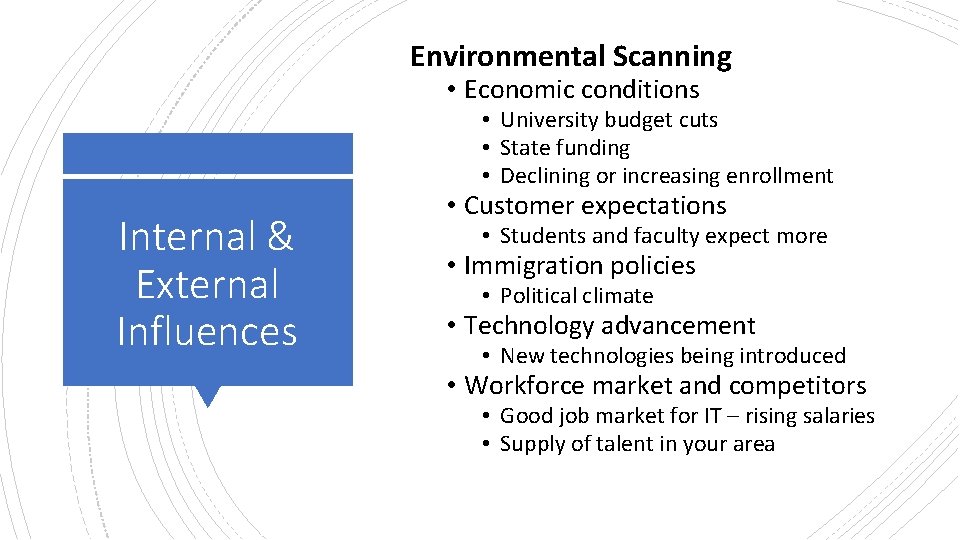
Environmental Scanning • Economic conditions • University budget cuts • State funding • Declining or increasing enrollment Internal & External Influences • Customer expectations • Students and faculty expect more • Immigration policies • Political climate • Technology advancement • New technologies being introduced • Workforce market and competitors • Good job market for IT – rising salaries • Supply of talent in your area
Environmental Scanning Exercise 15 minutes plus break
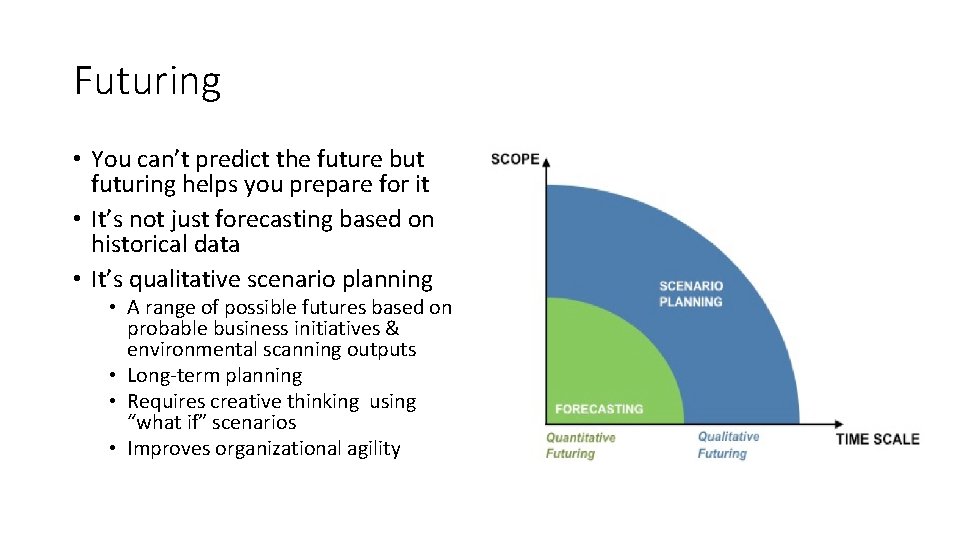
Futuring • You can’t predict the future but futuring helps you prepare for it • It’s not just forecasting based on historical data • It’s qualitative scenario planning • A range of possible futures based on probable business initiatives & environmental scanning outputs • Long-term planning • Requires creative thinking using “what if” scenarios • Improves organizational agility
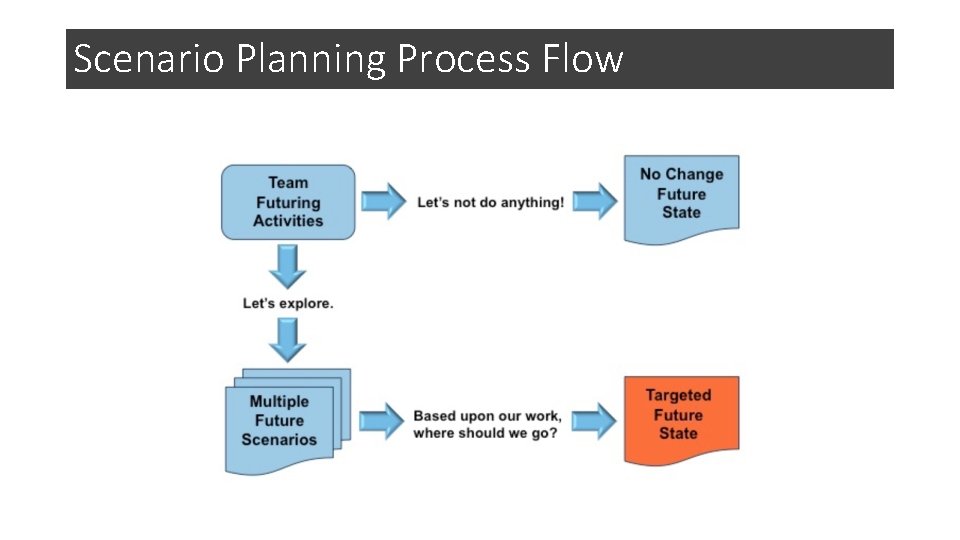
Scenario Planning Process Flow
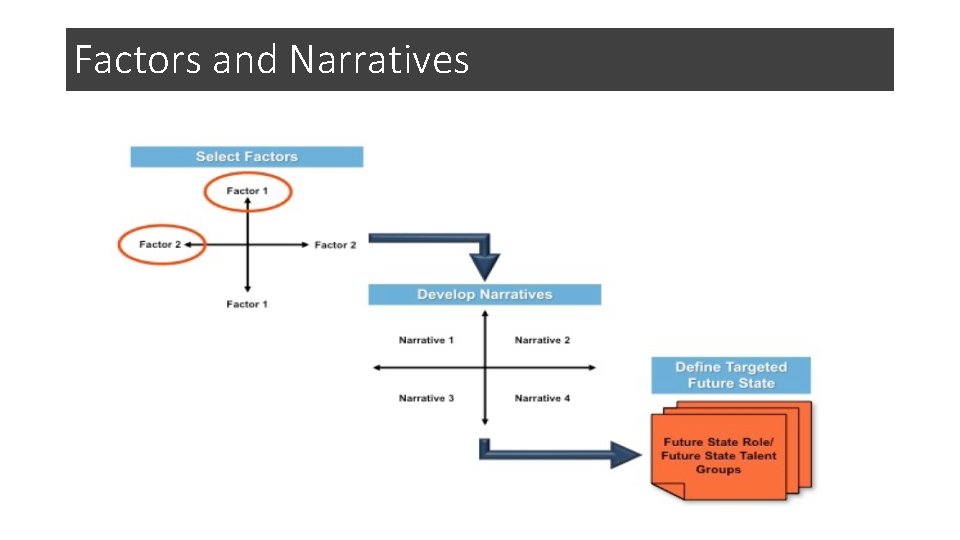
Factors and Narratives
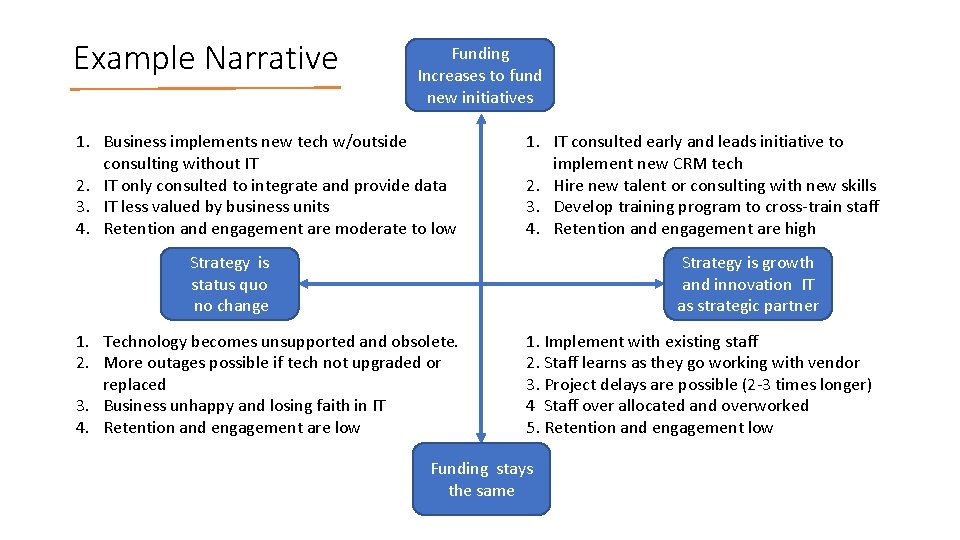
Example Narrative Funding Increases to fund new initiatives 1. Business implements new tech w/outside consulting without IT 2. IT only consulted to integrate and provide data 3. IT less valued by business units 4. Retention and engagement are moderate to low 1. IT consulted early and leads initiative to implement new CRM tech 2. Hire new talent or consulting with new skills 3. Develop training program to cross-train staff 4. Retention and engagement are high Strategy is status quo no change Strategy is growth and innovation IT as strategic partner 1. Technology becomes unsupported and obsolete. 2. More outages possible if tech not upgraded or replaced 3. Business unhappy and losing faith in IT 4. Retention and engagement are low 1. Implement with existing staff 2. Staff learns as they go working with vendor 3. Project delays are possible (2 -3 times longer) 4 Staff over allocated and overworked 5. Retention and engagement low Funding stays the same
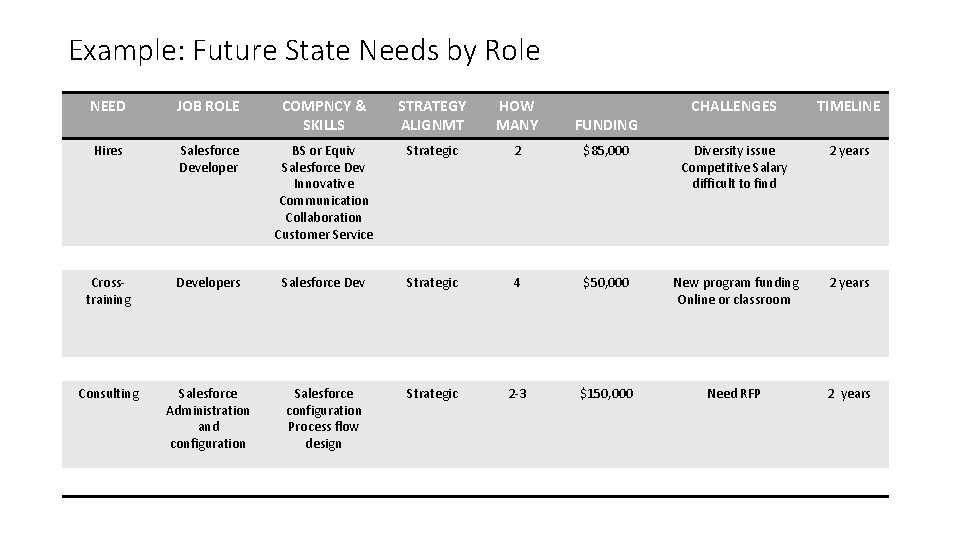
Example: Future State Needs by Role NEED JOB ROLE COMPNCY & SKILLS STRATEGY ALIGNMT HOW MANY CHALLENGES TIMELINE FUNDING Hires Salesforce Developer BS or Equiv Salesforce Dev Innovative Communication Collaboration Customer Service Strategic 2 $85, 000 Diversity issue Competitive Salary difficult to find 2 years Crosstraining Developers Salesforce Dev Strategic 4 $50, 000 New program funding Online or classroom 2 years Consulting Salesforce Administration and configuration Salesforce configuration Process flow design Strategic 2 -3 $150, 000 Need RFP 2 years
Scenario Planning Exercise
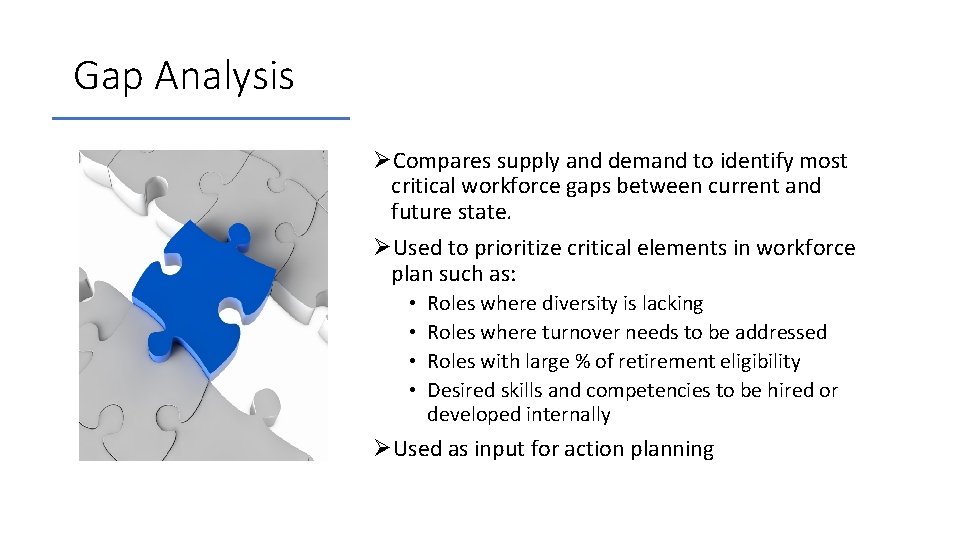
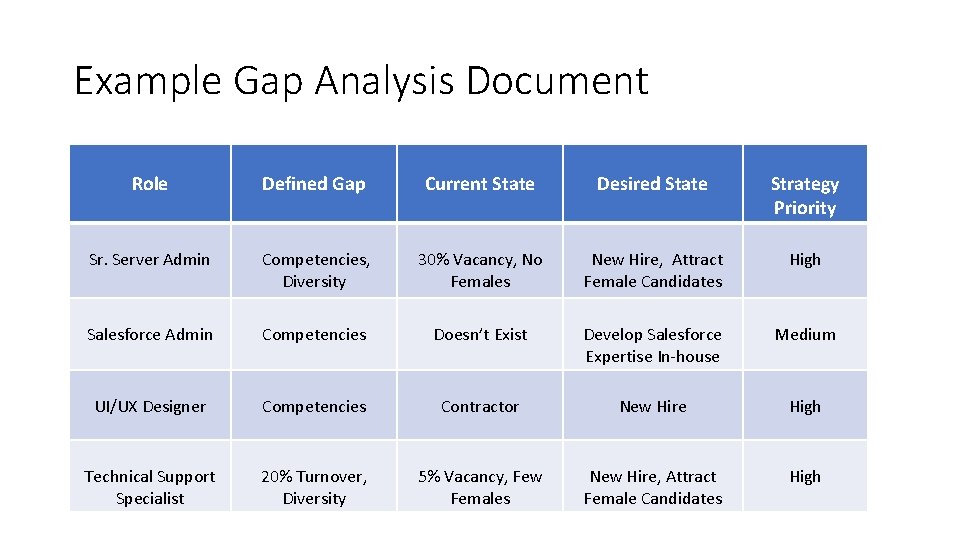
Gap Analysis ØCompares supply and demand to identify most critical workforce gaps between current and future state. ØUsed to prioritize critical elements in workforce plan such as: • • Roles where diversity is lacking Roles where turnover needs to be addressed Roles with large % of retirement eligibility Desired skills and competencies to be hired or developed internally ØUsed as input for action planning
Example Gap Analysis Document Role Defined Gap Current State Desired State Strategy Priority Sr. Server Admin Competencies, Diversity 30% Vacancy, No Females New Hire, Attract Female Candidates High Salesforce Admin Competencies Doesn’t Exist Develop Salesforce Expertise In-house Medium UI/UX Designer Competencies Contractor New Hire High Technical Support Specialist 20% Turnover, Diversity 5% Vacancy, Few Females New Hire, Attract Female Candidates High
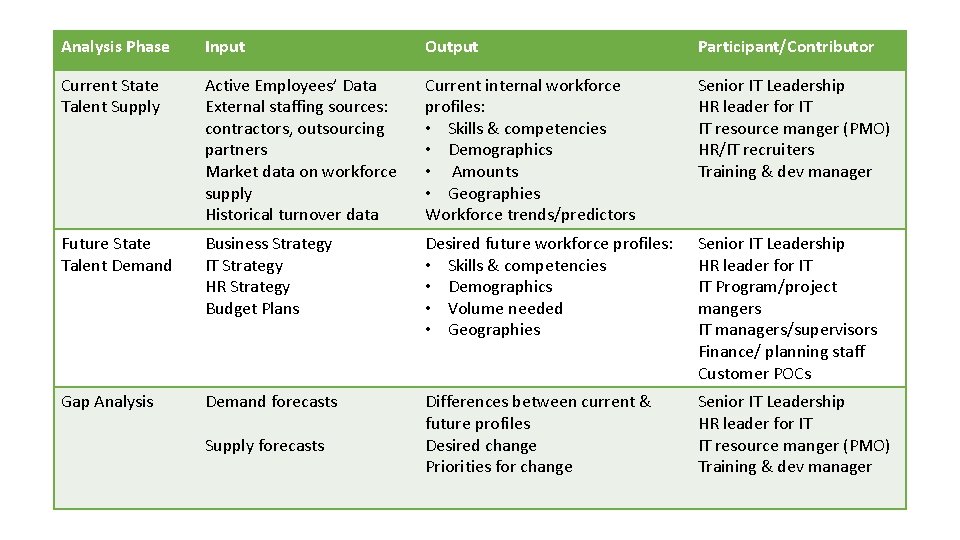
Analysis Phase Input Output Participant/Contributor Current State Talent Supply Active Employees’ Data External staffing sources: contractors, outsourcing partners Market data on workforce supply Historical turnover data Current internal workforce profiles: • Skills & competencies • Demographics • Amounts • Geographies Workforce trends/predictors Senior IT Leadership HR leader for IT IT resource manger (PMO) HR/IT recruiters Training & dev manager Future State Talent Demand Business Strategy IT Strategy HR Strategy Budget Plans Desired future workforce profiles: • Skills & competencies • Demographics • Volume needed • Geographies Senior IT Leadership HR leader for IT IT Program/project mangers IT managers/supervisors Finance/ planning staff Customer POCs Gap Analysis Demand forecasts Differences between current & future profiles Desired change Priorities for change Senior IT Leadership HR leader for IT IT resource manger (PMO) Training & dev manager Supply forecasts
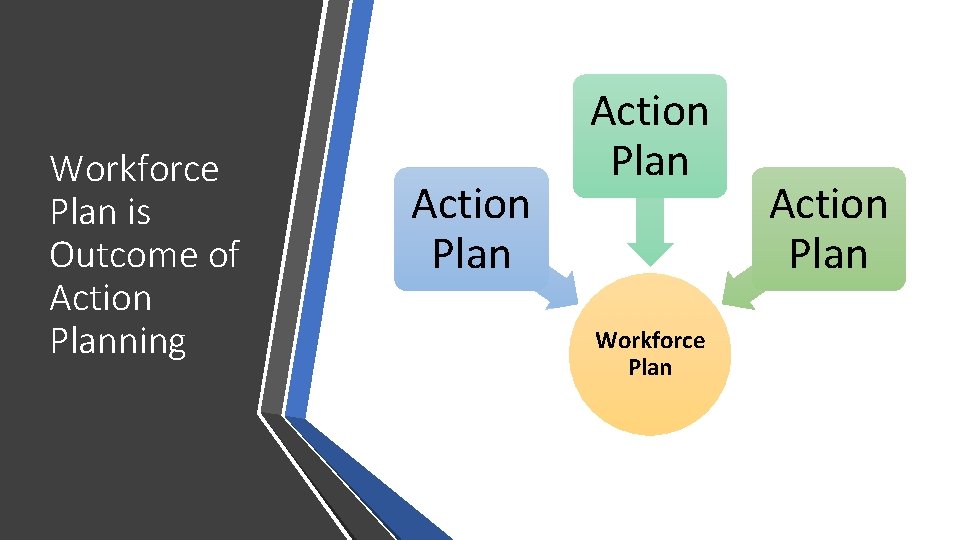
Workforce Plan is Outcome of Action Planning Action Plan Workforce Plan Action Plan
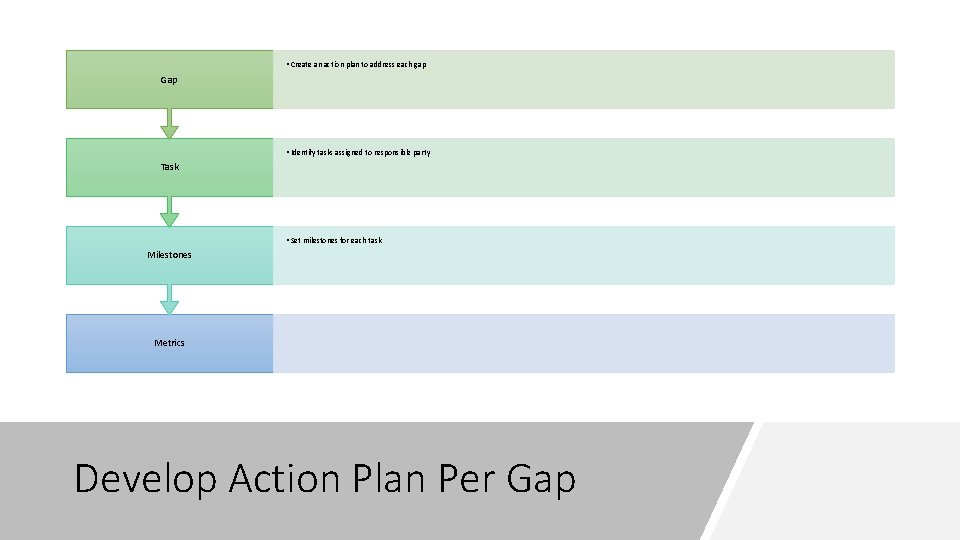
• Create an action plan to address each gap Gap • Identify tasks assigned to responsible party Task • Set milestones for each task Milestones Metrics Develop Action Plan Per Gap
Action Planning to Close Gaps Adding roles due to vacancies, retirements, new projects, growth, etc. Ø Recruiting strategy • External hiring • Employment brand • Job description wording impacts diversity • Outreach for diverse applicant pools • Interview question/ criteria alignment • Structured interview process • Consulting, contract, contingent • Utilize a network of trusted partners/ vendors
Building internal talent • • • Career paths Training programs Online training Knowledge bases Coaching & mentoring Action learning + Culture fit & retention - Takes time & money Action Planning to Close Gaps
Action Planning to Close Gaps Improve retention • Challenging projects • Engaged and motivated • Growth opportunities • Recognition program • Flexibility (work-life-balance) • Competitive salary or bonus • Create diverse and inclusive culture • Benefits and perks
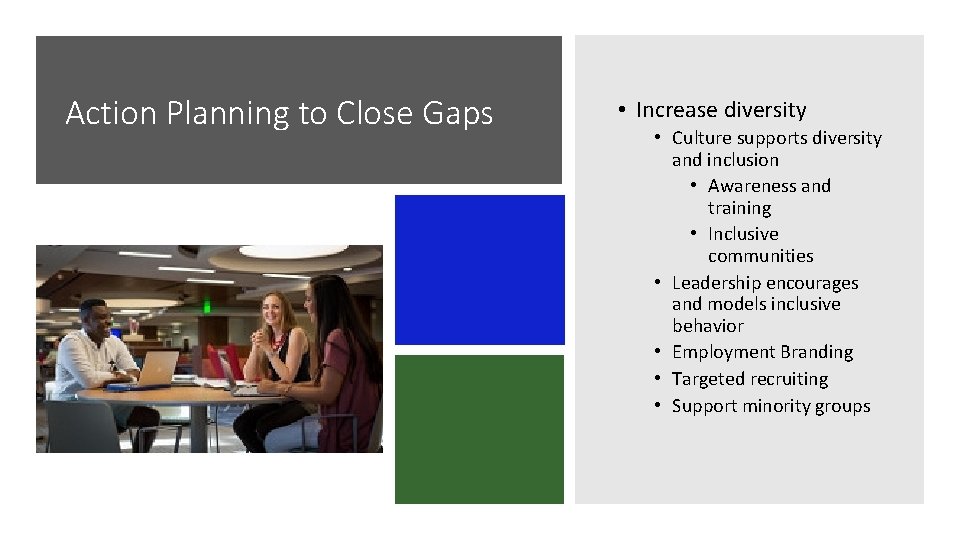
Action Planning to Close Gaps • Increase diversity • Culture supports diversity and inclusion • Awareness and training • Inclusive communities • Leadership encourages and models inclusive behavior • Employment Branding • Targeted recruiting • Support minority groups
Putting It All Together • Execute each action plan in your Strategic Workforce Plan • Start small and grow efforts, don’t undertake it all at once • Monitor and measure at regular intervals ( every 3 -6 mo) • Coordinate with regular business planning efforts & talent cycles • Adjust and adapt plans as needs change - Are critical roles still critical? - Have things changed in environmental scan? - Does the target future state look different that 12 months ago?
Some Key Takeaways üThe differences between operational & strategic workforce planning üWhy roles matter more in the process than people performing them üSWP is designed to look at a horizon of 1 -5 years not next few months üSWP requires data, analysis, time, and partnership with other areas üSWP is an ongoing iterative process, not a one-time project
Good Luck and Thank You! jjwoodall@ou. edu Jeralyn. woodall@gmail. com
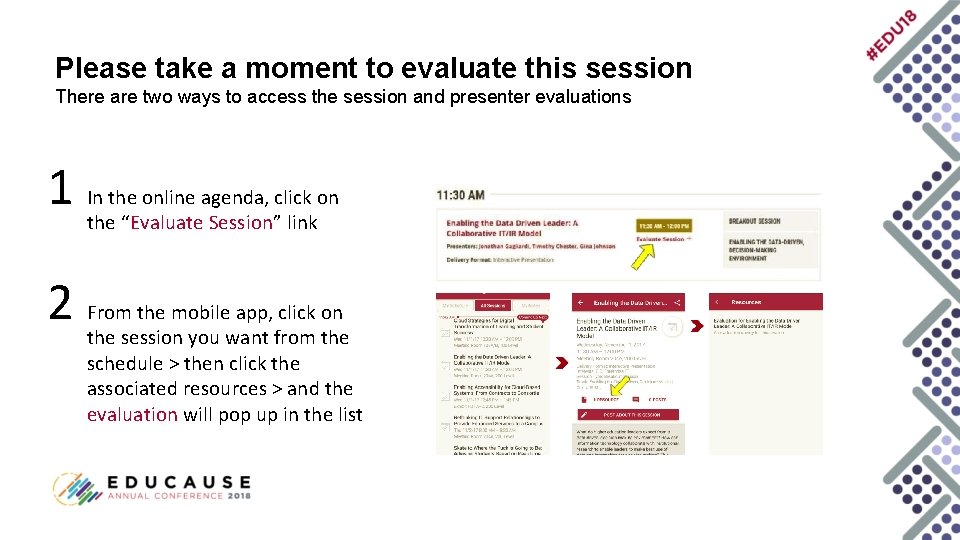
Please take a moment to evaluate this session There are two ways to access the session and presenter evaluations 1 2 In the online agenda, click on the “Evaluate Session” link From the mobile app, click on the session you want from the schedule > then click the associated resources > and the evaluation will pop up in the list