Split and Partial Liver Grafts Technical Aspects and

- Slides: 73
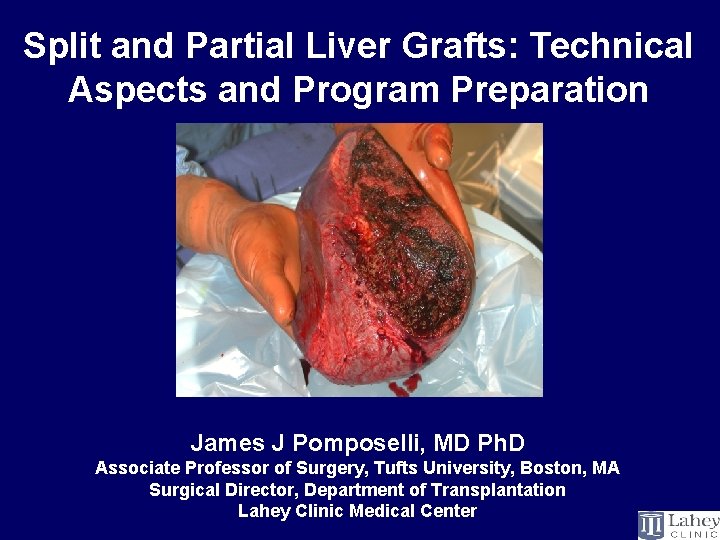
Split and Partial Liver Grafts: Technical Aspects and Program Preparation James J Pomposelli, MD Ph. D Associate Professor of Surgery, Tufts University, Boston, MA Surgical Director, Department of Transplantation Lahey Clinic Medical Center
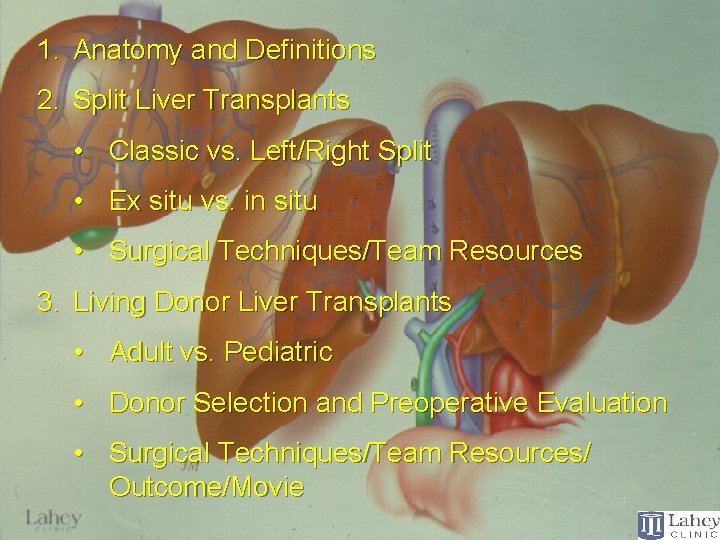
1. Anatomy and Definitions 2. Split Liver Transplants • Classic vs. Left/Right Split • Ex situ vs. in situ • Surgical Techniques/Team Resources 3. Living Donor Liver Transplants • Adult vs. Pediatric • Donor Selection and Preoperative Evaluation • Surgical Techniques/Team Resources/ Outcome/Movie
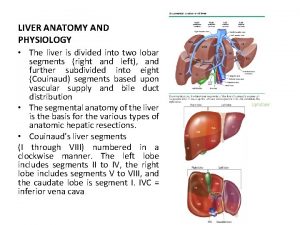
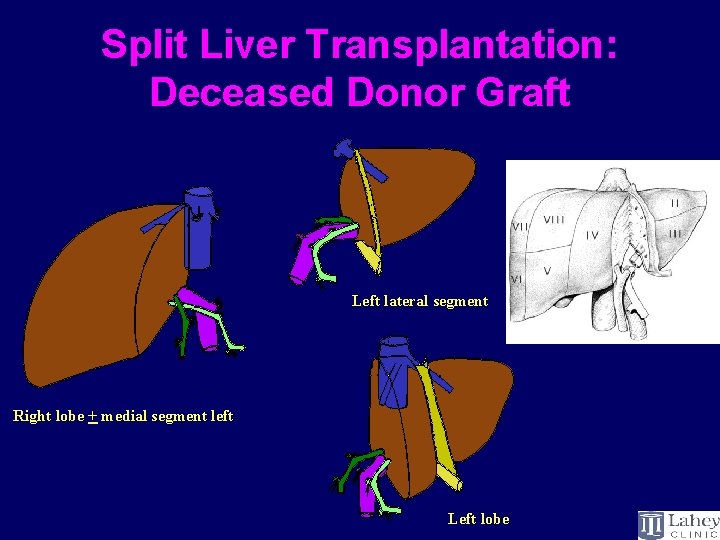
Split Liver Transplantation: Deceased Donor Graft Left lateral segment Right lobe + medial segment left Left lobe
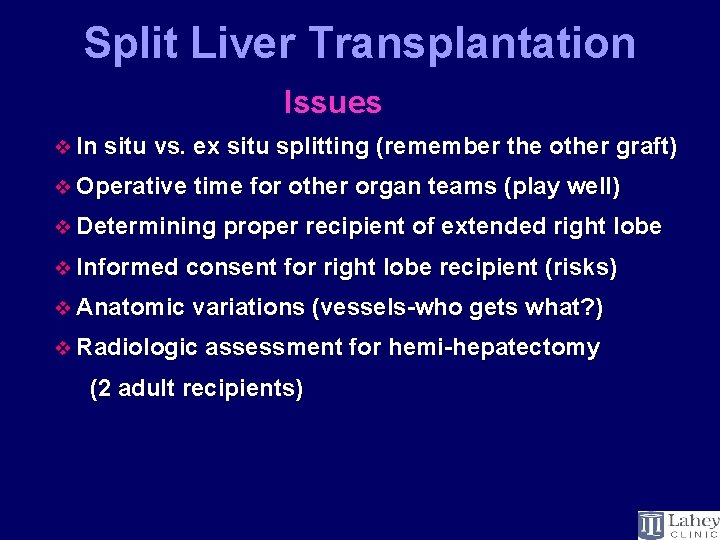
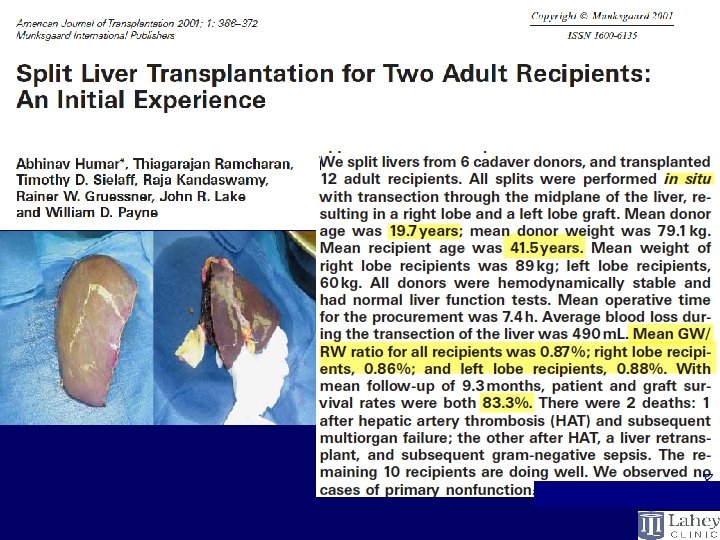
Split Liver Transplantation Issues v In situ vs. ex situ splitting (remember the other graft) v Operative time for other organ teams (play well) v Determining proper recipient of extended right lobe v Informed consent for right lobe recipient (risks) v Anatomic variations (vessels-who gets what? ) v Radiologic assessment for hemi-hepatectomy (2 adult recipients)
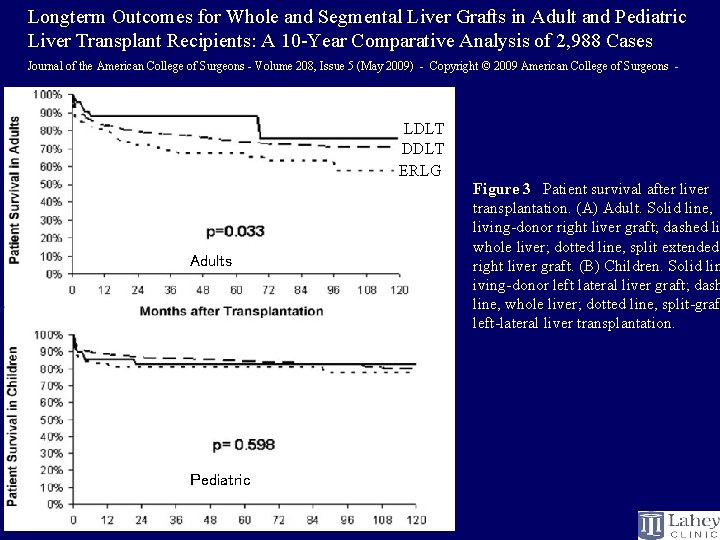
Longterm Outcomes for Whole and Segmental Liver Grafts in Adult and Pediatric Liver Transplant Recipients: A 10 -Year Comparative Analysis of 2, 988 Cases Journal of the American College of Surgeons - Volume 208, Issue 5 (May 2009) - Copyright © 2009 American College of Surgeons - LDLT DDLT ERLG Adults Pediatric Figure 3 Patient survival after liver transplantation. (A) Adult. Solid line, living-donor right liver graft; dashed li whole liver; dotted line, split extended right liver graft. (B) Children. Solid lin iving-donor left lateral liver graft; dash line, whole liver; dotted line, split-graf left-lateral liver transplantation.
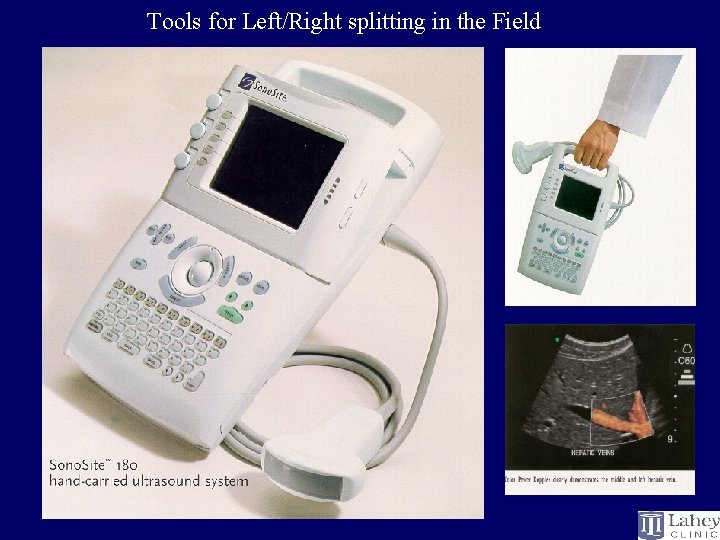
Tools for Left/Right splitting in the Field
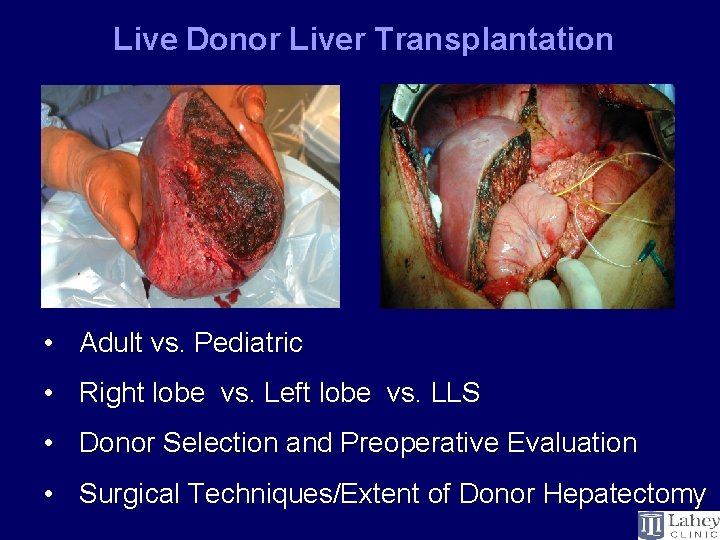
Live Donor Liver Transplantation • Adult vs. Pediatric • Right lobe vs. Left lobe vs. LLS • Donor Selection and Preoperative Evaluation • Surgical Techniques/Extent of Donor Hepatectomy
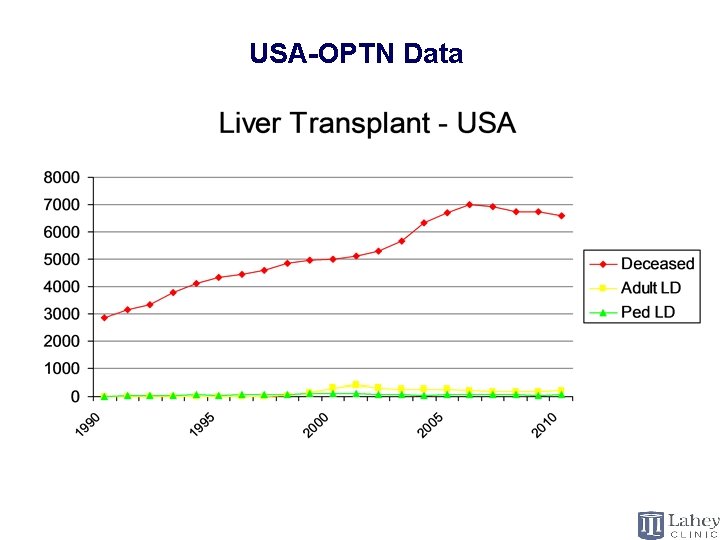
Living Donor Liver Transplantation USA-OPTN Data ~ 5% of liver transplants are LDLT
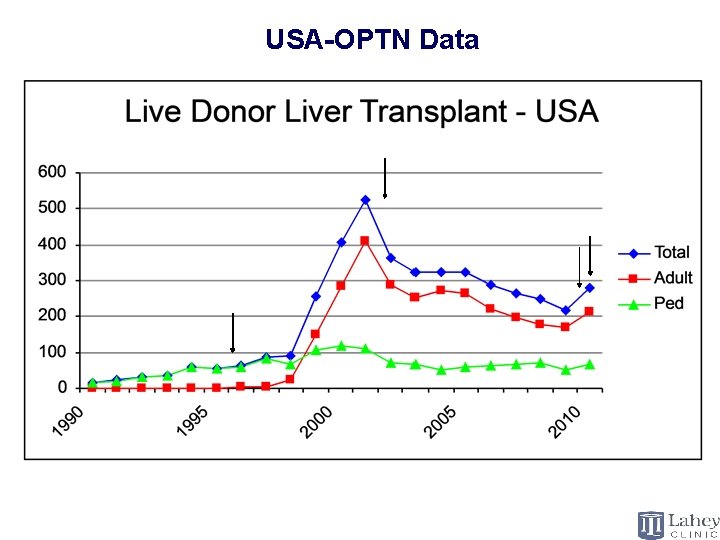
Living Donor Liver Transplantation USA-OPTN Data
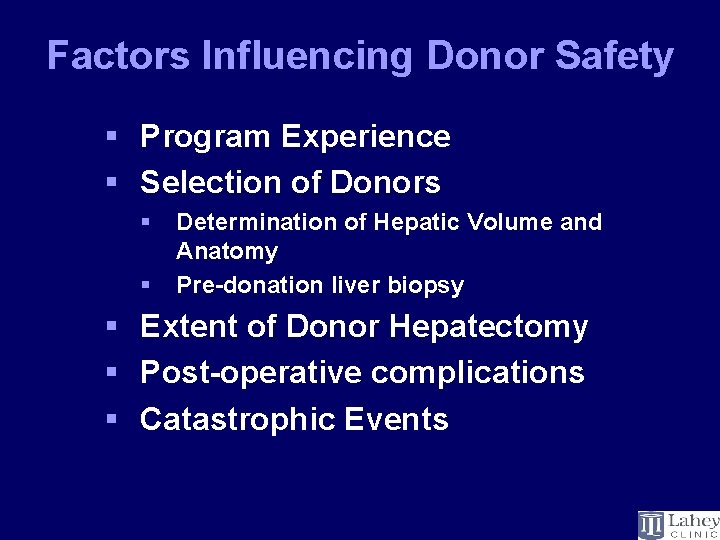
Factors Influencing Donor Safety § Program Experience § Selection of Donors § § Determination of Hepatic Volume and Anatomy Pre-donation liver biopsy § Extent of Donor Hepatectomy § Post-operative complications § Catastrophic Events
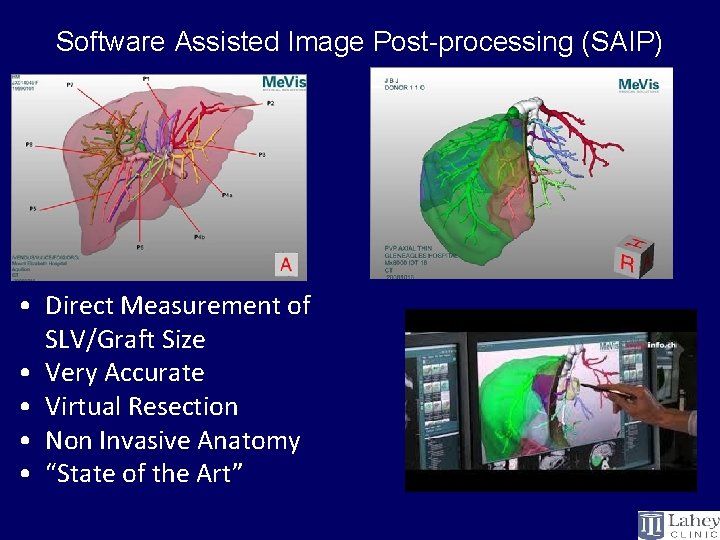
Software Assisted Image Post-processing (SAIP) • Direct Measurement of SLV/Graft Size • Very Accurate • Virtual Resection • Non Invasive Anatomy • “State of the Art”
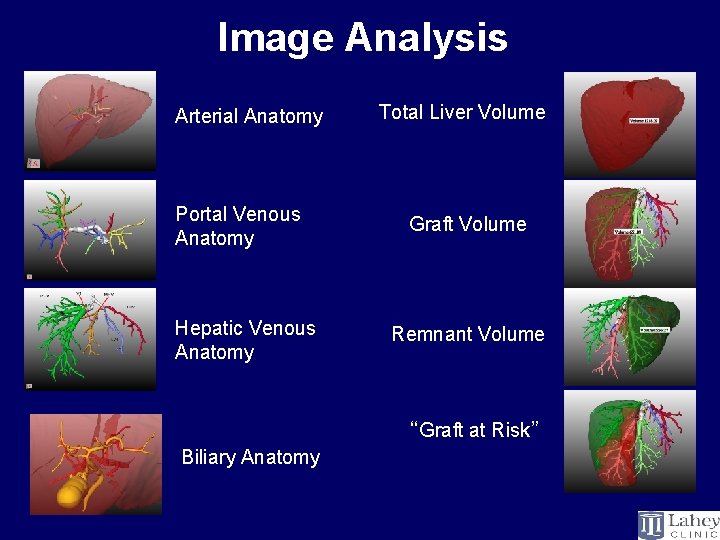
Image Analysis Arterial Anatomy Portal Venous Anatomy Hepatic Venous Anatomy Total Liver Volume Graft Volume Remnant Volume “Graft at Risk” Biliary Anatomy
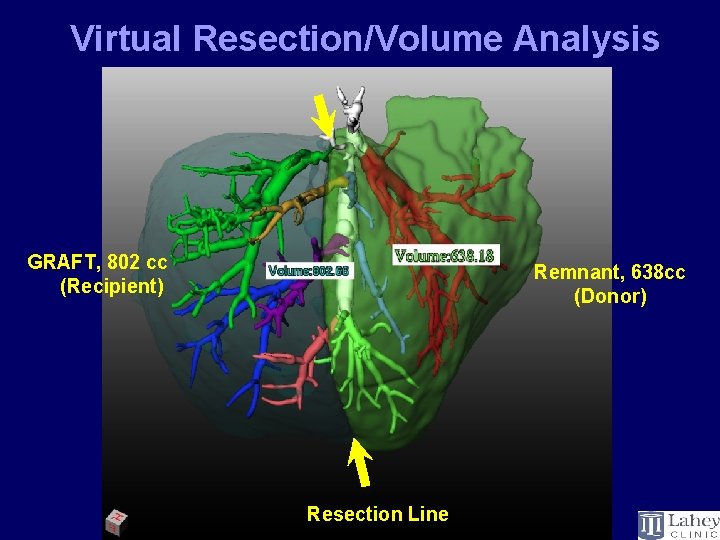
Virtual Resection/Volume Analysis GRAFT, 802 cc (Recipient) Remnant, 638 cc (Donor) Resection Line
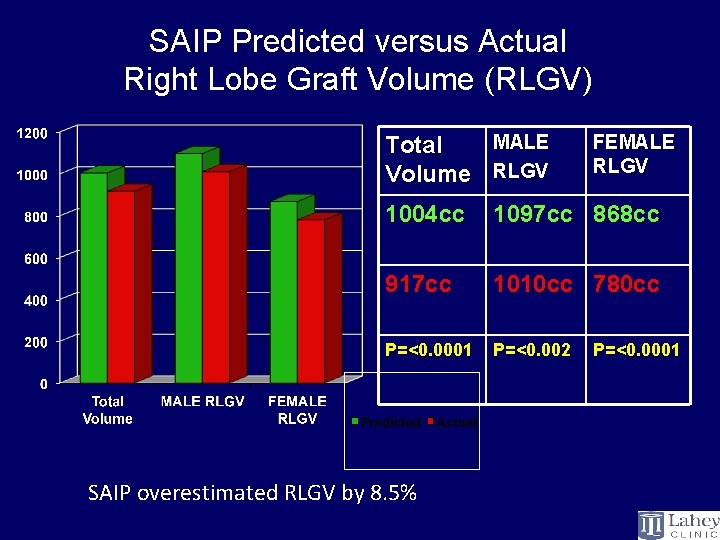
SAIP Predicted versus Actual Right Lobe Graft Volume (RLGV) MALE Total Volume RLGV FEMALE RLGV 1004 cc 1097 cc 868 cc 917 cc 1010 cc 780 cc P=<0. 0001 P=<0. 002 SAIP overestimated RLGV by 8. 5% P=<0. 0001
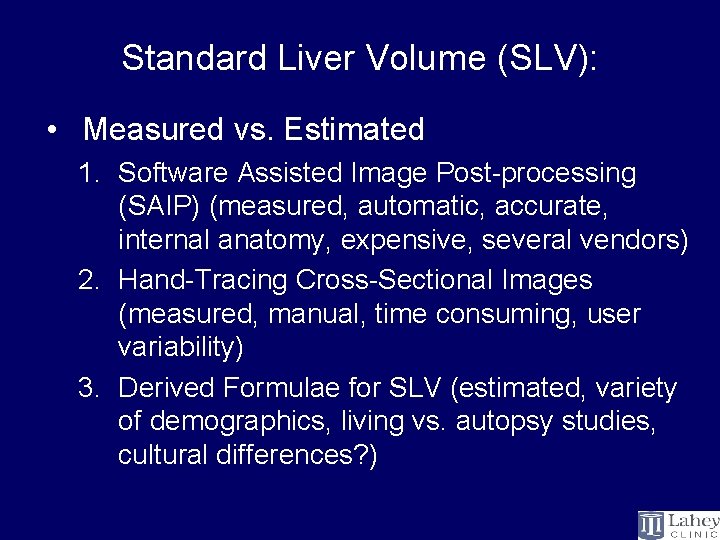
Standard Liver Volume (SLV): • Measured vs. Estimated 1. Software Assisted Image Post-processing (SAIP) (measured, automatic, accurate, internal anatomy, expensive, several vendors) 2. Hand-Tracing Cross-Sectional Images (measured, manual, time consuming, user variability) 3. Derived Formulae for SLV (estimated, variety of demographics, living vs. autopsy studies, cultural differences? )
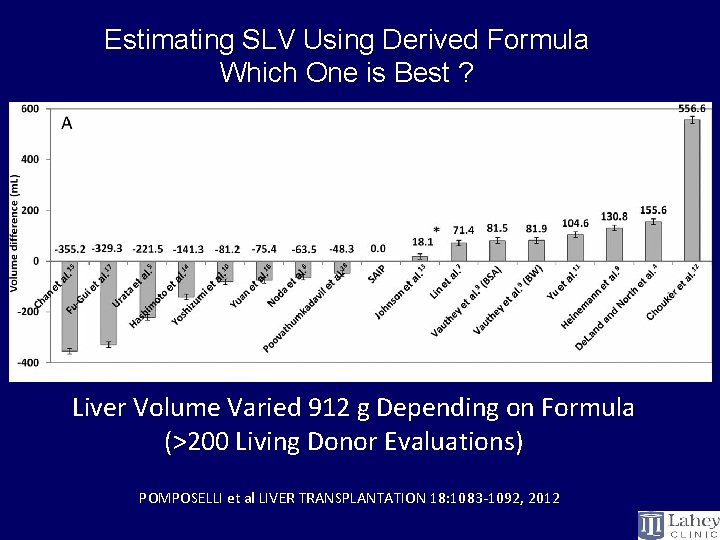
Estimating SLV Using Derived Formula Which One is Best ? Liver Volume Varied 912 g Depending on Formula (>200 Living Donor Evaluations) POMPOSELLI et al LIVER TRANSPLANTATION 18: 1083 -1092, 2012
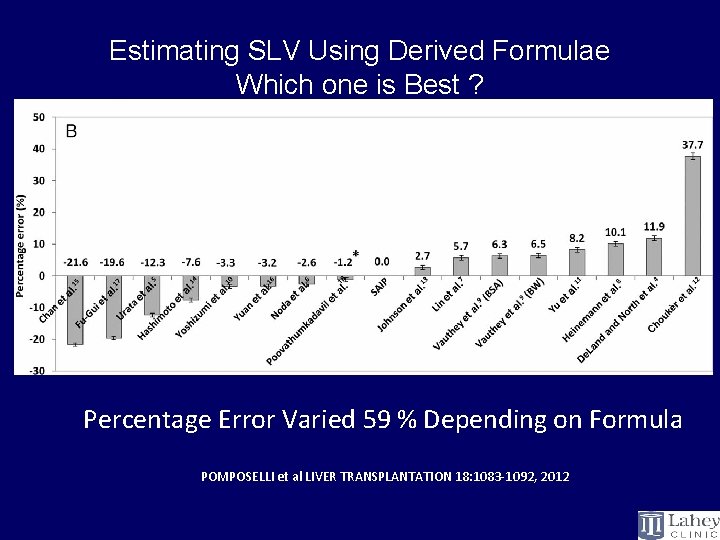
Estimating SLV Using Derived Formulae Which one is Best ? Percentage Error Varied 59 % Depending on Formula POMPOSELLI et al LIVER TRANSPLANTATION 18: 1083 -1092, 2012
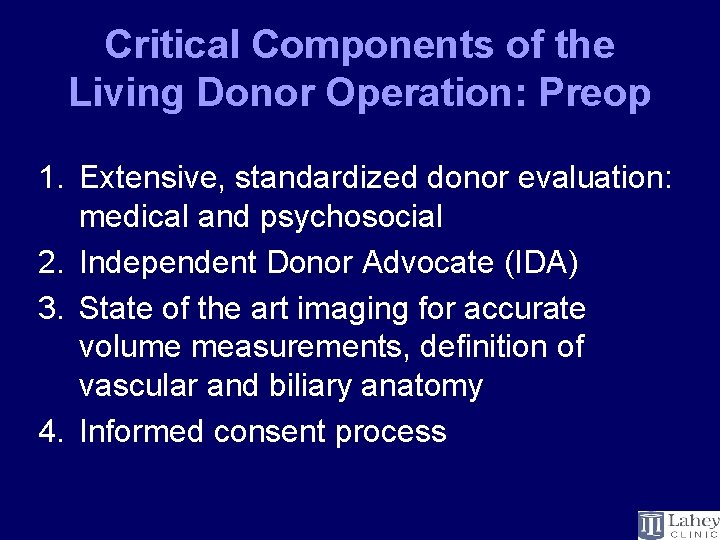
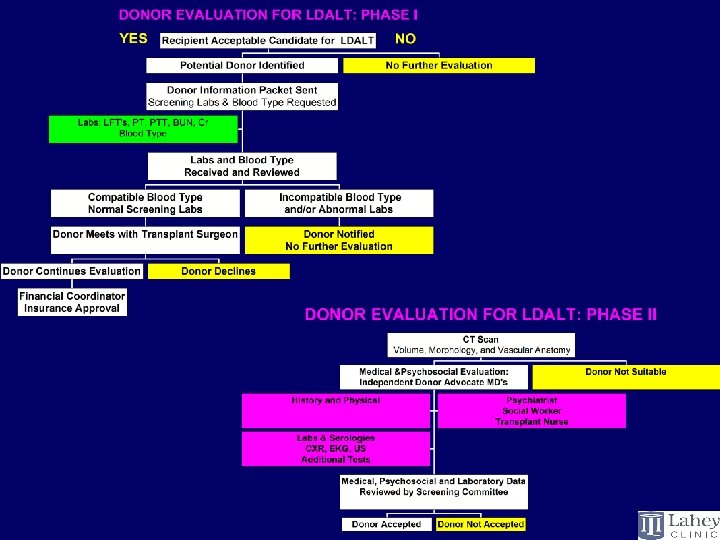
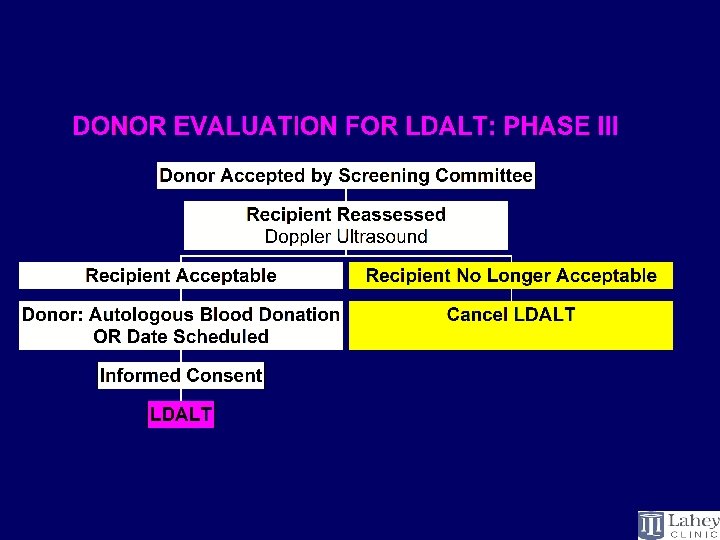
Critical Components of the Living Donor Operation: Preop 1. Extensive, standardized donor evaluation: medical and psychosocial 2. Independent Donor Advocate (IDA) 3. State of the art imaging for accurate volume measurements, definition of vascular and biliary anatomy 4. Informed consent process
A Report of the Vancouver Forum on the Care of the Live Organ Donor: Lung, Liver, Pancreas, Intestine Data and Medical Guidelines. Barr ML, Belghiti J, Villamil FG, Pomfret EA, Sutherland DS, Gruessner RW, Langnas AN, Delmonico FL. Transplantation. 2006; 81(10): 1373 -85.
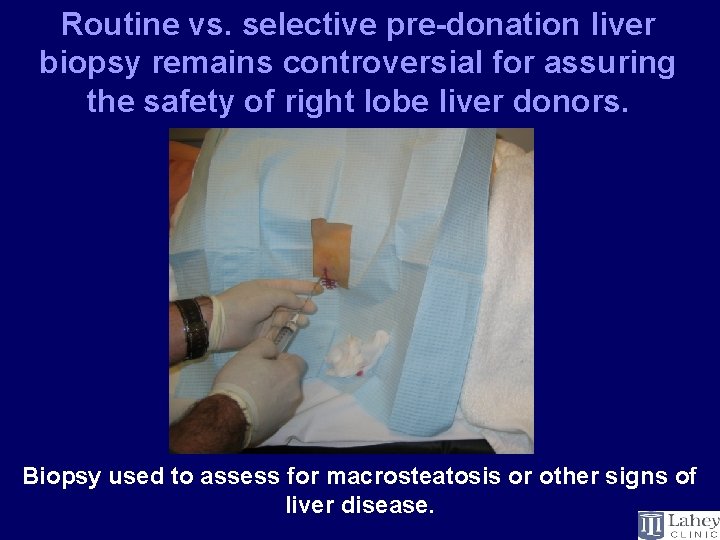
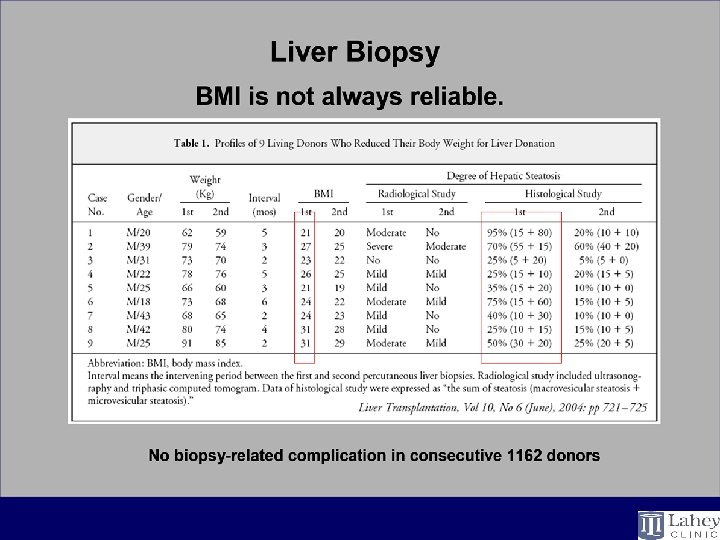
Routine vs. selective pre-donation liver biopsy remains controversial for assuring the safety of right lobe liver donors. Biopsy used to assess for macrosteatosis or other signs of liver disease.
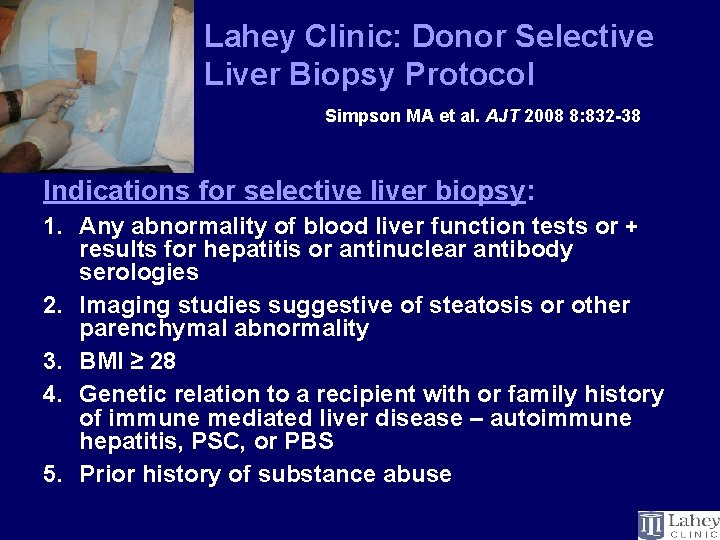
Lahey Clinic: Donor Selective Liver Biopsy Protocol Simpson MA et al. AJT 2008 8: 832 -38 Indications for selective liver biopsy: 1. Any abnormality of blood liver function tests or + results for hepatitis or antinuclear antibody serologies 2. Imaging studies suggestive of steatosis or other parenchymal abnormality 3. BMI ≥ 28 4. Genetic relation to a recipient with or family history of immune mediated liver disease – autoimmune hepatitis, PSC, or PBS 5. Prior history of substance abuse
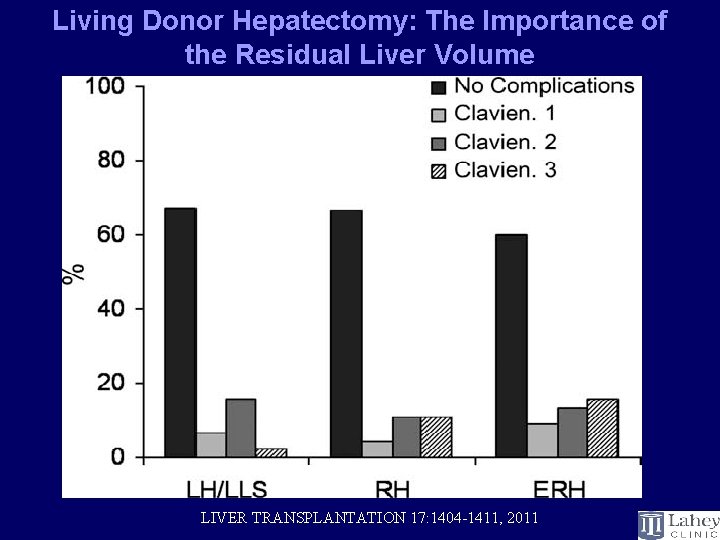
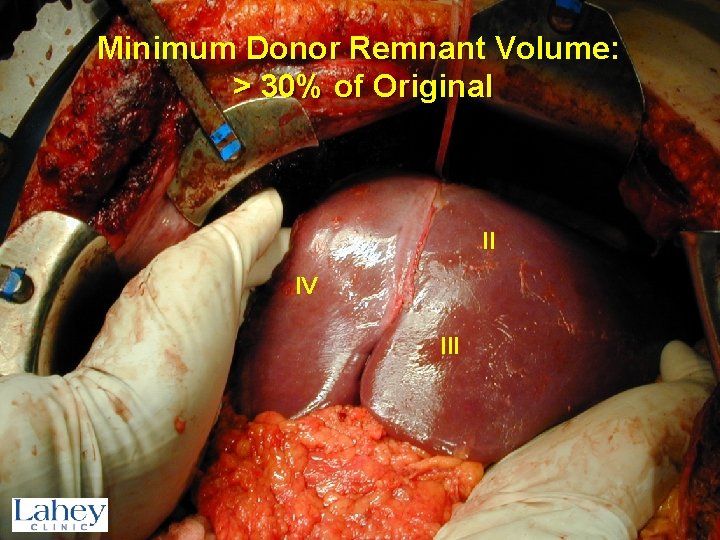
Extent of Donor Surgery Ø The amount of remnant hepatic parenchyma in the donor after hepatectomy has been repeatedly identified as the single most important predictive factor for donor outcome. Ø Individuals with larger remnant volumes consistently display fewer adverse events, shorter lengths of stays, and faster return to pre-donation activity levels Ø Resurgence of the Left Lobe Graft
Living Donor Hepatectomy: The Importance of the Residual Liver Volume LIVER TRANSPLANTATION 17: 1404 -1411, 2011
Minimum Donor Remnant Volume: > 30% of Original II IV III
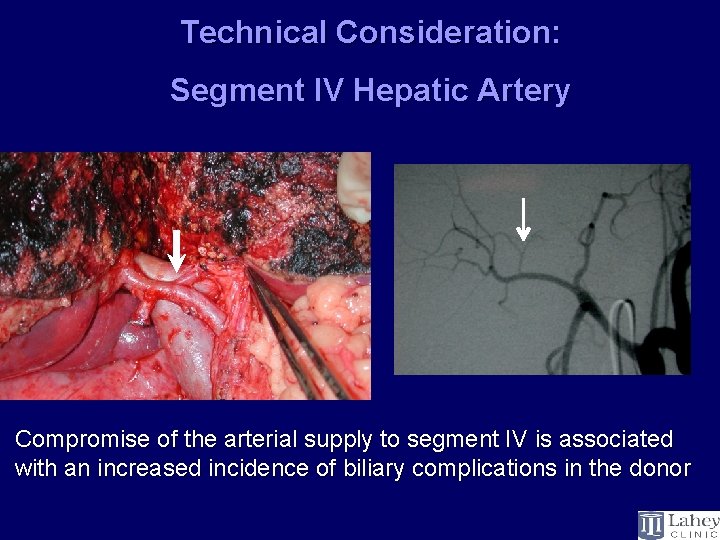
Technical Consideration: Segment IV Hepatic Artery Compromise of the arterial supply to segment IV is associated with an increased incidence of biliary complications in the donor
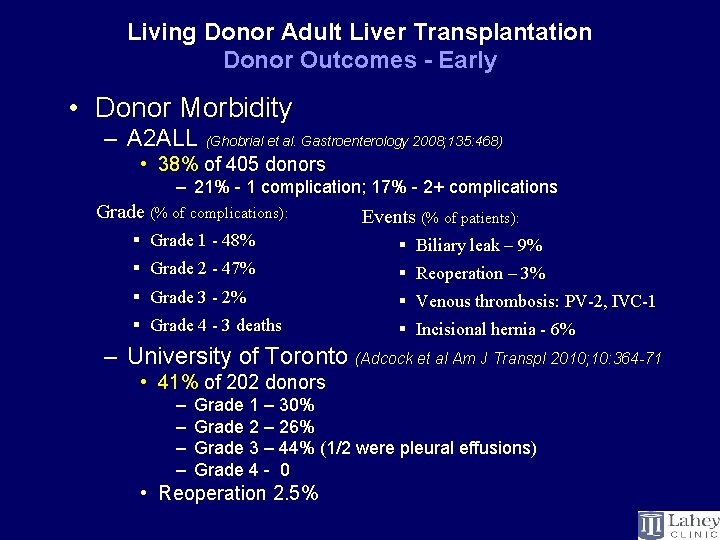
Living Donor Adult Liver Transplantation Donor Outcomes - Early • Donor Morbidity – A 2 ALL (Ghobrial et al. Gastroenterology 2008; 135: 468) • 38% of 405 donors – 21% - 1 complication; 17% - 2+ complications Grade (% of complications): Events (% of patients): § Grade 1 - 48% § Biliary leak – 9% § Grade 2 - 47% § Reoperation – 3% § Grade 3 - 2% § Venous thrombosis: PV-2, IVC-1 § Grade 4 - 3 deaths § Incisional hernia - 6% – University of Toronto (Adcock et al Am J Transpl 2010; 10: 364 -71 • 41% of 202 donors – – Grade 1 – 30% Grade 2 – 26% Grade 3 – 44% (1/2 were pleural effusions) Grade 4 - 0 • Reoperation 2. 5%
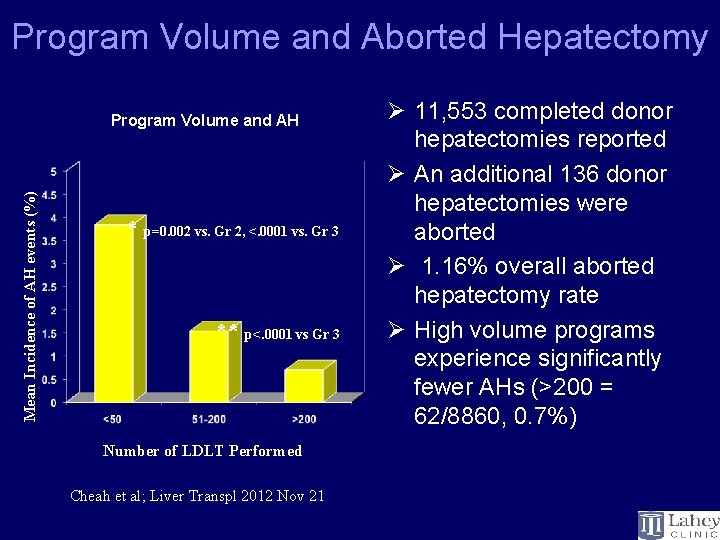
Program Volume and Aborted Hepatectomy Mean Incidence of AH events (%) Program Volume and AH * p=0. 002 vs. Gr 2, <. 0001 vs. Gr 3 ** p<. 0001 vs Gr 3 Number of LDLT Performed Cheah et al; Liver Transpl 2012 Nov 21 Ø 11, 553 completed donor hepatectomies reported Ø An additional 136 donor hepatectomies were aborted Ø 1. 16% overall aborted hepatectomy rate Ø High volume programs experience significantly fewer AHs (>200 = 62/8860, 0. 7%)
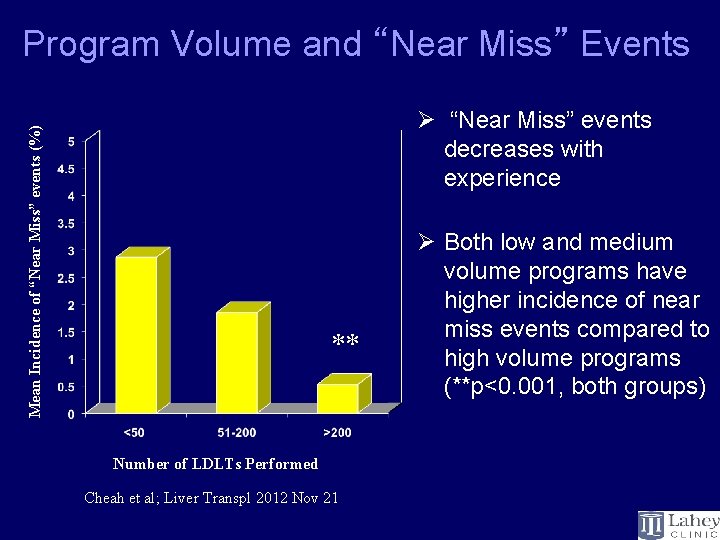
Program Volume and “Near Miss” Events Mean Incidence of “Near Miss” events (%) Ø “Near Miss” events decreases with experience ** Number of LDLTs Performed Cheah et al; Liver Transpl 2012 Nov 21 Ø Both low and medium volume programs have higher incidence of near miss events compared to high volume programs (**p<0. 001, both groups)
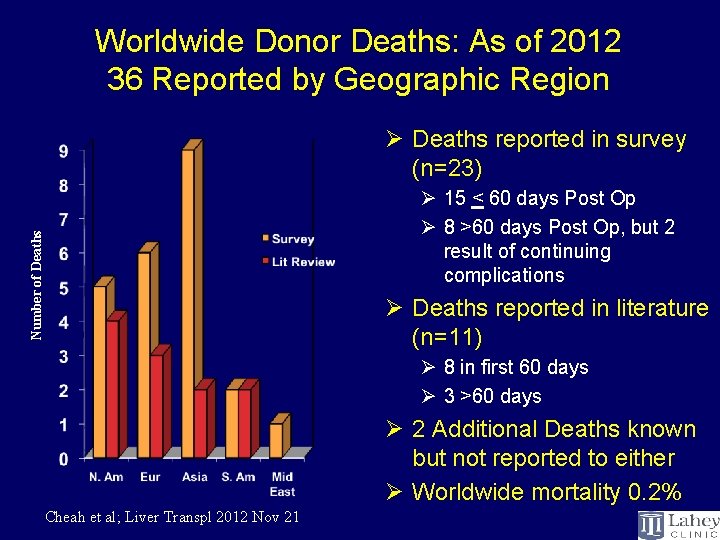
Worldwide Donor Deaths: As of 2012 36 Reported by Geographic Region Ø Deaths reported in survey (n=23) Number of Deaths Ø 15 < 60 days Post Op Ø 8 >60 days Post Op, but 2 result of continuing complications Ø Deaths reported in literature (n=11) Ø 8 in first 60 days Ø 3 >60 days Ø 2 Additional Deaths known but not reported to either Ø Worldwide mortality 0. 2% Cheah et al; Liver Transpl 2012 Nov 21
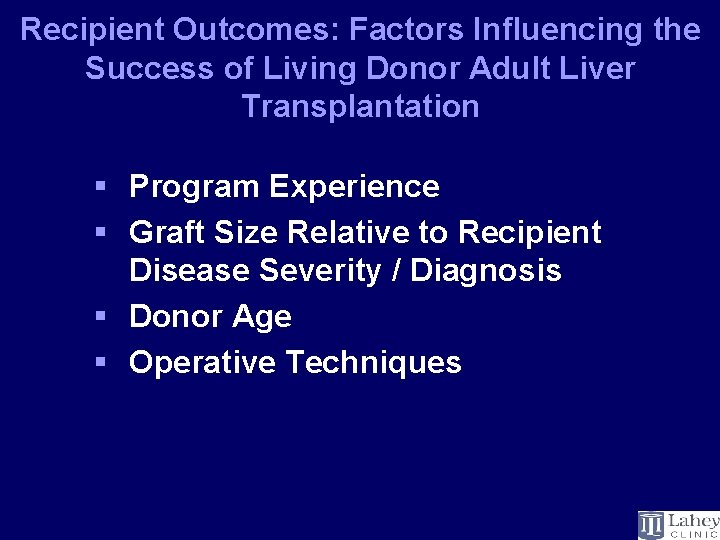
Recipient Outcomes: Factors Influencing the Success of Living Donor Adult Liver Transplantation § Program Experience § Graft Size Relative to Recipient Disease Severity / Diagnosis § Donor Age § Operative Techniques
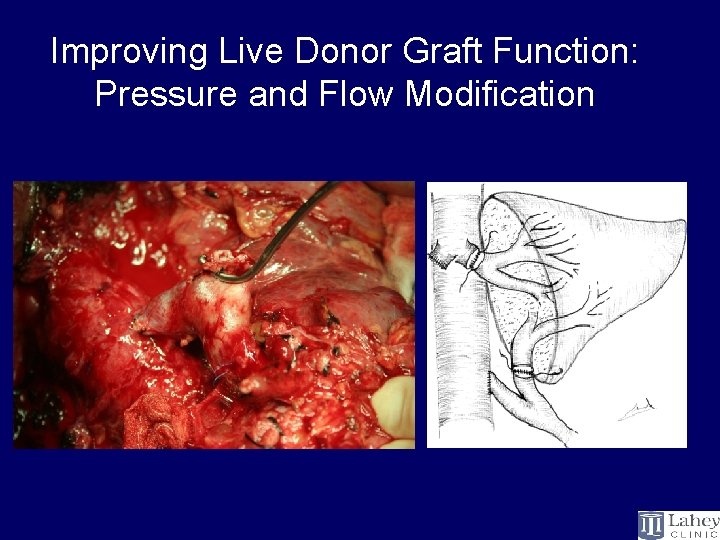
Improving Live Donor Graft Function: Pressure and Flow Modification
Background • “Small for size syndrome” (SFSS) is a term used to describe early graft dysfunction or non-function after LDLT • SFSS is difficult to define (“but we know it when we see it”) • Clinical spectrum of SFSS ranges from mild elevations in bilirubin to fulminant hepatic failure, graft loss or death
Impact of graft size mismatching on graft prognosis in liver transplantation from living donors Kiuchi T et al. Transplantation. 1999; 67: 321 -327. • 276 LDLT recipients • “Extra small” grafts: GRWR < 0. 8% • “Small” grafts: GRWR < 1% or < 40% SLV ü Survival in recipients of grafts <0. 8% was less than 50% at one year ü Death was invariably from sepsis in association with liver dysfunction. First demonstration that weight of a partial liver graft of excellent quality impacted subsequent function.
Critical graft size in adult-to-adult living donor liver transplantation: Impact of the recipient’s disease Ben-Haim M et al. Liv Transpl. 2001; 7: 948 -953. • 40 LDALT (10 Left lobe, 30 Right lobe) • Small grafts: GRWR < 0. 85% • GRWR as low as 0. 6% can be used in patients with normal liver function (Child’s A) • Child’s B and C: graft survival was 74% vs. 33% in recipients of large vs. small grafts respectively ü Graft function and survival are influenced by both graft size and pre-transplantation disease severity ü GRWR > 0. 85% needed in cirrhotic patients to avoid “small-forsize” syndrome.
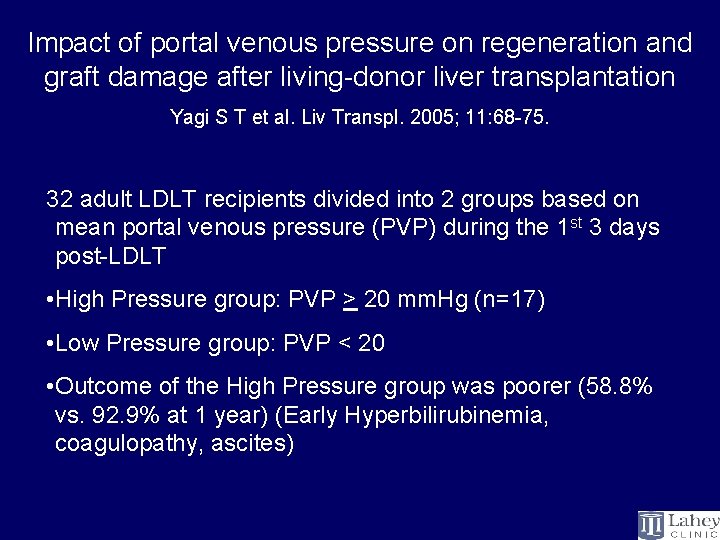
Impact of portal venous pressure on regeneration and graft damage after living-donor liver transplantation Yagi S T et al. Liv Transpl. 2005; 11: 68 -75. 32 adult LDLT recipients divided into 2 groups based on mean portal venous pressure (PVP) during the 1 st 3 days post-LDLT • High Pressure group: PVP > 20 mm. Hg (n=17) • Low Pressure group: PVP < 20 • Outcome of the High Pressure group was poorer (58. 8% vs. 92. 9% at 1 year) (Early Hyperbilirubinemia, coagulopathy, ascites)
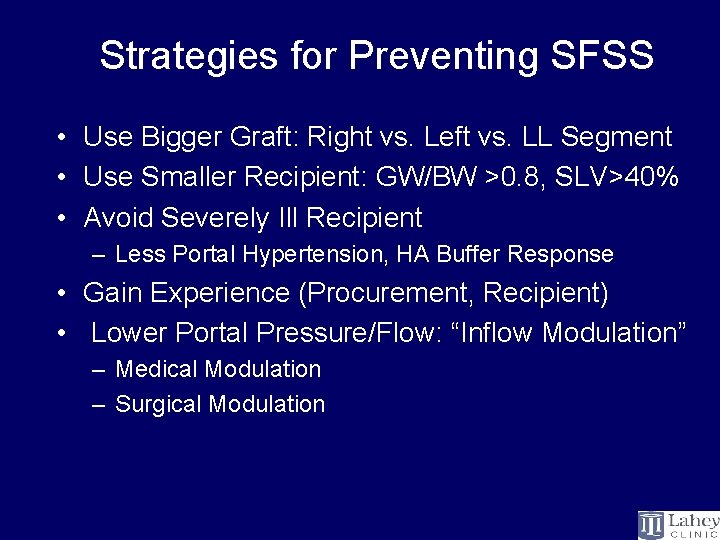
Strategies for Preventing SFSS • Use Bigger Graft: Right vs. Left vs. LL Segment • Use Smaller Recipient: GW/BW >0. 8, SLV>40% • Avoid Severely Ill Recipient – Less Portal Hypertension, HA Buffer Response • Gain Experience (Procurement, Recipient) • Lower Portal Pressure/Flow: “Inflow Modulation” – Medical Modulation – Surgical Modulation
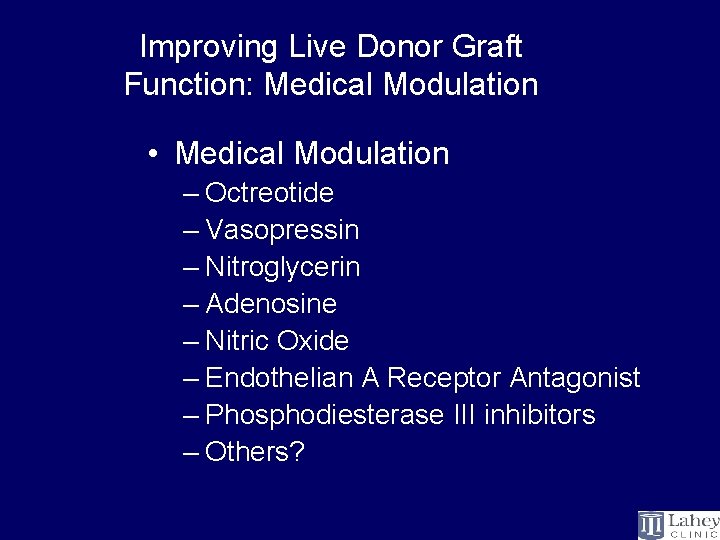
Improving Live Donor Graft Function: Medical Modulation • Medical Modulation – Octreotide – Vasopressin – Nitroglycerin – Adenosine – Nitric Oxide – Endothelian A Receptor Antagonist – Phosphodiesterase III inhibitors – Others?
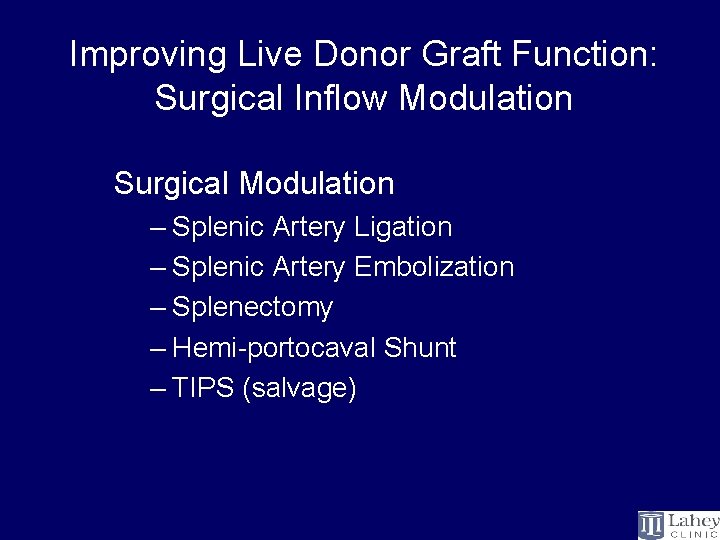
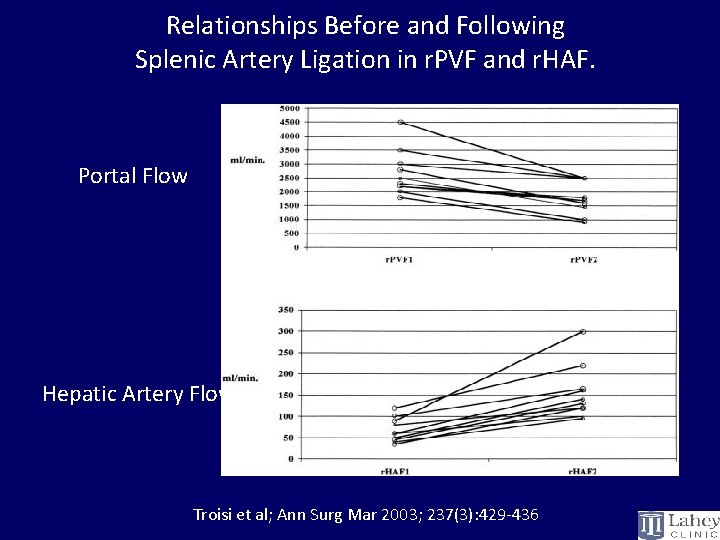
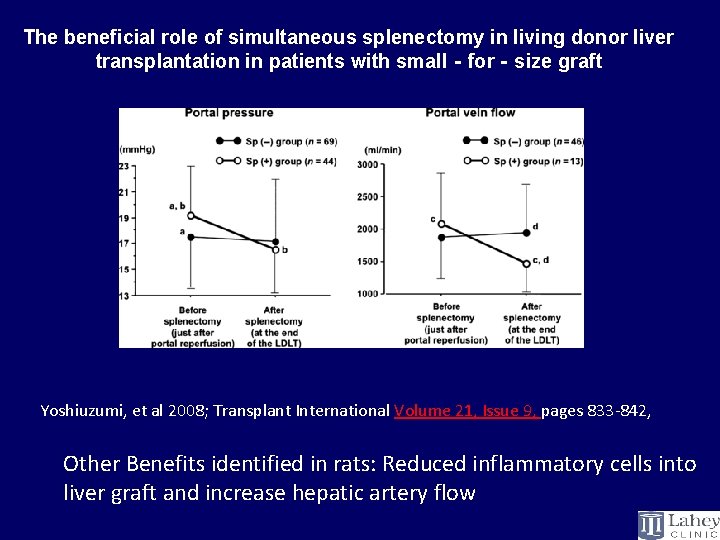
Improving Live Donor Graft Function: Surgical Inflow Modulation Surgical Modulation – Splenic Artery Ligation – Splenic Artery Embolization – Splenectomy – Hemi-portocaval Shunt – TIPS (salvage)
Relationships Before and Following Splenic Artery Ligation in r. PVF and r. HAF. Portal Flow Hepatic Artery Flow Troisi et al; Ann Surg Mar 2003; 237(3): 429 -436
The beneficial role of simultaneous splenectomy in living donor liver transplantation in patients with small‐for‐size graft Yoshiuzumi, et al 2008; Transplant International Volume 21, Issue 9, pages 833 -842, Other Benefits identified in rats: Reduced inflammatory cells into liver graft and increase hepatic artery flow
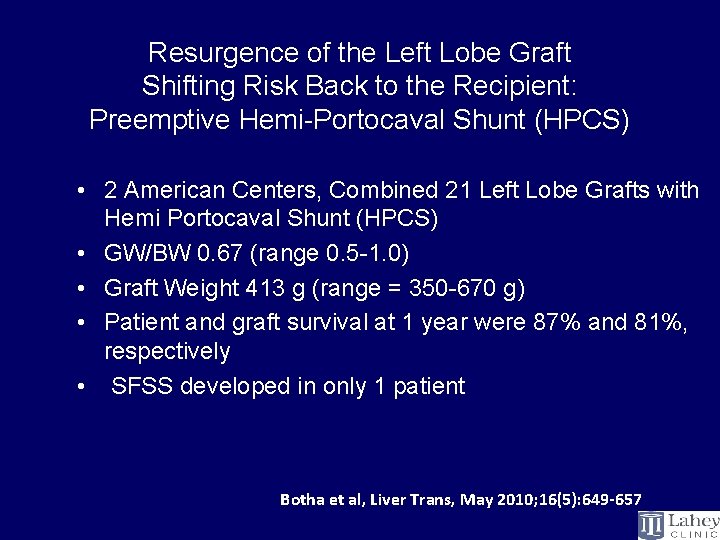
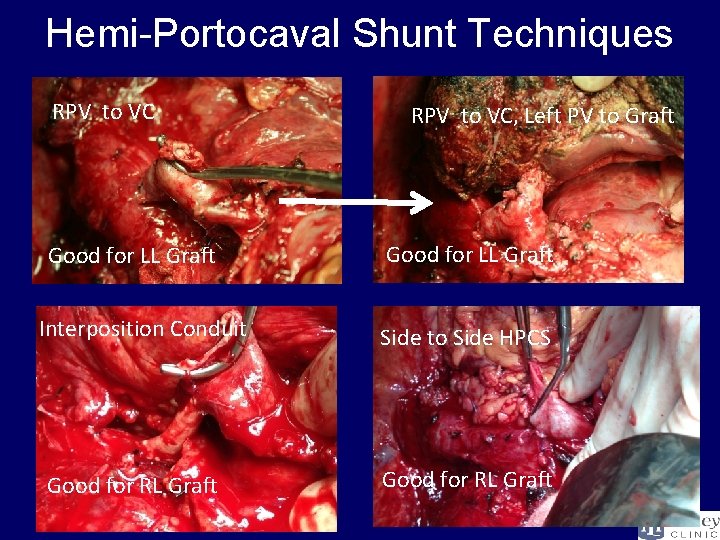
Resurgence of the Left Lobe Graft Shifting Risk Back to the Recipient: Preemptive Hemi-Portocaval Shunt (HPCS) • 2 American Centers, Combined 21 Left Lobe Grafts with Hemi Portocaval Shunt (HPCS) • GW/BW 0. 67 (range 0. 5 -1. 0) • Graft Weight 413 g (range = 350 -670 g) • Patient and graft survival at 1 year were 87% and 81%, respectively • SFSS developed in only 1 patient Botha et al, Liver Trans, May 2010; 16(5): 649 -657
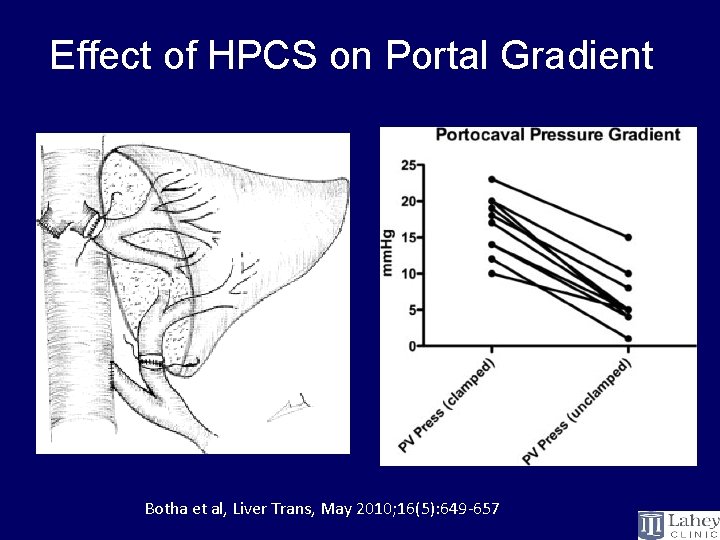
Effect of HPCS on Portal Gradient Botha et al, Liver Trans, May 2010; 16(5): 649 -657
Hemi-Portocaval Shunt Techniques RPV to VC Good for LL Graft Interposition Conduit Good for RL Graft RPV to VC, Left PV to Graft Good for LL Graft Side to Side HPCS Good for RL Graft
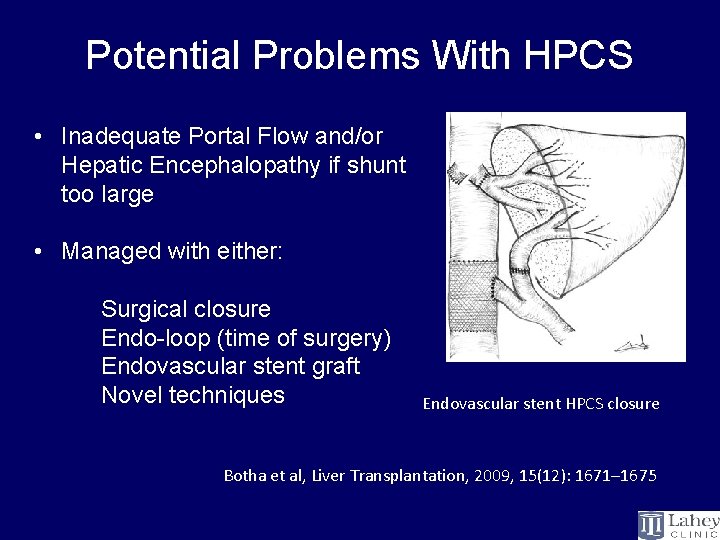
Potential Problems With HPCS • Inadequate Portal Flow and/or Hepatic Encephalopathy if shunt too large • Managed with either: Surgical closure Endo-loop (time of surgery) Endovascular stent graft Novel techniques Endovascular stent HPCS closure Botha et al, Liver Transplantation, 2009, 15(12): 1671– 1675
“Segmental graft dysfunction” (SGD) after Living Donor Liver Transplantation (LDLT): It’s Not All About Size: A report from the Adult to Adult Living Donor Liver Transplantation (A 2 ALL) Cohort Study James J. Pomposelli 1, Nathan P. Goodrich 2, Jean C. Emond 3, Abhinav Humar 4, Talia B. Baker 5, David R. Grant 6, Robert A. Fisher 7, Igal Kam 8, John P. Roberts 9, Kim M. Olthoff 10, Brenda W. Gillespie 11, Robert M. Merion 2, 12 This study was supported by the National Institute of Diabetes & Digestive & Kidney Diseases through cooperative agreements (grants U 01 -DK 62444, U 01 -DK 62467, U 01 -DK 62483, U 01 -DK 62484, U 01 DK 62494, U 01 -DK 62496, U 01 -DK 62498, U 01 -DK 62505, U 01 -DK 62531, U 01 -DK 62536, U 01 -DK 85515, U 01 -DK 85563, and U 01 -DK 85587). Additional support was provided by Health Resources and Services Administration (HRSA), and the American Society of Transplant Surgeons (ASTS). A 2 ALL
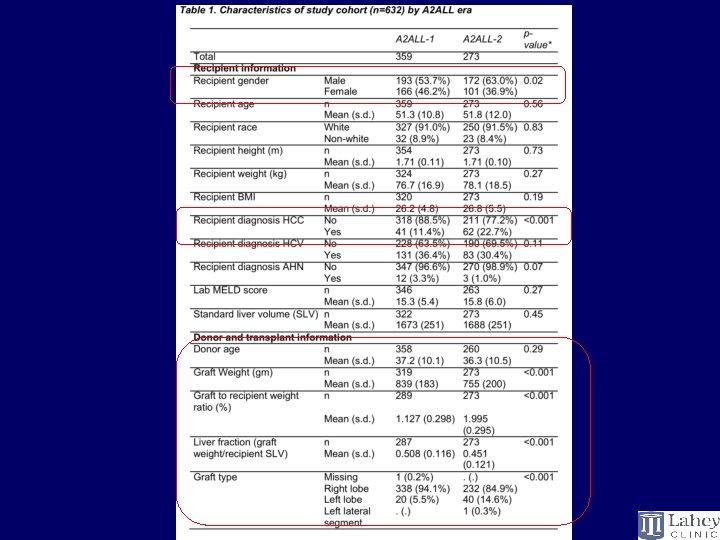
Methods • Study Population: – Living donor liver transplant (LDLT) recipients from 12 A 2 ALL centers (9 part 1, 3 new in part 2) • A 2 ALL part 1: n=359 (2003 -2010) – Includes information on graft function and graft failure • A 2 ALL part 2: n=273 (2010 -2013) – Includes information on graft function, graft failure, and pressure and flow measurements A 2 ALL
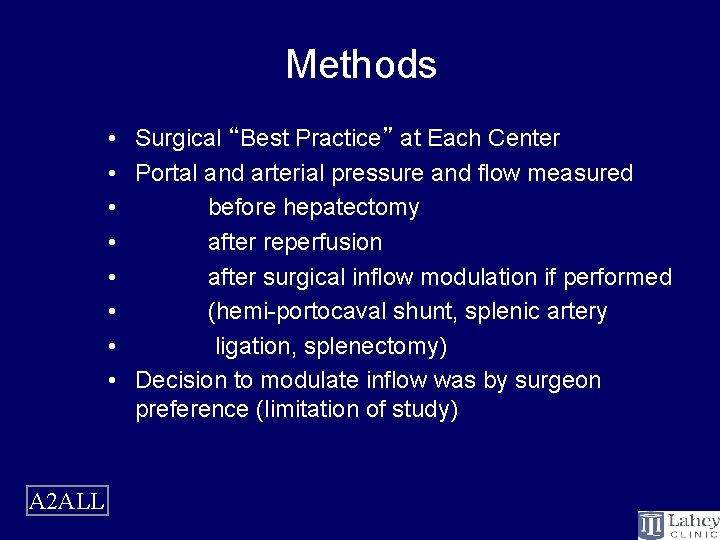
Methods • Surgical “Best Practice” at Each Center • Portal and arterial pressure and flow measured • before hepatectomy • after reperfusion • after surgical inflow modulation if performed • (hemi-portocaval shunt, splenic artery • ligation, splenectomy) • Decision to modulate inflow was by surgeon preference (limitation of study) A 2 ALL
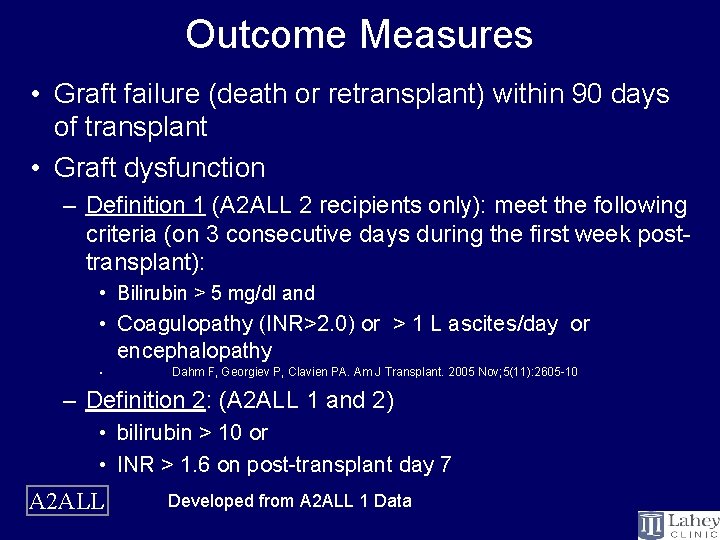
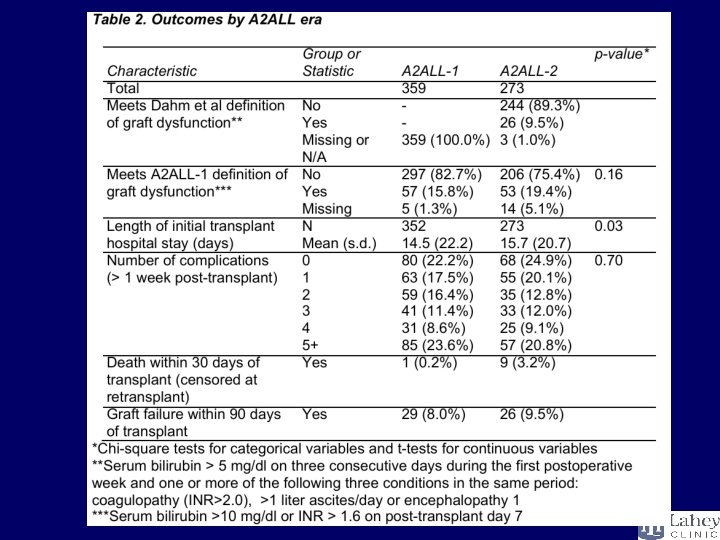
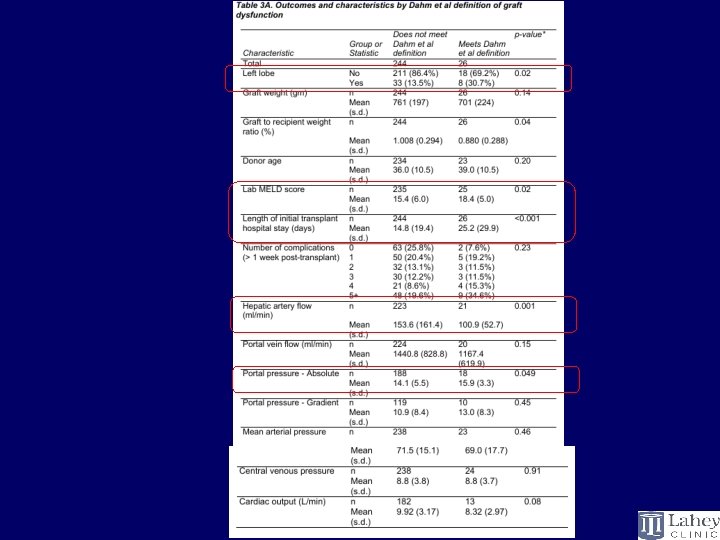
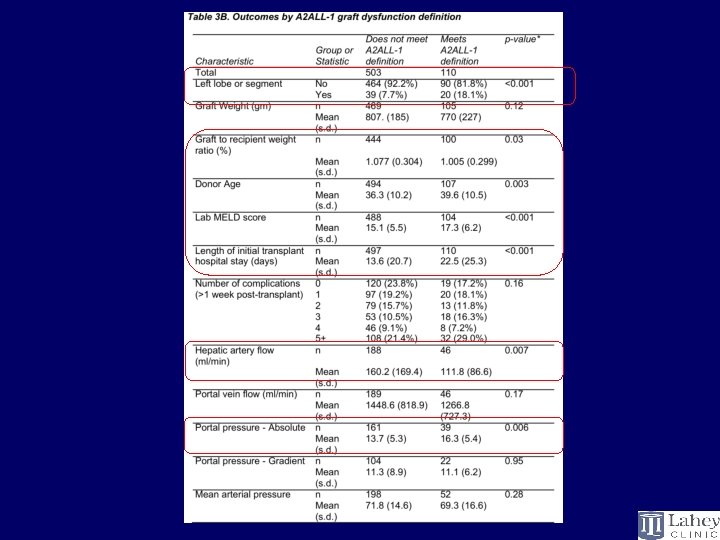
Outcome Measures • Graft failure (death or retransplant) within 90 days of transplant • Graft dysfunction – Definition 1 (A 2 ALL 2 recipients only): meet the following criteria (on 3 consecutive days during the first week posttransplant): • Bilirubin > 5 mg/dl and • Coagulopathy (INR>2. 0) or > 1 L ascites/day or encephalopathy • Dahm F, Georgiev P, Clavien PA. Am J Transplant. 2005 Nov; 5(11): 2605 -10 – Definition 2: (A 2 ALL 1 and 2) • bilirubin > 10 or • INR > 1. 6 on post-transplant day 7 A 2 ALL Developed from A 2 ALL 1 Data
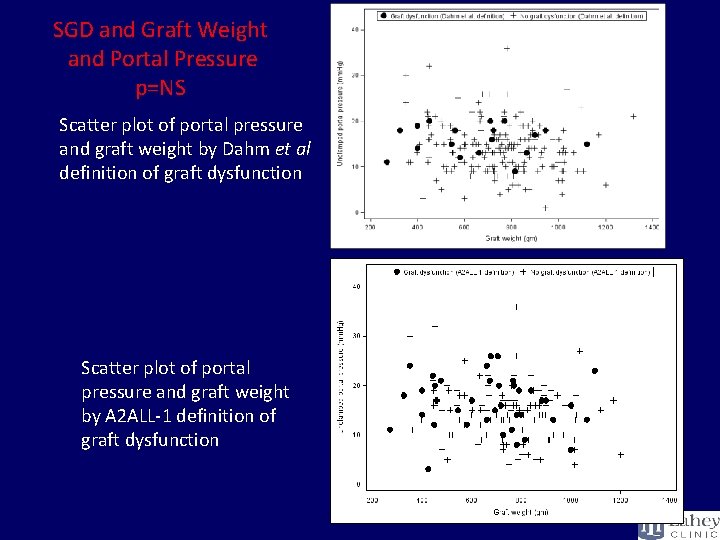
SGD and Graft Weight and Portal Pressure p=NS Scatter plot of portal pressure and graft weight by Dahm et al definition of graft dysfunction Scatter plot of portal pressure and graft weight by A 2 ALL-1 definition of graft dysfunction
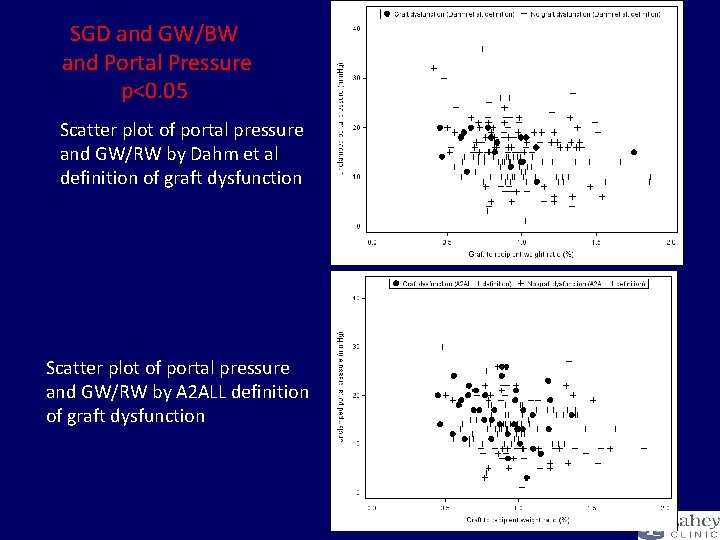
SGD and GW/BW and Portal Pressure p<0. 05 Scatter plot of portal pressure and GW/RW by Dahm et al definition of graft dysfunction Scatter plot of portal pressure and GW/RW by A 2 ALL definition of graft dysfunction
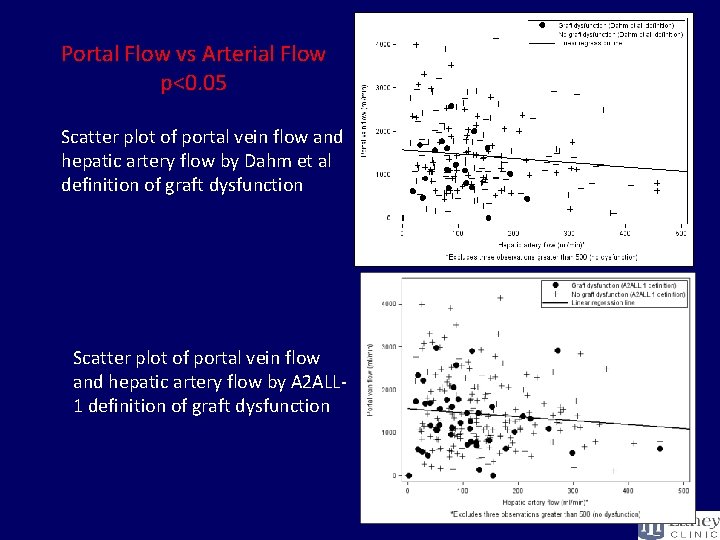
Portal Flow vs Arterial Flow p<0. 05 Scatter plot of portal vein flow and hepatic artery flow by Dahm et al definition of graft dysfunction Scatter plot of portal vein flow and hepatic artery flow by A 2 ALL 1 definition of graft dysfunction
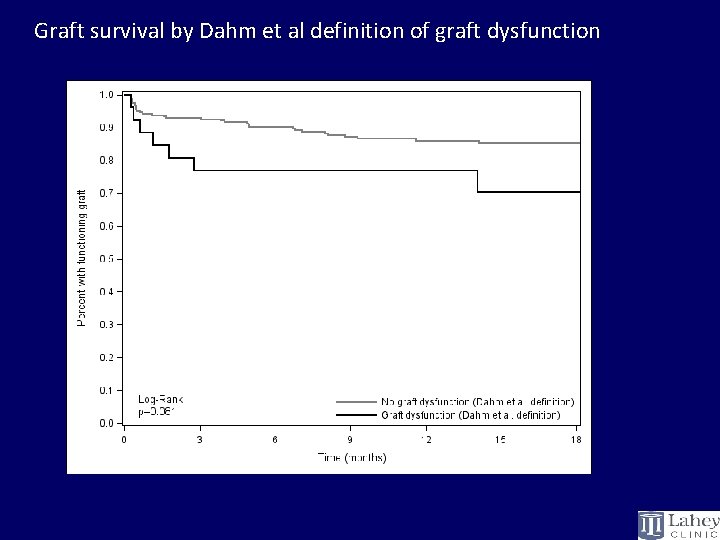
Graft survival by Dahm et al definition of graft dysfunction
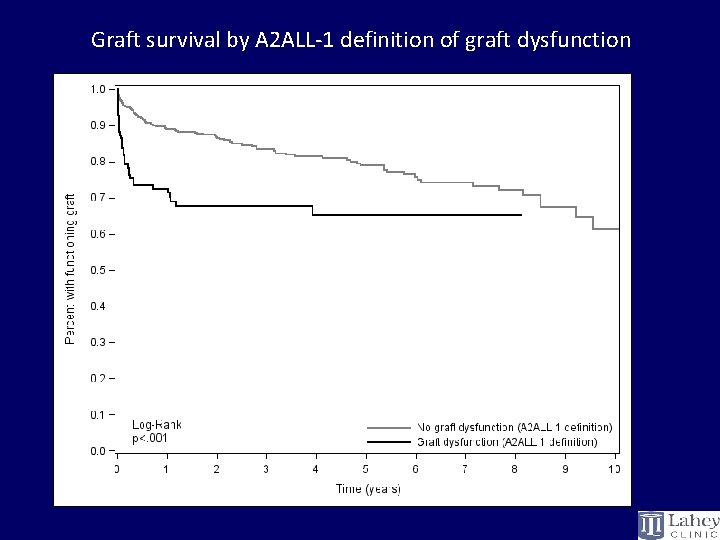
Graft survival by A 2 ALL-1 definition of graft dysfunction
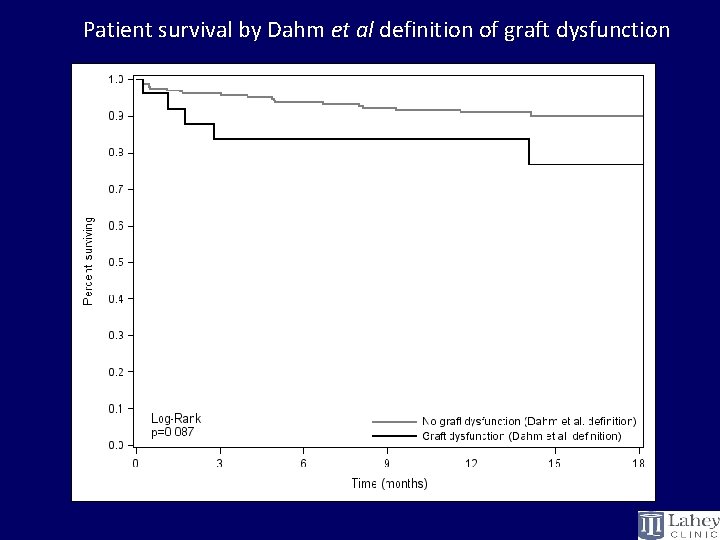
Patient survival by Dahm et al definition of graft dysfunction
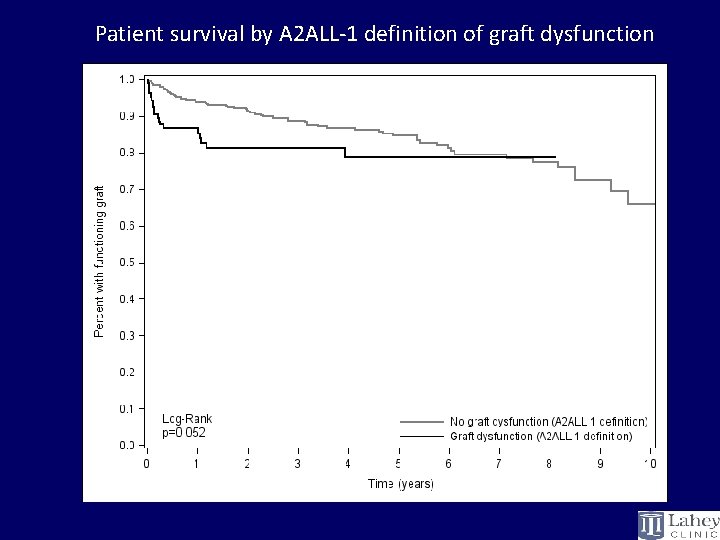
Patient survival by A 2 ALL-1 definition of graft dysfunction
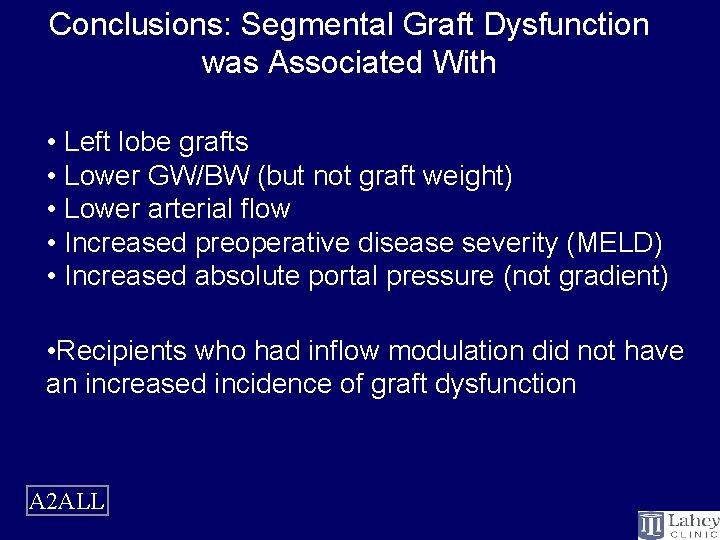
Conclusions: Segmental Graft Dysfunction was Associated With • Left lobe grafts • Lower GW/BW (but not graft weight) • Lower arterial flow • Increased preoperative disease severity (MELD) • Increased absolute portal pressure (not gradient) • Recipients who had inflow modulation did not have an increased incidence of graft dysfunction A 2 ALL
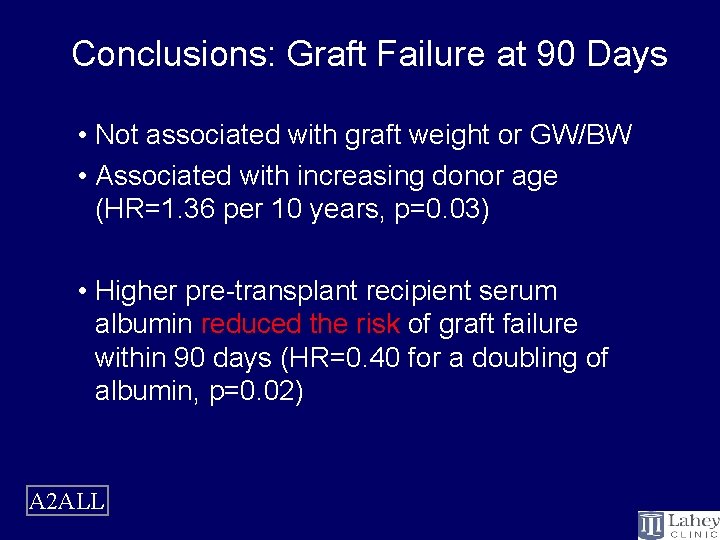
Conclusions: Graft Failure at 90 Days • Not associated with graft weight or GW/BW • Associated with increasing donor age (HR=1. 36 per 10 years, p=0. 03) • Higher pre-transplant recipient serum albumin reduced the risk of graft failure within 90 days (HR=0. 40 for a doubling of albumin, p=0. 02) A 2 ALL
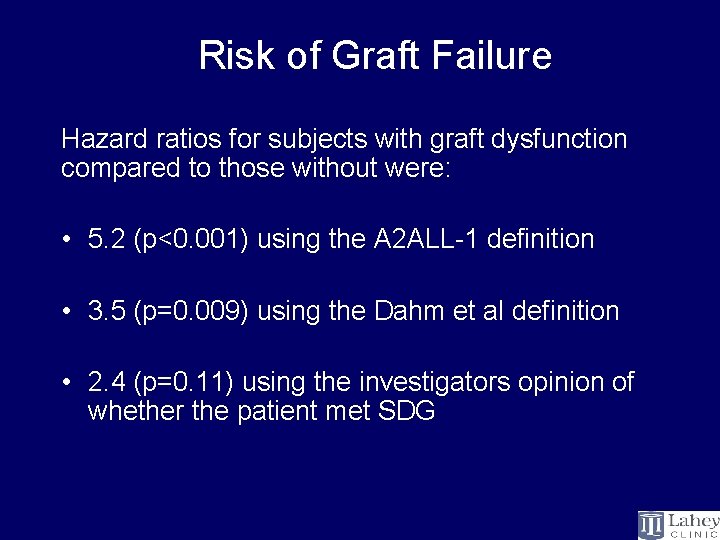
Risk of Graft Failure Hazard ratios for subjects with graft dysfunction compared to those without were: • 5. 2 (p<0. 001) using the A 2 ALL-1 definition • 3. 5 (p=0. 009) using the Dahm et al definition • 2. 4 (p=0. 11) using the investigators opinion of whether the patient met SDG
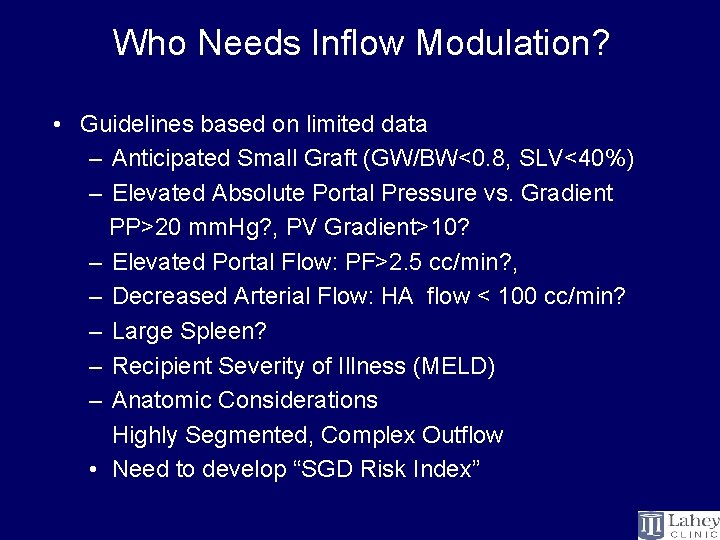
Who Needs Inflow Modulation? • Guidelines based on limited data – Anticipated Small Graft (GW/BW<0. 8, SLV<40%) – Elevated Absolute Portal Pressure vs. Gradient PP>20 mm. Hg? , PV Gradient>10? – Elevated Portal Flow: PF>2. 5 cc/min? , – Decreased Arterial Flow: HA flow < 100 cc/min? – Large Spleen? – Recipient Severity of Illness (MELD) – Anatomic Considerations Highly Segmented, Complex Outflow • Need to develop “SGD Risk Index”
Program Requirements for a Successful Split/Living Donor Program 1. Adequate training in major liver resection surgery 2. “Field Strength” 3. Institutional Support/Infrastructure (QAPI) 4. Independent Donor Advocate 5. Obsessive Attention to Detail 6. Disaster Plan
Thank You For All You Do
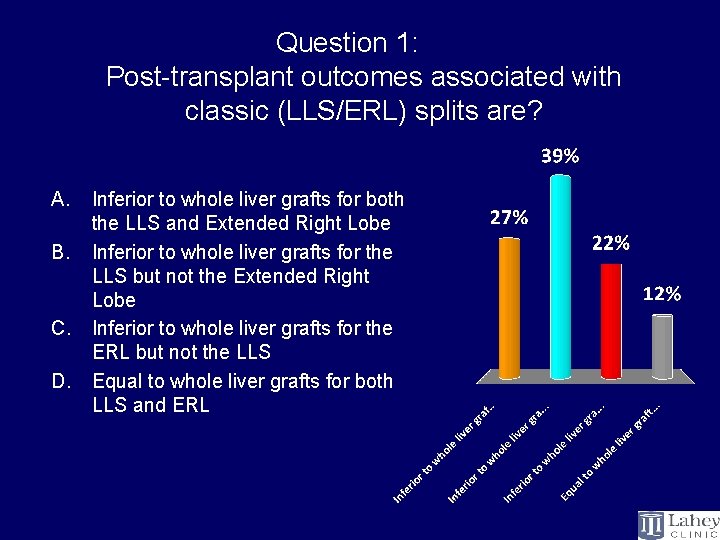
Question 1: Post-transplant outcomes associated with classic (LLS/ERL) splits are? A. B. C. D. Inferior to whole liver grafts for both the LLS and Extended Right Lobe Inferior to whole liver grafts for the LLS but not the Extended Right Lobe Inferior to whole liver grafts for the ERL but not the LLS Equal to whole liver grafts for both LLS and ERL
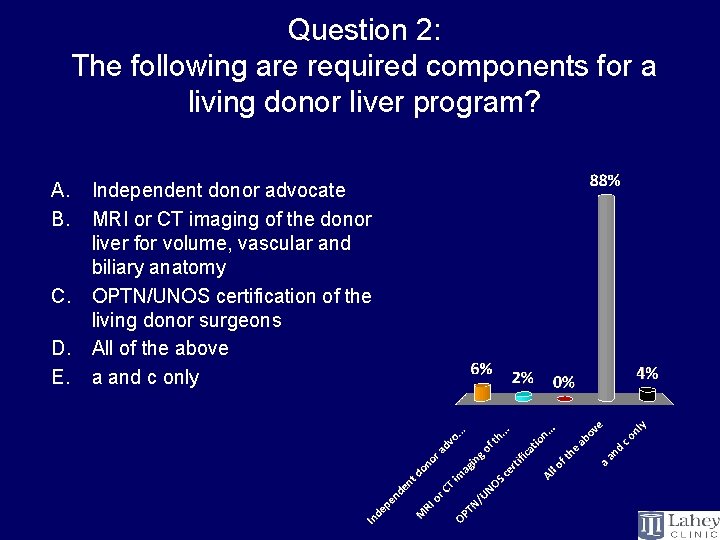
Question 2: The following are required components for a living donor liver program? A. B. C. D. E. Independent donor advocate MRI or CT imaging of the donor liver for volume, vascular and biliary anatomy OPTN/UNOS certification of the living donor surgeons All of the above a and c only
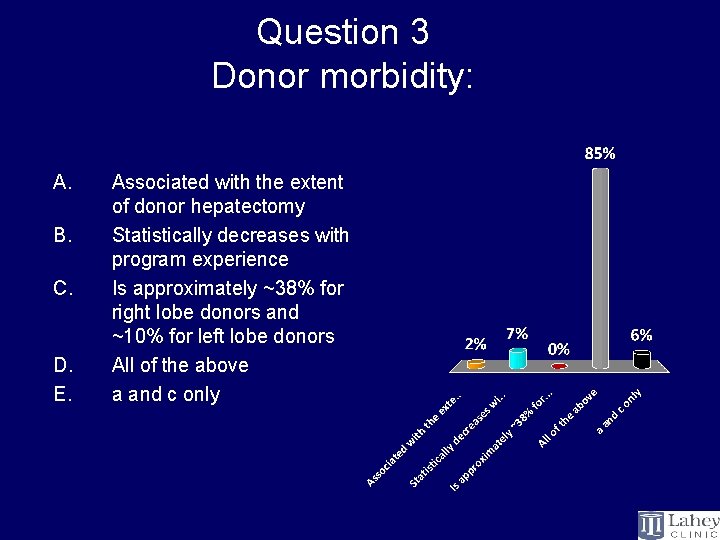
Question 3 Donor morbidity: A. B. C. D. E. Associated with the extent of donor hepatectomy Statistically decreases with program experience Is approximately ~38% for right lobe donors and ~10% for left lobe donors All of the above a and c only
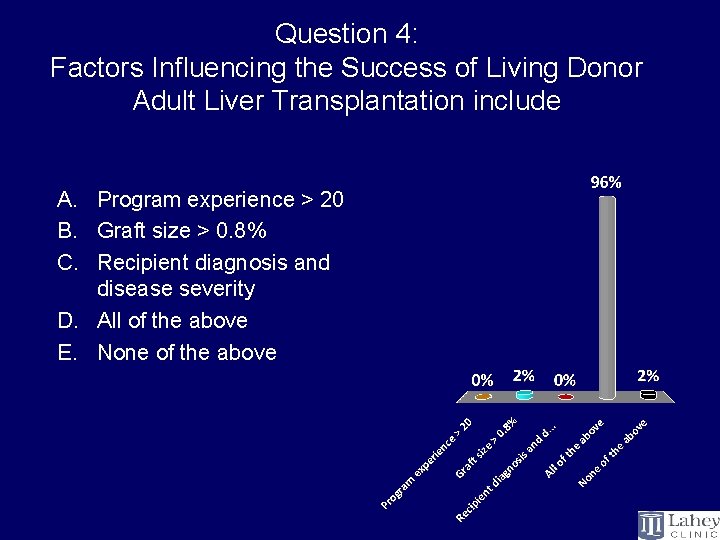
Question 4: Factors Influencing the Success of Living Donor Adult Liver Transplantation include A. Program experience > 20 B. Graft size > 0. 8% C. Recipient diagnosis and disease severity D. All of the above E. None of the above