
3 Aspects of Systems Thinking 1 Enlarging the
- Slides: 16
3 Aspects of Systems Thinking: 1. Enlarging the problem boundary 2. Visualizing in closed loops 3. Revealing Unintended Consequences 1
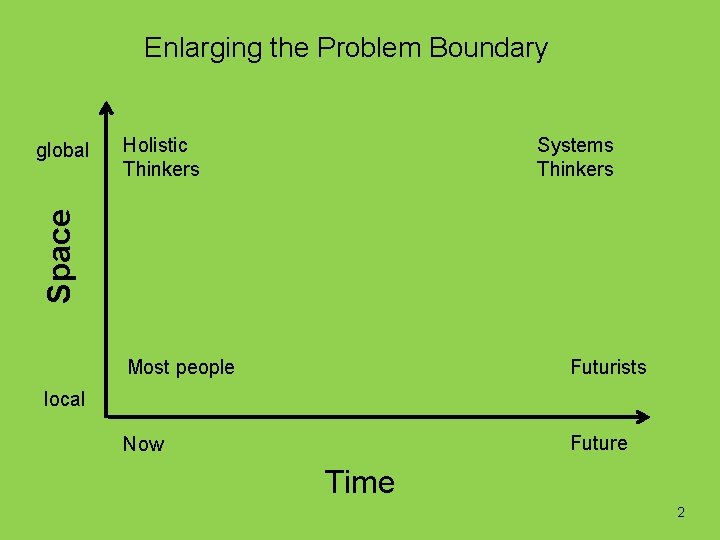
Enlarging the Problem Boundary Holistic Thinkers Systems Thinkers Space global Most people Futurists Now Future local Time 2
In order to understand why complex systems behave the way they do, Systems Thinking provides us with a visual method to find the leverage points (places where small changes can produce big differences) This technique will help us visually reveal the underlying cause of the system’s behavior which is where the leverage points lie. 3
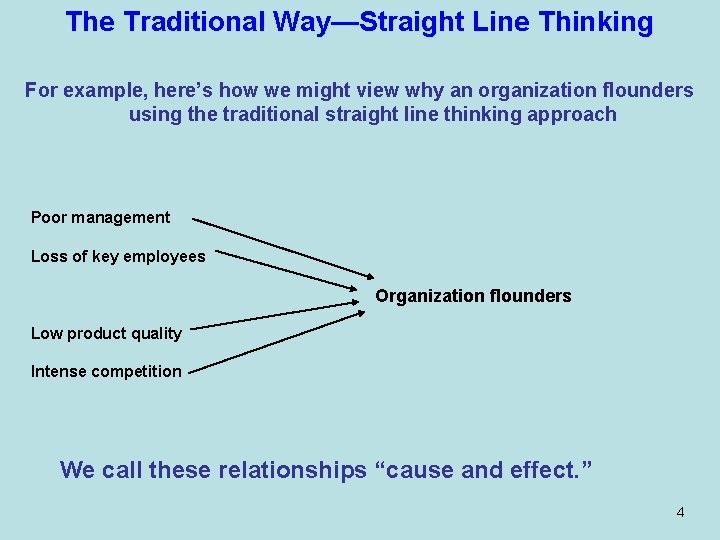
The Traditional Way—Straight Line Thinking For example, here’s how we might view why an organization flounders using the traditional straight line thinking approach Poor management Loss of key employees Organization flounders Low product quality Intense competition We call these relationships “cause and effect. ” 4
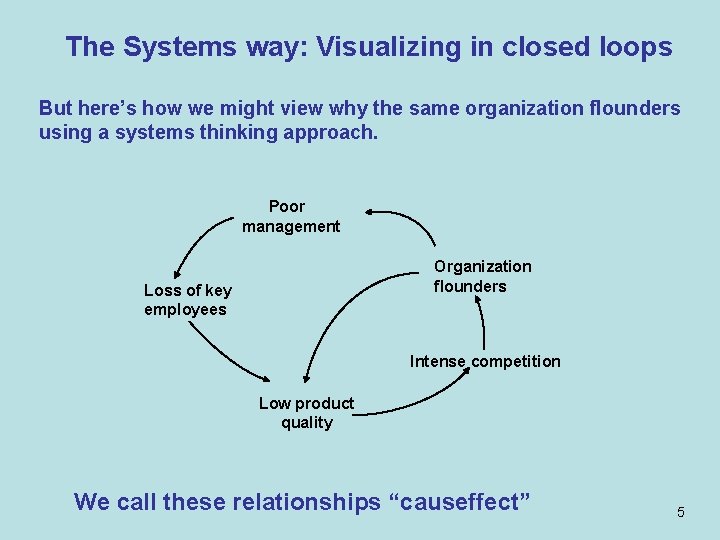
The Systems way: Visualizing in closed loops But here’s how we might view why the same organization flounders using a systems thinking approach. Poor management Organization flounders Loss of key employees Intense competition Low product quality We call these relationships “causeffect” 5
Causal Loop Diagrams These System Thinking closed loop diagrams are called Causal Loop Diagrams. There are two kinds of loops in a Causal Loop Diagram: • • Reinforcing Loops Balancing Loops 6
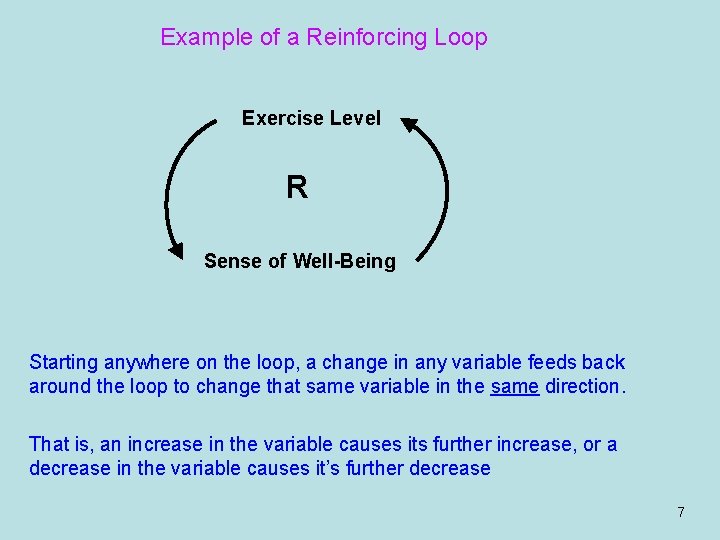
Example of a Reinforcing Loop Exercise Level R Sense of Well-Being Starting anywhere on the loop, a change in any variable feeds back around the loop to change that same variable in the same direction. That is, an increase in the variable causes its further increase, or a decrease in the variable causes it’s further decrease 7
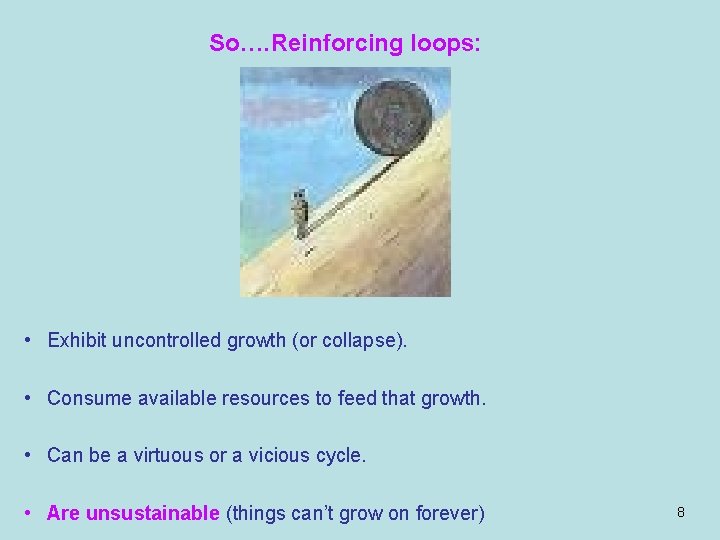
So…. Reinforcing loops: • Exhibit uncontrolled growth (or collapse). • Consume available resources to feed that growth. • Can be a virtuous or a vicious cycle. • Are unsustainable (things can’t grow on forever) 8
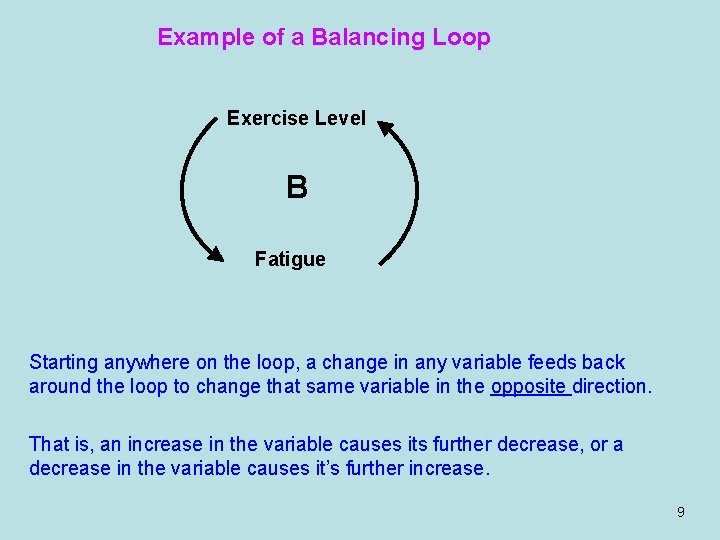
Example of a Balancing Loop Exercise Level B Fatigue Starting anywhere on the loop, a change in any variable feeds back around the loop to change that same variable in the opposite direction. That is, an increase in the variable causes its further decrease, or a decrease in the variable causes it’s further increase. 9
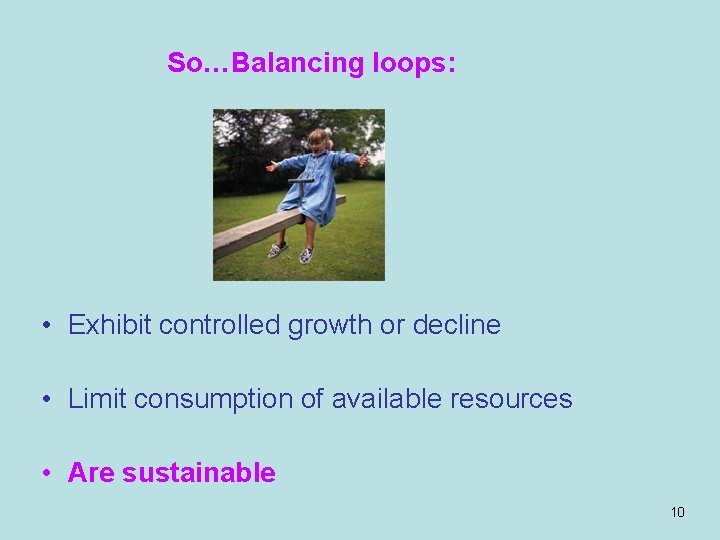
So…Balancing loops: • Exhibit controlled growth or decline • Limit consumption of available resources • Are sustainable 10
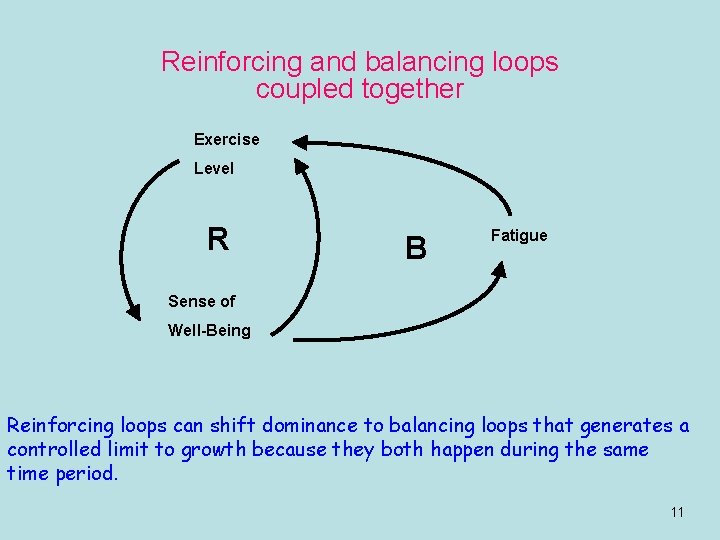
Reinforcing and balancing loops coupled together Exercise Level R B Fatigue Sense of Well-Being Reinforcing loops can shift dominance to balancing loops that generates a controlled limit to growth because they both happen during the same time period. 11
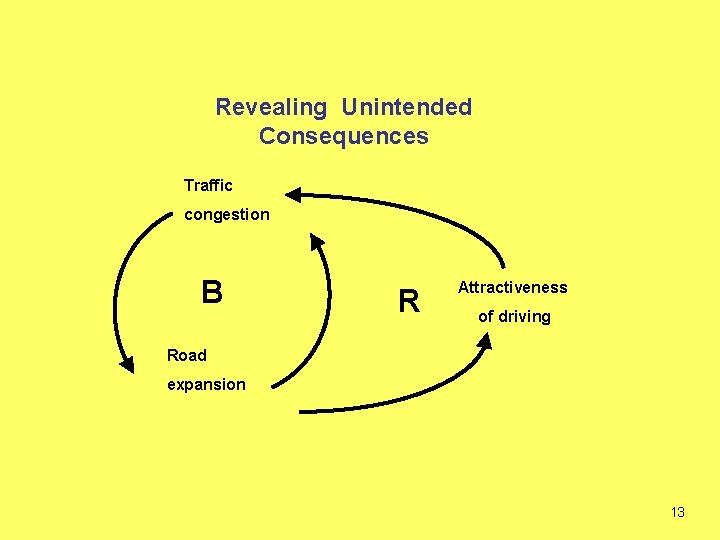
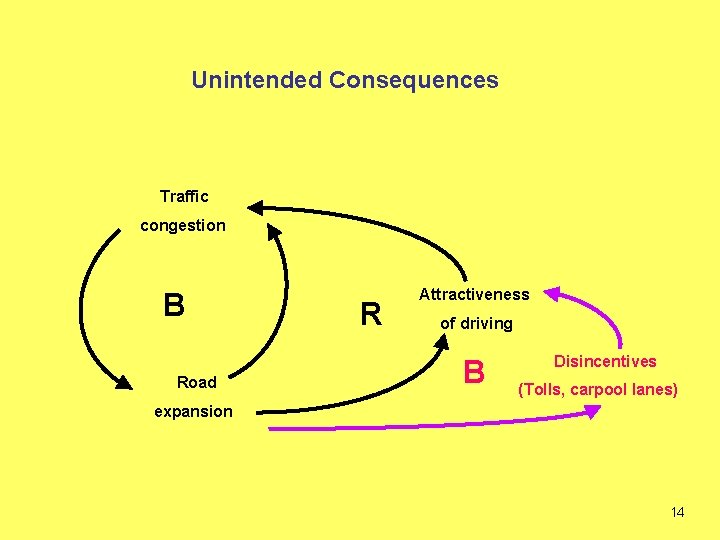
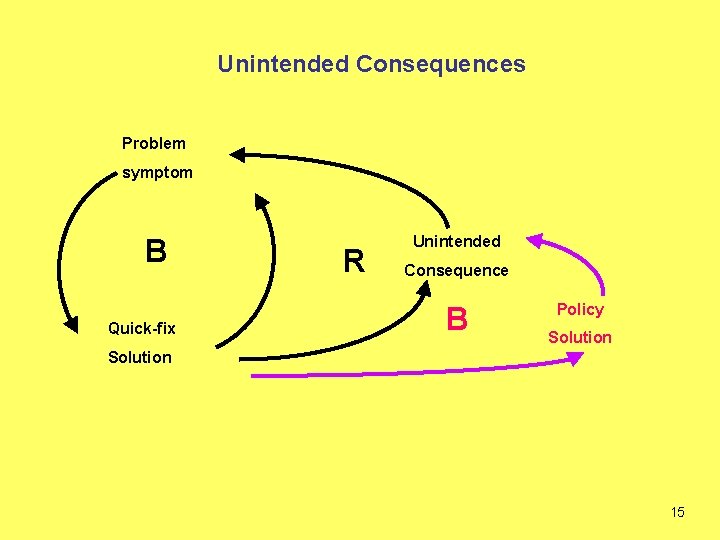
When coupled loops happen in different time periods (short-term vs. long-term), there can often be: Unintended Consequences!! Solutions that temporarily fix the symptom and don’t address the underlying cause in the short-term often create unintended consequences that make the problem worse in the long-term. 12
Revealing Unintended Consequences Traffic congestion B R Attractiveness of driving Road expansion 13
Unintended Consequences Traffic congestion B Road R Attractiveness of driving B Disincentives (Tolls, carpool lanes) expansion 14
Unintended Consequences Problem symptom B Quick-fix R Unintended Consequence B Policy Solution 15
Unintended Consequences A short-term quick fix to the problem creates a longerterm unintended consequence The unintended consequence is part of a reinforcing loop that makes the system unsustainable. Add a balancing policy loop in the long-term addresses the underlying causes of the problem and make the system more sustainable. This is a Systems Thinking solution. 16