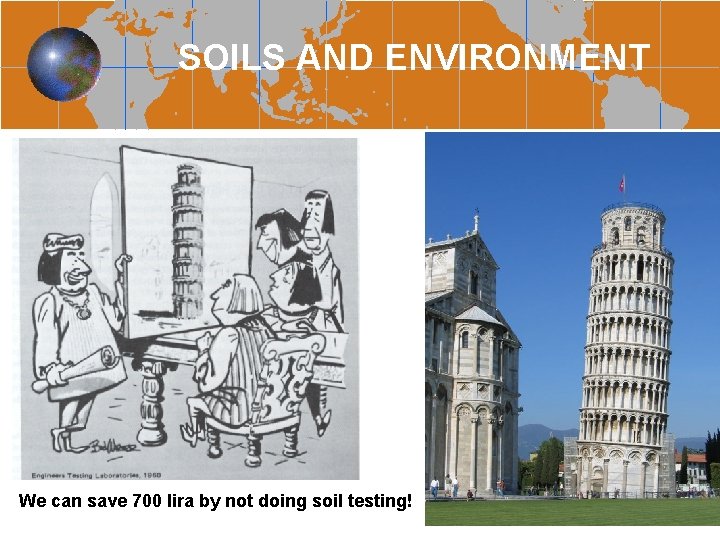
SOILS AND ENVIRONMENT We can save 700 lira
- Slides: 32
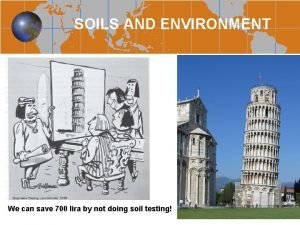
SOILS AND ENVIRONMENT We can save 700 lira by not doing soil testing!
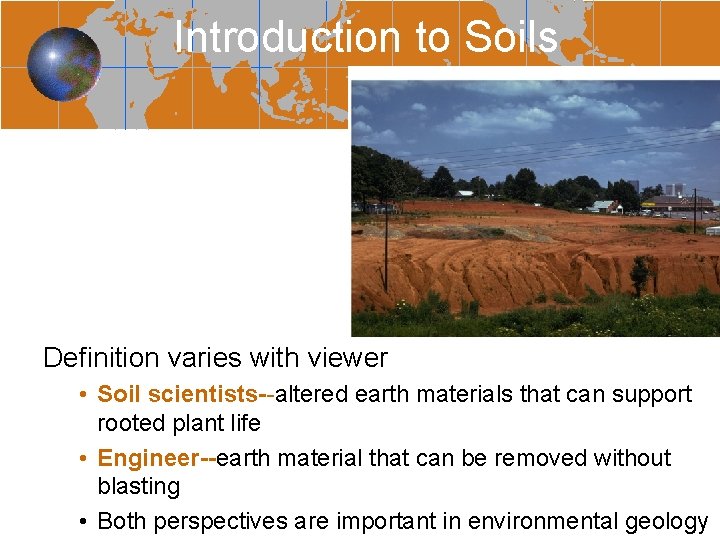
Introduction to Soils Definition varies with viewer • Soil scientists--altered earth materials that can support rooted plant life • Engineer--earth material that can be removed without blasting • Both perspectives are important in environmental geology
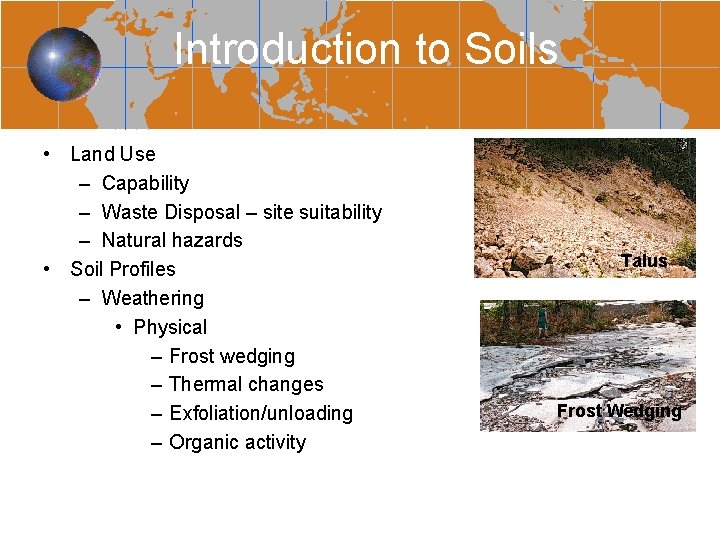
Introduction to Soils • Land Use – Capability – Waste Disposal – site suitability – Natural hazards • Soil Profiles – Weathering • Physical – Frost wedging – Thermal changes – Exfoliation/unloading – Organic activity Talus Frost Wedging
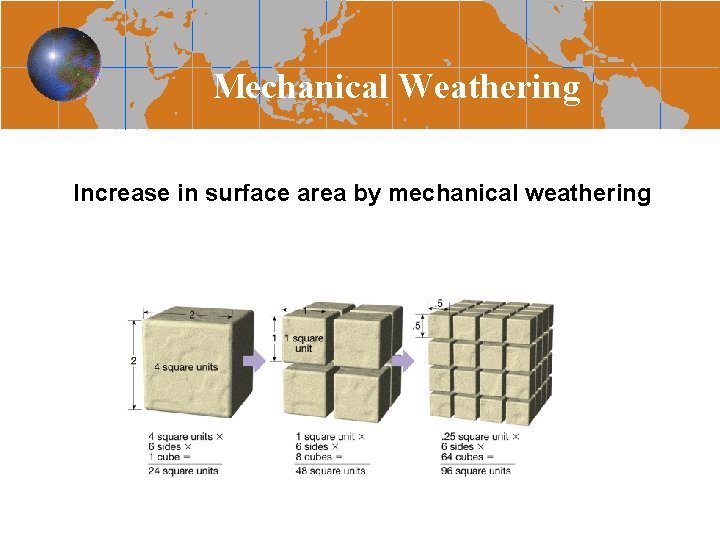
Mechanical Weathering Increase in surface area by mechanical weathering
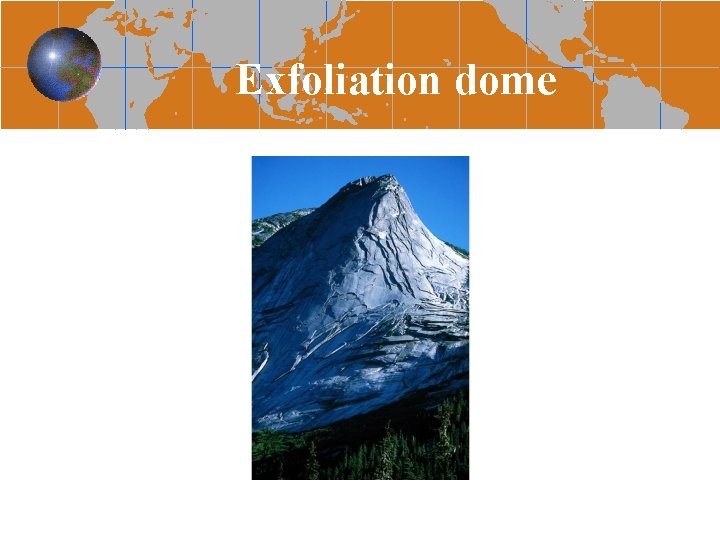
Exfoliation dome
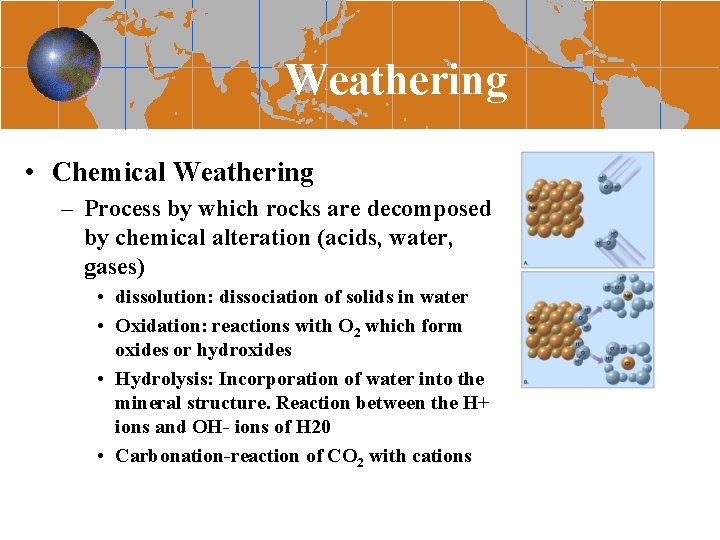
Weathering • Chemical Weathering – Process by which rocks are decomposed by chemical alteration (acids, water, gases) • dissolution: dissociation of solids in water • Oxidation: reactions with O 2 which form oxides or hydroxides • Hydrolysis: Incorporation of water into the mineral structure. Reaction between the H+ ions and OH- ions of H 20 • Carbonation-reaction of CO 2 with cations
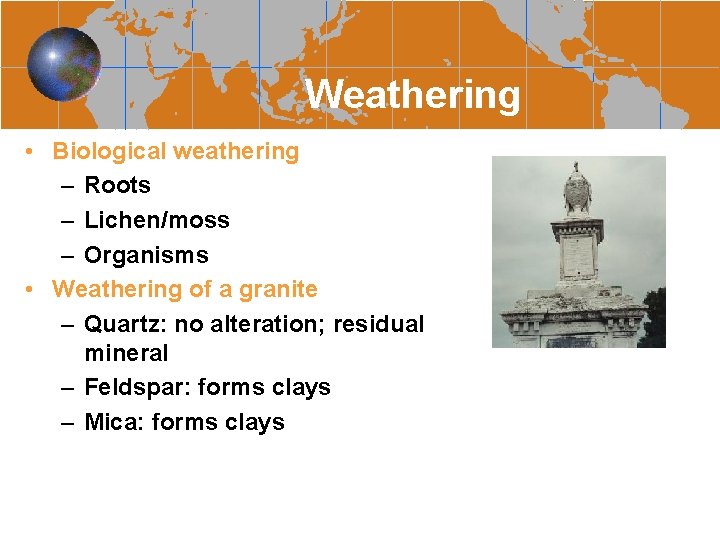
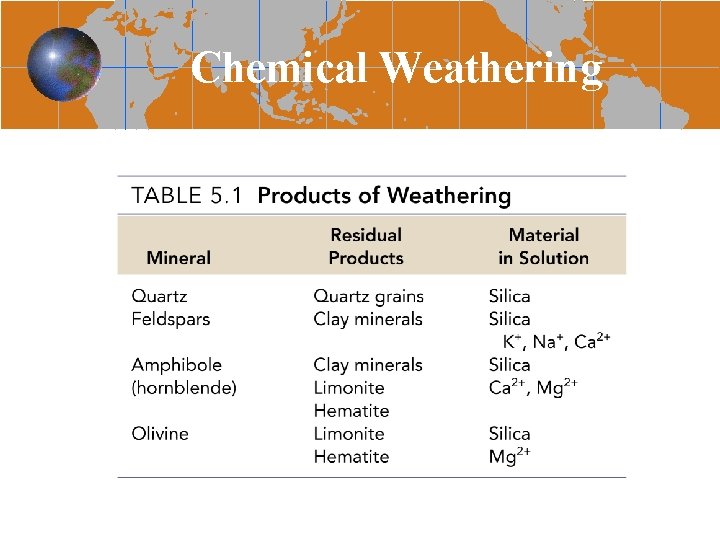
Weathering • Biological weathering – Roots – Lichen/moss – Organisms • Weathering of a granite – Quartz: no alteration; residual mineral – Feldspar: forms clays – Mica: forms clays
Chemical Weathering
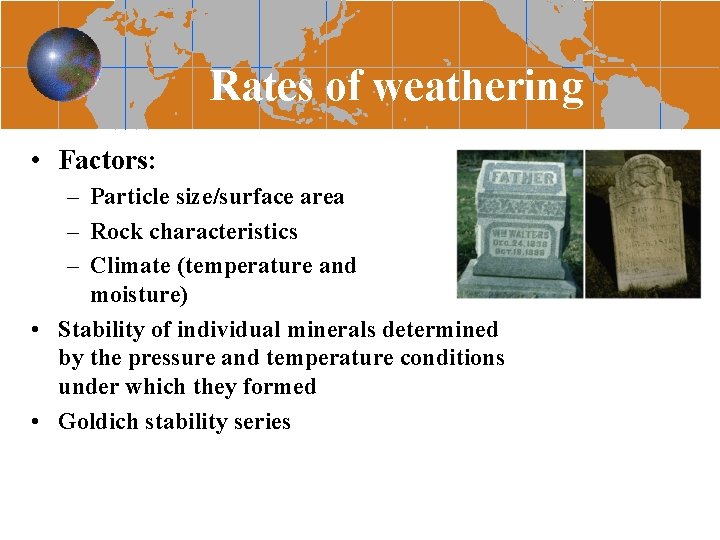
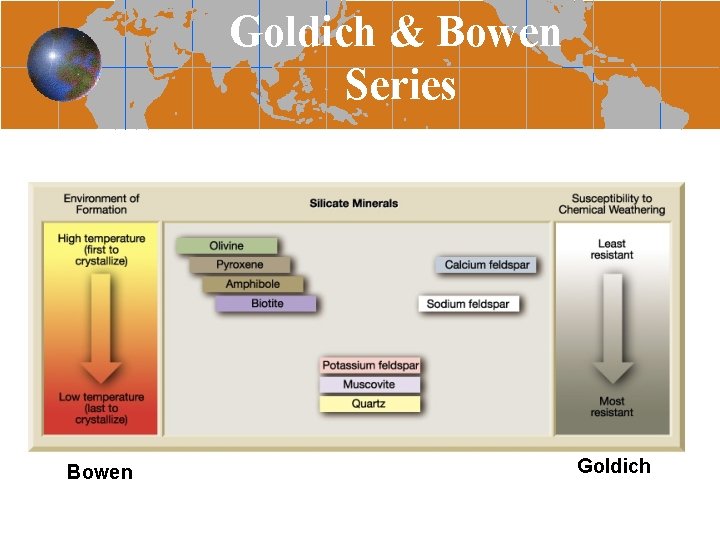
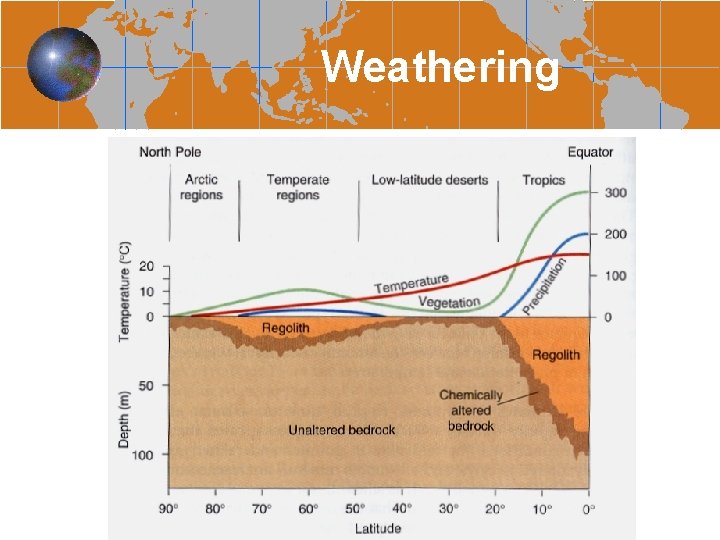
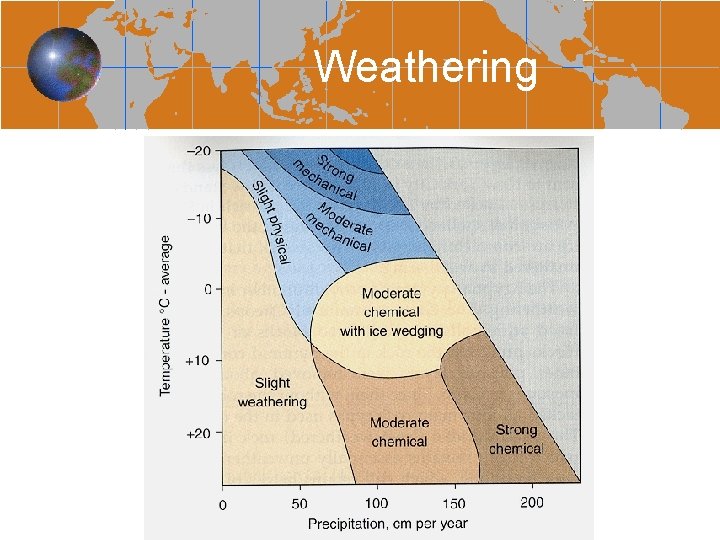
Rates of weathering • Factors: – Particle size/surface area – Rock characteristics – Climate (temperature and moisture) • Stability of individual minerals determined by the pressure and temperature conditions under which they formed • Goldich stability series
Goldich & Bowen Series Bowen Goldich
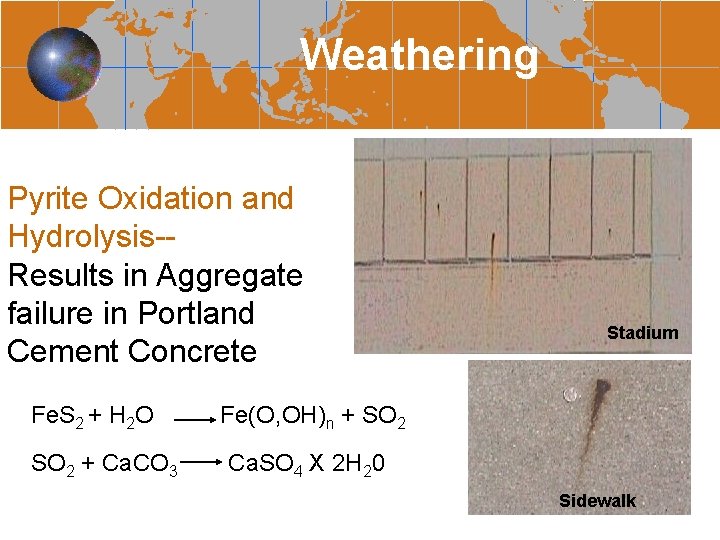
Weathering Pyrite Oxidation and Hydrolysis-Results in Aggregate failure in Portland Cement Concrete Fe. S 2 + H 2 O SO 2 + Ca. CO 3 Stadium Fe(O, OH)n + SO 2 Ca. SO 4 X 2 H 20 Sidewalk
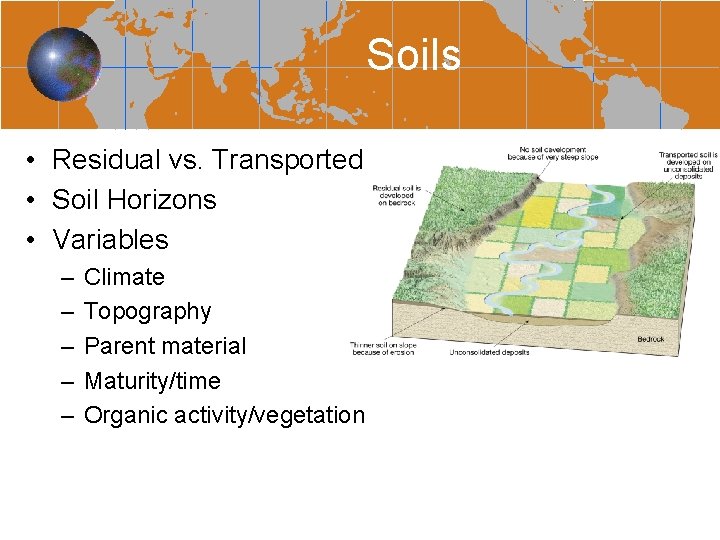
Soils • Residual vs. Transported • Soil Horizons • Variables – – – Climate Topography Parent material Maturity/time Organic activity/vegetation
Weathering
Weathering
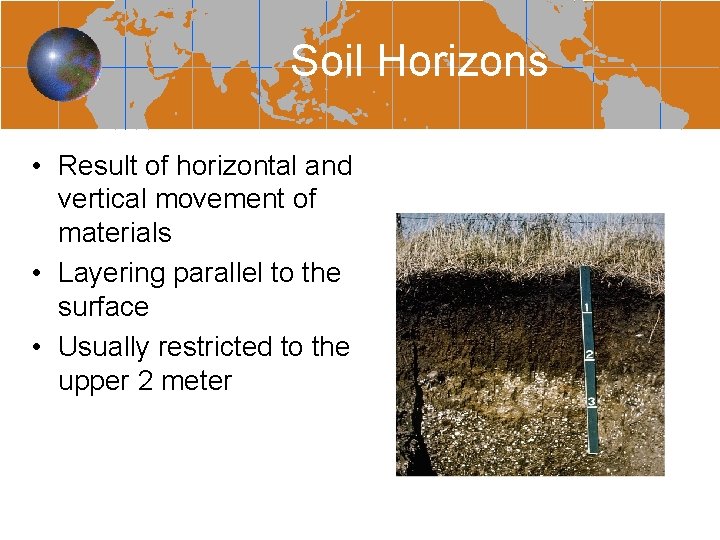
Soil Horizons • Result of horizontal and vertical movement of materials • Layering parallel to the surface • Usually restricted to the upper 2 meter • May not be a good system for some parts of Florida
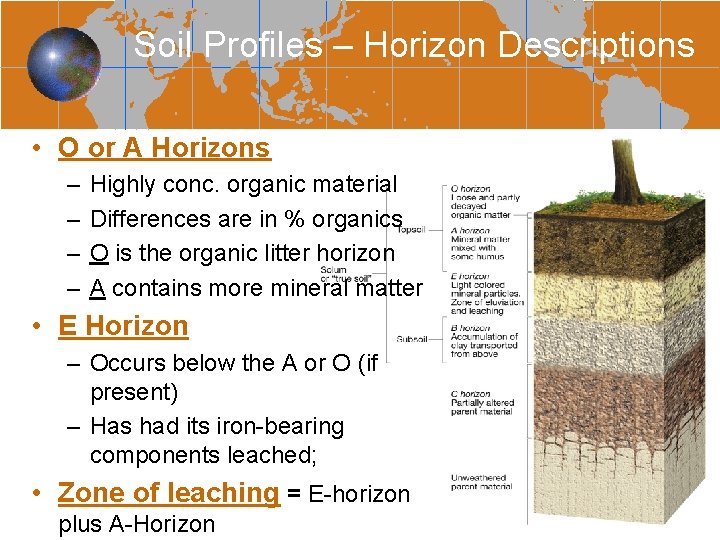
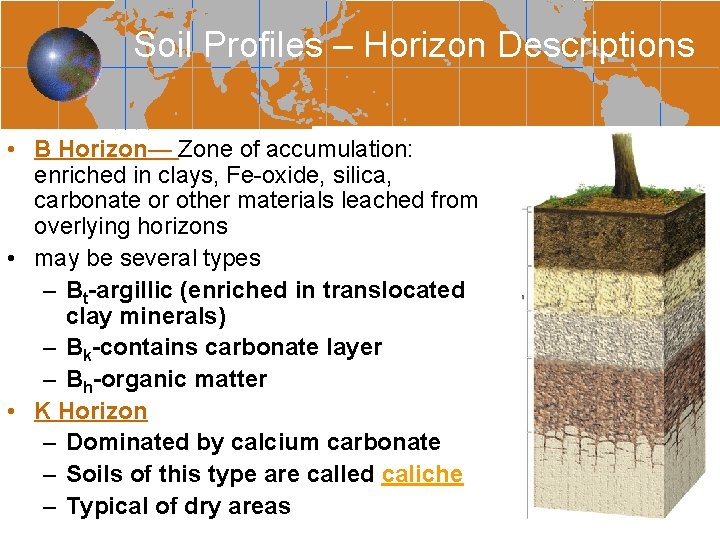
Soil Profiles – Horizon Descriptions • O or A Horizons – – Highly conc. organic material Differences are in % organics O is the organic litter horizon A contains more mineral matter • E Horizon – Occurs below the A or O (if present) – Has had its iron-bearing components leached; • Zone of leaching = E-horizon plus A-Horizon
Soil Profiles – Horizon Descriptions • B Horizon— Zone of accumulation: enriched in clays, Fe-oxide, silica, carbonate or other materials leached from overlying horizons • may be several types – Bt-argillic (enriched in translocated clay minerals) – Bk-contains carbonate layer – Bh-organic matter • K Horizon – Dominated by calcium carbonate – Soils of this type are called caliche – Typical of dry areas
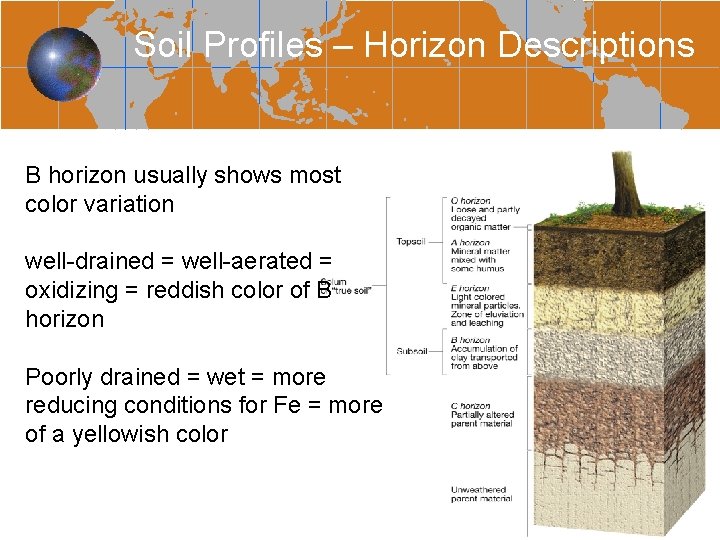
Soil Profiles – Horizon Descriptions • C horizon--partially altered parent material • R horizon--unaltered rock horizon Soil Color--may indicate how well a soil is drained • O and A may be dark due to organic matter; may be white if leached • E if present, may be white • Bk may be white, if present • Note: color is also a factor of original parent material, and Fe-rich materials may produce red soils w/ little soil profile development
Soil Profiles – Horizon Descriptions B horizon usually shows most color variation well-drained = well-aerated = oxidizing = reddish color of B horizon Poorly drained = wet = more reducing conditions for Fe = more of a yellowish color
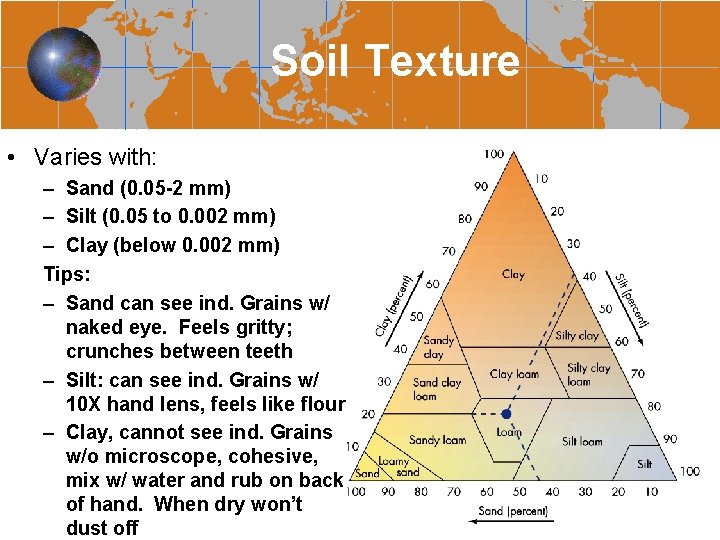
Soil Texture • Varies with: – Sand (0. 05 -2 mm) – Silt (0. 05 to 0. 002 mm) – Clay (below 0. 002 mm) Tips: – Sand can see ind. Grains w/ naked eye. Feels gritty; crunches between teeth – Silt: can see ind. Grains w/ 10 X hand lens, feels like flour – Clay, cannot see ind. Grains w/o microscope, cohesive, mix w/ water and rub on back of hand. When dry won’t dust off
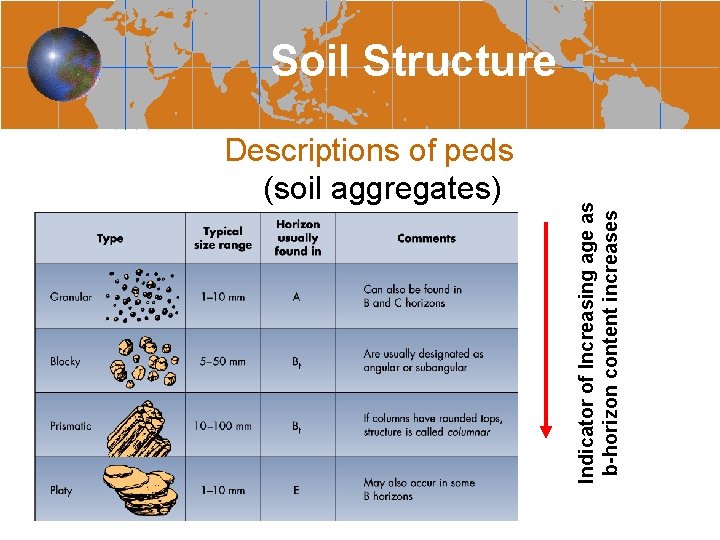
Descriptions of peds (soil aggregates) Indicator of Increasing age as b-horizon content increases Soil Structure
Relative Profile Development – Degree of development indicates the age of the soil – May range from hundreds to hundreds of thousands years Soil Chronosequences – Arrangement from youngest to oldest based on profile development – Good indicator of the relative stability of an area : Important for hazards assessment. (See fig 3. 4 in book)
Soil Fertility • Fertility – Capacity of soils to supply nutrients (N, P, K) for plant growth – Some are naturally fertile (soil developed on some glacial deposits and floodplain deposits) – Can be manipulated using fertilizers and irrigation and adversely affected by interrupting natural processes like flooding • Water in Soils: can greatly affect strength, and shrink/swell potential – Saturated-- voids are filled with water, – Unsaturated--void not filled with water
Soil Classification - Taxonomy • Soil taxonomy (U. S. D. A. ) – Basis for classification – Chemical and physical – Genetic scheme (origin implied) • Six fold hierarchy (see Table 3. 1) – Order--11 orders based on: • • • Morphology (# and types of horizons present) Nutrient status Organic content Color General climatic conditions
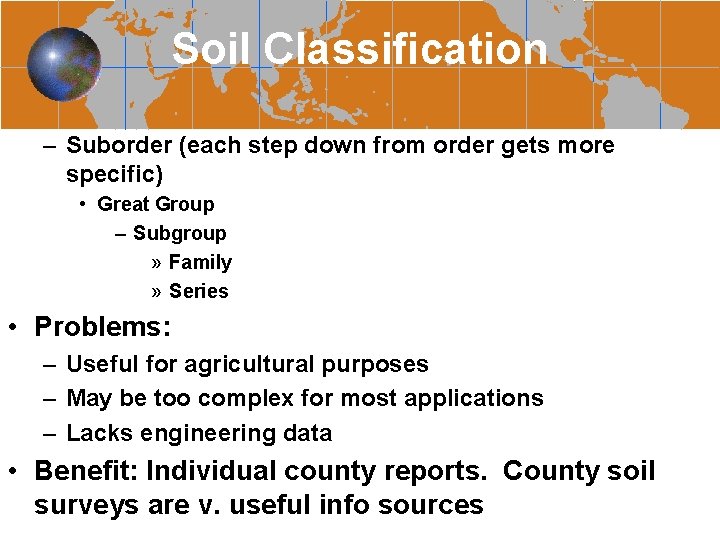
Soil Classification – Suborder (each step down from order gets more specific) • Great Group – Subgroup » Family » Series • Problems: – Useful for agricultural purposes – May be too complex for most applications – Lacks engineering data • Benefit: Individual county reports. County soil surveys are v. useful info sources
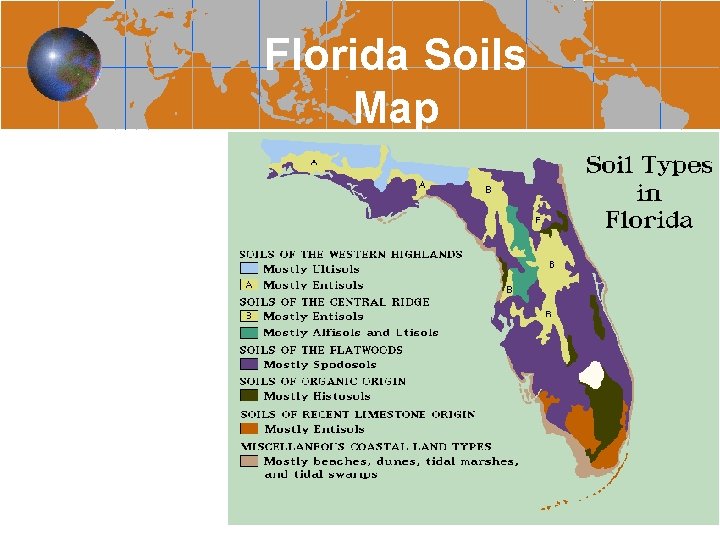
Florida Soils Map
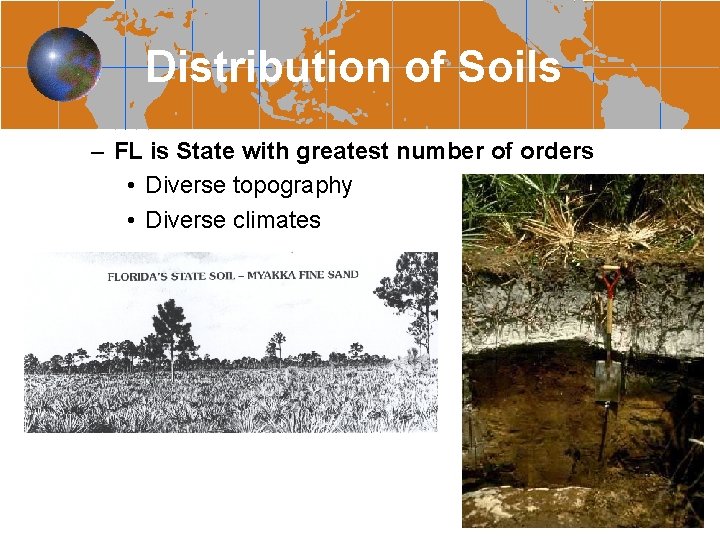
Distribution of Soils – FL is State with greatest number of orders • Diverse topography • Diverse climates
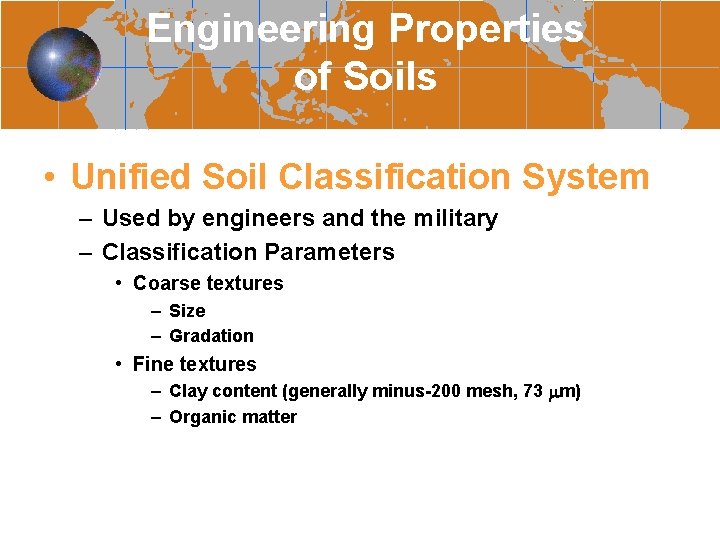
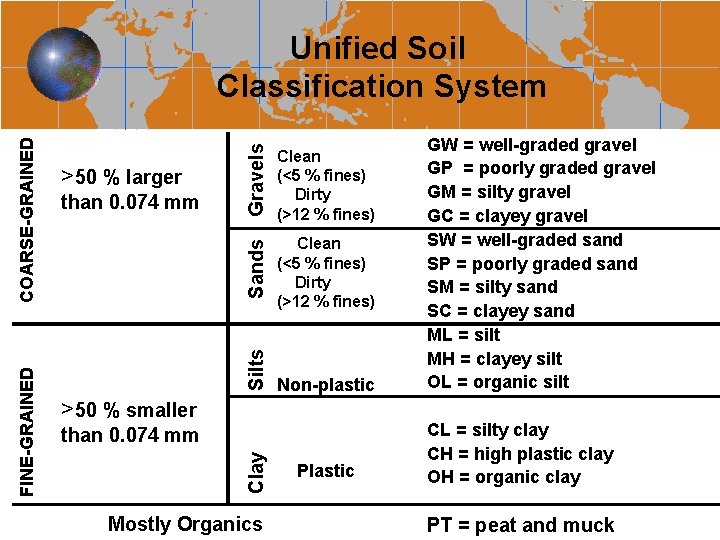
Engineering Properties of Soils • Unified Soil Classification System – Used by engineers and the military – Classification Parameters • Coarse textures – Size – Gradation • Fine textures – Clay content (generally minus-200 mesh, 73 mm) – Organic matter
Gravels Clean (<5 % fines) Dirty (>12 % fines) Silts than 0. 074 mm Sands >50 % larger Clean (<5 % fines) Dirty (>12 % fines) Non-plastic >50 % smaller than 0. 074 mm Clay FINE-GRAINED COARSE-GRAINED Unified Soil Classification System Mostly Organics Plastic GW = well-graded gravel GP = poorly graded gravel GM = silty gravel GC = clayey gravel SW = well-graded sand SP = poorly graded sand SM = silty sand SC = clayey sand ML = silt MH = clayey silt OL = organic silt CL = silty clay CH = high plastic clay OH = organic clay PT = peat and muck
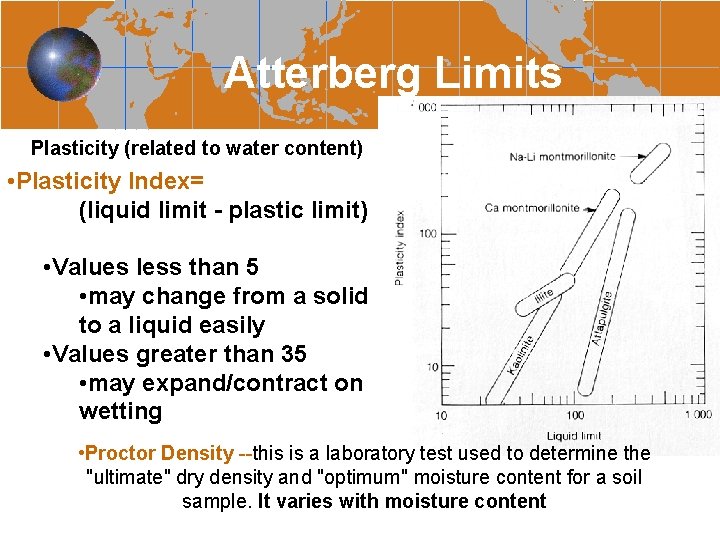
Atterberg Limits Plasticity (related to water content) • Plasticity Index= (liquid limit - plastic limit) • Values less than 5 • may change from a solid to a liquid easily • Values greater than 35 • may expand/contract on wetting • Proctor Density --this is a laboratory test used to determine the "ultimate" dry density and "optimum" moisture content for a soil sample. It varies with moisture content
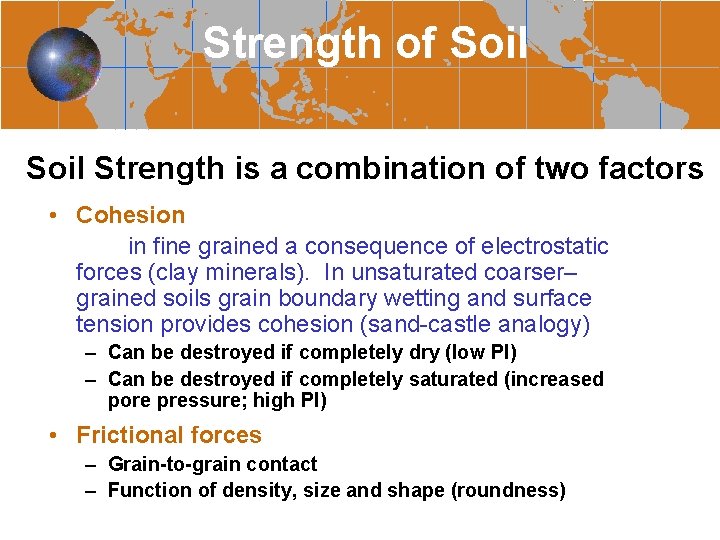
Strength of Soil Strength is a combination of two factors • Cohesion in fine grained a consequence of electrostatic forces (clay minerals). In unsaturated coarser– grained soils grain boundary wetting and surface tension provides cohesion (sand-castle analogy) – Can be destroyed if completely dry (low PI) – Can be destroyed if completely saturated (increased pore pressure; high PI) • Frictional forces – Grain-to-grain contact – Function of density, size and shape (roundness)
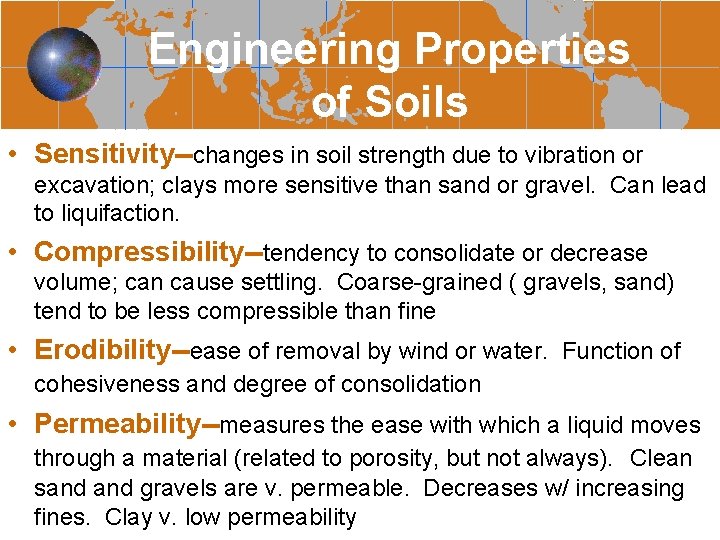
Engineering Properties of Soils • Sensitivity--changes in soil strength due to vibration or excavation; clays more sensitive than sand or gravel. Can lead to liquifaction. • Compressibility--tendency to consolidate or decrease volume; can cause settling. Coarse-grained ( gravels, sand) tend to be less compressible than fine • Erodibility--ease of removal by wind or water. Function of cohesiveness and degree of consolidation • Permeability--measures the ease with which a liquid moves through a material (related to porosity, but not always). Clean sand gravels are v. permeable. Decreases w/ increasing fines. Clay v. low permeability