SHOCK THERAPY VERSUS GRADUALISM RECONSIDERED LESSONS FROM TRANSITION
- Slides: 32
SHOCK THERAPY VERSUS GRADUALISM RECONSIDERED: LESSONS FROM TRANSITION ECONOMIES AFTER 15 YEARS OF REFORMS Vladimir Popov This paper is the logical continuation of my earlier article: Shock Therapy versus Gradualism: The End of the Debate (Explaining the Magnitude of the Transformational Recession) Comparative Economic Studies, Vol. 42, No. 1, Spring 2000, pp. 1 -57. The arguments of this earlier article, however, are reconsidered in light of new research and evidence.
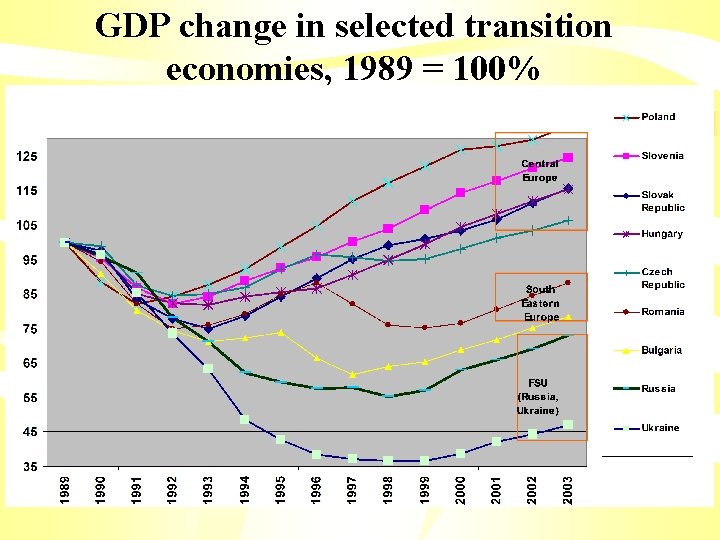
GDP change in selected transition economies, 1989 = 100%
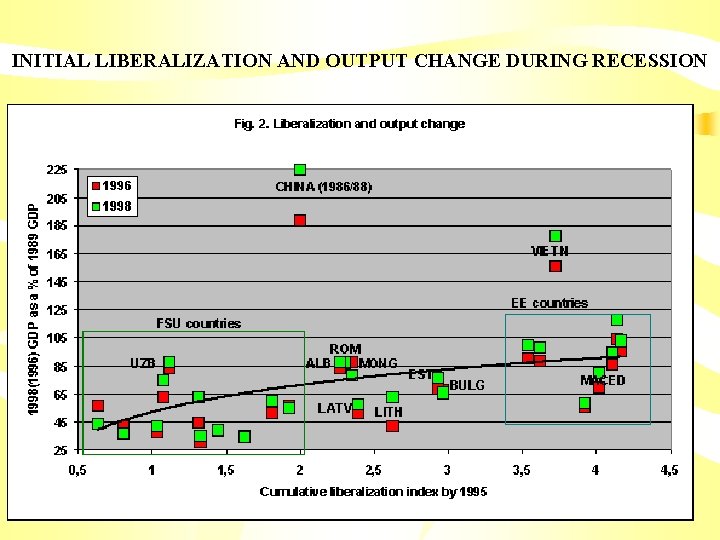
INITIAL LIBERALIZATION AND OUTPUT CHANGE DURING RECESSION
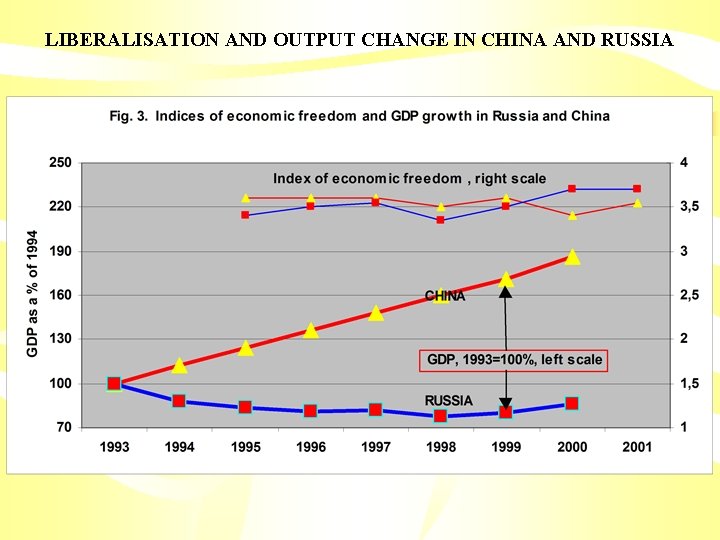
LIBERALISATION AND OUTPUT CHANGE IN CHINA AND RUSSIA
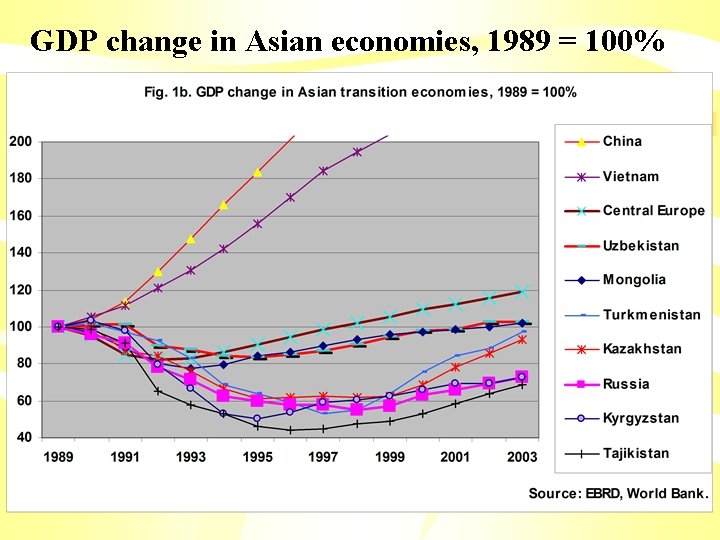
GDP change in Asian economies, 1989 = 100%
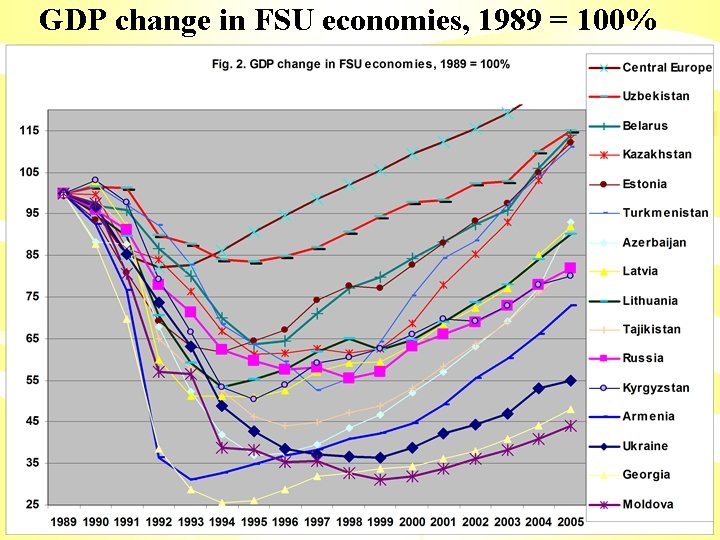
GDP change in FSU economies, 1989 = 100%
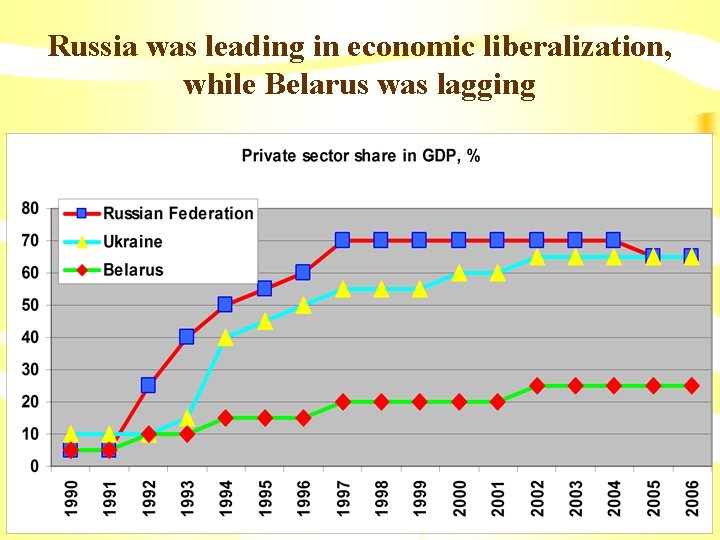
Russia was leading in economic liberalization, while Belarus was lagging
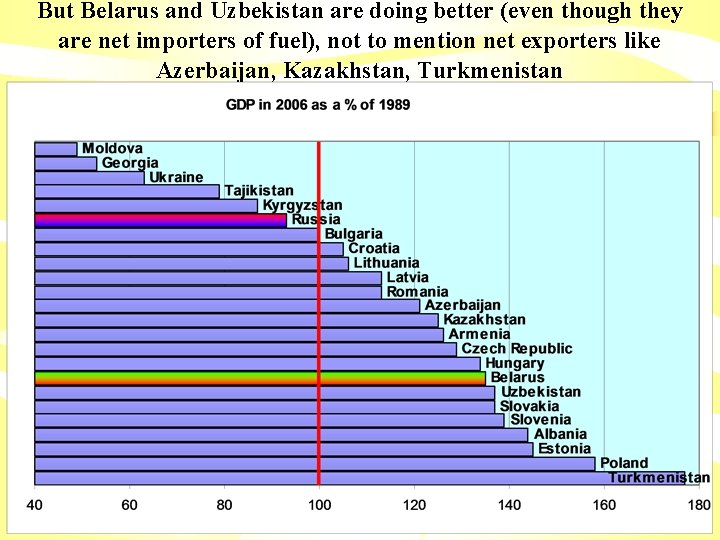
But Belarus and Uzbekistan are doing better (even though they are net importers of fuel), not to mention net exporters like Azerbaijan, Kazakhstan, Turkmenistan
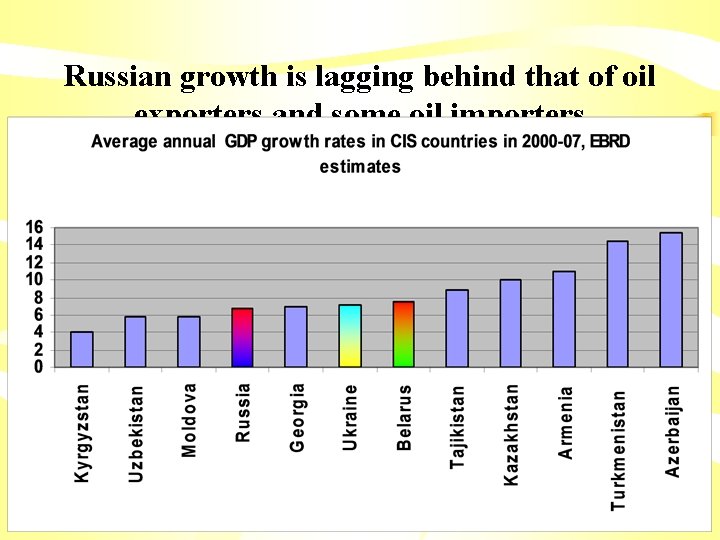
Russian growth is lagging behind that of oil exporters and some oil importers
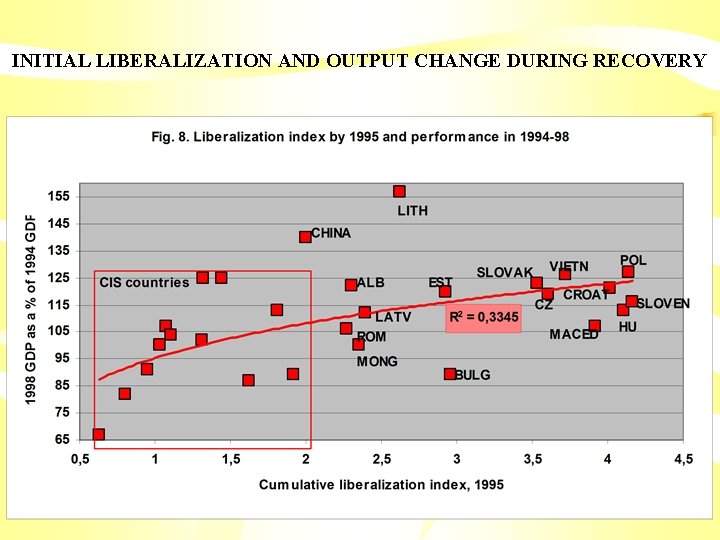
INITIAL LIBERALIZATION AND OUTPUT CHANGE DURING RECOVERY
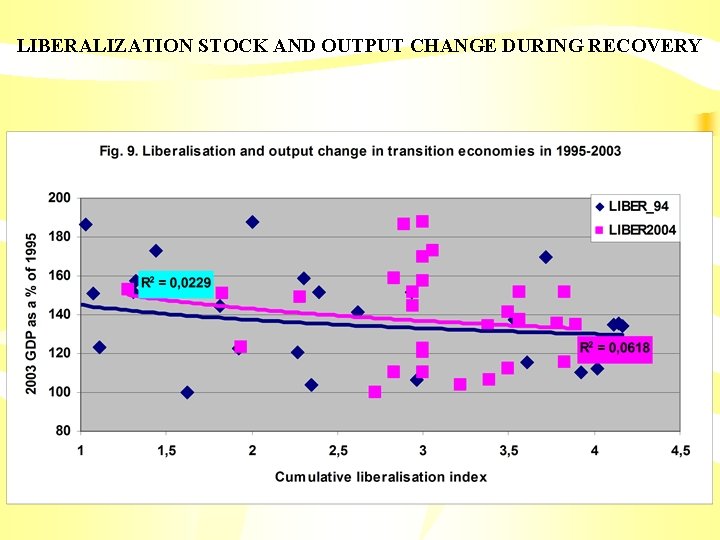
LIBERALIZATION STOCK AND OUTPUT CHANGE DURING RECOVERY
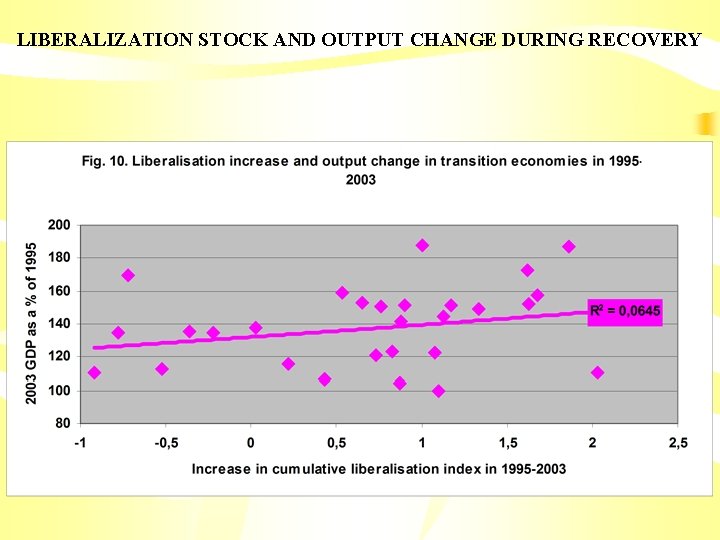
LIBERALIZATION STOCK AND OUTPUT CHANGE DURING RECOVERY
Does liberalization matter? • Vietnam and China are similar in initial conditions and in transition results (immediate growth of output without transformational recession) despite different reform strategies: • Chinese reforms are the classical example of gradualism • Vietnamese reformers introduced shock therapy treatment (instant deregulation of most prices and introduction of convertibility of dong) in 1989 • Differing performance of the former Soviet Union (FSU) states: • Baltic states are the champions of liberalization and stabilization in the region. In the Baltics, however, output fell in the early 1990 s by 36 -60% and even in 2005, 10 years after the bottom of the recession was reached, was still below the pre-recession maximum. • Uzbekistan is commonly perceived to be one of the worst procrastinators. However in Uzbekistan the reduction of output in 1990 -95 totaled only 18% and the economy started to grow again in 1996 • By 2005 only two former Soviet republics - Uzbekistan and Turkmenistan - surpassed the pre-recession level of 1989
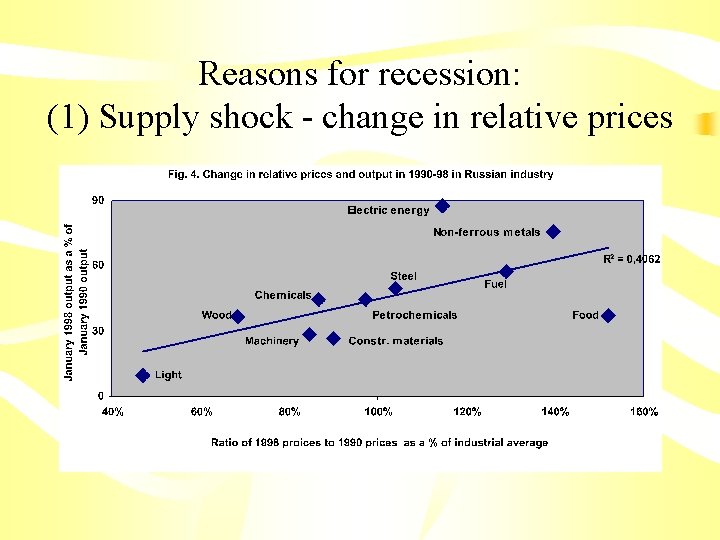
Reasons for recession: (1) Supply shock - change in relative prices
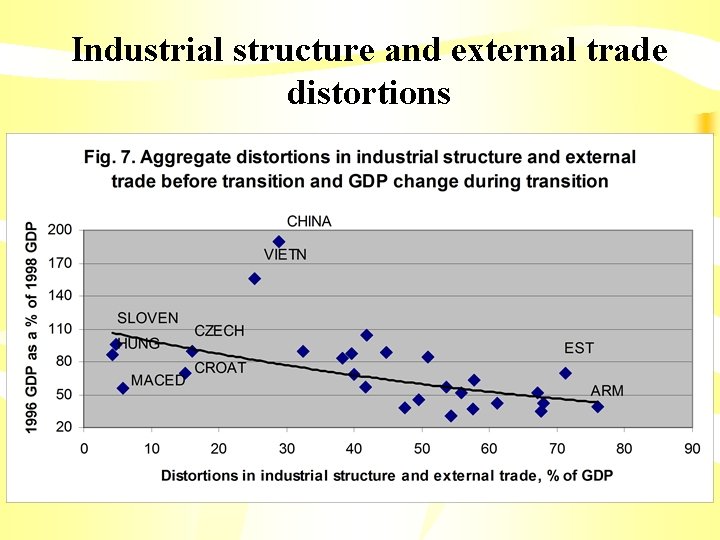
Industrial structure and external trade distortions
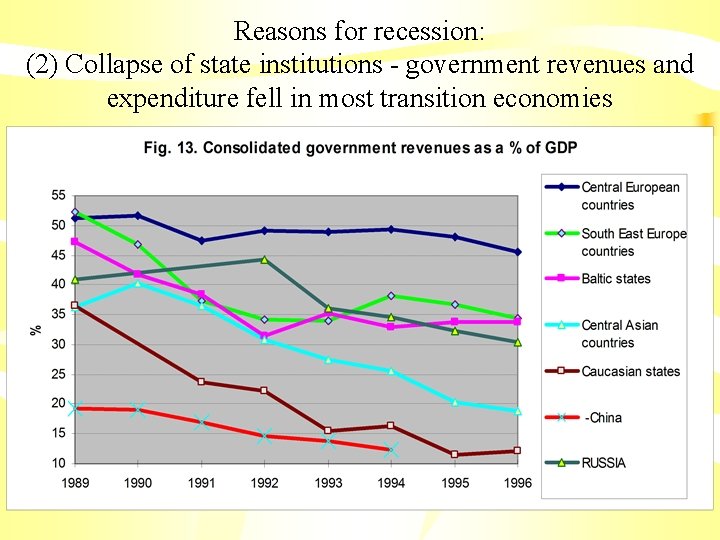
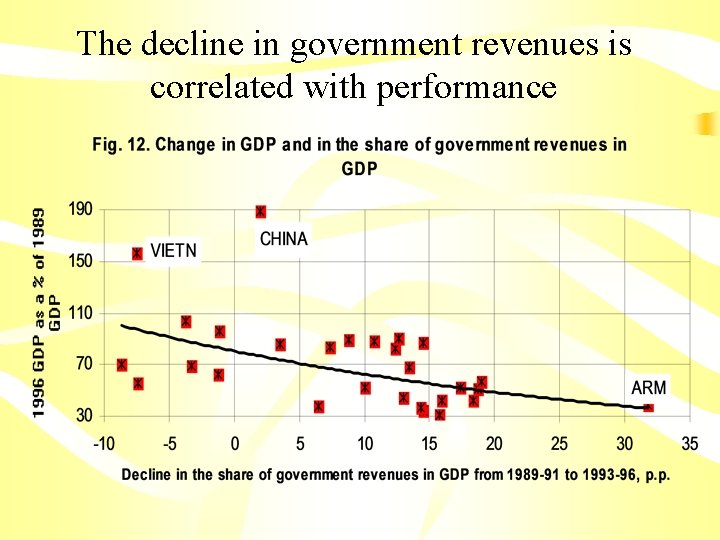
Reasons for recession: (2) Collapse of state institutions - government revenues and expenditure fell in most transition economies
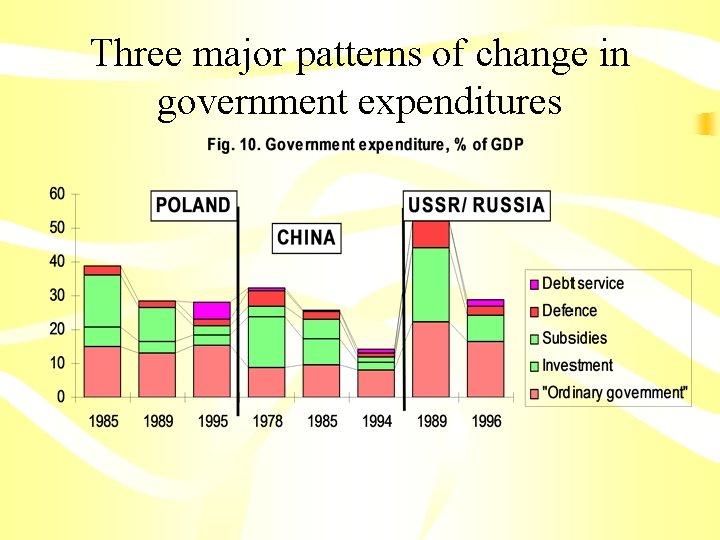
Three major patterns of change in government expenditures
The decline in government revenues is correlated with performance
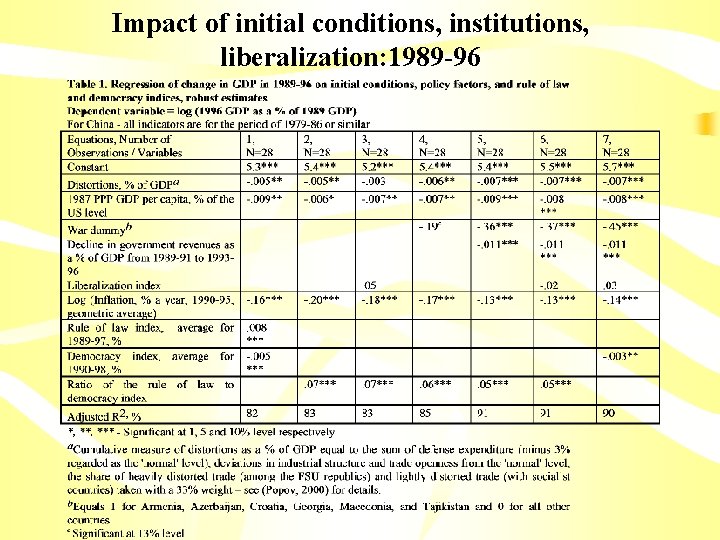
Impact of initial conditions, institutions, liberalization: 1989 -96
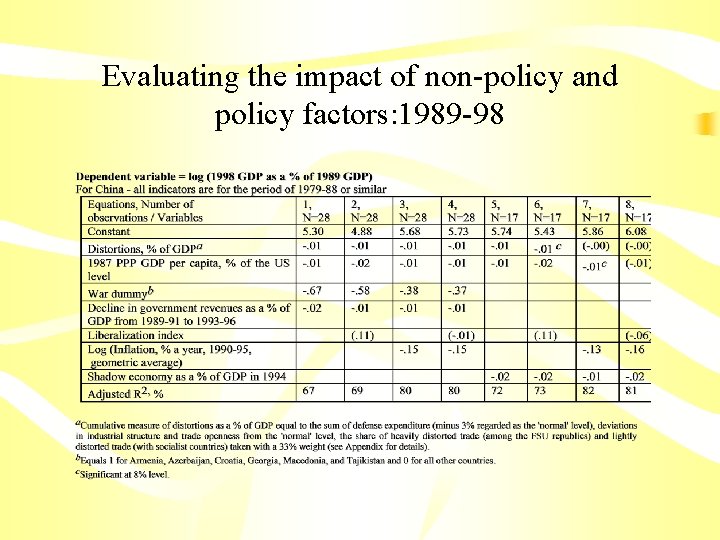
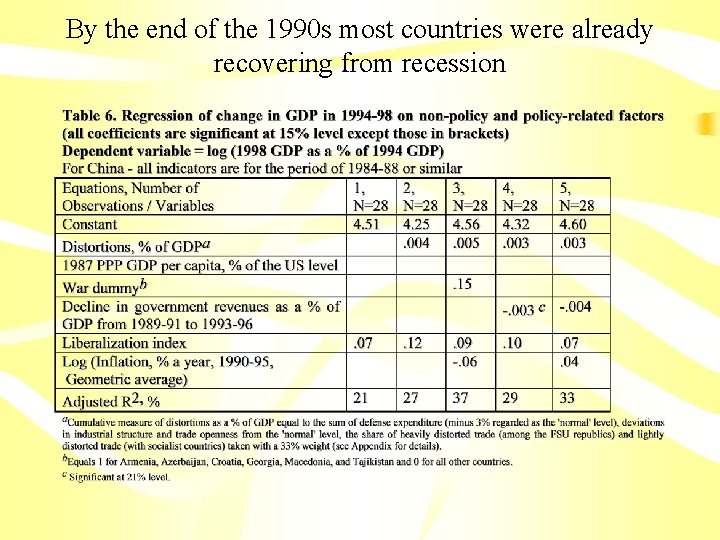
Evaluating the impact of non-policy and policy factors: 1989 -98
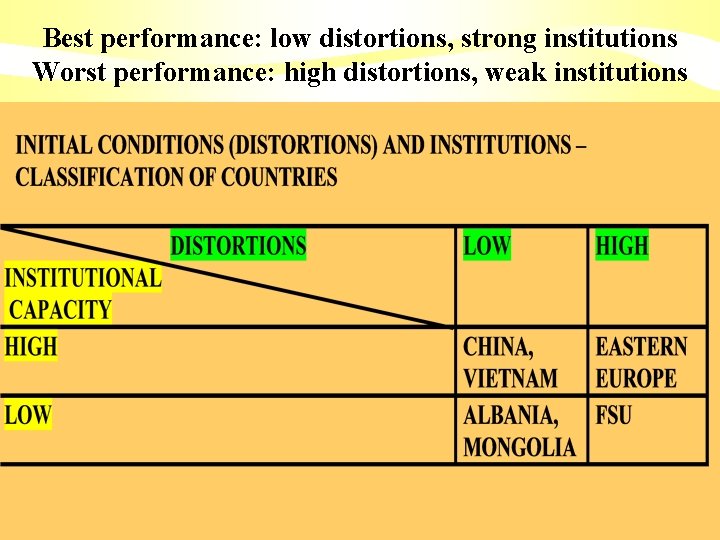
Best performance: low distortions, strong institutions Worst performance: high distortions, weak institutions
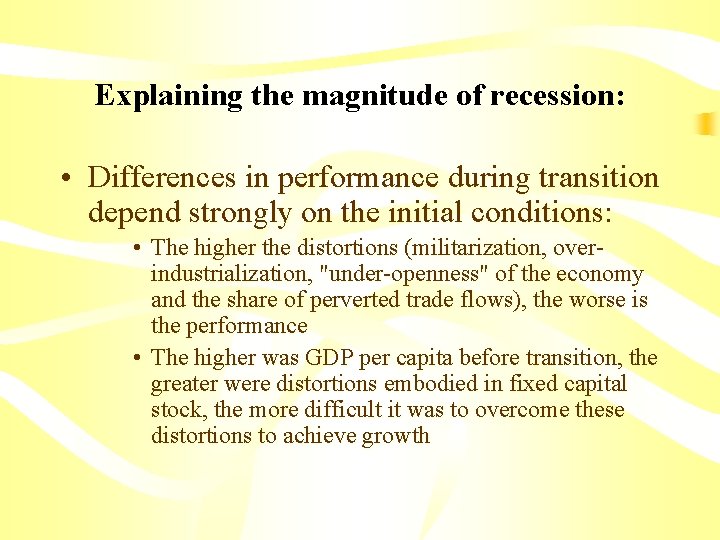
Explaining the magnitude of recession: • Differences in performance during transition depend strongly on the initial conditions: • The higher the distortions (militarization, overindustrialization, "under-openness" of the economy and the share of perverted trade flows), the worse is the performance • The higher was GDP per capita before transition, the greater were distortions embodied in fixed capital stock, the more difficult it was to overcome these distortions to achieve growth
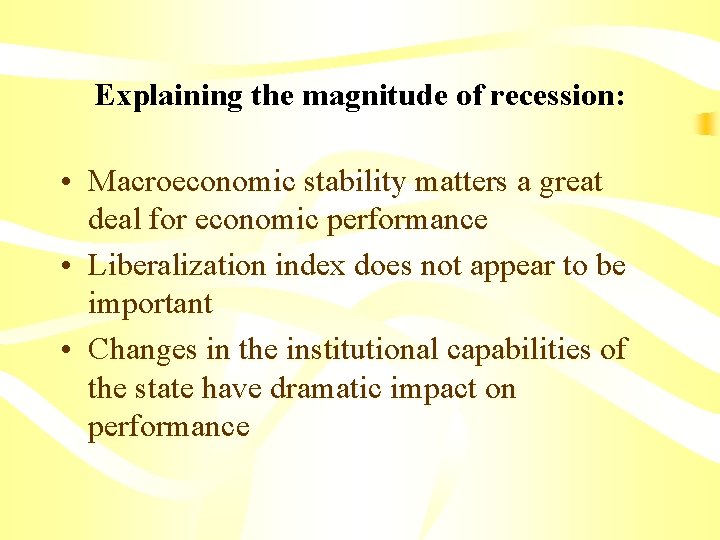
Explaining the magnitude of recession: • Macroeconomic stability matters a great deal for economic performance • Liberalization index does not appear to be important • Changes in the institutional capabilities of the state have dramatic impact on performance
By the end of the 1990 s most countries were already recovering from recession
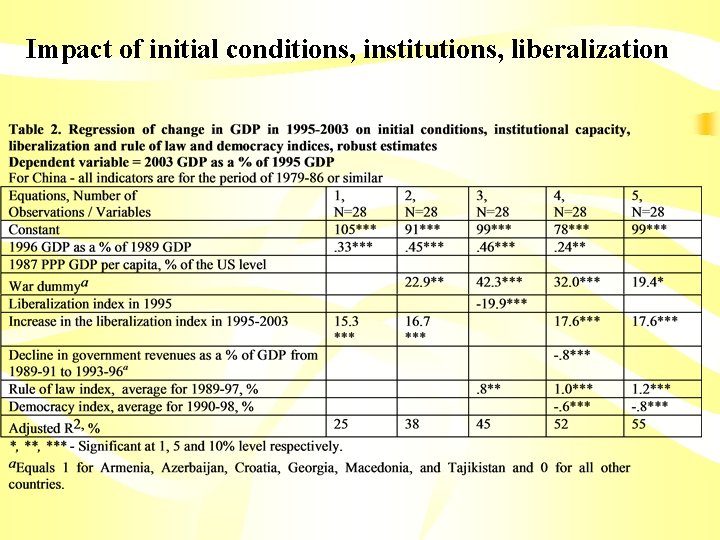
Impact of initial conditions, institutions, liberalization
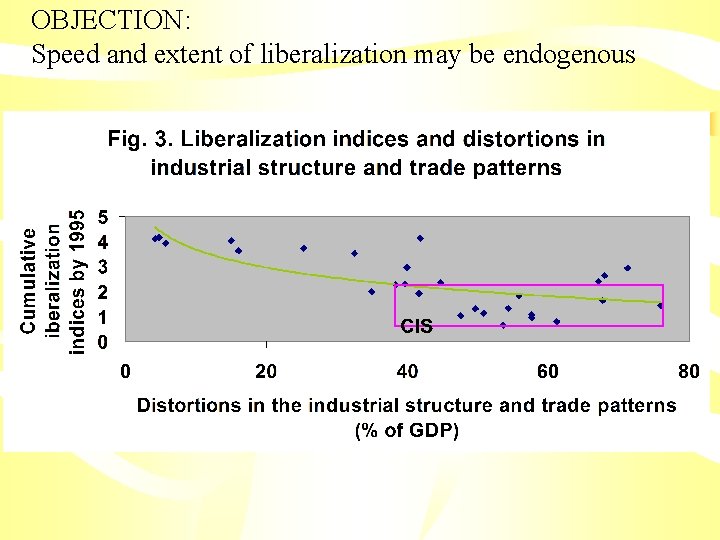
OBJECTION: Speed and extent of liberalization may be endogenous
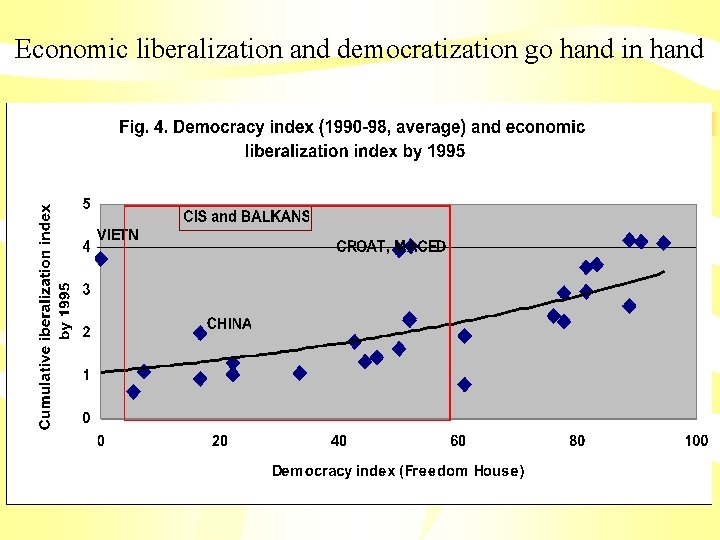
Economic liberalization and democratization go hand in hand
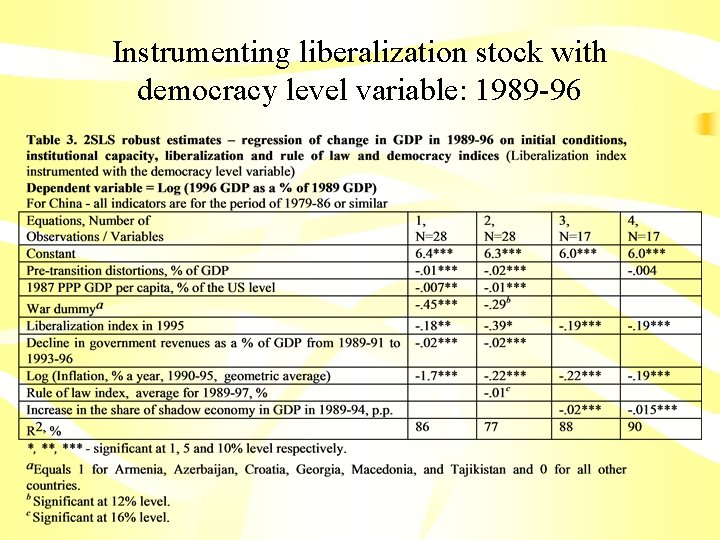
Instrumenting liberalization stock with democracy level variable: 1989 -96
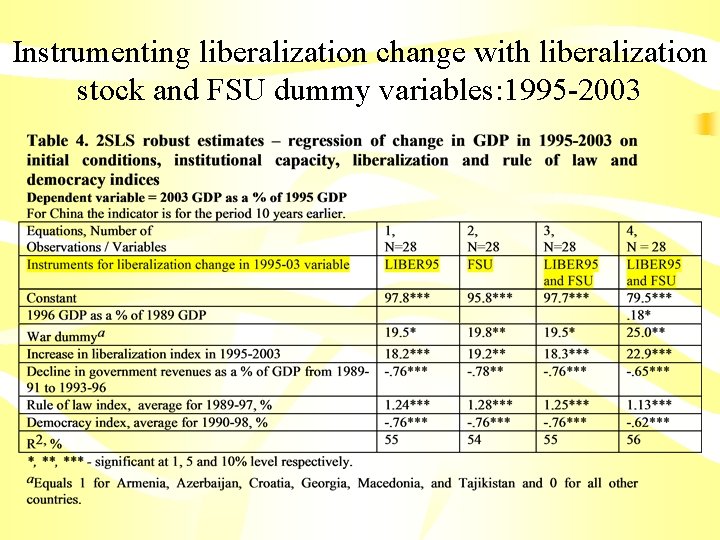
Instrumenting liberalization change with liberalization stock and FSU dummy variables: 1995 -2003
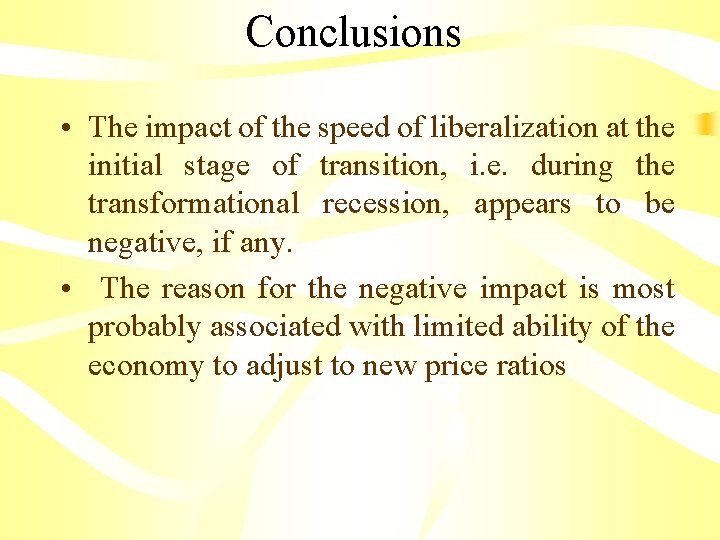
Conclusions • The impact of the speed of liberalization at the initial stage of transition, i. e. during the transformational recession, appears to be negative, if any. • The reason for the negative impact is most probably associated with limited ability of the economy to adjust to new price ratios
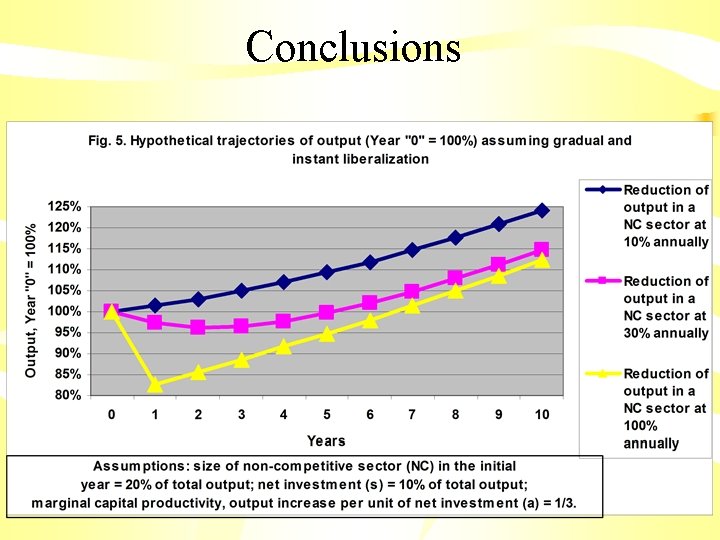
Conclusions
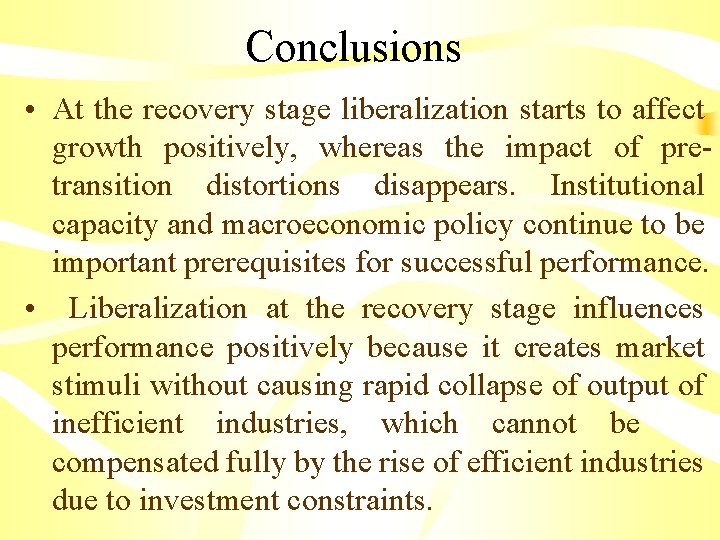
Conclusions • At the recovery stage liberalization starts to affect growth positively, whereas the impact of pretransition distortions disappears. Institutional capacity and macroeconomic policy continue to be important prerequisites for successful performance. • Liberalization at the recovery stage influences performance positively because it creates market stimuli without causing rapid collapse of output of inefficient industries, which cannot be compensated fully by the rise of efficient industries due to investment constraints.