
Foundations of Astronomy 13 e Seeds Chapter 11
- Slides: 39
Foundations of Astronomy | 13 e Seeds Chapter 11 The Formation and Structure of Stars © Cengage Learning 2016
Guidepost • In this chapter, you will consider how the interstellar medium condenses into stars and what the conditions inside stars must be like – How do stars form? – What is the evidence that stars are forming now? – How do stars maintain their stability? – How do stars make energy? © Cengage Learning 2016
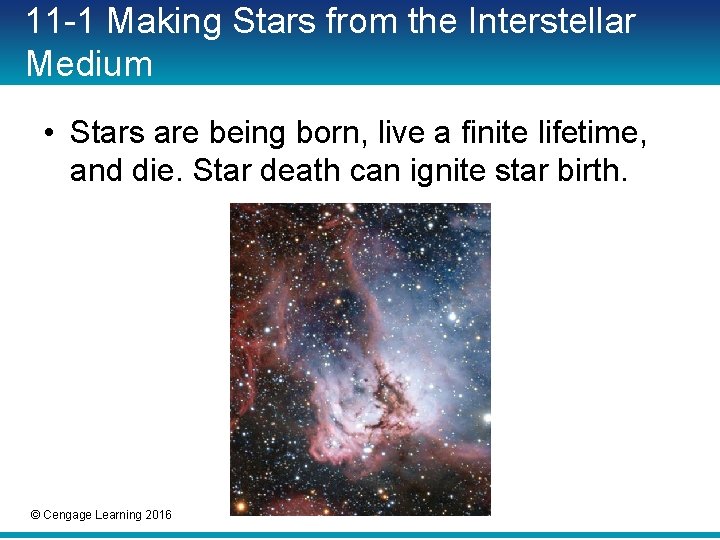
11 -1 Making Stars from the Interstellar Medium • Stars are being born, live a finite lifetime, and die. Star death can ignite star birth. © Cengage Learning 2016
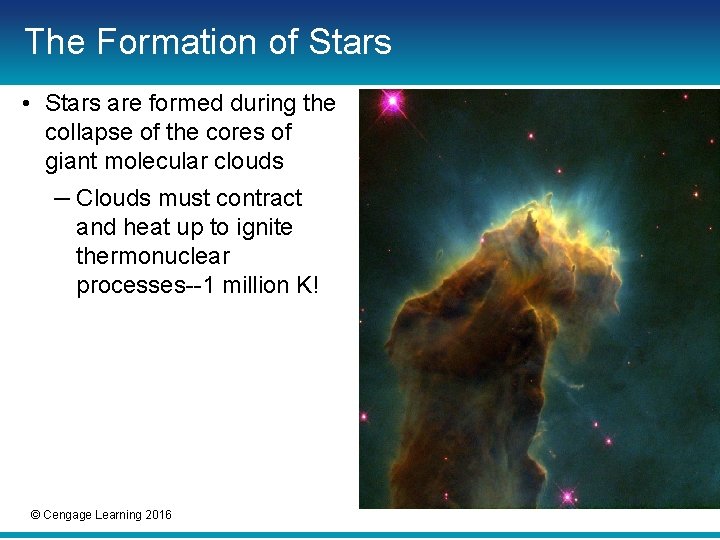
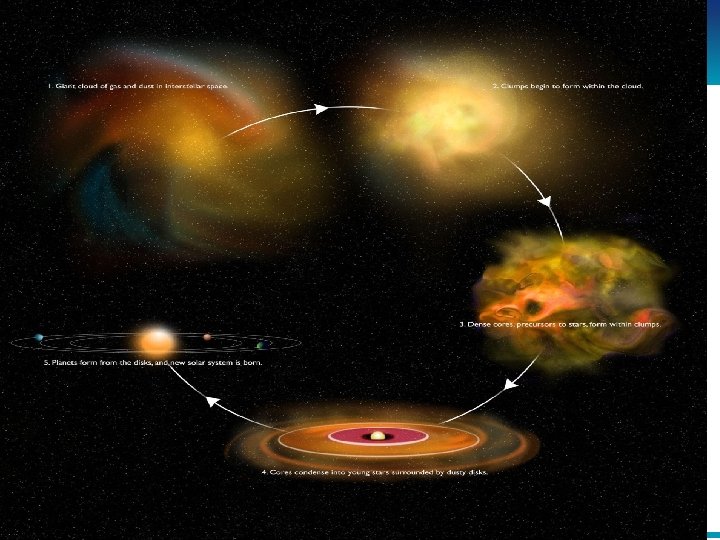
The Formation of Stars • Stars are formed during the collapse of the cores of giant molecular clouds – Clouds must contract and heat up to ignite thermonuclear processes--1 million K! © Cengage Learning 2016
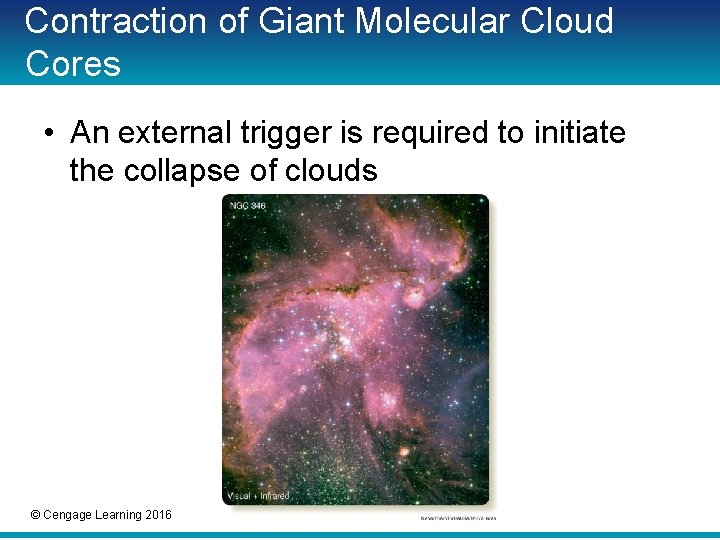
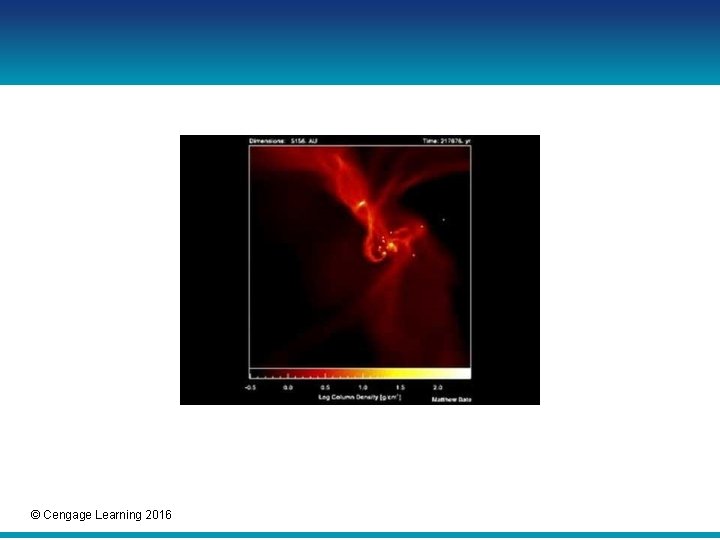
Contraction of Giant Molecular Cloud Cores • An external trigger is required to initiate the collapse of clouds © Cengage Learning 2016
© Cengage Learning 2016
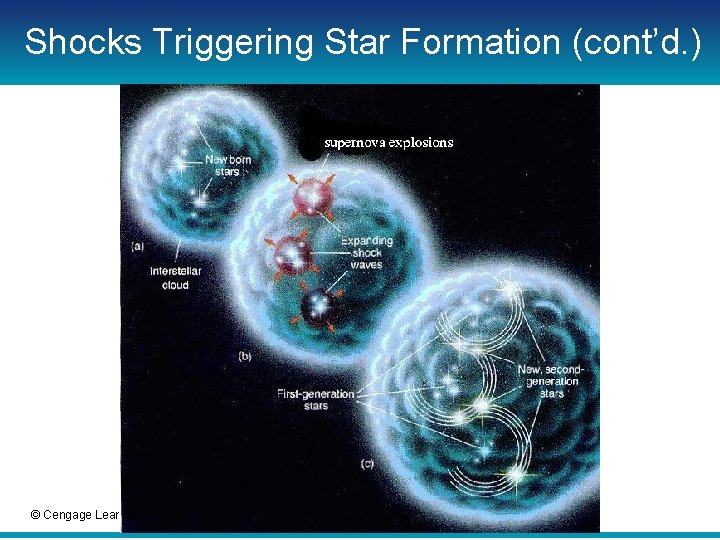
Shocks Triggering Star Formation • Shock wave moves towards interstellar gas cloud – Passes through and compresses gas cloud • Motion of particles in the cloud continue post-shock wave • Densest part of the cloud becomes gravitationally unstable • Stars are born within the contracting regions of the gas © Cengage Learning 2016
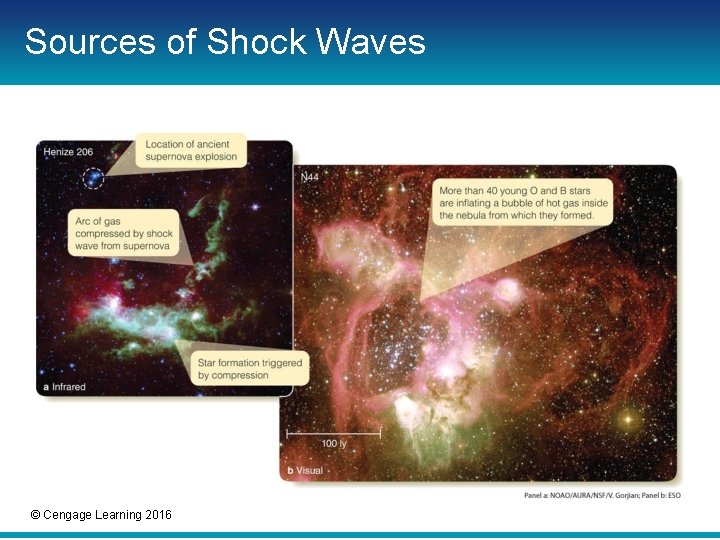
Sources of Shock Waves • Massive stars die young → supernovae tend to happen near sites of recent star formation • Ionization fronts of hot, massive O or B stars producing UV radiation • Collisions of giant molecular clouds • Spiral arms in galaxies like our Milky Way are probably rotating shock-wave patterns © Cengage Learning 2016
Shocks Triggering Star Formation (cont’d. ) © Cengage Learning 2016
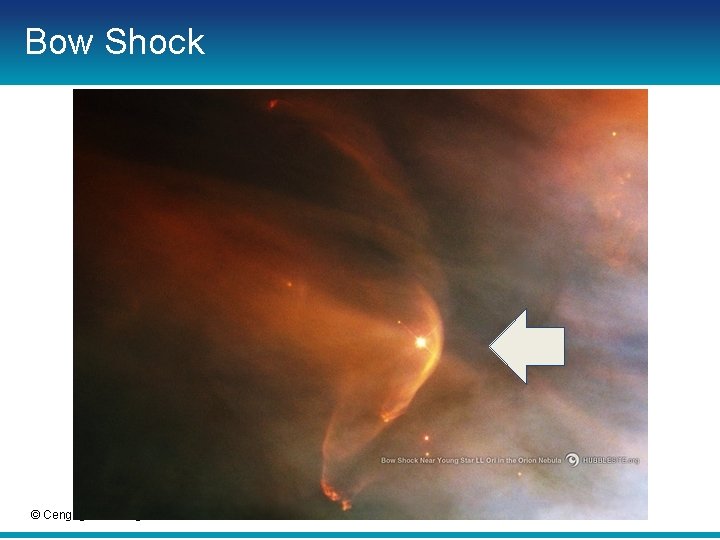
Bow Shock © Cengage Learning 2016
Sources of Shock Waves © Cengage Learning 2016
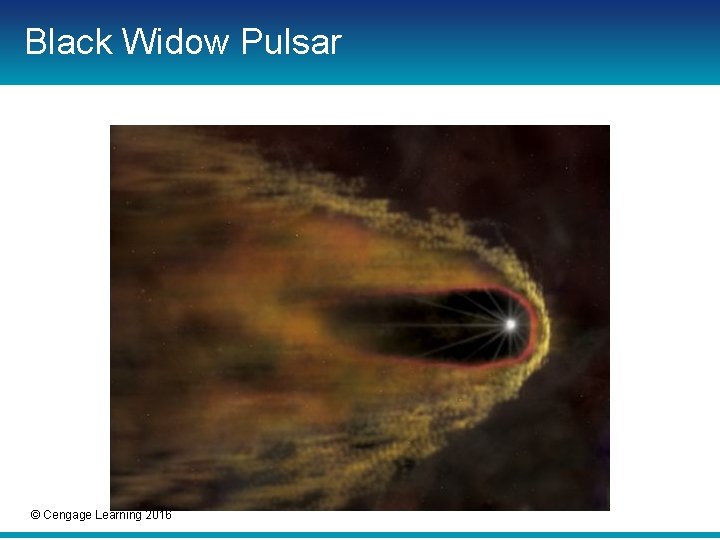
Black Widow Pulsar © Cengage Learning 2016
© Cengage Learning 2016
Protostars • Pre-birth state of stars – H → He fusion not yet ignited • Protostars: a forming star compressed enough to be opaque at all wavelengths, but not hot enough to generate fusion –“cocoon nebulae” hide the forming star • Fusion is the birth of a star! © Cengage Learning 2016
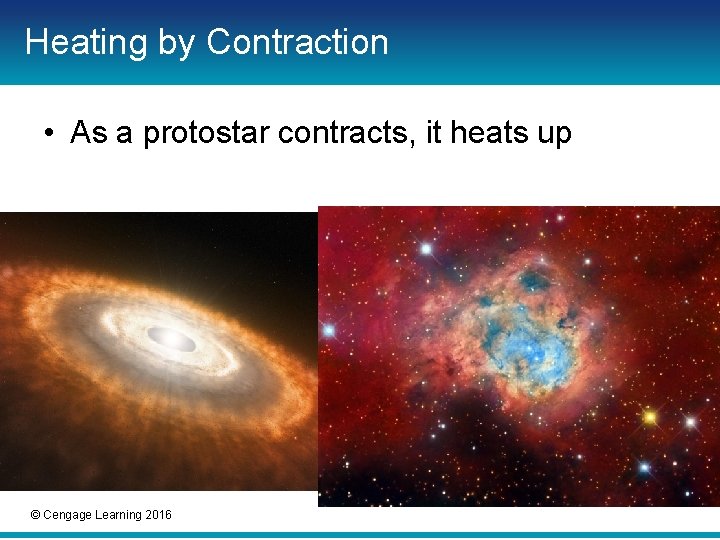
Heating by Contraction • As a protostar contracts, it heats up © Cengage Learning 2016
© Cengage Learning 2016
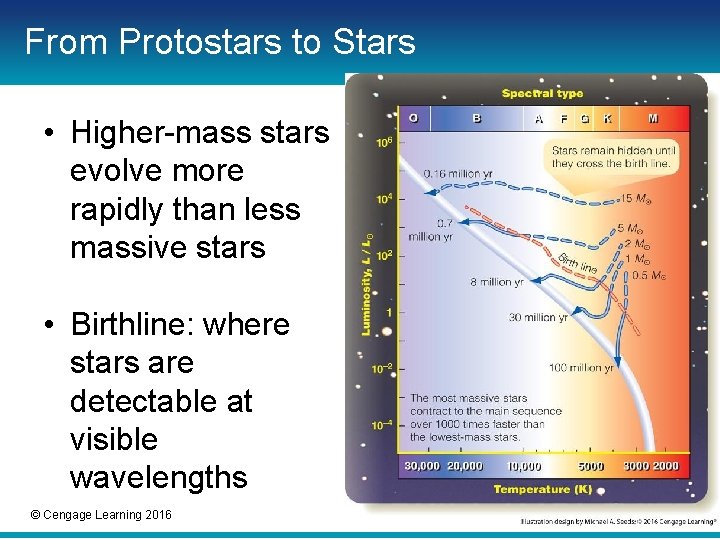
From Protostars to Stars • Higher-mass stars evolve more rapidly than less massive stars • Birthline: where stars are detectable at visible wavelengths © Cengage Learning 2016
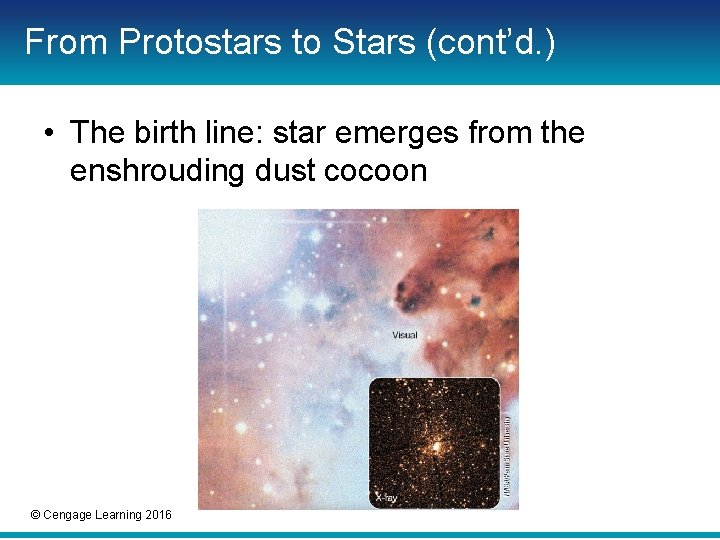
From Protostars to Stars (cont’d. ) • The birth line: star emerges from the enshrouding dust cocoon © Cengage Learning 2016
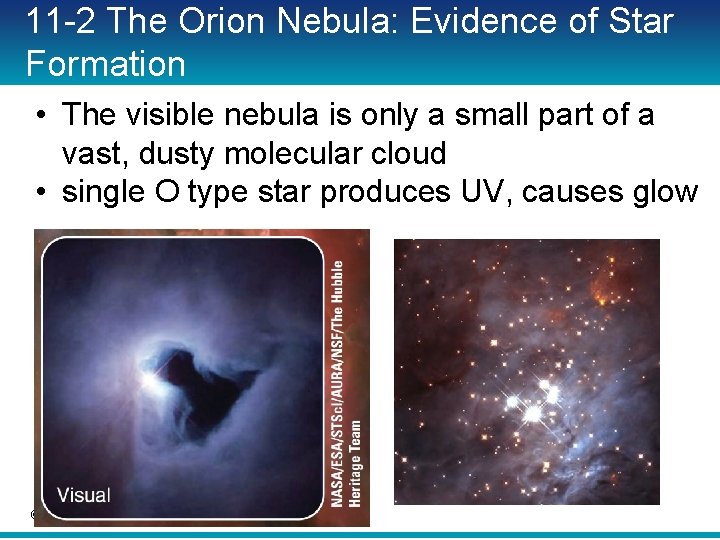
11 -2 The Orion Nebula: Evidence of Star Formation • The visible nebula is only a small part of a vast, dusty molecular cloud • single O type star produces UV, causes glow © Cengage Learning 2016
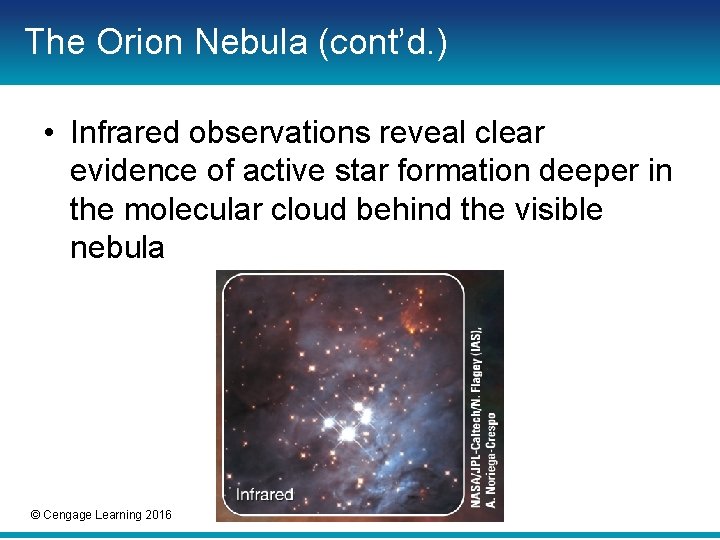
The Orion Nebula (cont’d. ) • Infrared observations reveal clear evidence of active star formation deeper in the molecular cloud behind the visible nebula © Cengage Learning 2016
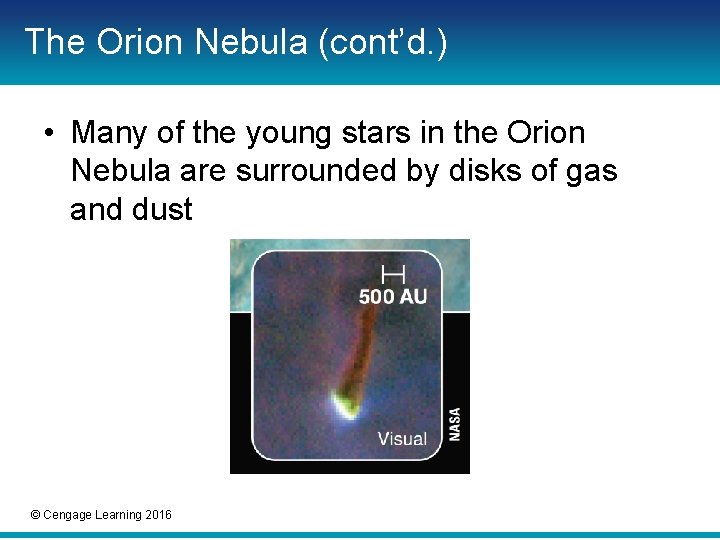
The Orion Nebula (cont’d. ) • Many of the young stars in the Orion Nebula are surrounded by disks of gas and dust © Cengage Learning 2016
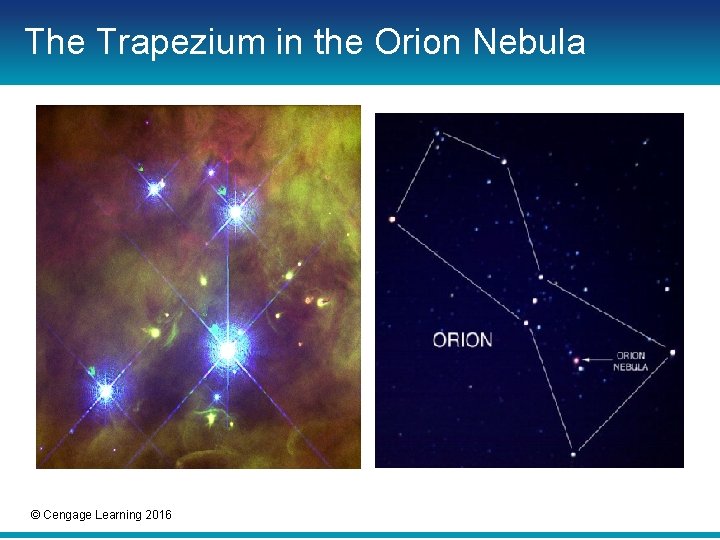
The Trapezium in the Orion Nebula © Cengage Learning 2016
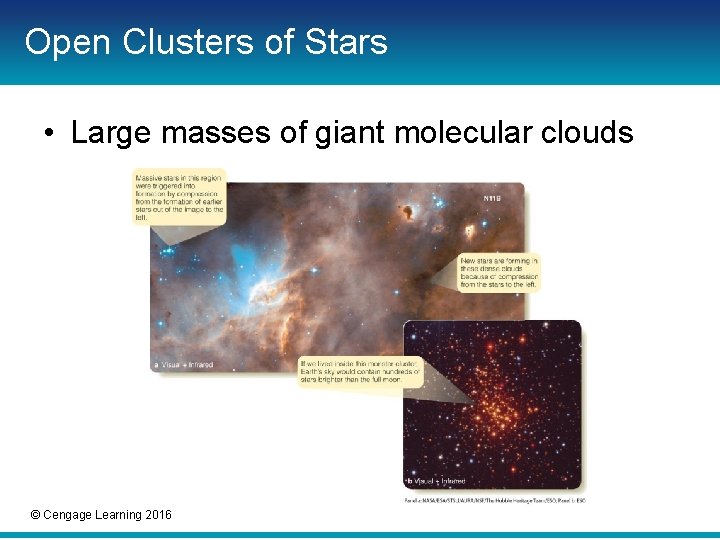
Open Clusters of Stars • Large masses of giant molecular clouds © Cengage Learning 2016
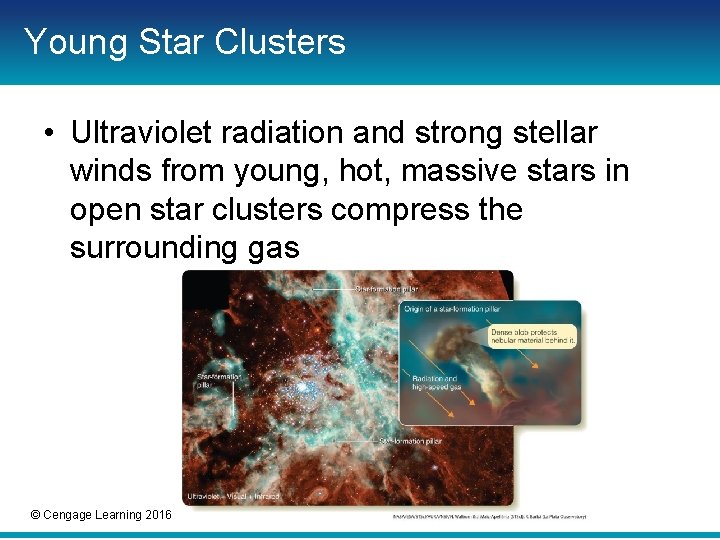
Young Star Clusters • Ultraviolet radiation and strong stellar winds from young, hot, massive stars in open star clusters compress the surrounding gas © Cengage Learning 2016
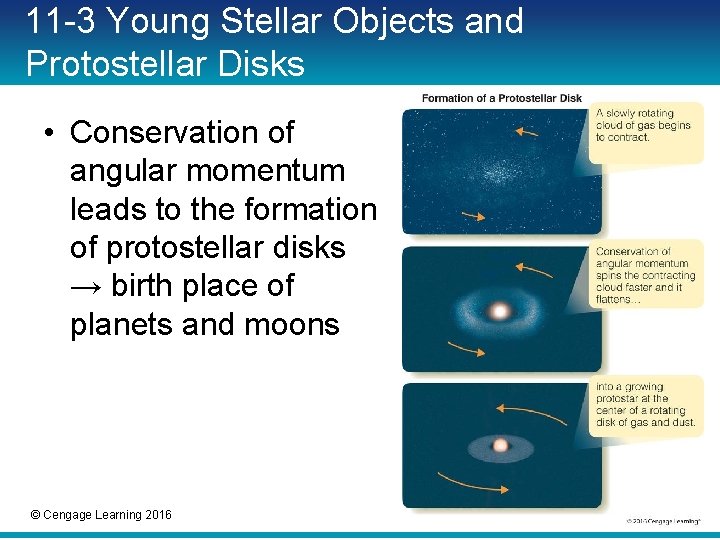
11 -3 Young Stellar Objects and Protostellar Disks • Conservation of angular momentum leads to the formation of protostellar disks → birth place of planets and moons © Cengage Learning 2016
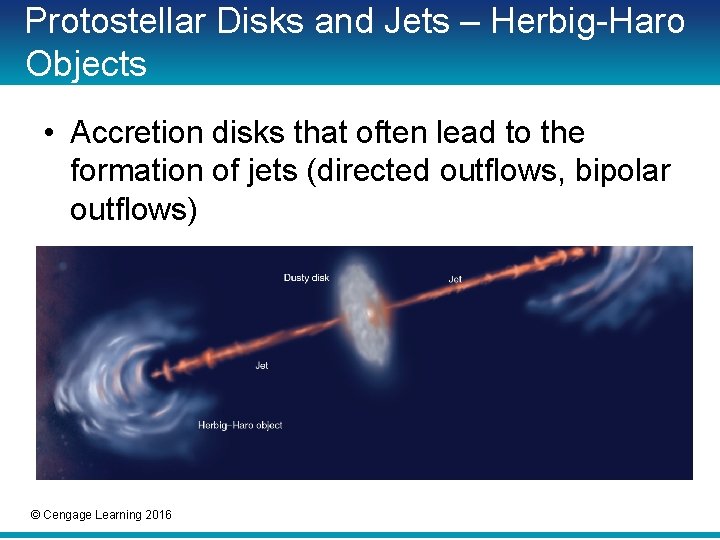
Protostellar Disks and Jets – Herbig-Haro Objects • Accretion disks that often lead to the formation of jets (directed outflows, bipolar outflows) © Cengage Learning 2016
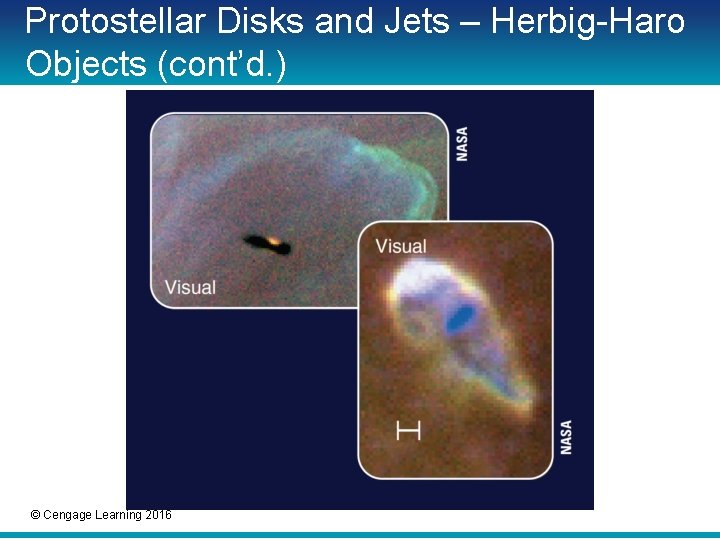
Protostellar Disks and Jets – Herbig-Haro Objects (cont’d. ) © Cengage Learning 2016
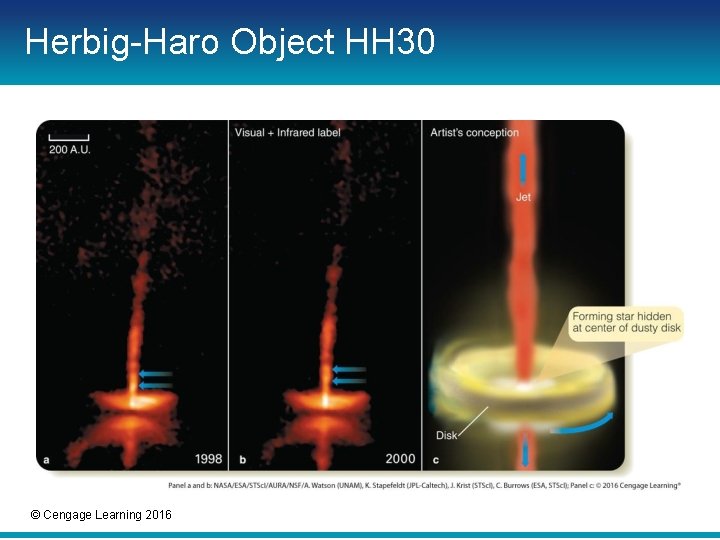
Herbig-Haro Object HH 30 © Cengage Learning 2016
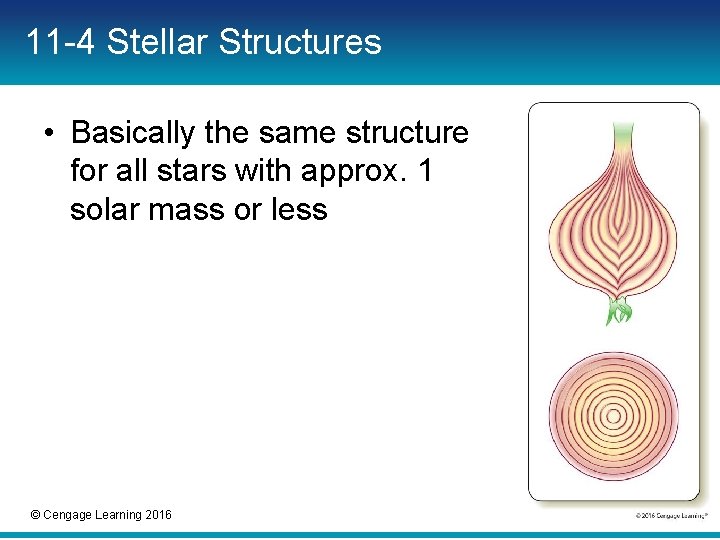
11 -4 Stellar Structures • Basically the same structure for all stars with approx. 1 solar mass or less © Cengage Learning 2016
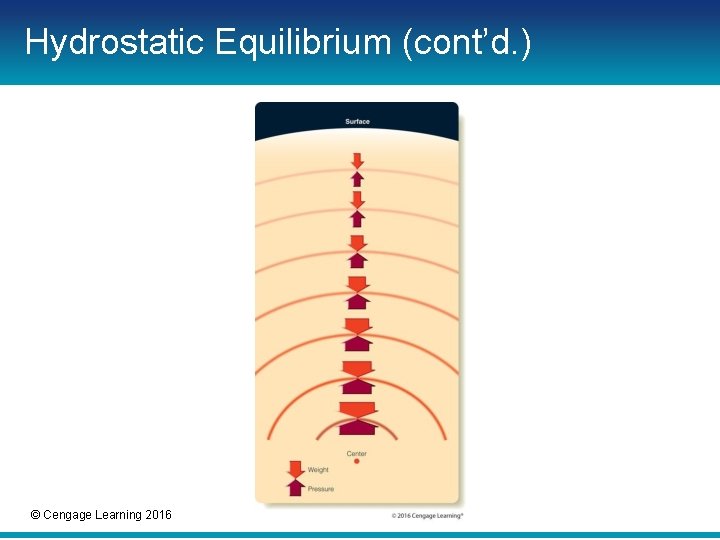
Hydrostatic Equilibrium • Imagine a star’s interior composed of individual shells – Within each shell, two forces must be in equilibrium with each other – Outward pressure force must exactly balance the weight of all layers above everywhere in the star © Cengage Learning 2016
Hydrostatic Equilibrium (cont’d. ) © Cengage Learning 2016
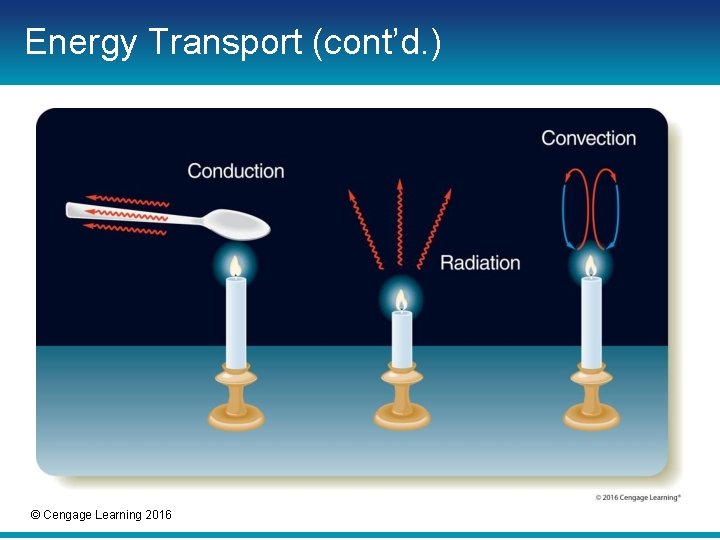
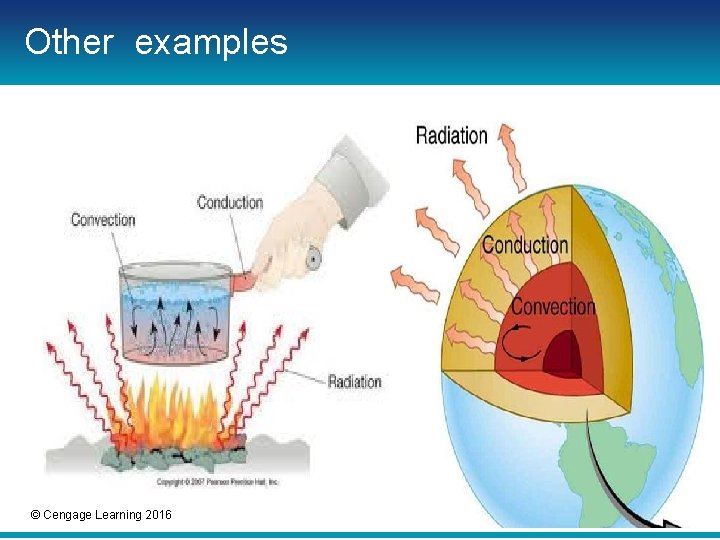
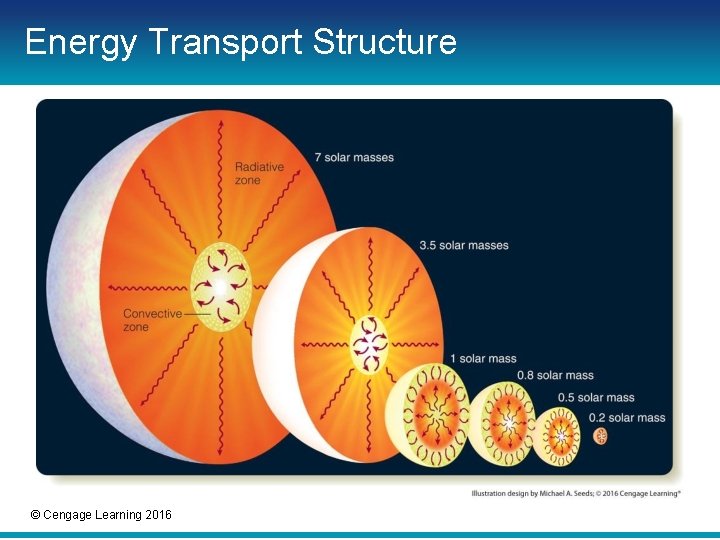
Energy Transport • Energy generated in the star’s center must be transported to the surface is one of three ways • However, in stars only two energy transport mechanisms play a role – Inner layers: radiative energy transport – Outer layers (incl. photosphere): convection © Cengage Learning 2016
Energy Transport (cont’d. ) © Cengage Learning 2016
Other examples © Cengage Learning 2016
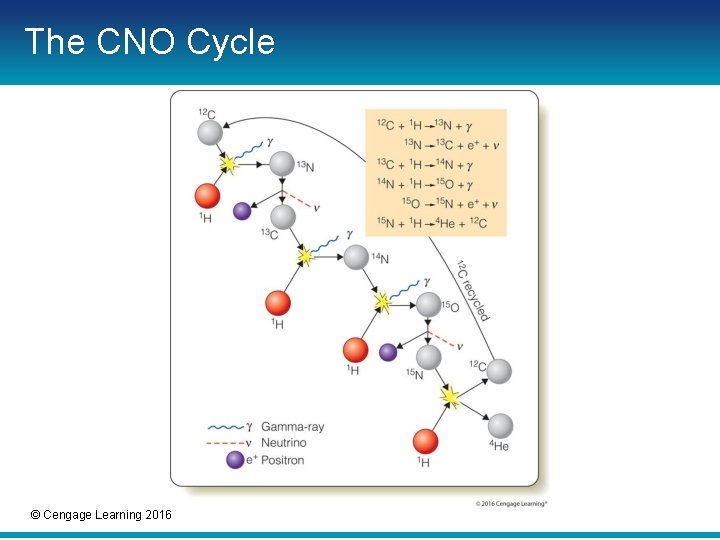
11 -5 The Source of Stellar Energy • Stars produce energy by nuclear fusion of hydrogen into helium – In the sun, this happens primarily through the proton-proton (PP) chain • In stars slightly more massive than the sun, a more powerful energy generation mechanism than the PP chain takes over © Cengage Learning 2016
The CNO Cycle © Cengage Learning 2016
Energy Transport Structure © Cengage Learning 2016
Discussion Questions • What are three different ways a giant molecular cloud can be triggered to contract? • How does the energy transport differ from a high-mass star to that of a low-mass star like the Sun? – Hint: see Figure 11 -14 © Cengage Learning 2016
Discussion Questions (cont’d. ) • If we could see in infrared light, what would a clear night sky look like? Are we missing out by being able to see only in visible light? – Hint : Think about views in and near the Milky Way versus far away from the Milky Way © Cengage Learning 2016