
Mechanisms of Evolution How does evolution work What






- Slides: 101
Mechanisms of Evolution How does evolution work?
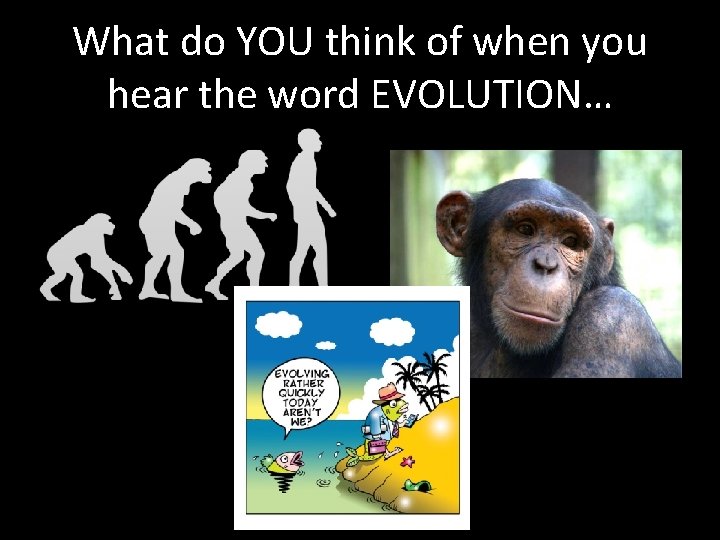
What do YOU think of when you hear the word EVOLUTION…
*DISCLAIMER* • We are teaching what SCIENCE says about evolution/ specifically natural selection • There have been, especially in recent years, many misconceptions about what this whole concept really states.
*MORE DISCLAIMER* • I am NOT telling you what you have to believe. I am giving you one viewpoint. Knowing BOTH SIDES of any argument is IMPERITIVE if this is something you are passionate about. Evolution by natural selection is a theroy…just like gravity and heliocentrism and oxygen combustion…
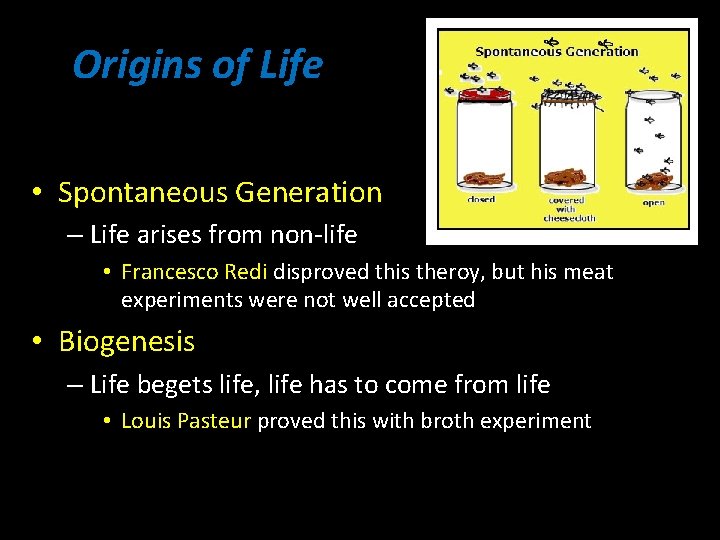
Origins of Life • Spontaneous Generation – Life arises from non-life • Francesco Redi disproved this theroy, but his meat experiments were not well accepted • Biogenesis – Life begets life, life has to come from life • Louis Pasteur proved this with broth experiment
A Modern Idea • Primordial Soup Hypothesis – Oparin & Haldane (1920’s) • Earth contained organic molecules, lightning & sun’s UV energy gave way to 1 st life in chem. Reactions. – Miller and Urey • Supported Oparin & Haldan, showed in a lab that theroy worked! • https: //www. youtube. com/watch? v=TYCf 1 i. Qifu. Q
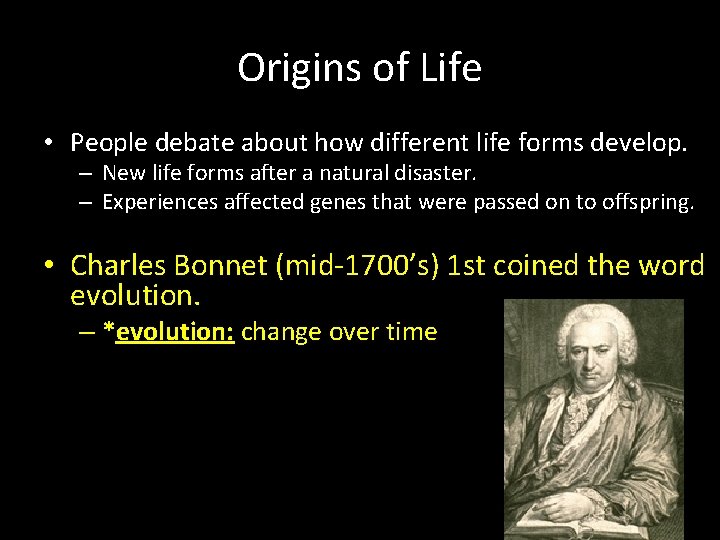
Origins of Life • People debate about how different life forms develop. – New life forms after a natural disaster. – Experiences affected genes that were passed on to offspring. • Charles Bonnet (mid-1700’s) 1 st coined the word evolution. – *evolution: change over time
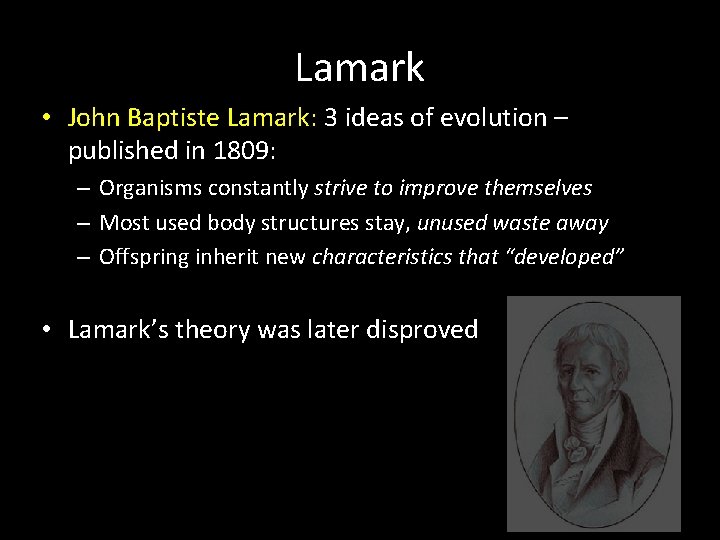
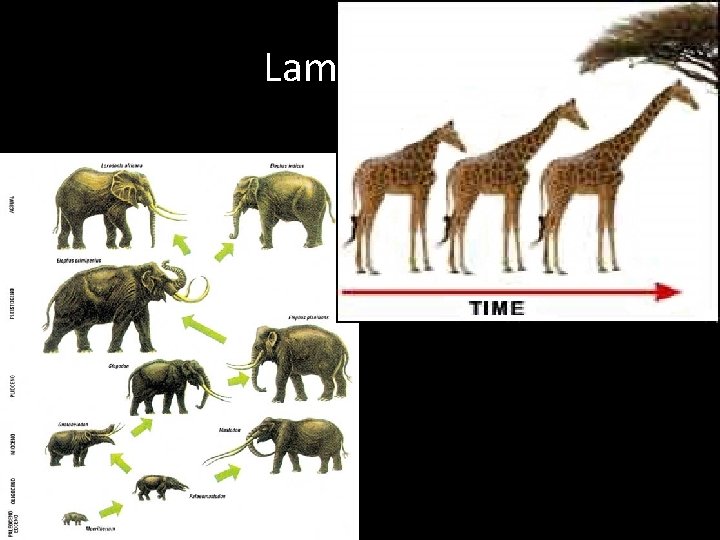
Lamark • John Baptiste Lamark: 3 ideas of evolution – published in 1809: – Organisms constantly strive to improve themselves – Most used body structures stay, unused waste away – Offspring inherit new characteristics that “developed” • Lamark’s theory was later disproved
Lamarkism
Question Time! • What will you be doing when you are 22? Where do you see yourself? – College/Tech School – Working – Traveling – Other? ? ?
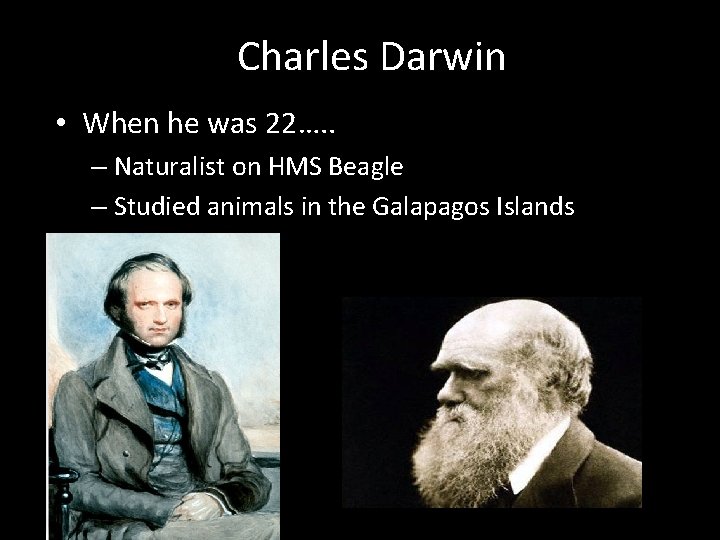
Charles Darwin • When he was 22…. . – Naturalist on HMS Beagle – Studied animals in the Galapagos Islands
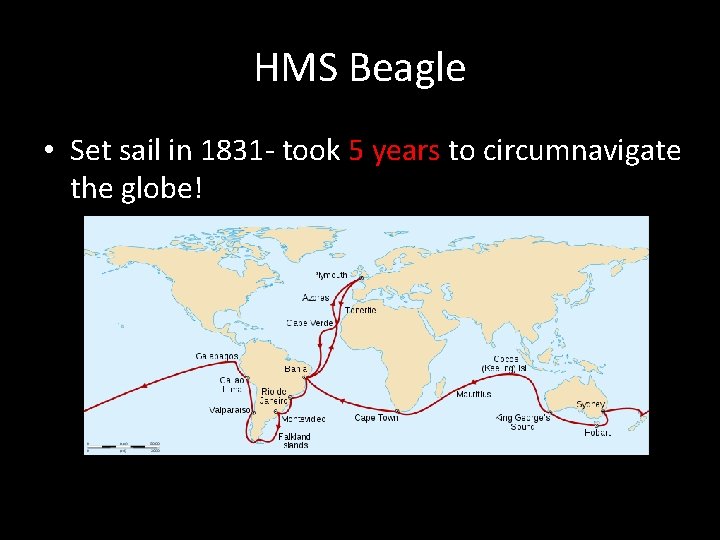
HMS Beagle • Set sail in 1831 - took 5 years to circumnavigate the globe!
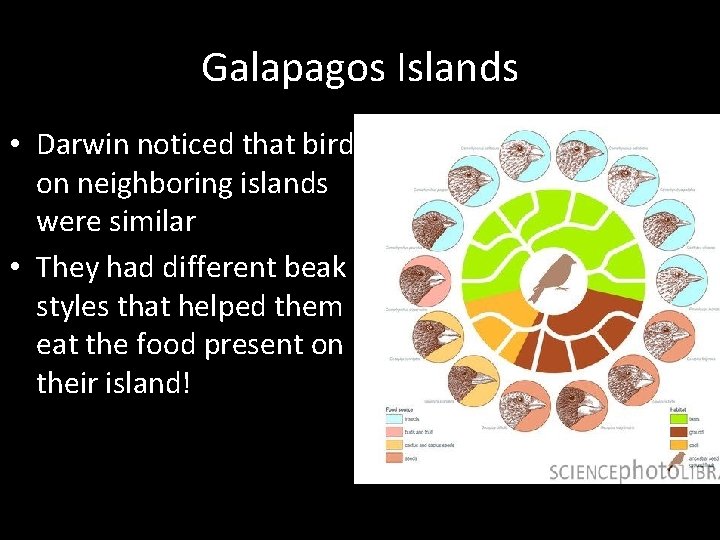
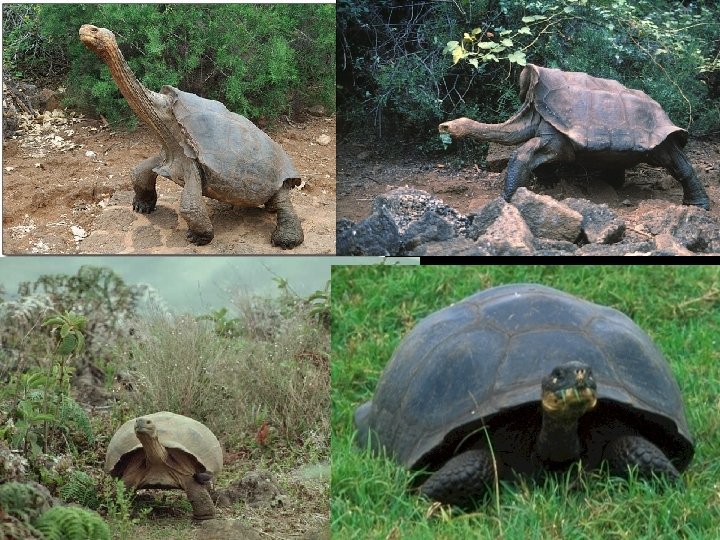
Galapagos Islands • Darwin noticed that birds on neighboring islands were similar • They had different beak styles that helped them eat the food present on their island!
Darwin • Animals suited for survival will reproduce • Animals not suited for survival will die • Darwin studied many different organisms over a period of 13 years. He developed his theory of natural selection.
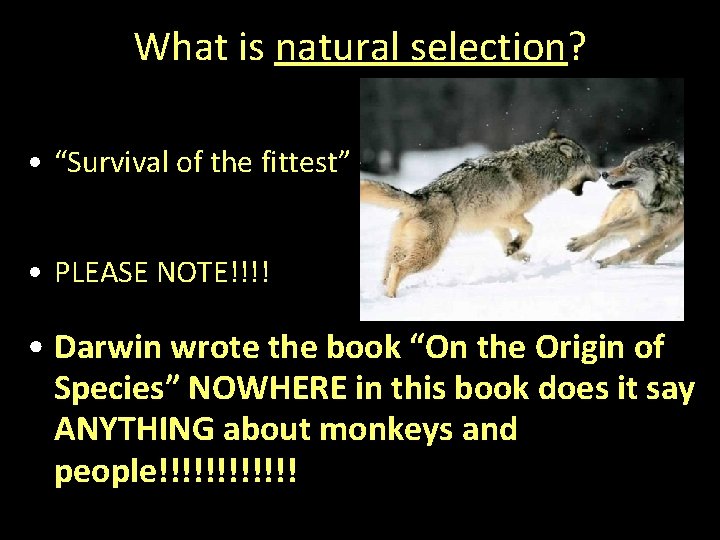
What is natural selection? • “Survival of the fittest” • PLEASE NOTE!!!! • Darwin wrote the book “On the Origin of Species” NOWHERE in this book does it say ANYTHING about monkeys and people!!!!!!
Darwin’s Theroy: Natural Selection The step process by which evolution occurs.
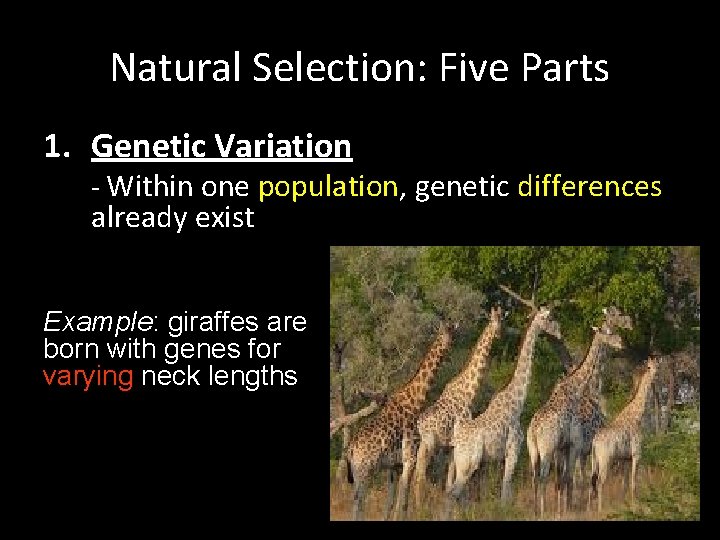
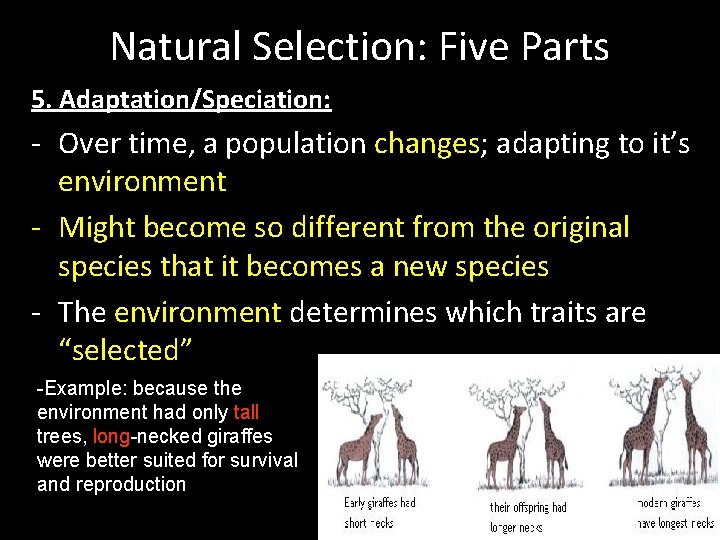
Natural Selection: Five Parts 1. Genetic Variation - Within one population, genetic differences already exist Example: giraffes are born with genes for varying neck lengths
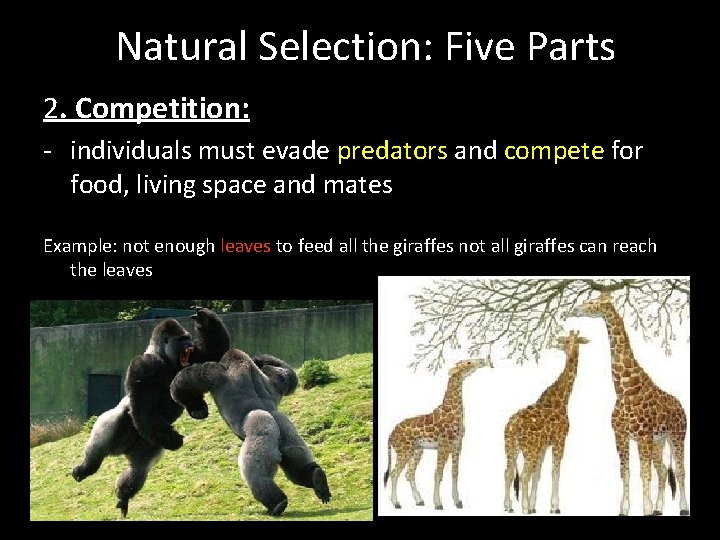
Natural Selection: Five Parts 2. Competition: - individuals must evade predators and compete for food, living space and mates Example: not enough leaves to feed all the giraffes not all giraffes can reach the leaves
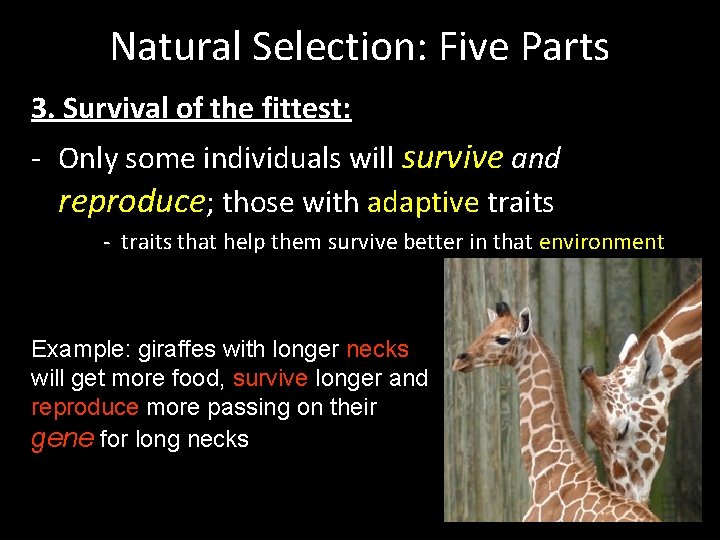
Natural Selection: Five Parts 3. Survival of the fittest: - Only some individuals will survive and reproduce; those with adaptive traits - traits that help them survive better in that environment Example: giraffes with longer necks will get more food, survive longer and reproduce more passing on their gene for long necks
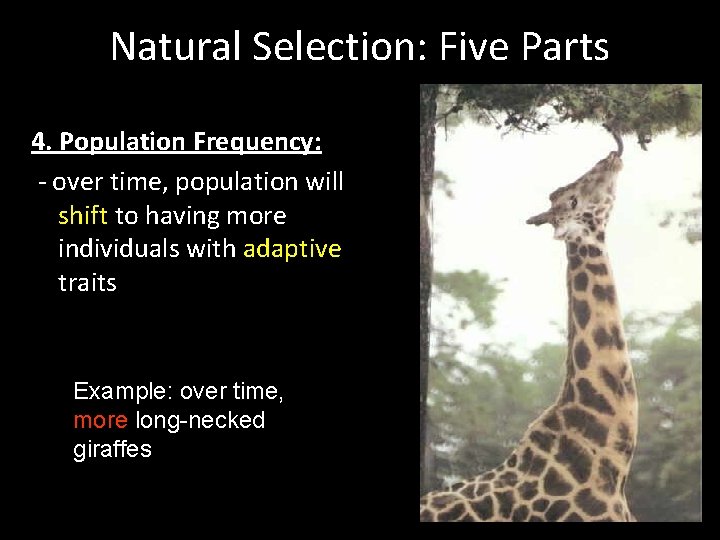
Natural Selection: Five Parts 4. Population Frequency: - over time, population will shift to having more individuals with adaptive traits Example: over time, more long-necked giraffes
Natural Selection: Five Parts 5. Adaptation/Speciation: - Over time, a population changes; adapting to it’s environment - Might become so different from the original species that it becomes a new species - The environment determines which traits are “selected” -Example: because the environment had only tall trees, long-necked giraffes were better suited for survival and reproduction
Putting the Pieces Together Struggle for survival – organisms compete with each other for resources Survival of the fittest – individuals better adapted to the environment more likely to survive, reproduce and pass on more genes Natural selection- a population will change over time to become better adapted to their environment
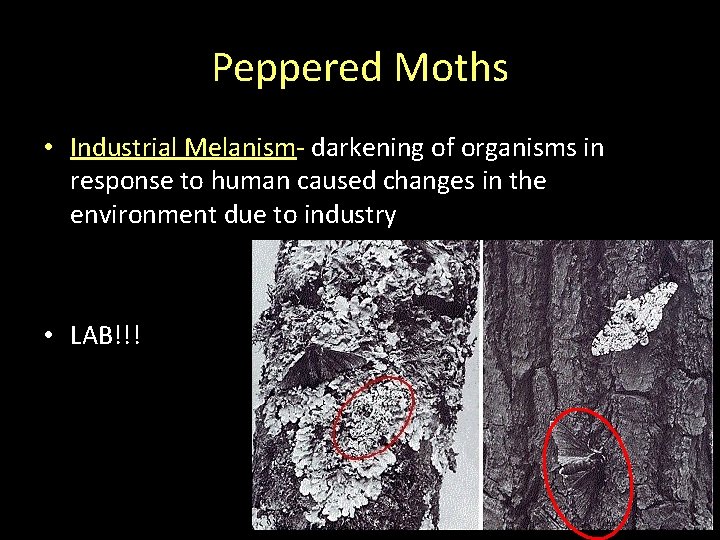
Peppered Moths • Industrial Melanism- darkening of organisms in response to human caused changes in the environment due to industry • LAB!!!
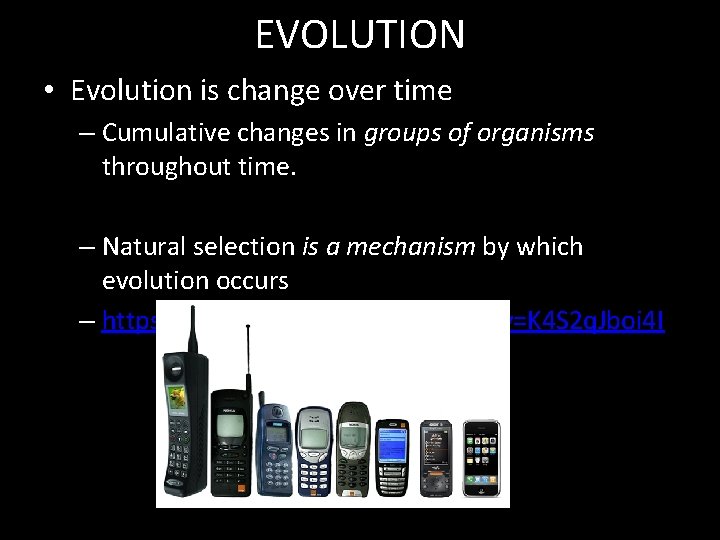
EVOLUTION • Evolution is change over time – Cumulative changes in groups of organisms throughout time. – Natural selection is a mechanism by which evolution occurs – https: //www. youtube. com/watch? v=K 4 S 2 q. Jboi 4 I
When Populations Won’t Change -Determining conditions in which evolution will not happen helps scientists understand when evolution will happen. Hardy-Weinberg Principle: the genes found in a population won’t change unless one or more factors cause a change. -Genetic Equilibrium: when the genes don’t change, -If the genes don’t change, the population won’t evolve
When Populations Won’t Change Hardy-Weinberg’s Five Conditions Required to Maintain Genetic Equilibrium 1. There must be random mating 2. The population must be very large 3. There can be no movement into or out of the population 4. No mutations 5. No natural selection
When Populations Won’t Change Hardy-Weinberg’s Five Conditions Required to Maintain Genetic Equilibrium 1. There must be random mating 2. The population must be very large 3. There can be no movement into or out of the population 4. No mutations 5. No natural selection
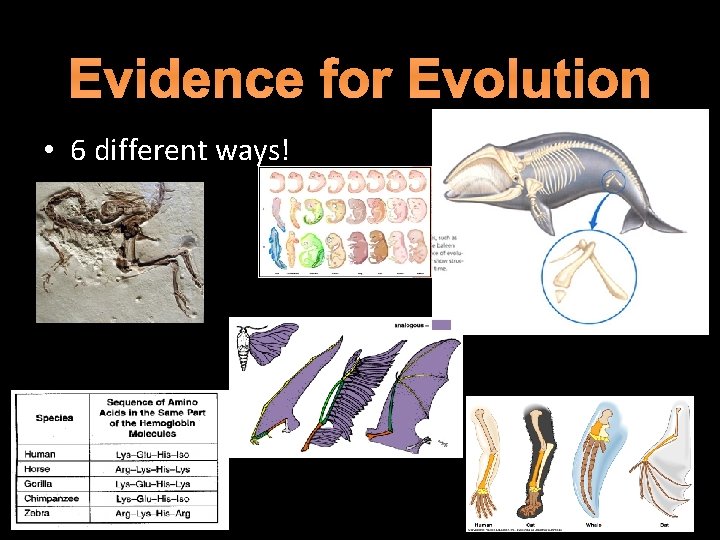
Evidence for Evolution • 6 different ways!
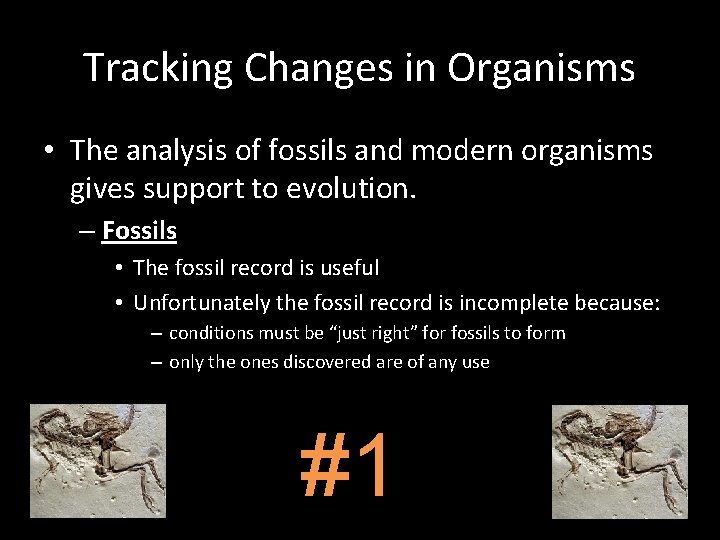
Tracking Changes in Organisms • The analysis of fossils and modern organisms gives support to evolution. – Fossils • The fossil record is useful • Unfortunately the fossil record is incomplete because: – conditions must be “just right” for fossils to form – only the ones discovered are of any use #1
Modern Organisms – 3 Types of Structural similarities can occur in organisms: • Homologous Structures • Vestigial Structures • Analogous Structures
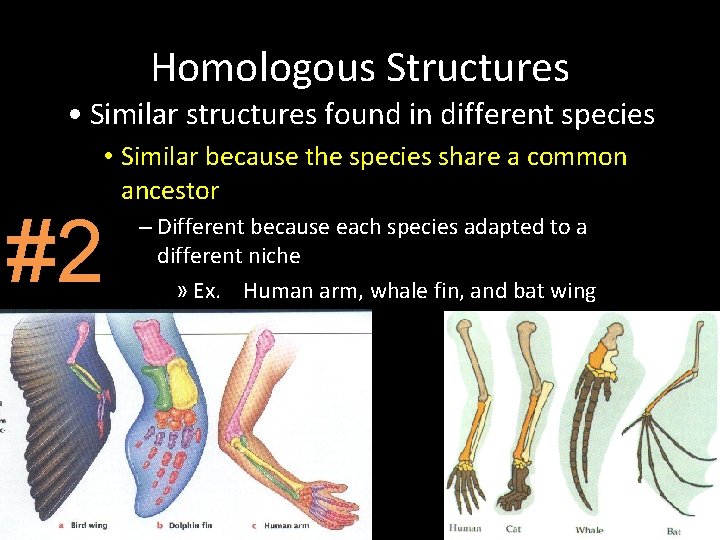
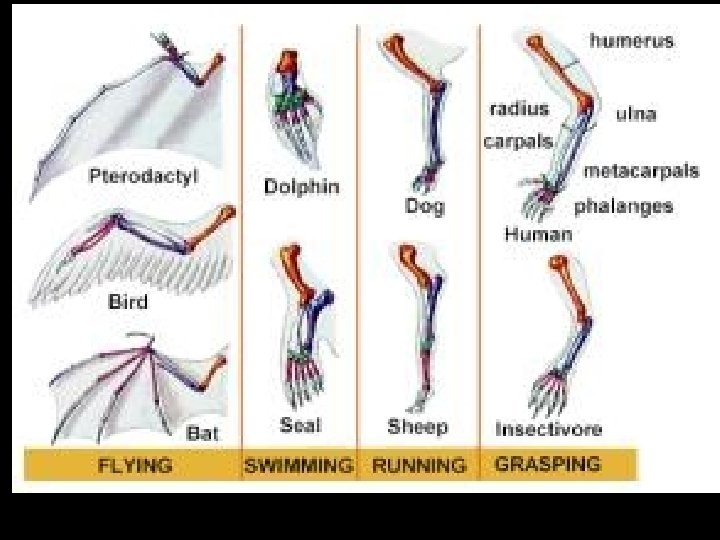
Homologous Structures • Similar structures found in different species • Similar because the species share a common ancestor #2 – Different because each species adapted to a different niche » Ex. Human arm, whale fin, and bat wing
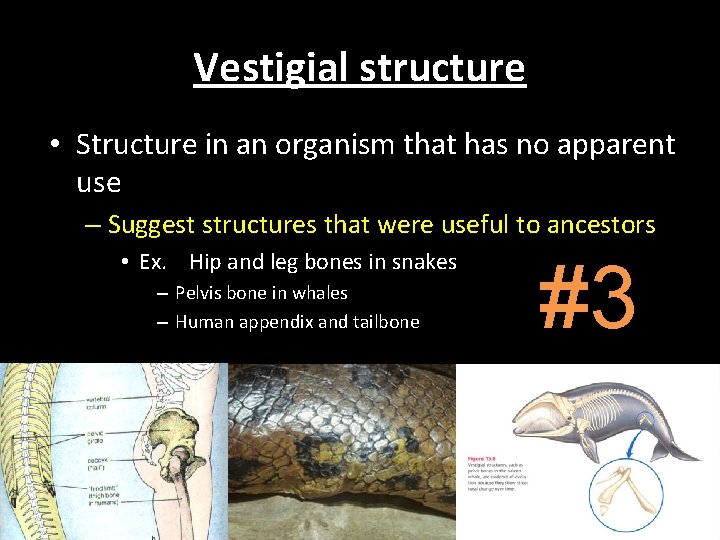
Vestigial structure • Structure in an organism that has no apparent use – Suggest structures that were useful to ancestors • Ex. Hip and leg bones in snakes – Pelvis bone in whales – Human appendix and tailbone #3
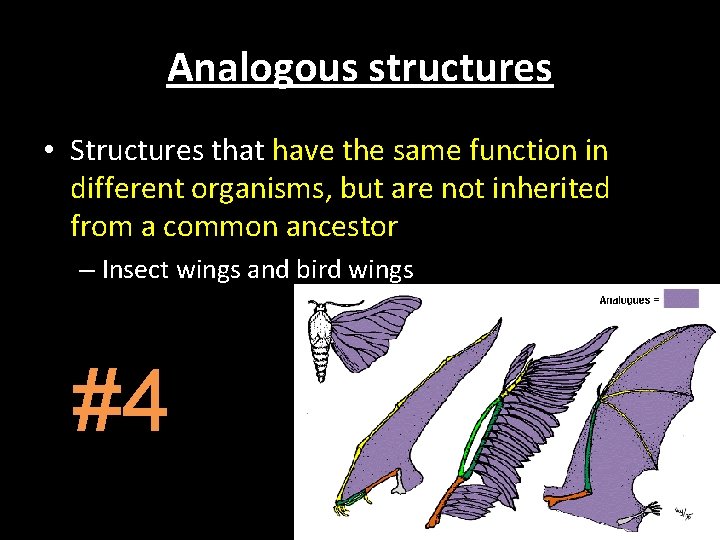
Analogous structures • Structures that have the same function in different organisms, but are not inherited from a common ancestor – Insect wings and bird wings #4
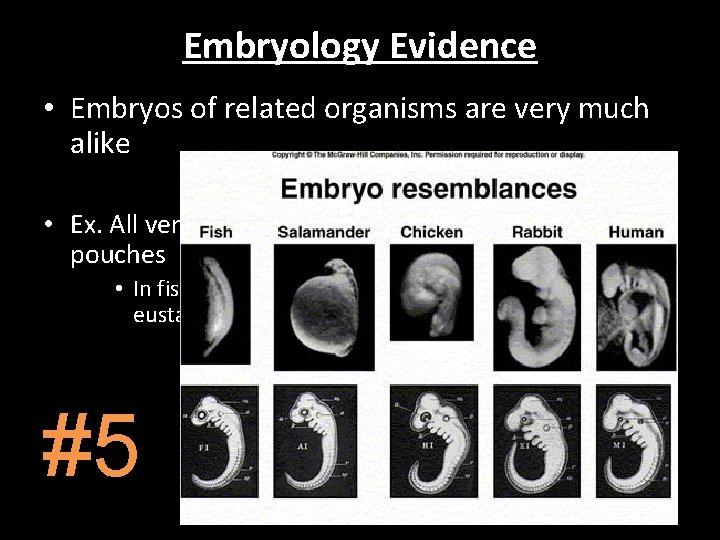
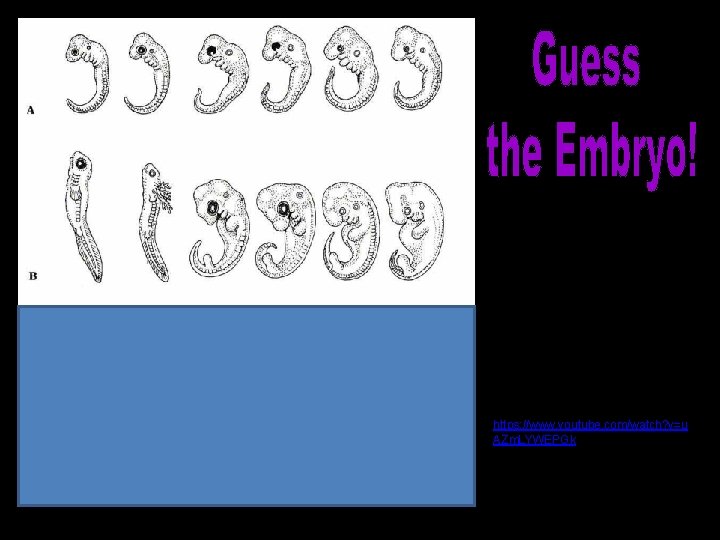
Embryology Evidence • Embryos of related organisms are very much alike • Ex. All vertebrate (backbone) embryos have gill pouches • In fish they become gills, in mammals they become eustachian tubes #5
https: //www. youtube. com/watch? v=u AZm. LYWEPGk
DNA BASES • All living things share biochemical characteristics: use of ATP, DNA bases, amino acids • more closely related species share more base sequences of DNA #6
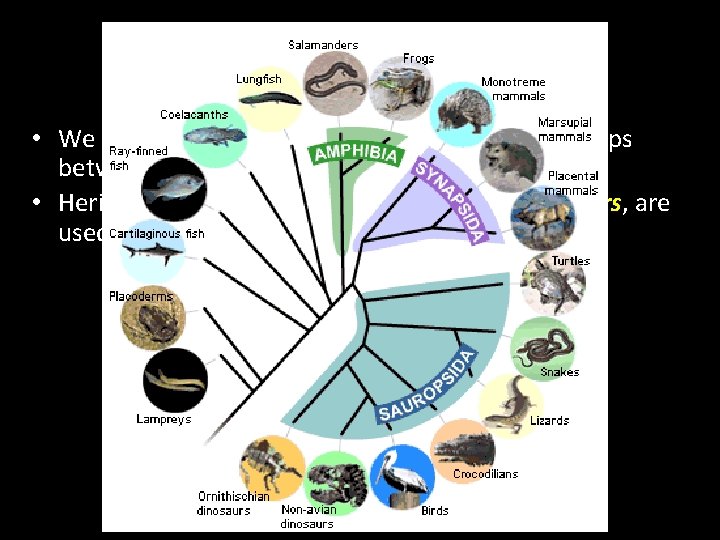
How do we map out these changes? • Evolutionary relationships are represented by Diagrams called cladograms (branching diagrams that organize relationships)
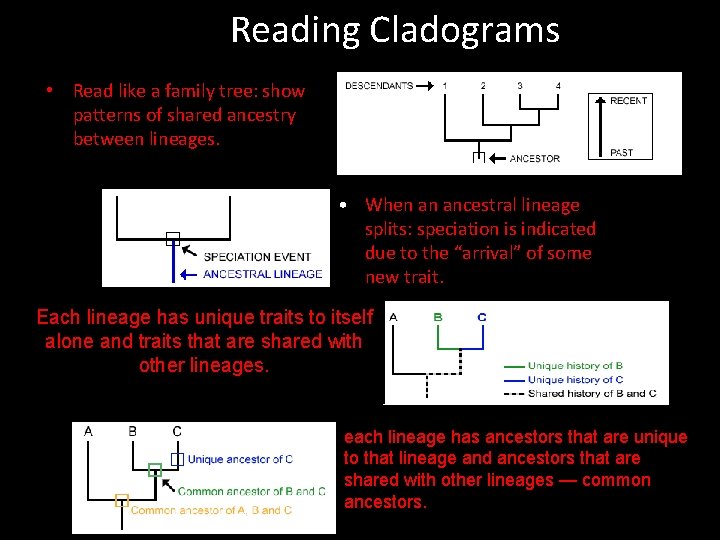
Reading Cladograms • Read like a family tree: show patterns of shared ancestry between lineages. • When an ancestral lineage splits: speciation is indicated due to the “arrival” of some new trait. Each lineage has unique traits to itself alone and traits that are shared with other lineages. each lineage has ancestors that are unique to that lineage and ancestors that are shared with other lineages — common ancestors.
Quick Question • What do you think a clade is? A group that includes a common ancestor and all the descendants (living and extinct) of that ancestor.
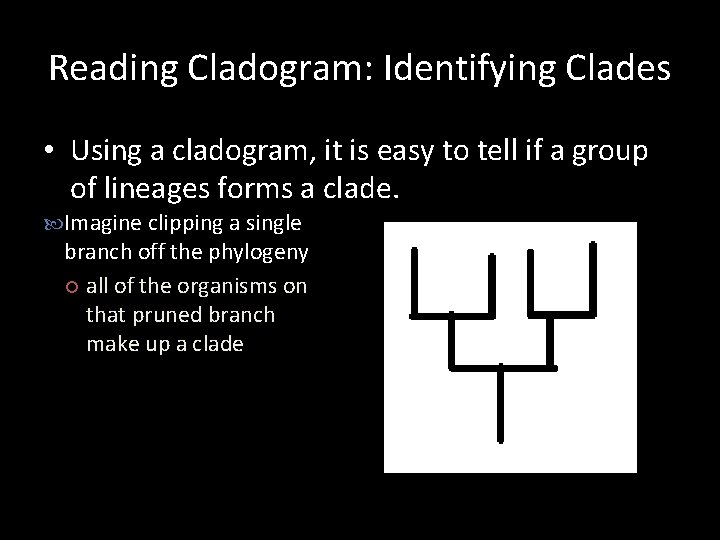
Reading Cladogram: Identifying Clades • Using a cladogram, it is easy to tell if a group of lineages forms a clade. Imagine clipping a single branch off the phylogeny all of the organisms on that pruned branch make up a clade
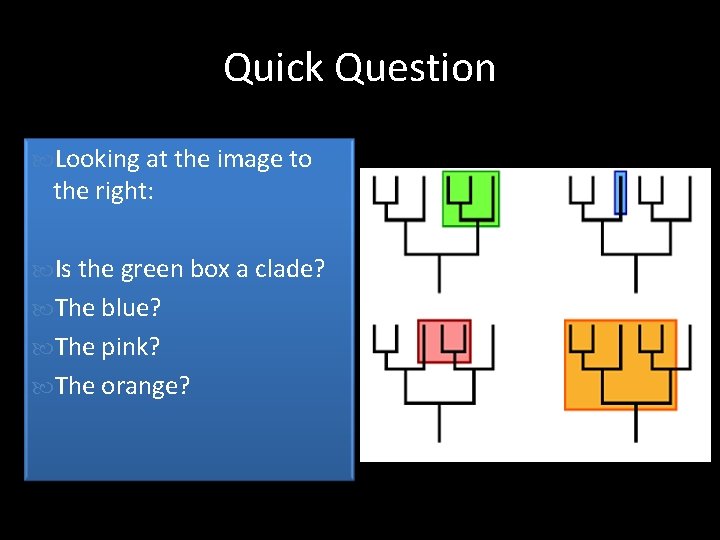
Quick Question Looking at the image to the right: Is the green box a clade? The blue? The pink? The orange?
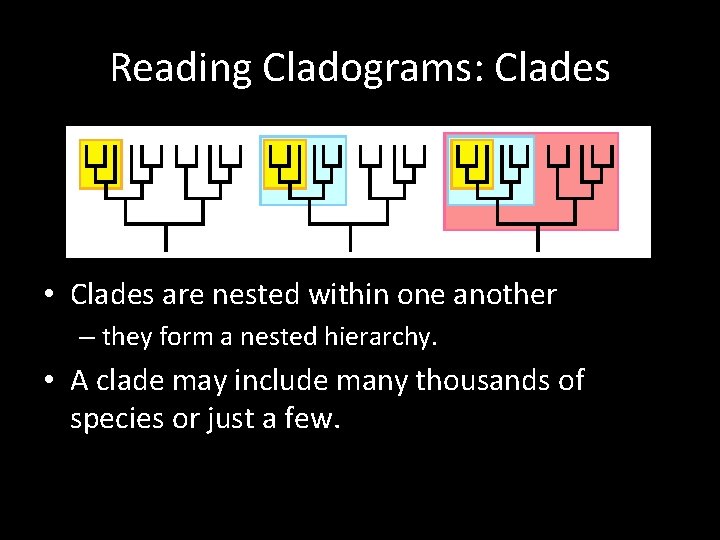
Reading Cladograms: Clades • Clades are nested within one another – they form a nested hierarchy. • A clade may include many thousands of species or just a few.
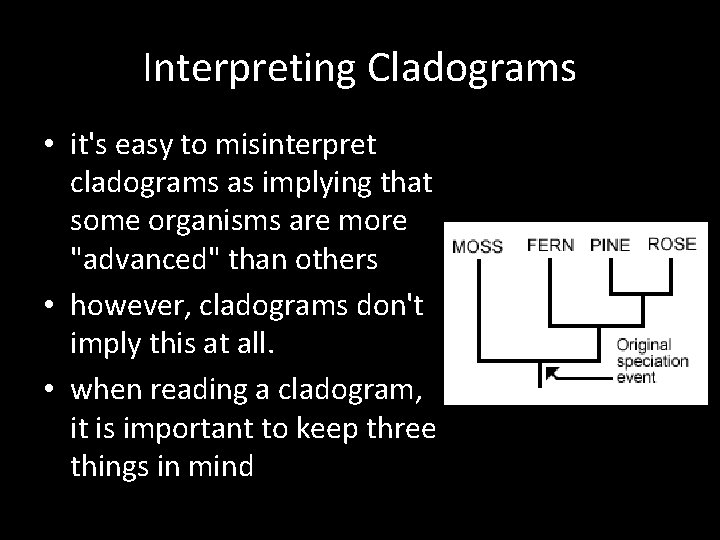
Interpreting Cladograms • it's easy to misinterpret cladograms as implying that some organisms are more "advanced" than others • however, cladograms don't imply this at all. • when reading a cladogram, it is important to keep three things in mind
(mis)Interpreting Cladograms: One • Evolution produces a pattern of relationships among lineages that is tree-like, not ladderlike.
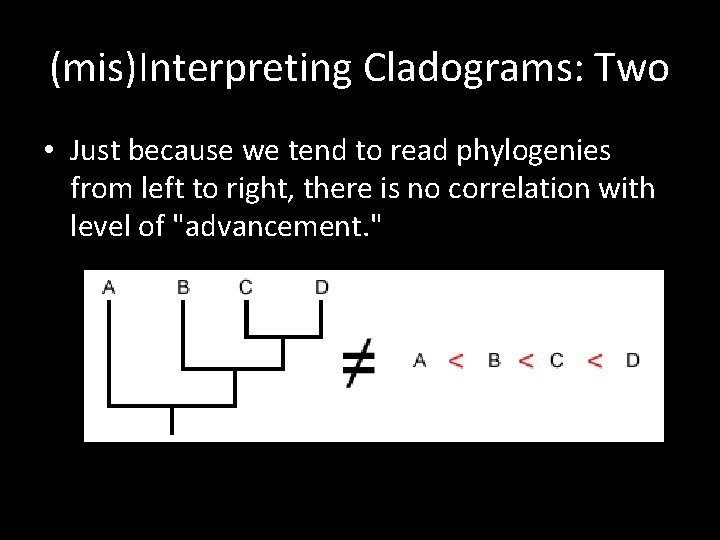
(mis)Interpreting Cladograms: Two • Just because we tend to read phylogenies from left to right, there is no correlation with level of "advancement. "
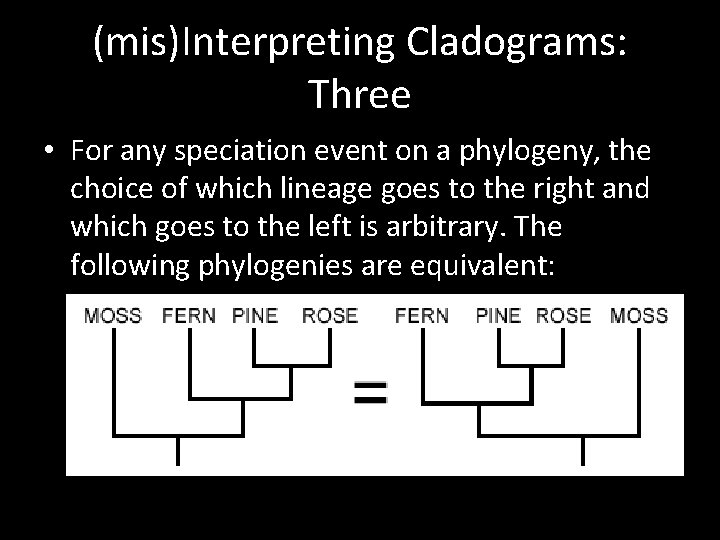
(mis)Interpreting Cladograms: Three • For any speciation event on a phylogeny, the choice of which lineage goes to the right and which goes to the left is arbitrary. The following phylogenies are equivalent:
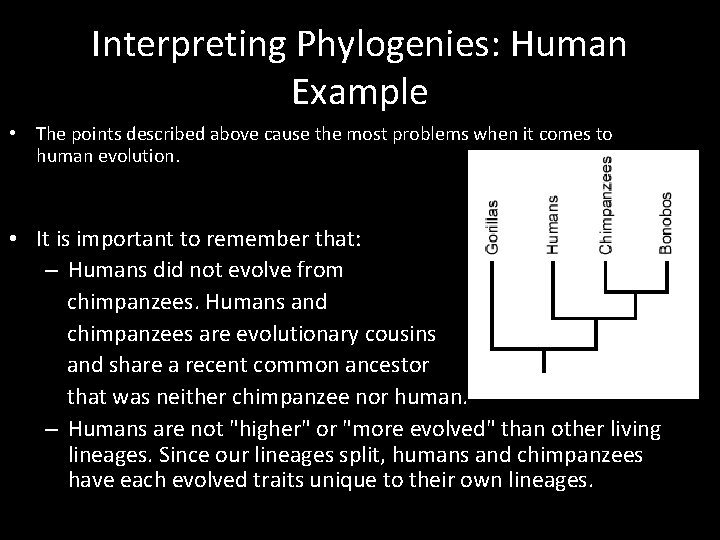
Interpreting Phylogenies: Human Example • The points described above cause the most problems when it comes to human evolution. • It is important to remember that: – Humans did not evolve from chimpanzees. Humans and chimpanzees are evolutionary cousins and share a recent common ancestor that was neither chimpanzee nor human. – Humans are not "higher" or "more evolved" than other living lineages. Since our lineages split, humans and chimpanzees have each evolved traits unique to their own lineages.
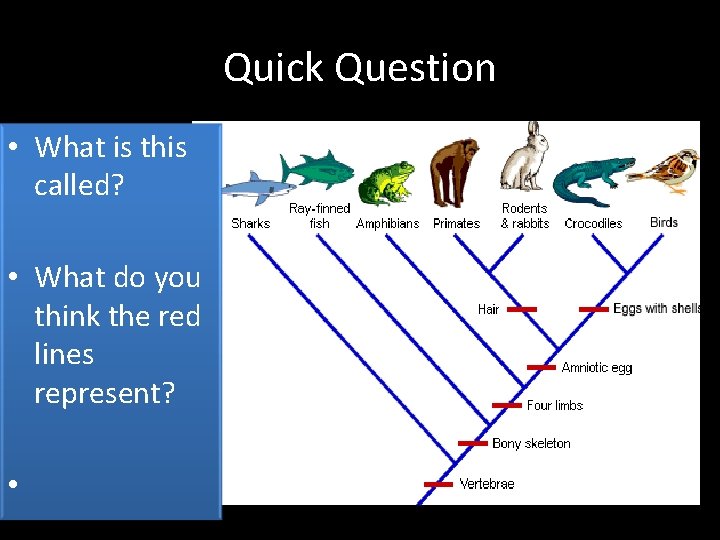
Quick Question • What is this called? • What do you think the red lines represent? •
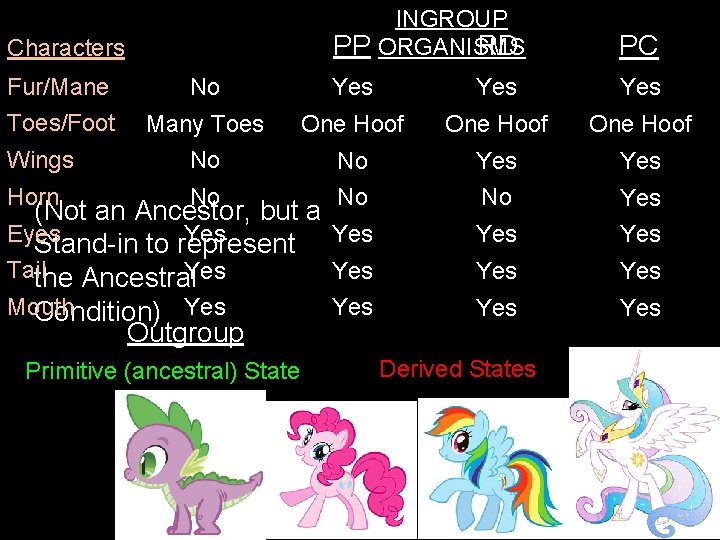
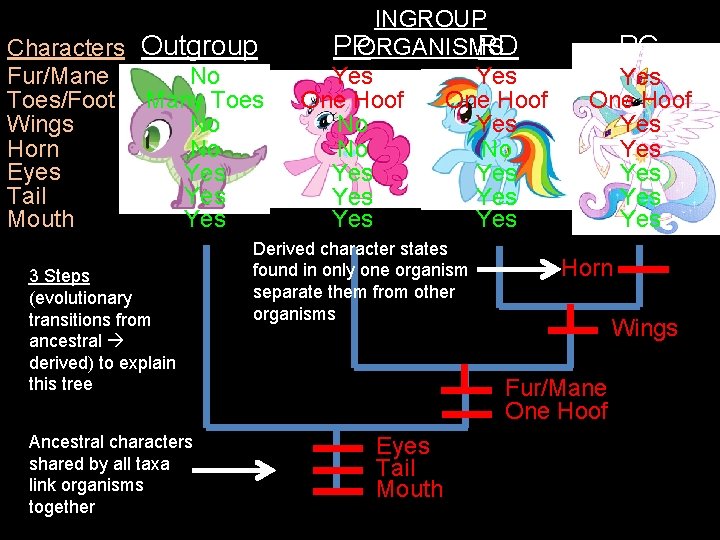
Creation of Cladograms • We seek to find the simplest branching relationships between organisms to depict their evolution. • Heritable traits possessed by organisms, characters, are used to compare the organisms being studied.
BUT HOW DO WE CONSTRUCT A CLADOGRAM? ?
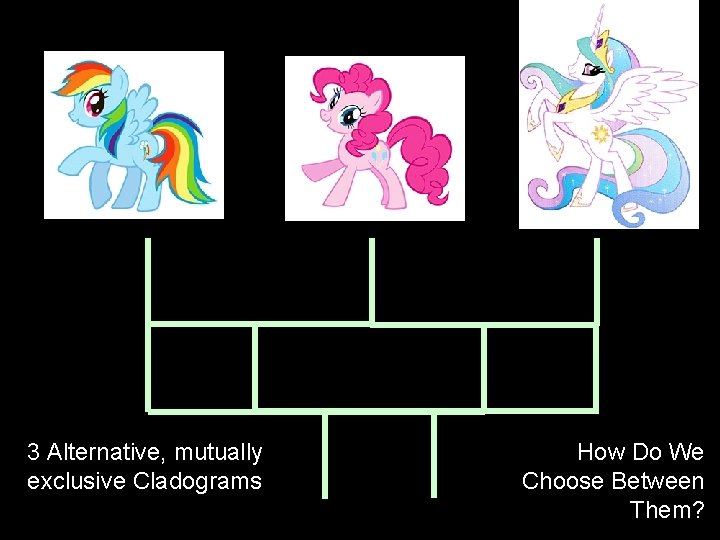
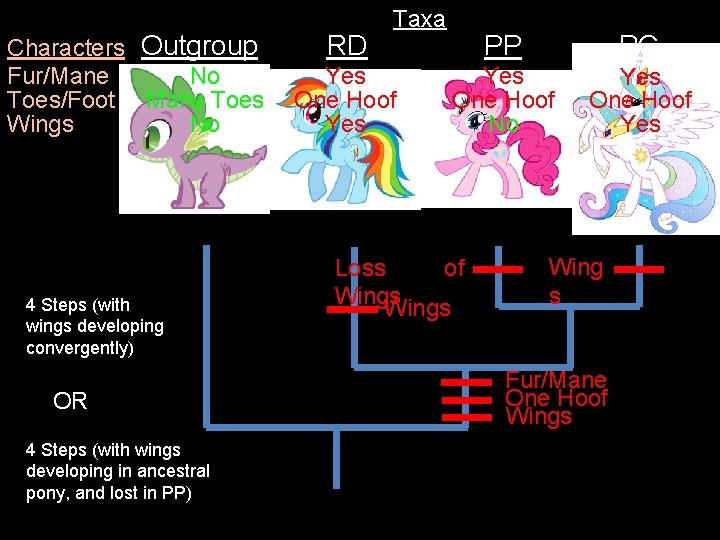
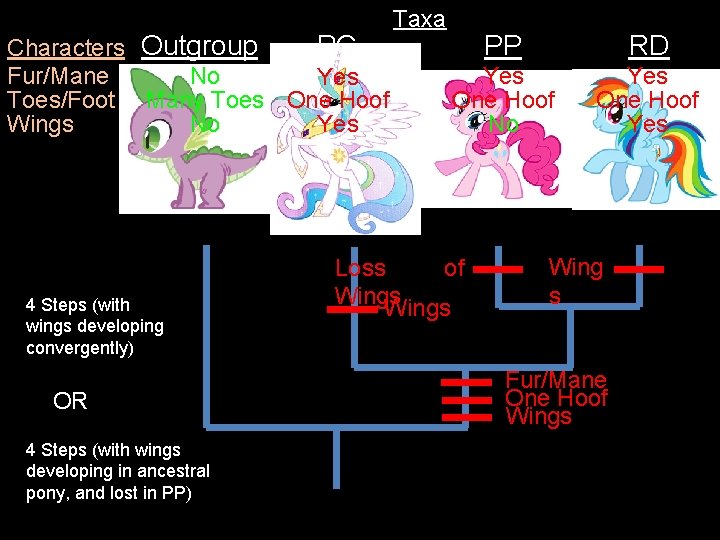
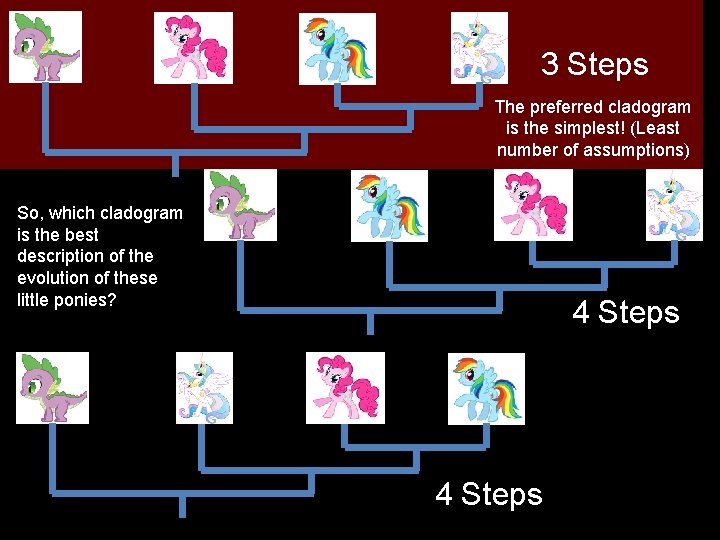
3 Alternative, mutually exclusive Cladograms How Do We Choose Between Them?
Characters INGROUP PP ORGANISMS RD PC Fur/Mane No Yes Yes Toes/Foot Many Toes One Hoof Wings No No Yes Horn No No No Yes Yes (Not an Ancestor, but a Eyes Yes Stand-in to represent Tailthe Ancestral Yes Mouth Yes Condition) Yes Outgroup Primitive (ancestral) State Derived States
Characters Outgroup Fur/Mane No Toes/Foot Many Toes Wings No Horn No Eyes Yes Tail Yes Mouth Yes 3 Steps (evolutionary transitions from ancestral derived) to explain this tree Ancestral characters shared by all taxa link organisms together INGROUP PPORGANISMS RD Yes One Hoof No Yes No No Yes Yes Yes Derived character states found in only one organism separate them from other organisms PC Yes One Hoof Yes Yes Yes Horn Wings Fur/Mane One Hoof Eyes Tail Mouth
Characters Outgroup Fur/Mane No Toes/Foot Many Toes Wings No 4 Steps (with wings developing convergently) OR 4 Steps (with wings developing in ancestral pony, and lost in PP) RD Taxa Yes One Hoof Yes PP PC Yes One Hoof No Yes One Hoof Yes Loss of Wings Wing s Fur/Mane One Hoof Wings
PC Characters Outgroup Fur/Mane No Yes Toes/Foot Many Toes One Hoof Wings No Yes 4 Steps (with wings developing convergently) OR 4 Steps (with wings developing in ancestral pony, and lost in PP) Taxa PP RD Yes One Hoof No Yes One Hoof Yes Loss of Wings Wing s Fur/Mane One Hoof Wings
3 Steps The preferred cladogram is the simplest! (Least number of assumptions) So, which cladogram is the best description of the evolution of these little ponies? 4 Steps
Mechanisms of Evolution
• Macroevolution- Evolution that CAUSES a NEW SPECIES (Darwin’s Finches) • Microevolution- Evolution WITHIN an EXISTING SPECIES (peppered moths)
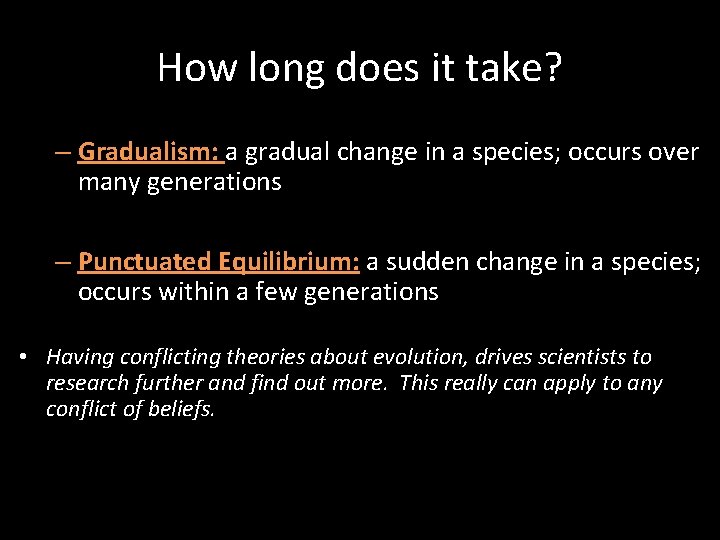
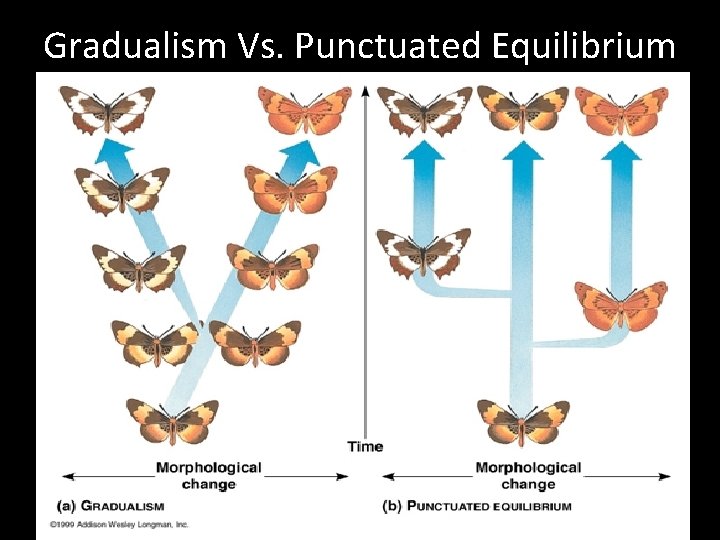
How long does it take? – Gradualism: a gradual change in a species; occurs over many generations – Punctuated Equilibrium: a sudden change in a species; occurs within a few generations • Having conflicting theories about evolution, drives scientists to research further and find out more. This really can apply to any conflict of beliefs.
Gradualism Vs. Punctuated Equilibrium
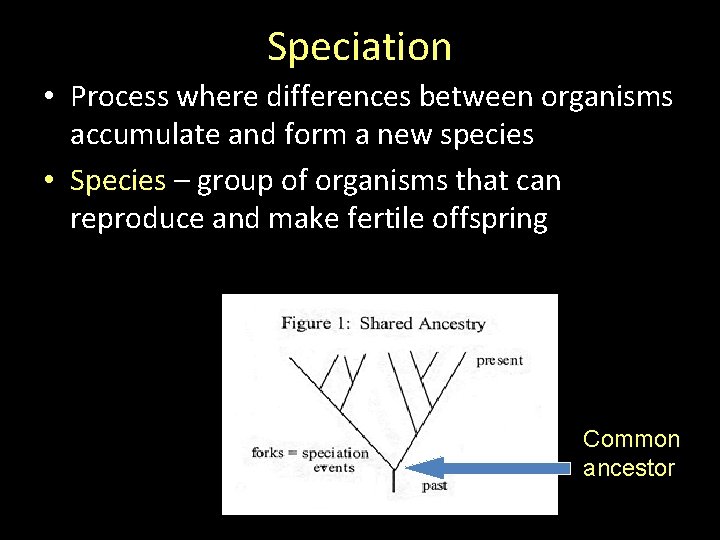
Speciation • Process where differences between organisms accumulate and form a new species • Species – group of organisms that can reproduce and make fertile offspring Common ancestor
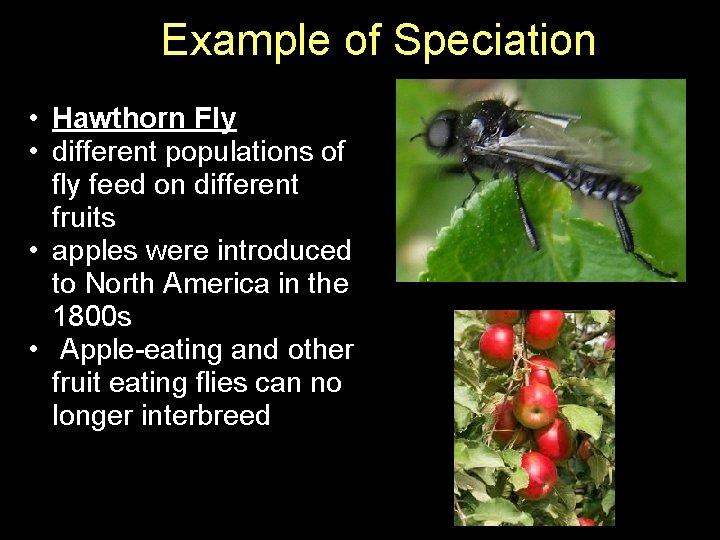
Example of Speciation • Hawthorn Fly • different populations of fly feed on different fruits • apples were introduced to North America in the 1800 s • Apple-eating and other fruit eating flies can no longer interbreed •
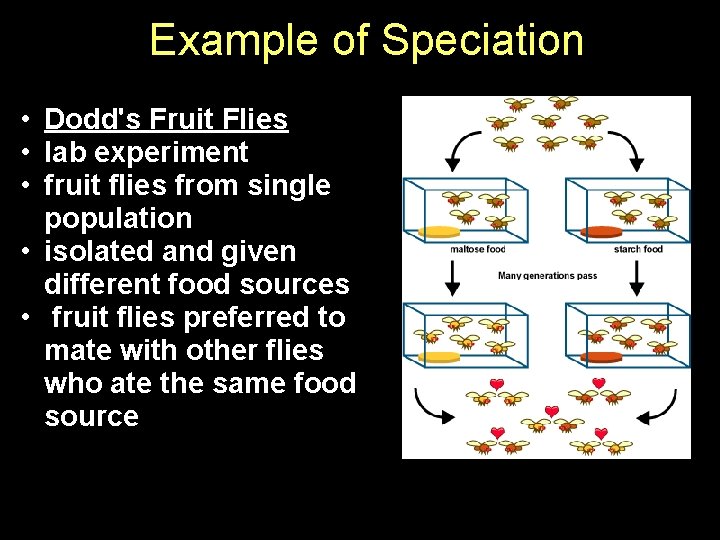
Example of Speciation • Dodd's Fruit Flies • lab experiment • fruit flies from single population • isolated and given different food sources • fruit flies preferred to mate with other flies who ate the same food source
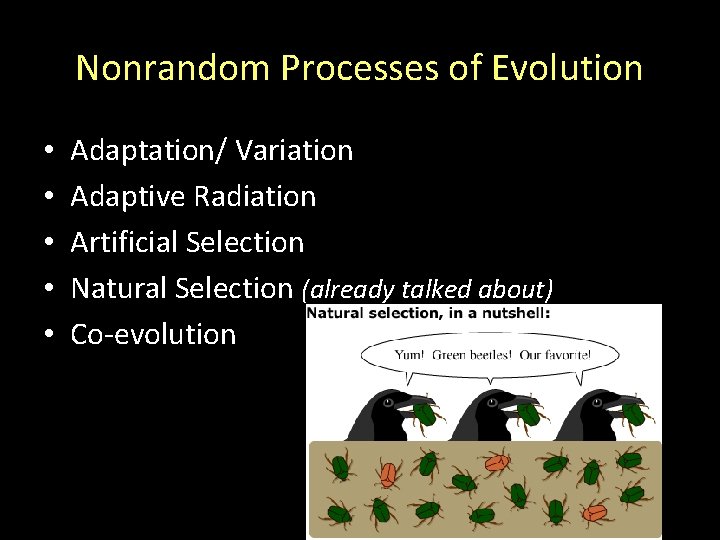
Nonrandom Processes of Evolution • • • Adaptation/ Variation Adaptive Radiation Artificial Selection Natural Selection (already talked about) Co-evolution
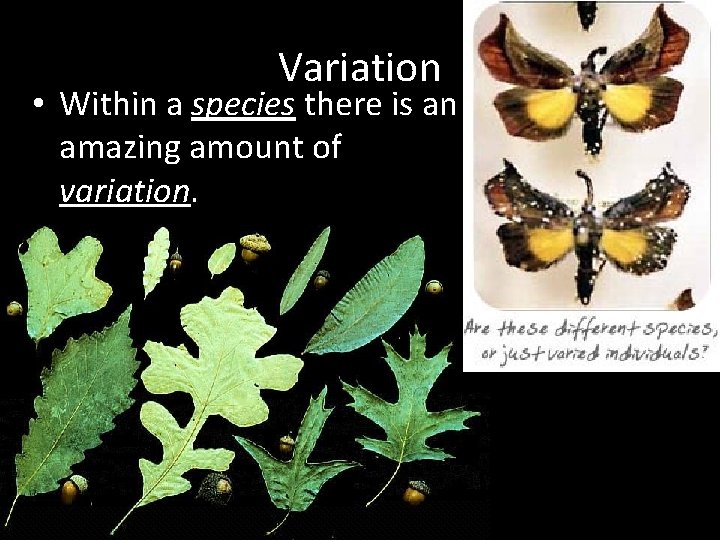
Variation • Within a species there is an amazing amount of variation.
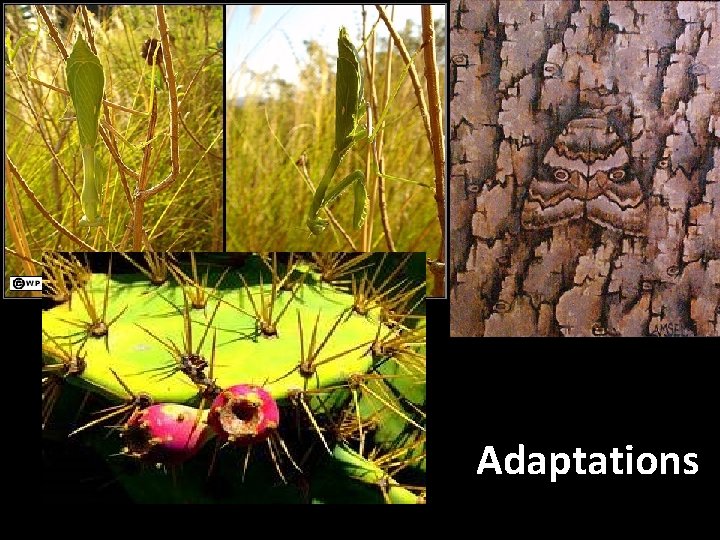
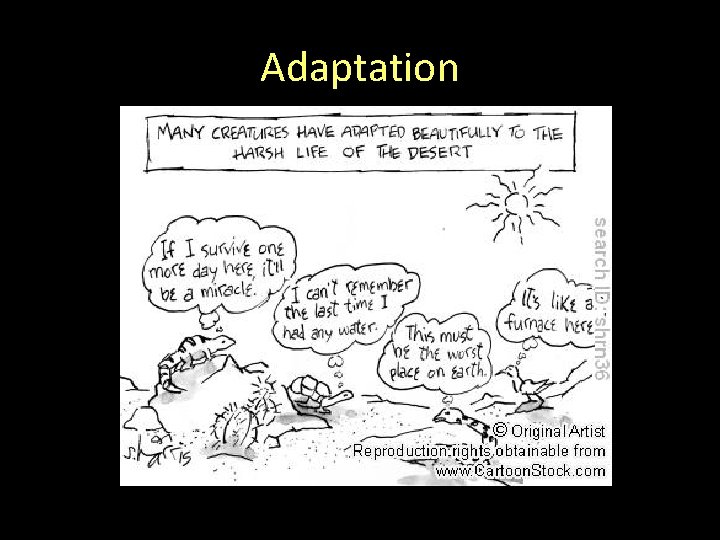
Variation – Adaptation: a trait that increases a population’s chances of surviving and reproducing in a particular environment. • Behavioral (actions) • Functional (chemicals) • Structural (body)
Adaptations
Adaptation
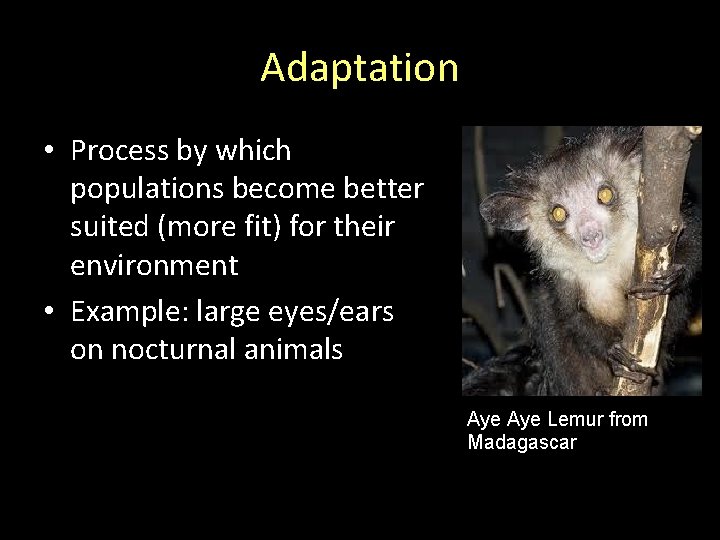
Adaptation • Process by which populations become better suited (more fit) for their environment • Example: large eyes/ears on nocturnal animals Aye Lemur from Madagascar
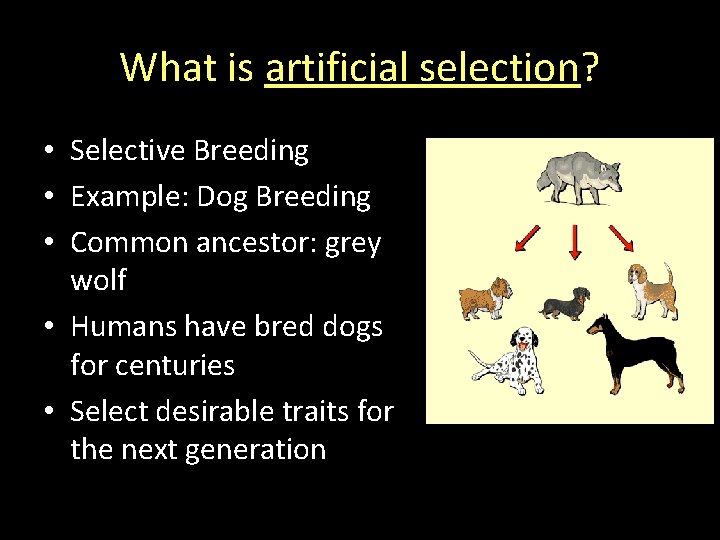
What is artificial selection? • Selective Breeding • Example: Dog Breeding • Common ancestor: grey wolf • Humans have bred dogs for centuries • Select desirable traits for the next generation
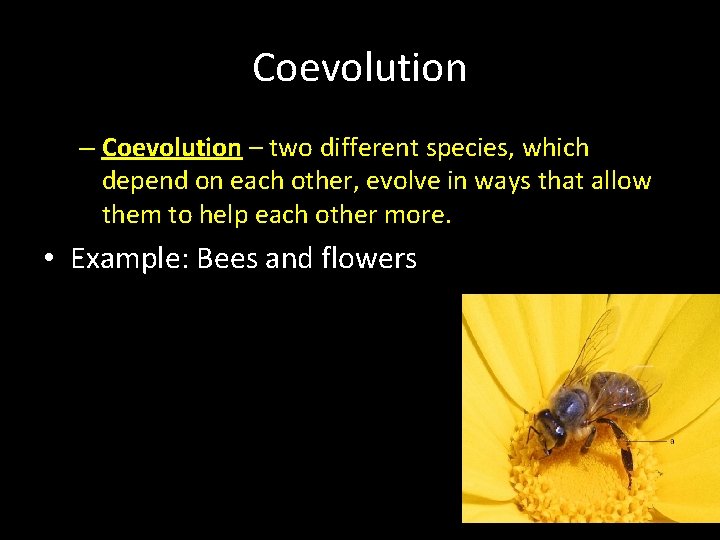
Coevolution – two different species, which depend on each other, evolve in ways that allow them to help each other more. • Example: Bees and flowers
Coevolution
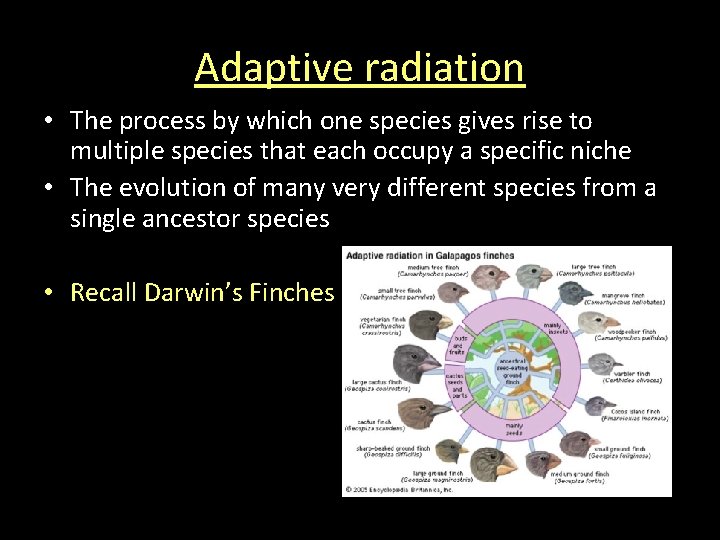
Adaptive radiation • The process by which one species gives rise to multiple species that each occupy a specific niche • The evolution of many very different species from a single ancestor species • Recall Darwin’s Finches
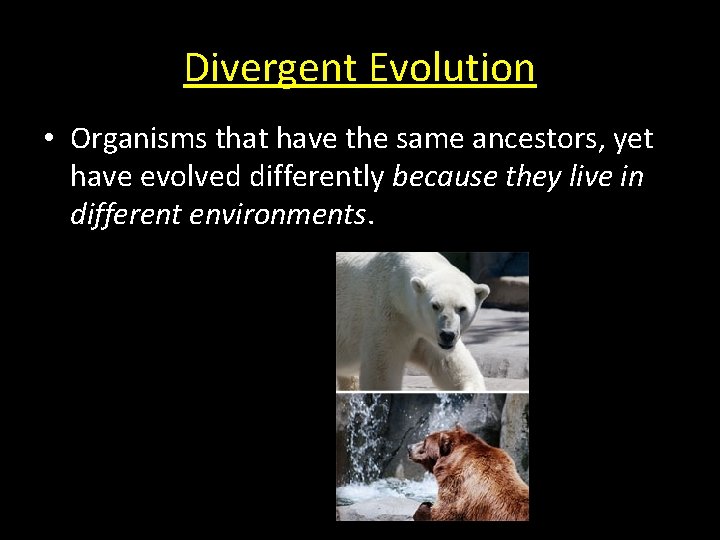
Divergent Evolution • Organisms that have the same ancestors, yet have evolved differently because they live in different environments.
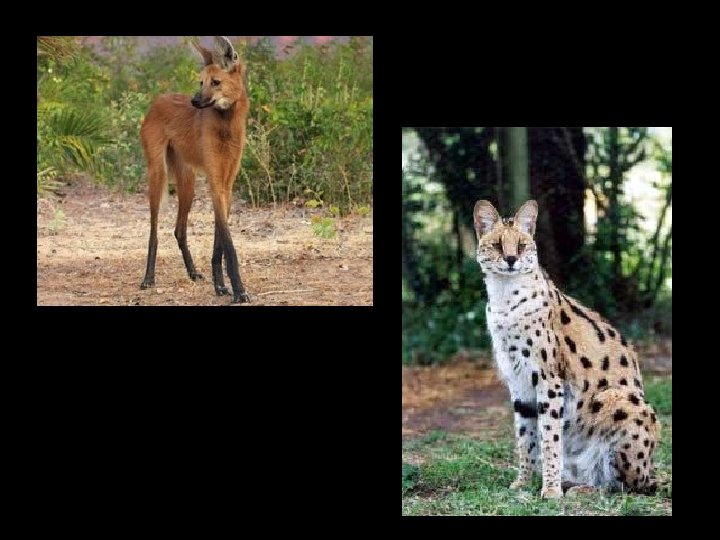
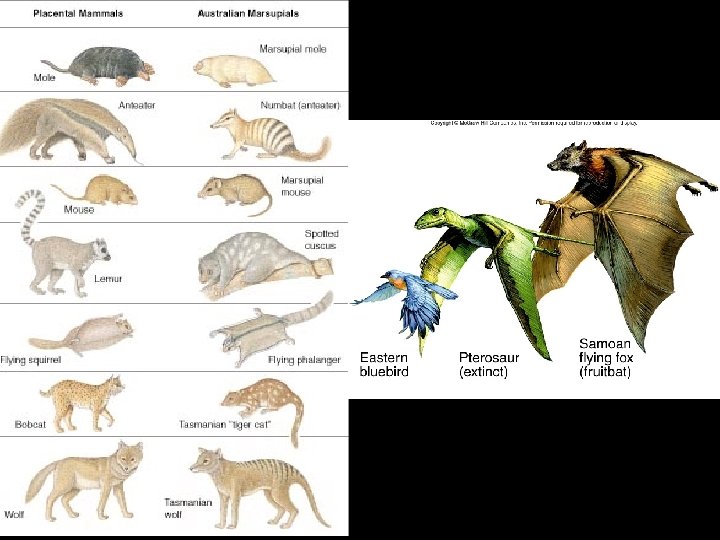
Convergent Evolution Convergent evolution – unrelated species display similar features • Sometimes different species with different ancestors develop similar characteristics. – If two different species happen to live in similar environments, they may adapt to their environments in the same way
Adaptation • Why do primates have opposable thumbs? • Lab Activity!
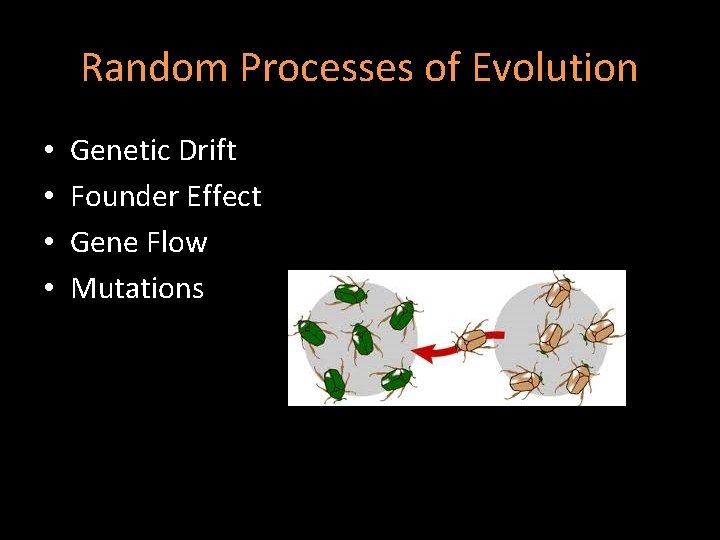
Random Processes of Evolution • • Genetic Drift Founder Effect Gene Flow Mutations
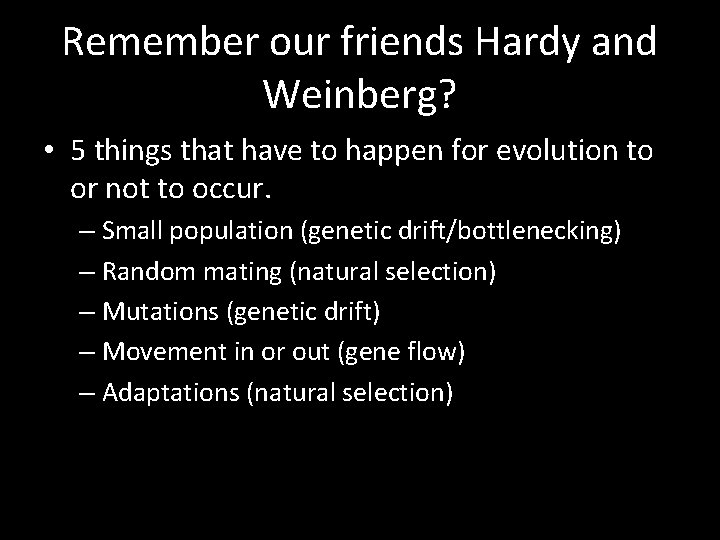
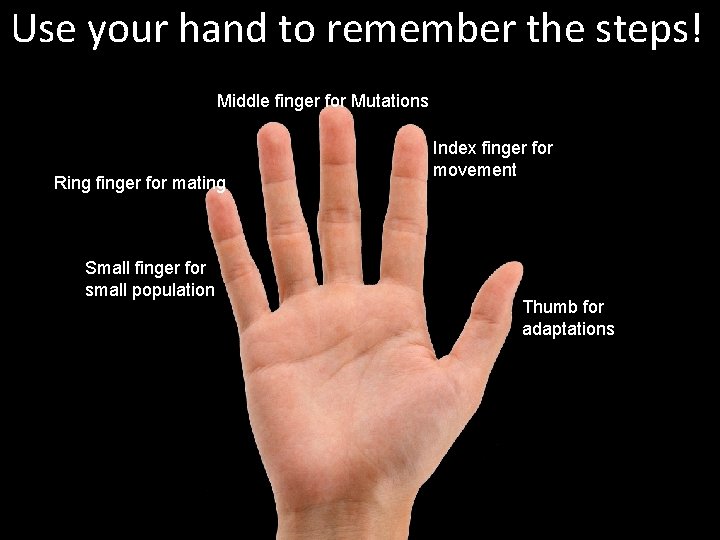
Remember our friends Hardy and Weinberg? • 5 things that have to happen for evolution to or not to occur. – Small population (genetic drift/bottlenecking) – Random mating (natural selection) – Mutations (genetic drift) – Movement in or out (gene flow) – Adaptations (natural selection)
Use your hand to remember the steps! Middle finger for Mutations Ring finger for mating Small finger for small population Index finger for movement Thumb for adaptations
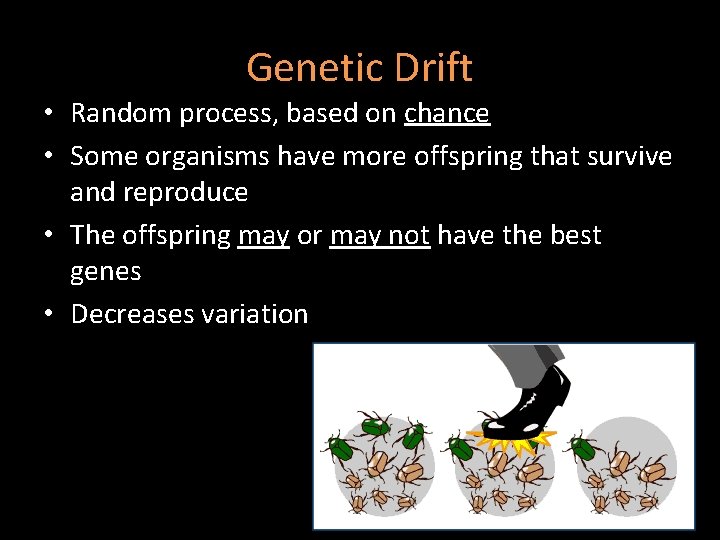
Genetic Drift • Random process, based on chance • Some organisms have more offspring that survive and reproduce • The offspring may or may not have the best genes • Decreases variation
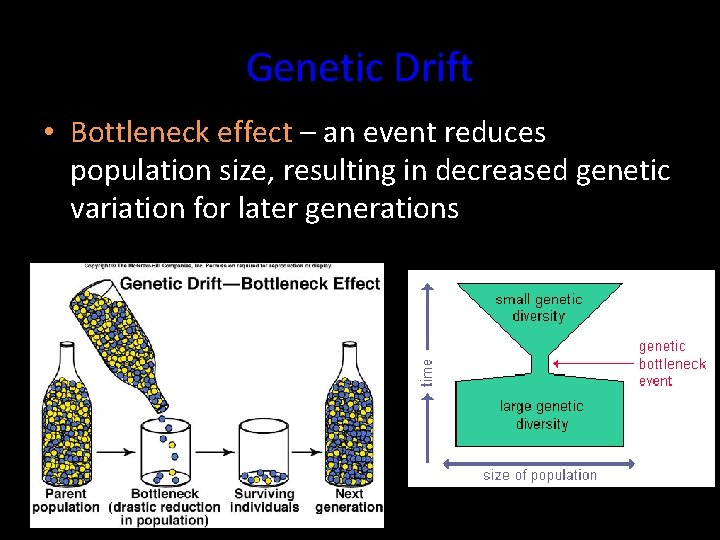
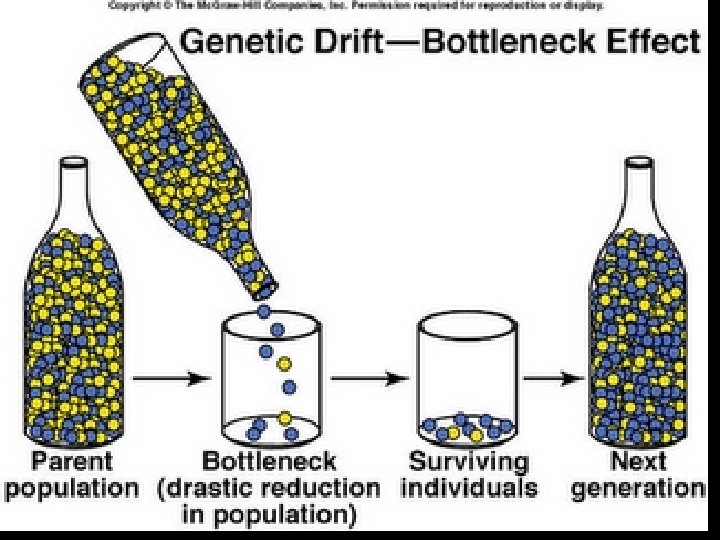
Genetic Drift • Bottleneck effect – an event reduces population size, resulting in decreased genetic variation for later generations
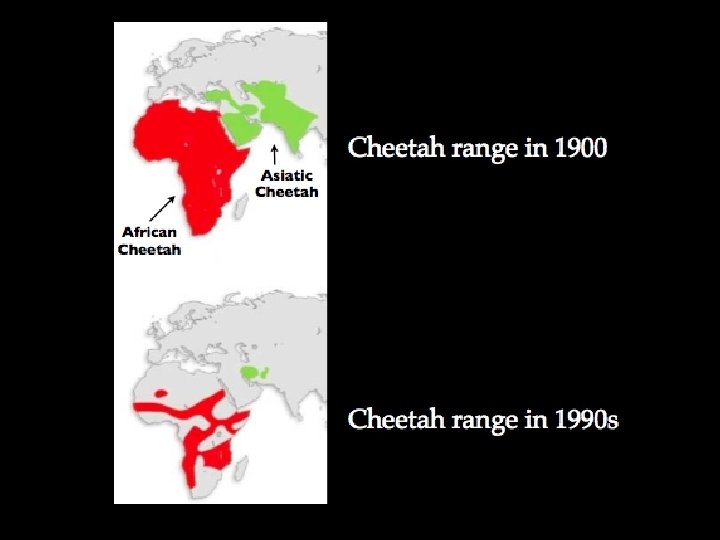
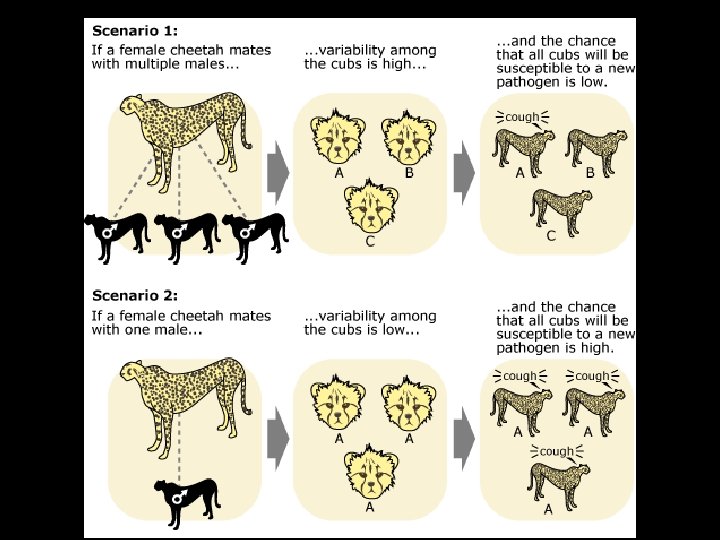
Real Examples • Endangered species are extremely vulnerable Whooping Crane (388 total C & W) Florida Panther (50 -70 Adults) Amur Leopard (35 individuals) Iberian Lynx (less than 100 – down 1000 in the last decade alone) – Anatolian Leopard (maybe extinct, last seen ‘ 03) – – • Gene pool is not as diverse, not as much genetic variation – Makes them vulnerable because they cannot readily adapt to new or changing environments.
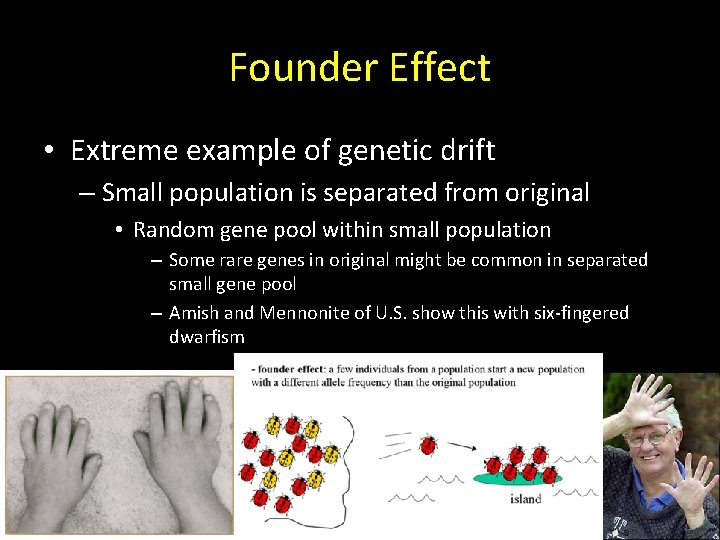
Founder Effect • Extreme example of genetic drift – Small population is separated from original • Random gene pool within small population – Some rare genes in original might be common in separated small gene pool – Amish and Mennonite of U. S. show this with six-fingered dwarfism
• For example, the Afrikaner population of Dutch settlers in South Africa is descended mainly from a few colonists. Today, the Afrikaner population has an unusually high frequency of the gene that causes Huntington's disease, because those original Dutch colonists just happened to carry that gene with unusually high frequency. This effect is easy to recognize in genetic diseases, but of course, the frequencies of all sorts of genes are affected by founder events.
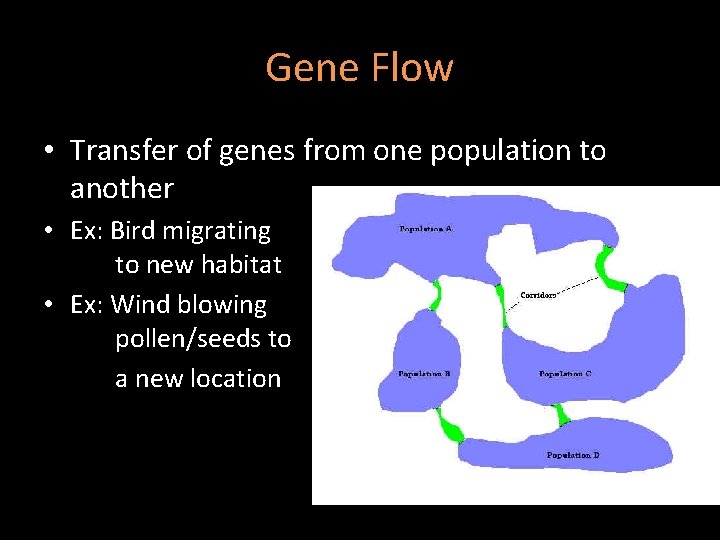
Gene Flow • Transfer of genes from one population to another • Ex: Bird migrating to new habitat • Ex: Wind blowing pollen/seeds to a new location
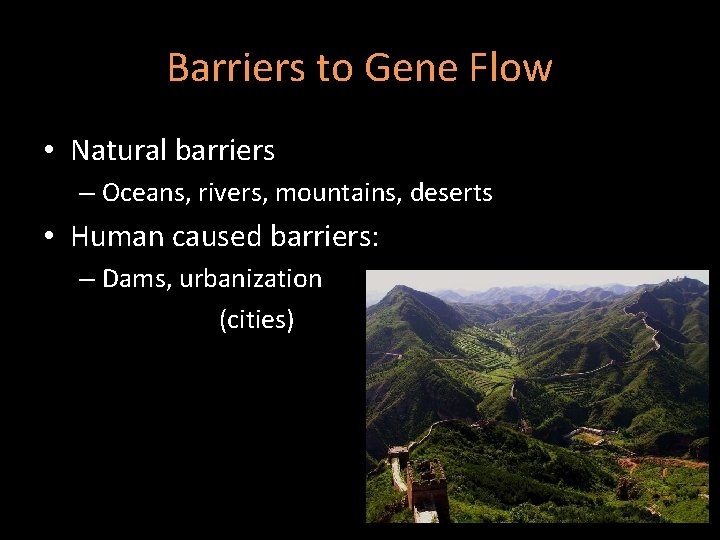
Barriers to Gene Flow • Natural barriers – Oceans, rivers, mountains, deserts • Human caused barriers: – Dams, urbanization (cities)
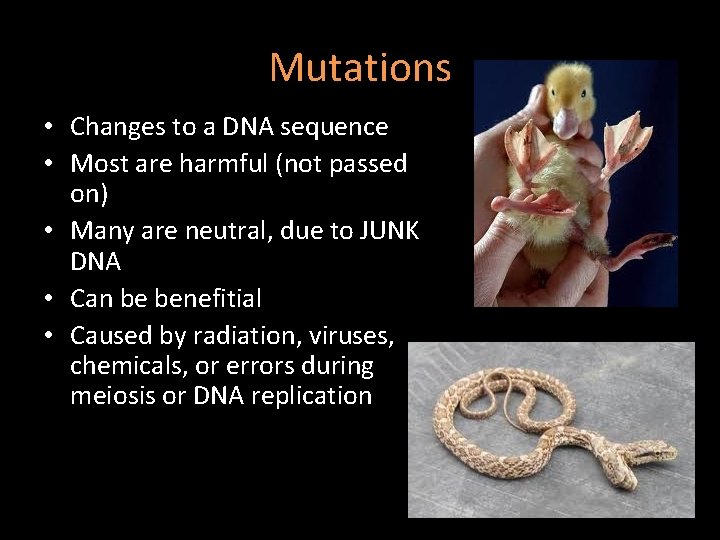
Mutations • Changes to a DNA sequence • Most are harmful (not passed on) • Many are neutral, due to JUNK DNA • Can be benefitial • Caused by radiation, viruses, chemicals, or errors during meiosis or DNA replication
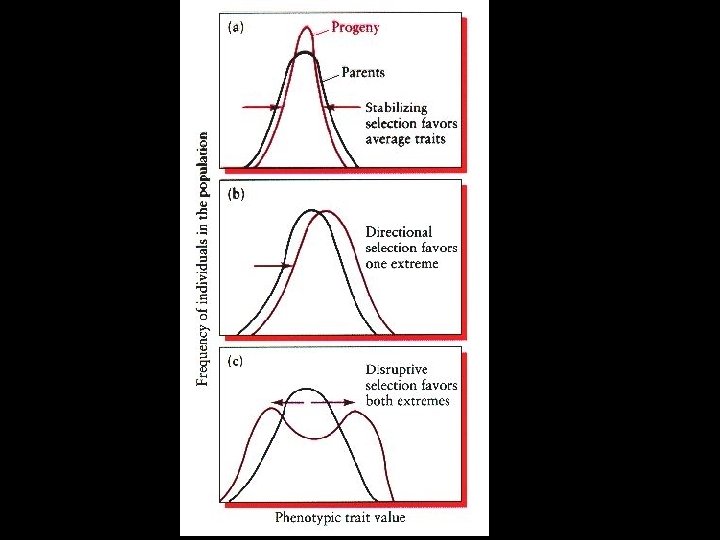
Directional Selection
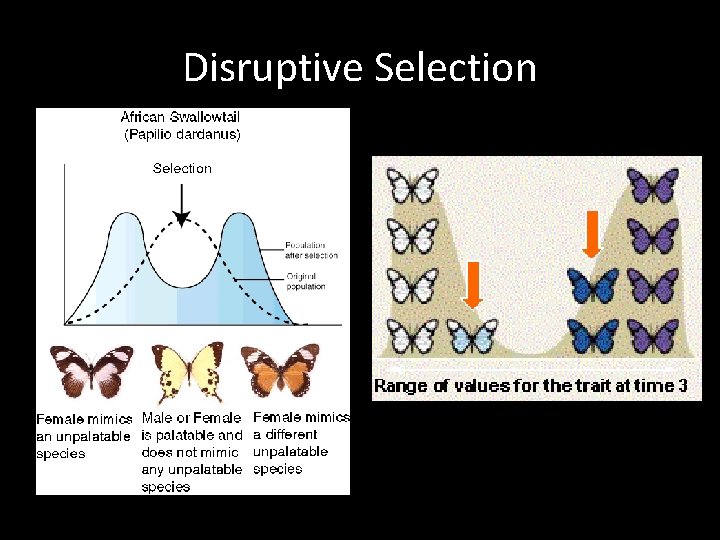
Disruptive Selection
Stabilizing Selection • Most common form of natural selection – Selects against extreme expressions on either side leading to average expression for most organisms within a population • Human babies are an example in their birthweight – Low birth weight and high birth weights often result in higher mortality, hence, human birth weight does not vary a great deal