SFA Reading Wings Parent Information Night SFA SFA


- Slides: 22
SFA Reading Wings Parent Information Night
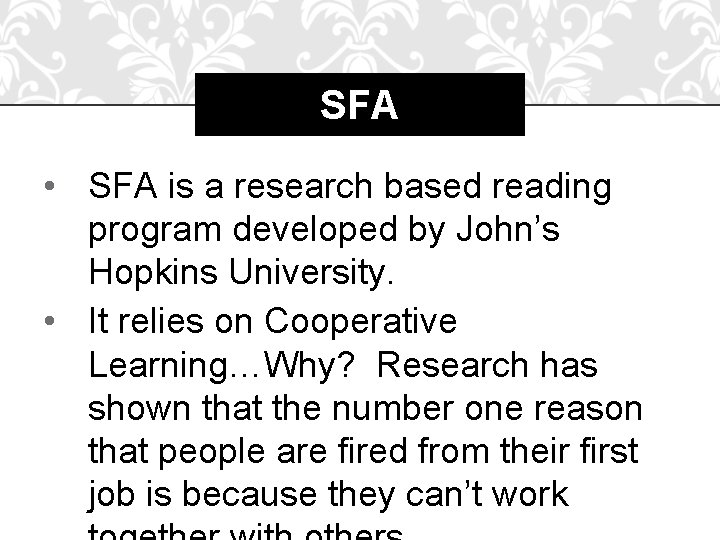
SFA • SFA is a research based reading program developed by John’s Hopkins University. • It relies on Cooperative Learning…Why? Research has shown that the number one reason that people are fired from their first job is because they can’t work
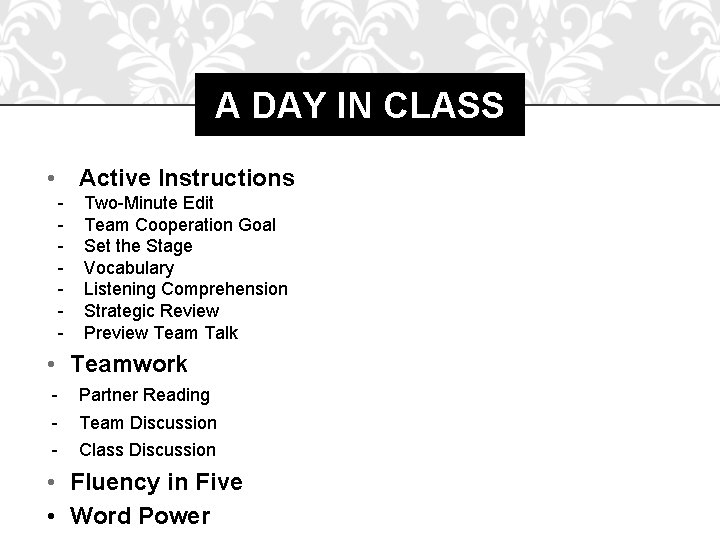
A DAY IN CLASS • Active Instructions - Two-Minute Edit Team Cooperation Goal Set the Stage Vocabulary Listening Comprehension Strategic Review Preview Team Talk • Teamwork - Partner Reading Team Discussion Class Discussion • Fluency in Five • Word Power
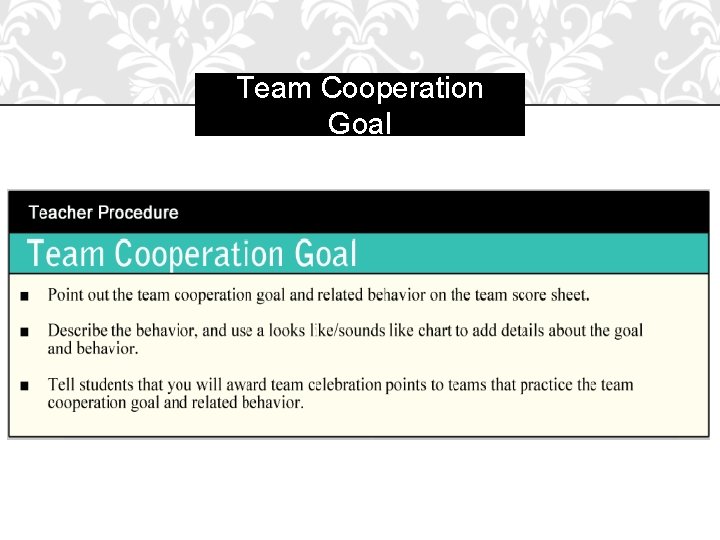
Team Cooperation Goal
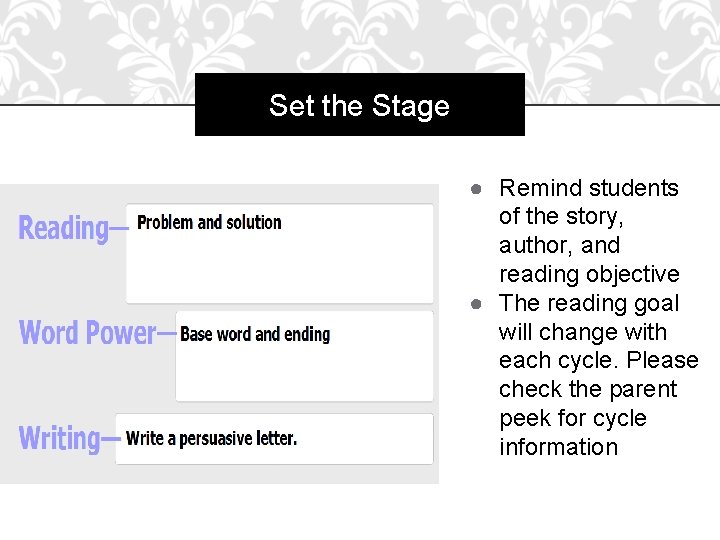
Set the Stage ● Remind students of the story, author, and reading objective ● The reading goal will change with each cycle. Please check the parent peek for cycle information
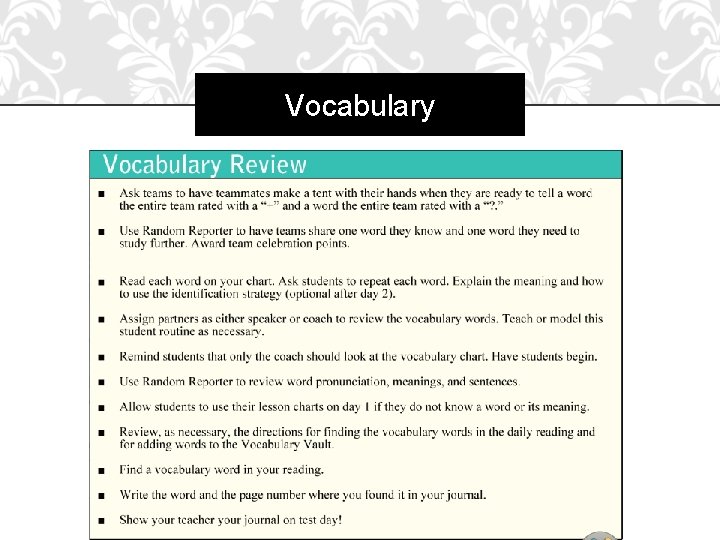
Vocabulary
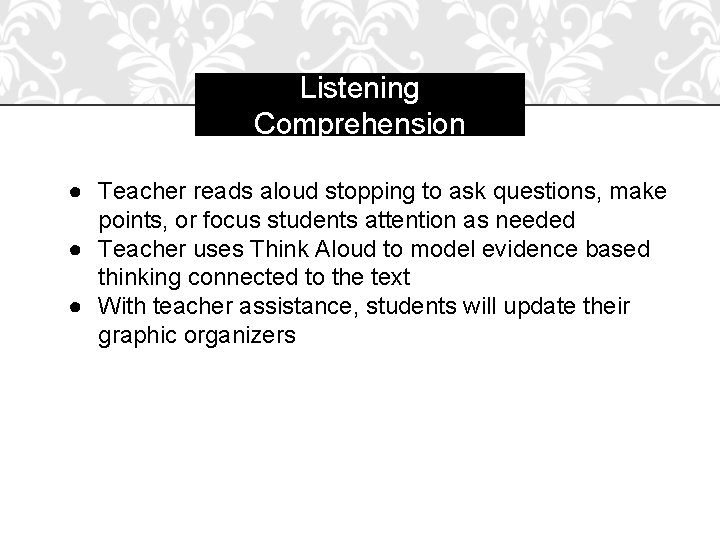
Listening Comprehension ● Teacher reads aloud stopping to ask questions, make points, or focus students attention as needed ● Teacher uses Think Aloud to model evidence based thinking connected to the text ● With teacher assistance, students will update their graphic organizers
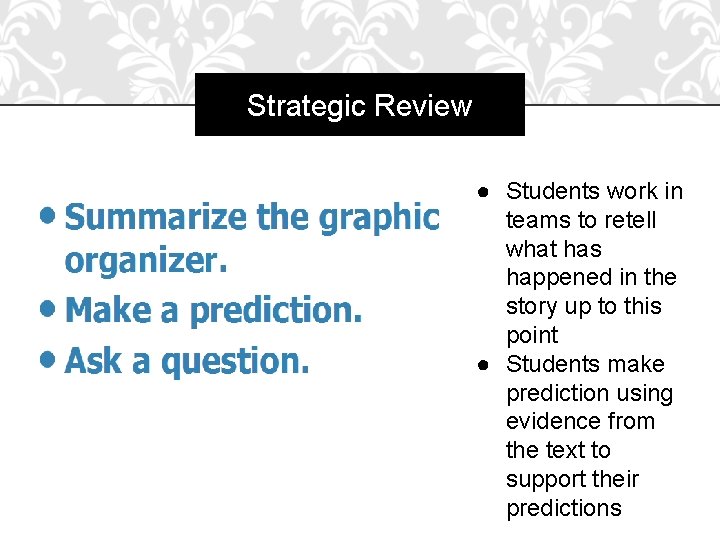
Strategic Review ● Students work in teams to retell what has happened in the story up to this point ● Students make prediction using evidence from the text to support their predictions
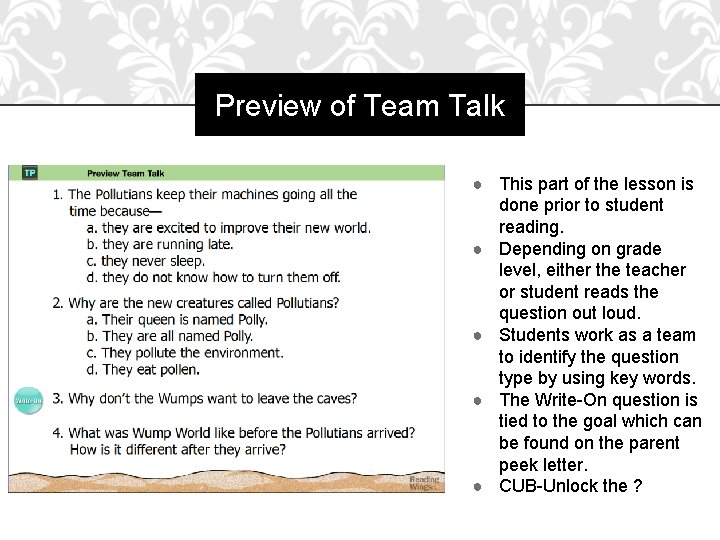
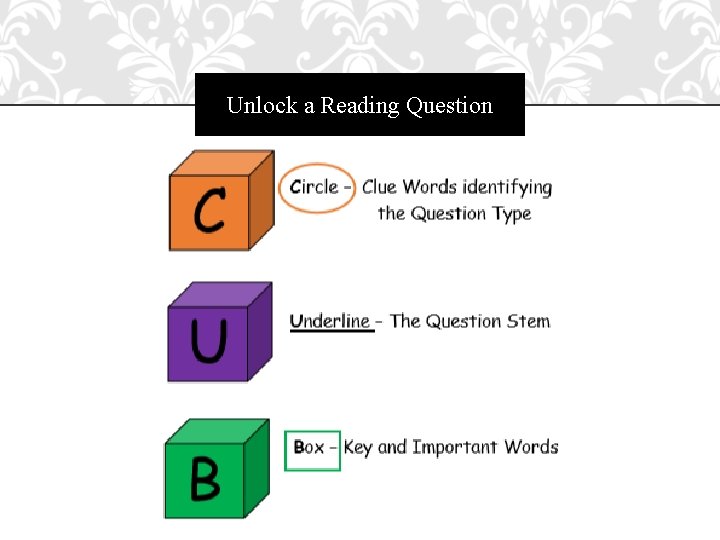
Preview of Team Talk ● This part of the lesson is done prior to student reading. ● Depending on grade level, either the teacher or student reads the question out loud. ● Students work as a team to identify the question type by using key words. ● The Write-On question is tied to the goal which can be found on the parent peek letter. ● CUB-Unlock the ?
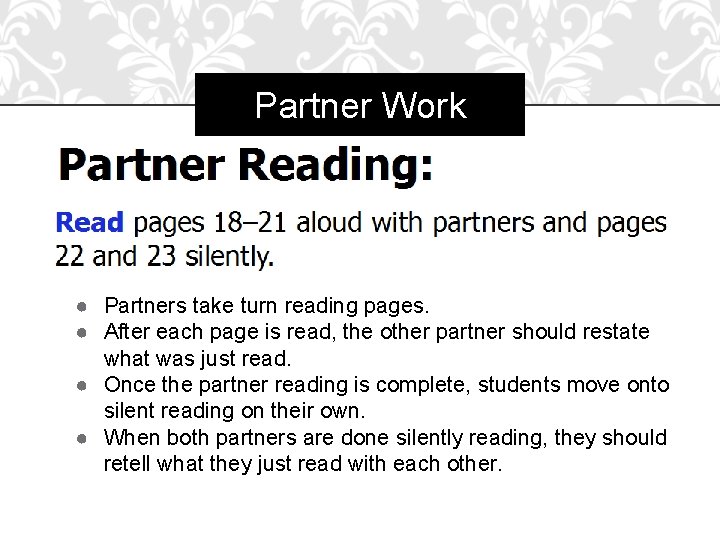
Partner Work ● Partners take turn reading pages. ● After each page is read, the other partner should restate what was just read. ● Once the partner reading is complete, students move onto silent reading on their own. ● When both partners are done silently reading, they should retell what they just read with each other.
Unlock a Reading Question
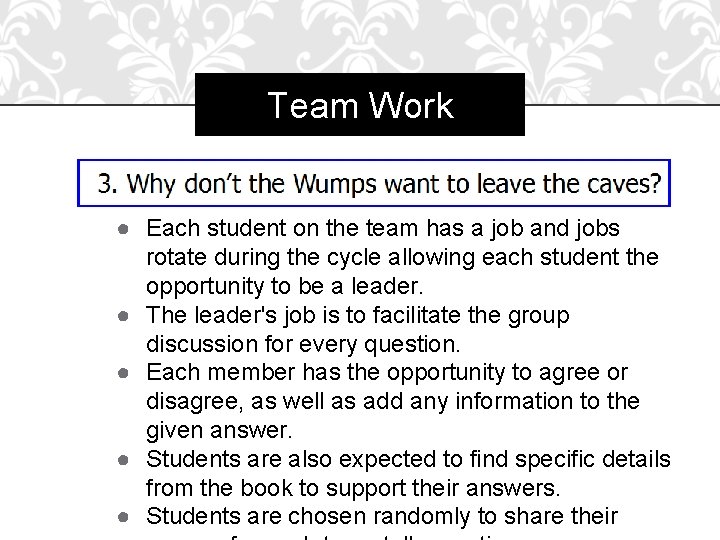
Team Work ● Each student on the team has a job and jobs rotate during the cycle allowing each student the opportunity to be a leader. ● The leader's job is to facilitate the group discussion for every question. ● Each member has the opportunity to agree or disagree, as well as add any information to the given answer. ● Students are also expected to find specific details from the book to support their answers. ● Students are chosen randomly to share their
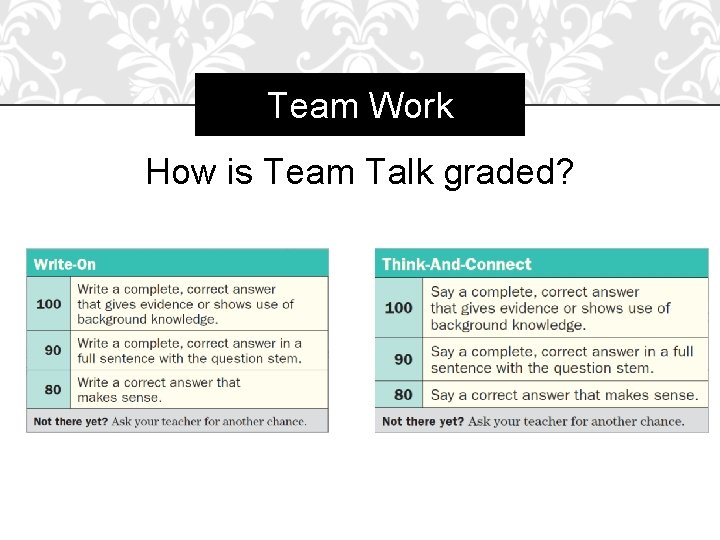
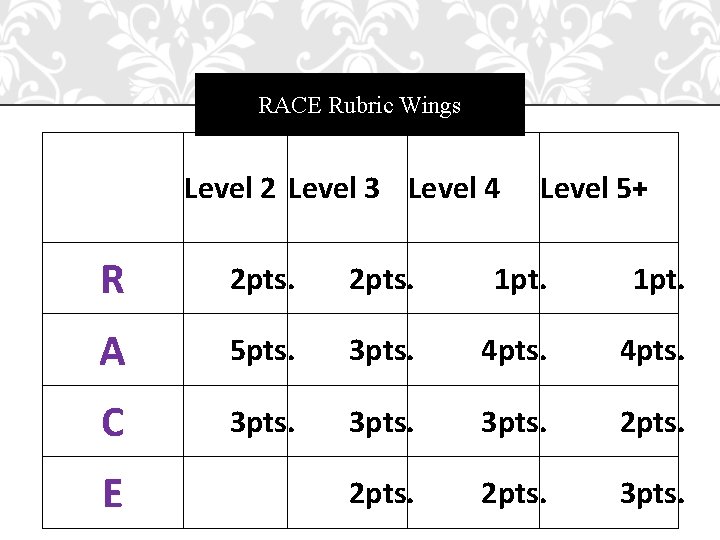
Team Work How is Team Talk graded?
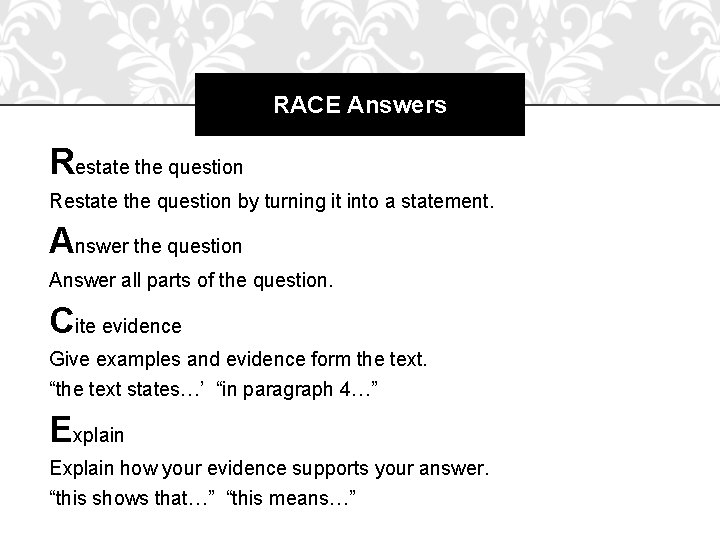
RACE Answers Restate the question by turning it into a statement. Answer the question Answer all parts of the question. Cite evidence Give examples and evidence form the text. “the text states…’ “in paragraph 4…” Explain how your evidence supports your answer. “this shows that…” “this means…”
RACE Rubric Wings Level 2 Level 3 Level 4 Level 5+ R 2 pts. 1 pt. A 5 pts. 3 pts. 4 pts. C 3 pts. 2 pts. 3 pts. E
WORD POWER
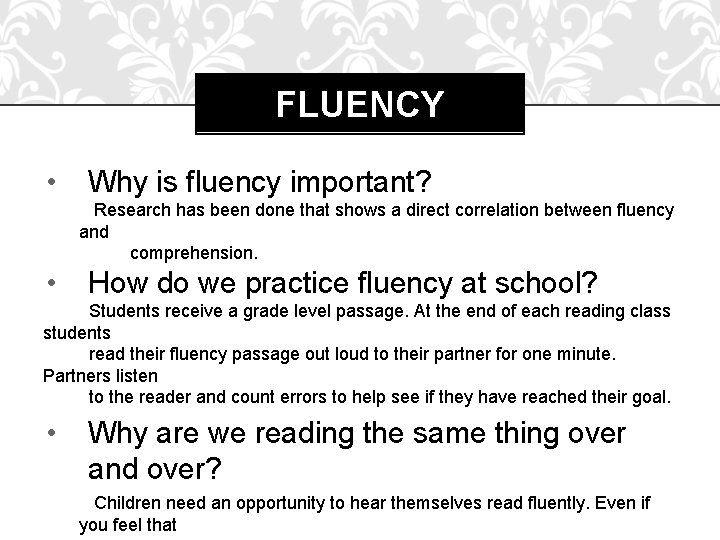
FLUENCY • Why is fluency important? Research has been done that shows a direct correlation between fluency and comprehension. • How do we practice fluency at school? Students receive a grade level passage. At the end of each reading class students read their fluency passage out loud to their partner for one minute. Partners listen to the reader and count errors to help see if they have reached their goal. • Why are we reading the same thing over and over? Children need an opportunity to hear themselves read fluently. Even if you feel that
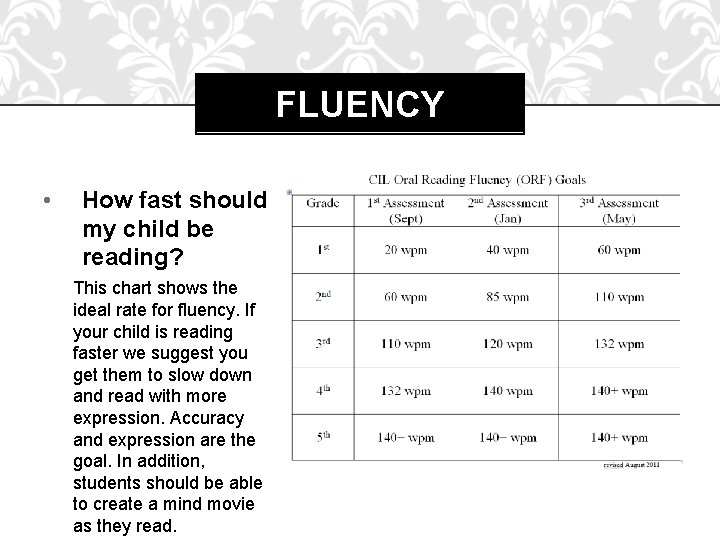
FLUENCY • How fast should my child be reading? This chart shows the ideal rate for fluency. If your child is reading faster we suggest you get them to slow down and read with more expression. Accuracy and expression are the goal. In addition, students should be able to create a mind movie as they read.
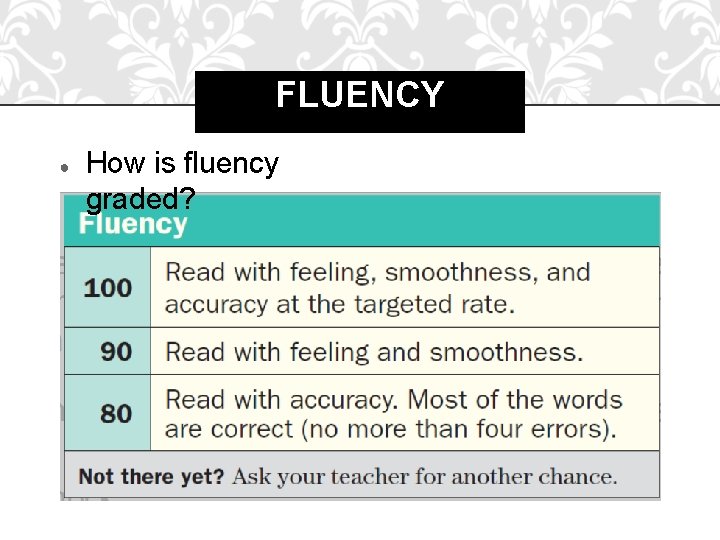
FLUENCY ● How is fluency graded?
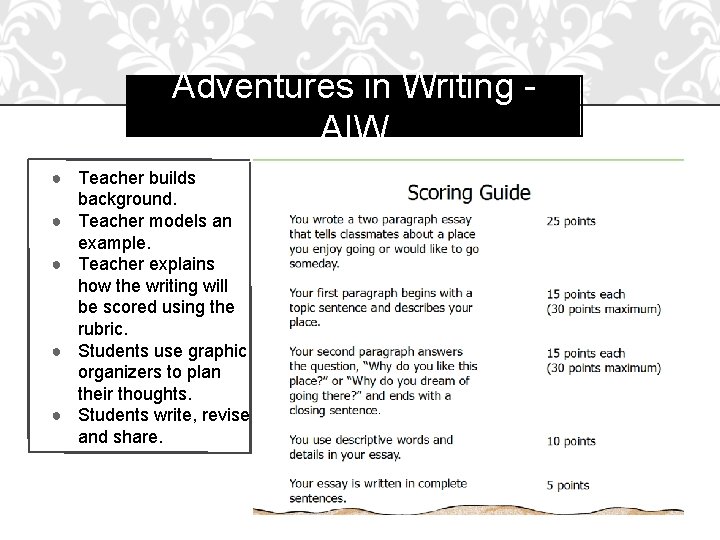
Adventures in Writing AIW ● Teacher builds background. ● Teacher models an example. ● Teacher explains how the writing will be scored using the rubric. ● Students use graphic organizers to plan their thoughts. ● Students write, revise and share.
READING HOMEWORK • Read a book out loud 15 minutes - Students need to read out loud to build fluency. This is also a chance for you to listen for errors and ask followup questions from the question stem chart. • Read silently 15 minutes - Silent reading fluency is important as well. Students are required to read silently on assessments so they must practice this as often as possible. • Practice fluency page – 1 time for 1 minute
THANK YOU Thank you for being wonderful supportive parents!!! CIL would not be as successful without you! Any questions? ?