Seneca Landfill Landfill Gas to Energy Project Presented


- Slides: 32
Seneca Landfill: Landfill Gas to Energy Project Presented by: Marty Siebert 2006 EGSA Spring Conference
Agenda • Landfill Gas 101 • Seneca Landfill • Landfill Gas – LFG Collection – LFG Treatment • • Power Generation Heat Recovery Emissions Benefits
Landfill Gas 101 • Landfill gas (LFG) is a by-product of the decomposition of municipal solid waste (MSW). • LFG: – ~ 50% methane (CH 4). – ~ 50% carbon dioxide (CO 2). – <1% non-methane organic compounds (NMOCs). • For every 1 million tons of MSW: – ~ 1. 0 MW of electricity – ~ 550, 000 cubic feet per day of landfill gas. • If uncontrolled, LFG contributes to smog and global warming, and may cause health and safety concerns.
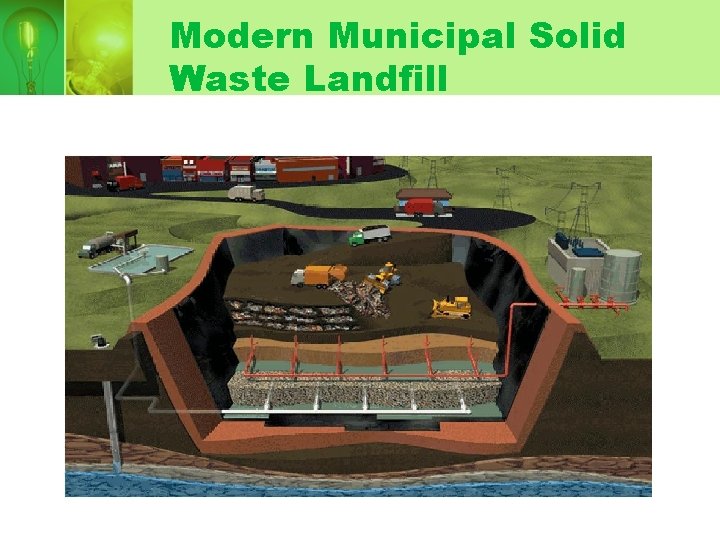
Modern Municipal Solid Waste Landfill
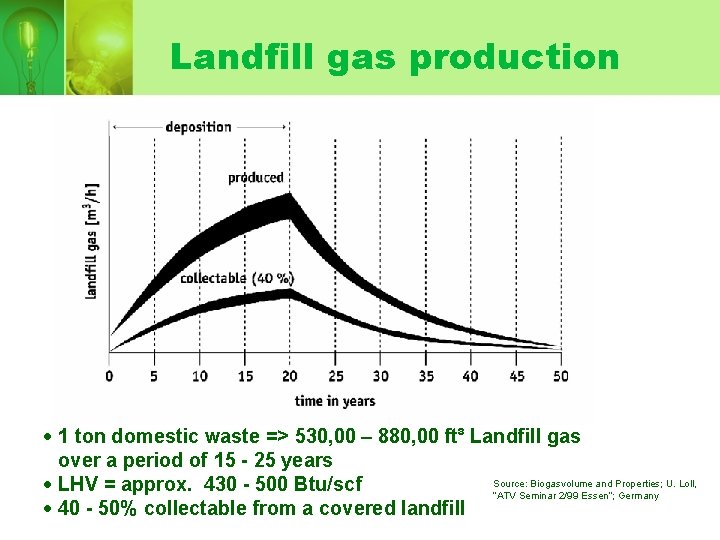
Landfill gas production · 1 ton domestic waste => 530, 00 – 880, 00 ft³ Landfill gas over a period of 15 - 25 years Source: Biogasvolume and Properties; U. Loll, · LHV = approx. 430 - 500 Btu/scf “ATV Seminar 2/99 Essen”; Germany · 40 - 50% collectable from a covered landfill
Seneca Landfill Project • Butler County, PA just North of Pittsburgh • State Funded Project • Combined Heat and Power (CHP) Landfill Gas to Energy Plant – Electricity used to offset grid power – Thermal used to offset natural gas boiler • Plant is over 80% efficient • Renewable/Green power source
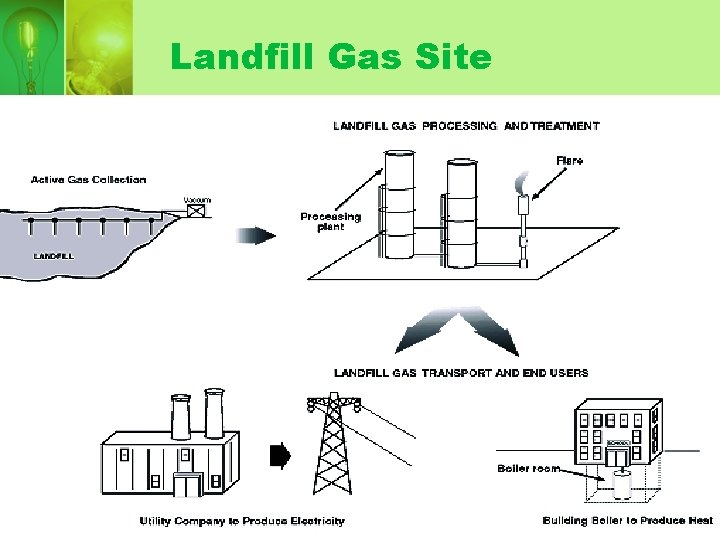
Landfill Gas Site
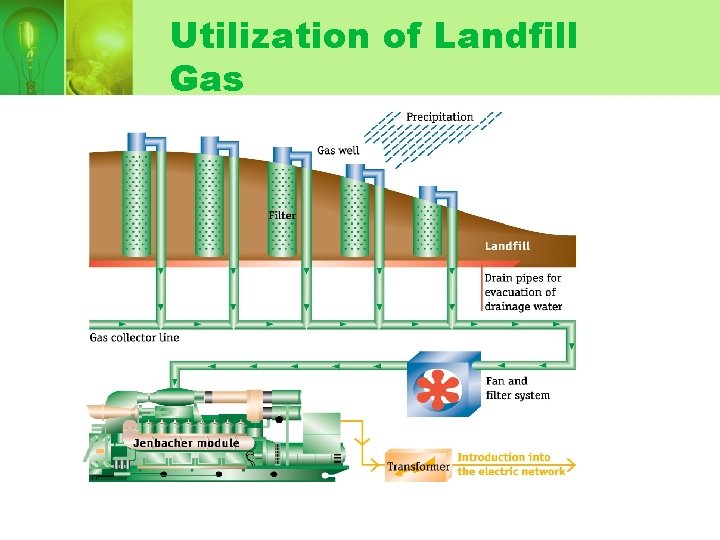
Utilization of Landfill Gas
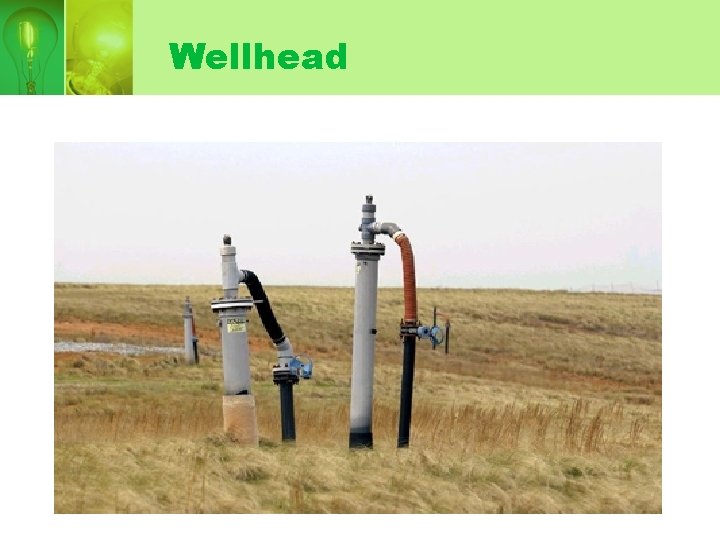
Wellhead
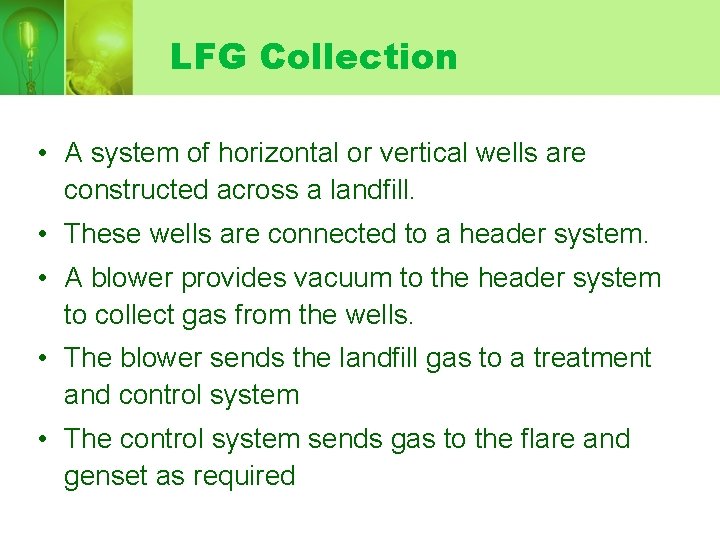
LFG Collection • A system of horizontal or vertical wells are constructed across a landfill. • These wells are connected to a header system. • A blower provides vacuum to the header system to collect gas from the wells. • The blower sends the landfill gas to a treatment and control system • The control system sends gas to the flare and genset as required
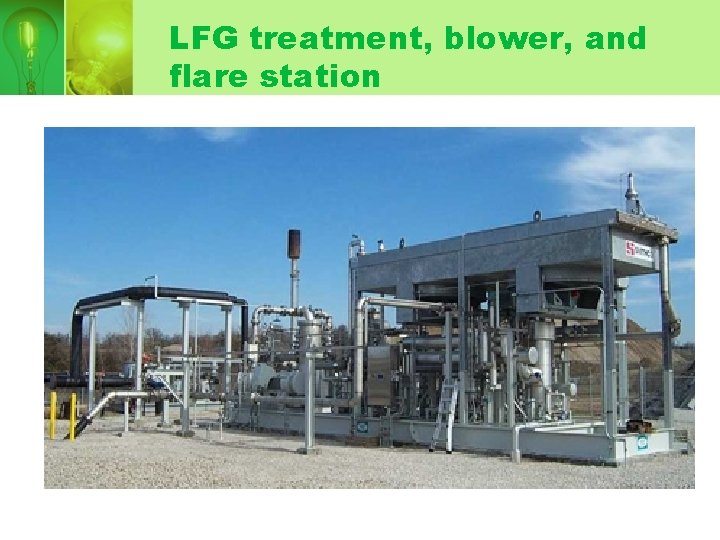
LFG treatment, blower, and flare station
LFG Conditioning and Treatment • Packaged skid downstream of LFG collection system and flare • Required LFG treatment prior to use in genset • Blower/Compressor – Increase pressure • Chillers – Knock out moisture and contaminants • Filters – Filter out contaminants
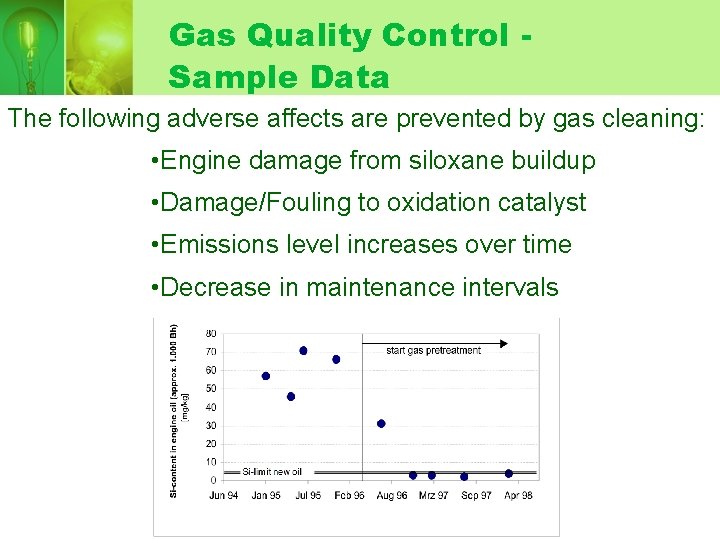
LFG Conditioning and Treatment cont. • Active Carbon Vessel – Cleaning and removal of Siloxanes – Siloxanes and Hydrocarbons damage engine life and performance – Critical Issue in Project Success
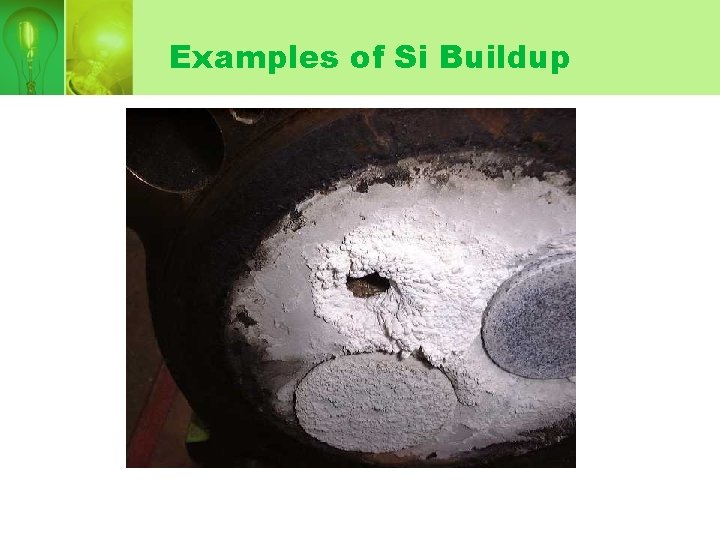
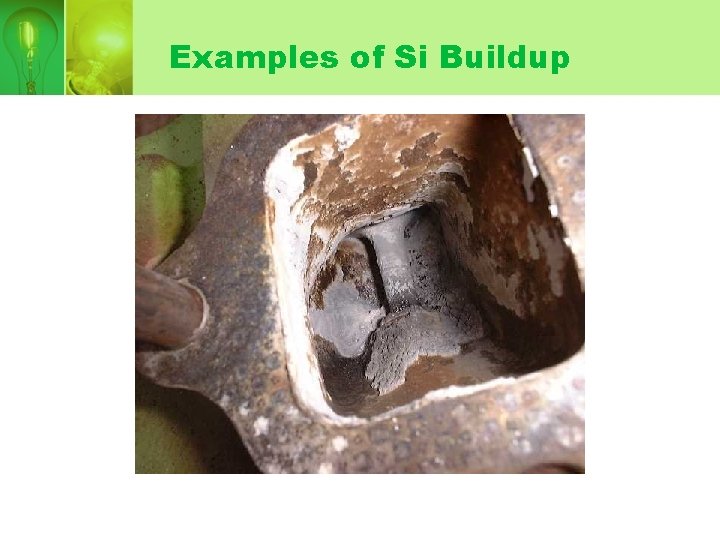
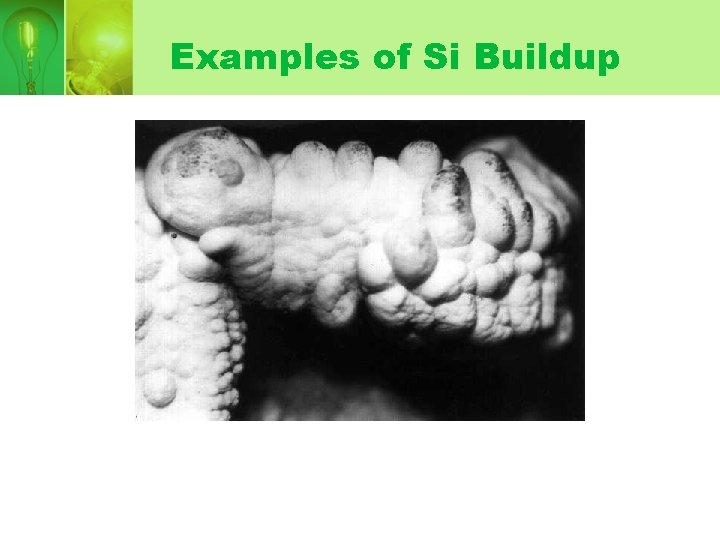
Gas Quality Control Sample Data The following adverse affects are prevented by gas cleaning: • Engine damage from siloxane buildup • Damage/Fouling to oxidation catalyst • Emissions level increases over time • Decrease in maintenance intervals
Examples of Si Buildup
Examples of Si Buildup
Examples of Si Buildup
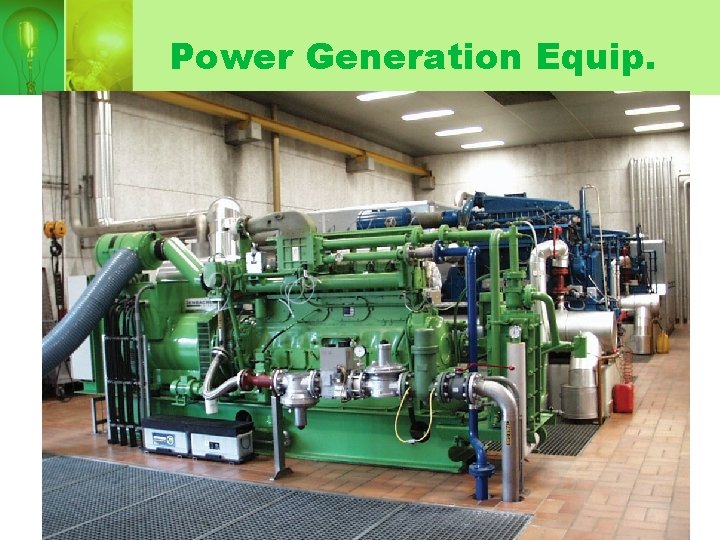
Power Generation Equip.
Power Generation • • 330 k. W Recip. Jenbacher Gas Engine Prime Power > 8, 000 hrs/yr Low NOx Emissions < 0. 6 g/bhp-hr Dual fuel capable – Natural Gas site over • • Designed to Burn Low-Btu gas Follows fluctuation in gas energy content Tolerate of gas contaminants Low Maintenance
Electrical Operation and Interconnect • Utility parallel switchgear and controls • Generate electricity for site use with excess power exported to the grid • Base load application driven of thermal demand • Black start, island mode capability with load shed controls • Interconnect through Penn Power • Consolidation of site distribution
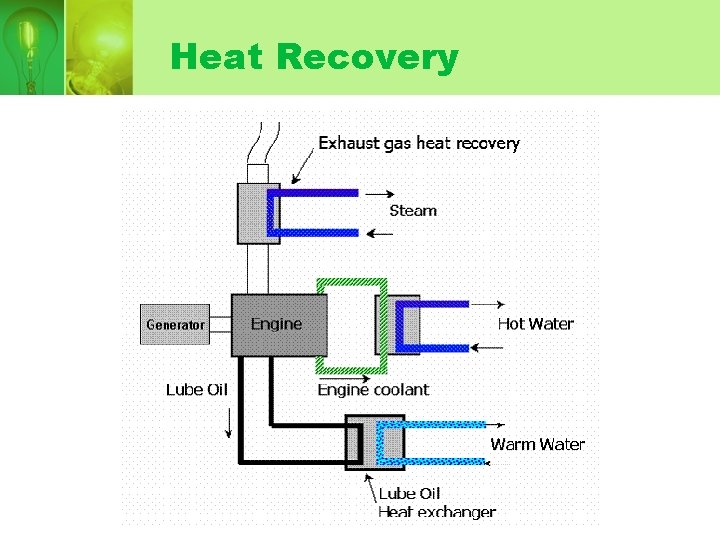
Heat Recovery
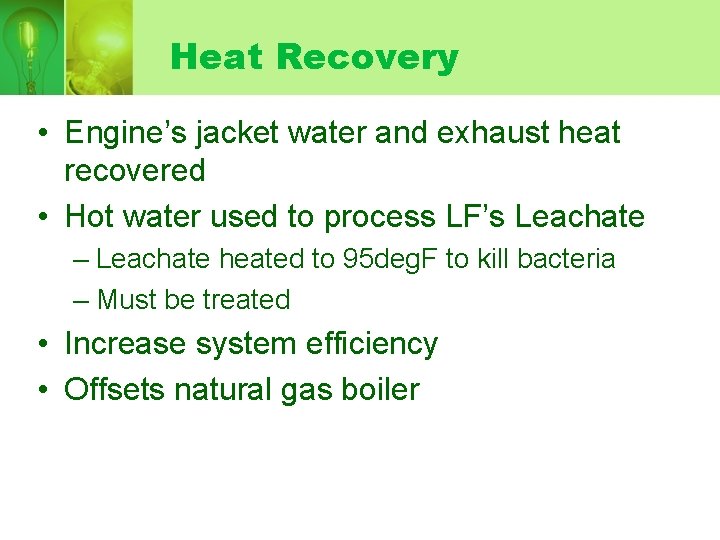
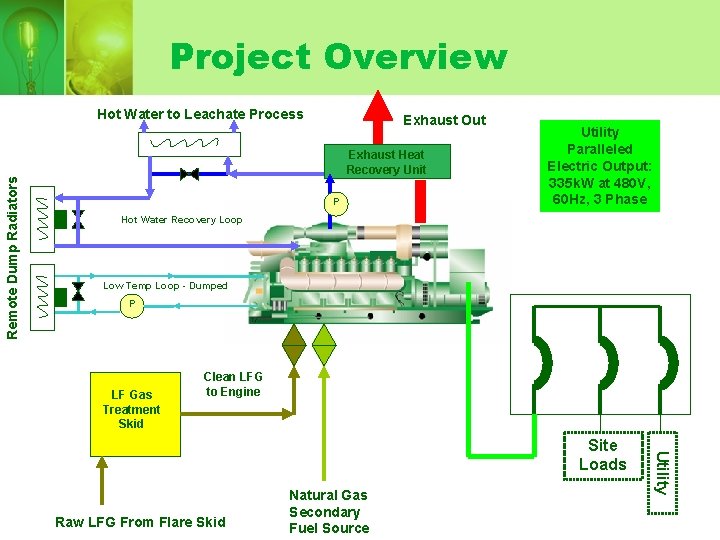
Heat Recovery • Engine’s jacket water and exhaust heat recovered • Hot water used to process LF’s Leachate – Leachate heated to 95 deg. F to kill bacteria – Must be treated • Increase system efficiency • Offsets natural gas boiler
Project Overview Hot Water to Leachate Process Exhaust Out Remote Dump Radiators Exhaust Heat Recovery Unit P Utility Paralleled Electric Output: 335 k. W at 480 V, 60 Hz, 3 Phase Hot Water Recovery Loop Low Temp Loop - Dumped P LF Gas Treatment Skid Clean LFG to Engine Raw LFG From Flare Skid Natural Gas Secondary Fuel Source Utility Site Loads
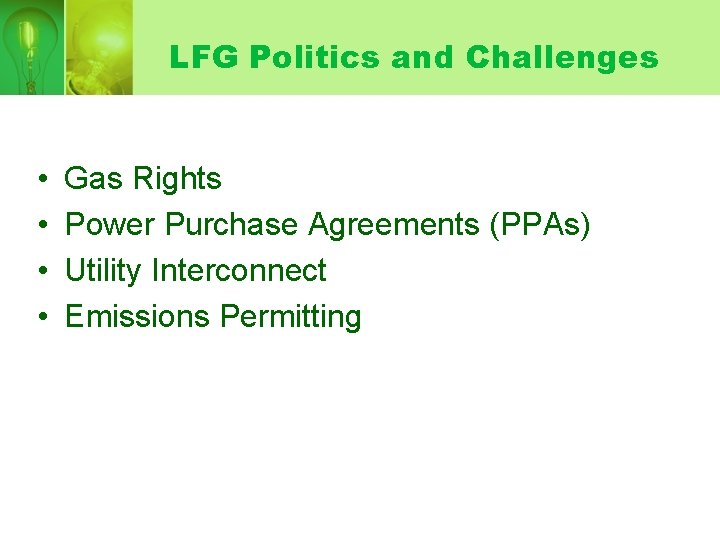
LFG Politics and Challenges • • Gas Rights Power Purchase Agreements (PPAs) Utility Interconnect Emissions Permitting
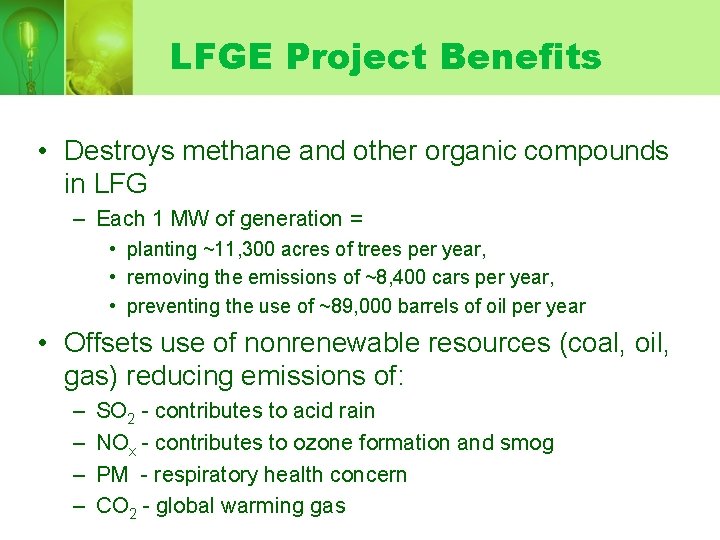
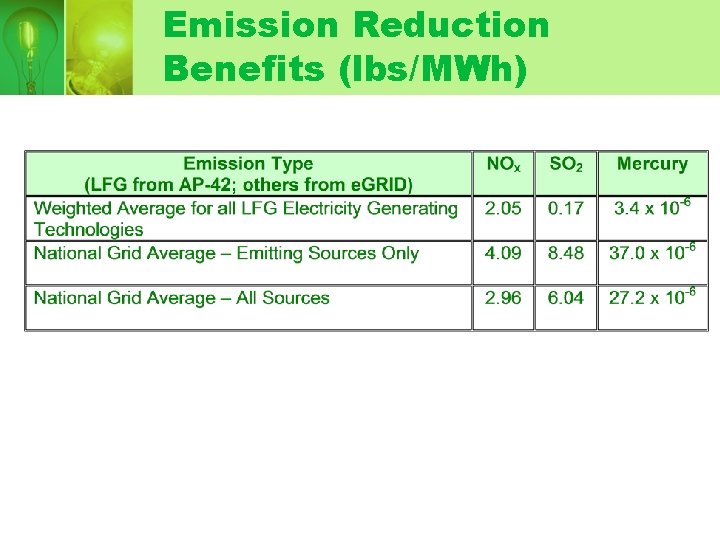
LFGE Project Benefits • Destroys methane and other organic compounds in LFG – Each 1 MW of generation = • planting ~11, 300 acres of trees per year, • removing the emissions of ~8, 400 cars per year, • preventing the use of ~89, 000 barrels of oil per year • Offsets use of nonrenewable resources (coal, oil, gas) reducing emissions of: – – SO 2 - contributes to acid rain NOx - contributes to ozone formation and smog PM - respiratory health concern CO 2 - global warming gas
Emission Reduction Benefits (lbs/MWh)
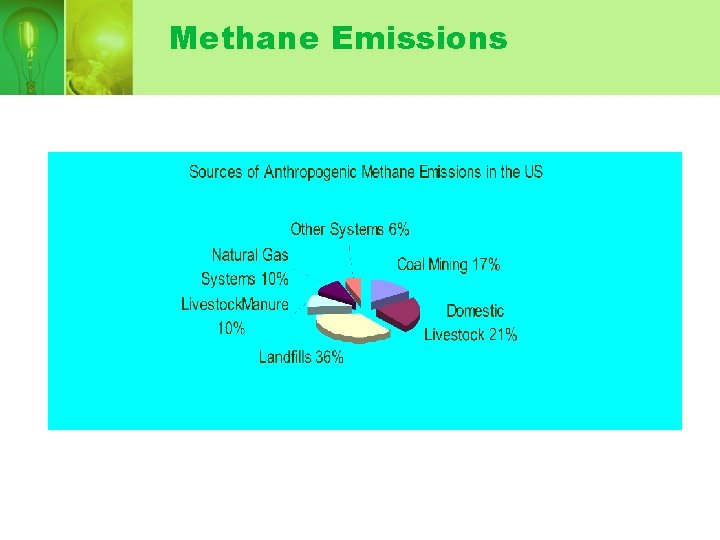
Methane Emissions
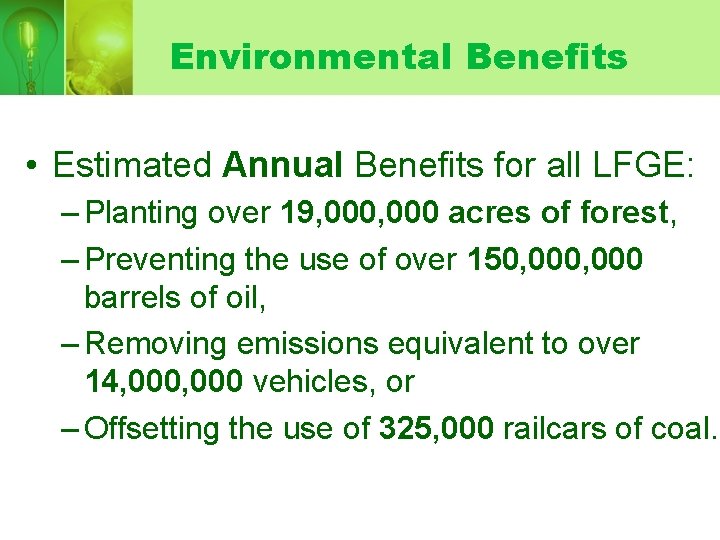
Environmental Benefits • Estimated Annual Benefits for all LFGE: – Planting over 19, 000 acres of forest, – Preventing the use of over 150, 000 barrels of oil, – Removing emissions equivalent to over 14, 000 vehicles, or – Offsetting the use of 325, 000 railcars of coal.
Why Should We Care About LFG? • Methane is a potent heat-trapping gas. • Landfills are the largest human-made source of methane in the US. • There are many cost effective options for reducing methane emissions while generating energy. • Projects reduce local air pollution, create jobs, revenues, and cost savings.
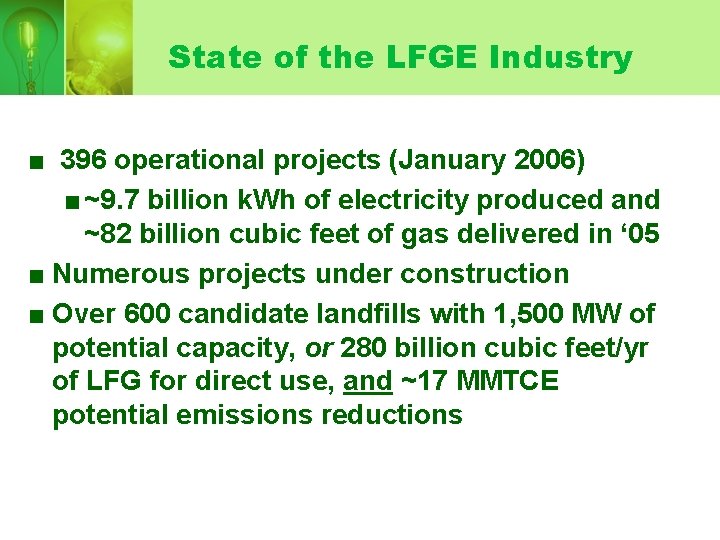
State of the LFGE Industry 396 operational projects (January 2006) <~9. 7 billion k. Wh of electricity produced and ~82 billion cubic feet of gas delivered in ‘ 05 < Numerous projects under construction < Over 600 candidate landfills with 1, 500 MW of potential capacity, or 280 billion cubic feet/yr of LFG for direct use, and ~17 MMTCE potential emissions reductions <
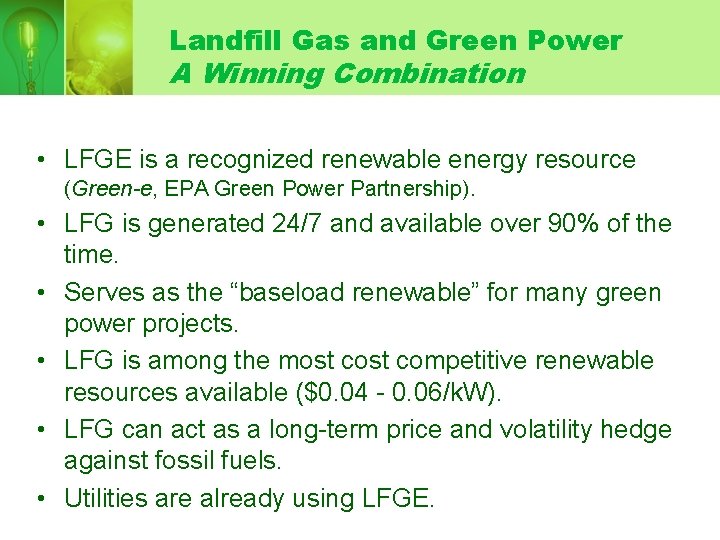
Landfill Gas and Green Power A Winning Combination • LFGE is a recognized renewable energy resource (Green-e, EPA Green Power Partnership). • LFG is generated 24/7 and available over 90% of the time. • Serves as the “baseload renewable” for many green power projects. • LFG is among the most competitive renewable resources available ($0. 04 - 0. 06/k. W). • LFG can act as a long-term price and volatility hedge against fossil fuels. • Utilities are already using LFGE.
Questions? Contact Information: Marty Siebert Email: msiebert@nixonpower. com Ph: 901 -751 -3634