SEMESTER EXAM REVIEW PART 1 English II Literary











- Slides: 35
SEMESTER EXAM REVIEW PART 1 English II
Literary Terms
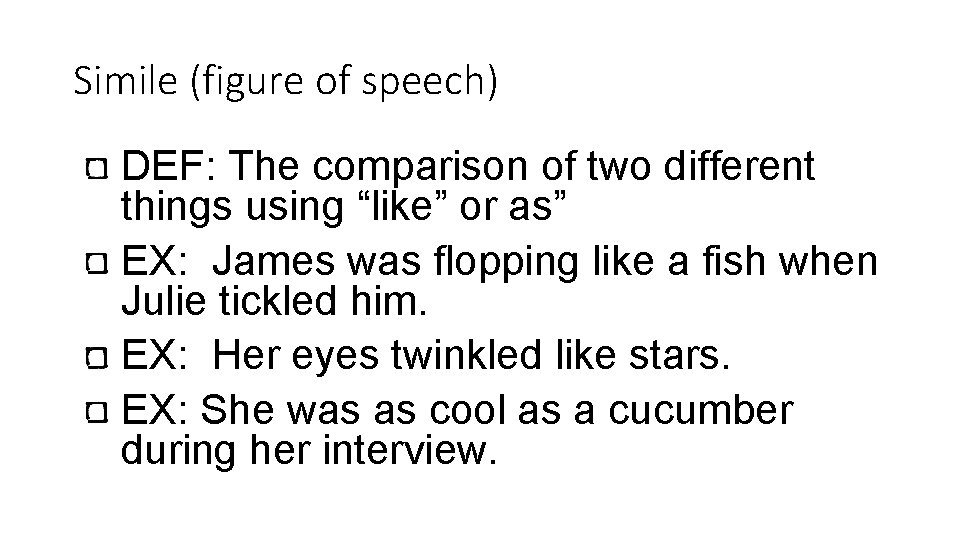
Simile (figure of speech) DEF: The comparison of two different things using “like” or as” EX: James was flopping like a fish when Julie tickled him. EX: Her eyes twinkled like stars. EX: She was as cool as a cucumber during her interview.
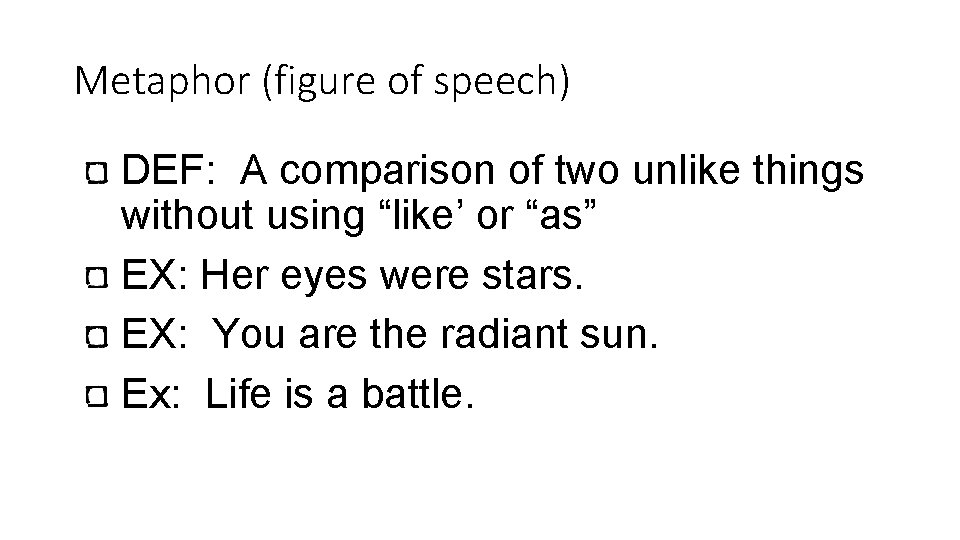
Metaphor (figure of speech) DEF: A comparison of two unlike things without using “like’ or “as” EX: Her eyes were stars. EX: You are the radiant sun. Ex: Life is a battle.
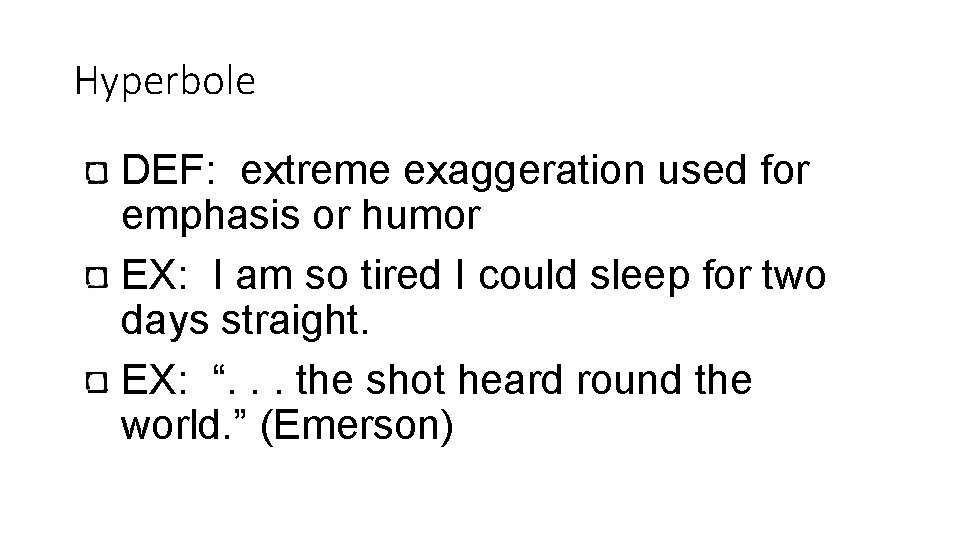
Hyperbole DEF: extreme exaggeration used for emphasis or humor EX: I am so tired I could sleep for two days straight. EX: “. . . the shot heard round the world. ” (Emerson)
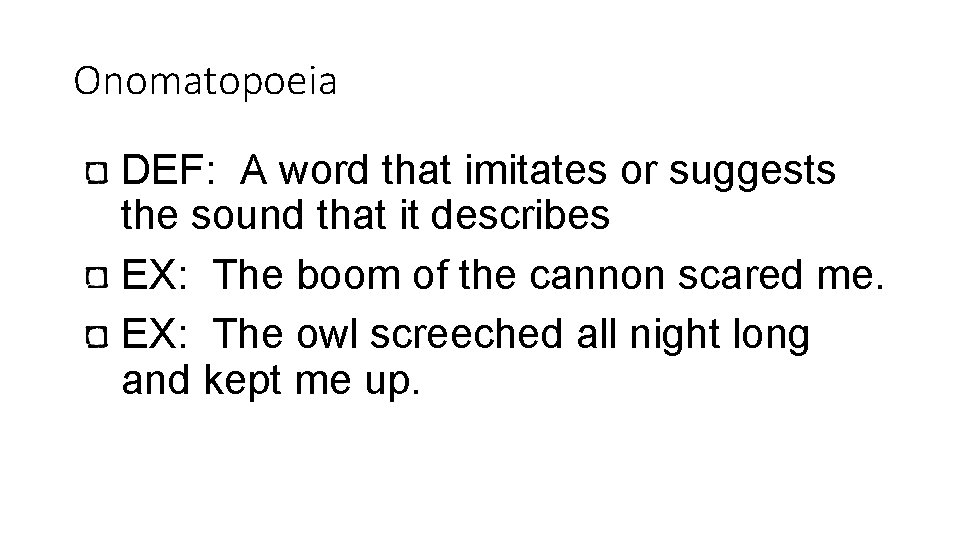
Onomatopoeia DEF: A word that imitates or suggests the sound that it describes EX: The boom of the cannon scared me. EX: The owl screeched all night long and kept me up.
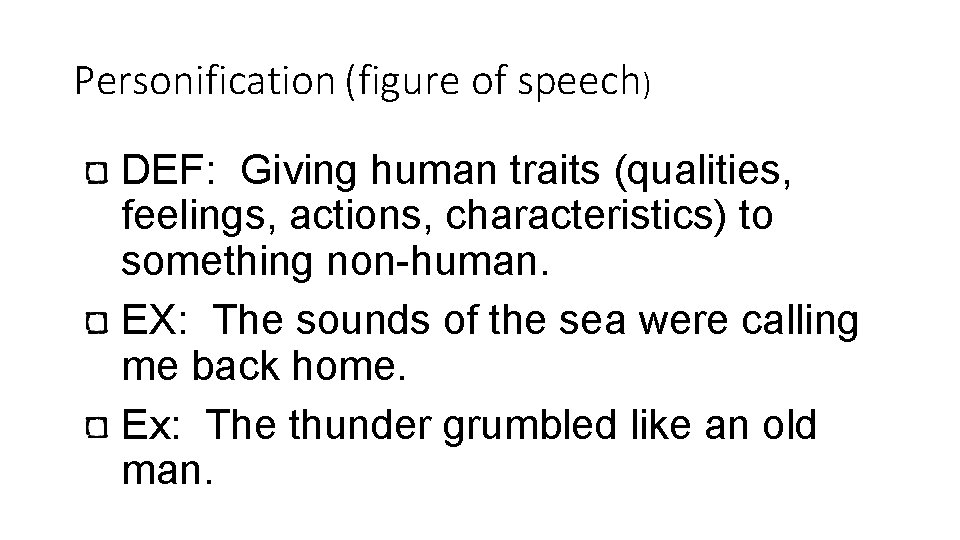
Personification (figure of speech) DEF: Giving human traits (qualities, feelings, actions, characteristics) to something non-human. EX: The sounds of the sea were calling me back home. Ex: The thunder grumbled like an old man.
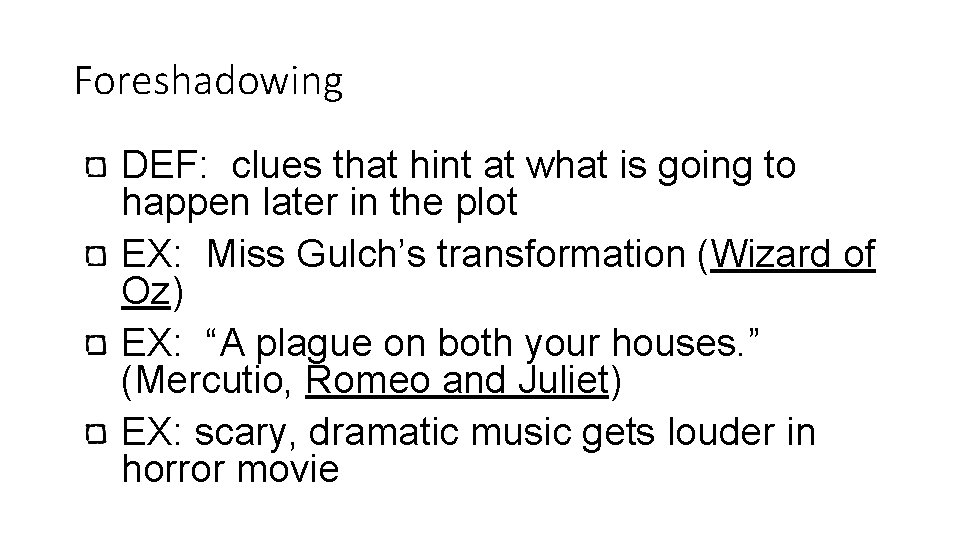
Foreshadowing DEF: clues that hint at what is going to happen later in the plot EX: Miss Gulch’s transformation (Wizard of Oz) EX: “A plague on both your houses. ” (Mercutio, Romeo and Juliet) EX: scary, dramatic music gets louder in horror movie
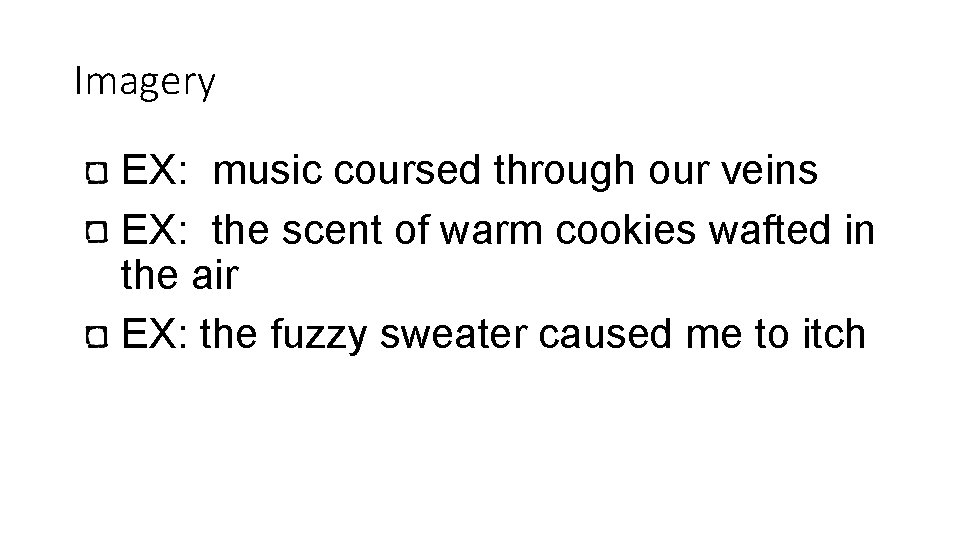
Imagery EX: music coursed through our veins EX: the scent of warm cookies wafted in the air EX: the fuzzy sweater caused me to itch
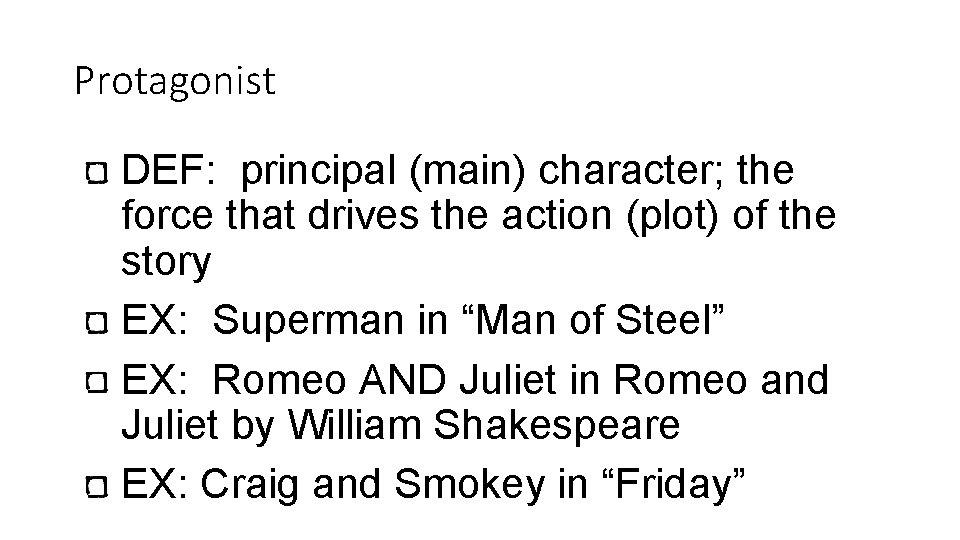
Protagonist DEF: principal (main) character; the force that drives the action (plot) of the story EX: Superman in “Man of Steel” EX: Romeo AND Juliet in Romeo and Juliet by William Shakespeare EX: Craig and Smokey in “Friday”
Antagonist DEF: the main character or force that opposes the protagonist (causes problems), creating conflict in the story EX: Voldemort (archenemy of Harry Potter) EX: Lex Luthor (archenemy of Superman) EX: Big Worm in ”Friday”
Internal Conflict DEF: character’s decision-making; conflict that takes place in the mind EX: Ponyboy’s (The Outsiders) decision to be true to himself vs. the gang EX: study or watch TV EX: run or fight
External Conflict DEF: struggle between a character and an outside force EX: Man vs. Man (Capulets Vs. Montagues) Man vs. Nature (boy vs. raging wild fire) man vs. machinery (woman Vs. Car that will not start) man vs. society (man vs. how to feed the starving children in the world)
Denotation The dictionary meaning of a word. Ex. The definition of “lake” is an “inland body of water”.
Connotation ideas and feelings associated with a word in addition to its explicit dictionary meaning EX: Cheap v. Inexpensive (what do you imagine if I use these words to describe something? ) EX: slender v. gaunt EX: assertive v. pushy
Symbol DEF: word or object that stands for another word or object. EX: In The Most Dangerous Game red was a symbol for blood, violence, and death on Ship-Trap Island. EX: dove -- peace; apple -- sin EX: windmill in Animal Farm-- pig’s manipulation
Situational Irony DEF: Unexpected events; Irony that occurs when what we expect to happen is the opposite of what actually does happen EX: The small “nerd” beats up the big “jock”. EX: A single woman reluctantly goes to a wedding but ends up meeting the man she marries. EX: The paint inside a can promises to stop metal from rusting, yet the metal can it is in is rusted.
Dramatic Irony DEF: Irony which occurs when the audience or reader knows something important that a character does not know. EX: In a movie, a slasher is in the woods and the audience can see him. The character runs to the woods to hide not knowing the slasher is in the woods. EX: Romeo does not know Juliet is just asleep in the tomb. The reader or audience knows this information.
Verbal Irony DEF: Irony where a writer or speaker says something but means something else. EX: Your D’s and F’s Will surely get you in the Smart People of America Club. How wonderful it is that the water will be turned off for six hours tomorrow!
Theme DEF: subject, topic, or focal idea of an artistic piece; author’s message to audience or point of focus EX: A theme in Romeo and Juliet is love. EX: coming of age; friendship; war **In analysis, theme is given as a complete sentence= Love inspires sacrifice.
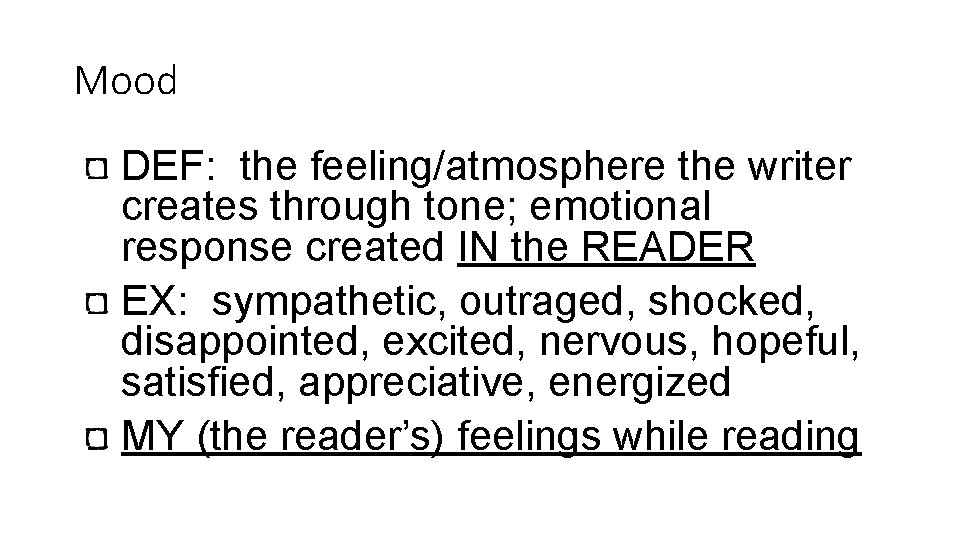
Mood DEF: the feeling/atmosphere the writer creates through tone; emotional response created IN the READER EX: sympathetic, outraged, shocked, disappointed, excited, nervous, hopeful, satisfied, appreciative, energized MY (the reader’s) feelings while reading
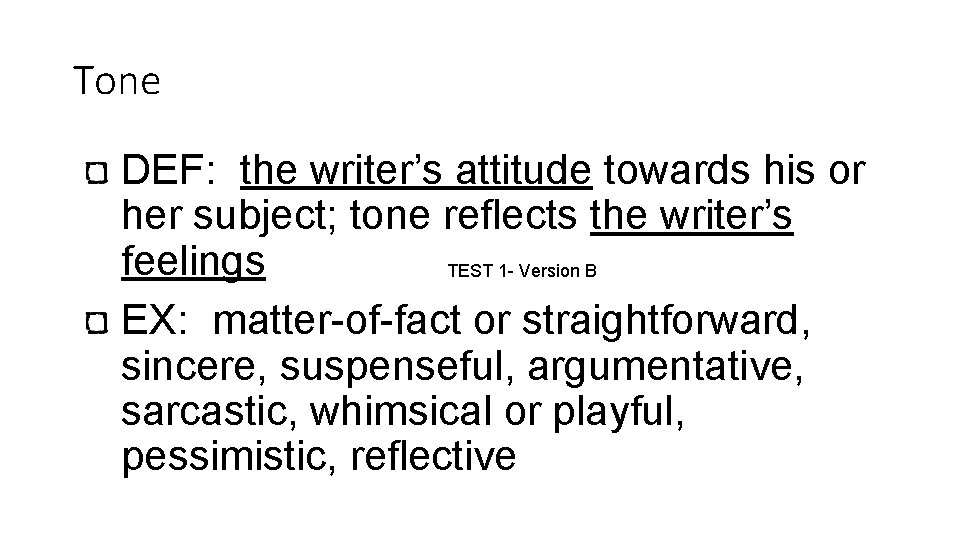
Tone DEF: the writer’s attitude towards his or her subject; tone reflects the writer’s feelings TEST 1 - Version B EX: matter-of-fact or straightforward, sincere, suspenseful, argumentative, sarcastic, whimsical or playful, pessimistic, reflective
Claim, Cite, Clarify
Which Answer Sounds More Thought Out? Why is it important to recycle? Answer #1 Answer #2 • I think that it’s important to • Recycling is important. According recycle because it’s good for the to research, recycling is good for environment. the environment because it decreases pollution. Therefore, recycling is essential.
What Do The 3 Cs Mean to Me? • Claim/Cite/Clarify is a way of answering questions or summarizing text. • Claim it—claim the big ideas. • Cite it—cite the information for those ideas. • Clarify it—explain how it all works together to present a message.
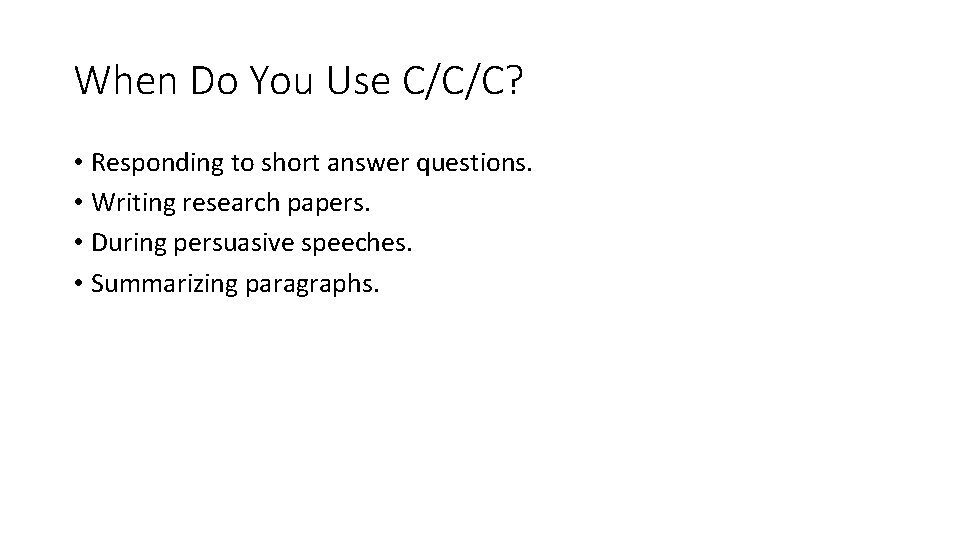
When Do You Use C/C/C? • Responding to short answer questions. • Writing research papers. • During persuasive speeches. • Summarizing paragraphs.
Your Citation • Whenever you make a claim, you MUST back it up with evidence. • This evidence is called a citation. Citations are a direct quote, or a general summary from the text. • Ways to introduce your citation: • “According to the text…” • “The text states…” • “The author describes…” • “In the article…” What evidence from the text would you use to back up your claim?
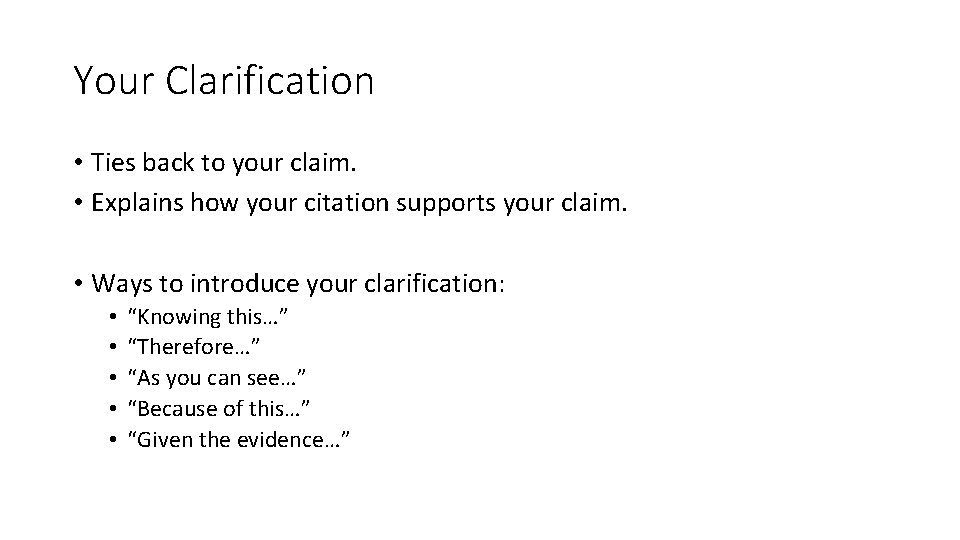
Your Clarification • Ties back to your claim. • Explains how your citation supports your claim. • Ways to introduce your clarification: • • • “Knowing this…” “Therefore…” “As you can see…” “Because of this…” “Given the evidence…”
On Your Own… • Read the following passage on your own and answer the question: “Oatmeal has many health benefits. You may have heard the saying that a hearty bowl of oatmeal at breakfast “sticks to your ribs”. This is not too far off from the truth. Oatmeal contains fiber which stays in the stomach longer and helps you feel fuller for longer. This can prevent overeating later on in the day, which may help you maintain a healthy weight and avoid the health problems associated with overweight. ” • Why is oatmeal healthy? Explain.
RHETORIC
What is Rhetoric? What is being said (content) +HOW it is being said (form) =RHETORIC
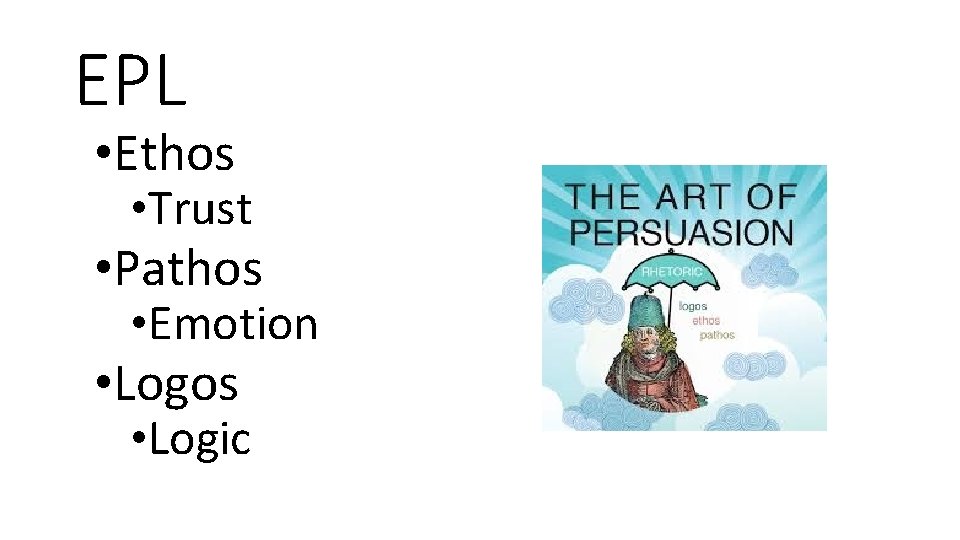
EPL • Ethos • Trust • Pathos • Emotion • Logos • Logic
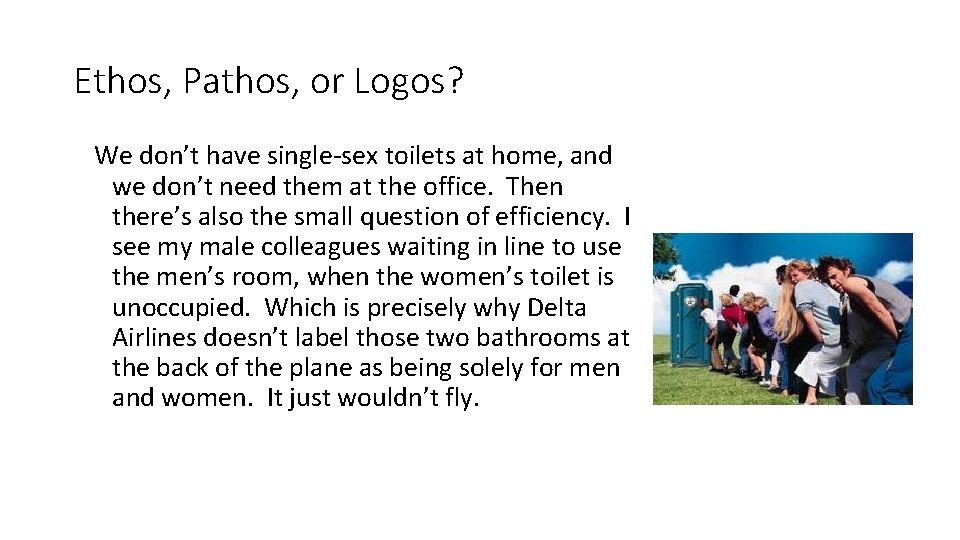
Ethos, Pathos, or Logos? We don’t have single-sex toilets at home, and we don’t need them at the office. Then there’s also the small question of efficiency. I see my male colleagues waiting in line to use the men’s room, when the women’s toilet is unoccupied. Which is precisely why Delta Airlines doesn’t label those two bathrooms at the back of the plane as being solely for men and women. It just wouldn’t fly.
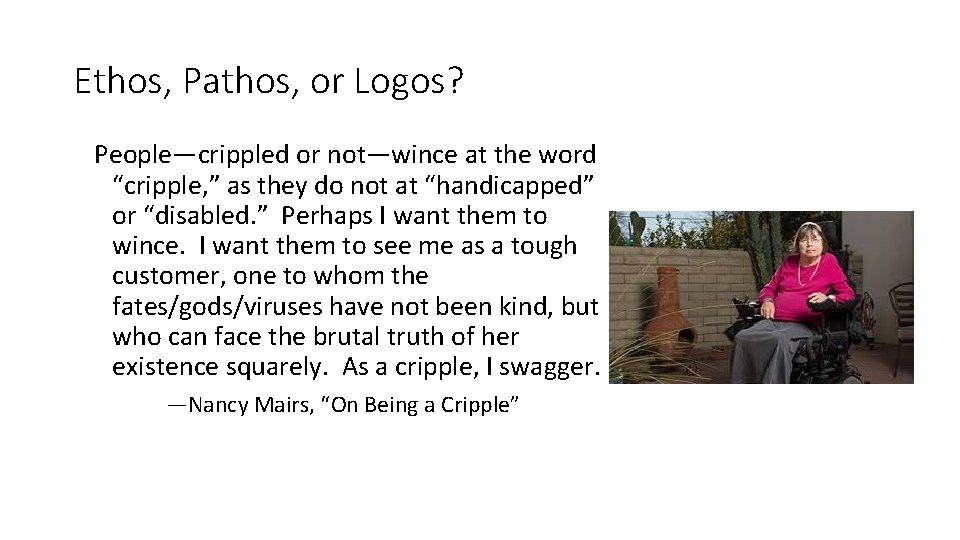
Ethos, Pathos, or Logos? People—crippled or not—wince at the word “cripple, ” as they do not at “handicapped” or “disabled. ” Perhaps I want them to wince. I want them to see me as a tough customer, one to whom the fates/gods/viruses have not been kind, but who can face the brutal truth of her existence squarely. As a cripple, I swagger. —Nancy Mairs, “On Being a Cripple”
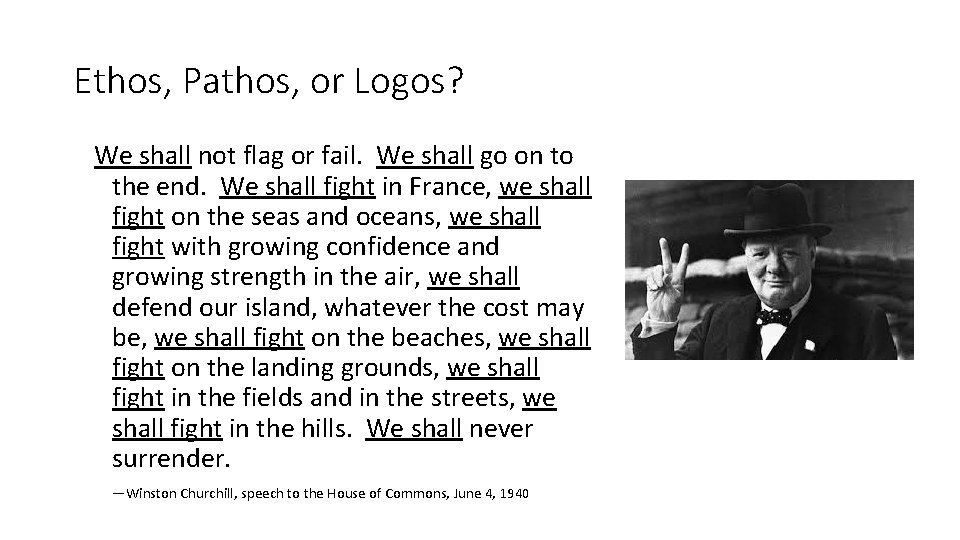
Ethos, Pathos, or Logos? We shall not flag or fail. We shall go on to the end. We shall fight in France, we shall fight on the seas and oceans, we shall fight with growing confidence and growing strength in the air, we shall defend our island, whatever the cost may be, we shall fight on the beaches, we shall fight on the landing grounds, we shall fight in the fields and in the streets, we shall fight in the hills. We shall never surrender. —Winston Churchill, speech to the House of Commons, June 4, 1940