Research Methodology Ajesh K Zachariah Department of Chemistry
- Slides: 48
Research Methodology Ajesh K Zachariah Department of Chemistry Mar Thoma College, Tiruvalla
Outline ü Introduction ü Methods of research ü Types of research ü Journal and journal articles ü Art of scientific writing
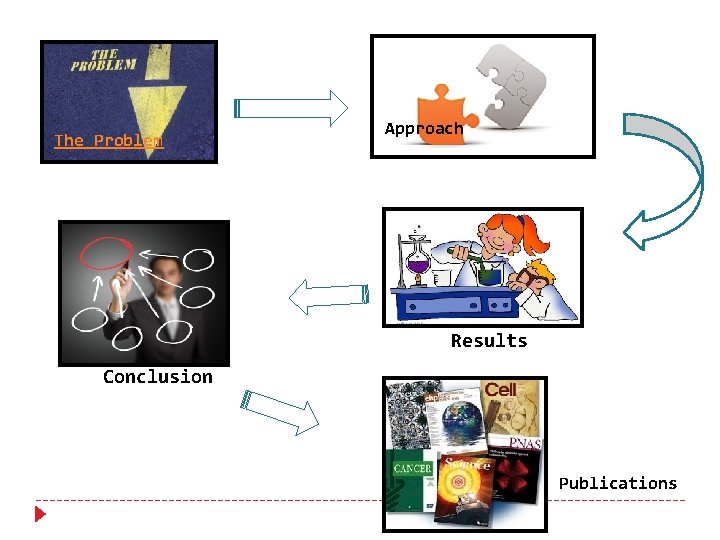
The Problem Approach Results Conclusion Publications
Bulb in Room Measures adopted? Solution?
What is Research ? Art of scientific investigation Redman and Mory define research as a “systematized effort to gain new knowledge. ”
Why Research ? The purpose of research is to discover answers to questions through the application of scientific procedures q Exploratory/formulative research- (to get familiarity with phenomena or to achieve new insights into it) (E. g: - RED RAIN ) q Descriptive research- ( to portray the characteristics of individual, situation or a group) ) (E. g: - Suicide in Kerala) q Diagnostic research- (to determine the frequency with which something occurs or with which something associated with it) ) (E. g: - Halley’s Comet) q Hypothesis testing research- (to test a theory) ) (E. g: - The
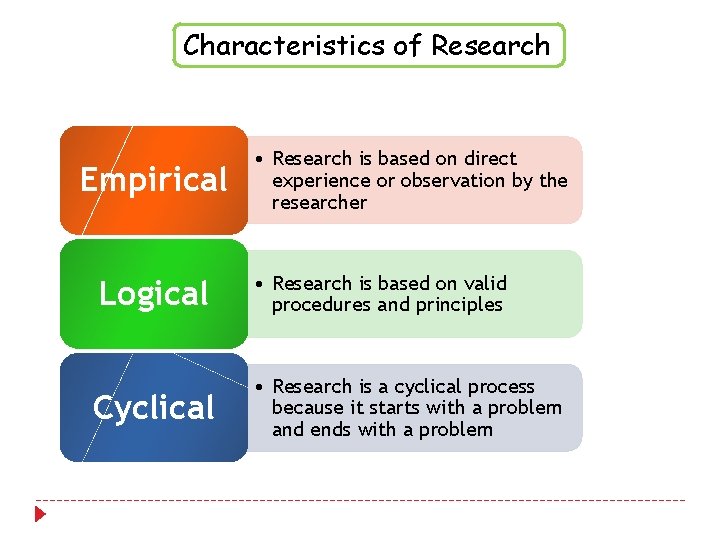
Characteristics of Research Empirical • Research is based on direct experience or observation by the researcher Logical • Research is based on valid procedures and principles Cyclical • Research is a cyclical process because it starts with a problem and ends with a problem
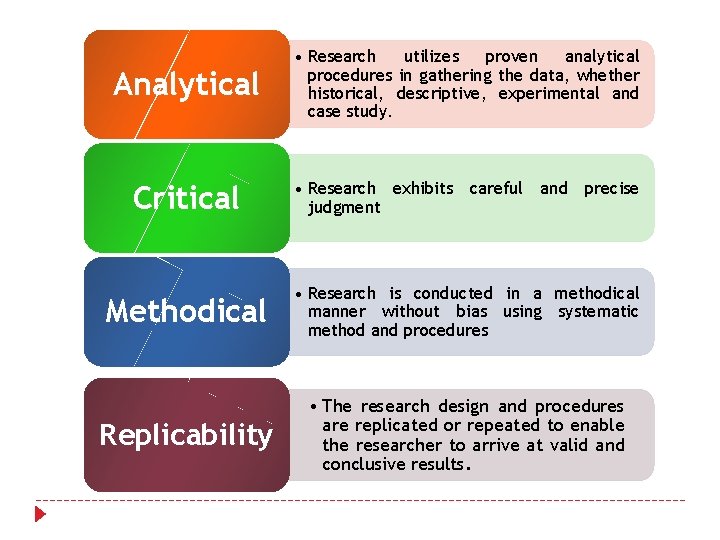
Analytical • Research utilizes proven analytical procedures in gathering the data, whether historical, descriptive, experimental and case study. Critical • Research exhibits careful and precise judgment Methodical • Research is conducted in a methodical manner without bias using systematic method and procedures Replicability • The research design and procedures are replicated or repeated to enable the researcher to arrive at valid and conclusive results.
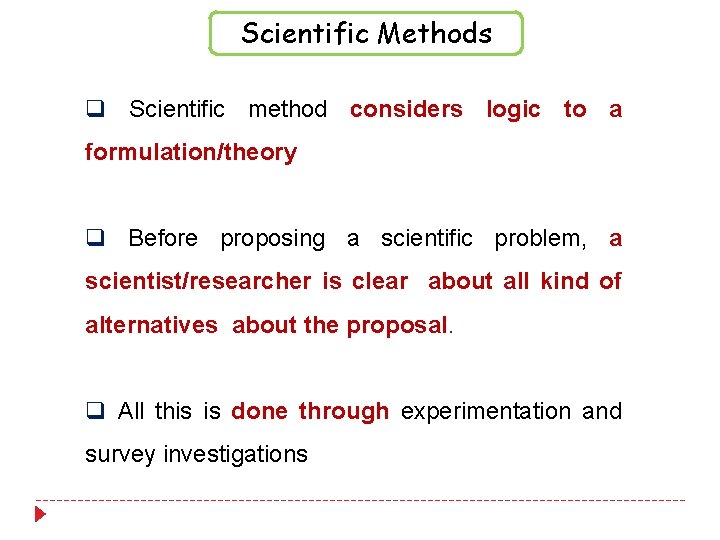
Scientific Methods q Scientific method considers logic to a formulation/theory q Before proposing a scientific problem, a scientist/researcher is clear about all kind of alternatives about the proposal. q All this is done through experimentation and survey investigations
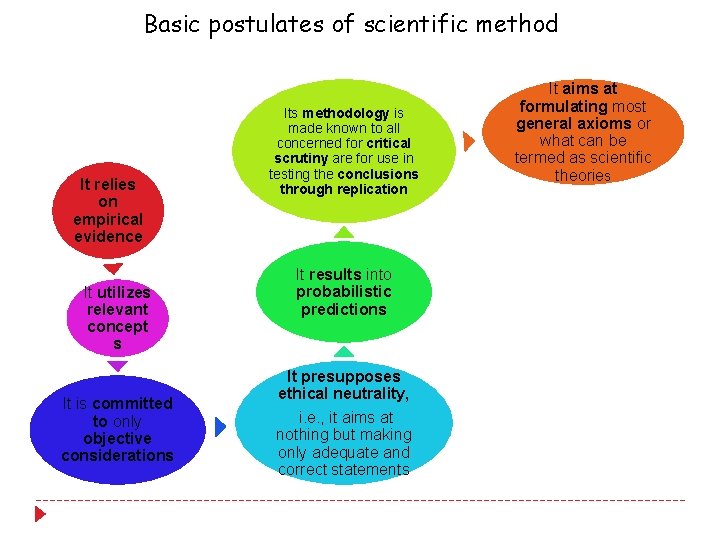
Basic postulates of scientific method It relies on empirical evidence It utilizes relevant concept s It is committed to only objective considerations Its methodology is made known to all concerned for critical scrutiny are for use in testing the conclusions through replication It results into probabilistic predictions It presupposes ethical neutrality, i. e. , it aims at nothing but making only adequate and correct statements It aims at formulating most general axioms or what can be termed as scientific theories
How can Operate Research ? Role of Theory A theory is an attempt to develop a general explanation to some phenomenon More precisely, theory is concerned with explanation and therefore focuses on determining relationships üScientific Hypothesis üNull Hypothesis cause-effect
Types of Research q Fundamental/ basic research q Applied Research q Historical Research q Experimental Research
Fundamental/ Basic Research Mainly concerned with generalizations and with the formulation of a theory. “ Gathering knowledge for knowledge’s sake is termed ‘pure’ or ‘basic’ research. ” (According to Pauline V. Young in Scientific Social Surveys and Research) Examples (1) Research concerning some natural phenomenon or relating to pure mathematics are examples of fundamental research. (2) Research studies, concerning human behavior carried on with a view to make generalizations about human behavior.
Applied/Action Research Aims at finding a solution for an immediate problem facing a society or an industrial/business organization Examples 1. Research to identify social, economic or political trends that may affect a particular institution 2. The copy research (research to find out whether certain communications will be read and understood) 3. The marketing research or evaluation research
Historical Research üHistory is the past and try to understand the present in light of past events and developments üThis is a qualitative and quantitative kind of research üThis research utilizes historical sources like documents, remains, etc. to study events or ideas of the past, including the philosophy of persons and groups at any remote point of time.
Experimental Research This provides systematic and logical method of observation - the manipulation of conditions or behavior of substance üThese manipulations are deliberate and systematic. üThey must be aware of the factors that influence the outcome and remove or control them so that they can establish a logical association between manipulated factors and observed factors. ü Here first proposes a hypothesis and some tentative answers üThe acceptance/rejection of the hypothesis is done in terms of probability üMostly these can be done in laboratory
Literature Sources q Primary Source q Secondary Source q Tertiary Source
Tertiary Source v General explanations condensed from 'common knowledge' on the topic intended for a broad public audience. v These sources are usually not credited to a particular author. v These are intended only to provide a superficial overview of what the topic includes, its basic terminology, and often references for further reading v Generally, tertiary sources are not considered to be acceptable material on which to base academic research
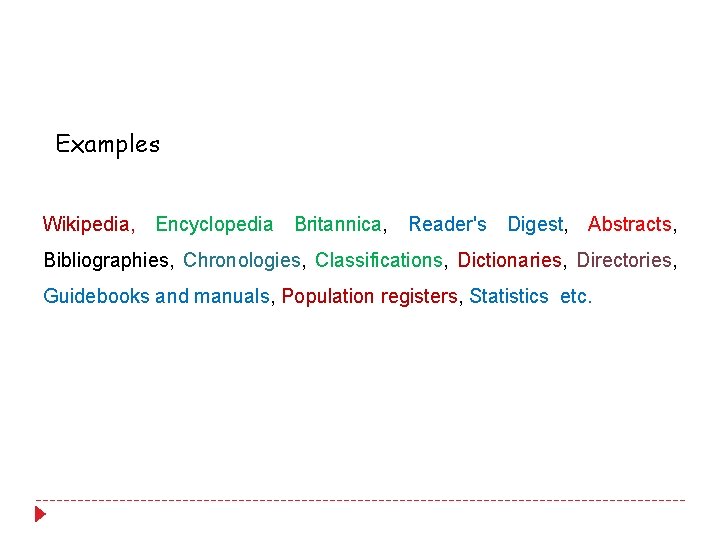
Examples Wikipedia, Encyclopedia Britannica, Reader's Digest, Abstracts, Bibliographies, Chronologies, Classifications, Dictionaries, Directories, Guidebooks and manuals, Population registers, Statistics etc.
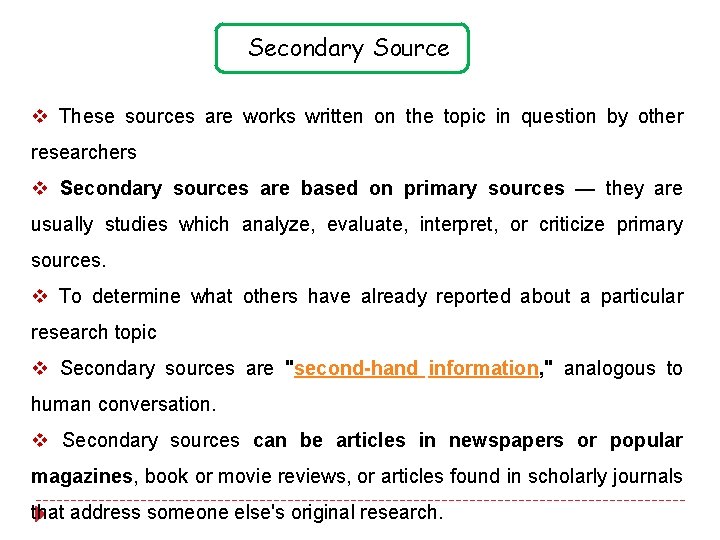
Secondary Source v These sources are works written on the topic in question by other researchers v Secondary sources are based on primary sources — they are usually studies which analyze, evaluate, interpret, or criticize primary sources. v To determine what others have already reported about a particular research topic v Secondary sources are "second-hand information, " analogous to human conversation. v Secondary sources can be articles in newspapers or popular magazines, book or movie reviews, or articles found in scholarly journals that address someone else's original research.
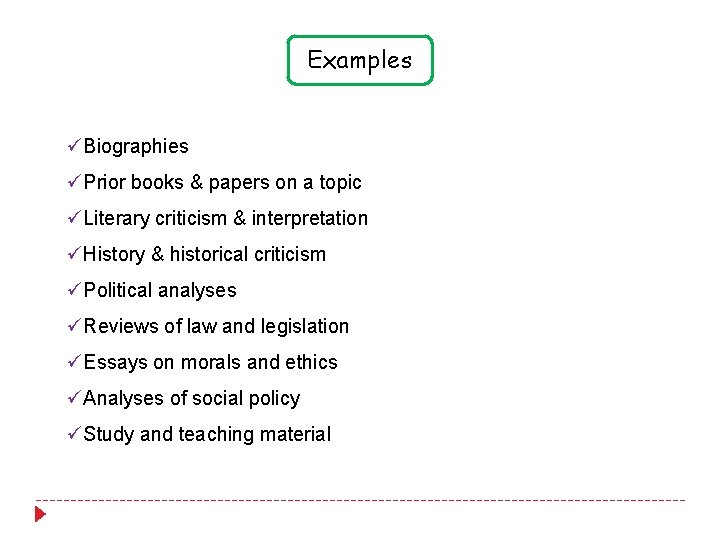
Examples üBiographies üPrior books & papers on a topic üLiterary criticism & interpretation üHistory & historical criticism üPolitical analyses üReviews of law and legislation üEssays on morals and ethics üAnalyses of social policy üStudy and teaching material
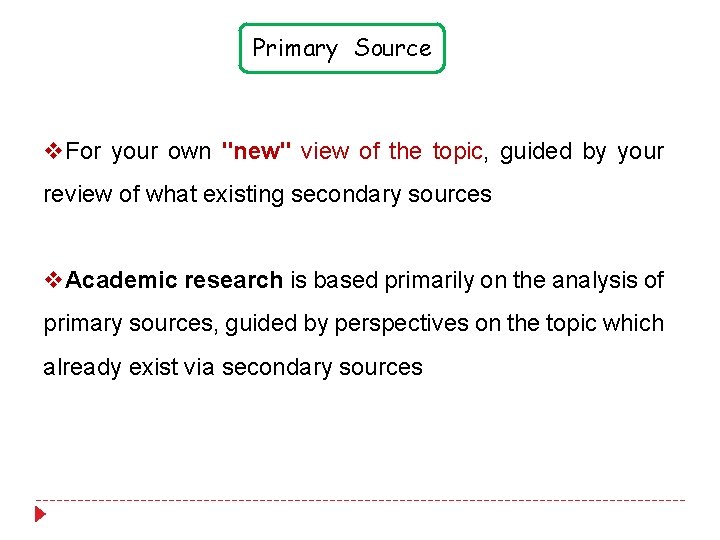
Primary Source v. For your own "new" view of the topic, guided by your review of what existing secondary sources v. Academic research is based primarily on the analysis of primary sources, guided by perspectives on the topic which already exist via secondary sources
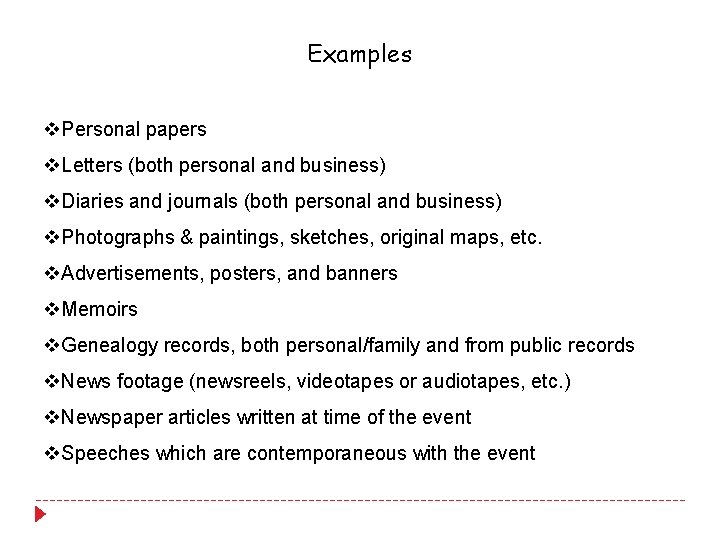
Examples v. Personal papers v. Letters (both personal and business) v. Diaries and journals (both personal and business) v. Photographs & paintings, sketches, original maps, etc. v. Advertisements, posters, and banners v. Memoirs v. Genealogy records, both personal/family and from public records v. News footage (newsreels, videotapes or audiotapes, etc. ) v. Newspaper articles written at time of the event v. Speeches which are contemporaneous with the event
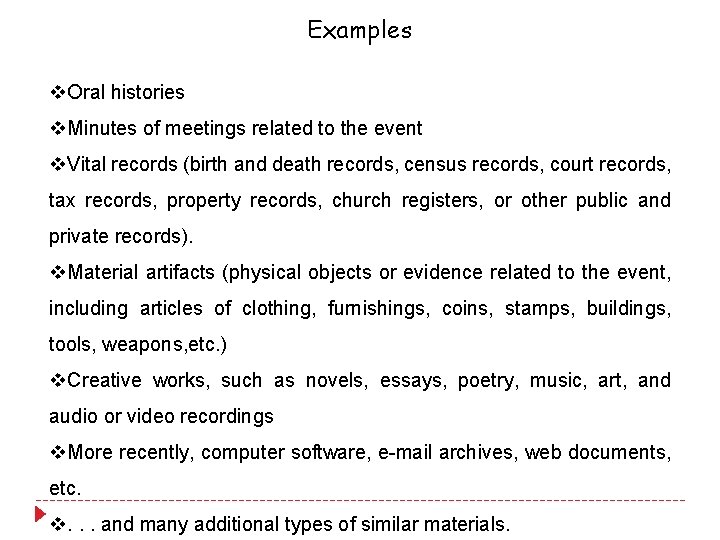
Examples v. Oral histories v. Minutes of meetings related to the event v. Vital records (birth and death records, census records, court records, tax records, property records, church registers, or other public and private records). v. Material artifacts (physical objects or evidence related to the event, including articles of clothing, furnishings, coins, stamps, buildings, tools, weapons, etc. ) v. Creative works, such as novels, essays, poetry, music, art, and audio or video recordings v. More recently, computer software, e-mail archives, web documents, etc. v. . . and many additional types of similar materials.
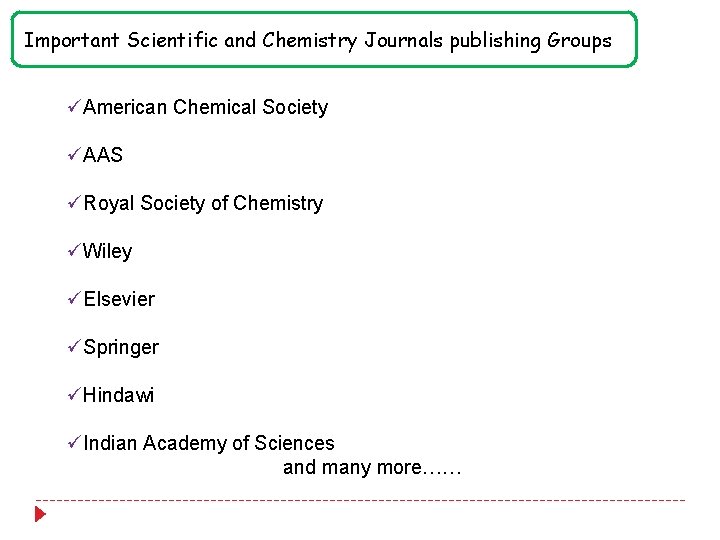
Important Scientific and Chemistry Journals publishing Groups üAmerican Chemical Society üAAS üRoyal Society of Chemistry üWiley üElsevier üSpringer üHindawi üIndian Academy of Sciences and many more……
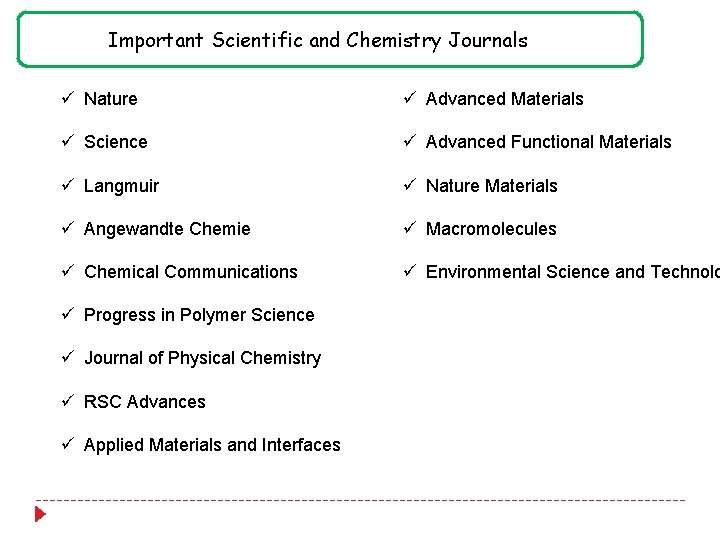
Important Scientific and Chemistry Journals ü Nature ü Advanced Materials ü Science ü Advanced Functional Materials ü Langmuir ü Nature Materials ü Angewandte Chemie ü Macromolecules ü Chemical Communications ü Environmental Science and Technolo ü Progress in Polymer Science ü Journal of Physical Chemistry ü RSC Advances ü Applied Materials and Interfaces
Literature Databases
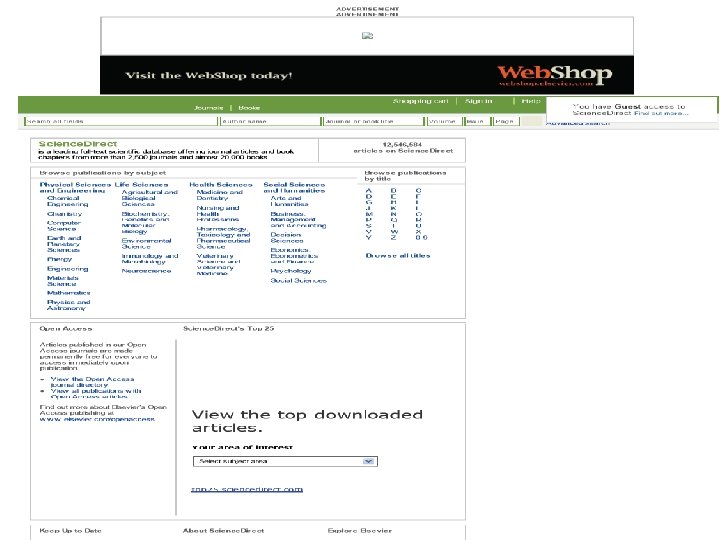
Science Direct
Sci. Finder
Chemical Abstract üA free web based tool to gather chemical information üIts an American Chemical Society service üCAS is the only organization in the world whose objective is to find, collect and organize all publicly disclosed substance information. üCAS delivers the most current, complete, secure and interlinked digital information environment for scientific discovery. üCAS Registry Numbers (often referred to as CAS RNs or CAS Numbers) are universally used to provide a unique, unmistakable identifier for chemical substances. A CAS Registry Number itself has no inherent chemical significance but provides an unambiguous way to identify a chemical substance or molecular structure when there are many possible systematic, generic, proprietary or trivial names.
• Google Scholar was developed by Google Inc. , but it is freely accessible and aims to summarize all electronic references on a subject. • There is no journal frame/list available for Google scholar, because it presumably lists all publications that have emerged from the electronic search. • It allows a quick search and an advanced search. In the advanced search the results can be limited by title words, authors, source, date of publication, and subject areas. • Each retrieved article is represented by title, authors, and source, but the abstract and information on free full text availability are not provided by Google Scholar. • In addition, Google Scholar provides links to relevant articles and allows for a general Google Web search, using self selected keywords from the article and
• Pub. Med was developed by the NLM, a division of the National Institutes of Health, and rapidly became synonymous with medical literature research worldwide. • It offers a quick free search with numerous keywords as well as limited searching with various criteria [i. e. , search by authors, journal, date of publication, date of addition to Pub. Med, or type of article]. • The results of a search can be displayed in a listing including from 5– 500 items per page or as a summary [in which the full title, the names of the authors, the source and Pub. Med identification (PMID) of each article are presented], and the list can also be presented with abstracts, if available.
• Information on whether an abstract is available and free text access is comprehensively represented by a displayed icon. • A search can easily be sent to text, a file, the clipboard, e-mail, an RSS feed, and an order. Pub. Med also allows for direct use of other search. • Pub. Med now offers 1 million freely available articles of which a significant number come from digitized back issues.
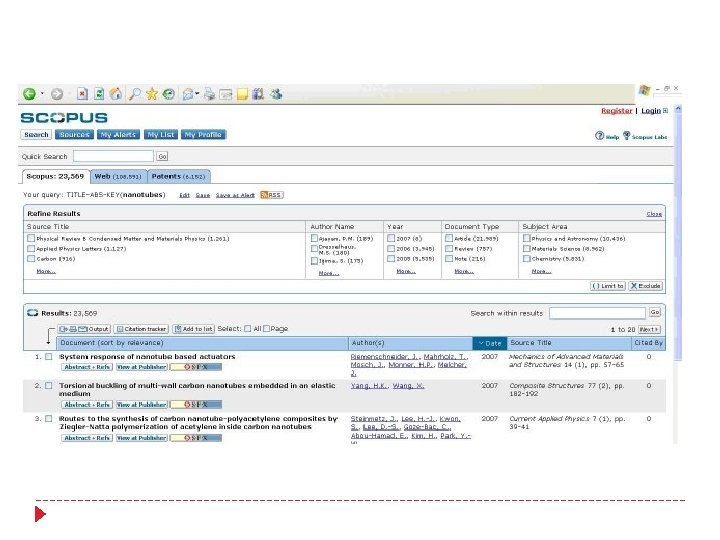
• The Scopus database was developed by Elsevier, combining the characteristics of both Pub. Med and Web of Science. • These combined characteristics allow for enhanced utility, both for medical literature research and academic needs (citation analysis), yet access to the database is not free. • It offers a quick search, a basic search, an author search, an advanced search and a source search.
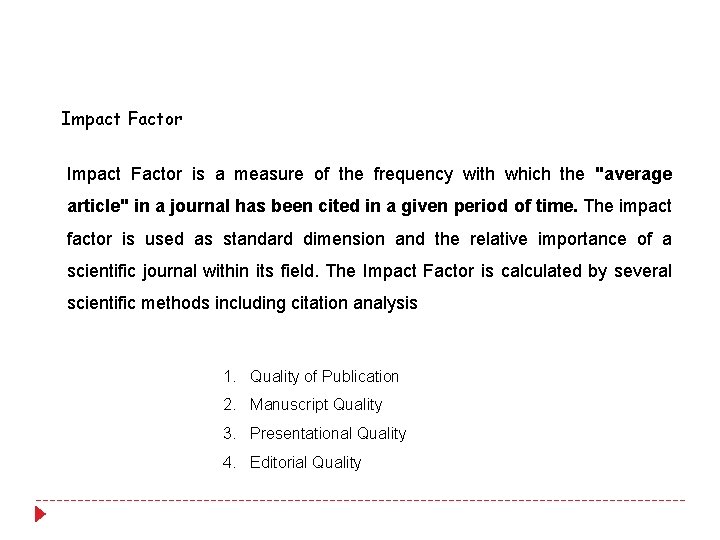
Impact Factor is a measure of the frequency with which the "average article" in a journal has been cited in a given period of time. The impact factor is used as standard dimension and the relative importance of a scientific journal within its field. The Impact Factor is calculated by several scientific methods including citation analysis 1. Quality of Publication 2. Manuscript Quality 3. Presentational Quality 4. Editorial Quality
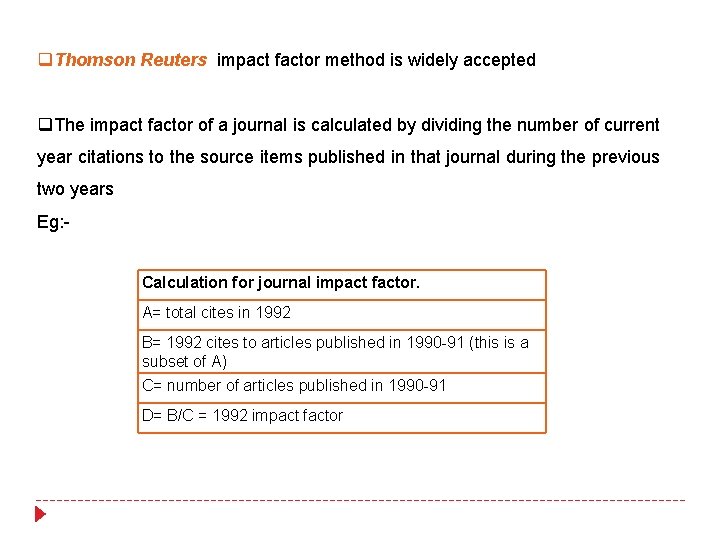
q. Thomson Reuters impact factor method is widely accepted q. The impact factor of a journal is calculated by dividing the number of current year citations to the source items published in that journal during the previous two years Eg: Calculation for journal impact factor. A= total cites in 1992 B= 1992 cites to articles published in 1990 -91 (this is a subset of A) C= number of articles published in 1990 -91 D= B/C = 1992 impact factor
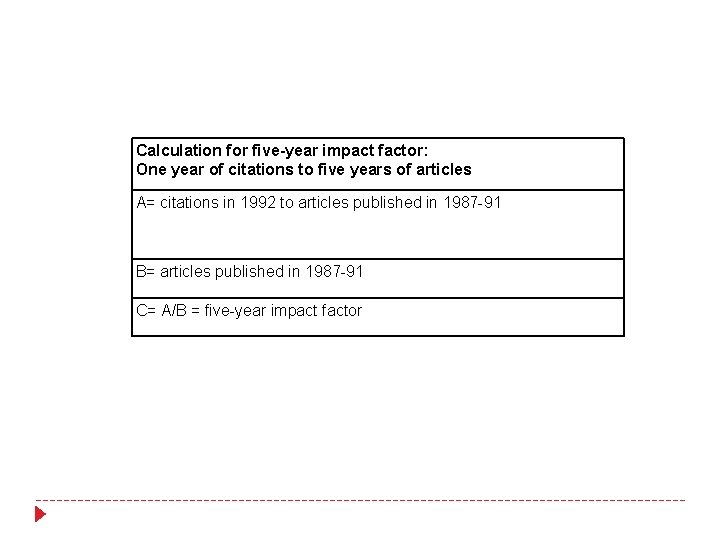
Calculation for five-year impact factor: One year of citations to five years of articles A= citations in 1992 to articles published in 1987 -91 B= articles published in 1987 -91 C= A/B = five-year impact factor
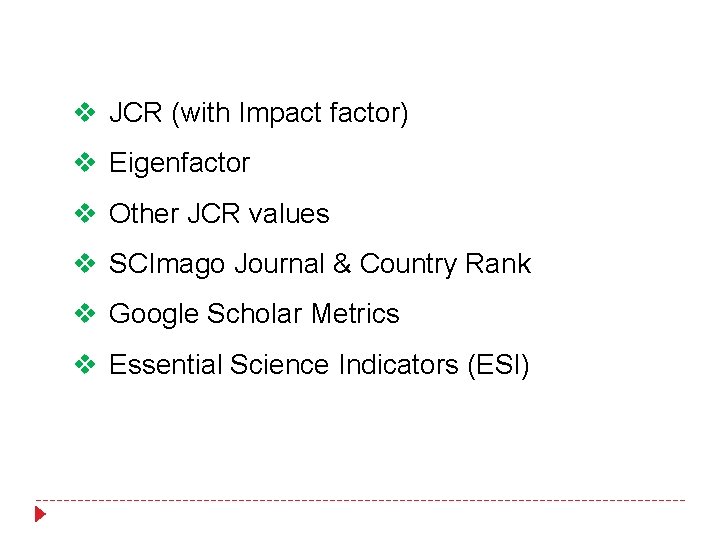
v JCR (with Impact factor) v Eigenfactor v Other JCR values v SCImago Journal & Country Rank v Google Scholar Metrics v Essential Science Indicators (ESI)
The Art of Scientific Writing üResearch Reports üThesis üJournal Articles üBooks
q. Research reporting is an oral/written presentation of important and useful aspects of the research work done. q Intended to a specific research investigation q. It is the last but a major part of the research study Without a report, a research study is incomplete and of no use Research Reports: The final report about the research carried out Thesis: The final report of the research work such as M. Sc, M. Phil or Ph. D works Journal Articles: Communicating important results to magazines or journals Books: Preparation of write ups about a particular subject
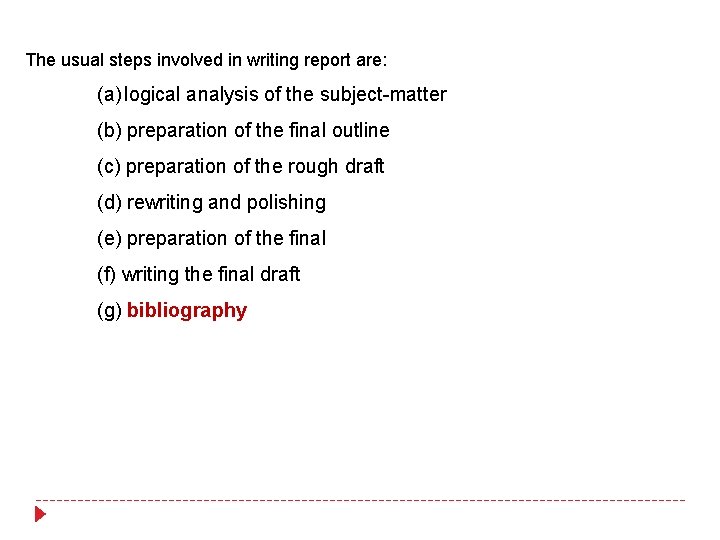
The usual steps involved in writing report are: (a) logical analysis of the subject-matter (b) preparation of the final outline (c) preparation of the rough draft (d) rewriting and polishing (e) preparation of the final (f) writing the final draft (g) bibliography
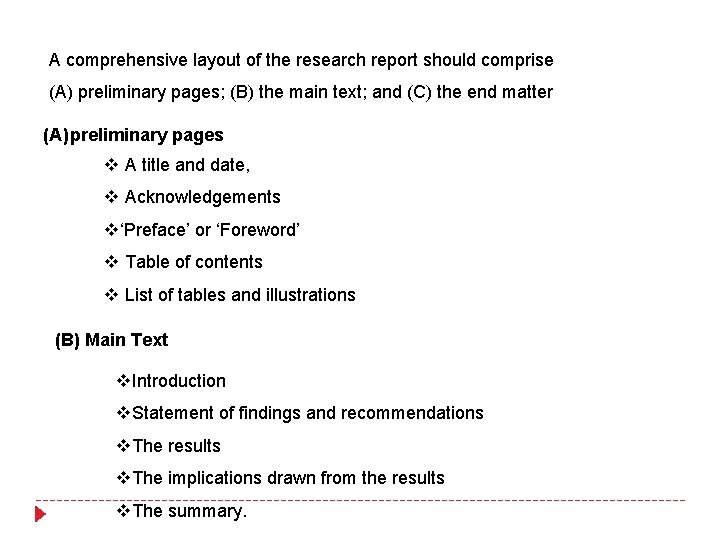
A comprehensive layout of the research report should comprise (A) preliminary pages; (B) the main text; and (C) the end matter (A) preliminary pages v A title and date, v Acknowledgements v‘Preface’ or ‘Foreword’ v Table of contents v List of tables and illustrations (B) Main Text v. Introduction v. Statement of findings and recommendations v. The results v. The implications drawn from the results v. The summary.
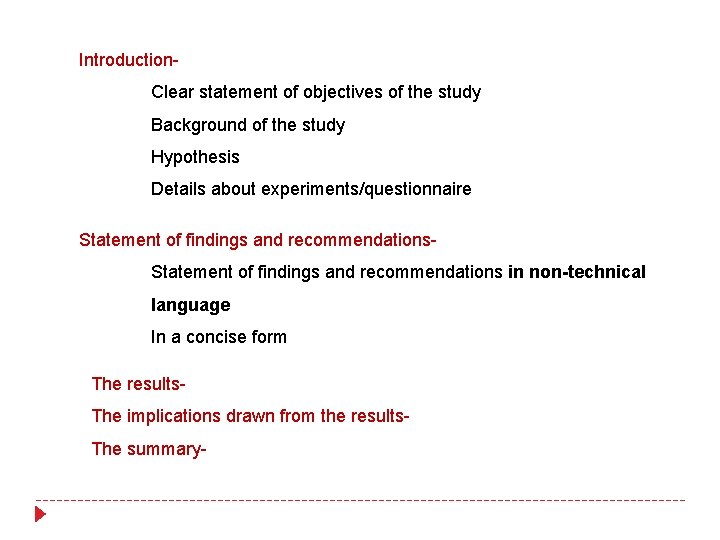
Introduction- Clear statement of objectives of the study Background of the study Hypothesis Details about experiments/questionnaire Statement of findings and recommendations in non-technical language In a concise form The results. The implications drawn from the results. The summary-
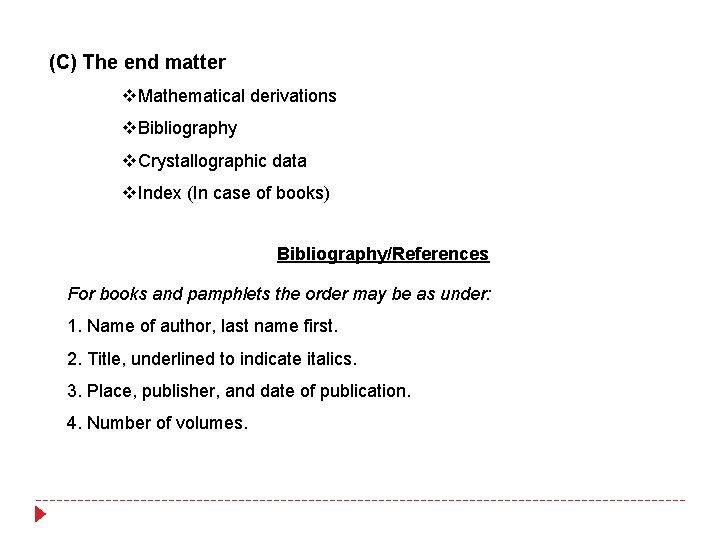
(C) The end matter v. Mathematical derivations v. Bibliography v. Crystallographic data v. Index (In case of books) Bibliography/References For books and pamphlets the order may be as under: 1. Name of author, last name first. 2. Title, underlined to indicate italics. 3. Place, publisher, and date of publication. 4. Number of volumes.
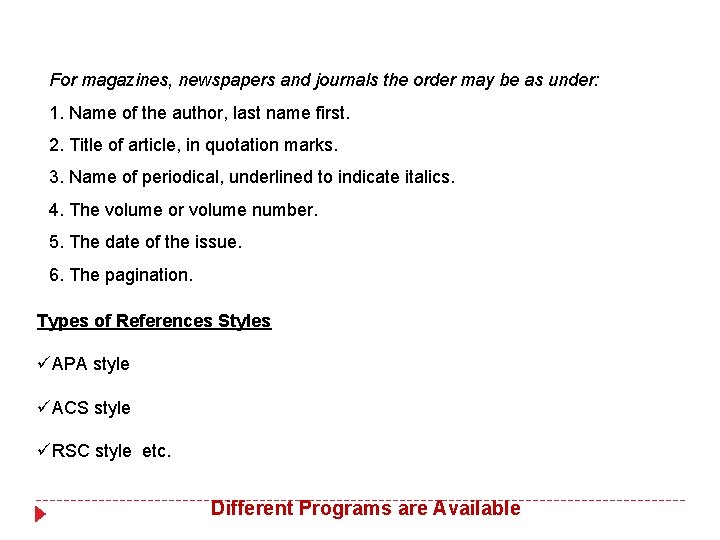
For magazines, newspapers and journals the order may be as under: 1. Name of the author, last name first. 2. Title of article, in quotation marks. 3. Name of periodical, underlined to indicate italics. 4. The volume or volume number. 5. The date of the issue. 6. The pagination. Types of References Styles üAPA style üACS style üRSC style etc. Different Programs are Available
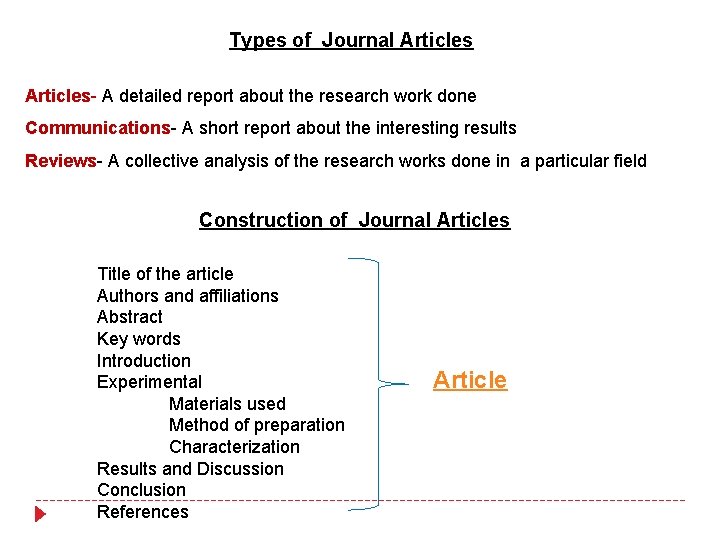
Types of Journal Articles- A detailed report about the research work done Communications- A short report about the interesting results Reviews- A collective analysis of the research works done in a particular field Construction of Journal Articles Title of the article Authors and affiliations Abstract Key words Introduction Experimental Materials used Method of preparation Characterization Results and Discussion Conclusion References Article
Software for Graphs and other plots • Microsoft excel/spreadsheet • Microcal origin 6. 0/8. 0 • Mathlab • R- Statistical analysis