
Process Paragraph Unit 4 Your are going to

- Slides: 29
Process Paragraph Unit 4
Your are going to learn: • 1 - How to organize steps using time order words • 2 - Using imperative • 3 - Using modals of advice, necessity, and prohibition. • 4 - learn about process organization. • 5 - brainstorm ideas and specific vocabulary to use in your writing. • 6 - Create an outline for your process paragraph.
Process Paragraph • How to: This gives the reader steps or directions on how he or she can do something. • Process writing is useful when writing on history, business, the sciences, psychology, and many other areas
Process Organization • A process paragraph describes the steps necessary to perform a process or task.
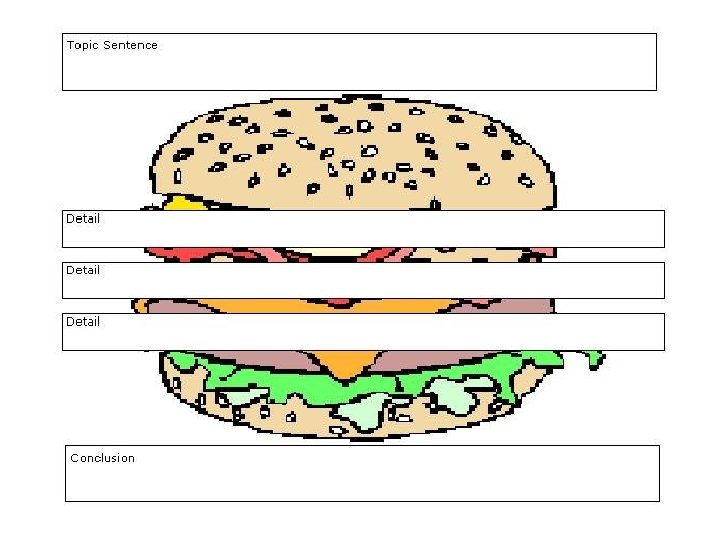
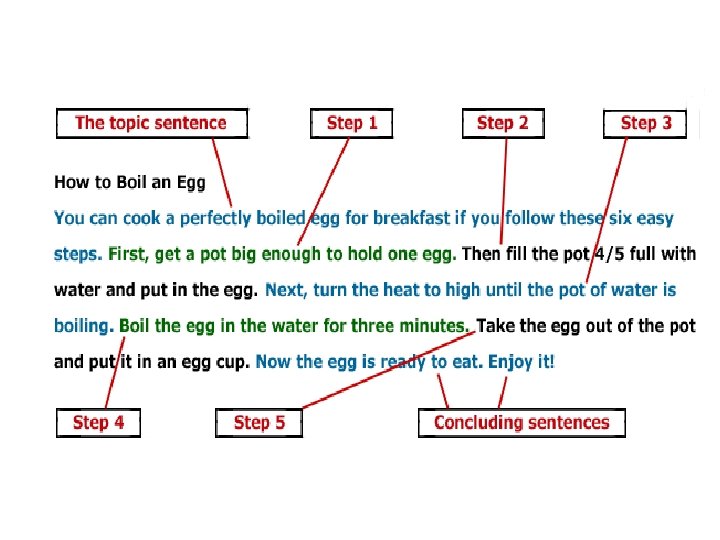
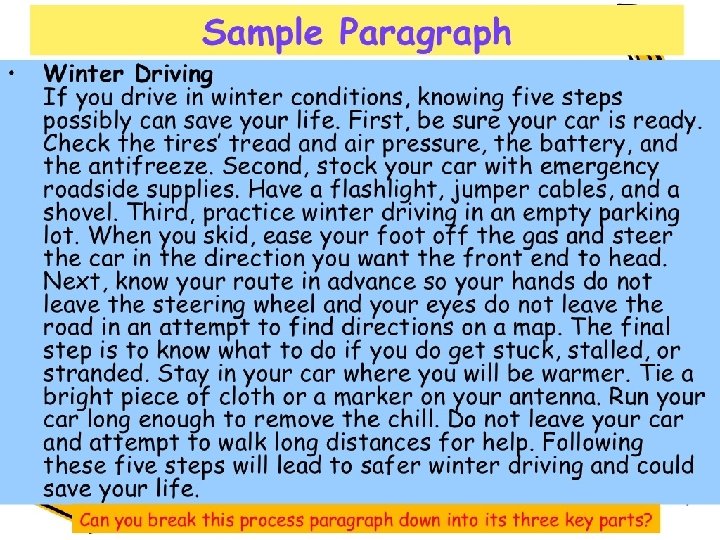
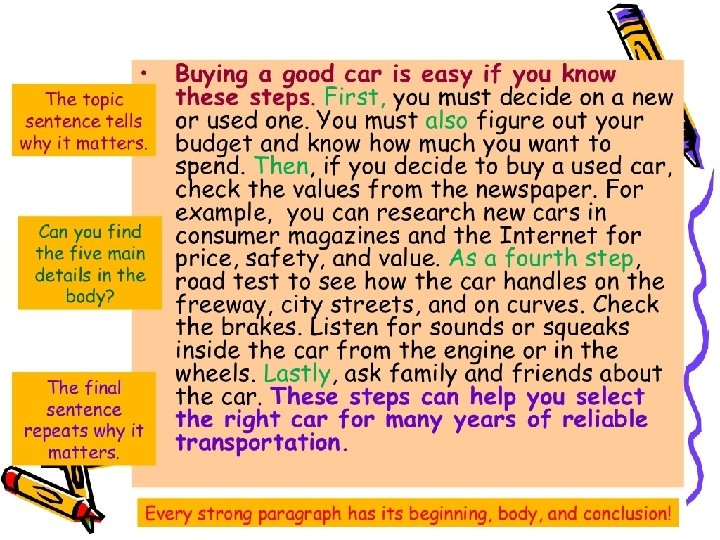
Process Paragraph • 1 - Topic sentence • 2 - Supporting Sentences • 3 - Concluding Sentence
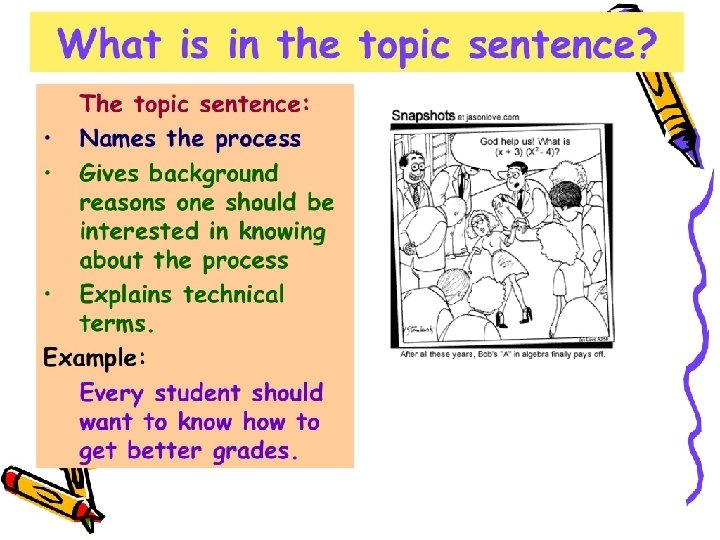
• 1 - Topic sentence • The topic sentence introduces the process that the writer will explain.
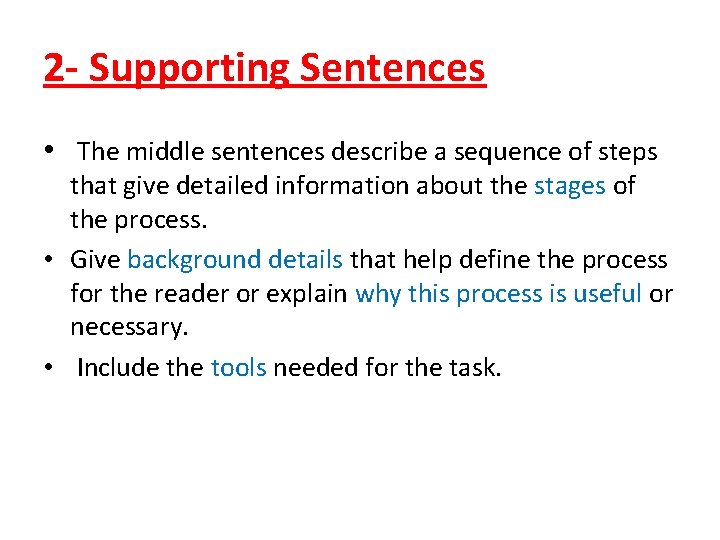
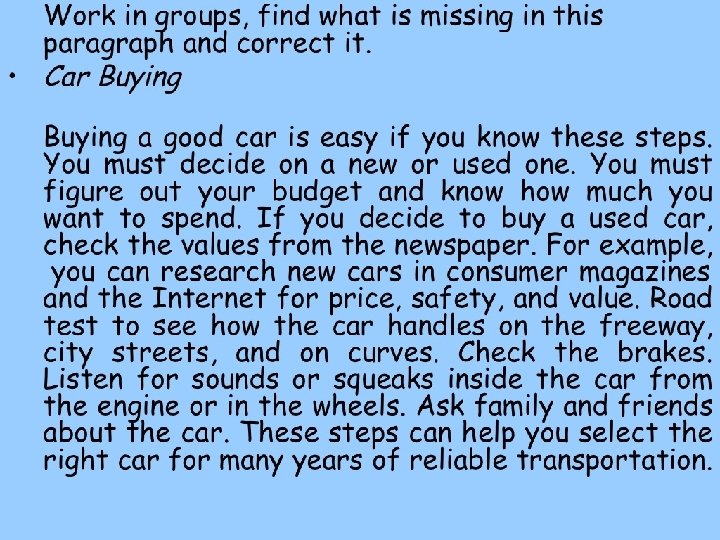
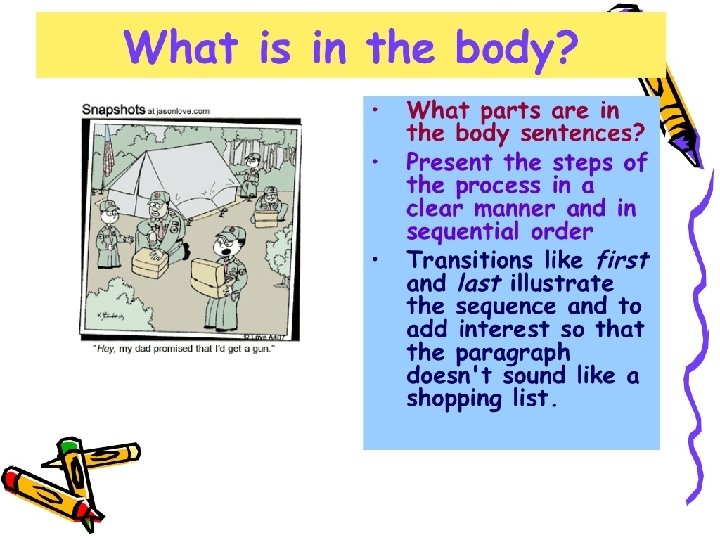
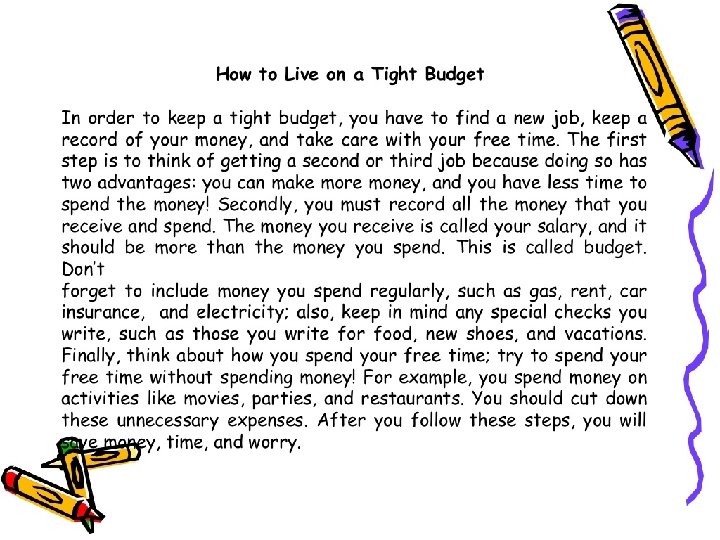
2 - Supporting Sentences • The middle sentences describe a sequence of steps that give detailed information about the stages of the process. • Give background details that help define the process for the reader or explain why this process is useful or necessary. • Include the tools needed for the task.
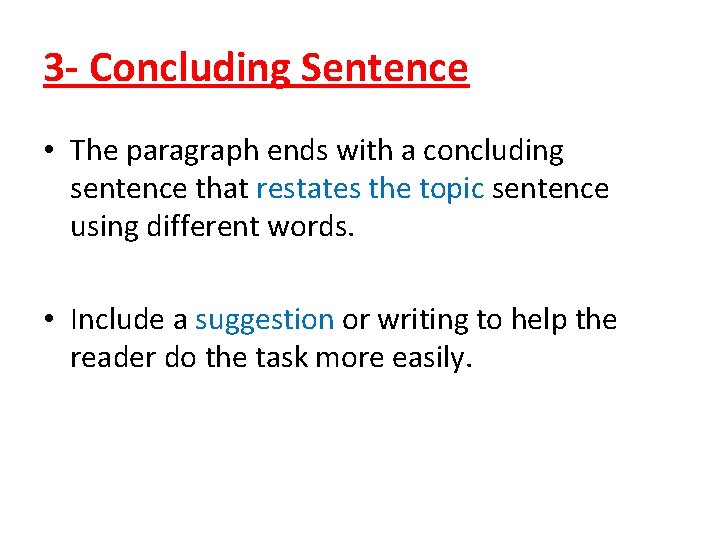
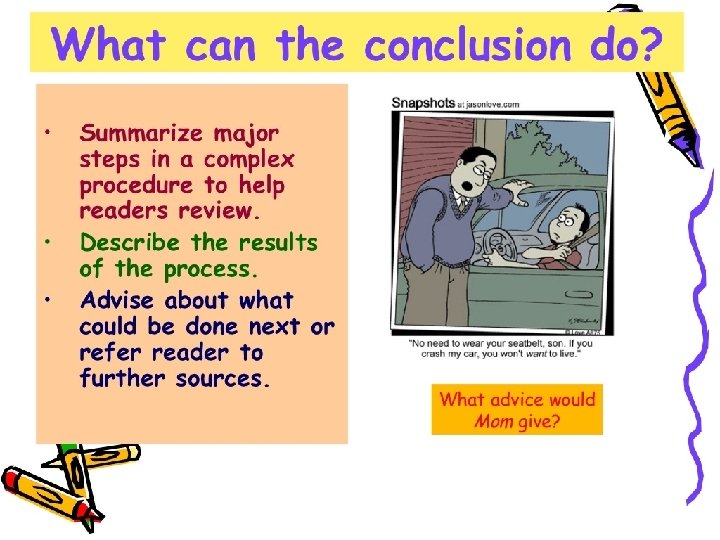
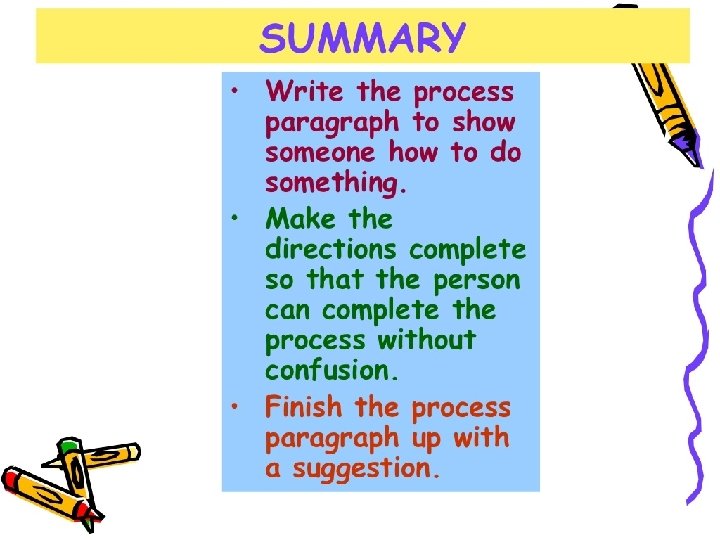
3 - Concluding Sentence • The paragraph ends with a concluding sentence that restates the topic sentence using different words. • Include a suggestion or writing to help the reader do the task more easily.
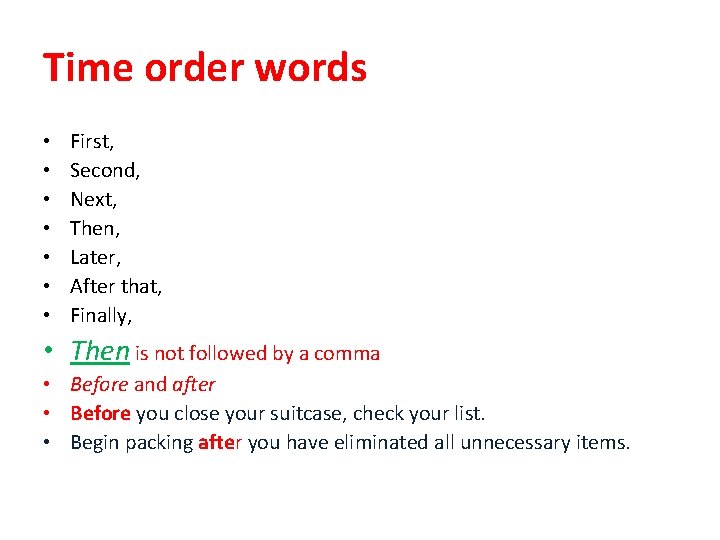
Time order words • • First, Second, Next, Then, Later, After that, Finally, • Then is not followed by a comma • Before and after • Before you close your suitcase, check your list. • Begin packing after you have eliminated all unnecessary items.
Any Questions?
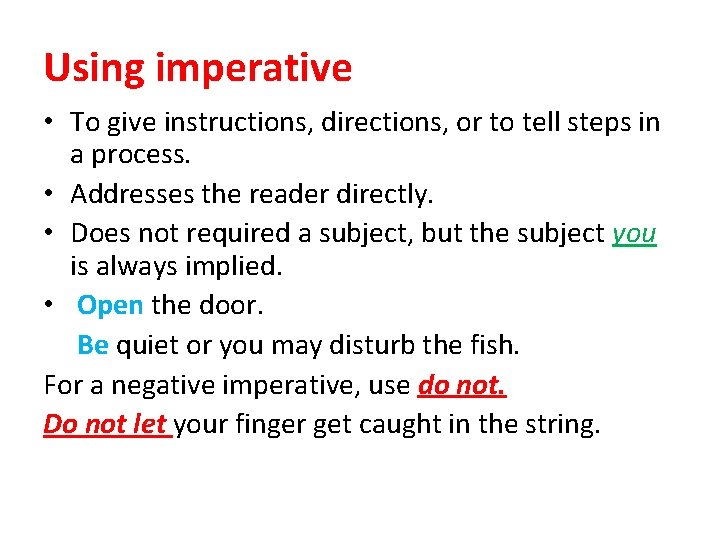
Using imperative • To give instructions, directions, or to tell steps in a process. • Addresses the reader directly. • Does not required a subject, but the subject you is always implied. • Open the door. Be quiet or you may disturb the fish. For a negative imperative, use do not. Do not let your finger get caught in the string.
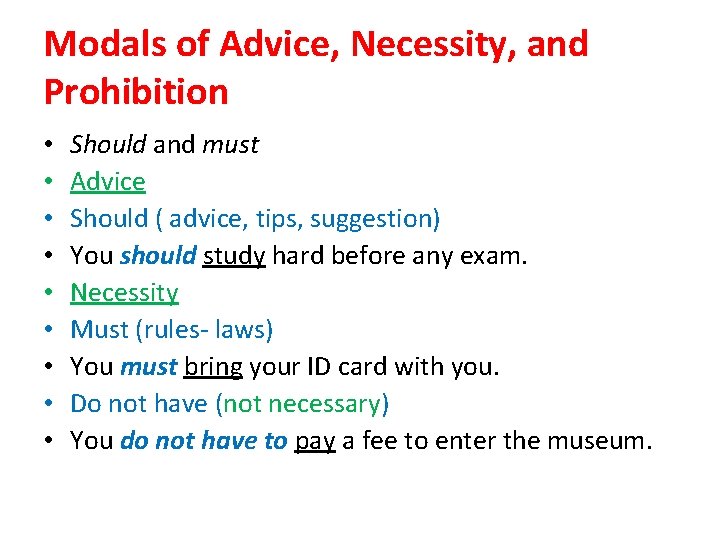
Modals of Advice, Necessity, and Prohibition • • • Should and must Advice Should ( advice, tips, suggestion) You should study hard before any exam. Necessity Must (rules- laws) You must bring your ID card with you. Do not have (not necessary) You do not have to pay a fee to enter the museum.
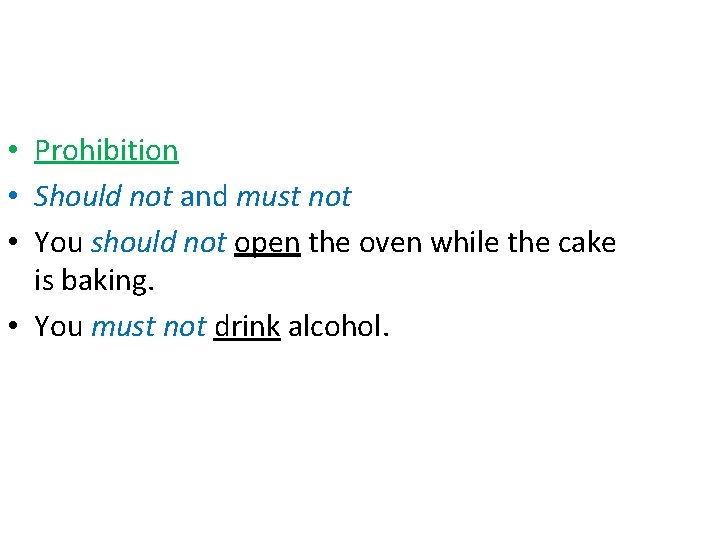
• Prohibition • Should not and must not • You should not open the oven while the cake is baking. • You must not drink alcohol.
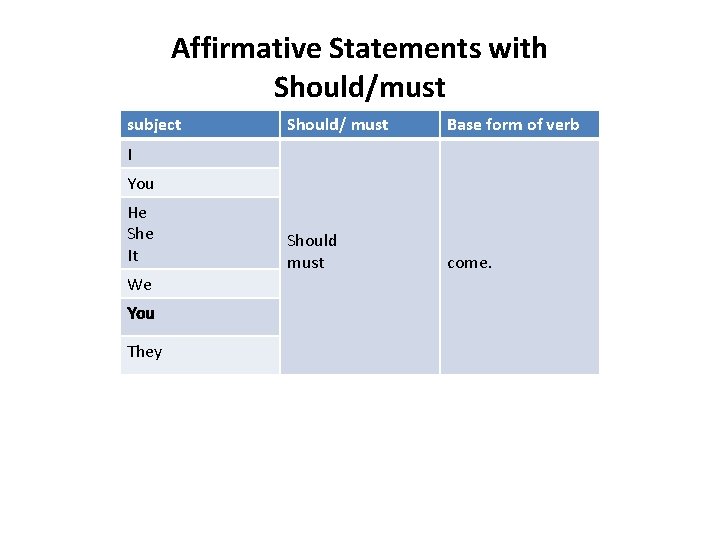
Affirmative Statements with Should/must subject Should/ must Base form of verb Should must come. I You He She It We You They
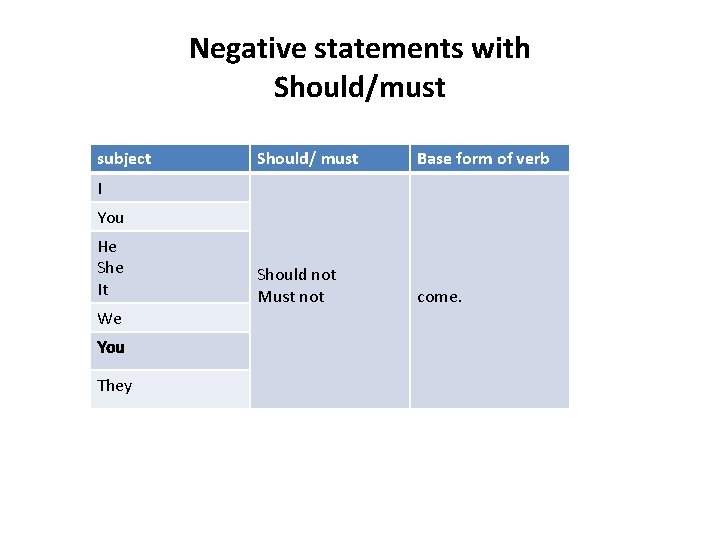
Negative statements with Should/must subject Should/ must Base form of verb Should not Must not come. I You He She It We You They
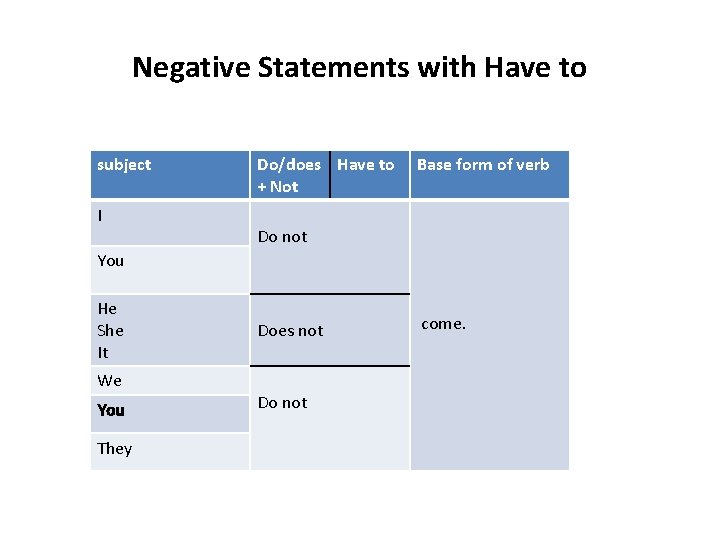
Negative Statements with Have to subject I Do/does Have to + Not Base form of verb Do not You He She It We You They Does not Do not come.
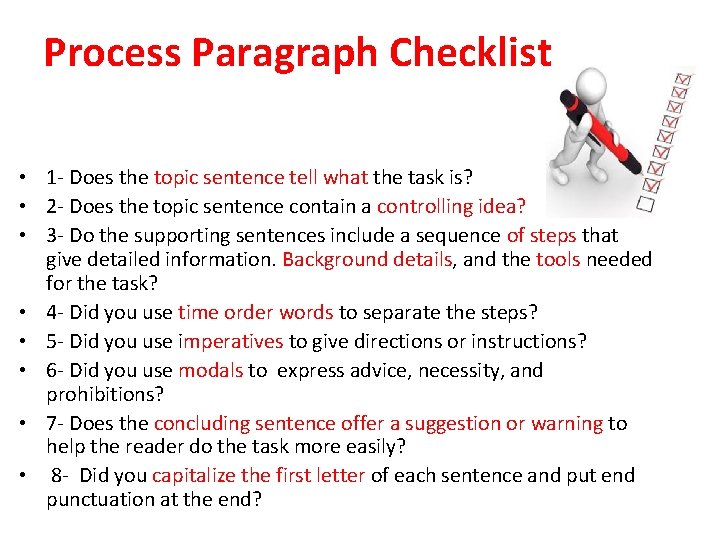
Process Paragraph Checklist • 1 - Does the topic sentence tell what the task is? • 2 - Does the topic sentence contain a controlling idea? • 3 - Do the supporting sentences include a sequence of steps that give detailed information. Background details, and the tools needed for the task? • 4 - Did you use time order words to separate the steps? • 5 - Did you use imperatives to give directions or instructions? • 6 - Did you use modals to express advice, necessity, and prohibitions? • 7 - Does the concluding sentence offer a suggestion or warning to help the reader do the task more easily? • 8 - Did you capitalize the first letter of each sentence and put end punctuation at the end?
Process Paragraph Checklist • 1 - Does the topic tell what the task is? • 2 - Does the topic contain a controlling idea? • 3 - Do the supporting sentences include a sequence of steps that give detailed information, background details, and the tools needed for the task? • 4 - Did you use time order words to separate the steps? 5 - Did you use imperatives to give directions or instructions? • 6 - Did you use modals to express advice, necessity, and prohibitions? • 7 - Does the concluding sentence offer a suggestion or warning to help the reader do the task more easily? • 8 - Did you capitalize the first letter of each sentence and put end punctuation at the end?