Prevention of Sports Injuries Specific to The Young

- Slides: 50
Prevention of Sports Injuries: Specific to The Young Athlete Craig M. Smith, M. D. , M. S. , FACSM Sports Medicine Specialist
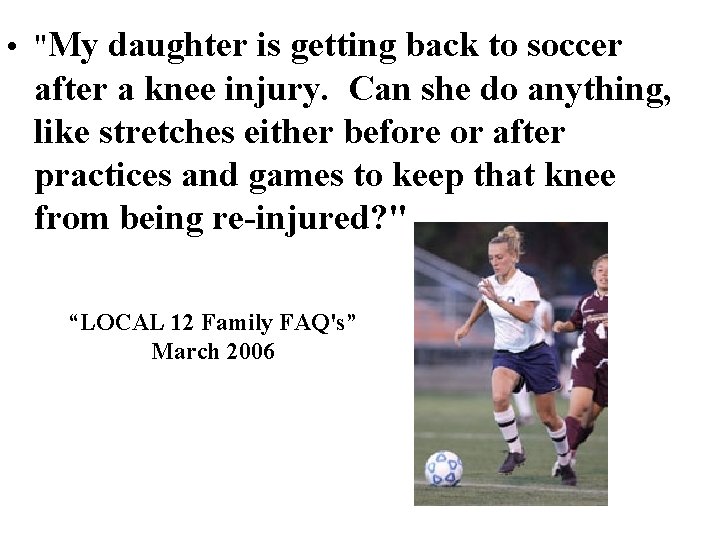
• "My daughter is getting back to soccer after a knee injury. Can she do anything, like stretches either before or after practices and games to keep that knee from being re-injured? " “LOCAL 12 Family FAQ's” March 2006
Prevention Overview • Most common cause is previous injury • What is the role of stretching? – “(Is it. . ? ) It is safe to lift weights” – Improving upon nature • The importance of learning how to land – Correct training is key • Major role for protective equipment – Braces, headgear, padding, bubble-wrap ?
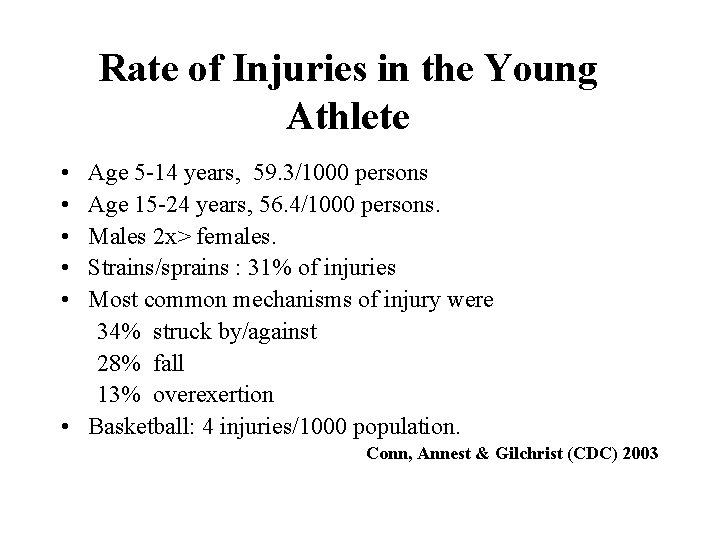
Rate of Injuries in the Young Athlete • • • Age 5 -14 years, 59. 3/1000 persons Age 15 -24 years, 56. 4/1000 persons. Males 2 x> females. Strains/sprains : 31% of injuries Most common mechanisms of injury were 34% struck by/against 28% fall 13% overexertion • Basketball: 4 injuries/1000 population. Conn, Annest & Gilchrist (CDC) 2003
Most commonly injured… • Contusions/strains : most common injuries • Most injured areas ankle hand, wrist, elbow, knee shin and calf, head, neck and clavicle.
Sports Injury Prevention: Primary vs. Secondary Prevention ? • “Recent sports injury literature emphasizes the need of the practitioner to address sports injury prevention and to provide anticipatory guidance at pediatric office visits”. Spector & Kelly 2005 • Pre-participation exam provides necessary opportunities to identify the most common risks for injury. Pre-participation Exam monograph 2004
Secondary prevention strategy begins with diagnosis of the injury • Acute injuries: especially those that result in swelling and/or limping easily recognized and will need to be rested • Overuse injuries: may go un-recognized, activity will need to be modified – or stopped
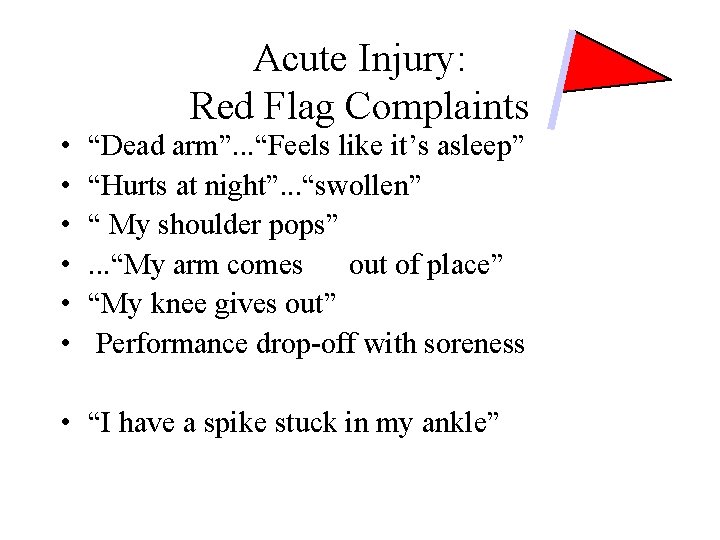
• • • Acute Injury: Red Flag Complaints “Dead arm”. . . “Feels like it’s asleep” “Hurts at night”. . . “swollen” “ My shoulder pops”. . . “My arm comes out of place” “My knee gives out” Performance drop-off with soreness • “I have a spike stuck in my ankle”
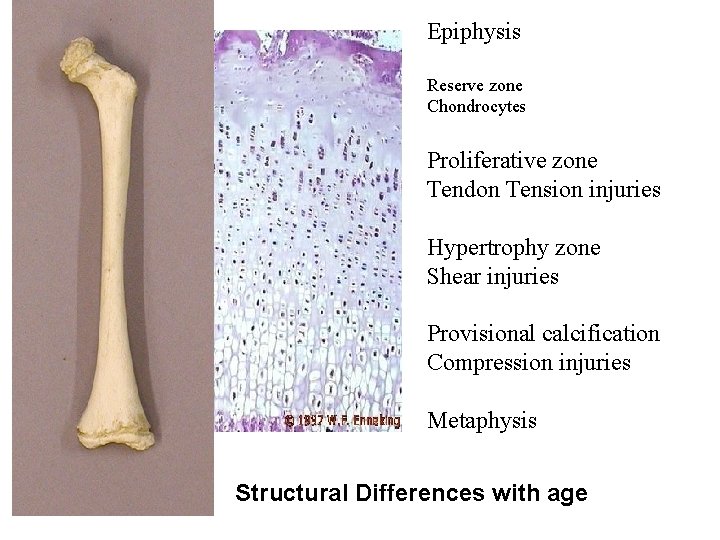
Epiphysis Reserve zone Chondrocytes Proliferative zone Tendon Tension injuries Hypertrophy zone Shear injuries Provisional calcification Compression injuries Metaphysis Structural Differences with age
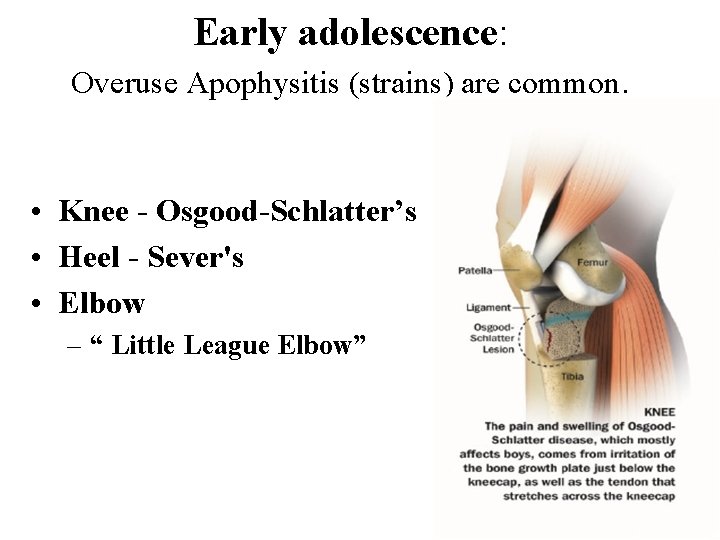
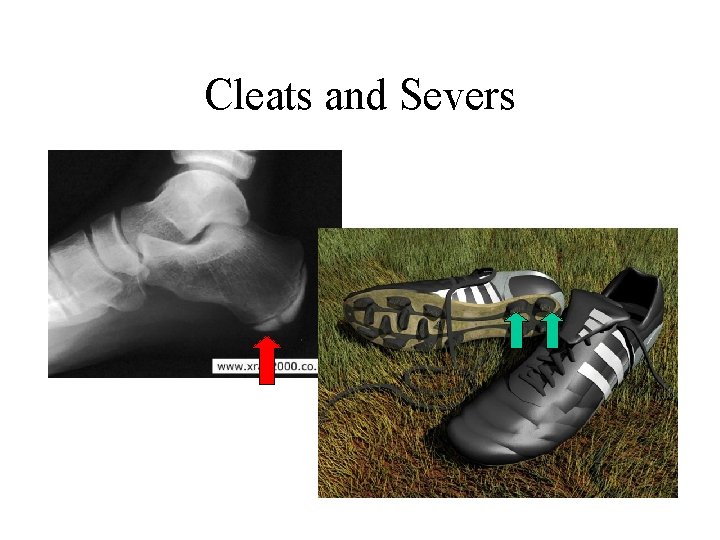
Early adolescence: Overuse Apophysitis (strains) are common. • Knee - Osgood-Schlatter’s • Heel - Sever's • Elbow – “ Little League Elbow”
Overuse injuries at the growth plate Due to Repetitive – traction / rotation – pounding / compression
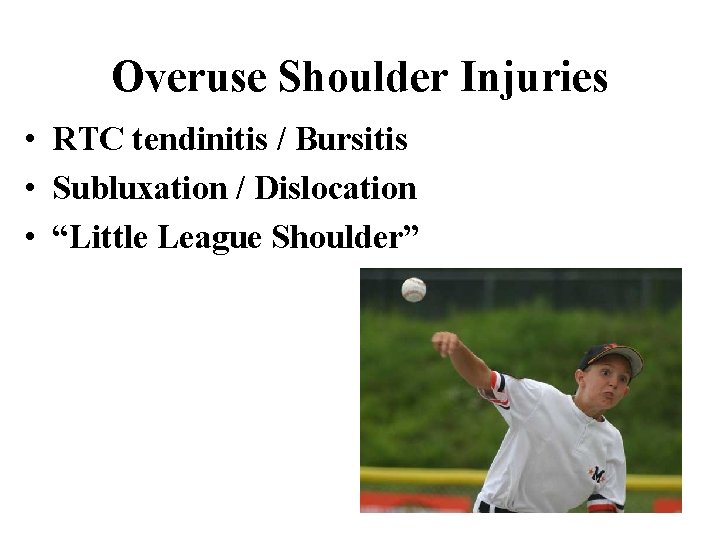
Overuse Shoulder Injuries • RTC tendinitis / Bursitis • Subluxation / Dislocation • “Little League Shoulder”
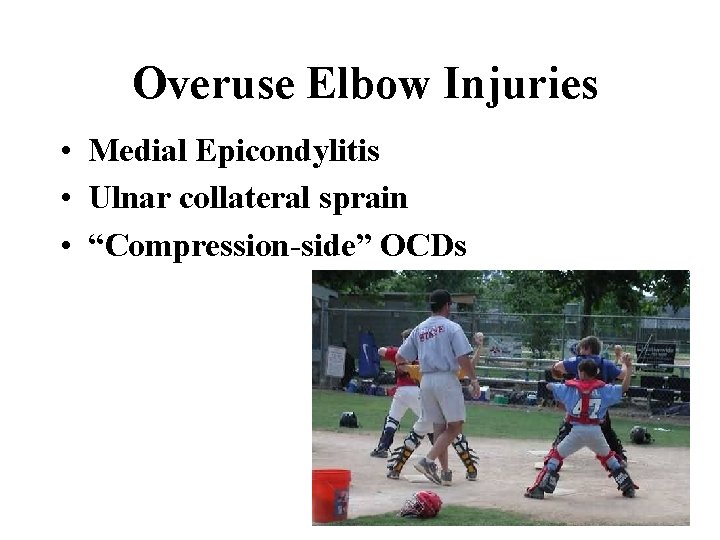
Overuse Elbow Injuries • Medial Epicondylitis • Ulnar collateral sprain • “Compression-side” OCDs
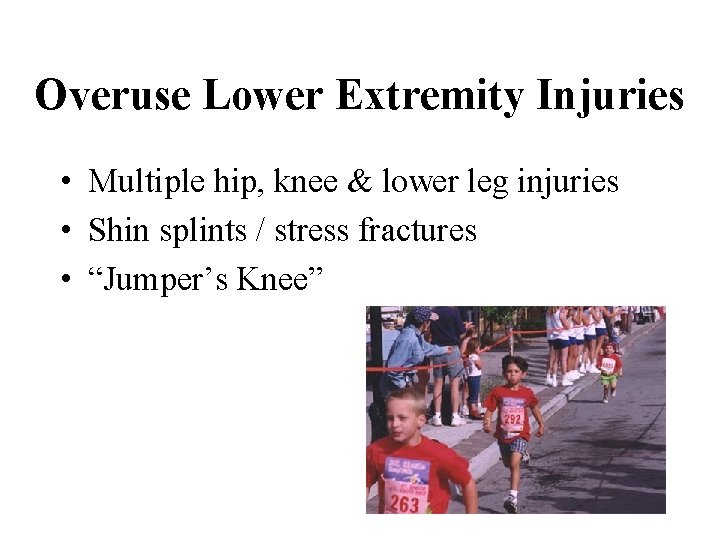
Overuse Lower Extremity Injuries • Multiple hip, knee & lower leg injuries • Shin splints / stress fractures • “Jumper’s Knee”
Risk factors for Adolescent Sports Injuries: similar to adults • • Poor endurance Lack of preseason training Psychosocial factors Non-modifiable body type risk factors & previous injury are consistent among studies Emery 2003
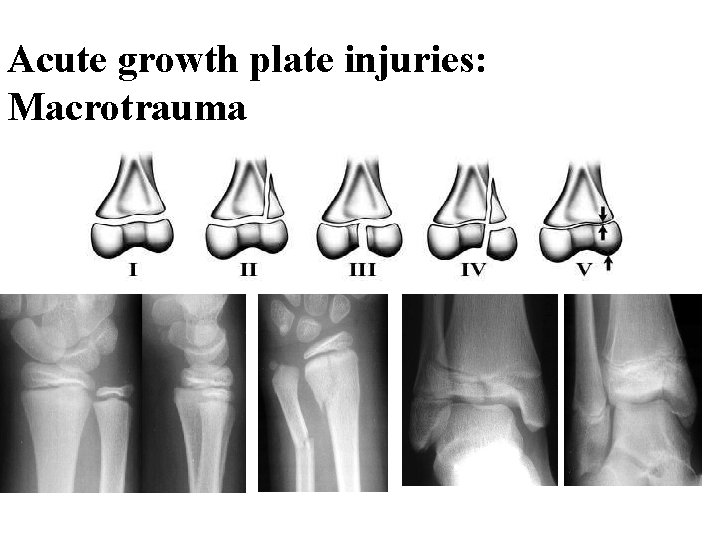
The “bigger” picture: growth plate injuries: Salter-Harris classification of physis injury Acute Macrotrauma
Common Acute Growth Plate Injury Sites • • Distal radius: 1/3 of all GP injuries Phalangeal physis Distal tibia/fibula (“ankle sprain”) Knee: only 2% of injuries BUT 50% of growth arrests requiring surgery
How do you know when they have a significant problem? • Most common injury risk is re-injury to the same area – so repeat pain should be checked out • New swelling or an effusion • Not able to bear total body weight or to bend and straighten without significant pain. • Prolonged pain that limits play for more then a couple days of rest, ice, and ibuprofen.
Means to Improve Secondary Prevention • Accurate diagnosis and treatment of injuries • RTP with pain-free ROM, symmetrical strength and good balance has returned • Pre-participation exam • Medical coverage of teams and events
How to improve upon Primary Prevention
Initial considerations to improve Primary Prevention • Body type / size / gender / development • Basics: strength, flexibility, speed/endurance • Advanced Skills: – Develop sports-specific skills /techniques – Proper training errors
Physical and physiological differences between children and adults that may cause children to be more vulnerable to injury • Size – Larger surface area to mass ratio – Larger heads proportionately – May be too small for protective equipment • Growing cartilage more vulnerable to stresses • Lacking complex motor skills needed for certain sports until after puberty. Adirim & Cheng 2003
Although flexibility is important: Strength is more important • Weight training, not weight lifting • Focus on muscles that cross joints – hamstrings, peroneals • Hip (core) /thigh strength are key in reducing the risk of lower extremity injury
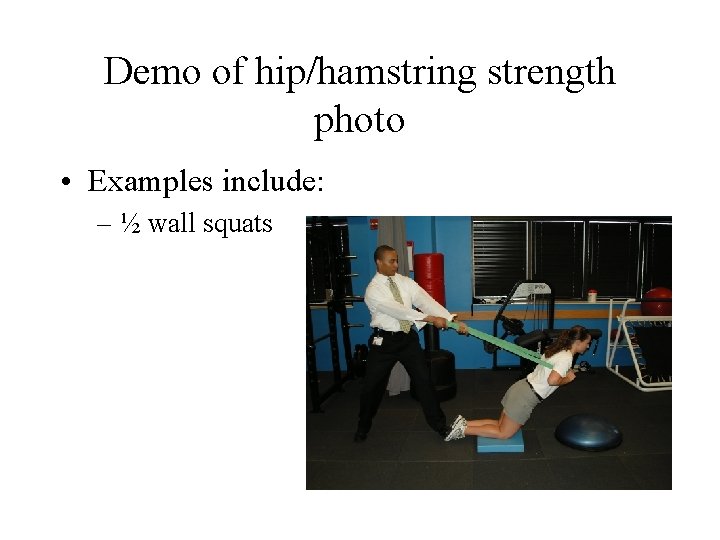
Demo of hip/hamstring strength photo • Examples include: – ½ wall squats
Balance, and learning how to land from jumps is also protective • The advance “class” • Lower leg coordination drills, speed training, and plyometrics improve coordination skills, performance ability and reduce injury risk • “Don’t try this at home kids” – should begin with expert instruction first, then be included into regular training program.
Consistencies between the adult and pediatric literature on injury prevention • Neuromuscular training programs balance training programs Emery 2005
Neuromuscular Training has significant effects on overall knee or ACL injury rates • Training involved: Plyometric power Supervision of biomechanics and technique Strength, balance, & core stability training • “unknown which of these components is most effective or whether the effects are combinatorial. ” Hewett, Myer, Ford 2005
Photos from lab training supervision • Jump and landing
“ External” Factors Contributing to Overuse Injuries • Recognizing environment influences • Training / technique errors Adding a new movement or skill Too much added volume & intensity / time • Protective gear
Younger athlete more succeptibale to climate / hydration issues • Smaller body size - Less cooling capabilities - Less warming capabilities
How to Avoid Primary Overuse • Definition : all relative – Each pitch / throw / run – Game / week – Training season • Identify risk factors early – & improve the “basics” – & improve technique errors • Secondary: have a criteria for RTP
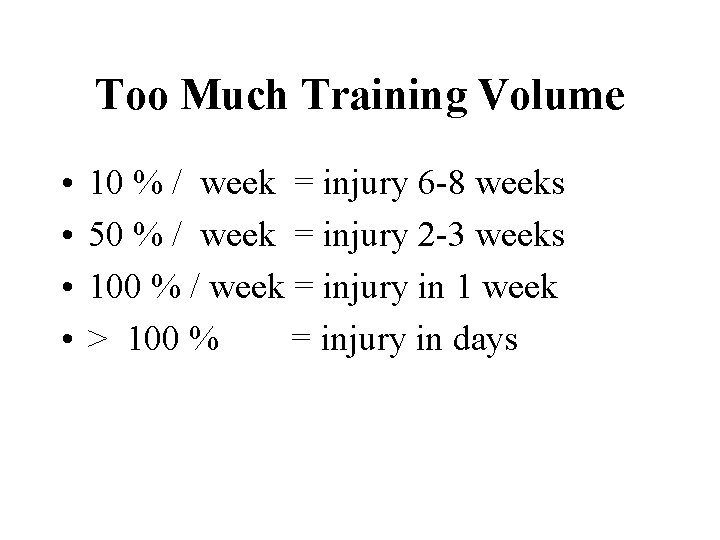
Too Much Training Volume • • 10 % / week = injury 6 -8 weeks 50 % / week = injury 2 -3 weeks 100 % / week = injury in 1 week > 100 % = injury in days
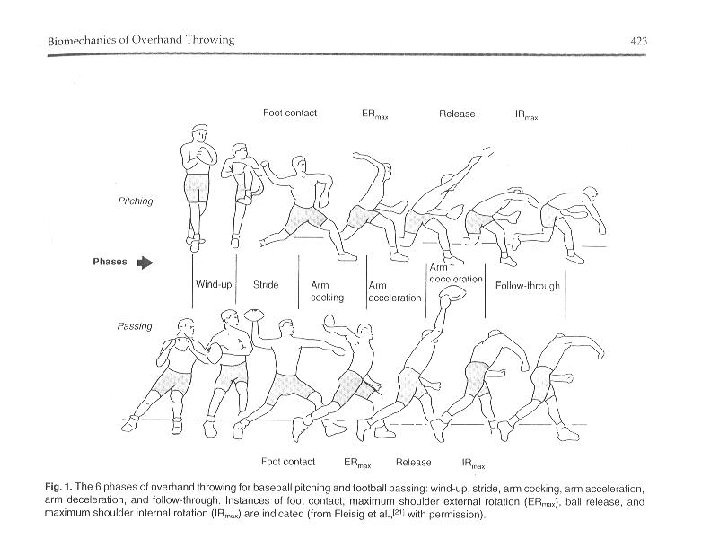
Technique Analysis & Coaching: Attention to Pain During Phases of Throwing • Cocking: Anterior Sublimation, Tendinitis, “Dead Arm” • Acceleration: IR strain, bursitis, elbow (medial) • Release / deceleration: same as cocking: posterior • Follow-through: posterior strain - tricep, elbow (posterior)
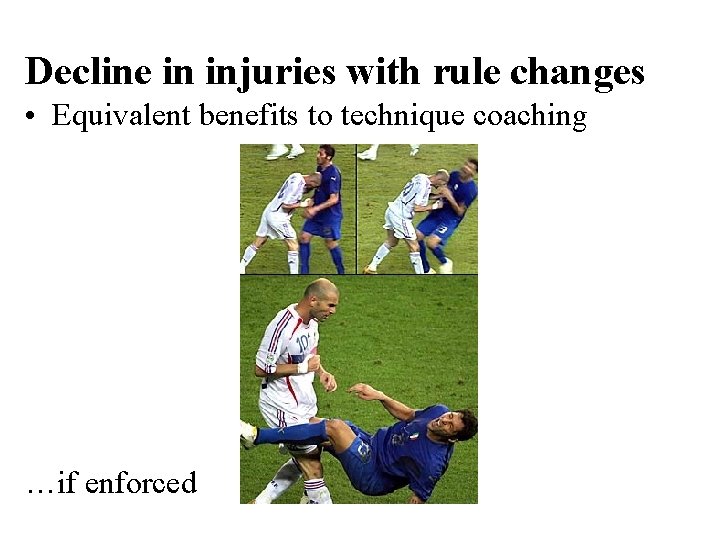
Decline in injuries with rule changes • Equivalent benefits to technique coaching …if enforced
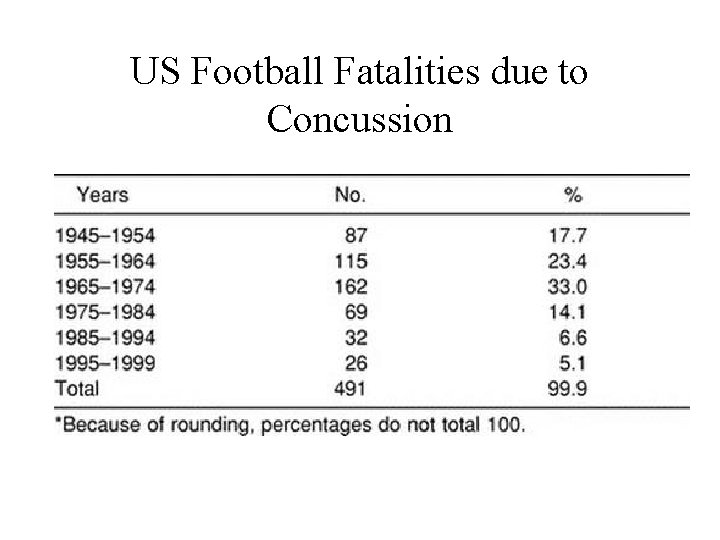
US Football Fatalities due to Concussion
Do braces, pads or sleeves work? • Braces can offer protection against repeat injuries, however they are most often used to “remind” the athlete that they are still recovering from an injury. • Knee pads should be worn for sports when falling is a risk especially by those with the very common, painful, Osgood-Schlatter’s bumps on the knees.
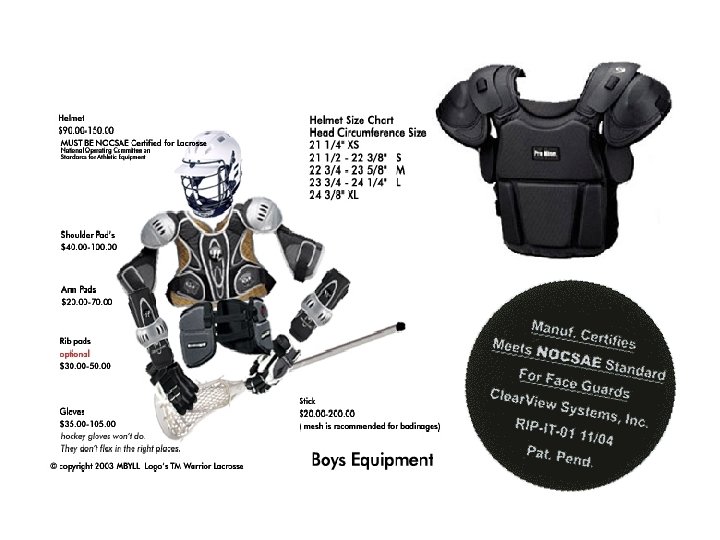
Other protective equipment • • Helmets Protective eye wear Mouthguards Facemask/Neck/Throat protection Chest protectors Shoulder, elbow, knee, hand pads Shoes/footware?
Cleats and Severs
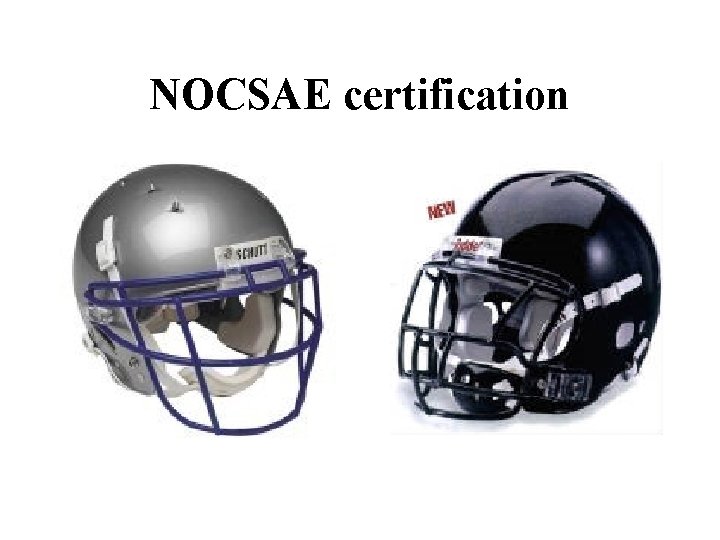
NOCSAE certification
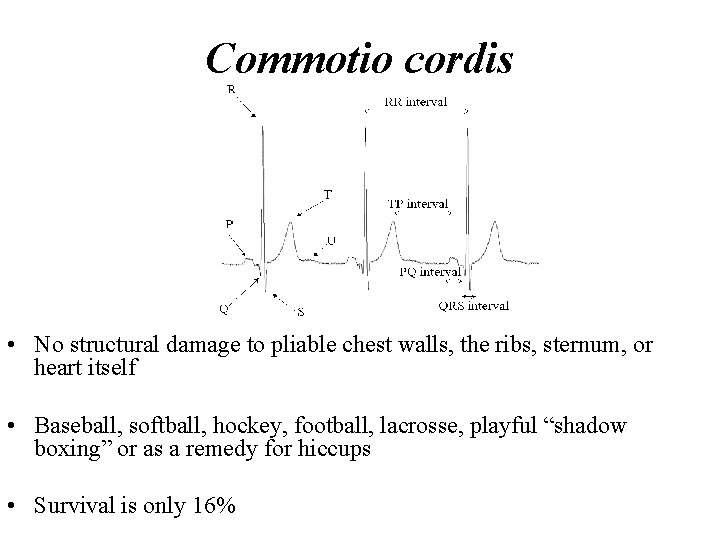
Commotio cordis • No structural damage to pliable chest walls, the ribs, sternum, or heart itself • Baseball, softball, hockey, football, lacrosse, playful “shadow boxing” or as a remedy for hiccups • Survival is only 16%
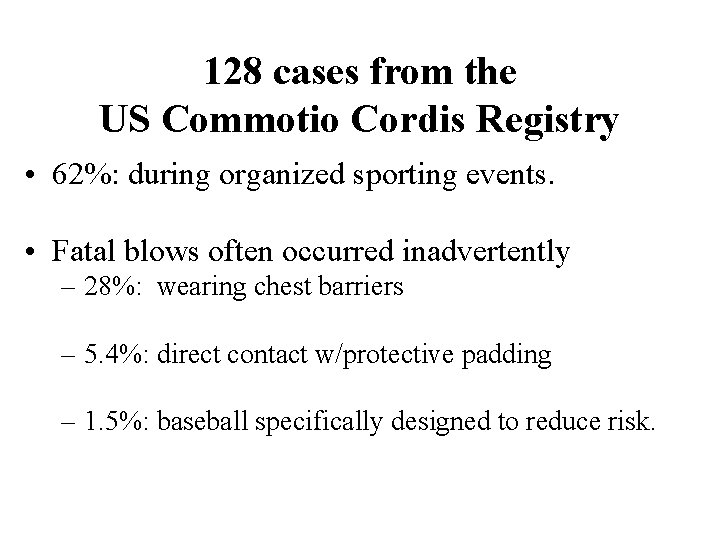
128 cases from the US Commotio Cordis Registry • 62%: during organized sporting events. • Fatal blows often occurred inadvertently – 28%: wearing chest barriers – 5. 4%: direct contact w/protective padding – 1. 5%: baseball specifically designed to reduce risk.
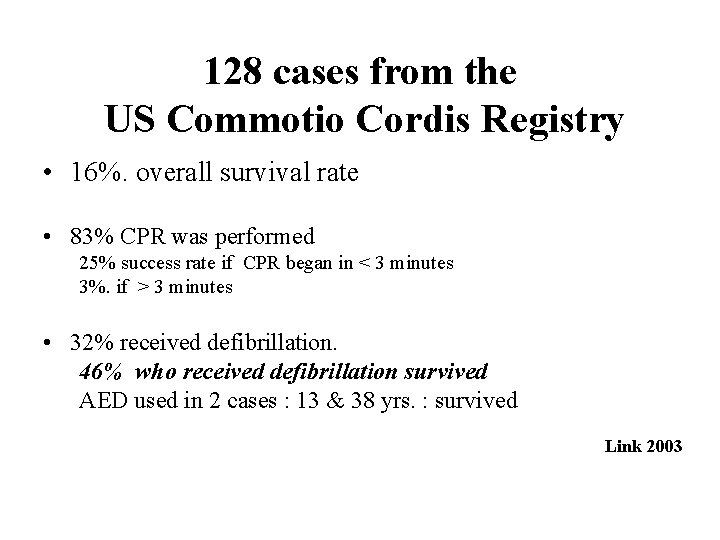
128 cases from the US Commotio Cordis Registry • 16%. overall survival rate • 83% CPR was performed 25% success rate if CPR began in < 3 minutes 3%. if > 3 minutes • 32% received defibrillation. 46% who received defibrillation survived AED used in 2 cases : 13 & 38 yrs. : survived Link 2003
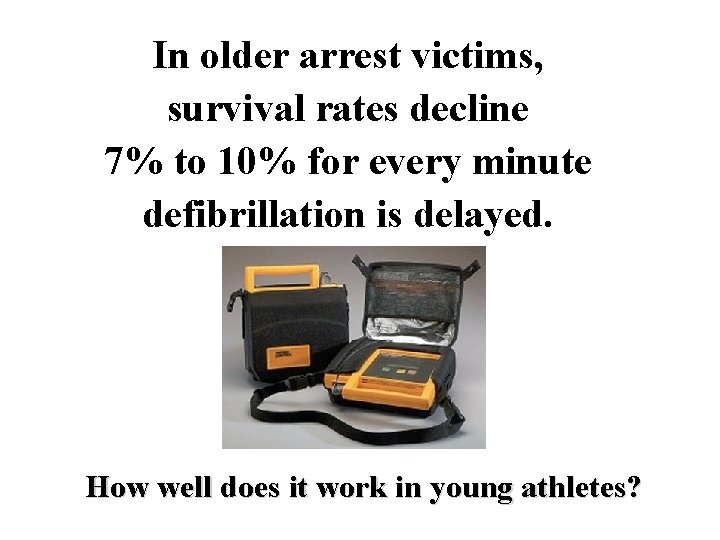
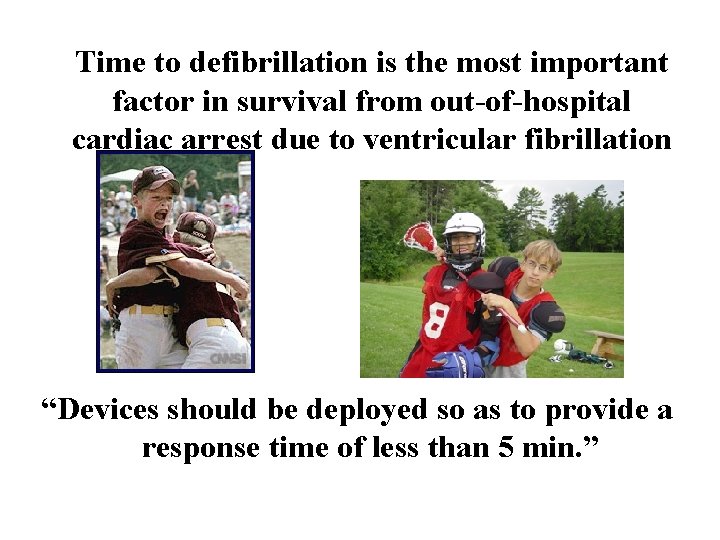
In older arrest victims, survival rates decline 7% to 10% for every minute defibrillation is delayed. How well does it work in young athletes?
Time to defibrillation is the most important factor in survival from out-of-hospital cardiac arrest due to ventricular fibrillation “Devices should be deployed so as to provide a response time of less than 5 min. ”
Overview • Most common cause is previous injury • What is the role of stretching? – “(Is it. . ? ) It is safe to lift weights” • The importance of learning how to land – Correct training is key • Major role for protective equipment – Braces, headgear, padding, bubble-wrap
"My daughter is getting back to spring soccer after a knee injury. Can she do anything, like stretches either before or after practices and games to keep that knee from being re-injured? " • Treatment and prevention strategy depends upon the (re-) injury • Although flexibility is important strength is more important • Balance & learning how to land from jumps is also protective • Braces, pads and shoes work to prevent injury
Six broad, potential means to prevent injuries • • The pre-season physical examination Medical coverage at sporting events Proper coaching/training Proper equipment and field/surface playing conditions. • Follow rules: proper officiating • Adequate hydration & nutrition