Preceptor Orientation Department of EMS 1 Welcome Thank


- Slides: 35
Preceptor Orientation Department of EMS 1
Welcome! Ø Ø Thank you for becoming a preceptor for the UAMS Department of EMS Paramedic Program The purpose of this orientation is to familiarize you with: • • • The preceptor role Clinical training How to provide feedback How to evaluate students Student right to privacy 2
Remember That You Weren’t Always Successful Ø Ø Many new paramedics look at successful pre-hospital care providers & think they were always that way Most professionals have had great mentors We developed over time & through much trial & error We received correction along the way 3
You Are Now The Mentor Ø Ø You are now a preceptor and thus a mentor Many times, you are the first medical professional that students will see “in action” Do not underestimate the impact your attitude and actions have upon the paramedic student The mentoring the student receives is just as important (maybe more so) as the training he/she receives in the classroom 4
Why Do Students Need A Preceptor? Ø Ø Ø Students need help coping with a totally new environment They need to develop a professional identification They need to understand that there a variety of strategies that are effective Ø Ø There is not just one way They need to develop their own “style” 5
Preceptor Responsibilities Ø Ø Ø Provide a model for the student to emulate Discuss “problem” calls, patients, or situations Help the students find their tools to succeed Supervise & guide clinical and field performance Provide positive & correctional feedback that will allow the student to “grow” 6
Preceptor Responsibilities Ø Ø Completely & honestly fill out & sign the students evaluation forms Keep student records confidential Ø Family Educational Rights and Privacy Act (FERPA) Ø A Federal law that protects the privacy of student education records 20 U. S. C. § 1232 g; 34 CFR Part 99 7
Preceptor Characteristics Ø Ø Ø Knowledgeable in medicine Possess good communication skills Establish a “safe” environment that is conducive to learning Share practical steps in patient care Provide positive & correctional feedback, when necessary Listen to the student 8
Remember Your Own Experience v What is a bad preceptor? v What is a good preceptor? 9
Preceptor Roles Ø Ø Ø Provide guidance and help when needed Share knowledge Allow enough “space” Ø Ø Ø Make mental notes about Ø Ø Ø So the student can treat the patient While preventing the student from doing harm Behavior you want to reinforce Practices you want to correct Review with the student in a private setting 10
Roles (continued) Ø Try to keep an open mind Ø Ø there is more than one way to reach a certain goal Allow the student to experiment Remember that they are still in the learning process Students should not be expected to perform to the level of an experienced EMT or Paramedic 11
If The Student Has A Different Style Ø Ø Ø Is it safe? Does it meet the standard of care? Would the Medical Director approve of the style? Does it cause any harm? Is it offensive in any way? 12
Clinical Practicum I & II Clinical Training Ø Ø The beginning of the education The student may be “book smart” Ø Ø The primary focus during this phase Ø Ø But may lack experience To practice newly learned skills Become more competent with them Answer questions & “quiz” them Be available to the student 13
Clinical Practicum III Clinical Training Ø Will begin gaining a better understanding of their role as a Paramedic Ø In clinical Ø Ø Paramedic students should be allowed to start taking the role of “team leader” Ø Non-complicated patients Ø Ø Patient care autonomy should be increased over Clinical I & II Examples: chest pain or single system trauma Be there to “oversee” the care 14
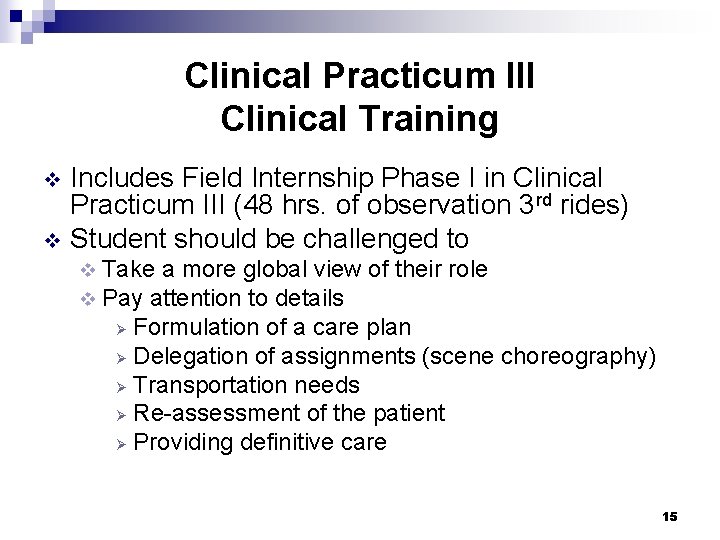
Clinical Practicum III Clinical Training Includes Field Internship Phase I in Clinical Practicum III (48 hrs. of observation 3 rd rides) v Student should be challenged to v v Take a more global view v Pay attention to details of their role Formulation of a care plan Ø Delegation of assignments (scene choreography) Ø Transportation needs Ø Re-assessment of the patient Ø Providing definitive care Ø 15
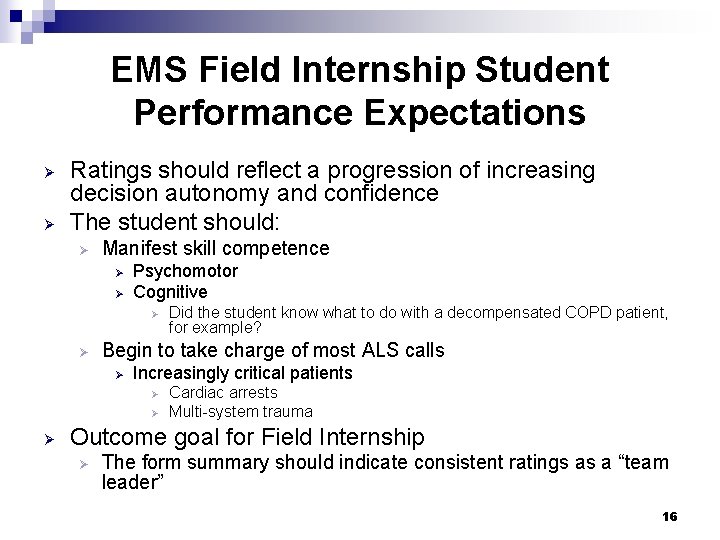
EMS Field Internship Student Performance Expectations Ø Ø Ratings should reflect a progression of increasing decision autonomy and confidence The student should: Ø Manifest skill competence Ø Ø Psychomotor Cognitive Ø Ø Begin to take charge of most ALS calls Ø Increasingly critical patients Ø Ø Ø Did the student know what to do with a decompensated COPD patient, for example? Cardiac arrests Multi-system trauma Outcome goal for Field Internship Ø The form summary should indicate consistent ratings as a “team leader” 16
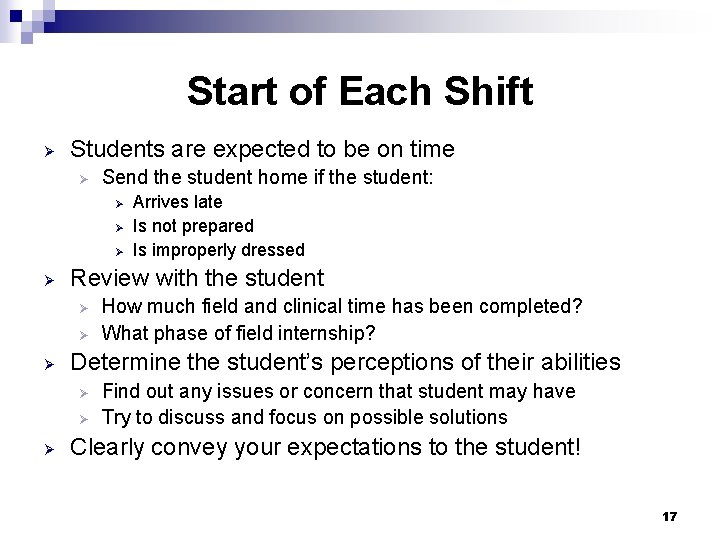
Start of Each Shift Ø Students are expected to be on time Ø Send the student home if the student: Ø Ø Review with the student Ø Ø Ø How much field and clinical time has been completed? What phase of field internship? Determine the student’s perceptions of their abilities Ø Ø Ø Arrives late Is not prepared Is improperly dressed Find out any issues or concern that student may have Try to discuss and focus on possible solutions Clearly convey your expectations to the student! 17
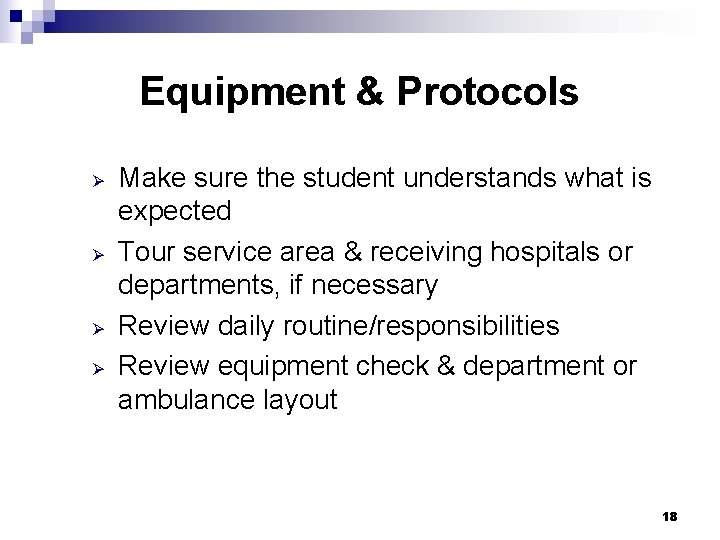
Equipment & Protocols Ø Ø Make sure the student understands what is expected Tour service area & receiving hospitals or departments, if necessary Review daily routine/responsibilities Review equipment check & department or ambulance layout 18
Problem Resolution Ø Ø Ø The lines of communication begin at the level of the student & preceptor If an issue cannot be resolved, the Department of EMS clinical coordinator should be contacted at 501 686 -6860 or tsrinehart@uams. edu UAMS Paramedic Program Medical Director Ø Dr. Gregory Hall 19
Providing Feedback v Types of feedback: Ø Positive or correctional Ø Positive reinforcement v v v Qualities of feedback Tips for less stressful feedback Post-incident feedback 20
Types of Feedback v Positive / Correctional: Ø Correctional feedback that is given in a positive manner Ø Identifies areas of performance that require improvement or an area in which the student must change their behavior Example: Reminding a student of the importance of auscultating lung sounds after placement of an ET tube or reminding them to use endtidal CO 2 monitoring 21
Types of Feedback v Positive reinforcement: Ø Encourages desired behavior Ø Helps build self-confidence Example: Say to the student, “your calm & confident behavior really helped to relax the patient while you performed the procedure. You did a very good job. ” 22
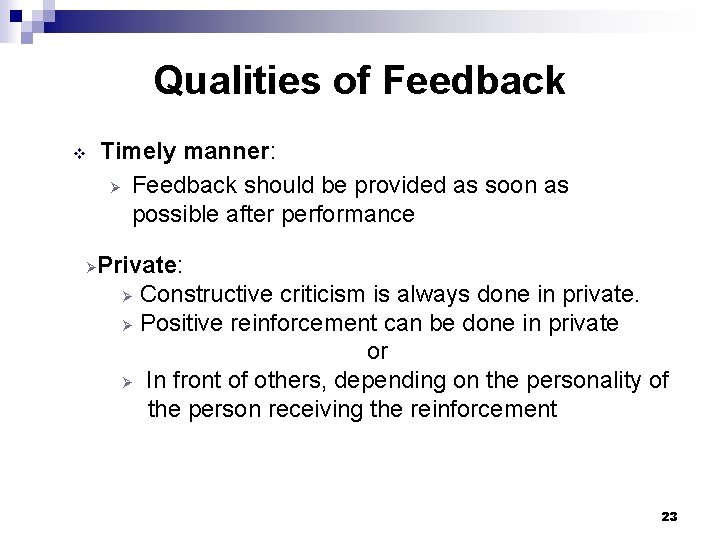
Qualities of Feedback v Ø Timely manner: Ø Feedback should be provided as soon as possible after performance Private: Ø Constructive criticism is always done in private. Ø Positive reinforcement can be done in private or Ø In front of others, depending on the personality of the person receiving the reinforcement 23
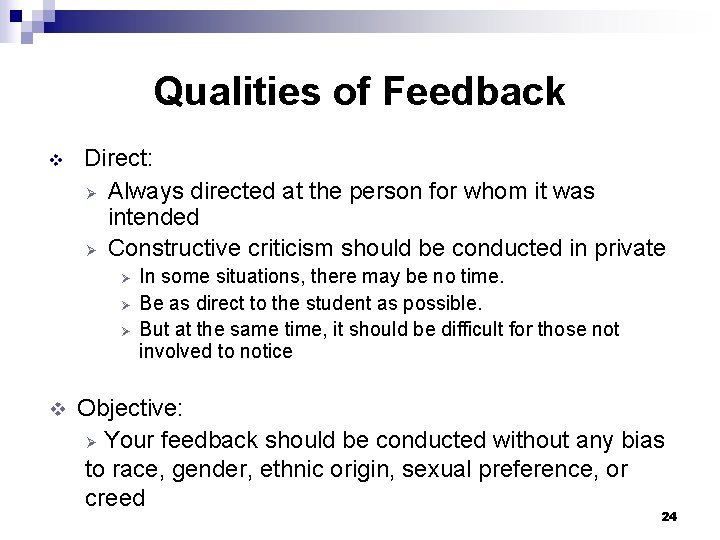
Qualities of Feedback v Direct: Ø Always directed at the person for whom it was intended Ø Constructive criticism should be conducted in private Ø Ø Ø v In some situations, there may be no time. Be as direct to the student as possible. But at the same time, it should be difficult for those not involved to notice Objective: Ø Your feedback should be conducted without any bias to race, gender, ethnic origin, sexual preference, or creed 24
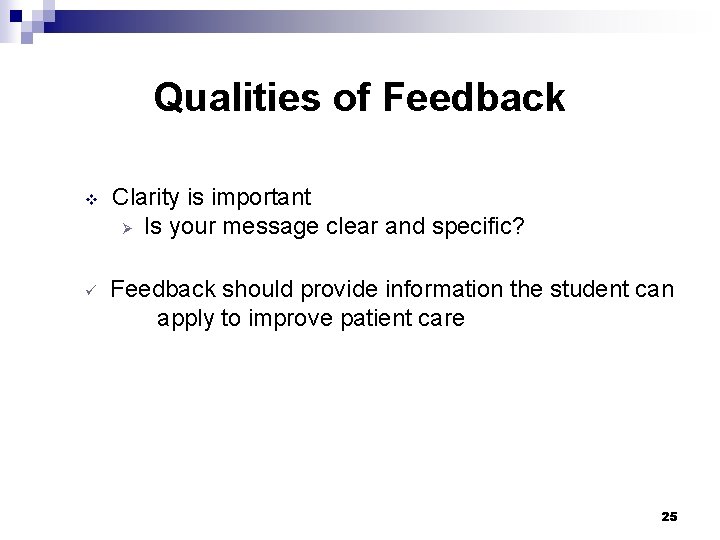
Qualities of Feedback v ü Clarity is important Ø Is your message clear and specific? Feedback should provide information the student can apply to improve patient care 25
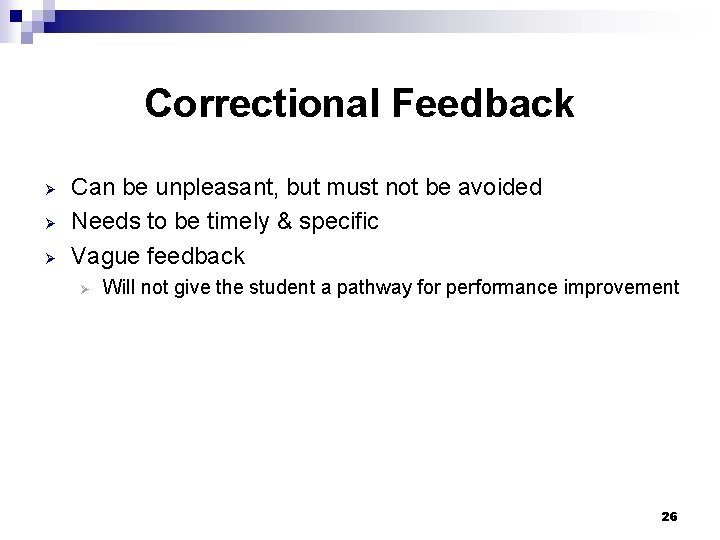
Correctional Feedback Ø Ø Ø Can be unpleasant, but must not be avoided Needs to be timely & specific Vague feedback Ø Will not give the student a pathway for performance improvement 26
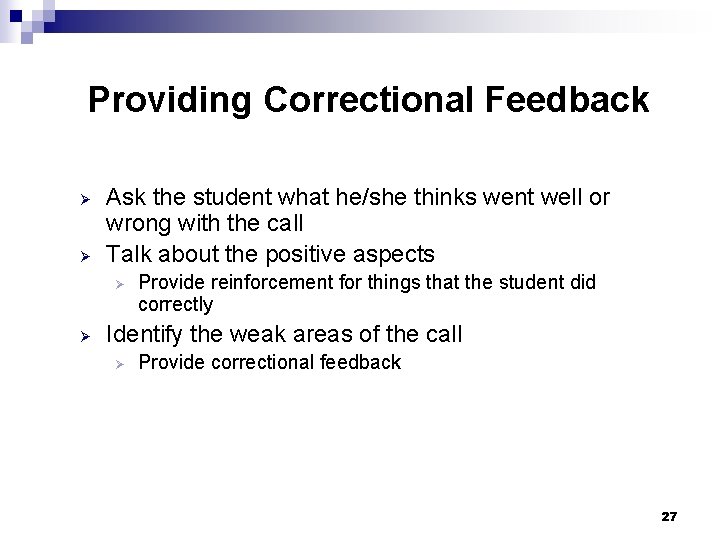
Providing Correctional Feedback Ø Ø Ask the student what he/she thinks went well or wrong with the call Talk about the positive aspects Ø Ø Provide reinforcement for things that the student did correctly Identify the weak areas of the call Ø Provide correctional feedback 27
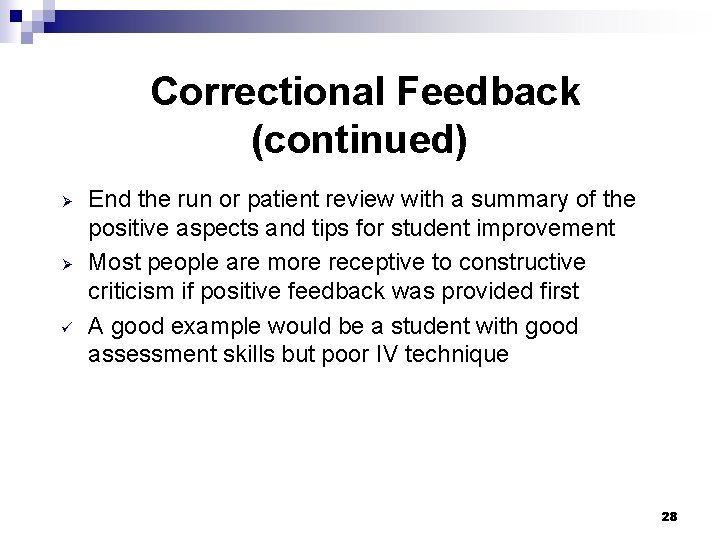
Correctional Feedback (continued) Ø Ø ü End the run or patient review with a summary of the positive aspects and tips for student improvement Most people are more receptive to constructive criticism if positive feedback was provided first A good example would be a student with good assessment skills but poor IV technique 28
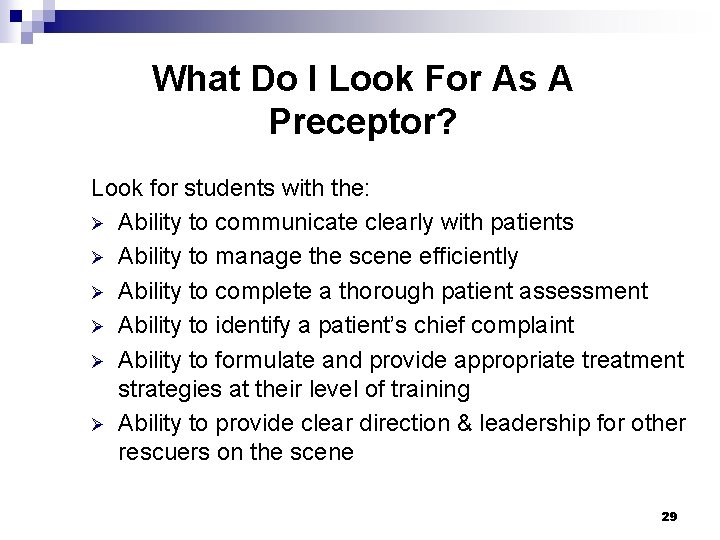
What Do I Look For As A Preceptor? Look for students with the: Ø Ability to communicate clearly with patients Ø Ability to manage the scene efficiently Ø Ability to complete a thorough patient assessment Ø Ability to identify a patient’s chief complaint Ø Ability to formulate and provide appropriate treatment strategies at their level of training Ø Ability to provide clear direction & leadership for other rescuers on the scene 29
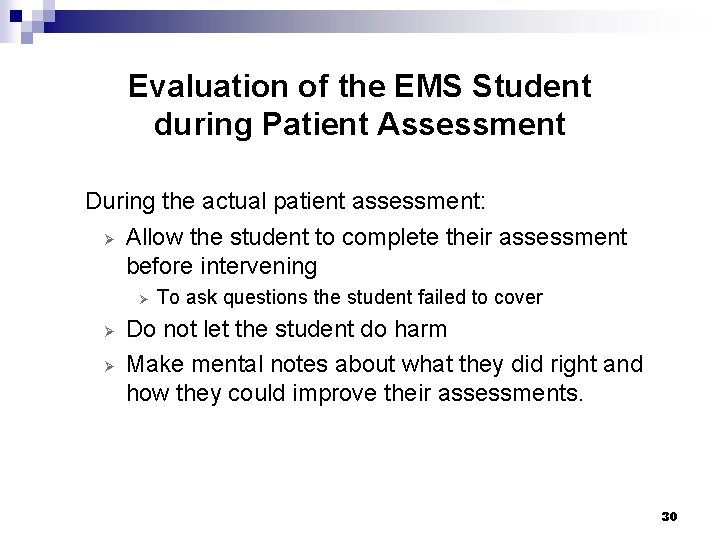
Evaluation of the EMS Student during Patient Assessment During the actual patient assessment: Ø Allow the student to complete their assessment before intervening Ø Ø Ø To ask questions the student failed to cover Do not let the student do harm Make mental notes about what they did right and how they could improve their assessments. 30
Evaluation of the EMS Student during Patient Assessment n Be positive, but honest ¨ Remember that the patient is an audience to the process ¨ Note weaknesses in skill competencies ¨ Do not let the student do harm 31
Filling out the Forms n n Your comments are read and are very important to us! Verify with your signature 32
Preceptor Feedback n n Student ratings of preceptors Preceptor ratings of students compared to other preceptors 33
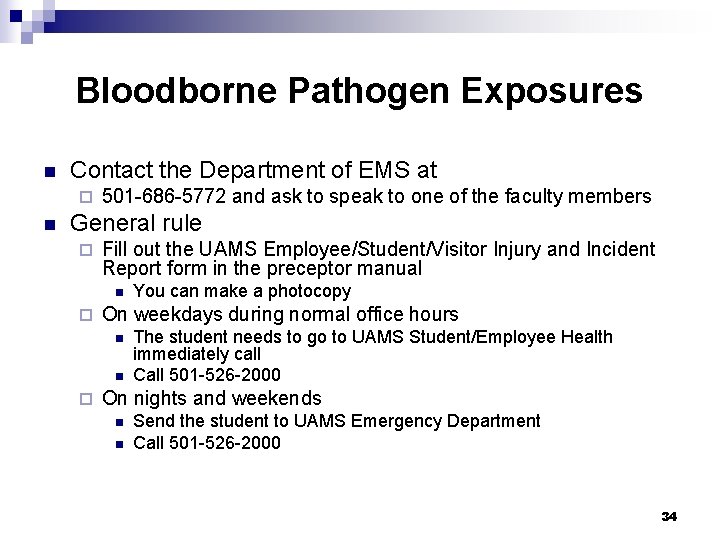
Bloodborne Pathogen Exposures n Contact the Department of EMS at ¨ n 501 -686 -5772 and ask to speak to one of the faculty members General rule ¨ Fill out the UAMS Employee/Student/Visitor Injury and Incident Report form in the preceptor manual n ¨ On weekdays during normal office hours n n ¨ You can make a photocopy The student needs to go to UAMS Student/Employee Health immediately call Call 501 -526 -2000 On nights and weekends n n Send the student to UAMS Emergency Department Call 501 -526 -2000 34
THANK YOU! Ø Ø Ø It is dedicated preceptors like yourself that allow us to educate and train quality EMS providers. Policies and procedures for clinical education can be obtained by referring to the Department of EMS Preceptor Guide located within your department, EMS station or facility educator. You can also access it on-line at https: //healthprofessions. uams. edu/programs/emergencymedicalsciences/ Contact the Department of EMS clinical coordinator: 501686 -6860 or tsrinehart@uams. edu 35