Please note these are the actual videorecorded proceedings
- Slides: 23
Please note, these are the actual video-recorded proceedings from the live CME event and may include the use of trade names and other raw, unedited content.
Front-line treatment for patients with EGFR tumor mutations; results of the FLAURA trial and clinical implications Lecia V Sequist, MD, MPH Associate Professor of Medicine Harvard Medical School Center for Thoracic Cancers Massachusetts General Hospital Cancer Center Boston, Massachusetts
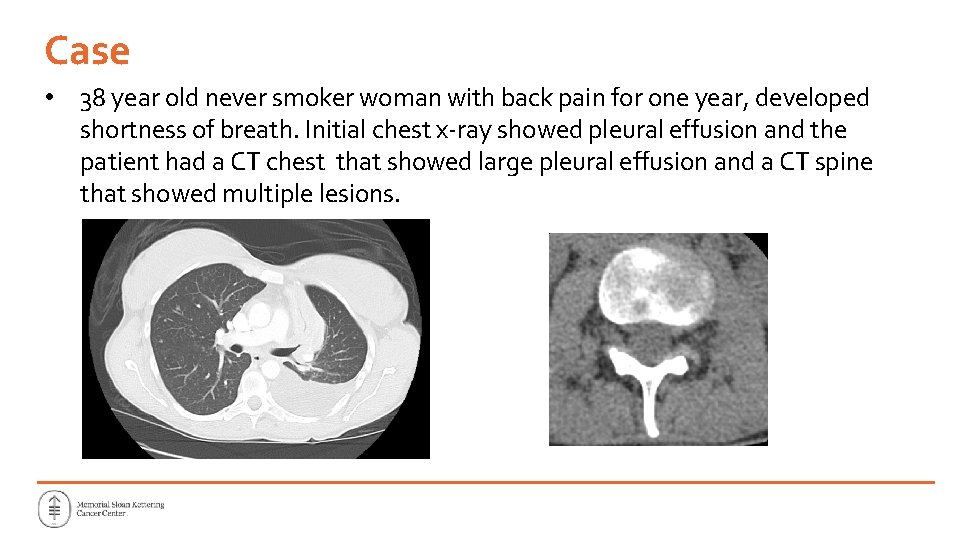
Case • 38 year old never smoker woman with back pain for one year, developed shortness of breath. Initial chest x-ray showed pleural effusion and the patient had a CT chest that showed large pleural effusion and a CT spine that showed multiple lesions.
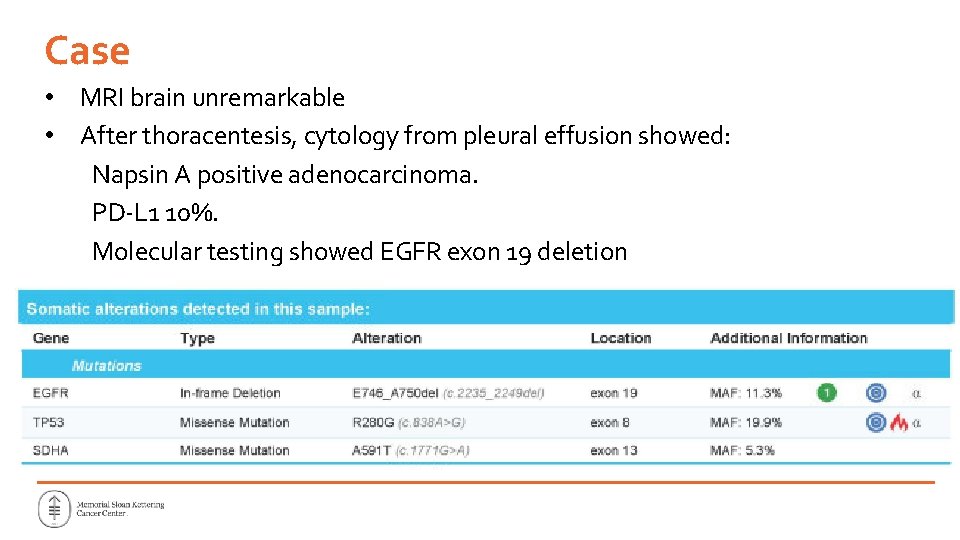
Case • MRI brain unremarkable • After thoracentesis, cytology from pleural effusion showed: Napsin A positive adenocarcinoma. PD-L 1 10%. Molecular testing showed EGFR exon 19 deletion
Front-line treatment for patients with EGFR tumor mutations Gregory J. Riely presented by Lecia Sequist
Disclosures – Dr Riely Contracted Research Genentech Bio. Oncology, Pfizer Inc, Takeda Oncology Paid Travel Merck Other Astra. Zeneca Pharmaceuticals LP
Disclosures - Dr Sequist Consulting Agreements Astra. Zeneca Pharmaceuticals LP, Bristol-Myers Squibb Company, Genentech Bio. Oncology, Merrimack Pharmaceuticals Inc, Pfizer Inc Contracted Research Astra. Zeneca Pharmaceuticals LP, Boehringer Ingelheim Pharmaceuticals Inc, Genentech Bio. Oncology, Merrimack Pharmaceuticals Inc, Novartis
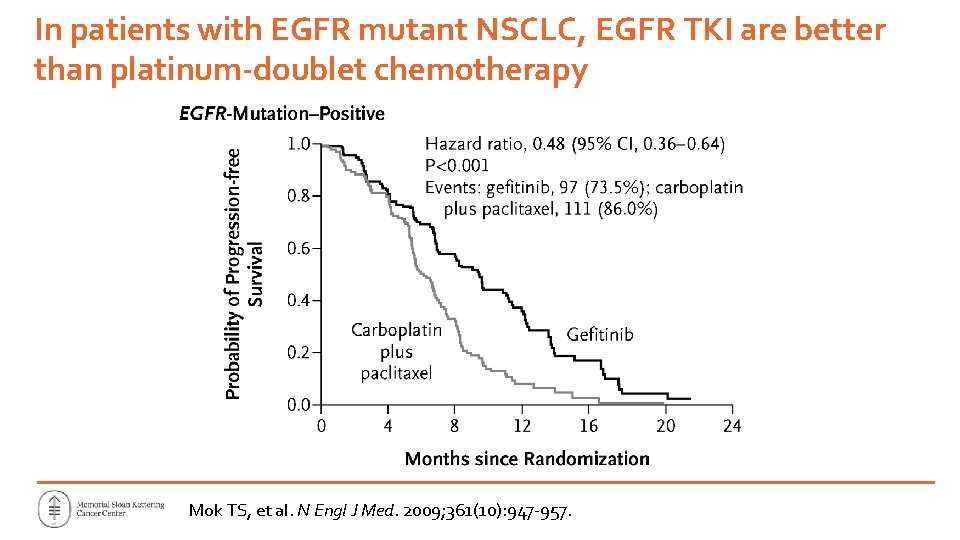
In patients with EGFR mutant NSCLC, EGFR TKI are better than platinum-doublet chemotherapy Mok TS, et al. N Engl J Med. 2009; 361(10): 947 -957.
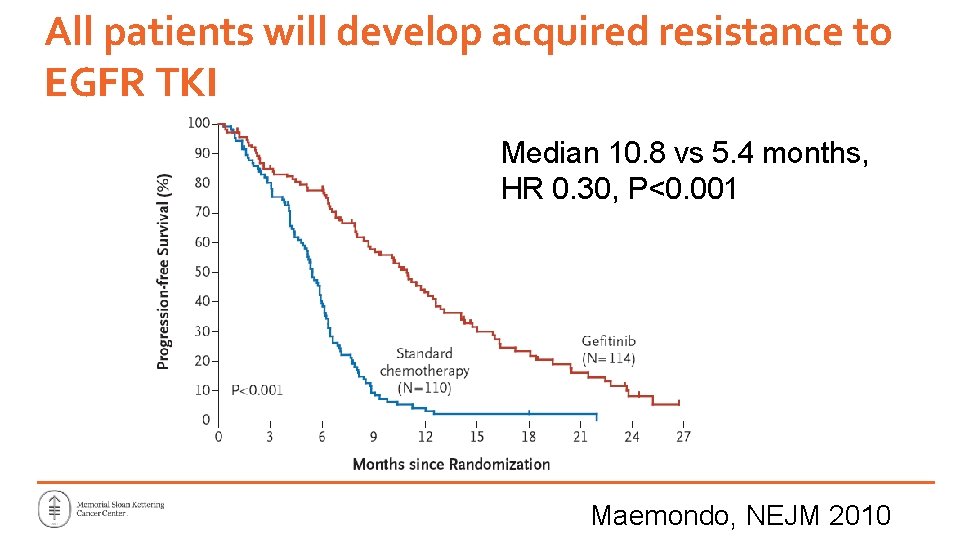
All patients will develop acquired resistance to EGFR TKI Median 10. 8 vs 5. 4 months, HR 0. 30, P<0. 001 Maemondo, NEJM 2010
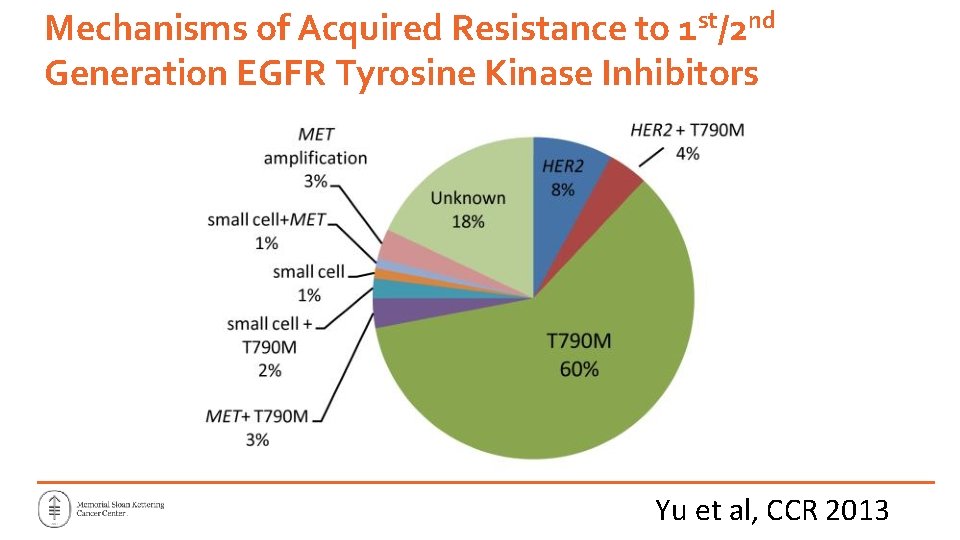
Mechanisms of Acquired Resistance to 1 st/2 nd Generation EGFR Tyrosine Kinase Inhibitors Yu et al, CCR 2013
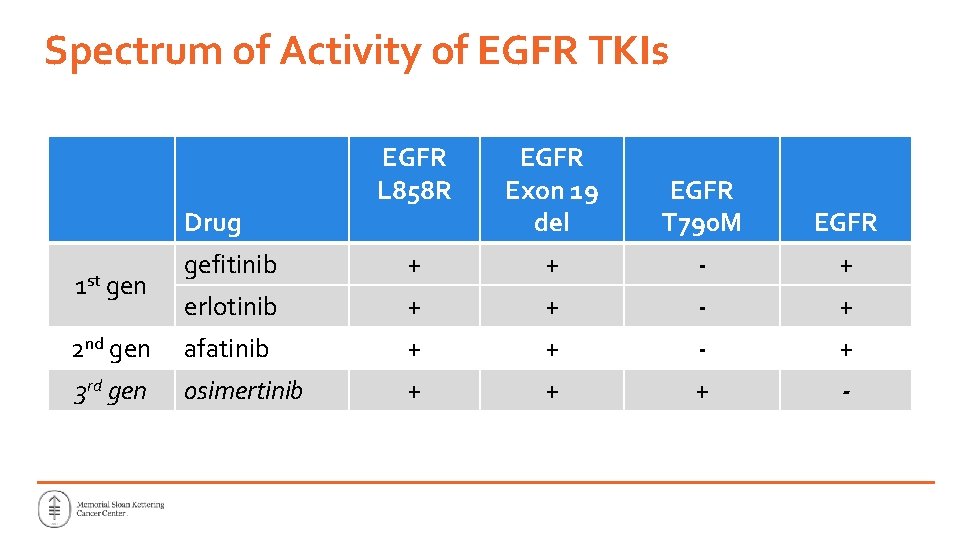
Spectrum of Activity of EGFR TKIs EGFR L 858 R EGFR Exon 19 del EGFR T 790 M EGFR gefitinib + + - + erlotinib + + - + 2 nd gen afatinib + + - + 3 rd gen osimertinib + + + - Drug 1 st gen
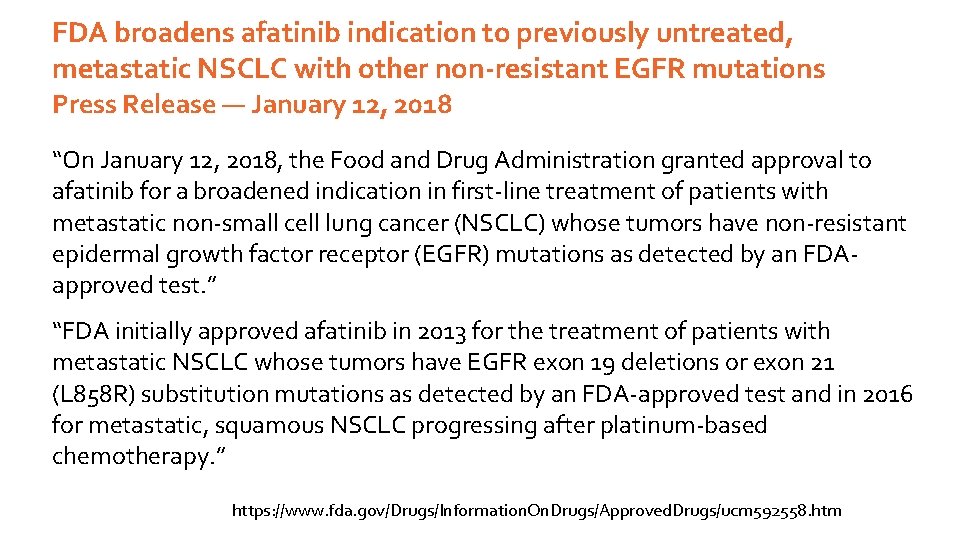
FDA broadens afatinib indication to previously untreated, metastatic NSCLC with other non-resistant EGFR mutations Press Release — January 12, 2018 “On January 12, 2018, the Food and Drug Administration granted approval to afatinib for a broadened indication in first-line treatment of patients with metastatic non-small cell lung cancer (NSCLC) whose tumors have non-resistant epidermal growth factor receptor (EGFR) mutations as detected by an FDAapproved test. ” “FDA initially approved afatinib in 2013 for the treatment of patients with metastatic NSCLC whose tumors have EGFR exon 19 deletions or exon 21 (L 858 R) substitution mutations as detected by an FDA-approved test and in 2016 for metastatic, squamous NSCLC progressing after platinum-based chemotherapy. ” https: //www. fda. gov/Drugs/Information. On. Drugs/Approved. Drugs/ucm 592558. htm
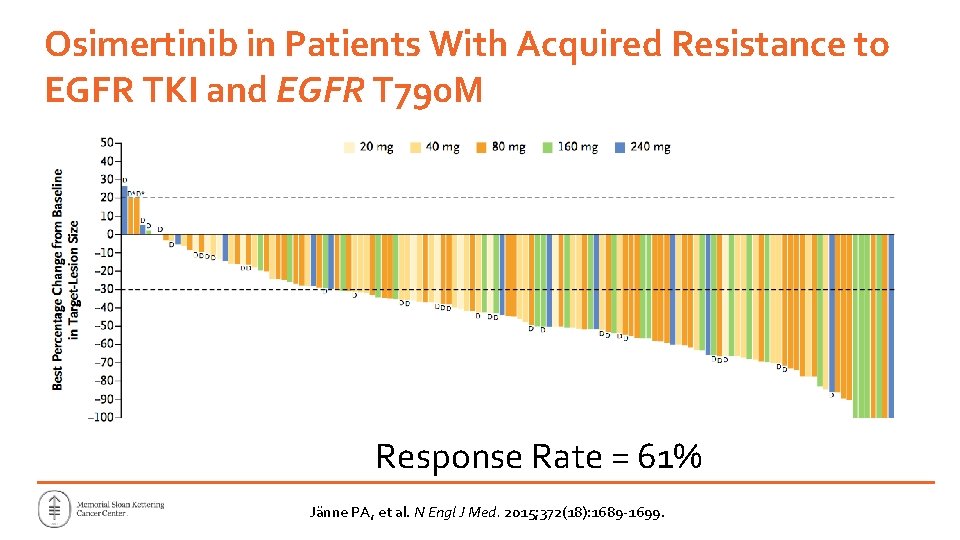
Osimertinib in Patients With Acquired Resistance to EGFR TKI and EGFR T 790 M Response Rate = 61% Jänne PA, et al. N Engl J Med. 2015; 372(18): 1689 -1699.
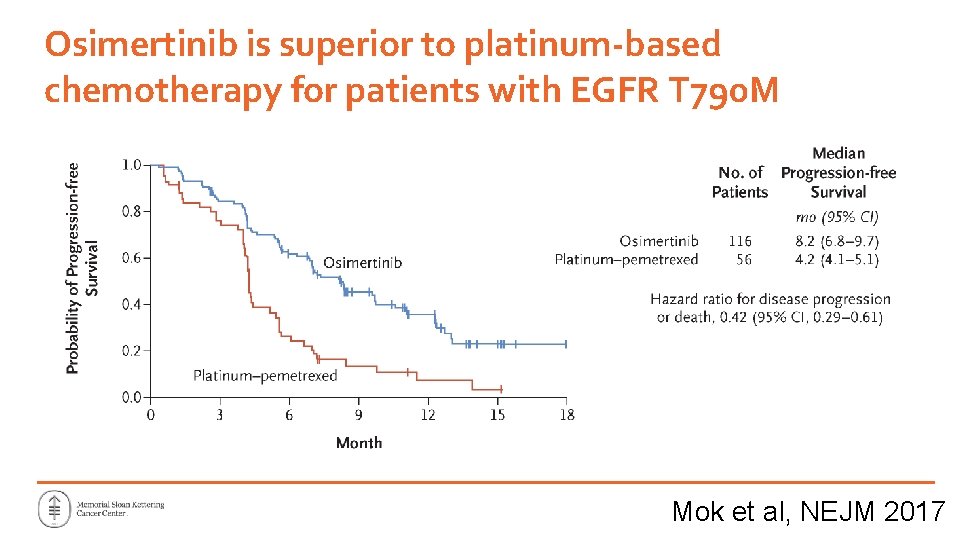
Osimertinib is superior to platinum-based chemotherapy for patients with EGFR T 790 M Mok et al, NEJM 2017
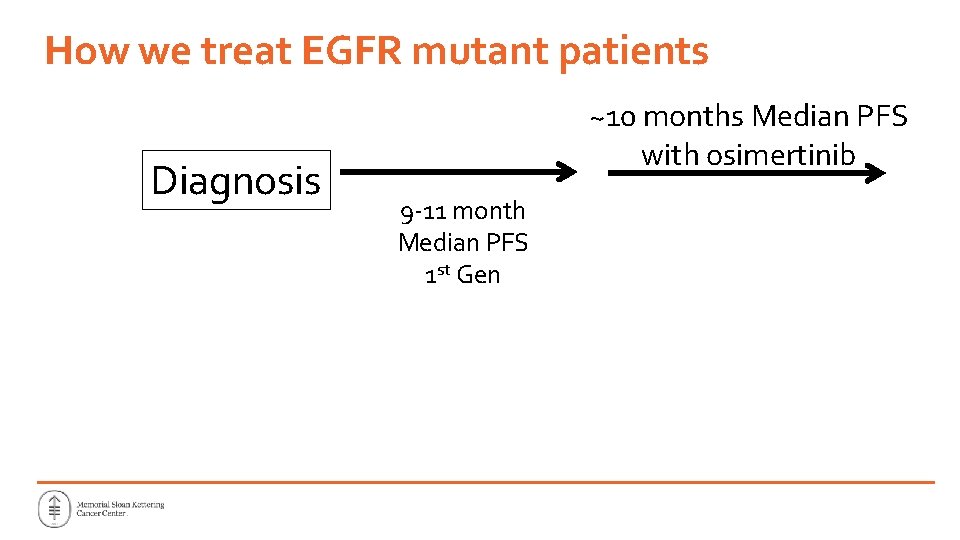
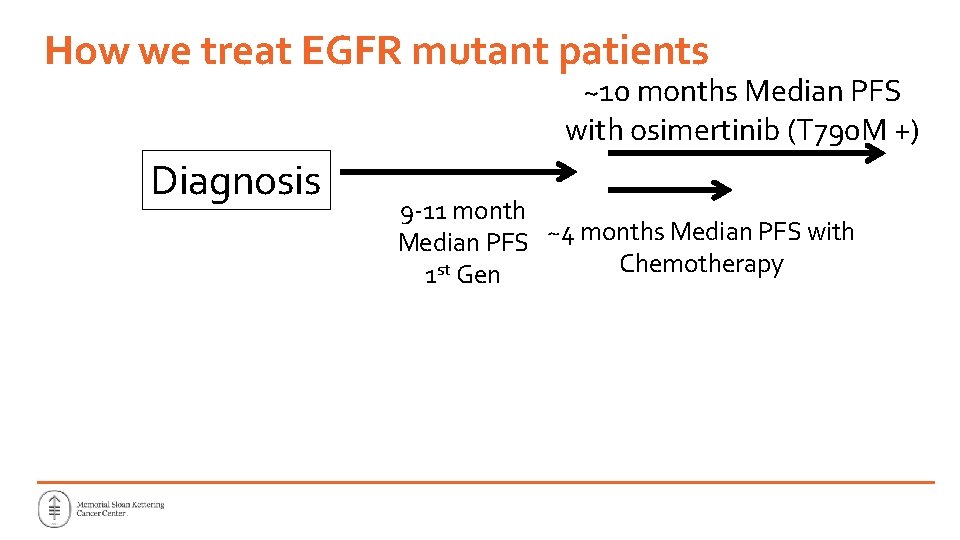
How we treat EGFR mutant patients Diagnosis ~10 months Median PFS with osimertinib 9 -11 month Median PFS 1 st Gen
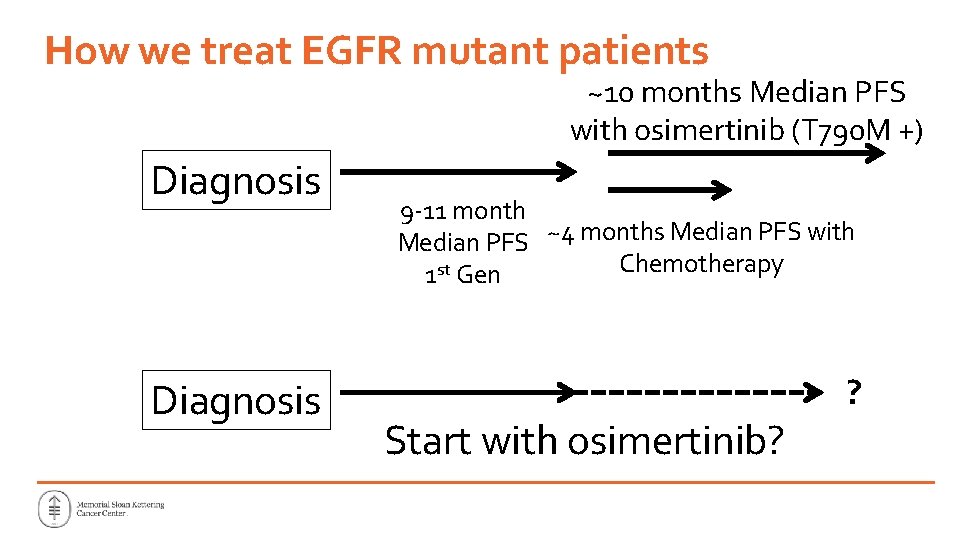
How we treat EGFR mutant patients ~10 months Median PFS with osimertinib (T 790 M +) Diagnosis 9 -11 month Median PFS ~4 months Median PFS with Chemotherapy 1 st Gen
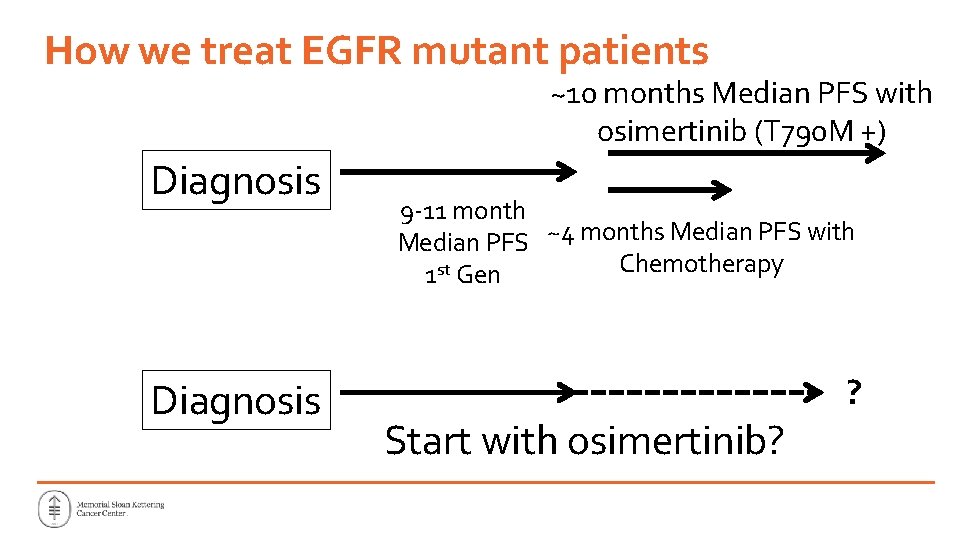
How we treat EGFR mutant patients ~10 months Median PFS with osimertinib (T 790 M +) Diagnosis 9 -11 month Median PFS ~4 months Median PFS with Chemotherapy 1 st Gen Start with osimertinib? ?
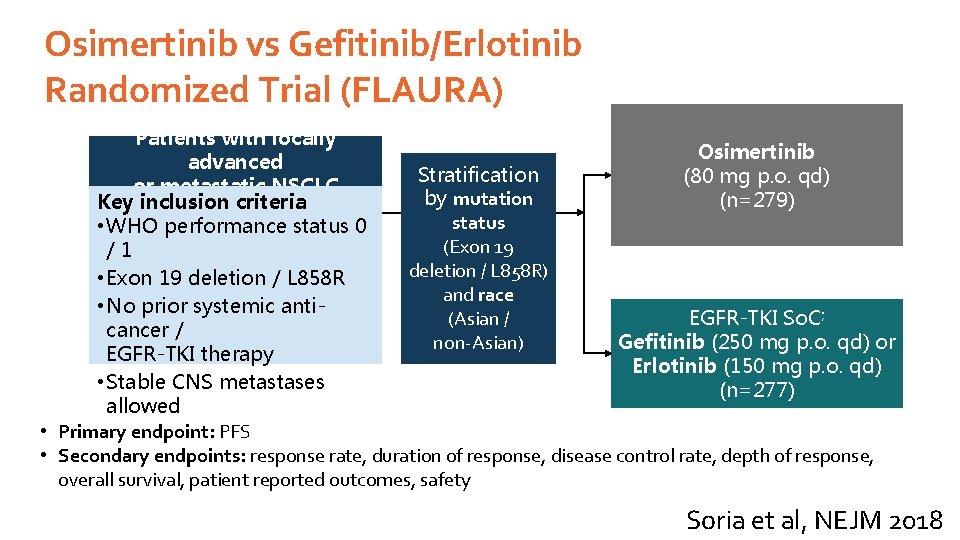
Osimertinib vs Gefitinib/Erlotinib Randomized Trial (FLAURA) Patients with locally Osimertinib advanced Stratification (80 mg p. o. qd) or metastatic NSCLC by mutation (n=279) Key inclusion criteria status • WHO performance status 0 (Exon 19 /1 deletion / L 858 R) • Exon 19 deletion / L 858 R and race • No prior systemic anti. EGFR-TKI So. C; (Asian / cancer / Gefitinib (250 mg p. o. qd) or non-Asian) EGFR-TKI therapy Erlotinib (150 mg p. o. qd) • Stable CNS metastases (n=277) allowed • Primary endpoint: PFS • Secondary endpoints: response rate, duration of response, disease control rate, depth of response, overall survival, patient reported outcomes, safety Soria et al, NEJM 2018
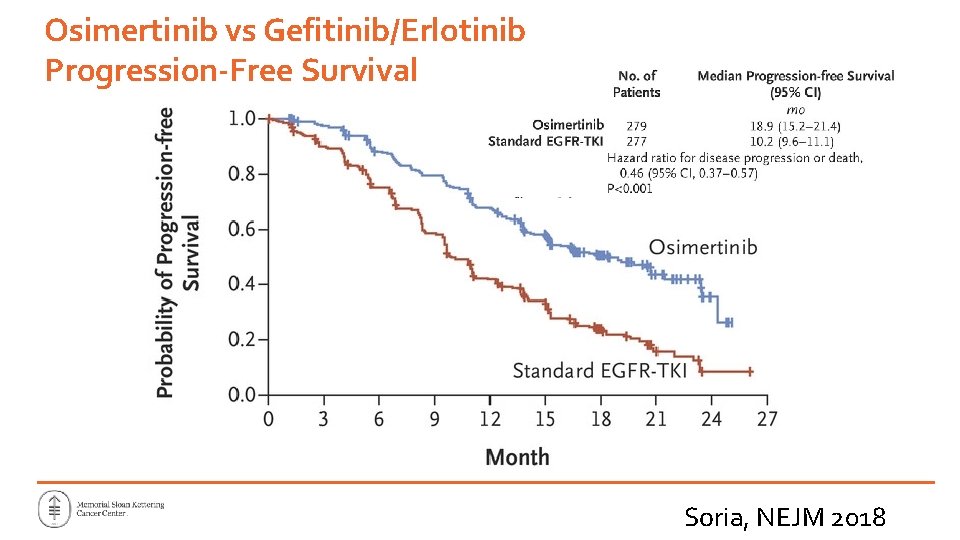
Osimertinib vs Gefitinib/Erlotinib Progression-Free Survival Soria, NEJM 2018
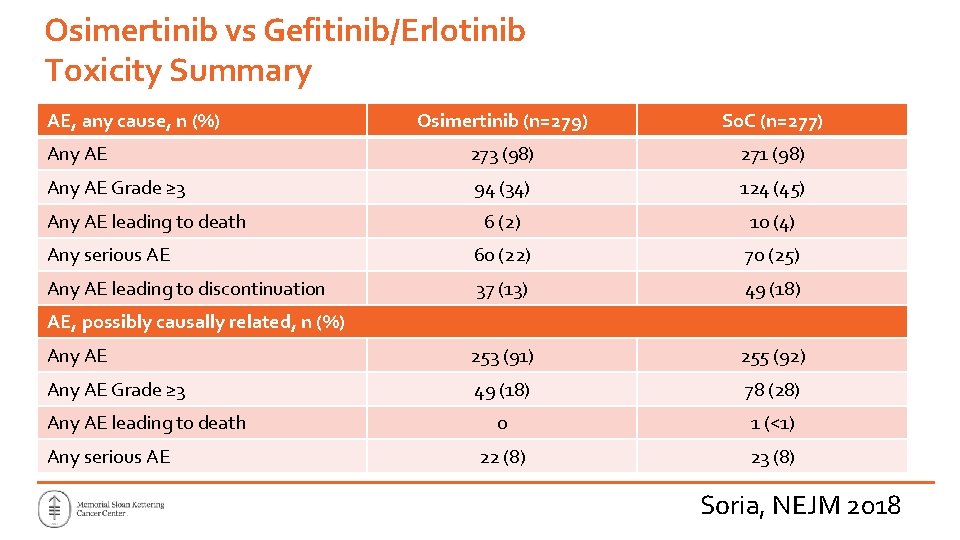
Osimertinib vs Gefitinib/Erlotinib Toxicity Summary AE, any cause, n (%) Osimertinib (n=279) So. C (n=277) Any AE 273 (98) 271 (98) Any AE Grade ≥ 3 94 (34) 124 (45) 6 (2) 10 (4) Any serious AE 60 (22) 70 (25) Any AE leading to discontinuation 37 (13) 49 (18) Any AE 253 (91) 255 (92) Any AE Grade ≥ 3 49 (18) 78 (28) 0 1 (<1) 22 (8) 23 (8) Any AE leading to death AE, possibly causally related, n (%) Any AE leading to death Any serious AE Soria, NEJM 2018
How we treat EGFR mutant patients ~10 months Median PFS with osimertinib (T 790 M +) Diagnosis 9 -11 month Median PFS ~4 months Median PFS with Chemotherapy 1 st Gen Start with osimertinib? ?
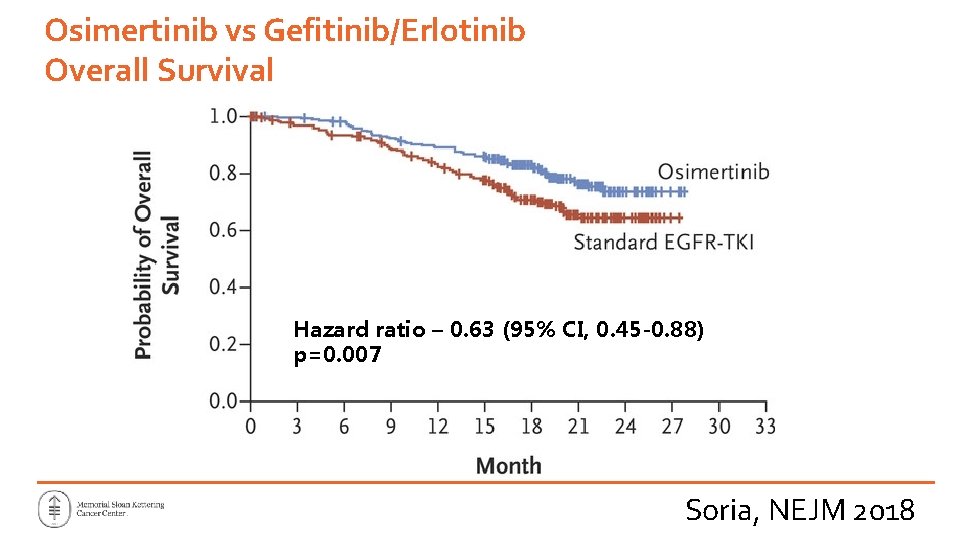
Osimertinib vs Gefitinib/Erlotinib Overall Survival Hazard ratio – 0. 63 (95% CI, 0. 45 -0. 88) p=0. 007 Soria, NEJM 2018
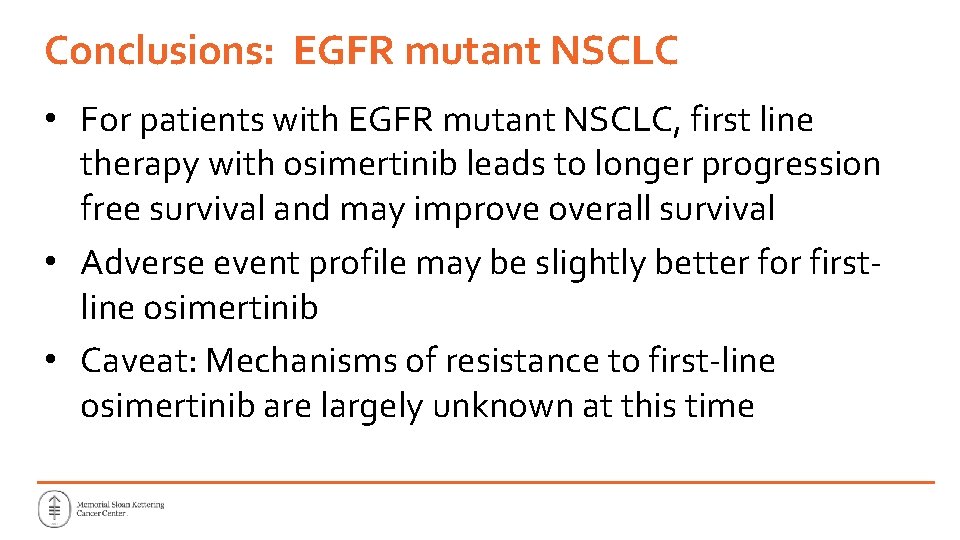
Conclusions: EGFR mutant NSCLC • For patients with EGFR mutant NSCLC, first line therapy with osimertinib leads to longer progression free survival and may improve overall survival • Adverse event profile may be slightly better for firstline osimertinib • Caveat: Mechanisms of resistance to first-line osimertinib are largely unknown at this time