Please note that the driving school instructor may
- Slides: 25
Please note that the driving school instructor may use a different presentation to teach this module. OEA Driving Strategy (Observe- Evaluate- Act) PHASE 2 SEMI-GUIDED DRIVING
Outline of Module 7 • Activity: Detecting Risks • The OEA Driving Strategy: Definition • Simulation Exercise OEA DRIVING STRATEGY (OBSERVE – EVALUATE – ACT) 2
Targeted Competencies • Performing driving manoeuvres • Taking other road users into account • Anticipating potential at-risk situations OEA DRIVING STRATEGY (OBSERVE – EVALUATE – ACT) 3
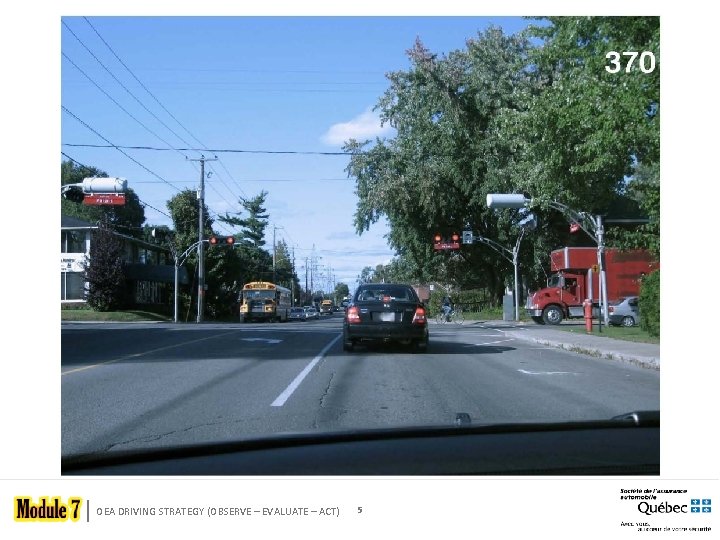
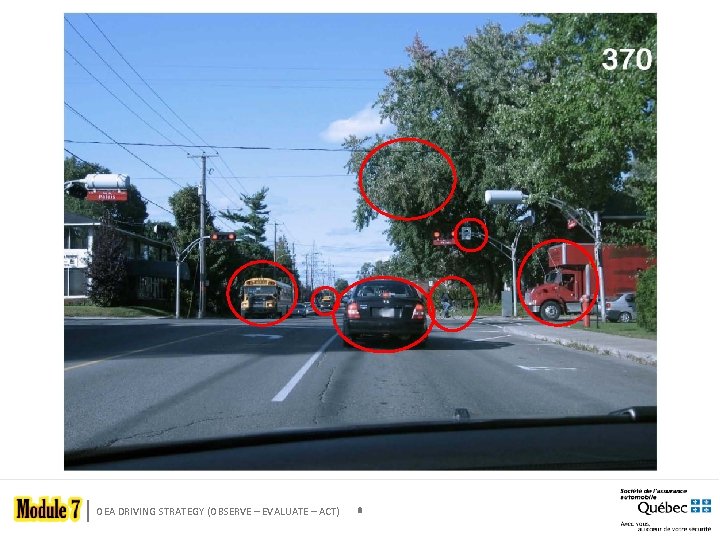
Activity: Detecting Risks Instructions (in teams) • Appoint a spokesperson for your team • Look at the photograph and imagine that you are the driver who sees that road environment • Name any elements of the road environment that represent potential risks for you and other users (potential risks could be other users, weather conditions, road conditions, etc. ) OEA DRIVING STRATEGY (OBSERVE – EVALUATE – ACT) 4
OEA DRIVING STRATEGY (OBSERVE – EVALUATE – ACT) 5
Activity: Detecting Risks Full Class Session • What are the potential risks? • What could happen in this environment, given those risks? • What should you do to ensure your safety and that of the other road users present? OEA DRIVING STRATEGY (OBSERVE – EVALUATE – ACT) 6
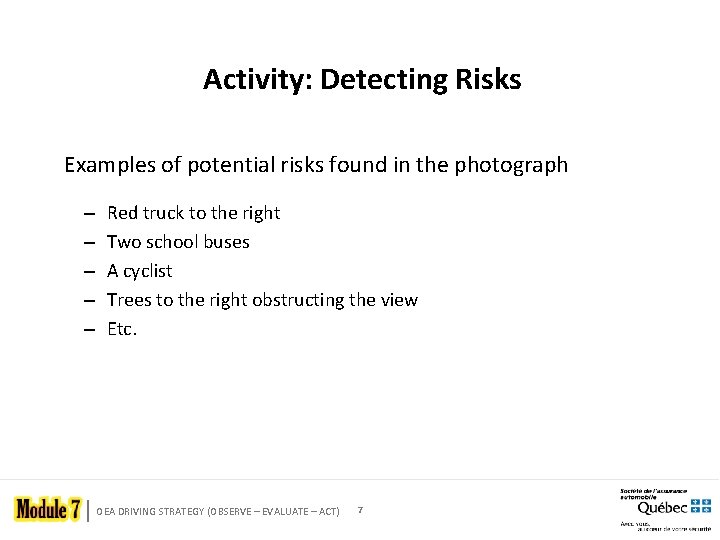
Activity: Detecting Risks Examples of potential risks found in the photograph – – – Red truck to the right Two school buses A cyclist Trees to the right obstructing the view Etc. OEA DRIVING STRATEGY (OBSERVE – EVALUATE – ACT) 7
OEA DRIVING STRATEGY (OBSERVE – EVALUATE – ACT) 8
The OEA Driving Strategy Objectives • Anticipate driving situations • Make proactive driving decisions (i. e. before a situation occurs) • Respond appropriately to unforeseen events OEA DRIVING STRATEGY (OBSERVE – EVALUATE – ACT) 9
What Is the OEA Driving Strategy? • Observe the road environment • Evaluate potential at-risk situations • Act safely OEA DRIVING STRATEGY (OBSERVE – EVALUATE – ACT) 10
Observe the Road Environment Observing the road environment using visual exploration techniques • • Performing visual scanning Checking the rear-view and side mirrors Doing shoulder checks (blind spots) Checking all around your vehicle Detecting risks related to other road users • Pinpointing locations where other users may be present • Interpreting the messages of other users Detecting risks related to other elements of the road environment • Weather conditions • Road conditions • Obstacles on the road OEA DRIVING STRATEGY (OBSERVE – EVALUATE – ACT) 11
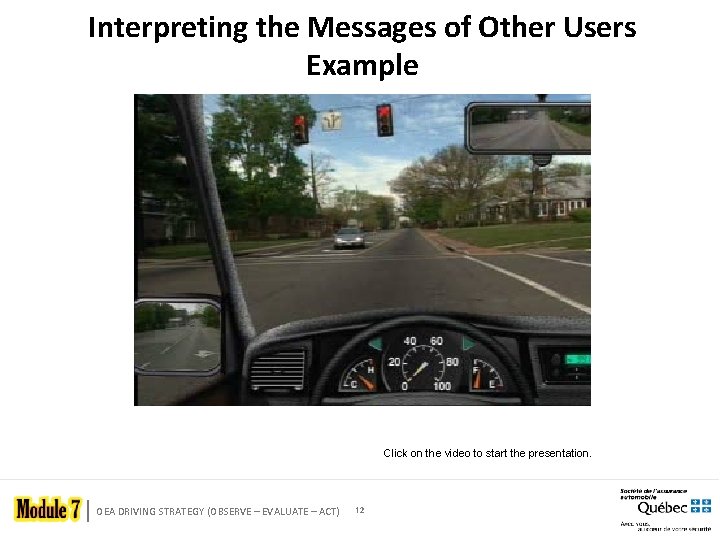
Interpreting the Messages of Other Users Example Click on the video to start the presentation. OEA DRIVING STRATEGY (OBSERVE – EVALUATE – ACT) 12
Evaluate Potential At-Risk Situations • Evaluating real and potential risks • Choosing a solution OEA DRIVING STRATEGY (OBSERVE – EVALUATE – ACT) 13
Evaluate Potential At-Risk Situations: Anticipate Analyzing aspects of the road environment • • • Evaluating rights of way Anticipating traffic light changes Anticipating traffic slowdowns, stops and disturbances Allowing sufficient time and distance for manoeuvres Anticipating stops by certain vehicles Etc. OEA DRIVING STRATEGY (OBSERVE – EVALUATE – ACT) 14
Act Safely • Maintaining safety margins all around your vehicle • Communicating with other road users • Controlling your speed and steering OEA DRIVING STRATEGY (OBSERVE – EVALUATE – ACT) 15
Maintain Safety Margins All Around Your Vehicle • Front safety margin • Rear safety margin • Side safety margins (left and right) OEA DRIVING STRATEGY (OBSERVE – EVALUATE – ACT) 16
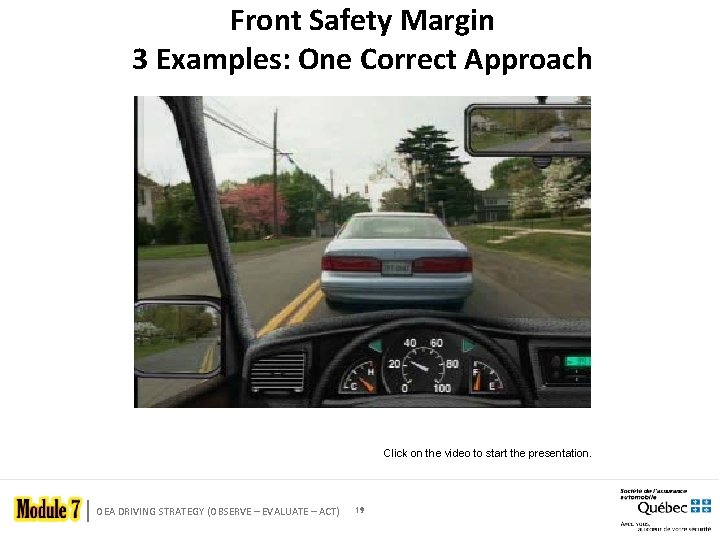
Front Safety Margin • Following distance: Apply the (minimum) four- to six-second rule • Safety margin at an intersection OEA DRIVING STRATEGY (OBSERVE – EVALUATE – ACT) 17
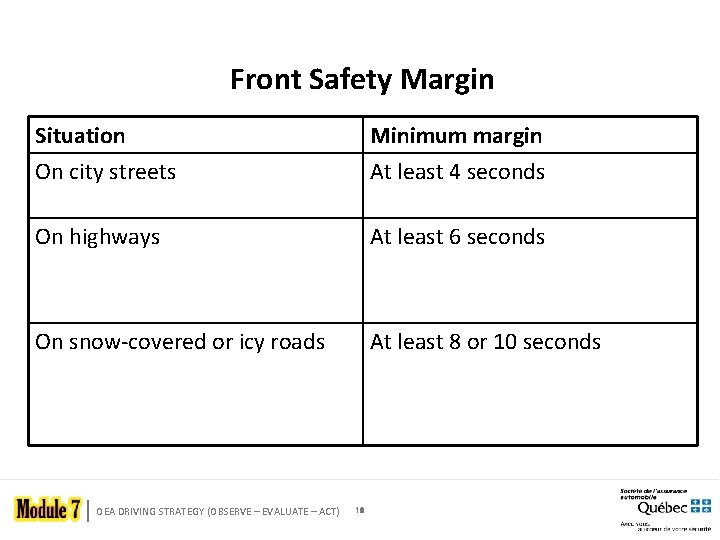
Front Safety Margin Situation On city streets Minimum margin At least 4 seconds On highways At least 6 seconds On snow-covered or icy roads At least 8 or 10 seconds OEA DRIVING STRATEGY (OBSERVE – EVALUATE – ACT) 18
Front Safety Margin 3 Examples: One Correct Approach Click on the video to start the presentation. OEA DRIVING STRATEGY (OBSERVE – EVALUATE – ACT) 19
Rear Safety Margin • Harder to control What to do when another driver is following too closely • Check your mirrors often to make sure that the rear margin is equal to the front margin • If the rear margin is shorter than the front, increase the front margin by gradually slowing down 1. The driver following you may decide to pass 2. If you need to stop, it will be easier to brake gradually, thus reducing the risk of being rear-ended OEA DRIVING STRATEGY (OBSERVE – EVALUATE – ACT) 20
Side Safety Margins • When you pass a pedestrian or cyclist (regardless of whether the pedestrian or cyclist is travelling in the same direction or coming toward you), you must leave a safety margin of at least: – 1 metre on a road where the speed limit is 50 km/h or less (approximately the width of an open car door) – 1. 5 metres on a road where the speed limit is over 50 km/h OEA DRIVING STRATEGY (OBSERVE – EVALUATE – ACT) 21
Communicating With Other Road Users • • • Use your turn signal lights Use your headlights or horn Use your brake lights Make eye contact, if necessary Use a hand or head signal OEA DRIVING STRATEGY (OBSERVE – EVALUATE – ACT) 22
Controlling Your Vehicle (Speed and Steering) What to do when faced with potential risks Examples of what to do • Slow down • Take your foot off the accelerator and prepare to brake • Stop your vehicle and let the other vehicle go by • Accelerate to pass, without exceeding the speed limit • Change lanes • Etc. OEA DRIVING STRATEGY (OBSERVE – EVALUATE – ACT) 23
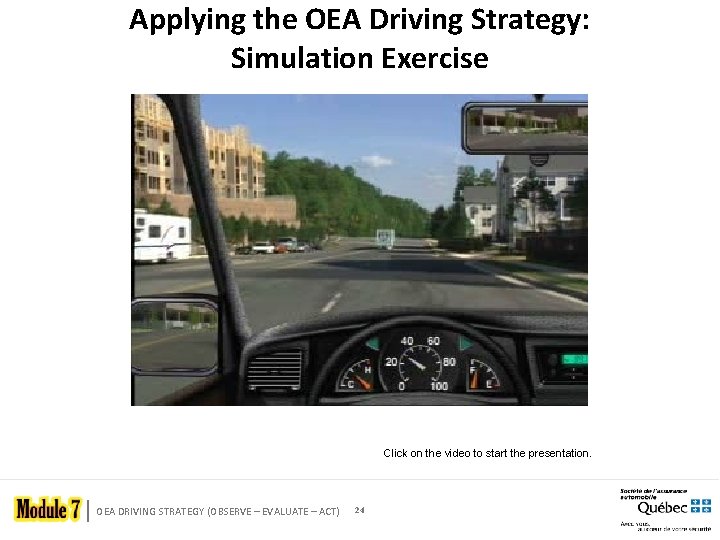
Applying the OEA Driving Strategy: Simulation Exercise Click on the video to start the presentation. OEA DRIVING STRATEGY (OBSERVE – EVALUATE – ACT) 24
To learn more… • • Road Access Binder Driving a Passenger Vehicle Driver’s Handbook Review exercises OEA DRIVING STRATEGY (OBSERVE – EVALUATE – ACT) 25