Peningkatan Etika dan Profesionalisme dalam menjalankan praktek kedokteran
- Slides: 45
Peningkatan Etika dan Profesionalisme dalam menjalankan praktek kedokteran agar terhindar dari sengketa medik PRIJO SIDIPRATOMO KETUA MKEK PUSAT
Sengketa medik • Sengketa Medik adalah sengketa yang terjadi antara pasien atau keluarga pasien dengan tenaga kesehatan atau antara pasien dengan rumah sakit / fasilitas kesehatan. • Biasanya yang dipersengketakan adalah hasil atau hasil akhir pelayanan kesehatan dengan tidak memperhatikan atau mengabaikan prosesnya. Dr. M. Nasser Sp. KK. D. Law, 2011
• Padahal dalam hukum kesehatan diakui bahwa tenaga kesehatan atau pelaksana pelayanan kesehatan saat memberikan pelayanan hanya bertanggung jawab atas proses atau upaya yang dilakukan (Inspanning Verbintennis) dan tidak menjamin/ menggaransi hasil akhir (Resultalte Verbintennis). Dr. M. Nasser Sp. KK. D. Law, 2011
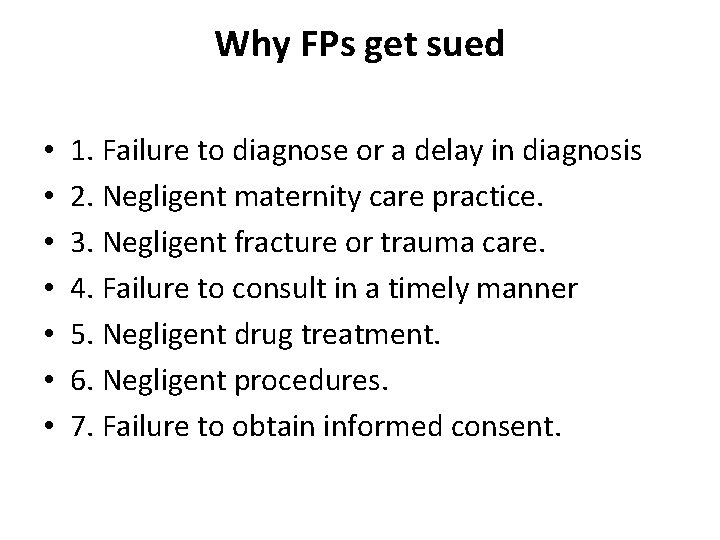
Why FPs get sued • • 1. Failure to diagnose or a delay in diagnosis 2. Negligent maternity care practice. 3. Negligent fracture or trauma care. 4. Failure to consult in a timely manner 5. Negligent drug treatment. 6. Negligent procedures. 7. Failure to obtain informed consent.
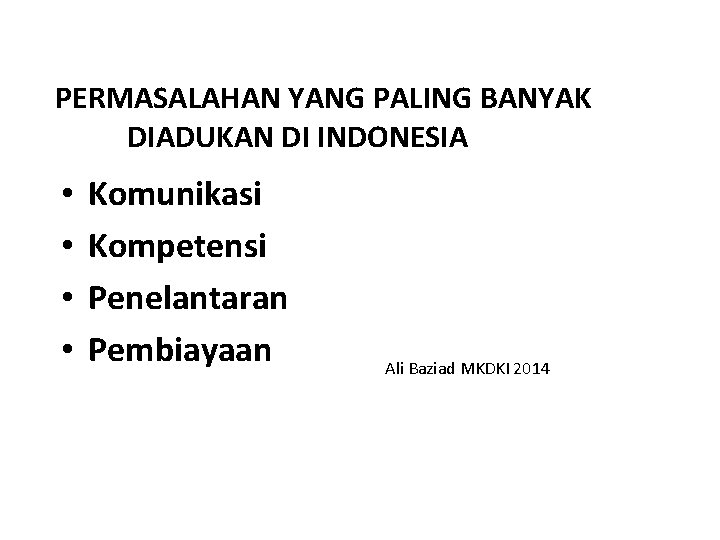
PERMASALAHAN YANG PALING BANYAK DIADUKAN DI INDONESIA • • Komunikasi Kompetensi Penelantaran Pembiayaan Ali Baziad MKDKI 2014
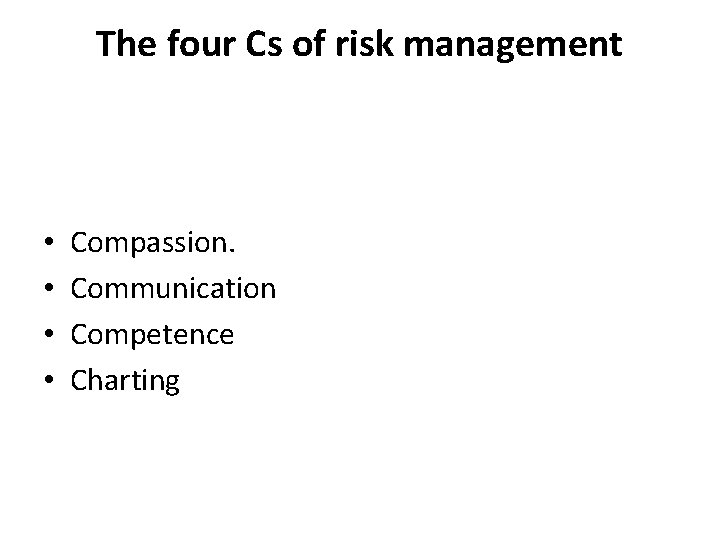
The four Cs of risk management • • Compassion. Communication Competence Charting
Compassion • the feeling of empathy for others. • Compassion is the emotion that we feel in response to the suffering of others that motivates a desire to help
Compassionate Example • A person who is compassionate is ethical and genuinely concerned with the welfare of other people.
Compassionate Example • A person who is compassionate shows that he/she cares about other people. 9
Effective Communication Definition: • The means through which people exchange information, feelings, and ideas with each other. 10
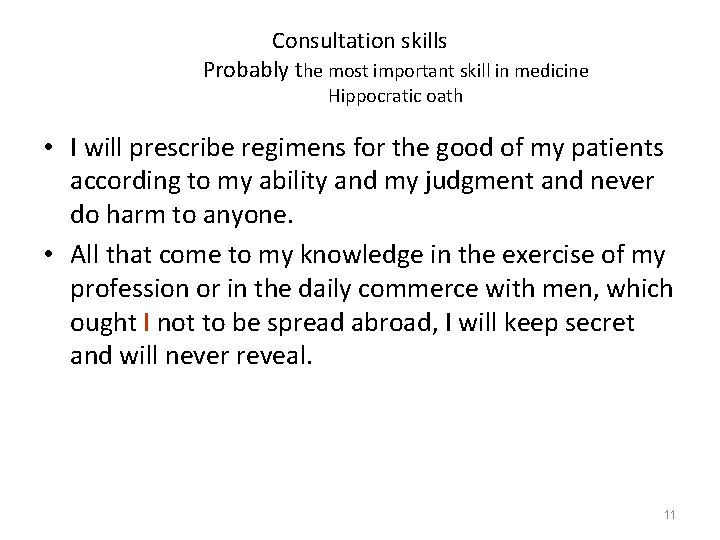
Consultation skills Probably the most important skill in medicine Hippocratic oath • I will prescribe regimens for the good of my patients according to my ability and my judgment and never do harm to anyone. • All that come to my knowledge in the exercise of my profession or in the daily commerce with men, which ought I not to be spread abroad, I will keep secret and will never reveal. 11
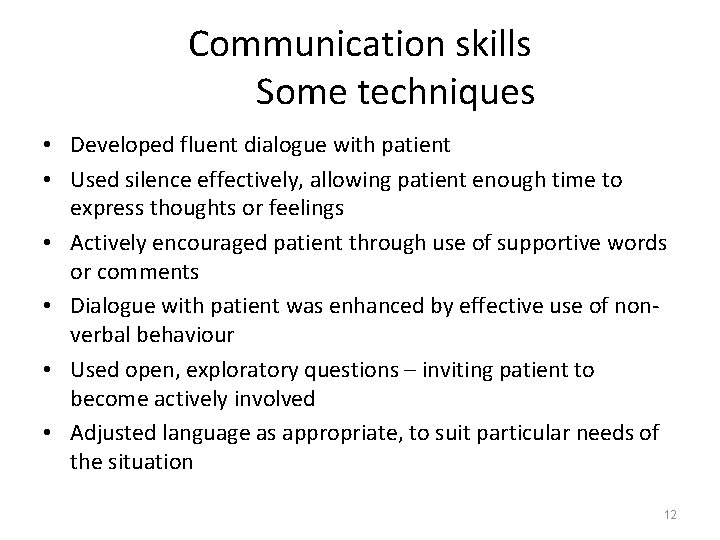
Communication skills Some techniques • Developed fluent dialogue with patient • Used silence effectively, allowing patient enough time to express thoughts or feelings • Actively encouraged patient through use of supportive words or comments • Dialogue with patient was enhanced by effective use of nonverbal behaviour • Used open, exploratory questions – inviting patient to become actively involved • Adjusted language as appropriate, to suit particular needs of the situation 12
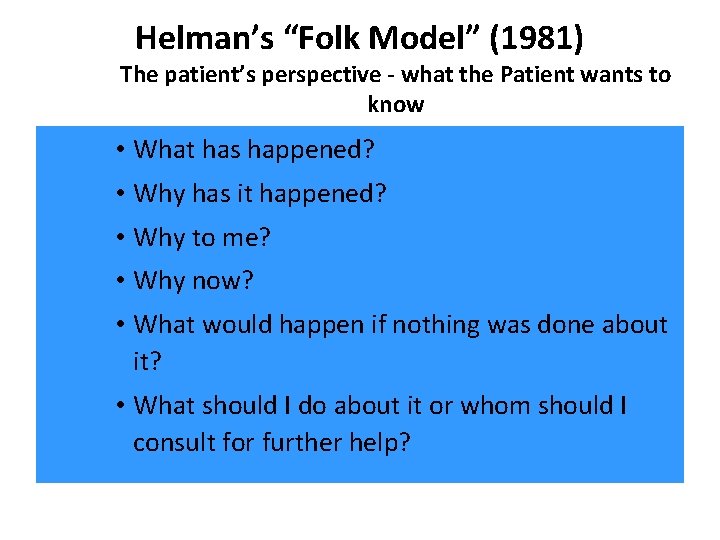
Helman’s “Folk Model” (1981) The patient’s perspective - what the Patient wants to know • What has happened? • Why has it happened? • Why to me? • Why now? • What would happen if nothing was done about it? • What should I do about it or whom should I consult for further help?
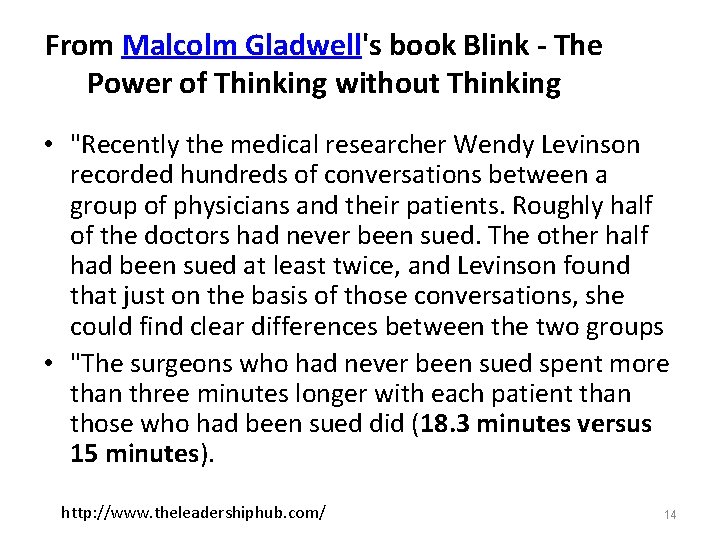
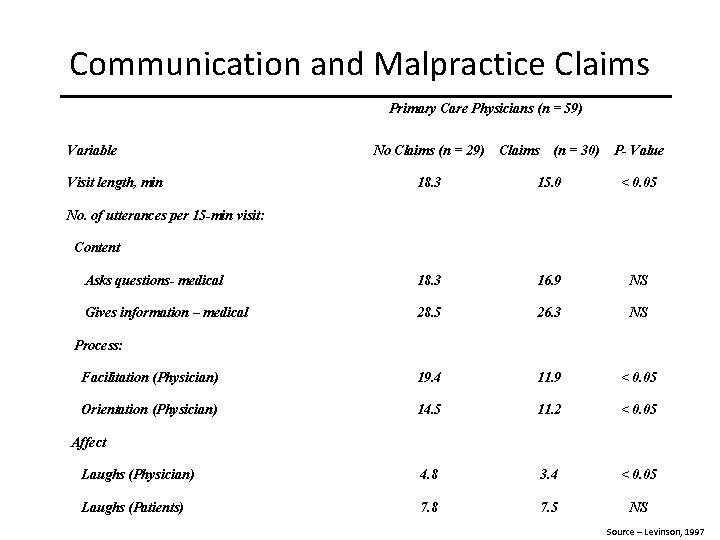
From Malcolm Gladwell's book Blink - The Power of Thinking without Thinking • "Recently the medical researcher Wendy Levinson recorded hundreds of conversations between a group of physicians and their patients. Roughly half of the doctors had never been sued. The other half had been sued at least twice, and Levinson found that just on the basis of those conversations, she could find clear differences between the two groups • "The surgeons who had never been sued spent more than three minutes longer with each patient than those who had been sued did (18. 3 minutes versus 15 minutes). http: //www. theleadershiphub. com/ 14
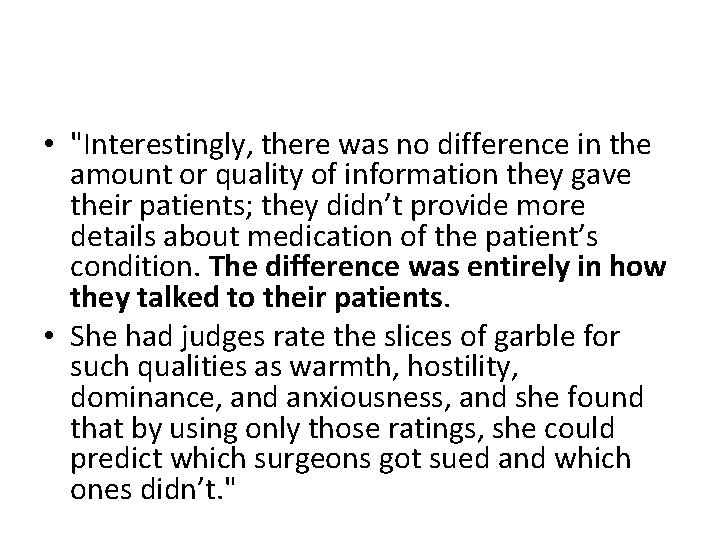
• "Interestingly, there was no difference in the amount or quality of information they gave their patients; they didn’t provide more details about medication of the patient’s condition. The difference was entirely in how they talked to their patients. • She had judges rate the slices of garble for such qualities as warmth, hostility, dominance, and anxiousness, and she found that by using only those ratings, she could predict which surgeons got sued and which ones didn’t. "
Communication and Malpractice Claims Primary Care Physicians (n = 59) Variable Visit length, min No Claims (n = 29) Claims (n = 30) P- Value 18. 3 15. 0 < 0. 05 Asks questions- medical 18. 3 16. 9 NS Gives information – medical 28. 5 26. 3 NS Facilitation (Physician) 19. 4 11. 9 < 0. 05 Orientation (Physician) 14. 5 11. 2 < 0. 05 Laughs (Physician) 4. 8 3. 4 < 0. 05 Laughs (Patients) 7. 8 7. 5 NS No. of utterances per 15 -min visit: Content Process: Affect Source – Levinson, 1997
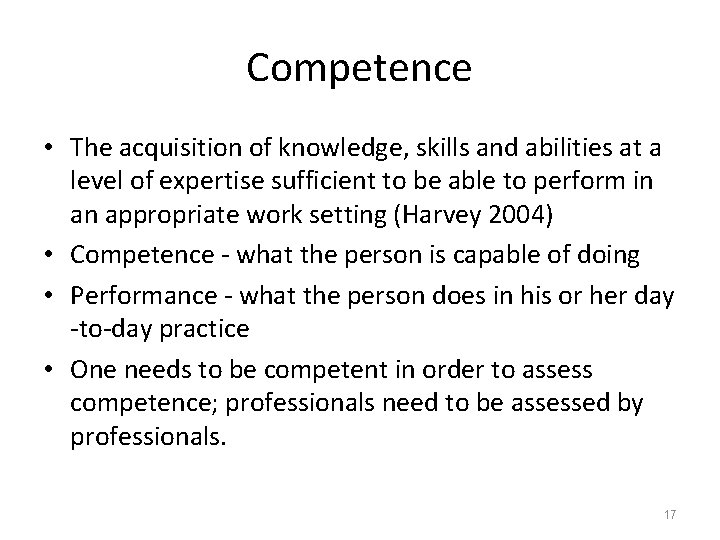
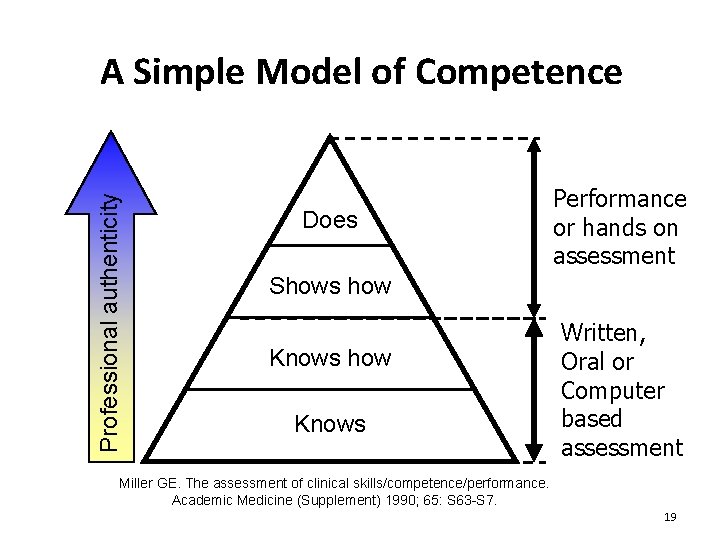
Competence • The acquisition of knowledge, skills and abilities at a level of expertise sufficient to be able to perform in an appropriate work setting (Harvey 2004) • Competence - what the person is capable of doing • Performance - what the person does in his or her day -to-day practice • One needs to be competent in order to assess competence; professionals need to be assessed by professionals. 17
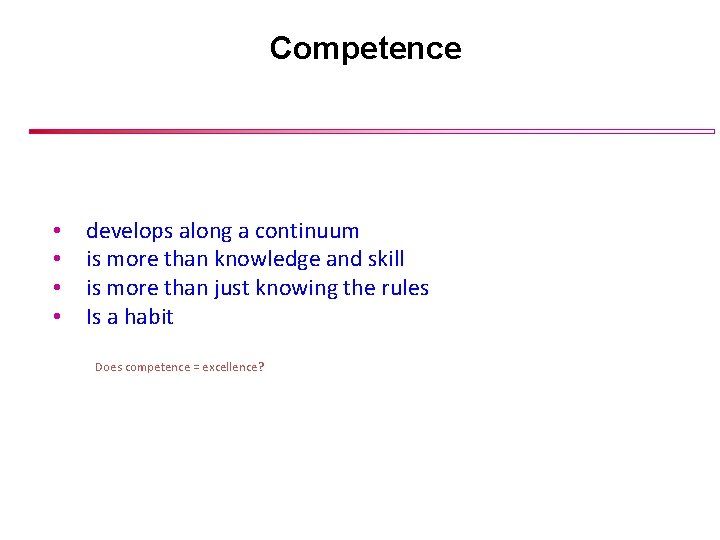
Competence • • develops along a continuum is more than knowledge and skill is more than just knowing the rules Is a habit Does competence = excellence?
Professional authenticity A Simple Model of Competence Does Performance or hands on assessment Shows how Knows Written, Oral or Computer based assessment Miller GE. The assessment of clinical skills/competence/performance. Academic Medicine (Supplement) 1990; 65: S 63 -S 7. 19
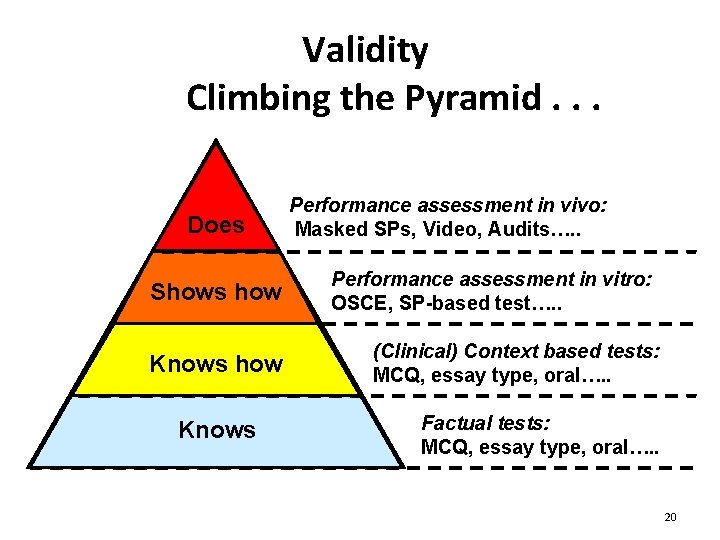
Validity Climbing the Pyramid. . . Does Shows how Knows Performance assessment in vivo: Masked SPs, Video, Audits…. . Performance assessment in vitro: OSCE, SP-based test…. . (Clinical) Context based tests: MCQ, essay type, oral…. . Factual tests: MCQ, essay type, oral…. . 20
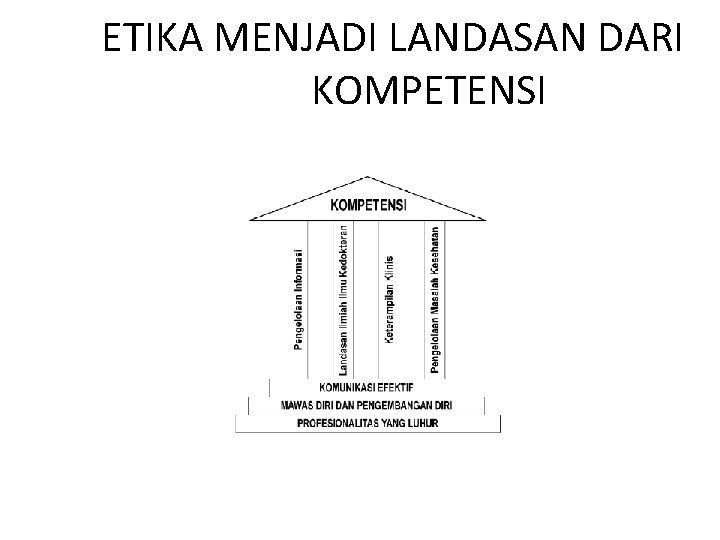
ETIKA MENJADI LANDASAN DARI KOMPETENSI
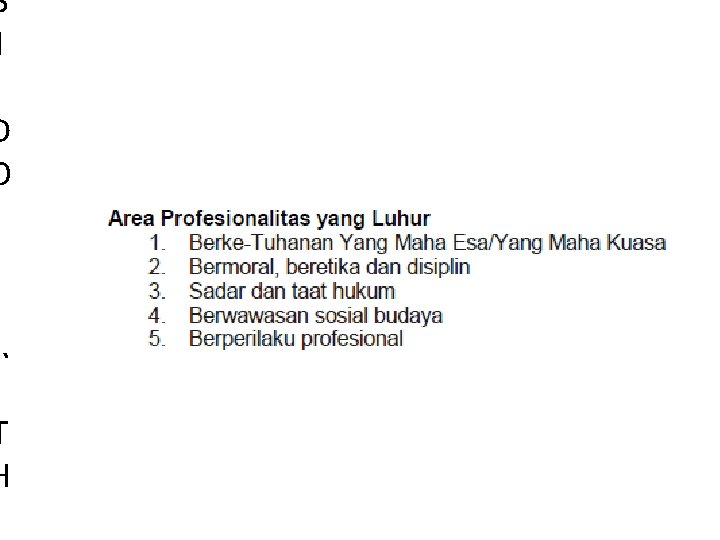
S I D O K T E R T H
SETELAH MENJADI DOKTER
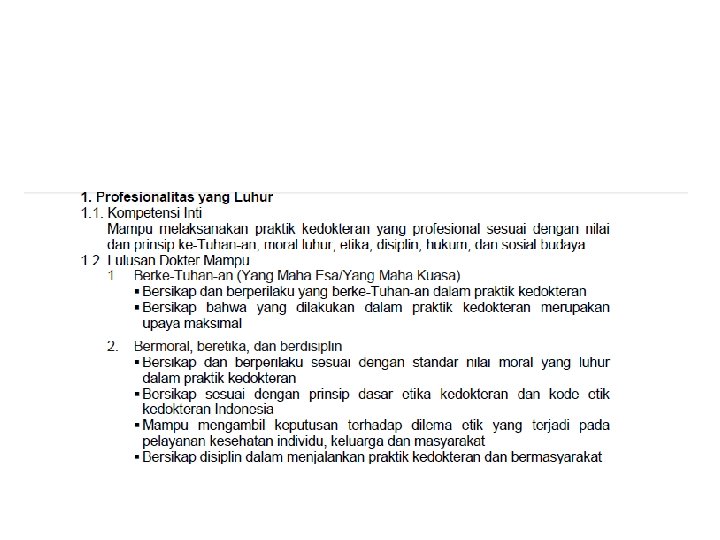
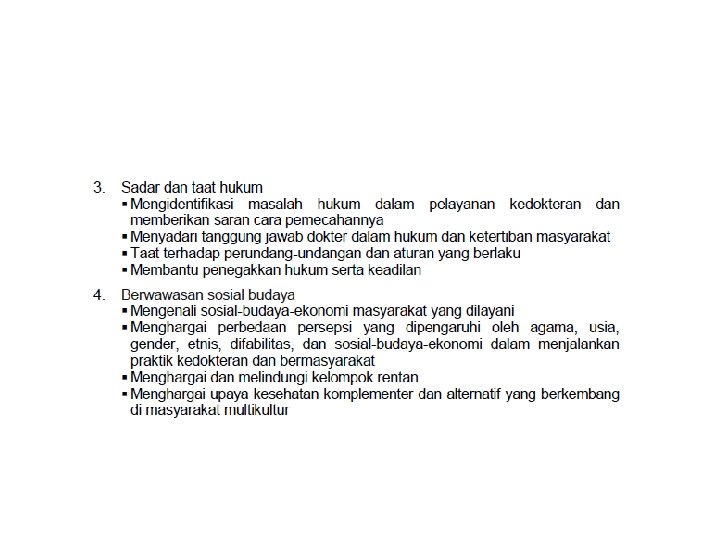
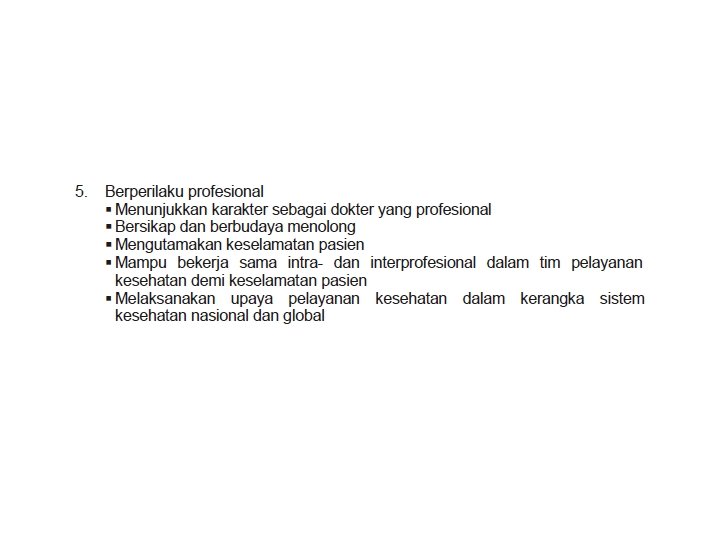
KEWAJIBAN UMUM • Pasal 2 • Seorang dokter wajib selalu melakukan pengambilan keputusan profesional secara independen, dan mempertahankan perilaku profesional dalam ukuran yang tertinggi. • Pasal 3 • Dalam melakukan pekerjaan kedokterannya, seorang dokter tidak boleh dipengaruhi oleh sesuatu yang mengakibatkan hilangnya kebebasan dan kemandirian profesi.
Pasal 8 • Seorang dokter wajib, dalam setiap praktik medisnya, memberikan pelayanan secara kompeten dengan kebebasan teknis dan moral sepenuhnya, disertai rasa kasih sayang (compassion) dan penghormatan atas martabat manusia. KODEKI
• Dalam melakukan pekerjaannya seorang dokter wajib memperhatikan keseluruhan aspek pelayanan kesehatan (promotif, preventif, kuratif, dan rehabilitatif ), baik sik maupun psiko-sosial-kultural pasiennya serta berusaha menjadi pendidik dan pengabdi sejati masyarakat. KODEKI
l 1 4 • Seorang dokter wajib bersikap tulus ikhlas dan mempergunakan seluruh keilmuan dan ketrampilannya untuk kepentingan pasien, yang ketika ia tidak mampu melakukan suatu pemeriksaan atau pengobatan, atas persetujuan pasien/ keluarganya, ia wajib merujuk pasien kepada dokter yang mempunyai keahlian untuk itu KODEKI
Pasal 17 • Setiap dokter wajib melakukan pertolongan darurat sebagai suatu wujud tugas perikemanusiaan, kecuali bila ia yakin ada orang lain bersedia dan mampu memberikannya. KODEKI
Pasal 21 • Setiap dokter wajib senantiasa mengikuti perkembangan ilmu pengetahuan dan teknologi kedokteran/ kesehatan. KODEKI
Materi Pelengkap Wajib BP 2 KB Dalam pelaksanaan kegiatan Ilmiah, penyelenggara wajib menyertakan 2 pokok bahasan sebanyak 1/7 waktu kegiatan. 1. Materi menyangkut Etika kedokteran 2. Materi tentang patient safety.
DAMPAK INCOMPETENCE • MEDICAL ERROR • PATIENT SAFETY TERANCAM • TUNTUTAN DARI PATIENT TERHADAP DOKTER MENINGKAT • PENINGKATAN BIAYA UNTUK PENANGANAN HUKUM
Which patients are most at risk of medication error? • patients on multiple medications • patients with another condition, e. g. renal impairment, pregnancy • patients who cannot communicate well • patients who have more than one doctor • patients who do not take an active role in their own medication use • children and babies (dose calculations required)
In what situations are staff most likely to contribute to a medication error? • inexperience rushing doing two things at once interruptions fatigue, boredom, being on “automatic pilot” leading to failure to check and double-check • lack of checking and double checking habits • poor teamwork and/or communication between colleagues • reluctance to use memory aids • • 36
CHARTING • the act of compiling data on clinical records or charts (computerized or paper). • The charts are updated regularly to keep physicians and other health care workers advised of changes in the patient's condition. • The data usually include fluctuations in temperature, pulse, respiration, other variable factors, and much more, including all nursing care 37
• What you chart may be the first and only objective evidence of what happened. • Plaintiffs’ lawyers evaluate and plan their cases based on the strength of the medical records. • Bad charting rarely causes injuries to patients, but leads to lawsuits and can complicate otherwise defensible cases. Kevin P. Riché, 2009, Protecting Yourself from Medical Malpractice Claims
Common Charting Issues Affecting Care • • Patient allergies Patient’s current or home medications Patient’s medical history Medication orders: amount, method, time
Be Thorough • Every blank space is a question a plaintiffs’ lawyer will supply his own answer. • Describe what was found or reported and how. Describe what you did about it. • Use full names and titles as appropriate. • Sign it. If a court doesn’t know who wrote it, it may be inadmissible. 40
Timing, timing • Be precise. Witness testimony can never recreate a sufficient timeline. • One of the most common complaints about nursing care is the time in which it took to have something done or reported. • Know your institution’s polices and procedures. Kevin P. Riché, 2009, Protecting Yourself from Medical Malpractice Claims
Be Thorough • Every blank space is a question a plaintiffs’ lawyer will supply his own answer. • Describe what was found or reported and how. Describe what you did about it. • Use full names and titles as appropriate. • Sign it. If a court doesn’t know who wrote it, it may be inadmissible.
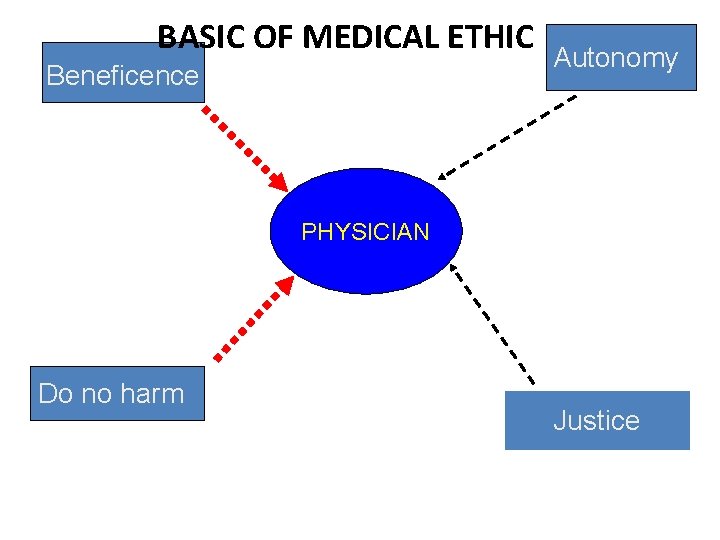
BASIC OF MEDICAL ETHIC Beneficence Autonomy PHYSICIAN Do no harm Justice
• KODEKI Kewajiban umum dokter Kewajiban dokter terhadap pasien Kewajiban dokter terhadap sejawat Kewajiban dokter terhadap diri sendiri
TERIMAKASIH