Pageant 16 19 Review Southern Aristocracy Planter aristocracy
- Slides: 48
Pageant 16 -19 Review
Southern Aristocracy • Planter aristocracy dominated society and politics • White farmers made up the majority of the population • Landless whites- poor, supported slavery • Mountain whites – opposed slavery and rich planters
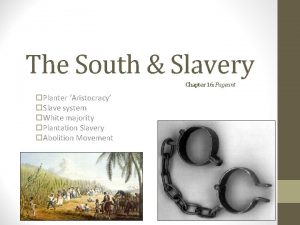
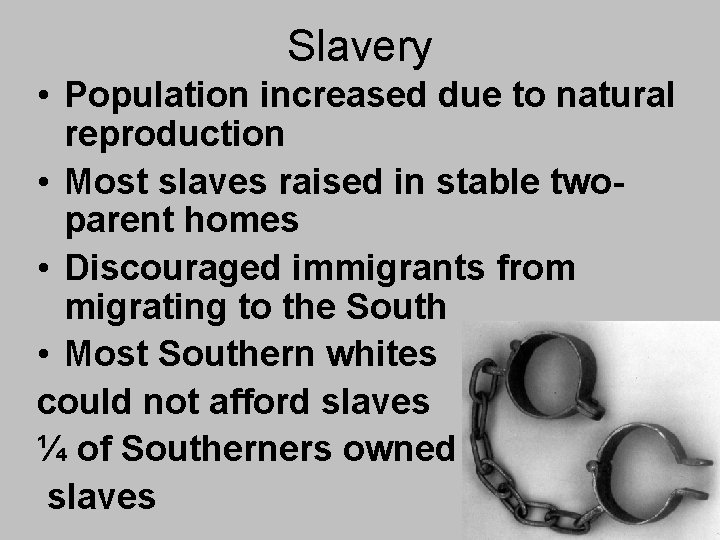
Slavery • Population increased due to natural reproduction • Most slaves raised in stable twoparent homes • Discouraged immigrants from migrating to the South • Most Southern whites could not afford slaves ¼ of Southerners owned slaves
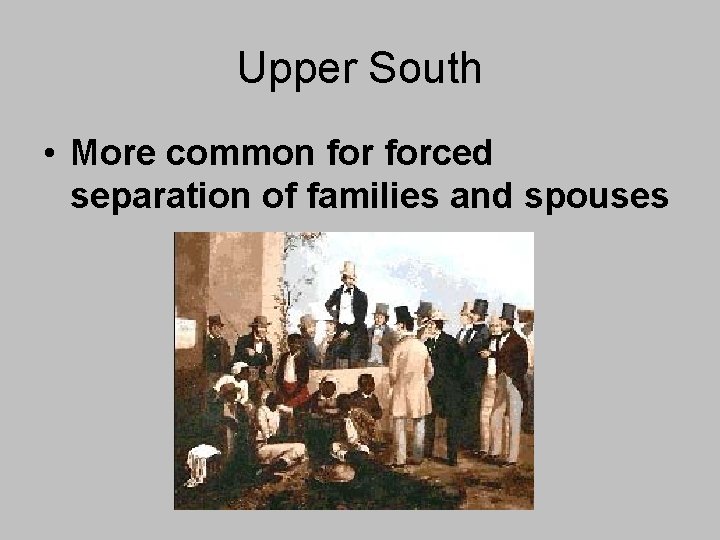
Upper South • More common forced separation of families and spouses
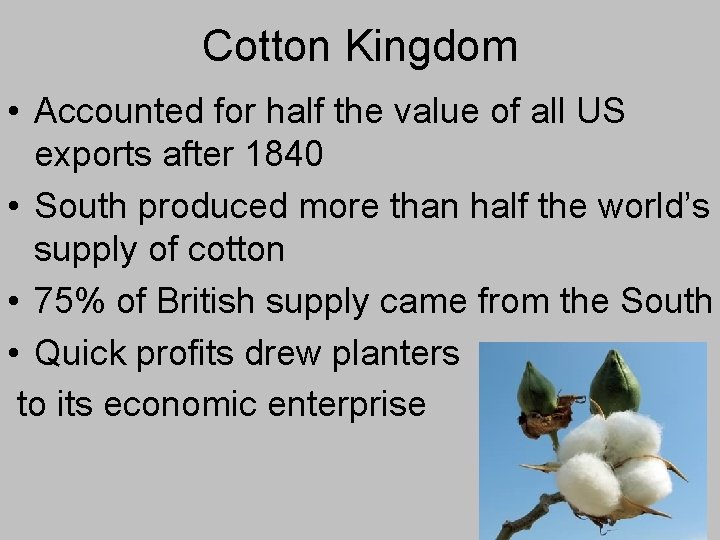
Cotton Kingdom • Accounted for half the value of all US exports after 1840 • South produced more than half the world’s supply of cotton • 75% of British supply came from the South • Quick profits drew planters to its economic enterprise
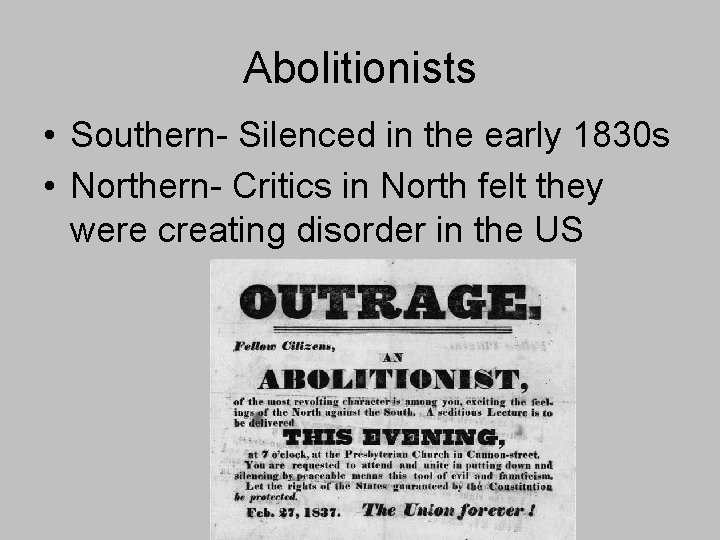
Abolitionists • Southern- Silenced in the early 1830 s • Northern- Critics in North felt they were creating disorder in the US
American Colonization Society 1817 • Dedicated to sending freed blacks to Africa • 15, 000 sent over the next three decades
Northerners • Supported the black race, but disliked blacks as individuals • Many were against the expansion of slavery, because they wanted to avoid blacks
Freed Blacks • Prohibited from many trades and professions • Segregated education • Voting restrictions
Post 1830 • South was were the minority compared to the rest of the world with their support of slavery
Southern Subsistence Farmers • Too poor to have slaves • Relied on corn as their main crop • Defended slavery- possibility of upward mobility, and racism
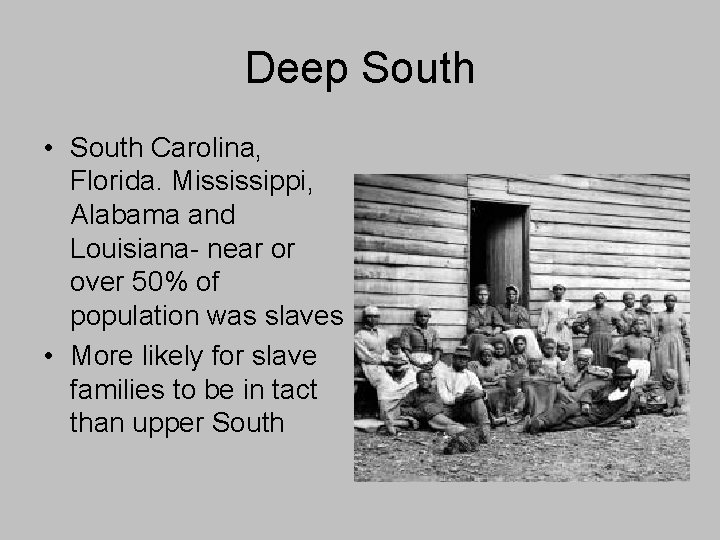
Deep South • South Carolina, Florida. Mississippi, Alabama and Louisiana- near or over 50% of population was slaves • More likely for slave families to be in tact than upper South
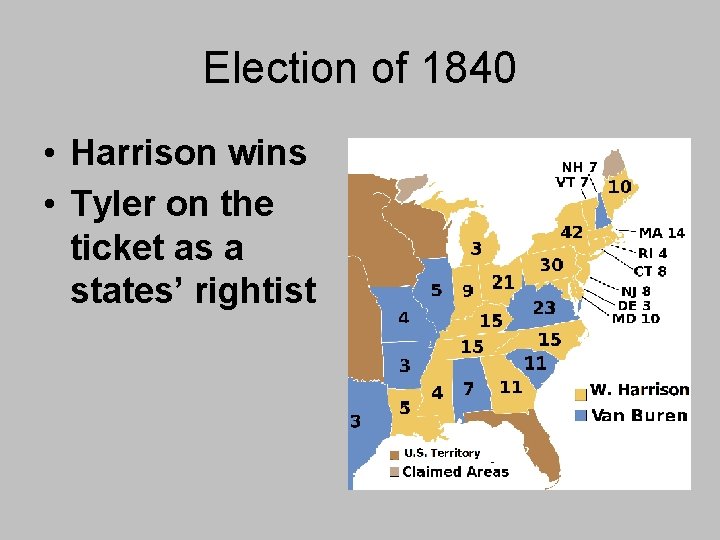
Election of 1840 • Harrison wins • Tyler on the ticket as a states’ rightist
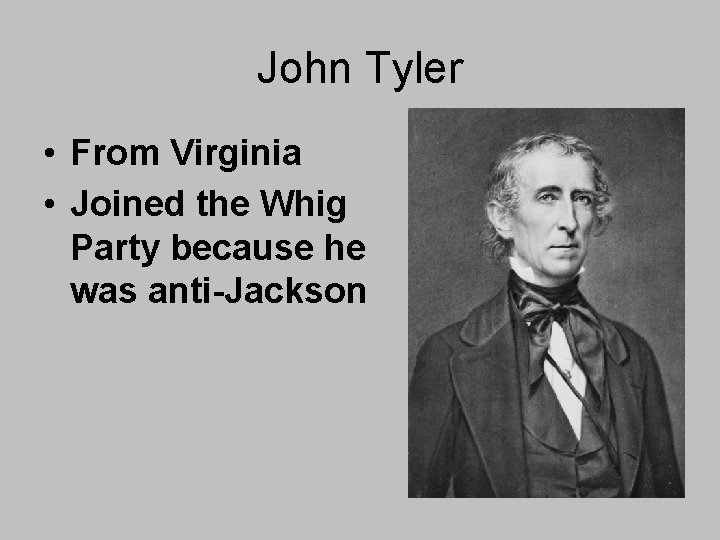
John Tyler • From Virginia • Joined the Whig Party because he was anti-Jackson
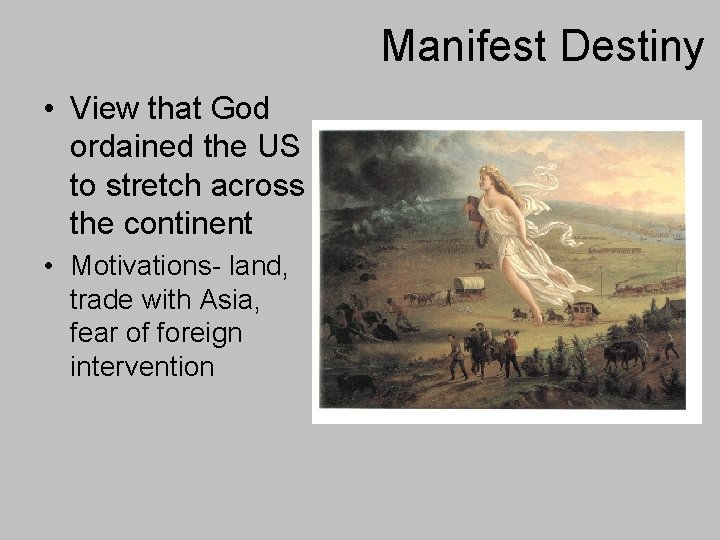
Manifest Destiny • View that God ordained the US to stretch across the continent • Motivations- land, trade with Asia, fear of foreign intervention
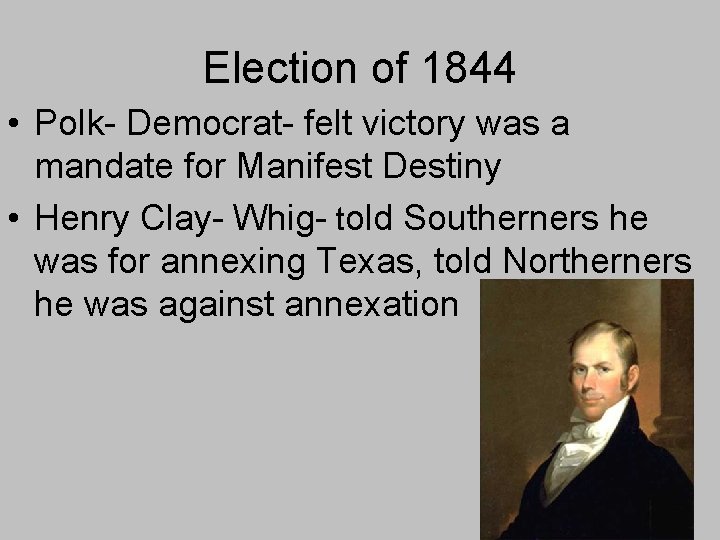
Election of 1844 • Polk- Democrat- felt victory was a mandate for Manifest Destiny • Henry Clay- Whig- told Southerners he was for annexing Texas, told Northerners he was against annexation
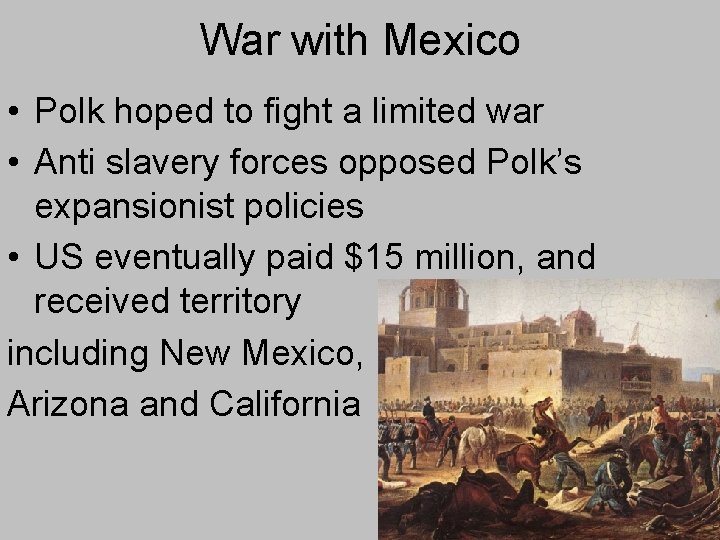
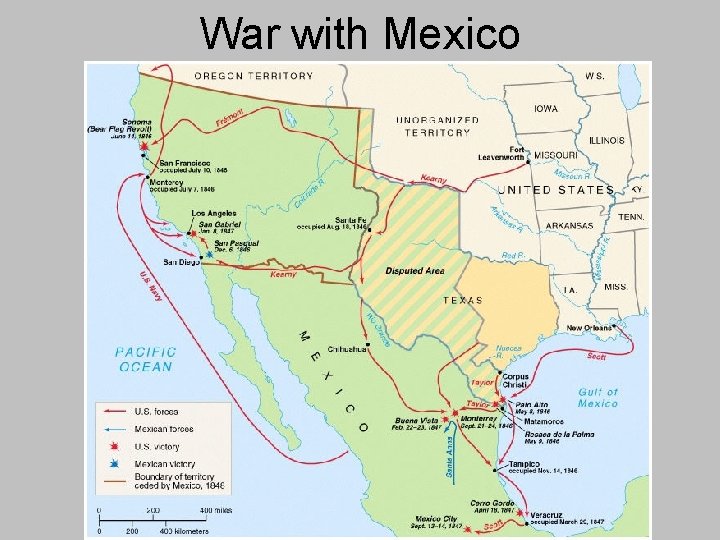
War with Mexico • Polk hoped to fight a limited war • Anti slavery forces opposed Polk’s expansionist policies • US eventually paid $15 million, and received territory including New Mexico, Arizona and California
War with Mexico
US – Britain Disputes • Oregon- resolved when the British thought the area wasn’t worth fighting for • Maine- concluded with the Webster. Ashburton Treaty
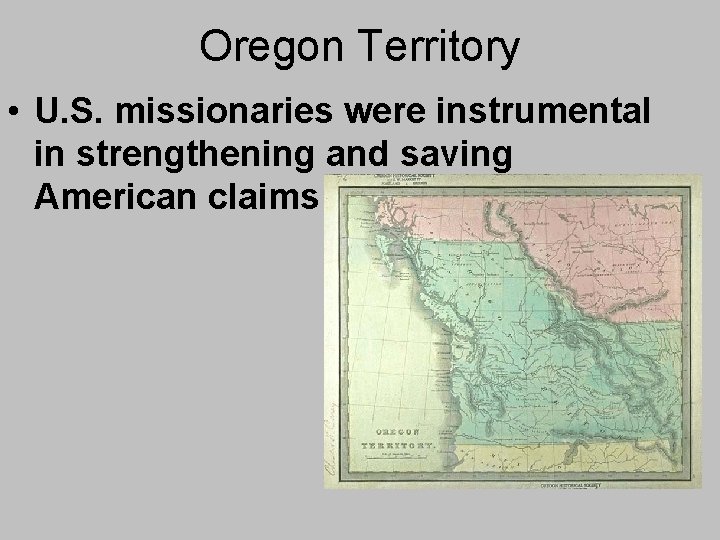
Oregon Territory • U. S. missionaries were instrumental in strengthening and saving American claims
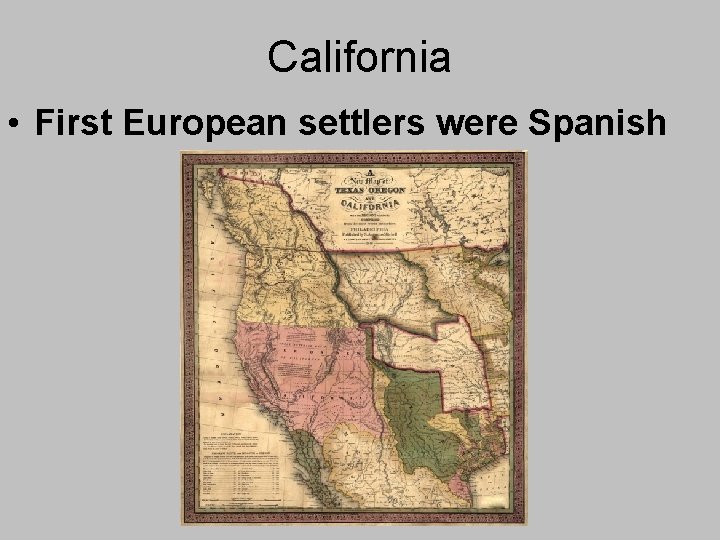
California • First European settlers were Spanish
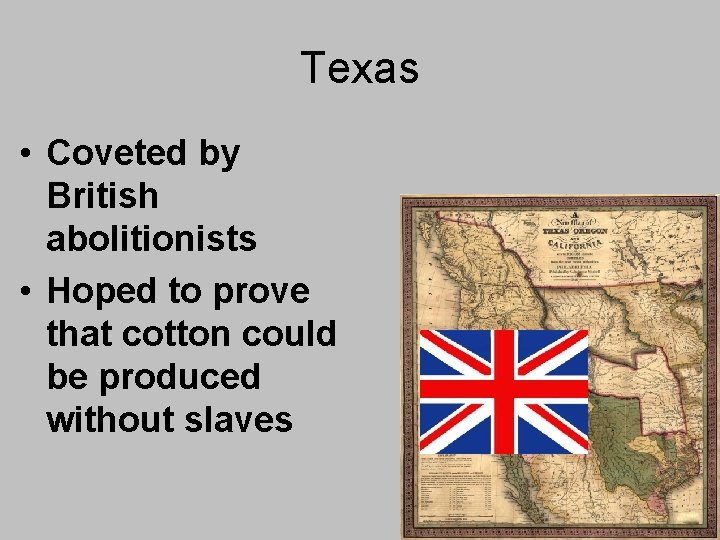
Texas • Coveted by British abolitionists • Hoped to prove that cotton could be produced without slaves
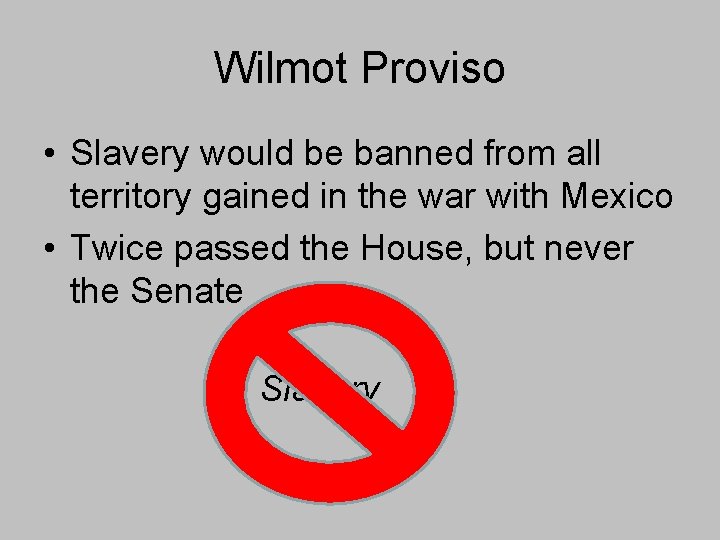
Wilmot Proviso • Slavery would be banned from all territory gained in the war with Mexico • Twice passed the House, but never the Senate Slavery
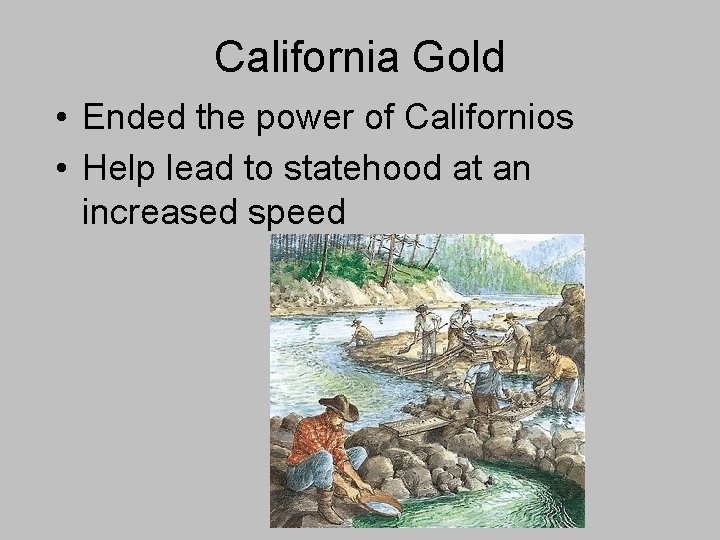
California Gold • Ended the power of Californios • Help lead to statehood at an increased speed
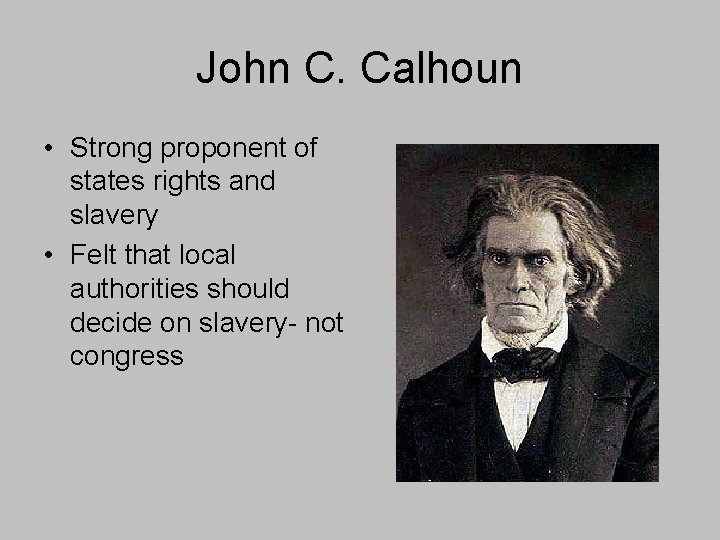
John C. Calhoun • Strong proponent of states rights and slavery • Felt that local authorities should decide on slavery- not congress
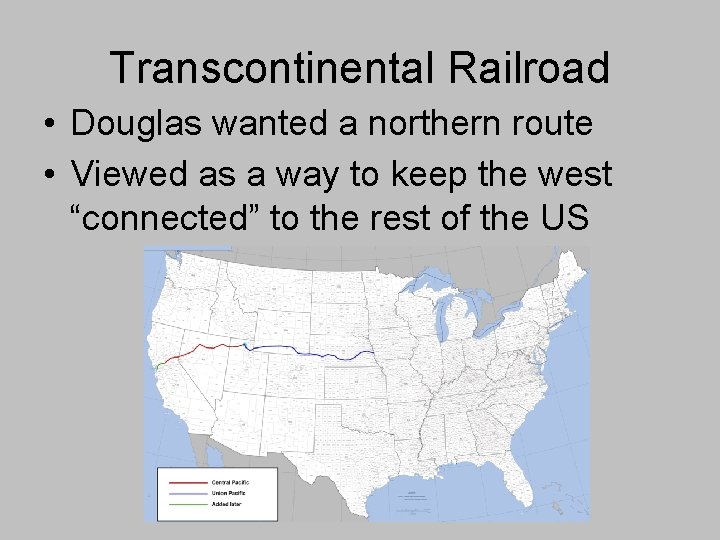
Transcontinental Railroad • Douglas wanted a northern route • Viewed as a way to keep the west “connected” to the rest of the US
International Attempts to Expand Slavery • Nicaragua- Southern adventurers attempted to take it by force • Cuba- Ostend Manifesto- take it by force if a sale price couldn’t be negotiated
Compromise of 1850 • California- free, New Mexico and Arizonapopular sovereignty • No slave trade in Washington DC • Tougher Fugitive Slave Law • Daniel Webster’s March 7 th speech was a call for compromise and national unity • Aided by Taylor’s death and Fillmore’s ascension to the presidency
Free Soilers • Supported westward expansion • Felt slavery would have a negative affect on working men’s wages • Wanted free government homesteads for settlers
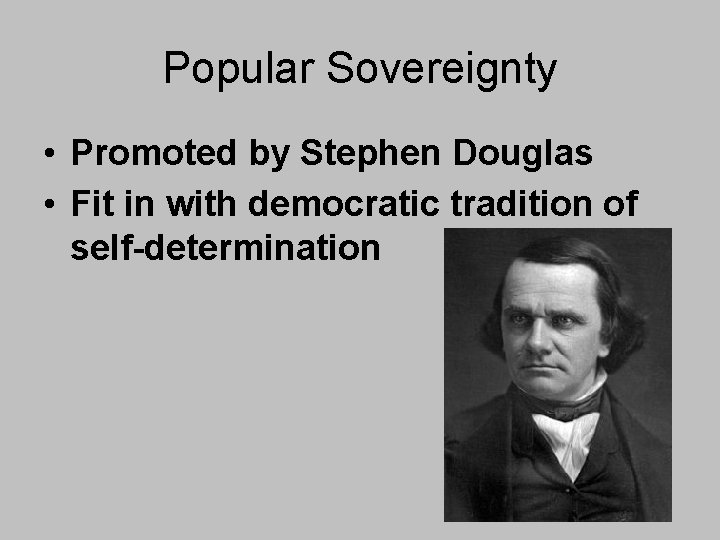
Popular Sovereignty • Promoted by Stephen Douglas • Fit in with democratic tradition of self-determination
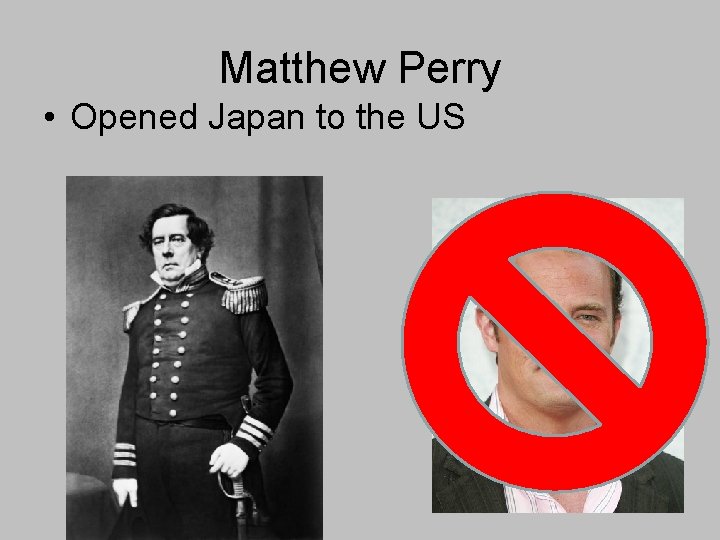
Matthew Perry • Opened Japan to the US
Kansas-Nebraska • Douglas proposed popular sovereignty to determine slave status • Lawrence recognized by the House of Representatives • Lecompton recognized by Buchanan • Dissolved into a civil war
1848 Presidential Election • Zachary Taylor (Whig) defeat Lewis Cass (Dem) • Taylor- national hero, slaveholder from Louisiana • Cass- Michigan, pro-slavery leanings • Slavery was not a main issue
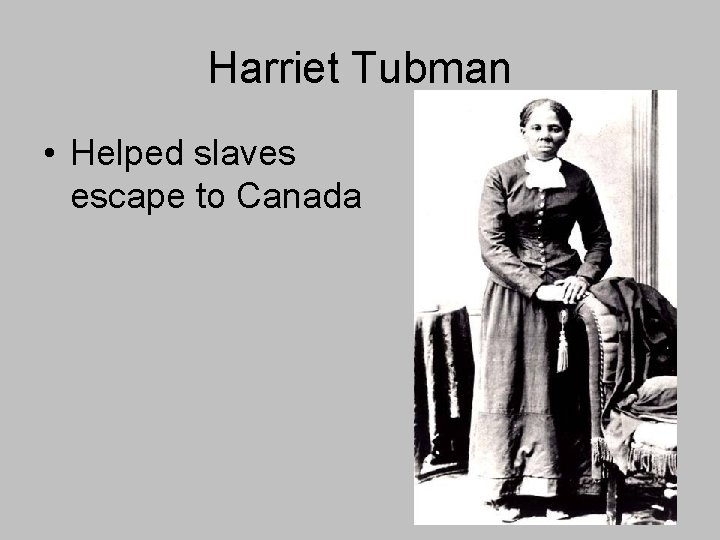
Harriet Tubman • Helped slaves escape to Canada
1850 s Politics • National leaders agreed to NOT discuss slavery
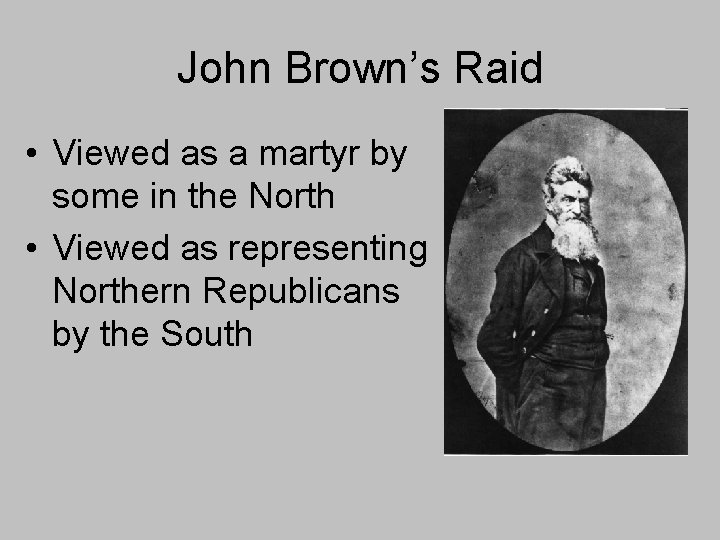
John Brown’s Raid • Viewed as a martyr by some in the North • Viewed as representing Northern Republicans by the South
1850 s Nativists • Anti-Catholic and anti-foreign attitudes • Supported the Know-Nothing Party in 1856
Personal Liberty Laws • Passed in the North stating people did not have to help return runaway slaves • Response to Compromise of 1850 • Struck down by the Supreme Court
1852 Election • Franklin Pierce- Democrats- reunited after divisions of ’ 48 • Winfield Scott- Whigs- divided on sectional lines • Pierce wins- friendly with his Sec. of State- Jefferson Davis
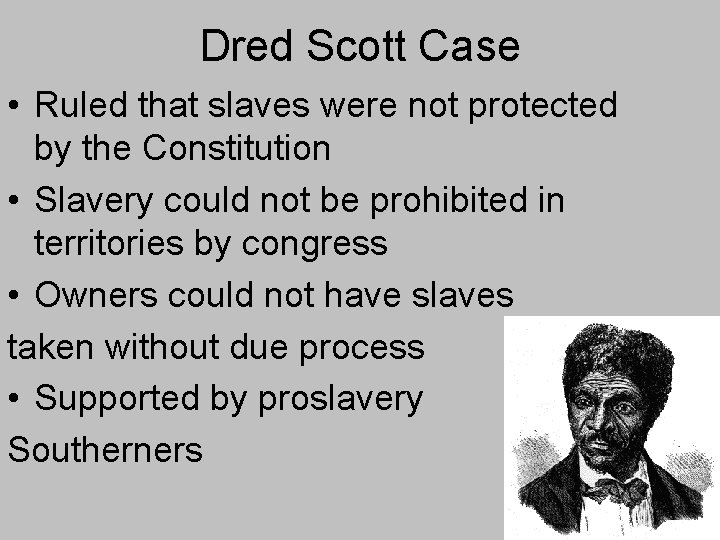
Dred Scott Case • Ruled that slaves were not protected by the Constitution • Slavery could not be prohibited in territories by congress • Owners could not have slaves taken without due process • Supported by proslavery Southerners
Election of 1856 • Buchanan (Pa)- nominated as a Democrat- proslavery • Fremont (Ca)- nominated as a Republican- anti-slavery • Fillmore (NY)- nominated Know. Nothing- anti- immigrant • Victory for Buchanan • Southerners threatened that a Republican victory would result in war
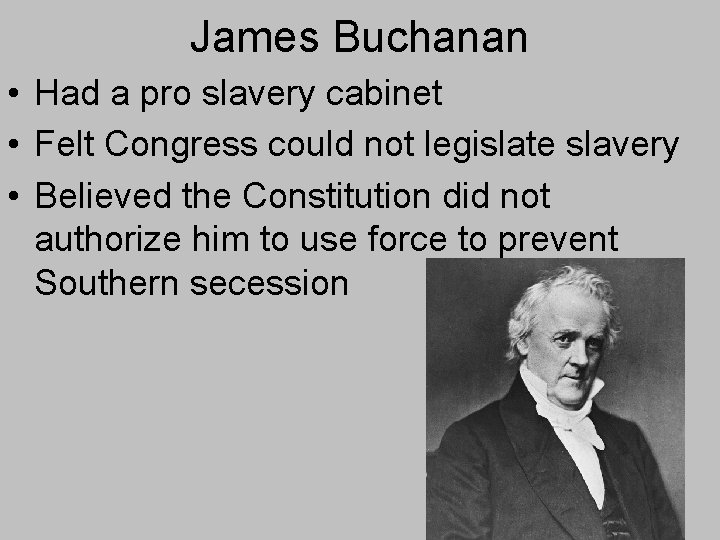
James Buchanan • Had a pro slavery cabinet • Felt Congress could not legislate slavery • Believed the Constitution did not authorize him to use force to prevent Southern secession
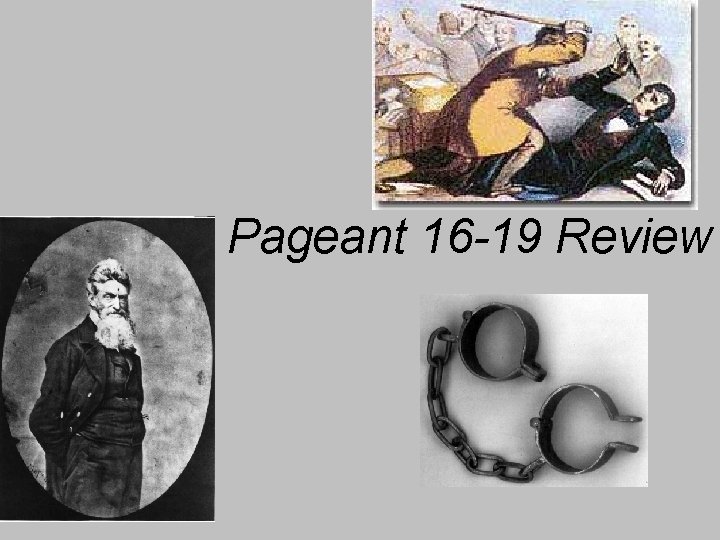
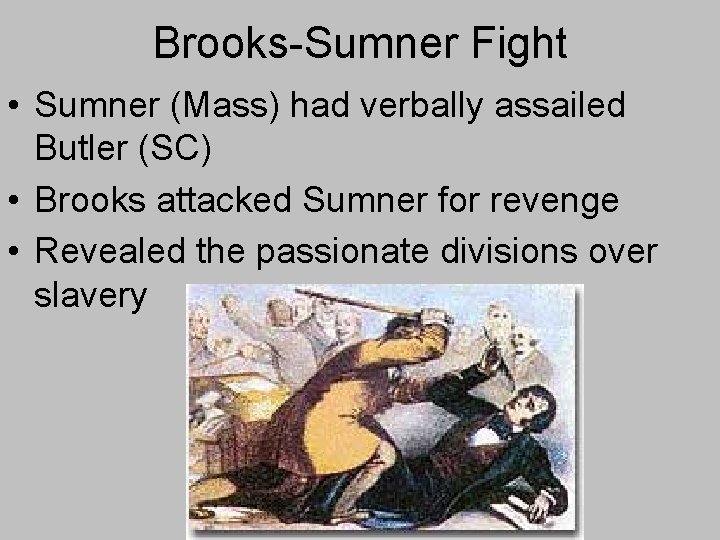
Brooks-Sumner Fight • Sumner (Mass) had verbally assailed Butler (SC) • Brooks attacked Sumner for revenge • Revealed the passionate divisions over slavery
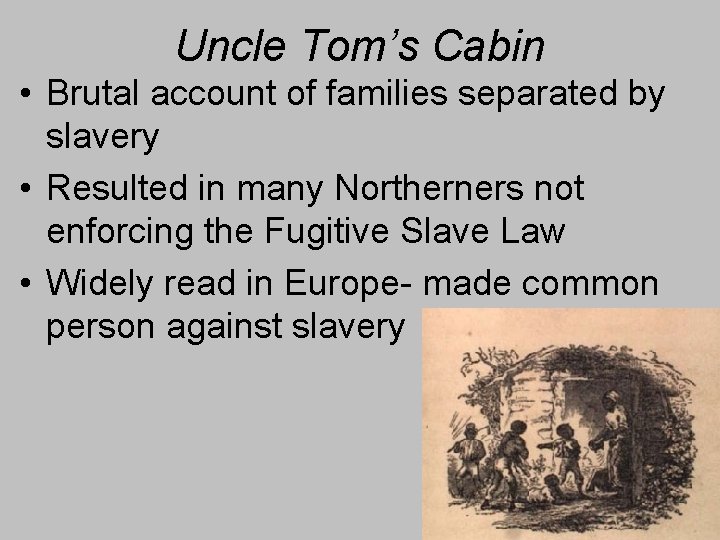
Uncle Tom’s Cabin • Brutal account of families separated by slavery • Resulted in many Northerners not enforcing the Fugitive Slave Law • Widely read in Europe- made common person against slavery
Panic of 1857 • Affected by the end of the Crimean War • Partially a result of over speculation and falling farm prices • Led to a call for a higher tariff • Revived the sectional controversy of tariff levels
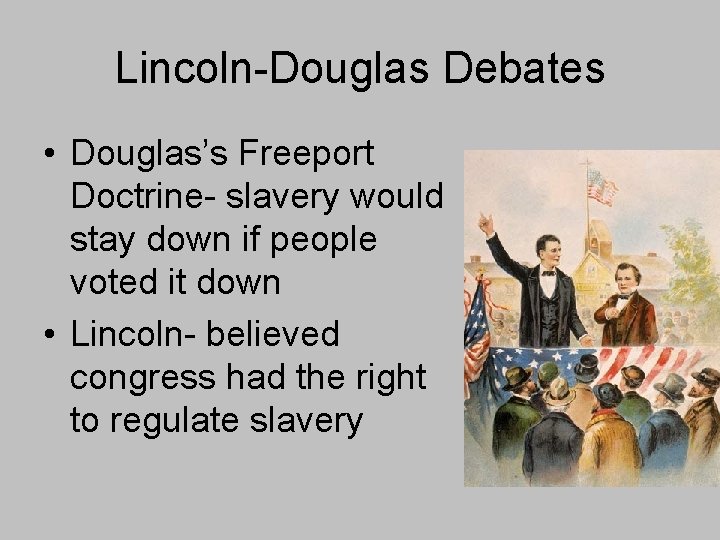
Lincoln-Douglas Debates • Douglas’s Freeport Doctrine- slavery would stay down if people voted it down • Lincoln- believed congress had the right to regulate slavery
1860 Election Lincoln- Republican- party widens their platform- doesn’t campaign in South Democrats- split- Northern- nominate Douglas Southern-nominate Breckinridge Union Party- nominates Bell- attempting to prevent secession
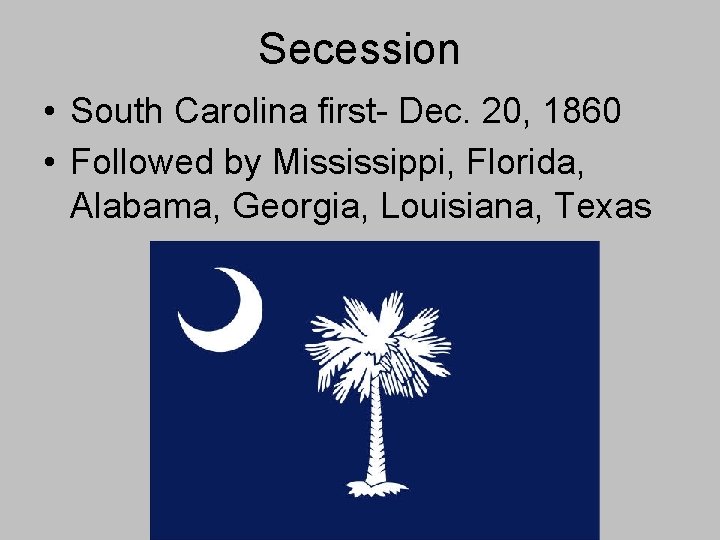
Secession • South Carolina first- Dec. 20, 1860 • Followed by Mississippi, Florida, Alabama, Georgia, Louisiana, Texas