OSU Hand Planter for the Developing World Thursday

- Slides: 20
OSU Hand Planter for the Developing World Thursday, January 28, 2016 009 Business Building Stephen Mukembo Jagmandeep Dhillon Joshua Ringer Daniel Aliddeki Wayne Kiner Randy Taylor Bill Raun stephen. mukembo@okstate. edu
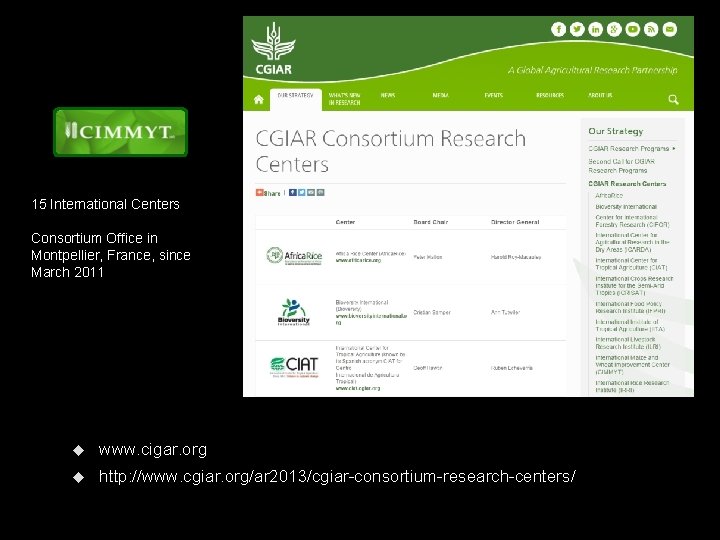
15 International Centers Consortium Office in Montpellier, France, since March 2011 www. cigar. org http: //www. cgiar. org/ar 2013/cgiar-consortium-research-centers/
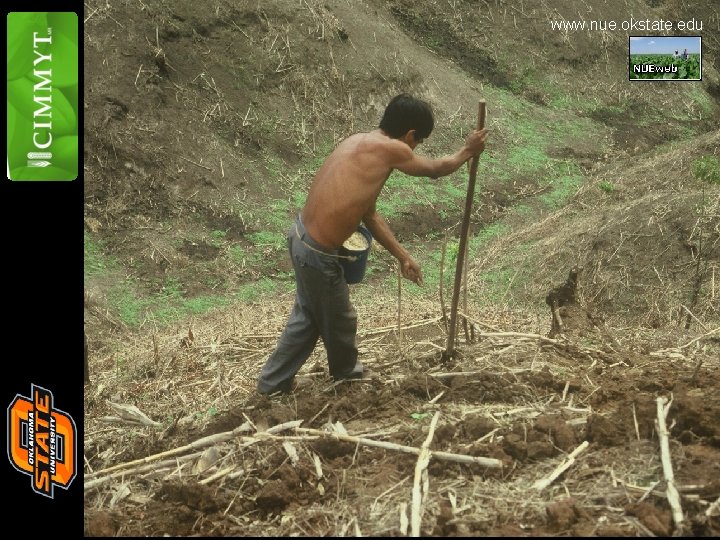
www. nue. okstate. edu
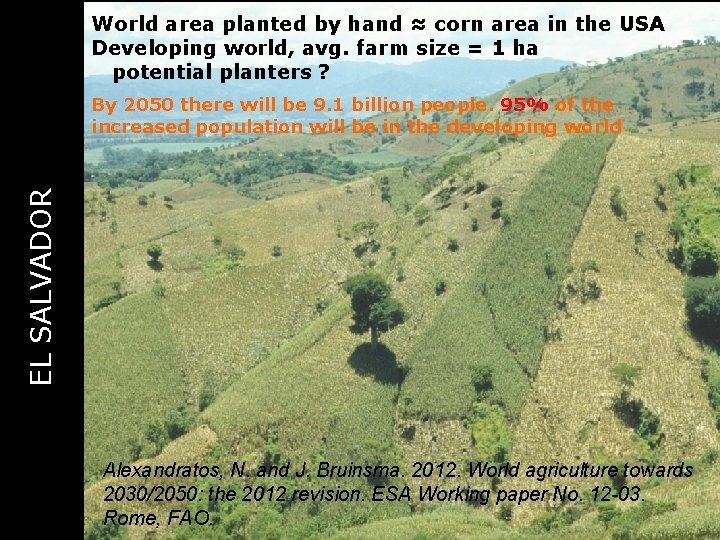
World area planted by hand ≈ corn area in the USA Developing world, avg. farm size = 1 ha potential planters ? EL SALVADOR By 2050 there will be 9. 1 billion people. 95% of the increased population will be in the developing world Alexandratos, N. and J. Bruinsma. 2012. World agriculture towards 2030/2050: the 2012 revision. ESA Working paper No. 12 -03. Rome, FAO.
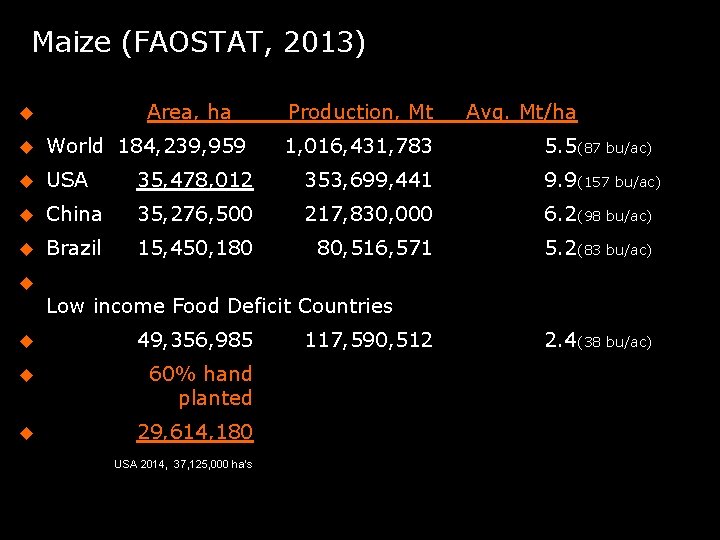
Maize (FAOSTAT, 2013) Area, ha Production, Mt 1, 016, 431, 783 Avg. Mt/ha World 184, 239, 959 5. 5(87 bu/ac) USA 35, 478, 012 353, 699, 441 9. 9(157 bu/ac) China 35, 276, 500 217, 830, 000 6. 2(98 bu/ac) Brazil 15, 450, 180 80, 516, 571 5. 2(83 bu/ac) Low income Food Deficit Countries 49, 356, 985 60% hand planted 29, 614, 180 USA 2014, 37, 125, 000 ha’s 117, 590, 512 2. 4(38 bu/ac)
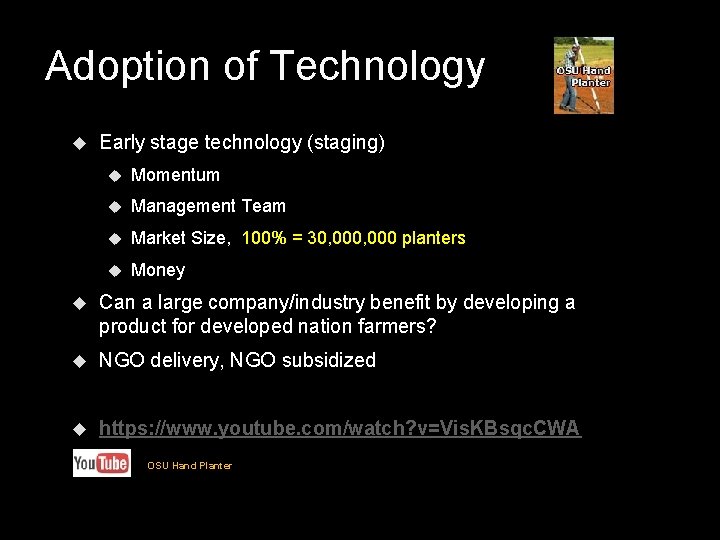
Adoption of Technology Early stage technology (staging) Momentum Management Team Market Size, 100% = 30, 000 planters Money Can a large company/industry benefit by developing a product for developed nation farmers? NGO delivery, NGO subsidized https: //www. youtube. com/watch? v=Vis. KBsqc. CWA OSU Hand Planter
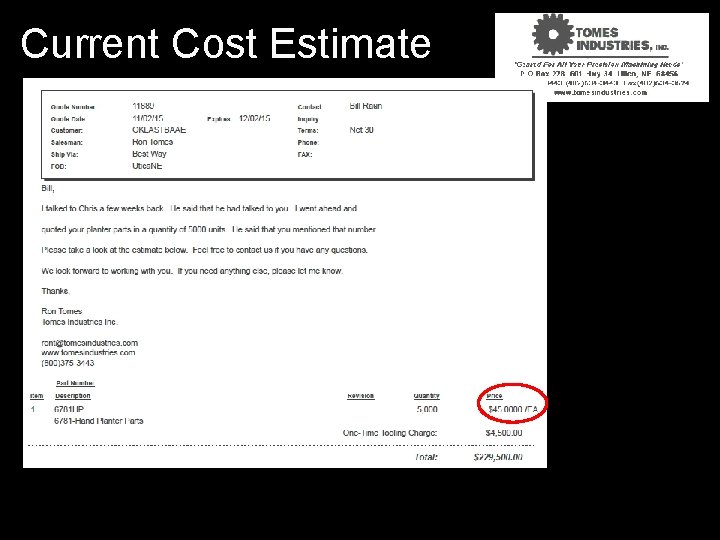
Current Cost Estimate
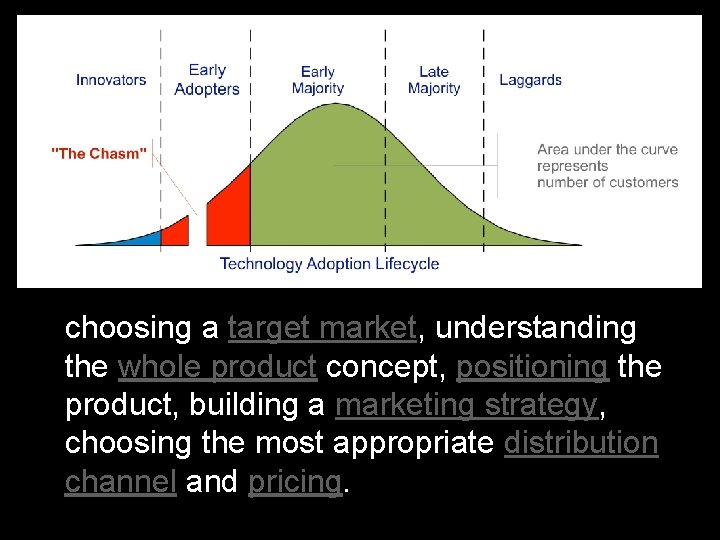
choosing a target market, understanding the whole product concept, positioning the product, building a marketing strategy, choosing the most appropriate distribution channel and pricing.
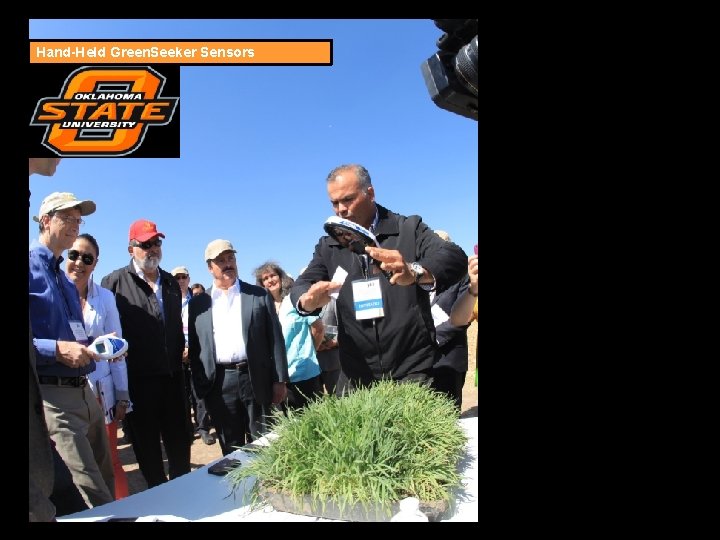
Hand-Held Green. Seeker Sensors
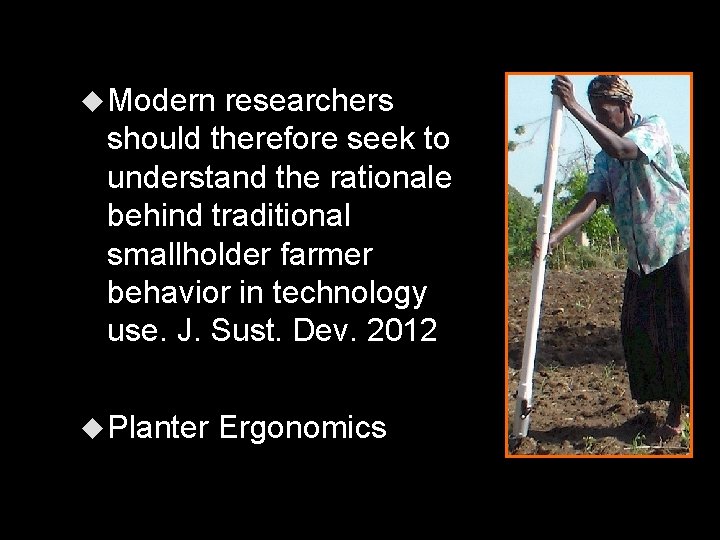
Modern researchers should therefore seek to understand the rationale behind traditional smallholder farmer behavior in technology use. J. Sust. Dev. 2012 Planter Ergonomics
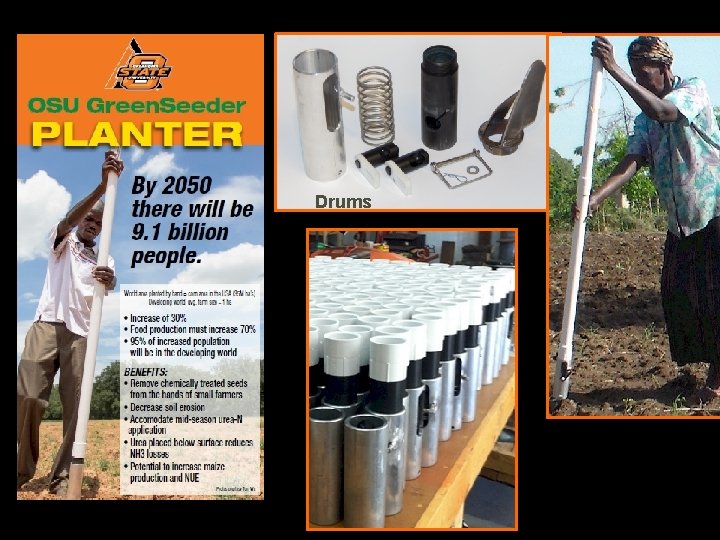
Drums
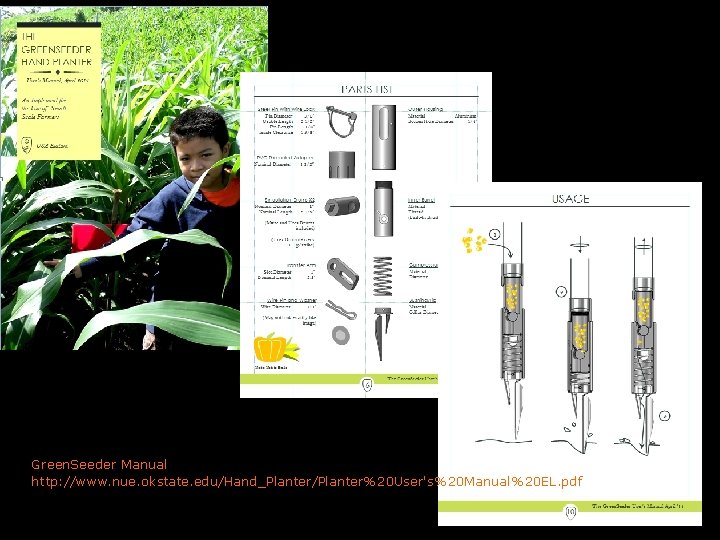
Green. Seeder Manual http: //www. nue. okstate. edu/Hand_Planter/Planter%20 User's%20 Manual%20 EL. pdf
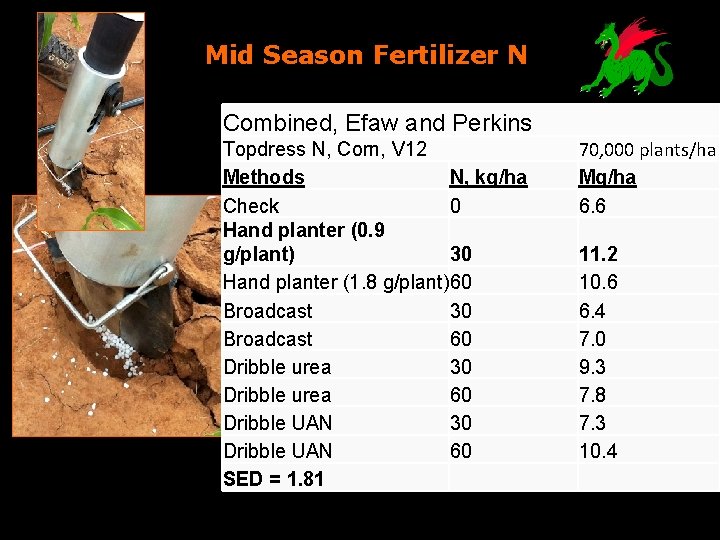
Mid Season Fertilizer N Combined, Efaw and Perkins Topdress N, Corn, V 12 Methods N, kg/ha Check 0 Hand planter (0. 9 g/plant) 30 Hand planter (1. 8 g/plant)60 Broadcast 30 Broadcast 60 Dribble urea 30 Dribble urea 60 Dribble UAN 30 Dribble UAN 60 SED = 1. 81 70, 000 plants/ha Mg/ha 6. 6 11. 2 10. 6 6. 4 7. 0 9. 3 7. 8 7. 3 10. 4
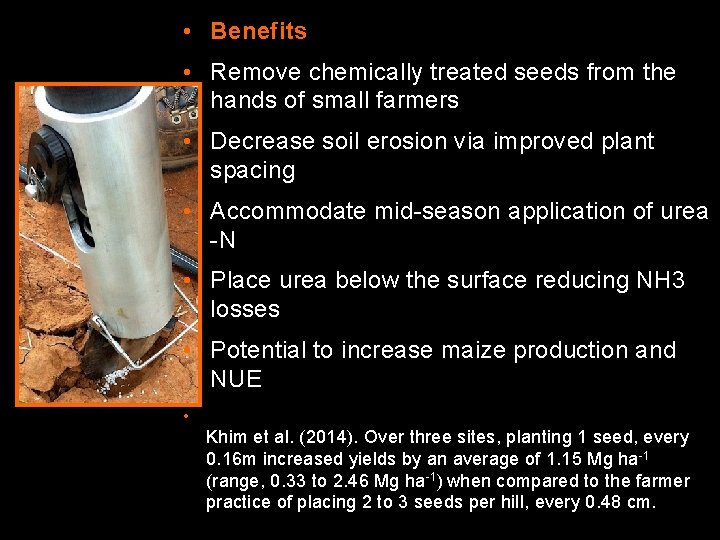
• Benefits • Remove chemically treated seeds from the hands of small farmers • Decrease soil erosion via improved plant spacing • Accommodate mid-season application of urea -N • Place urea below the surface reducing NH 3 losses • Potential to increase maize production and NUE • Khim et al. (2014). Over three sites, planting 1 seed, every 0. 16 m increased yields by an average of 1. 15 Mg ha -1 (range, 0. 33 to 2. 46 Mg ha-1) when compared to the farmer practice of placing 2 to 3 seeds per hill, every 0. 48 cm.
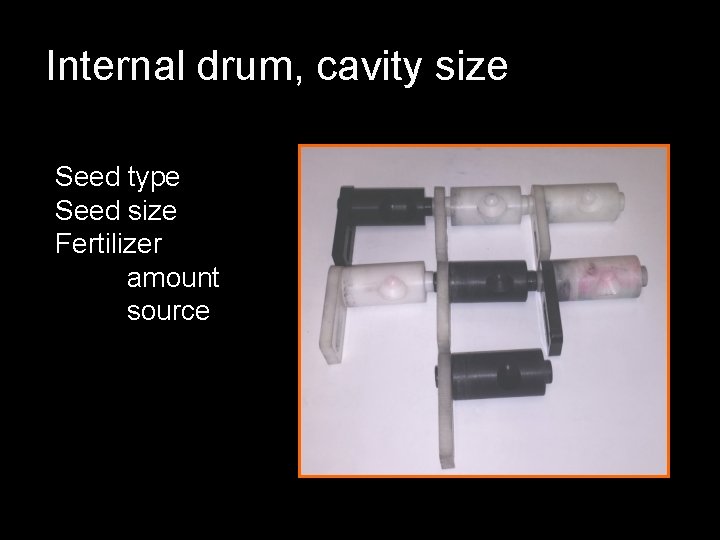
Internal drum, cavity size Seed type Seed size Fertilizer amount source
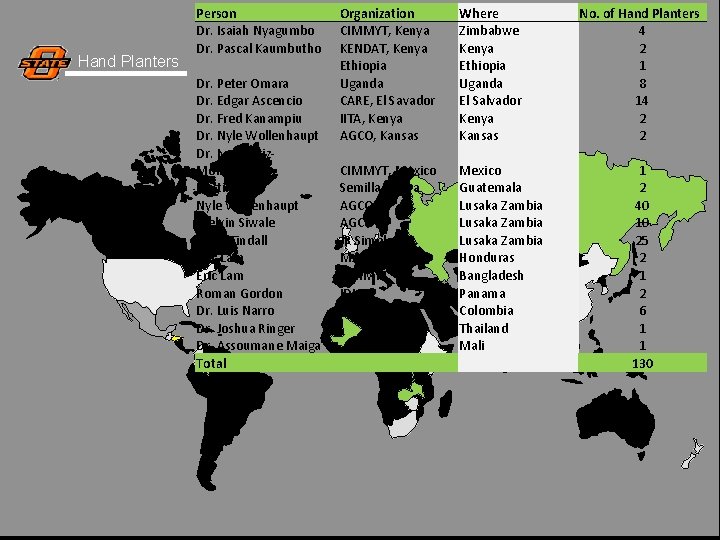
Hand Planters Person Dr. Isaiah Nyagumbo Dr. Pascal Kaumbutho Dr. Peter Omara Dr. Edgar Ascencio Dr. Fred Kanampiu Dr. Nyle Wollenhaupt Dr. Ivan Ortiz. Monasterio Kristin Lacy Nyle Wollenhaupt Melvin Siwale Terry Tindall Eric Lam Roman Gordon Dr. Luis Narro Dr. Joshua Ringer Dr. Assoumane Maiga Total Organization CIMMYT, Kenya KENDAT, Kenya Ethiopia Uganda CARE, El Savador IITA, Kenya AGCO, Kansas Where Zimbabwe Kenya Ethiopia Uganda El Salvador Kenya Kansas CIMMYT, Mexico Semilla Nueva AGCO JR Simplot MAG CIMMYT IDIAP CIAT Mexico Guatemala Lusaka Zambia Honduras Bangladesh Panama Colombia Thailand Mali No. of Hand Planters 4 2 1 8 14 2 2 1 2 40 10 25 2 1 2 6 1 1 130
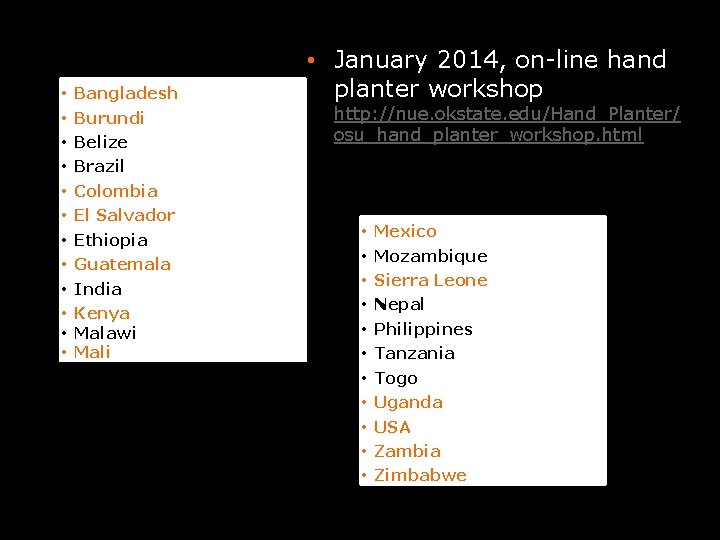
• • • Bangladesh Burundi Belize • January 2014, on-line hand planter workshop http: //nue. okstate. edu/Hand_Planter/ osu_hand_planter_workshop. html Brazil Colombia El Salvador Ethiopia Guatemala India Kenya Malawi Mali • • • Mexico Mozambique Sierra Leone Nepal Philippines Tanzania Togo Uganda USA Zambia Zimbabwe
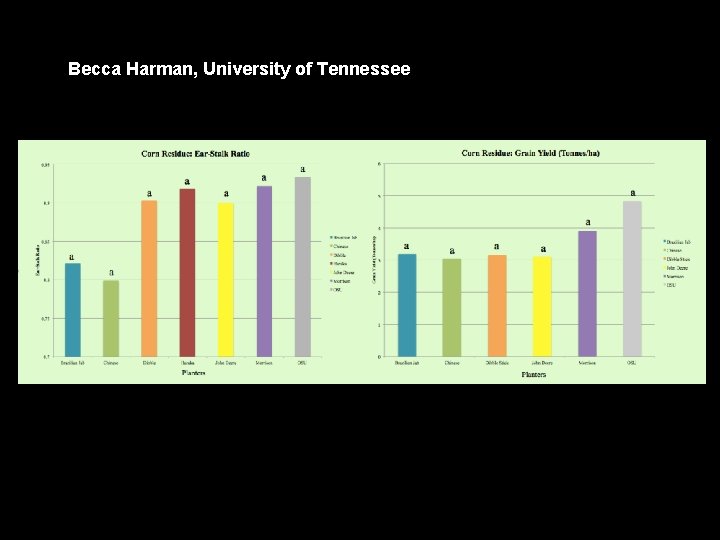
Becca Harman, University of Tennessee
Centro Internacional de Mejoramiento de Maiz y Trigo MODEL into the FUTURE
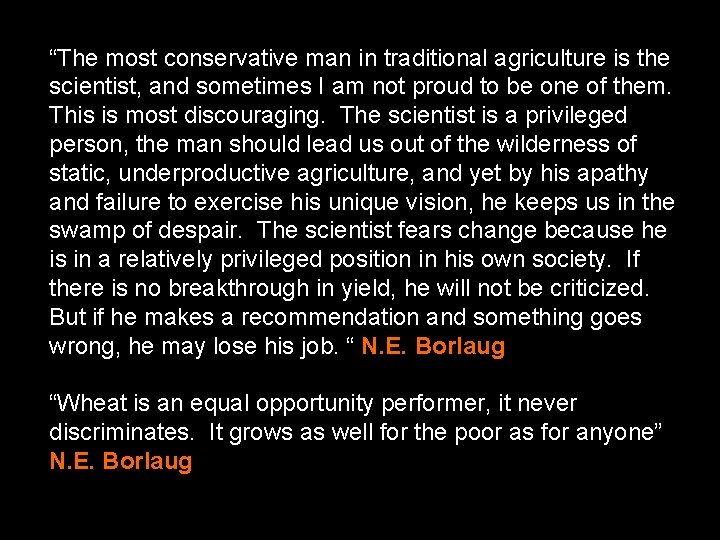
“The most conservative man in traditional agriculture is the scientist, and sometimes I am not proud to be one of them. This is most discouraging. The scientist is a privileged person, the man should lead us out of the wilderness of static, underproductive agriculture, and yet by his apathy and failure to exercise his unique vision, he keeps us in the swamp of despair. The scientist fears change because he is in a relatively privileged position in his own society. If there is no breakthrough in yield, he will not be criticized. But if he makes a recommendation and something goes wrong, he may lose his job. “ N. E. Borlaug “Wheat is an equal opportunity performer, it never discriminates. It grows as well for the poor as for anyone” N. E. Borlaug