Paediatric Skin Katie Hocking Paedsoc com o A




- Slides: 44
Paediatric Skin Katie Hocking
Paedsoc. com o A website filled with awesome resources and other events to get involved with!! REALLY useful site…. .
Newborn
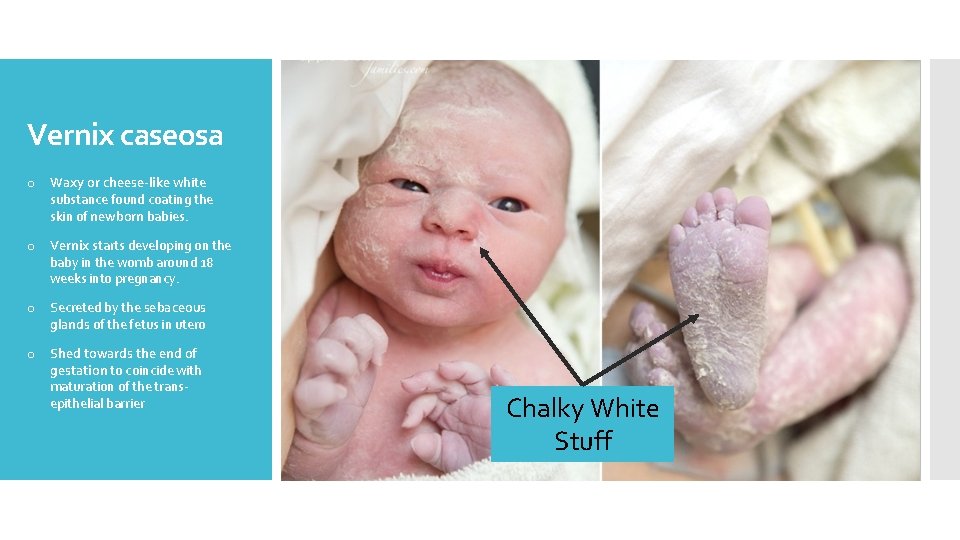
Vernix caseosa o Waxy or cheese-like white substance found coating the skin of newborn babies. o Vernix starts developing on the baby in the womb around 18 weeks into pregnancy. o Secreted by the sebaceous glands of the fetus in utero o Shed towards the end of gestation to coincide with maturation of the transepithelial barrier Chalky White Stuff
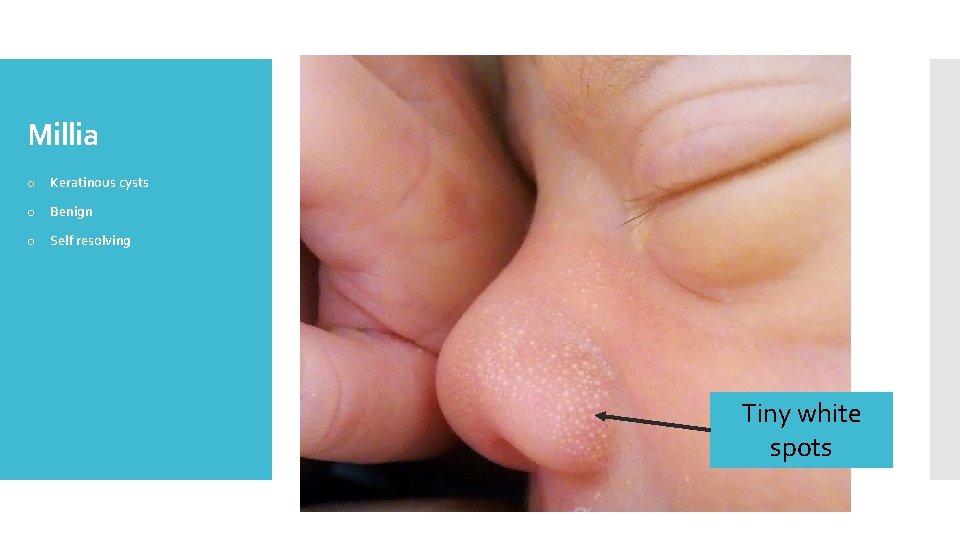
Millia o Keratinous cysts o Benign o Self resolving Tiny white spots
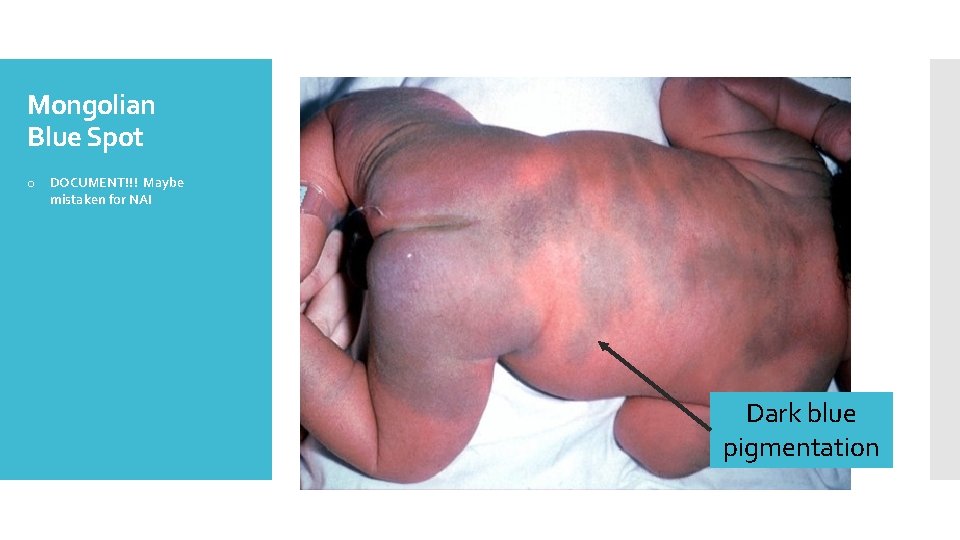
Mongolian Blue Spot o DOCUMENT!!! Maybe mistaken for NAI Dark blue pigmentation
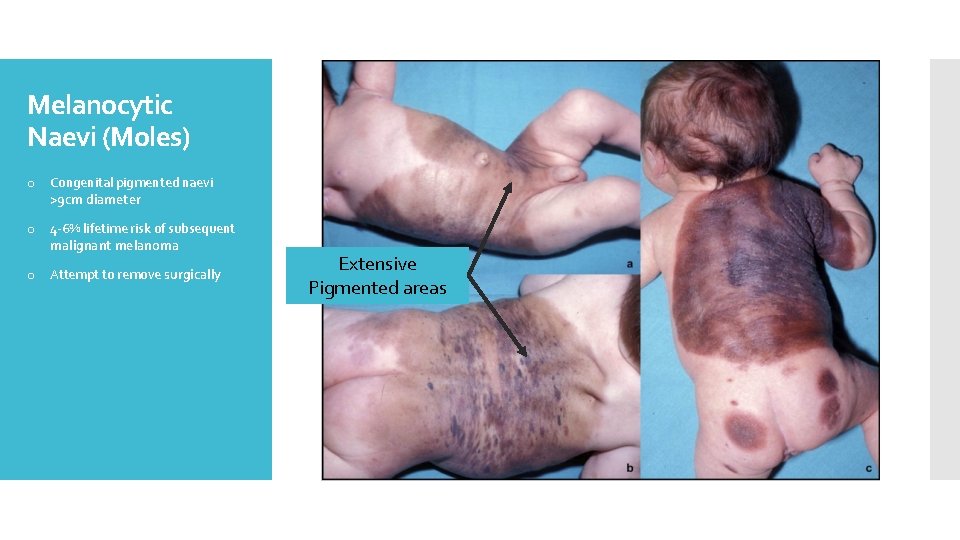
Melanocytic Naevi (Moles) o Congenital pigmented naevi >9 cm diameter o 4 -6% lifetime risk of subsequent malignant melanoma o Attempt to remove surgically Extensive Pigmented areas
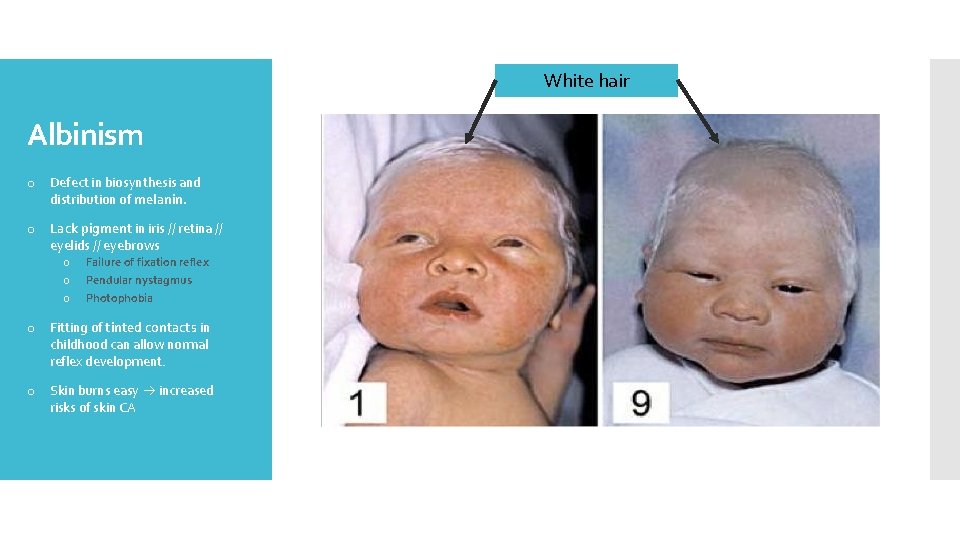
White hair Albinism o Defect in biosynthesis and distribution of melanin. o Lack pigment in iris // retina // eyelids // eyebrows o o o Failure of fixation reflex Pendular nystagmus Photophobia o Fitting of tinted contacts in childhood can allow normal reflex development. o Skin burns easy increased risks of skin CA
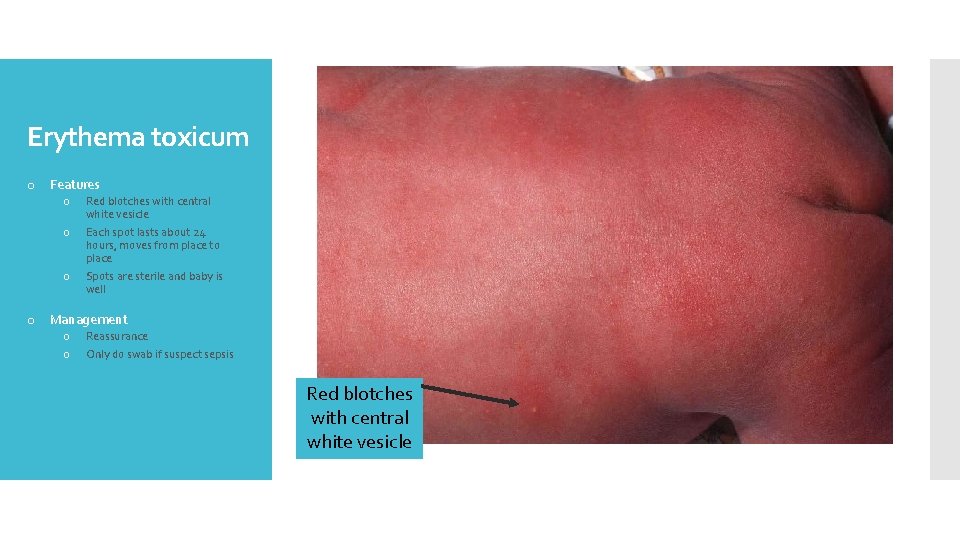
Erythema toxicum o Features o o o Red blotches with central white vesicle Each spot lasts about 24 hours, moves from place to place Spots are sterile and baby is well o Management o o Reassurance Only do swab if suspect sepsis Red blotches with central white vesicle
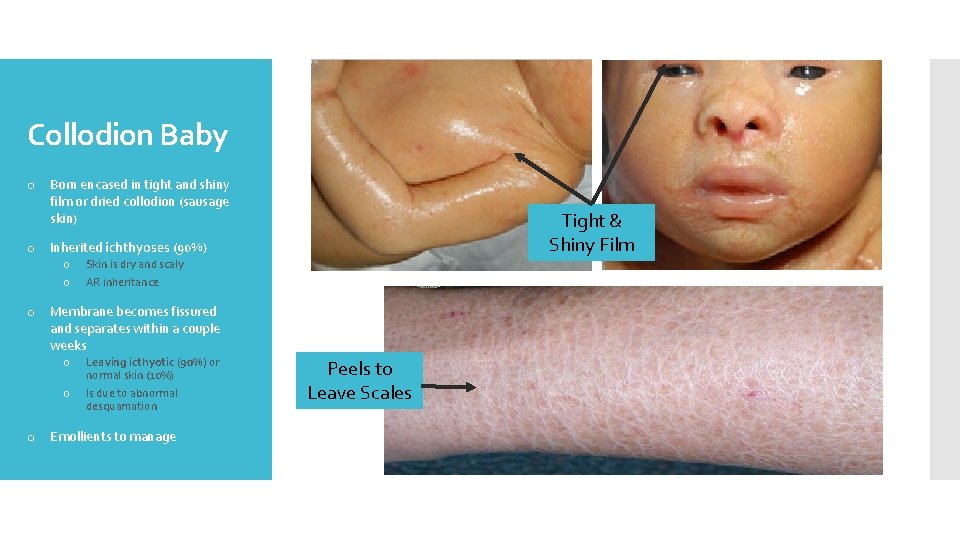
Collodion Baby o Born encased in tight and shiny film or dried collodion (sausage skin) Tight & Shiny Film o Inherited ichthyoses (90%) o o Skin is dry and scaly AR inheritance o Membrane becomes fissured and separates within a couple weeks o o Leaving icthyotic (90%) or normal skin (10%) Is due to abnormal desquamation o Emollients to manage Peels to Leave Scales
Rashes of Infancy
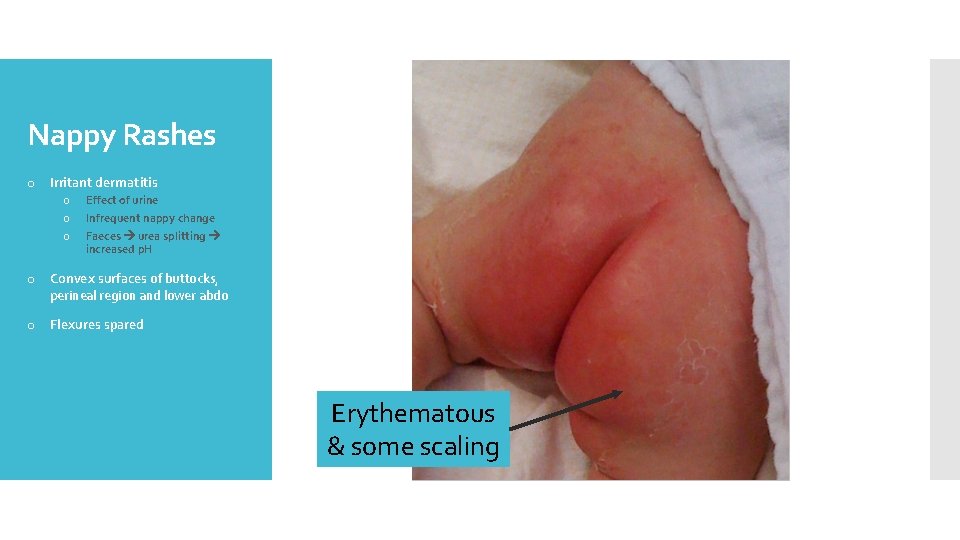
Nappy Rashes o Irritant dermatitis o o o Effect of urine Infrequent nappy change Faeces urea splitting increased p. H o Convex surfaces of buttocks, perineal region and lower abdo o Flexures spared Erythematous & some scaling
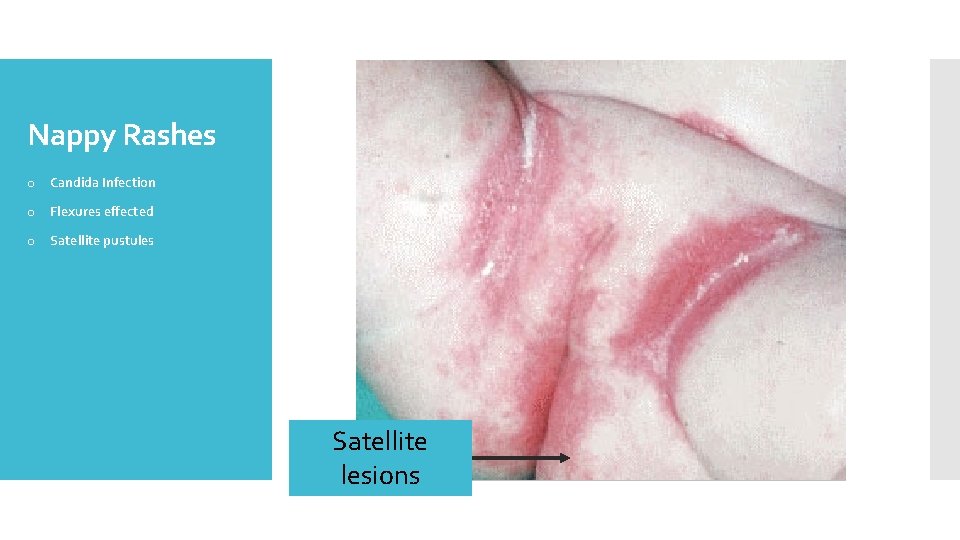
Nappy Rashes o Candida Infection o Flexures effected o Satellite pustules Satellite lesions
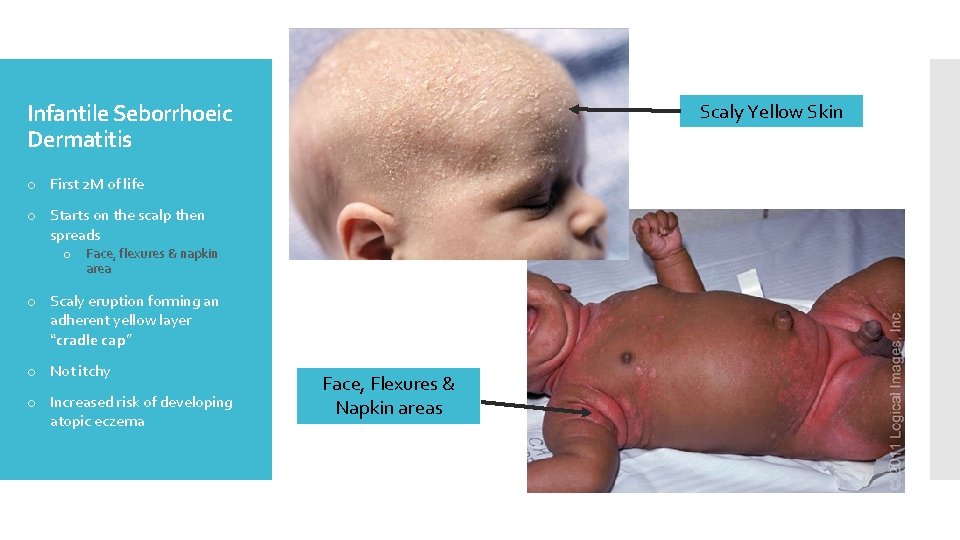
Infantile Seborrhoeic Dermatitis Scaly Yellow Skin o First 2 M of life o Starts on the scalp then spreads o Face, flexures & napkin area o Scaly eruption forming an adherent yellow layer “cradle cap” o Not itchy o Increased risk of developing atopic eczema Face, Flexures & Napkin areas
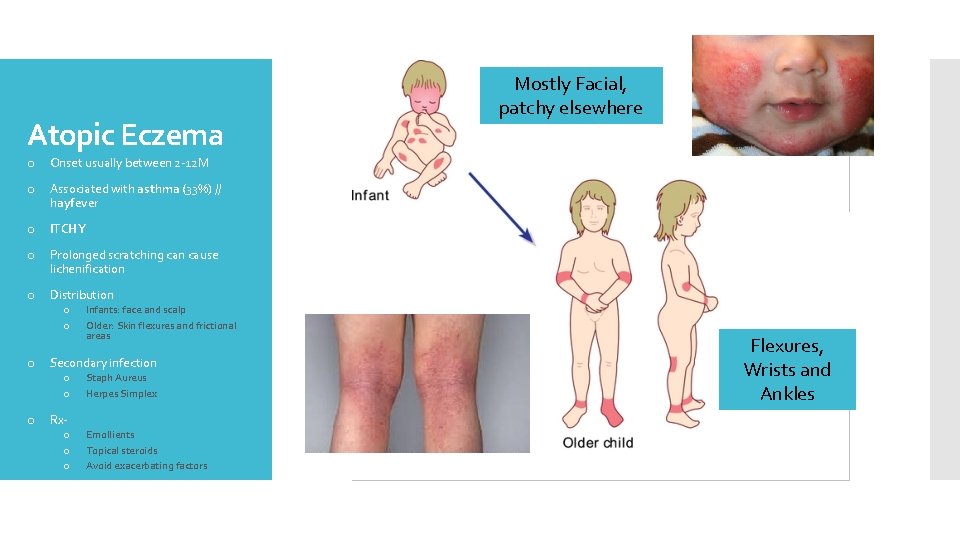
Atopic Eczema o Onset usually between 2 -12 M o Associated with asthma (33%) // hayfever o ITCHY o Prolonged scratching can cause lichenification o Distribution o o o Secondary infection o o o Infants: face and scalp Older: Skin flexures and frictional areas Rx- o o o Staph Aureus Herpes Simplex Emollients Topical steroids Avoid exacerbating factors Mostly Facial, patchy elsewhere Flexures, Wrists and Ankles
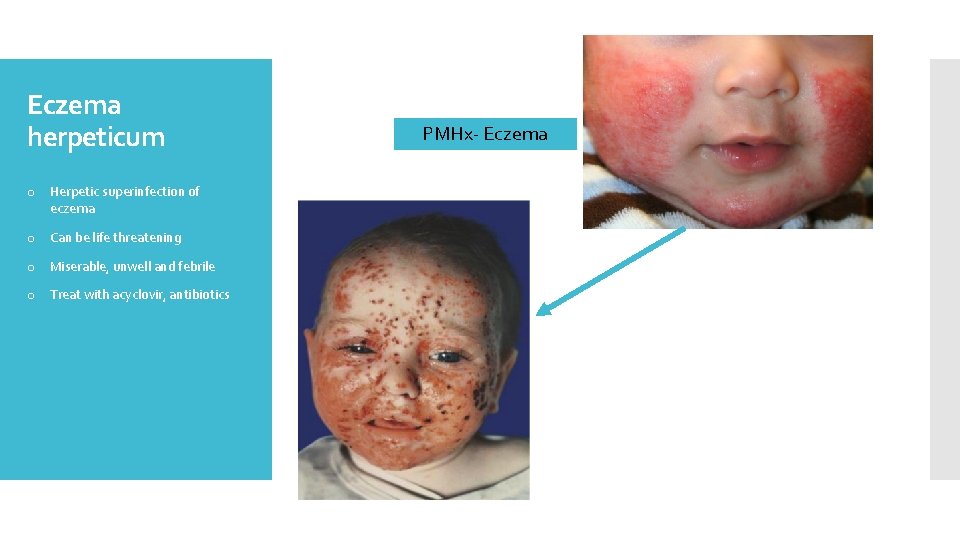
Eczema herpeticum o Herpetic superinfection of eczema o Can be life threatening o Miserable, unwell and febrile o Treat with acyclovir, antibiotics PMHx- Eczema
Infections & Infestations
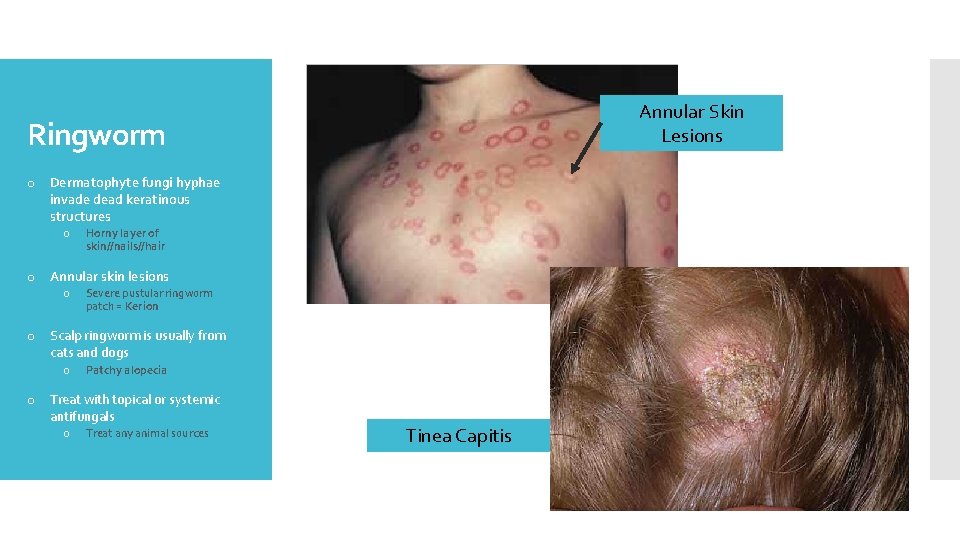
Annular Skin Lesions Ringworm o Dermatophyte fungi hyphae invade dead keratinous structures o Horny layer of skin//nails//hair o Annular skin lesions o Severe pustular ringworm patch = Kerion o Scalp ringworm is usually from cats and dogs o Patchy alopecia o Treat with topical or systemic antifungals o Treat any animal sources Tinea Capitis
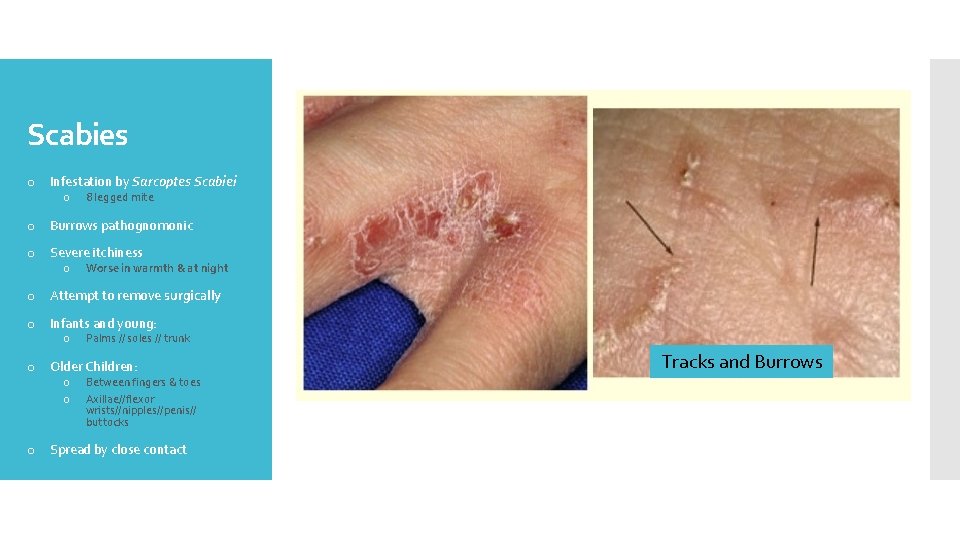
Scabies o Infestation by Sarcoptes Scabiei o 8 legged mite o Burrows pathognomonic o Severe itchiness o Worse in warmth & at night o Attempt to remove surgically o Infants and young: o Palms // soles // trunk o Older Children: o o Between fingers & toes Axillae//flexor wrists//nipples//penis// buttocks o Spread by close contact Tracks and Burrows
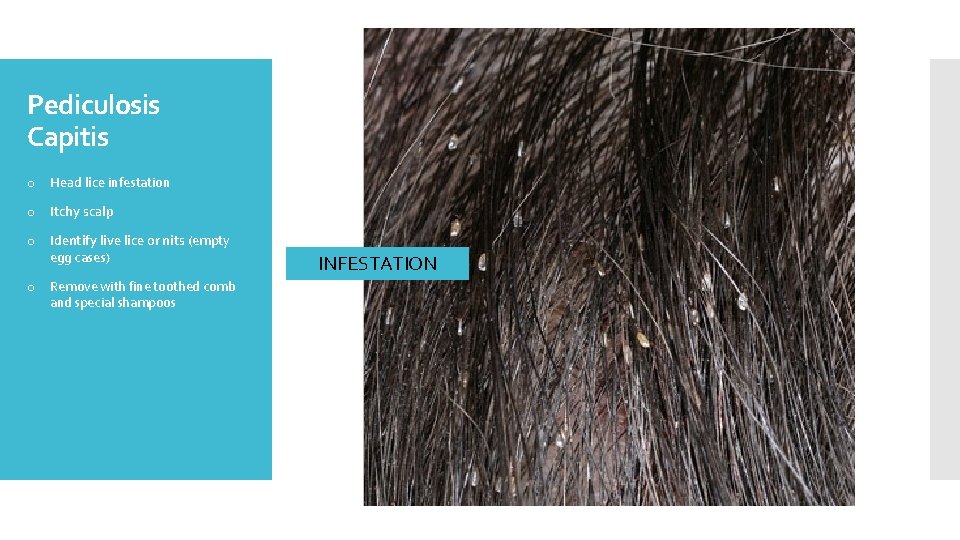
Pediculosis Capitis o Head lice infestation o Itchy scalp o Identify live lice or nits (empty egg cases) o Remove with fine toothed comb and special shampoos INFESTATION
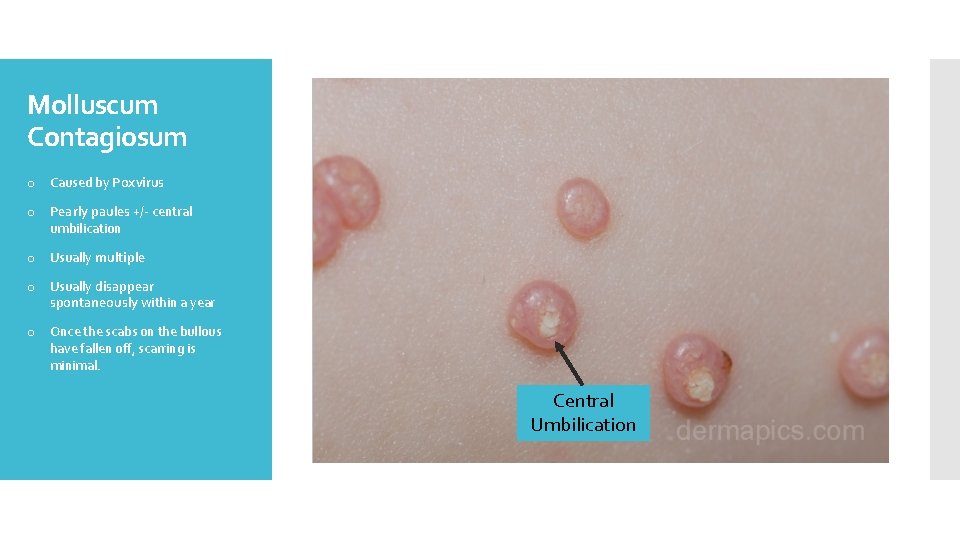
Molluscum Contagiosum o Caused by Poxvirus o Pearly paules +/- central umbilication o Usually multiple o Usually disappear spontaneously within a year o Once the scabs on the bullous have fallen off, scarring is minimal. Central Umbilication
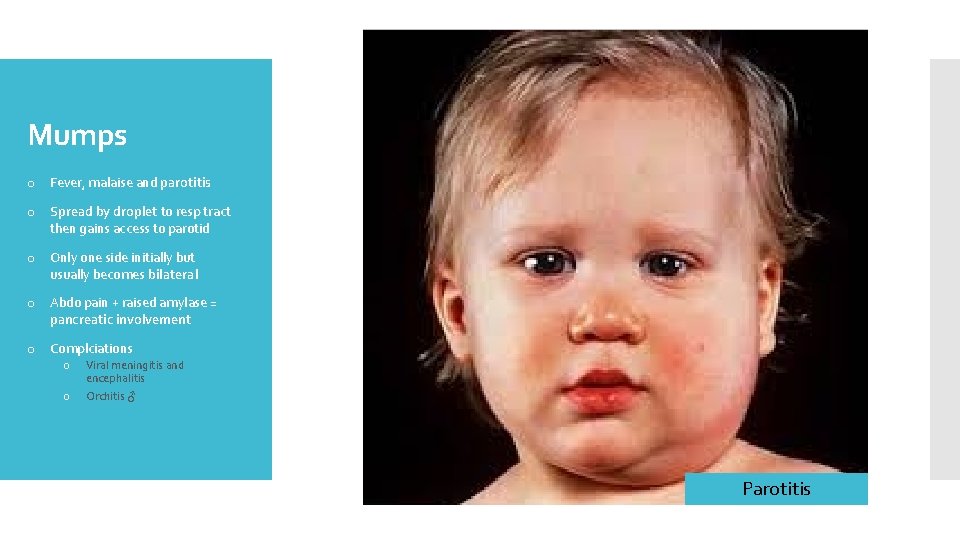
Mumps o Fever, malaise and parotitis o Spread by droplet to resp tract then gains access to parotid o Only one side initially but usually becomes bilateral o Abdo pain + raised amylase = pancreatic involvement o Complciations o o Viral meningitis and encephalitis Orchitis ♂ Parotitis
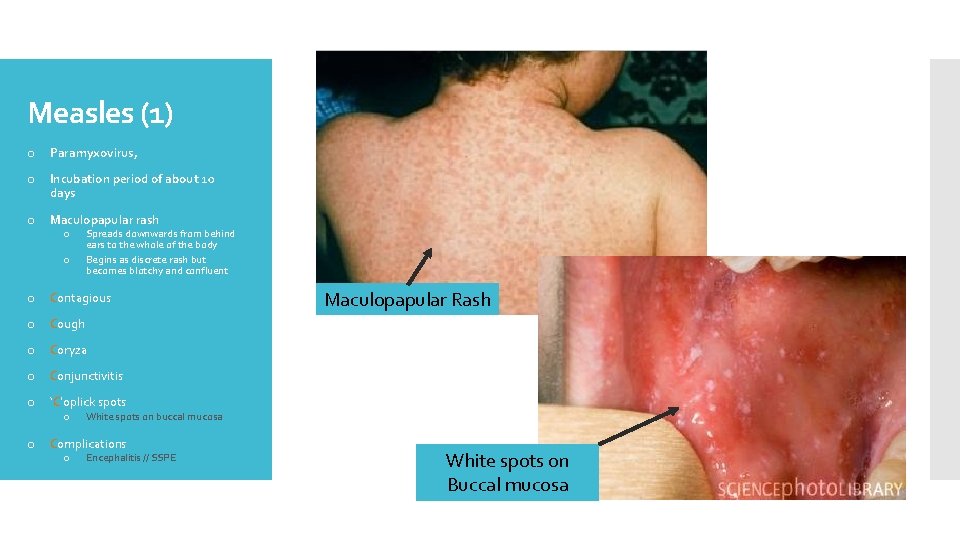
Measles (1) o Paramyxovirus, o Incubation period of about 10 days o Maculopapular rash o o Spreads downwards from behind ears to the whole of the body Begins as discrete rash but becomes blotchy and confluent o Contagious o Cough o Coryza o Conjunctivitis o ‘C’oplick spots o o White spots on buccal mucosa Complications o Maculopapular Rash Encephalitis // SSPE White spots on Buccal mucosa
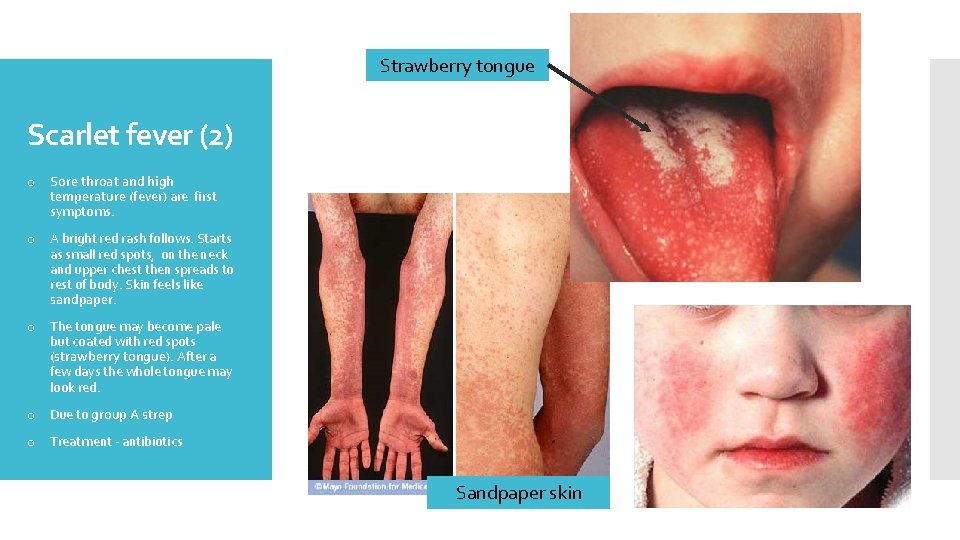
Strawberry tongue Scarlet fever (2) o Sore throat and high temperature (fever) are first symptoms. o A bright red rash follows. Starts as small red spots, on the neck and upper chest then spreads to rest of body. Skin feels like sandpaper. o The tongue may become pale but coated with red spots (strawberry tongue). After a few days the whole tongue may look red. o Due to group A strep o Treatment - antibiotics Sandpaper skin
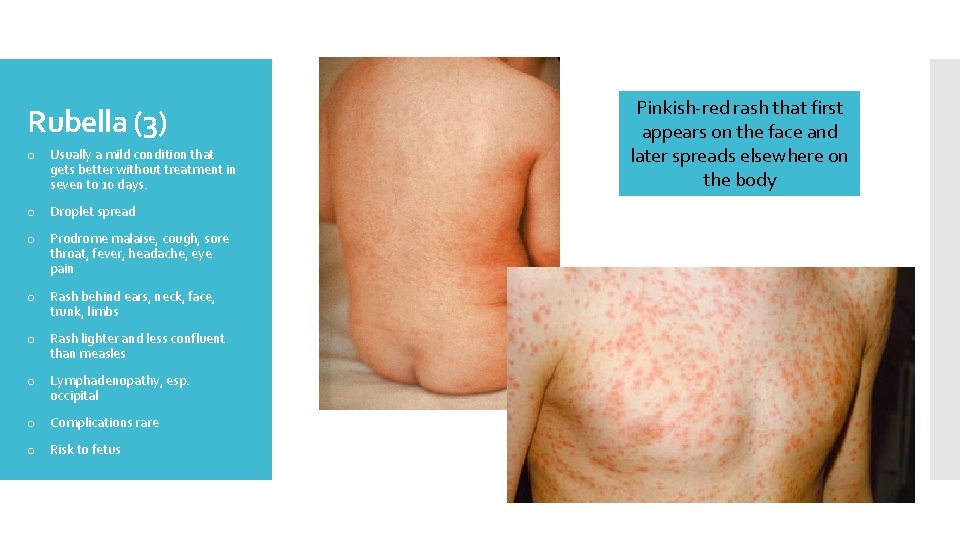
Rubella (3) o Usually a mild condition that gets better without treatment in seven to 10 days. o Droplet spread o Prodrome malaise, cough, sore throat, fever, headache, eye pain o Rash behind ears, neck, face, trunk, limbs o Rash lighter and less confluent than measles o Lymphadenopathy, esp. occipital o Complications rare o Risk to fetus Pinkish-red rash that first appears on the face and later spreads elsewhere on the body
Scalded Skin Syndrome (4) o Caused by Exfoliative Staph Toxin o Separation of epidermal skin layers o Separate on gentle pressure to leave denuded skin o Children present with fever and malaise o Dry and heal without scarring but requires Anbx to resolve o Main issue is with secondary infection Skin appears scaled
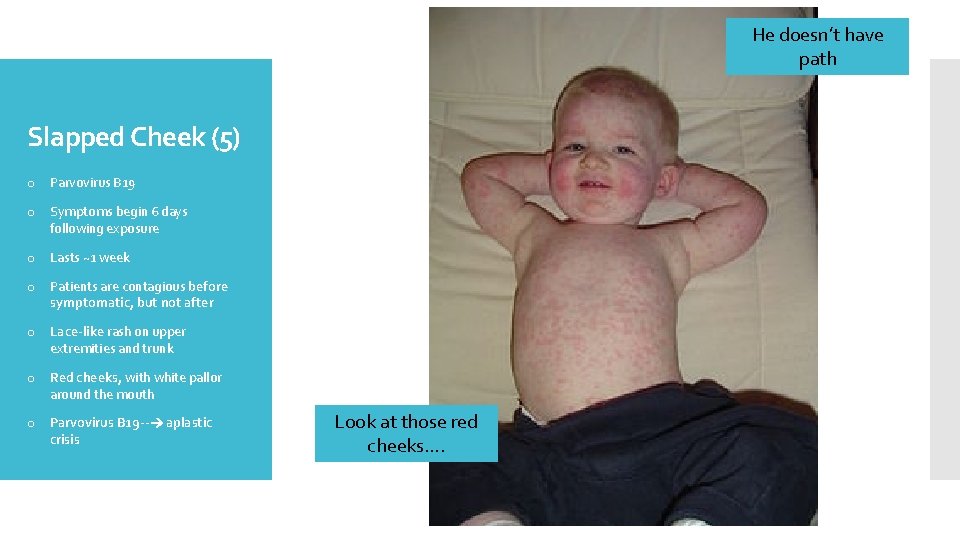
He doesn’t have path Slapped Cheek (5) o Parvovirus B 19 o Symptoms begin 6 days following exposure o Lasts ~1 week o Patients are contagious before symptomatic, but not after o Lace-like rash on upper extremities and trunk o Red cheeks, with white pallor around the mouth o Parvovirus B 19 -- aplastic crisis Look at those red cheeks….
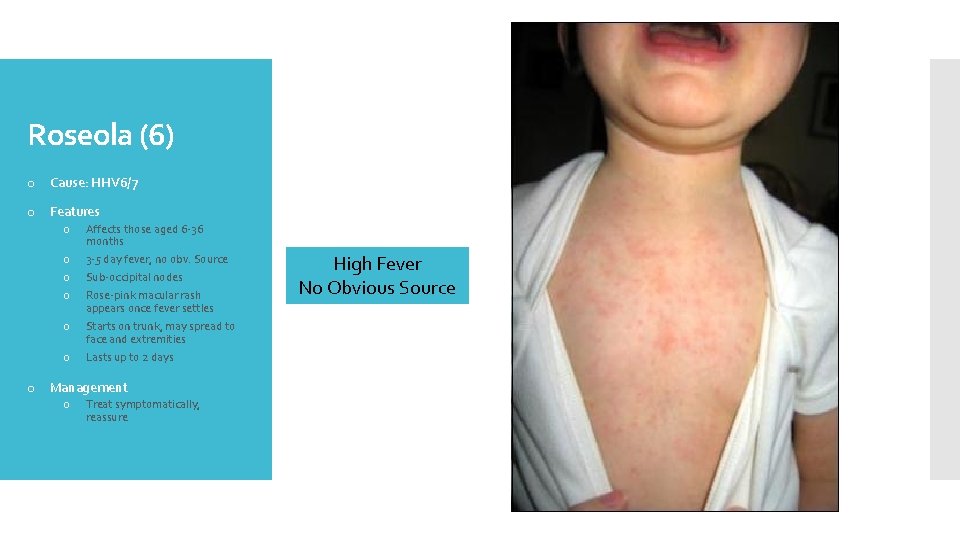
Roseola (6) o Cause: HHV 6/7 o Features o o o Affects those aged 6 -36 months 3 -5 day fever, no obv. Source Sub-occipital nodes Rose-pink macular rash appears once fever settles Starts on trunk, may spread to face and extremities Lasts up to 2 days o Management o Treat symptomatically, reassure High Fever No Obvious Source
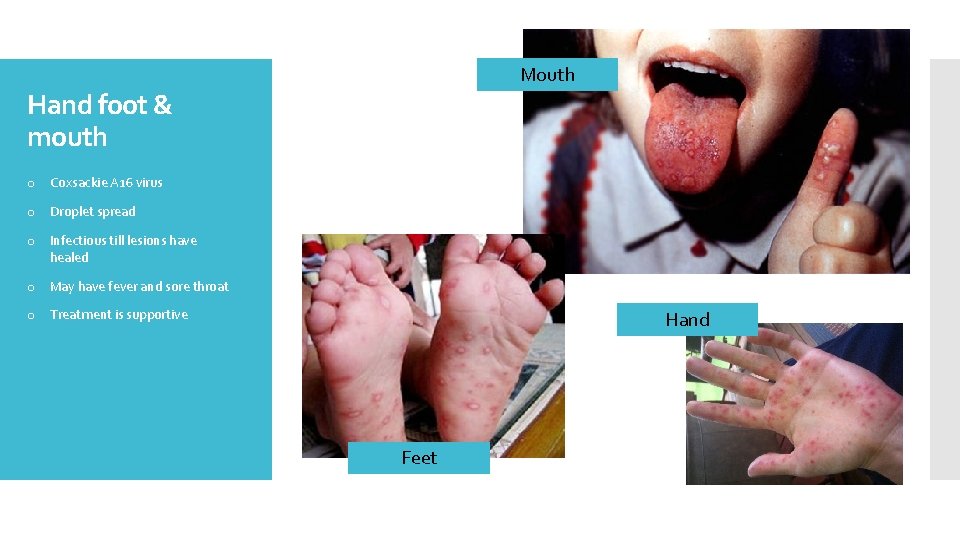
Mouth Hand foot & mouth o Coxsackie A 16 virus o Droplet spread o Infectious till lesions have healed o May have fever and sore throat o Treatment is supportive Hand Feet
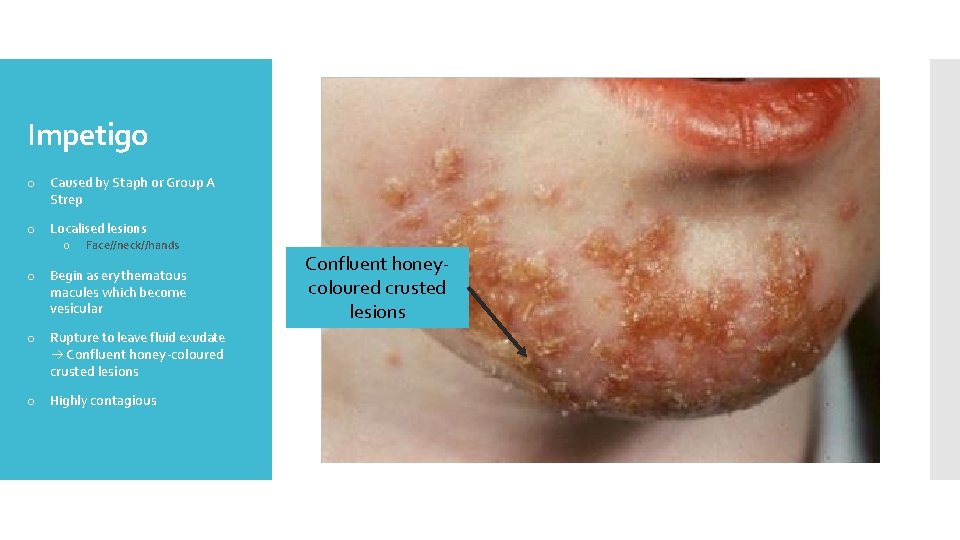
Impetigo o Caused by Staph or Group A Strep o Localised lesions o Face//neck//hands o Begin as erythematous macules which become vesicular o Rupture to leave fluid exudate Confluent honey-coloured crusted lesions o Highly contagious Confluent honeycoloured crusted lesions
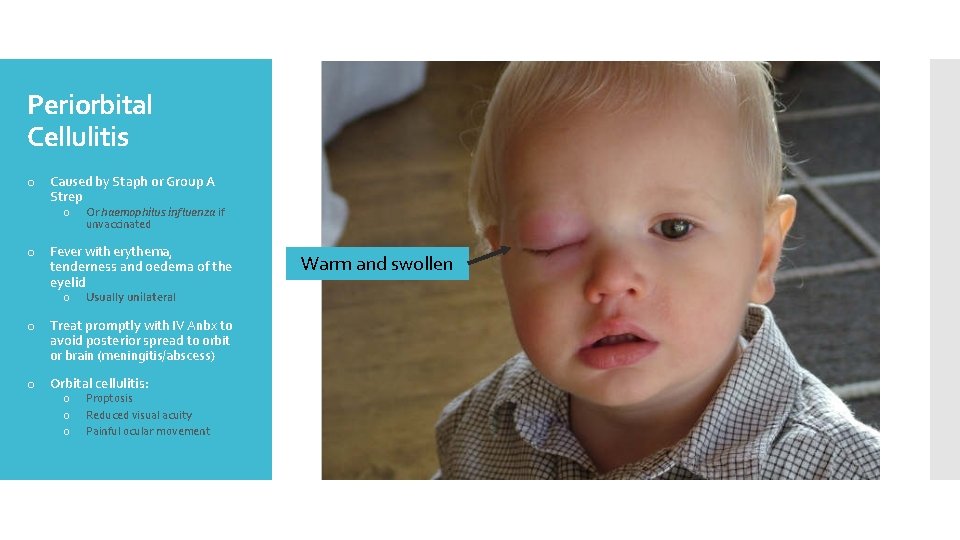
Periorbital Cellulitis o Caused by Staph or Group A Strep o Or haemophilus influenza if unvaccinated o Fever with erythema, tenderness and oedema of the eyelid o Usually unilateral o Treat promptly with IV Anbx to avoid posterior spread to orbit or brain (meningitis/abscess) o Orbital cellulitis: o o o Proptosis Reduced visual acuity Painful ocular movement Warm and swollen
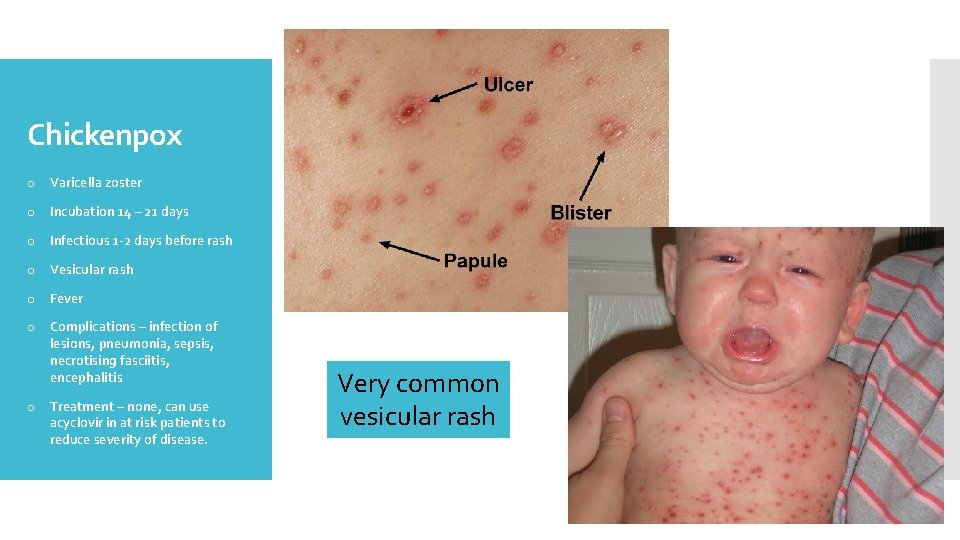
Chickenpox o Varicella zoster o Incubation 14 – 21 days o Infectious 1 -2 days before rash o Vesicular rash o Fever o Complications – infection of lesions, pneumonia, sepsis, necrotising fasciitis, encephalitis o Treatment – none, can use acyclovir in at risk patients to reduce severity of disease. Very common vesicular rash
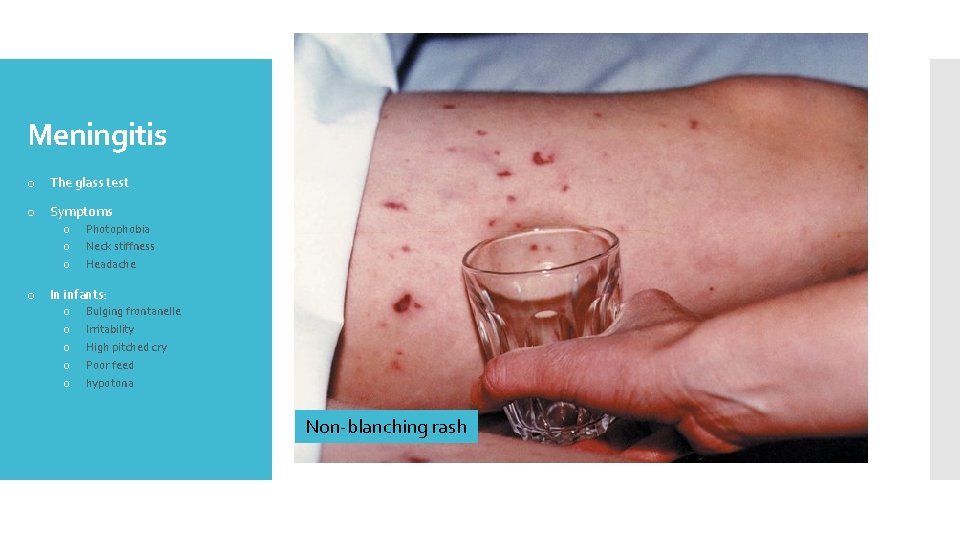
Meningitis o The glass test o Symptoms o o o Photophobia Neck stiffness Headache o In infants: o o o Bulging frontanelle Irritability High pitched cry Poor feed hypotona Non-blanching rash
Systemic Disease
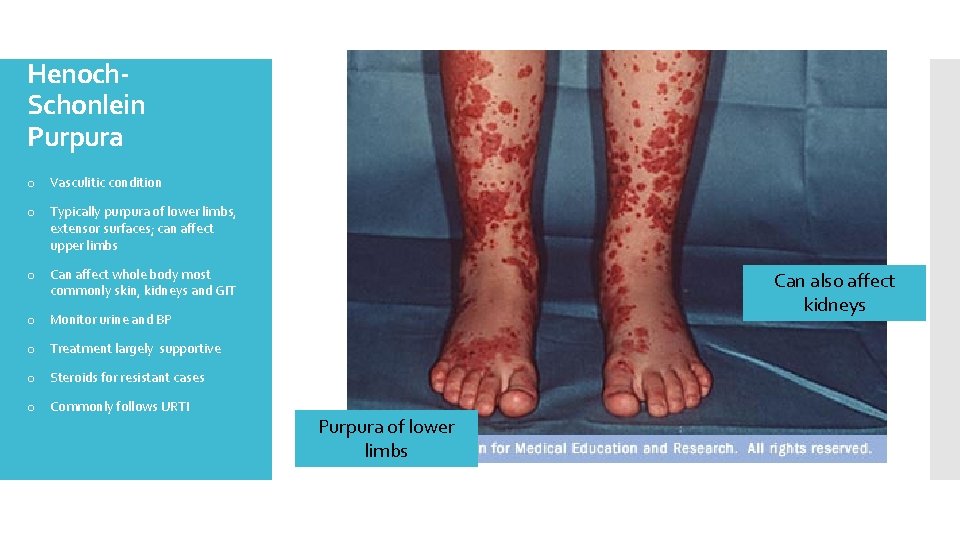
Henoch. Schonlein Purpura o Vasculitic condition o Typically purpura of lower limbs, extensor surfaces; can affect upper limbs o Can affect whole body most commonly skin, kidneys and GIT Can also affect kidneys o Monitor urine and BP o Treatment largely supportive o Steroids for resistant cases o Commonly follows URTI Purpura of lower limbs
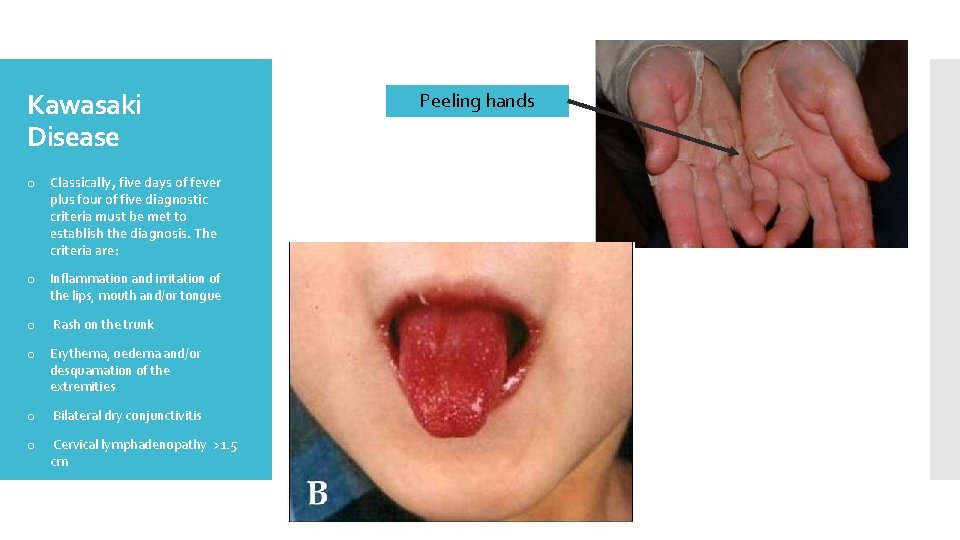
Kawasaki Disease o Classically, five days of fever plus four of five diagnostic criteria must be met to establish the diagnosis. The criteria are: o Inflammation and irritation of the lips, mouth and/or tongue o Rash on the trunk o Erythema, oedema and/or desquamation of the extremities o Bilateral dry conjunctivitis o Cervical lymphadenopathy >1. 5 cm Peeling hands
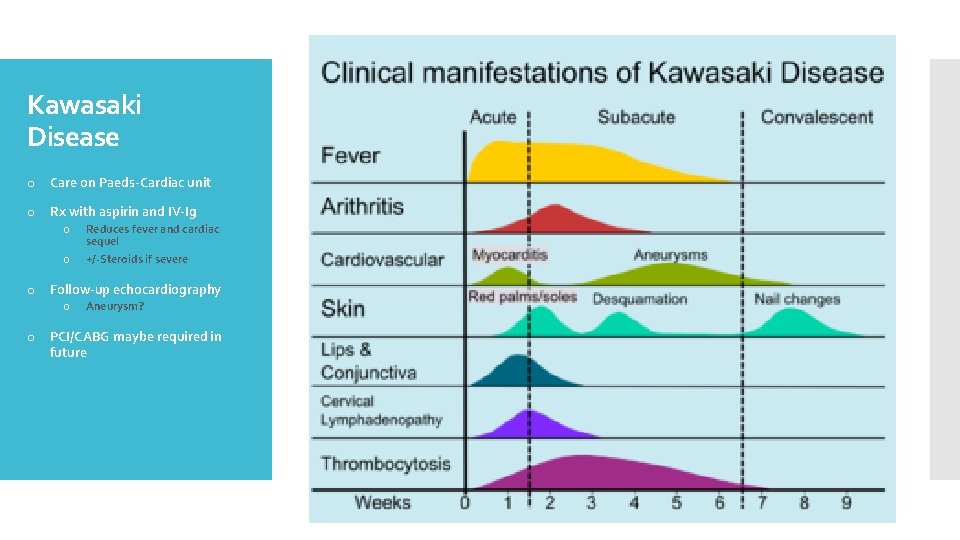
Kawasaki Disease o Care on Paeds-Cardiac unit o Rx with aspirin and IV-Ig o o Reduces fever and cardiac sequel +/-Steroids if severe o Follow-up echocardiography o Aneurysm? o PCI/CABG maybe required in future
Neurocutaneous Signs
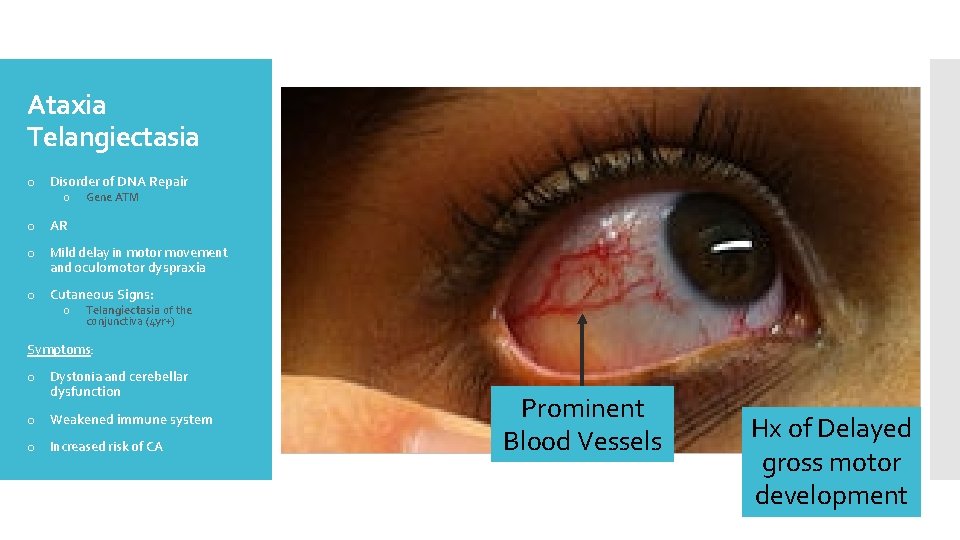
Ataxia Telangiectasia o Disorder of DNA Repair o Gene ATM o AR o Mild delay in motor movement and oculomotor dyspraxia o Cutaneous Signs: o Telangiectasia of the conjunctiva (4 yr+) Symptoms: o Dystonia and cerebellar dysfunction o Weakened immune system o Increased risk of CA Prominent Blood Vessels Hx of Delayed gross motor development
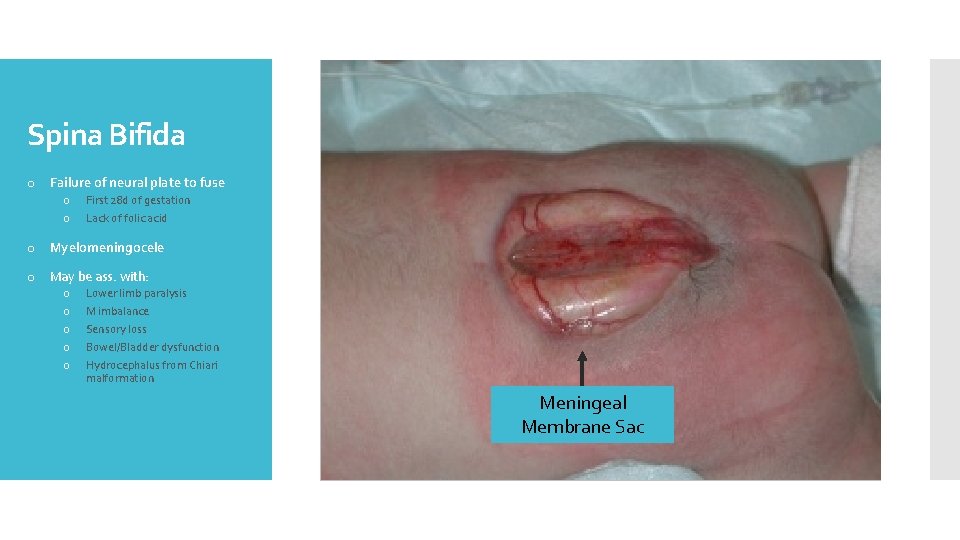
Spina Bifida o Failure of neural plate to fuse o o First 28 d of gestation Lack of folic acid o Myelomeningocele o May be ass. with: o o o Lower limb paralysis M imbalance Sensory loss Bowel/Bladder dysfunction Hydrocephalus from Chiari malformation Meningeal Membrane Sac
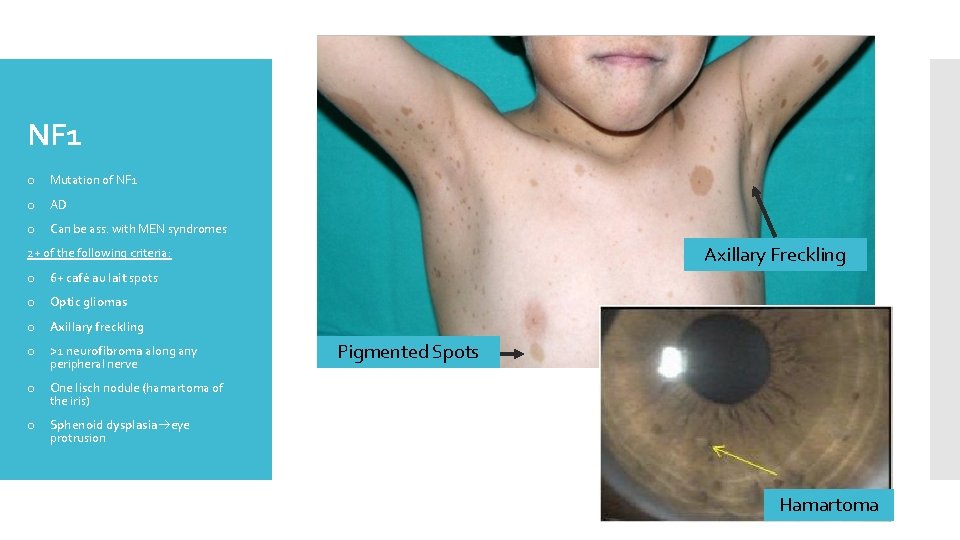
NF 1 o Mutation of NF 1 o AD o Can be ass. with MEN syndromes Axillary Freckling 2+ of the following criteria: o 6+ café au lait spots o Optic gliomas o Axillary freckling o >1 neurofibroma along any peripheral nerve o One lisch nodule (hamartoma of the iris) o Sphenoid dysplasia eye protrusion Pigmented Spots Hamartoma
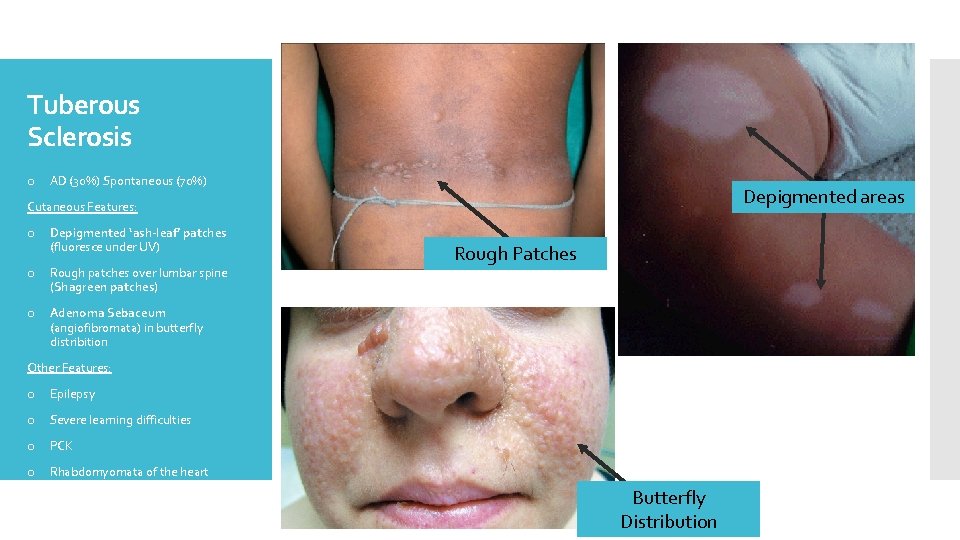
Tuberous Sclerosis o AD (30%) Spontaneous (70%) Depigmented areas Cutaneous Features: o Depigmented ‘ash-leaf’ patches (fluoresce under UV) o Rough patches over lumbar spine (Shagreen patches) o Adenoma Sebaceum (angiofibromata) in butterfly distribition Rough Patches Other Features: o Epilepsy o Severe learning difficulties o PCK o Rhabdomyomata of the heart Butterfly Distribution
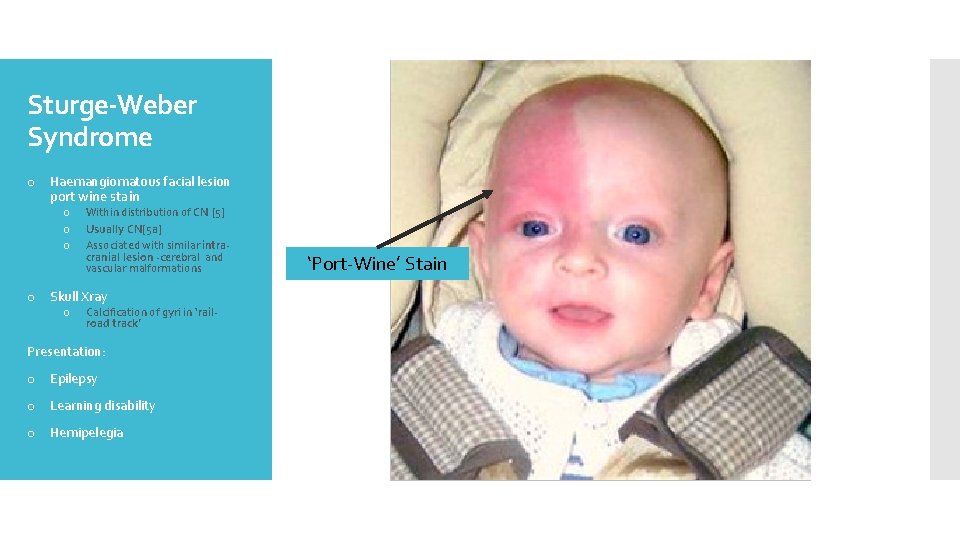
Sturge-Weber Syndrome o Haemangiomatous facial lesion port wine stain o o o Within distribution of CN [5] Usually CN[5 a] Associated with similar intracranial lesion -cerebral and vascular malformations o Skull Xray o Calcification of gyri in ‘railroad track’ Presentation: o Epilepsy o Learning disability o Hemipelegia ‘Port-Wine’ Stain
THANK YOU!!! Any questions?