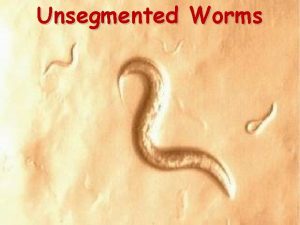
NEMATODA Nema thread Nematode threadlike NEMATODES Unsegmented Usually


- Slides: 43
NEMATODA Nema = thread Nematode = thread-like
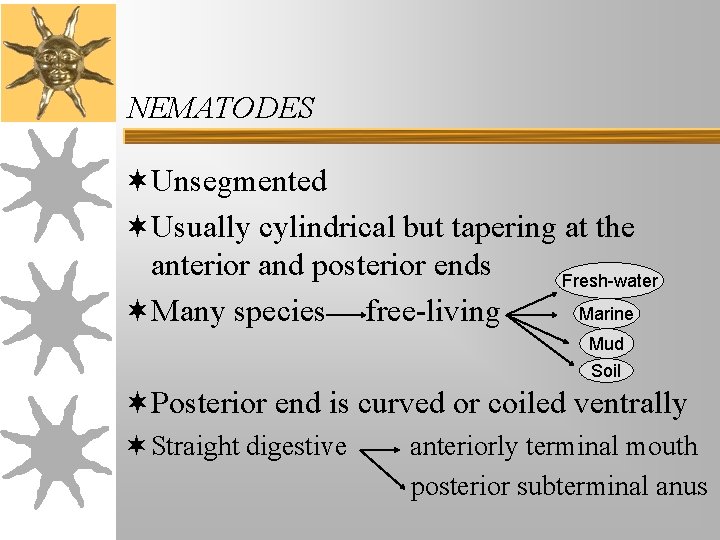
NEMATODES ¬Unsegmented ¬Usually cylindrical but tapering at the anterior and posterior ends Fresh-water Marine ¬Many species free-living Mud Soil ¬Posterior end is curved or coiled ventrally ¬ Straight digestive anteriorly terminal mouth posterior subterminal anus
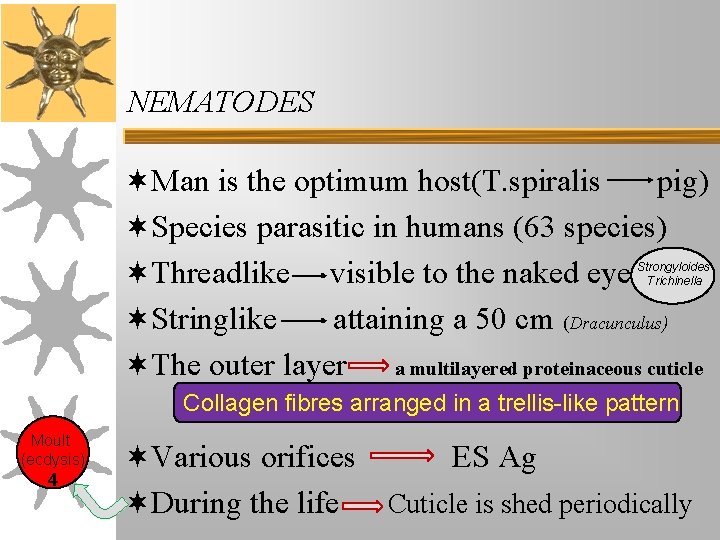
NEMATODES ¬Man is the optimum host(T. spiralis pig) ¬Species parasitic in humans (63 species) ¬Threadlike visible to the naked eye ¬Stringlike attaining a 50 cm (Dracunculus) ¬The outer layer a multilayered proteinaceous cuticle Strongyloides Trichinella Collagen fibres arranged in a trellis-like pattern Moult (ecdysis) 4 ¬Various orifices ¬During the life ES Ag Cuticle is shed periodically
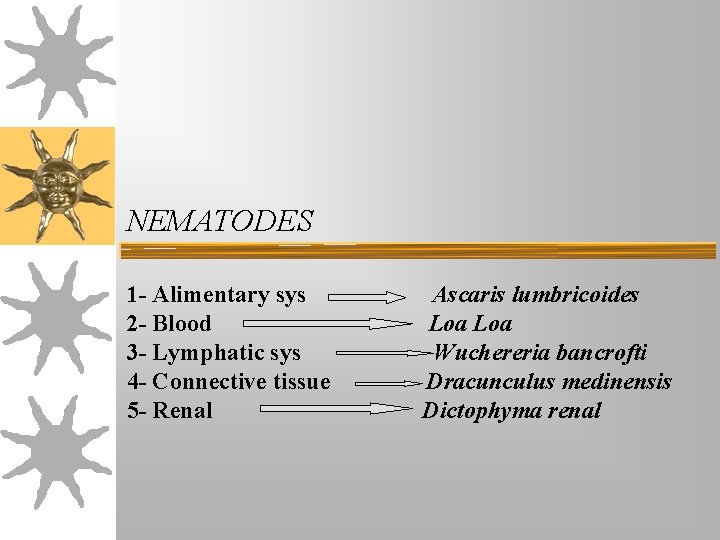
NEMATODES 1 - Alimentary sys 2 - Blood 3 - Lymphatic sys 4 - Connective tissue 5 - Renal Ascaris lumbricoides Loa Wuchereria bancrofti Dracunculus medinensis Dictophyma renal
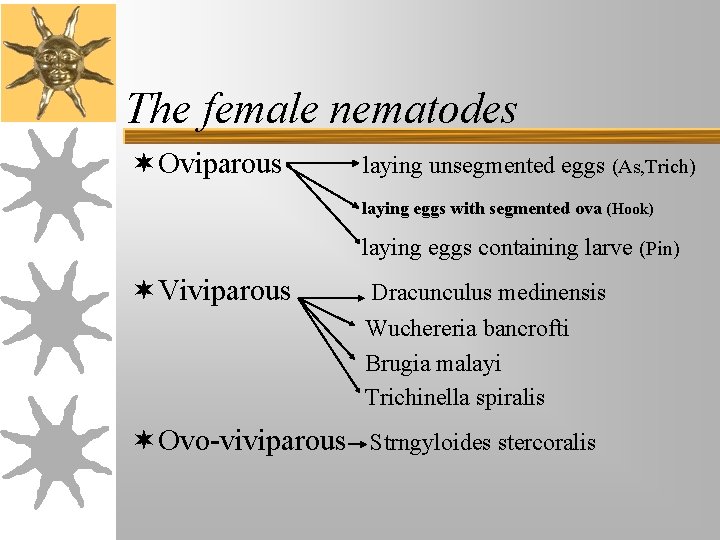
The female nematodes ¬ Oviparous laying unsegmented eggs (As, Trich) laying eggs with segmented ova (Hook) laying eggs containing larve (Pin) ¬ Viviparous Dracunculus medinensis Wuchereria bancrofti Brugia malayi Trichinella spiralis ¬ Ovo-viviparous Strngyloides stercoralis
Ascaris lumbricoides (Giant intestinal worm) Linnaeus, 1758 Order Ascaridida Family Ascarididae
Geographic Distribution Cosmopolitan Temperate&tropical countries 25% of world pop. . One billion people infected
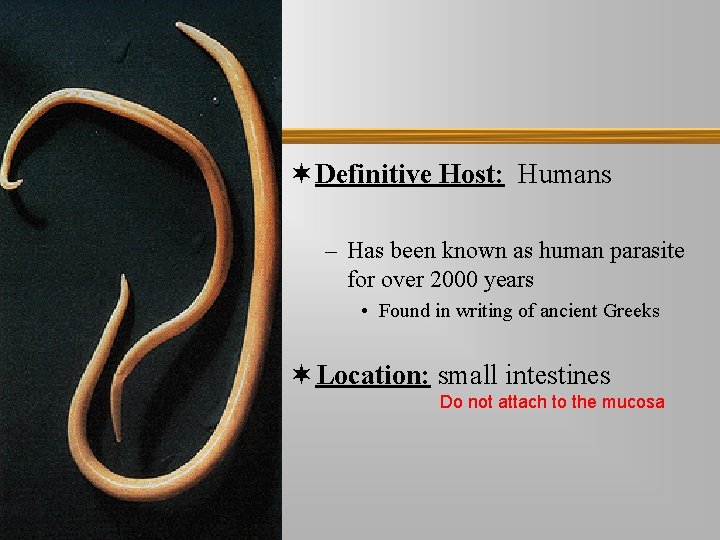
¬ Definitive Host: Humans – Has been known as human parasite for over 2000 years • Found in writing of ancient Greeks ¬ Location: small intestines Do not attach to the mucosa
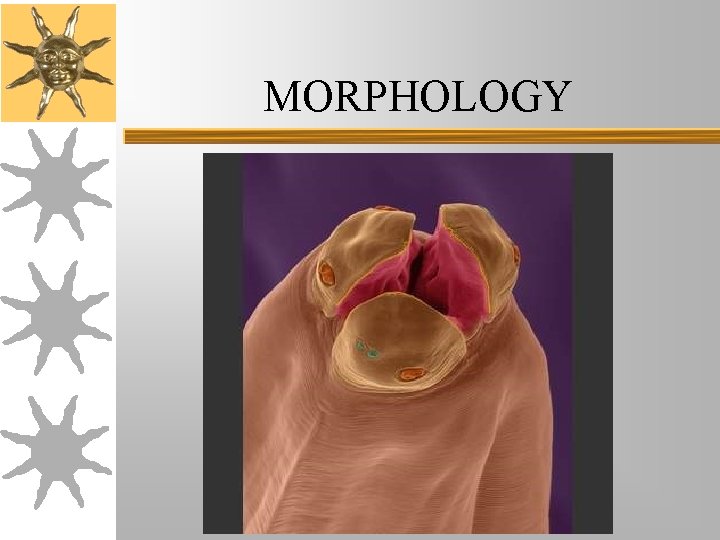
MORPHOLOGY
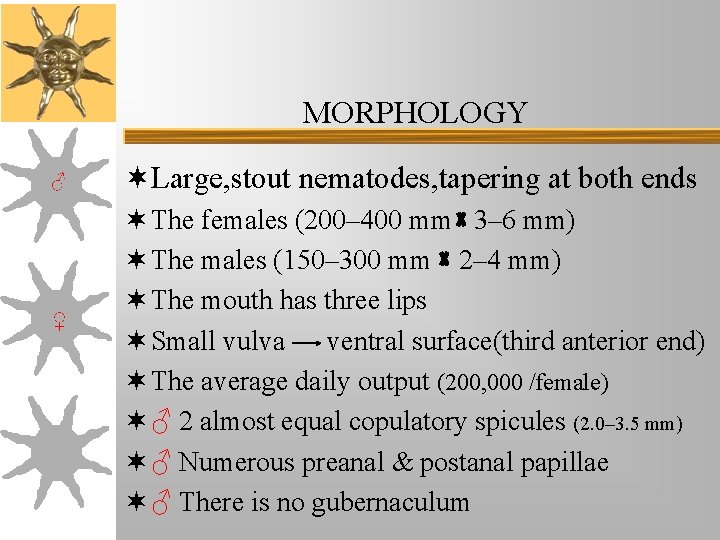
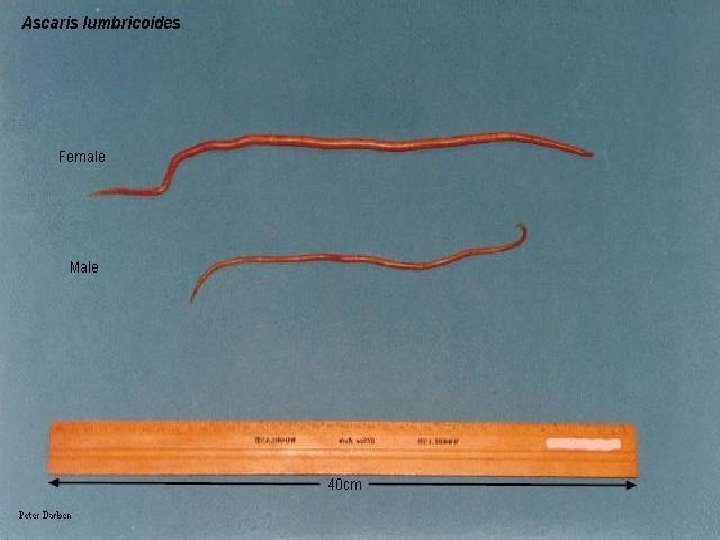
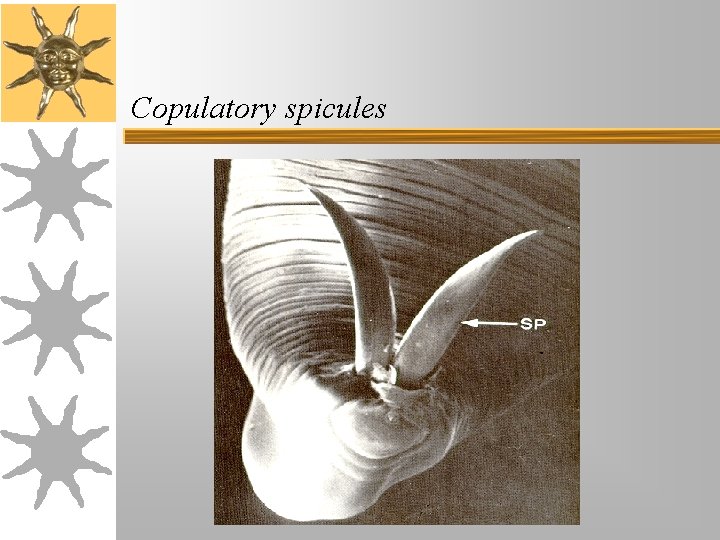
MORPHOLOGY ♂ ♀ ¬Large, stout nematodes, tapering at both ends ¬ The females (200– 400 mm 3– 6 mm) ¬ The males (150– 300 mm 2– 4 mm) ¬ The mouth has three lips ¬ Small vulva ventral surface(third anterior end) ¬ The average daily output (200, 000 /female) ¬ ♂ 2 almost equal copulatory spicules (2. 0– 3. 5 mm) ¬ ♂ Numerous preanal & postanal papillae ¬ ♂ There is no gubernaculum
Copulatory spicules
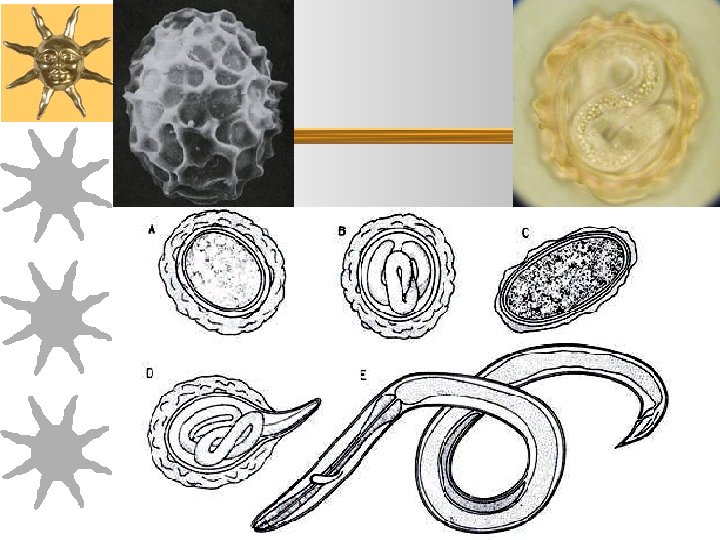
Egg of Ascaris ¬Broadly ovoid ¬ 45– 70 μm 35– 50 μm ¬The shell is thick & transparent ¬Coarsely mammilated outer albuminous ¬Stained light brown with bile pigments ¬The ova are unsegmented (passed in the faeces) ¬ Proportion of eggs (about 15%) are infertile ¬ Longer and narrower (90 μm 40μm) ¬ Thin shell, more irregular outer covering
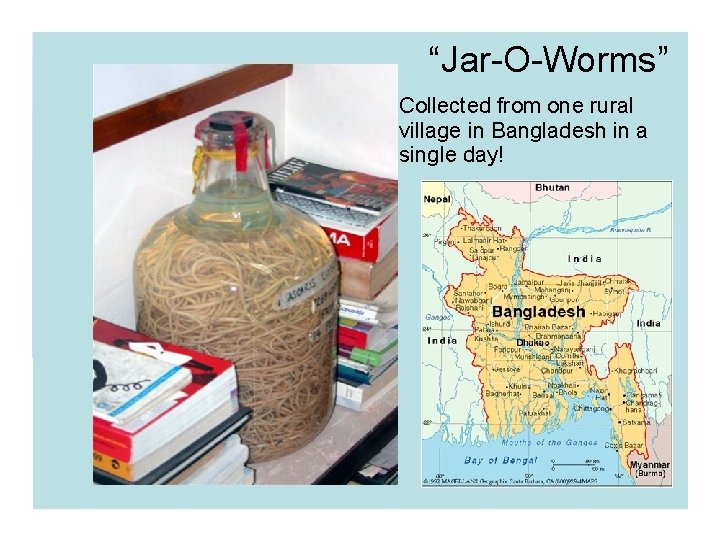
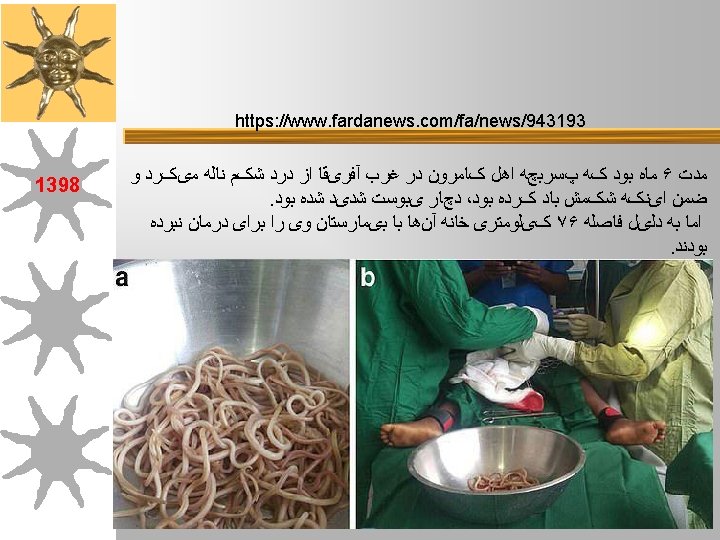
“Jar-O-Worms” Collected from one rural village in Bangladesh in a single day!
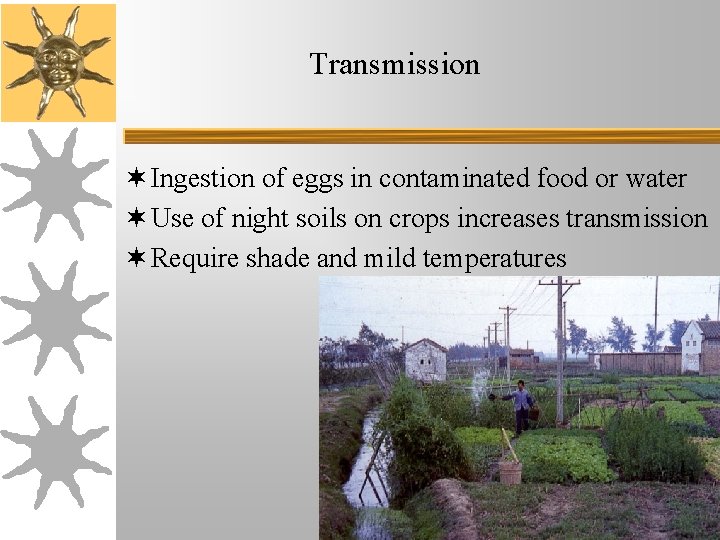
Transmission ¬ Ingestion of eggs in contaminated food or water ¬ Use of night soils on crops increases transmission ¬ Require shade and mild temperatures
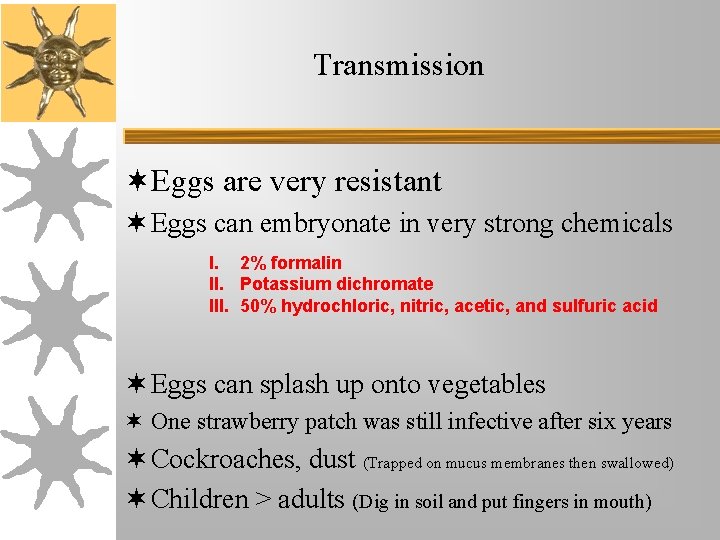
Transmission ¬Eggs are very resistant ¬ Eggs can embryonate in very strong chemicals I. 2% formalin II. Potassium dichromate III. 50% hydrochloric, nitric, acetic, and sulfuric acid ¬ Eggs can splash up onto vegetables ¬ One strawberry patch was still infective after six years ¬ Cockroaches, dust (Trapped on mucus membranes then swallowed) ¬ Children > adults (Dig in soil and put fingers in mouth)
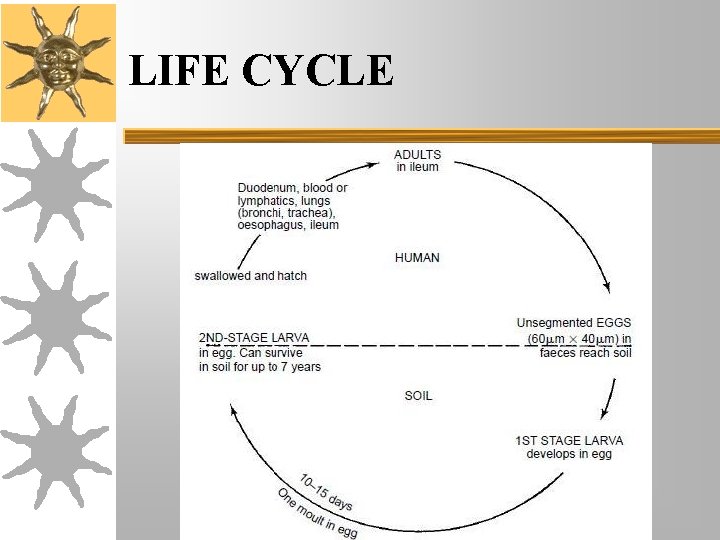
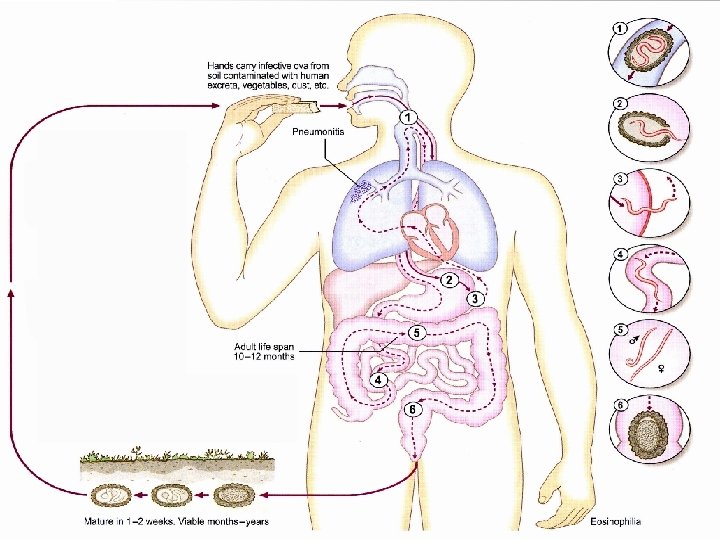
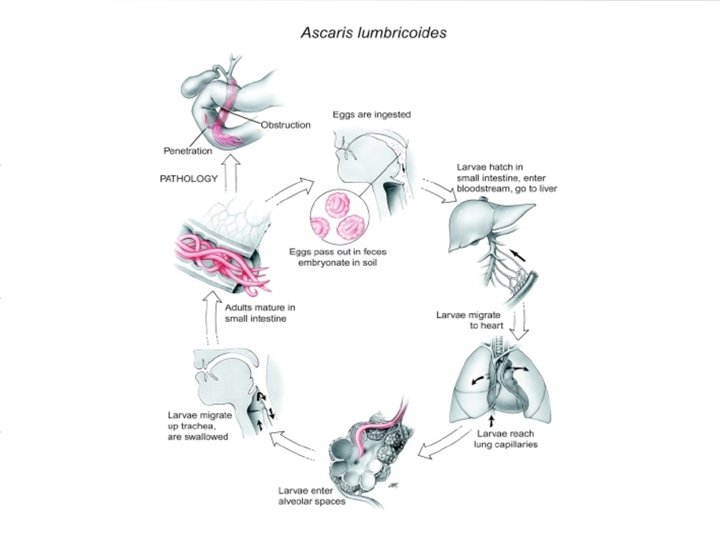
LIFE CYCLE
Ascariasis ¬Ascariosis ¬Roundworm infection
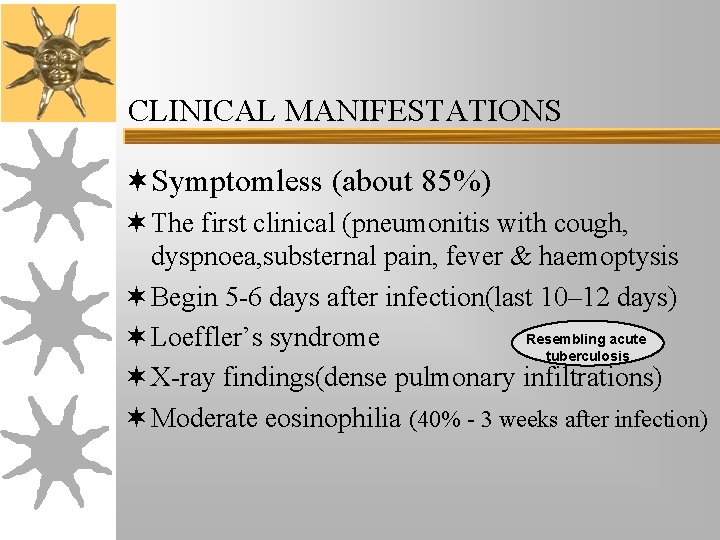
CLINICAL MANIFESTATIONS ¬Symptomless (about 85%) ¬ The first clinical (pneumonitis with cough, dyspnoea, substernal pain, fever & haemoptysis ¬ Begin 5 -6 days after infection(last 10– 12 days) Resembling acute ¬ Loeffler’s syndrome tuberculosis ¬ X-ray findings(dense pulmonary infiltrations) ¬ Moderate eosinophilia (40% - 3 weeks after infection)
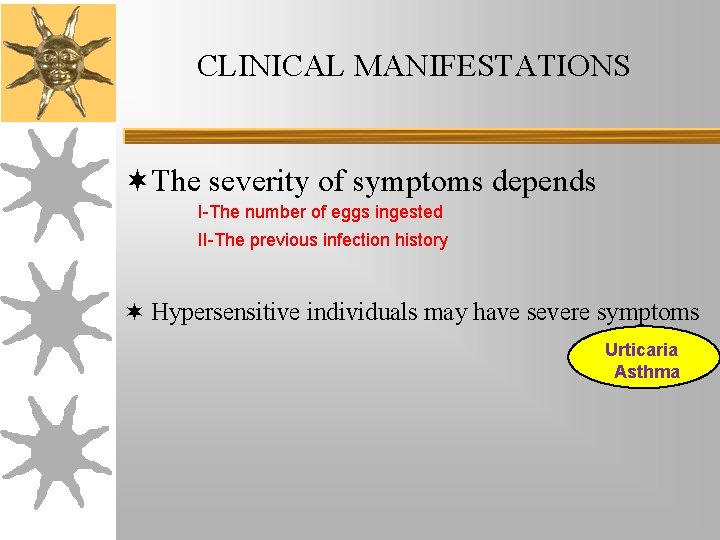
CLINICAL MANIFESTATIONS ¬The severity of symptoms depends I-The number of eggs ingested II-The previous infection history ¬ Hypersensitive individuals may have severe symptoms Urticaria Asthma
CLINICAL MANIFESTATIONS ¬The second phase(adult worms) ¬Digestive disorders ¬Nausea ¬Vomiting ¬Colic ¬Restless sleep & tooth grinding(children) Mortality ¬Intestinal obstruction (9%) Serious complication(children)
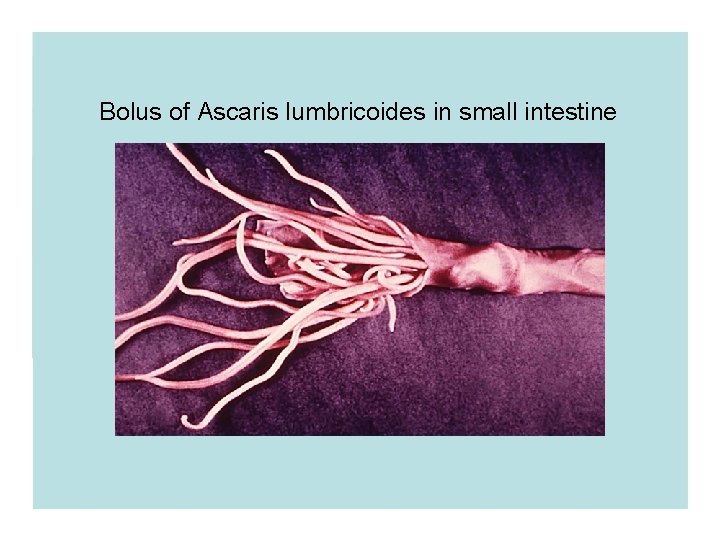
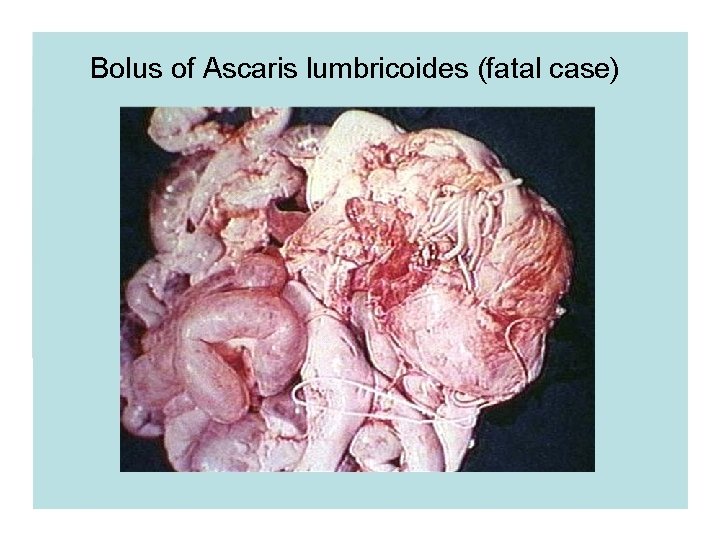
CLINICAL MANIFESTATIONS Obstruction ¬Mortality in such cases admitted(about 9%) ¬The symptoms of intestinal obstruction: a. Recurrent abdominal pain b. Loss of appetite c. Nausea d. Vomiting
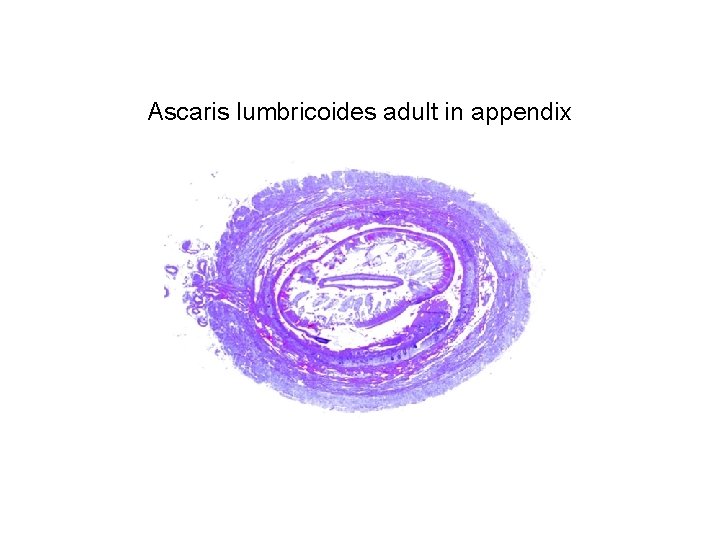
CLINICAL MANIFESTATIONS ¬Occasionally worms: Peritonitis, Appendicitis ¬Adult Ascaris migrations: Bileduct, Pancreatic ducts ¬Children : severe colicky pain(all patients) ¬After a few days fever develops ¬Slight jaundice ¬Ascending cholangitis (in about 15% of cases) ¬ Obstructive jaundice (1%), Acute pancreatitis (4%) ¬Occasionally multiple liver abscesses
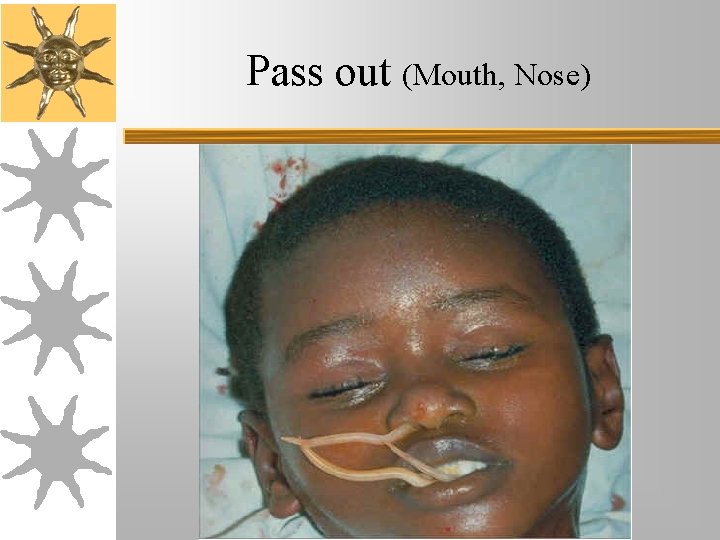
CLINICAL MANIFESTATIONS ¬Adult worms Abdominal cavity ¬Infrequently pass out: Various orifices Ectopic (Mouth, Nose, Lachrymal duct, Urethra, Vagina) ¬Food material removed by Ascaris (not negligible) ¬Anorexia & malabsorption ¬ Probably potentiates kwashiorkor protein intake
Pass out (Mouth, Nose)
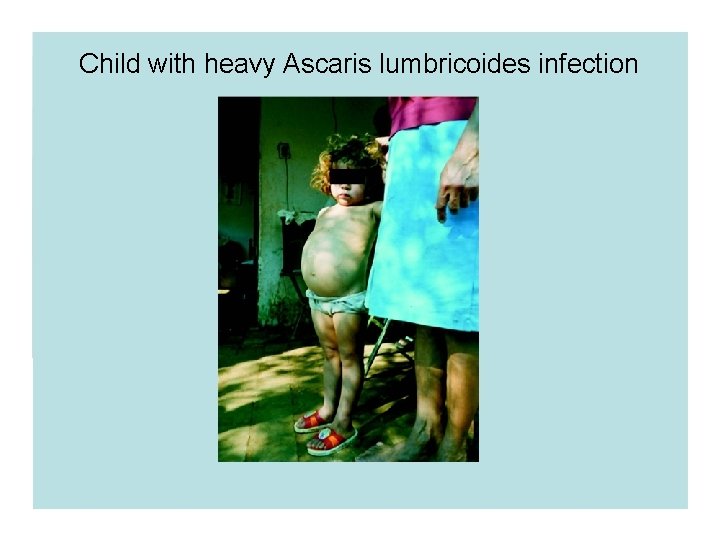
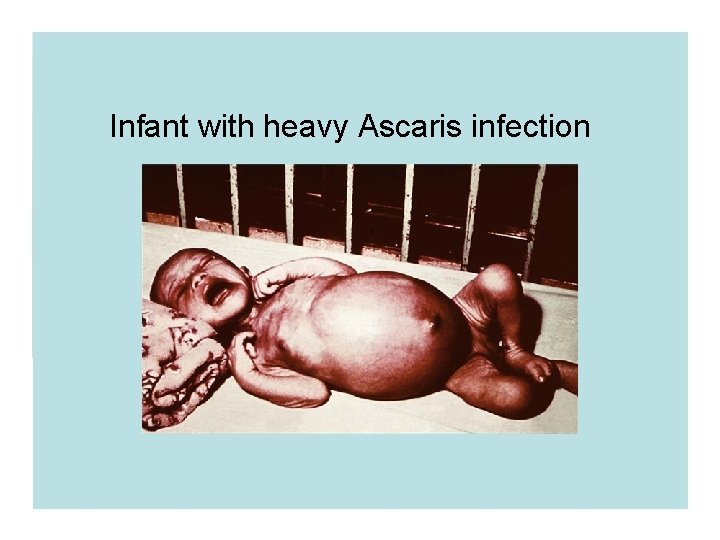
CLINICAL MANIFESTATIONS ¬Child (26 worms): lose one tenth daily intake of protein ¬ Child : vitamin A & C deficiency children ¬ The most important effect of disease: inaged 2– 10 ¬ Effect on height and weight ¬ Effect on development, cognitive ability
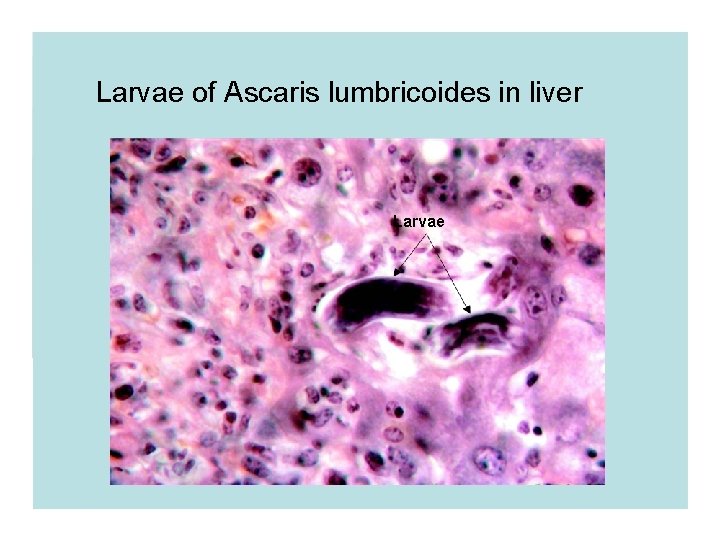
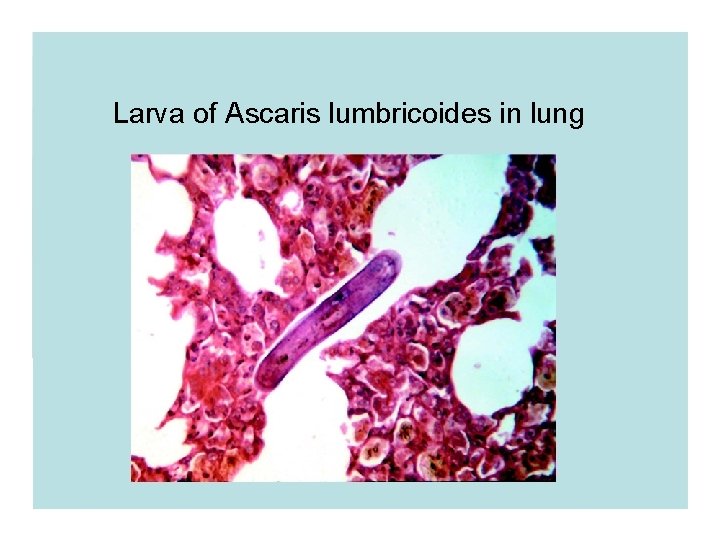
PATHOGENESIS necrotic foci ¬ The larvae cause lesions: liver, spleen, lymph nodes ¬ Encapsulated larvae Granulomatous reaction ¬ Larvae In the lungs: petechiae , severe reactions ¬ Ulceration of the bronchial mucosa ¬ High Ig. E production (protect both host and parasite) ¬ Ascaris induces: Th 2 cell-mediated response, producing IL-4
Larvae of Ascaris lumbricoides in liver Larvae
Larva of Ascaris lumbricoides in lung
Child with heavy Ascaris lumbricoides infection
Infant with heavy Ascaris infection
Bolus of Ascaris lumbricoides in small intestine
Bolus of Ascaris lumbricoides (fatal case)
Ascaris lumbricoides adult in appendix
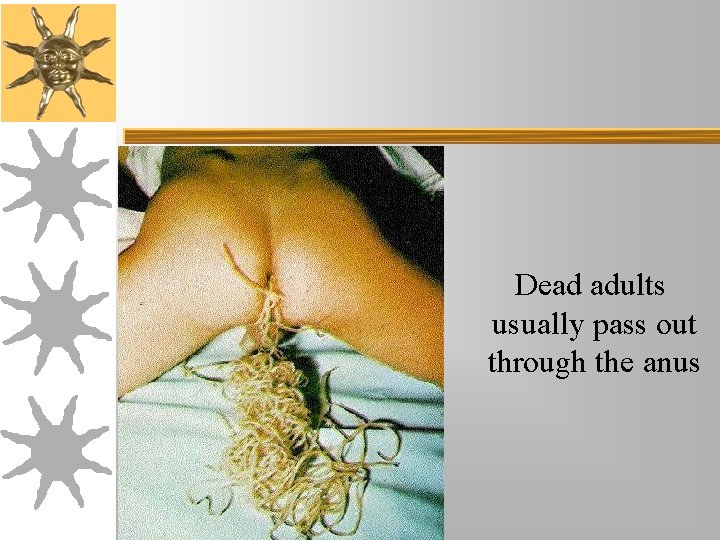
Dead adults usually pass out through the anus
Diagnosis ¬ Eggs in feces ¬ Juveniles in sputum ¬ Dead adults may be found in feces
Treatment ¬ Albendazole 400 mg single dose ¬ Levamisole 2. 5 mg/kg ¬ Mebendazole 500 mg ¬ Pyrantel 10 mg/kg t t o t d e Ma e n y ea p re a tre nt e m
Prevention and Control Sanitary disposal of feces Good hygiene is the best preventive measure