
Insights into the RootKnot Nematode Meloidogyne spp Microbiome
Insights into the Root-Knot Nematode (Meloidogyne spp. ) Microbiome
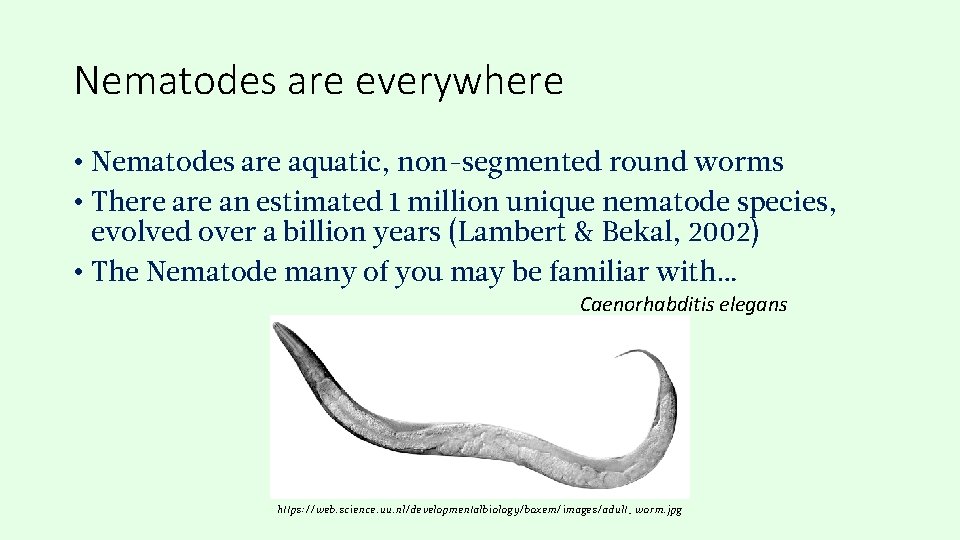
Nematodes are everywhere • Nematodes are aquatic, non-segmented round worms • There an estimated 1 million unique nematode species, evolved over a billion years (Lambert & Bekal, 2002) • The Nematode many of you may be familiar with… Caenorhabditis elegans https: //web. science. uu. nl/developmentalbiology/boxem/images/adult_worm. jpg
Nematodes are everywhere • Nematodes are aquatic, non-segmented round worms • There an estimated 1 million unique nematode species, evolved over a billion years (Lambert & Bekal, 2002) • The Nematode many of you may be familiar with… Caenorhabditis elegant https: //web. science. uu. nl/developmentalbiology/boxem/images/adult_worm. jpg
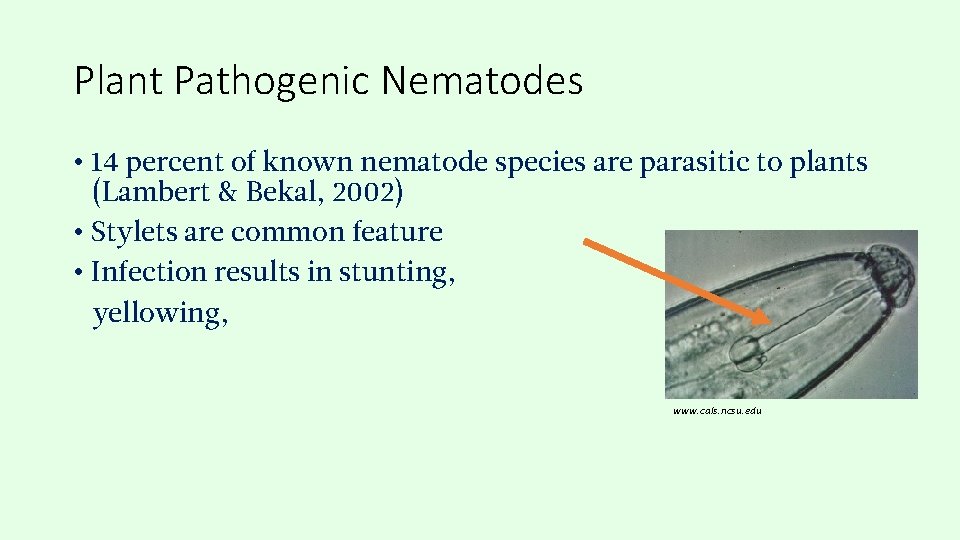
Plant Pathogenic Nematodes • 14 percent of known nematode species are parasitic to plants (Lambert & Bekal, 2002) • Stylets are common feature • Infection results in stunting, yellowing, www. cals. ncsu. edu
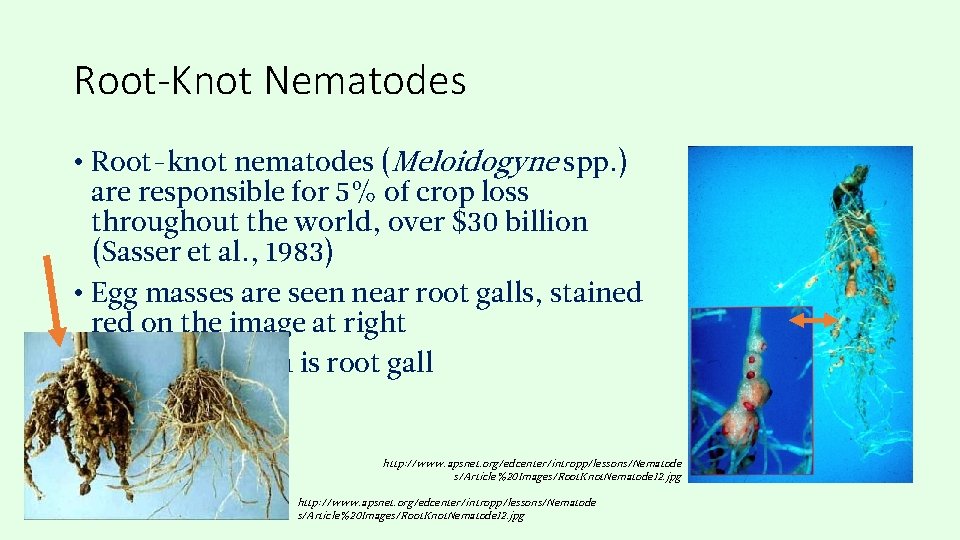
Root-Knot Nematodes • Root-knot nematodes (Meloidogyne spp. ) are responsible for 5% of crop loss throughout the world, over $30 billion (Sasser et al. , 1983) • Egg masses are seen near root galls, stained red on the image at right • A key symptom is root gall http: //www. apsnet. org/edcenter/intropp/lessons/Nematode s/Article%20 Images/Root. Knot. Nematode 12. jpg
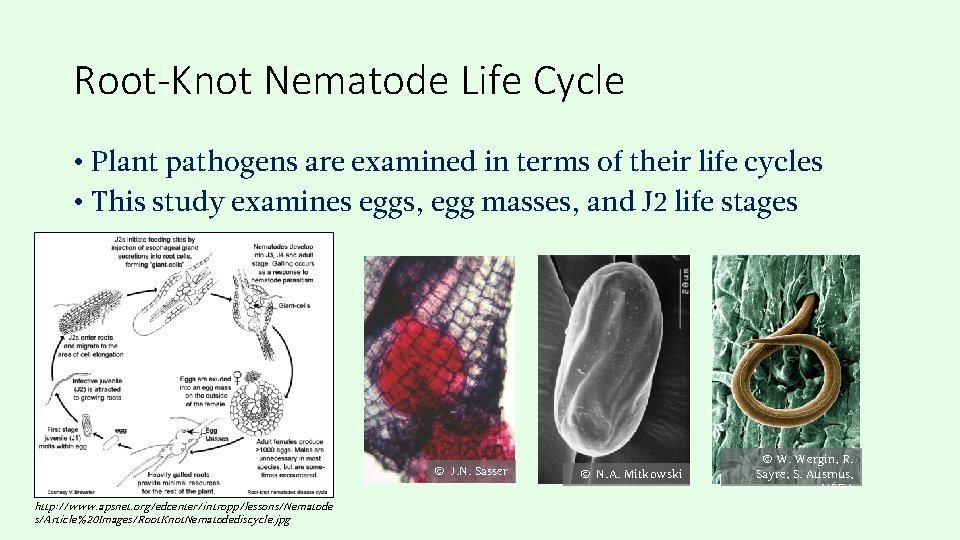
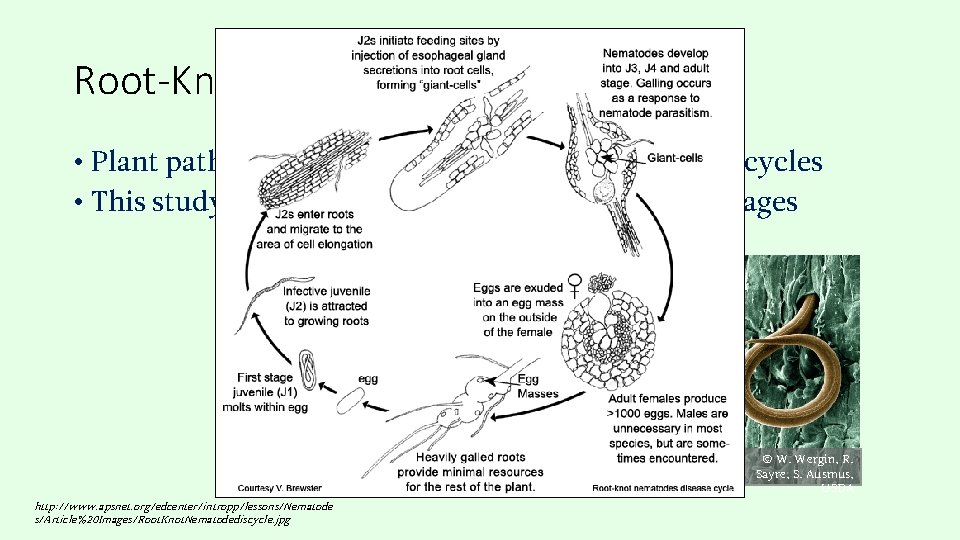
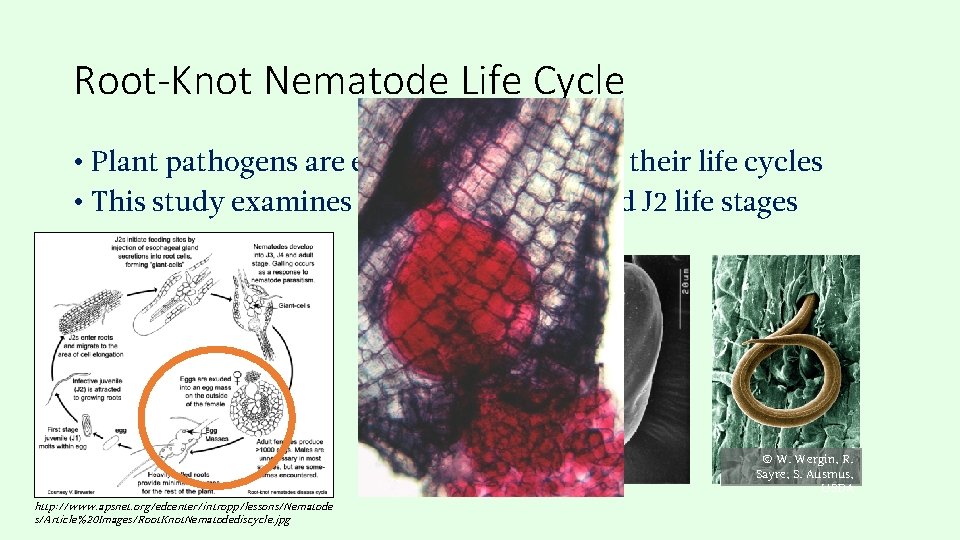
Root-Knot Nematode Life Cycle • Plant pathogens are examined in terms of their life cycles • This study examines eggs, egg masses, and J 2 life stages © J. N. Sasser http: //www. apsnet. org/edcenter/intropp/lessons/Nematode s/Article%20 Images/Root. Knot. Nematodediscycle. jpg © N. A. Mitkowski © W. Wergin, R. Sayre, S. Ausmus, USDA
Root-Knot Nematode Life Cycle • Plant pathogens are examined in terms of their life cycles • This study examines eggs, egg masses, and J 2 life stages © J. N. Sasser http: //www. apsnet. org/edcenter/intropp/lessons/Nematode s/Article%20 Images/Root. Knot. Nematodediscycle. jpg © N. A. Mitkowski © W. Wergin, R. Sayre, S. Ausmus, USDA
Root-Knot Nematode Life Cycle • Plant pathogens are examined in terms of their life cycles • This study examines eggs, egg masses, and J 2 life stages © W. Wergin, R. Sayre, S. Ausmus, USDA http: //www. apsnet. org/edcenter/intropp/lessons/Nematode s/Article%20 Images/Root. Knot. Nematodediscycle. jpg
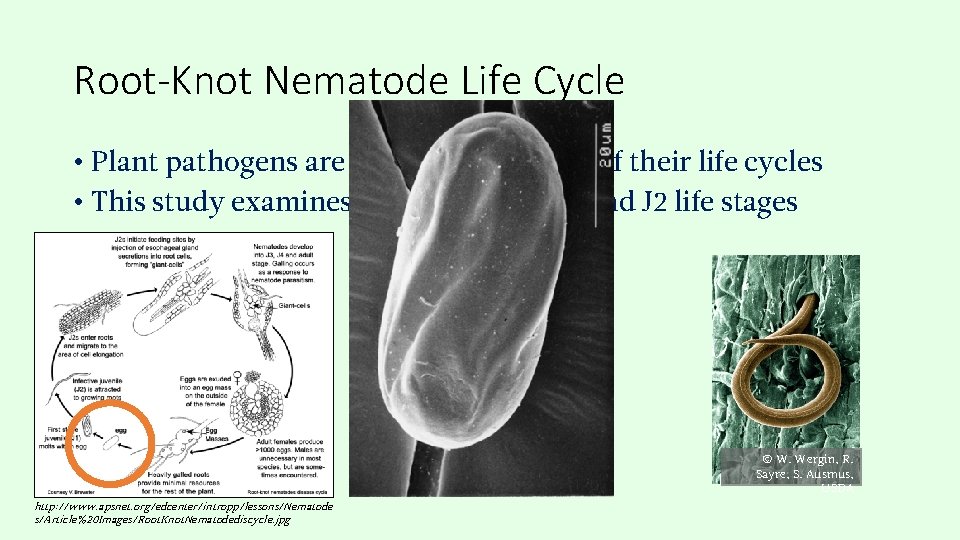
Root-Knot Nematode Life Cycle • Plant pathogens are examined in terms of their life cycles • This study examines eggs, egg masses, and J 2 life stages © J. N. Sasser http: //www. apsnet. org/edcenter/intropp/lessons/Nematode s/Article%20 Images/Root. Knot. Nematodediscycle. jpg © W. Wergin, R. Sayre, S. Ausmus, USDA
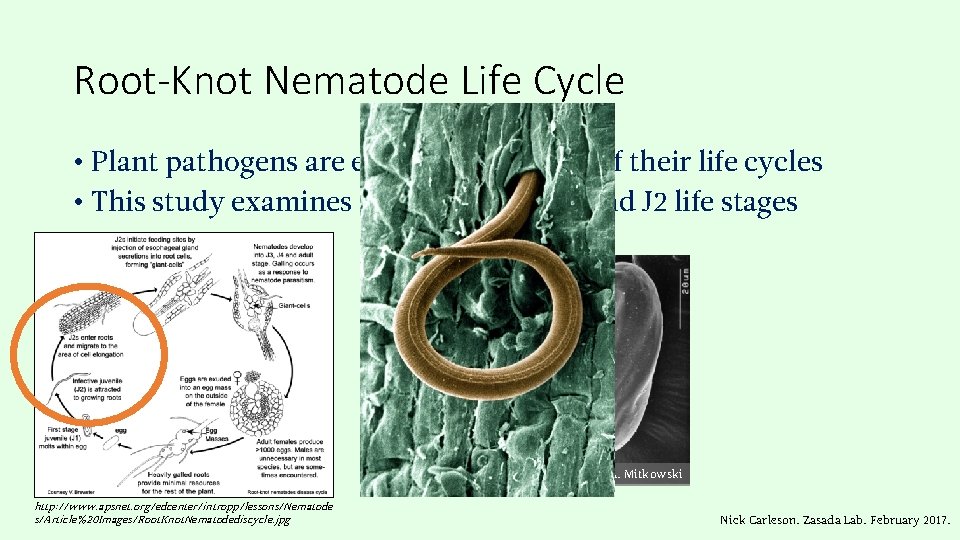
Root-Knot Nematode Life Cycle • Plant pathogens are examined in terms of their life cycles • This study examines eggs, egg masses, and J 2 life stages © J. N. Sasser http: //www. apsnet. org/edcenter/intropp/lessons/Nematode s/Article%20 Images/Root. Knot. Nematodediscycle. jpg © N. A. Mitkowski Nick Carleson. Zasada Lab. February 2017.
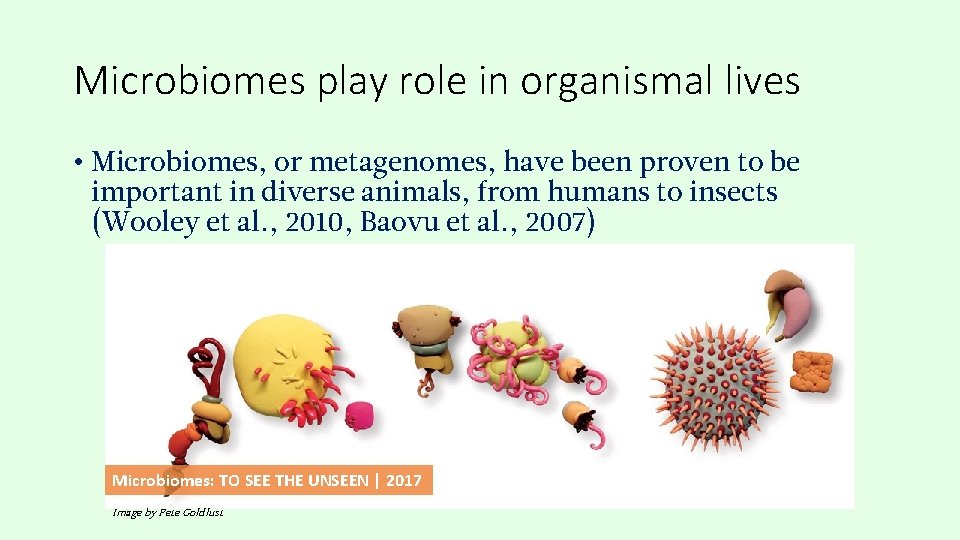
Microbiomes play role in organismal lives • Microbiomes, or metagenomes, have been proven to be important in diverse animals, from humans to insects (Wooley et al. , 2010, Baovu et al. , 2007) Microbiomes: TO SEE THE UNSEEN | 2017 Image by Pete Goldlust
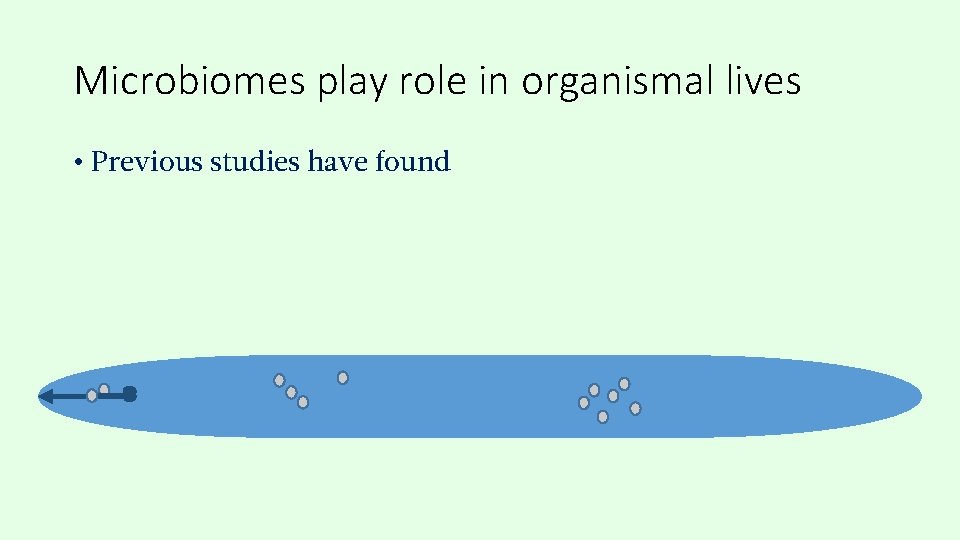
Microbiomes play role in organismal lives • Previous studies have found
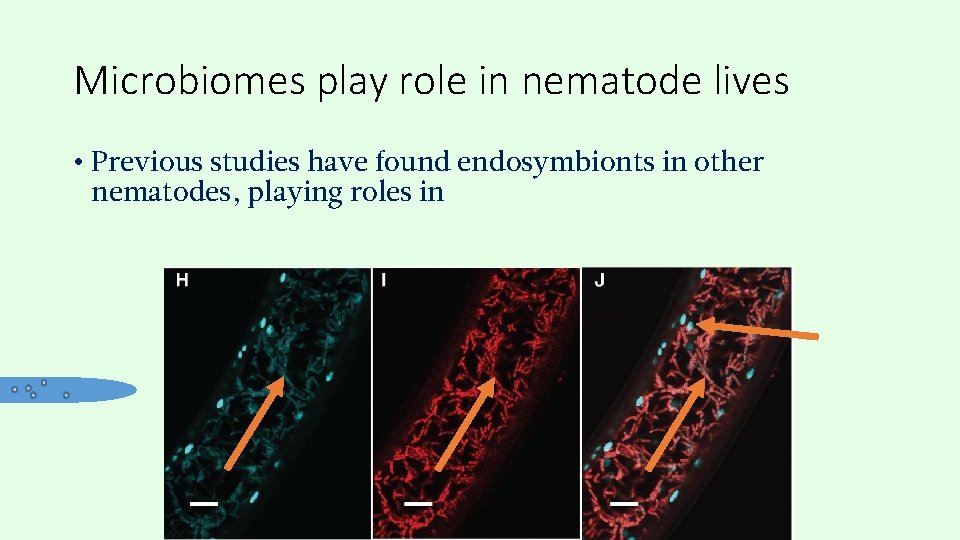
Microbiomes play role in nematode lives • Previous studies have found endosymbionts in other nematodes, playing roles in
Understanding the microbiome could result in new nematode management techniques • Understanding the
Understanding the microbiome could result in new nematode management techniques •
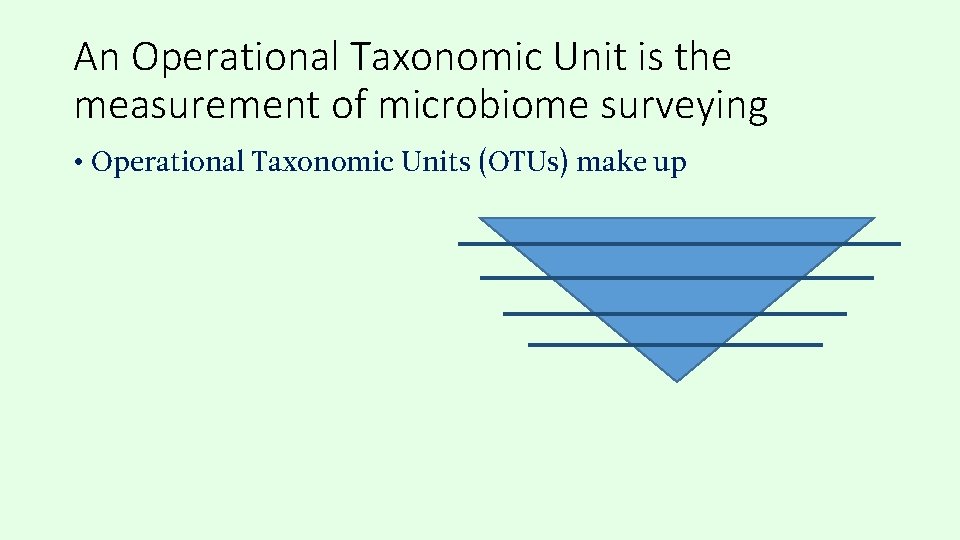
An Operational Taxonomic Unit is the measurement of microbiome surveying • Operational Taxonomic Units (OTUs) make up
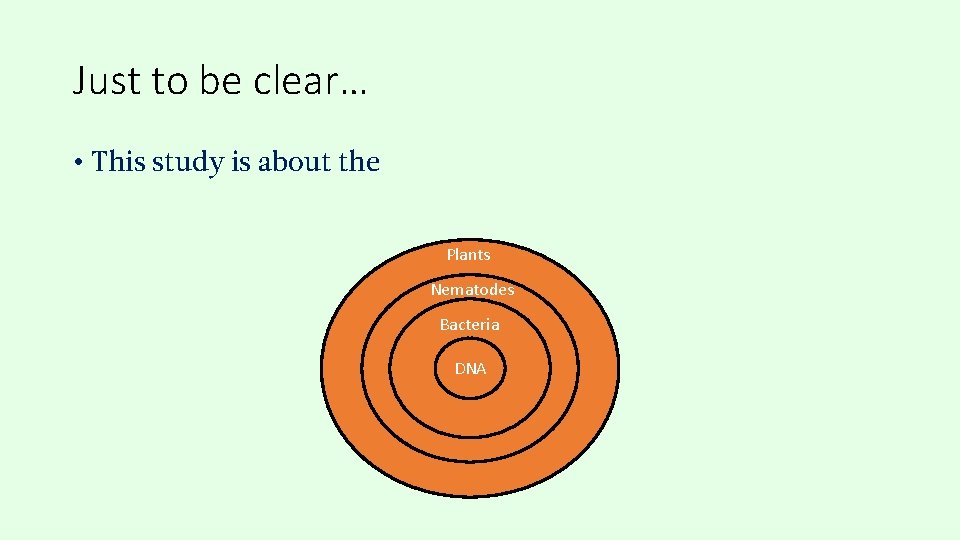
Just to be clear… • This study is about the Plants Nematodes Bacteria DNA
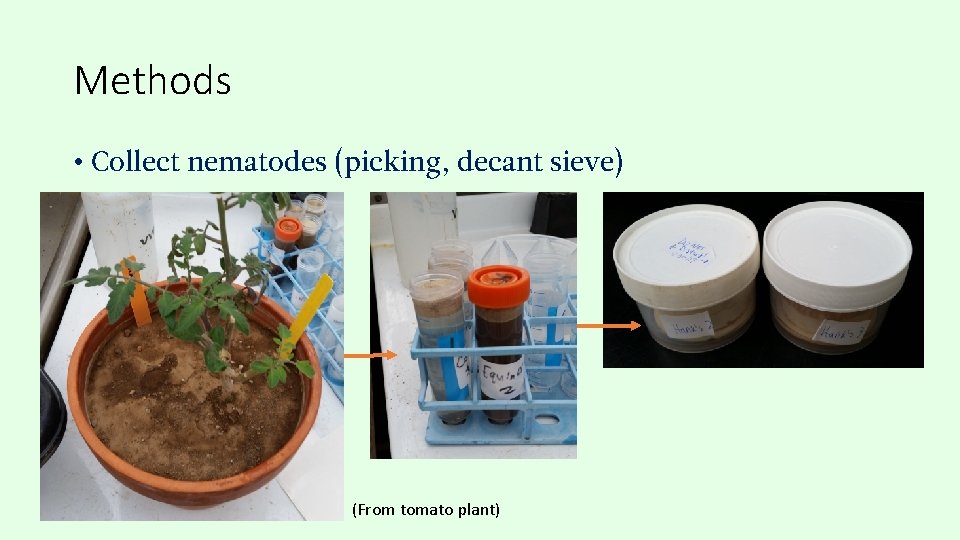
Methods • Collect nematodes (picking, decant sieve) (From tomato plant)
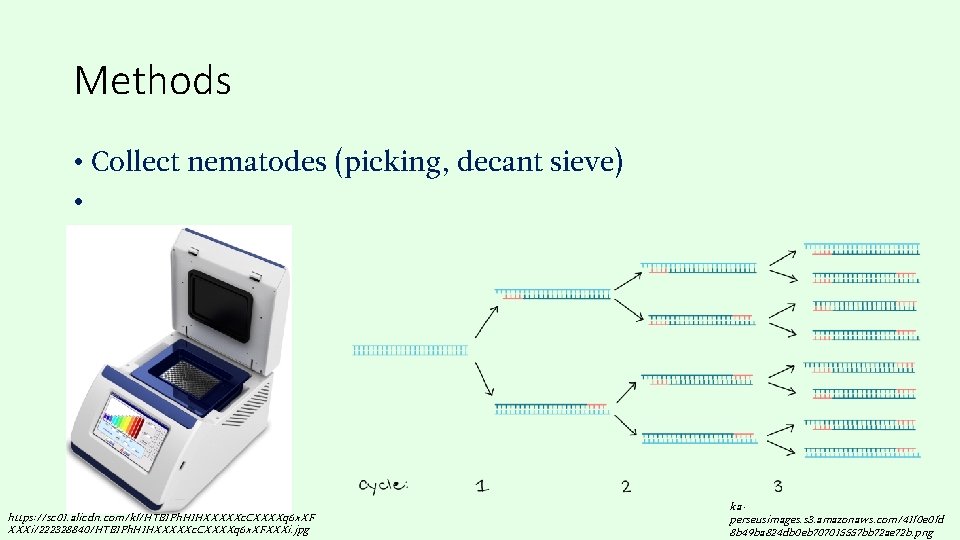
Methods • Collect nematodes (picking, decant sieve) • https: //sc 01. alicdn. com/kf/HTB 1 Ph. H 1 HXXXXXc. CXXXXq 6 x. XF XXXi/222328840/HTB 1 Ph. H 1 HXXXXXc. CXXXXq 6 x. XFXXXi. jpg kaperseusimages. s 3. amazonaws. com/41 f 0 e 0 fd 8 b 49 ba 824 db 0 eb 707015557 bb 72 ae 72 b. png
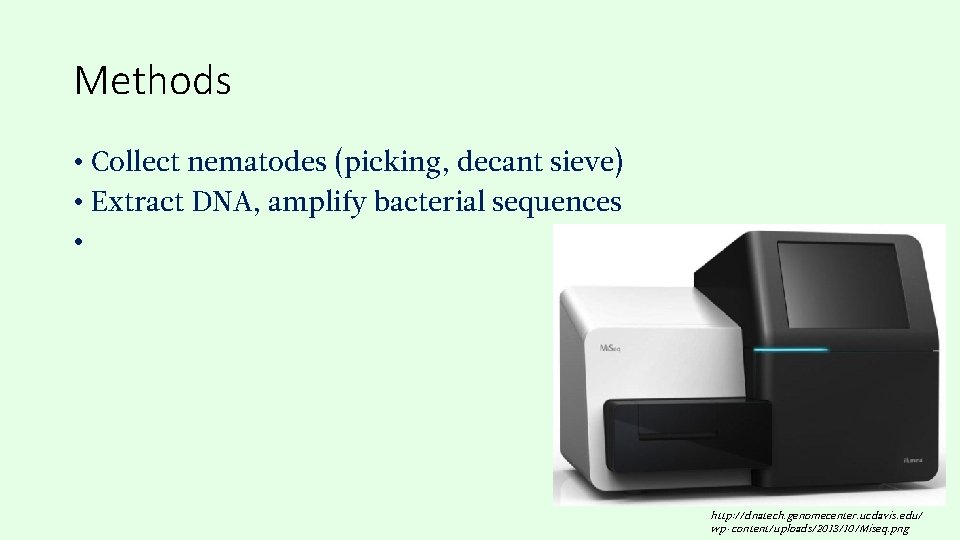
Methods • Collect nematodes (picking, decant sieve) • Extract DNA, amplify bacterial sequences • http: //dnatech. genomecenter. ucdavis. edu/ wp-content/uploads/2013/10/Miseq. png
Methods • Collect nematodes (picking, decant sieve) • Extract DNA, amplify bacterial sequences • Gene sequencing (Illumina Mi. Seq) •
Methods • Collect nematodes (picking, decant sieve) • Extract DNA, amplify bacterial sequences • Gene sequencing (Illumina Mi. Seq) • Software to clean up sequences •
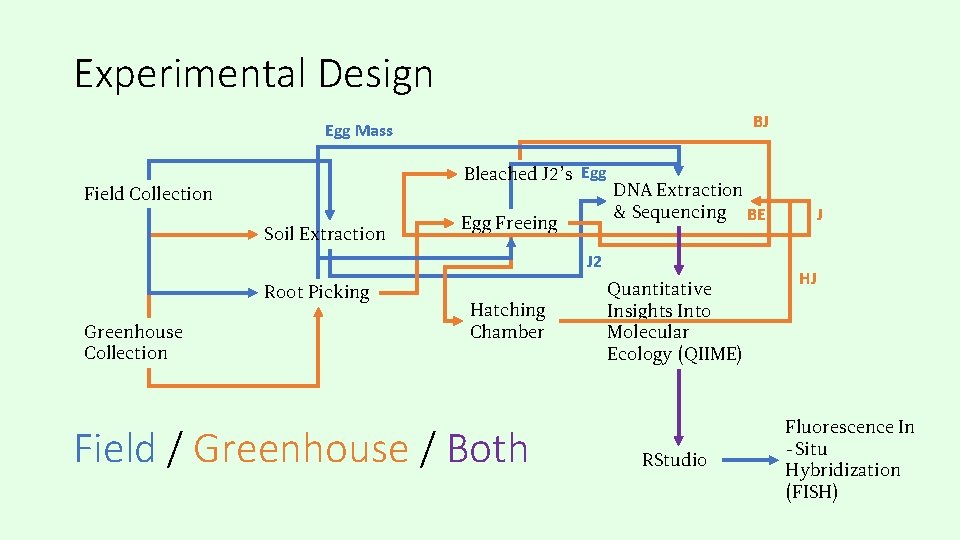
Experimental Design BJ Egg Mass Bleached J 2’s Egg Field Collection Soil Extraction Egg Freeing DNA Extraction & Sequencing BE J 2 Root Picking Greenhouse Collection Hatching Chamber Field / Greenhouse / Both Quantitative Insights Into Molecular Ecology (QIIME) RStudio J HJ Fluorescence In -Situ Hybridization (FISH)
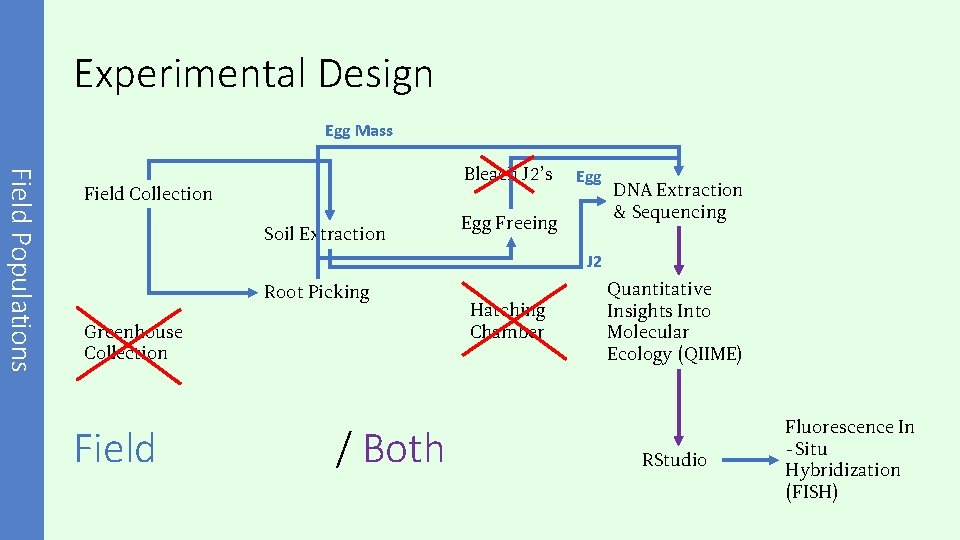
Experimental Design Egg Mass Field Populations Bleach J 2’s Field Collection Soil Extraction Egg Freeing DNA Extraction & Sequencing J 2 Root Picking Greenhouse Collection Field / Wave 2 / Both Hatching Chamber Quantitative Insights Into Molecular Ecology (QIIME) RStudio Fluorescence In -Situ Hybridization (FISH)
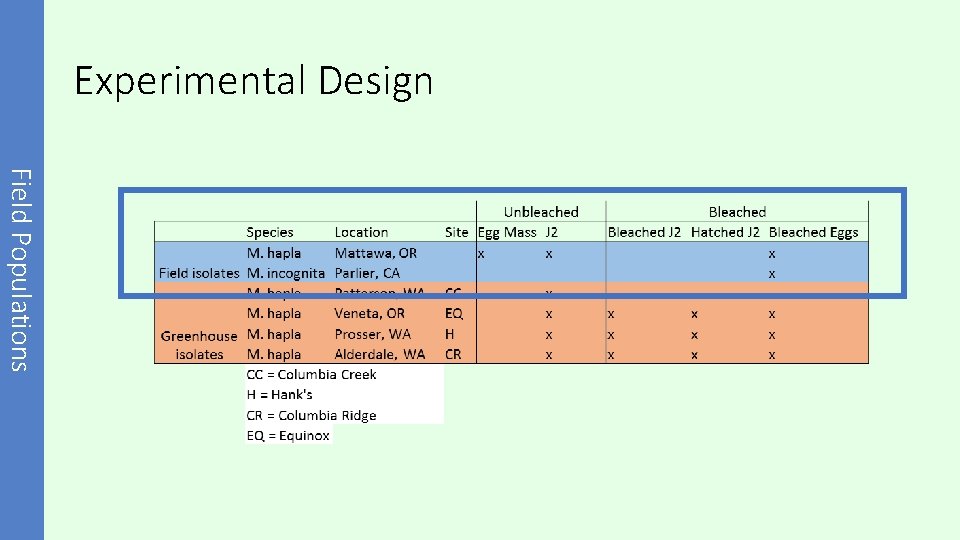
Experimental Design Field Populations
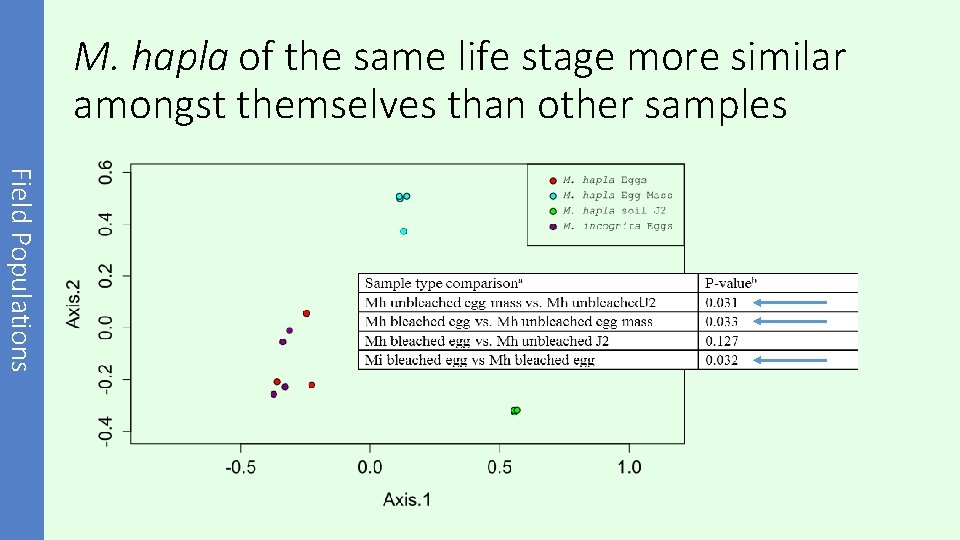
M. hapla of the same life stage more similar amongst themselves than other samples Field Populations
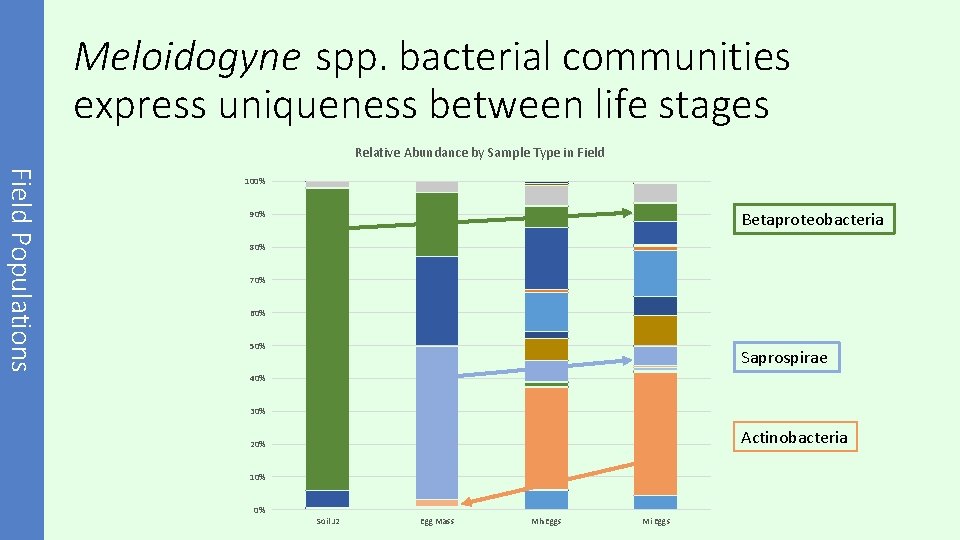
Meloidogyne spp. bacterial communities express uniqueness between life stages Relative Abundance by Sample Type in Field Populations 100% Betaproteobacteria 90% 80% 70% 60% 50% Saprospirae 40% 30% Actinobacteria 20% 10% 0% Soil J 2 Egg Mass Mh Eggs Mi Eggs
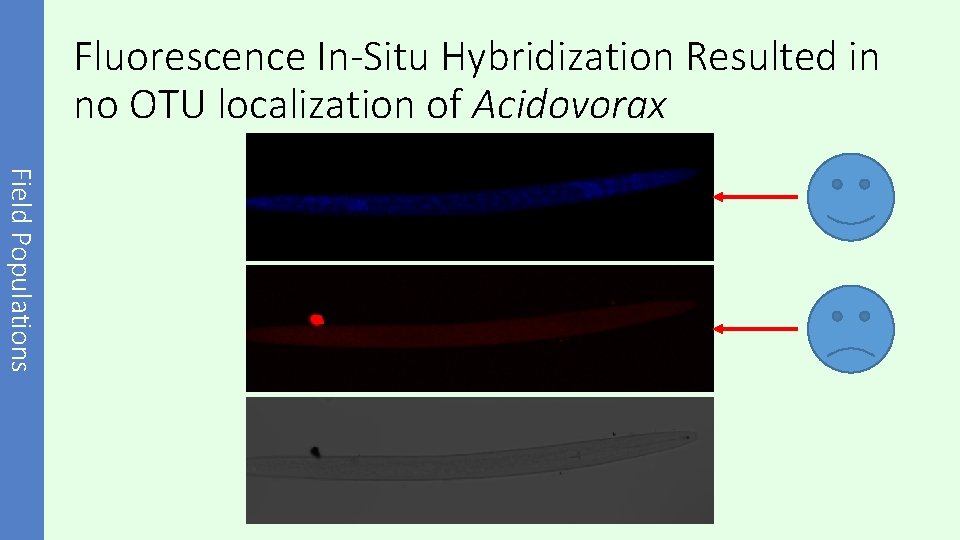
Fluorescence In-Situ Hybridization Resulted in no OTU localization of Acidovorax Field Populations
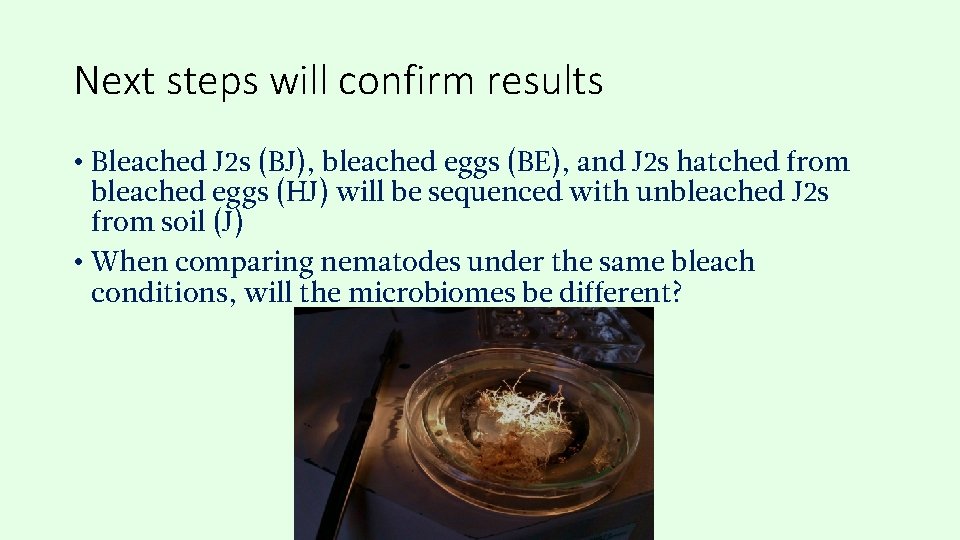
Next steps will confirm results • Bleached J 2 s (BJ), bleached eggs (BE), and J 2 s hatched from bleached eggs (HJ) will be sequenced with unbleached J 2 s from soil (J) • When comparing nematodes under the same bleach conditions, will the microbiomes be different?
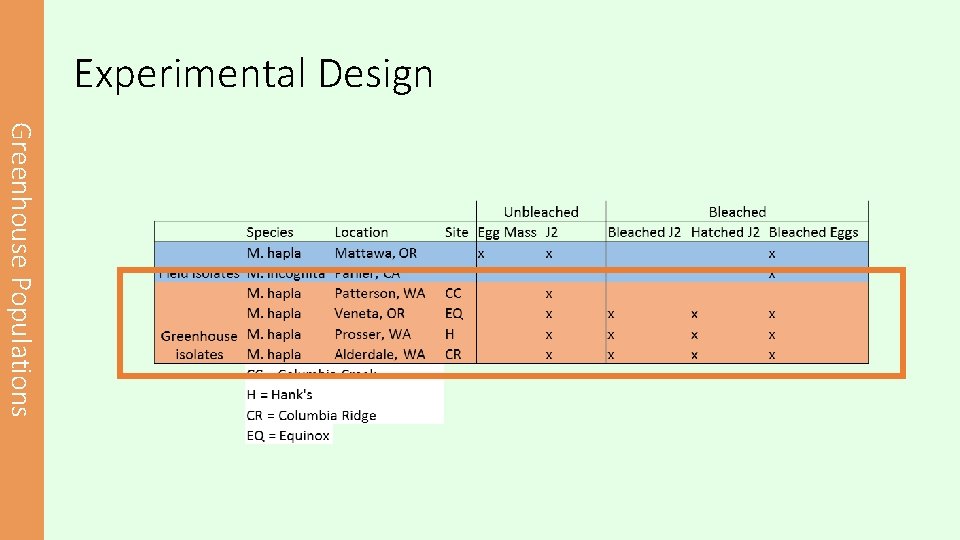
Experimental Design Greenhouse Populations
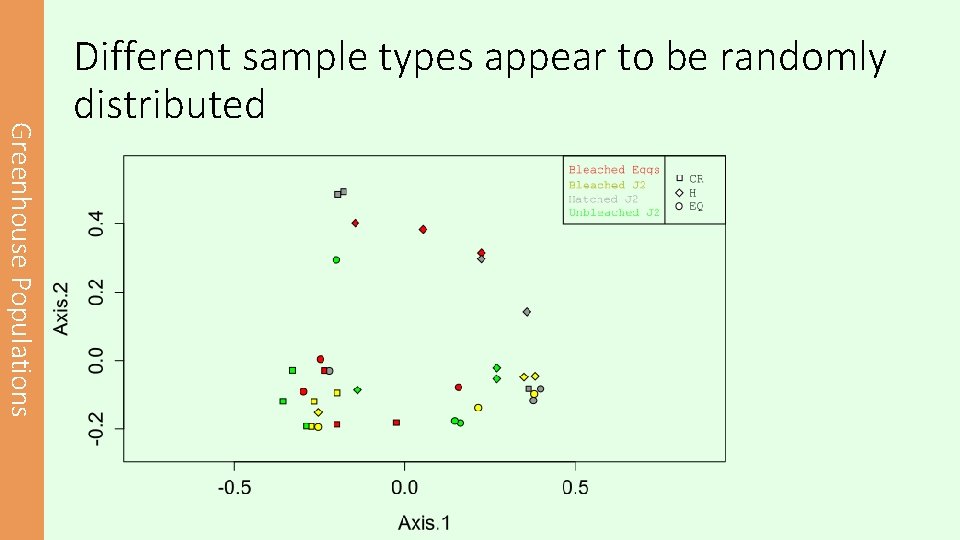
Greenhouse Populations Different sample types appear to be randomly distributed
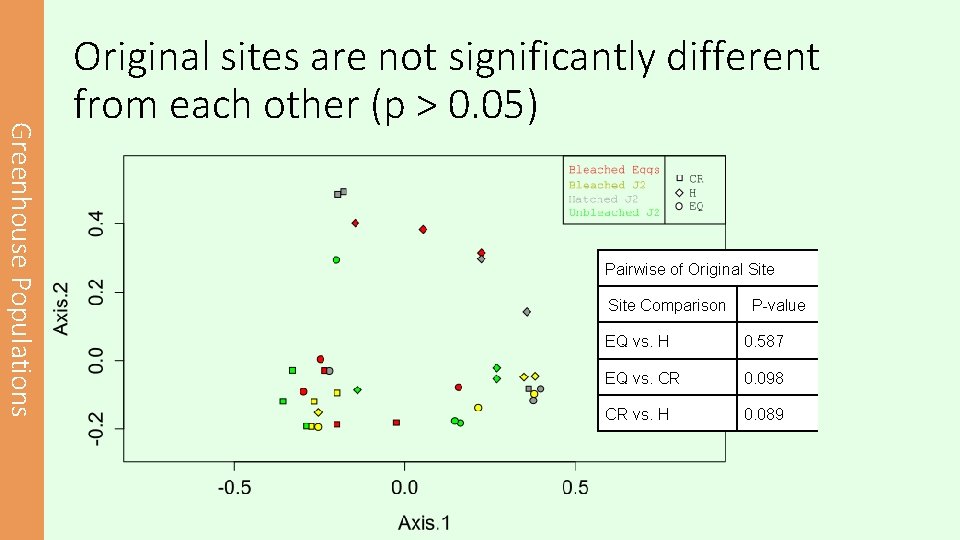
Greenhouse Populations Original sites are not significantly different from each other (p > 0. 05) Pairwise of Original Site Comparison P-value Test Statistic EQ vs. H 0. 587 1. 229 EQ vs. CR 0. 098 3. 423 CR vs. H 0. 089 4. 329
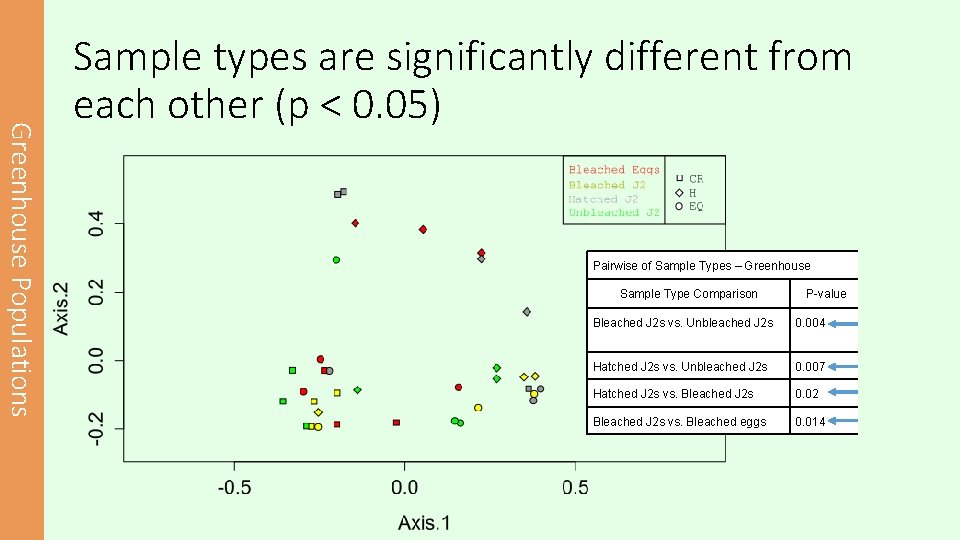
Greenhouse Populations Sample types are significantly different from each other (p < 0. 05) Pairwise of Sample Types – Greenhouse Sample Type Comparison P-value Test Statistic Bleached J 2 s vs. Unbleached J 2 s 0. 004 2. 845 Hatched J 2 s vs. Unbleached J 2 s 0. 007 2. 620 Hatched J 2 s vs. Bleached J 2 s 0. 02 2. 325 Bleached J 2 s vs. Bleached eggs 0. 014 2. 029
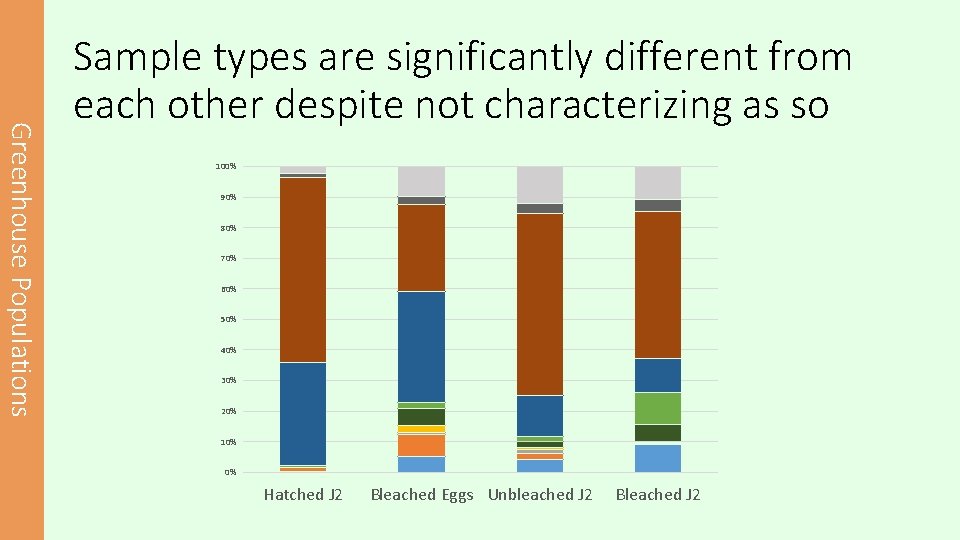
Greenhouse Populations Sample types are significantly different from each other despite not characterizing as so 100% 90% 80% 70% 60% 50% 40% 30% 20% 10% 0% Hatched J 2 Bleached Eggs Unbleached J 2 Bleached J 2
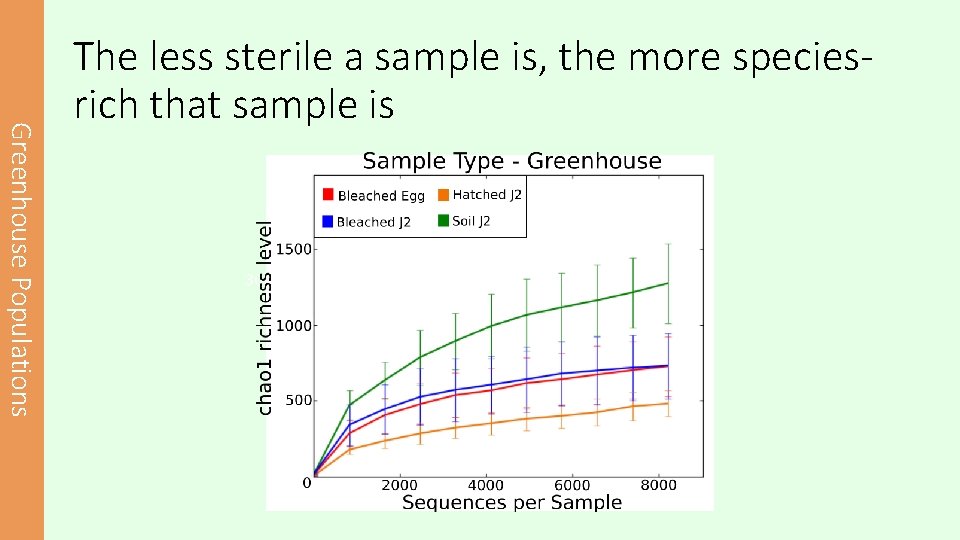
Greenhouse Populations The less sterile a sample is, the more speciesrich that sample is
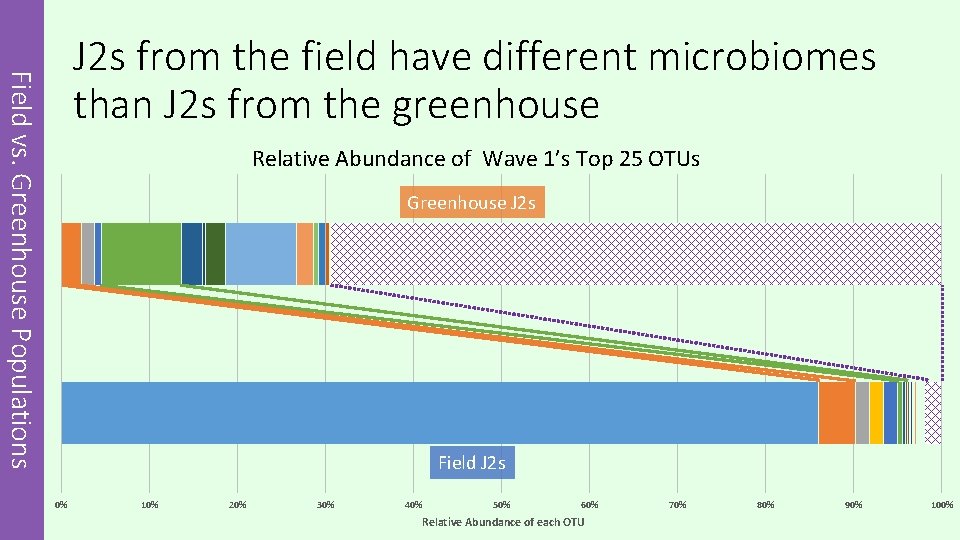
Field vs. Greenhouse Populations J 2 s from the field have different microbiomes than J 2 s from the greenhouse Relative Abundance of Wave 1’s Top 25 OTUs Greenhouse J 2 s Field J 2 s 0% 10% 20% 30% 40% 50% 60% Relative Abundance of each OTU 70% 80% 90% 100%
Reporting on bacterial communities of Meloidogyne spp. • The bacterial communities of M. hapla change over its life cycle, suggesting a “life stage-specific microbiome” (Cao et al. , 2015) • The bacterial communities of M. hapla eggs are different from M. incognita eggs, suggesting a “species-specific microbiome” (Berg et al. , 2016) • Despite significant differences, there are some conserved phylotypes, such as in Comamonadaceae, suggesting a “core microbiome” (Zhang et al. , 2017)
This study affects future investigations of plant-pathogenic nematode microbiomes • Bleach conditions of M. hapla affected the microbiome • Hatched vs. Bleached vs. Unbleached • Affects studies expecting to find cuticle-interacting bacteria (Mankau, 1975; Tan & Darby, 2004; Polz et al. , 1994) • M. hapla raised in the greenhouse are potentially different from those collected directly from the field (Elhady et al. , 2017)
Future Directions • Analyze field and greenhouse experiments together • Visualize more potential endosymbionts • Sequence only the “endo-microbiome” of M. hapla (Wang et al. , 2001) • Sequence soil DNA from which the nematodes were collected • Characterize additional life stages (J 3 and J 4) • Characterize other components of the microbiome
Acknowledgements • ER Jackman & Friends Internship Support Program • USDA : Agricultural Research Service Grant CRIS 003 -5358 • Oregon State University Bio. Resource Research Program • Oregon State University Department of Botany & Plant Pathology • Thesis Committee: • Inga Zasada • Cedar Hesse • Kate Field Nick Carleson. Zasada Lab. June 2017.
Acknowledgements • • My advisor Wanda Crannell Family and Friends Coworkers The nematodes
References Berg, G. , Grube, M. , Schloter, M. , & Smalla, K. (2014). Unraveling the plant microbiome: looking back and future perspectives. Frontiers in Microbiology, 5. https: //doi. org/10. 3389/fmicb. 2014. 00148 Brown, A. M. V. , Howe, D. K. , Wasala, S. K. , Peetz, A. B. , Zasada, I. A. , & Denver, D. R. (2015). Comparative genomics of a plant-parasitic nematode endosymbiont suggest a role in nutritional symbiosis. Genome Biology and Evolution, evv 176. https: //doi. org/10. 1093/gbe/evv 176 Cao, Y. , Tian, B. , Ji, X. , Shang, S. , Lu, C. , & Zhang, K. (2015). Associated bacteria of different life stages of Meloidogyne incognita using pyrosequencing-based analysis. Journal of Basic Microbiology, 55(8), 950– 960. https: //doi. org/10. 1002/jobm. 201400816 Elhady, A. , Giné, A. , Topalovic, O. , Jacquiod, S. , Sørensen, S. J. , Sorribas, F. J. , & Heuer, H. (2017). Microbiomes associated with infective stages of root-knot and lesion nematodes in soil. PLOS ONE, 12(5), e 0177145. https: //doi. org/10. 1371/journal. pone. 0177145 Lambert, K. & Bekal, S. Introduction to Plant-Parasitic Nematodes. The Plant Health Instructor (2002). doi: 10. 1094/PHI-I 2002 -1218 -01 Mankau, R. (1975). Bacillus penetrans n. comb. Causing a virulent disease of plant-parasitic nematodes. Journal of Invertebrate Pathology, 26(3), 333– 339. https: //doi. org/10. 1016/0022 -2011(75)90231 -1
References Polz, M. F. , Distel, D. L. , Zarda, B. , Amann, R. , Felbeck, H. , Ott, J. A. , & Cavanaugh, C. M. (1994). Phylogenetic analysis of a highly specific association between ectosymbiotic, sulfur-oxidizing bacteria and a marine nematode. Applied and Environmental Microbiology, 60(12), 4461– 4467. J N Sasser, J D Eisenback, C C Carter & Triantaphyllou, and A. C. The International Meloidogyne Project-Its Goals and Accomplishments. Annual Review of Phytopathology
- Slides: 43